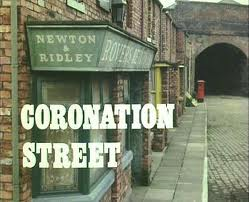
Help – I'm Addicted to Coronation Street!

CLASSIC CORRIE

I was trolling around YouTube a couple of weeks ago whilst looking for material for a Video Wednesday post and somehow came upon a vintage episode of Coronation Street – known as “Corrie” to it’s fans – from January 3, 1977. Having never actually watched the show, I made the mistake of clicking the link.  I watched the espisode and, Reader, I was hooked. Line and sinkered, too. I discovered that YouTube user Auntie Corrie has uploaded years of vintage Coronation Street, which you can find on her playlists. I’ve been watching episodes daily, which Victoria seems to think is hysterical, mainly because I’m watching episodes of a soap opera that are forty-odd years old.

Coronation Street debuted live on December 9, 1960 and is set in the fictional town of Weatherfield, located just outside of Manchester. What makes Coronation Street so special are it’s characters, who lead ordinary, every day lives, have human flaws and are, by turns, endearing, frustrating, snarky, like-able, utterly loathsome, timid, brash, sneaky, golden hearted and always fascinating to watch.

Perhaps the most important character on Coronation Street is the pub called The Rovers Return, usually referred to as The Rovers, which is the hub and heart of the Street.

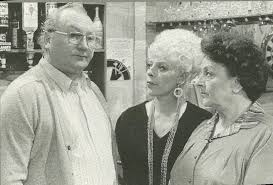
The Rovers was owned by Annie Walker, below right, and staffed by everyone’s favorite barmaid and bottle blonde, Bet Lynch, at left.
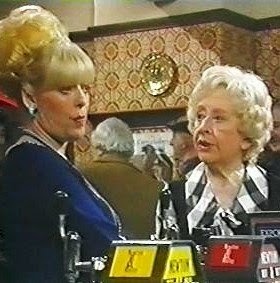
The bar staff were rounded out by Betty and Fred, pictured below.
You’ll find a complete list of the Rover’s landlords and staff from 1960 till today here.
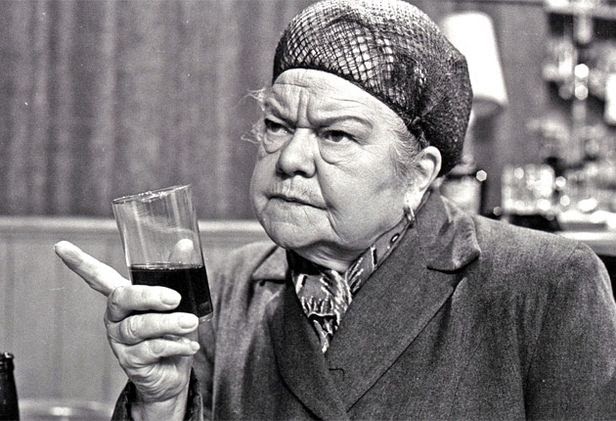
Other residents of the Street included Ena Sharples, who was the caretaker of the community center along with Albert Tatlock, and who spent much of her time criticising the activities of her neighbors. Mrs. Sharples was in the very first episode and spent the next twenty years as a regular cast member, making her final appearance in 1980. Actress Violet Carson received an OBE for her work in 1965.

Then there are Rita (a former exotic dancer) and Len Fairclough, who own a corner store called The Kabin.
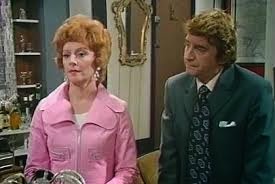
Actress Barbara Knox is still playing Rita to this day. Rita was helped in the shop by the hapless, scatterbrained and unlucky in love Mavis Riley.
Also in the Street is the Corner Shop, owned by Renee Roberts
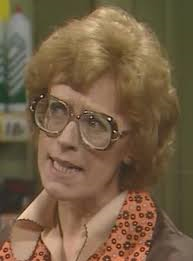
But the biggest employer in the Street has to be Mike Baldwin, factory and shop owner and local lothario
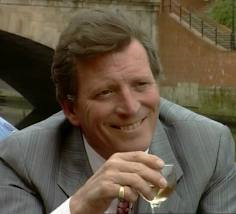
Comic relief is provided by Hilda and Stan, the always battling Ogdens. Stanley is a window washer, while Hilda cleans both at Mike’s factory and The Rovers.
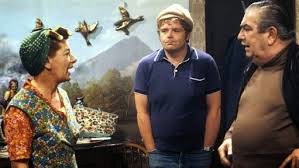
In the background in the photo above can be seen Hilda’s “muriel,” of which she’s very proud. Geoffrey Hughes (Onslow in Keeping Up Appearances) played Stan’s mate and petty criminal Eddie Yeats. You can watch a compilation of Hilda and Stan clips here.

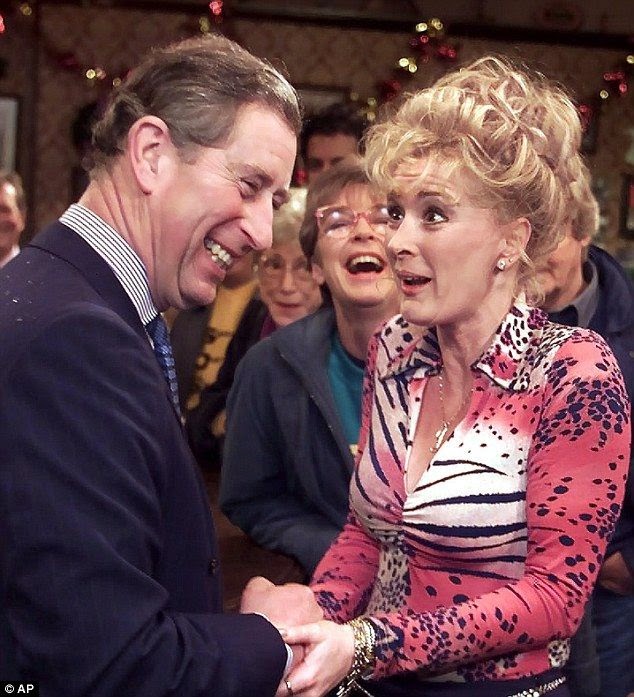
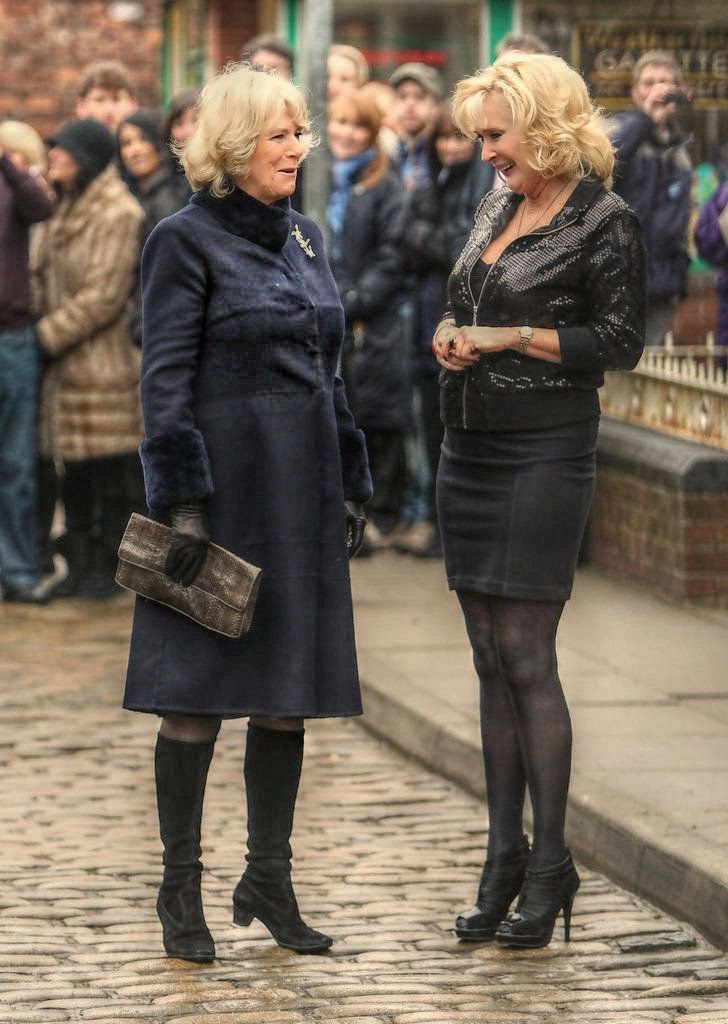
Of course, these are but a handful of the Street’s residents you’ll come to know and love if you should choose (dare?) to tune in. You might become a fan, as well. You’d be in good company – Benedict Cumberbatch is a huge fan of the show and discusses Corrie in this video clip made for the celebration of the show’s 50th Birthday. Even the Royals are apparently hooked on the Street. Here are some snaps taken when they visited the set.

Queen Elizabeth opened the new set in the 1982
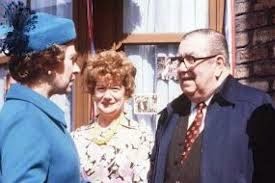
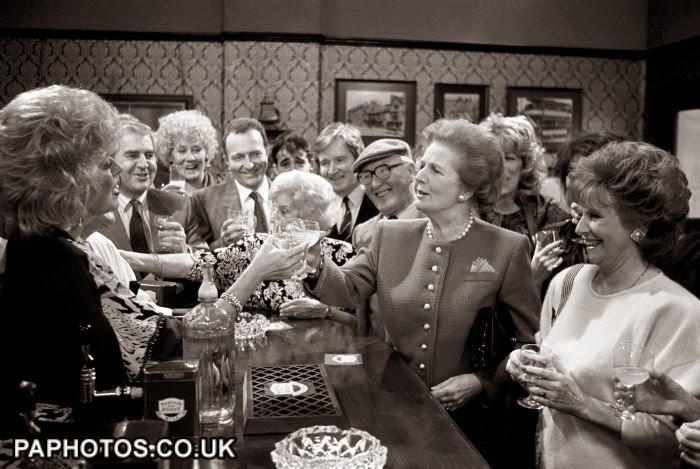
Even Mrs. Thatcher stopped by The Rovers – and raised a glass with the cast
You can watch a montage of 50 years of Coronation Street here.

Click here to see an introduction to the new Corrie set, with a retrospective of the Street from the 1960’s through to today. And here’s an hour long special called Coronation Street: A Moving Story on how the residents of the Street felt about moving to the new studios and an in-depth, behind the scenes look at the building of the new set, as well as a retrospective of the past fifty years.

I’m off to watch another episode of classic Corrie – I’m up to March, 1980. Only thirty-four years to go!

At the Corcoran: Part One, European Works

Victoria here.  I recently visited the Corcoran Gallery in Washington D.C. which is facing some big changes in the future, including probable takeover of the collection by the National Gallery of Art and of the College of Art and Design by George Washington University. 

Victoria with one of the Lions guarding the entrance
Photo snapped bv Author Diane Gaston


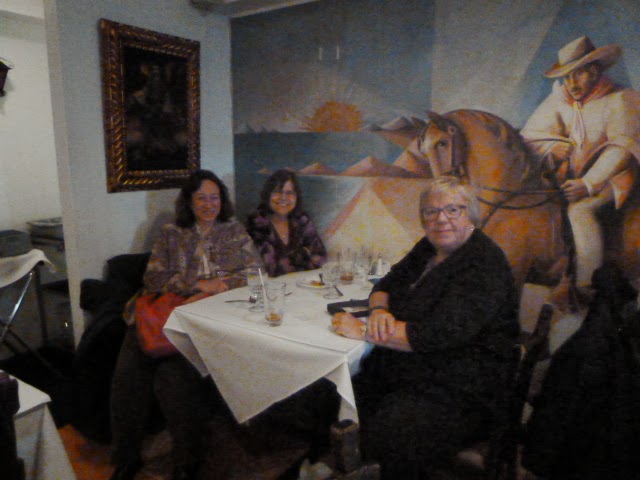
I visited for the first time in many years because of the accounts I had read of the negotiations over the gallery’s collection, school, and building.  Back when I lived in Washington D.C., I went often so this was a sentimental return as well as curiosity about what is going on.  Author Diane Gaston and I walked over after a delicious Peruvian lunch at El Chalan with Julie Halperson, who sadly had to return to work after our chat and feast.

Julie, Diane and Vicky with a mural behind!
 
 
Diana and I explored the wonderful galleries and chatted with a few employees and students, all of whom expressed disappointment that the Corcoran would probably not be able to sustain its independence.  But nothing is etched into the marble as yet, and the proposed solution to the Corcoran’s continuing budget deficits will at least preserve most of the institution’s assets, if not its historic status. So the general mood was measured optimism. The Corcoran’s website is here


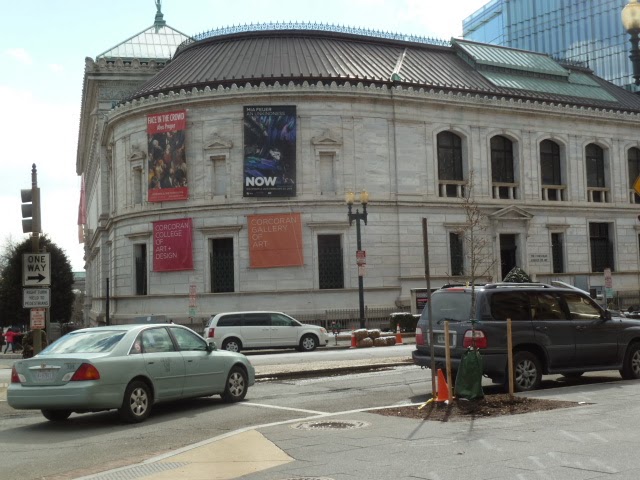
View  from 17th St, corner of  New York Ave. NW

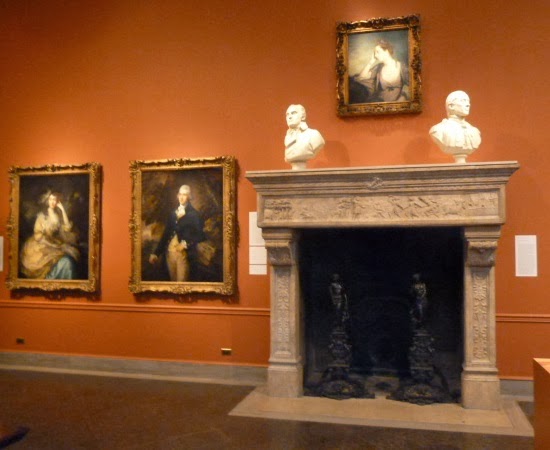
Here are some shots I took of the European collection, starting in the Mantel Room. 

The Mantel Room, with Houdon busts and
paintings by Gainsborough (left two) and Reynolds, above

The Corcoran is primarily notable for its American paintings, about which I will also write later. But of course Diane and I were immediately drawn to the British and French works from the 18th and 19th centuries.  Observations on the mantel after which the room is named were written by art critic Blake Gopnik here. It apparently has a long and intercontinental history.

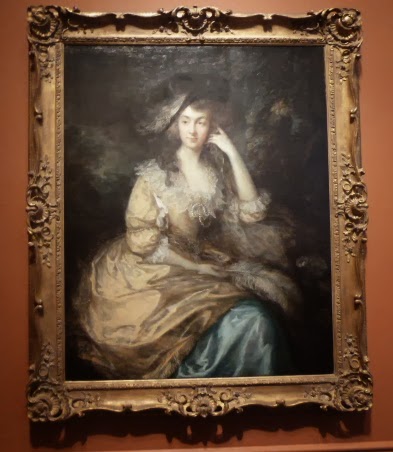
Gainsborough: Frances Susanna, Lady de Dunstanville, c. 1785
 
 
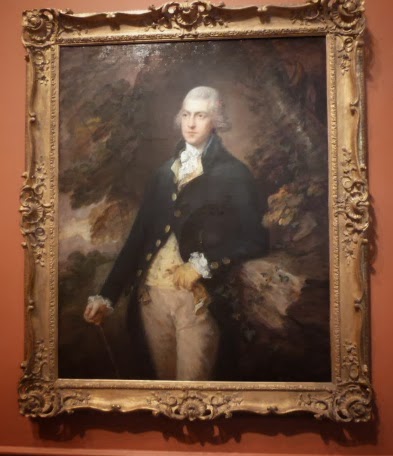
Gainsborough: Francis Basset, Lord de Dunstanville, c. 1786
 
 
Thomas Gainsborough (British, 1727-1788) painted this couple from Cornwall in his usual style.  Here is an interesting article about the paintings written by Blake Gopnik from the Washington Post several years ago.   
.
 

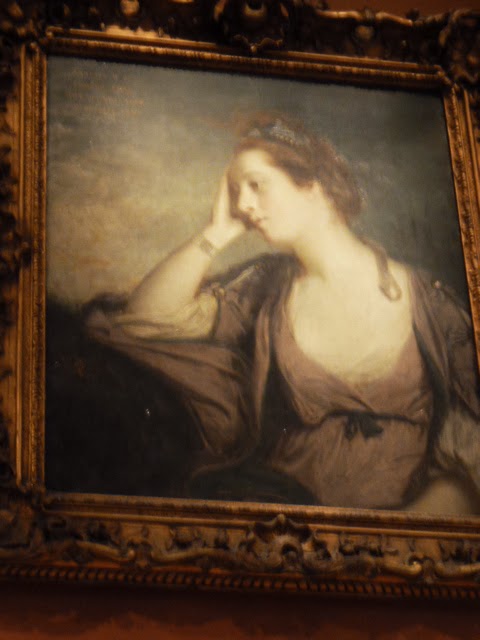
Reynolds: Annetta, Daughter of Edward Coke, Esq.;
wife of Lewis Cage, Esq. of Milgate, Kent, 1758.
 
 
I will write more about this painting too, as I have had quite an adventure trying to find out more about the subject and the actual painting itself. I will just ease you a bit by saying this lady shows up on the extended family tree of Jane Austen.
 
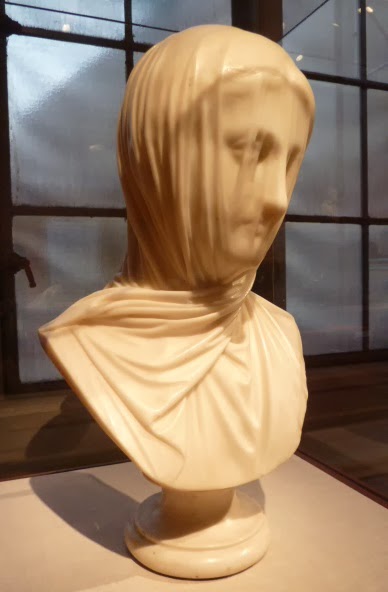
Giuseppe Croff (Italian, 1810–69) The Veiled Nun c. 1860 marble
 
For a period of time in the 19th century, sculptures of veiled women executed in marble were very popular.  The skills of the artists are obvious and the mysterious ladies always attract attention.  This bust was purchased by Gallery founder William Wilson Corcoran in Rome and was part of the gallery’s collection from its opening in 1874.
  
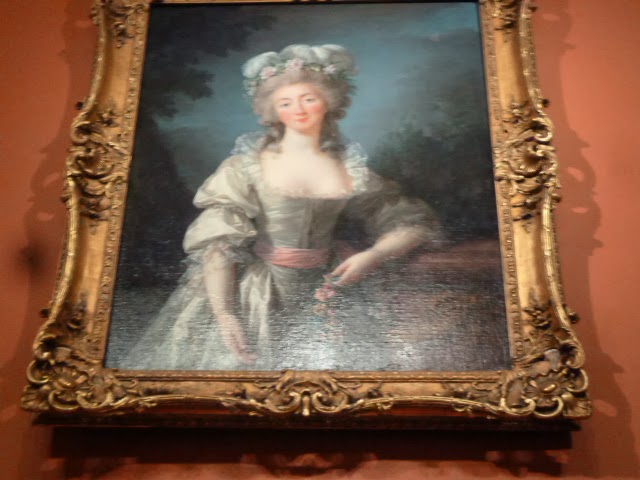
Elisabeth Vigée LeBrun, French (1755-1842) Madame du Barry 1782

Vigée LeBrun is a renowned painter, one of the few women artists to reach the height of fashion and excellence in her time.  She painted many French aristocrats (and those not better than they should be), especially the ill-fated Queen Marie Antoinette.  Vigée LeBrun fled France and traveled in Europe, to Russia and to Britain where she extended her popularity. Jeanne Bécu, comtesse du Barry (1743-1793), a mistress of Louis XV, was beheaded in the Reign of Terror.  Her story has been often told and re-told in print and in film.

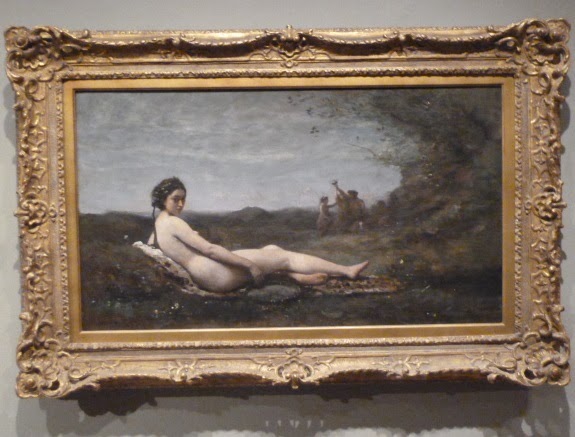
Jean-Baptiste-Camille Corot French (1796-1875) 
Le Repos (the Repose), 1860, re-worked 1865-70
 
Corot, whose beloved landscapes grace more museums than just about anyone’s, paints this nude as almost an accessory to the landscape. As the leader of the Barbizon movement, he was, in the words of Wikipedia “…a pivotal figure in landscape painting. His work simultaneously references the Neo-Classical tradition and anticipates the plein-air innovations of  Impressionism.”
 
 
Pierre-Auguste Renoir, French 1841-1919
View from Cap Martin of Monte Carlo, c. 1884
 
This landscape by Renoir is based on a sketch he made on a Riviera trip with Claude Monet in 1883.

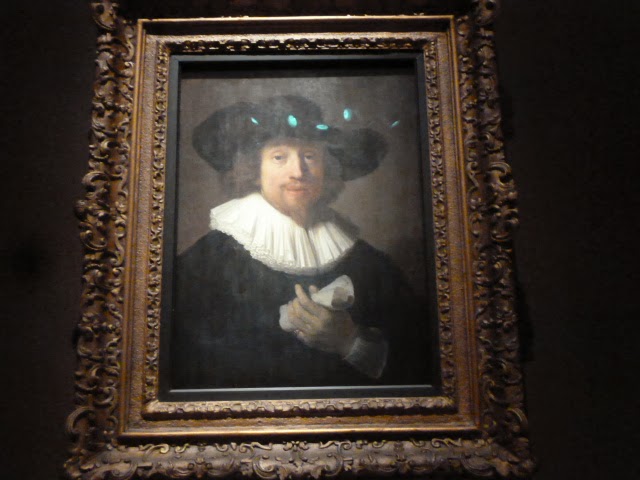
Rembrandt van Rijn Dutch (1606-1669)
Man with a Sheet of Music, 1638
 
Sorry about the reflection on his hat, but a couldn’t find an angle to eliminate it.  Rembrandt’s work needs no description from me, but this painting is indicative, along with those above, of the kind of works collected by the founders of the collection.  Some might call them robber barons, but many of them, both in the U.S. and abroad, left us treasures we have to be thankful for.  I wonder of the billionaires of today will do the same for our grandchildren?
 
I will be blogging more about the Corcoran collections soon, including the American works, the Salon Doré, and the fate of the Gallery itself.


The Duke of Wellington Tour – Video Highlights – Part One

Over the next few weeks, we’ll be bringing you video of the places we’ll be visiting on The Duke of Wellington Tour in September. Today, we begin with our first stop – London.

The Grosvenor Hotel, Victoria, above, where our journey begins.

Apsley House, the first stop on our tour, where our group will be given a private, guided tour of the property.

Afterwards, we’ll visit the Wellington Arch.

We’ll then proceed by private motor coach to the Tower of London, where we’ll see the exhibition being mounted to illustrate the Duke of Wellington’s influence upon the Tower in the capacities of both Constable of the Tower and Prime Minister. Here’s a video that provides some background on the office of Constableas well as Wellington’s influence on the Tower. We’ll also be meeting with the Ravenmaster of the Tower, who regularly posts amusing pictures of his charges on Twitter.

You can find the complete itinerary and pricing for The Duke of Wellington Tour here.

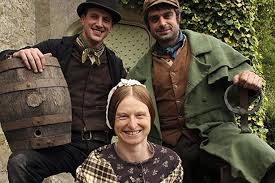
Do You Know About . . . . . . Victorian Farm?

Amazingly enough, I only discovered the six part documentary called Victorian Farm when I was trolling around Youtube recently. The show follows three modern day people spending a year as Victorian farmers in Shropshire and originally ran for six episodes in 2009.

From the BBC website:

“Historical observational documentary series following a team who live the life of Victorian farmers for a year. Wearing period clothes and using only the materials that would have been available in 1885, historian Ruth Goodman and archaeologists Alex Langlands and Peter Ginn are going back in time to relive the day-to-day life of the Victorian farmer.

“The project is based on the Acton Scott estate in Shropshire – a world frozen in time, lost in Victorian rural England. Its buildings and grounds are cluttered with antique tools and machinery collected by the Acton family, who have lived on the estate since the 12th century.

“Working for a full calendar year, Ruth, Alex and Peter are rediscovering a lost world of skills, crafts and knowledge, assisted by an ever-dwindling band of experts who keep Victorian rural practices alive.
The team move into a Victorian smallholding on the Acton Scott estate that has not been used in nearly half a century. Their first task is the restoration of the cottage. As incoming tenants, they help thresh the previous summer’s wheat crop, their first experience of steam-powered machinery. Alex attempts to sow a wheat crop using horse-power. Ruth and Peter install a range in the cottage and take a trip to the canals to load up on coal. It’s time for the apple harvest, so Alex and Peter turn their hand to making cider. Ruth explores the challenges of Victorian cooking by making preserves ready for winter and cooks her first meal on the range. And the team must learn shepherding skills the hard way as the first livestock arrive on the farm – a flock of Shropshire ewes.”

I adore this series, as watching it is a bit like getting a private history lesson – housewifery and animal husbandry are brought to life along with nearly forgotten crafts, skills and traditions.  Here’s the link to the first episode.  


Because of viewer response to the series, the BBC went on to film Edwardian Farm and Victorian Pharmacy, followed by War Time Farm, all three series also featuring Ruth, Alex and Peter.  These should hold you for a few weeks, at the very least – enjoy!

Waving the Flag…

Victoria here.  I recently visited Fort McHenry in Baltimore, MD, where after a bombardment by the British Navy in 1814, American writer Francis Scott Key (1779–1843) wrote the words to the Star Spangled Banner, which became the American national anthem.

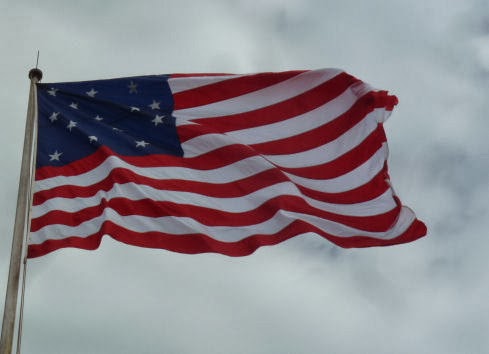
Ft.  McHenry’s 15-star and stripe flag of 1814 (in use from 1795-1818)
 
 
Now, the flag of the USA has thirteen red and white stripes, representing the original 13 British colonies, and fifty stars, representing the 50 states of the union.


The Grand Union Flag was used from December 1775 to June 1777, incorporating the thirteen stripes for the 13 colonies and the British Union Jack.

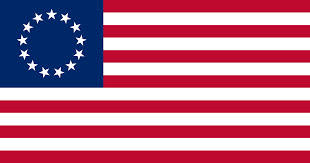
Later there were several versions of the flag with thirteen red and white stripes and thirteen stars on a  the latter either on a blue field in rows or in a circle.

Often called the Betsy Ross Flag

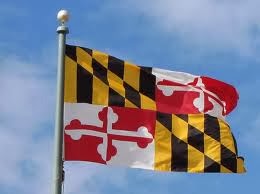
There have been many, many U.S. flags over the years. Then I got to wondering where the Maryland State Flag came from, as it has a quite unique design.  Turns out it is based on the heraldic arms of the founding family of the colony of Maryland, the Calverts, Barons Baltimore, incorporating the arms of the Crossland family as well. According to Wikipedia, it is the only state flag that is based on English heraldry.


Maryland flag
 
 
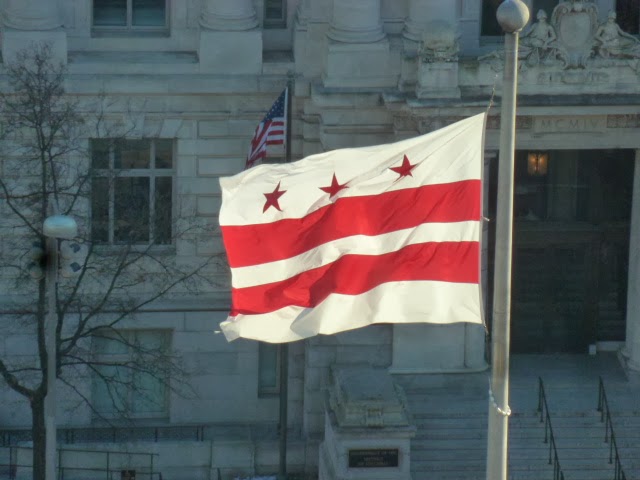
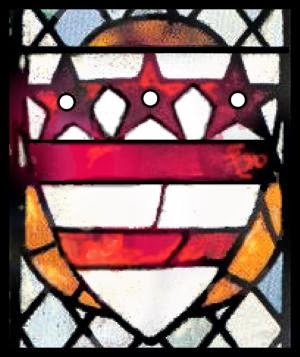
However, the Flag of the District of Columbia, is based on the family crest of the Washington family of County Durham, England,  originating in the 12th century.
 
District of Columbia Flag, adopted in 1938


Below the arms of the Washington Family, in a 14th C. window of the Selby Abbey in Yorkshire.


Who knew???