London Mudlarking: The Essential Guide

By Guest Blogger Alex Maccioni

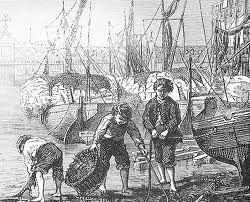
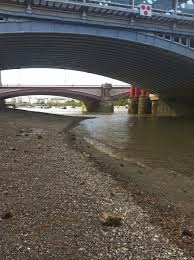
On the face of it, mudlarking seems awful. Kristine has previously made it clear that its originswere brutal, dirty and desperate. Yet today you will often see people enjoying a spot of it after Sunday lunch with their children in tow. From my personal experiences I’d say that mudlarking has never been in better health, with more and more people becoming enthralled at the prospect of finding real treasure along the riverbank. The adrenaline rush from finding coins, broaches, bottles and bracelets on the grubby beaches is seriously addictive. There are not many hobbies where you can guarantee success of some sort, but this is one of them. Take anyone down to the banks in the right conditions and they will find clay pipes and china shards. If you stay long enough you will invariably find a piece with a pattern or a bit of text on it as well.  

Part of the appeal for many is the fact that they feel reconnected with the Thames having been left feeling anaesthetised to its charms by fences, walls and steep drops. When they are actually splashing in puddles on the riverbank, seeing ducks and herons and witnessing the surprisingly large amount of boat traffic on the river, they are reminded about how impressive it really is. Mudlarking is about much more than filling your pockets with interesting bits and bobs.

The experience could be improved if there was less rubbish in the Thames, but when mudlarking you are always aware that one man’s rubbish is another man’s treasure, so I suppose that on one level it’s a necessary evil if future mudlarkers are to have anything to find! It probably also helps deter a great number of people, which means there will be more finds for those that are willing to put up with the odd can and bike dotted around the place.


Legal Considerations
It’s worth being aware of the legal element of mudlarking before you get cracking. Perhaps the most important thing to bear in mind is obvious: never trespass. No matter how good a patch of shore looks, you cannot ignore clear signage that states that your movements are limited in that area. As far as I understand it, anyone can walk along the bank and pick up anything that catches their eye, but if you wish to start digging around or using a metal detector then the Port of London Authority needs to be contacted first of all.

The 1996 Treasure Act is just as applicable on the Thames as it is elsewhere, so finders may not necessarily mean keepers. Basically, this means groups of coins, gold and silver objects need to be reported straightaway. If you have found something that is legally defined as being treasure then you must allow a museum to purchase it from you for a price set by independent advisors. If they don’t have the necessary funds or they just don’t want it then it is yours to keep.

But not all finds are ‘real’ treasure. Some of the best are things like Victorian glass bottles with a local borough marked on the glass. Although not intrinsically valuable, they are of immense local interest and importance. If you find anything like this then you don’t have to report it but it’s best if you do get in touch with the local Finds Liason Officer at your council. They will record it in detail and this can help to build up a very particular image of an areas past history. The find will also remain yours. 


Safety
So that you are best prepared for mud and wind, it’s best to wear wellies and take a good waterproof. Preferably try to make sure that this is in a vivid or fluorescent colour so that if you do get into any difficulty that you will be easy to spot. Also, make sure you’re with someone else at all times. The tides can be vicious and rapid, so keep an eye on what the water around you is doing whilst also keeping your exit point in mind. Some plastic gloves may be worth wearing. We all know that there are some nasty items in the Thames and you don’t want to be getting this on your hands. In my experience I’d say the disposable surgical gloves are the best bet. 

So this weekend, if the weather is good, go and give mudlarking a go – you’ll love it.


USEFUL ORGANISATIONS
Museum of London – They are fascinated by even the most mundane finds, so be sure to tell them all about your adventures.
Thames and Field – A club dedicated to bringing new people into the practice. They arrange regular meet ups which are brilliant places to learn about new locations and the finds of others.
London Mudlark – This is a fantastic Facebook page that is regularly updated with high quality images of historic finds from the Thames.

Port of London Authority – Look at the tides before you venture out!

The Duke of Wellington Tour – Video Highlights – Part Three

THE GRENADIER PUB, LONDON

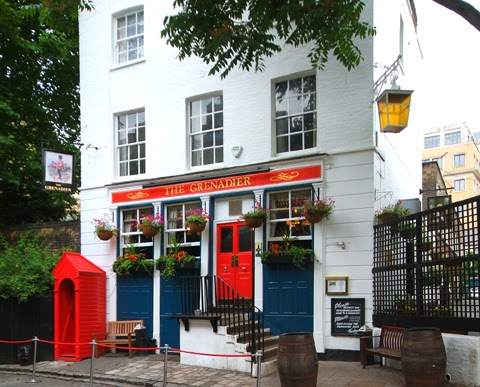
After our visit to Horse Guards, we’ll be rounding out the day with a private dinner at The Grenadier Pub, one of London’s historic pubs. This is another stop I try to make whenever I’m in London and I’ve been there with, among others, Victoria, my daughter, Brooke, with authors Diane Gaston,  Sue Ellen Welfonder, and Carrie Bebris and even by myself.

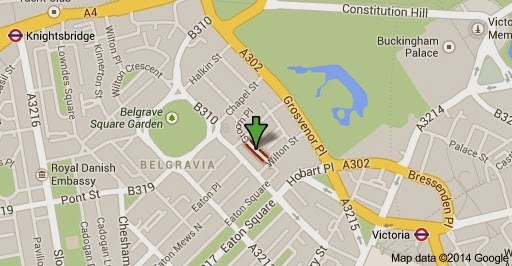
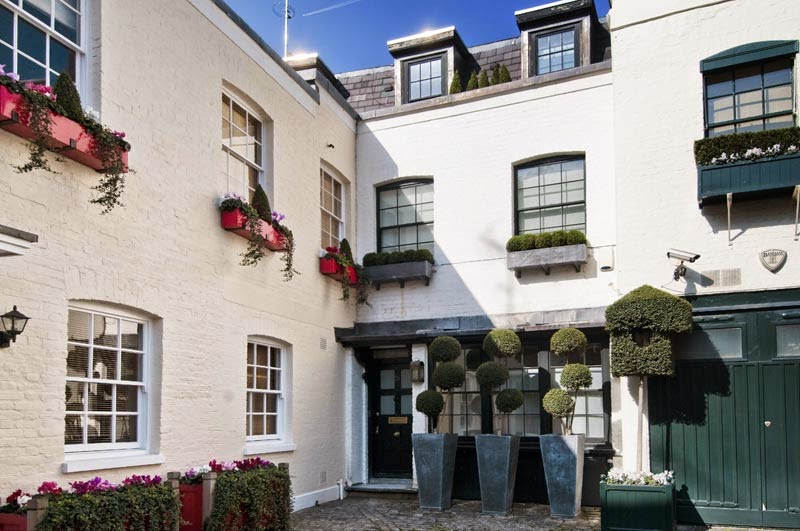
The Grenadier is a tad hard to find first time out, tucked away as it is behind Wilton Crescent on Wilton Row, or Wilton Mews, in Belgravia. You can see how it’s situated on the street at right in the photo of the Row below.
Here’s the Row on a map of London. 
It’s within walking distance of Apsley House and legend has it that the Pub was used as a mess by soldiers in the Duke of Wellington’s regiment, although a pub in some form has stood on the spot since 1720. 
Supposedly, there’s a blocked up entrance to a tunnel in the basement of the Pub that connects it to Apsley House. Keeping in mind that Wellington rarely fraternized with his soldiers – apart from his ADC’s and a very few fellow officers – and that Wellington regularly traveled round London  on horseback, in full view of all and sundry and wasn’t the least concerned about hiding his movements – I put the story of the tunnel on the side of legend, rather than fact. 
The Grenadier’s military connection is not in doubt. Until 1834, Old Barrack Yard, the remnants of which run along the side of the Grenadier Pub, once formed the access road to Knightsbridge Foot Barracks, located on the site now occupied by St. Paul’s Church, Wilton Place. When the Guards moved to their current home at Wellington Barracks in Birdcage Walk, the land was donated by the owner, the Duke of Westminster, to the Diocese of London. 
Today, the Grenadier is awash in historic military decor and Napoleonic atmosphere, with much of the memorabilia focused upon Guards history.

In addition, the Wellington connection is reinforced at the Grenadier through portraits of the Duke, like the one below over the fireplace, as well as the story that the mounting block outside the side entrance of the Pub (below, left) was placed there for Wellington’s use. Which begs the question – did he use the block in order to mount his horse before riding it down the basement stairs and then home through the tunnel? 
Bringing the history of the Grenadier closer to the present, legend also has it that The Grenadier was a regular haunt for Burt Bacharach in the 60’s and that he wrote the score for What’s New Pussycat when he stayed across the road in 10 Wilton Row. Madonna and Prince William are reputed to frequent the Pub, which is said to serve the best “secret recipe” Bloody Mary’s in London.  
You’ll agree that The Grenadier was a “must do” for the Duke of Wellington Tour and Victoria and I look forward to the private dinner our tour group is slated to enjoy here. Not to mention the cocktails . . . . . 
. . . . . . . And the ghost. The Grenadier is commonly known as one of the most haunted places in London, so I could hardly keep it a secret. The Pub is sup
posedly haunted by the ghost of a soldier who was beaten to death for cheating at cards in the Pub. If you’re interested in learning more about the haunted history of the Pub, here’s a video about it from the television series Great British Ghosts, which also happens to have some great footage of the interior of the Pub, its decor and atmosphere. Not mention the cellars.
Personally, I’ve never seen a ghost inside the Grenadier. Rather, I saw them (yes, plural) around the corner in Old Barrack Yard, above. You can read all about my ghostly encounter in a prior post here. 
Oh, one more thing . . . . . . . I should mention that ghost sightings are most frequent in the month of September.
COMPLETE ITINERARY AND DETAILS FOR 
THE DUKE OF WELLINGTON TOUR IN SEPTEMBER 2014 
CAN BE FOUND HERE
 

Why not join us??

C. Aubrey Smith, a Most Familiar Face

One of the joys of watching (old) movies is the delight of recognizing familiar actors and actresses —  the ones who basically played the same character over and over in different films, in different costumes, in different historical settings, but essentially “That Guy.”

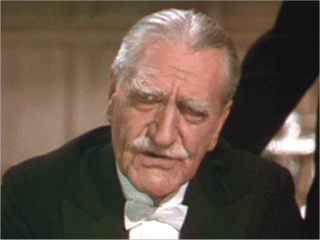
C. Aubrey Smith as the Earl of Dorincourt 
in Little Lord Fauntleroy, 1936
 
We’ve all seen Sir Charles Aubrey Smith (1863 – 1948) in many films over the years  One of my favorites is the classic Prisoner of Zenda with Ronald Coleman in the double role of the King and the Englishman, Douglas Fairbanks, Jr. as the sword-wielding villain, making this a triple threat British historical epic.  Ignore the silly plot and enjoy the faces!  You’ll also see Madeleine Carroll, Mary Astor, David Niven, and Raymond Massey in the cast. Here is a clip from Turner Classic Movies.
(Sorry about the ad, but it can’t be helped I guess.) 
 
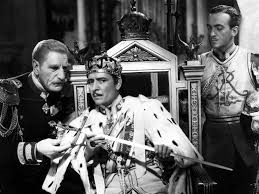
Smith, Coleman and Niven in The Prisoner of Zenda
 

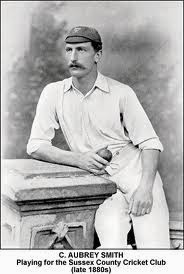
Smith, who held a degree from Cambridge, was a championship Cricket player in Britain and South Africa.

He appeared frequently on the London stage and when he turned to film, moved to Hollywood.  He appeared in dozens of films, the perfect British officer, European aristocrat, grandfatherly gentleman, and sometimes even a villain.

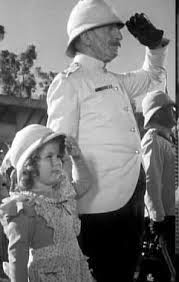
Shirley Temple and Smith in Wee Willie Winkie, 1937

Rudyard Kipling’s story was the basis for this 1937 vehicle for Shirley Temple and her dimples.  Set in the 19th century British Raj in India, it co-starred Smith as the Colonel/grandfather.

As General Burroughs in Four Feathers, 1939
 
Based on the novel by A. E. W. Mason, Four Feathers is a well-known story of 19th century cowardice and heroism. It is renowned for its desert scenes filmed in the Sudan, often compared to the brilliance of Lawrence of Arabia.
 

  C. Aubrey Smith, C.B.E.

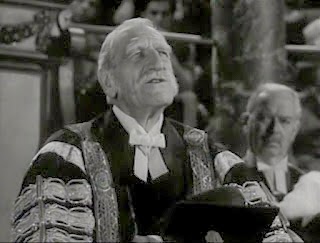
Smith played the role of the Chancellor of Oxford in The Adventures of Mark Twain, 1944, starring Frederic March in the title role.

Smith was named a commander of the Order of the British Empire in 1938; King George VI knighted Smith in 1944.

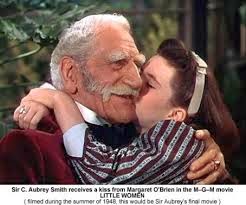
Smith and Margaret O’Brien in Little Women, 1949

Released after his death in 1948, Little Women was Smith’s last film. It was the top grossing film of the year.


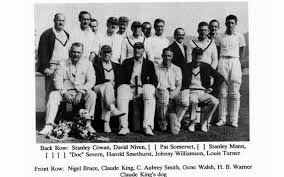
During  his many years in Hollywood in the 1930’s and later, Smith organized popular cricket matches with teams drawn from some of the industry’s most famous British stars, such as Coleman,  Fairbanks, Niven, Laurence Olivier, Errol Flynn, Leslie Howard, Cary Grant, Nigel Bruce, Basil Rathbone, and writer P.G. Wodehouse.
Oddly enough, while a young man, Smith had settled in South Africa to prospect for gold in 1888-89. While there he developed pneumonia and was wrongly pronounced dead by doctors. Fifty years on, in 1948, Smith did actually succumb pneumonia. He died in Beverly Hills at age 85. 
 

A Taste of London in Florida

If Kristine and Victoria could not spend an afternoon with Arthur Wellesley, 1st Duke of Wellington, with whom would they choose to meet up???

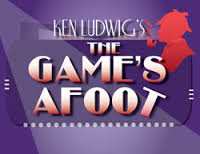
How about Sherlock Holmes???  Well, almost.  Recently we attended a performance of The Game’s Afoot at the Gulf Shore Playhouse in Naples, FL.  We laughed ourselves silly.  It’s about an actor who is known for playing the character of Sherlock Holmes on the stage.


Jeffrey Binder played the leading role, supported by an excellent cast well suited to the perfectly farcical nature of the play written  by Ken Ludwig,  winner of the Mystery Writers of America Edgar Allen Poe Award for Best Play of 2012. 

Jeffrey Binder
Set in 1936, action takes place in the opulent Connecticut castle of actor William Gillette (portrayed by Binder), who is renowned for his Broadway success as Sherlock Holmes.  On Christmas Eve, Gillette has invited the cast members of his recently concluded run to his lavish castle. Hostess for the event is Binder’s scatter-brained mother, played endearingly by Barbara Kinglsey.
Barbara Kingsley

The house party of two couples, all of whom were in the Holmes play on Broadway, is joined by spiteful theatre critic Daria Chase (Claire Brownell).

 Quoting the play’s synopsis “… when one of the guests is stabbed to death, the festivities in this isolated house of tricks and mirrors quickly turn dangerous. Then it’s up to Gillette himself, as he assumes the persona of his beloved Holmes, to track down the killer before the next victim appears.”

Ken Ludwig, the playwright, has many awards for his many plays, including Lend Me a Tenor, Moon Over Buffalo, and Crazy for You.  His book, How to Teach Your Children Shakespeare, came out in 2013 from Random House.  A full Bio is here.

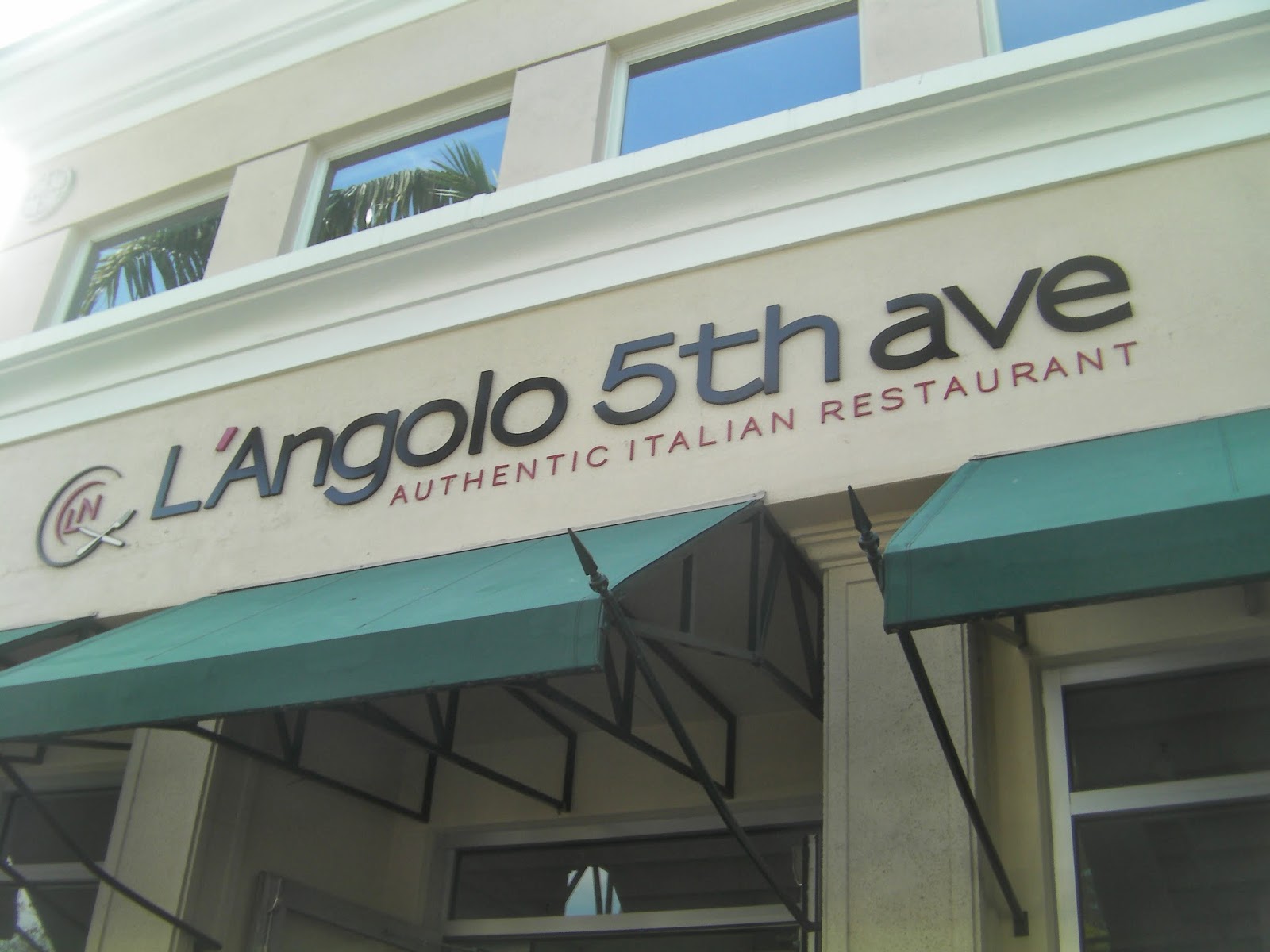
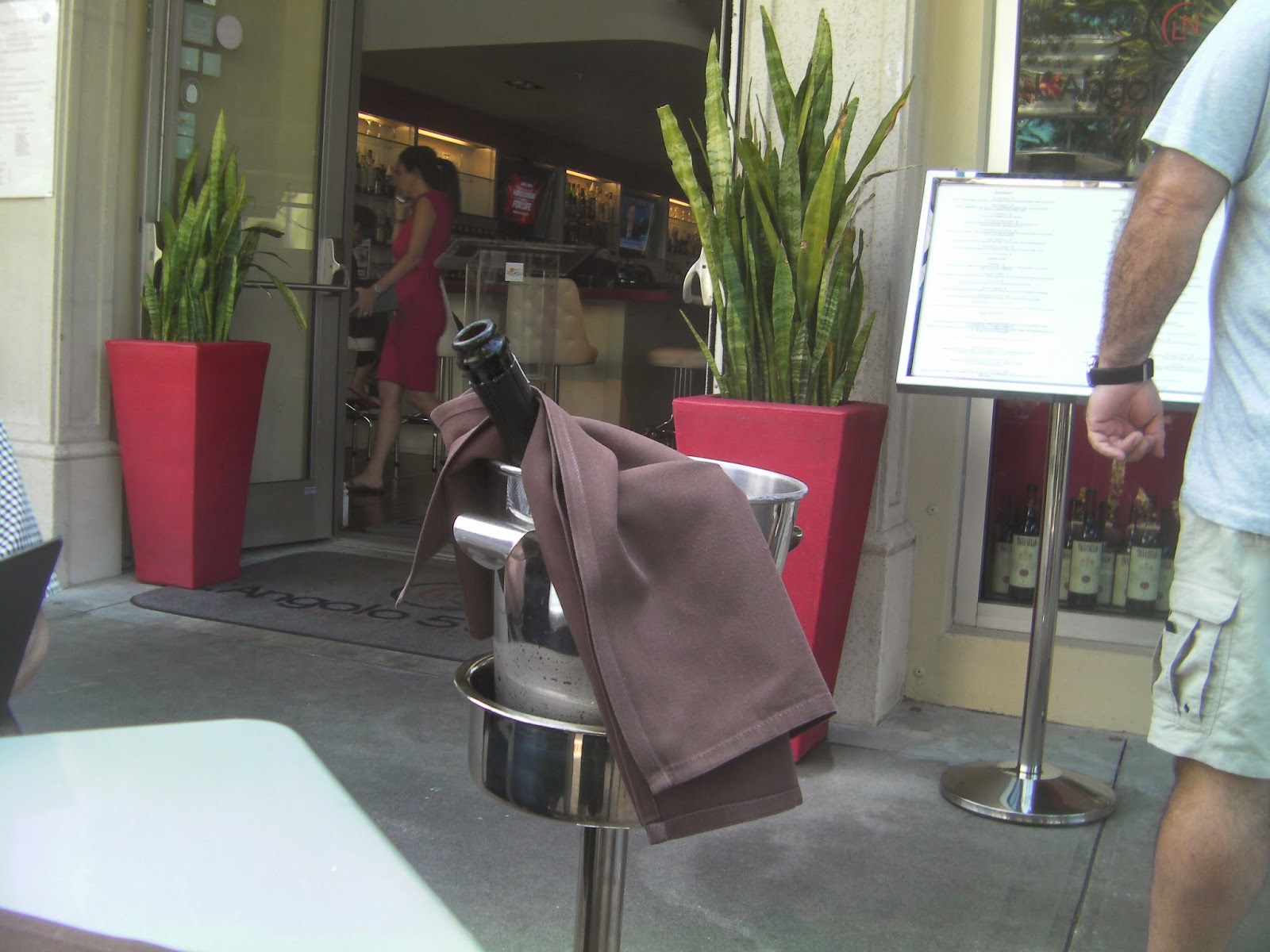
Before the show, we had a lovely time at L’Angolo, complete with our favorite Italian bubbly.  Though one hubby had to work (sigh!), the other came along and loved the show!

Fifth Avenue S. is THE place to eat in Naples
PROSECCO!!!!
Kristine, Victoria, and Ed pre-theatre

The Duke of Wellington Tour – Video Highlights – Part Two

Part Two of our video tour of the sites we’ll be visiting during The Duke of Wellington Tour in September continues with more on our London stops. We hope you will sign up and come along to share our adventures. After leaving the Tower of London, its on to the Horse Guards and the Household Cavalry Museum.

From the Household Cavalry website:

Perhaps Horse Guards most illustrious tenant, the great Duke of Wellington, the Victor of Waterloo, had two stints at Horse Guards as Commander in Chief, a year from 1827-28 and the last ten years of his life from 1842. His office, formerly the Court Martial Room, is now the office of the Major-General Commanding the Household Division and General Officer Commanding London District. A print shows Wellington receiving visitors at the very same desk which is still in use today, and the decor of the room unchanged. The Duke also had quarters at Horse Guards and what is now an office was once his bedroom with the bed situated under the arch. He had an ensuite closet and a private stairway to the stables below, now blocked off, its entrance used as a cupboard. 

We’ve blogged about the Duke of Wellington’s connections to Horse Guards previously and you will find one of those posts by clicking here. You can read about Victoria’s previous visit to the Museum here, and one of Kristine’s visit to the site here.

You can take a peek inside the Museum here and you can read more about the history of the Household Cavalry here.

For a look at day in the life of a soldier in the Household Cavalry and the training and preparation involved, click here. And here’s the link to a stirring video of the Household Cavalry’s musical ride at Earls Court in 2012.

Click here to read the story of Sefton, one of the Cavalry’s most famous horses who survived an IRA bombing. And on the flip side, you can click here to see video of  the naughty Fenton, who led Guards on a merry chase down Whitehall during the wedding of William and Kate. Watch with the sound on so that you can hear a Guard repeatedly calling Fenton – to no avail. All came right in the end, however – Fenton was finally cornered at the Wellington Arch.

You’ll find the complete itinerary and further details for