The Duke of Wellington Tour: St. James's Palace

On Sunday, September 5, 2014, the lucky participants in The Duke of Wellington Tour will take a walking tour (aka a leisurely stroll with many stops for refreshment) of part of London, principally through St. James’s.  Victoria here, with a few facts and pictures.

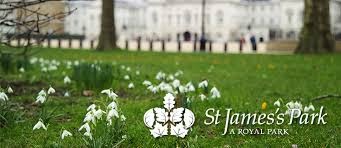
St. James’s can mean a number of things in London, but generally it refers to a small neighborhood south of Mayfair and west of Whitehall and Trafalgar square, bounded by Piccadilly on the north, St James’s Park on the south, Green Park on the west and Haymarket on the east.  St. James’s is a royal palace; a church on Piccadilly, designed by Sir Christopher Wren; a lovely park; an area known as clubland, and a street of distinguished shops.

The name comes from St. James’s  Palace, so named because it was built on the site of a hospital for lepers dedicated to St. James the Less, one of the twelve Apostles.  Here Henry VIII built the red brick structure which still serves as the official residence of the British monarch.  Note that Ambassadors to Great Britain are officially designated as Ambassadors to the Court of St. James.

Main Entrance on Pall Mall
at the foot of St. James’s Street
 
 
The Tudor Entrance
 

Official events are held here and the Chapel Royal is often the venue for royal weddings and baptisms, such as the christening of Prince George of Cambridge on October 13, 2013.

Prince William, Duke of Cambridge, the Duchess of Cambridge
 and Prince George of Cambridge at St James’s Palace for the Christening
 
 
The Altar, Chapel Royal, from The Mirror
for more pictures of the Chapel Royal, click here.
 
St. James’s Palace is not open to the public, though it is possible to attend some Sunday worship services at the Chapel Royal from October to Good Friday. Click here for details.
 
 
Caroline and George
 
 
The ill-fated wedding of George, Prince of Wales (later George IV) to Princess Caroline of Brunswick took place on April 8, 1795.
 
 
Albert and Queen Victoria
 
Queen Victoria married Prince Albert of Saxe-Coburg-Gotha on February 10, 1840 in the Chapel Royal.  Eighteen years later, their daughter Victoria, The Princess Royal, married here as well, to the future German Emperor Frederick III.
 
 
The Marriage of George V and Princess Mary of Teck, July 6, 1893
Gardens at St. James’s, ca. 1700

According to the Garden Visit website (click here), the original renaissance garden, shown above, compartments, were re-designed in the “gardenesque style.”  

18th Century Print: Cherries; a seller outside the Palace


St. James’s has often been the venue for Royal levees and receptions . This plate below from the Microcosm of London, 1810, shows a “Drawing Room,” where a chosen circle could present themselves and their friends and family formally to the Royals.

Ackermann’s Microcosm of London


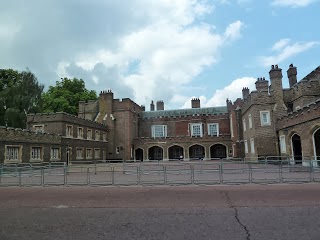
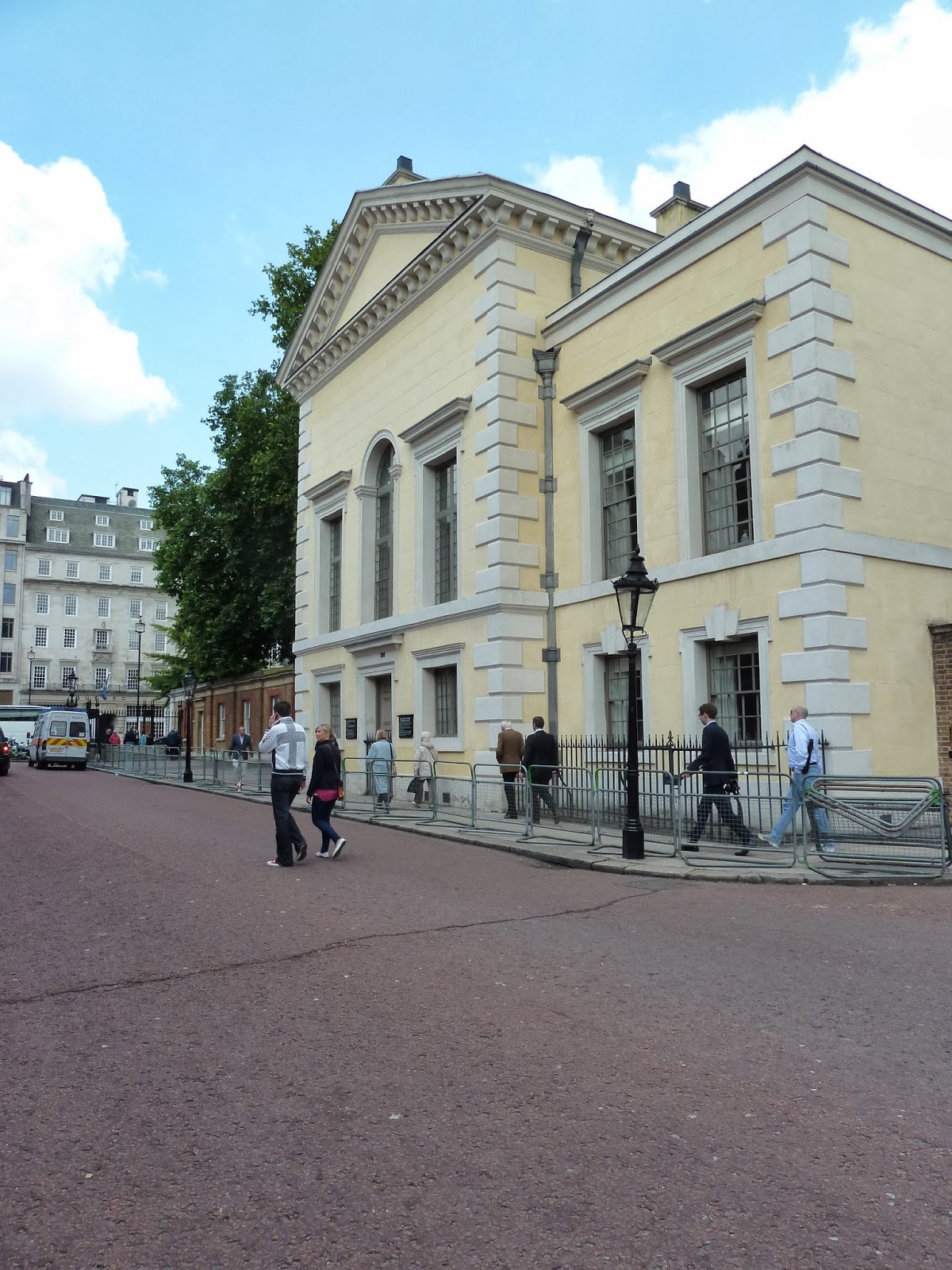
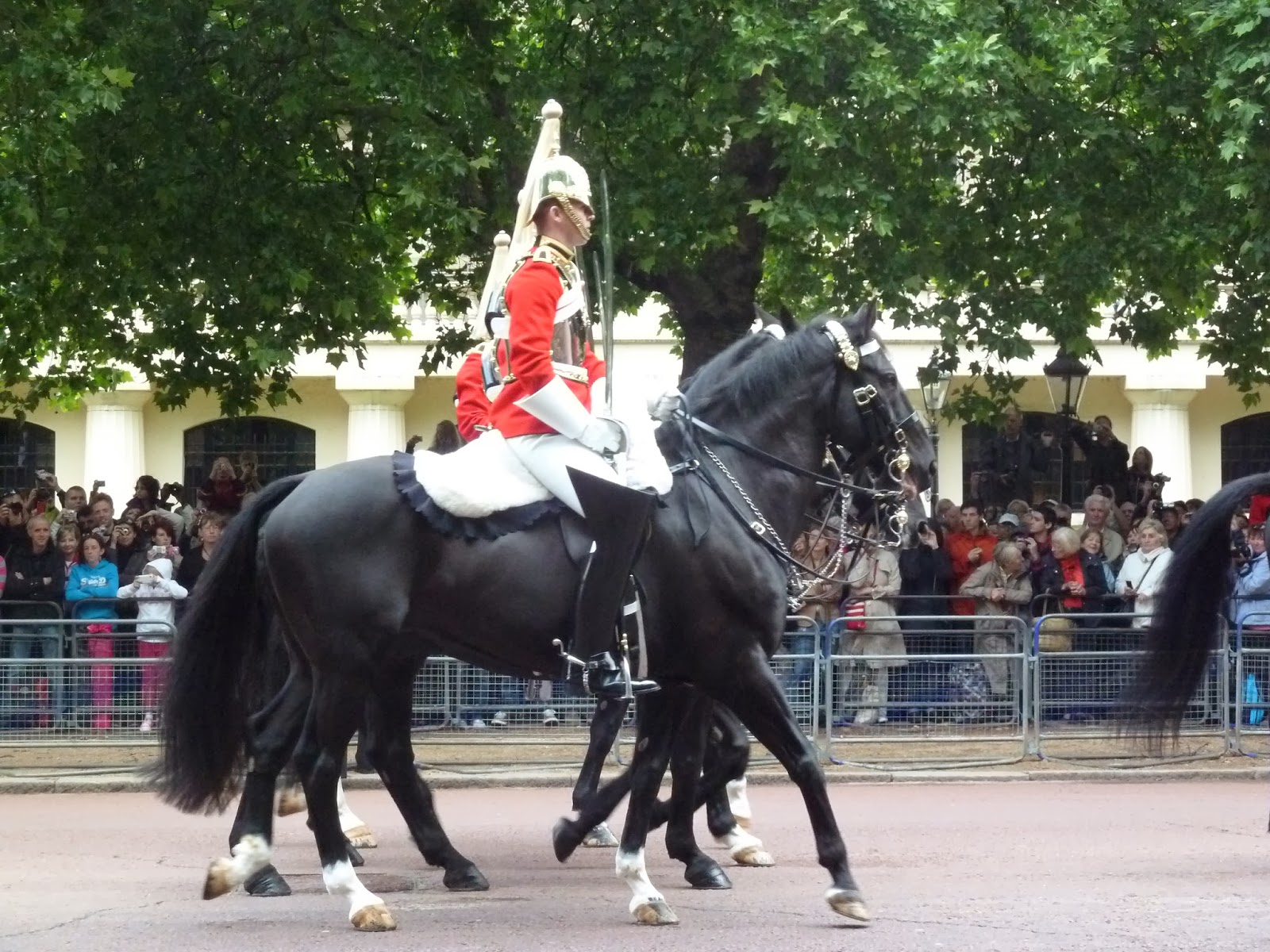
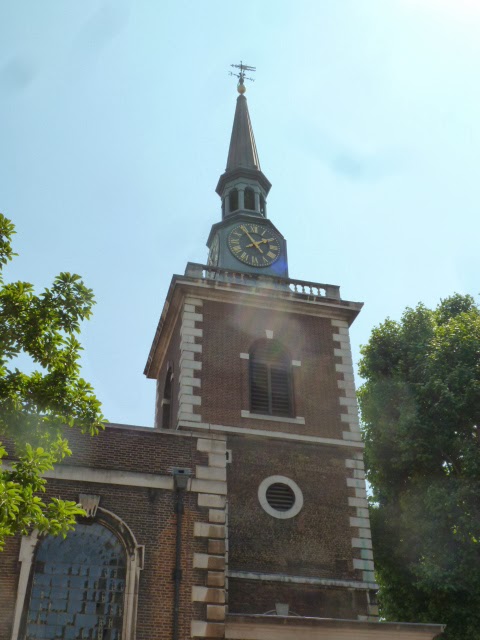
On the Duke of Wellington Tour, we won’t be going inside, but we will see the Palace and its neighbors, The Queen’s Chapel, Marlborough House, Lancaster House, Clarence House, the Mall, St. James’s Street, and more.  Below are a few pictures I took on a previous visit to St. James’s.

Palace from Marlborough Road

Palace from Marlborough Road


The Queens Chapel in Marlborough Road
 
Along the Mall, Trooping of the Colour, 2011
 
Marlborough House
 
St. James’s Church, Piccadilly


For all the Details about The Duke of Wellington Tour,  click here.

And From Elsewhere On The Web . . . . .

Regency History – The Print Room at Queen Charlotte’s Cottage, Kew
Discovering London – Bird’s eye view maps of Victorian London
Blog for the Immortal American Series – A Regency Palette – popular Regency fashion colours
Sir John Soane’s Museum – Adam’s London: Then and Now – Carlton House, Pall Mall
Past Horizons: Adventures in Archaeology – The Archaeology of a Dress
Downton Abbey Cooks – Mrs. Patmore’s Infamous Raspberry Meringue Pudding
The Art of Mourning – The Hair Work Collection
Royal Central – Palace moves to protect online presence of royal family members
UK Destinations – Visiting stately homes on horseback
C18th Girl – Law enforcement and the criminal courts – Yorkshire 1718-1775

2014: The Year of the Bus

That familiar urban creature, the humble bus, is the object of the London Transport Museum’s celebration in 2014.  Their website is here.

 I doubt any visitors to London leave the metropolis without riding the bus, especially one of those open tops that stop at all the familiar sites as they wend their way through the heavy traffic.
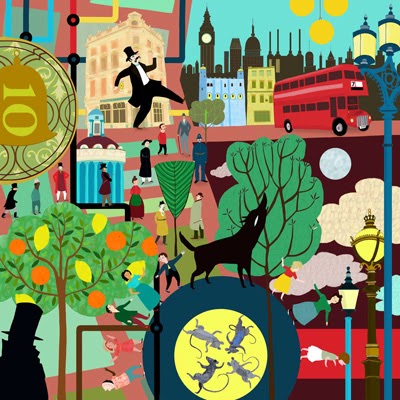
The poster below was chosen to represent this stellar event.  We have yet to decipher all the images.  How about you?  Nevertheless it is colorful and expressive.

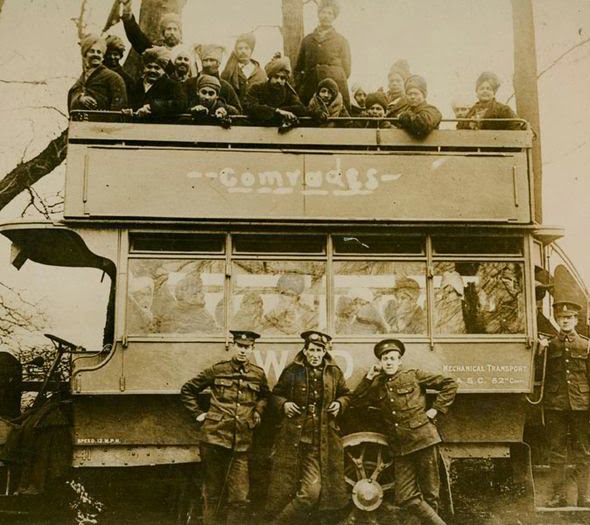
A fascinating aspect of the Year of the Bus is the 100th anniversary of the use of London Buses at the front in World War I.  Read more here.  Introduced in 1910, this first mass-produced bus was in widespread use in London by the outbreak of the war, and a perfect vehicle for transporting troops.

Read the article about the restoration in the Daily Express here.

London Transport Museum photo

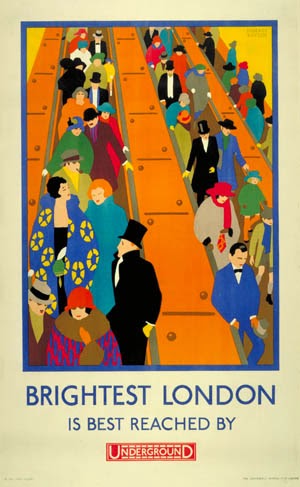
The Transport Museum has an excellent collection of old posters — and here is one of the favorites — all the London toffs mixing with the hoi polloi as they travel the tube.

The Wellington Tour: Exciting Changes!

Not so long ago, Victoria and I believed that we had the itinerary for The Wellington Tour finalized and that it was done and dusted, but instead we’re finding that it’s a fluid, ever evolving thing. One could even say that it’s got a life of its own. I recently received an email from the curator at the Tower informing Victoria and me that they were going to be mounting an exhibition this summer on the Duke of Wellington’s influence upon and changes to the Tower made whilst he was both Constable of the Tower and Prime Minister.

While we don’t have complete details regarding the Exhibition as yet, Victoria and I deemed it important that we take it in during The Wellington Tour in September. Accordingly, we have changed the itinerary by substituting the Tower of London for St. Paul’s Cathedral on Saturday, September 6th. Until further details arrive, you can read on to learn more about Wellington’s influence on the Tower of London.

Above – Items belonging to the Duke of Wellington shown previously at the Tower. Read more here.

From the Tower of London website:

The Duke of Wellington was Constable of the Tower from 1826 to 1852. Under his invigorating leadership the increasingly smelly and sluggish moat was drained and converted into a dry ditch.


The Grand Storehouse was destroyed by fire in 1841. The Duke arranged to clear the rubble and started work on a huge new barracks, to accommodate a thousand men. On 14 June 1845 the Duke laid the foundation stone on the barracks named after his greatest victory – Waterloo.

London 1840s was the scene of rallies and disturbances by Chartists demanding electoral reform. The Tower exerted its traditional role of state power over the people, probably for the last time. More defences were constructed, including a huge brick and stone bastion that finally succumbed to a Second World War bomb, but the Chartist attack never materialised. 

It was also at the beginning of this century that many of the Tower’s historic institutions departed. The Royal Mint was the first to move out of the castle in 1812, followed by the Menagerie in the 1830s, which grew to become London Zoo. The Office of Ordnance was next to leave in 1855 and finally, the Record Office relocated in 1858. An increasing interest in the history and archaeology of the Tower led to a process of ‘re-medievalisation’ in an attempt to remove the unsightly offices, storerooms, taverns, and barracks and restore the fortress to its original medieval appearance.


Visitor numbers increased dramatically in the 19th century. now it was not just privileged sightseers (who were paying for a guided tour as early as the 1590s), but ordinary people who enjoyed a day out at the Tower. In 1838 three of the old animal cages from the Menagerie were used to make a ticket office at the eastern entrance where visitors could buy refreshments and a guidebook. By the end of Queen Victoria’s reign in 1901, over half a million people were visiting the Tower each year.

You can find more details about The Duke of Wellington Tour here.
Read on for an account of the ceremony swearing in the Duke of Wellington as constable of the Tower from The Life and Campaigns of Arthur, Duke of Wellington by George Newenham Wright (1841)  by clicking here.
And you can see almost daily pictures of the Tower ravens posted by Ravenmaster on Twitter by clicking here. Black and white photo above (Beefeaters at Tower gate) also supplied by same.