Blair Castle to be Sold by Savills


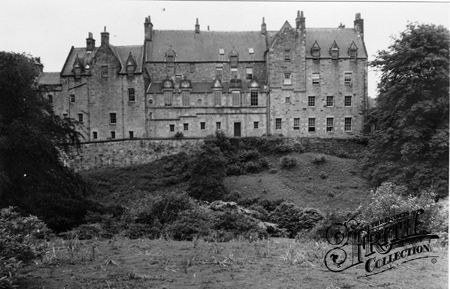
Copyright Francis Frith

 Blair Castle, one of Scotland’s oldest continuously occupied estates, is for sale through Savills. Set in 1,500 acres near Dalry, Ayrshire, it has been the home of the Blair family since 1105. The current owner, Luke Borwick, a descendant of the founding family, endeavored – a la Monarch of the Glen – to maintain the estate with golfing weekends, weddings, advertising shoots and other commercial activities. During its long history, Mary Queen of Scots, William Wallace and Robert the Bruce have enjoyed hospitality at the castle, which is now to be sold along with its contents.

In addition to the 16 bedroom house, the 670 acre grounds include 12 cottages, salmon fishing and woodlands. From the Savills listing description: “Blairquhan Castle lies at the heart of the estate, overlooking the Water of Girvan which flows for over 3½ miles along the northern boundary of the estate. It is rare to find an estate which affords such privacy. About 670 acres in all, the estate also has 12 further estate properties, a walled garden with glasshouse, ice house, outstanding woodlands, farmland, a Purdey Award winning low ground shoot, roe stalking, trout fishing, and salmon and sea trout fishing. Lord Cockburn, writing as he worked his way around the South Circuit of the Scottish Bench in September 1844, wrote about his stay at Blairquhan: `I rose early…and surveyed the beauties of Blairquhan. It deserves its usual praises. A most gentleman-like place rich in all sorts of attractions – of wood, lawn, river, gardens, hill, agriculture and pasture.'”

Also from the Savills site: “Approached by way of three drives, the principal route to the Castle, the three mile Long Approach, starts at the Ayr Lodge and runs alongside the Water of Girvan. The castle is first glimpsed through the trees on the approach. A key characteristic of the castle is the extent to which it has
been preserved as William Burn and Sir David Hunter Blair completed it in 1824. Certain improvements were warranted, since the castle had only one bathroom on the principal floor when it was originally built, with accommodation for 18 resident indoor servants. An ambitious refurbishment in 1970 won the Saltire Award and was followed by an ingenious conversion by the architect Michael Laird, which made use of the former servants’ rooms to provide a modern Estate Office.

“There are now 16 bedrooms and 12 bathrooms and a driver’s overnight room. The castle has been extremely well maintained, with work including significant roof repairs, re-leading the main tower, and installation of new central heating boilers. Laid out over three floors, the accommodation is as shown in the accompanying photographs and on the layout plans. In all, there are over 70 rooms. Reception rooms include a saloon, two drawing rooms, a library and a dining room. In addition there are three kitchens, a library, a billiard room, picture galleries, a table tennis room, museums, stores and wine cellars.”

Whilst bits of British history hit the selling block daily, some as large or larger than Blair Castle, it’s always heart rending to read of these individual properties, their owners and their history. One can only hope that whomever purchases the Estate will preserve it to the same standards the family strove to achieve.
You will find more pictures and info about the Estate, it’s lodgings, gardens and history here. And all the sale details from property agent Savills website here. To read more about recently saved Scottish castles, click here.

The Wellington Connection – Duels – Part Two

“Gentlemen, are you ready? fire!” The Duke raised his pistol and presented it instantly on the word fire being given; but, as I suppose, observing that Lord Winchilsea did not immediately present at him, he seemed to hesitate for a moment, and then fired without effect.
I think Lord Winchilsea did not present his pistol at the Duke at all, but I cannot be quite positive, as I was wholly intent on observing the Duke, lest anything should happen to him; but when I turned my eyes towards Lord Winchilsea, after the Duke had fired, his arm was still down by his side, from whence he raised it deliberately, and, holding his pistol perpendicularly over his head, he fired it off into the air.
The Duke remained still on his place, but Lord Falmouth and Lord Winchilsea came immediately forward towards Sir Henry Hardinge, and Lord Falmouth, addressing him, said, “Lord Winchilsea, having received the Duke’s fire, is placed under different circumstances from those in which he stood before, and therefore now feels himself at liberty to give the Duke of Wellington the reparation he requires.” He seemed to pause for an answer, and Sir Henry replied, “The Duke expects an ample apology, and a complete and full acknowledgment from Lord Winchilsea of his error in having published the accusation against him which he has done.” To which Lord Falmouth answered, “I mean an apology in the most extensive or in every sense of the word;” and he then took from his pocket a written paper, containing what he called an admission from Lord Winchilsea that he was in the wrong, and which he said was drawn up in the terms of the Duke’s last Memorandum.
Upon reading it, it appeared that the word apology was in no place inserted, although the paper expressed that Lord Winchilsea did not hesitate to declare of his own accord that he regretted having unadvisedly published an opinion which had given offence to the Duke of Wellington, and offered to cause this expression of regret to be published in the ‘Standard’ newspaper, as the same channel through which his former letter had been given to the public.
The Duke, who had come nearer, and was listening attentively, said in a low voice, “This won’t do; it is no apology.” On which Sir Henry took the paper to the Duke, and walked two or three paces on one side with him, but immediately came back, saying, ” I cannot accept of this paper unless the word apology be inserted.” He then took a paper from his pocket, and was proceeding]to read, saying, “This is what we expect;” when Lord Falmouth, interrupting him, said, ” I assure you what I have written was meant as an apology;” and he entered into a discussion, asserting that the admissions contained in his paper were the same as those, or were quoted from those, in the Duke of Wellington’s own Memorandum. Sir Henry said, “My Lord Falmouth, it is needless to prolong this discussion. Unless the word apology be inserted, we must resume our ground.” And, turning to Lord Winchilsea, whom Lord Falmouth had taken aside to converse with, he said, “My Lord Winchilsea, this is an affair between the seconds;” on which Lord Winchilsea retired.
After some little hesitation, Lord Falmouth said he did not well see how he could put the paper into any other form; and, referring to me, he said, half aside, “Do you not think it sufficient?” I said, “Yes, if you insert apology in the body of your paper.” To which he replied, “Well, Sir Henry, I will do it in this way, and I trust that will answer every purpose. I will insert apology here in this manner “—writing with his pencil after the words ” hesitate to declare of my own accord that (in apology) I regret,” etc. Sir Henry then went to the Duke and spoke a few words, but came back almost instantly, and said to Lord Falmouth he was satisfied, or that the paper would do.
He then added, “And now, gentlemen, without making any invidious reflections, I cannot help remarking that—whether wisely or unwisely, the world will judge—you have been the cause of bringing this man (pointing to the Duke) into the field, where, during the whole course of a long military life, he never was before on an occasion of this nature.” The Duke came forward, bowing coldly to Lord Falmouth and Lord Winchilsea, the former of whom seemed greatly affected, and stated he had always thought and told Lord Winchilsea that he was completely in the wrong; on which Sir Henry remarked that, if he did so, and came with the writer of the letter to the ground, his Lordship had done that which he (Sir Henry) would not do for the dearest friend he had in the world. Lord Falmouth then addressed himself to the Duke in vindication of his conduct, and was beginning to express the pain and anxiety he had experienced during the whole of these proceedings; but the Duke interrupted him, lifting up his hands and saying, “My Lord Falmouth, I have nothing to do with these matters.” He then touched the brim of his hat with two fingers, saying, “Good morning, my Lord Winchilsea; good morning, my Lord Falmouth,” and mounted his horse, and Sir Henry having also got on horseback and said, “I wish you good morning, my Lords,” they both rode quickly off the field.
I took up the pistols, gave them to the Duke’s groom to put into the carriage, and was walking away, when Lord Falmouth called to me to say that Sir Henry Hardinge had not verified the paper, and requested me to do so; which I did by putting my initials under the word apology, which was interlined, and signing my name at the top and bottom. Lord Falmouth repeated again and again how painful it had been to his feelings to be engaged in a business of this kind with a person for whom all the world, and he and Lord Winchilsea in particular, had so much respect and esteem as the Duke of Wellington; and on my remarking, “Then, why did you push it so far?” he replied, “It was impossible to avoid it. The fact is, Lord Winchilsea had been very wrong; so much so that he could not have made any apology sufficiently adequate to the offence consistently with his character as a man of honour without first receiving the Duke’s fire. Had he done what he did in the heat of debate, or in the excitement of the moment, he might have easily retracted his expressions; but he had sat down deliberately and written and published a letter in the ‘Standard,’ containing accusations and insinuations which were highly improper. He certainly had discovered soon after that he had no right to attribute to the Duke’s conduct the motives he had done; but this only rendered an ordinary apology the more inadequate; and he had, therefore, determined first to give the Duke satisfaction, that his expression of regret might have more effect.” I said I could not agree with him in the view he took of the matter. That what might be justifiable, or even praiseworthy, towards an ordinary a
dversary, was very different towards a man like the Duke of Wellington; “for, indeed, my Lords,” said I, “I never even contemplated the possibility of his being engaged in an affair of this kind, and I am filled with something approaching to horror, when, after exposing himself for so many years in fighting the battles of his country, after triumphing over all her enemies by a series of victories the most glorious and complete that ever adorned the page of history, I see he may still be forced to put himself on a level with other men, and expose to impertinence that life which he has so often risked for the benefit of us all.” Lord Falmouth said, “On this occasion, at least, he did not risk his life. I assure you most solemnly, Sir, that on no other condition would I have accompanied Lord Winchilsea except on that of his acting in the manner he has done, and his declaring to me upon his honour that he would not return the Duke’s fire.” I said, “Indeed, gentlemen, I was never so agreeably relieved from the most painful suspense and anxiety I ever experienced as when I saw Lord Winchilsea fire his pistol in the air. I had before felt towards you both something like what I could suppose myself capable of feeling towards parricides; but I immediately saw that, although I might consider you wrong, you had erred perhaps through an excess of mistaken generosity; or, at all events, this is the construction you must desire to be put upon your conduct. Yet still I cannot help regretting you should have considered all this necessary, and forgotten the circumstances of your antagonist. But it is all owing to that cursed spirit of party, which now, as in all times, obscures the judgment and destroys the better sympathies of your hearts.” Lord Winchilsea then replied, as if speaking to himself, “God forbid that I should ever lift my hand against him!” We had by this time reached the carriage, where, bowing, I took my leave, and drove directly home.
Having related these circumstances as minutely as my recollection enables me, I must now be permitted to mention the impression the distinguished actors in this affair made upon my mind throughout the whole of it.
In meetings of this nature the principals are supposed to commit themselves entirely to the guidance of the seconds, and thus become in their hands almost passive agents. On this occasion the Duke conformed himself strictly to this rule; and I could not help admiring how meekly and submissively he conducted himself through the whole of this affair.
To those who, unacquainted with the Duke, have only looked at his greatness, and recollect him at the head of his army, driving his enemies before him in all the triumph of victory from the Tagus to the Garonne in one tide of uninterrupted success, or who, after he had vanquished his great rival on the plain of Waterloo, and arrived at one bound under the walls of Paris, have beheld him in that capital in all the splendour of conquest, surrounded by emperors and kings, himself the most distinguished of all the members of that brilliant assemblage, fixing the boundaries of kingdoms, and controlling by his single word the destinies of the world, this may appear scarcely credible. To others who know the Duke well, it will excite neither wonder nor astonishment, for, whilst he is perfectly confident in himself, and well aware of the respect due to his great actions, no man assumes less. With the most perfect knowledge of human nature, he has always set a just value on popular applause, and has never for a moment allowed himself to be blinded by fortune, or intoxicated with praise. In his honest pride there is no arrogance, in his dignity no haughtiness, in his superiority no vainglorious display; but simple, plain, and natural in his manner, he is, without exception, the most unaffected of men. In all situations and on all important occasions he presents the same person. Calm, modest, unassuming, yet dignified, resolute, and firm, easy, unembarrassed; never losing for a moment his self-possession, never impatient or hurried.
Sir Henry Hardinge, the straightforward, frank, honest, warm-hearted soldier, full of zeal for his old Commander, full of indignation at seeing him obliged to seek reparation of this kind for an unprovoked and unmerited insult, but never allowing either to carry him to any improper warmth; clear, distinct, acute, decided, he went through the whole of this affair—to him most painful—with a degree of judgment, temper, discretion, and good feeling, which quite charmed me.
From Sir Henry’s hint I kept as near the opposite parties as I well could without being remarked, and I have much pleasure in bearing testimony to the gentlemanlike behaviour of Lord Winchilsea. His manner throughout was exceedingly becoming; no haste, no forwardness, no presuming. His demeanour was gentle, calm, and unobtrusive. His countenance, which is pleasing, wore a certain expression of pensiveness, and, as I thought, of regret, as if dissatisfied with himself; and as he seemed to have put himself entirely into the hands of his friend, I confess I felt, in spite of me, a degree of interest and concern for him. He showed no levity, no indifference, but steady and fearless he received the Duke’s fire, without making the slightest movement or betraying any emotion, except that when he raised his arm and discharged his pistol in the air, I thought he smiled, as if to say, “Now, you see, I am not quite so bad as you thought me.”
I was sorry for Lord Falmouth, who was much affected, and seemed to feel deeply all the responsibility of the task he had to perform.
J. R. Hume.
The Wellington Connection – Duels

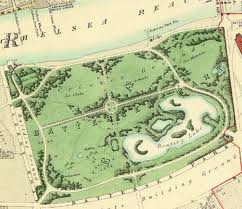
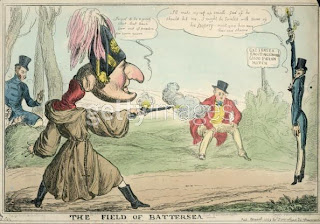
As Prime Minister, the most compelling point of Wellington’s term was the question of Catholic Emancipatoin, the granting of almost full civil rights to Catholics in the United Kingdom. The change was forced by the landslide by-election win of Daniel O’Connell, an Irish Catholic proponent of emancipation, who was elected despite not being legally allowed to sit in Parliament and whose election prompted tempers to flare all around. The Earl of Winchilsea (George Finch-Hatton, 10th Earl) accused the Duke of having “treacherously plotted the destruction of the Protestant constitution” by publishing such in a newspaper of the day called The Standard.  Wellington uncharacteristically responded by immediately challenging Winchilsea to a duel. On 21 March 1829, Wellington and Winchilsea met on Battersea fields. When it came time to fire, the Duke took aim and Winchilsea kept his arm down. The Duke fired wide to the right. Accounts differ as to whether he missed on purpose; Wellington, noted for his poor aim, claimed he did, other reports more sympathetic to Winchilsea claimed he had aimed to kill. Winchilsea did not fire, a plan he and his second almost certainly decided upon before the duel. Honour was saved, restored, etc. and Winchilsea wrote Wellington an apology. However, whether they loathed him or loved him, all those who knew Wellington were shocked that he had gotten himself involved in a duel. Everyone wanted details of the event; very few got them.
We are fortunate enough to glean the full details of the duel in the form of a report known as – Dr. Hume’s Report To The Duchess Of Wellington On The Duel With The Earl of Winchilsea. Hume was surgeon to the Duke of Wellington and head of the Royal College of Surgeons.
Saturday, 21st March, 1829. “Les moindres circonstances deviennent essentielles quand il s’agit d’un grand homme.'” (“The lesser circumstances become essential when it comes to a great man.'”)

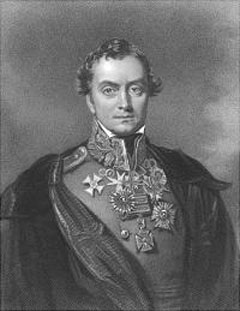
Sir Henry Hardinge

In consequence of a note which I received last night from Sir Henry Hardinge, requesting my attendance on him at an early hour this morning, I repaired to his house in Whitehall Place at a quarter before 7 o’clock, where I found that he was engaged as second in a duel, and desired that I should accompany him to the field. Sir Henry did not inform me who the parties were, but he mentioned that they were persons of rank and consequence, and begged of me particularly to keep near him on the ground, that I might witness everything that took place, and be able to testify how anxious he had been to prevent this meeting, and what his efforts still were to avoid bloodshed. He then told me he was obliged to mount his horse in order to find his friend, and requested me to step into his carriage, which was waiting in readiness, and would convey me to the place where my attendance was required.


Old Battersea Bridge by Walter Greaves

I got immediately into the carriage, which drove through the Green Park, by Pimlico, along the King’s Road, Chelsea, over Battersea Bridge, and stopped about half a mile on the other side of the river, at a point where the two roads cross each other at the foot of the hill. Here I alighted, and was looking about to see if any one should make his appearance, when, to my astonishment, I perceived Sir Henry Hardinge and the Duke of Wellington riding towards me. The Duke rode suddenly up to me, saying in a laughing manner, “Well, I dare say you little expected it was I who wanted you to be here.” I was overwhelmed with amazement and so greatly agitated that I could scarcely answer him; but I put on as steady a countenance as I was able, and replied, “Indeed, my Lord, you certainly are the last person I should have expected here.” He said, “Ah!
perhaps so; but it was impossible to avoid it, and you will see by-and-by that I had no alternative, and could not have acted otherwise than I have done.” Sir Henry Hardinge, who was a little behind the Duke, then came up, and, after a few words of common conversation, they rode to the top of the hill, going to the right and to the left, as if looking out for their opponents. They returned in a short time to the carriage near which I was walking, and, requesting me to take out a case of pistols I had brought with me and to follow them, they turned down the cross road on the left, which runs parallel to the right bank of the river, looking towards London.
I took the pistols out of the case, carrying them in my hand with my great coat thrown over my arm to conceal them, and proceeded along the road till it opens, after you pass a small farm-house, into an extensive plain, called, I believe, Battersea Fields, having left directions with Sir Henry’s coachman for the other parties to follow when they should arrive.
The Duke and Sir Henry again rode some little distance up the height, and seemed looking out for those they expected; and having laid the pistols in a field behind some broken hedges, I continued walking quietly along the path to avoid attracting observation.
I had not been long in this situation when I perceived two gentlemen issue from the narrow road, whom I immediately recognised as my Lord Falmouth and my Lord Winchilsea. Sir Henry Hardinge and the Duke turned their horses at the same instant and came towards them. Sir Henry got off his horse and saluted Lord Falmouth and his friend; but the Duke kept at a little distance, although he also dismounted from his horse. Recollecting Sir Henry’s request, I joined him with the two Lords and walked along with them.
Lord Falmouth, a
s we turned through the gate into the field where I had laid the pistols, on the left of the path towards the river, said, he hoped he had not kept Sir Henry waiting, but that his coachman had by mistake driven them to Putney instead of Battersea Bridge. Sir Henry said, “Oh, no; it is no matter.” Lord Falmouth then begged to know if he had received and read a certain paper he had sent or left for him. To which Sir Henry answered that he had got the paper, but had not read it, and made some remarks on the little necessity, as it appeared to him, for coming to this extremity. Lord Falmouth seemed agitated and very much affected, and said nothing had ever given him so much pain; but he found it impossible to act otherwise than he had done.
We had during this conversation proceeded further into the field, the Duke accompanying us at some little distance, and had got near the hedge at the opposite end of it, when we perceived some people at work, which made us turn off to the right and leap a small ditch to get into another field, where we were less likely to meet with interruption. The Duke went on by himself, Lord Falmouth, Sir Henry, and I, remained at the bank near the ditch, Lord Winchilsea being also near the bank, but at a little distance from us.


Battersea Park
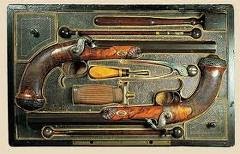
I placed the pistols on the ground, and said to Sir Henry, “As you have only one hand, perhaps you would permit me to load.” (1) To which he replied, “Certainly, if Lord Falmouth has no objections.” He then gave the pistols to Lord Falmouth to examine, and, having afterwards returned them to me, I loaded one, and was proceeding to load the second, when Lord Falmouth said, “Will not one be sufficient?” I replied that I thought it might save trouble afterwards, and loaded that also, and was going with them towards the Duke, who had been joined by Sir Henry Hardinge, when he (Lord Falmouth) called to me to look at the manner in which he loaded. I answered carelessly, “You may load, my Lord, in any manner you please,” and went on. His Lordship, however, seemed a good deal agitated, which I observed on turning round, and therefore I went back and offered to load for him; but he had at length succeeded in getting the ball into the mouth of the pistol, and rammed it home. He thanked me politely, and whilst I stood beside him till he had finished priming, etc. (he only loaded one pistol), he stated again most earnestly his regret at the circumstances which had led to this meeting, and the painful situation he was unavoidably placed in. I said to him, “But surely, Sir, it might have been prevented? Could not you have prevented it? Is not Lord Winchilsea entirely to blame? As for the Duke, I know so well his discretion and temper in all great matters that I am certain he could never either say or do anything to offend or to hurt any man’s feelings whatever.” Lord Falmouth replied, “I do not say whose fault it is, but, I assure you, it cannot be settled without this meeting.”

We went together towards the Duke and Sir Henry, who were further in the field, when Sir Henry proposed measuring the ground; and, having fixed upon a spot, he said to the Duke, “Have the goodness to place yourself here, Duke;” and then stepped off twelve paces towards the ditch, near which Lord Winchilsea was standing, followed by Lord Falmouth, who also paced the ground, making a mark with the heel of his boot when he came to the spot where Sir Henry had halted. Lord Winchilsea came forward and placed himself upon the spot marked, but as I heard him observe that Lord Falmouth had placed him between two trees, I said, “Oh! you may stand where you please, my Lord, either a little more to the right or to the left;” and accordingly he moved two or three steps to his right, when Lord Falmouth came up and began stepping again, to ascertain that the distance was still correct.

Sir Henry then took one of the pistols from me, and, placing it under his arm, he went to about halfway between Lord Winchilsea and the Duke, where he stood still, and, taking a paper from his pocket, he called on Lord Falmouth to come near him, and Lord Winchilsea to pay attention whilst he read it aloud. The purport of what Sir Henry said was that he took that opportunity of protesting in the strongest manner against the necessity of pushing this affair to the extremity to which it had been urged. He reminded and warned both Lord Falmouth and Lord Winchilsea that they alone must be answerable for the consequences which might result from this meeting; “and,” said he, “if I do not now express my opinion to your Lordship in the same terms of disgust I have done in the progress of the affair, it is because I wish to imitate the moderation of the Duke of Wellington.” After the protest had been read Lord Winchilsea said something in a low voice, of which I heard only the words “rather strong language.” Lord Falmouth seemed much affected, and replied (I think with tears in his eyes) that nothing he had ever been concerned in had given him so much pain as the conduct he had found himself obliged to pursue upon this occasion; but although he entirely disapproved of the publication of the letter, which, indeed, was indefensible, what he had done was unavoidable, and that, when everything was over, he was confident even Sir Henry Hardinge would do him justice. He referred again to some paper he said he had sent to Sir Henry, and I think he again asked him if he had read or seen it. To which Sir Henry replied, “No;” and, if I recollect right, he added, “Indeed, my Lord Falmouth, I do not envy you your feelings.” Sir Henry then said, pointing to some people who had collected at the end of the field and were looking on, “we had better take our ground; the sooner this affair is over the better,” and went up to the Duke, who had remained all this time on the same spot without speaking a word, but with a smile of good-nature upon his countenance, which displayed on this occasion all that calm mildness of expression which, at times, contrasts so strikingly with the manly firmness and determination of his character, and gave him the pistol, which the Duke took and cocked. Lord Falmouth at the same time gave his pistol to Lord Winchilsea, and he and the Duke remained with them in their right hands, the arm being extended down by their sides. Lord Falmouth and Sir Henry then stepped back a few paces, when Lord Falmouth said, “Sir Henry, I leave it entirely to you to arrange the manner of firing.” Upon which Sir Henry said, “Then, gentlemen, I shall ask you if you are ready, and give the word fire, without any further signal or preparation;” which, in a few seconds after, he did; saying, “Gentlemen, are you ready? fire!” The Duke raised his pistol and presented it instantly on the word fire being given; but, as I suppose, observing that Lord Winchilsea did not immediately present at him, he seemed to hesitate for a moment, and then fired without effect.

Part Two Tomorrow!

(1) Hardinge lost his left hand by shot during the Battle of Ligny on June 16, and thus was not present at Waterloo two days later. Wellington afterwards presented him with a sword that had belonged to Napoleon.

An Exhibition of Royal Photographers


The Princess Royal and Princess Alice, Balmoral 1856 by Fenton


A new exhibition entitled Roger Fenton and Julia Margaret Cameron: Early British Photographs from the Royal Collection, will be on display at The Arts and Crafts House, Blackwell, Cumbria until April 27 2011.

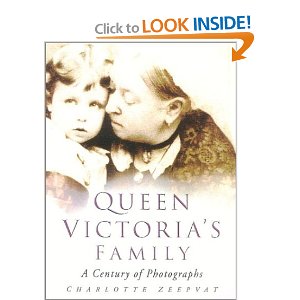
Both Queen Victoria and Prince Albert were photography enthusiasts who kept voluminous photo albums containing pictures of their own family, as well as “art” photographs of models, people and places. At her death in 1901, Queen Victoria’s collection numbered an estimated 20,000 photographs. In December of 1853, the Royal Couple attended the inaugural exhibition of the Photographic Society. Roger Fenton, founder of the Society, of which Prince Albert later became a patron, personally showed them the exhibits and was invited to Windsor Castle to photograph the royal children, the beginnings of a large collection of photos he’d take of the family. Coincidentally or not, after Prince Albert’s death in 1861, Fenton sold his photo equipuipment and gave up photography to retrun to the practice of law and relative obscurity.


Queen Victoria and Prince Albert, by Fenton, June 30, 1854


Julia Margaret Cameron (self portrait)

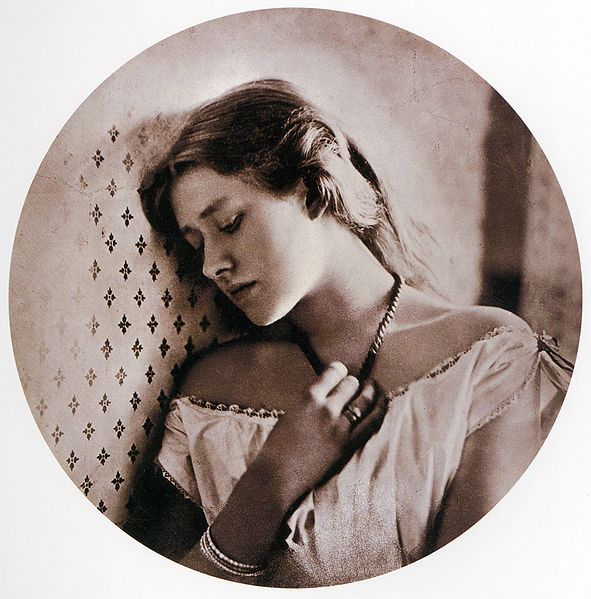
Queen Victoria first saw the work of Julia Margaret Cameron after Albert’s death at Colnaghi’s photo gallery in London and began collecting her work. Born in 1815, Cameron took up photography in 1863, when her daugther gave her a camera. Within a year, Cameron became a member of the Photographic Societies of London and Scotland. A few of her artistic photographs are show here –


The Kiss of Peace 1869


“Sadness” featurning Ellen Terry

For further information on photos of the royal family . . .


Windsor Museum Finds New Home

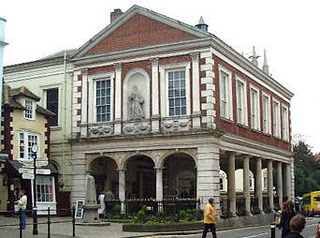
The Windsor and Royal Borough Museum has just relocated to its new home at the Guildhall in Windsor. Above is a photo of our good friend, author Hester Davenport, with two dashing opening attendees. You may recall that Hester gave Victoria and I a personally guided tour round Windsor when we were there in June. If not, you can refresh your memory by revisiting that post here.


The Guildhall, Windsor. Note the “crooked house”
butting up against the Guildhall at left.

The Museum is ‘small but perfectly formed’, with displays of artefacts from the earliest times, including everything from a mammoth’s tooth and mastodon’s tusk to objects and ephemera from before Victorian times up to World War II, the 1950s and the present day. In addition, visitors will find lots of interactive displays and a photo-opportunity to get stuck in the pillory and pelted with fruit and veg (the cuddly sort). And, as Hester is quick to remind me, the opportunity to see the very room in which Prince Charles and Camilla wed (staff availability depending).

The Museum is open Tuesday – Saturday 10 am to 4 pm and on Sundays from 12-4. You can visit the Museum website here, and you can see pictures of the Musuem and part of its collections here.