THE AMAZING SARAH BIFFEN, ARTIST EXTRAORDINAIRE

by Victoria Hinshaw
Originally published in 2010

Sarah Biffen (1784-1850) was born without arms or legs, a condition known as phocomelia, and survived infancy only by the intervention of a clergyman who protected her. In her family she was known as a pixie child, and she was even feared by some in her West Country village.

Self portrait by Sarah Biffen, painted in 1830, holding the brush in her teeth.

At age 12, Sarah became a phenomenon at circuses and fairs, displayed painting or sewing with her teeth and was known as “The Limbless Wonder.” A few years later, the Earl of Morton arranged for her to study with William Craig, a Royal Academician who was also drawing master to Princess Charlotte of Wales.

She became a professional miniaturist and did work for George IV, William IV, and Queen Victoria. She is mentioned in novels by William Makepeace Thackeray and Charles Dickens, and her paintings were accepted for exhibition by the Royal Academy. She received a silver medal from the Society of Arts in 1821.

This is a miniature of Edward, Duke of Kent (1767-1820), a waterclour on ivory, painted by Sarah Biffen in 1839 and purchased by the Duke’s daughter, Queen Victoria. It is part of the Royal Collection.

Sarah married William S. Wright in 1824, but the marriage was unsuccessful. After she moved to Liverpool, her work gradually went out of fashion and her ability to paint faded as well. Obviously the incredible muscle control in her mouth and neck would have been reduced as she aged. She was supported in her last years by a pension from the Queen and funds donated by her friends and colleagues.

In the words of the National Gallery of Scotland’s description of her self-portrait, “This remarkable self-portrait reveals something of Sarah’s dignity and strong character, as well as showing the determination and skill of a woman who rose from being a side-show exhibit to a celebrated royal portrait painter.”

I discovered her work when I attended the exhibition The Intimate Portrait: Drawings, miniatures and pastels from Ramsay to Lawrence at the British Museum in 2009. I fnd her one of the most amazing women I have ever heard of. Almost beyond belief!

HAPPY BIRTHDAY TO QUEEN VICTORIA – 24 May 1819

Victoria H here: I have always had a special feeling for Queen Victoria, obviously because it was the name my father — with his entirely British heritage — chose for me.
The above view of the Queen in 1838 is one of my favorite portraits.
Above, the Queen in her 1838 coronation robes by American artist Thomas Sully (1783–1872). The painting hangs in the Metropolitan Museum of Art in New York City though it has been copied many times and can be found in various configurations many places.

Above, Artist Sir George Hayter (1792-1871) also painted Victoria in her coronation robes.  The ceremony took place on June 28, 1938, about a year after Victoria became Queen at age 18 after the death of her uncle, William IV (1765-1937).

Victoria was Queen until her death in 1901, the longest reign in English history at the time. The Hayter painting is in the National Collection in Britain and a copy of it hangs in the National Portrait Gallery, London.

Victoria’s name became the title of an age characterized by a revolution in industry, transportation, communication, medicine, culture, and, perhaps, family relationships and sexual behavior. At the beginning of her reign, horses and sailing ships provided transportation. At the end of her life, we had dirigibles and the Wright Brothers first flew just a couple of years later.  Wonder what Victoria would have thought of blogging?

In celebration of the 200th Anniversary of Queen Victoria’s birth this year, Number One London Tour will be exploring all aspects of the Queen’s life, from her birth at Kensington Palace to her death in 1901 at Osborn House on the Isle of Wight, on our 2019 Queen Victoria Tour. Full details and Tour itinerary can be found here.

A BIRTHDAY LETTER FROM KING LEOPOLD

Queen Victoria’s birthday was on May 24th
From: The Letters of Queen Victoria by John Murray


The King of the Belgians to Queen Victoria.
Laeken, 21st May 1845.
My Dearest And Most Beloved Victoria,— Receive my sincerest and most heartfelt good wishes on the happy reappearance of your birthday. I need not dwell on my sentiments of devotion to you; they began with your life, and will only end with mine. The only claim I make is to be remembered with some little affection. Thank heaven, I have little to wish you, than that your present happiness may not be disturbed, and that those who are dear to you may be preserved for your happiness.
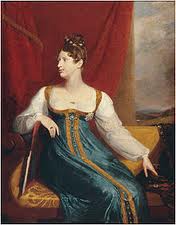
My gift is Charlotte’s portrait. The face is extremely like, and the likest that exists; the hair is a little too fair, it had become also darker. I take this opportunity to repeat that Charlotte was a noble-minded and highly gifted creature. She was nervous, as all the family have been; she could be violent, but then she was full of repentance for it, and her disposition highly generous and susceptible of great devotion. I am the more bound to say this, as I understood that you had some notion that she had been very imperious, and not mistress of her temper. Before her marriage some people by dint of flattery had tried to give her masculine tastes; and in short had pushed her to become one day a sort of Queen Elizabeth. These sentiments were already a little modified before her marriage. But she was particularly determined to be a good and obedient wife; some of her friends were anxious she should not; amongst these Madame de Flahaut must be mentioned en premiere ligne.
This became even a subject which severed the intimacy between them. Madame de Flahaut, much older than Charlotte, and of a sour and determined character, had gained an influence which partook on Charlotte’s part a little of fear. She was afraid of her, but when once supported took courage.
    People were much struck on the 2nd of May 1816 at Carlton House with the clearness and firmness with which she pronounced “and obey” etc., as there had been a general belief that it would be for the husband to give these promises. The Regent put me particularly on my guard, and said, “If you don’t resist she will govern you with a high hand.” Your own experience has convinced you that real affection changes many sentiments that may have been implanted into the mind of a young girl. With Charlotte it was the more meritorious, as from a very early period of her life she was considered as the heiress of the Crown; the Whigs flattered her extremely, and later, when she got by my intervention reconciled to the Tories, they also made great efforts to please her.
Her understanding was extremely good; she knew everybody, and I even afterwards found her judgment generally extremely correct. She had read a great deal and knew well what she had read. Generous she was almost too much, and her devotion was quite affecting, from a character so much pushed to be selfish and imperious.
I will here end my souvenir of poor dear Charlotte, but I thought that the subject could not but be interesting to you. Her constancy in wishing to marry me, which she maintained under difficulties of every description, has been the foundation of all that touched the family afterwards. You know, I believe, that your poor father was the chief promoter, though also the Yorks were; but our correspondence from 1814 till 1816 was entirely carried on through his kind intervention; it would otherwise have been impossible, as she was really treated as a sort of prisoner. Grant always to that good and generous Charlotte, who sleeps already with her beautiful little boy so long, where all will go to, an affectionate remembrance, and believe me she deserves it.
Forgive my long letter, and see in it, what it really is, a token of the great affection I have for you. Ever, my dearest Victoria, your devoted Uncle,
Leopold R.
Number One London will be celebrating the 200th Anniversary of Queen Victoria’s birth during the 2019 Queen Victoria Tour, visiting Kensington Palace, where she was born, Buckingham Palace, Windsor Castle, the Brighton Pavilion and Osborne House, on the Isle of Wight, where the Queen died in 1901. Complete Tour details can be found here.

BRUMMELL FLEES TO FRANCE!

On 16-18 May 1816 Beau Brummell fled to France to escape debtor’s prison. Brummell was born on George Bryan Brummell (7 June 1778  to March 1840 aged 61)) at 10 Downing Street on 7th June 1778, the youngest son of William Brummell, an enterprising man who had risen to the position of Private Secretary to the Prime Minister. From such auspicious beginnings, Brummell utlimately fled London, and his position as the Leader of Fashion, in order to escape his debts.

When Brummell left London, he was living at No. 13 Chapel Street, Park Lane, to which house he had removed from Chesterfield Street some time before; it belonged to Mr. Hart, the Duke of Gloucester’s steward. Leaving behind most of his belongings, they were auctioned off in order to satisfy his creditors.

The notice for the Brummell auction which ran in the newspaper can be found in The Life of George Brummell, Esq., by William Jesse:

By order of the Sheriff of Middlesex!  Will be Sold by Auction By Mr. Christie, On the Premises, No. 13 Chapel Street, Park Lane, On Wednesday, May 22nd, and following Day.

As Jesse further tells us: Amongst the articles of Brummell’s furniture up for sale were a mahogany-framed sliding cheval dressing glass on castors, with two brass arms for one light each, a medicine chest, and colour box. The drawing-room had a chimney glass, in a carved ebony frame, chintz furniture and Brussels carpet; the back drawingroom had also a chimney glass, book-shelves, and library bookcase. The dinner service consisted of twelve oval dishes, twenty soup-plates, seventy-eight meat ditto, nine wine-coolers, a breakfast service for eight persons, three claret jugs, twelve hock glasses, forty wine ditto, decanters, &c There were sixteen pairs of sheets, forty huckaback towels, napkins, &c. Amongst the Sevres china was a pair of oval vases, which sold for nineteen guineas; they were green, with flowers and fruit, and mouldings of burnished gold. A small cup and cover of the same, eighteen pounds. An ewer and basin, mazarine blue and gold ground, richly ornamented with birds and exotics finely painted in compartments, with the name of each specimen upon them; the handle of this ewer was silver gilt, and the lot fetched twenty-six pounds. There were also a variety of chocolate cups and other articles, a clock of Vulliamy’s, a letter scale—(no doubt, all his letters were franked)—the design a figure of Cupid, weighing a heart with a brace of doves; this was in ormolu on a black marble plinth. A silver tea-kettle embossed and chased, brought forty-seven pounds. There were only six spoons and four forks—how did they happen to be left behind ?


Amongst the books were some good historical works, the Standard Poets, two editions of Shakespeare, his friend Ellis’s Specimens of Early English Metrical Romances, bound in curiously raised calf; the Quarterly and Edinburgh, the Memoirs of de Grammont, Chesterfield’s Letters, Berrington’s Abelard and Eloisa, and a large collection of novels now forgotten. A family party at dinner, by Holmes, fetched eighty-five guineas. There were also editions of Flaxman’s designs for the Iliad, Eschylus, and Burger’s Leonora; a copy of the Musee Francais, portraits for the Memoirs of de Grammont, prints by Cipriani and Bartolozzi, a portrait in oils of his father’s benefactor, Lord North, and portraits of Nelson, Pitt, the Duke of Rutland, and George the Third. The Beauvais Claret sold for five pounds eight shillings ; the Champagne, three pounds five shillings; and the Port, four pounds per dozen.


The sale was attended by many members of the fashionable world, every one being apparently anxious to purchase something; the Duke of York was not there, but he gave orders for some Sevres china to be bought for him. Purchases were made in this manner by many of his friends. Amongst the company present were Lords Bessborough and Yarmouth, Lady Warburton, Sir Henry Smyth, Sir H. Peyton, Sir W. Burgoyne, Sir T. Stepney, Colonels Sheddon and Cotton, General Phipps, Mr. Massy Dawson, Acland, of the Albany, Mr. Mills, of Park Street, Mr. Tower, and the Rev. — Belli.


The competition for the knick-knacks and articles of virtu was very great; amongst them was a very handsome snuff-box, which, on being opened by the auctioneer before it was put up, was found to contain a piece of paper with the following sentence, in Brummell’s handwriting, upon it:— “This snuff-box was intended for the Prince Regent, if he had conducted himself with more propriety towards me.” The proceeds of the sale amounted to about eleven hundred pounds, and the sum was paid to the Sheriff of Middlesex.

Originally published in 2010.