The Elegant Taste of the Georgians

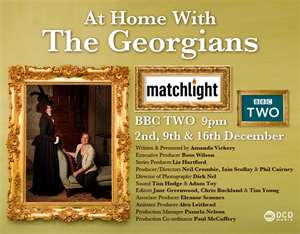
Victoria here. I subscribe to a number of British publications — and always save them until I can sit down with a cuppa — and enjoy them without pressure. Needless to say, they pile up. The BBC History magazine for December 2010 had to wait until last weekend when my DH was immersed in football games. I had much more fun reading “All in the best possible Taste” on p. 42, which was written to accompany the BBC Two series At Home with the Georgians, presented by Amanda Vickery. Her book, Behind Closed Doors: At Home in Georgian England, was published in the U.S. by the Yale University Press in 2010.
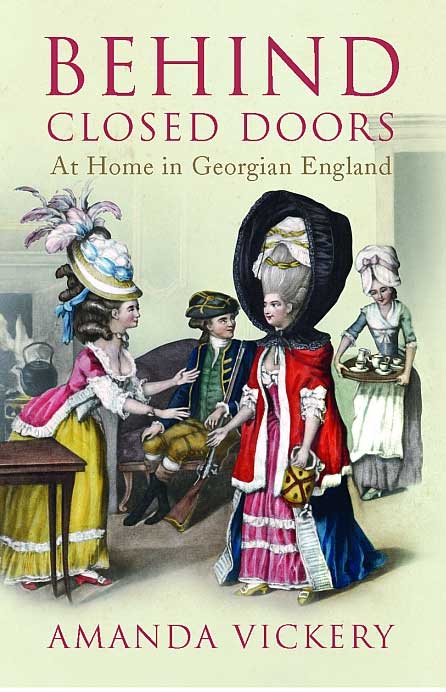
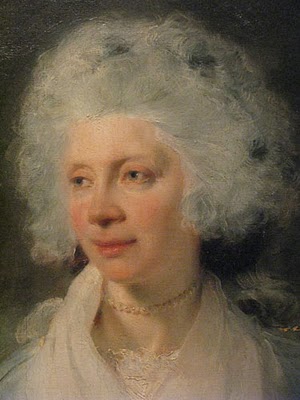
Amanda Vickery is a professor of history at Queen Mary, University of London. While investigating the subject of taste, she discusses Lady Shelburne.  Faithful readers of this blog will already be familiar with Lady Shelburne’s taste, as shown in her homes.  Lansdowne House, London, and Bowood, in Wiltshire, were the topics here last March 29 and 31 and April 4, 2010.   As Earl and Countess of Shelburne, William and Sophia established prominence in Georgian social and political circles. Later, after Lady Shelburne’s early death at age 25, the earl was named first Marquess of Lansdowne.
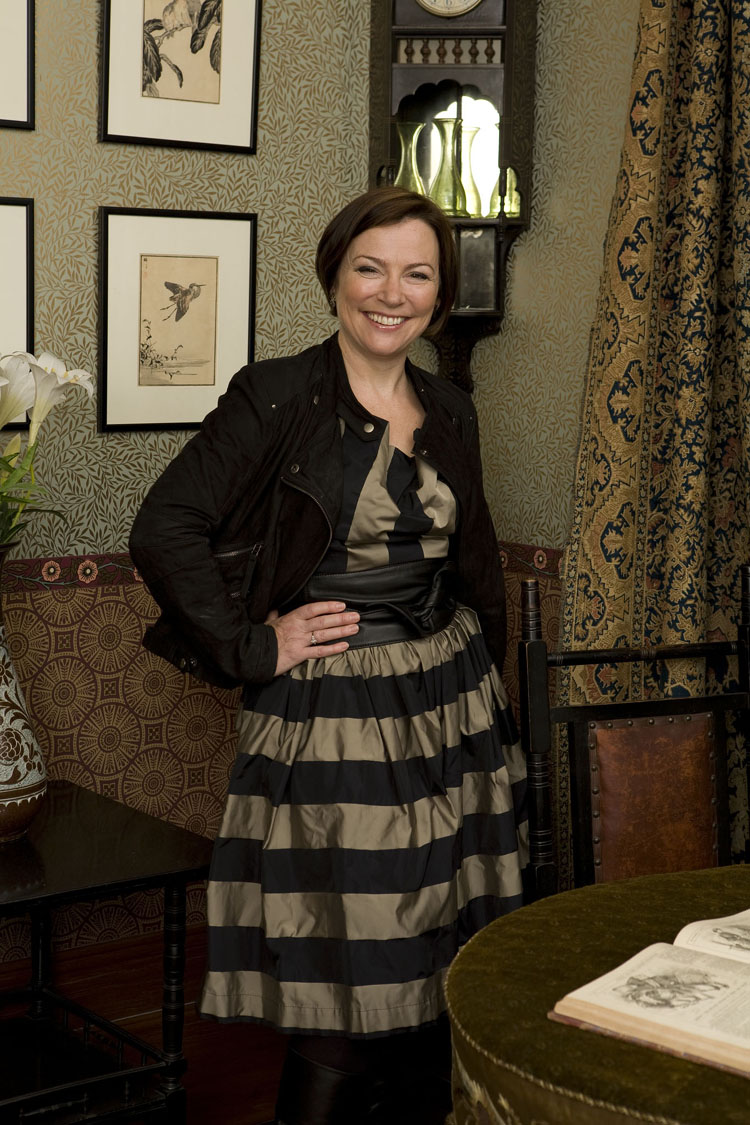
Amanda Vickery has specialized in matters domestic in her latest book as well as in her earlier work,The Gentleman’s Daughter: Women’s Lives in Georgian England, winner of the Longman History Today Prize in 1998. Marriage, child-bearing and housekeeping are described based on Vickery’s research into the letters and diaries of 18th and early 19th century women.


I am sorry to report that the BBC Two website does not have a replay available for the three-part series At Home with the Georgians.  Why not, I’d like to know?  Perhaps it will show up in one of those catalogues or PBS will run it.

Vickery, in the brief article in the December BBC History magazine, tells of the arranged marriage of William, Earl of Shelburne, and Lady Sophia Carteret in 1765 which blossomed into a true love match. Together they chose furnishings for their households, including paintings, decor, statuary and carpets.

Taste, in the prevailing view of their time and class, was based on classical themes, evidence of knowlege of the Greek and Roman civilizations. At right is the Adam Room in London’s Lansdowne Club, part of the former mansion belonging to the Shelburne/Lansdownes, as recently restored. Note particularly the elaborate ceiling design.
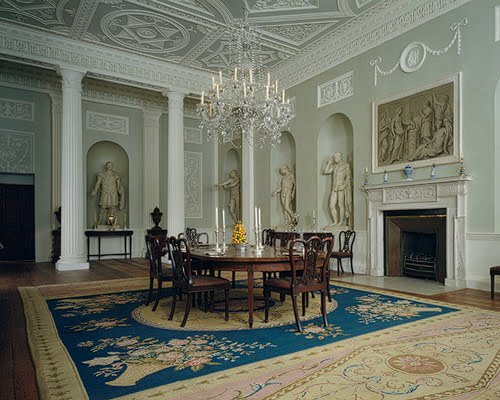
At left is the Shelburne/Lansdowne dining room as it was reconstructed in New York’s Metropolitan Museum of Art after the partial demolition in the 1930’s of the London house just off Berkeley Square.  Shelburne was a rising Whig politician and the family homes were important arenas of social and political life in those days

After the sad death of Lady Sophia (1745-1771), he married again. I suppose it was necessary to have a hostess to preside over these fine rooms!
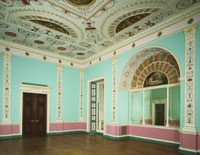
The drawing room from Lansdowne House can be seen in the

Philadelphia Museum of Art.  It is a fine example of Adam’s
Etruscan/Pompeiian designs.   It was in rooms such as these that members of Britain’s ruling circles combined their discussions of pending legislation with the enjoyment of fine wines and elaborate meals, dancing, concerts, and cards.

The Shelburne/Lansdowne family also entertained at the Wiltshire property of Bowood, their principle country home not far from Bath.  At left is the dining room from Bowood which is now the Board Room in the venerable Lloyds of London, occupying a place of honor in the otherwise extremely modern building in the City of London
.
The taste of the furnishings provided the proper setting for the establishment of national policy and thus had an important effect upon them.


Above are two editions of Amanda Vickery’s The Gentleman’s Daughter, highly recommended.

The BBC History magazine article also suggests visits to two other houses to study the taste of the Georgians: Spencer House, in St.  James, and Syon House, on the outskirts of London. This blog will take you to both soon.  Stay tuned.

Downton Abbey

It was very strange watching Downton Abbey on Sunday night. I kept experiencing this feeling of deja vu, convinced that I’d actually been in some of the rooms at the fictional Downton Abbey.  And then I remembered that Burghley House was used for some of the filming and of course I’d been there and that explained that – one wonders if turtle skulls will be making a below stairs appearance. Anyways, stranger still was the feeling of expectation, the waiting for something marvelous to happen. And waiting. And waiting. You and I both know that I live for this type of television fare and even I was a trifle bored. The UK papers had touted DA as “the surprise drama hit of 2010.” Articles were written and opinions given that DA was hands down better than Upstairs Downstairs. Having seen both, I strongly disagree. So far, DA is pretty much a yawn.

Some critics slammed DA writer Julian Fellowes for his script, acusing him of having lifted tried and true plot lines straight from the works of well known authors, a charge Fellowes vehemently denies. Stolen or not, the plots were hardly worth the effort. Other detractors say that DA is nothing more than a pale imitation of the original U/D. The question is – Why was DA such a runaway hit? Frankly, The Telegraph’s report boggles the mind, saying that DA “attracted a large audience of 8 million viewers and, in a development almost unheard of for a serial drama series, it actually gained viewers through its run. Its final episode, at the end of November, attracted an audience of 10.8million – putting it in the top 10 highest-rated TV shows of the entire year.”  Huh?

Of course I’ll tune again this Sunday night, mainly because I’m ready to give my support to anything period and also because there’s not much else on on a Sunday. I certainly won’t have been compelled to tune in again.

What did you think?

Victoria here, adding my two cents. I was disappointed in DA, probably because I was so hoping it would be terrific. I wonder if they cut too much  from the English version of 6 episodes to make only four in the U.S. It seemed the characters were cliched and the plot threads trite.  OF COURSE the remaining heir didn’t even try to see what his new role would be in a sympathetic way.  OF COURSE the slimy young duke had an affair with the footman and then treated him like a dog.  OF COURSE the eldest daughter didn’t want to wear black, whined about her almost-fiance’s death and allowed the slimy duke to mislead her. And I could go on.

But like Kristine and probably most of you, I’ll be watching again this week, hoping for an improvement.  There must be an American heiress in there someplace, right?

And look at all the things they could have included — car chases, explosions, bloody spurts from gunshots, and aliens from outer space.  Screenwriter Julian Fellowes did at least one of those things (a pretend gunshot wound for Albert that never really happened) for Young Victoria.  I loved his Gosford Park, however, and more of the same would be delightful.

For me, a much better drama was The King’s Speech, which I loved.

Please give us your opinions of Downton Abbey —

Regency Power & Brilliance at the National Portrait Gallery

Hard on the heels of Jo’s wonderful series of posts on Sir Thomas Lawrence, I thought I’d share with you the fact that whilst in London recently I had the chance to take in the exhibition of Sir Thomas Lawrence’s works entitled Regency Power and Brilliance. You can read all about the Exhibition itself in a prior post on this blog by clicking here. This has really been a banner year for me as during my past two trips to London I’ve been fortunate enough to have seen many iconic British paintings in person. My visit to the Lawrence exhibition reminded me just what a brilliant artist he was.

Ironically, the paintings below were hung side by side on the same wall.

Queen Charlotte
Elizabeth Farren, later Countess of Derby
These are each enormous, full length paintings and it was possible to get up really close to each. The detail was stupendous.
The way in which Lawrence rendered Queen Charlotte’s face and the pearls is uncanny, whilst the details of her dress were brilliant – the silk ribbons, the lace overlay on her dress and the airy lace on the sleeves were a sight to behold. The detail on the fur of the muff in the Farren portrait made one want to reach out and stroke it, so life-like did it appear.  Incidentally, I bought the poster of the Farren portrait, but have yet to have it framed.

I also saw two lesser known, but equally stunning, portraits, the first being the drawing below.

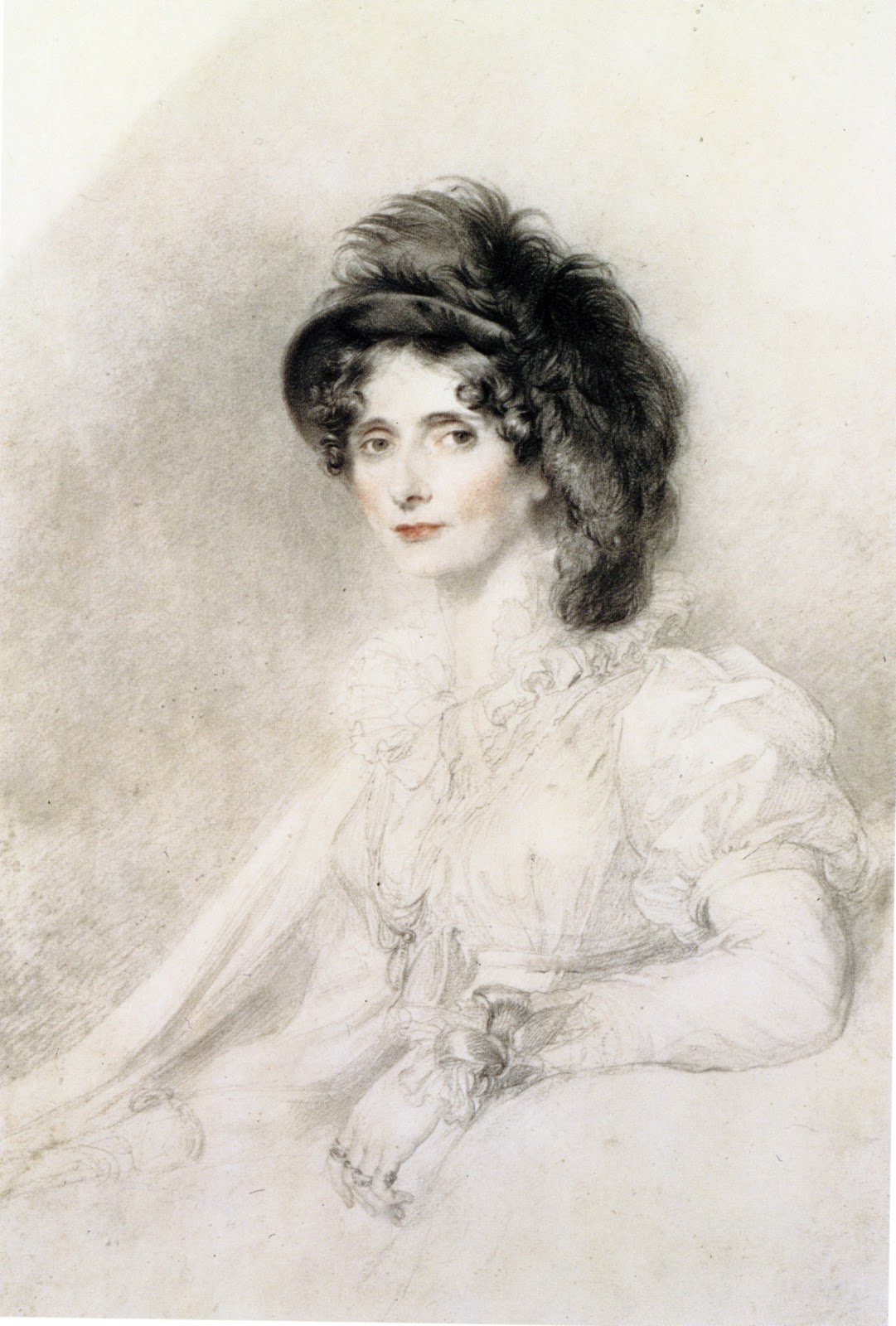
This pencil, black and red chalk drawing of Elizabeth, Duchess of Devonshire done in 1819 is just marvelous. Truly, this picture does not do it justice. Suffice to say that I spent many minutes gazing at Bess’s arresting face.

Is the painting above not one of the most stunning examples of male Regency beauty? The sitter is Arthur Atherley, who had recently graduated from Eton College, which can be seen in the background. So who was Arthur Atherley? There’s not much out there on him, he went on to become a M.P. and Wikipedia has a brief bio on him, but there’s not much else to be found on the web. Really, with such a face and air of insouciance, you’d have thought he’d have gone on to be a serious Brummell rival.

But back to iconic paintings – also included in the Exhibit were these two portraits.

The Prince of Wales, afterwards George IV

and last, but never least . . . .

The Duke of Wellington
Lawrence painted the Duke of Wellington seven times in all and, really, each portrait is equally as good as the next. Again, Lawrence’s superb talent for portraiture is evident in the details of this painting – the folds of the cravat, the red ribbon. When standing before this portrait, one really does feel the force of the Duke’s penetrating gaze.
Hats off to the exceptional talents of Sir Thomas Lawrence, and to the
National Portrait Gallery for mounting this fabulous Exhibition, which moves across the pond to the Yale Center for British Art where it will run from 02/24/11 – 06/05/11.

A Visit to Buckingham Palace

In all my visits to England, I’ve never managed to be in London during public openings of Buckingham Palace. And I didn’t expect it to be open this time over, either. As I mentioned in a previous post, one day whilst in London I strolled across the street from our hotel to the Royal Mews gift shop and while there I overheard one of the ladies who works there telling a man about an unprecedented opening of Buckingham Palace while the family was away over the Christmas holidays. On that day and the next, the Palace would be offering two private, guided, champagne tours each day. Tickets were to be had a few doors down at the Queen’s Gallery. Honestly, dear Reader, no one ever covered the ground between the gift shop and the Queen’s Gallery as quickly as I did that day. I snapped up two tickets to the 4 p.m. tour that very day – by the way, the tickets were enclosed in a really impressive blue envelope, with directions on what forms of I.D. to bring – and then I hightailed it back to the hotel to crow at Greg about my coup. Even he was impressed. And excited.

As instructed, we arrived at the gate on the Queen’s Gallery side of the Palace in Buckingham Palace Road at 3:45. After showing two forms of picture I.D. each, Greg and I were personally escorted to the Ambassador’s Entrance of the Palace and passed through a security screening. Typically, when the Palace is open during the summer, visitors are taken inside in large groups, with over 7,000 visitors coming through in all. Over the two days the Palace was opened in December, just 100 people would have the opportunity to view the interiors. This personalization was evident from the start – we were shown into a waiting area and given upholstered chairs to sit upon until the rest of our group had arrived. Greg and I gawped, goggled, gaped and poked each other in the legs for a while before I turned my head to the right . . . and saw Chantrey’s bust of the Duke of Wellington!

To digress, by this point in our London visit, it had become abundantly clear to Greg that several people other than myself actually knew who the Duke of Wellington was, our having seen Apsley House, the Wellington Arch, Wellington Place, Wellington Street and having had dinner in the Wellington Pub. Vindication at last!

But back to the Palace . . . . once we were all assembled, our tour guide, Dawn, greeted us and took us into an antechamber where a coat check had been set up. We then assembled in a massive hall, where there were full length portraits of Queen Victoria and Prince Albert, amongst others. This chamber opened onto the staircase, below, and we were invited to ascend and stand on either side of the staircase whilst Dawn told us a bit about the paintings – William IV, Queen Adelaide, Prince Leopold, Princess Charlotte,  etc. etc. etc.  As The British Monarchy Website explains: “Queen Victoria requested that the series of portraits of her immediate family were displayed around the upper part of the stairs. These include her grandparents, George III and Queen Charlotte, her parents the Duke and Duchess of Kent and her predecessor on the throne, her uncle William IV, and his wife Queen Adelaide. Thus the portraits served as a kind of ‘receiving line’ so that whoever climbed the staircase was simultaneously received by her family.”

I should tell you here that in addition to Dawn, there were two other uniformed Palace people attached to our group, one of whom preceeded us and opened the tall, double doors to every room we entered, the other followed our group and closed the doors behind us as we left. And whilst you might think that decorum ruled the visit, you’ll be glad to know that Dawn encouraged us at every step to make ourselves at home – “get up close and get a good look at that painting; do go over to the windows and push the curtains aside for a look at the lawns where the garden parties are held; take a seat – any seat; yes, yes, do go on up to the front and stand where those who are being knighted stand. Terribly fun, is it not?” Greg and I kept catching each other’s eye and making faces. Terribly fun, yes.

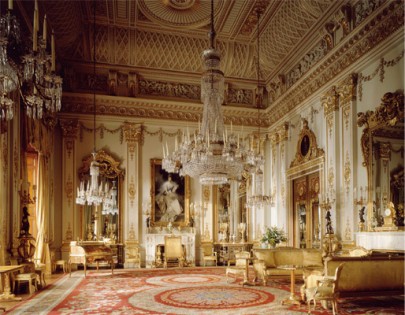
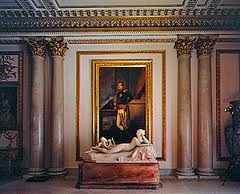
Of course, no photos were allowed, and I’ll admit here and now that I could not for the life of me tell you the exact route of our procession through the State Apartments, but here are some photos of some of the rooms we visited. Note: the work of architect John Nash was evident everywhere and his ornate ceilings and fireplaces appeared in almost every room.

The Picture Gallery

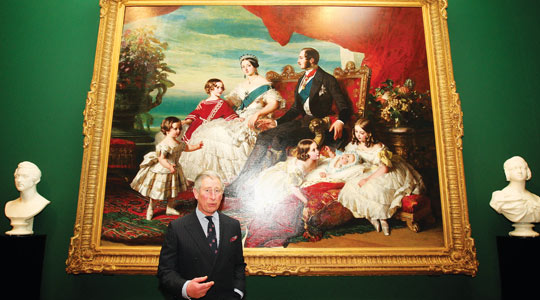
Where I saw Winterhalter’s portrait of the Royal Family, above, which Victoria and I had previously viewed at the Victoria and Albert: Art in Love Exhibition at the Queen’s Gallery in June. No, Chuck was not actually present during my tour. More’s the pity.


The White Drawing Room


The Music Room


The State Dining Room


The Blue Drawing Room


Shown above is the old Throne Room, used up until the reign of Queen Victoria, who found it too small and had another built, large enough for dancing. You can’t see it in the photo, but on the wall to the left of the thrones hangs the only portrait in the entire room, shown below.

As Dawn hadn’t mentioned the portrait, I sidled up to her and asked, “Pardon me, but isn’t that a Wellesley?”

“Yes,” Dawn replied, “He was brother to the Duke of Wellington.”

“Elder brother,” said I, “Richard, Lord Mornington.”

“Oh,” said Dawn, “I am impressed.”

Greg was impressed, too. I was a tad depressed. After all, the ability to properly identify Wellesleys isn’t all that impressive as party tricks go. I mean, how often can one flaunt such a talent? And to whom? The ability to eat fire, do bird calls or play the zither would be much handier, but one must be satisfied with one’s lot in life.

This is the new throne room below, where investitures take place and where all the chairs are hauled out and an enormous table laid for State Banquets.

We ended our tour exactly where we’d begun, in the Great Hall, shown below, where flutes of cold champagne were served before we all trooped off to a makeshift giftshop near the cloakroom.

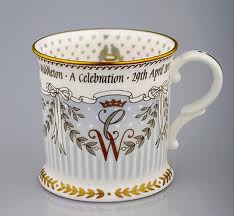
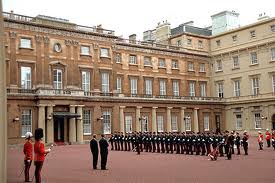
And where I bought myself an official William and Kate wedding tankard. Once we’d collected our coats, Greg and I were each handed an official Buckingham Palace Souvenier Guide and the pair of us were personally escorted out, across the quadrant below

and through the archway on the far right

to the front of the Palace, where we were finally escorted through the entry gate.

By this time, night had fallen and we paused to take one last look back at the Palace, where we’d enjoyed a truly Royal visit.