Nunhead Cemetery

Nunhead Cemetery in Southwark is perhaps the least known, but the most attractive, of the seven Victorian cemeteries on the outskirts of London. It’s formal avenues of towering lime trees and original Victorian planting gives it a truly Gothic feel. Its history, architecture and stunning views make it a fascinating and beautiful place to visit. While much of the cemetery is mysterious and overgrown, many of its features have recently been restored to their former glory. This is thanks to funding from the Heritage Lottery Fund and Southwark Council.

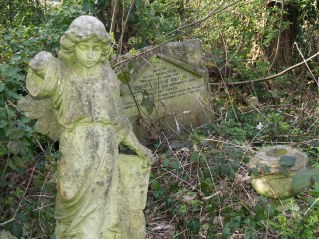
There is a tour conducted by the Friends of the cemetery, open to all, on the last Sunday of each month, starting from the Linden Grove gates at 2:15 p.m. and the two-hour guided tour of a romantic and overgrown Victorian cemetery features 1,000 ivy-clad angels and mighty Victorians buried in the green heart of Peckham.  Consecrated in 1840, Nunhead contains examples of the magnificent monuments erected in memory of the most eminent citizens of the day, which contrast sharply with the small, simple headstones marking common, or public, burials. It’s formal avenue of towering limes and the Gothic gloom of the original Victorian planting gives way to paths which recall the country lanes of a bygone era.
The following account of Nunhead Cemetery appeared in a volume titled, Old Humphrey’s Walks in London and its Neighbourhood (1845) –

This Nunhead Cemetery of All Saints, occupies a commanding site between Peckham and the Kent road, sloping down to the east, north, and south-west, at a distance of some three or four miles from London, and, though far from being completed, gives a fair promise of equaling those which have already won the public approbation. It is the largest of all the cemeteries, comprising at least fifty acres.

In walking to this place I observed, on a neighbouring hill, a singular-looking erection, and the gravedigger, who is even now, with an assistant, preparing a “narrow house” for an inanimate tenant, tells me it is a telegraph. . . . There is a glorious view of London from this spot. The five oaks stretching themselves across the cemetery are strikingly attractive; and when the church is erected on the brow of the hill yonder, it will be a goodly spectacle. The palisades of the boundary, mounting tier above tier; the fine swell of the ground and commanding slope; the groups of young trees, and flowers of all hues, are very imposing. In a few fleeting years the cemetery will be, indeed, an interesting spectacle.

I have walked round the spacious enclosure. What an extended space for a grave-ground ! What a goodly homestead for the king of terrors! Here seems to be room enough to bury us all! At present the monuments are but few; but this is a want that mortality will soon supply. Fever, and consumption, and death, and time, are industriously at work. It is not to one, but to all, that the voice of the Eternal has gone forth: ” Dust thou art, and unto dust shalt thou return,” Gen iii. 19.
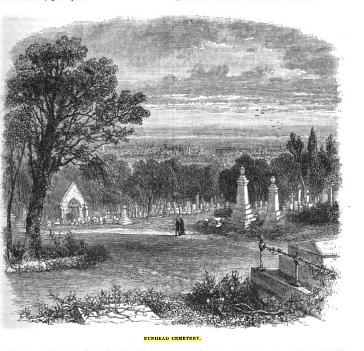
And in The Sunday At Home, Voume 25 (1878), we read:

MANY “parks” in the suburbs of London are now treeless, or planted only, in front “gardens,” with shrub-like trees. A visitor of Nnnhead Cemetery, however, unacquainted with its history, must feel inclined to say, “Here is a picturesquely wooded and undulating Surrey park, in which double rows of houses have not supplanted shady avenues; the turf and trees, over and under which a favoured few once wandered, have been turned into a receptacle and a canopy for thousands of the dead, who, whatever was their station in life, are like the dead slave in the Greek Anthology, all now “equal to Darius.'”

Nevertheless, some forty years ago, the cemetery was simply fifty acres of field and meadow. All the tasteful planting has been done by the cemetery company, and it is rare as well as rich, including shrubs which prove that landscape-gardening here is made a speciality, and that no expense is spared upon it. Within the cemetery, there is an ably superintended, strongly-manned nursery, which keeps the flower-beds bright, and the graves also, after the old Welsh custom. It is curious to think of little coffin-shaped parterres, bordered with whitewashed stones, and planted with old-fashioned flowers, far away in the quiet hollows of the Welsh hills—most of the graves with no other memorial than the piously-tended flowers, when on a summer day we see the blaze of blossom at the foot of gleaming marble and glittering granite in Nunhead. But it is winter at the time of our pleasant wanderings there. Some of the graves are still bright with flowers, but glossy shrubs are their chief adornment. Throughout the place, however, laurustinus blossoms freely, although chrysanthemums hang wilted heads, and rowan trees and holly and rose bushes are red with equally seasonable berries. In spite of gardener’s care, and the mildness of the season, there is nevertheless, an unmistakable look of winter in the place. Trees and bushes are leafless; dark, dank dead leaves lie trodden, or waiting to be trodden, into the fat clay; jungles of leafless sprays bend under sugared-almond-like ovals.

Although, since the Bishop of Winchester consecrated the forty-acre All Saints portion of the ground in 1840, some 45,000 persons have been buried in that portion, and the unconsecrated divided from it by no invidious boundary,—there are solitudes still in Nunhead cemetery; graveless, or only dotted with single tombstones, white, grey, black or green. Moss-grown red paths wind into nooks that seem, so far as either dead or living are concerned, as far from London as if thoy were in the Fiji Islands, until we hear the rumble and panting of one of the trains that frequently rush around. The roar of London is audible in Nunhead; the drab masonry of South London, redeemed from meanness only by its smokily, mistily, mysterious mass, spreads almost to the gates, but on other sides you see green swelling country, houseless, or only marred by straggling lines of brick and mortar.

The first grave in Nunhead was dug in October 1840. The average number of burials in it, during the last ten years, has been 1685 per annum, 1350 in the consecrated, and 335 in the unconsecrated ground. The total of burials having been more than four myriads, it is almost startling to hear the number of the “square” in which any one of the slightest notability or notoriety lies, given without a second’s hesitation by the superintendent. Before singling out graves of any kind o
f note, let us ramble round the cemetery.

The birds are not singing, but their half sad little chirpings and twitterings seem more in harmony with a burial ground than full sung, especially on a day like this, when a winter sun is vainly trying to shine through brown-holland-like clouds. The sheen of the silver birches’ bark seems self-evolved in the sombre midday dusk; willows and ashes “weep” still over green stones, on whose graves they have already shed their leaves.

Nunhead Cemetery is open daily, 8am-4pm in winter.
You can read a poem entitled Nunhead Cemetery by Charlotte Mew here and watch a video of the cemetery here.
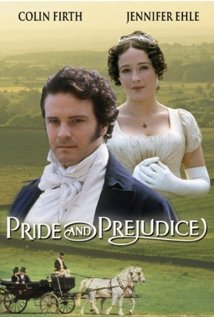
And the Winner is….Pride and Prejudice!

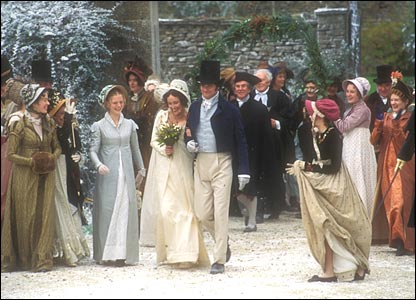
Colin Firth is a favorite for the best actor Oscar to match his Golden Globe and BAFTA awards — for his role in The King’s Speech.  But apparently he has already won our hearts, in 1995, in the BBC’s miniseries of Jane Austen’s Pride and Prejudice.  Who can forget his memorable Fitzwilliam Darcy?

Victoria here; the January issue of the BBC History Magazine caught up with me and I was amused to see their list of favorite “Best Television Costume Dramas.”  None of us will be surprised, I am sure, to find this 1995 production in first place.  The magazine reports that 14.1% of their 3,229 respondents  voted for P and P. 

The conclusion of Pride and Prejudice, the miniseries
Watch the “Colin in lake with wet shirt” video here (1,605,694 views so far).


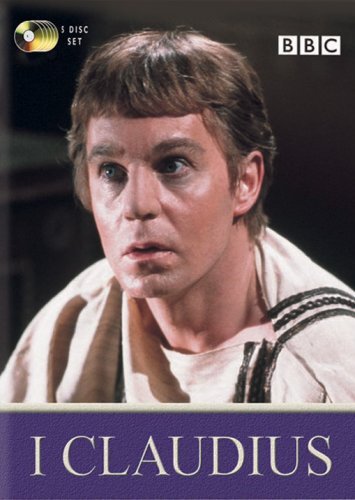
In second place, and this was a bit of a surprise to me, was I, Claudius from 1976.  How young Derek Jacobi looks in this DVD cover picture of him in the title role. 

I remember this wonderful series about the supposedly mad Claudius and the wild history of the Rome of which he eventually became the Emperor.  I particularly remember the role of Livia, wife Augustus, played by Sian Phillips. She was the  personification of malevolence.  The series was based on the novel by Robert Graves and ran for several seasons.  It might have been high in the memory of viewers because the BBC has recently done a radio drama of the novel.

Upstairs, Downstairs, which began in 1971, took third place.  Again, it is familiar to viewers because it has recently returned in a new version, yet to be seen on this side of the pond.  The adventures of the Bellamy family and their servants was required watching for me for many years, and I have enjoyed the  dvds too.  Kristine saw a couple of the new episodes when she was in London at New Year’s and says we will all love them when they arrive here.

In fourth place was Downton Abbey, which was a distinct disappointment to me. It sounded like it had everything I would adore — script by Julian Fellowes, actors such as Hugh Bonneville and Maggie Smith, a huge pile of a country house that made Wretched Excess look tasteful…what could possibly be  unsatisfactory?  Cliche-ridden story, unconvincing characters, silly disagreements masquerading as substantial — I can only think that people voted for it because they remembered it so well, not because it was GOOD.  I just felt I’d seen it all before, and Fellowes packed so many “tried-and-true” situations into it that I wanted to scream.  Of course, I have to say it is much better than almost anything else on tv. Damned with faint praise???  I do look forward to improvements next season. Never say die.

Cranford, from 2007, won fifth place.  And this one I really enjoyed. Taken from several novels by Elisabeth Gaskell, the story revolves around life in an 1840’s English Village. The coming of the railroad challenges a number of traditions but life — birth, courtship, marriage, and death — continues to absorb the villagers.  Of course, anything with Judi  Dench will by on my ‘must” list — but I used to feel that way about Maggie Smith too.

The  BBC History Magazine (in an article by David Musgrove) expressed some surprise that The Tudors only ended up in 14th place. Given the current fascination with all things Tudor and Elizabethan, perhaps that was unexpected by many. But, though I enjoyed every episode and never had the irritation I felt at Downton Abby’s trite story, I really didn’t think The Tudors was all that great. Costumes were wonderful; and the cast was good. But how many  of us could really see Jonathan Rhys-Meyers as Henry VIII.  Even when they padded him up at the end, he looked like a hunky stud with pillows tied around his waist.  Give me Charles Laughton as Henry any time!

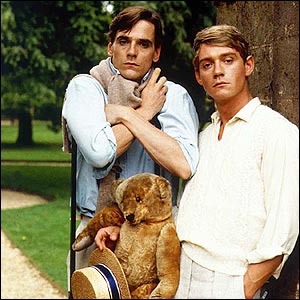
Sixth place went to another of my favorites, Brideshead Revisited (1981) and seventh went to The Forsyte Saga from 1967, which I watch every 3 or 4 years,whether I need to or not!.

To see the complete list of also-rans, click here.

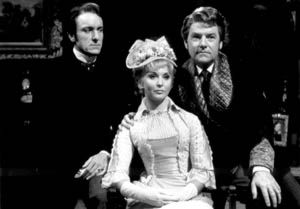
Soames, Irene and Young Jolyon
The Forsyte Saga

Sherlock Holmes Returns – Thrice

(1) Robert Downey Jr. will once again play the British detective in Sherlock Holmes 2, (2) a new, authorized Sherlock Holmes mystery novel will hit the stands in September of this year (3) Benedict Cumberbatch returns as Masterpiece Mystery’s 21st century incarnation of the detective. 
Sherlock Holmes II (the film) is set in the year 1891, a year after the events in the first film, and will have Holmes chasing Moriarity and Dr. Watson pursuing his love life whilst assisting the detective. Downey says: “Unlike last time, where Holmes kept getting Watson into trouble, this time Watson is getting Holmes out of trouble, and they’re both in deeper trouble than I think the audience could have imagined we could go…. All manner of nastiness has just occurred.”

This time out, the duo are joined by the feisty Sim, played by actress Noomi Rapace. Also making an appearance is Sherlock’s brother Mycroft Holmes, played by actor Stephen Fry, a character who producer Susan Downey (Robert’s wife) describes as “stranger and perhaps even more brilliant” than the English detective. Fry recently said, “I play Mycroft, Sherlock Holmes’ brother – the smarter brother, I hasten to add. He’s so lazy that he never gets the reputation that Sherlock does. Historically it’s a very interesting character, and as a lover of Sherlock Holmes since I was a boy I’ve always enjoyed that character myself. I hope that people enjoy it. It’s certainly been fun making the picture.” And how does Fry feel about a Yank playing the iconically British Holmes? “To some extent, but he’s such a charismatic and likeable screen presence, Robert, that you very soon forget it. More than most, he owns every second of screen time. He’s just wonderfully likeable. He’s the real thing.”
The film opens in October in the UK and in December in the US.
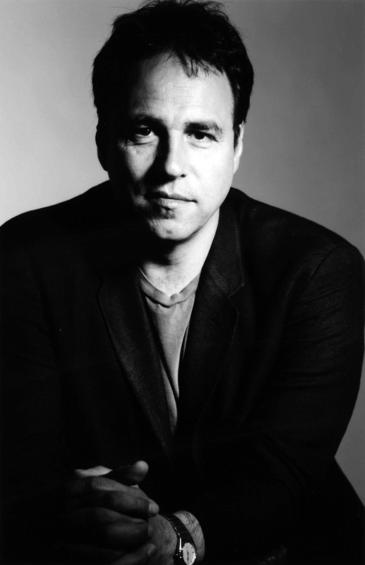
Meanwhile, author and screenwriter Anthony Horowitz has been tapped by the Arthur Conan Doyle Estate to write a brand new Sherlock Holmes mystery novel. Horowitz said he’s writing “a first-rate mystery for a modern audience while remaining absolutely true to the spirit of the original.” Orion publisher Jon Wood promised the author’s “passion for Holmes and his consummate narrative trickery will ensure that this new story will not only blow away Conan Doyle aficionados but also bring the sleuth to a whole new audience.”
This is the first time that the Estate has tapped anyone to continue the Holmes tradition and it’s no wonder they chose Horowitz, who has proven his story telling abilities by creating Foyle’s War and contributing to several other crime drama series, including Midsomer Murders and adaptations of Agatha Christie’s Poirot novels.

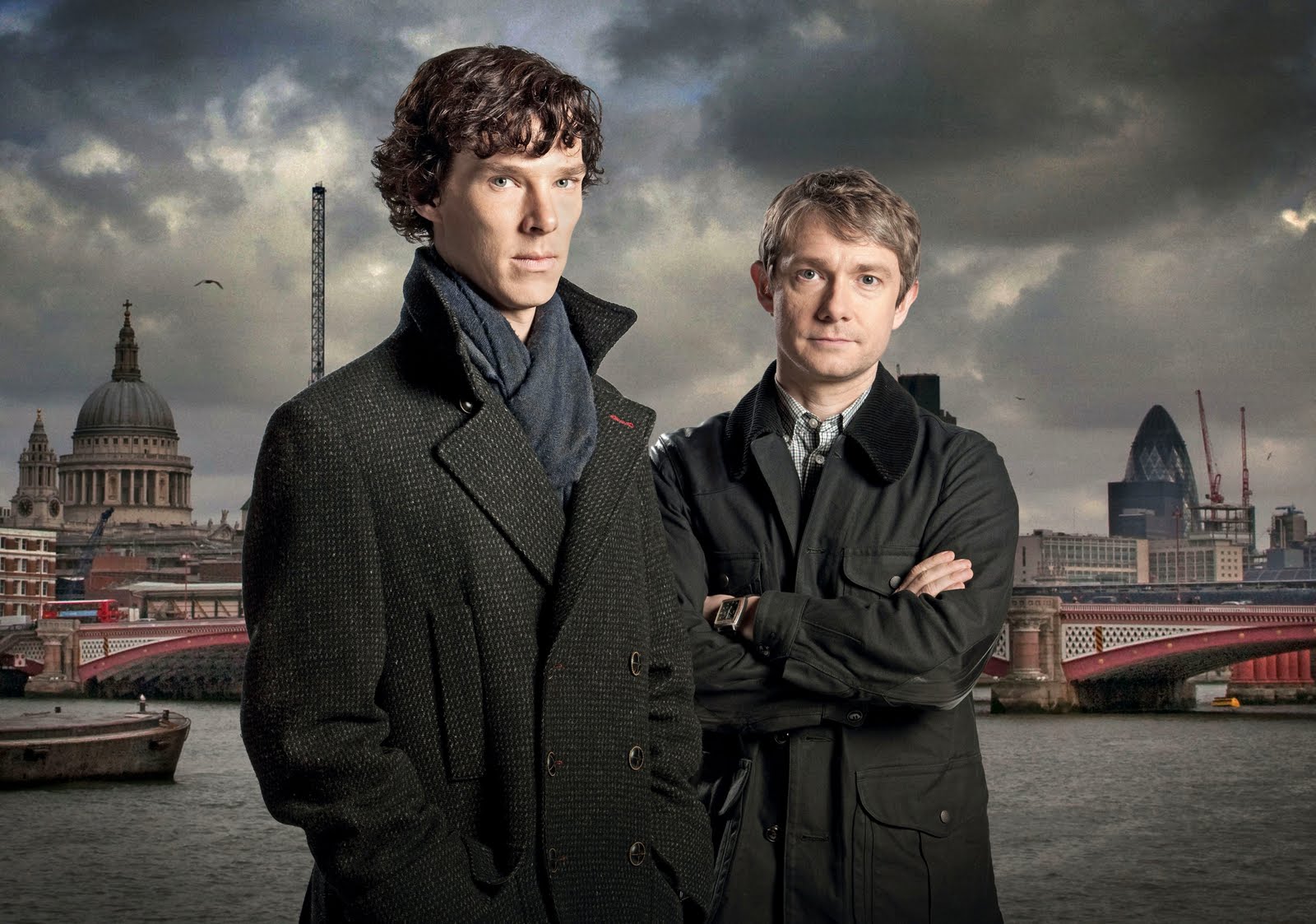
And finally, we can all look forward to Benedict Cumberbatch’s return as Holmes in three new Masterpiece Mystery episodes this Autumn. The game is certainly afoot.

Sir Thomas Lawrence Arrives at Yale


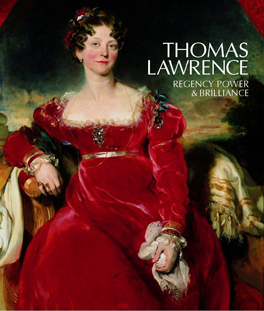
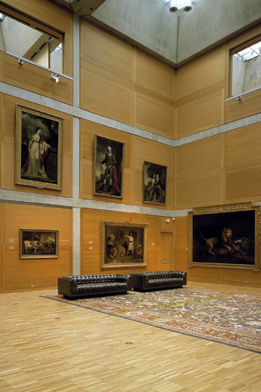
Opening today, February 24, 2011: Thomas Lawrence: Regency Power and Brilliance will be on view at the Yale Center for British Art until June 5, 2011.


Kristine and Jo Manning both saw the exhibition in its first venue at the National Portrait Gallery in London.  Victoria hopes to be there in a few days…and I will report on my visit.  You can read our previous posts on this blog on 10/20/10, 1/7-8-9-10/11, and 2/2/11.  We find Sir Thomas to be a fascinating subject and the exhibition equally so.

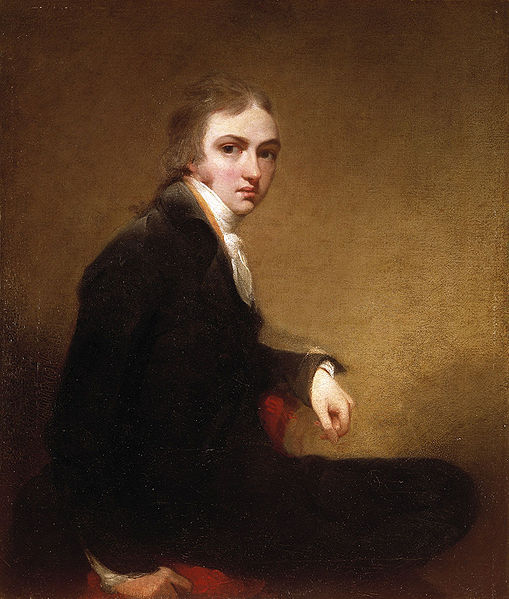
Thomas Lawrence, self-portrait from 1788, right, was born in Bristol in 1769. He was a child prodigy and by age 10, when his family moved to Bath, he supported then with his drawings in pastels.  He moved to London at age 18 and was soon hailed as an up and coming talented successor to Sir Joshua Reynolds, then Britain’s leading portraitist.

One of his fine portraits, of a friend’s wife, Mary Hamilton, is shown in the exhibition, and makes one eager for more of the early pastels. But clients were eager for portraits in oils, and Lawrence excelled here too. He drew Mary Hamilton in pencil, red and black chalk in 1789. The British Museum, which owns the work, writes, “This important drawing of Mary Hamilton is arguably the most beautiful female portrait of its type remaining in this country.”  A detail of the drawing was used as the cover for a 2008 exhibition at the British Museum The Intimate Portrait, below.


Lawrence’s portrait of Queen Charlotte,  wife of George III, brought him fame and eventually fortune. Exhibited at the Royal Academy in 1790, the canvas was praised for its detail and its fine brushwork.

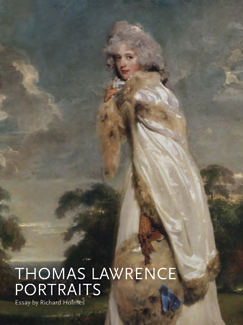
The stunning portrait of actress Elizabeth Farren, later Countess of Derby, exhibited at the RA in 1790, is one of the exhibition posters offered for purchase.  For information on the Yale exhibition, the catalogue, posters and more, click here.   Elizabeth Farren (1759-1829) began her London stage career in 1777, appearing in Goldsmith’s She Stoops to Conquer. She became the object of Lord Derby’s affections, and after his first wife died, Farren married him in 1797. She thus retired from the theatre and became a countess, wife of a prominent Whig member of the House of Lords. They were parents of three children.

Jonathan Jones, reviewing the exhibition as shown in London, wrote in The Guardian: “Lawrence is a painter who triumphed in his lifetime, yet was forgotten afterwards. Why was he neglected? The question echoes through this extremely interesting exhibition… It is because he associated with the wrong royal… Raddled and bloated and unpopular, George IV looks out of Lawrence’s Wallace Collection masterpiece as if he knows full well that in centuries to come, people will joke that ‘there are pieces of lemon peel floating in the Thames that would make a better monarch’.”

But Lawrence’s relationship with the Prince Regent, later George IV, was lucrative and certainly added to his fame. The Regent sent Lawrence around Europe to paint the leaders of the allied victory over Napoleon. The paintings hang in Windsor Castle, though many copies executed in Lawrence’s studio, can be seen in palaces, mansions and museums worldwide.

The Duke of Wellington was the real hero of the  battle, but many, including a coalition of European leaders contributed to the long-sought defeat of Napoleon. Lawrence painted the Duke a number of times, including here on the back of Copenhagen, the horse who carried him throughout the day-long Battle of Waterloo.

Victoria has long adored this painting, from the collection of the Chicago Art Institute. As a child, she often stood in front of Mrs.Jens Wolff and wondered what made this elegant lady so sad. The portrait was commissioned in 1802 or 03 by the sister of Mrs. Wolff and exhibited at the Royal Academy in 1815.  Isabella Wolff was the wife of the Danish Consul in London; they divorced in 1813. She is portrayed as the

Erythraean Sibyl (similar to the Sistine Chapel version) and she gazes at a book of engravings by Michelangelo. Lawrence and Isabella Wolff may have been romantically involved for some years, though why it took the artist a dozen years to complete the portrait is a good question. They continued to write to one another until her death.

Thomas Lawrence: Regency Power and Brilliance will be on display at the Yale Center for British Art, New Haven, CT,  until June 5, 2011.  We will report  again after our visit. For more information on the Yale Center for British Art, click here.

Sending Our Prayers

Number One London has many regular visitors from New Zealand and Victoria and I want to take this opportunity to let you all know that our thoughts are with you during the aftermath of the earthquake, which struck Christchurch at 12.51pm on Tuesday local time.
The Queen, who is also New Zealand’s head of state, expressed her sadness at the 6.3 magnitude quake, saying she was “utterly shocked” by the news.
“Please convey my deep sympathy to the families and friends of those who have been killed; my thoughts are with all those who have been affected by this dreadful event,” she said.
“My thoughts are also with the emergency services and everyone who is assisting in the rescue efforts.”
 We pray that you and yours are safe.