Upstairs, Downstairs

OMG! They’ve cut scenes from the original BBC version shown in the UK, the most important to U/D fans being Rose’s return to Eaton Place. A scene loaded with memories and pathos. You may recall I had the scene up in the sidebar last week. Click here to see it, so that you won’t be denied. Philistines!

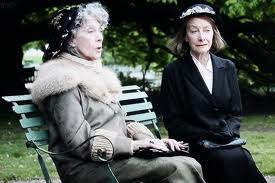
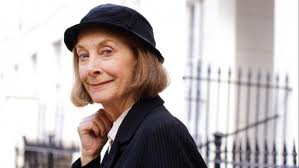
Now that I’ve got that off my chest, I must say that I love Maud, Lady Holland, world traveler and owner of an adorable monkey. They’ve taken the ubiquitous “crotchety, severe old matriach of the family” and changed her up into a delicious and fiesty lady who deserves more screen time. I’ll teach you to smoke, indeed! You can read an interview in which Eileen Atkins discusses her role here.

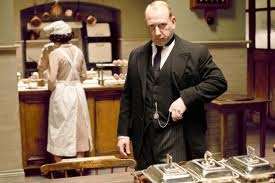
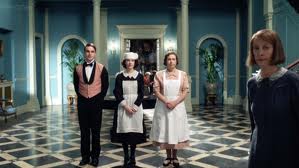
Adrian Scarborough plays Mr Pritchard, the new butler, to perfection. Worlds away from Mr. Hudson, as he should be, whilst being both efficient and a mess, quirky and slightly mysterious. Is he a good guy or a bad guy?

Madame Tussaud – The Novel

Kristine’s post about the Duke of Wellington visiting the wax museum has inspired me (Victoria) to write about a book I recently enjoyed: Madame Tussaud by Michelle Moran.  It is a fictional biography, well-researched but using the kind of emotional depth and intimacy of fiction.  I found the book fascinating and very well-written.  I admit I have never been to one of Madame Tussaud’s institutions;  I would love to see the historical personages, but I have always assumed there was a lot more attention to current rock and film stars — and I wouldn’t recognize them much less care about them.  I guess I have always  classified  wax museums as tourist traps. I know lots of people love them — but I’m not a  fan of the institution.

However, reading the story of Marie Grosholtz and her family gave me a true appreciation of what they were trying to accomplish with their salon, including making a lot of money, and the lengths to which they went to conform to popular trends in a time of incredible turmoil.

Michelle Moran is the author of  several historical novels. Click here for her website.  The picture left shows Ms. Moran (r) with the figure of her subject, Madame Tussaud, at the Hollywood Museum. I have read reports of a film of the book in the works.  And why not? Madame lived a long, event-filled life. Marie Grosholtz was born in 1761 in Strasbourg. Her widowed mother took her to Bern, Switzerland, where they lived in the household of Dr. Curtius, a physician who specialized in creating wax models, first for teaching purposes, eventually for exhibition. They moved to Paris in 1765 and Dr. Curtius began to exhibit his figures in lifelike settings. Marie was an eager student and by the time she was a teen, she began to mold and scuplt the heads of famous persons for their exhibit. She also spent time with the royal family at Versailles, teaching the king’s sister to scuplt saints.  While she split her time between the sumptuous royal palace and Dr. Curtius’s house, associates of her family were involved in the tumult leading up to the Revolution.

 The events of these days are well chronicled by Moran as seeen through the eyes of Marie, a young woman in her late twenties, searching for love, yet obsessed with perfecting her art and making money.  During the Reign of Terror, she accommodated the mob by creating death masks from heads fresh from the guillotine. At right, one of the displays from the wax museum.  Ugh. However, she felt some loyalty to King Louis XVI and Marie Antoinette, deploring the chaos when they fell.

Marie spent time in the prison that held the future Empress Josephine and Grace Elliot, mistress of the Duc d’Orleans. Though both Josephine’s first husband and the Duc lost their heads, the three women were among the survivors.  While in prison, Marie met Francois Tussaud, and they married after the Terror came to an end. It was not a  happy marriage; he succumbed to drink and gambling, and was a constant drag on her accomlishments.  In 1802, Madame Tussaud and her elder son took some of their figures on tour to England, where they stayed and established the wax museum that still bears her name.

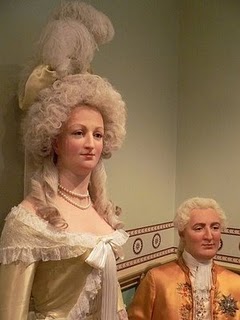
At left, wax figures of Marie Antoinette and Louis XVI. Eventually, after her husband’s death, she was reunited with her mother and her second son.  She ran her business with her sons until her death in 1850.


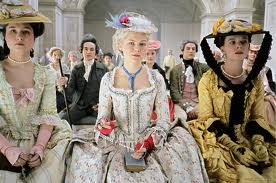
Going back to the proposed movie of Madame Tussaud, the costumes are already available, and they even won an oscar for the designers who worked on Sofia Coppola’s 2006 film Marie Antoinette. I remember my very ambiguous reaction to this movie. The youthful queen was such a Valley Girl, so frivolous and, frankly, stupid, I could hardly bear it. Yet I realize she might very well have been such a little fool. Certainly as portrayed by Michelle Moran, she made some very poor decisions.  But the costumes and settings and the composition of the shots — all were brilliant.

I think I will get the DVD and watch it with the sound off.  I not only
despised the dialogue and how it was delivered, but I seem to recall a quite jarring musical track.  Please send in your views of this movie.

Anyway, I’d love to see those brilliant costumes again. Haven’t we learned that in all the Jane Austen films and tv series, the British reuse the costumes over and over? I seem to recall a fun blog post by someone listing which dress was worn where. Did I mention the sets? And the gardens.  Much of the movie was actually filmed in Versailles and in its gardens.

One of the books Michelle Moran used as a resource for her novel
Madame Tussaud  is Antonia Fraser’s Marie Antoinette.  As a long-time admirer of Fraser’s books, both her historical works and the detective series, I think I will briefly turn my back on British bios and try this one.

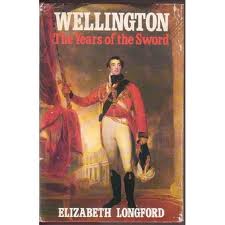
And just to prove that everything on this blog really can be traced back to the Duke of Welllington, Lady Antonia was born into the family Pakenham, one and the same with the 1st Duchess of Wellington. Fraser is the daughter of Elizabeth Longford, biographer of the Duke, whose two-volume work has never been surpassed for insight into the life of the great man.

The Ill Fated Marriage of George IV

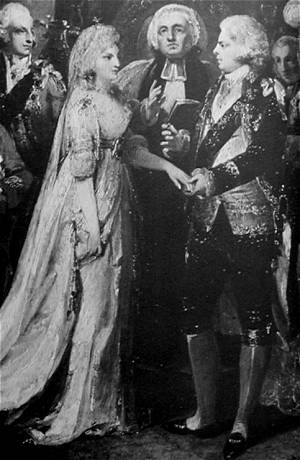
On 8 April 1795 at the Chapel Royal, St James’s Palace took place the marriage of The Prince of Wales to his cousin, Princess Caroline of Brunswick. No love match, the Prince was marrying Caroline in exchange for Parliament’s agreement to pay off his astronomical debts. In fact, the Prince had previously, and quasi-secretly, married Maria Fitzherbert on 15 December 1785, in the drawing room of her house in Park Street, London. Whilst the marriage wasn’t announced with a public hue and cry, it was still public knowledge.

From Mrs. Fitzherbert and George IV by William Henry Wilkins (1905):

The denials of the Prince’s friends counted for little, for people remembered how emphatically the rumour of the marriage between the Duke of Gloucester and Lady Waldegrave had been denied, and yet it proved to be true after all. The accounts of Mrs. Fitzherbert’s marriage were categorical, and the fact that she was supported and visited by many ladies of the first fashion lent the weight of corroborative evidence. With the public the opinion gained ground that a marriage had taken place. The Marquis of Lothian wrote to the Duke of Rutland, March 4, 1786, “You ask me my opinion respecting the Prince’s marriage. I think it has all the appearance of being true. I believe, when he has been spoken to about it, he has been violent, but I cannot find out that he has denied it peremptorily. He has said to one of the most intimate in his family [household], when asked on the subject, that he might answer, if asked the question, in the negative. But surely a report of this sort, were it not true, should be publicly contradicted, and I am amazed that some member of Parliament has not mentioned it in the House. Most people believe it, and I confess I am one of the number. Though I dined alone with him, and you know the general topic of his conversation about women, he never mentioned her to me amongst others. I am very sorry for it, for it does him infinite mischief, particularly amongst the trading and lower sort of people, and if true must ruin him in every light.”


Maria Fitzherbert


It may be supposed that the topic was not confined to private letters. The press, then far less restrained than now, continued to teem with scarcely veiled innuendoes and scandalous rumours. Some journals maintained that “some sort of marriage” had taken place, others stoutly denied it. Nor did the caricaturists, those inevitable satirists on the follies of the day, linger behind. Prints and cartoons on the subject of the marriage were published in great number and variety; they were exposed in the shop windows, and even sold in the streets, to the great delight of the vulgar. All, or nearly all, of them were wide of the facts, and many were exceedingly scurrilous. It was an age of coarseness, and the licence permitted to the caricaturists was great.

Rumour and innuendo aside, the marriage was illegal, as under the Royal Marriage Act, the Prince of Wales, being below the age of 25, could not marry without the Kng’s permission. He most especially could not marry a Roman Catholic. Now, there’s alot more to the story – much more than we have room for in this post – but suffice to say that George, Prince of Wales was fairly forced by his father, King George III, to settle down, to marry and to beget himself an heir. Unfortunately, George loathed Princess Caroline on sight, taking offence at her looks, her voice, her personality, her manner and, it seems fair to say, her very existence.

Nevertheless, the marriage ceremony which took place on April 8th, at which the Prince of Wales was attended by three unmarried groomsmen including: the 30-year-old friend the 5th Duke of Bedford and the 3rd Duke of Roxburghe, a 54-year-old favorite of George III. The Prince was also attended by his friend, the 17-year-old Coronet George “Beau” Brummell. And whilst he was not attended by her, also present was the Prince’s current mistress, Frances, Lady Jersey.


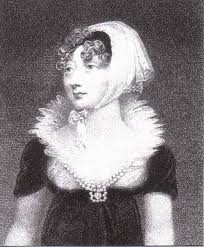
Caroline, 1804 by Sir Thomas Lawrence


The Prince of Wales arrived for the wedding very drunk and was obviously reluctant to proceed with the ceremony, hesitated frequently in his responses and cried openly in front of the company. In fact, at one point in the ceremony, his father actually had to urge him to say his lines and get the business concluded. The Prince looked not at all at his bride but frequently at his mistress, the 42-year-old Lady Jersey, the wife of the 60-year-old fourth Earl of Jersey, George Bussy Villiers.

After the ceremony, the King and Queen held a drawing-room for the couple in the Queen’s apartment in St. James Palace. Caroline seemed pleased and chatty. The Prince was silent and morose until near the end of the evening when he recovered his composure enough to become “very civil and gracious.” This upturn did not last long, as soon the Prince of Wales became so drunk that he spent his wedding night passed out on the floor in front of the bedroom fireplace. He finally awakened early in the morning and performed his conjugal duties, which resulted in a daughter, Princess Charlotte, nine months later when, coincidentally, the couple split up, never again to live as man and wife.

From the Pen of Horace Walpole


Princess Amalie


A Letter from Horace Walpole to the Earl of Hertford
Strawberry Hill, Easter Sunday, April 7, 1760
Your first wish will be to know how the King does: he came to Richmond last Monday for a week; but appeared suddenly and unexpected at his levee at St . James’s last Wednesday; this was managed to prevent a crowd. Next day he was at the drawing-room, and at chapel on Good Friday. They say, he looks pale; but it is the fashion to call him very well:—I wish it may be true. The Duke of Cumberland is actually set out for Newmarket to-day: he too is called much better; but it is often as true of the health of princes as of their prisons, that there is little distance between each and their graves. There has been a fire at Gunnersbury, which burned four rooms: her servants announced it to Princess Amalie (daughter of King George III) with that wise precaution of “Madam, don’t be frightened!—” accordingly, she was terrified. When they told her the truth, she said, “I am very glad; I had concluded my brother was dead.”—So much for royalties!


Northumberland House
. . . . . Now, for my disaster; you will laugh at it, though it was woeful to me. I was to dine at Northumberland-house, and went a little after hour: there I found the Countess, Lady Betty Mekinsy, Lady Strafford; my Lady Finlater, who was never out of Scotland before; a tall lad of fifteen, her son; Lord Drogheda, and Mr. Worseley. At five, arrived Mr. Mitchell, who said the Lords had begun to read the Poorbill, which would take at least two hours, and perhaps would debate it afterwards. We concluded dinner would be called for, it not being very precedented for ladies to wait for gentlemen:—no such thing. Six o’clock came,—seven o’clock came,— our coaches came,— well! we sent them away, and excuses were we were engaged. Still the Countess’s heart did not relent, nor uttered a syllable of apology. We wore out the wind and the weather, the opera and the play, Mrs. Cornelys’s and Almack’s, and every topic that would do in a formal circle. We hinted, represented—in vain. The clock struck eight: my lady, at last, said, she would go and order dinner; but it was a good half-hour before it appeared. We then sat down to a table for fourteen covers; but instead of substantiate, there was nothing but a profusion of plates striped red, green, and yellow, gilt plate, blacks and uniforms!

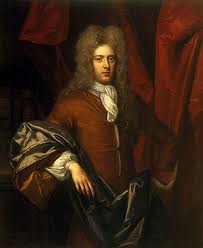
James Ogilvy, 5th Earl of Findlater

My Lady Finlater, who had never seen these embroidered dinners, nor dined after three, was famished. The first course stayed as long as possible, in hopes of the lords: so did the second. The dessert at last arrived, and the middle dish was actually set on when Lord Finlater and Mr. Mackay arrived! — would you believe it?—the dessert was remanded, and the whole first course brought back again !— Stay, I have not done:—just as this second first course had done its duty, Lord Northumberland, Lord Strafford, and Mekinsy came in, and the whole began a third time! Then the second course, and the dessert! I thought we should have dropped from our chairs with fatigue and fumes! When the clock struck eleven, we were asked to return to the drawing-room, and drink tea and coffee, but I said I was engaged to supper, and came home to bed. My dear lord, think of four hours and a half in a circle of mixed company, and three great dinners, one after another, without interruption;—no, it exceeded our day at Lord Archer’s! Mrs. Armiger, and Mrs. Southwell, Lady Gower’s niece, are dead, and old Dr. Young, the poet. Good night!

Upstairs, Downstairs Returns!

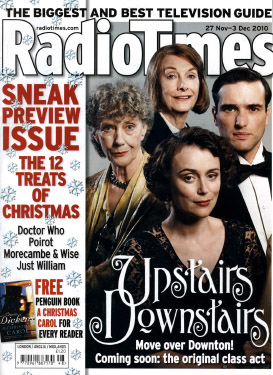
Over the past four decades, the original series of Upstairs, Downstairs has been watched by more than one billion people in more than 40 countries, inspiring a whole new generation of period dramas, including the recent PBS series Downton Abbey. Seemingly the whole of England sat round their tellies on Sunday nights following the fortunes of the Bellamy Family. When the series ended in 1977, Alistair Cooke, the program’s host, declared that there should be a national day of mourning. This Sunday night, for the first time since it went off the air, Upstairs, Downstairs will debut three new episodes (with more to follow in 2012), providing a long-awaited sequel to the original series, which followed the aristocratic Bellamys and their below-stairs help from the pre-First World War era to the 1930 market crash.

Co-produced by the BBC and Masterpiece on PBS, the latest Upstairs, Downstairs picks up in 1936 with an all-new cast joining the series’ co-creator and star Jean Marsh, who plays Rose once again. Series co-creator Eileen Atkins (Cranford) also stars, as do Keeley Hawes, Ed Stoppard and Art Malik (The Jewel in the Crown).

The new series opens with a new couple moving into 165 Eaton Place, requiring the help of Rose, who’s now the proprietor of a domestic employment agency, with the hiring of servants. Their privileged lives are soon threatened by world affairs, including the abdication crisis of Edward VIII and the rise of fascism at home and abroad.

As the British series returns to the U.S. Sunday on PBS’ “Masterpiece,” only six years have passed since the day in 1930 when the last of the Bellamys and their servants vacated 165 Eaton Place, and yet Jean Marsh, who last starred as Rose 35 years ago, is still very much Rose.

“Thank you very much,” Marsh replied when told so in a PBS news conference this past January.

“But the problem was when we were talking about it, I said, ‘I’ll need some help. You know, because it’s 35 years, not six years.’

“And they said, ‘Oh, yes, everything will be easy and wonderful and you look good,’ and then it’s on HD, which is so ferocious. I wasn’t allowed to wear real makeup and the lighting was ferocious. And I looked and I thought, ‘Oh, they’ll all think that I’m 120.”

Having already seen the new series when I was in London in December, I can heartily recommend it and am confident you won’t be disappointed in this new production, airing in three parts on April 10, 17 and 24, 2011 at 9 p.m. A second series of Upstairs, Downstairs is in the works. Joy!

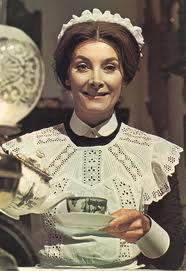
Of course, nothing can take the place of the original cast and the original series.

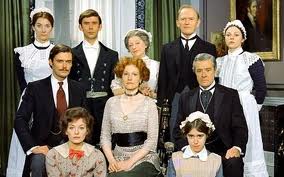
The original cast. (Poor Helen! Poor Captain James – the cad. And Ruby . . . no doubt still single. If only she’d put on a dab of lipstick . . . What’s Mrs. Bridges cooking/baking? Smells lovely. And that Sarah, oh! Cheeky girl. Up to no good, she is. Has Miss Elizabeth returned yet from the States? And Lady Prudence, no doubt still dropping round for glasses of sherry . . . . )

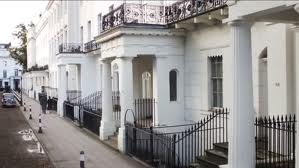
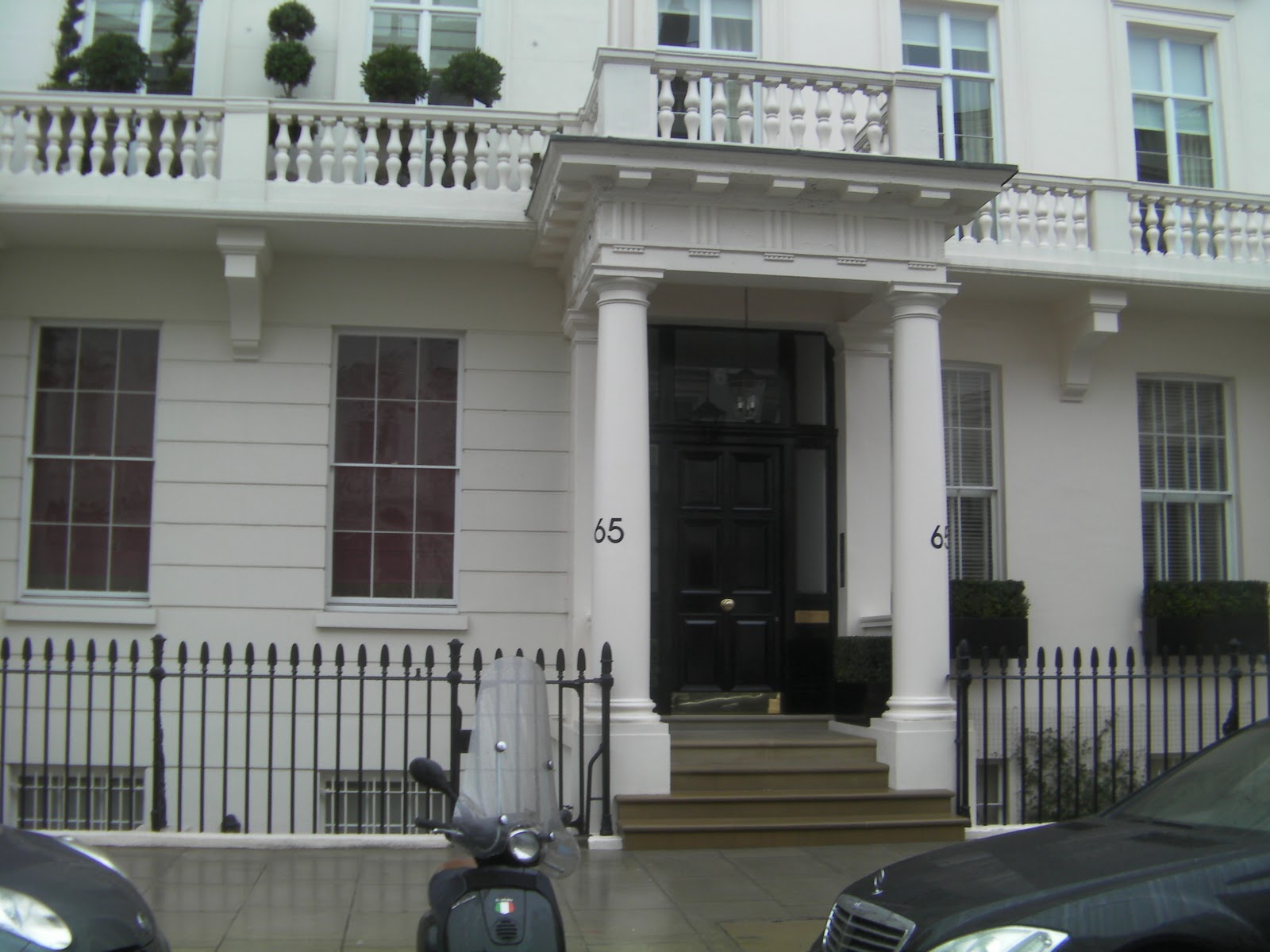
You may recall that I made my own pilgrimage to (1)65 Eaton Place in December, when I took this photo –

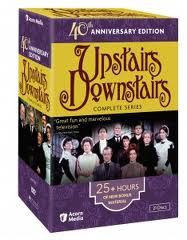
Really, the cab driver thought I was mad. We were on our way to Paddington Station and I asked to stop in Eaton Place first so that I could take a picture of a certain house. Usually unfappable, this particular cabby couldn’t hold his tongue as curiosity got the better of him. “What’s so special about that address, then?” he asked. And I told him as I took a last look at the Bellamy house, hoping for a fleeting glimpse of Richard Bellamy. Or Mr. Hudson. Or even Rose herself. I’m happy to tell you that now we can all catch glimpses of the original characters whenever we like, as a special 40th Anniversary edition of the original series is now available for $130.99 ($50 – $60 less than at other sites) at Amazon. Click on the picture below for details. The set includes a bonus 25 hours of commentaries, interviews and extras. I ordered my copy yesterday, along with a DVD of the spin-off series, Thomas and Sarah.