JASNA Birthday Tea in Chicago

The Greater Chicago Chapter of JASNA celebrated Jane Austen’s 236th  birthday with toasts to Jane and tea at the Fortnightly on Saturday, December 3, 2011.  The Club was festive with Christmas lights and set a perfect atmosphere for our afternoon.

The speaker for the program was Mona Scheuermann, a professor at Oakton Community College in Illinois, whose topic was “Jane Austen and Making Do.”  Of particular interest to her was the morality of the choice of plays chosen to be performed by the young people in the novel Mansfield Park. The choice of “Lover’s Vows,” an adaptation by Elizabeth Inchbald of a German play by von Koetzbue, defined each character and gave us a strong insight into their views.

Jane Austen, according to Scheuermann, did not believe that this play, with its theme of redemption after a  illicit affair, was a proper vehicle for the young, unmarried participants in the Mansfield Park dramatic effort.  Fanny Price, of course, refused to participate, and Edmund also balked, placing them in the forefront of good behavior, always a value to Jane Austen.

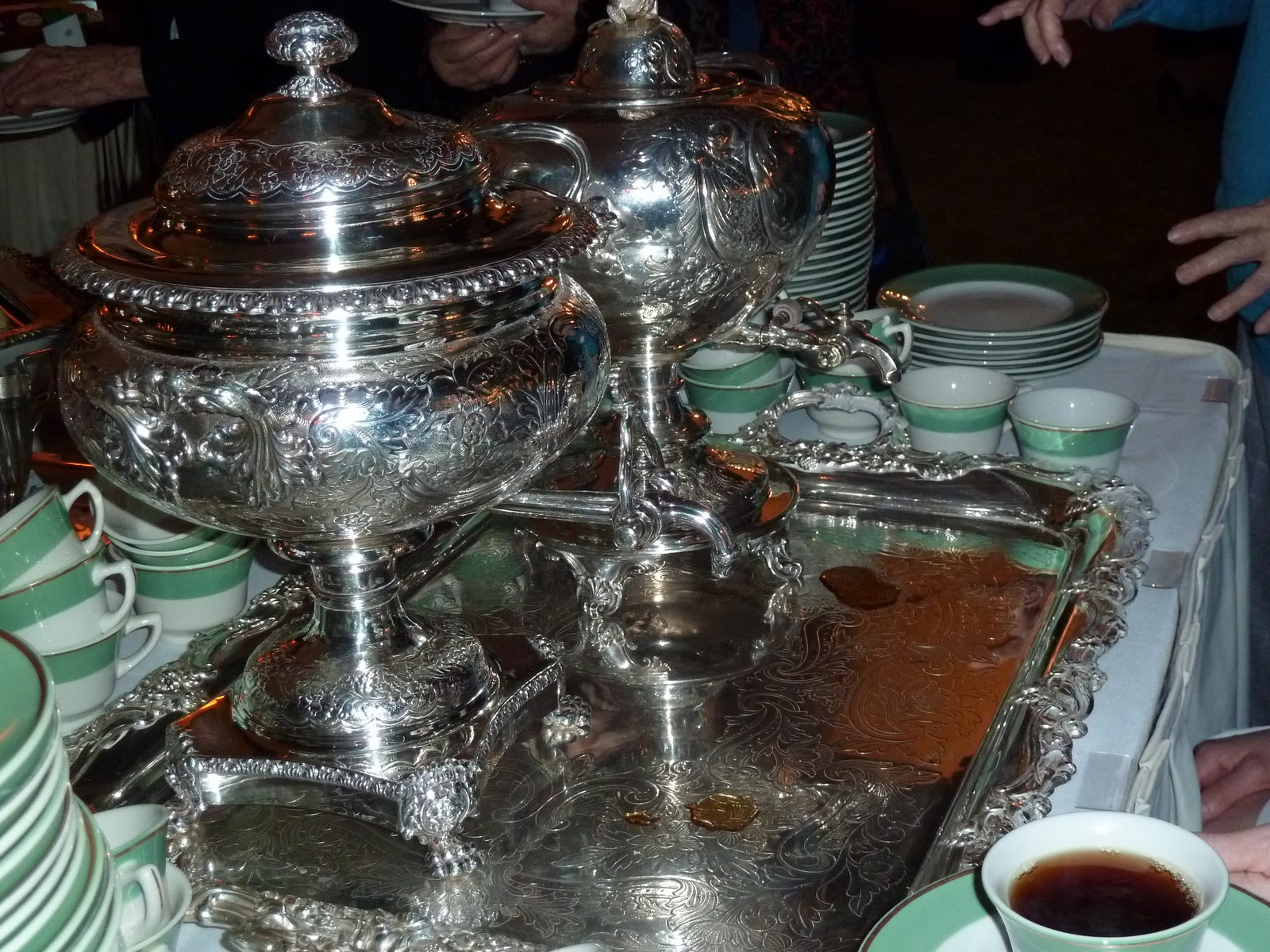
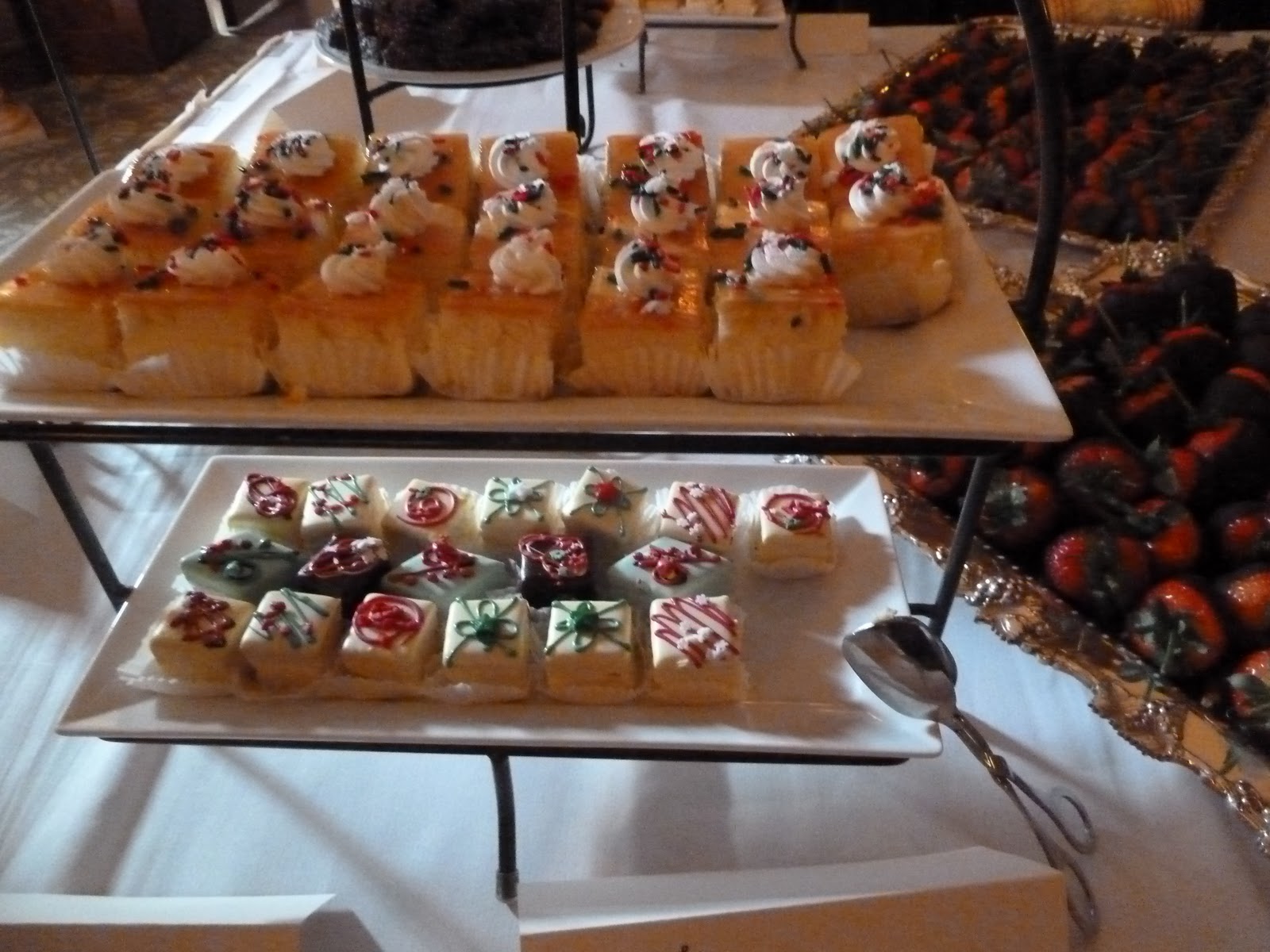
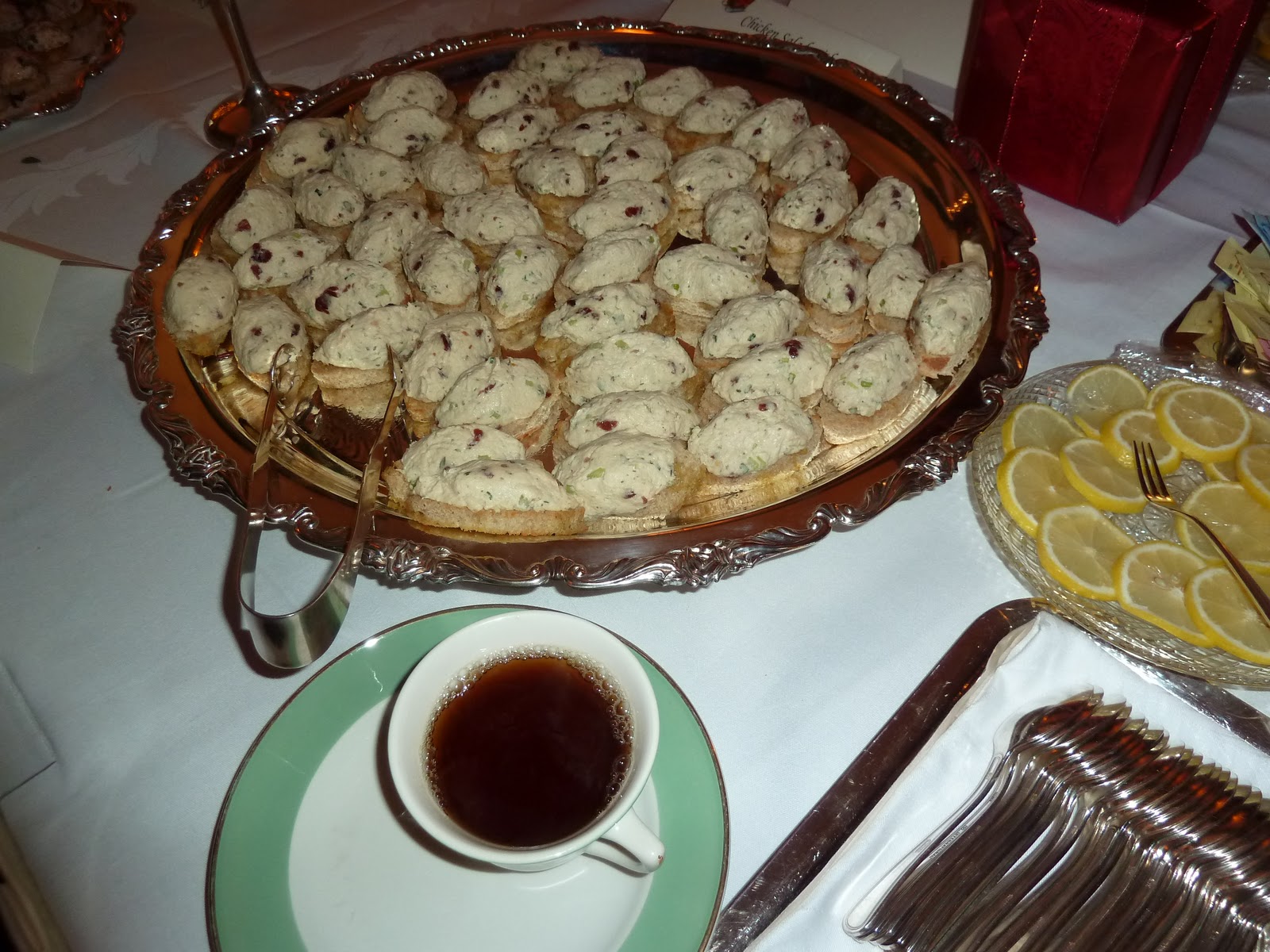
The Club’s lovely silver urns for our tea.  Our favorite winter beverage was accompanied by an assortment of savory sandwiches and sweets, as shown.

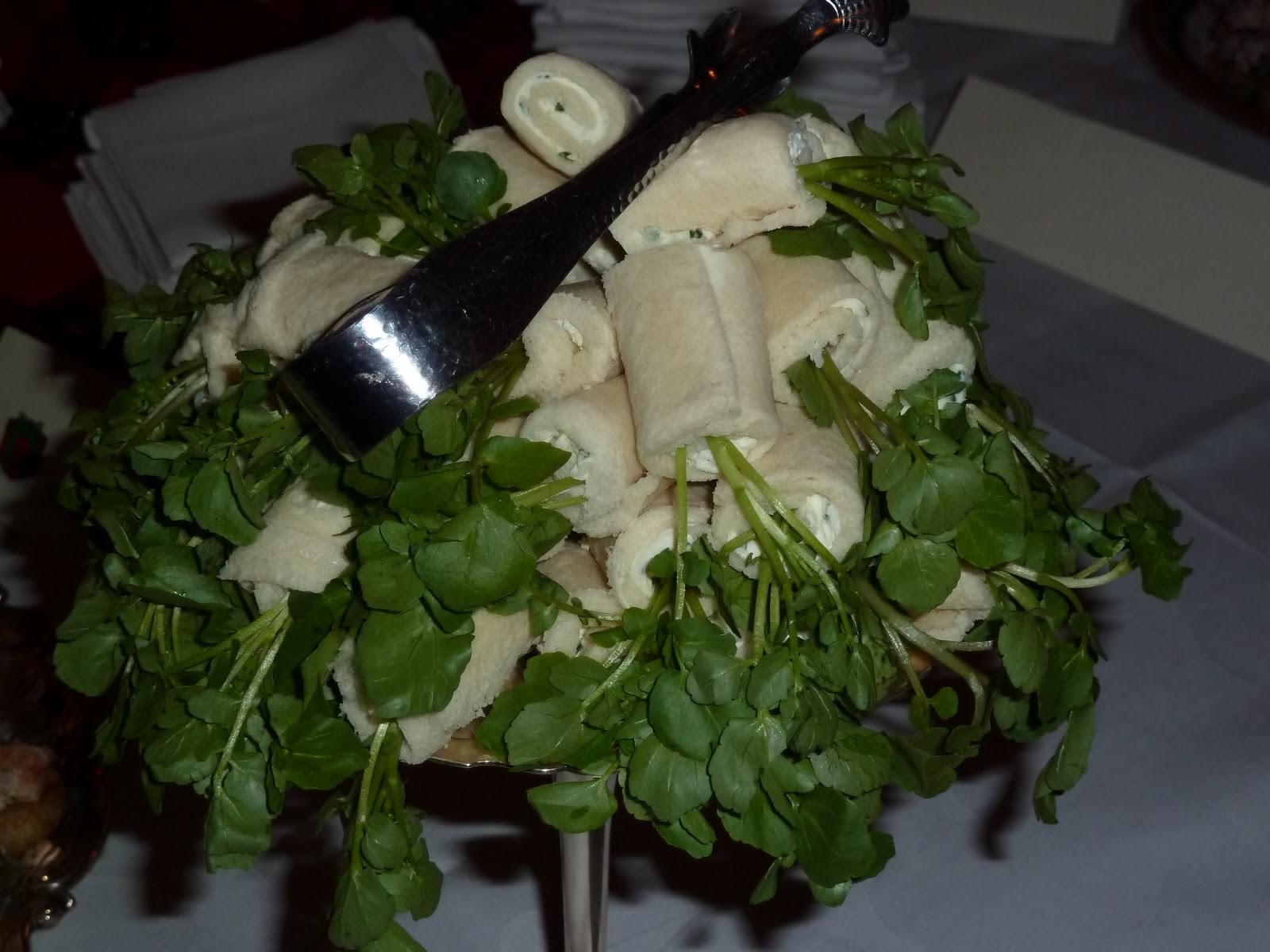
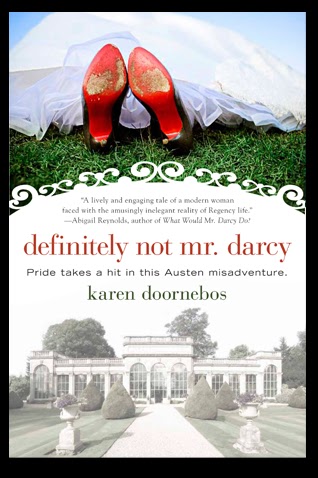
Above, the required watercress and cucumber sandwiches.  Once we are all served and reassembled, it was time for the annual birthday toast to our Jane. Leading us in extolling our favorite author was Karen Doornebos, author of the new novel, Definitely Not, Mr. Darcy. Look for more information on Karen here.

After we raised our champagne glasses to the memory of Austen, Karen posed with JASNA GCR regional coordinator Jeff Nigro.

Another debut author showing off her new work was Elizabeth Lenckos of the University of Chicago, who is a contributor to the volume entitled Wooing Mr. Wickham, a collection of stories inspired by Jane Austen’s heroes and villains, from the Jane Austen Short Story Award 2011 entries, sponsored by the Chawton House Library.  A total of 20 authors are included in a wide variety of formats and approaches.

Elizabeth’s story is based on the wartime experiences of her family in Berlin at the end of World War II.  It is a poignant story that shows just how deeply the love of Jane Austen can dwell within our hearts, even at the worst moments of existence.

Above, Elizabeth Lenckos speaks to the JASNA AGM in Ft. Worth, TX, in October 2011.

So now you have two books to add to your list for Santa this year.  And I have another Jane Austen Birthday Celebration to attend soon.  Hurrah!! Regardless of various kerfluffles about murder charges and newly-discovered portraits of somebody or other, our essential love of and admiration of Jane Austen remains indiminished.

My Father's 100th Birthday

Victoria, here, wishing Happy Birthday to Gerald Malcolm Biggers (1911-1979), my esteemed father, long gone to his Great Reward. He would have been 100 years old today.

Gerald M. “Jerry” Biggers, 1964

I have occasionally tried to trace the stories of our ancestors and, as you will see, I have had some successes.  But I have been unable to link the earliest Biggers I can claim –in Maysville, Kentucky, in the early decades of the 19th century — to his father or grandfathers who came originally from England and/or Scotland before 1776.  There were several men with the surname Biggers (or something very similar) in the Virginia Militia before the American Revolution, but I lack the link to the Maysville Biggers, specifically to Harvey Poindexter Biggers, born April 3, 1819 in Kentucky and died August 3, 1879 in Albion, IL. 

Gerald and Leone Lagerstrom Biggers, June, 1935

However, my cousin Shera Biggers Thompson (1939-2009) and I did find our connections to another branch of the family, the wife of our great grandfather John Biggers, Ellen Metcalfe. Her grandfather, Edward Barnard Metcalfe, was a map maker who traveled with the British Army in the Peninsular war, up to and including the Battle of Waterloo. After the war, he worked for the Ordnance Survey and taught at the Royal Engineers College.  About a dozen of his exquisitely drawn maps are in the UK’s National Archives at Kew, where Shera and I were privileged to see them a few years ago. The second son, Arthur, came to the US to farm in the 1820’s.  I assume Arthur was named in honor of Arthur Wellesley, first Duke of Wellington, for whom Edward Barnard Metcalfe had made most of his maps.

I have lots more research to do if I am to complete the picture of this family — other names that figure into my ancestry are Poindexter (familiar to many Virignians), Heck, and Stanley (supposedly shirt-tail relatives of the earls of Derby, but more likely just some poor Yorkshiremen who took the name of the local bigwigs).

Brothers Gerald and Hayward Biggers, c. 1916

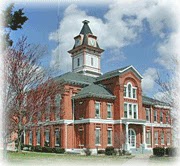
One of my father’s grandfathers was George Washington Stanley, who was the sheriff of Edwards County, IL, before the turn of the 19th to the 20th century. Below, the Albion, IL, county courthouse of Edwards County and the location of this tiny county in southern Illinois, due east of St Louis on the Wabash River, the eastern boundary of Illinois with Indiana.

I think the greatest hero to my dad’s thinking was Winston Churchill, the man who saved civilization, in his opinion, with the assistance of the forces of the Commonwealth and the U.S. for sure.  I still have several volumes of Churchill’s series The Second World War that belonged to my father.

Jerry Biggers, Sr., my father, had a successful business career as a Chevrolet Dealer in Elgin, IL. He was, in my estimation, a perfect father.  He was devoted to his wife, to me and to my brother, Jerry Jr.  He loved our spouses and our children.  He was a member of many civic improvement organizations in Elgin and later in his life, in Key Colony Beach, FL, where he lived in retirement.  As his friends and colleagues knew, if you wanted a job done, Jerry would accomplish it.

Though he had a great interest in all things British, he and Mother traveled to Europe only once, visiting England, Scotland and Sweden, where my mother’s parents came from.  I particularly remember him talking about his visit to the Tower of London and Westminster Abbey as well as the town of Biggar in Scotland, from which he believed some of his ancestors had emigrated.

Biggar, Scotland

My father was a great devotee of classical music and loved to listen to his recordings in the evening with his bourbon and a detective novel.  We always wondered of the author Earl Derr Biggers, creator of Charlie Chan, was related to us somehow.  Probably his favorite writer was Erle Stanley Gardner, creator of Perry Mason, and perhaps another distant – really distant — Stanley relation.

To my darling daddy, Happy 100th Birthday!

National Trust Holiday Lets

If one can’t be home for Christmas, the next best place is an historic property let through the National Trust. At the National Trust Holiday Cottages website, you’ll find a unique collection of over 370 properties in outstanding locations in England, Wales and Northern Ireland, available for short breaks, weekends away and holiday lets. Here are just a few:

On the sandy coast between Barmouth and Harlech in Wales, Egryn is a stunning Grade II listed medieval hall house dating from 1510, with 17th century alterations and a mid 19th-century front which looks across farmland to Cardigan Bay. At the heart of the house is the medieval hall with exposed, partially-aisled roof structure and a grand 17th-century fireplace. It has been faithfully restored by the National Trust using traditional building techniques: admire the skill and beauty of this work, providing a rare opportunity to stay in a Welsh hall house of this calibre. It is furnished in keeping with each period of its development. Commissioned by the National Trust, a replica of the original Egryn table dating from the early 1700’s has been made from local wind blown oak and the Trust’s Ganllywd Estate, and now has pride of place in the grand medieval dining room. Egryn is a working farm, through which there is a public footpath which leads past a profusion of Scheduled Ancient Monuments and stretches from the seashore to the uplands of the Rhinogydd Range. It has a wealth of archaeological and historic interest. There is a large private garden with nature trees, shrubbery and patio area. With its grand medieval hall sitting and dining rooms, Victorian parlour, skilled craftsmanship, beautiful furnishings and large private garden, Egryn is the perfect choice for that special occasion, family holidays and get togethers.

An exceptionally pretty cottage lying in the idyllic surroundings of the walled garden on the Florence Court estate, just eight miles from the town of Enniskillen. Rose Cottage is furnished to a high standard with views over the peaceful garden.

Godolphin House – Cornwall -This hugely atmospheric house sits in beautiful gardens and in great walking country. It is also only a short drive to lovely sandy beaches on both the north and south Cornish coasts, so makes a fabulous base for a great seaside holiday with a wonderful house to retreat to, away from the hustle and bustle of the resorts on busy days. The main entrance is via an imposing pillared portico running along the front of the house. There is a rear private garden area specifically for holiday cottage guests, but the main gardens are also available for use when not open to the public.

Housesteads – Northumberland – This Victorian farmhouse, built in the 19th century, was home to the Thompson’s who farmed the area and also played a role as custodians of the Wall. The sitting room in the cottage was used by John Clayton when he was working on the excavation of Housesteads Fort. Clayton was the Town Clerk in Newcastle and was involved in the development of the city in the 1800’s. He is renowned for his interest in preserving Hadrian’s Wall and is credited with being the first person in the world to use his own wealth to buy sites of archaelogical interest. He bought land along the wall to stop the quarrying and removal of stones being taken to be used elsewhere. John Clayton was involved in excavations through out most of his life and was said to be still excavating up to the age of 94. The cottage is located just 100yrds from the ruins of Housesteads Fort and has outstanding views towards the North Pennines and Hadrian’s Wall.

Ho, ho, ho, indeed.

Downton Abbey… Upstairs, Downstairs and/or Brideshead Revisited Redux? A Personal Opinion

It’s Ba-a-a-aa-aack!
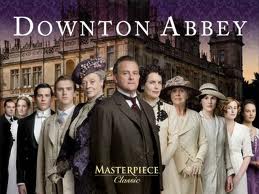
PBS is re-running the first episodes of Downton Abbey in

December 2011, as a prelude to showing the latest season, seen in the UK last fall.  I expect a big fuss on many loops and blogs as again we re-hash our opinions — both positive and negative — on the show.

Our frequent guest blogger, Jo Manning, was in England to see season two — and here is her view of the new episodes.

Downton AbbeyUpstairs, Downstairs and/or Brideshead Revisited Redux?  A Personal Opinion
by Jo Manning
As I put fingers to computer keyboard, I am reminded of that line in the vice-presidential debate in 1988 between Texas Senator Lloyd Bentsen and Indiana Senator Dan Quayle, where Quayle kept making references to himself as a new Jack Kennedy.  Bentsen delivered the scathing putdown:
            Senator, I served with Jack Kennedy, I knew Jack Kennedy, Jack Kennedy was a friend of mine. Senator, you’re no Jack Kennedy.”
In relation to this 2011 ITV mini-series, Downton Abbey, I am moved to paraphrase that excoriating putdown:  
            “ITV, writer Julian Fellowes, the cast of Downton Abbey, I watched Upstairs,         Downstairs and Brideshead Revisited devotedly, and many, many times.  Gentlemen, ladies, you are neither of those truly wonderful productions, not by a  very long shot.” I would add, “You are absurd and unrealistic, for starters!”

I saw the second episode of this series – which had begun with the repercussions of the sinking of the Titanic upon the fortunes of a wealthy earl – the Earl of Grantham — and his family – an American-born heiress wife and three daughters – with my daughter in West London.  She’d warned me, “You have to see this to believe it.”  She was correct.  We could not stop laughing at the terribly clichéd plot, the wooden acting, the stereotyped characters, and the overall, well, yes, the overall silliness of this production.  And I’m not talking de gustibus…here; this is more than a mere matter of taste.
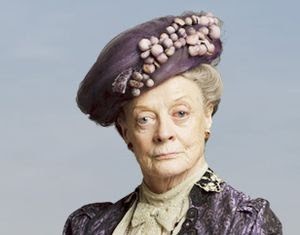
But the amazing – and, truly, unbelievable aspect – of this venture is that most people – especially those Anglophiles in the United States – ADORE IT! It has received awards, including prestigious US Emmys for outstanding t.v. mini-series/movie, for writing, for directing, and for the incomparable Maggie Smith in the supporting actress category. Smith is the only palpable reason for watching this awful production; her chewing up and spitting out the scenery is a highly seasoned tour de force, simply delicious. (The mini-series also won for cinematography and costumes at the Creative Arts Emmys.)

How did it happen that it beat out Pillars Of The Earth, for heaven’s sake, a magnificently produced mini-series with outstanding acting that was based on Ken Follett’s popular novel?  It has to be Anglophilia, simply that.
And the awards did not stop there. Downton Abbey entered the Guinness Book of World Record as “the most critically acclaimed television show” of the year. (Brideshead Revisited garnered this honor in 1981 for the original t.v. series.) Well, no one was polling a certain family in West London, for sure!
To compound this unbelievable love-fest, ITV confirmed in November that a third series has been commissioned and will air beginning in September 2012. Truly, I am gobsmacked L
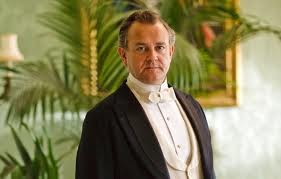
Where do I start, not wanting to give away what happens in the second series… Well, there’s Hugh Bonneville – never the most accomplished of actors — as the Earl of Grantham, who acts as if he has an iron rod up his bum and whose monologues to the servants and others are stunningly stupid; Lady Mary, his eldest daughter, played by Michelle Dockery – whose acting gamut runs from A to D, arrogance to disdain — gives us no reason whatsoever to sympathize with her plight as the eldest-daughter-who-has-to-marry-well. She has obviously matriculated from the same acting school as Mr Bonneville. Chemistry between Lady Mary and anyone simply does not exist. She is a cold fish, with nothing lovable about her; the idea that she would fall into bed with a young handsome Turk she has only just met is totally off the wall. And, too, chemistry is also sadly lacking between the youngest (and wannabe social activist daughter) and the Irish chauffeur. Their “attraction” is excruciating, painful, non-existent.
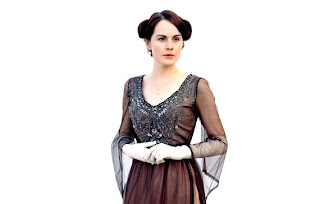
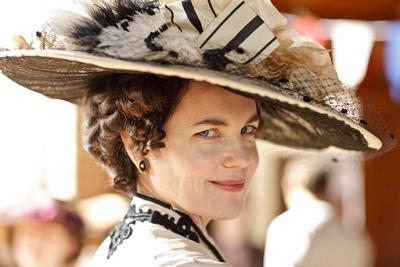
Poor, still beautiful Elizabeth McGovern is the Earl’s rich American wife…  She used to be a pretty good actress – remember how exquisite she was when only a teenager, in Ordinary People? — but the dialogue coming out of her mouth lays her low. How does she not choke on it?
The servants also have their share of pretty awful characters. The butler, played by veteran character actor Jim Carter, has the same rod up his bum that the Earl of Grantham and Lady Mary strut around with, and don’t get me started on the whiny, sycophantic valet! His performance…oh, gag me with a spoon!

A major element of the first series was the problem with Lady Mary unable to inherit the earldom, since she is a woman, and male primogeniture prevails in England. (Recent events with the children of Prince William and Kate Middleton notwithstanding, as Downton Abbey is set in the first decades of the 20th century and the Earl and Countess of Grantham are not royals.)  Fellowes has the aristos try to get this changed. Well – and Fellowes should be well aware of this, coming from the class he does – you cannot do this, the conditions of inherited titles being what they are. Everyone, then, would know it!
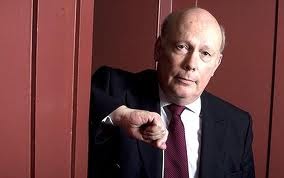
It is patently absurd that the earl and his family should try to buck this, but take a look at this link to an article by A.N. Wilson for a possible clue as to why this storyline might have so interested Julian Fellowes:  http://www.dailymail.co.uk/debate/article-2037077/Downton-Abbeys-creator-Julian-Fellowes-biggest-snob-Britain.html  It is all about how Fellowes is enraged that his wife cannot inherit a title.
The piece is scorching.  As well it should be.  Do note this comment of A.N. Wilson, too, which echoes exactly what I have been saying:
            “Fellowes is an absurd, rather than malign, figure in our public life, so one would not wish to respond t
o this latest bid for publicity with too much of a po-face. I acknowledge I’m in a minority when it comes to Downton Abbey, and that most of the nation will be gripped by the new series of this unrealistic depiction of upper-class life in the old days.”
For those who’ve not come across this expression, po-faced translates as humorless or disapproving. A.N. Wilson is an outspoken journalist and commentator and a prolific writer of fictional and biographical works. Look him up in WorldCat:  http://worldcat.org/identities/lccn-n77-3675.
 Will not go into the editing problems, the telephone poles in the village, etc.  That is sloppy film editing, nothing to do with the problems with Fellowes’ writing and the lousy acting that prevails. (Still cannot believe he got an Oscar for Gosford Park, an entertaining film with several great moments… It could be his one shining moment, though; so much else that he has done is so bad.)

When Anglophiles who love good English drama of the sort carried by PBS’s Masterpiece Theatre can anticipate with so very little difficulty the next line coming out of a character’s mouth, that’s…not good. As a comedy, Downton Abbey succeeds beautifully; as a drama, it is embarrassing. Drama should surprise us, enlighten us, and make us ponder possibilities, not bore us to death, in my opinion.

Really, need anyone say more?
Well, yes.  From a Daily Mail article – and, spoiler alert! – don’t click on this link unless you desperately do want to know – despite my caveats — what happens in Series Two:
“ ‘I know it’s a cliché,’ he cried at one point, shouting to be hear over the thundering ‘background’ music and Lady Mary doing her special blinking vole look.
“Cliché? That hasn’t stopped Fellowes before, we bellowed back.
“Oh dear. It’s terrible. It’s wonderful. It’s a disaster. It’s terrific. And without our Downton fix, what are we going to do to amuse ourselves on Sunday nights now?”
[Oh, be still my heart… “Lady Mary doing her special blinking vole look.”  Perfect, just perfect! Could not have put it more perfectly myself J]

Well, here’s a thought… Go out and rent the wonderful film of the Isabel Colegate book, The Shooting Party.  The book was published in 1980; the film was released in 1985. It is the real thing…English aristocrats seeing the ebbing of the world they knew, on the eve of the First World War, and they are both works of art, the book and the movie. Yes, really, they are genuinely works of art, not trumped up absurdities.

But did you know he was an actor before turning to writing?  Not a terribly successful actor.  Probably his most memorable role was as the overweight, annoying neighbor who tries to win the widowed Susan Hamps
hire’s heart in the television sitcom Monarch Of The Glen. Yes, that was Fellowes: Kilwillie!

From the IMDB website, http://www.imdb.com/title/tt0088111/ :
            “Autumn, 1913: on the eve of the Great War, a small party of lords and      ladies gather at the Hertfordshire estate of Sir Randolph Nettleby. A code  of propriety governs all: dress, breakfast, relations with the estate’s   peasants, courtship, shooting, adultery. Lionel Stephens, who is courting   Sir Randolph’s daughter, gets into a shooting competition with Lord Gilbert    Hartlip; Lord Gilbert’s wife carries on discreet affairs; a pamphleteer          circles the estate calling for no more killing, and Sir Robert’s grandson   hopes to protect a wild duck he’s befriended. A way of life is ending: Lord Gilbert’s violation of the gentlemen’s code suggests internal rot as the real    world presses in.”
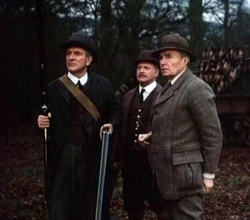
James Mason gives the performance of his acting career as Sir Randolph Nettleby, who hosts what will probably be the last gathering of his aristocratic family and friends as the world prepares to blow asunder. The cast of The Shooting Party is superb, absolutely first-rate – John Gielgud, James Fox, Robert Hardy, Cheryl Crawford, Gordon Jackson, Dorothy Tutin, to name only a few — and the story bittersweet and memorable.  No posturing, no bombast, no nonsensical plotting, and, best of all, that Julian Fellowes fellow had nothing whatsoever to do with it.

Thanks, Jo, for your uninhibited opinions and your suggestion of The Shooting Party.  We invite our readers’ opinons too — please comment on your views of Downtown Abbey.  Do you love it — or were you disappointed?  Come one, come all!  We want to hear from you.