Hester and the Queen

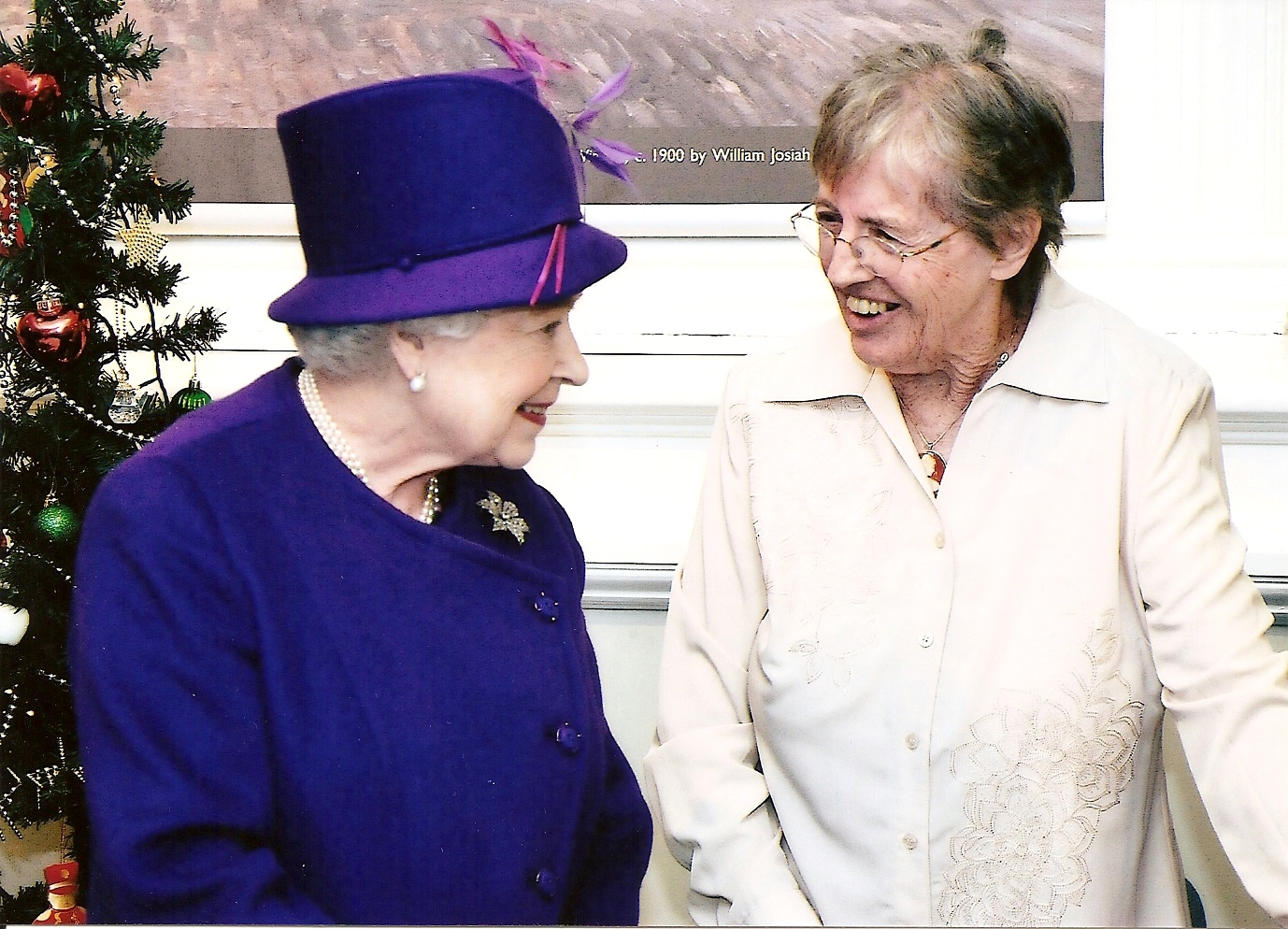
As many of our loyal readers will know, we have had a link to the new Windsor and Royal Borough in our sidebar for some time now. Our dear friend and frequent blog post contributor, Hester Davenport, was a moving force in making the Museum a reality and on Friday, December 9th, the Queen officially opened the museum, located in the Berkshire town guildhall where Prince Charles married Camilla Parker Bowles in 2005. The £300,000 museum is housed in the Maidenhead room of the 17th Century Grade I listed Windsor Guildhall.

After the official ceremony, the Queen was shown a selection of displays and was introduced to our Hester, who actually got to touch the Royal Glove, above.

The foundation stone of the Guildhall was laid on 5 September 1687 and the extension in which the museum is housed was completed in 1830. Markets were held there until 1901 when the ground floor was enclosed. Sixty years ago, in 1951 the Queen, who was then Princess Elizabeth, opened the refurbished Windsor Guildhall.

You may recall that it was Hester who acted as our guide during the visit Vicky and I made to Windsor, but if not, you can read our blog post about the day here. It was due to Hester’s Royal knowledge that Vicky and I were able to see the Queen up close as her procession left Windsor Castle for the Ascot Races. Vicky and I are dead chuffed that Hester was able to top herself and to get thisclose to the Queen, who Hester told us confidentially seemed very nice as well as very interested in the Museum. As Hester keeps one upping herself in the Royal stakes, Vicky and I can only imagine what she’ll have in store for us on our next visit – tea at the Palace, perhaps?

Victoria here — just checking the mail for the invitation to that tea.  Not here yet!   I had another wonderful day with Hester last June, 2011, at the Museum. All the details are here.  Hester and I had a wonderful time discussing, in addition to the museum, the Queen and many other topics, our favorite authors Fanny Burney, Jane Austen, and Perdita aka Mary Robinson. 

Happy 2012 to Hester and all of our readers!

The Wellington Connection: War Horse

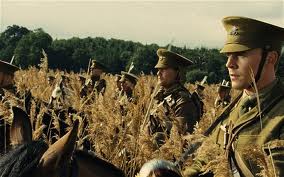
I went to see War Horse in the movies recently and got a few surprises. Firstly, I was under the impression that no one recognizable was in the cast. Imagine my surprise when I saw Benedict Cumberbatch on screen as Major Jamie Stewart who, by the way, is the antithesis of the Duke of Wellington as far as military strategy is concerned.

Tom Hiddleston, who first came to my notice in the 2001 version of Nicholas Nickleby, played Captain Nicholls in War Horse. He is the officer who first takes possession of Joey, or the War Horse, when he’s intially sold to the Army. He vows to keep the horse safe and to return him at the end of the war.

Worth an honourable mention is Eddie Marsan as Sgt. Fry.

Another surprising thing about War Horse – I found myself crying at odd moments when no one else did. My first tear was shed at the opening when they showed wide shots of the hedgerows and fields of the English countryside. Next, I choked up when I saw the village in the scene where Joey is led away with the Army.

It was so iconically English. Turns out that the scene was shot in Water Street, Castle Combe, Wiltshire, below.

Then there was the scene where Cumberbatch and Hiddleston race for the gold ring during a practice charge. The entire regiment draws their swords and gallops forward, the ground thundering beneath them as thousands of hooves tear up the turf. It was so reminiscent of Waterloo that I couldn’t help tearing up. Not that I was actually at Waterloo, mind you. Well, I was at Waterloo, but not during the battle. Well, okay, I was at Waterloo during a battle, but not during the Battle of Waterloo in 1815.

And then Benedict Cumberbatch, as Major Stewart, leads the regiment in their first battle charge in France, telling his men that their initial charge must at all costs be decisive, as it was at Waterloo, et al. And then, they begin their charge in a field of wheat, a la Waterloo.

Oh, the humanity! As I choked out a sob, my husband said, “What are you crying for? Nothing’s happened yet.” Little did he know that it had happened. In 1815. In Belgium. In my mind. But the Wellington Connection was other than simply in my mind – it turns out that portions of War Horse were actually filmed at the Duke of Welllington’s country home, Stratfield Saye, a fact pointed out to me by Jo Manning, who apparently sat through all the credits and noted that the producers thanked Lord and Lady Douro for their cooperation in filming. Wikipedia tells us that “Filming of War Horse began with the cavalry scenes being filmed at Stratfield Saye House in north Hampshire, the estate of the Duke of Wellington, where incidentally Wellington’s war horse “Copenhagen” is buried. Here a cavalry charge involving 130 extras was filmed.”

So, there you have the Wellington Connection. For anything and everything else about War Horse, check Wikipedia here.

Catching Up on 2011

Victoria, here. In the early days of 2012, I find myself sorting some books I acquired in the last year and some I still have to find, many of them concerned with Jane Austen.  Gee, isn’t that a shock!

Two are short story collections.

I enjoyed many of the stories in these two collections and admired the creative ways in which Jane
Austen inspired these writers.  I recommend both.

My friend and consummate author, Carrie Bebris, published Deception at Lyme, or The Peril of Persuasion, the sixth in her Mr and Mrs. Darcy mystery series.   See her website here.  Elizabeth and Darcy have solved a number of puzzles since their first outing in  2004’s Pride and Prescience (or, A Truth Universally Acknowledged).  And more are in the works.

Here is a book I haven’t read yet, and have receive conflicting reports about: P.D. James version of Carrie’s idea of having the Darcys investigate murder: Death Comes to Pemberley.

Of course, Baroness James gets a great deal of attention from the media, and no one can say she has not had a distinguished career.  I have had many hours of delight from her books. But this one? Somehow, it smacks of jumping on the Austen bandwagon unnecessarily, but that could be unfair. I would love to hear from readers who have tried it out.  I have a copy waiting for me next month, I think, when I get to the sunny south of Florida.  I’ll report back. (Note from Kristine: Yes, it’s here waiting for you. I love James and so gave it a shot when Jo sent it to me. Unfortunately, I couldn’t make it past Chapter Two).

Another book I will read soon is The Mysterious Death of Miss Austen by Lindsay Ashford. I met Ms. Ashford at the JASNA-AGM in Fort Worth TX in October 2011, but I must have been extremely distracted since her authorship of this book, talked of widely at the AGM, escaped me when we met.

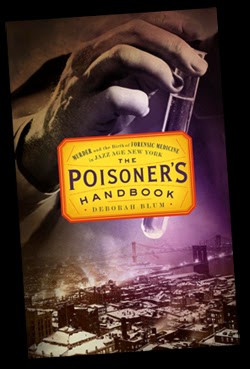
This book reportedly attributes the death of Jane Austen to arsenic poisoning.  In one of those coincidences that seem to happen every so often, shortly after meeting Ms. Ashford,  I attended a talk on poisons by Deborah Blum, a Pulitzer-Prize-winning science reporter who teaches journalism at the University of Wisconsin-Madison. She is the author of The Poisoner’s Handbook, actually a catchy title for a history of forensic science in crime investigation.

Ms. Blum commented on reviews of the Ashford book and the report that a lock of Jane Austen’s hair showed evidence of arsenic when tested.  Arsenic, in Austen’s day, was a common ingredient of many lotions and potions used to whiten complexion and for dozens of other uses. It did not surprise Blum to learn of the possibility of Austen having arsenic in her system as she probably used arsenic-laced skin  products.

I have heard several people say they enjoyed Mysterious Death, so I will read it soon.  (Note from Kristine – this, too, is here waiting for you. Haven’t read it yet – too distracted by Thirkell).

I haven’t kept track of all the Austen sequels and continuations that came out recently — and there are lots of them.  I know some of the authors and they are all hard-working, devoted people — success to all of you!  For more information, take a look at the website of Austen Authors

Two quite different but related genres to the sequels are the modern restructures of the novels and the JA-experience novels.  I read two of those this year, perhaps not quite on top of their publication dates.

 The Three Weissmanns of Westport came out in paperback, and I found it an engaging read, based loosely on the plot of Sense & Sensibility.  It is well done.

Beth Pattillo’s Jane Austen Ruined My Life is also worth your time and energy.  I resisted, because JA has done ANYTHING but ruined my life!  She has provided great pleasure and stimulation, great companionship and friends, and a lifetime of interesting research topics related to her life and times.  But a very well-respected friend loved it, and so did I. (Note from Kristine – I loved it, too!)

Finally, Stella Tillyard, author of The Aristocrats, Caroline, Emily, Louisa and Sarah Lennox, 1740-1832, published a novel of the Peninsular War this year, another entry on my TBR list.

This is anything but an exhaustive list, but it looks like I’d better stop blogging and get reading if I am ever to catch up.  Here’s to a 2012 filled with wonderful books!

Harlaxton Manor

From The Greville Memoirs

January 4 1838

“To-day we went to see the house Mr. Gregory is building, five miles from here. He is a gentleman of about 12,000 pounds. a year, who has a fancy to build a magnificent house in the Elizabethan style, and he is now in the middle of his work, all the shell being finished except one wing. Nothing can be more perfect than it is, both as to the architecture and the ornaments; but it stands on the slope of a hill upon a deep clay soil, with no park around it, very little wood, and scarcely any fine trees. Many years ago, when he first conceived this design, he began to amass money and lived for no other object. He travelled into all parts of Europe collecting objects of curiosity, useful or ornamental, for his projected palace, and he did not begin to build until he had accumulated money enough to complete his design. The grandeur of it is such, and such the tardiness of its progress, that it is about as much as he will do to live till its completion; and as he is not married, has no children, and dislikes the heir on whom his property is entailed, it is the means and not the end to which he looks for gratification. He says that it is his amusement, as hunting or shooting or feasting may be the objects of other people; and as the pursuit leads him into all parts of the world, and to mix with every variety of nation and character, besides engendering tastes pregnant with instruction and curious research, it is not irrational, although he should never inhabit his house, and may be toiling and saving for the benefit of persons he cares nothing about. The cottages round Harlaxton are worth seeing. It has been his fancy to build a whole village in all sorts of strange fantastic styles. There are Dutch and Swiss cottages, every variety of old English, and heaps of nondescript things, which appear only to have been built for variety’s sake. The effect is extremely pretty. Close to the village is an old manor house, the most perfect specimen I ever saw of such a building, the habitation of an English country gentleman of former times, and there were a buff jerkin and a pair of jack boots hanging up in the hall, which the stout old Cavalier of the seventeenth century (and one feels sure that the owner of that house was a Cavalier) had very likely worn at Marston Moor or Naseby.”

Delignes Gregory of Harlaxton Manor
Copyright Wiki Gallery

To read more about the Harlaxton cottages and gardens, click here.

Coutts Bank, a London Institution

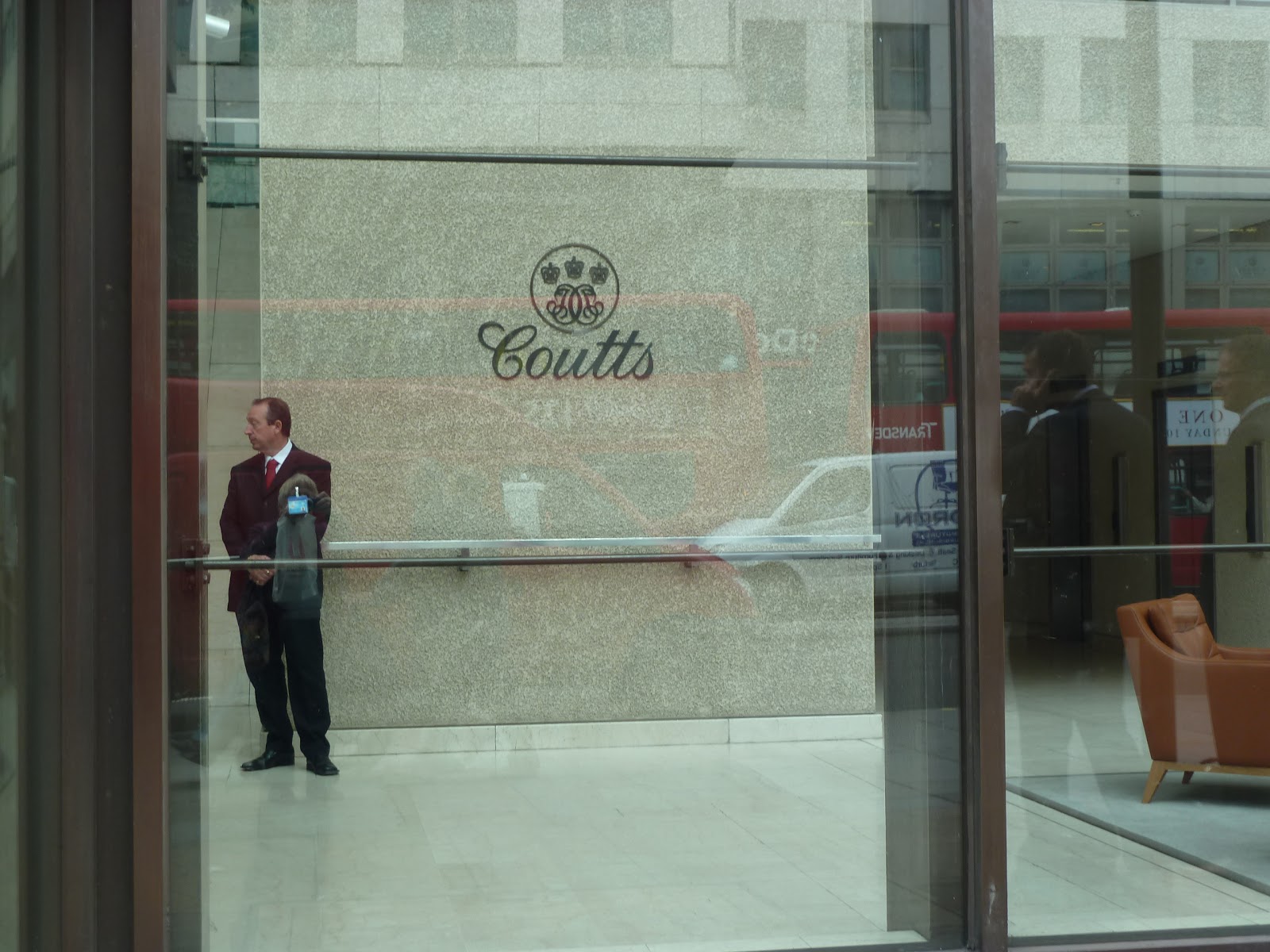
Victoria, here, dreaming about my weeks in England last spring.  Here are my photos of Coutts Bank, The Strand, London, taken in June 2011. The bank’s website is here.

It looks like an important place, though the architecture is about as 1970’s Mundane as one could imagine. The only reason I actually noticed it was that I was often across the street, sitting in McDonald’s where I could use their free wi-fi to power my iPad.* I was particularly amused that this great London institution, the bank that holds accounts for Her Majesty the Queen, had a glass curtain wall that clearly reflected that notable American institution on the other side!

[*Why is is that really inexpensive hotels have free wi-fi service while the better establishments charge outrageous amounts for the same thing?  ]

As I walked closer to get this picture of the reflection of McDonald’s, I think that guard inside picked up the phone to call for assistance to deal with the clearly deranged photographer on the pavement! I didn’t wait around to see what happened!  I’ll bet the bank’s directors did not consider what might happen to the glass during major demonstrations moving towards the adjacent Trafalgar Square.  You can clearly see the McDonald’s sign reflected above and to the right of his head.


So, fully knowing I was edging into Wellington Connection territory, I decided to see what more I could learn  about Coutts Bank. Angela Coutts (1814-1906) was a dear friend of the 1st Duke of Wellington, one of those younger women so attracted to the Great Hero (*like many of us???). But there must be much more.  The bank’s website has a nice timeline and lots of information, but other than the widely known fact that QEII banks there, the list of clients is a well-protected secret. 

It is said that checks written by (for?) the Queen are often saved as souvenirs, making it difficult to balance her accounts. 
Here is an account of a famous period in the existence of the bank, excerpted from Tales of the Bank of England, with anecdotes of London bankers, an anonymous book from 1882:
“The house of Coutts & Co. has a very interesting history. A very great banking heiress is the Baroness Burdett-Coutts, whose recent marriage with Mr. Ashmead Coutts-Bartlett excited so much attention. The kindly and popular Baroness is—or was until recently—the head of the great banking firm of Coutts & Co., and was popularly supposed to draw a hundred thousand a year from the business. Mr. Coutts married, for his second wife, Miss Mellon, the actress, to whom he left his entire fortune—about a million of money. Mrs. Coutts, left a widow, married the Duke of St. Albans; but, in her marriage settlement, this vast fortune was left entirely in her own power. She thought that she would best carry out the wishes of her husband, who had made the money, by bequeathing it to his favourite granddaughter, Miss Angela Burdett, the daughter of the famous Sir Francis. An infinite amount of this money “has wandered Heaven-directed, to the poor.” Child’s Bank was once represented by a lady, who became Countess of Westmoreland, and afterwards by her daughter, who became Countess of Jersey. On certain state occasions Lady Jersey dined with the bank officials, and took the head of the table.
The history of Coutt’s Bank shows how much may be done by a discriminating liberality. Old Coutts heard, one day at a dinner-party, from the manager of a city bank, that a nobleman had applied to his house for the loan of thirty thousand pounds, and had been refused. At ten o’clock at night he started for the peer’s house, and saw his steward. He explained his business, and said that if the nobleman would call upon him the next morning, he might have whatever he wanted. On the next morning, when the noble lord called at the bank, Mr. Coutts handed him thirty notes of a thousand pounds each. “What security do you want?” asked the peer. “I shall be satisfied with your note-of hand,” was the reply. This was given; and the nobleman said, ” I shall only want for the present ten thousand pounds of the money; so I will leave twenty thousand pounds with you, and open an account.” Some time afterwards the nobleman sold an estate for two hundred thousand pounds, which he deposited with Coutts’s. Nor was this all. He told the anecdote to his friends, and also to George III. The King was so impressed with the story that he himself deposited a large sum with Mr. Coutts. The King withdrew his patronage, however, when Coutts supported Sir Francis Burdett in his contest for Middlesex with immense sums, and transferred his account to another banker, who failed; and we cannot help thinking that in this instance his Majesty was served quite right.”
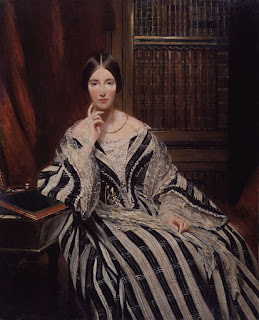
Angela Burdett-Coutts, portrait by an unknown artist, from the National Portra
it Gallery

Another old excerpt about the bank appears in Walter Thornbury’s 1865 volume Haunted London (this obviously refers to the old headquarters of the bank on The Strand, not the present building pictured above):

“No. 59 is Coutts’s Bank. It was built by the Adam brothers—to whom we are indebted for the Adelphi—for Mr. Coutts, in 1768. The old house of the firm, of the date of Queen Anne, was situated in St. Martin’s-lane. No. 59 contains some fine marble chimney-pieces of the Cipriani and Bacon school. The dining-room is hung with quaint Chinese subjects on paper, sent to Coutts by Lord Macartney, while on his embassy to China, in 1792-95. In another room hang portraits of some early friends of this son of Mammon, including Dr. Armstrong, the poet and physician, Fuseli’s friend, by Reynolds. Mr. Coutts was the son of a Dundee merchant. His first wife was a servant, a Lancashire labourer’s offspring. He had three daughters, one of whom became the wife of Sir Francis Burdett, a second Countess of Guilford, and a third Marchioness of Bute. On becoming acquainted with Miss Mellon, and inducing her to leave the stage to avoid perpetual insults, Mr. Coutts bought for her a small villa of Sir W. Vane Tempest, called Holly Lodge, at the foot of Highgate Hill, for which he gave 25,000/. His banking-house strong rooms alone cost 10,000/. building. The first deposit in the enlarged house was the diamond aigrette that the Grand Signor had placed in Sir Horatio Nelson’s hat. Mr. Coutts, though very charitable, was precise and exact. On one occasion, there being a deficit of 2s. li)d. in the day’s accounts, the clerks were detained for hours, or, as I believe, all night. One of Coutts’s clerks, who took the western walk, was discovered to be missing with 17,000/.* Rewards were offered, and the town placarded, but all in vain. The next day, however, the note-case arrived from Southampton. The clerk’s story was, that on his way through Piccadilly, being seized with a stupor, he had got into a coach in order to secure the money. He had remained insensible the whole journey, and had awoke at Southampton. Mr. Coutts gave him a handsome sum from his private purse, but dismissed him.
Coutts’s Bank stands on nearly the centre of the site of the New Exchange. When the Adelphi was built in Durham Gardens, Mr. Coutts purchased a vista to prevent his view being interrupted, stipulating that the new street leading to the entrance should face this opening; and on this space, up to the level of the Strand, he built his strong rooms. Some years after, wishing to enlarge them, he erected over the office a counting-house and set of offices, extending from William-street to Robert-street, and threw a stone bridge over William-street to connect the front and back premises.
      Mr. Coutts, a few years before his death, married Harriet Mellon, who, after his death, became the wife of the Duke of St. Albans, a descendant of Nell Gwynn, that light-hearted wanton, whom nobody could hate. “Miss Mellon,” says Leigh Hunt, “was arch and agreeable on the stage; she had no genius; but then she had fine eyes and a goodhumoured mouth.” The same gay writer describes her when young as bustling about at sea-ports, selling tickets for her benefit-night; but then, says the kindly apologist for everybody, she had been left with a mother to support.”
I wish that old building was still the headquarters. And I suspect that you will hear more about Angela Burdett-Coutts in this space in the future.
In 1969 Coutt’s Bank, with origins in the late 17th century, was bought by National Westminster Bank (NatWest), and in 2000, NatWest was purchased by the Royal Bank of Scotland.  Coutt’s is now the wealth division of the conglomerate, engaged in private banking, with branches and offices worldwide. To become their client, I assume you would have to rob your piggy bank. And a few others as well.
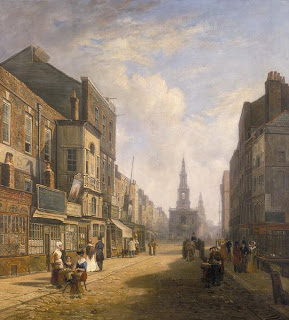
The Strand, c. 1824