There's An App For That

On this momentous day in the history of the United States and Great Britain, we thought we’d take a look not back, but forwards. It was only a matter of time before London tourists were empowered by technology. There are now a host of apps to make your next trip to the Old Smoke that much easier/more enjoyable. We’ve rounded up some of the smartest, most useful apps available today, any one of which would have made Prince Puckler-Muskau swoon with delight.

The London Tube App by Presslite (above) and the London Underground Free (below) both offer route maps, real time status updates, line delays, GPS locting and station exit locations.

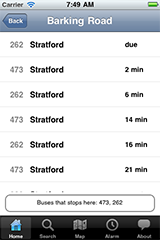
London Bus Stop Live (screenshot above) providing live departure information for every bus stop in London – real time bus departure times as predicted by the onboard GPS system in each bus. There’s no more getting wet waiting for buses, no more missing the last bus home and no more wondering if there’s time to nip into the shop or not. In fact there’s no more waiting for a bus ever again. Welcome to 21st century London.
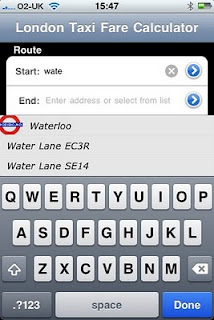
The London Taxi Fare Calculator allows you to check the fare for a taxi between two points anywhere in London, uses the iPhone’s GPS and iPhone maps to make the calculations and predict the best route, and has preset points of interest such as tourist attractions, landmarks, train stations, tube stations and airports.
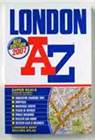
London Mini A-Z – This map is a digital rendition of the famous “London A-Z Mini Atlas” and covers an area from West Hendon in the North West to Grove Park in the South East. Add this application to your iPhone or iPod Touch and you will have instant access to all 352 pages of the London Mini A-Z printed map.

The Time Out London app puts everything that’s great about the capital in one place, with information on gigs, events, bars, restaurants, club nights and film releases. Whether you’re out and about or planning from home, it’s simple to organise your days and nights out in London and invite your friends.
National Gallery – Take a virtual tour of the National Gallery’s collection, search by artist or time period and save screenshots of artwork on your phone or upload to Facebook. You can also listen to the stories behind the masterpieces in insightful interviews with artists, writers and experts.

Quirky London – If you want to find out where in-the-know Londoners go for a mid-week meet-up, a lively Saturday night out or an off-the-beaten-track Sunday stroll then this is the app for you. Packed with the museums, art galleries, restaurants, pubs, clubs and venues that make London truly great, Quirky London uncovers the city’s secrets and presents them to you in one easy-to-follow guide complete with maps, images and the nitty gritty info you need for your visit.

The Hidden London app will help you discover nearly 50 unusual, amazing, intriguing and surprising places to visit.

+ Discover a “Roman” bath right in the centre of London.
+ Hang out with Dennis the Menace and friends in London’s only cartoon museum.
+ Explore a mysterious crypt hidden in the depths of Fleet Street.
+ Browse through the first English dictionary in the 18th century house where it was written.
+ Investigate Sherlock Holmes’ most famous cases and consult with Dr Watson.
+ Visit Pango the pig, DJ the horse and even a few friendly dinosaurs.

The Green and Rural London app describes and maps London’s finest parks, gardens, squares, secret green boltholes, cemeteries, commons, and urban farms. Whenever you feel in need of a breath of fresh air, a moment’s repose, a wander around lawns and flowers, a playground, or a place to eat your lunch al fresco, turn to this app.

Urban Spoon – Search for local restaurants by neighborhood, cuisine or price. Find reviews from local newspapers, food blogs and fellow diners.

London On A Plate – this note-book guide contains personal reviews on some of London’s most valued food shops and restaurants, shopping pages, guiding you on must-haves to wear to dinner or ideas to dress your own dining table, from some of the capital’s most respected design talent. Markets to see and time to be inspired distilled into one pocket bible. One of the key purposes of this guide is to provide the home cook with recipes from some of London’s finest chefs, including John Torode, Fergus Henderson, Anna Hansen, Mark Hix, Peter Gordon and Sam and Sam Clark.

London City Slicker – London City Slicker brings the colour and history of London to life on your iPhone. Hours of superbly produced Video and Audio help you delve into the secrets and stories relating to London’s fabulous heritage and the people who lived there. Superbly crafted walking-tours have been created for anyone interesting in exploring or finding out more about London, without the cost of a Tour-Guide. Famous historian Adam Heart Davis takes you through important London sites on themed walks of about 2 miles in length or a few hours in duration. With integrated Google Maps, getting around the walking-tours could not be easier.

And we’ve saved the best London app for last – this one deserves its own drum roll –

The Time Travel Explorer app lets you explore historic London as it was in the past – Georgian, Regency and Victorian eras included. This version contains the mapping engine, the central area of London from Stamford’s 1862 map and a modern map of the same area. It also contains over 750 points of interest, 150 audio guides and over 1500 old and new pictures. The remainder of the 1862 map and additional historic maps from 1830 (Greenwood), 1799 (Horwood) and 1746 (Rocque) are available as separate purchases.

Time Travel Explorer – London Pro provides a bundle of all four maps at a discounted price. With TTX you can:
– follow your route on antique maps that show you the streets and buildings from centuries ago
– use GPS to show you what lies beneath the modern city and what has survived to the present day
– click on points of interest to get detailed information about your location
– get the highlights of London’s history right where you need them.

Features
– high-quality digitised images of important historical maps*
– 750 points of interest with full descriptions
– 1500 photos including life in London over 100 years ago**
– 150 audio guides**
– expert tour information from a qualified Blue Badge guide
– seamless transfer from one era to another – travel through time

Welcome to the 21st Century!

Christie's – The Exceptional Sale

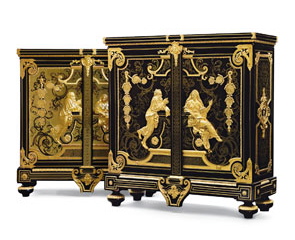
“Brand Cabinet,” ca 1743. Est: £800,000-1,200,000. Photo: Christie’s Images.

The Exceptional Sale, taking place on 5 July in King Street, London, is Christie’s premier auction for the decorative arts. This exclusive annual sale includes the finest works of art in a variety of categories, from furniture and sculpture, to porcelain, silver and clocks. It is carefully curated to include only the very best examples.

From the Christie’s Press Release:

In 2008 Christie’s launched a unique sale platform for the very best decorative arts; The Exceptional Furniture Sale saw 10 masterpiece works realise a total of £10.3 million. Building on the success of this sale and The Exceptional Sale held in 2011, Christie’s is pleased to announce details of The Exceptional Sale 2012 which will take place on the evening of 5 July. Comprising 48 lots, the sale presents three centuries of decorative arts, from the first quarter of the 16th century to the first quarter of the 19th century. Featuring the finest examples of furniture, silver, sculpture, clocks and porcelain – including recent discoveries and previously unknown examples – the sale exemplifies the very best of European decorative arts. It is expected to realise a total in excess of £13 million. Robert Copley, Deputy Chairman Christie’s UK, International Head of Furniture and Decorative Arts states: ‘With The Exceptional Sale Christie’s celebrates excellence in furniture and the decorative arts. The attributes of this carefully curated auction are provenance, rarity, design, and craftsmanship. From exquisite furniture by André-Charles Boulle and Thomas Chippendale to the magnificent Leinster silver dinner-service; from a rare maiolica plate by Nicola da Urbino to a newly discovered marble group by Jan van Delen; from glittering Chinese clocks and ormolu-mounted porcelain to the finest examples of Italian pietre dure, The Exceptional Sale offers collectors an opportunity to acquire the very best.’


The exceptional Brand Cabinet (above), a George II ivory-mounted padouk medal-cabinet, circa 1743 (estimate: £800,000-1,200,000), was made for the wealthy young Dilettante Thomas Brand, who like many English milordi went on The Grand Tour, arriving in Rome in 1738. It is here that he probably purchased the ivory plaques that depict figures from Classical mythology such as Leda and the Swan. A couple of years later, Brand’s contemporary and ‘intimate friend’ Horace Walpole also made the Tour. On his return he designed a cabinet to house his precious ‘enamels and miniatures’. No doubt inspired by William Kent, his cabinet and Brand’s are both made of padouk and are attributed to William Hallett of Great Newport Street, in Covent Garden. Walpole’s cabinet subsequently hung in the Tribune at Strawberry Hill and is now in the Victoria and Albert Museum, while Brand’s cabinet remained at the family house, The Hoo, in Hertfordshire until it was first sold at Christie’s in 1938.

The Ogden Mills ‘Armoires à Six Medailles’ (above) are lavishly decorated with spectacular gilt-bronze mounts that fuse seamlessly with the scrolling foliate pattern of the sumptuous ground of brass and tortoiseshell première and contre-partie marquetry (estimate: £1,000,000–1,500,000). The Louis XIV armoire in contre partie is attributed to André-Charles Boulle, while the late Louis XVI in première partie is by Delorme. They are decorated to the doors with trails of medals celebrating the Life of Louis XIV as well as the figures of Aspasia and Socrates. Conceived initially with shelves to house collections of precious medals this series of armoires proved so successful it remained in production in Boulle’s workshop throughout the first half of the 18th century and was subsequently continued by Boulle’s followers.

To view the sale catalogue online, visit the Christie’s link here.

The Spirit of Chartwell

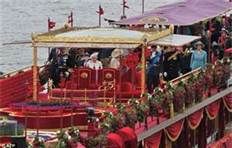
Do you recognize this vessel, The Spirit of Chartwell?

How about now? Yes, the Spirit of Chartwell was kitted out in all it’s regal glory as the Queen’s Jubilee Barge during the recent Thames Pageant. She is the only cruise vessel capable of navigating both the upper courses of the Thames and the open sea. She has two lounges, open-air viewing areas and a unique third floor dining room, complete with an elevating roof. The Spirit of Chartwell can easily accommodate up to 36 passengers in 18 comfortable guest cabins across two decks. The ship was designed to evoke the timeless grandeur of the 1929 Cote d’Azur Pullman railway carriage complete with artefacts from the original train and great ocean liners of yesteryear.

The ‘Spirit of Chartwell’s’ pièce de résistance is the George Bradshaw Lounge/Restaurant together with the adjoining Somerset Maugham Piano Bar resplendent in rich mahogany finishes, motif studded hardwood flooring, sculptured tables, Lalique glass inlaid panelling and intricate marquetry.

Nice to know that we commoners can also book a day cruise aboard the Spirit of Chartwell. Their Sunday Glory cruise allows guests to spend a lazy Sunday afternoon onboard with Sunday lunch and High Tea being served onboard while you sail along the Thames and take in London’s iconic landmarks at a cost of £120 per guest at a’ Riviera’ Armchair Table Setting for up to six guests.

The Memories of London package provides a circle cruise from Cadogan Pier at Chelsea, sailing first towards the Thames Barrier then upstream past London’s iconic landmarks before returning to Canary Wharf. Calls are made at Greenwich and Tate Britain with optional overnight State Cabin accommodation. Included in the fare, which begins at £220, are a Captain’s Welcome Champagne Reception, three course luncheon, high tea buffet and five gala course dinner.

If you’re looking for a longer cruise, as part of Ace Cultural Cruises, the Spirit of Chartwall embarks on a six day London and River Thames cruise that takes in Greeenwich, Rochester, Chartwell, Cliveden House and Blenheim Palace. Full details can be accessed at the company website, available here.

Click here to watch video of the Royal Family boarding the Spirit of Chartwell for the Thames Jubilee Pageant.

Keep Calm and Carry On: Words for Posterity

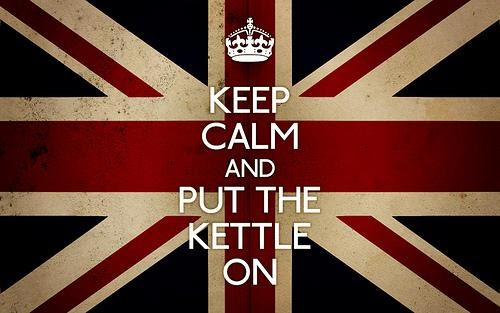
This famous poster, put out by the British government in 1939 to encourage the traditional stuff upper lip of the British people in the face of Nazi aggression, has had multiple second lives as the inspiration for many new designs.  Regular readers of this blog know we sometimes post versions in the sidebars.  And if you follow either of us on Pinterest — or just about anybody else there — you will see many versions.  Here are a few of our favorites.

Many of the signs reflect a real philosophy of life — or not!  There are many collages of the images too.

And lots of products carry a version of the logo.

And finally a few “farther-out” faves”:

Napoleon Invades Russia, June 24, 1812

Napoleon in His Study, 1812
Jacques-Louis David (1748-1825)
National Gallery of Art, Washington D.C.

Another bicentenary is here, though its connection to Britain is not quite direct.  However, the failure of Napoleon’s Russian invasion and the destruction of a large part of his army contributed to his ultimate defeat(s) by the allied nations led by Great Britain.

With the benefit of hindsight, historians have spent two hundred years pointing out the deficiencies in Napoleon’s goals, strategies and execution.  I have to admit most of my knowledge about Napoleon’s  Russian campaign was learned in Tolstoy’s War and Peace, published in 1869.

And since it is incredibly long (though also brilliant), I skimmed (or skipped) large sections.  So my limited knowledge is, perhaps,  more attributible to the 1956 film of War and Peace.  I love that movie, starring Audrey Hepburn as Natasha, Mel Ferrar as Prince Andrei, and Henry Fonda as Count Pierre Bezukhov.

War and Peace, directed by King Vidor
There have been other non-novel versions of Tolstoy’s sprawling masterpiece, including an opera by Sergei Prokofiev, composed during World War II.  I remember the 1956 film with great affection.  In order to cover most of the story, however, it lasts about three and a half hours.

War and Peace, Metropolitan Opera production 2002

As everyone knows, Napoleon’s campaign in Russia was a total disaster.  Numbers vary but about half a million soldiers of the Grand Armee marched into Russia and only a fraction returned by the end of 1812. Well before the Russian campaign, Arthur Wellesley, later named first Duke of Wellington, began to turn the tide in the Peninsular War, invading Spain from Portugal in January, 1812.  Wellington and the allies won the Battle of Salamanca, June 17-22, 1812.  French Marshall Soult and his defeated troops fought on but slowly withdrew into France.

Battle of Salamanca, June 17-22, 1812

On June 24th, having heard nothing about the British and Allied victory in Spain, Napoleon’s troops crossed the river Niemen into what is now Lithuania, then Russian Poland.  The Russians, greatly outnumbered, usually retreated or conducted brief skirmishes instead of standing and fighting as Napoleon’s enemies usually did.  In doing so, the Russians drew the French deeper and deeper into their sparsely populated regions, completely fouling up supply lines for the rapidly moving French.  By mid-October, the French encircled Moscow, the capital.  The Russians evacuated the city — and it burned, whether set afire by the fleeing citizens or by the invading troops no one can know.  Probably both.

Napoleon’s Retreat from Russia
by Alfred Northen (1828-1876)
On the long retreat in the frigid weather through land already stripped of all provisions, constantly harrassed by Russian troops and Cossack raiders, the French troops simply starved or froze.  Supplies and artillery were abandoned. The horses also died or were consumed. By mid-December, when the last of the French left Russia, up to 380,000 men had been lost with almost 100,000 captured.  It had been a national disaster for France and a personal catastrophe for Napoleon.