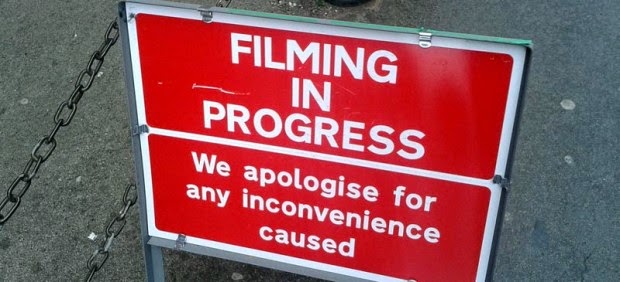
VIDEO WEDNESDAY: THE RESTORATION OF STOKE HALL

One of the UK shows I like to watch on YouTube is Restoration Home, in which homeowners restore historic houses whilst historians uncover the story of both the houses and the families who lived in them. 

In this episode, the house under renovation is Stoke Hall, a thirty room Georgian mansion located eight miles from Chatsworth House in Derbyshire. The Grade II listed building is leaking and is being threatened by dry rot, but it’s surviving architectural details and historical importance prompt new owners Steve and Natalie Drury to set about restoring the house to it’s 18th century glory. 

In this episode, architect Kieran Long explains Stoke Hall’s construction and decorative details, whilst Dr. Kate Williams uncovers the story of some of those who lived at Stoke Hall – Robert Arkwright, whose grandfather made millions from his inventions during the Industrial Revolution, was living at Stoke Hall when he scandalized his family by eloping with actress Frances Kemble. His elder brother Richard was hot the heels of the couple, but arrived too late to stop the marriage. Luckily for us, Frances, the new lady of Stoke Hall, kept a scrapbook, in which she’s saved pressed flowers from the 6th Duke of Devonshire.  And, it seems that the Duke invited the Arkwright’s to be guests at Chatsworth when Princess Victoria, aged 13, visited in 1832. That night, Mrs. Arkwright sang for the Duke’s guests – and so did Victoria.


More history on those who have owned Stoke Hall can be found in the blurb from Wikipedia below. 

You can watch the restoration of Stoke Hall here (1 hour)

A follow up episode, Stoke Hall: One Year On
can be found here

Stoke Hall is a Grade II* listed Georgian Palladian mansion near the village of Grindleford, Derbyshire, England. Listed in the Domesday Bookthe first known occupant of Stoke was Gerbert de Stoke, in 1204. Stoke was held by the Greys of Codnor and sold in the 1460s to the Barlows of Barlow Hall.In the 17th-century it was owned by William Cavendish, 1st Duke of Newcastle. Early in the next century, it passed to the Rev John Simpson, who commissioned the current building following his acquisition of the estate upon his marriage to the granddaughter of Admiral Benbow. The house was designed by James Paine and built c. 1757 by William Booth. Both men also worked at nearby Chatsworth HouseIt was later described by Nicholas Pevsner as ‘quite stately’.
In about 1850 Simpson’s descendant Henry Bridgeman, 5th Earl of Bradford sold the estate to the Hunter family of Greystones, who lived there until at least the late 1930s.The Hall was later occupied by the industrialist Emile Viner, until 1950/1, and was then purchased by Hedley and Ida Abson, becoming a family home. After Hedley and Ida died, the Hall was sold in 1972, and subsequently used as a hotel and restaurant. It was sold at auction to Richard Jowitt in 1982. After an incomplete 25-year restoration, Jowitt died, and the house was offered for sale in 2008, with a guide price of £2.75 million, but
not sold until 2009 for £2.5 million 
to a local couple, Steve and Natalie Drury, who have spent a further £1.5 million completing the restoration. Their restoration was shown by the BBC in 2011 and 2012.

DO YOU KNOW ABOUT THE KING EDWARD VII ESTATES?

Kristine here – By now, most of you know about my hobby of web shopping for real estate in England. Recently, I discovered a new residential development in the South Downs National Park and had to share it with you.


KING EDWARD VII ESTATE, MIDHURST

King Edward VII Estate sits within the South Downs National Park (an Area of Outstanding Natural Beauty) in West Sussex, 7 miles south of the small town of Haslemere. It comprises a unique mix of Grade II and II* Listed buildings which are being meticulously restored and converted into 162 exceptional apartments, duplexes and houses which will combine all the original character features of the existing buildings with stylish modern specifications. Further, a range of 247 new apartments and houses will be built in the surrounding area.  Part of the restoration process will also see the gardens, originally planted by the acclaimed horticulturalist Gertrude Jekyll, meticulously restored for all residents to enjoy.

The Visitor Centre is open daily 10am to 5pm and the first show homes will be available to view from January 2015. Register your interest now for an early preview.


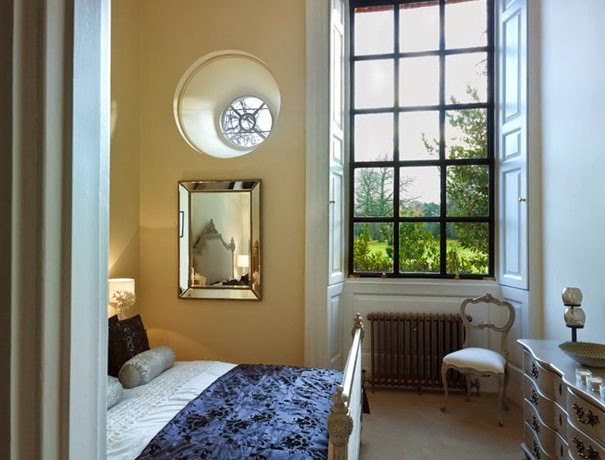
The contemporary interiors are created using a palette of pastel colours which blend perfectly with the historic features of the properties. Each home has also been cleverly designed to maximise space and natural light, with careful attention paid to every detail of the interior finishes. 


The Gardens

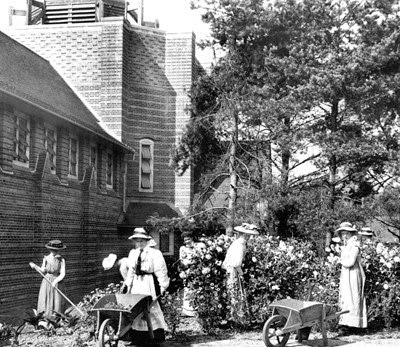
The elegant gardens of the King Edward VII Hospital were designed by the highly acclaimed garden designer, Gertrude Jekyll. She worked closely with Percy Adams to allow the integration of the architecture and gardens that can still be seen today.


The gardens are an early 20th Century example of a therapeutic garden and are of considerable historic interest in their own right, which is recognised by their listing on the English Heritage Register of Parks and Gardens. They have further significance in the combination of the Percy Adams and Charles Holden designed Sanatorium and the Jekyll designed landscape, their unity encapsulating many of the aspirations of the Edwardian era.


This was one of Jekyll’s most ambitious and complex projects, she produced 40 planting drawings for both the formal gardens to the south and the main drive way to the north where the planting merged into the natural vegetation. Although since the setting out of the original design over 100 years ago, some of the Jekyll gardens have succumbed to the need for new buildings, extensions and car parking, the gardens to the south of the hospital remain remarkably intact.


The gardens are a nationally important heritage asset, and a unique example of Jekyll’s belief in the benevolence of plants and their benefits to patients, in their restored form they will continue to deliver these benefits for both residents and visitors. Detailed planting plans, based on the original drawings have been drawn up to restore the original intention of the planting which in many areas has become impoverished, and it is intended to restore some areas of the garden which have been ‘lost’ for decades below car parks and hospital out buildings. 


This was one of Jekyll’s most ambitious and complex projects, she produced 40 planting drawings for both the formal gardens to the south and the main drive way to the north where the planting merged into the natural vegetation. Although since the setting out of the original design over 100 years ago, some of the Jekyll gardens have succumbed to the need for new buildings, extensions 
and car parking, the gardens to the south of the hospital remain remarkably intact.


The gardens are a nationally important heritage asset, and a unique example of Jekyll’s belief in the benevolence of plants and their benefits to patients, in their restored form they will continue to deliver these benefits for both residents and visitors. Detailed planting plans, based on the original drawings have been drawn up to restore the original intention of the planting which in many areas has become impoverished, and it is intended to restore some areas of the garden which have been ‘lost’ for decades below car parks and hospital out buildings. 


The History

“The King’s Sanatorium” was founded in 1901 to care for those suffering from tuberculosis and was officially opened on the 13th June 1906 by His Majesty King Edward VII, who gave assent for the institution to be called the King Edward VII Sanatorium. At the time when the sanatorium was designed it was heralded as a significant advancement in the treatment of the sick, where the importance of rest, relaxation, fresh air and light were incorporated into the buildings and surroundings as these were seen as equally important to the treatment of patients as the medical intervention. After the eradication of tuberculosis the sanatorium was transformed into a modern hospital admitting NHS and private patients with all types of illnesses. It also specialised in cancer care, cardiology and facial reconstruction. 

The hospital was designed by Charles Holden and Percy Adams. Charles Holden went on to become a leading English architect who is best known for his designs in the 1920s and 1930s of London Underground stations. He was also a highly regarded figure in the architectural community, with Charles Rennie Macintosh being one of the key figures he is known to have influenced. The hospital was highly acclaimed in the architectural press when completed. It was said to be ‘one of the three finest of the time’ in the Royal Commission survey of English Hospitals: 1660 to 1948, and was highly praised by Pevsner. Charles Holden could have been Sir Charles Holden, but he turned down the offer. 


Until the 1950’s the building faired well, with the necessary extensions being designed in a sensitive manner. However, from the 1960’s onwards such sensitivity was put aside, with the practicalities of a hospital being the overriding influence. These unfortunate additions paid little regard to the historic architecture and landscape. Despite this much of the historic fabric and quality remains, and the upgrading to Grade II* listing in 2004 for the main building and chapel underline the importance of this collection of historic buildings. 

Intrigued? You will find more details here.


VIDEO WEDNESDAY

Hugh Laurie explains why London is the perfect film set.

Stormchaser – How they filmed the horse chase scene at Wellington Arch, with the Horse Guards and closing down Piccadilly for a four hour shoot.

Gus Pomroy takes us on a tour of London sites associated with Sherlock Holmes.

Christopher Winn shows us six of the best London Bond film locations.

A BBC film (30 mins) on the changing face of the London suburbs on film.

Helen and Olly answer the question Where Is Britain’s Hollywood?

And finally, click here to see video of some of the most ludicrous depicitions of London on film.

A VICTORIAN OBSESSION: THE PEREZ SIMON COLLECTION AT LEIGHTON HOUSE MUSEUM

John Everett Millais. The Crown of Love. 1875. Oil on canvas.

14 November 2014 – 29 March 2015

Last week saw the opening of A Victorian Obsession: The Pérez Simón Collection at Leighton House
Museum which presents rarely seen masterpieces of Victorian art belonging to the Mexican collector
Juan Antonio Pérez Simón. Until the 29 March 2015 visitors to Leighton House Museum will
experience 52 exceptional paintings from the largest Victorian private art collection outside Great
Britain, shown for the first time in the UK. Alongside six works by Frederic, Lord Leighton (four of
which will be returning to the house in which they were painted) A Victorian Obsession presents
paintings which have seldom if ever been exhibited before by many of the most celebrated Victorian
artists, illustrating the astonishingly diverse representations of women that characterised this period of British art.

The images range from the domestic to the romantic and from the symbolic to the overtly sensual.
The exhibition’s highlights include Alma-Tadema’s magnificent The Roses of Heliogabalus (1888), an iconic image of Roman decadence which has not been exhibited in London since 1913. One of the
great paintings of the Victorian era, it memorably depicts the Emperor Heliogabalus’s suffocation of
his guests beneath a torrent of rose petals. Leighton’s Greek Girls Picking up Pebbles by the Sea
(1871) is one of his earliest and most striking ‘aesthetic’ works, placing formal harmony above
narrative content and showing Leighton as the master of English drapery. Two further works,
Antigone (1882) and the sexually charged Crenaia, the Nymph of the Dargle (1880), feature the
model Dorothy Dene. Leighton’s relationship with Dene was significant in his later years, when her
role as his principal model, muse and social companion was widely commented on.

On his collection being displayed at Leighton House, Juan Antonio Pérez Simón commented ‘It is an
honour to be a part of the journey that allows these masterpieces to be shown in such an authentic
setting, and in some cases returning to their home. It gives me great joy to know that the public will be able to appreciate these exceptional paintings, making us accomplices in our everlasting duty to
nourish the spirit.’

Frederic, Lord Leighton Greek girls picking up pebbles by the sea, 1871

Senior Curator for Leighton House Museum, Daniel Robbins said ‘It has been a wonderful opportunity to work so closely with this fantastic collection of pictures. The House is now transformed by the paintings and the paintings enhanced by setting them within Leighton’s decorative interiors; there has never been an exhibition where so many outstanding pictures of this period has been shown in such a special and sympathetic environment. It’s a unique setting and a special moment for the public to see these works, some of which are returning home to the very place they were painted.

Councillor Timothy Coleridge, Cabinet Member for Planning Policy, Transport and Arts, the Royal
Borough of Kensington and Chelsea, commented ‘It is a great honour for us to be hosting the only UK exhibition of this prestigious collection at Leighton House Museum. There could be no more fitting venue than Leighton’s studio-house where some of the works were actually painted and which was familiar to so many of the artists who are represented in the exhibition. We look forward to welcoming many new visitors to discover the museum and collection for the first time and enjoy a unique aesthetic experience.’

Venue: Leighton House Museum, open daily except Tuesdays, 10am – 5.30pm
Entry: £10 / £6 concessions / Art Fund and National Trust Members 50% discount
Ticket booking: www.rbkc.gov.uk/buytickets / 0800 912 6968
More information: www.rbkc.gov.uk/AVictorianObsession