HAPPY BIRTHDAY JANE AUSTEN, AGE 239

Victoria, here. December 16, 1775, was the birthday of Jane Austen.  We celebrate it every years with teas, luncheons, and assorted presentations.  The fact that our venues are all decorated for Christmas gives us an especially festive style, but of course, the real intent of the day has little to do with the holiday season and a lot to do with our regard for Jane Austen’s life and work.

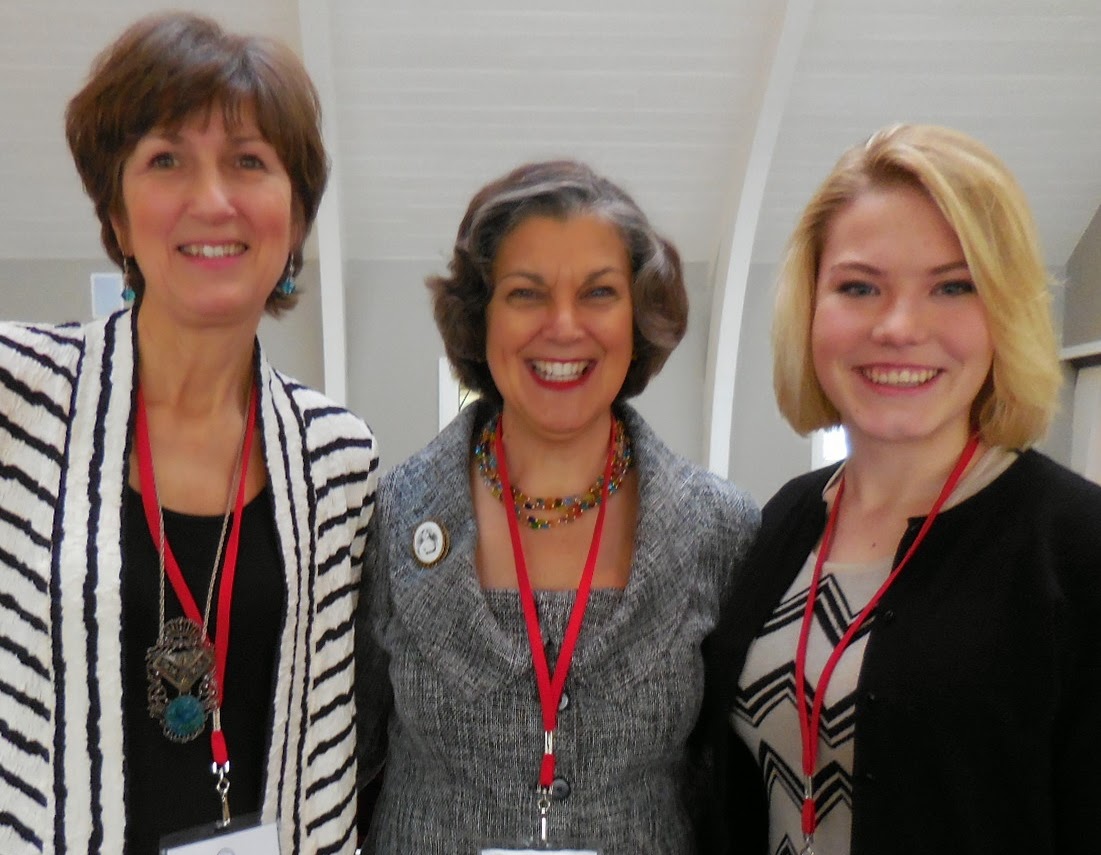
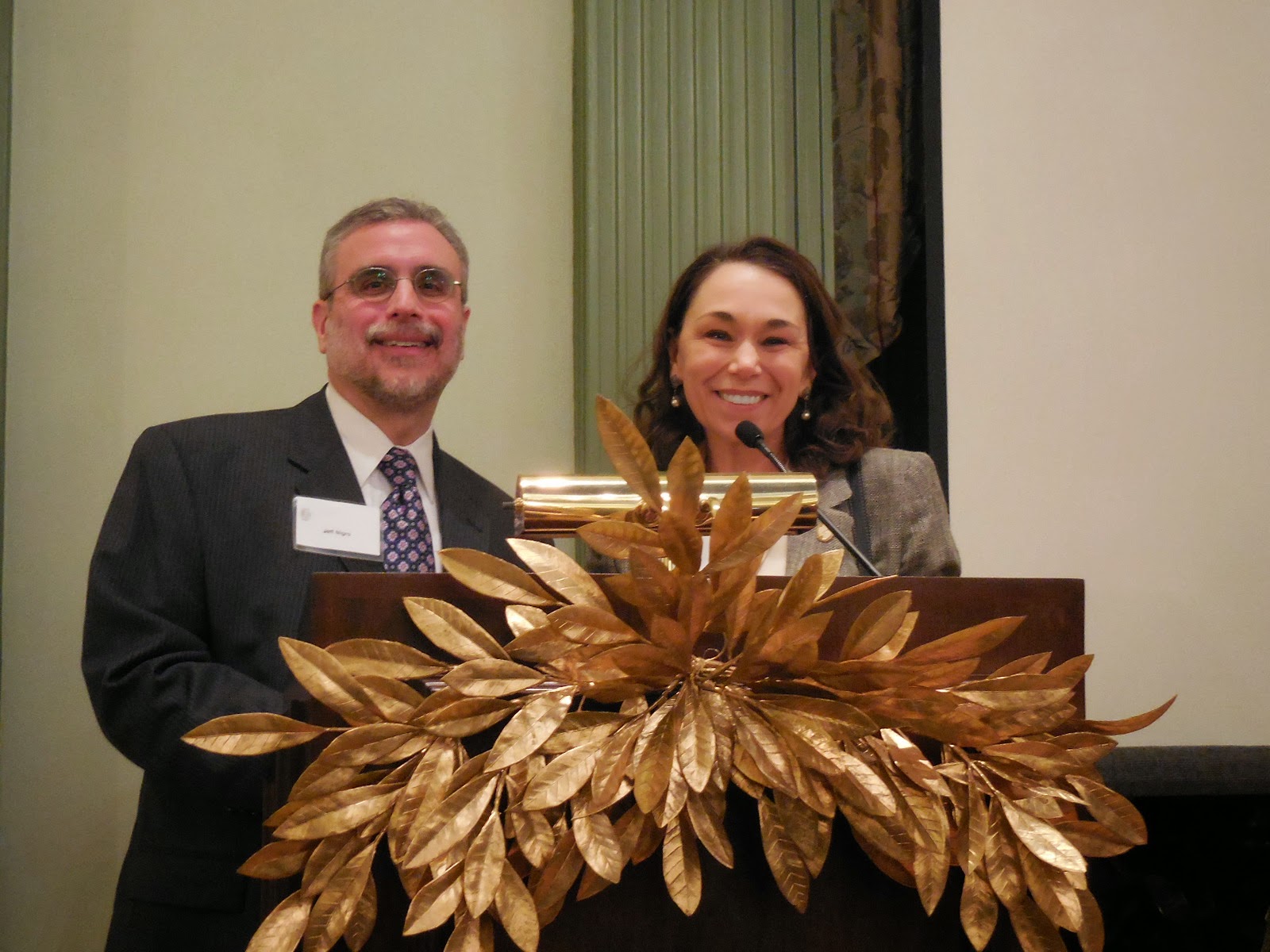
Jeffrey Nigro, Regional Coordinator, and Debra Ann Miller, Program Chair,
 at JASNA-GCR’s Tea at the Fortnightly, Chicago.
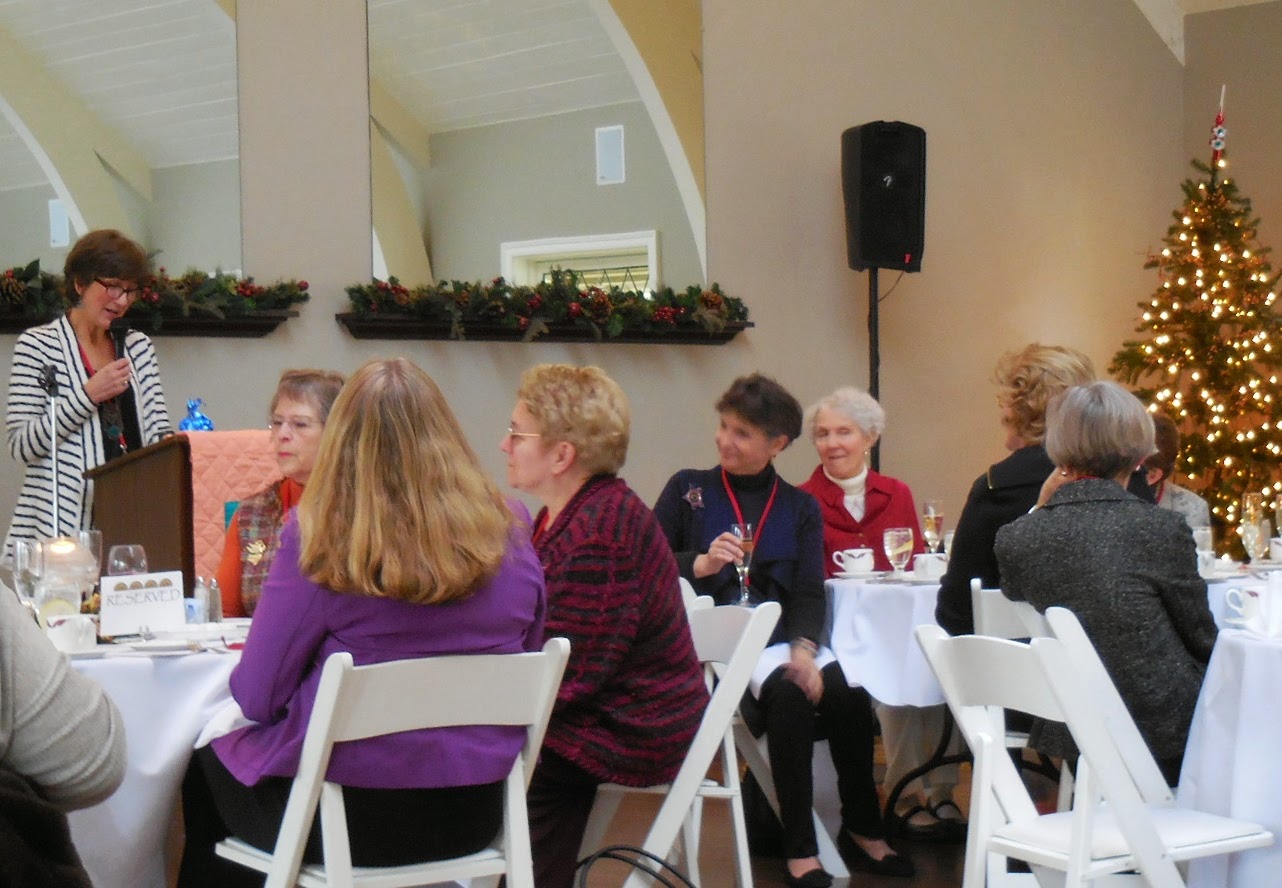
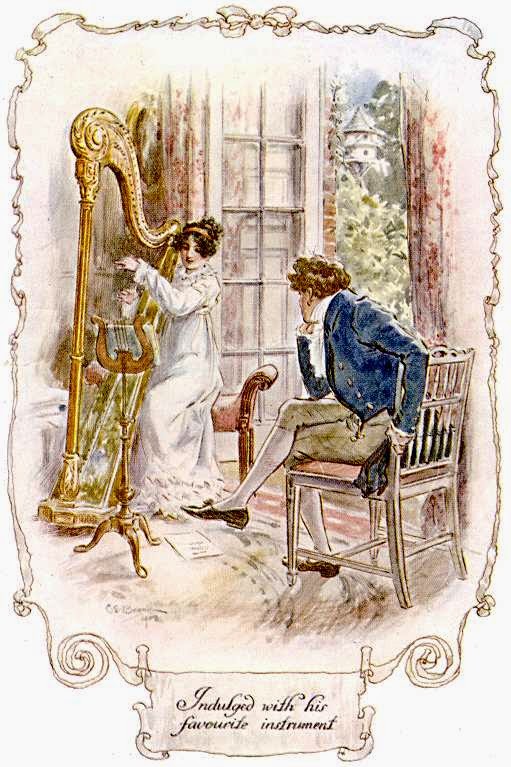
Jeffrey’s talk was entitled Favorable to Tenderness and Sentiment: The Many Meanings of Mary Crawford’s Harp, in honor of the 200th anniversary of the publication of Mansfield Park.
Jeffrey brings the approach of a scholar and art historian to his love of Jane Austen.  And he presented several interpretations of the meaning of the harp and harp performance in the time of Jane Austen — approaches I had not considered.
George Romney, Lady Caroline Spencer, later Viscountess Clifden, and her Sister, Lady Elizabeth Spencer, 1786-92 The Huntington Library 
Young ladies of Jane Austen’s era were expected to have accomplishments, such as playing the fortepiano and singing.  They performed at gatherings of the ton where they were literally on display as part of the marriage mart.  The harp not only had a beautiful repertoire, it showed off a young lady’s lovely arms as she plucked the strings. 
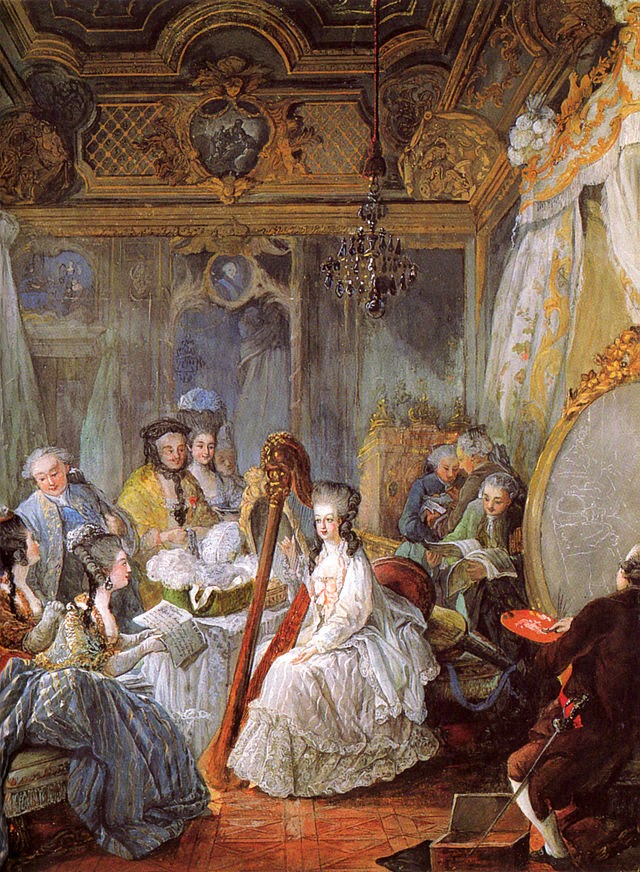
Thus, it is an oft-repeated view of Mary Crawford as a siren playing the harp to attract Edmund Bertram by her seductive skills on the handsome instrument. Marie Antoirette, Queen of the French, was also known to play the harp, so in some eyes it was particularly associated with the ‘wicked’ French whose morals were not necessarily to be admired.
Jean-Baptiste André Gautier-Dagoty
Marie-Antoinette jouant de la harpe dans sa chambre, 1777
Musée national du château, Versailles
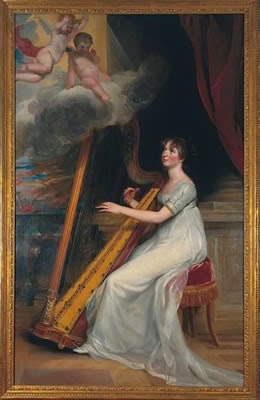
But, as Jeffrey Nigro pointed out, there were other impressions of the harp, dissociated with the life of St. Cecelia, for example.  Might Edmund see Mary as a kind of St. Cecelia, patron saint of music,  at her harp?
John Singleton Copley, St. Cecilia, A Portrait
(Martha Crowninshield Derby), 1803
Mint Museum, Charlotte, NC

Equally possible was the identification of the harp with the Celtic heritage of the British Isles. And a corresponding movement to glorify nature and those pastorals who lived in close harmony with nature.  As Jeffrey Nigro made evident, in art and literature of the time, the harp was part of many  strands of culture with which can challenge the view of Mary Crawford at her harp as the seductress with an eye toward capturing the devotion of Edmund Bertram.

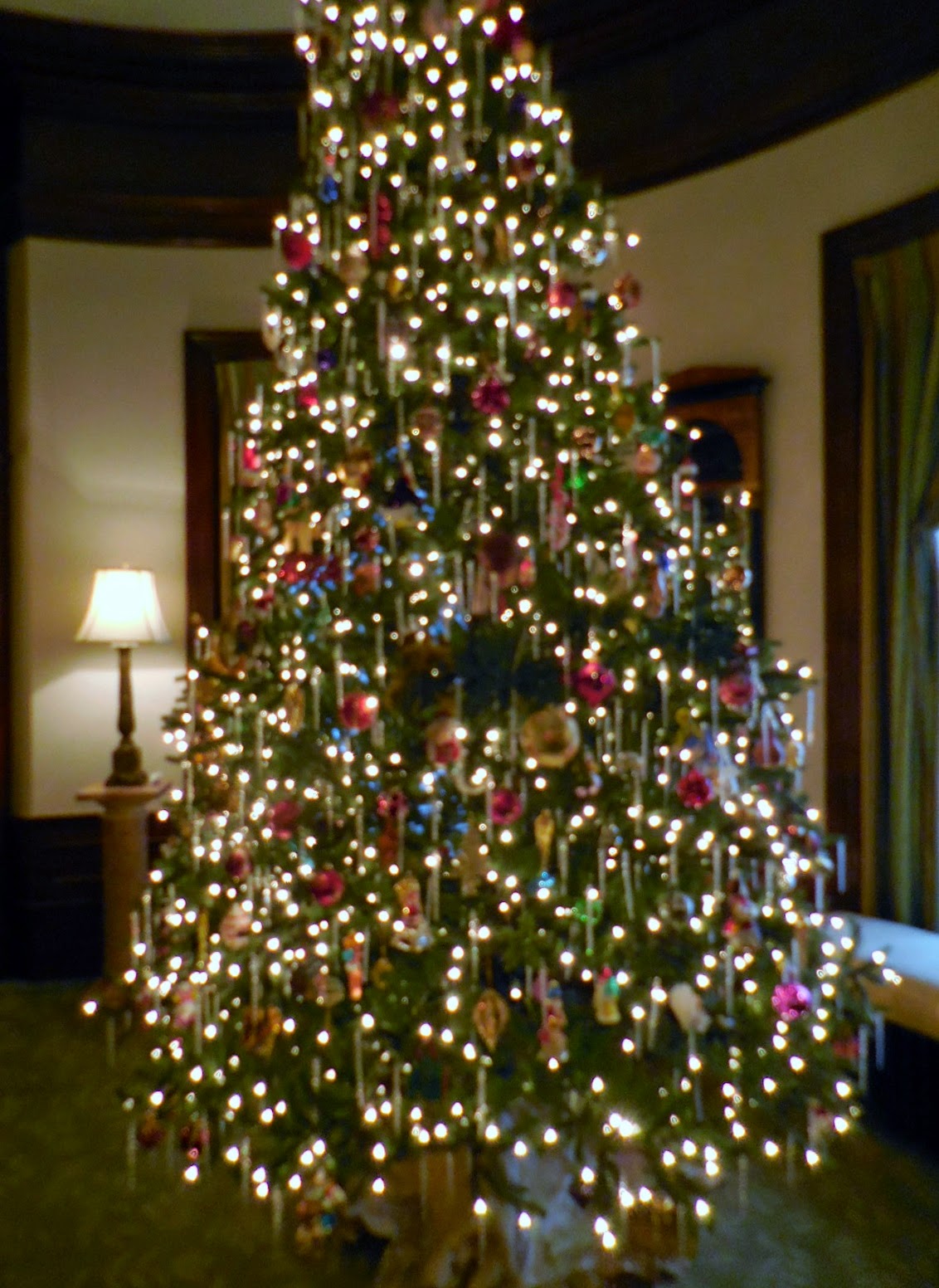
The Fortnightly’s lovely tree

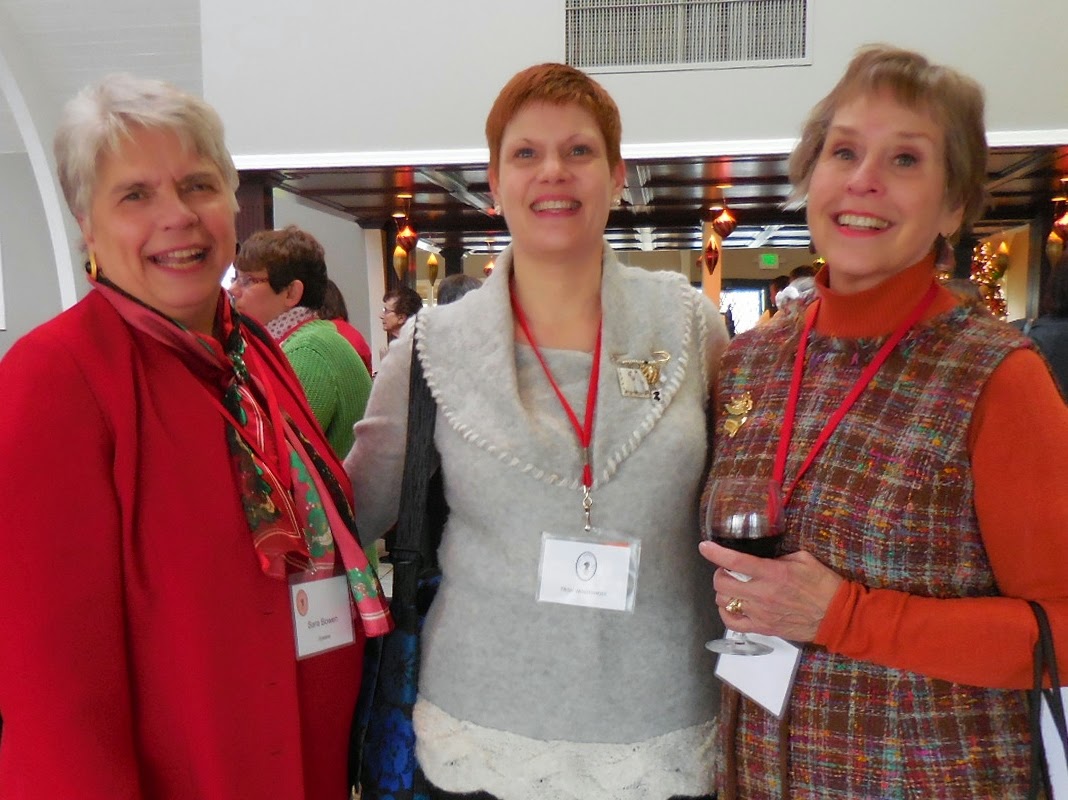
Speaker Sara Bowen with Trish Vanderhoef and Kathy Fish at
JASNA-WI’s Birthday gala in Nashota, WI

Sara’s topic Fanny’s Future: Mary’s Nightmare: Jane Austen and the Clergy Wife examined another aspect of Mansfield Park and Mary Crawford — How Mary would have made a poor wife for Edmund once he becomes a parish rector and how Fanny Price will excel in the role she wins.

Liz Cooper, Cynthia Kartman, and Vivian Walburn
at the Red Circle Inn

Sara Bowen explained what was expected of a clergy wife in Jane Austen’s day, mainly a  woman of moral sense — in the words of George Herbert, author of “The Country Parson,” a clergymen should make his “choice of wife by ear not eye.”  She was expected to have discretion, though not necessarily more religious fervor than usual at church.

A Toast to Jane Austen in celebration of her birthday
Mary Crawford’s repeated questioning of Edmund on why he wanted to become ordained might be a challenge to Edmund. Was perhaps his intent on converting Mary part of her allure for him?  But we know her sharp tongue, sophisticated (maybe even cynical) eye and her self-admitted selfishness would make her life as a rural clergy-wife unbearable.  Fanny, however, with her clarity of moral purpose and her love of nature and country life was much better suited to the role.
The Red Circle’s lovely tree

Both birthday presentations enlightened us in our 200-year-old admiration of Jane Austen’s novel, Mansfield Park.  Thank you Jeffry and Sara, and all the volunteers whose hard work makes JASNA so rewarding for its members.
ON THE SHELF: AT HOME WITH JANE AUSTEN BY KIM WILSON

At Home With Jane Austen by Kim Wilson, 2014

Victoria here, enjoying the wonderful pictures and copy of this new book by my friend and colleague, Kim Wilson. Don’t expect anything negative in this “review,” because I love everything Kim does unreservedly. I am sure you will agree that all her books — especially this beautiful edition from Abbeville Press — deserve all the praise I can muster.

Kim and Victoria giving a talk at the 2014 Montreal JASNA-AGM

Kim’s lively account of Jane Austen’s life is complemented with wonderful photographs and reproductions of period prints. Many of the pictures were commissioned from Gavin Kingcome, who portrays even the most familiar of views with an artist’s eye.  Other photos are taken by Kim herself.

From the very beginning, you will be charmed by the pictures and prose, perfect for enjoying cover to cover or for dipping into briefly during a comforting tea break.

In the foreword by the curator of of Jane Austen’s House Museum, Chawton, Hampshire, Mary Guyatt writes, “This book cannot fail to encourage your own further exploration…” This is true for a dedicated devotee — like myself — or for a newcomer to Austen’s life and work.

Adlestrop Park, Gloucestershire

Our journey with Jane Austen begins at her childhood home in Steventon, Hampshire, where she lived with her parents and sister Cassandra and her many brothers as well as some boarding students Mr. Austen taught in preparation for college. And we accompany her on the many visits she made in rural villages, sophisticated cities, and stately country mansions. Along the way, we learn about her many friends and relatives through her own words from her letters to her sister Cassandra.

Bath, 1806

On the many travels around England, we also encounter the settings for Austen’s novels, in Bath, Lyme Regis, and London.  And we discover clues about the imagined settings she used, such as the estates of Pemberley and Donwell Abbey.

Chawton Cottage

Gardening, fashion, balls, literature, and the theatre – all pursuits Jane Austen enjoyed – are covered, as well as the personal activities in which she excelled, e.g. playing the piano and writing.

Indulge your Janeite friends, others who need to be initiated into the delights of Austen, and above all yourself — with a gift of this gorgeous volume by Kim Wilson from Abbeville Press: At Home with Jane Austen.

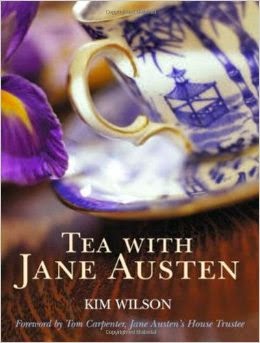
Kim Wilson’s previous titles, still available, are Tea with Jane Austen and In the Garden with Jane Austen.

DEATH OF MARSHAL NEY, DECEMBER 7, 1815

Victoria, here.  I’ve been doing a bit of research on the Battle of Waterloo and the Duke of Wellington lately.  I can’t get enough of either topic!!  Things are getting so exciting for the 200th anniversary of the battle next June — with all the exhibitions and events — most of which you will learn about here on this blog — sooner or later.

Ordinarily I don’t have a great deal of affection or sympathy for the French side. Napoleon — well, he has plenty of apologists and groupies, so he doesn’t need me.

But what about some of his generals?  While he was in exile on St. Helena, Napoleon ranted and raved about the causes of his defeats, taking no responsibility for his own leadership but usually blaming others, especially his generals.

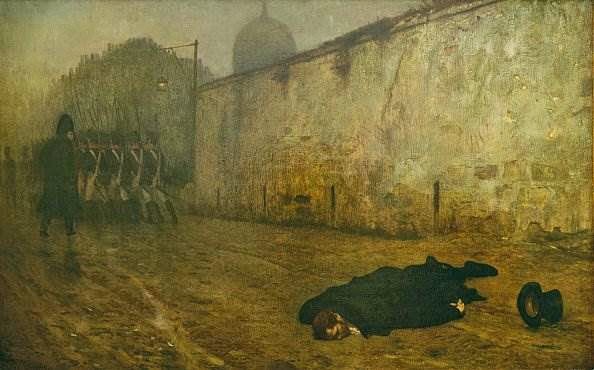
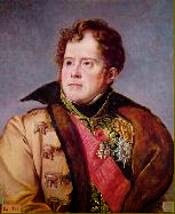
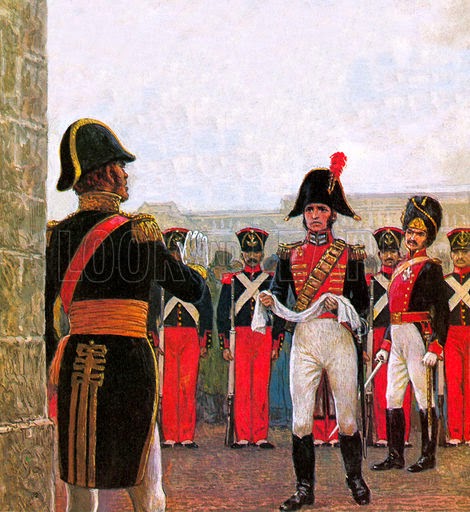
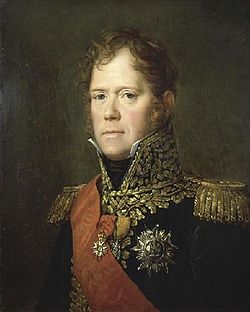
This is the 199th “anniversary” of the execution of Marshall Michel Ney, the Bravest of the Brave, by a firing squad in Paris on December 7, 1815.

Execution of Marshall Ney

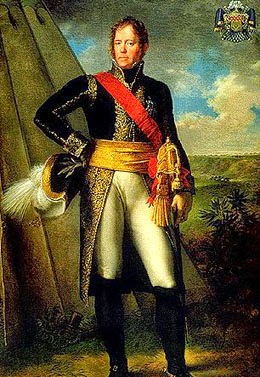
Ney was born in 1769 to a modest family and had a good education, becoming a minor clerk and mine inspector. But in 1787, he joined the army as a Hussar, and was rapidly promoted through the ranks, fighting in numerous battles. He became a commissioned officer in 1792  and was made a general five years later, leading various cavalry units.

He continued his promotions, became a Marshal of the Empire, fighting in Austria and Spain, defeating the British several times in Portugal until he was forced to retreat from Wellington’s fortifications at Torres Vedres.

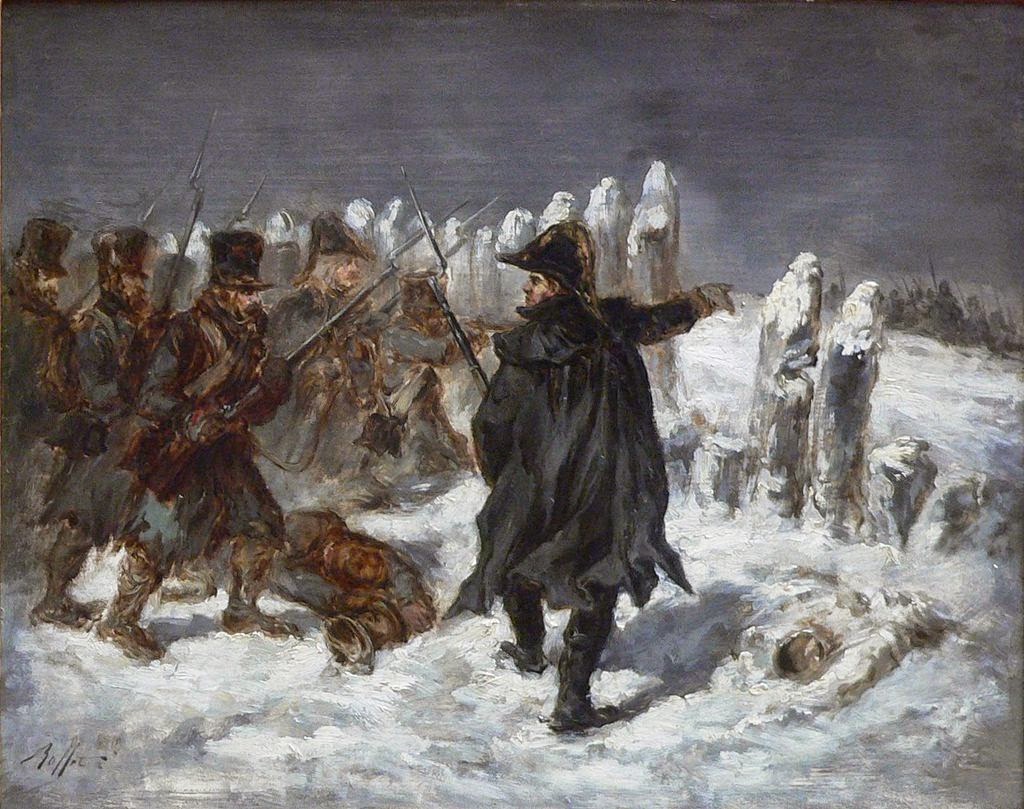
Ney commanded the Third Corps in Napoleon’s invasion of Russia in 1812. Despite being wounded in the neck, one of many he received in his lifetime, he continued to fight and led the rear-guard, known as the last Frenchman to leave Russia.  Napoleon named his Prince de la Moskowa, though he was always known as Marshal Ney.

Ney leading troops in Russia

After Russia, Ney led troops in many of Napoleon’s battles but eventually became the leader of the general’s revolt and told Napoleon at Fontainebleau in 1814 that French troops refused to march on Paris, and that the Emperor should abdicate.

Ney leaves Russia

After Napoleon went to Elba, Ney became a leader of Louis XVIII’s army. When Napoleon returned to France in 1815, Ney led forces to stop him, but when he met Napoleon once more, he defected to the former Emperor’s side with his 60,000 troops. This was the  reason Ney was tried and executed after Napoleon was defeated once more — at Waterloo.

At Waterloo, Ney had four or five horses shot from under him.  Many have criticized his tactics, but no one doubted his bravery in battle.  Supposedly, as the Imperial Guard retreated, he dared someone to shoot him. “Come and see how a French Marshal dies,” he supposedly shouted.  But, amazingly, he was not seriously injured.

Ney leading the Curraissiers at Waterloo

Ney was arrested and tried by the Chamber of Peers on December 4, 1815.  He was age 46.

Ney refuses the blindfold.

 According to legend, he refused to wear a blindfold and gave the order to fire himself, saying,

“Soldiers, when I give the command to fire, fire straight at my heart. Wait for the order. It will be my last to you. I protest against my condemnation. I have fought a hundred battles for France, and not one against her … Soldiers, fire!”

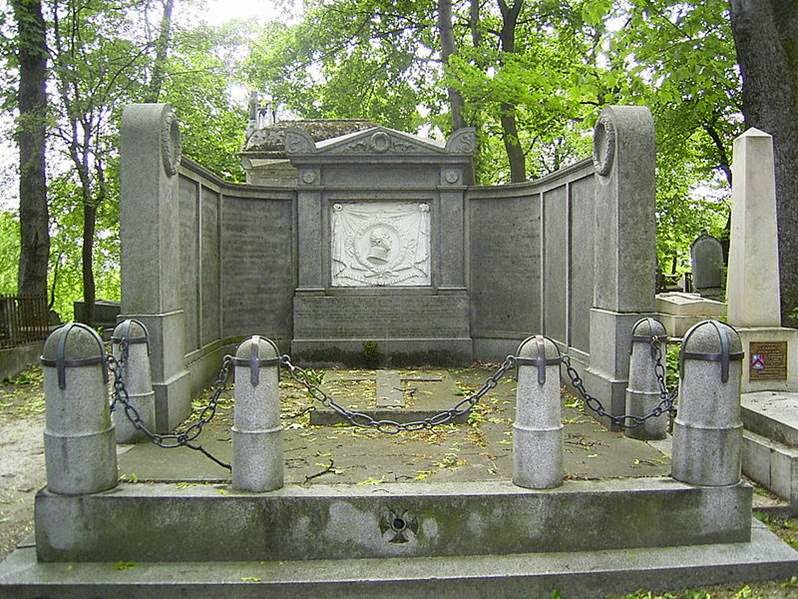
Ney’s tomb, Père Lachaise Cemetery, Paris

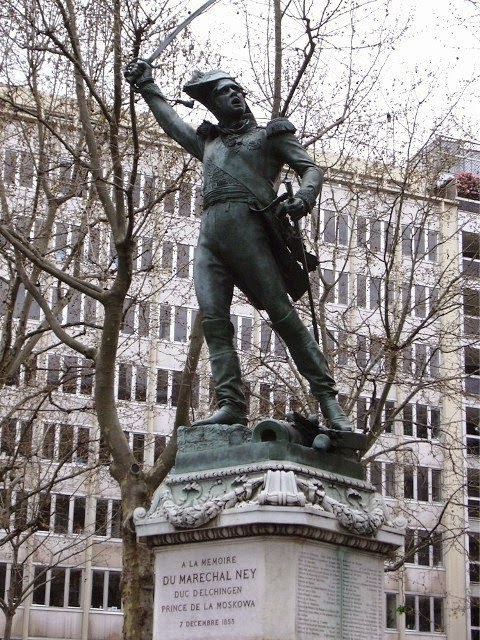
A statue of Ney was erected in Paris in 1853, standing on rue de l’Observatoire, across from the Closerie des Lilas Cafe, remembered as a favorite haunt of Ernest Hemingway.

Ney Sculpture
Inscriptiuon:  A LA MÉMOIRE DU MARÉCHAL NEY
Duc Delchingen
Prince de la Moskowa
7 Décembre 1853
Marshal Michel Ney 1769-1815

DO YOU KNOW ABOUT . . . . THE CORNISH RIVIERA EXPRESS?

Whenever I think of train travel, I think of the Orient Express, or those night sleeper cars often seen in old black and white movies. The elegance of it all! The gently rocking guest rooms, the sofas that are converted into beds at night by white gloved attendants, cocktails in the lounge while listening to Gershwin tunes played on the baby grand by a tuxedo clad pianist and the elegant dining room, its tables laid with china, cut glass and gleaming silverware. All things of the past.

Until I found out about the Cornish Riviera Express, which travels from London to Cornwall, leaving Paddington Station almost daily at 10:30 p.m. The train arrives next morning with stops in Plymouth, Truro and Penzance. There’s a wonderful site called The Man in Seat 61, from which I’ve swiped the photos below. Also on the site are all the details you’ll need to plan a trip onboard of your own.

 As the photos above illustrate, the Cornish Riviera Express is much less luxurious than the Orient Express, but the fact that one can still experience a night journey on a train is remarkable. I must fit this in to a future itinerary. The price is certainly right –

From £49 to £169 depending on single or double berth


You’ll find the official Great Western site here with more information and photos.

You can watch a short video of the train as it steams it’s way through Dawlish, hugging the magnificent shoreline here.

And you can learn more about the background history of the train from this posting on Wikipedia:

The Cornish Riviera Express is a British express passenger train that has run between London and Penzance in Cornwallsince 1904. Introduced by the Great Western Railway, the name Cornish Riviera Express has been applied to the late morning express train from London Paddington station to Penzance station continuously through nationalisation under British Rail and privatisation under First Great Western, only ceasing briefly during the two World Wars. The name is also applied to the late morning express train running in the opposite direction from Penzance to London. Through performance and publicity the Cornish Riviera Express has become one of the most famous named trains in the United Kingdom and is particularly renowned for the publicity employed by the GWR in the 1930s which elevated it to iconic status.
Through trains from Paddington to Penzance began running on 1 March 1867 and included fast services such as the 10:15 a.m. Cornishman and 11:45 a.m. Flying Dutchman, but these still took nine hours or more for the journey.
A new express service with limited stops was promoted by the Great Western Railway, commencing on 1 July 1904. It left London at 10:10 a.m. and was timed to reach Penzance at 5:10 p.m. It conveyed six carriages to Penzance, including a dining car, and one more carriage for Falmouth that was detached at Truro then added to a branch train to complete its journey. Other stops were made at Plymouth North Road (Devon), Gwinear Road (for the Helston branch), and St Erth (for the St Ives branch). The return train from Penzance started at 10:00 a.m. and called additionally at Devonport.
A public competition was announced in the August 1904 edition of the Railway Magazine to choose the name, the prize being three guineas (£3.15) . Among the 1,286 entries were two suggestions, The Cornish Riviera Limited and The Riviera Express, which were combined as The Cornish Riviera Express, although railwaymen tended to call it The Limited.
For the first two years, the new train ran only during the summer, but from the third year became a year-round feature of the timetable. With the opening of a 20¼ mile shorter route along the Langport and Castle Cary Railway in 1906, it was possible to start the train twenty minutes later from Paddington and still arrive in Penzance at the same time. New 68 foot (21  m) Concertina carriages were scheduled for the train at the same time. Additional slip coaches were added to be dropped from the train on the move at various stations to serve holiday destinations such as WeymouthMineheadIlfracombe, and Newquay, and the train began to run non-stop to Newton Abbot where a pilot engine was added for the climb over the Dainton and Rattery banks, the southern outliers of Dartmoor. By the middle of World War I the train had grown to 14 coaches, even running in two portions on summer Saturdays, but the train was suspended in January 1917 as a wartime economy measure.
Running of The Limited resumed in summer 1919 although a 60 mph blanket speed limit was still in force, and it wasn’t until autumn 1921 that pre-war timings were reinstated. In 1923 new steel-panelled coaches and, more importantly the introduction of the Castle Class locomotives, billed as the “most powerful locomotive in Britain”. This allowed the train to travel
to Plymouth without the need to stop to attach a pilot locomotive, use of slip coaches keeping the load below the 310 ton limit for the Castle Class. However the pre-eminence of the Castle class did not last long as the Southern Railway Lord Nelson class of 1926 topped them for tractive effort, and so the King class was developed, particularly with the heavy West-country holiday trains in mind. Their introduction from 1927 allowed arrival in Plymouth to reach the 4 hour mark, although the increased weight of these locos prevented their use in Cornwall. The King class were also permitted an increased maximum load of 360 tons between Newton Abbot and Plymouth; above this a stop was required to attach a pilot locomotive.
1935 saw new coaches in the shape of the 9 feet 7 inch (2.9 m) wide Centenary carriages , but there were few other significant changes until World War II. At the outbreak of war all trains to the West country were to travel via Bristol, and departure of the Cornish Riviera Limited was moved to 14:35, although this change only lasted until October when the departure time returned to 10:30 with Exeter as the first stop. By summer 1941 it seemed that everyone was taking their (brief) summer holidays in the West Country, and the Cornish Riviera Limited ran in five sections, to Penzance, Penzance, Paignton, Kingswear and Newton Abbot respectively. Ironically the Limited ran throughout the war, but was cancelled in the winter of 1946/47 due to a coal shortage, not being restored until the following summer although pre-war schedules were not regained until autumn 1955 by which time the railways had been nationalised and the 1955 Modernisation Plan had been published.
The service was dieselised in the late 1950s. D1000 Western diesel-hydraulics introduced in 1964 could keep the four-hour schedule to Plymouth even with a 500 ton train and an additional stop at Taunton. Further cuts in time saw Plymouth being scheduled in 3 hours 35 minutes before the Westerns were withdrawn in 1977 to be replaced by Class 50Diesel-electrics hauling Mk2d/e/f air-conditioned coaches. These were, in turn, replaced in autumn 1981 by HSTs.
After rail privatisation, the service is now operated by First Great Western, still using HSTs which are now undergoing refurbishment to see them past their quarter-century and within touching distance of the 31 years for which the King class were synonymous with the Cornish Riviera Limited.