Victoria here. Kristine and I were fortunate enough to attend preview of the Constable exhibition now on view at the Victoria and Albert museum in London.
.JPG)
According to the Exhibition curator, “Constable: The Making of Master reveals the hidden stories of how John Constable created some of his most loved and well-known paintings. On display are such famous works as The Haywain together with the oil sketches he painted outdoors direct from nature.” The exhibition continues in London until January 11, 2015. If you are near London, don’t miss it.
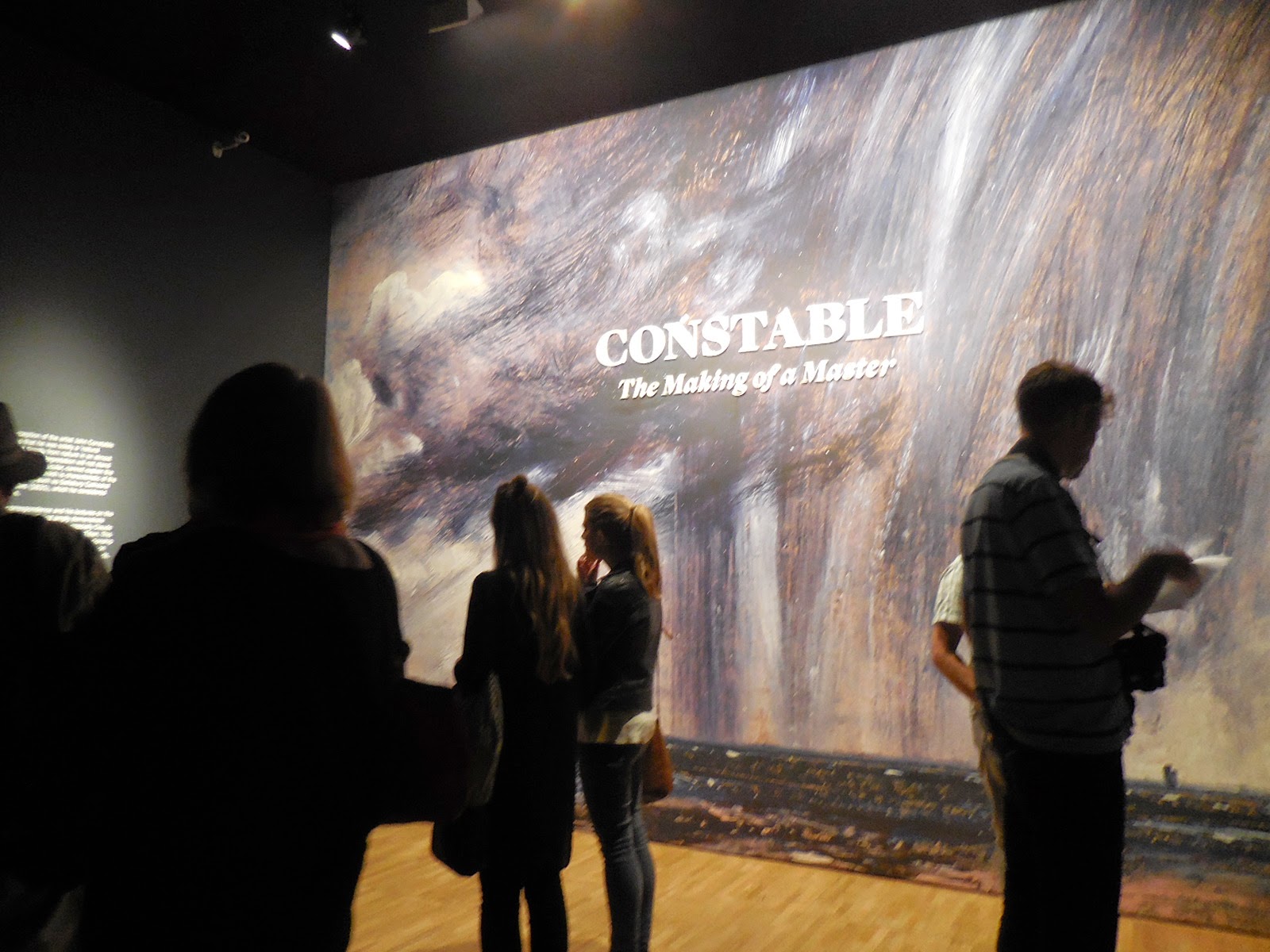
Constable is one of England’s best-loved painters. Born in 1776 in Suffolk, he studied hard to become a painter of note, though he was elected to the Royal Academy only at age 52. The exhibition looks at the paintings he studied, and shows many of his sketches for later works that continue to capture the public imagination two hundred years later.

John Constable 1776-1837
Self Portrait, from the National Portrait Gallery, London
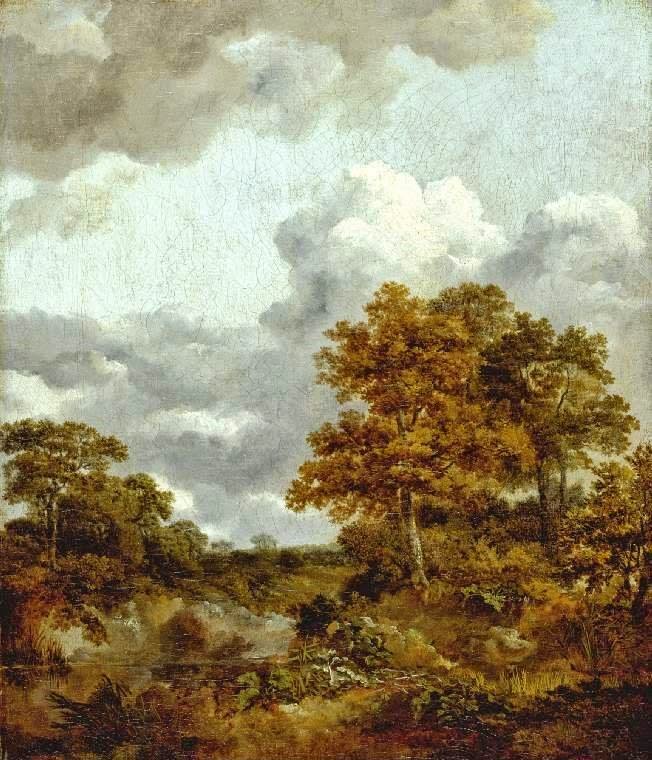
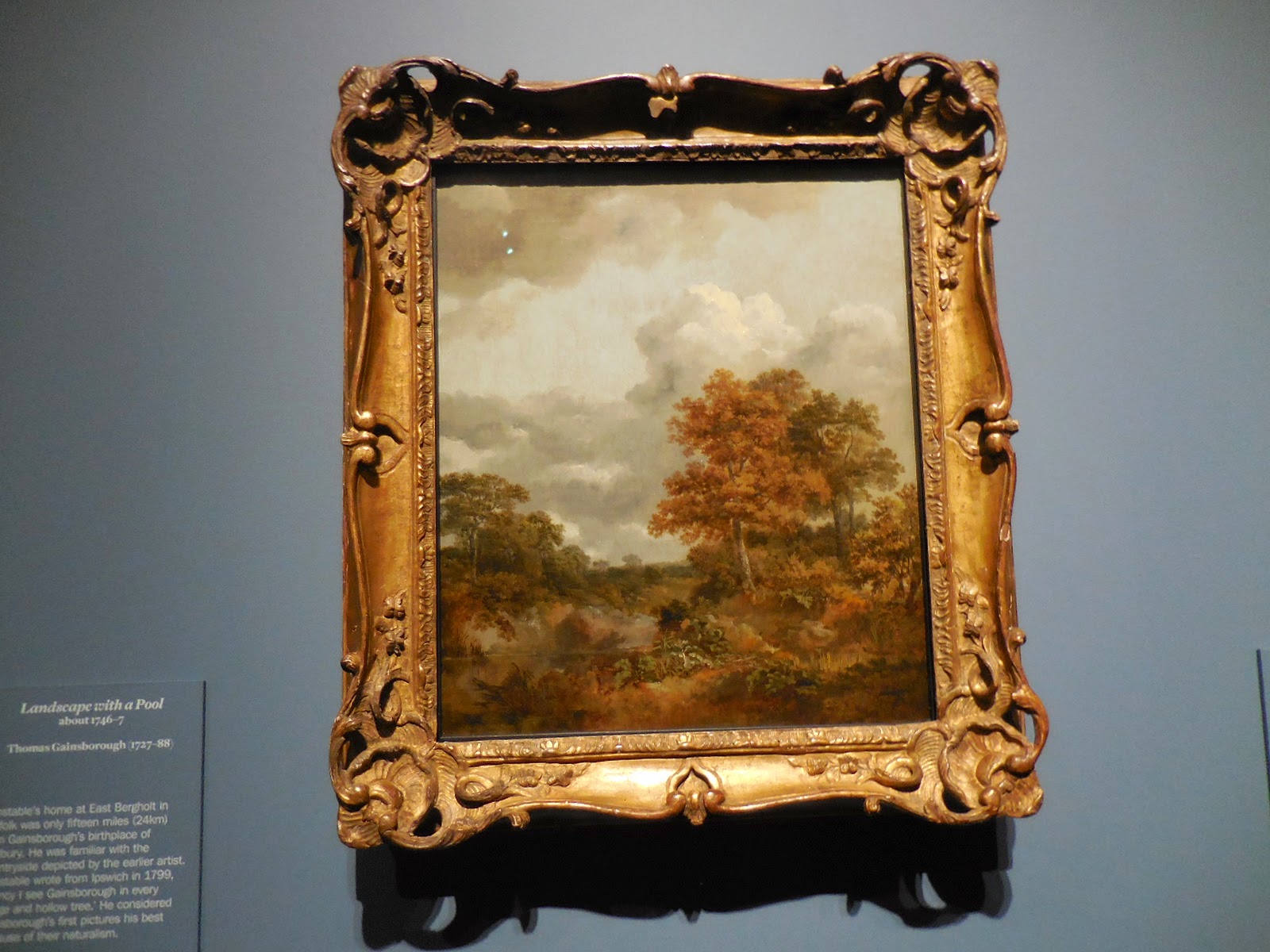
Thomas Gainsborough, Landscape with a Pool, c. 1747
Fitzwilliam Museum, Cambridge University
Among the many influences on Constable was his fellow native of East Anglia, Thomas Gainsborough (1727-1788). Constable is said to have preferred the more natural style of Gainsborough’s early landscapes to his celebrated portraiture. Below, Landscape with a Pool in the Constable exhibition.
Claude Lorrain (1604/5-82) — below — was another strong influence on Constable in developing his landscape style.
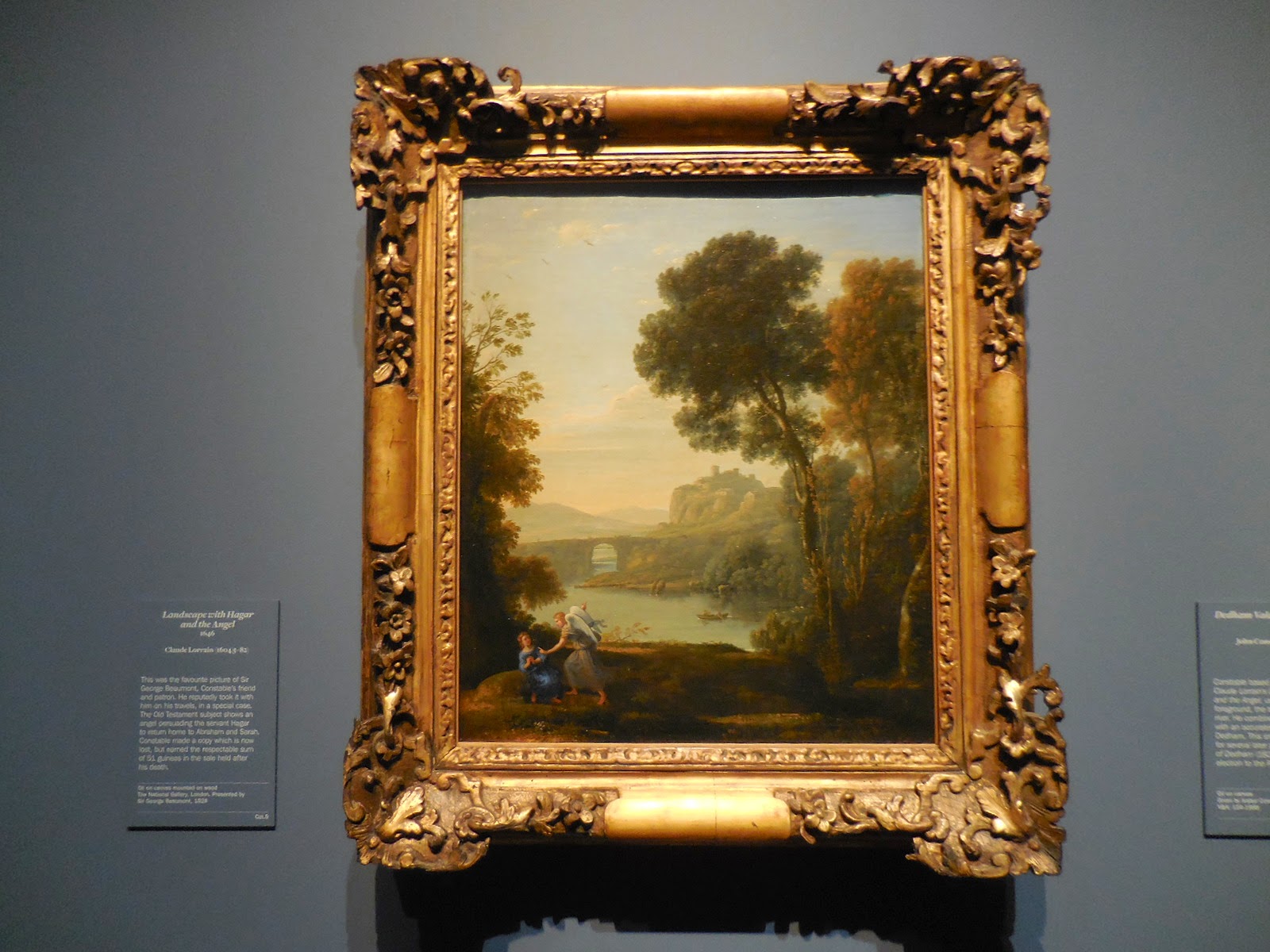
Landscape with Hagar and the Angel, 1646, by Claude Lorrain
National Gallery, London
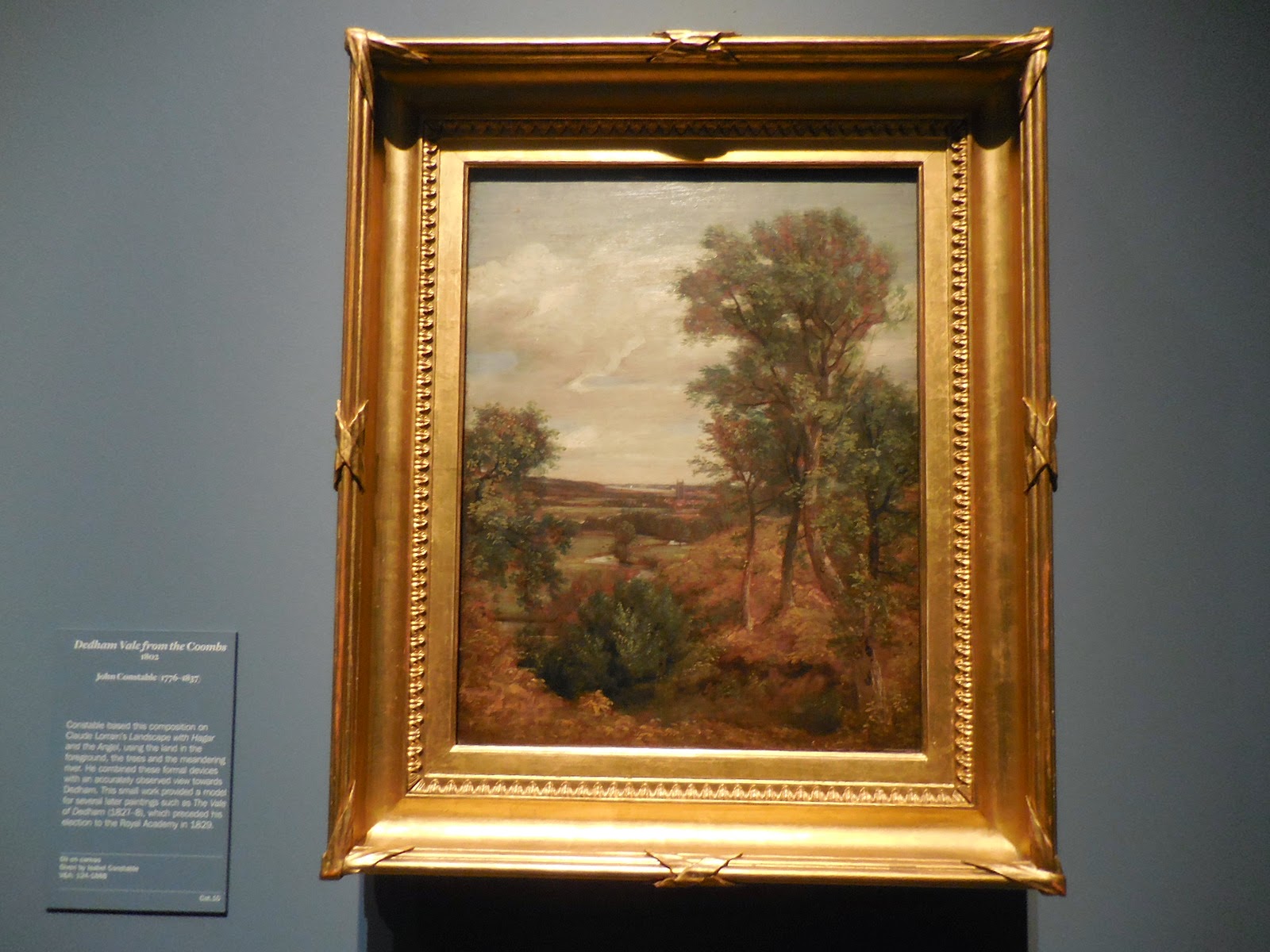
Constable, Dedham Vale from the Coombs, 1802, V and A Collection
Shows the influences of the Claude work above which Constable knew well.
Another early work by Constable is below.
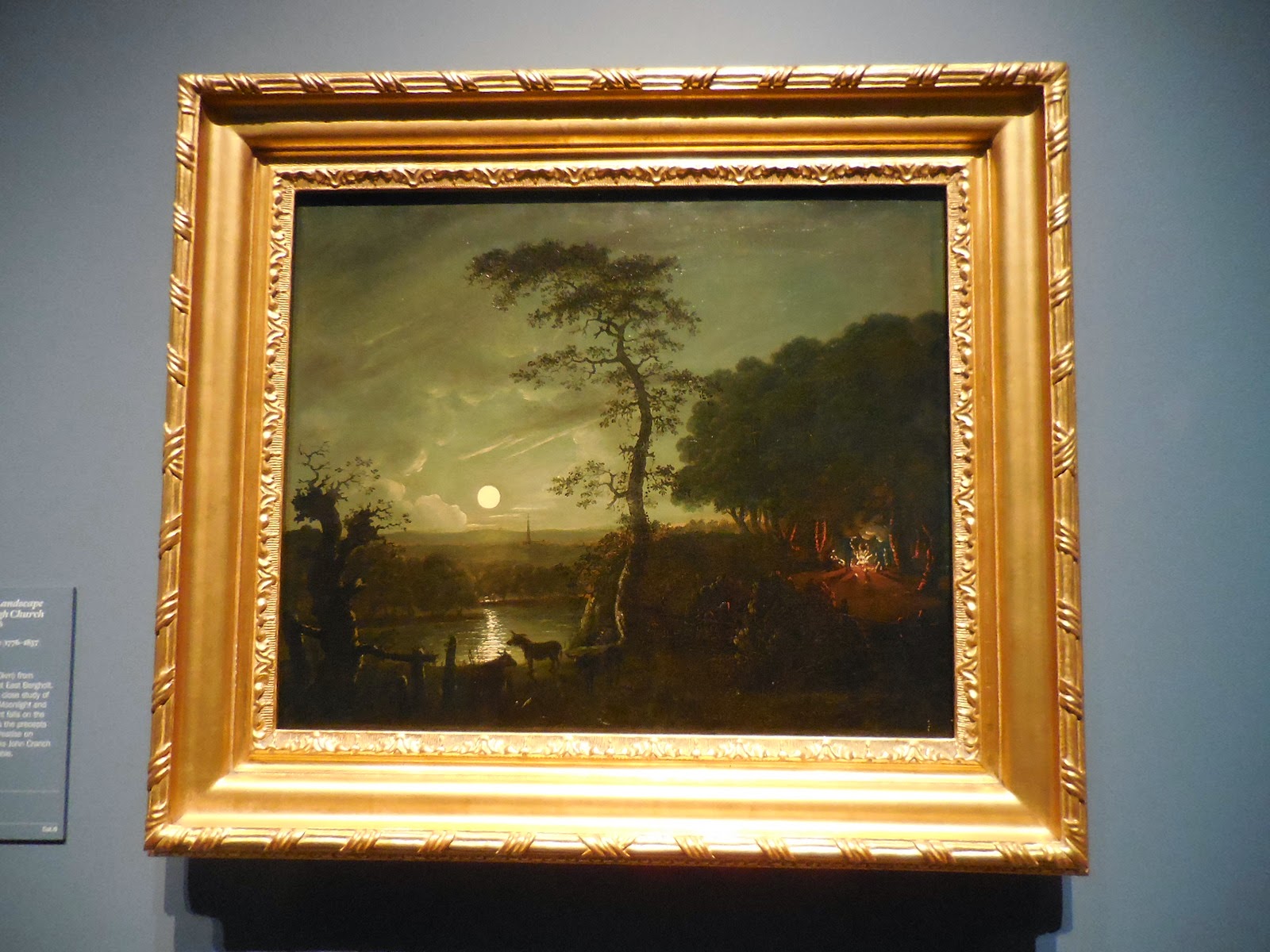
Moonlight Landscape with Hadleigh Church, 1796
Private Collection
.JPG)
Constable, Two Studies of Ploughs, 1814
V and A
Constable was a careful draughtsman as well as an inspired and imaginative painter. He worked hard to reach accuracy in all regards, as in the studies of ploughs (above and clouds (below).

This stud
y of clouds dates from about 1821.
y of clouds dates from about 1821.
Another technique Constable experimented with was painting outside, in the open air. Work had to be fast to catch the light effects before they changed. The work below was done in a friend;s grdin in about an hour.
.JPG)
The Close, Salisbury, 1829
V and A
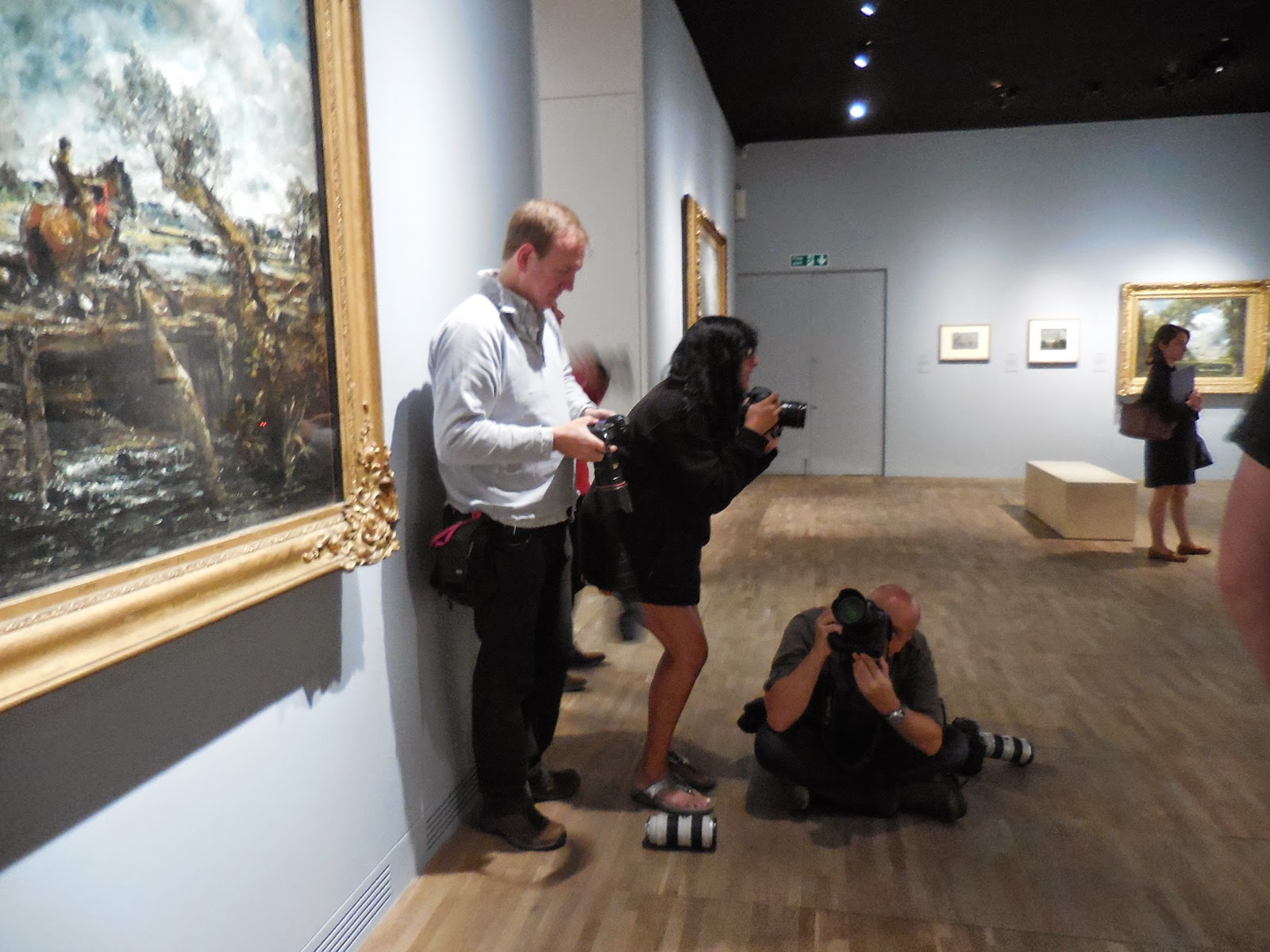
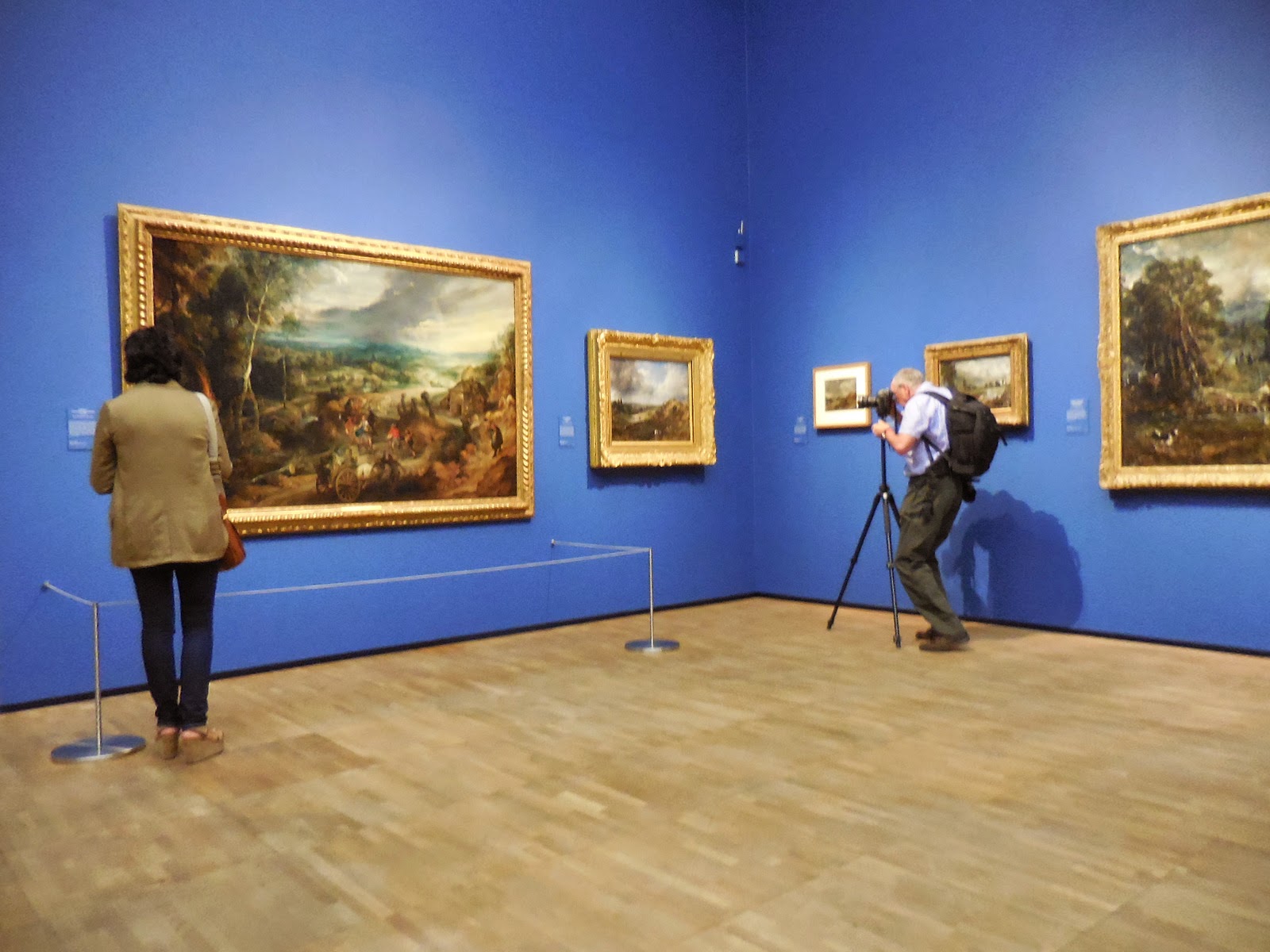
Part of the fun of attending a press preview is watching the other writers and photographers at work.
.JPG)
From the text panel: “Drawing on Glass…Constable captured scenes from nature by sketching them on paper. His initial pencil drawing could then be inked over and squared up to transfer the composition to a canvas for painting We can see this method in the surviving preparatory sketch and its finished paining Watermeadows at Salisbury.”
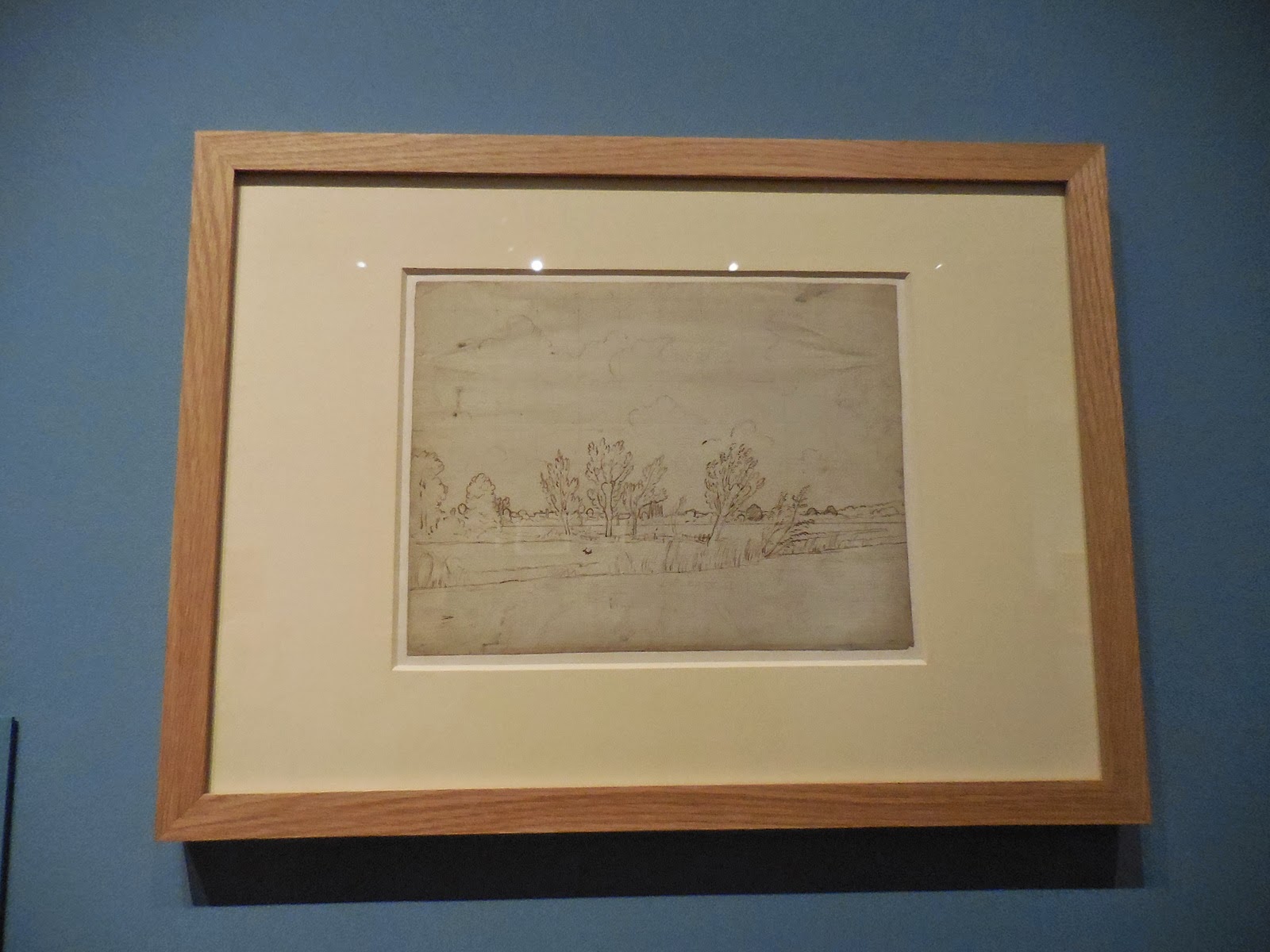
Sketch: Watermeadows at Salisbury 1829-30
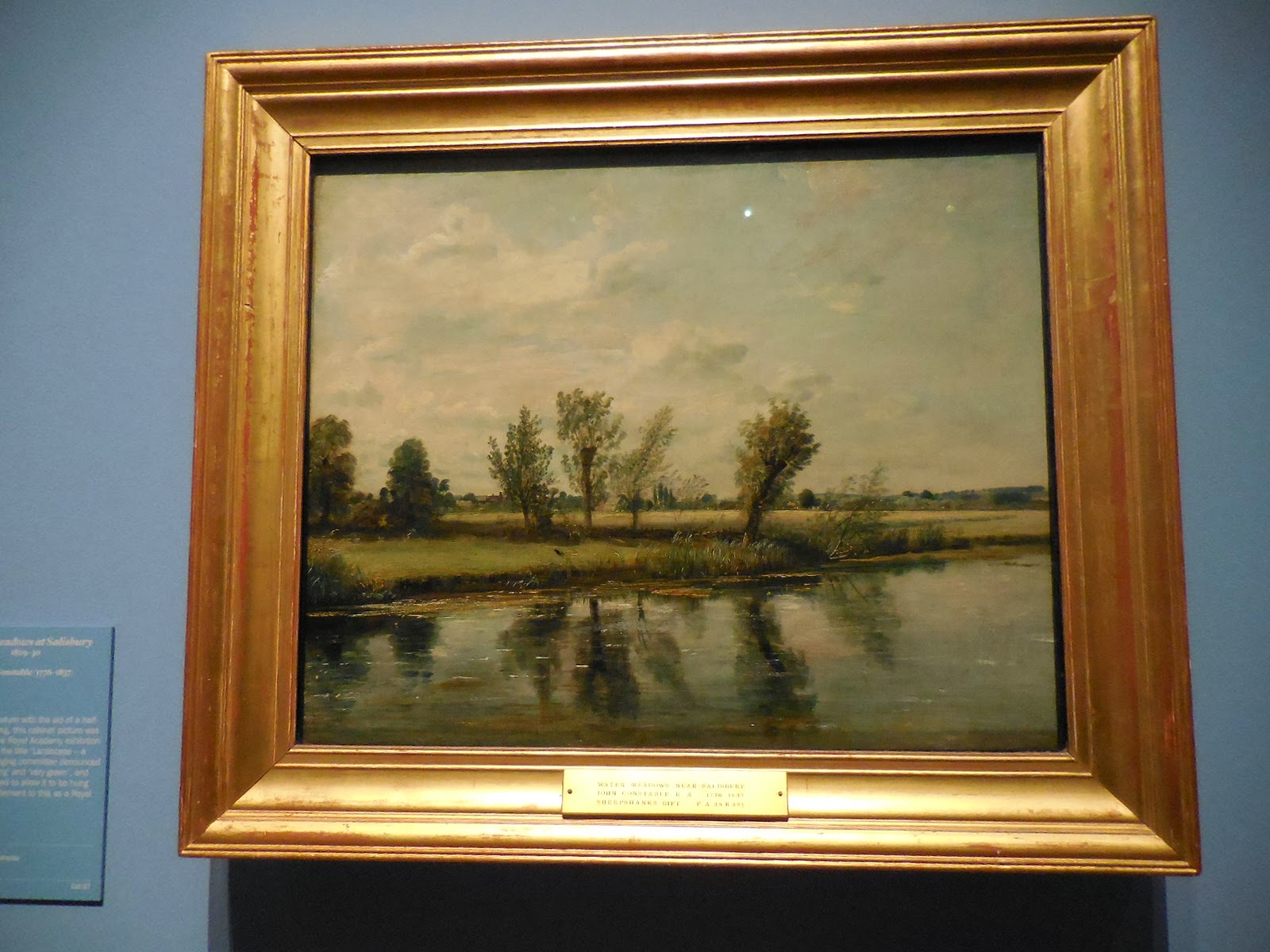
Constable, Watermeadows at Salisbury, 1829-30
V and A
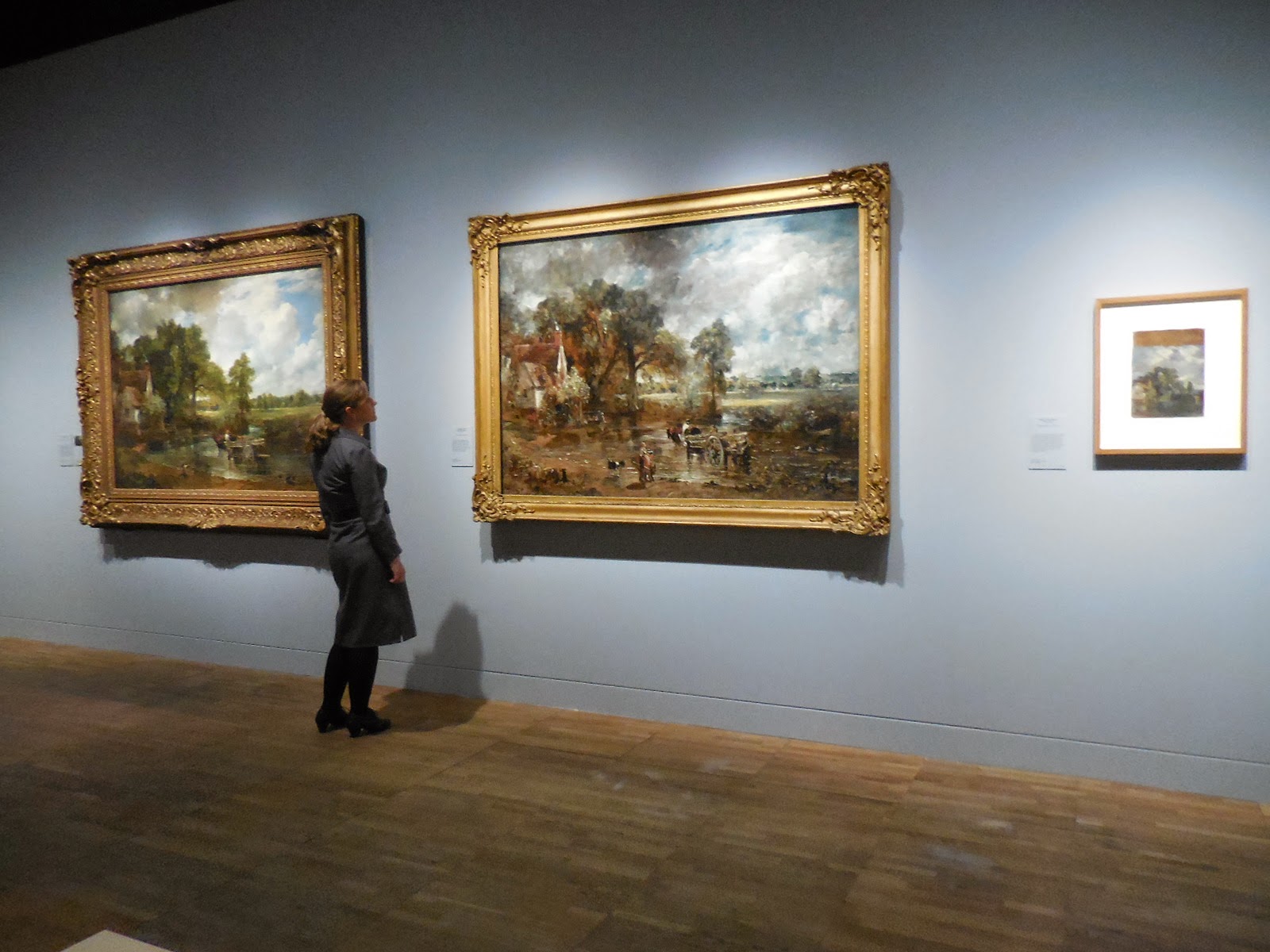
Two versions of the renowned Constable painting
The HayWain 1821

Salisbury Cathedral from the Bishop’s Grounds, 1823
V and A
While preparing the exhibition, conservators at the V and A discovered an oil sketch on the reverse side of Branch Hill Pond, Hampstead. A special mount was designed to show both paintings, showing, ” a narrow clearing fringed by trees against an unsettled sky…probably made in the late summer of 1821 or 1822 when Constable painted a number of sketches featuring similar could studies and motifs…”

Branch Hill Pond, Hampstead, 1821-22 (above)
.JPG)
Landscape with a Kiln, 1821-22
on the reverse
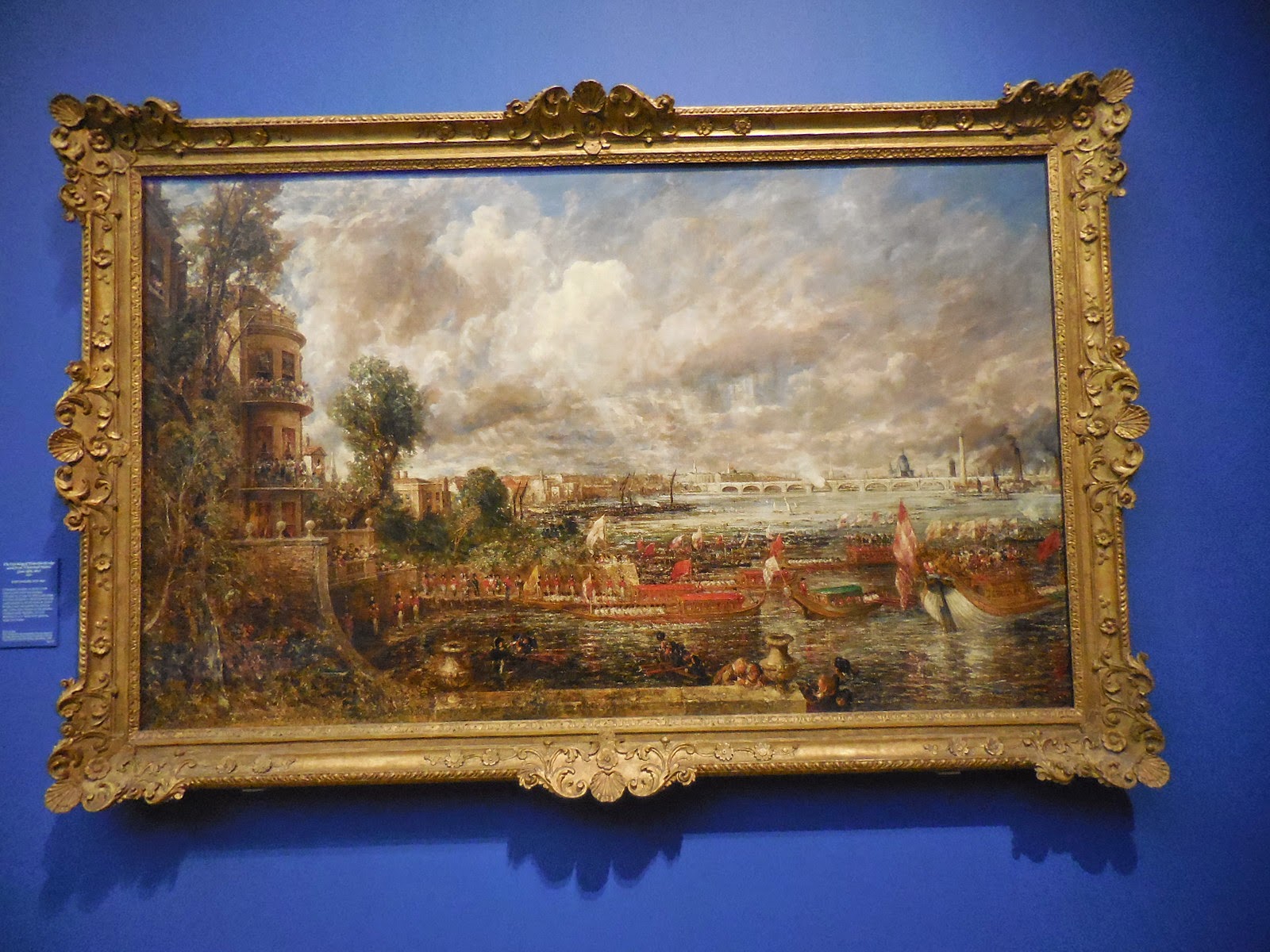
Constable The Opening of Waterloo Bridge seen
fro
m Whitehall Stairs June 18th, 1817
m Whitehall Stairs June 18th, 1817
1832, Tate Britain
This is just a taste of the many delights in this outstanding exhibition curated by Dr. Mark Evans, FSA, Senior Curator of Paintings at the Victoria and Albert Museum. Highly recommended!!
The exhibition website is here.



.JPG)
.JPG)
.JPG)
.JPG)