OF HEADSTRONG HEROINES AND THE “SPORT” OF BEAR BAITING IN REGENCY ENGLAND

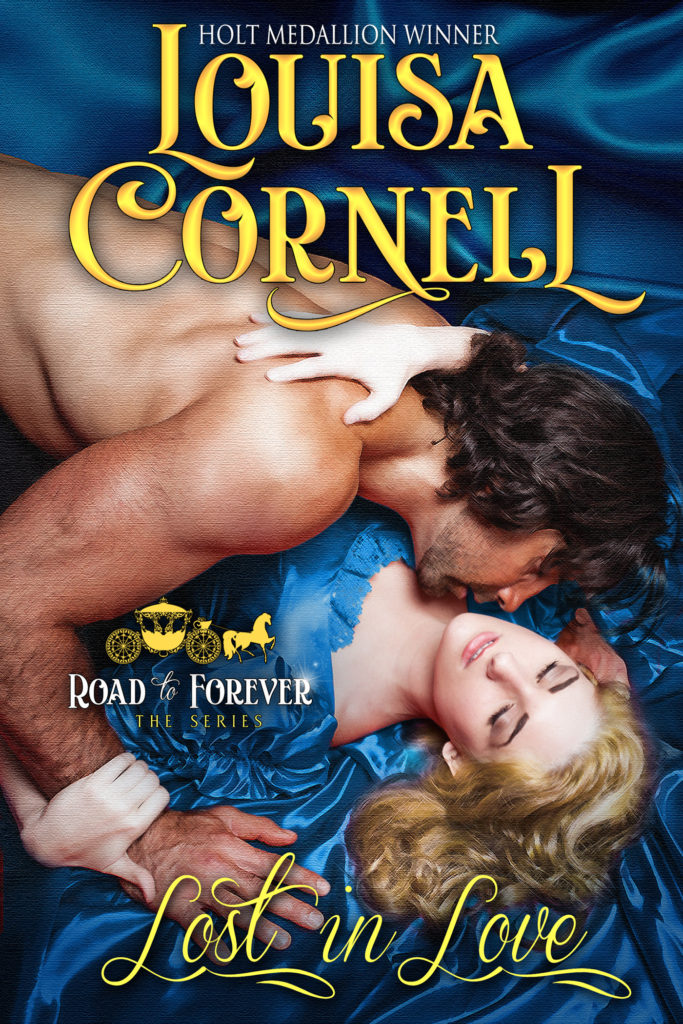
EXCERPT from LOST IN LOVE by LOUISA CORNELL

THE FOOL OF A BEAR baiter looked at her as if she had two heads.

“I mean it, you puffed up bully.” She flicked the whip at him and knocked the tattered hat from his head. “This dog belongs to Miss Worthy. Should you try to take him I shall horsewhip you within an inch of your life.” She stepped forward and raised the whip to prove her point.

“And I will take up where she leaves off,” Lucy declared. She handed Horatio’s lead to the menacing footman and pushed her sleeves up to her elbows.

“You’re both mad. I’ll teach you to strike me, you silly chit.” He raised his fist and might have hit Adelaide had two things not happened almost at once. She was lifted away from him. At the same time, a powerful hand shot out and knocked the man on his arse.

Marcus.

Her husband glared at the two ruffians who held the scarred dogs on leads. They retreated immediately. He stood over the barker, shaking with fury. “That chit is the Duchess of Selridge. My wife.” The man’s face paled noticeably. “If you value your life you will take this sideshow back to Bankside and never show your face to me again. Understood?”

The barker and his dog handlers nodded vigorously and made haste to do exactly as Marcus said. Adelaide found herself guided by an overbearing grip to her elbow as she was propelled back to the phaeton. The Earl of Creighton offered Lucy his arm and escorted her back towards the Serpentine, her footman and Horatio close behind her. Lucy waved, her face wreathed in concern.

Adelaide was suddenly snatched off her feet.

“Your leg.” The words of concern came out in a squeak as Marcus lifted her by the waist and deposited her with a short drop onto the bench seat. He climbed in beside her and, with a brief nod to the Earl of Creighton, started the grays toward the main gate of the park.

She looked back at the two dogs as the barker and his henchmen dragged them towards the crowd of young gentlemen. The dogs gazed at her forlornly. Their eyes said so much and it broke Adelaide’s heart. A horse and rider stepped out of a copse of oak trees. Dylan raised his hat to her in silent salute and then walked his horse in the direction of the barker, the dogs, and the crowd.

Adelaide turned to find her husband’s gaze fixed on Dylan’s back. She did not like the expression she saw there. When he turned his piercing green eyes on her, she liked it even less. She searched her mind for the words to cool that emerald fire. “Marcus, I realize I shouldn’t have—”

“We’ll talk about it when we get home, Adelaide. I’d rather not be involved in two scenes in Hyde Park in the same day, if it’s all the same to you.”

“Is there going to be a scene?” She tried to pass the question off as a jest.

“Oh, yes, madam. Count on it.”


A BRIEF HISTORY OF BEAR BAITING

and OTHER DOG FIGHTING “SPORTS”

Most of the early forms of dog fighting involved baiting them with other animals. The most popular of these were bull-baiting and bear-baiting. The first record we have of a bull-baiting in England gives the date of 1209. The so-called sport lasted until the 19th century. Bull-baiting was actually required in the 17th century, as the theory was it tenderized the meat. As for the practice of baiting between dogs and monkeys, rats, ponies, and even lions—I am still trying to find a twisted justification for those events. I doubt I ever will.

Both dog fighting and cock fighting were considered gentlemen’s sports. The major spectators, therefore, were members of the aristocracy. Queen Elizabeth I enjoyed animal baiting and banned plays on Thursdays, as that was when most animal baitings took place. King James was also a fan and retired several mastiffs after they defeated a lion. He felt after they had defeated a lion, any other opponent would be beneath them. Dogs fighting each other was established as a sport by the mid-17th century and was legal in England through the mid-1800’s. Some owners of fighting dogs were indeed gentlemen and members of the peerage, but the sport also became popular among the working class as well.

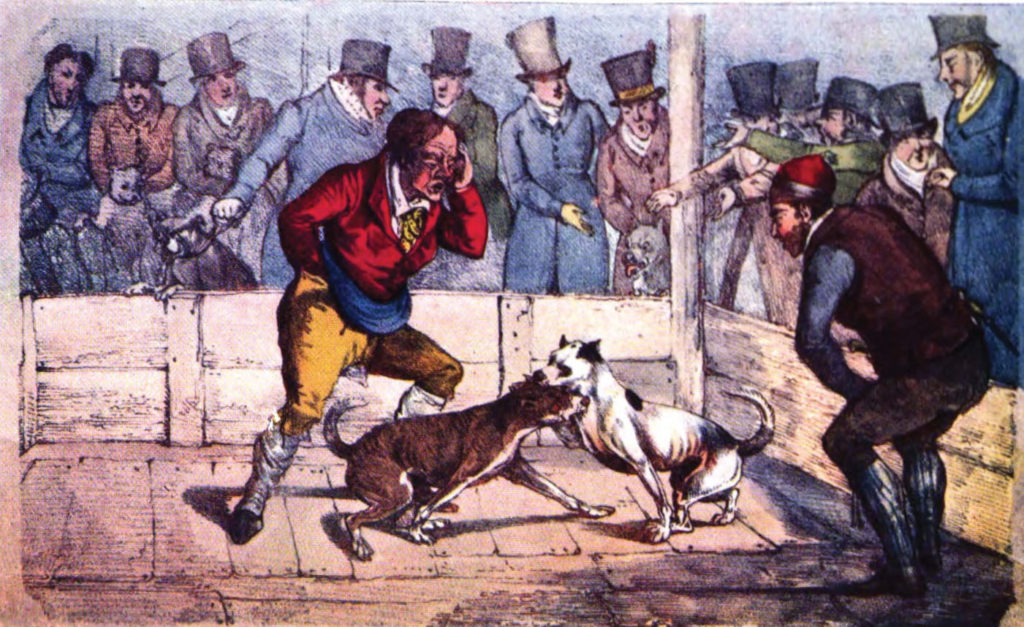
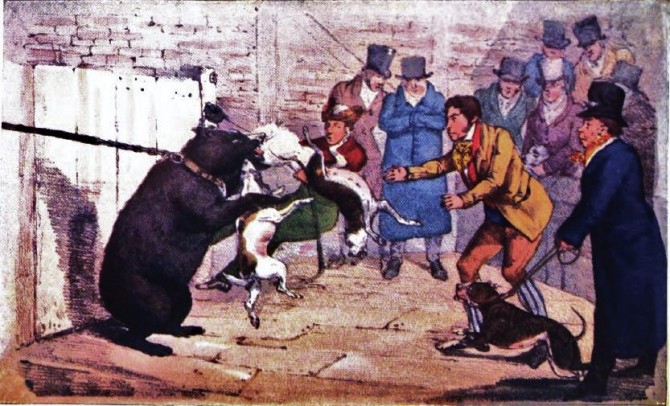
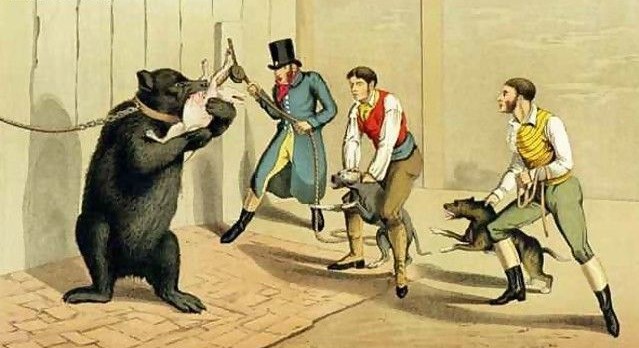
The venues for bear-baiting were called bear gardens. They consisted of a circle, fenced completely by a high wooden fence. There were raised seats around it for spectators, very like a Roman arena. A post was set in the ground at the back of the “pit.” The bear was chained to the post by his leg or his neck. A group of baiting dogs was then turned loose on the bear. In its earliest form, this dog was what we know as the Old English Bulldog. The dogs were replaced as they tired, were wounded, or were killed. The most well-known area for these events was the Paris Garden area of London, a section of Bankside lying west of The Clink at Southwark.

Bear-Baiting-Published-by-Thomas-Mclean-Henry-Thomas-Alken-English-artist-1785-1851-1820

Bull-baiting was conducted in a similar fashion, with the dogs sometimes tied to the bull’s back. The last recorded bull-baiting took place in 1838. Once bull-baiting and bear-baiting became illegal, dog-fighting came into its own. It was an exceedingly popular sport amongst the aristocracy and was equally popular with the middle and lower classes, especially after the Industrial Revolution. The fact it was not legal did little to slow it down. Much as the laws today have done little to prevent it.

Bear-Baiting-Published-by-Thomas-Mclean-Henry-Thomas-Alken-English-artist-1785-1851-1820

There were those who opposed dog fighting in all its forms. As early as the 16th and 17th centuries the Puritans opposed it – not for its inherent cruelty, but because it brought pleasure to the spectators. Those Puritans were seriously anti-pleasure. It wasn’t until the early 18th century, when people, beginning with William Wilberforce, began to read the biblical term “dominion” as “stewardship” that people began to see these sports as cruel and demeaning. Rather than seeing animals as lesser creatures to be dominated and used in any fashion man desired, Wilberforce espoused the idea that humans were put on earth to care for animals and to look out for their best interests.

Baiting sports were prohibited by Parliament with the Cruelty to Animals Act of 1835. However, as I said earlier in this post, this resulted in an increased popularity in the sport of dog fighting. Legal or not, it became a lucrative business beginning in the Victorian era. Those dogs bred for bear-baiting and bull-baiting, a cross between English bulldogs and rat terriers, were called Bull Terriers. These were tough, tenacious, compact dogs of around 50 pounds with powerful jaws for tearing and biting. After 1835, larger dogs were crossed with these dogs to create the dog we know as the pitbull today.

I will not engage in the debate for or against the breed in this post. I only know my two grandnieces, ages two and three, learned to walk by pushing up on and holding on to a large white pitbull named Penny. She is their constant companion and watches over them with a vigilance many young mothers might seek to emulate.

Dog fighting was and remains one of most heinous, disgusting, and cowardly acts of cruelty ever conceived. It is the provenance of classless, ignorant, cowards – men, and sometimes women, who do not have the courage to prove their over-inflated egos by engaging in combat themselves. They prefer to force animals who have no choice to prove it for them. The only thing it proves is we have not come very far in the last 800 or so years. And we still have a long way to go. Fortunately, there are still people like, Addy, heroine of my book, Lost in Love, in the world. People who are not afraid to speak for those creatures who cannot speak for themselves. To all Athe modern-day Adelaide Formsby-Smythes in the world, I say “Thank you!” and “Keep up the fight!” To those dogs still waiting to be rescued from the wastes of human flesh who force you to act against your loving and gentle natures, please hang on. We will never give up. We’re coming for you. Hang on, babies. Just hang on.


EVERY RELATIONSHIP HAS ITS UPS AND DOWNS –

When Adelaide Formsby-Smythe insults the Duke of Selridge to the point she sees her own murder in his eyes, her wish that the ground would open up and swallow her seems a perfectly reasonable response. Until it does.

Thus, Major Marcus Winfield, now the Duke of Selridge, ends the worst year of his life by falling into an underground cave with the younger sister of his former fiancée. An offense punishable by—marriage!

EVERY MARRIAGE HAS ITS SECRETS –

Although he never imagined marrying Adelaide, Marcus decides they will limp along quite well together. There’s no need to mention he’s being blackmailed… or that his irritating new wife fills his nights with a passion he cannot deny.

Adelaide, however, having unexpectedly married the man of her dreams, will settle for nothing less than her new husband’s heart. She’ll make him love her. Far less bothersome that way when she has to tell him she’s a thief. And possibly a murderess.

AFTER ALL, EVEN THE ROAD TO FOREVER HAS A FEW BUMPS ALONG THE WAY.

Lost in Love is available now through these links :

http://amzn.to/2qMwpeN

http://bit.ly/2skzll5

https://itunes.apple.co/2qHCo9u

A TOUR GUIDE IN ENGLAND – THE AUDLEY END KITCHEN GARDENS

by Kristine Hughes Patrone

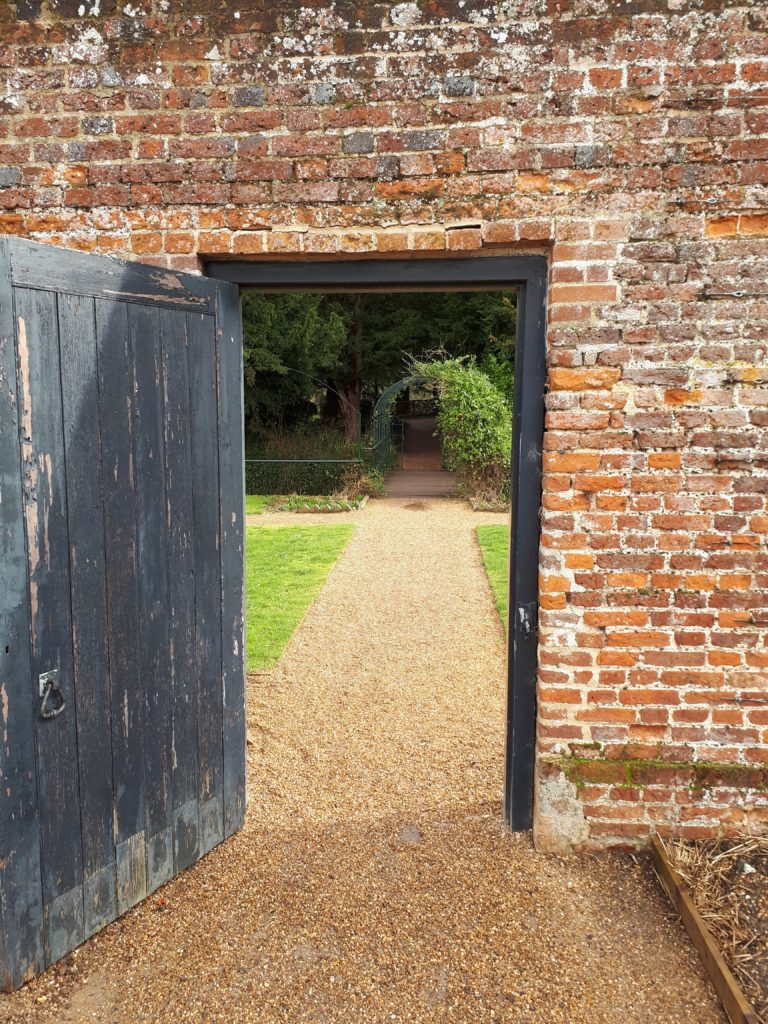
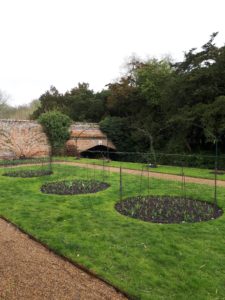
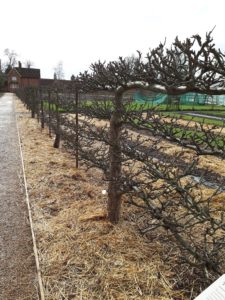
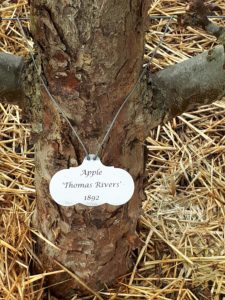
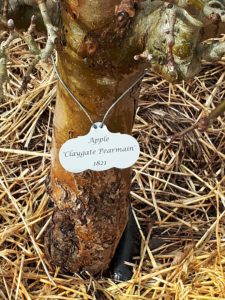
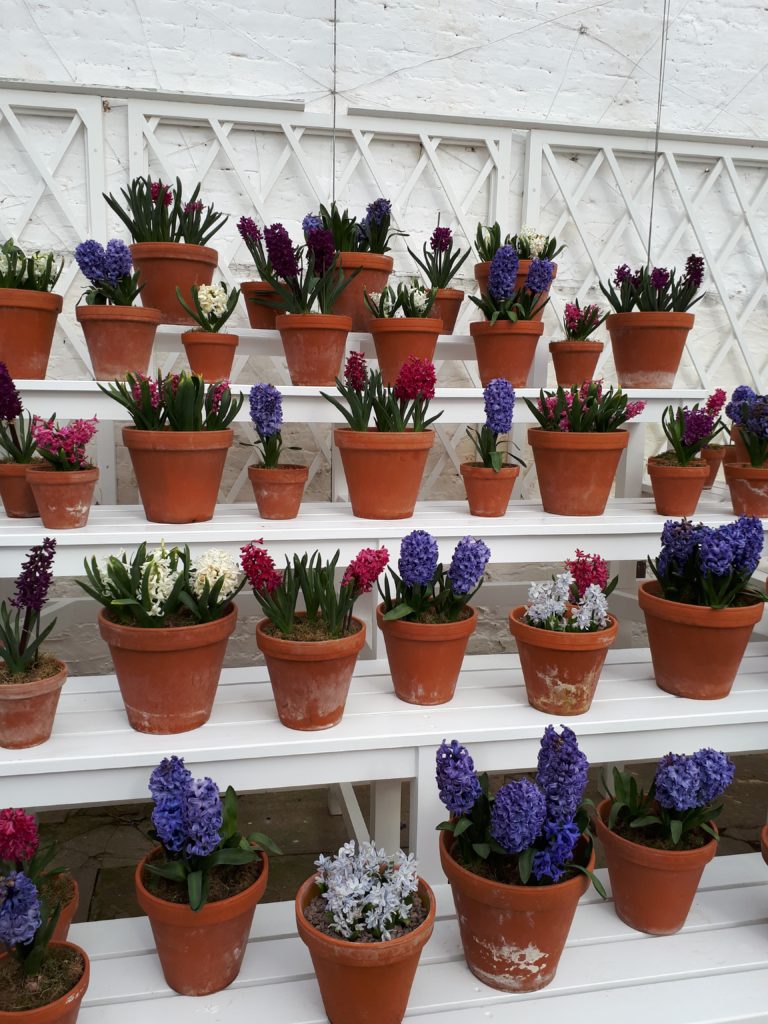
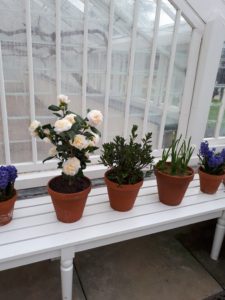
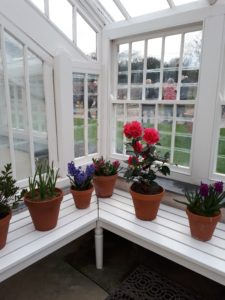
When I left you in the last post, our group had made our way to the Audley End Kitchen Garden for a tour with the gardener. The Kitchen Garden offers over 120 varieties of apples, 40 types of pears, 60 kinds of tomatoes plus many more fruits and vegetables. It also has an Orchard House where peaches and figs are grown in pots, in the same way that they were in Victorian times.

Instead of my going on about our tour, I’ll let you experience it for yourself. Click here for Part One (5:57) of our tour. You’ll find the link to Part Two below.

Click here for Part Two (6:54) of the garden tour.


WIN A NUMBER ONE LONDON TOUR!

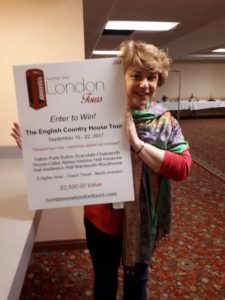
Congratulations to Karen Feder, lucky winner of a place on our English Country House Tour!
Karen entered the raffle at the Barbara Vey Reader’s Weekend in Milwaukee on April 29th and will now be joining the tour group for an eight day tour of country houses in September.

More chances to win a place on one of our tours are coming up. Sign up to our newsletter in order to be the first to know about upcoming tour giveaways! Newsletter link can be found in the right sidebar – good luck!

The History of the Country House Guidebook

by Louisa Cornell

Anyone who writes romances set in Regency England must have a thorough knowledge of that quintessential piece of British architecture – the English country house. One of the best resources for the study of these monuments to old titles and often older money is the country house guidebook. They usually include photographs of the most beautiful rooms, and more often than not, a floor plan of the house. I have an ever-increasing collection of these guidebooks, many for homes I have not visited. Yet. Frequent visits to Amazon used books and Ebay make adding to my collection easy. And I have friends who enable my addiction by bringing these books back from their trips to England for me.

Elizabeth I actually set the wheels to the country house tour in motion. Whilst her father made pilgrimages to tour his own homes, Elizabeth I often traveled England visiting houses of the nobility. Therefore, as early as the Elizabethan age, the aristocratic pattern of building large country houses for the sake of display and prestige was set by these royal pilgrimages.

In the Georgian era, the increasing wealth of the expanded upper classes provided time for travel and cultural pursuits. More and more turnpike roads were created, making travel faster and safer. Inns were built to accommodate tourists. By the end of the 18th century clergymen, lawyers, military officers, bankers, merchants, minor landowners, and members of the aristocracy were all making tours.

Frequent wars on the Continent thwarted traditional Grand Tour Destinations. Even without wars, travel for women was restricted. Visiting other ‘good’ families was an acceptable way to broaden their knowledge and tastes – cross pollinating ideas, styles, and fashions.

Houses near large conurbations were especially susceptible. Walpole’s neo-Gothic Strawberry Hill near Twickenham was a particularly sought out destination. When visiting an area, day trips to nearby country houses were a favorite activity. The expectation was an owner would, as part of their duty to better society, open their house. Part of being a polite land owner was allowing tourists to visit one’s house and grounds. Key questions in planning these visits were – find the houses, determine whether the owners were amenable to visitors, no matter how genteel. Areas with a higher density of fine houses, within a day or two ride of a city or other existing tourist destinations – Norfolk, Derbyshire, Wiltshire – became part of the unofficial British Grand Tour.

By the latter part of the 18th century the number of people visiting country houses had grown exponentially. As these numbers increased so did the need to manage the situation. Some owners simply refused visitors access. By 1760, Chatsworth was specifically open two days per week.

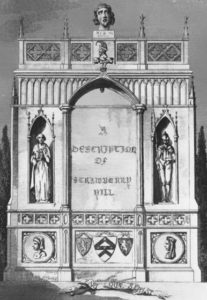
In 1774, Walpole began issuing tickets and rules for good conduct. He only allowed a maximum of four visitors per day, and children were absolutely forbidden. Smart man. He wrote his own guidebook and printed them on his own printing press. He seldom gave them out as he was afraid people would never leave should they try to see everything he described in the guidebook.

Frontispiece to A Description of the Villa
at Strawberry Hill

Only a handful of houses attracted hundreds of visitors. Wilton House in Wiltshire was one. The increase in visitors eventually led to formal opening hours and standardized tours led by housekeepers. Inns were built near to these houses to cater to tourists.

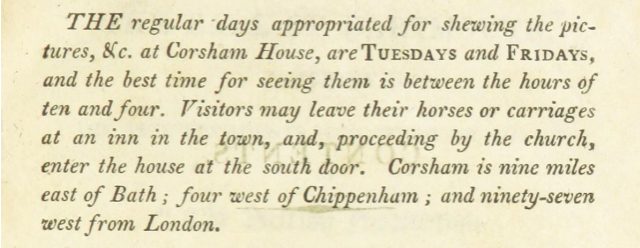
Internal tours were conducted by the housekeeper.Whilst their stories of family history might or might not be true, their information about works of art and collections in the house were more often than not quite wrong. Some housekeepers were even rumored to simply make things up. Demand for more accurate information gave birth to the concept of the guidebook. In the beginning, the standard form of these guidebooks was a map of an agreed upon route through the home,with entries on each work of art. Indeed most of the ones from the 1730’s and 1740’s were in-house creations with the aforementioned maps, i.e. a floor plan with a suggested route through the house. All of them were focused on an individual house and were basically a catalogue of the artworks and collections in the house.Usually published after a house became established as a tourist attraction, they included information about those things visitors were expected to notice. And, of course, they excluded those things visitors were expected to ignore.

[A Guide to Burghley House, Northamptonshire, the seat of the Marquis of Exeter; containing a catalogue of all the paintings, antiquities, &c. With biographical notices of the artists. [By Thomas Blore. With plates.]]

Only a handful of houses had their own guidebooks before 1800. In 1774 Benton Seeley’s guide to the House and Gardens at Stowe was the first to be published by an outside publisher. It ran to twenty editions in sixty years.

Early guidebooks not designed in-house were published to take advantage of the new market and to build on tours available at multiple country houses. They were designed to be practical for travelers – small, lightweight, simply bound pamphlets with marbled paper covers. They were comprised of information about the house and gardens – according to the paths visitors were expected to take. The guidebook to Hawkstone in Shropshire provided information about various views and spaces of the renowned gardens there.

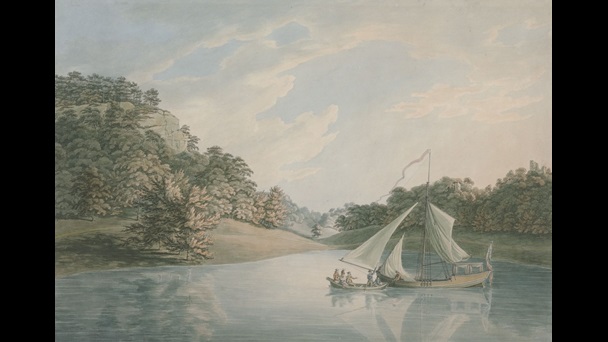
Hawkstone Park, depicted here by John Emes,  a landscaped parkland and pleasure gardens belonging to the Hawkstone Hall estate in Shropshire. (1790)

Places popular with the 18th and early 19th century visitors were :

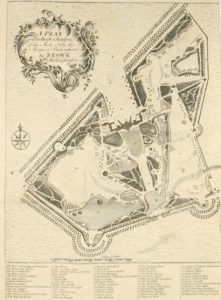
Stowe, Buckinghamshire – It was the first to attract visitors in significant numbers, to have its own inn, and to have its own guidebook. It was primarily famous for its gardens.

Kedleston Hall, Derbyshire – It was known for its art collection. It offered impressive tours conducted by the housekeeper. It was considered one of the first “modern” stately homes as its interiors were the work of Robert Adam.

Stourhead, Wiltshire – One of several popular houses in Wiltshire, it could easily be included in a tour of the West Country. Visitors came to see the gardens, the park, and the fabulous ‘Pope’s cabinet’ on display in the house.

Studley Royal Water Garden, North Yorkshire – Studley was most known for its gardens and its connection to the ruins of Fountains Abbey,which was purchased by the Aislabie family in 1767. However, visitors were rarely admitted to the house.

As outside publishers realized the value of these guidebooks they were designed to be more functional. They came in small octavo form, bound in paper covers, lightweight and inexpensive. They were sized in easy to carry forms to be used as one toured the house. Their appeal as a souvenir was heightened by the addition of illustrated frontspieces – the most common being images of the house. The most elaborate guidebooks included a series of illustrations. Some editions of the guide to Blenheim Palace in Oxfordshire included a fold-out map of the gardens, often with hand-colored details, and a set of views of the house.

Booksellers began to see the value in guidebooks and before long rival booksellers were publishing guidebooks of the same house. Eventually they became available in London bookstores as well as in the shops near the houses themselves. People began to read them whether they ever intended to visit the houses or not. The guidebooks began to include a wider range of information. They began to describe the surrounding countryside, details about the family, an architectural history of the house – which included information about everyone from the architect to the plasterers and other artisans involved in the creation of the house. And, of course, they also served as catalogues of the works of art and collections assembled in each house.

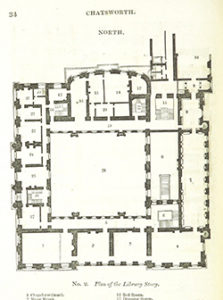
Eventually, writers took on the task of writing guidebooks for specific areas, such as Stephen Glover’s The Peak Guide published in 1830. He was among the first to write a guidebook for an area, rather than an individual house. However, his book does include extensive entries on houses in the area. The entry for Chatsworth is over 37 pages and includes detailed entries on important paintings and the artists who painted them.

‘Plan of the Library Story’ from ‘The Peak Guide; containing the topographical, statistical, and general history of Buxton, Chatsworth, Edensor, Castlteon [sic], Bakewell, Haddon, Matlock, and Cromford’ by Stephen Glover of Derby [1830]

The country house guidebook has come a long way and has undergone numerous permutations to become the stylish, slim, photograph-heavy little books sold in the souvenir shops and village booksellers in and around Britain’s stately country houses. They began as and continue to be important sources of information about the treasures, mysteries, histories, and families of these magnificent microcosms of British history.

A TOUR GUIDE IN ENGLAND – AUDLEY END

by Kristine Hughes Patrone

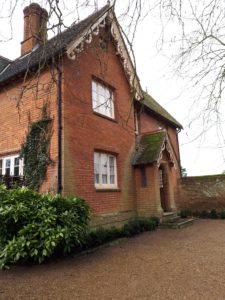
Our next stop on the Visit Britain Familiarization Trip was Audley End, where we were able to tour the 1880’s servants wing and the gardens. I was thrilled to be able to see the extensive domestic offices, as Audley End is on the itinerary for Number One London’s 2018 Upstairs/Downstairs Country House Tour.

At Audley End, costumed characters bring the House back to its Victorian heyday and allow visitors to discover what life was like below stairs by meeting the Victorian workers in the stables, service wing, nursery and coal gallery. During our tour, we’ll also come face to face with the cook, Mrs. Crocombe, as she prepares a meal for the family, bump into the stablehands while they’re grooming the horses, and meet Governess Miss Dormer as she organizes the children for the day.


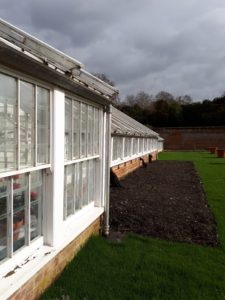
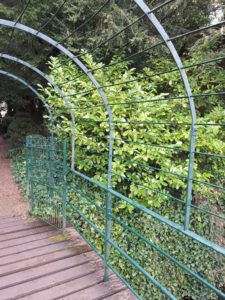
Making our way outside, we headed out for a tour of the Kitchen Garden, which is managed according to organic principles. The Kitchen Garden offers over 120 varieties of apples, 40 types of pears, 60 kinds of tomatoes plus many more fruits and vegetables. It also has an Orchard House where peaches and figs are grown in pots, in the same way that they were in Victorian times. The kitchen garden also has pumpkins and squashes still to be harvested as well as herbs and leafy vegetables such as spinach and cabbage.

Videos of our tour of the Kitchen Garden coming next time.