OH, THE PLACES YOU’LL GO ! Little Known UK Museums

THE THAMES RIVER POLICE MUSEUM
I adore a good museum. I can spend hours, even days in them. I spent an entire day (eight hours) in the Van Gogh Museum in Amsterdam. I spent two days in the Rijksmuseum, also in Amsterdam, thirty minutes staring at Rembrandt’s The Nightwatch alone. The British Museum is where I saw the Elgin Marbles, the Rosetta Stone, and the mummy and sarcophagus of King Tut when I was only nine years old. Yes, my appreciation of museums has been a lifelong love affair.

As much as I love the big museums, the famous ones, I also have a penchant for sussing out obscure little museums. I have discovered they are often the source of the most interesting and sometimes bizarre bits of history. Makes my writer’s heart go pitter-pat just thinking about it. I keep a running list of the ones I come across in my research, so I can visit them when I get the chance. The Thames River Police Museum is one such museum.
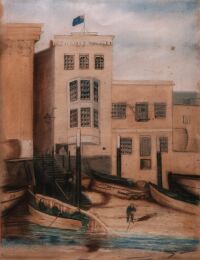
Chalk drawing of the Wapping Police Office in 1798

The Thames River Police or The West India Merchants Company Marine Police Institute, as it was known at its founding, began on July 2, 1798 in Wapping High Street. It grew out of the need to protect the companies whose cargoes were unloaded on the River Thames. It was estimated the importers whose warehouses lined the riverfront were losing up to 500,000 pounds a year to theft and graft. It wasn’t seen as a real problem until the government was presented with estimates of the losses of import dues they were missing and the losses on exports companies were suffering.
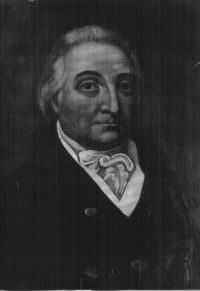
John Harriott

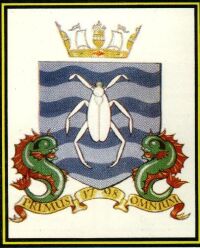
The plan for the organization, operation, and function of the force was first devised in 1797 by John Harriott, an Essex Justice of the Peace. He sought the legal advice of Jeremy Bentham and the political acumen of Patrick Colquhoun, the principle magistrate of Queens Square Police Office, to sell the plan to the West India Planters Committee. With the government’s approval and the committee’s financing the first organized police force in the world was born. Thus the Primus Omnium on the force’s badge.
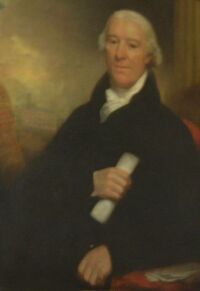
Patrick Colquhoun (1745 – 1820) Superintending magistrate at Thames Police Office and author of two treatises, The Policing of the Metropolis (1795) and The Policing and Commerce of the River Thames (1800).


The working divisions of the world’s first organized police force were :

The Magistrates Office – Patrick Colquhoun serving as Superintending Magistrate

                                                    John Harriott serving as Resident Magistrate

The Lumping Department – In charge of the registration of legitimate lumpers to

                                                           unload West India Company ships.

Police Establishment – Consisted of rowing galleys, each with a Surveyor (an

                                                 Inspector rank today) and three waterman Constables

                                                 under him. The Surveyors were under a Superintending

                                                 Surveyor who had his own supervision galley with a crew

                                                 of four men. Surveyors took an oath to the Crown, by

                                                 whom they were empowered, and they were also sworn

                                                 and issued an excise warrant by Customs and Excise

                                                 Service.

There were also part-time ship and quay guards, employed only when the West India ships were in the river to be unloaded. These part-time constables were supervised by the boat patrols and in the beginning were only hired when necessary to oversee the unloading of ships. However, eventually they became full-time employees, the first River Police Special Constables.

The entire force at any given time consisted of only 50 officers to control the estimated 33,000 people who worked all of the various river trades. Colquhoun, in his treatise, suggested nearly 11,00o of those workers were actually criminals. Members of every river trade were thought to be on the game, in other words, employed in stealing cargo as it was unloaded or at some other point in the arrival process.

Note : If you have not read Colquhoun’s treatise  The Policing and Commerce of the River Thames (1800) I invite you to do so as it is a fascinating work and very much an extant resource of great insight and vision.

As one can imagine, the criminal element did not take well to the work of the River Police. The efforts of these brave men caused these thieves to lose their livelihood. After about six months, a mob of 2000 men marched on the Office in Wapping to burn it to the ground, with the magistrates and any officers inside. John Harriott and his men managed to put down the riot, but Master Lumper, Gabriel Franks, was shot and died as a result of his wounds. This is the first recorded police death in history.

The cost of forming and establishing this police force in the first year was an estimated 4,200 pounds. During that same year, John Harriott reported to the Home Office that instead of an entire fleet of watermans’ boats clogging up the River Thames anytime ships were there to be unloaded, the scene was quiet and business-like. More important, he estimated the work of the Thames River Police had saved more than 122,000 pounds worth of cargo, not to mention rescuing several lives as well.
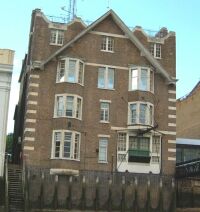
Wapping Police Office Today – Home of the Thames River Police Museum

Because the museum is housed in a working police station, the headquarters of the Metropolitan Police’s Marine Police Unit, arrangements must be made ahead of time by appointment. Visits are normally conducted by the Honourary Curator, a retired serving officer with many years experience of policing the river. But look at all of the amazing things on exhibit !
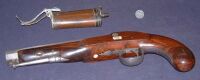
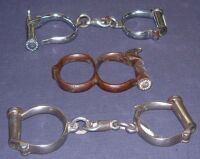


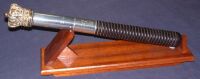
Superintendent’s tipstaff from Thames Museum


For some great research on the Thames River Police and more information about the museum I strongly suggest you visit the website.

http://www.thamespolicemuseum.org.uk/index.html

There you will find numerous articles written about the history of the River Police by current and retired members of the force. And you can even e mail them with questions. I actually discovered this gem of a museum via an online workshop offered by the Beau Monde Chapter of RWA a few years ago. One of the participants in the workshop was PC Bob Jeffries of, you guessed it, the Metropolitan Police’s Marine Police Unit. He has made a great study of the history of the Thames River Police and is always happy to answer inquiries. Visit the website and read his wonderful articles on The Wapping Coal Riot of October 1798 and The Ratcliffe Highway Murders of December 1811.

And should you get the chance, don’t miss this jewel of a little museum. Tell PC Jeffries I said “Hello!”
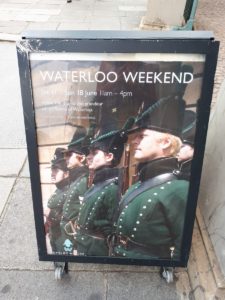
A TOUR GUIDE IN ENGLAND: WATERLOO 2017 – PART 4

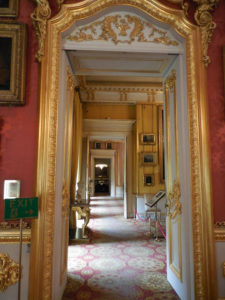
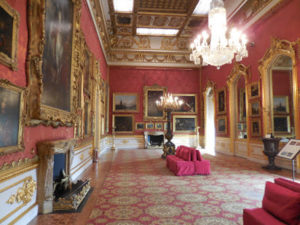
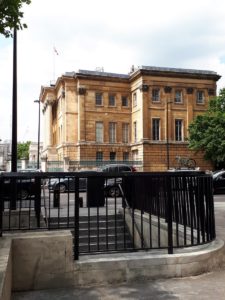
What better place to spend Waterloo Day than in London? More precisely, at Apsley House. Well before the day, I had planned to meet my old mates Dawn Wood and Andrew Clark at Apsley House, where they were slated to do a series of talks on Regency dress and Napoleonic uniforms over the two day weekend.

Upon walking through the front door of the House, I saw one of the house guides, Alex, who I’ve known for some time now. We chatted for a few minutes and then I headed up the stairs to the Striped Drawing Room.

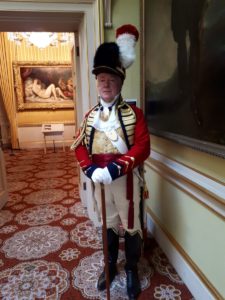
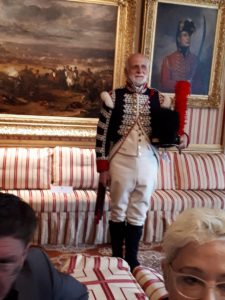
Upon reaching the landing, I spied a bloke in full Napoleonic uniform – it was my pal, Michael Paterson, who is a part of the City of London Portsoken Volunteers re-enactment group.

“Michael?”

“Kristine? What are you doing here?”

“Where else would you expect me to be on Waterloo Day?”

“Ah, right. Silly question.”

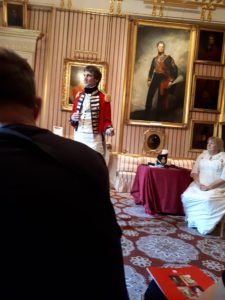
It would have been handy had I snapped a photo of Michael to insert here, but I didn’t. This is John Mead, also with the Portsoken, and an historical tailor who makes all of the Regiments’ uniforms. Michael was on hand to present a talk on Napoleonic soldiers, which was fabulous. He had the crowd enraptured.

Before long, Dawn found me and we caught up for a bit before it was time for her talk.


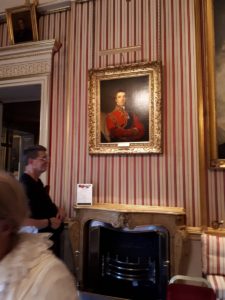
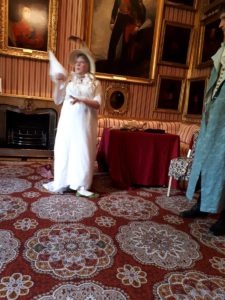
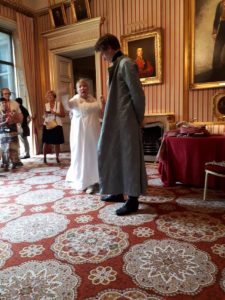
Into the Striped Drawing Room we stepped and Dawn launched into her costume presentation, enthralling the crowd with details of exactly what it took to dress a Regency lady – from the inside out. Beginning in her chemise, Dawn then described each garment she donned, giving us the history of each, detailing the materials that would have been used and the care involved in each piece.

I first met Dawn a few decades ago when she was with a re-enactment group called The Salon, now disbanded, who put on a Regency soiree for one of my tour groups at Gunnersby Park. She and I, and her husband, Andrew, have been friends ever since and they will be on hand in Bath for Number One London’s Georgian Tour, April 2018. Dawn is a modiste who recreates historic costume and dress, while Andrew is an expert on uniforms and all forms of military weapons and accouterments. Here he is in full Napoleonic kit as Captain Clark.

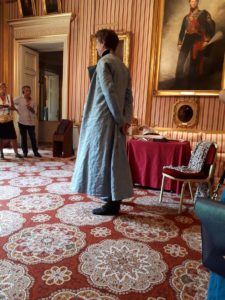
And here he is in mufti as Mr. Clark. Very versatile is Our Andrew.


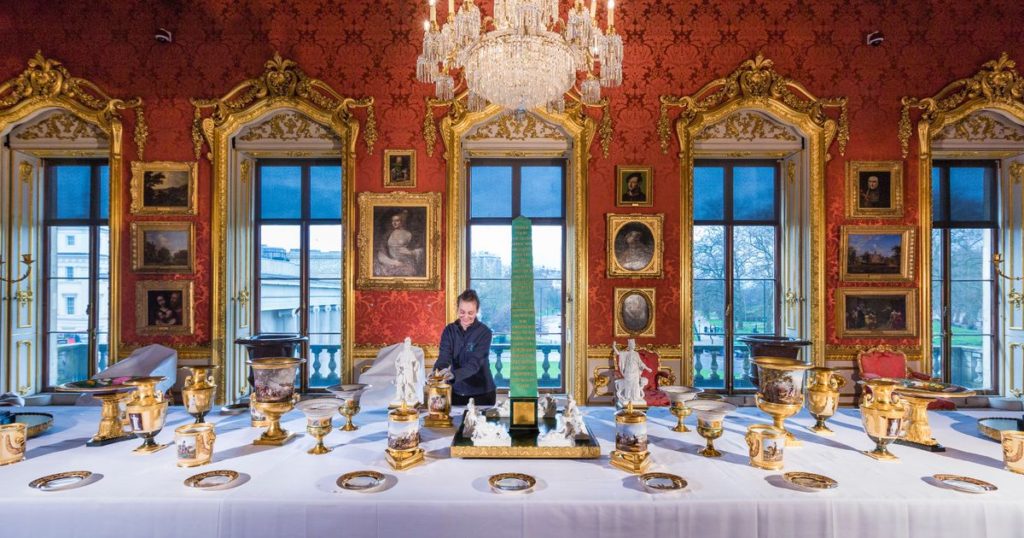
Once the presentations were over with, I nipped off to the Waterloo Chamber, where in honour of the Waterloo Anniversary they had set a dinner table with the Prussian Dinner Service commemorating the achievements of Wellington’s life, as it would have been at one of Wellington’s annual Waterloo Banquets.

copyright Getwestlondon

You’ll find an article on the china here. Upon entering the Chamber, who did I run into again but Alex, who asked me about Wellington’s relationship with the young Queen Victoria. As I was telling him about William IV’s fateful birthday dinner, at which the King stood up and gave spleen to the Duchess of Kent in front of all the guests at table, including Wellington, a gentleman came to stand beside us and listened to my story. Then he interjected something. Then he became a part of our conversation and we chatted about Wellington for about fifteen minutes. Then the man said, “I suppose this is the point in the conversation where I should mention that I’m Graham Wellesley, 8th Earl Cowley.”

Naturally, this pronouncement caused Alex and I to look at one another like two deer caught in the headlights. What a turn up. Oh, dear.

“You’re Henry’s grandson then,” said I. He’s actually Henry’s eight or ninth great grandson, but why split heirs.

“Yes,” replied the Earl. “Fancy your knowing that.” Alex shot me a look, but kept silent. Wise man.

“May I ask you a question?” I asked the Earl.

“Of course.”

“Why has no one elaborated on the story of Henry and Anne and the kidnapping?”

And we were off again. The conversation lasted at least another fifteen minutes before the Earl excused himself and left Alex and I alone once more.

“I didn’t refer to Wellington as ‘Artie’ in front of the Earl, did I?”

“No. Not in front of the Earl. I don’t think,” Alex semi-reassured me. Really, I must stop doing that. Obviously, one never knows who one may run into at Apsley House. Speaking of which, upon returning once more to the Striped Drawing Room, who did I find but my mate, Loretta Chase. You can just see the top of her beautiful blonde head in the photo below.

Loretta and I had already seen each other several times in London during this trip and I’d invited her to join me at Apsley House on the day. Imagine my surprise when she told me that she’d never been to the House in all her visits to London. I had promised to take her on a Cook’s Tour.  I suggested we start on the ground floor and so we sashayed our way downstairs. Where I again ran into Alex.

“Leaving?” he asked.

“No, no, just giving my friend Loretta a tour of the House.”

“Oh, right then.”

“Don’t they think it’s strange that you’re giving me a tour of Apsley House?” Loretta asked as we turned a corner.

“Nope. Not in the least. I suppose they’re used to it by now.” We saw the entry hall –

and the inner hall –

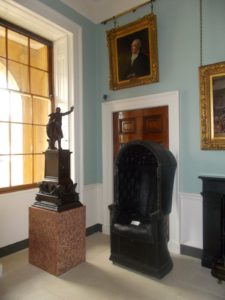
and the statue of Napoleon –

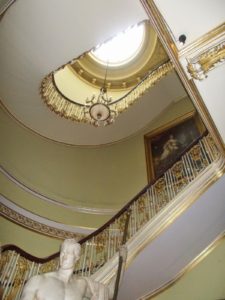
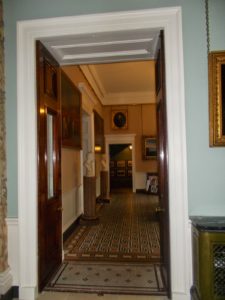
and the upstairs hallway –

and several other rooms before we found ourselves in the Waterloo Chamber.

Where I showed Loretta a secret feature of the room. I wish I could share it with you, but I’ve promised Loretta that she can use it as a plot device in an upcoming book, so I can’t talk about it until that’s published. (Sorry!)
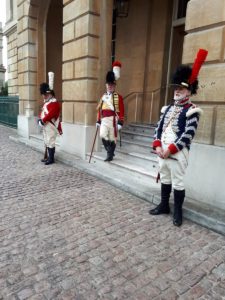
At the end of the day, I left Apsley House replete after seeing old friends and making a few new ones and headed off to dinner in the company of Dawn and Andrew, who both agree with my sentiment – where else would anyone spend Waterloo Day?


A TOUR GUIDE IN ENGLAND: WATERLOO 2017 – PART 3

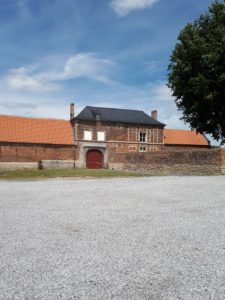
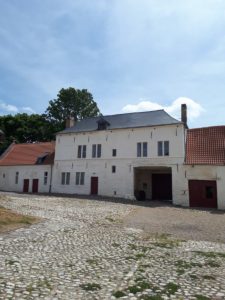
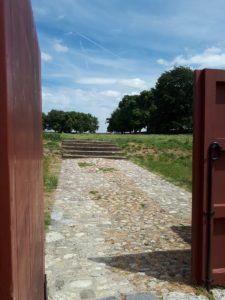
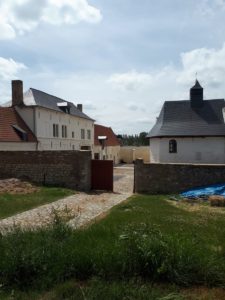
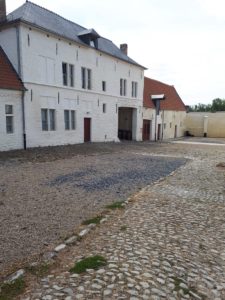
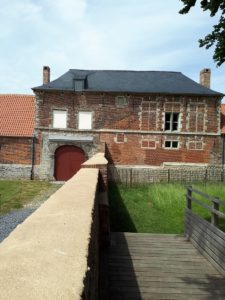
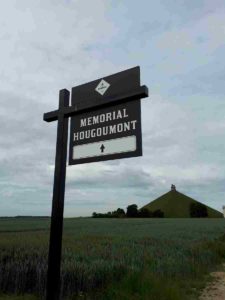
Our next stop was the farmhouse at Hougoumont. Honestly, what can one say about the battle at Hougoumont in a single blog post? What can one say about Hougoumont anywhere, at any time? Again, it’s one of those places where one simply wants to be, to commune with one’s thoughts uninterrupted, to remember, to review and to ruminate on the enormity of it all. In fact, as though in unspoken alliance, Denise, Ian and I did drift away from one another, each to walk the ground in our time.

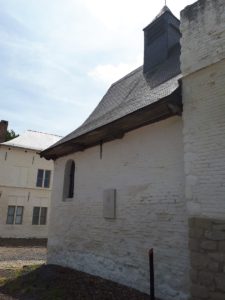
Again, I am not a battle or battlefield expert, so I turn to Wikipedia for the short version of events on the day at Hougoumont, the photos are my own:


“Wellington recorded in his despatches “at about ten o’clock [Napoleon] commenced a furious attack upon our post at Hougoumont.”

“The initial attack by Maréchal de Camp Bauduin’s 1st Brigade of the 6th Division emptied the wood and park, but was driven back by heavy British artillery fire and cost Bauduin his life. The British guns were distracted into an artillery duel with French guns and this allowed a second attack by Maréchal de Camp Baron Soye’s 2nd Brigade of the 6th Division. They managed a small breach on the south side but could not exploit it. An attack on the north side by elements of the 1st Brigade of the 6th Division was more successful.

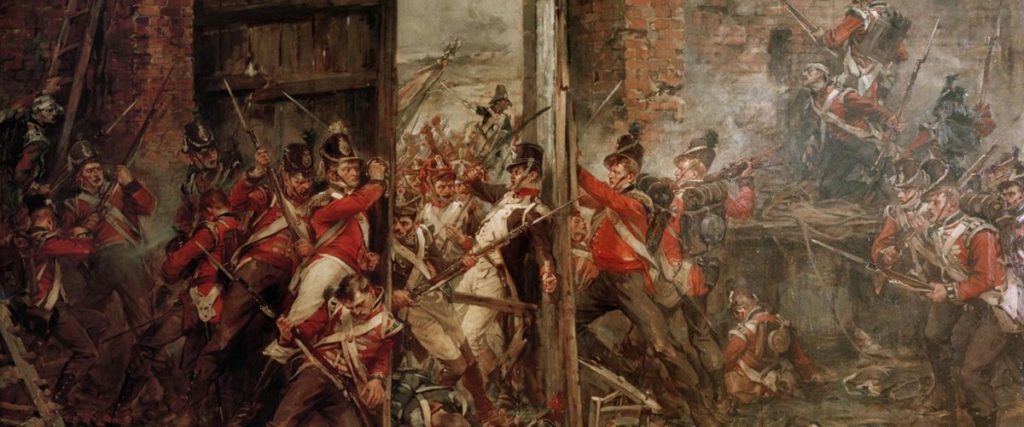
“This attack led to one of the most famous skirmishes in the Battle of Waterloo — Sous-Lieutenant Legros, wielding an axe, managed to break through the north gate. A desperate fight ensued between the invading French soldiers and the defending Guards. In a near-miraculous attack, Macdonell, a small party of officers and Corporal James Graham fought through the melee to shut the gate, trapping Legros and about 30 other soldiers of the 1st Legere inside. All of the French who entered, apart from a young drummer boy, were killed in a desperate hand-to-hand fight.

Closing the Gates at Hougoumont by Robert Gibb

“The British and German Garrison were running low on ammunition and a Driver of the Royal Waggon Train distinguished himself by driving an ammunition cart through the French lines to resupply the troops despite his horses receiving wounds. The French attack in the immediate vicinity of the farm was repulsed by the arrival of the 2nd Coldstream Guards and 2/3rd Foot Guards. Fighting continued around Hougoumont all afternoon with its surroundings heavily invested with French light infantry and coordinated cavalry attacks sent against the troops behind Hougoumont.

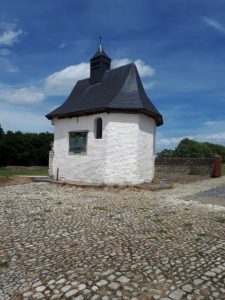
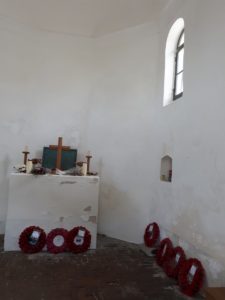
“Wellington’s army defended the house and the hollow way running north from it. In the afternoon Napoleon personally ordered the shelling of the house to cause it to burn. Seeing the flames, Wellington sent a note to the house’s commander stating that he must hold his position whatever the cost, resulting in the destruction of all but the chapel, (below).


“Du Plat’s brigade of the King’s German Legion was brought forward to defend the hollow way, which they had to do without any senior officers, who were then relieved by the 71st Foot, a Scottish light infantry regiment. Adam’s brigade, further reinforced by Hugh Halkett’s 3rd (Hanoverian) Brigade, successfully repulsed further infantry and cavalry attacks sent by Reille and maintained the occupation of Hougoumont until the end of the battle.”

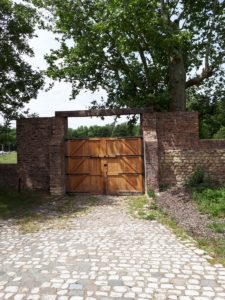
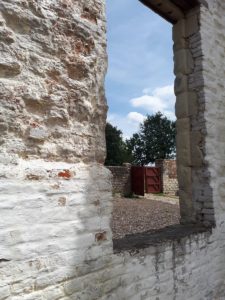
Gates and field to the east of the Farmhouse, above and below.


“The Hougoumont battle has often been characterised as a diversionary attack to cause Wellington to move reserves to his threatened right flank to protect his communications, but this then escalated into an all-day battle which drew in more and more French troops but just a handful of Wellington’s, having the exact opposite effect to that intended. In fact there is a good case that both Napoleon and Wellington thought Hougoumont was a vital part of the battle. Certainly, Wellington declared afterwards that ‘the success of the battle turned upon the closing of the gates at Hougoumont.’

“Hougoumont was a part of the battlefield that Napoleon could see clearly and he continued to direct resources towards it and its surroundings all afternoon (33 battalions in all, 14,000 troops).

“Similarly, though the house never contained a large number of troops, Wellington devoted 21 battalions (12,000 troops) over the course of the afternoon to keeping the hollow way open to allow fresh troops and ammunition to be admitted to the house. He also moved several artillery batteries from his hard-pressed centre to support Hougoumont.”


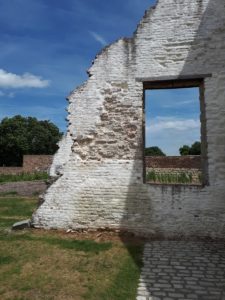
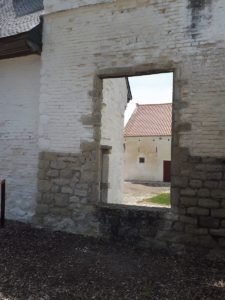
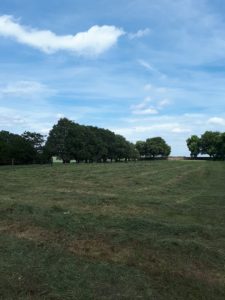
Views to the south, above and below.


Ian Fletcher and Kristine Hughes Patrone at Hougoumont. Well done, chaps. Well done.

In the final installment of this series, I spend Waterloo Day with friends at Apsley House. Coming soon!


THE TOP 75 LONDON BLOGS AND WEBSITES

Guess Who Made The List ?!?

Yes, dear readers, we are pleased and proud to announce our home away from our London home – NUMBER ONE LONDON – has made the list of the top London blogs and websites.

Anyone who has not availed themselves of this list are missing a real treat! These blogs and websites cover a fair buffet of information about London. From the Londonist with its mix of current events, unique festivals, places to visit, and incredibly detailed posts about London past, present, and future to several blogs about living in London posted by young Londoners, ex-pat Americans living in London, women living in London, and every sort of Londoner in between – this list is a must have for anyone who loves our very favorite city in the world!

There are blogs about food and where to find the best of everything. There are blogs about fashion – the latest trends and the best places to find that one piece you simply must have this season. There is a blog on the life and work of a nurse in London. Blogs about SECRET London, with all of the best places you’ve never heard of, but must see!

Of course for those of us who study London of the past in order to convey its character to our readers, this list is a goldmine of blogs and websites on historical London. Spitalfields Life is a wonderful resource about a specific area of London and its history. London Past offers a palette of wonderful images of London from its beginnings through both World Wars. And the London Historians blog is a dangerous rabbit hole down which anyone interested in the history of the great city might fall and never return.

We at NumberOneLondon want to thank both the conveyors of this award and our loyal readers and followers for all of your support. NumberOneLondon is a labor of love for Kristine, Vicky, and I and we are so very pleased you all love London as much as we do!

Top 75 London Blogs and Websites by London Bloggers


A TOUR GUIDE IN ENGLAND: WATERLOO 2017 – PART 2


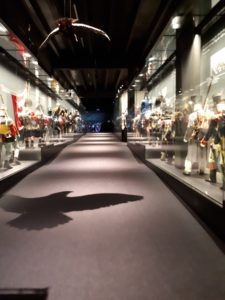
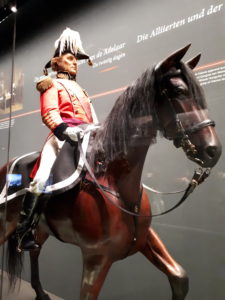
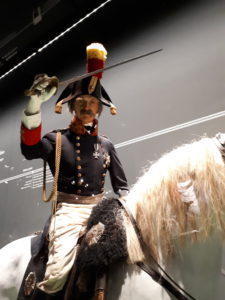
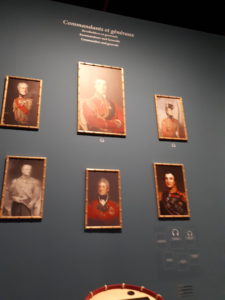
One of the reasons I wanted to return to Waterloo was to see the new museum and exhibits that were put in place for the celebrations of Waterloo 200. The photos above in no way do justice to the scale and scope of the exhibits. The huge hall in the top photo displays a soldier from all of the British regiments on the right, the French on the right, and goes on for quite a ways.

In addition, the 4D film of the Battle was incredible – the closest any of us will ever get to the sights and sounds of the day. As you’ll see by the photo above, the design of the theatre puts you right in the middle of the action, complete with surround sound. Denise, Ian and I were the only ones in the theatre, in fact we had the whole place to ourselves. I knew we’d be seeing a 4D film, I understood this when I put the special viewing glasses on, and I anticipated the action when I took my seat. Still, I jumped a foot when the horse seemed to come charging directly at me. I think I may have even screamed a little.


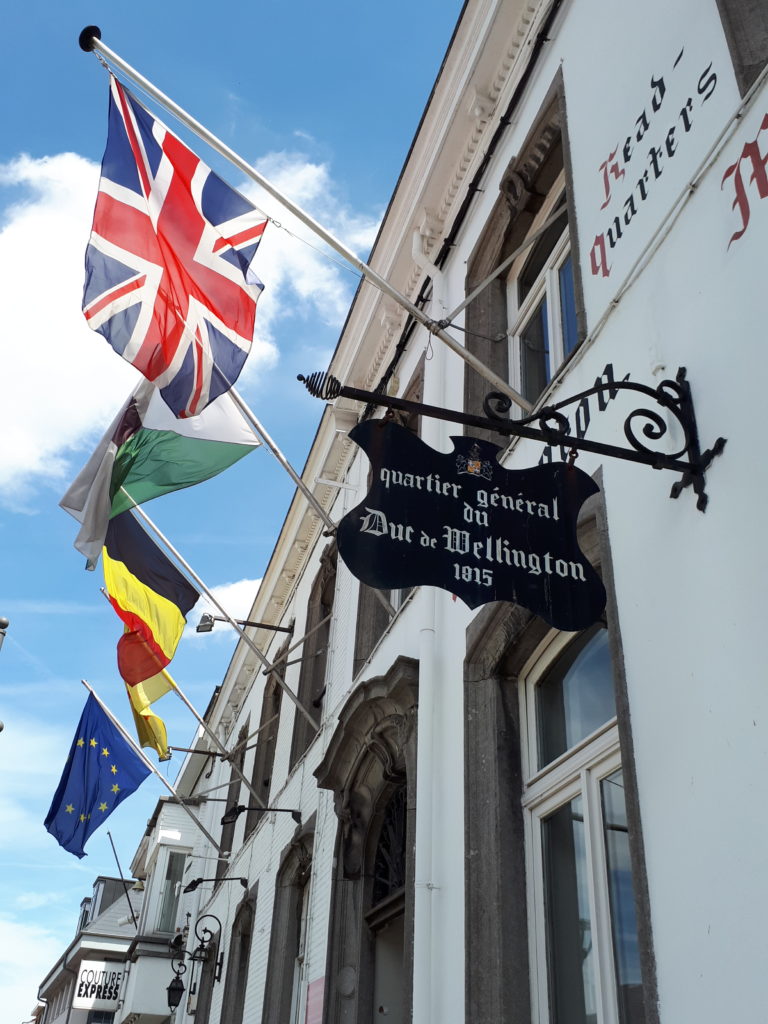
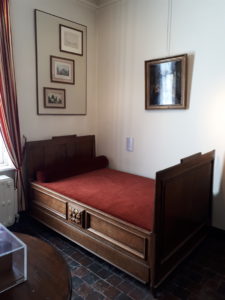
Our next stop was the museum at Wellington’s Headquarters, the house Wellington returned to directly after the Battle and where he discovered his ADC Alexander Gordon laying mortally wounded. Gordon remains a touchstone of the personal losses attached to Waterloo, but there were many others who died or were horribly wounded that day, whom Wellington knew on a personal level. Waterloo cost Britain the best of its Army and exacted a toll on Wellington that will never be fully known.

From Wikipedia: “Gordon received brevet promotions to Major and Lieutenant-Colonel as a reward for carrying to London despatches announcing victory, first at the Battle of Corunna and then at Ciudad Rodrigo. After Bonaparte’s exile to Elba in 1814, Gordon was made a KCB. He was mortally wounded at Waterloo while rallying Brunswickers near La Haye Sainte, and died in Wellington’s own camp bed (above) in his headquarters during the night.

“The following is an account by John Robert Hume who was visiting the Duke of Wellington after the Battle of Waterloo –

“I came back from the field of Waterloo with Sir Alexander Gordon, whose leg I was obliged to amputate on the field late in the evening. He died rather unexpectedly in my arms about half-past three in the morning on the 19th. I was hesitating about disturbing the Duke, when Sir Charles Brooke-Vere came. He wished to take his orders about the movement of the troops. I went upstairs and tapped gently at the door, when he told me to come in. He had as usual taken off his clothes but had not washed himself.

“As I entered, he sat up in bed, his face covered in the dust and sweat of the previous day, and extended his hand to me, which I took and held in mine, whilst I told him of Gordon’s death, and of such of the casualties as had come to my knowledge. He was much affected. I felt tears dropping fast upon my hand and looking towards him, saw them chasing one another in furrows over his dusty cheeks. He brushed them suddenly away with his left hand, and said to me in a voice tremulous with emotion, “Well, thank God, I don’t know what it is to lose a battle; but certainly nothing can be more painful than to gain one with the loss of so many of one’s friends.”

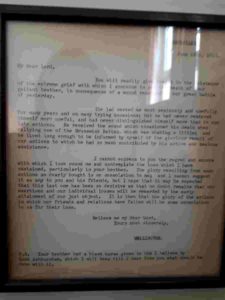
On the wall of the bedroom in which Gordon died is a typed transcript of the letter Wellington wrote to Lord Aberdeen the day after his brother’s death –

My Dear Lord,

You will readily give me credit to the existence of extreme grief with which I announce to you the death of your gallant brother, in consequence of a wound received in our great battle of yesterday.

He had served me most zealously and usefully for many years, and on many trying occasions; but he had never rendered himself more useful and had never distinguished himself more, than in our late actions.

He received the wound which occasioned his death when rallying one of the Brunswick battalions which was shaking a little; and he had lived long enough to be informed by myself of the glorious result of our actions, to which he had so much contributed by his active zealous assistance.

I cannot express to you the regret and sorrow with which I look round me, and contemplate the loss with which I have sustained, particularly in your brother. The glory resulting from such actions, so dearly bought, is no consolation to me, and I cannot suggest it as any to you and his friends; but I hope that it may be expected that this last one has been so decisive, as that no doubt remains that our exertions and our individual losses will be rewarded by the early attainment of our just object. It is then the glory of the actions in which our friends and relations have fallen will be some consolation for their loss.

— Believe me &c Wellington, Bruxelles, 19th June, 1815,

P.S. Your brother has a black horse given to him I believe by Lord Ashburgham which I will keep till I hear from you what shall be done with it.


In Part 3, we’ll continue on to the farmhouse at Hougoumont.