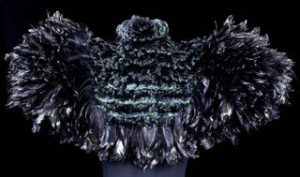
The Victoria and Albert Museum’s next exhibition, Fashioned From Nature, opens on 21 April 2018 and will look to the past 400 years of fashion to explore what we can learn from fashion practice in the past, with objects dating to the early 1600s.
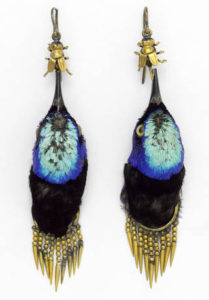
Items include an 1875 pair of earrings formed from the heads of two real creeper birds (above) – a hugely popular item sold in enormous volume at the time – and a 1860s muslin dress decorated with the iridescent green wing cases of hundreds of jewel beetles. They will be shown alongside natural history specimens to indicate the ways fashion has used animal materials in its designs and production.
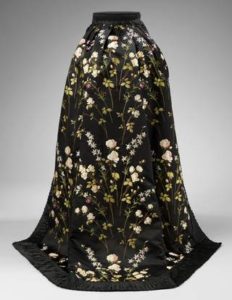
The natural world has always provided rich inspiration for beautiful fashion. This will be shown in displays of exquisite garments from the historic to the contemporary. They range from a 1780s man’s waistcoat, expertly embroidered with a pattern of playful Macacque monkeys, to Gucci’s contemporary bag decorated with stag beetle motifs. One of the earliest pieces in the exhibition, a women’s jacket from the early 1600s, is intricately embroidered with designs of pea-shoots and flowers. A 2016 Giles Deacon haute-couture dress features a pattern of delicate bird’s eggs, whilst gowns from Jean Paul Gaultier (1997) and Busvine (1933-4) both feature leopard print.
The exhibition will also focus closely on the raw materials used in the production of fashion. Arranged chronologically, it will introduce the main fibres used in the 17th and 18th centuries – silk, flax, wool and cotton – as well as now controversial materials like whalebone, demonstrated by an x-ray by Nick Veasey of a pair of 1780s stays, and turtle shell, used in a fan from 1700. It goes on to chart the expansion in international trade, import of precious materials, and later introduction of man-made materials, which brought fashionable dress to the masses but also contributed to the air and water pollution to which the textile industry is such a significant contributor.
A bold display of posters, slogan clothes and artworks will show how protest movements have helped draw attention to the harmful side of fashion. Figures like Vivienne Westwood have popularised these issues and a mannequin will pay homage to an outfit worn by her whilst protesting against climate change. A man’s outfit from Katharine Hamnett’s 1989 ‘Clean Up or Die’ collection will be on show alongside posters from Fashion Revolution, a collective aiming to change the way clothes are sourced, produced and consumed. Customising and re-wearing clothes will be highlighted through a vintage outfit on loan from fashion journalist and consultant Pandora Sykes and a jacket customised by London designer Katie Jones for fashion writer and editor Susie Lau to wear during Fashion Revolution Week 2015.
Fashioned From Nature runs from 21 April 2018 to 27 January 2019
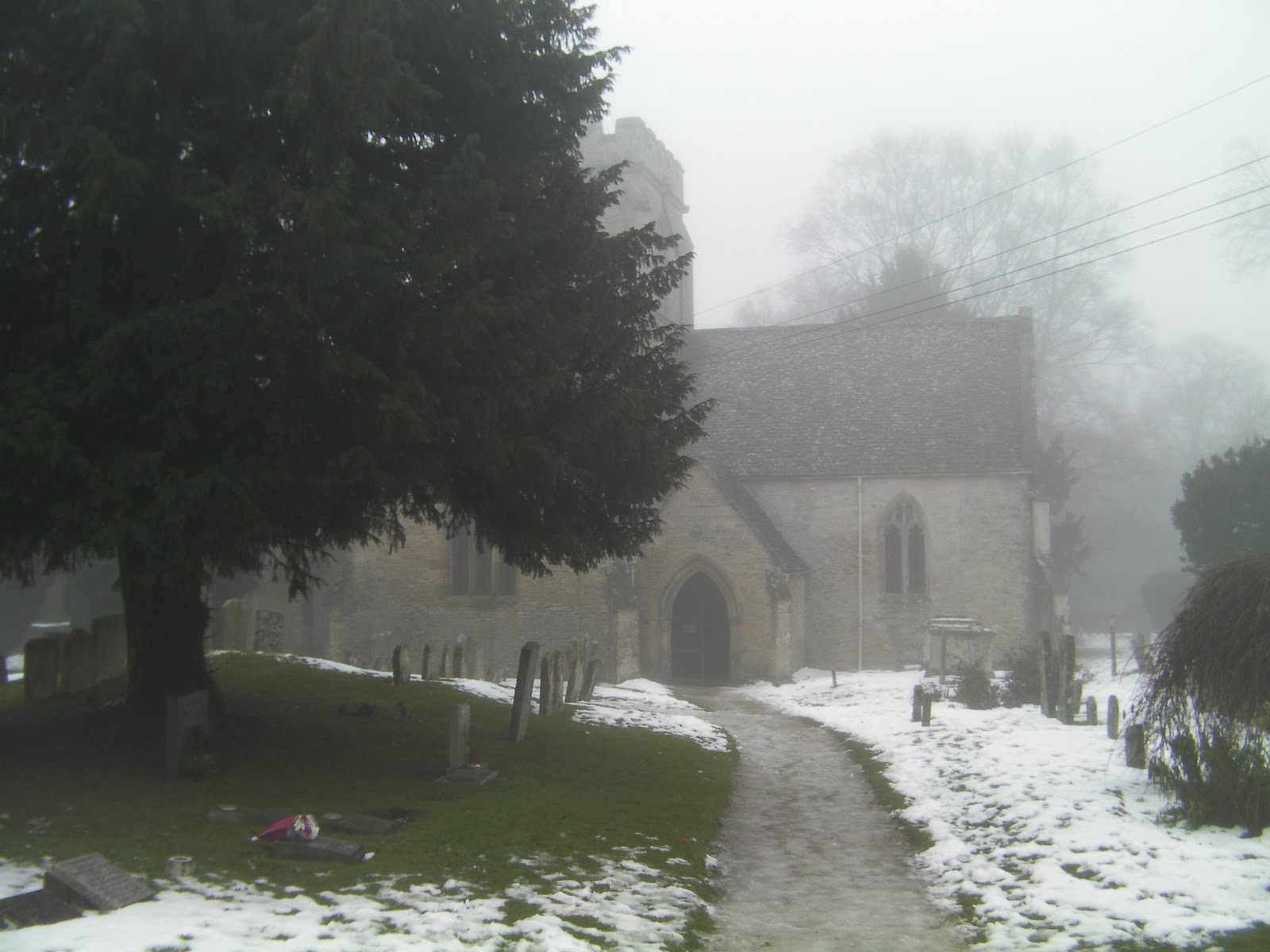
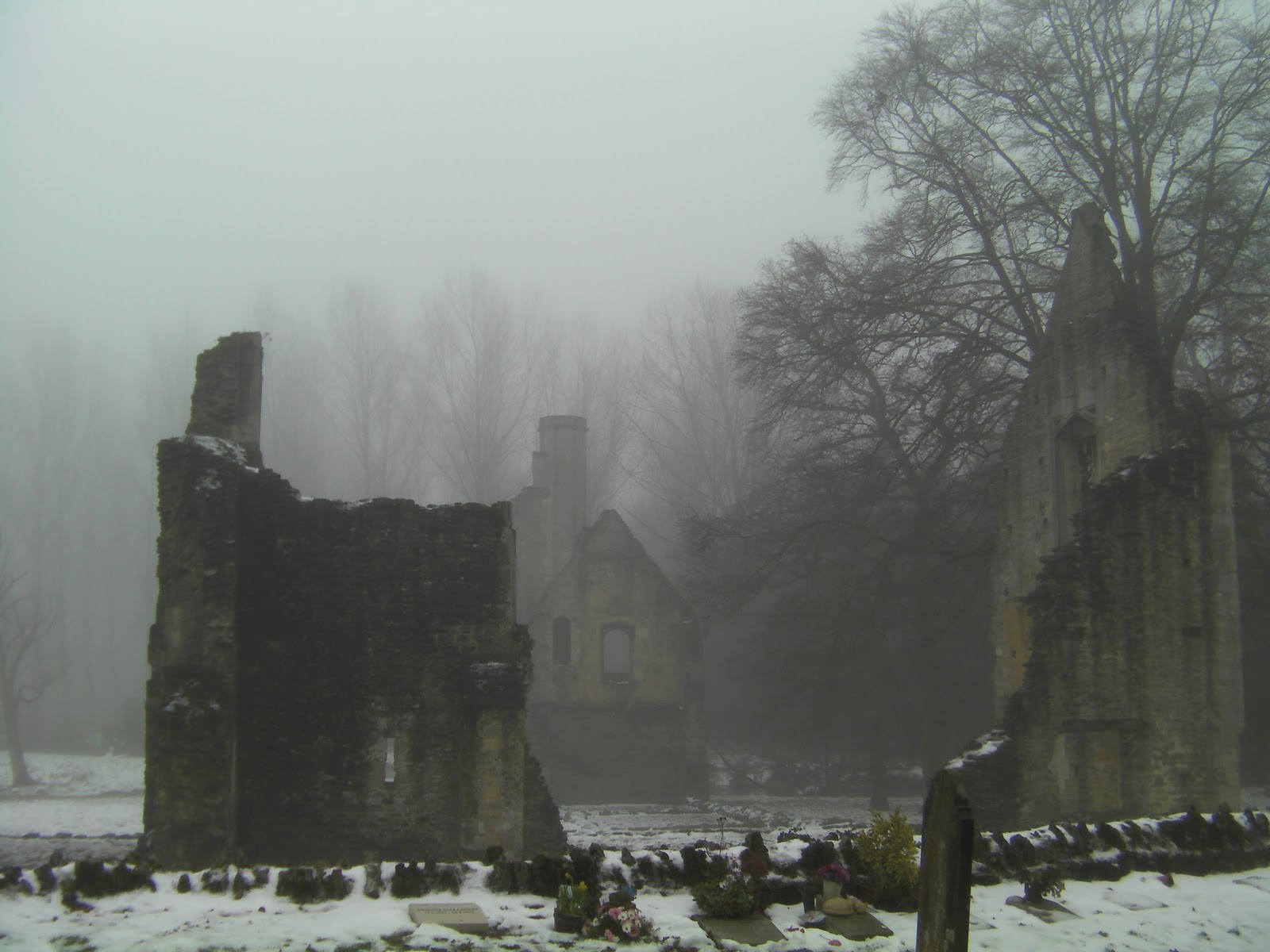
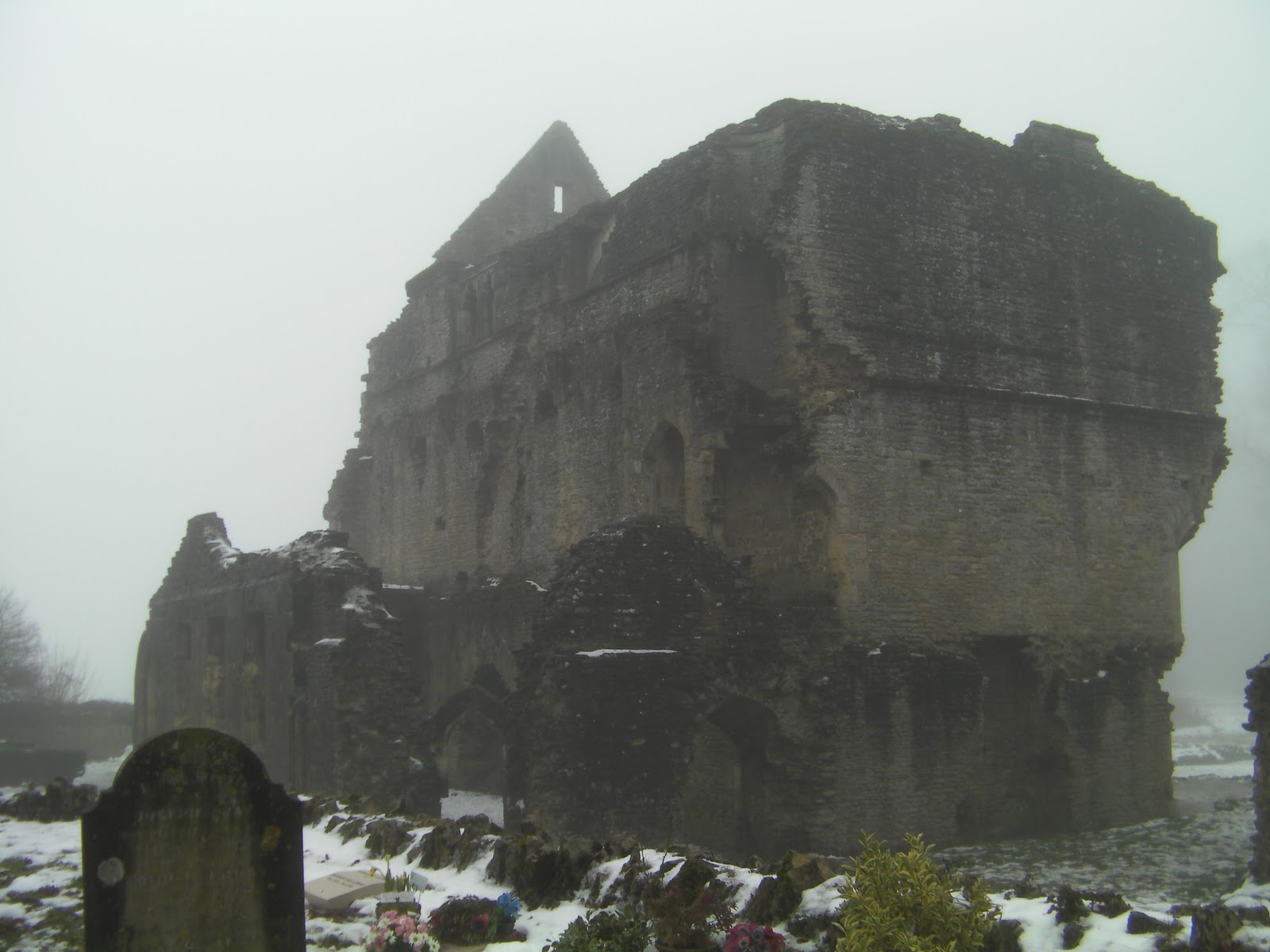
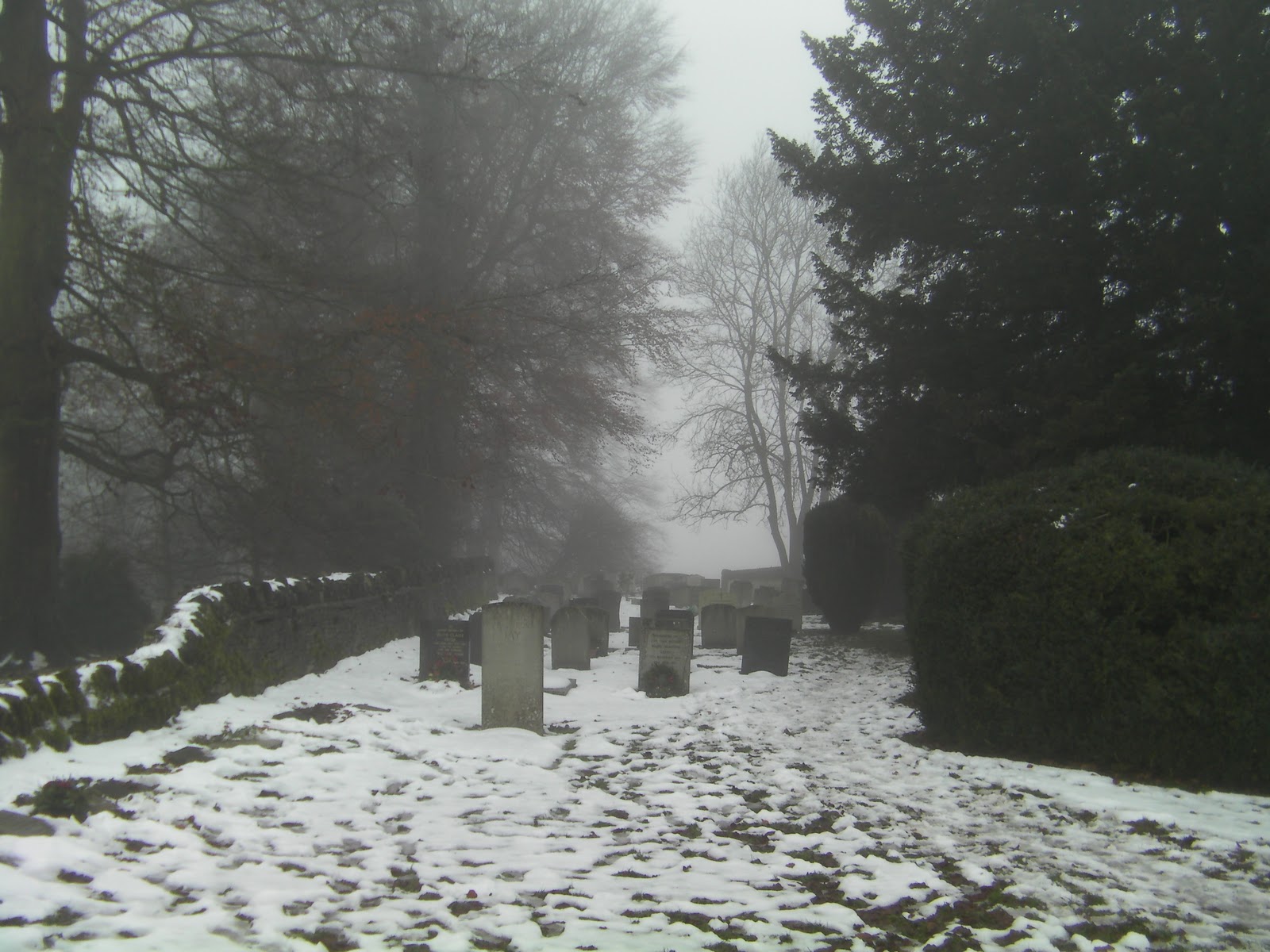
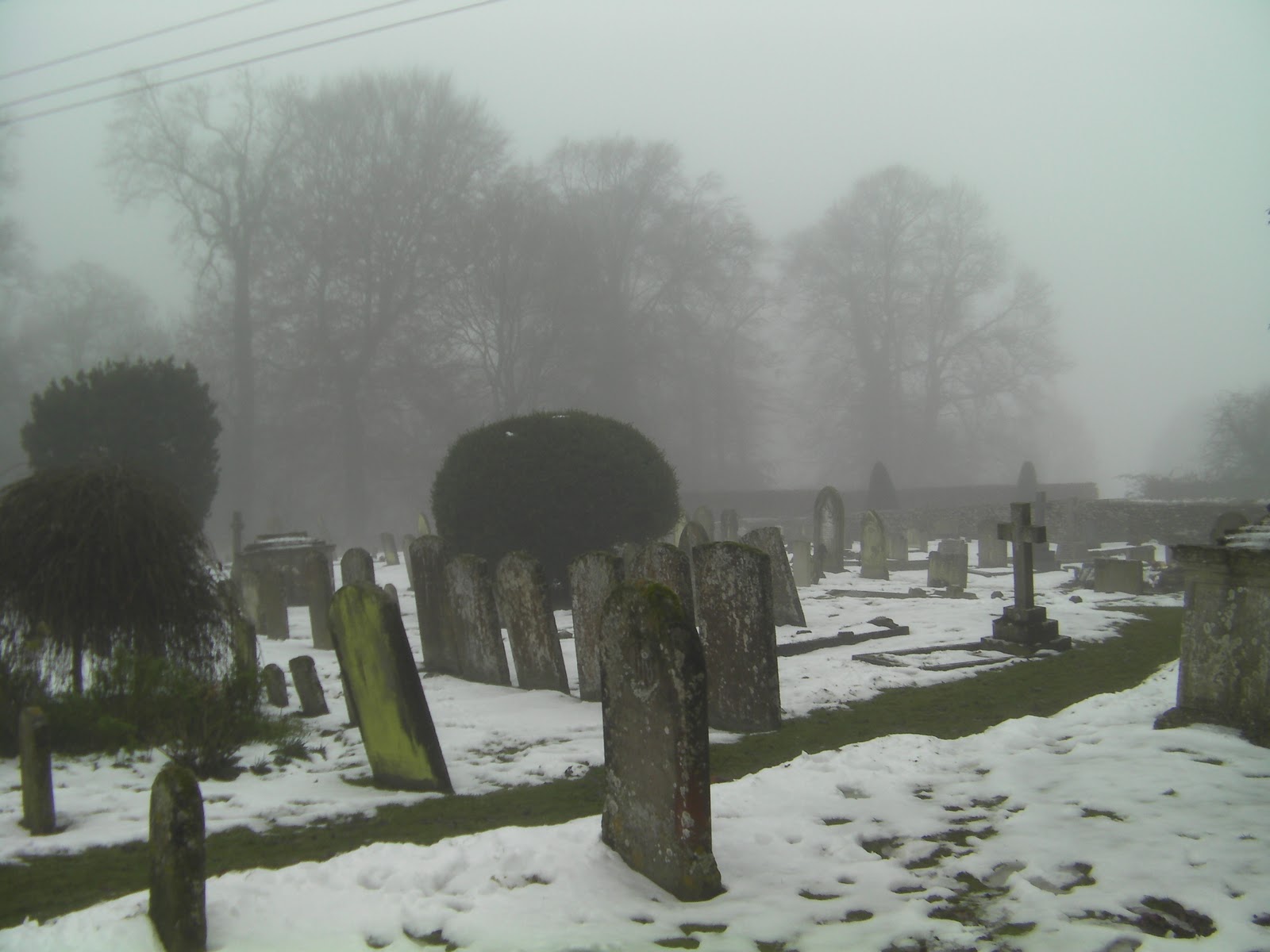
So, here we are at St. Kenelm’s Church on a cold, wet, foggy December day when our surroundings look for all the world like a Hammer Studios horror movie set. On the day we visited, the air was crisp and cold and the place was as deserted as it looks in the photos below. There was nary a footprint to be seen in the graveyard and it was so quiet that you could hear the snow crunch beneath your boots with each step. . . no one spoke . . . . . no one dared to break the eerie silence as we made our way through the ancient tombstones . . . . . don’t be afraid – I’m sure the legends of the Minster Lovell Hall ghost are just rumour . . . . . . . .
St Kenelm’s church in Minster Lovell (above) is mainly 15th century, built on the foundations of an earlier priory minster. This explains the unusual cruciform shape with a central tower. The whole church is “almost entirely unaltered and has handsome details” (Pevsner). It is situated next to the ruins of Minster Lovell Hall, pictured below.
From Kelly’s Directory 1891 – To the south-east of the church, near the river Windrush, are the ruins of an ancient mansion, formerly the residence of the Lovell family: the buildings, when perfect, formed a square, the south side being parallel to the river and within a few feet of its bank; the whole of the south and east sides are now destroyed and the only portions standing are the north side, part of a tower at the south end of the western side and a low wall attached to it, with several fine but now roofless and dismantled apartments; in 1708, during the rebuilding of a chimney here, a large vault was discovered in which was found the entire skeleton of a man sitting at a table on which were writing materials and a book and it has been assumed that Lord Lovell, who disappeared after the battle of Stoke, made his way to his house here, and concealing himself in this vault, was eventually starved to death; on his death, his titles, including the baronies of Lovell and Holland, Dean Court and Grey of Rotherfield, became extinct, and that of Beaumont fell into abeyance between his sisters, but was called out 16 Oct. 1840, in favour of Miles Thomas Stapleton esq. of Carlton, Yorks, one of the co-heirs thereto. The estates of the Lovells, confiscated by Henry VII, were subsequently granted to the Comptons, Cecils and other powerful families.
** An alternate version of the story of Lord Lovell is that he returned with his faithful dog to the Hall and was locked into the secret chamber by his faithful valet, who breathed not a word of Lord Lovell’s whereabouts to a single soul and who came twice a day to feed his master and his master’s dog. The valet, unfortunately, died before he could share his secret with anyone and so Lord Lovell and the faithful dog perished together, starving to death in their self imposed hiding place.
*** Yes, the place is rumoured to be haunted. By both man and dog. And what a perfect location for a ghost, visually. You couldn’t get much more Byron-esque if you tried.
I’ll leave you with images that are sure to conjure up visions of Christopher Lee . . . . .
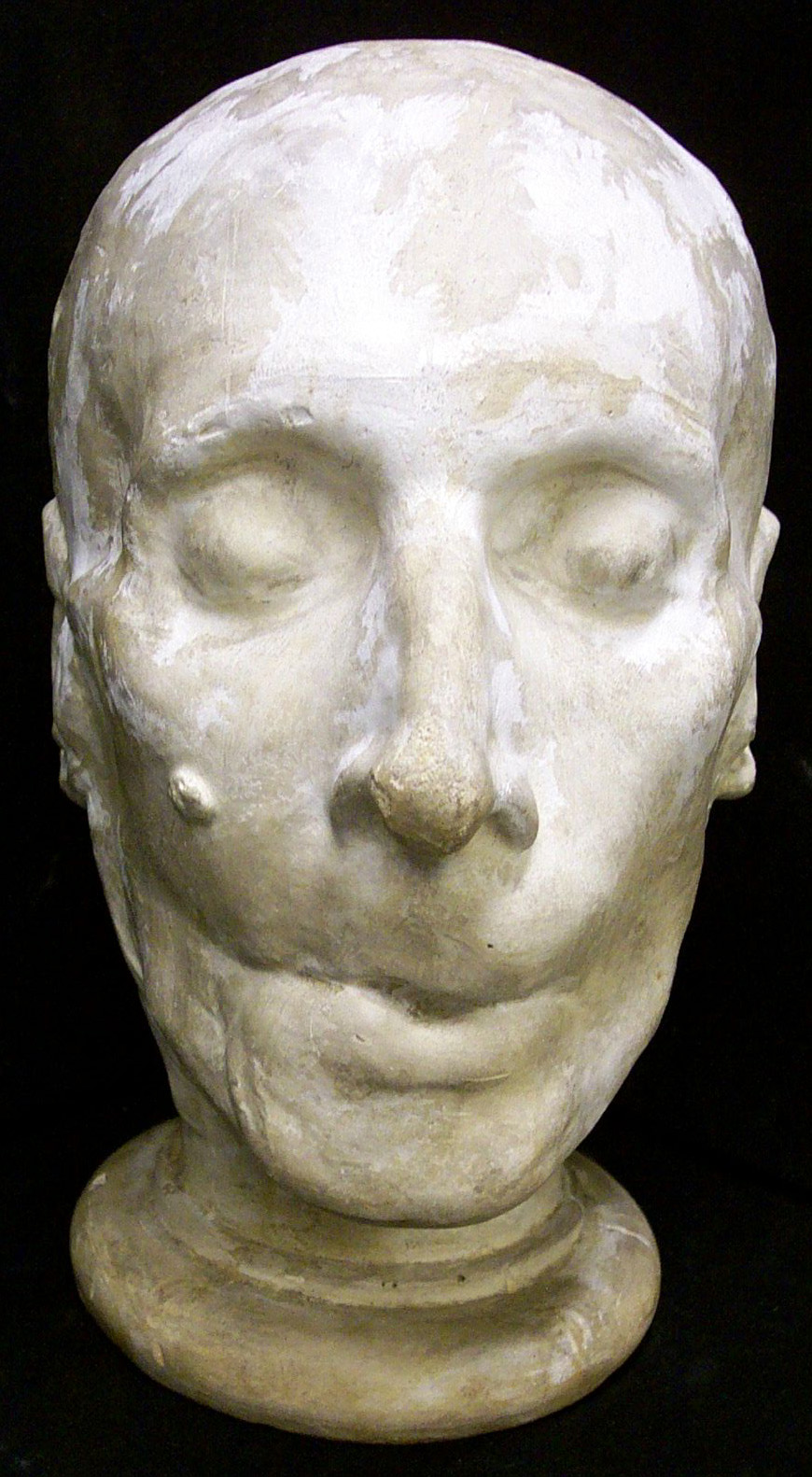
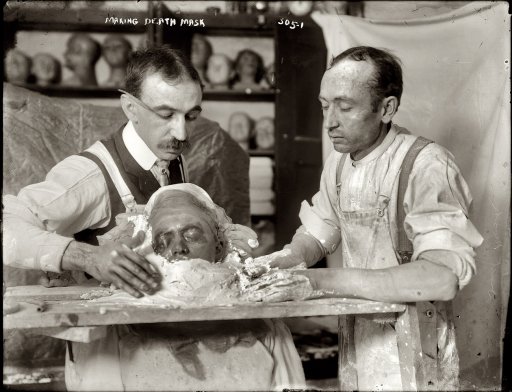
Recently, I came across a book online called The Laurence Hutton Collection of Life and Death Masks: A Pictorial Guide by John Delaney, held in the Manuscripts Division in the Department of Rare Books and Special Collections at Princeton University Library. The making of death masks became popular in the 1800s, but the practice has much older roots. The first masks and effigies made in wax directly from the features of the deceased date from medieval Europe. Personally, I don’t get death masks. All of the people from whom death masks were taken were prominent people who had had numerous portraits and busts taken during their lifetimes. Why not remember them thusly, in the prime of their lives, rather than take an image of them in old age – withered, toothless and, more often than not, after having just suffered hours of agony? Perhaps my aversion to death masks is a woman thing. After all, I’ve yet to come across the death mask of a female.
Making a plaster death mask, New York circa 1908, George Grantham Bain Collection, Library of Congress
I’d much rather remember, and hang on my wall, a picture of the Duke of Wellington looking like he does in the banner of this blog rather than like this:
The Duke of Wellington
In a volume titled, “The life of Richard Owen”, by Rev. Richard Owen (1894) there is reference to the death mask above in a letter written on November 13, 1852, to Mr. Thomas Poyser, of Wirksworth : ” I have been particularly favoured in respect of the remarkable solemnities in honour of the memory of the great Duke. The present amiable inheritor of the title called on me last Wednesday to request that I would call on him to see the cast that had been taken after the Duke’s demise, and give some advice to a sculptor who is restoring the features in a bust, intending to show the noble countenance as in the last years of the Duke’s life. It is a most extraordinary cast. It appears that the Duke had lost all his teeth, and the natural prominence of the chin and nose much exaggerates the intermediate space caused by the absorption of the alveoli. He of course wore a complete set of artificial teeth when he spoke or ate. My last impression of the living features is a very pleasing one. I brought it away vividly in my mind from Lord Ellesmere’s great ball last July.”
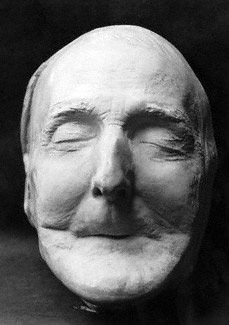
Napoleon’s Death Mask
Or is it? Is this the face of a short and rather dumpy fifty-one year old man? Napoleon died on May 5th, 1821, on the small island of St. Helena where he had been exiled for life after his shattering defeat at the Battle of Waterloo in 1815. A cast for a death mask was made by Dr. Francis Burton within a day and a half of Napoleon’s death. But, there was another doctor present at the time of Napoleon’s death, Dr. Antommarchi, who some say was mistakenly credited as the doctor who made the original mold. Immediately after the cast was made, it was stolen. It is believed that a woman named Madame Bertrand, Napoleon’s attendant, took the mold and sailed back to England. Dr. Burton tried but was unsuccessful in getting the cast back. Several years later a death mask turned up and was authenticated as being the original by Dr. Antommarchi, though historians have always argued against it, as the Antommarchi mask looked much too young to have been Napoleon, no to mention that bones of the face are heavier, the face itself longer and proportionally different when compared to the portraits that had been painted of the Emperor Napoleon. It is the official mask currently on display at Les Invalides in Paris, France.
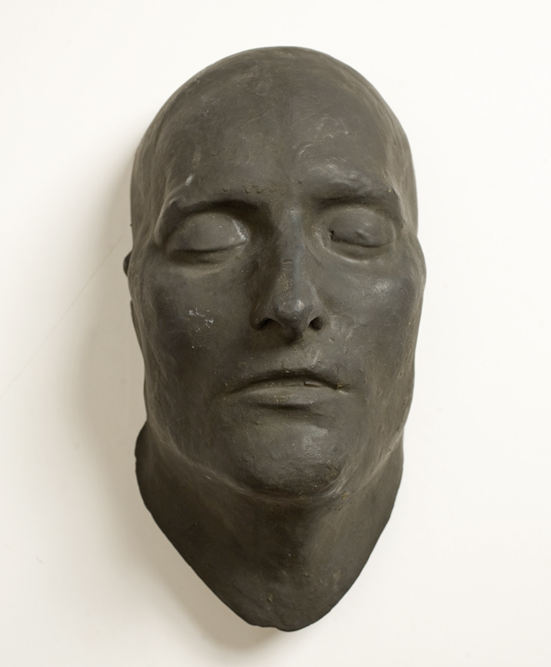
Some believe that the death mask above was actually molded from the living face of the Emperor’s valet, Jean-Baptiste Cipriani. This is the mask that is thought to be authentic:
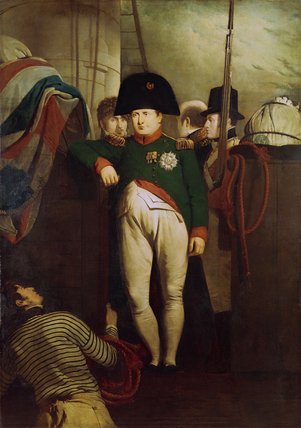
This death mask was on display at the Royal United Services Institute Museum in London for many years prior to 1973, when the mask was sold. You decide . . . . . here is one of the last portraits of Napoleon, painted by Sir Charles Lock Eastlake on board the ship Bellerophon.
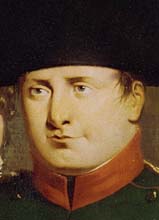
And here is an enlargement of the face
Viola. Ze case it has rested. At least in my mind.
And the strange tales concerning death masks continue – It seems that there was once a special tunnel used to transport the bodies of the hanged from Worcester Gaol to the nearby Royal Infirmary, which stood across the road from the prison and has since been demolished. Until 1832, only criminals’ bodies were allowed to be dissected for medical research in the UK. The tunnel was found during work to transfom the former hospital into the new campus for the University of Worcester in the 1950’s – as were a number of death masks in the tunnel. These casts had been made to study the characteristics of the criminals’ personalities using physiognomy (shape and size of the head) and phrenology (study of the site of different abilities on the head), once thought to be useful in predicting criminal behaviour. The masks are now on display at the George Marshall Medical Museum in Worcester.
Perhaps the strangest story concerning a death mask – and physiognomy – is that involving Gershon Evan, who went on to live another 64 years after his mask was taken. In September 1939, 16 year old Evan was arrested along with 1,000 other young Jewish men and taken to Vienna’s Prater Stadium, where all were detained for weeks. Seeking out those with classic “Semitic” features, Nazi scientists — a commission of the anthropology department of the Natural History Museum — selected 440 men for study. Hair samples, fingerprints, hereditary/ biological appraisals and numerous photographs of the men were taken. The length and width of their noses, lips, chins and other facial features were meticulously documented. Evan was one of them. Soon after, Evan was ordered to submit to having a death mask taken.
“My head on the pillow, I stretched out on the table and closed my eyes,” he recalled in his memoirs years later. “The man advised me to relax, while he coated my face with a greasy substance. He applied it from the top of my forehead down to the throat and from ear to ear. The lubricant, he explained, was to prevent the hardened plaster of Paris from sticking to my skin.” At the end of the procedure, the death mask was removed, catalogued and archived. Evan was given a single cigarette for his troubles before being moved to Buchenwald, from where he was miraculously released four months later. At age 80, Evan was shown his preserved death mask and barely recognised himself in the youthful face held between the hands of a museum curator.
For more on death masks, including instructions on how to make one, visit Carlyn Becchia’s Raucous Royals blog.
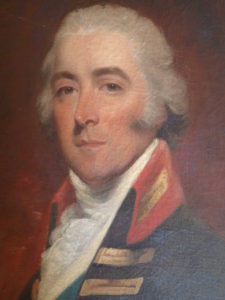
John Pitt, 2nd Earl of Chatham, studio of John Hoppner 1799, courtesy of the Commando Forces Officers’ Mess, Royal Marines Barracks, Plymouth
In the summer of 2003 I was just completing the first year of my PhD. In August I made a visit to Kent Record Office. It was the hottest British summer on record; my train out of London Bridge was delayed by the effect of the heat on the metal tracks, and once I got to my destination I remember trying very hard not to fall asleep or drip sweat all over the 200-year-old manuscripts I was reading.
My focus for the day was the correspondence of the 2nd Earl Camden, Lord Lieutenant of Ireland at the time the rebellion of 1798 broke out. Among his papers was a letter from John Pitt, 2nd Earl of Chatham, dated August 1796. Chatham hadn’t really appeared much on my research radar. His father was Pitt the Elder, and his brother was Pitt the Younger. I knew him mostly as the commander of the disastrous Walcheren Expedition of 1809 (when 40,000 British troops were sent to Holland and then retreated after 10,000 of them contracted malaria), and for being incurably lazy (his nickname, during his lifetime, was ‘the late Lord Chatham’). Like most historians of the period, I suspect, I viewed him as something of an aberration in the brilliant Pitt family, thoroughly overshadowed by his father and brother, both still considered among the greatest political leaders Britain has ever had.
In December 1794, Pitt the Younger sacked his brother from the cabinet post of First Lord of the Admiralty. Chatham’s letter to Camden, written eighteen months after that event, immediately roused me from my heat-exhausted state:
‘I have thought over, again and again, the subject into which you enter so kindly [his 1794 dismissal], and which I assure you I feel very sensibly … I have never had a full and decided conversation, with my Brother on ye subject, because he has very cautiously and constantly avoided it, and I have been unwilling to urge it … [but] at the same time, so many things occur which bear more or less on my situation, that probably some further explanation must take place. I am sorry I cannot agree with you, in looking forward to it, with a prospect of finding in it much relief or satisfaction. It may be a little better or a little worse, but that is all, for the mischief done me, is irreparable, and tho’ my Brother, whenever he gives himself time to reflect, must (if he possesses any of the feelings which I always believed him to have) regret the step into which he was surprised, he can never set it right’ (Chatham to Camden, 7 August 1796, Kent Record Office, Camden MSS, CKS-U840/C254/4).
Chatham’s emotion, pain, and anger grabbed me from across the centuries. Most of Chatham’s correspondence was pretty cagey and matter-of-fact; this was very, very different. What had motivated Chatham to commit a cry of such naked distress to paper? What ‘mischief’ was he talking about, and who had ‘surprised’ Pitt into the ‘step’ of taking Chatham from the Admiralty? Did Pitt ever manage to ‘set it right’?
The more digging I did, the more fascinated I became. Little did I know this was the beginning of an obsession that would span fourteen years, resulting in a historical novel and a nonfiction biography. The biography was published earlier this year (The Late Lord: the life of John Pitt, 2nd Earl of Chatham, Pen & Sword Books). The novel, which in fact was written first, was released by Endeavour Press on 6 October.
Earl of Shadows takes Chatham’s letter of August 1796 as a springboard to ask what it must have been like to be the son and brother of such famous men. The story focuses on John’s relationship with his brother, but the story is very much about John and not William. The publishers described it as ‘a meticulously researched and moving account of sibling rivalry in a world of duty and honour’, and this is (I hope) a very accurate description, but the book also touches on universal themes of identity, forgiveness and loss of trust – and the redemptive power of love.
I like to think I have done my bit to restore Lord Chatham in the eyes of history. I can’t entirely rehabilitate him, of course: there is a very good reason he is not as well-known as the more famous members of his family. But I do hope I have helped counteract automatic dismissals of him as ‘stupid’ and ‘useless’ (both words used to describe him by the Pitt family historian, Sir Tresham Lever). I hope I have drawn attention to the qualities that drew me to him (his principled nature, his loving marriage, his dignity in the face of sustained attacks on his character) while not concealing his faults (his stubbornness, his insecurity, his lack of imagination). I hope I have presented him as a three-dimensional figure, and his centrality in British political and military history makes me wonder why nobody has focused on him before.
I’m more than happy to have been the first, of course.
Two brothers are locked in a life-long struggle to fulfill their destinies.
John and William are the elder and younger sons of 18th century political giant William Pitt. The father is a man of great principle and a great orator. Twice Prime Minister, he accepts the title Earl of Chatham in recognition of his services to the British nation. But his death on the floor of the House of Lords deals a devastating blow to the family.
Forced to forego his military career, John inherits the title and a debt-ridden estate. William inherits the gilded tongue that will make him the brilliant rising star. John sees the problem looming, but the little brother cannot succeed without the big brother’s support. At the most critical moment John runs away from his responsibilities and his brother. It proves to be a fatal mistake.
Can John ever make amends and find forgiveness? Or will he continue to hold onto a pain that has almost become part of himself? Can he escape the long shadow of destiny?
Earl of Shadows is a meticulously researched and moving account of sibling rivalry in a world of duty and honour at the heart of one of Britain’s most iconic political families. It brilliantly underlines the notion that history is about more than just the winners – that there is another, more human, story to tell.
‘Absorbing, historically accurate portrayal of family conflict, soaring ambition, and redeeming love. An impressive fiction debut by a highly talented author.’ — Margaret Porter, bestselling author of ‘A Pledge of Better Times‘
Jacqueline Reiter has a PhD in late 18th century British history from Cambridge University. She has been researching the Pitt family for many years, focusing particularly on the life of the 2nd Earl of Chatham, whose nonfiction biography she has also written. She lives in Cambridge with her husband and their two young children, both of whom probably believe Lord Chatham lives in their house.
The first-ever fully immersive Downton Abbey experience is coming stateside! Downton Abbey: The Exhibition will make its US debut in New York City on Saturday November 18, before traveling throughout the US. Tickets are now available to purchase at www.downtonexhibition.com.
The Exhibition will connect fans with their favorite characters, costumes, locations and historic events of the era, as well as showcase never-before-seen footage.
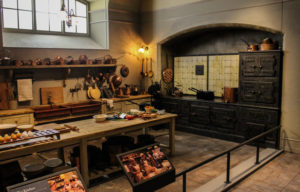
Visitors will be transported on an incredible journey through the grand home of Downton Abbey as the exhibition peers into the world of the Crawleys and those that served them below stairs. From Mrs. Patmore’s hectic kitchen and the gossip-fuelled servants’ quarters, to the family’s glamorous dining room and Lady Mary’s bedroom, fans will get the chance to walk through some of the series’ most recognizable and beloved sets. Visitors will even come up-close to over 50 of the show’s official costumes worn by their favorite actors including Michelle Dockery, Hugh Bonneville and Dame Maggie Smith.
“This is a unique opportunity to step into Downton Abbey – to wander through the sumptuous rooms the family inhabit, the kitchen and servants quarters below stairs and to get right up close to many of the iconic costumes and props,” said Gareth Neame, Managing Director of Carnival Films and executive producer of Downton Abbey.
Downton Abbey: The Exhibition will also provide a fascinating look at all aspects of the post-Edwardian period in which Carnival Films’ popular TV series is set and offer an in-depth insight into the remarkable historic events which would go on to shape the world. From World War I to the Roaring Twenties, visitors will have the chance to learn about British society, culture and fashion.
What do you think about the idea of a traveling Downton Abbey exhibition? Will you attend if it comes to a city near you? Let us know your thoughts.