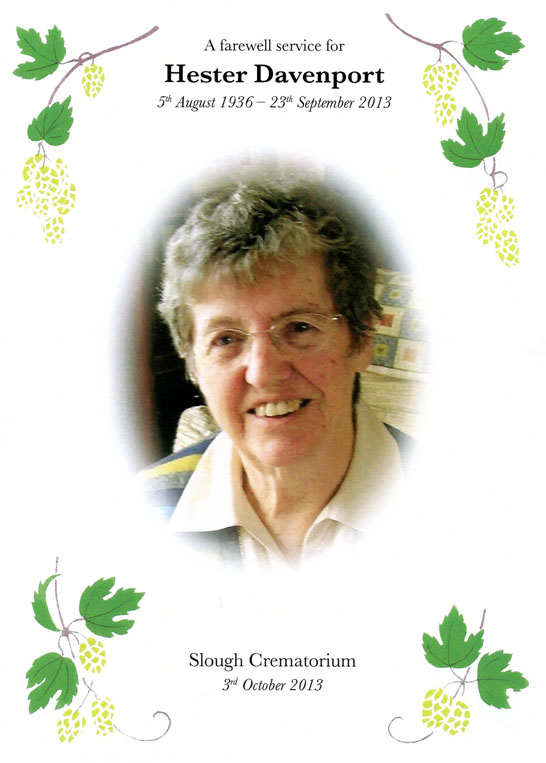
REMEMBERING HESTER DAVENPORT

How many times has Hester Davenport’s name passed my lips since we lost her on  September 23rd, 2013 – five years ago? Too many to count, as we at Number One London have so many memories of our beloved friend, sharing them often. If we’re not speaking of Hester amongst ourselves – Kristine, Victoria and Jo Manning – we’re sharing stories of Hester with other friends and acquaintances. She is never far from our hearts.
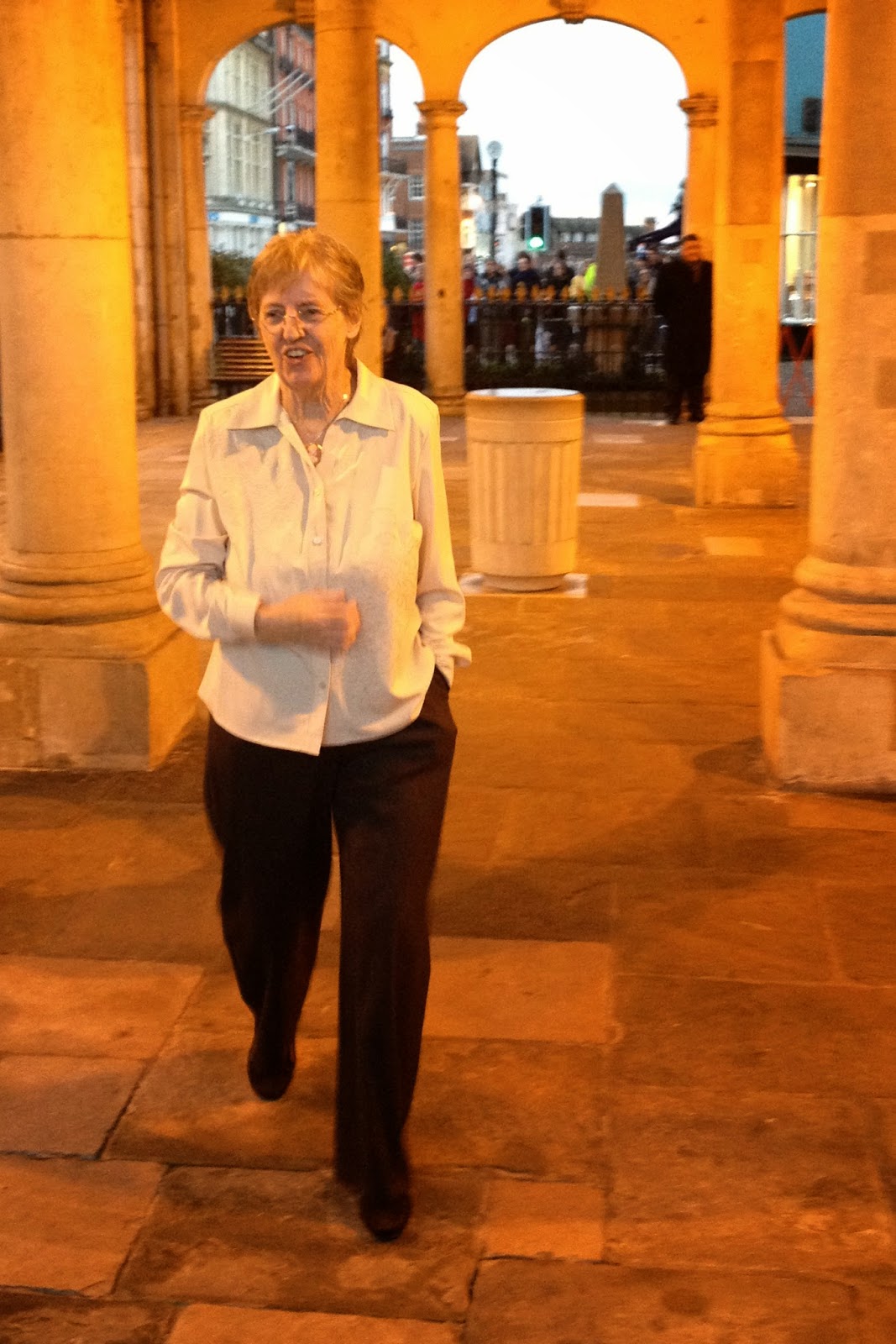
Victoria, here. I find it difficult to express my sense of loss at the news of Hester’s passing. We will miss her terribly. Wherever she is, I am sure she is organizing everything with her gentle touch and genial good humor.

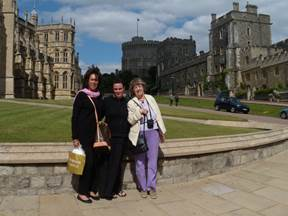
Kristine and I (and Kristine’s daughter Brooke) thrust ourselves upon Hester one day in June, 2010, full of excitement for our upcoming trip to see the reenactment at the 195th anniversary of the Battle of Waterloo.  She had invited us to spend the day with her at Windsor, but little were we prepared for the depth of her welcome and her plans for our visit.  We started at the Windsor Guildhall, where she showed us around the upper floors. Then we went into the lower level where the archives were in the process of being moved to make way for the new museum that Hester masterminded.

Hester thoroughly charmed and surprised us by showing us the accounts of the news of the Waterloo victory as they were received and celebrated, as reported in the Windsor and Eton Express.  The original newspapers had been bookmarked for us and there probably had never been two more thrilled readers of the Windsor Gazette than Kristine and I were.
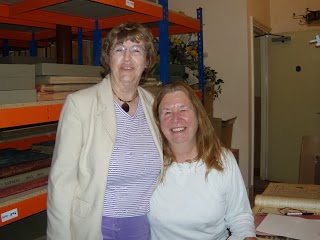
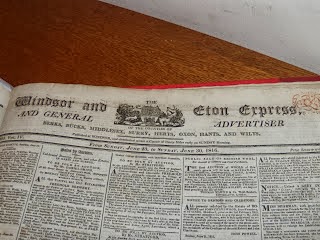
We read about how and when the news was received and the celebratory plans for the royal family and the community.  It was such a thoughtful thing for Hester to do, and greatly added to our enjoyment of our Waterloo visit.  After giving us the latest 195-year-old news, Hester asked us if we’d like to go see the Queen.
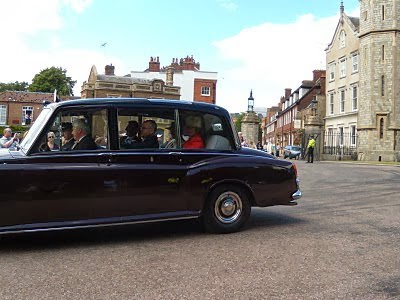
That is a QUESTION???  We jumped at the chance.  Off we hiked to the drive from the Castle up the long walk toward Ascot.  Hester told us that the royals went most of the way in autos then changed to open carriages to enter the race course.  A small group had gathered to await the parade of black limos, and we had a glimpse of Herself as she passed by.
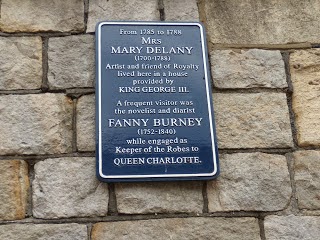
 We went on to lunch in a quaint cobbled street-café, all the while chattering a mile a minute, telling each other about various projects underway, observing the locals and tourists, and basking in Hester’s erudite presence.  Of course we talked about the royals, Waterloo, the new Museum about to be created in the Guildhall, then on to persons of interest to all of us, celebrities such as Mary Robinson,  Fanny Burney, Mrs. Delaney, Dr. Johnson, and Queen Victoria (and Prince Albert).  Exactly the kind of celebrity small talk everyone enjoys, right? Well, at least those of us who indulge in the fantasy of  living in the 18th and 19th centuries.
Eventually we moseyed off to the Castle and did the tour.  We were certain Hester had walked that route a million times but she gallantly assured us she loved it every time.  Every step of the way, she told us  “inside” stories, all about the fire in 1992 and what was restored.  And how!


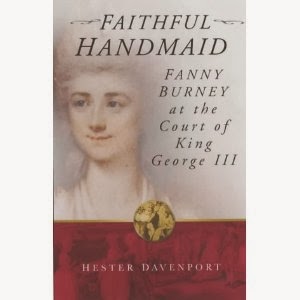
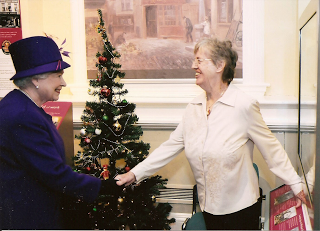
On other visits to Windsor, Hester showed us all around the new museum, where she had also welcomed Her Majesty (see below).  She always had the most interesting details to impart without in any way taking credit for all the things she had accomplished.  As head of Dr. Johnson’s House, as an excellent biographer, and as the head of the Frances Burney Society (in addition to many other endeavors and awards), Hester had a role in the most esteemed of British scholarly organizations. But she always had time to chat with amateurs like us.  So we will greatly miss a wonderful friend and favorite companion. All our best to her dear husband, Tony, gardener extraordinaire, and to their daughters.  RIP, Hester.
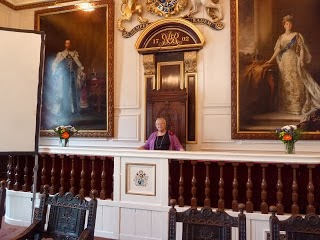
Victoira at the Guildhall Museum
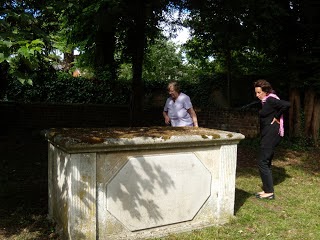
Kristine here, still unable to process the fact that Hester is gone. Hester and Windsor will forever be linked in my heart. So many memories and so many good times, most arranged by Hester, who was a respected historian, accomplished writer and also very funny. Below is a photo taken by Victoria of Hester and I looking at the grave of Mary Robinson in Windsor, which Hester tended faithfully.
You won’t believe me, but on several occasions Hester related the funniest stories about Mary’s grave to Jo, Victoria and myself. I think my favorite was the time that Hester was showing a group Mary’s grave and while she was giving her talk, became distracted by the fact that Mary’s grave boasted several fresh sprays of flowers. Who could have left them? Where had they come from? It wasn’t till she’d finished that Hester realized she’d taken the group to the wrong grave.

I remember the email we received from Hester telling us that she was doing a truly daring thing – bidding on an original print of Rowlandson’s Vauxhall Pleasure Gardens, above. A broker would be phoning in her bids during the live auction. We girls kept our fingers crossed across the pond and were dead chuffed to learn that Hester had submitted the winning bid. Next time I was over, of course I saw the print up close and in person. What a treat.
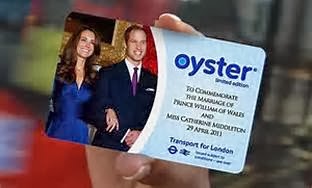
Hester always good naturedly carried out my commissions with patience, like the time I mailed her a twenty pound note and asked her to buy me the Oyster card issued to commemorate the wedding of William and Kate, which she purchased at Windsor station and mailed to me. (I’m still using it)

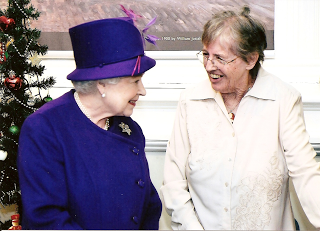
Hester was instrumental in the founding of the Guildhall Museum and was appointed to welcome Her Majesty and take her around the exhibits when the Museum first opened.

Of course, the Guildhall figures largely in my memories of Hester. And the Queen. Hester and the Queen – could anything be more perfect?

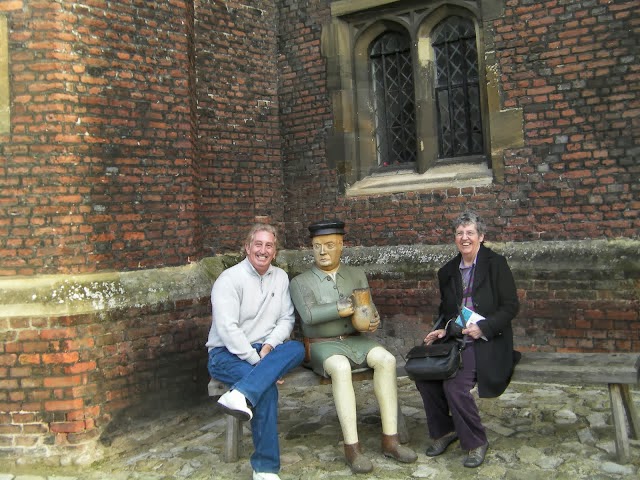
As most of you know, Hubby and I recently spent two fabulous days with Hester when we were over in January. Firstly, Hester drove us to Oatlands, now a hotel, but once the home of Frederica, Duchess of York. The three of us had tea and then Hester helped me to search the grounds and find Freddy’s pet cemetery. Below is a photo of Hubby, Hester and some guy they picked up at Hampton Court, where we went afterwards. Next day, Hester and I toured the kitchens at Windsor Castle together, had lunch and took a stroll by the river.
Hester was to have spoken to our group when Victoria and I go over to Windsor in September 2014 for the Wellington Tour.  How everyone in our group would have enjoyed meeting Hester – and how much fun we’d have had.

I am convinced that Hester is now spending her days in a well appointed drawing room with the likes of Brummell, Fanny Burney, Mrs. Fitzherbert, the Duke of Wellington and the Duchess of York. I only pray that she’s keeping my seat warm.

From Jo Manning

The last time I saw my dear friend and colleague Hester Davenport was when I waved goodbye to her as she drove back to Old Windsor after dropping me off at the railroad station in Windsor. It had been a glorious day, but all days with Hester were glorious, despite the often mercurial English weather.

We’d had tea and pastries – the biscuits a culinary treat – in the back garden with her husband Tony, enjoying the spring flowers and exquisite green swathe of lawn. I was sorry to have to leave, as I always was, because good company is rare anywhere in the world and theirs was sublime.


Hester, after her long and arduous string of medical treatments, looked so well! And she was chipper,  too, looking forward to her next adventures in writing and editing. She was skilled in both, such a talent. Her prose was smooth and readable, eminently so.


We “met” online in 2005, when my publisher forwarded to me Hester’s comments on the biography I wrote on the 18th-century courtesan and memoirist Grace Dalrymple Elliott. It’s a small world:  Hester had recently completed a well-researched, beautifully-written biography of Grace Elliott’s rival in love – or what passed for it in the Georgian era amongst the aristocrats and royals – Mary Robinson aka Perdita.


Hester’s remarks about my writing were so very kind…and thoughtful. She took issue with some interpretations I’d made but acknowledged that so much of the conclusions we drew concerning the lives of these ladies were interpretive, at best.  We loved our subjects, those so-called soiled doves so ill-used by wealthy and powerful men…tough women who sometimes triumphed over social adversity but most times did not.


We were thoroughly engrossed in our research and subject matter and it was so delightful to find each other…someone to talk with and reflect and whose company was thoroughly enjoyable. Yes, we most assuredly would have bored the trousers off the majority of people with what we talked about, so being together was a treat beyond the ken of most. We also bonded over biographers who came after us and used our research, claiming it to be their own. We each had a specific bête-noire!


 We actually met face-to-face in early 2006, over a delicious meal and white wine at the restaurant atop the National Portrait Gallery. The talking was even more delicious than what we ate or drank  Hester was witty…and wise…and a wonderful companion.


We always had something to discuss, somewhere to go – museum exhibition (the Thomas Lawrence show stands out here), Jane Austen’s haunts – the memories are fabulous and Hester’s energy was unflagging as she drove me around the English countryside. I will also never forget the wonderful day we had at Windsor Castle with my two eldest granddaughters, Zoe and Esme Winterbotham. She introduced us to Windsor Castle – what a superb guide! – and the girls introduced her to Wagamama. (A restaurant she said she very much enjoyed getting to know.)


A highlight of our day at Windsor was our side visit to St George’s Chapel, where Hester thoroughly scandalized the docents  — and delighted me and the girls – by stomping fiercely on the earthly remains of King Henry VIII, an historical character we found revolting to the max. I will never forget that scene.


I miss her. I will always miss her, although I continue to have an ongoing dialogue with her in my mind. I truly believe that people are only really gone when you forget them, when memories disappear. I will never forget my kind, wise, wonderful, clever, witty, darling friend Hester Davenport…and I will bless her memory so long as I live.



A TOUR GUIDE AT BLENHEIM PALACE

You may recall that in my last post about my recent trip to England, Sandra Mettler and I spent my first day in London touring the City on the Hop On, Hop Off bus. It was a glorious day, and the summer weather continued, as you’ll see by the headline above. Having spent the past thirty years living in Southwest Florida, 27c (or 80 fahrenheit) was a nice cool down for me and Sandra was just happy to be out from beneath the snow piles she’d left back home in Wisconsin.
So next day, we decided to take the train out to Blenheim Palace, as I hadn’t been there before, believe it or not. In addition, they were holding an antiques fair on the grounds that weekend.

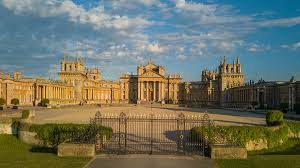
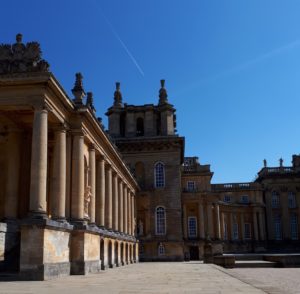
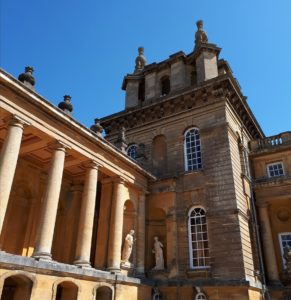
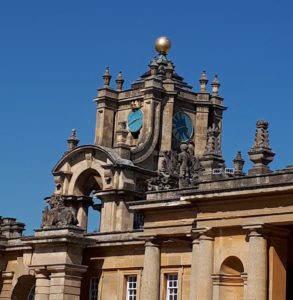
Blenheim Palace, above, was gifted to John Churchill, the Duke of Marlborough, as a reward from a grateful nation after his victory at the Battle of Blenheim in 1704. Of course, there’s a lot more to the story, which you can read here. Likewise, the grateful nation wanted to gift the Duke of Wellington with a similar “Waterloo Palace” after his victory at that battlefield two hundred years on. The government said they’d like to give him something along the lines of Blenheim and, upon hearing that Wellington had never seen Blenheim, a contingent of ministers took him out to Oxfordshire to rectify that oversight. As I looked at Blenheim for the first time, I could only imagine Wellington’s face as he took it all in. Ever practical, his answer to their offer of a similar pile was, “Oh. Hell. No.” Or words to that effect. Instead, he chose Stratfield Saye, already built and much more in the style of a family home.
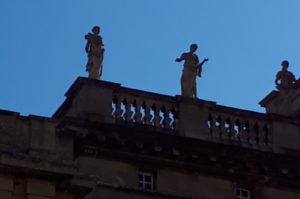
Here are some bits of the Blenheim facade in photos I took on the day. I couldn’t fit it all into a single frame . . . .


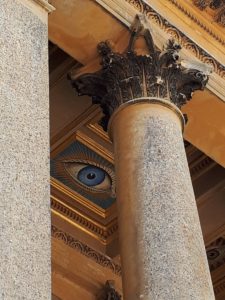
The ceiling of the entry portico is decorated with six eyes: three blue and three brown and all of them left eyes. They were painted in 1928 by artist Colin Gill based on strict instructions from Gladys, the beautiful, American, eccentric 2nd wife of the Ninth Duke of Marlborough.

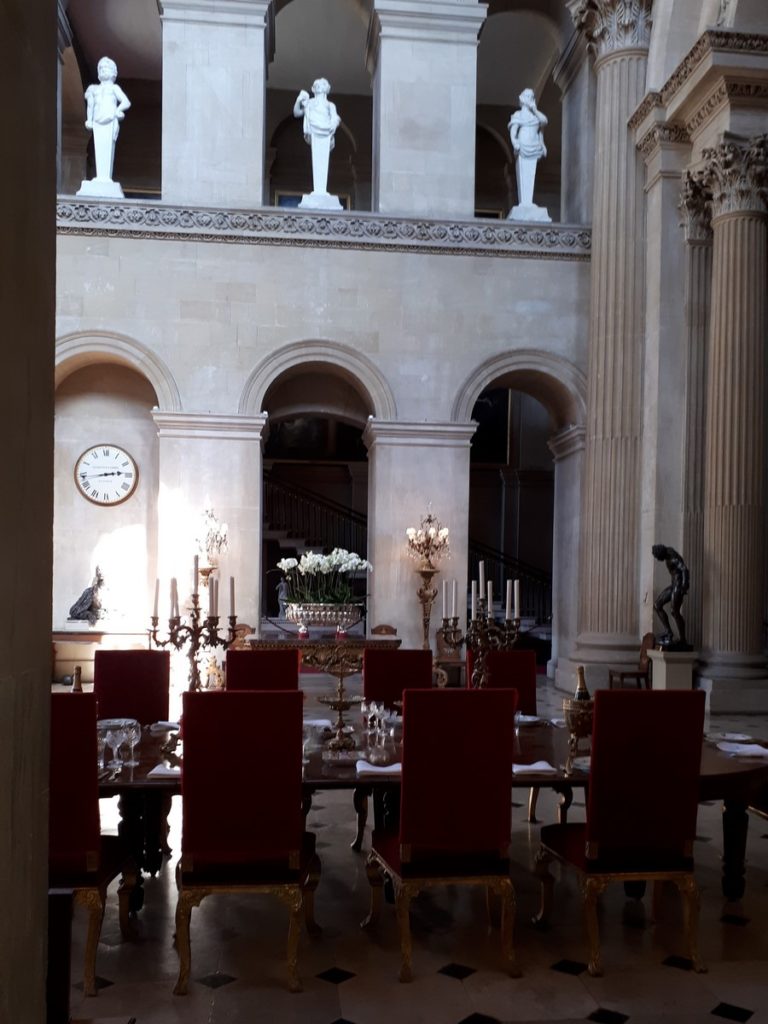
And the dining room is set up in what should naturally be the entry foyer . . . .

The rest of the Palace is a bit less eccentric –

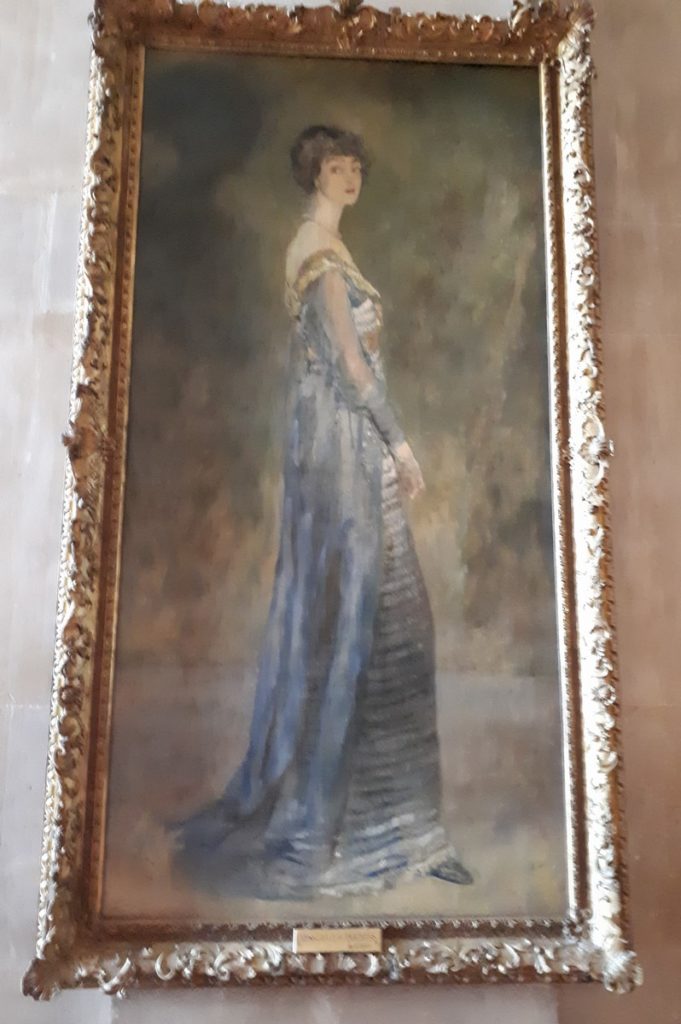
Consuelo Vanderbilt, 9th Duchess of Marlborough
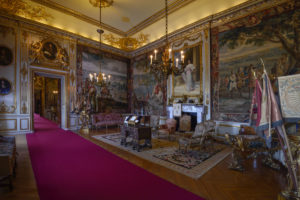
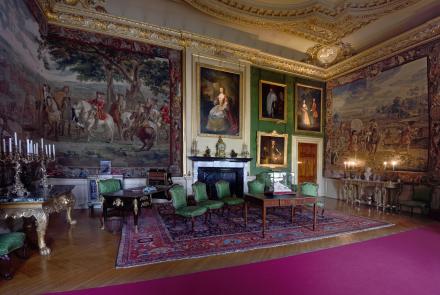
The First State Room
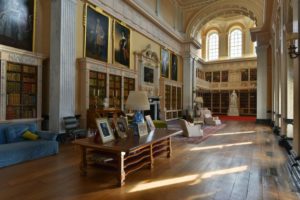
The Long Library
The Green Writing Room
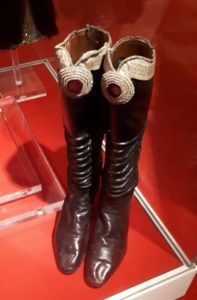
Winston Churchill’s boots
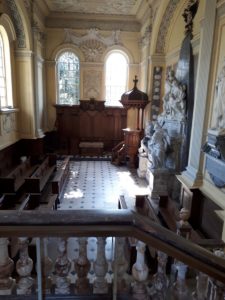
The Chapel

After touring the Palace, Sandra and I took a turn around a portion of the gardens –

And then carried on through the grounds to the nearby market town of Woodstock.

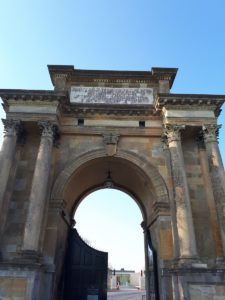
The gate leading off the estate and into Woodstock

Woodstock was established in 1179, when King Henry gave the town a Royal Charter. From the 16th century, the town was known for glove making, but the town changed substantially once the 1st Duke of Marlborough took up residency at Blenheim and by 1720, the primary business of the town was fine steel work, evolving shortly thereafter into the manufacture of cut steel jewelry.


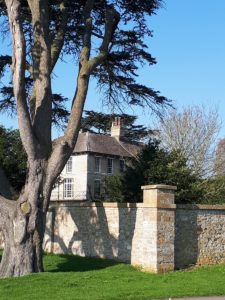
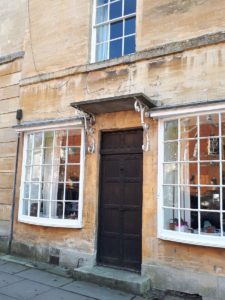
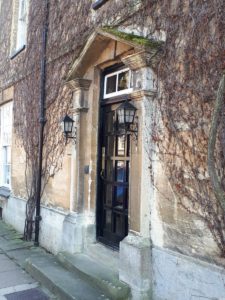
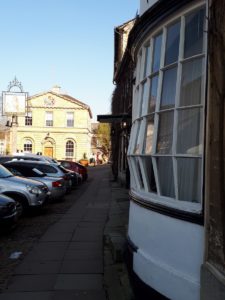
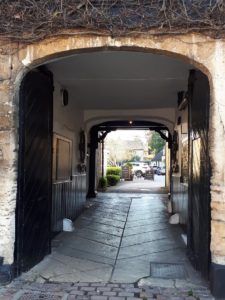
Except for the cars and modern day street signs, Woodstock retains most of its historic charm, the streets lined with period buildings.


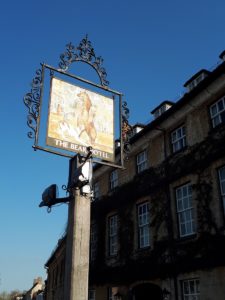
The Bear Hotel has stood in Park Street since the 13th century and continues to draw in customers today – Sandra and I were unable to pass it up, choosing instead to stop in for a refreshing afternoon pick-me-up.

As we sipped our drinks, I mentioned to Sandra that, once we’d returned to London, I’d like to swing by the Duke of Wellington pub, near our hotel in Sloane Square and where we’d be meeting my friend, Ian Fletcher, the following night.

This we did and you can no doubt imagine my shock when I found the place locked up tight, the furniture cleared out and the sign board gone . . . until the next installment!

THE DEATH OF WELLINGTON AT WALMER

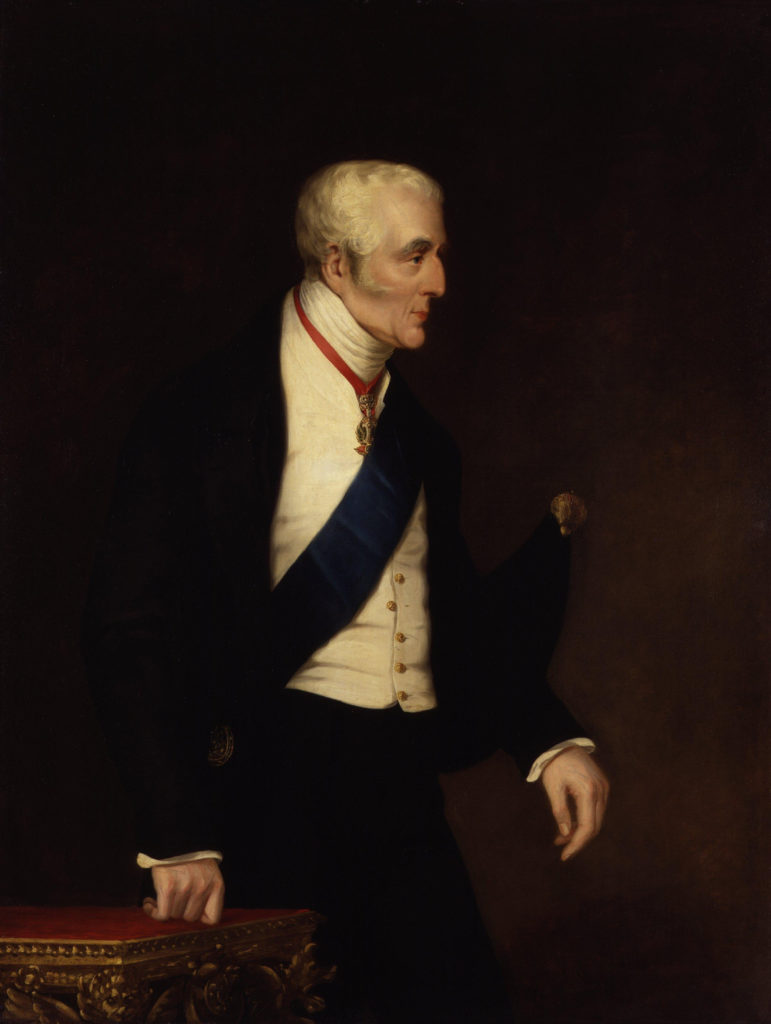
The Duke of Wellington by Count d’Orsay

The Duke of Wellington died at Walmer Castle on September 14, 1852

 From The History of Walmer and Walmer Castle by Charles Robert Stebbing Elvin (1894)

“The Duke of Wellington was Lord Warden (of the Cinque Ports) for nearly four and twenty years, and during all that time rarely missed coming to Walmer after the prorogation of Parliament, staying usually till about the middle of November; and, before leaving for Strathfieldsaye, generally held at Dover a Court of Lodemanage, to discuss and settle the affairs of the Cinque Ports’ pilots.

” . . . The Duke was accustomed to rise early, but, on September 14th, 1852, when his valet called him as usual at six o’clock, he found the Duke particularly drowsy, and thought it best to leave him undisturbed for an hour longer. He therefore withdrew, but remained within hearing. It was fortunate he did so, for soon after he was alarmed at hearing groans from the Duke’s room, and on re-entering was requested to send for Dr. Hulke of Deal, who came, prescribed some simple remedies, and, seeing nothing serious in the Duke’s condition, departed. Shortly after this, however, the Duke became much worse, and messages were despatched for further help. On the return of Dr. Hulke with his son and Dr. McArthur, they found his Grace breathing laboriously, unconscious, and very restless. To assist respiration he was raised and put into his easy chair, where for a time he breathed more freely; but the end was very near, and at five and twenty minutes past three he expired. A message had meanwhile been sent to London for Dr. Williams, who only arrived in time to find the mortal remains of his illustrious patient laid out upon his little camp-bed.

English Heritage

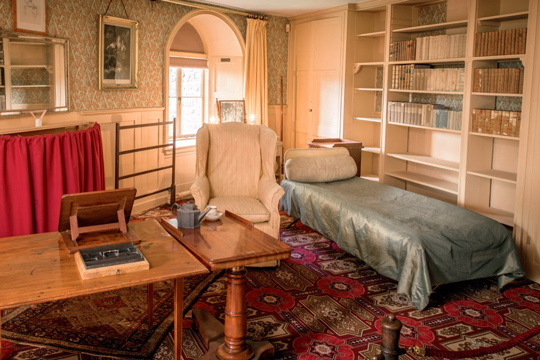
“The Union Jack now drooped at half-mast high upon the castle ramparts; announcing to the world that the Iron Duke, the nation’s idol was no more. The body of the departed hero remained at Walmer Castle until the eleventh of November, in the irregularly-shaped room shown in the engraving; which still retains the name of “The Duke’s Room.” The scene at Walmer, subsequent to the removal, cannot be better described than in the following extract from a contemporary record, which conveys a most graphic idea of all the solemn proceedings of this time :—” In the small irregularly shaped death-chamber lay the body of the Duke, inclosed in an outer coffin covered with crimson velvet, and with handles and funeral decorations richly gilt. On the lid, near the head, rested the ducal coronet, and beyond it the pall, gathered back, to give visitors a complete view. The coffin rested on a low stand, covered with black cloth, round which candelabra with huge wax lights and plumes of feathers were arranged. The walls and roof of the small apartment were, of course, hung with black cloth, the single deep-recessed window closed, and candles, reflected against silver sconces, barely relieved the gloom of the sombre display. Visitors entering at one door passed by the end of the coffin, and then out at another without interruption. The ante-chambers and corriders were also darkened, hung with black, and lighted with candles placed at intervals on the side walls.

“The first day for admission of the public was Tuesday (Nov. 9th). Through the low strong archway of the entrance the visitors passed, first, along the curved glass-covered passage, then through the dimly lighted anterooms into the chamber of death, and then along corridors and down staircases and across the garden on to the beach. All the way at a few paces distance from each other on either hand, the guard of honour of the Rifle Brigade were placed, each man with his arms reversed, and leaning in a sorrowful attitude on his musket. Along the beach, as far as the eye could reach towards Deal, a long train of visitors dressed in mourning passed and repassed throughout the day, while from greater distances conveyances arrived and took their departure in quick succession.

“The stream of visitors continued throughout the Tuesday, and until four o’clock in the afternoon of the following day; during which time upwards of nine thousand people are said to have visited the chamber of the late Duke to witness the lying in state. But about 7 p.m. on Wednesday (Nov. 10th), the body was removed to Deal Station, en route for London, under an escort of about 150 men of the Rifle Brigade, commanded by Colonel Beckwith, and attended by mourning coaches in which were seated the Duke’s eldest son and successor, Lord Arthur Hay, Captain Watts, Mr. Marsh of the Lord Chamberlain’s office, and others.

“As the funeral cortege prepared to leave the grounds, the solemn booming of the minute-guns resounded from the castle walls; while the wind brought back the echo from Deal and Sandown, where the like honour was paid to the memory of the deceased. Down the “sombre avenue,” lighted by the lurid glare from the flambeaux with which a body of men led the way, and through the silent crowds who lined the road undeterred by chill darkness of a November night, winded the slow procession; moving with measured tread, until at length they reached Deal Station; the melancholy march of a mile and three-quarters having occupied no less than one hour and a half. There they were awaited by Mr. James Macgregor, M.P., the chairman of the South-Eastern Railway Company; and the hearse having been transferred to a truck, the journey onward to London was resumed at a quarter past nine.

“On arriving at the Bricklayers’ Arms station, the hearse with the coffin was removed to Chelsea Hospital, under an escort of the 1st Life Guards; and there the remains of the Duke continued to lie in state till removed for the Grand State Funeral which took place on the following Thursday, November 18th.

“In 1861, shortly after the appointment of Lord Palmerston (as Lord of the Cinque Ports), several articles were removed from (the Duke of Wellington’s room at Walmer) to Apsley House, with the consent of Lord Dalhousie’s executors, in consequence of a threatened sale by auction; but these have all been recently restored, through the generosity of the present Duke of Wellington, as related further on; and “The Duke’s Room” is once again as it used to be, even to the yellow moreen curtains and the orignal bedding and chair-cover. The bookshelves have, however, been wisely covered with glass doors, and so converted into a cabinet, in which many articles of interest are kept under lock and key; including the Duke’s set of his own printed despatches, in twelve vols., the first volume of which has been despoiled of its title-page by some thief, or thievish collector, for the sake no doubt of the autograph. This cabinet also contains, among other things, two pairs of “Wellington” boots, and a volume of Statutes relating to the Cinque Ports, of the date of 1726. The latter was presented to the Duke of Wellington by Lord Mahon, and contains the autograph of each. One pair of the “Wellingtons,” described in the schedule of heirlooms as a pair of “Field Marshall’s ‘Wellington’ boots,” are believed to be the same that were worn by the Duke at the Battle of Waterloo. The famous camp-bedstead has now a green velvet coverlet, presented by the Countess of Derby in 1893.

“The engravings in this room include portraits of Mrs. Siddons, Mr. Burke, and Lord Onslow, as well as the Duke’s print of the Chelsea pensioners reading the Gazette announcing the victory at Waterloo; and in the adjoining dressing-room, is a curious piece of work, made by the Duke’s house carpenter and shown at the Exhibition in 1851, being the representation of Strathfieldsaye House, in the form of a picture, composed it is said of 3,500 pieces of wood. The Duke of Wellington thought so much of this picture that it used to hang during his lifetime in the dining-room.”

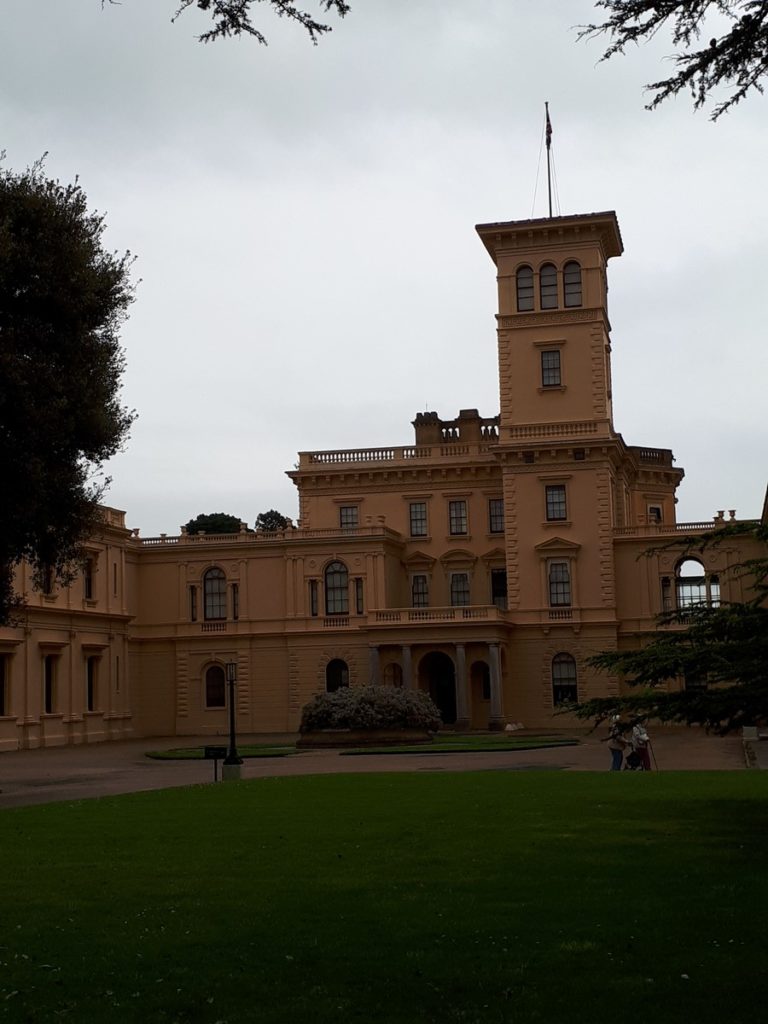
OSBORNE HOUSE – Part Two

by Victoria Hinshaw, with Kristine Hughes Patrone

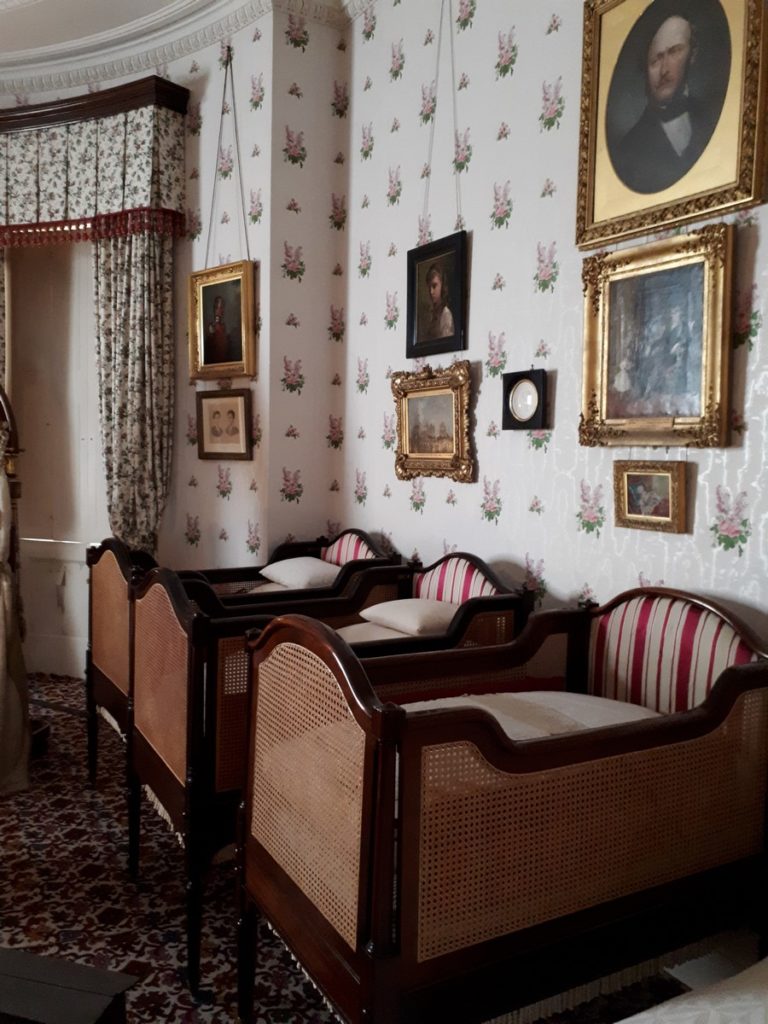
After a break we eagerly went upstairs to see the personal rooms of the royal couple and their children.

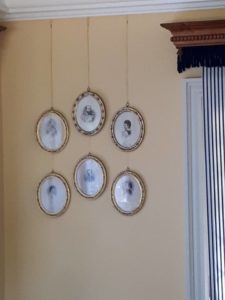
Some of the children
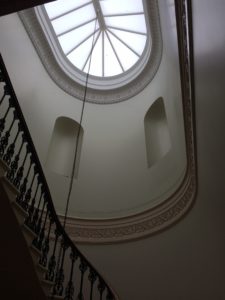
Skylight at the top of the staircase
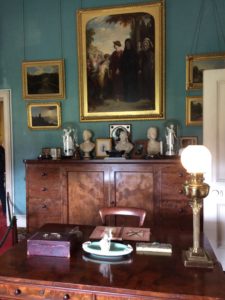
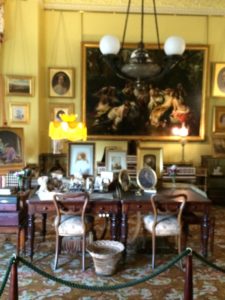
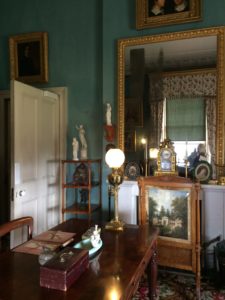
Prince Albert’s Dressing and Writing Room

Victoria and Albert had adjacent suites of rooms on the first floor. after Albert’s death in 1861, the Queen kept his rooms just as he had left them.

Prince Albert’s dressing and Writing Room
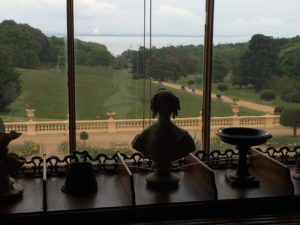
The View from Prince Albert’s desk

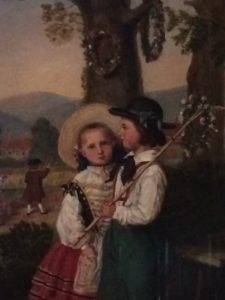
The painting above, hanging in Prince Albert’s Writing Room, shows the Queen’s portrait of Princesses Louisa and Helena in costume for a play they performed.

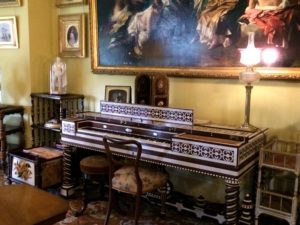
Queen Victoria’s Sitting Room

Victoria and Albert worked side by side in this room, where the family also gathered for informal activities.


Victoria’s piano, on which both she and Albert were accomplished performers
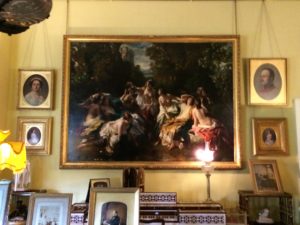
Florinda, by F.X. Winterhalter, 1862

The painting above, described by the guidebook as  “remarkably sensual,” was a birthday gift for Albert from the Queen.


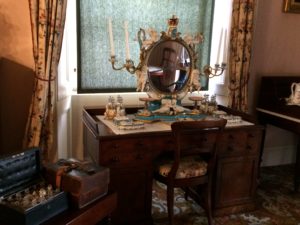
Queen Victoria’s dressing Room

The Minton dressing table set was commissioned by Prince Albert as  a Christmas gift for the Queen in 1853. The room contained a bath and a shower, in addition to a WC, all tastefully paneled in mahogany.

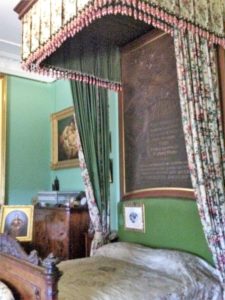
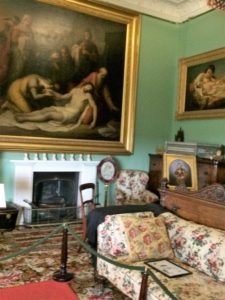
Queen Victoria’s Bedroom

Victoria died in this bed at 6:30 am on January 22, 1902, memorialized in the plaque above.

The painting The Entombment was painted by Gustav Jaeger, 1845, a favorite of Prince Albert’s.

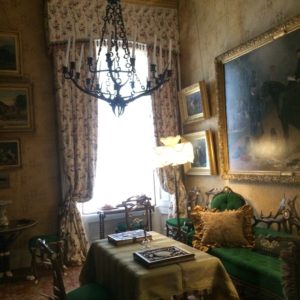
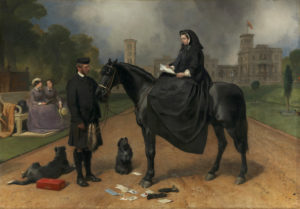
On the ground floor again, the Horn Room is filled with stag’s horns, many from Balmoral.  Often used as a visitor’s waiting room, here you find Sorrow, the portrait of Queen Victoria on her pony Flora held by John Brown, her Highland servant and confidante.  The artist Landseer exhibited it at the Royal Academy in 1867. Below is a better image from the Royal Collection.

The Stag Room
Landseer, Sorrow, or Osborne 1865
Sir Edwin Landseer, 1867

THE DURBAR WING

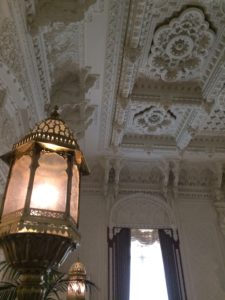
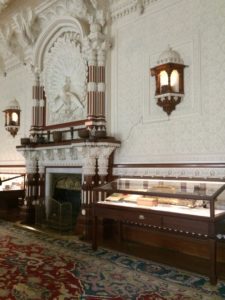
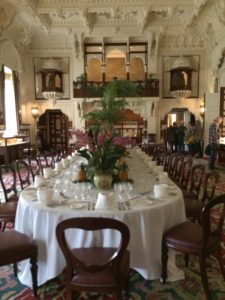
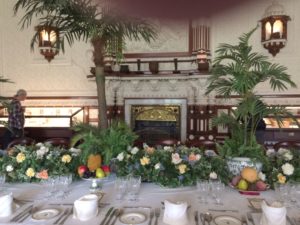
Constructed in 1890-91, this wing honors the Queen’s position as Empress of India. Mainly a reception hall, it is sumptuously decorated with Indian motifs and houses an extensive collection of treasures from the sub-continent.

The Durbar Room is breathtaking… but there is more in the gardens and beach.

Part Three coming soon!

If you’d like to see Osborne House first hand, please take a look at Number One London’s 2019 Queen Victoria Tour – also on the itinerary are Kensington Palace, Buckingham Palace, Windsor Castle and the Royal Pavilion at Brighton.