Sherlock Holmes Returns – Thrice

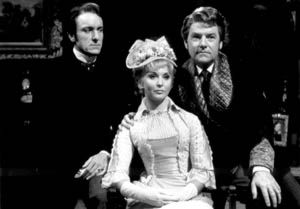
(1) Robert Downey Jr. will once again play the British detective in Sherlock Holmes 2, (2) a new, authorized Sherlock Holmes mystery novel will hit the stands in September of this year (3) Benedict Cumberbatch returns as Masterpiece Mystery’s 21st century incarnation of the detective. 
Sherlock Holmes II (the film) is set in the year 1891, a year after the events in the first film, and will have Holmes chasing Moriarity and Dr. Watson pursuing his love life whilst assisting the detective. Downey says: “Unlike last time, where Holmes kept getting Watson into trouble, this time Watson is getting Holmes out of trouble, and they’re both in deeper trouble than I think the audience could have imagined we could go…. All manner of nastiness has just occurred.”

This time out, the duo are joined by the feisty Sim, played by actress Noomi Rapace. Also making an appearance is Sherlock’s brother Mycroft Holmes, played by actor Stephen Fry, a character who producer Susan Downey (Robert’s wife) describes as “stranger and perhaps even more brilliant” than the English detective. Fry recently said, “I play Mycroft, Sherlock Holmes’ brother – the smarter brother, I hasten to add. He’s so lazy that he never gets the reputation that Sherlock does. Historically it’s a very interesting character, and as a lover of Sherlock Holmes since I was a boy I’ve always enjoyed that character myself. I hope that people enjoy it. It’s certainly been fun making the picture.” And how does Fry feel about a Yank playing the iconically British Holmes? “To some extent, but he’s such a charismatic and likeable screen presence, Robert, that you very soon forget it. More than most, he owns every second of screen time. He’s just wonderfully likeable. He’s the real thing.”
The film opens in October in the UK and in December in the US.
Meanwhile, author and screenwriter Anthony Horowitz has been tapped by the Arthur Conan Doyle Estate to write a brand new Sherlock Holmes mystery novel. Horowitz said he’s writing “a first-rate mystery for a modern audience while remaining absolutely true to the spirit of the original.” Orion publisher Jon Wood promised the author’s “passion for Holmes and his consummate narrative trickery will ensure that this new story will not only blow away Conan Doyle aficionados but also bring the sleuth to a whole new audience.”
This is the first time that the Estate has tapped anyone to continue the Holmes tradition and it’s no wonder they chose Horowitz, who has proven his story telling abilities by creating Foyle’s War and contributing to several other crime drama series, including Midsomer Murders and adaptations of Agatha Christie’s Poirot novels.

And finally, we can all look forward to Benedict Cumberbatch’s return as Holmes in three new Masterpiece Mystery episodes this Autumn. The game is certainly afoot.

Sir Thomas Lawrence Arrives at Yale


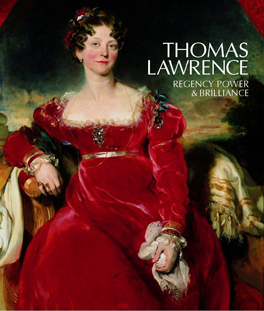
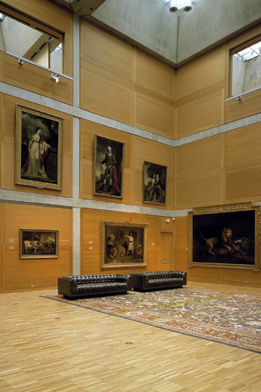
Opening today, February 24, 2011: Thomas Lawrence: Regency Power and Brilliance will be on view at the Yale Center for British Art until June 5, 2011.


Kristine and Jo Manning both saw the exhibition in its first venue at the National Portrait Gallery in London.  Victoria hopes to be there in a few days…and I will report on my visit.  You can read our previous posts on this blog on 10/20/10, 1/7-8-9-10/11, and 2/2/11.  We find Sir Thomas to be a fascinating subject and the exhibition equally so.

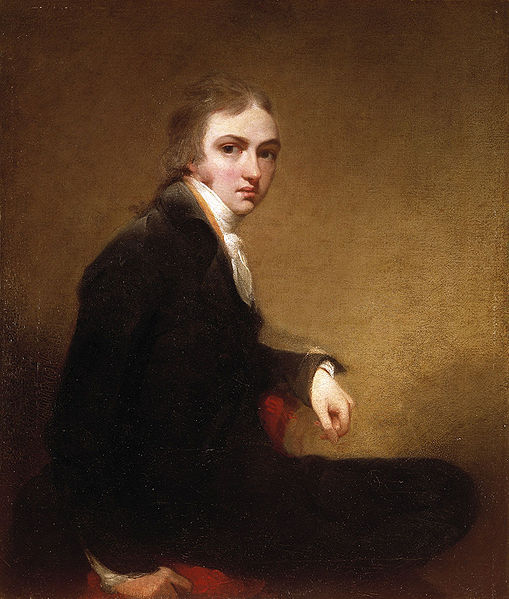
Thomas Lawrence, self-portrait from 1788, right, was born in Bristol in 1769. He was a child prodigy and by age 10, when his family moved to Bath, he supported then with his drawings in pastels.  He moved to London at age 18 and was soon hailed as an up and coming talented successor to Sir Joshua Reynolds, then Britain’s leading portraitist.

One of his fine portraits, of a friend’s wife, Mary Hamilton, is shown in the exhibition, and makes one eager for more of the early pastels. But clients were eager for portraits in oils, and Lawrence excelled here too. He drew Mary Hamilton in pencil, red and black chalk in 1789. The British Museum, which owns the work, writes, “This important drawing of Mary Hamilton is arguably the most beautiful female portrait of its type remaining in this country.”  A detail of the drawing was used as the cover for a 2008 exhibition at the British Museum The Intimate Portrait, below.


Lawrence’s portrait of Queen Charlotte,  wife of George III, brought him fame and eventually fortune. Exhibited at the Royal Academy in 1790, the canvas was praised for its detail and its fine brushwork.

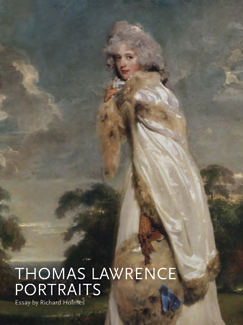
The stunning portrait of actress Elizabeth Farren, later Countess of Derby, exhibited at the RA in 1790, is one of the exhibition posters offered for purchase.  For information on the Yale exhibition, the catalogue, posters and more, click here.   Elizabeth Farren (1759-1829) began her London stage career in 1777, appearing in Goldsmith’s She Stoops to Conquer. She became the object of Lord Derby’s affections, and after his first wife died, Farren married him in 1797. She thus retired from the theatre and became a countess, wife of a prominent Whig member of the House of Lords. They were parents of three children.

Jonathan Jones, reviewing the exhibition as shown in London, wrote in The Guardian: “Lawrence is a painter who triumphed in his lifetime, yet was forgotten afterwards. Why was he neglected? The question echoes through this extremely interesting exhibition… It is because he associated with the wrong royal… Raddled and bloated and unpopular, George IV looks out of Lawrence’s Wallace Collection masterpiece as if he knows full well that in centuries to come, people will joke that ‘there are pieces of lemon peel floating in the Thames that would make a better monarch’.”

But Lawrence’s relationship with the Prince Regent, later George IV, was lucrative and certainly added to his fame. The Regent sent Lawrence around Europe to paint the leaders of the allied victory over Napoleon. The paintings hang in Windsor Castle, though many copies executed in Lawrence’s studio, can be seen in palaces, mansions and museums worldwide.

The Duke of Wellington was the real hero of the  battle, but many, including a coalition of European leaders contributed to the long-sought defeat of Napoleon. Lawrence painted the Duke a number of times, including here on the back of Copenhagen, the horse who carried him throughout the day-long Battle of Waterloo.

Victoria has long adored this painting, from the collection of the Chicago Art Institute. As a child, she often stood in front of Mrs.Jens Wolff and wondered what made this elegant lady so sad. The portrait was commissioned in 1802 or 03 by the sister of Mrs. Wolff and exhibited at the Royal Academy in 1815.  Isabella Wolff was the wife of the Danish Consul in London; they divorced in 1813. She is portrayed as the

Erythraean Sibyl (similar to the Sistine Chapel version) and she gazes at a book of engravings by Michelangelo. Lawrence and Isabella Wolff may have been romantically involved for some years, though why it took the artist a dozen years to complete the portrait is a good question. They continued to write to one another until her death.

Thomas Lawrence: Regency Power and Brilliance will be on display at the Yale Center for British Art, New Haven, CT,  until June 5, 2011.  We will report  again after our visit. For more information on the Yale Center for British Art, click here.

Sending Our Prayers

Number One London has many regular visitors from New Zealand and Victoria and I want to take this opportunity to let you all know that our thoughts are with you during the aftermath of the earthquake, which struck Christchurch at 12.51pm on Tuesday local time.
The Queen, who is also New Zealand’s head of state, expressed her sadness at the 6.3 magnitude quake, saying she was “utterly shocked” by the news.
“Please convey my deep sympathy to the families and friends of those who have been killed; my thoughts are with all those who have been affected by this dreadful event,” she said.
“My thoughts are also with the emergency services and everyone who is assisting in the rescue efforts.”
 We pray that you and yours are safe.

Guest Blogger Judith Laik Carves Coade-Stone

Our guest blogger today is Judith Laik, who has traveled with us in England and loves all things Regency.  She is the author of two Regency romances with Kensington Publishing Corp., and other works of fiction. The second edition of her co-authored book of quotations, Around the Circle Gently, has been released. Judith is a columnist for 1st Turning Point . She is currently working on a Regency historical and other projects.
She lives on a small farm in Washington state with her husband, daughter, and various animals. Visit her website here.  Written sections of this post: ©Judith Laik.
  

Coade-stone lion at Westminster Bridge, London;

Near location of early 19th c. Coade Stone manufactory


First, thanks to Vicky and Kristine for posting my article on their blog, and the credit for the amazing photos that accompany the article also goes to them. Kristine also found some additional information about the Coade Stone company that adds a lot to what I had found.
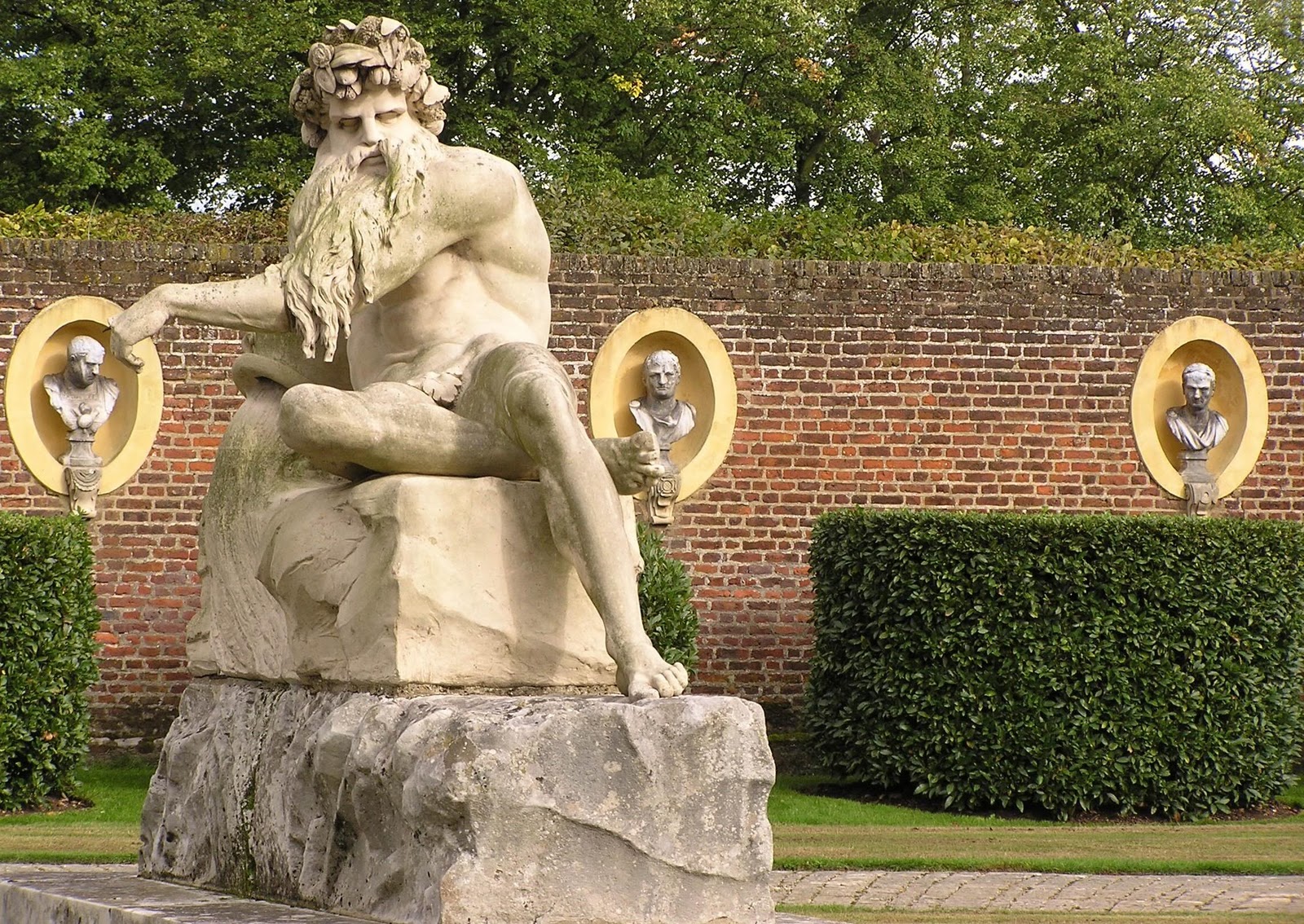
Father Thames in Coade-stone, Ham House Garden
Sculptor: John Bacon 

Eleanor Coade combined scientific and business success. She ran the Coade Stone business for twenty-five years after her husband died until it was taken over by the daughter, also named Eleanor (or Elinor in some sources). Or his business might have been unrelated to the construction material and it was the daughter who became involved in the artificial stone business and ran it.


Researching the two Eleanors is an example of a researcher’s nightmare. Some of the sources have the two women confused. But the researcher’s nightmare is the fiction writer’s delight, because after a serious attempt to run down the truth, someone writing fiction can choose the preferred version, fictionalize a bit more, and have fun with it.


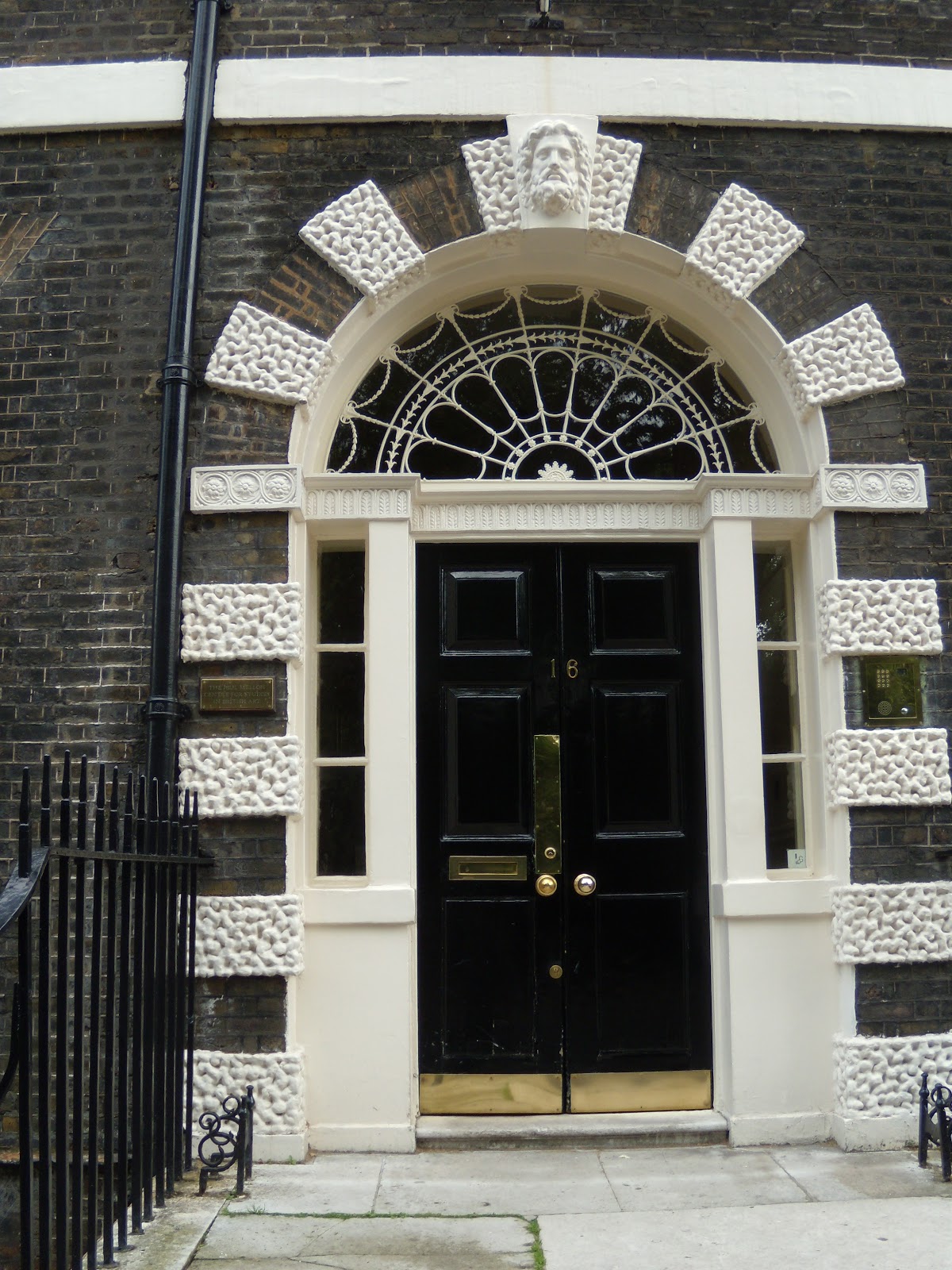
Entranceways in Coade-stone in
Bedford Square


Tomb of Captain Bligh in Coade-stone
Garden  Museum, London

Coade stone was a spectacularly durable cement-like product (actually a ceramic material that is created by subjecting it to considerable heat in a kiln) building material which still looks new even today. It was very popular during the first half of the 19th century, and used by many of the noted architects and builders of the period.

The following account is from Some Account of London by Thomas Pennant (1813) -&n
bsp;
In a street called Narrow Wallis Mrs. Coade’s manufactory of artificial stone. Her repository consists of several very large rooms filled with every ornament which can be used in architecture. The statue, the vase, the urn, the rich chimneypiece, and, in a few words, every thing which could be produced out of natural stone or marble by the most elegant chissel, is here to be obtained at an easy rate. Proof has been made of its durable quality.

A look at the inner workings of the Coades business is provided in The History of Ceramic Art in Great Britain by Llewellynn Frederick William Jewitt (1878) –

Coades.—Coade’s Artificial Stone Works, at Pedlar’s Acre, King’s Arms Stairs, Narrow Wall, Lambeth, opposite Whitehall Stairs or Ferry, were established about 1760 by Mrs. or the Misses Coade, under the name of “Coade’s Lithodipyra, Terra Cotta, or Artificial Stone Manufactory.” This material was intended to take the place of carved stone for vases, statues, and architectural enrichments. In 1769 the two Misses Coade took into partnership their cousin, a Mr. Sealy (the nephew of Mr. Coade), and by these the works ere carried on. In 1811 the firm was still “Coades & Sealy.” At the death of Mr. Sealy, who survived the Misses Coade, a Mr. Croggan, who had for a long time been a clerk or manager attached to the business, became the proprietor of the works, which he continued for many years. He then disposed of the business to Messrs. Routledge, Greenwood, & Keene, who were succeeded by Messrs. Routledge and Lucas. These gentlemen, about 1840, dissolved partnership and sold off all their moulds, models, plant, etc, by auction, by Messrs. Rushworth and Jarvis, of Saville Row. Many of these moulds and models were bought by Mr. Blashfield and by other manufacturers, among whom was Mr. H. M. Blanchard of Blackfriars Road (which see), and who, being an apprentice with the Coades, and possessing many of their models, etc. claims to be their successor.

Coade and Sealey’s Artificial Stone Factory, by Thomas Hosmer Shepherd

The Coades are said to have come from Lyme Regis, in Dorsetshire, and probably it was for the purpose of turning their native clay to good account in London that induced them to establish this manufactory. Bacon, Flaxman, Banks, Rossi, and Panzetta, the sculptors, were employed to model for these works, and many of the old mansions and public buildings in London and in the country, as well as abroad—including the bas-relief in the pediment over the western portico of Greenwich Hospital, representing the death of Nelson, designed by Benjamin West, and modelled by Bacon and Panzetta; and the rood-screen of St. George’s Chapel, Windsor; the statue of Britannia on the Nelson monument at Yarmouth, &c— were executed at these works. The works principally produced at Coades were capitals of columns, statues, vases, bassi-relievi, monuments, coats of arms, key-stones, angle rusticated blocks, balustrades, &c They were of durable quality and excellent manufacture.

Another person employed at Coades was William John Coffee, who afterwards attained some celebrity as a modeller at the Derby China Works, and as a terra cotta maker, for a short time, at Derby. I believe he was employed as a fire-man at Coades, and here, no doubt, being a clever fellow, picked up his knowledge of modelling and of mixing bodies. The following curious letter and “information,” from the originals in my own possession, give some highly interesting particulars regarding Coades’ and Sealy’s manufactory in 1790 :—

“The information got from the fire-man that work’d at the Artificial Stone Manufactory, Lambeth:—There is three kilns, the largest is 9 feet diameter and about 10 feet high, the other two are sizes under; they have only three fire-holes to each, and they are about 14 inches in the clear. They make use of no saggers, but their kilns are all muffled about two inches thick, which was always done by this fire-man. They always was four days and four nights of fireing a kilns, and the moment the goods are fire’d up he always took and stop’d the kilns intirely colse from any air whatever without lowering the fires at all. He has been use to fire intirely with coal (which are call’d Hartley coals—they are not much unlike yours at Derby). He never made use of any thermometer, but depended intirely on his own knowledge. Tne composition shrinks about half an inch in a foot in the drying, and about the same in the firing. A great deal of the ornaments are 4 inches thick when fired, and he has fired figures 9 feet high. This man has had the intire management of building the kilns, setting and firing them for many years; his wages was one guinea per week, and for every night when he fired he had 2s. 6d. for the small kiln, 3.1. . . . “

One of the four Coade stone caryatids that stand atop the
columns of the east front of Pitzhanger Manor

Click here for an interesting article about Coade stone and Mrs. Coade. Further articles can be found here and here.

On The Shelf – Discovering New Authors – Part Four

Dornford Yates, real name Cecil William Mercer, born in 1885 at Walmer, Kent, is the author of the comic Berry books. The main characters of the Berry Books are the Pleydell family who reside at ‘White Ladies’ in Hampshire, made up of Berry Pleydell, Daphne Pleydell, his wife (and cousin), Boy Pleydell (Daphne’s brother and narrator of the books), Jonathan (Jonah) Mansel (cousin to all the above), Jill Mansel (Jonah’s sister) and with occasional appearances by Boy’s American fiancée (and later wife), Adèle. This is a group of privileged and pretty young things who excell at verbal barbs, comedic situations and much good humoured malice. Berry refers to Boy as “my brother-in-law, carefully kept from me before my marriage and by me ever since.” 

The stories are anecdotal, and involve some sort of privileged problem – their Rolls-Royce is stolen, a hat is blown away in the wind, an offensive neighbour is rude about Nobby, their dog. The resolution often involves outrageous coincidence. No one works, although the male members of the family occasionally do “go up to Town” on some vague business related matters which are never fully explained, and pithy conversations abounds.

Created by author George MacDonald Fraser, Sir Harry Paget Flashman (VC, KCB and KCIE) (1822–1915) is the fictional hero of the Flashman series, first begun in 1969. As Wikipedia tells us:  “Presented within the frame of the supposedly discovered historical Flashman Papers, the book begins with an explanatory note saying that the Flashman Papers were discovered in 1965 during a sale of household furniture  Leicestershire. Flashman is a well known Victorian military hero (in Fraser’s fictional England). The papers were supposedly written between 1900 and 1905. The subsequent publishing of these papers, of which Flashman is the first, contrasts the previously believed exploits of a (fictional) hero with his own more scandalous account, which shows the life of a cowardly bully. Flashman begins with his own account of expulsion from Rugby and ends with his fame as the “Hector of Afghanistan”, detailing his life from 1839 to 1842 and his travels. It also contains a number of notes by the author, in the guise of a fictional editor, giving additional historical information on the events described. The history in these books is quite accurate; most of the people Flashman meets are real people.” Flashman is in turn charming, brave, cowardly, a liar and a legend in his own mind, but you can’t help but be amused by him.

I’ve never cared for Alexander McCall Smith’s Number One Ladies Detective Agency books, but I love the 44 Scotland Street and Corduroy Mansions series.  The Corduroy Mansions books are set in a four-storey mansion that’s been divided into flats in London’s Pimlico section.  The flats are occupied by an ensemble of cheerfully eccentric characters who are all too human and with whom the reader can readily relate. Smith handles the multi-faceted plots deftly and gives us readers to both love and loathe. Plot devices come in the form of situations with which most can identify. The third floor tenant, William French, a widower and wine merchant, is trying to get rid of his free-loading son Eddie, a young man who simply cannot take a hint. Playing on Eddie’s dread of dogs, William gets one, in the form of Freddie de la Hay, who manages to dislodge Eddie, but who also sets the stage for further problems for William. 
Set in Edinburgh, the 44 Scotland Street series focuses on yet another set of residents. As Publisher’s Weekly said, the book, “drolly chronicles the lives of residents in an Edinburgh boarding house— it’s episodic, amusing and peopled with characters both endearing and benignly problematic. Pat, 21, is on her second “gap year” (her first yearlong break from her studies was such a flop she refuses to discuss it), employed at a minor art gallery and newly settled at the eponymous address, where she admires vain flatmate Bruce and befriends neighbor Domenica. A low-level mystery develops about a possibly valuable painting that Pat discovers, proceeds to lose and then finds in the unlikely possession of Ian Rankin, whose bestselling mysteries celebrate the dark side of Edinburgh just as Smith’s explore the (mostly) sunny side. The possibility of romance, the ongoing ups and downs of the large, well-drawn cast of characters, the intricate plot and the way Smith nimbly jumps from situation to situation and POV to POVworks beautifully in book form. No doubt Smith’s fans will clamor for more about 44 Scotland Street, and given the author’s celebrated productivity, he’ll probably give them what they want.”
Really, the only problem with these books is deciding which dog is more delicious, Cyril with the gold tooth (44 Scotland Street) or Freddie de la Hay (Corduroy Mansions). You can visit the author’s website here.
Part Five Coming Soon!