The Queen's Diamond Jubilee in 2012

Great Britain and the world will celebrate Queen Elizabeth’s sixty-year reign in 2012.  We can’t wait!

The logo was chosen from 35,000 entries in a contest sponsored by the BBC.  Katherine Dewar, of Chester, age ten, is the talented artist.

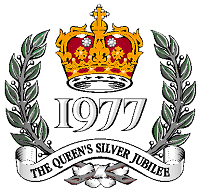
The Queen’s Silver Jubilee was celebrated in 1977.

 The Golden Jubilee, marking Queen Elizabeth’s fifty years on the throne, was celebrated in 2002.  One of the fun events was a grand concert in the Garden of Buckingham Palace — broadcast all over the world. I imagine we will see some of the same kind of spectacles next summer around the official weekend on June, 2012.

Queen Victoria celebrated her Diamond Jubilee in 1897. Above is her official picture from the celebration.  She became Queen of England on the death of her uncle, William IV, in 1837, when she was age 18.  She died in January, 1901, after a reign of 63 years and 7 months, longest ever for an English monarch. 

Victoria’s 1897 Diamond Jubilee was marked by nationwide celebrations, a gathering of the world’s reigning monarchs and local festivities, setting the precedents for 2012.

Above is a commemorative plate, just one of many souvenirs available.  For the very finest quality items, I suggest contacting the Royal collection gift shop here.  Think of how valuable it might become, though a quick google search for commemoratives from Victoria’s Jubilee turns up several examples for less than $200, as below.

If you aren’t in a collecting mood so soon after Christmas, you could spend hours surfing the sites devoted to the 2012 jubilee. 

Here is the official site, soon to be updated.  Above is the jubilee barge, to be used on the Thames during the official weekend of celebrations, beginning June 3, 2012. For more info on the barge, go to the BBC News.


Longer runs will be held for the exhibitions at royal residences.  More Information is here.  Special exhibitions will be on view at Windsor Castle, Buckingham Palace and the Palace of Holyroodhouse, as well as special showings of the Royal Collections’s drawings by Leonardo da Vinci in England, Scotland and Northern Ireland. Below, Head of Leda, from the Royal Collection, by Leonardo da Vinci, c. 1505-06, probably acquired by Charles II.

Lest we forget what the Diamond Jubilee is celebrating, here are a few pictures of the Queen during her reign.

above, 1952; below, 1977.

Above, Andy Warhol’s take on her Majesty.  Below, Elizabeth II’s “Golden Jubilee”  in 2002.

Here are some more recent photos of the the Queen in 2011:

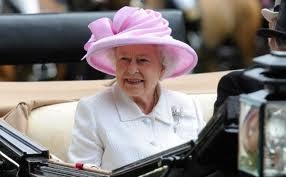
My choice for the prettiest hat ever is the pink one, worn last June at Ascot.  May she reign on (and keep the hatmakers happy)!! Stay tuned for more Diamond Jubilee stories.

Boxing Day

From  The book of Christmas: descriptive of the customs, ceremonies, traditions … By Thomas Kibble Hervey (1845)
This day—which, in our calendar, is still dedicated to the first Christian martyr, St. Stephen (for John the Baptist perished in the same cause, before the consummation of the old law, and the full introduction of the Christian dispensation),—is more popularly known by the title of Boxing-day; and its importance, amongst the Christmas festivities, is derived from the practice whence that title comes.
We have already mentioned that the custom of bestowing gifts, at seasons of joyous commemoration, has been a form of thankfulness at most periods;—and that it may have been directly borrowed, by the Christian worshippers, from the Polytheists of Rome, along with those other modes of celebration which descended to the Christmas festival, from that source,—introduced, however, amongst our own observances, under scripture sanctions, drawn both from the Old and New Testaments. The particular form of that practice, whose donations are known by the title of Christmas-boxes (and which appear to differ from New-year’s gifts in this,—that the former, passing from the rich to the poor, and from the master to his dependants, are not reciprocal in their distribution,—whereas the latter are those gifts, for the mutual expression of good-will and congratulation, which are exchanged between friends and acquaintances), was, perhaps, originally one of the observances of Christmas-day, and made a portion of its charities. The multiplied business of that festival, however, probably caused it to be postponed till the day following,—and thereby placed the Christmas-boxes under the patronage of St. Stephen.
The title itself has been derived, by some, from the box which was kept on board of every vessel that sailed upon a distant voyage, for the reception of donations to the priest; who, in return, was expected to offer masses for the safety of the expedition, to the particular saint having charge of the ship—and, above all, of the box. This box was not to be opened till the return of the vessel; and we can conceive that, in cases where the mariners had had a perilous time of it, this casket would be found to enclose a tolerable offering. Probably the state of the box might be as good an evidence as the log-book, of the character of the voyage which had been achieved. The mass was, at that time, called Christmass;—and the boxes kept to pay for it were, of course, called Christmass-boxes. The poor, amongst those who had an interest in the fate of these ships,—or of those who sailed in them,—were in the habit of begging money from the rich, that they might contribute to the mass boxes; and hence the title which has descended to our day:—giving to the anniversary of St. Stephen’s martyrdom the title of Christmas-boxing day— and, by corruption, its present popular one of Boxing-day. A relic of these ancient boxes yet exists, in the earthen or wooden box, with a slit in it, which still bears the same name; and is carried, by servants and children, for the purpose of gathering money, at this season—being broken only when the period of collection is supposed to be over.
Most of our readers know that it was the practice, not many years ago (and in some places is so still), for families to keep lists of the servants of tradesmen and others, who were considered to have a claim upon them for a Christmas-box at this time. The practice,—besides opening a door to great extortion,—is one, in every way, of considerable annoyance,—and is on the decline. There is, however,—as they who are exposed to it know,—some danger in setting it at defiance, where it is yet in force. One of the most amusing circumstances, arising out of this determination to evade the annoyances of Boxing-day, is related by Sandys. A person in trade had imprudently given directions that he should be denied, on this day, to all applicants for money; and amongst those who presented themselves at his door, on this errand, was, unfortunately, a rather importunate creditor. In the height of his indignation, at being somewhat uncourteously repulsed, he immediately consulted his lawyer; and, having done that, we need scarcely relate the catastrophe. It follows, as a matter of course. A docket was struck against the unsuspecting victim of Christmas-boxophobia.

Boxing-day, however, is still a great day, in London. Upon this anniversary, every street resounds with the clang of hall-door knockers. Rap follows rap, in rapid succession,—the harsh and discordant tones of iron mingling with those of rich and sonorous brass, and giving a degenerate imitation of the brazen clangor of the trumpet which formed the summons to the gate, in days of old,—and which, together with the martial music of the drum, appears to have been adopted, at a later period, by the Christmasboxers, on St. Stephen’s-day. Pepys, in his diary (1668), records his having been “called up by drums and trumpets;—these things and boxes,” he adds, “have cost me much money, this Christmas, and will do more.” Which passage seems to have been in the memory of our facetious publisher, when he made the following entry in his journal of last year,—from whence we have taken the liberty of transcribing it.—”Called out,” says Spooner (1834), “by the parish beadle, dustmen, and charity-boys. The postman, street-sweepers, chimney-sweepers, lamp-lighters, and waits, will all be sure to wait upon me. These fellows have cost me much money this Christmas,—and will do more, the next.”
There is an amusing account, given by a writer of the querulous class, of a boxing-day, in London, a century ago. “By the time I was up,” says he, “my servants could do nothing but run to the door. Inquiring the meaning, I was answered, the people were come for their Christmas-box; this was logic to me; but I found at last that, because I had laid out a great deal of ready-money with my brewer, baker, and other tradesmen, they kindly thought it my duty to present their servants with some money, for the favor of having their goods. This provoked me a little; but being told it was the ‘custom,’ I complied. These were followed by the watch, beadles, dustmen, and an innumerable tribe; but what vexed me the most was the clerk, who has an extraordinary place, and makes as good an appearance as most tradesmen in the parish; to see him come a-boxing, alias a-begging, I thought was intolerable: however I found it was ‘the cus.torn too,’ so I gave him half-a-crown; as I was likewise obliged to do the bellman, for breaking my rest for many nights together.”

The manner in which the beadle approaches his “good masters and mistresses,” for a Christmas-box,—particularly in the villages near the British metropolis,—is, as we have before said, by the presentation of a copy of printed verses, ornamented with wood engravings. These broadsides are usually termed “Bellman’s verses;” and we quite agree with Mr. Leigh Hunt in his opinion, that “good bellman’s verses will not do at all. There have been,” he remarks, “some such things of late ‘ most tolerable and not to be endured.’ We have seen them witty,—which is a great mistake. Warton and Cowper unthinkingly set the way.” “The very absurdity of the bellman’s verses is only pleasant, nay, only bearable, when we suppose them written by some actual doggrel-poet, in good faith. Mere mediocrity hardly allows us to give our Christmas-box, or to believe it now-a-days in earnest; and the smartness of your cleverest worldly-wise men is felt to be wholly out of place. No, no! give us the good old decrepit bellman’s verses, hobbling as their bringer, and taking themselves for something respectable, like his cocked-hat,—or give us none at all.”
Upon the bellman’s verses which were last year circulated by the beadles of Putney, Chiswick, and other parishes on the west side of London, it was recorded, that they were “first printed in the year 1735;”—and our curiosity induced us to inquire of the printer the number annually consumed. “We used, sir,” said he, “not many years ago, to print ten thousand copies, and even more; but now I suppose we don’t print above three thousand.” Whether the trade of this particular dealer in bellman’s verses has passed into other hands,—or whether the encouragement given to the circulation of these broadsides has declined,—the statement of an individual will not of course enable us to determine. But we are inclined to think that,—like other old Christmas customs, —the popularity of bellman’s verses is passing away; and that, before many years have elapsed, penny magazines and unstamped newspapers will have completely superseded these relics of the rude, but sincere, piety of our ancestors.
The claims of dustmen to be remembered, upon ” Boxing day,” were formerly urged, without literary pretensions; but now, “the march of intellect” has rendered it necessary for them to issue their addresses in print. One of these, which lies before us, represents that “the United Association of Dustmen and Scavengers, of the Parish of , have the honor to pay their humble duty and respects to the good [Master or Mistress] of this house, and to solicit a Christmas mark of approbation of their unwearied exertions, which they flatter themselves conduce so eminently to the comfort and salubrity of the greatest metropolitan city of civilized Europe.” Here, however, is another,—in which the spirit of St. Stephen’s day is embittered by the rivalries of business; and the harmony of those two respectable bodies, the Scavengers and Dustmen, appears to have been disturbed. The dustmen, it will be seen, repudiate the scavengers,—and appeal to St. Stephen, on a separate interest.
“TO THE WORTHY INHABITANTS OF THE SOUTHAMPTON ESTATE.
“Ladies and Gentlemen,—At this season, when you are pleased to give to laboring men, employed in collecting your dust, a donation, called Christmas-box, advantage of which is often taken by persons assuming the name of Dustmen, obtaining, under false pretences, your bounty, we humbly submit to your consideration, to prevent such imposition, to bestow no gift on any not producing a brass figure of the following description—A Scotch Fifer, french horn, &c., between his legs.—James Dee and Jerry Cane.— Southampton Paving Act—on the bell.—Contractor—Thomas Salisbury. “No connexion with scavengers—Please not to return this bill to any one.”
The principal Wait, also, leaves a notice of a more imposing description,—stating a regular appointment to the office, by warrant, and admission,—with all the ancient forms of the City and Liberty of Westminster; and bears a silver-badge and chain, with the arms of that city. We cannot dismiss the various modes of collecting Christmasboxes, without a few words upon the pieces of writing carried about by parish boys; and which, once, presented the only evidence that the schoolmaster was abroad. It appears formerly tohave been the practice, at this season, to hang up in our churches, the work of the most skilful penman in the parish, after it had been generally exhibited; the subject of which was the life of some saint, or other religious legend. Pepys thus mentions the custom :—” 26 December, 1665. Saw some fine writing work and flourishing of Mr. Hore, with one that I knew long ago, an acquaintance of Mr. Tomson’s at Westminster, that is this man’s clerk. It is the story of the several Archbishops of Canterbury, engrossed on vellum, to hang up in Canterbury cathedral, in tables, in lieu of the old ones, which are almost worn out.”
To this usage—which was no doubt of monkish origin,—we are inclined to refer the specimens of caligraphy, upon gaudily ornamented sheets of paper, brought round, on St. Stephen’s-day, by parish boys and charity school children, and displayed for admiration and reward. The walls of school-rooms, and of the houses of the children’s parents, are afterwards decorated with these “Christmas pieces,”—in the same manner as were anciently the walls of churches.
The Wellington Connection: Christmas

Kristine here, sharing my ornaments with you . . .
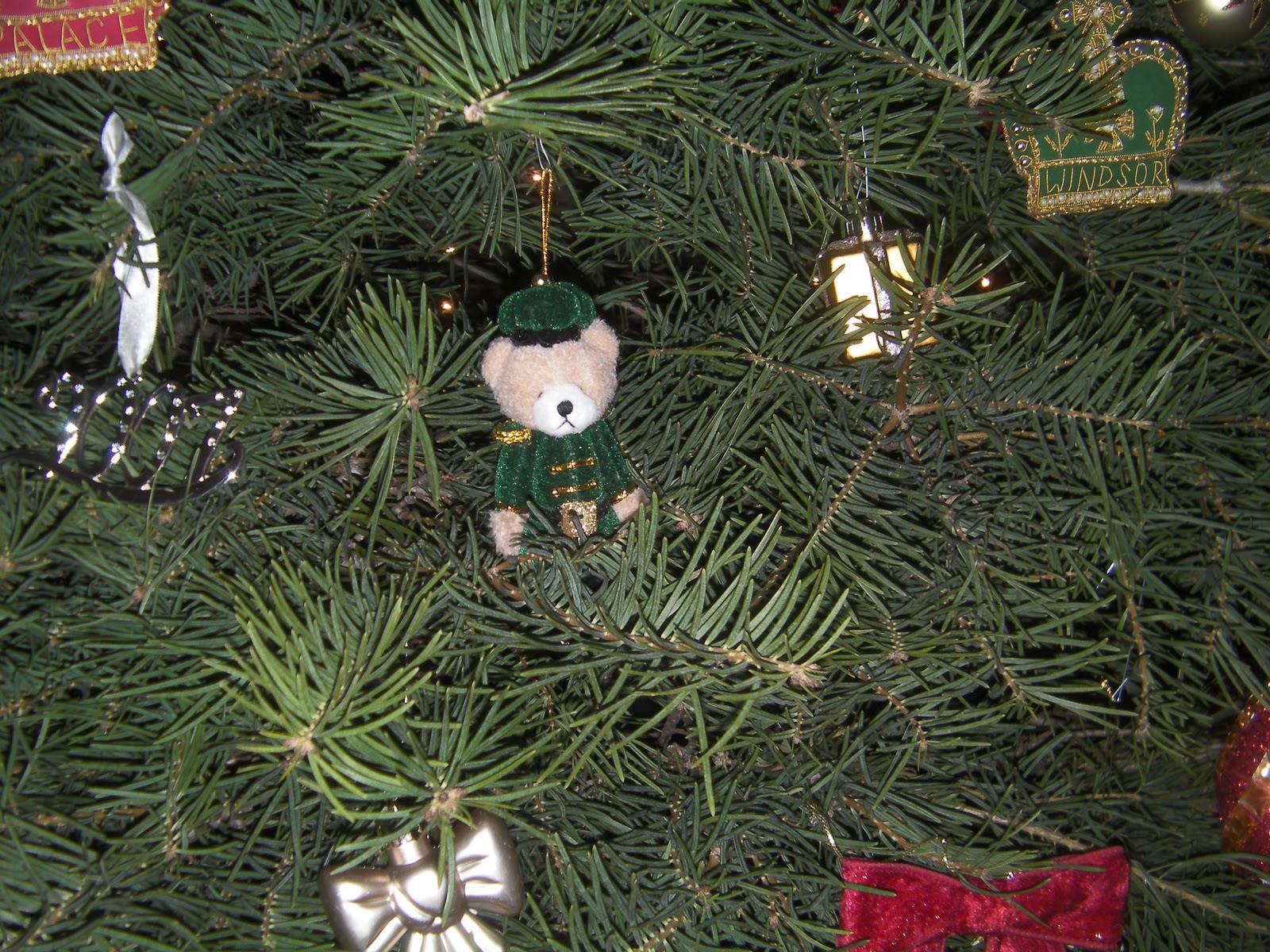
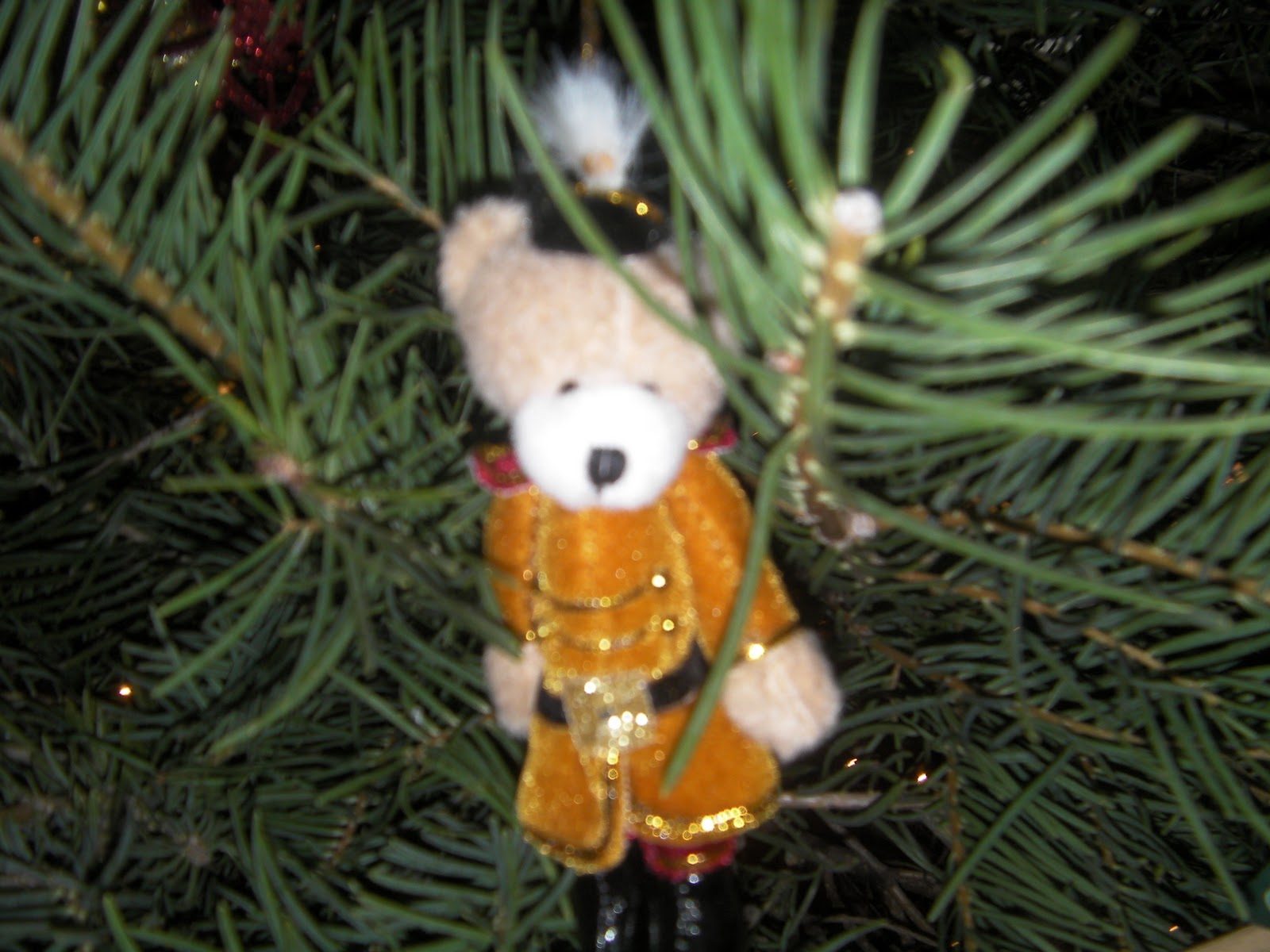
We have lots of bears . . . .
Some birds, calling and otherwise . . .
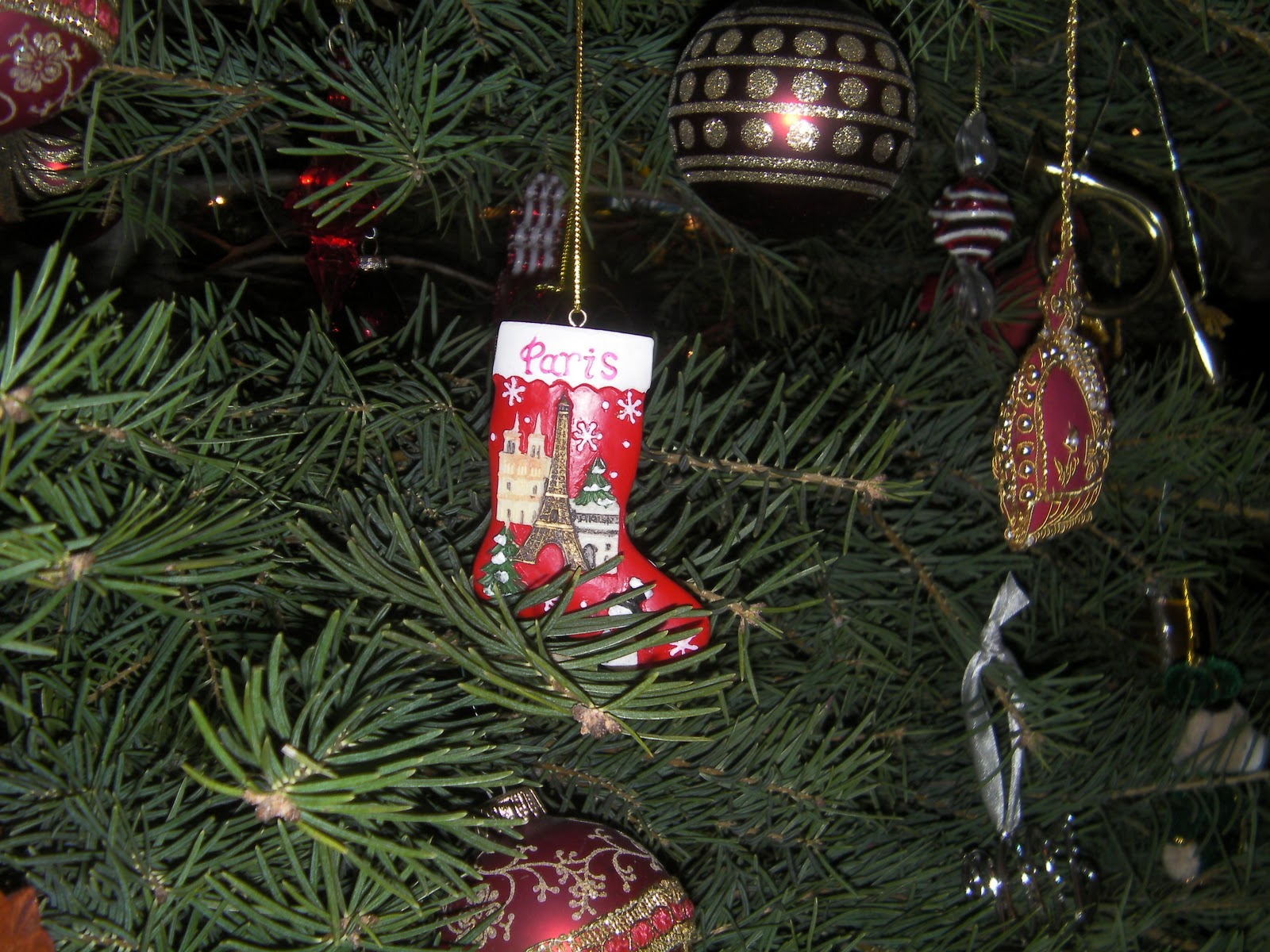
a few souveniers of our travels
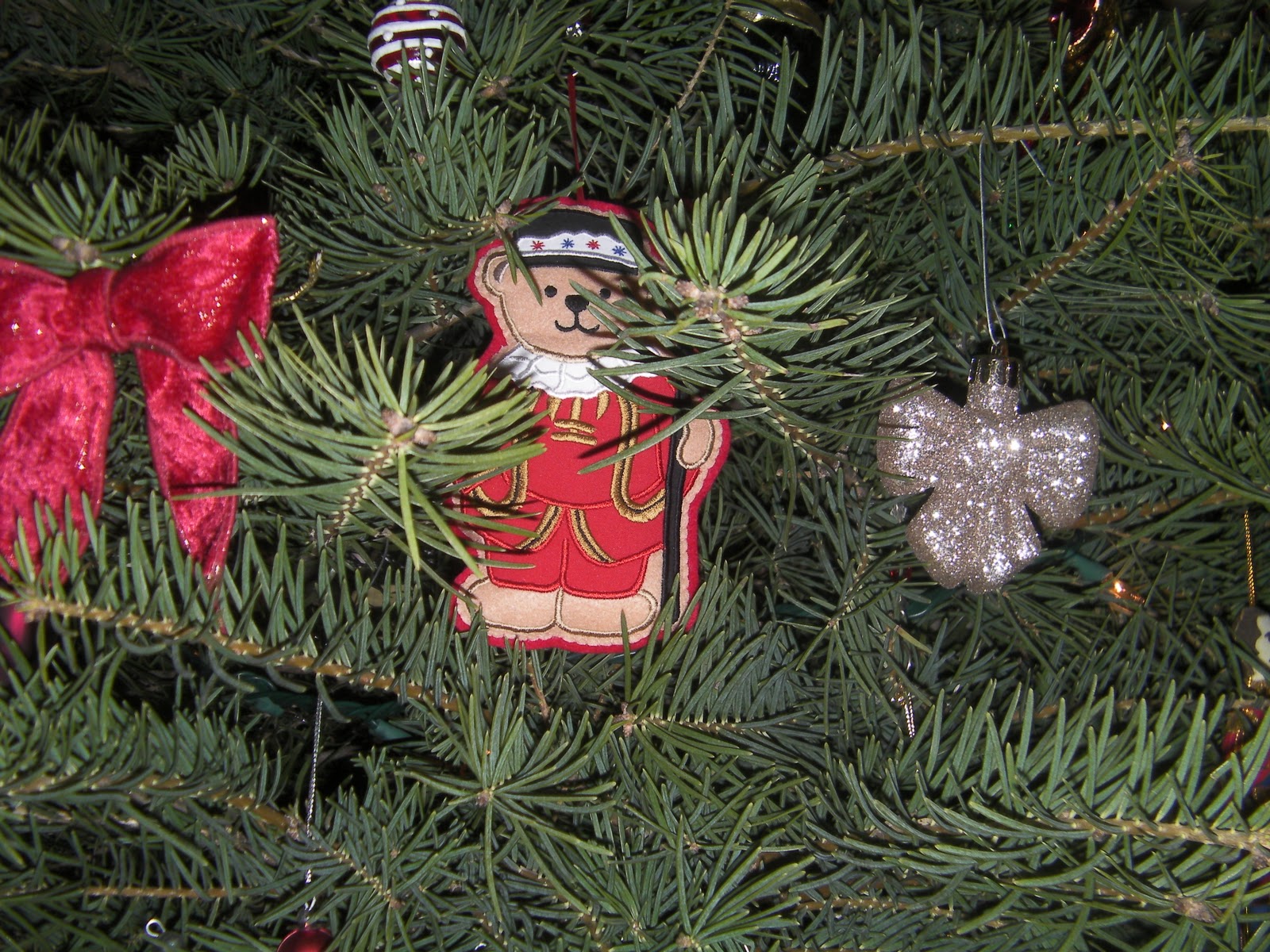
But the majority are British themed baubles, including several Big Bens
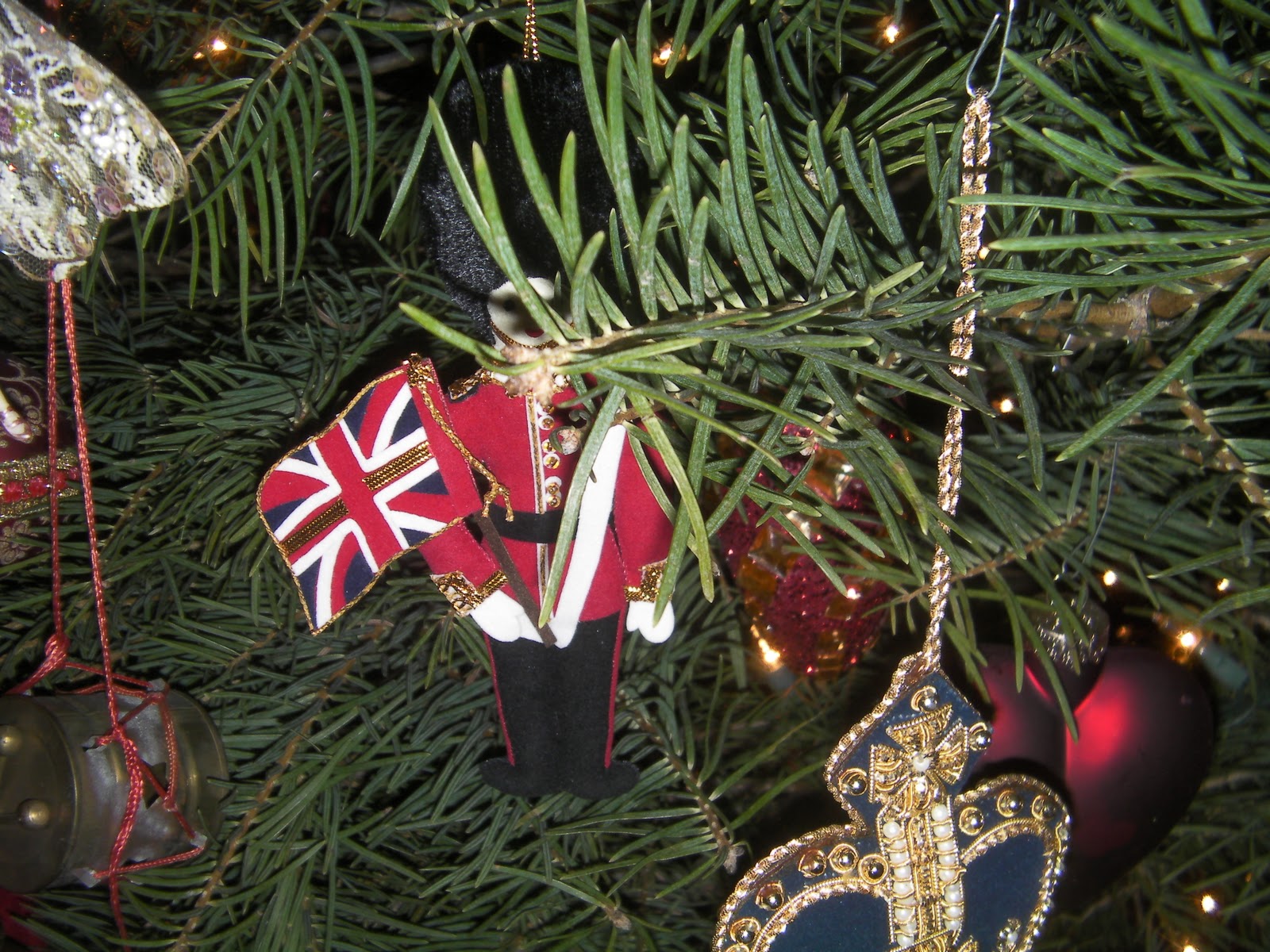
several soldiers . . . .
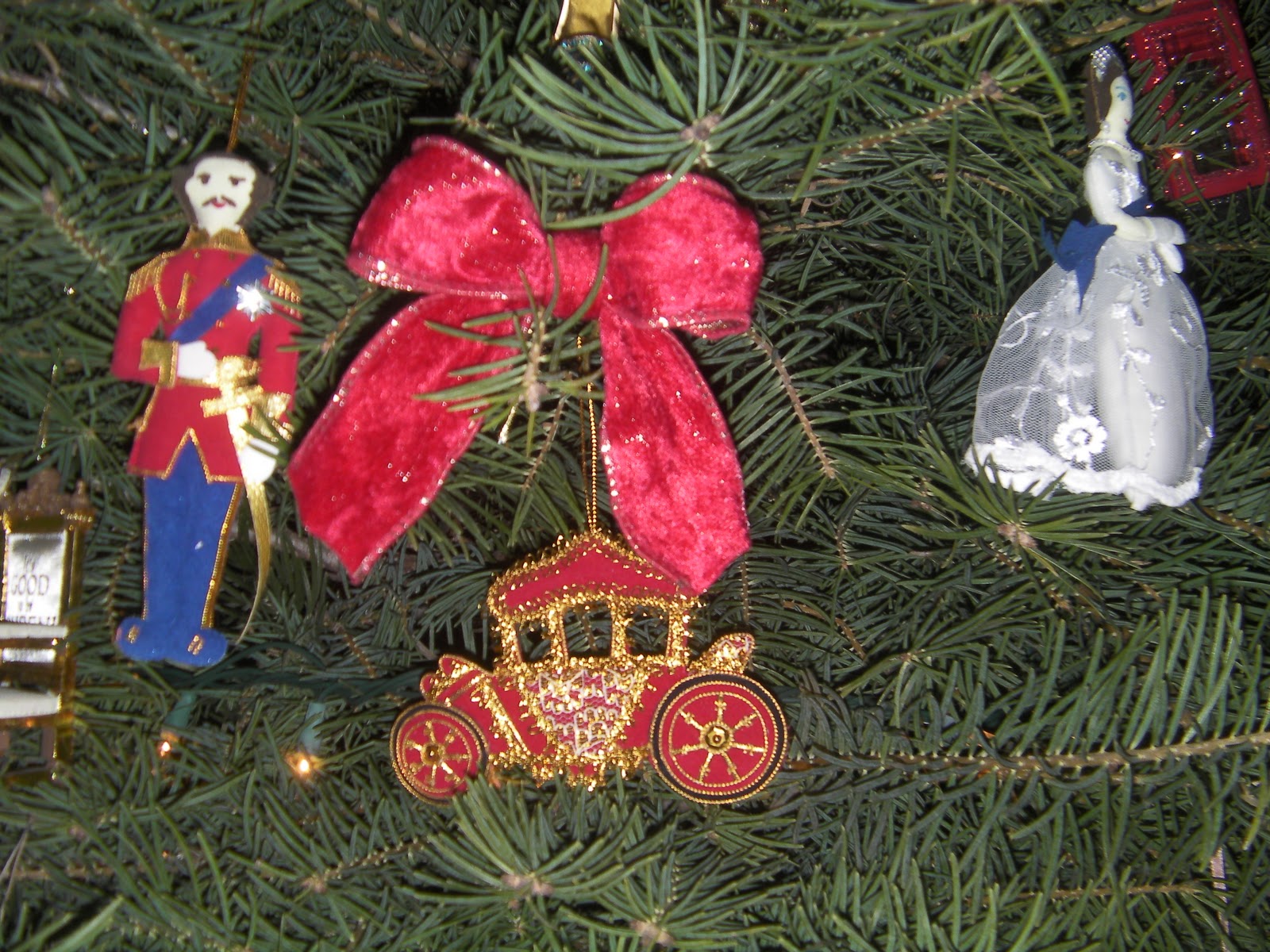
a few Royal personages
some London icons . . . . .
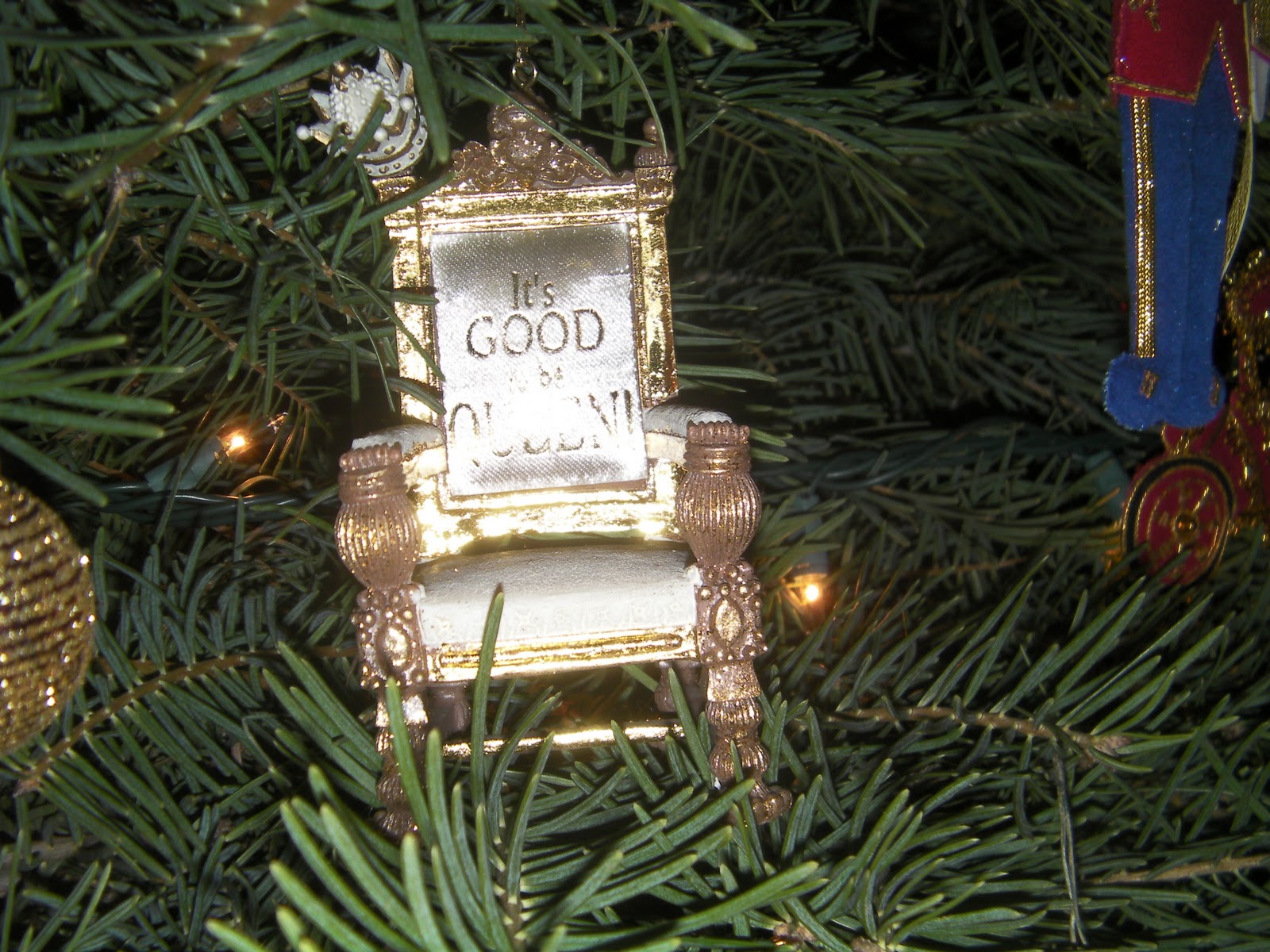
and some thrones for good measure . . . .
So where, you rightly ask, is the Wellington Connection? Did you think we’d forget the Duke at Christmas!?
Not a bit of it! The Duke’s halls have been decked, and lit, as well.
Merry Christmas!


Raising a Toast to Christmas

The grocery store Trader Joe’s recomends egg nog for Christmas in its Holiday Guide 2011. We all love the rich mix, whether or not it is laced with whiskey or rum. The Guide notes that there are some things among our food and drink traditions that are closely associated with the holidays every year.   One version of eggnog’s origin is from the English area of East Anglia where a noggin is a small mug.  There are other explanations, but this one is probably as good as any.  Yum.

The picture above accompanies Rachel Ray’s recipe(s) for EggNog. Try one of them here.  Ray suggests rum to add a touch of cheer to the traditional egg, cream and nutmeg ingredients.

I remember my parrents serving Tom and Jerrys many years ago at the holidays.  I thought they meant the cat and mouse cartoon characters, but the drink was invented by Pierce Egan (1772-1849), creator of the regency era ne-er-do-wells Tom and Jerry, whose Life in London ran to many editions in the 19th century.  The cat and mouse were named after them too.  Egan was a journalist and sportswriter, and his silly characters had many adventures.  Above, they manage to enter Almack’s, where they probably would not find any alcohol, unless it was smuggled in by a regency rake. Though there are many variations, a Tom and Jerry resembles eggnog.

For a recipe, click this link.
As long as I was looking into Christmas cheer, I looked up wassail.  I’ve sung about going wassailing for years in the well-known carol — and never stopped to wonder what in the world it meant.
Here is an recipe based on fruit juices and without alcohol.

Appropriately, there are many recipes for wassail or wassail punch, though all seem to have a apple  cider base.  According to several sources, wassailing was a group activity involving singing and saluting the health of the apple trees to encourage a good harvest in the future.  Wouldn’t this just be a good excuse for a party?  Wassailing could be done at harvest time in the fall, particularly in the south of England where the apple orchards prevail, and at Christmas time, though the roots of the custom seem to go back to pre-Christian days in England. For ale-based and wine-laced recipes and more, click here.

  Another popular warm drink for the holidays is the Hot Toddy, usually made with a lemon-juice base. As in all of the above, alcohol is optional. I note than many examples carry a cinnamon stick as a stir.  To repeat, yum.  Some sources say the Scottish version is usually made with whisky and the English version with strong black tea. For recipes, click here.

 There are many more Christmas drinks, both traditional and cutting-edge.  Think hot buttered rum, mulled wine and/or cider, hot chocolate, or Irish Coffee.  Or try Bishop, a warm wine-based drink mixed by Scrooge in Charles Dickens’ Christmas Carol. 
So here’s to you, a virtual cup of good cheer for the holidays!!

Sherlock Holmes: A Game of Shadows

In this sequel, Sherlock Holmes and his sidekick Dr. Watson join forces to outwit and bring down their fiercest adversary, Professor Moriarty, played by Jared Harris, below.

Stephen Fry is Mycroft Holmes, elder brother of Sherlock.

And then, of course, there are Robert Downey, Jr. and Jude Law –

This cast alone should be more than enough encouragement to see the film, but should you be the odd man out and need even more incentive, Wikipedia offers this plot synopsis: “Sherlock Holmes (Robert Downey, Jr.) has always been the smartest man in the room…until now. There is a new criminal mastermind at large—Professor James Moriarty (Jared Harris)—and not only is he Holmes’ intellectual equal, but his capacity for evil, coupled with a complete lack of conscience, may actually give him an advantage over the renowned detective. When the Crown Prince of Austria is found dead, the evidence, as construed by Inspector Lestrade (Eddie Marsan), points to suicide. But Sherlock Holmes deduces that the prince has been the victim of murder—a murder that is only one piece of a larger and much more portentous puzzle, designed by one Professor Moriarty. Mixing business with pleasure, Holmes tracks the clues to an underground gentlemen’s club, where he and his brother, Mycroft Holmes (Stephen Fry) are toasting Dr. Watson (Jude Law) on his last night of bachelorhood. It is there that Holmes encounters Sim (Noomi Rapace), a Gypsy fortune teller, who sees more than she is telling and whose unwitting involvement in the prince’s murder makes her the killer’s next target. Holmes barely manages to save her life and, in return, she reluctantly agrees to help him. The investigation becomes ever more dangerous as it leads Holmes, Watson and Sim across the continent, from England to France to Germany and finally to Switzerland. But the cunning Moriarty is always one step ahead as he spins a web of death and destruction—all part of a greater plan that, if he succeeds, will change the course of history.” Yowza!

Watch the trailer here.