Dr. Syntax Part Three

Poem by William Combe; illustrated by Thomas Rowlandson; published in 1812 by Rudolph Ackermann, London

We left Dr. Syntax in a dire situation, tied to a tree, robbed of his money and his horse Grizzle;

Dr. Syntax in Search of the Picturesque 
excepts from Canto III

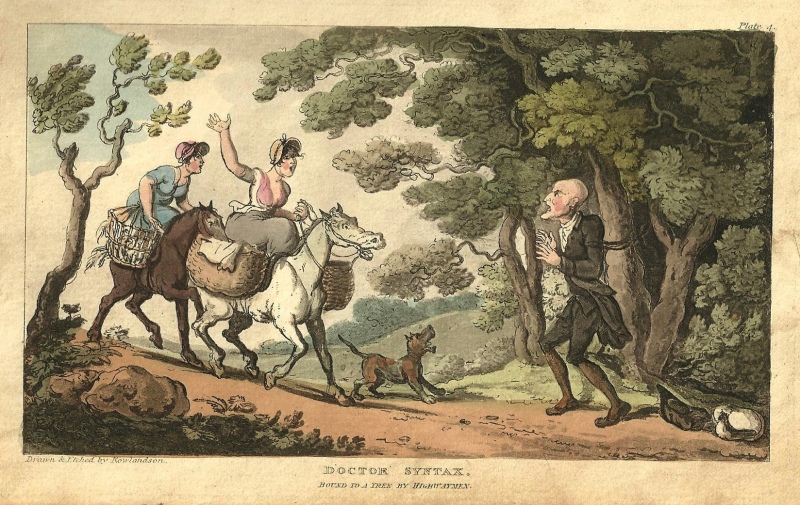
Dr. Syntax bound to a Tree by Highwaymen

By the road side, within the wood,
In this sad state poor Syntax stood;
His bosom heav’d with many a sigh,
And the tears stood in either eye.
What could he do?-—he durst not bawl;
His noise the robbers might recall;
The villains might again surround him.
And hang him up where they had bound him. …

(After bemoaning his fate and wishing himself back at home…)

It now appear’d an angel’s shape.
That promis’d him a quick escape :
Nor did La Mancha’s val’rous Knight
Feel greater pleasure at the sight.
When, overwhelm’d with love and awe.
His Dulcinea first he saw :
For on two trotting palfreys came.
And each one bore a comely dame :

They started as his form.they view ;
The horses also started too :
The dog with insult seem’d to treat him,
And look’d as if he long’d to eat him.
In piteous tones he humbly pray’d
They’d turn aside, and give him aid ;
When each leap’d quickly from her steed,
To join in charitable deed.
They drew their knives to cut the noose.
And let the mounful pris’ner loose ;
With kindest words his fate bewail,
While grateful Syntax tells his tale.
The rustic matrons sooth his grief,
Nor offer, but afford relief; …

(Eventually, they free him, and he is pleased to remember that much of his money was sewn into his clothes, so he is not entirely without funds.)

“… And, thanks to Spousy, ev’ry note
Was well sew’d up within my coat.
But where is Grizzle ? — Never mind her ;
I’ll have her cried, and soon shall find her.”

Thus he pursued the winding way.
Big with the evils of the day
Though the good Doctor kept in view
The favour of its blessings too.
Nor had he pac’d it half an hour,
Before he saw a parish tow’r.
And soon, with sore fatigue opprest,
An inn receiv’d him as its guest.
But still his mind, with anxious care,
Ponder’d upon his wand’ring mare;
He, therefore, sent the bellman round.
To see if Grizzle might be found. …

(Meanwhile, Grizzle is having her own adventures, but they are eventually reunited…)

…Lo ! Grizzle’s alter’d form appears.
With half its tail, and half its ears!
“Is there no law?” the Doctor cries: —
” Plenty,” a lawyer straight replies:
” Employ me, and those thieves shall swing
On gallows-tree, in hempen-string: …

(More conversation follows, but nothing is decided…)

…So to the ostler’s faithfull care
He gave his mutilated mare:
And while poor Grizzle, free from danger,
Cropp’d the full rack and clean’d the manger,
Syntax, to ease his aching head,
Smok’d out his pipe, and went to bed.

End of Canto III — story to be continued

King’s Bench Prison, from Microcosm of London,
by Thomas Rowlandson and Augustus Pugin,
published by Rudolph Ackermann, 1809

As we told you in a previous post, Dr. Syntax in Search of the Picturesque — and many other books and articles — was written by William Combe, who lodged in the King’s Bench Prison for many years.  This prison, for debtors, lodged many other famous personages at various times.  The famoius engineer Isambard Kingdom Brunel spent some time there, as did Emma, Lady Hamilton.  Mary Robinson, an actress and poet, sometimes known as Perdita, and famed actor John Wilkes also were at King’s Bench.  Dickens set parts of several of his most famous novels in King’s Bench: David Copperfield, Nicholas Nickleby and Little Dorrit.

Offerings From Hatchard's Book Shop

Many moons ago, on one of my first trips to England, I traveled over with an exceedingly large suitcase and an empty duffle bag. At the end of the trip, during which I had visited bookshops throughout the UK, I packed all of my personal belongings into the duffle and completely filled the suitcase with my antiquarian book purchases. At customs, the officer asked me to put my suitcase on the table so that he could inspect it. The conversation went something like this:
Officer – “Place your luggage on the table for inspection, please.”
Me – “I’m sorry, but I can’t do that.”
Officer – “Are you refusing to allow me to inspect your bag?”
Me – “Not at all. It’s not that I won’t allow you to inspect my bag, but rather that I’m physically unable to lift the bag onto the table. It’s too heavy.”
Officer – “What is in the bag, Madam?”
Me – “Books.”
Officer – “And what else?”
Me – “Nothing. Just books.”
Officer – “Do you mean to tell me that you spent two weeks in England and all you have to declare are books? That’s all you purchased during the course of your visit?”

Me – “Yes. Just books.”
The Officer’s skeptical look endured until he’d lifted the bag onto the table and opened it. Books. And nothing but. Books – upon which there is no duty tax imposed. Now keep in mind that these were antiquarian books, each lovingly wrapped and cushioned against the journey home. Determined to catch me out, the Officer proceeded to unwrap the books and rifle through them individually. Perhaps he thought I’d secreted a Buckingham Palace tea towel between their pages. Or the crown jewels. In the end, he had to be satisfied that a female American tourist could be perfectly happy with books as the only souvenier of her trip to England.
Whilst my library is now more or less complete and I no longer buy books like a drunken sailor on leave when I’m in the UK, I do still make a point of stopping into Hatchard’s book shop on Piccadilly whenever I’m over. In preparation for my visit in December, I went onto the Hatchard’s website and perused the current catalogue, from which I offer you the following intriguing selections.
All books are available through Hatchard’s online catalogue

COUNTING ONE’S BLESSINGS: THE SELECTED LETTERS OF QUEEN ELIZABETH THE QUEEN MOTHER by WILLIAM SHAWCROSS (EDITOR)

One of the great revelations of William Shawcross’s official biography was the Queen Mother’s private correspondence. Indeed, The Sunday Times described her letters as ‘wonderful …brimful of liveliness and irreverence, steeliness and sweetness.’ Now, drawing on the vast wealth of material in the Royal Archives, at Glamis Castle, and elsewhere, Shawcross has put together a selection of those letters. A prolific correspondent from her earliest childhood to the very end of her life, her letters offer readers a vivid insight into the person behind the public face. Full of wit, hilarity, acute observation and a deeply held sense of duty, Queen Elizabeth’s letters constitute a chronicle both of her long life and of the twentieth century. £ 25 Hardback

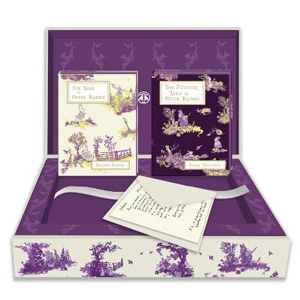
THE FURTHER TALE OF PETER RABBIT SPECIAL EDITION BOX SET by EMMA THOMPSON

Celebrate Peter Rabbit’s 110th anniversary with this stunning special edition box set. A sumptuous gift box containing two Peter Rabbit adventures – The Original Tale of Peter Rabbit written by Beatrix Potter is accompanied by The Further Tale, written by Oscar-winning actress Emma Thompson. Each book is cloth-bound, in a fabric specially commissioned by Timorous Beasties – a cutting edge design company, who have added their contemporary twist to these classic characters. The box also includes a letter signed by Emma Thompson. The Further Tale describes what happens when Peter Rabbit stows away in a picnic basket and, before he knows it, finds himself transported to Scotland on the back of a cart! This plucky little rabbit soon finds himself in the middle of a great big, brand new adventure, a long way from home, family and friends. Emma Thompson, Oscar-winning actress and screen writer, has a talent for creating engaging narratives with a dry humour similar to Potter’s own and is the perfect choice of author for this new Peter Rabbit tale which will be published 110 years after the original. Emma said, “I’ve always loved Beatrix Potter, as a child and then as a mother and all the years in-between as well. When Mr Rabbit invited me to write a further tale, I was more honoured than I can say. I hope I don’t let him or his extraordinary creator down.” This special edition is limited to just 1000 copies. £ 110 Hardback 9780723268697  

LONDON: HIDDEN INTERIORS by PHILIP DAVIES

180 of London’s best conserved and least known interiors are revealed in 1500 spectacular photographs. Following his successes with revealing London’s vanished architectural heritage in Lost London and Panoramas of Lost London, Philip Davies now turns his attention to London’s conserved heritage, presenting an expert introductory essay followed by the most extraordinary collection of contemporary photographs of London’s historic interiors ever published. The increasing popularity of Open City has stimulated the curiosity of local Londoners and visitors from afar, awakening renewed interest and comprehension of London’s success in preserving amazing interiors, from private salons to tradition
al public houses, from ornate churches to industrial plants. London: Hidden Interiors has one hundred and eighty examples which have been selected from a complete range of building types to convey the richness and diversity of London’s architectural heritage and the secrets that lie within. It concentrates generally on the buildings and interiors that are lesser known and to which the public are not normally allowed, the hidden and the unusual, the quirky and the eccentric, although there is space too for some of the better known. The careful composition, superb lighting and exposure of the images featured in this book are themselves a lesson in conservation, capturing the sense of these unique spaces whilst at the same time revealing the important architectural detail; Derek Kendall’s photographs, perfectly reproduced, make this book a visual delight and a major contribution to the architectural history of London. £ 40 Hardback 9780956864246 Available Now
THE SECRET ROOMS: A TRUE GOTHIC MYSTERY by CATHERINE BAILEY
Catherine Bailey, the best-selling author of “Black Diamonds”, uncovers a plotting Duchess, a mysterious death and a castle full of lies in her thrilling book, “The Secret Rooms: A True Gothic Mystery”. In April 1940, the ninth Duke of Rutland died in mysterious circumstances in a murky room next to the servants’ quarters of his family home, Belvoir Castle. The mystery surrounding his death holds the key to a tragic story that is played out on the brutal battlefields of the Western Front and in the exclusive salons of Mayfair and Belgravia in the dying years of la belle epoque. Uncovered is a dark and disturbing period in the history of the Rutland family, and one which they were determined to keep hidden for over sixty years. Sixty years on, “The Secret Rooms” is the true story of family secrets and one man’s determination to keep the past hidden at any cost.
£ 20 Hardback 9780670917556 Available Now
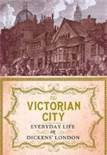

THE VICTORIAN CITY: EVERYDAY LIFE IN DICKENS’ LONDON by JUDITH FLANDERS
The nineteenth century was a time of unprecedented transformation, and nowhere was this more apparent than on the streets of London. In only a few decades, London grew from a Regency town to the biggest city the world had ever seen, with more than 6.5 million people and railways, street-lighting and new buildings at every turn. In The Victorian House, Judith Flanders described in intimate detail what went on inside the nineteenth-century home. Now, in The Victorian City, she explores London’s outdoors in an extraordinary, revelatory portrait of everyday life on the streets. From the moment Charles Dickens, the century’s best-loved novelist and London’s greatest observer, arrived in the city in 1822, he obsessively walked its streets, recording its pleasures, curiosities and cruelties. Now, with him, Judith Flanders leads us through the markets, transport systems, sewers, rivers, slums, alleys, cemeteries, gin palaces, chop-houses and entertainment emporia of Dickens’ London, to reveal the Victorian capital in all its variety, vibrancy, and squalor. From the colourful cries of street-sellers to the uncomfortable reality of travel by omnibus, via the many uses for the body parts of dead horses or the unimaginably grueling working days of hawker children, no detail is too small, or too strange. No one who reads Judith Flanders’s The Victorian City will view London in the same light again. £ 25 Hardback 9781848877955 Available Now


Wellington Miniature at Auction

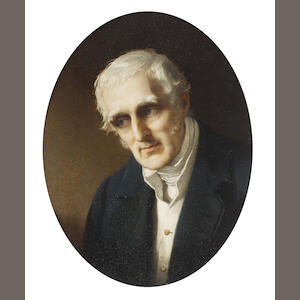
Robert Thorburn, ARA HRSA (British, 1818-1885) Field Marshal Arthur Wellesley, 1st Duke of Wellington, KG, GCB, GCH, PC, FRS (1769-1852), wearing blue coat, white waistcoat, chemise and stock
Oval portrait miniature of 1st Duke of Wellington honors his gentlemanly qualities in a case of unrequited love

A portrait of the Field Marshall Arthur Wellesley, 1st Duke of Wellington, by Robert Thorburn is on sale with Bonhams at Knightsbridge on 21st November (estimate £3000 – 4000). Angela Burdett-Coutts, an avid collector of portrait miniatures, allegedly commissioned this piece by Thorburn. At the age of 32 she proposed to the Duke depicted in this image, having fallen deeply in love with this legendary military hero.

Forty-five years her senior, Wellesley gently refused her advances with her best interests at heart. He stated in a letter to her that he could still act as her ‘Friend, Guardian, Protector’, offering a hand of friendship to soothe the affections he felt were misdirected to a man of his age.
Jennifer Tonkin, Specialist in the Portrait Miniatures department, said, “We’re delighted to be able to include this rare image of Arthur Wellesley that derives from a very important group portrait by Thorburn of staggering proportions.

The unrequited love story behind the commissioning of lot 127 seems to highlight the Duke’s fragility in this reduced composition and it is possible that potential bidders will be as responsive to the link with Angela Burdett-Coutts as they are to Thorburn’s masterly technique.”

This miniature of the Duke sits alongside other notable lots in the auction, such as Richard Cosway’s depiction of the Muse Thalia rumored to be modeled for by Lady Emma Hamilton (estimate £3000 – 5000). Thorburn’s work is a masterful image with an endearing story and this miniature portrait is set to add color to a fascinating sale. The entire auction catalogue of miniatures can be found here.

Dr. Syntax — Part Two

The author of The Tour of Dr. Syntax in Search of the Picturesque was William Combe (1741 – 1823) , whose real life is more interesting than most of his fictional subjects.  Combe earned his living for a long time as a writer for various publications in London; many of his works were published anonymously, as was the custom for many periodicals of the time. Some sources term him a “hack,” perhaps meaning he wrote whatever assignments he was given or more probably that his work was of undistinguished literary merit.

William Combe, Esq.

His origins are foggy, but he did attend Eton and was a classmate of such luminaries as Charles James Fox and William Beckford.  He inherited a small fortune which he squandered, and later, he apparently served in several capacities from servant to soldier. He was a law clerk in London, a student of the law and  a bookseller, but nothing kept up with his expenses. He published some satirical works but soon his debts sent him to the King;s Bench Prison where he lived from about 1780 to his death.  He wrote pamphlets, treatises, satires  for Ackermann’s publications, from unsigned pieces to the famous Tours and other works that were popular and brought him some measure of fame. Apparently he remained in his relatively comfortable quarters at the prison and received payment by means of an account from which he could draw small amounts rather than directly as fees, which might have been taken away and applied to his a accumulated debts.  It seems he was satisfied with his prison life — he was free to come and go most of the time.  Strange, but his choice!

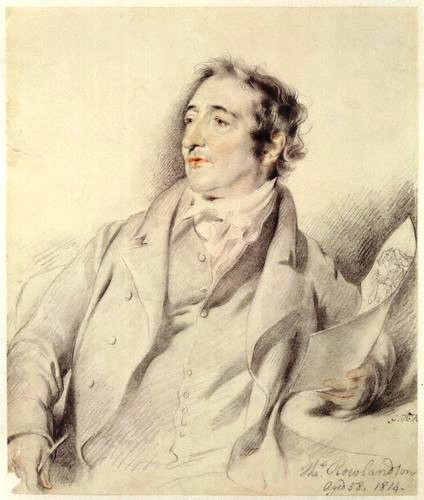
Thomas Rowlandson, sketch by George H. Horton, 1814

Artist Thomas Rowlandson (1756-1827) worked for Rudolph Ackermann for more than a quarter century, illustrating many of his publications and providing many caricatures sold in Ackermann’s shop.  Dr. Syntax brought him great success, building on his considerable reputation.  He provided a drawing or two for each installment of Combe’s poem, and other illustrations for Combe’s subsequent works.  We also know him as an irreverent social and political critic whose drawings were both popular and biting.

Ackermann’s Repository, 101 The Strand, London
Rudolph Ackermann (1764-1834) was a successful publisher of periodicals, books, pamphlets and prints.  Many of the latter, in the days long before color printing, were hand colored by young ladies or children with watercolours.  He published multiple editions of The Tour of Dr. Syntax and its two sequels written by Combe and illustrated by Rowlandson.
The Tour of Dr. Syntax in Search of the Picturesque
excerpts  from CANTO II.

(Dr. Syntax is off to begin his search, riding his mare Grizzle and looking for scenes to sketch…)

…Syntax, with his scheme besotted,
Along the village gently trotted…

Through the deep vale, and up the hill.
By rapid stream or tinkling rill.
Grizzle her thoughtful master bore.
Who, counting future treasure o’er.
And, on his weighty projects bent,
Observ’d not whither Grizzle went. …

But, ah ! too soon the vision passes,
Confounded by a pack of asses !
The donkeys bray’d ; and lo ! the sound
Awak’d him from his thought profound;
And as he star’d, and look’d around,
He said — or else he seem’d to say —
” I find that I have lost my way.
Oh! what a wide expanse I see,
Without a wood, without a tree!

Dr.Syntax losing his way

Thus as he pondered what to do,
A guide-post rose within his view ;
And, when the pleasing shape he spied,
He prick’d his steed, and thither hied ; …

The mangled post thus long had stood,
An uninforming piece of wood;
Like other guides, as some folks say.
Who neither lead, nor tell the way.
The Sun, as hot as he was bright.
Had got to his meridian height;
Twas sultry noon — for not a breath
Of cooling zephyr fann’d the heath;
When Syntax cried — ” ‘Tis all in vain
To find my way across the plain;
So here my fortune I will try.
And wait till some one passes by…


Dr. Syntax Stopped by Highwaymen

But, ah! how false is human joy! When least we think it, ills annoy:
For now, with fierce impetuous rush,
Three ruffians issued from a bush;
One Grizzle stopp’d, and seiz’d the reins.
While they all threat the Doctor’s brains.
Poor Syntax, trembling with affright.
Resists not such superior might.
But yields him to their savage pleasure.
And gives his purse, with all its treasure.
Fearing, howe’er, the Doctor’s view
Might be to follow and pursue
The cunning robbers wisely counted
That he, of course, should be dismounted;
And still that it would safer be
If he were fastened to a tree.
Thus to a tree they quickly bound him;
The cruel cords went round and round him;
And, having of all power bereft him.
They tied him fast — and then they left him.
By the road side, within the wood,
In this sad state poor Syntax stood.

End of Canto II
to be continued

The Life of the House by Lady Henrietta Spencer-Churchill

The Life of the House: How Rooms Evolve  by distinguished designer Lady Henrietta Spencer-Churchill was published in October, 2012, by Rizzoli.  Like her previous volumes, this one is filled with brilliant photographs and engaging copy.

Victoria here. I was fortunate enough to attend a talk by Lady Henrietta in Chicago recently, under the auspices of The Royal Oak Foundation and the Chicago branch of the English-Speaking Union, held at The Casino, a private club renowned for its ambiance and neo-regency decor.

The Casino, with Water Tower Place in the background
 and the Hancock Center at the left

The Royal Oak Foundation supports the National Trust of Britain and presents programs in New York, Chicago, Washington, and other cities, featuring leading experts on history, architecture, landscape and related subjects.  Members also receive free admission to all NT properties, a perk I have often benefited from, as well as sponsoring tours and special events.

Lady Henrietta presented a fascinating account of  how domestic architecture has changed over the years and yet survives, sometimes after considerable changes.  She talked of houses from Melford Hall in Norfolk, built in the 16th century…

…to Homewood, in Surrey, a modernist structure built in 1958.  Both are National Trust properties.

Lady Henrietta also talked about a number of her projects in Britain and in the U.S., and one was of particular interest to me, the story of Easton Neston, a stately home in Northamptonshire. It was built in 1702 by architect Nicholas Hawksmoor. A few years ago, the 3rd Baron Hesketh sold the house to Max Leon, a Russian American fashion executive.  Some of us will remember when the furnishings of this great home were sold by Sotheby’s auction in May, 2005.

Easton Neston, from Architectural Digest

The designer shared some of her projects in renovating the great house, which ranged from the need to re-do plumbing and wiring to integrating Max’s collection of contemporary art into the classic interiors.

Easton Neston, from Architectural Digest

After the talk, I found an interesting article about the renovations, which you can read here. The article, with many pictures, tells about the house and Max’s lavish lifestyle as well.

Lady Henrietta Spencer-Churchill

The author/speaker is the eldest daughter of the 11th Duke of Marlborough and spent much of her life at Blenheim Palace; no wonder she is so well known as an interior designer!  You can access her website here.

Below are some of Lady Henrietta’s previous books, all quite lovely and worth anyone’s coffee table, even if the surrounding decor its not quite up to her example!