A Couple In England – Day Four – Part One

No doubt you’ll be shocked to learn that the Hubby and I began Day Four as we had every other day – at Caffe Nero. By this time, we’d gotten a frequent purchase card and were well on our way to getting our tenth cup free. Once again, we took our coffees to a table outside, where we drank up, lit up, woke up and discussed our day.
“Apsley House.”
“Mmmhhhmmm.”

“Oh, God. Here we go.”
“You can’t listen to everything Brooke says about Apsley House,” I advised him. “I promise you it won’t be that bad.” Before we’d left for England, my daughter, Brooke, had warned Hubby against Apsley House, using words like boring, torture and never again.. In her defence, I do tend to drag her along to Apsley House whenever we’re in London. “All I ask is that you go once. Just once. And then I promise I’ll never take you there again.” I smiled at him over the rim of my cardboard cup. “Look, I only ask for fourteen days in England out of every two years, on average. That’s not much to ask, huh? You can put up with England for my sake, surely? And today is Apsley House, or as Victoria and I refer to it, the Holy of Holies.”
“Okay, okay. What’s at Apsley House, anyway?”
“Oh, well, where to start? There’s great stuff to see at Apsley House, even before you get inside.”

“Like what?”

“Well, for a start, if there’s a Rolls Royce out front when we get there, then that will mean that the Duke of Wellington is in residence.”

“Yeah, right. Har har.”
“The present Duke. Not Artie.”
“There’s still a Duke of Wellington?”
Sigh. “The king is dead, long live the king. God willing, there will always be a Duke of Wellington. It’s an hereditary title. It gets passed down through the generations. I mean, it’s one of the family titles that’s passed down. Artie was also the Marquess of Douro and Viscount Wellington. Then there’s an Irish peerage, Mornington, which passed down from his brother to the Dukes of Wellington in 1863, so obviously Artie never held that title himself.”
“Oh, obviously. My good man.”
Sigh. I suppose I won’t go into the Duke’s foreign titles with Hubby. “The present Duke is the 8th Duke of Wellington. His son is the Marquess of Douro and his grandson is the Earl of Mornington. He’s married to Jemma Kidd, the make up artist.”
“The Duke is married to a make up artist?”
“Lord Mornington is married to her. The Duke is a widower. It must be awful being any Duke of Wellington other than the first,” I mused.
“Why’s that?”
“Well, there’s no way you can live up to the first Duke, is there? In fact, when Artie was old and frail, someone mentioned to his son, also named Arthur, that he should prepare himself for becoming the next Duke of Wellington. And he said something along the lines of `imagine what a disappointment it will be when they announce the Duke of Wellington and only I appear.'”

“Huh.”
“So, remember when we went to Buckingham Palace and I recognized that portrait of Richard Wellesley?”
“Yeah, that was great.”
“Well, after Waterloo, the nation wanted to honour Wellington by building him a grand estate, along the lines of Blenheim Palace, which was built for the Duke of Marlborough after his military victory. Artie saw no harm in this plan and even went out to Blenheim to see it for himself. Well! He took one look at it and put his foot down. He didn’t want anything remotely that size. Artie was nothing if not practical and he could visualize the enormous financial burden something that size would place on future generations.”

“Besides, Artie was very down to earth. He didn’t want to live in a palace, he wouldn’t have been comfortable. You know, in a way, you could say that Wellington was the first British rock star.”
“Played the electric guitar, did he?”
“After his victory at Waterloo, he was swarmed by crowds wherever he went,” I said, ignoring Hubby’s remark. “Wellington had to be surrounded by a contingent of guards who tried to keep the public at bay. Women would weep when they saw him and try to grab at him and kiss him, or tear off pieces off his clothing as souveniers.”
“What?”
“No joke. Even years later, he was revered. One day he went to some public function and there was an old soldier on the door. The old guy went on and on to the Duke, saying as how he’d never imagined he’d ever get to lay eyes upon the great Duke of Wellington, much less have the honour of opening the door for him. Wellington looked him square in the eye and told him not to be such an idiot. He could never understand the idolatry he received.”
“Back to Apsley House. The guy in the portrait at Buckingham Palace was Artie’s elder brother, Richard. Unlike Wellington himself, Richard was a bit of a spend thrift, always finding himself in debt. He had bought Apsley House for himself, but then found himself in straightened times. He needed to sell it, it was far too expensive for him to run, and Wellington needed a London base. To
his mind, Apsley House was as good a place as any, so he gave Richard a very fair price for the house and thus helped his brother out of debt and got himself a London residence. Two birds with one stone. That was Wellington to a T.”
“Huh.”
“What’s ironic is that Stratfield Saye, the house that the Country did eventually build for Wellington, is still pretty much self-sustaining and it’s Apsley House that became cost prohibitive in the end. The Duke of Wellington gave it over to English Heritage, with the provision that the family still has quarters there and uses it as a residence. You ready to see it?”
“As ready as I’ll ever be,” said Hubby with a sigh.
Part Two Coming Soon!
 

The Smithsonian Institution: The Gift of a British Subject

Victoria here, writing about my annual trip to Washington, D. C. Whenever I can, I visit one or more of the great museums of the Smithsonian Institution, and I always think about the way it got started by a posthumous gift from James Smithson (1765-1829) “to found, at Washington, under the name of the Smithsonian Institution, an Establishment for the increase and diffusion of knowledge.”  In typical American political fashion, there was considerable debate about how the gift would be used, but by 1846, President James Polk signed the bill that created the SI.

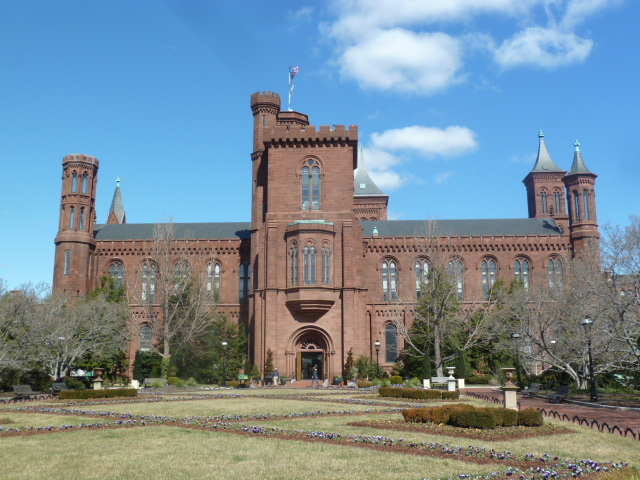
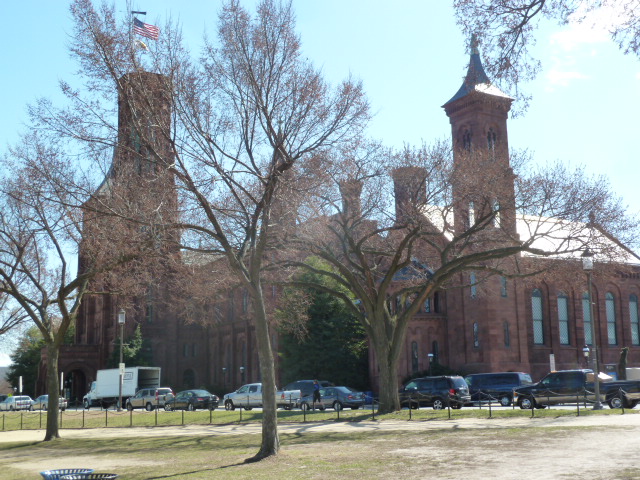
The Red Castle on the Mall, Independence Avenue facade
 
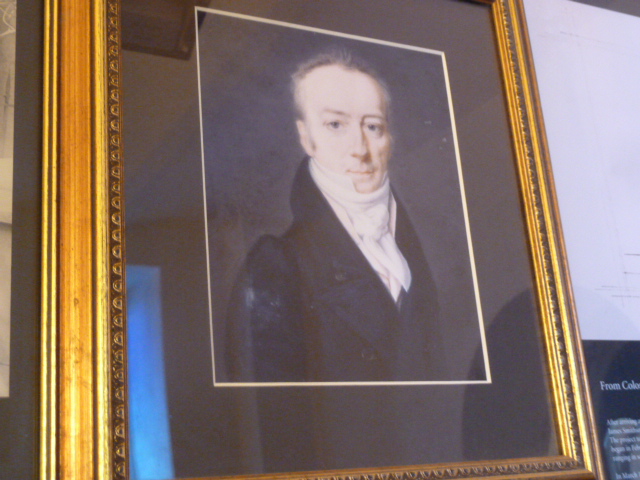
Quoting from the SI’s brochures: James Smithson “was born James Lewis Macie in Paris, France, in 1765.  His mother was the widow Elizabeth Hungerford Keate Macie of Bath, England, a descendant of Henry VII. His father, Hugh Smithson, the Duke of Northumberland, was actually married to his mother’s cousin. After his mother’s death in 1800, he officially changed his name to Smithson …graduated from Pembroke College, Oxford, in 1786, the same year he became a naturalized British citizen…he was the youngest to be admitted as a Fellow of the Royal Society…in 1802, he identified a specific zinc ore that was posthumously renamed smithsonite in his honor…”
 
 
Painting of James Smithson in the Red Castle
 

It is tempting to speculate on Why Smithson left his fortune to the US, a place he never visited.  Perhaps he was offended by the way in which the English aristocracy treated him as the illegitimate son of a Duke.  Perhaps he admired the experiement in government across the Atlantic. However he made the decision, the result cannot be disputed: a great institution which honors his name.

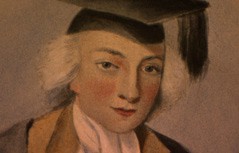
a youthful Smithson, by James Roberts, 1786

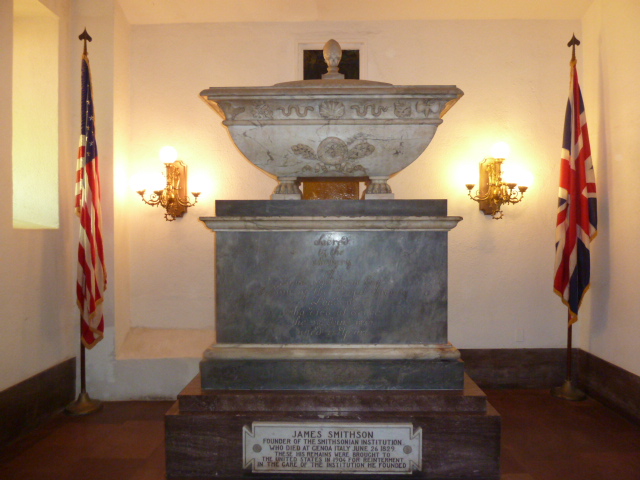
A chemist and geologist, Smithson died in Genoa, Italy, in 1829 and was buried there.  In 1903, Alexander Graham Bell (a Regent of the SI) and his wife bought Smithson’s remains to Washington where he is now at rest.

Memorial to James Smithson in the Red Castle
 
 
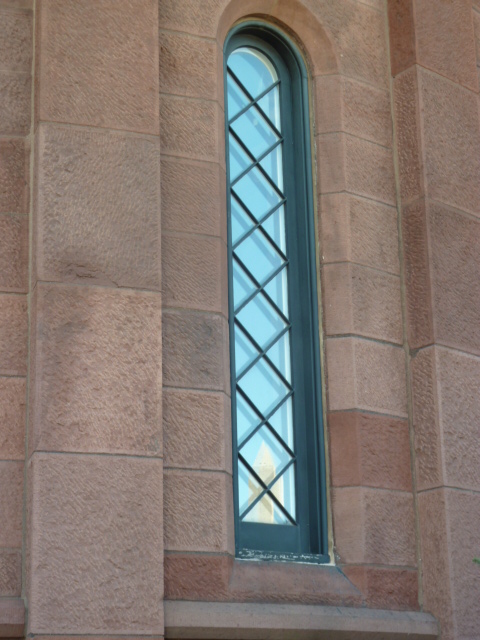
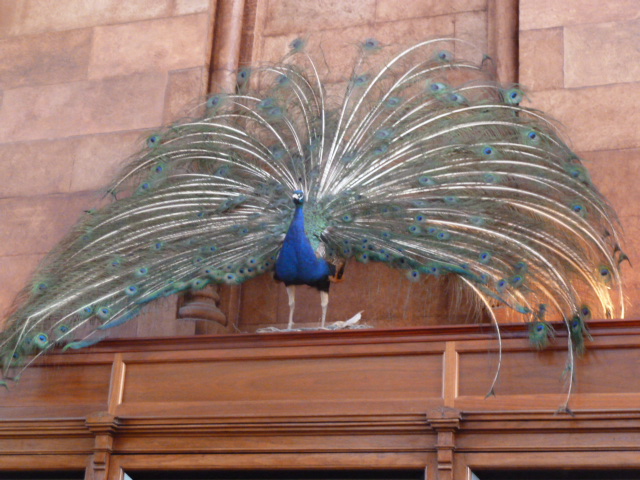
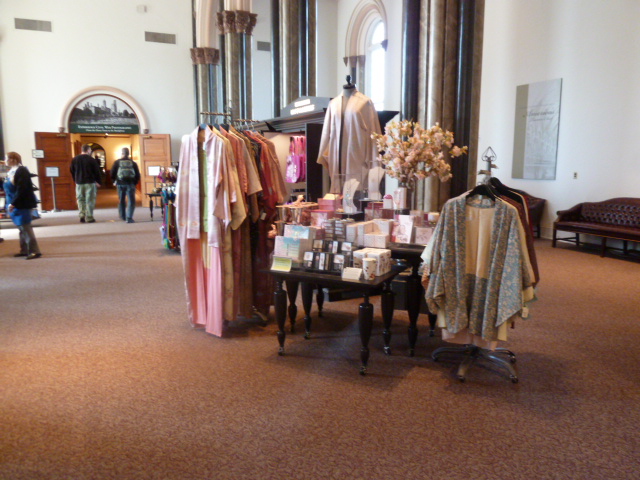
The Red Castle, designed by architect James Renwick Jr. in the Medieval Revival style, was the first of the SI Buildings and housed the complete collection and operations for many years.  It was remodeled and enlarged after a fire in 1865.  Today, the building houses the information center, a few of the original displays, and the ubiquitous gift shop.  Below are a few views I took of the Red Castle.
 
 
from the Mall
 
 
reflection of the Washington Monument in the window
 
The Great Hall
 
Peacock in the Commons (stuffed)
 
gift shop
 
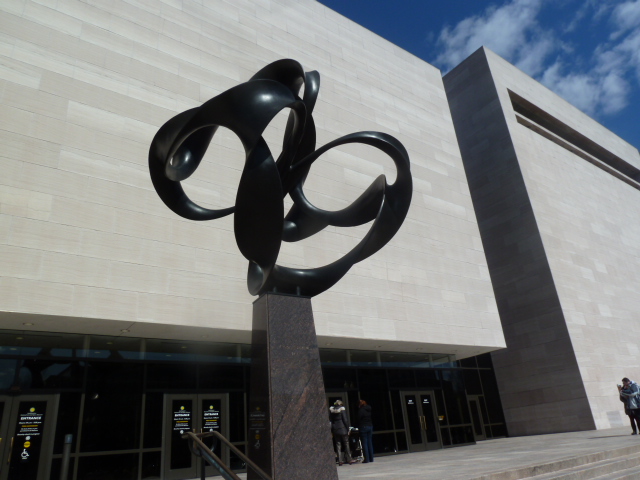
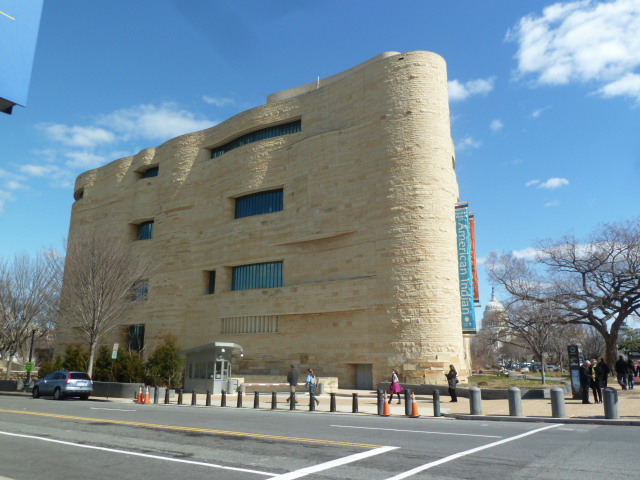
The Smithsonian has grown to a gigantic size today, with parts of the SI located in many places besides Washington.  But it remains in the popular mind, a collection of large and fascinating museums along the Mall between the Washington Monument and the Capitol.  Here are a few you might have visited.
 
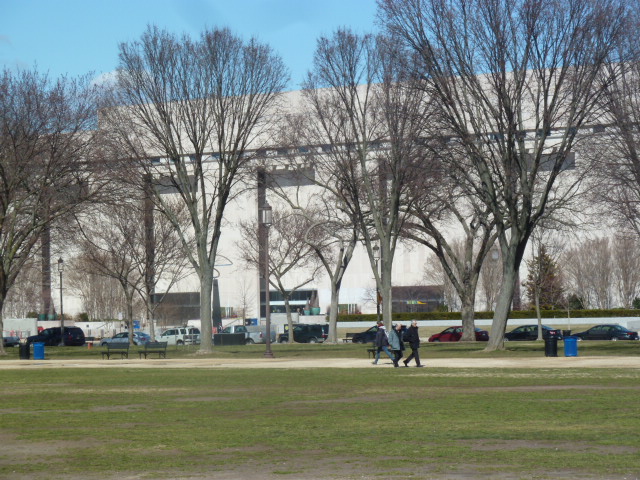
Museum of American H
istory
 
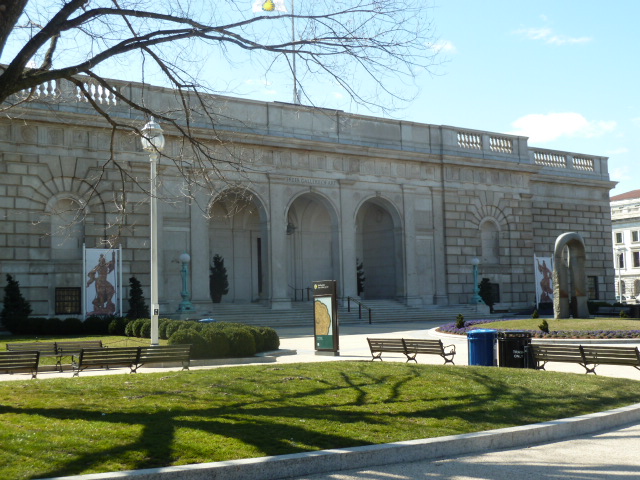
Freer Gallery of Art
 
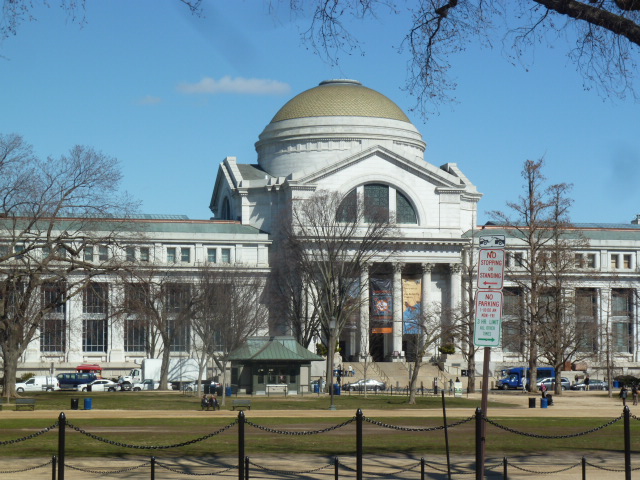
Museum of Natural History
 
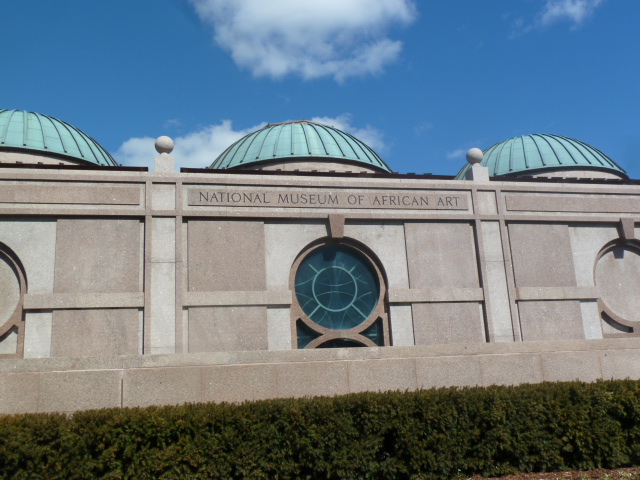
Museum of African Art
 
Air and Space Museum
 
Museum of the American Indian
 
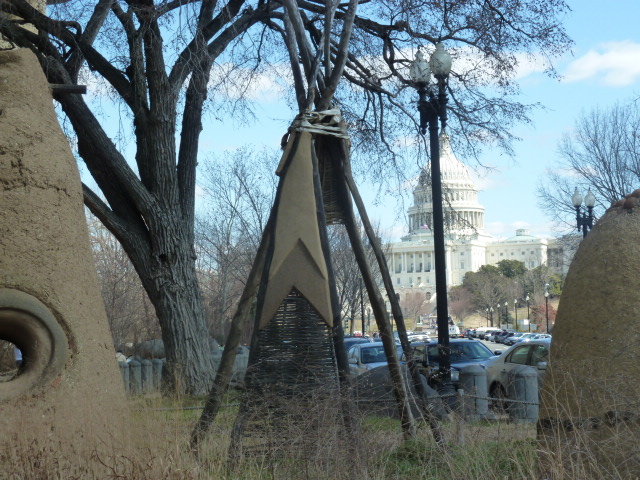
Tipis on the lawn of the American Indian Museum, with the Capitol nearby
 
 
This is just the beginning of the Smithsonian journey — in which you can participate by internet, tours, special aps, the magazine and video productions.  Just start by clicking here
 
 
What would James Smithson think of the results of his gift of about half a million dollars?  Since we can only guess why he gave the money in the first place, he could have no way of expecting that his gift would start one of the world’s greatest educational and research institutions.  Thank you, Mr. Smithson!
 
Soon I will write more about my visit to the National Gallery, a neighbor to the Smithsonian Museums but a separate entity. 


The Secrets of Bloxley Bottom, Episode 6: A Shocking Display


Lionel, Baron Bloxley tapped his forefinger on the map of Kent he’d been studying. He knew of several well-traveled routes that were in need of significant expansion or resurfacing after roadbed improvements and even re-grading for some. He was eager to hear what the Duke had to say about forming a turnpike committee. The vicar favored it, but he was not a man of a practical bent.

If the fellow had any sense at all, he would pay more attention to the needs of his parish than to Isaac Newton, a tenuous relation of his, upon whom he was writing a paper. The baron uttered a silent oath. While the vicar’s nose was in some musty book, he allowed a gaggle of old women to rule the village. Lionel could not help but to smile. The premier meddler was his own mother, the revered Dowager Baroness, who knew precisely how to make everyone dance to her tune.

In that regard, Lionel had to consider himself a fortunate man. His wife Elizabeth was apparently content to allow the Dowager to hold sway over the rest of the congregation, not to say village.

Lionel’s attention had wandered. He re-read the note from Ashton, his best tenant. The man ran the Home Farm with the skill of a one bred to the job, as indeed he had been.

He studied it for a moment and felt his concern lighten. This was more like it. The orchards, both cherry and apple, had been blooming better than they had in years and Ashton had set another hive of bees. There would be bumper crops.

“Arp!”

Lionel glanced out the window in time to see Spot dashing across the lawn in hot pursuit of the Lord knew what. Deuced odd looking animal.
Lionel pulled his mind back to the matters at hand. The Duke was due any minute.


››


Major Monty Twydall rode home from the Dower House with the satisfaction of the Duke’s assurance that he would stop by to see the pearls next week. Monty needed the sale. Several of his investments were not doing well. As idle as he professed to be, Monty kept a sharp eye upon the dismal financial news in London newspapers. As if the news weren’t dire in itself, Monty had made a few unfortunate wagers since the turn of the year. A most regrettable backing of a bare knuckle boxer. A few unwise bets at the cock fights he’d organized had soaked up his share of the profits. If Monty had taken the time to fill out a balance sheet, the last five months would have shown little on the income side and heavy expenses on the other. It could only be hoped that things would soon look up. In the meantime, he needed to make a large sale in order to tide him over this rough patch. Or convince Tournell to turn out more of his secret pictures, which always brought in a pretty penny.

››


In the well-lit conservatory at Monty’s Saxon Lodge, the artist Tournell unpacked his box of carefully protected canvasses, already primed. Tournell replaced i
n the false bottom of the carrying case the five little examples of his breast paintings, the ones that brought him so much business, but were becoming something of a nuisance. In certain circles, these little portraits had come to be known as le peche, or the peaches.

Several years ago, when Major Twydall had wanted a miniature of Adora, his then-mistress, he whispered that her face and bad teeth should be turned away, prompting Tournell to jokingly paint only her breasts, which even he thought were exceedingly lovely. The little picture of Adora’s breasts became a great attraction to all the members of the Naxians, Monty’s group of hedonistic friends. Before he knew it, Tournell had received a dozen commissions to paint more of the little ivory miniatures, small paintings easily tucked into a pocket, all of breasts. He’d worked feverishly, being greatly in need of the money and hoping to finish before more appropriate commissions came his way.

Gradually, the commissions for more conventional portraits began to arrive, several from men whose mistress’s mammary glands had been his subject matter. Like Lord Bloxley, a man who had seen and admired Tournell’s formal portrait of Mrs. Green, but who also owned a small leather case containing a tiny depiction of the breasts of Sarah, a lightskirt he no longer even visited and who had moved on to another patron. That had been a shock, Tournell thought, when he had painted Sarah for the second time; it had taken him until a half hour into the session before her laughter reminded him of her former pose.

In fact she had suggested to him the names of a few women who’d like to have themselves portrayed only between their shoulders and their waists, women who loved to display themselves but who did not care to draw attention to their flaws.

Sometimes Tournell felt he was a prisoner of his own, secretive success. He had plenty of money and a growing reputation, yet most of his best paintings could not be exhibited in public. There were members of the Royal Academy who did life size renditions of nearly nude nymphs in mythological scenes — but they’d be scandalized if they saw the breast miniatures. Or so they would pretend. And if ladies like the Baroness Bloxley or the Dowager saw them…well, his goose would be cooked. To a crisp.

Breasts or respectable portraiture? An empty belly or steady commissions? Respect for his craft or artistic obscurity? His le peche paintings had brought him this lucrative commission from Lord Bloxley. The painting of his daughters could make his name. But it was enevitable that should he come to the attention of the London art world through this and future portraits, it would not be long before he was exposed as the “painter of breasts.” Did he want fame and fortune to finally open their arms to him when it would also mean his exposure as the painter of peches? Alors, Tournell was tortured by these questions daily. Always these questions and never any satisfactory answers.


When he arrived home, Monty was pleased to find Tournell setting up his studio in the former conservatory of Saxon Lodge, a room Monty found superfluous. Having the artist working at the Lodge could be lucrative for both of them. The whole thing had been Monty’s idea at first. Pierre Tournell had embraced the idea eagerly enough. Of course he had; the paintings had kept him in money. What Monty needed at present was a set of good sales to the Naxians of those breast miniatures.
Monty approached Tournell. “I see you’re hard at it. Good man. Listen, Tournell, can you paint a few more le pesche for me?”

Tournell sighed. “I have no models. Bloxley Bottom is not a hot bed of courtesans willing to display their wares.”

“Surely there are some young women with pretty cherries ripe for the picking”

Alors! You would have me accost them in the road?”

“How about the girls at the inn?”

“Mrs. Winston, ah, tres jolie – but she keeps a Bible at her desk. I think if her serving wench told her I wanted her to . . . “

“Come now, man, you can’t be as direct as all that. Gracious, where’s your French flair, your savoir faire?”

“Twydall, you do the seducing, I’ll paint the pictures.”

Monty chuckled. “We’ll take dinner at the Crowing Cock, Tournell, and I’ll show you how it’s done.”

Tournell agreed, giving a silent sniff at his host’s presumption. Show him, show Tournell who had convinced some of the Naxian’s highest flyers to bare their breasts to a roomful of strangers while he painted them? Ha! But of course Monty had no idea he’d charged admission to his painting sessions from time to time.

With a quick wave, Monty left. “See you at the inn at five.”

“Oui. Au revoir.” Tournell stared up a the slant of the sun and re-positioned his easel.

He wanted, on the one hand, to have his portraits admired, his work to be sought after. But portraits were not only difficult, they took a great deal of tact and subtlety. The sitter needed to be flattered yet the portrayal must be realistic…and he found painting clothing tricky. All the frothy lace women wore today, and poufs of silk and satin. Tournell studied Van Dyke and Gainsborough, had even been acquainted with Tom Lawrence. Now there was someone who gave life to fabrics. Though Lawrence had a studio full of assistants …while he, Tournell worked alone. It took money to set oneself up in an atelier. Maybe he could do paintings of historical subjects, or old myths and legends – these might sell. A gathering of nymphs at Diana’s bathing pool. Attendants at Aphrodite’s toilette…ah yes, he could do such huge canvases and this studio space at Monty’s was just the place.

So Monty was right. He needed models. And not just women. He’d require a few males as well, lithe and strong with well defined musculature. They might be easier to convince to pose. What man didn’t want to show off his body?

››

››
An hour after his arrival in the library at Bloxley Hall, the Duke looked at the clock on Lionel’s bookshelf. It was time he headed back to Walmer. As he recalled, there would be guests at dinner tonight. “I think we have the essential agreement here,” he said.
Lionel nodded. “Starting with the committee to widen the main road, I am sure we will build support for more improvements. Much as I would like to start all of them at once, your advice about moving at a judicious pace is right on point, Duke.”
The Duke raised one eyebrow. “You’ll bring along the doubters soon enough.”
“I hope so.” Lionel leaned back in his chair, the business of the day concluded. “I have decided to have my daughters’ portraits painted.”
“So I have been told.”
Lionel gave a bark of laughter. “My mother, I suppose, was full of the news.”
“Ah, yes. Lady Louisa is one of my oldest friends, you know. She is a one-woman fount of intelligence. She has a better network of informants than I devised at any time during the wars. Indeed a formidable woman.”
“And I suppose she told you she does not particularly approve of this painter, a Frenchman?”
It was the Duke’s turn to nod in agreement.
Lionel went on. “He is a truly talented fellow, and he needs a bit of help getting his work into the right hands.”
“Hoping to have your daughters’ portraits in the Academy’s summer exhibition next year?”
“It has crossed my mind. No names, however. Having the girls identified, I am sure, would offend my mother’s sense of propriety.”
“No doubt.”
“Have you seen Tournell’s work, Duke?”
“Not that I’m aware of.”
“No one has shown you one of their le pesches?” A smile was beginning to build on the baron’s lips.
“Their what?”
Lionel went to the bookcase and thumbed through a volume, removing a small picture, no more than two inches square. He gazed at it fondly. “It was Major Twydall who started it. Le pesche, the peaches in Italian, you know. They are pictures of breasts, sort of like those lover’s eyes that crop up from time to time.”
He handed the picture to the Duke whose jaw actually dropped in surprise.
Lionel continued to explain. “It’s that group of men Monty has assembled, the Naxians they call themselves. Rather juvenile, I think, but all in good fun. It’s become quite the fashion among them to have their mistresses painted.”
“Like this?” The Duke’s voice was rather strained as he gazed at the view of two perfect breasts and nothing else.
“Sometimes on ivory. The painter has a deft touch.”
“And this is the man you want to paint your daughters?”
“Oh, le pesche are just a sideline. He is skilled at portraiture.”
“Apparently so,” said the Duke as he eyed the miniature.


The Tour of Dr. Syntax in Search of the Picturesque, Part 9

Dr. Syntax, Derby Porcelain Manufactory
English 1750-1848, soft-paste porcelain
with polychrome enamel decoration
 
Since it has been a while since we last encountered Dr. Syntax, let’s take look at where he stands. He is traveling around England on his mare Grizzle to sketch and write about the picturesque – an artistic concept, indeed a sort of fad in the first two decades of the 19th century.  This long poem was written by William Comb, illustrated by Thomas Rowlandson, and published by Rudolf Ackermann. It is a satire – or burlesque – on the writings of that seer of the “picturesque,”  the Reverend William Gilpin, whose writings were widely persuasive to many such as landscape architect Humpry Repton and even novelist Jane Austen. But like almost all artistic endeavors, when exaggerated to a great extent, the picturesque was certainly ripe for satire, with its disdain of a calm and serene landscape in favor of twisted trees, wild weather, and ruined buildings.
Being a curate and teacher in the church school, Dr. Syntax’s clerical career has not progressed to the degree he and his wife think he deserves. With this trip, he is attempting to make his fortune and reputation (as did Rev. Gilpin) with a book of his observations.  He has now reached Keswick in the Lake District, and has made friends with Squire Worthy and his family. This squire will figure prominently in the Doctor’s life in the future – but so far, little does he know…
As we meet him once again, Dr. Syntax is having breakfast with Squire Worthy , who is speaking:
Your free-born conduct I commend,
And shall rejoice to call you friend:
Oh ! how it would my spirits cheer
If you were but the Rector here!
Our Parson, I’m concern’d to say.
Had rather drink and game — than pray:
He makes no bones to curse and swear.
In any rout to take a share,
And what’s still worse, he’ll springe a hare.
I wish his neck he would but break,
Or tumble drunk into the Lake!
For, know, the living’s mine to give,
And you should soon the cure receive:
The benefice, I’m sure, is clear
At least three hundred pounds a year.”
 
“I thank you. Sir, with all my heart,”
Said Syntax, “but we now must part” …
 
Dr. Syntax, making another of his many errors, rides off until evening…
 
Dr. Syntax Robbed of his Property
 
But as he reach’d the destin’d inn.
The landlord, with officious grin.
At once declar’d he had no bed
Where Syntax could repose his head; …
At least, where such a rev’rend guest
Would think it fit to take his rest:
A main of cocks had fought that day,
And all the gentry chose to stay. …
Dr. Syntax is offered a room by one of the guests and innocently agrees….Dr. Syntax speaks:
“In short, I only want to sleep
Where neither rogue nor knave can creep.
I travel not with change of coats.
But in these bags are all my notes,
Which, should I lose, would prove my ruin,
And be forever my undoing.”
Thus as he spoke, a lively blade.
With dangling queue and smart cockade.
Replied at once, “I have a room;
The friend I look’d for is not come;
And of two beds where we may rest.
You, my good Sir, shall have the best;
So you may sleep without alarm;
No living wight shall do you harm…”
Ah, beware Doctor – but so far on this trip when he has been frequently accosted, he has learned nothing of human behavior!  He agrees to share the room with the Captain, and after dinner:
The Doctor and the Captain sat.
Till tir’d of each other’s chat.
They both agreed it would be best
To seek the balmy sweets of rest. 
Syntax soon clos’d his weary eye,
Nor thought of any danger nigh;
While, like the ever-watchful snake.
His sharp companion lay awake.
Impatient to assail his prey
When, soon as it was dawn of day.
He gently seiz’d the fancied store;
But, as he pass’d the creaking door.
Syntax awoke, and saw the thief;
When, loudly bawling for relief.
He forward rush’d in naked state,
And caught the culprit at the gate:
Against that gate his head he beat.
Then kick’d him headlong to the street.
The ostler from his bed arose,
In time to hear and see the blows…
Luckily our hero is able to recover his papers. Syntax and the ostler (a stableman from the inn) let the culprit run away – then return to their beds.
 
Excerpts from Canto 16
 
But, while he still enjoy’d his dream,
His story was the gen’ral theme
Of ev’ry tong
ue, and made a din
Through all the purlieus of the inn.
The ostler told it to the maid.
And she the whole, and more, betray’d;
Nay, in her idle, eager prate.
Mistook the window for the gate:
For, though she lay all snug and quiet.
And slept, unconscious of the riot,
She swore that, all within her view.
The Parson from the window threw
A full-grown man into the street. …
The Barber caught the story next,
Who stuck no closer to the text;
But left a face half-shav’d, and ran
To tell it to the Clergyman. …
“ At the Blue Bell there’s been such doing —
The house, I’m certain, it must ruin;
Nay, as I live, I’ll tell no further, —
A bishop has committed murther!” …
More exaggerations are spread…
The Blacksmith, while a trav’ller stay’d
That a new horse-shoe might be made,
Inform’d him that a rev’rend Clerk
Last night was strangled in the dark,
No one knew how — ’twas at the Belly
The murd’rer not a soul could tell: 
The Justice though would make a rout,
And try to find the fellow out.—
Thus Rumour spread the simple case,
In ev’ry form throughout t
he place.
The Doctor now unclos’d his eyes.
And thought that it was time to rise:
So up he got, and down he went.
To scold the Landlord fully bent;
The landlord makes profuse apologies… and finishes:
“…I understand the rogue you bang’d.
And in good time. Sir, he’ll be hang’d:
I hope that all your notes you’ve found, —
I’m told they’re worth a thousand pound.”
“Prove that,” says Syntax, “my dear honey,
And I will give you half the money.
Think not, my friend, I’m such a fool.
That I have been so late at school.
To put my bank-notes in a bag
That hangs across my Grizzle nag;
No, they were notes to make a book;
The thief my meaning, Mend, mistook:
For know, the man would not have found
Them worth — to him — a single pound:
Though much I hope that they will be
The source of many a pound to me.”
Thus Syntax cheer’d the Landlord’s heart,
Till the time wam’d him to depart;
When soon, along the beaten road.
Poor Grizzle bore her rev’rend load.
The Doctor’s pleasant thoughts beguile
The journey onward many a mile;
For many a mile he had not seen
But one unvarying, level green;
Nor had the way one object brought,
That wak’d a picturesquish thought. …


Dr.  Syntax is tricked into a wager – though he claims he never gambles.  A local yeoman bets Syntax that he cannot get a pound for his mare, the poor and boney Grizzle who has lost most of her ears and tail.  But one of the local fellows comes to the rescue:
 
“A parson, Sir,” says one, “distressed,
Would sell that poor, that wretched beast;
And asks, I hear, a pound or two:
I think he’ll ne’er get that from you.”
“If that’s the case,” the Yeoman said, —
“I’ll ease his heart, and buy the jade.
I’ll bid two pounds, my friend, that’s plain,
And give him back his beast again.”
The Farmer own’d the wager lost.
And op’d his bag to pay the cost;
“No Sir,” says Syntax, “’tis to you
To pay where’er you think it due…”
Thus the wager comes to naught and all are satisfied.
Excerpts from Canto 17
Dr. Syntax is invited to a village feast where he engages in the general festivities and tells stories, including a long lecture on the evils of gambling.  Dr. Syntax joins in the music-making by playing the fiddle.
 
Dr. Syntax … Rural Sports
 
Chorus of Peasants.
“Strike, strike the lyre! awake the sounding shell
How happy we who in these valleys dwell!
How blest we live beneath his gentle sway.
Whom mighty realms and distant seas obey!
Make him, propitious Heaven! your choicest care!
O make him happy as his people are!”
‘Twas thus they fiddled, danc’d, and sung;
With harmless glee the village rung:
At length, dull midnight bid them close
A day of joy, with calm repose.
To be continued…


A Couple In England – Day Three – Part Five

“What do I have to change for?” Hubby asked when we were up in our room.
“Because Winter Wonderland is outdoors. It’s in Hyde Park, behind Apsley House. We have to bundle up.”
“Oh, Jeez, it’s freezing out! And more crowds,” Hubby said as he looked longingly at the darts match (still) playing on the telly.
“At least it’s not raining.”
“Yeah. We’re getting a five minute break on the rain.”
So once again we bundled up – coats, scarves and gloves – and made our way to Piccadilly. Walking briskly towards Apsley House, we soon encountered a crowd on the sidewalk.
“What’s this now?” Hubby asked. “What are they all lining up for?”
“The Hard Rock Cafe. There’s always a line. Do you want to go in?” I asked, knowing how big Hubby is into rock and roll. “They have a Vault, with all kinds of rock memorabilia inside.”
“Are you crazy? I wouldn’t wait on that line, in the cold, to get inside if you told me Pink Floyd was in there. And that would be something, since half of them are dead.”
So we continued on our way until we reached Apsley House, which always looks magnificent when lit at night. And on past it to Hyde Park gate . . . . . .

And the entrance to Winter Wonderland.
“What are we stopping for?” Hubby asked. I didn’t answer. I couldn’t. I was the one who’d explained to Hubby that the entrance to Winter Wonderland was right behind Apsely House. I knew it was right behind Apsley House, but I hadn’t realized that it was right behind Apsley House. As in within spitting distance. A child could have thrown a baseball from Apsley House to the entrance. Hell, even I could have thrown a baseball from Apsley House to the entrance. Surely the first Duke must be turning in his grave. And I daresay the present Duke can’t have been too happy, either.

We were soon forced to move forward towards the entrance by the sheer numbers of the crowd pressing ahead. Before us lay a wall of people, a cacophony of noise and the glare of thousands of neon lights.
“Into the valley of death rode the six hundred.”
“What? I can’t hear you!”
“Hold my hand,” I yelled. “I don’t want us to be separated.” Egad, I’d never find Hubby again in this crowd, and even if I did, he’d be spitting mad.

Although we had just come through the entrance, everyone already inside seemed to be coming at us. Like lemmings, we had to jostle our way in the opposite direction through a wall of humanity. Peripherally, I could make out booths on either side of the crowd, but dashed if I could make out what any of them were selling. If we went on at this pace, we’d never make it to the Big Wheel by 7 p.m., for which time we had tickets. Right, time to take matters into my own two feet. I gripped Hubby’s hand tighter still and forged ahead . . . twelve steps to the left, nine ahead. Eight steps to the right, 17 ahead. Thus, we twisted, turned and wended our way towrads the Big Wheel, which we could see in the distance.

Finally, we made our way, still together, to the Wheel and joined the queue. There were many gondolas on the wheel and so it was soon our turn to ride. Seated inside, we found buttons one could push in order to listen to either a narrative of the upcoming view or Christmas carols. We chose the narrative and soon we were off. Up and up, higher and higher we climbed. Then we stopped so that the next people in line could board. There we hung, in mid air, as it were.

“What’s the matter?” Hubby asked.

“I didn’t realize we’d be this high up.”

“We’re hardly off the ground yet.”

Apsley House looked like a Leggo toy below us. Staring at it, I thought of Wellington and tried to summon up some courage.

“Maybe we should change seats and sit on the other side so we can get a better view of the fair.”

“No!”

“Alright, alright. I just asked.”

Oddly enough, the higher we climbed, and the less I could see the ground way down below us, the more I began to r
elax. In the distance, one could see the twinkling lights of Mayfair and Knightsbridge. It was a glorious view, a smooth ride and we both thoroughly enjoyed it. Before long, it was time to disboard.

“That was great!”
“I’m glad you liked it. It was something different.”
“Did you enjoy it?”Hubby asked.
“Yes, I did. Though I could use a cigarette.”
We found an out of the way, miraculously empty area and lit up.
“Now what?”
“Zippo’s Circus. I saw it on our way over here. It’s over in that direction,” I said, pointing.

As we walked off towards the circus tent, it became obvious that, although we could clearly see it, there was no direct route one might take in order to reach the tent. We found it tantalizingly near, but confoundingly difficult to reach as it seemed blocked on all sides by other attractions.

First, we found our way blocked by the Alpen Hotel, a sort of haunted house ride by all appearances.
Then by a German Christmas village, where the crowds continued to thwart our every step forward. Finally, I found a ticket booth and asked the attendant how in the world one was actually supposed reach Zippo’s Circus.
“Oh, well, the best way to go is right up this lane here till you get to your first right turning. Then you’ll take that straight until you see the Bavarian Village. You have to go right through it and out the back. When you get out into the gardens behind, make a right and follow that lane right around to the right and then you’ll see it.”
“Well?” Hubby asked when I returned to his side.
“It’s right down here!” I said brightly. It was the first right turn she’d said, wasn’t it?


We made it to the Bavarian Village, which was chockablock with people, and finally out the back, up the lane and to Zippo’s Cirque Berserk.

.
 
 
Here’s a publicity still from Zippos, which will you give you some idea the flavour of the night.


Zippo’s is made up of a small, but amazingly talented, troupe of performers. All of the acts were tied together by a sort of Tim Burton/Grimm’s Fairy Tale-esque narrative. The forces of evil, nightmares and I don’t know what else all played a part. The woman who did the narrative had a heavy eastern European accent, so most of what she said was lost, but no matter, the show itself more than made up for it.
 
 
There was an awe inspiring aerialist, a couple who walked and rode bicycles on a tight rope and a group of tumblers and acrobats called the Zulu Warrior Troupe. You can watch a previous performance of theirs here, which will give you a sample of their talents.
 
“Good?”
&
nbsp;
“Great! I had no idea it would be this great. It’s all fabulous.”
 
The highlight of the show was the  Motorcycle Globe of Death, which stars Brazil’s Lucius Troupe. First, a single motorcyclist enters the globe and rides around the interior at breakneck speeds. Then another cyclist enters and the two of them drive like demons inside the globe. Then, a woman entered the globe and they sped around her dancing form. Then, she left and a third cyclist entered the globe . . . . .
 
“No freaking way,” said Hubby, who actually rides motorcycles. “That’s nuts.”
 
Way. Round and round they went and I have to say that it stopped being fun for me. No kidding. My heart was in my throat, my rounded eyes were glued to the globe and I really just wanted them to stop before they killed themselves. I couldn’t see this ending well. The air became thick with exhaust fumes, their engines raced and revved as they continued to accelerate, but otherwise the entire tent was silent, all of us watching with jaws hanging open.  


Words really cannot do justice to the performance, so I’ve included a YouTube clip of the act –  you can watch it here. And here’s a longer version. I will tell you that everyone survived the performance, even the audience members.
 
After the show, Hubby and I found a nearby, and blessedly empty, sausage stall with a beer stand not five feet away from it. There is a God! We chowed down, drank beer and had a really good time.
 
“So, what’s on the agenda for tomorrow?” Hubby eventually asked.
 
“Apsley House!” I waited for a joyous response from Hubby. It never came. “Followed by your three hour rock and roll tour.”
 
“It’s not my rock and roll tour.”
 
“Well, it certainly isn’t mine. I booked it for you. Then we have the theatre tomorrow night.”
 
Eventually, we began to make our way out of the fair.
 
“Which way do we go?”
 
“Dashed if I know. I’m all turned around. I have no idea where in the Park we are any longer.” We walked aimlessly for a bit and then I saw a security guard up ahead.
 
“Can you tell me where the nearest exit is?” I asked. He raised his right arm to shoulder height and pointed in response. I followed his finger and there was a deserted lane leading down to what appeared to be a well travelled thoroughfare.
 
“Thanks.” We exited the Park and stood on the sidewalk.
 
“Where are we?”
 
“Give me a minute.”
 
“Are we lost?”
 
No! You can’t get lost coming out of Hyde Park. I just don’t know which gate this is.” I looked to my right . . . . Knightsbridge. I think. I looked across the road. Hhhhmmmm . . . . I do believe that if we were to cross right here and continue on we’d soon be at the Grenadier Pub. Just to make sure, I looked to the left and confirmed that I’d gotten my bearings right.
 
“This way.” I said to Hubby as I began to walk.
“Do you know where we are now?”
 
“Yes. And you know where we are, too.”
 
“I do?”
 
“Yup. St. George’s Hospital is just up here on the right.”
 
“Should we get a cab? Look, there’s a free cab!”
 
“We don’t need a cab! Come on, a few more steps and you’ll see where we are.”
 
And there, like a beacon in the night, glowed Apsley House.


Day Four Coming Soon!