Fashions from 1813

If you’d been living two hundred years ago, you might be spending part of the days of early autumn reading Jane Austen’s Pride and Prejudice. And you might be wearing one of these ensembles, from Victoria’s collection of Fashion Plates.


Ackermann’s Repository, Jan. 1813
 
Morning Walking Dress:
A round robe of Cambric muslin, with long full sleeves and simple short collar confined in the center of the throat with a stud or broach; the same fastening the dress at the wrist. A robe pelisse of bright morone velvet formed quite plain, simply meeting in the front, with rounded collar; trimmed entirely round with spotted ermine, and confined at the bottom of the waist with a ribband of corresponding shades tied in front.
A Flora cap, ornamented with ribband and mall flower on the left  side. A village hat of morone velvet, with open edge of black chenille; a flower similar to that which ornaments the cap, placed on the opposite side, and tied under the chin with the same ribband.
Half- boots of morone velvet, or kid. Gloves of pale tan or amber kid. Ridicule of morone velvet, embroidered with gold.


Ackermann’s Repository, March 1813
 
Half-Dress:
 
A round robe of coloured sarsnet, or muslin, spotted with amber; drawn frock bosom; and long, full sleeves tied twice at the wrist at regular distances. A tucker or lace, or plaited net.
A cap a la Russe, composed of white satin and lace, confined with a ribband round the head, terminating in bows and ends on one side. Hair in dishevelled curls. Necklace and cross of amber beads. Gloves and shoes of lemon-coloured kid. Spanish capuchin, or lappelled cloak of white or stone-coloured kerseymere, embroidered with a rich border, in chenille and silk.

 
Ackermann’s Repository, April 1813
 
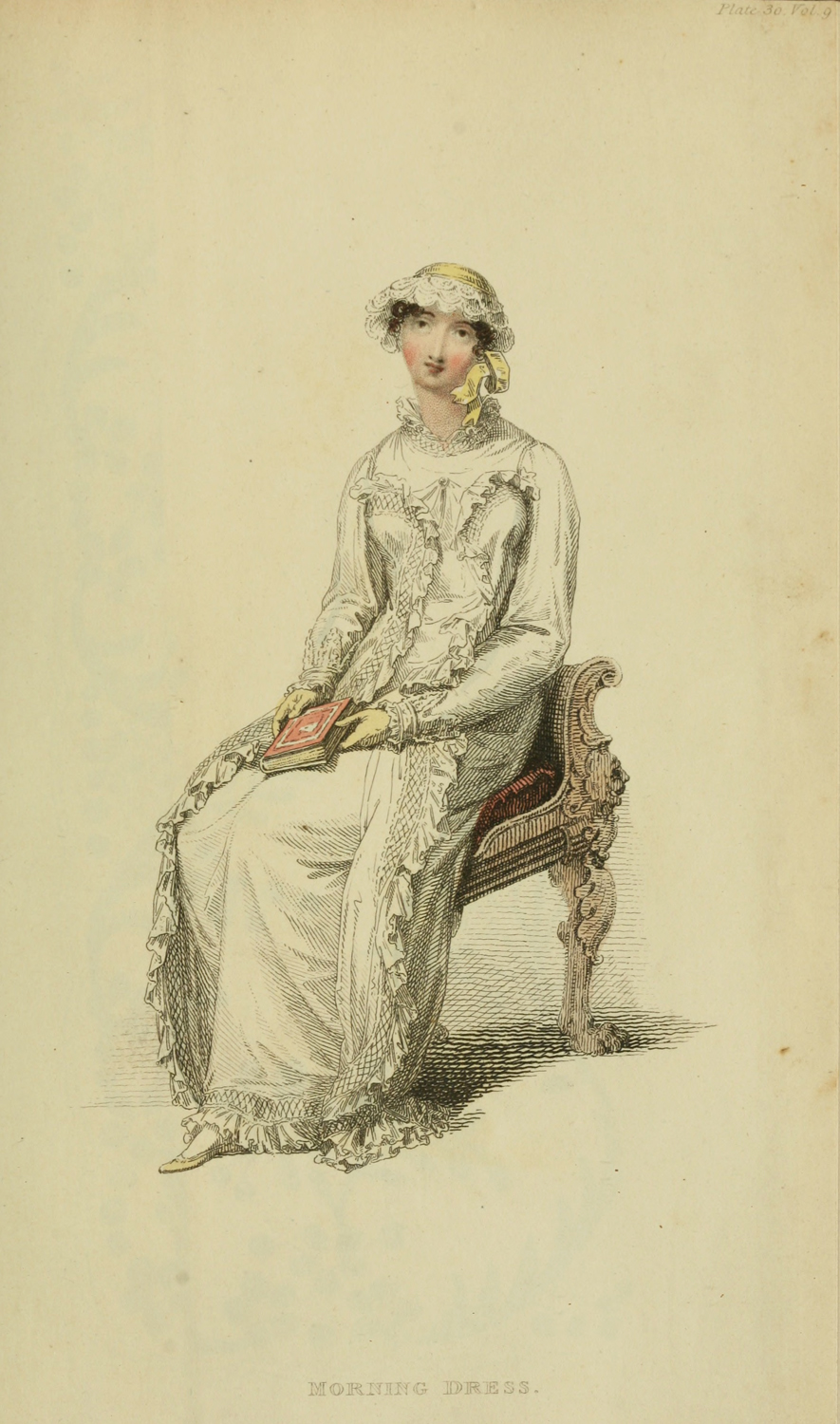
Morning Dress:
A Polonese robe and petticoat of fine cambric or jaconot muslin, ornamented at its several terminations with a border of net-work, furnished with an edging of muslin, gathered very full, and a vandyke cuff, en suite.
A bonnet-cap, composed of jonquille satin, and treble borders of scollopped lace, confined on one side with ribband of the same colour. Gloves and slippers of yellow kid.
This robe, so attractive, novel, and elegant, is more particularly adapted to the slender or tall figure; and is furnished us from the house of Mrs. Gill of Cork-street, Burlington Gardens, to whose unrivalled taste, unique elegance, and novelty of design, we have for some time past been indebted for the superior order of female fashions by which, we flatter ourselves, this publication is ever distinguished.
Ackermann’s Repository April 1813
 
Carriage Dress
 
A high round robe of jaconet or cambric muslin, with plaited bodice, long sleeve, and deep falling frill, terminated with a vandyke of needle work. A Russian mantle, of Pomona, or spring green sarsnet, lined with white satin,  and trimmed with rich frog fringe and binding, confined with a cord and tassel, as taste or convenience may direct.
 A cottage slouch bonnet, of corresponding materials, edged with antique scolloped lace, confined under the chin with ribbon, tied on the left side; and appositely ornamented with a small cluster o spring flowers  Slippers of green kid, or jean, and gloves of primrose kid.
   
LaBelle Assemblee, June 1813
 
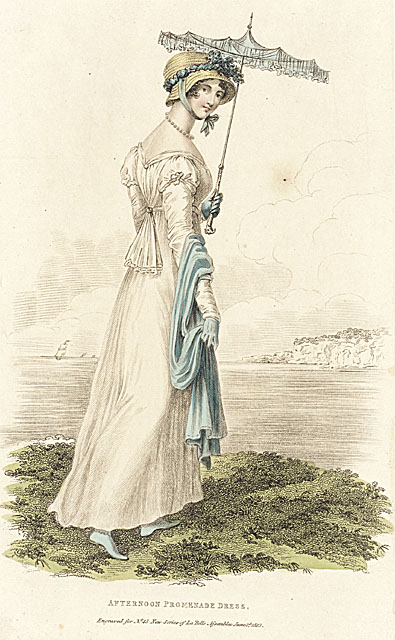
Afternoon Promenade Dress:
Short dress of jaconet muslin, made rather scantier in the skirt than they have been worn, and cut down as much as possible all around the bosom and back of the neck.  The body is full, but drawn in at the top of the back, which is ornamented with a while silk button, and confined to the waist by a girdle of rich white figured ribband; a jacket of the same materials as the gown, fastened to the waist by a white silk button, complete this truly elegant dress which is unequalled for tasteful simplicity. Over this our fair pedestrians throw a sky-blue scarf.
Bonnet of white-willow shavings, ornamented with a flower and wreath of sky-blue, and tied under the chin with a ribband to correspond. Hair dressed in very loose curls on each side of the temple and divided very much in front. Gloves and sandals of sky-blue kid. Necklace and earrings of white cornelian. Johnston parasol. This elegant appendage to the walking costume, is also of sky-blue silk, and finished with a rich and deep fringe; it has very recently made its appearance, and is already a general favorite.
 
 
  Ackermann’s Repository, August, 1813
 
Morning Dress
 
 A petticoat of jaconet or cambric muslin; with a Cossack coat, or three-quartered pelisse of lemon-coloured sarsnet, with vandyke Spanish border of a deeper shade.   Full sleeves, confined at the wrist with a broad elastic gold bracelet; confined also, at the bottom of the waist, with a ribband en suite.
Foundling cap of lace, with full double border in front, confined under the chin with a ribband the color of the pelisse, and tied on one side; a bunch of variegated carnations placed on the left side. Gloves and Roman slippers of lemon-coloured kid.
 
Some descriptions courtesy of Susan Forgue’s website:
 
 
user name: JAScholar
 password:  Academia
 
and Author Candice Hern’s website:


Kristine and Victoria Plan A Trip To England


“We need to start planning our next trip to England together.”
“Yeah, but we’d need an excuse for the husbands. I mean I just went, and you just went. How could we justify another trip? Without them?” Victoria asked.
“Well, I think I’m fine on that point. Hubby’s had enough of England for the time being, my good man.”
Victoria and I were together, seated on the patio at Panera Bread in Ft. Myers, Florida. We stared at one another across the table for a bit, our minds getting a Lucy and Ethel type workout.
“Think!” I urged as I lit a cigarette.
“I am thinking,” Victoria assured me.
“Maybe we need alcohol.”
Victoria checked her watch. “It’s only 10: 30 a.m. Too early even for us.”
Sigh. Think, think, think, think I admonished myself . . . . . . an idea suddenly occurred to me. I grinned. “By Jove, I think I’ve got it!”
“What? What!?
“The blog.”
“The blog?”
“Our blog. Number One London.”
“Yeah, I know what our blog is called. What about it?” Victoria asked.
“A Number One London tour to England.”
“A tour? With other people? Besides us?”
“Yes, Ethel, other people besides us. You know I worked as a tour guide for Patty Suchy and her Novel Explorations. You were on some of the tours I did.”
“I know, but . . . I’ve never been a tour guide.”
“But you’ve been to England hundreds of times. You’re qualified. I’ll get you a Blue Badge for Christmas. With your name on it and everything. Now come on, we have to come up with a theme for the tour. What would be a good theme?”
 
Victoria and I threw out a couple of (lame) ideas for a tour theme. The best of the lot was Victoria’s suggestion – Great Ladies of British History.
We kicked the idea around for a while.
“I’m not thrilled,” I finally said.
“You’d think that you and I could come up with something better than that.”
“You’d think.”
Some minutes went by and we wracked our brains for inspiration. “This is becoming painful,” Victoria said after a time.
“Are we stupid?” I asked Victoria.
“Apparently so.”
“I mean you and I are really bloody stupid.”
“I’ve already agreed with you. You don’t have to rub it in.”
“No, listen, I mean the theme of the first ever Number One London tour to England is so obvious.”
“It is?”
“You ready?”
“For God’s sake . . . . . “
“Wellington. As in the Duke of. As in the guy at the top of our blog. That Wellington.”


Victoria let out a whoop and clapped her hands. “Yes! It has to be Wellington. Obviously.”
 
Excitement gripped us both as we hurriedly drew paper and pens to ourselves.
 
“Now we have to come up with an itinerary,” I said.
 
“We could do Spain and Portugal and then finish up in England.”
 
I blinked. “You forgot India. Look, we have to think about this realistically. We can’t make the tour so inclusive that it becomes cost prohibitive.”
 
“You’re right,” Victoria conceded. “And we have to bear in mind that most people can’t get away for a month at a time.”
 
“There is that,” I agreed. “So we stick with England, agreed?”
 
For the next hour, Victoria and I were like kids in a candy store. Once we had a theme we could sink our teeth into, we had no difficulty in fashioning a rough itinerary that included all the locations relevant to Wellington’s life – London, Walmer, Brighton, Reading . . . . . .
 
“What about that guy the Duke and his friends were always visiting?” I asked Victoria.
 
“What guy?”
 
“You know, the Duke of something. He had that stately home where they all went shooting and spent the holidays every year.” I began running down dukes in my mind. Atholl? No. Bedford? Nyet. Norfolk? Sigh. 
“Rutland!” I cried at last. “The Duke of Rutland! What’s the name of his house?”
 
“Belvoir Castle,” Victoria said without hesitation.
 
“Where is it, exactly?” I asked her.
 
“It’s in Grantham, in Leicestershire, but I don’t want to go back there.”
 
“You’ve already been there?” I asked, disappointed.
 
Victoria gave me a pitying look. “You’ve been there, too. On the Great North Road tour you did with Patty. We were together. Your daughter Brooke was also there. It’s where we were held up by the highwaymen.”  (Read about it here)


“Oh, yeah.” Often the tours run together in my mind and I’m not sure where I’ve been. Or what I’ve seen. Or who I was with.
 
“It’s too far for a side trip, anyway. But speaking of Grantham . . . . ” Victoria said slyly.
 
“What about Grantham?” I asked.
 
“Where does Lord Grantham live?”
 
“At Downton Abbey?”
 
“And what’s Downton Abbey when it’s at home?” Victoria encouraged.
 
“Highclere Castle?”
 
“Bingo! And where’s Highclere Castle?”


“I have no idea, but if you tell me I’ve already been there and don’t remember it, I’ll cry.”
 
“As far as I know, you haven’t been there. And it’s only down the road from Stratfield Saye.”
 
“Really?”
 
“Well, I don’t know if it’s literally down the road, but it’s close enough that we’d be foolish to pass it by. What do you know about Lord Carnarvon and the Duke of Wellington?”
 
I was silent for a few minutes, mulling over Lord Carnarvon in my mind. “I got nothing,” I said in the end. “Come to think of it, I don’t think Lord Carnarvon’s name has ever come up in relation to Artie. In fact, I’d say there is no connection.”
 
“We need a connection in order to justify it as a stop on the Wellington Tour,” Victoria said.
 
“No we don’t.”
 
“We don’t?”
 
“No! It’s our tour. We’re planning the itinerary, right? We can put whatever we want on the schedule.”
 
Victoria looked skeptical.
 
“If anyone questions it,” I told her, “we’ll just tell them we’re going because we both want to see the room where Mr. Pamuk died. And because it’s just down the road from Stratfield Saye. And Windsor.”
 
“Windsor’s not down the road from Stratfield Saye.”
 
“No, I meant we need to add Windsor to the itinerary.” And so we did.
 
Finally, wrung out and exhausted, Victoria and I sat back and grinned at one another.
 
“The itinerary isn’t half bad,” I said.

“Not half bad?” Victoria sneered. “Listen, if this wasn’t our tour, I’d be signing up for it.”

“How much fun is this going to be? This is going to be even better than our trip to Belgium for the re-enactment of the Battle of Waterloo.”

Victoria grinned at me and offered up a phrase of the Duke of Wellington’s that we often re-use, “You  may depend upon it, Madam!”


JOIN KRISTINE AND VICTORIA IN LONDON ON


SEPTEMBER 4, 2014 AND
TRAVEL WITH US ON AN EXCITING ITINERARY THROUGH ENGLAND.
 
Available for booking as of today!
 
FOLLOW THIS LINK FOR  COMPLETE DETAILS ON 


Victoria's Day One in London, Part Three

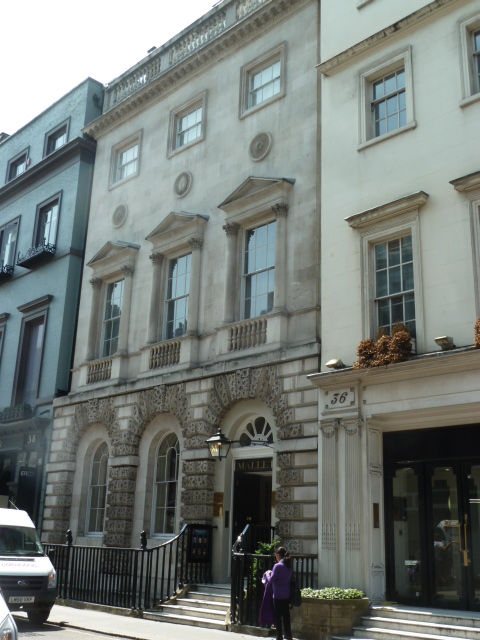
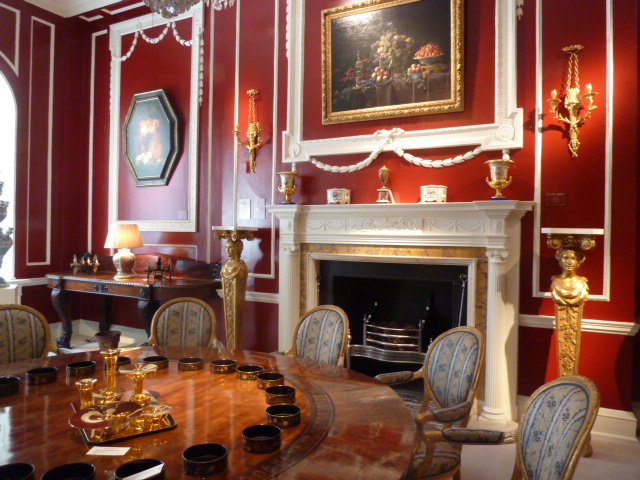
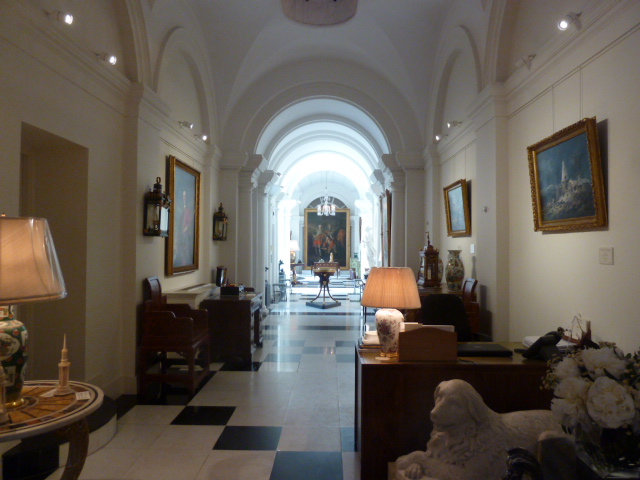
After our visit to Horse Guards and watching its ceremonies, I was eager to visit the antique dealer  Mallett in Ely House in Mayfair. This is the location of their London showrooms, featuring an exhibition “The Age of Elegance“.  My every expectation was exceeded by this outstanding collection of objects  from an 18th c. townhouse, displayed in the magnificence of Ely House, built for the Bishop of Ely in 1770, and now the site of the Mallett London showrooms.

Mallett, 37 Dover Street, Mayfair

Ed enjoyed it too — at least he said he did, though I could see him calculating if he dared to sit on one of the delicate antique chairs.  He didn’t, though we did find him a seat after a while.  We were escorted by Ms Gina Hamilton, who was gracious enough to show us around.  We had tried to clean off our dusty shoes at the doorstep, but I suspect she did not view us as prospective clients.

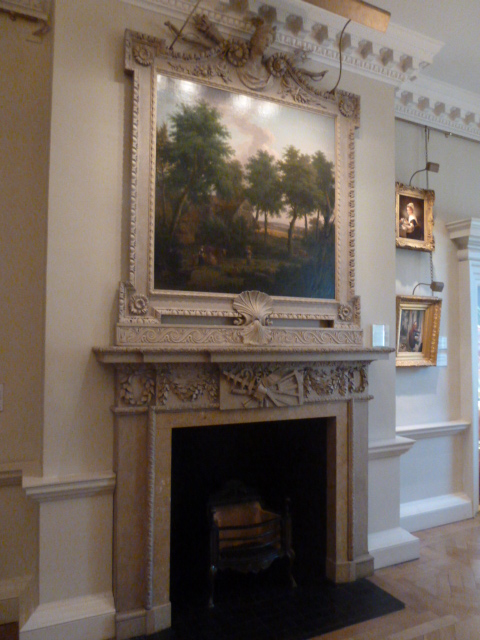
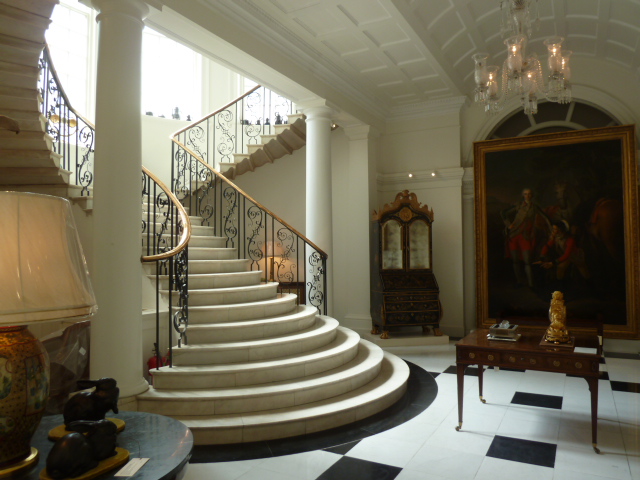
The Saloon
 
Everything was for sale, and again, I so wished I had won the lottery.  And pledged to buy a ticket the next time it got up to hundreds of millions.  (Note: I haven’t yet!)
 
 
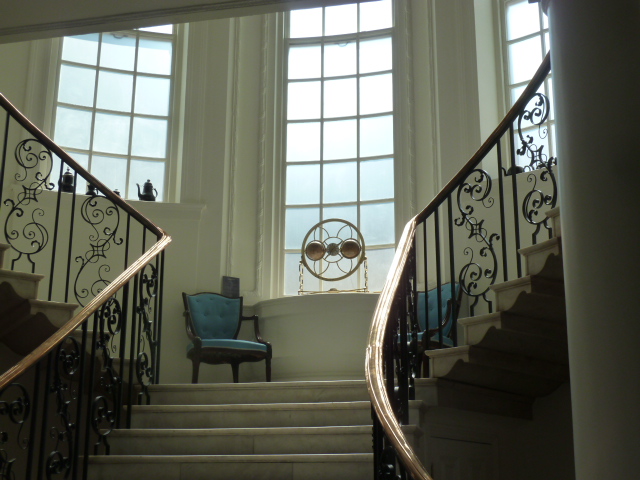
The interior is beautifully lit by large windows on the staircase.
 
 
Two views of the graceful staircase.
 

The Venetian Room
 
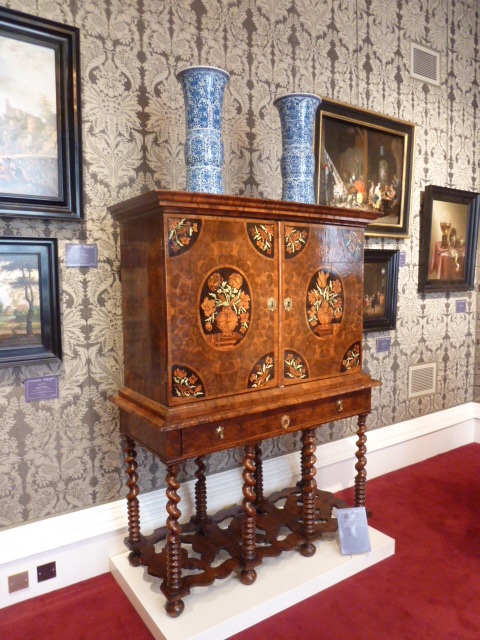
William And Mary Cabinet 
Above is a Cabinet of Oyster Veneer and Floral Marquetry on a stand, English, ca. 1690. 


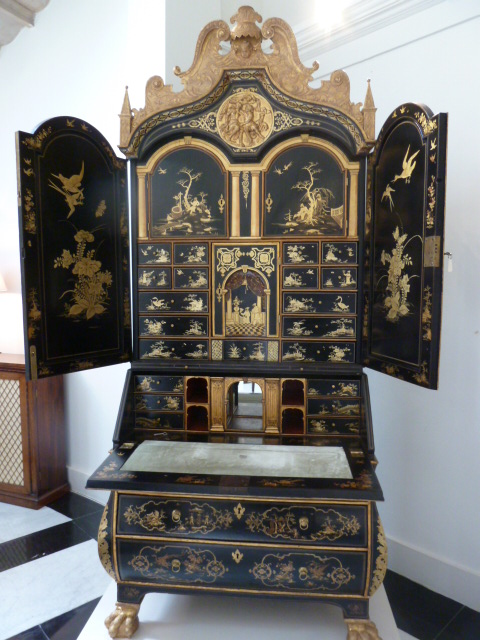
Japanned Bureau-Cabinet
 Early 18th c., black and gilt, from Germany
 
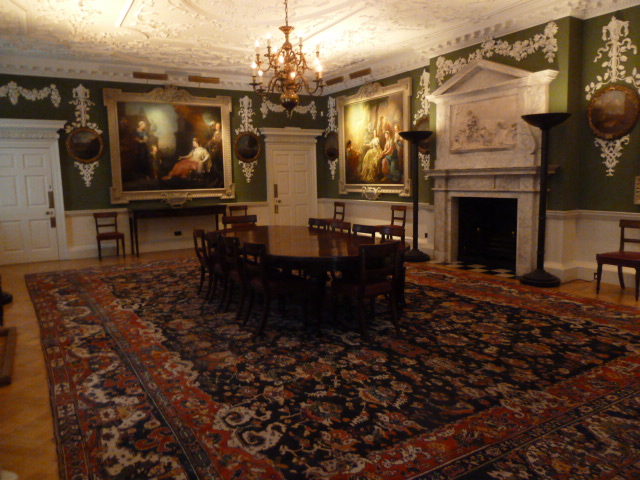
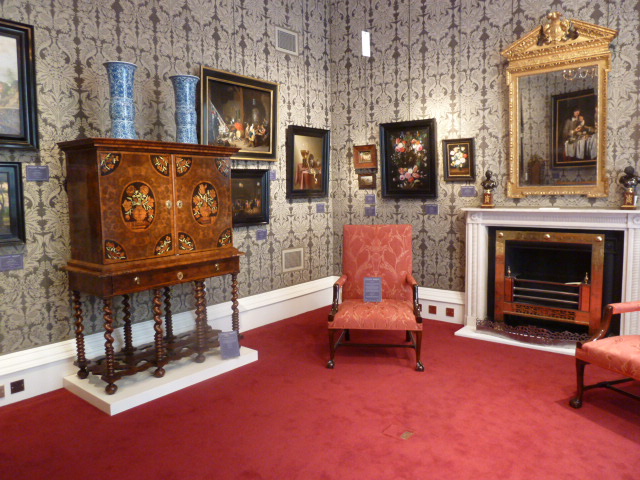
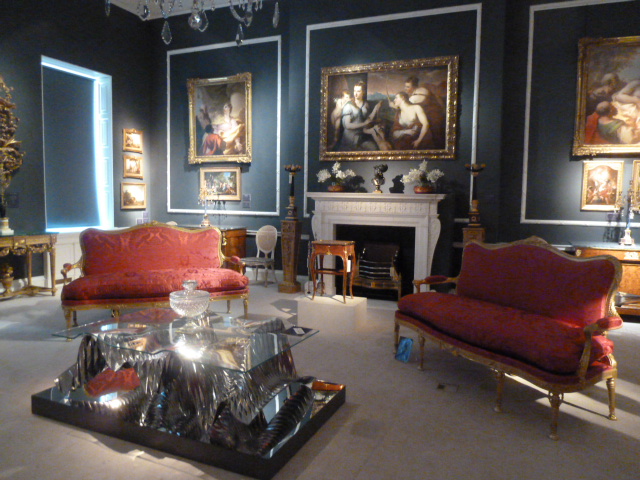
The Grey Room
 
 
A feast for the eye, indeed.  You can have hours of enjoyment by surfing the website of Mallett both in London and New York.
 
Saying a heartfelt thank-you and a reluctant good-bye to Ms. Hamilton, we departed. 
 
“Time for lunch,” Ed noted
 
“I have just the place,” I said quickly. “And it’s only a short walk.” At least, I hoped it would be a short walk — and it was, to the restaurant Kristine and Greg enjoyed a few months before, Burger and Lobster.
 
The Lansdowne Club
 
On the way, we passed the Lansdowne Club, in the part of Lansdowne House that remained after the building was partially demolished in the early 1930’s to put through Fitzmaurice Street, connecting Curzon Street with Berkeley Square.  Read more about the club and the history of the building here.
 
 
Agreements which ended the  American Revolution were made on the premises.
 

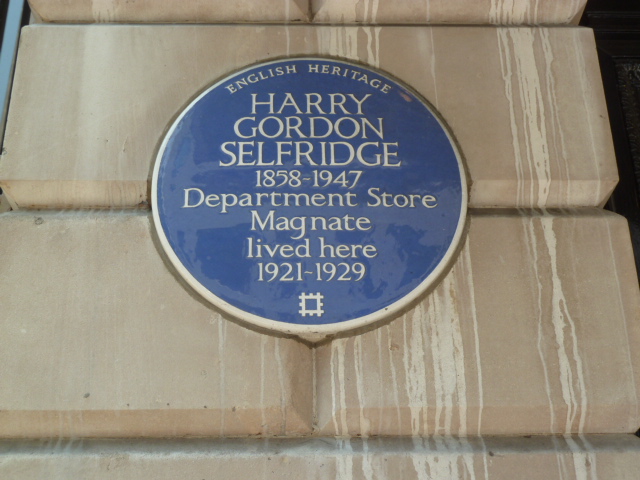
Gordon Selfridge lived here in the 1920’s.
 
 
If you are a watcher of Mr. Selfridge on PBS, in future episodes I suspect he will move to Lansdowne House where he held famous (infamous?) parties.  Ever heard of the Dolly Sisters?


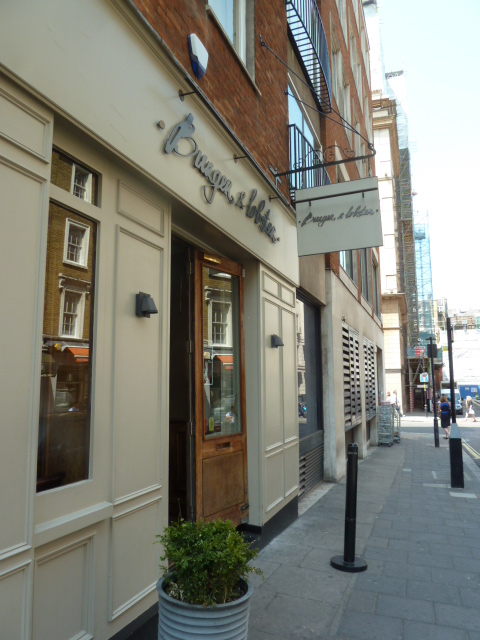
Burger and Lobster, 29 Clarges Street, Mayfair
 
 
Our table awaits
 
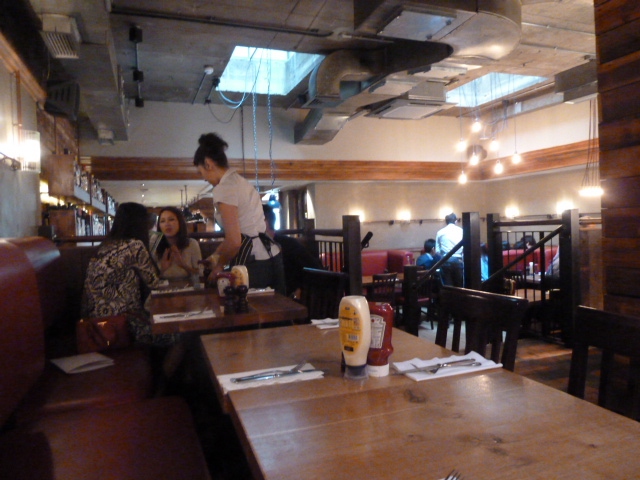
The restaurant was crowded and the food delicious.  Ed was again delighted to be off his feet and able to take refreshment.  Gin, as I recall.  The décor is very avant, and reminded me of the latest trendy restaurant at home — skylights, lots of clear lightbulbs on long cords, draped into groups, solid, simple furniture. The burgers were thick and juicy, the lobster delicate and tasty.  We both loved it, but eventually we had to surrender our comfy spot to the waiting hordes..
 
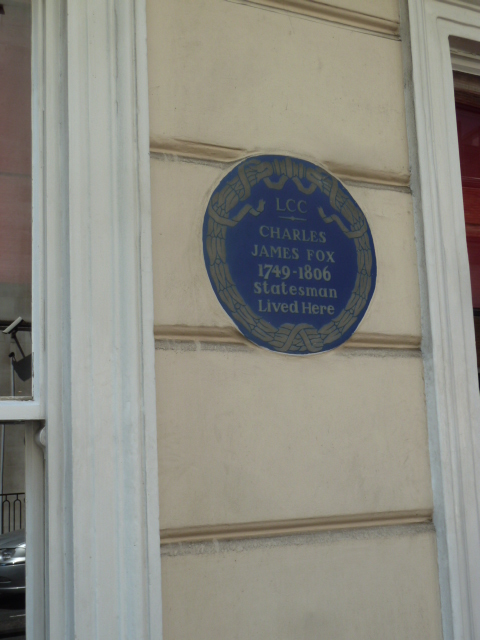
As always, when wandering Mayfair, many of the buildings had blue plaques noting former residents. 
 
 
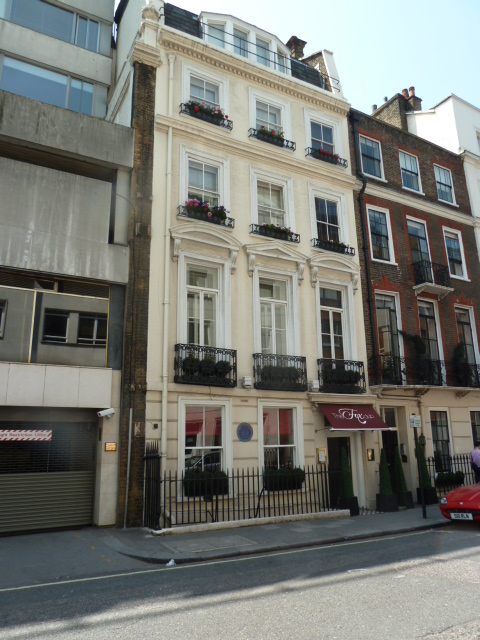
46 Clarges Street was  once the home of Charles James Fox, the ultimate Whig and the bane of many a Tory.  Appropriately, it is now the home of The Fox Club.


The Fox Club
 
After another visit to Boots Pharmacy, Ed headed to Green Park Station to catch a Victoria tube back to St. Pancras.  He could spend the remainder of the afternoon in the hotel soaking his foot and napping.  As for me, I had an Agenda!!! After all, I was in LONDON!!! Details coming soon.


The Adventures of Dr. Syntax in Search of the Picturesque, Part 12

Excerpts from Cantos XXIV, XXV, XVI , in which Dr. Syntax returns home at last

At the beginning of Canto 24, the author William Combe employs a favorite technique: commentary on the quality of popular culture in his day.  Though the central thrust of Dr. Syntax is a satire on the idea of the picturesque as promoted in the works of William Gilpin and others, through Syntax, Combe has plenty to say about other aspects of his world:

 Excerpts from Canto 24.


Dr, Syntax at Covent Garden Theatre
 

…”I’ve seen a play,” he (Syntax) mutt’ring said; —

“Twas Shakespeare’s — but in masquerade!
I’ve seen a farce, I scarce know what 
‘Twas only fit to be forgot.
I’ve seen a critic, and have heard
The string of nonsense he preferred.
Heaven bless me! where has Learning fled?
Where has she hid her sacred head?
Oh, how degraded is she grown,
To spawn such boobies on the town!”…  

“Well,” said my Lord, when he appear’d,
“I hope the play your spirits cheerd;
Falstaff, the morning critics tell,
Was never surely play’d so well”
“These critics,” Syntax smiling said,
“Are wretched bunglers at their trade;
One sat beside me in the pit.
No more a critic than a wit!… 

They engage in a long discussion of the theatre and critics until they get back to the subject of Dr. Syntax’s book.  Anyone  familiar with publishing will enjoy the remarks of the publisher Vellum:

 Vellum appeared, with solemn look.
To talk about the Doctor’s book.
He said, “Twas true, a learned friend
The manuscript did much commend;
He thinks it is a work of merit.
Written with learning, taste, and spirit;
The sketches too, if he don’t err.
Possess appropriate character;
‘Tis to the humour of our age.
And has your Lordship’s patronage;
I therefore wish the work to buy.
And deal with liberality.
‘Tis true that paper’s very dear,
And workmen’s wages most severe:
The volume’s heavy, and demands
Th’ engraver’s with the printer’s hands;
Besides, there is a risk to run;
Before the press its work has done.
New taxes may, perhaps, be laid
On some prime article of trade.
And then the price will be so high; —
The persons are but few who buy
Books of so very costly kind;
But still the work is to my mind:
I’ll try my luck, and will be bound
To give, my Lord, three hundred pound.”

 “After some little chat on trade.
The bargain was completely made —
The work transferr’d, the money paid.

“Tho’,”
said my Lord, “I think your gains
By no means equal to your pains:
(For Vellum will a bargain drive
As well as any man alive;)
The work must give my friend a name,
And stamp his literary fame;
‘Twill Paternoster Row command,
And keep old Vellum cap-in-hand;
And when a name is up, ‘tis said
The owner may lay snug in bed. –
Write on — the learned track pursue —
And booksellers shall cringe to you.”  

“Much pass’d upon his Lordship’s part,
Which shew’d the goodness of his heart;:
While Syntax made his full replies,
Not with his tongue — but with his eyes.

Dr. Syntax will indeed be a published author!  Music to his ears.

Selections from Canto 25

My Lord retir’d–the Doctor too,

As he had nothing else to do,
Thought he would take a peep and see
His noble Patron’s library.
So down he sat, without a care,
In a well-stuff’d morocco chair.
And seiz’d a book; but Morpheus shed
The poppies o’er his rev’rend head;
While Fancy would not be behind.
So play’d her tricks within his mind.
And furnish’d a most busy dream,
Which Syntax made his pleasant theme. .
The Doctor’s Dream


When he awakes, he tells My Lord about the dream…
 My Lord continued the debate;
And time pass’d on in pleasant prate.
Till night broke up the tete-a-tete.
Selections from Canto 26
 
CROWN’D with success, the following day
The Doctor homeward took his way;
And on the ‘morrow he again
Was borne by Grizzle o’er the plain; …
 Some days before, (I had forgot
To say,) a letter had been wrote.
To tell how soon he should appear.
And re-embrace his dearest dear;
But not one solitary word
Of his good fortune he preferred.  
So when he arrives at home, his wife is hardly glad to see him, thinking him a failure.
‘Twas thus he thought, when, at the gate.
He saw his Doll impatient wait;
Nor, as he pass’d the street along.
Was he unnotic’d by the throng;
For not a head within a shop
But did through door or window pop.
He kiss’d his dame, and gravely spoke.
As now he brooded o’er a joke
While she to know, impatient bum’d,
With how much money he retum’d.
” Give me my pipe,” he said, ” and ale,
And in due time you’ll hear the tale.”
 
He sat him down his pipe to smoke,
Look’d sad, and not a word he spoke;
But Madam soon her speech began.
And in discordant tones it ran: —
“I think, by that confounded look.
You have not writ your boasted book;
Yes, all your money you have spent,
And come back poorer than you went;
Yes, you have wander’d far from home.
And here a beggar you are come…
 Thus, as she vehemently prated,
And the delighted Doctor rated.
From a small pocket in his coat,
He unobserv’d drew forth a note,
And throwing it upon the table.
He said, “My dear, you’ll now be able
To keep your mantua-maker quiet;
So cease, I beg, this idle riot:
And, if you’ll not make such a pother,
I’ll treat you with its very brother:
Be kind — and I’ll not think it much
To shew you half-a-dozen such.”
 
 
Doctor Syntax Returned From His Tour
 
 
She started up in joy’s alarms.
And clasp’d the Doctor in her arms;
Then ran to bid the boys huzisa,
And gave them all a holiday.  
“Such is the matrimonial life,”
Said Syntax ; — “but I love my wife.
Just now with horsewhip I was bother’d;
And now with hugging I am smother’d;
But wheresoe’er I’m doom’d to roam,
I still shall say—that home is home…
 Dr. Syntax reflects on life in general…
 More had he spoke: but, lo! the Dame
With the appointed haslet came:
When Syntax, having bless’d the meat,
Sat down to the luxuriant treat.
“And now,” he said, “my dear, ’twill be
As good as Burgundy to me.
If you will tell me what has pass’d
Since we embrac’d each other last’
“ Oh,” she replied, ” my dearest love,
Things in their usual order move….
 After a long litany of troubles his wife endured, the Doctor finishes his dinner.
 
The Doctor thought his jolly wife
Ne’er look’d so handsome in her life.
Her voice he thought grown wond’rous sweet;
To him a most uncommon treat…
 Though to each virtue often blind,
The world to wealth is ever kind ;
For lo ! a certain tell-tale dame,
Yclep’d and known as Mistress Fame,
Had told to all the country round.
That Syntax, for a thousand pound.
Had sold a learned book he wrote;
That now he was a man of note. …
 But all these views soon found an end:
A packet came, and from a friend,
From ‘Squire Worthy, who resides
On Keswick’s bold and woody sides. …
 ” Good Rev’rend Sir, Our Vicar’s dead.
And I have nam’d you in his stead.
I often wish’d his neck he’d break.
Or tumble drunk into the Lake…
 
 “You will perceive I keep my word,
And to this church you’re now preferred…
You, Sir, may make the living clear
Above three hundred pounds a year;
And if you will but condescend
To my Son’s learning to attend;
If you’ll direct his studious hour,
I’ll add some fifty pounds or more:
Nay, soon we hope that you will cheer
The parish with your presence here
Miss Worthy and her sister join
Their kindest compliments to mine;
And to your prayers I recommend
Your faithful and admiring friend,
Jonathan Worthy.”
 …The time soon came, when, quite light-hearted.
The Doctor and his spouse departed:
And as they journey’d on their way. …
 When rising ‘mid the tufted trees.
Syntax his sacred structure sees.
Whose tow’r appeared in ancient pride.
With the warm vic’rage by its side.
“ At length, dear wife,” he said, ” we’re come
To our appointed tranquil home.”


Doctor Syntax Taking Possession of His Living
 
 
Syntax, whom all desir’d to please,
Enjoy’d his hours of learned ease;
Nor did he fail to preach and pray,
To brighter worlds to point the way;
While his dear spouse was never seen
To shew ill-nature or the spleen;
And faithful Grizzle now no more
Or drew a chaise, or rider bore.
Thus the good Parson, Horse, and Wife,
Led a most comfortable life.
  
The End
 
Note that the Horse is mentioned before the Wife in the conclusion…author William Combe always went for the rhyme!!!.