A Pinterest Post: Juana Galán

This is one of my favorite Pinterest posts because Juana Galán (1787–1812), above, was fierce, feisty and would no doubt have been a favorite of the Duke of Wellington. During the Peninsular War, twenty year old Juana worked in a tavern in her home town of Valdepeñas, Spain, when she gathered the intelligence that the French were preparing to invade the town. As most of the men were away from the town already fighting in the war against Napoleon, Juana took matters into her own hands and rallied the townswomen in order to form a battle plan of their own.

On June 6, 1808, Napoleon’s troops entered the town, whereupon the women, strategically placed in windows about the square, poured boiling water and oil over the heads of the soldiers who rode past. Juana, armed with either a baton or a cast iron stew pot (depending on which version you believe) then went into the street and beat the soldiers about their heads like there was no tomorrow. No doubt Juana had help in the pummeling, as a single person, man or woman, could not have taken on an entire regiment of French cavalry by themselves, however history credits Juana alone for the deed. The French fled and subsequently abandoned their aim of conquering the region of La Mancha altogether. Soon afterwards, the Spanish army were victorious at the Battle of Bailen against the French.

On May 2, 1810, Juana married Bartolomé Ruiz de Lerma,  with whom she had two daughters. She died during the birth of her second daughter on September 24, 1812.

 
You can find all my Pinterest boards here.

The Wellington Tour – Devonshire House

No matter how many times I visit London, I always find new nuggets of historic trivia that are hugely interesting. I thought I’d do a bit of investigation recently in preparation for the St. James’s Walk Victoria and I will be leading during The Wellington Tour in September, when I discovered some interesting facts.

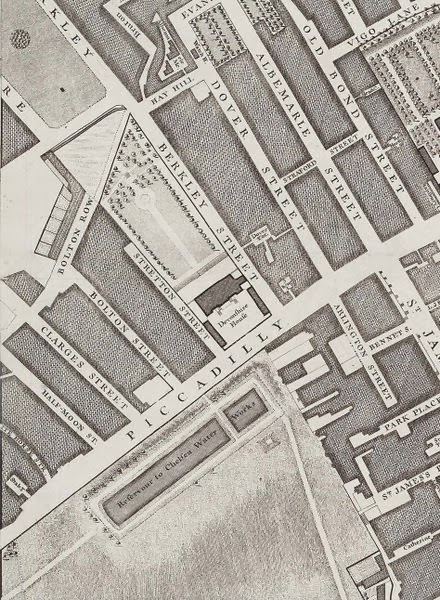
Firstly, I did some research into Devonshire House, London home to the Dukes of Devonshire since 1697, when the 1st Duke purchased the home, then known as Berkeley House, from Lord Berkeley. You can get an idea of it’s prime location on Piccadilly from Roque’s map below.

The house burned down in 1733 whilst undergoing renovations, allowing the Duke to rebuild in a contemporary style better suited to entertaining on a grand scale. The prime example of such an entertainment came over a hundred years on at The Duchess of Devonshire’s Ball, a fancy dress entertainment held in order to celebrate Queen Victoria’s Diamond Jubilee on 2 July in 1897. The Duchess encouraged guests to take their inspiration for fancy dress from history, literature and mythology. Thankfully, the Duchess hired photographer James Lauder of the Lafayette Company to be on hand to photograph the 200 costumed guests in front of different backdrops over the course of the evening.

The Duchess of Devonshire as Zenobia, Queen of Palmyra

The Ladies Churchill as Watteau shepherdesses.

Princess Henry of Pless as the Queen of Sheba

Unfortunately, Devonshire House (below in 1905) was demolished in 1920, when it was sold by the 9th Duke of Devonshire in order to pay death duties. Today, an office building stands on the site.

The new bit of trivia I learned is that the gates from Devonshire House were saved and moved to the entrance of Green Park off Piccadilly. I can’t tell you how many times I’ve walked past, and through, these gates, never realizing their history.


Another piece of London history I’ve walked past numerous times is the Porter’s Rest above, located just down the street from the Green Park Gates as you walk towards Apsley House. As E. Beresford Chancellor tells us, there is a plaque on the object that reads “At The Suggestion Of R.A. Slaney Esq. Who For 20 Years Represented Shrewsbury In Parliament This Porter’s Rest Was Erected In 1861 By The Vestry Of St. George Hanover Square For The Benefit Of Porters And Others Carrying Burdens.” You can be sure we’ll be pointing this piece of street furniture out to everyone on the Wellington Tour – who knew?


Americans and Stately Homes: A Fascinating Book

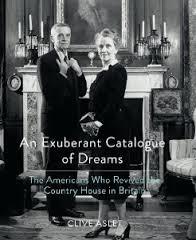
An Exuberant Catalogue of Dreams: The Americans Who Revived the Country House in Britain is the title of a glossy new book by author Clive Aslet.

Clive Aslet in Chicago

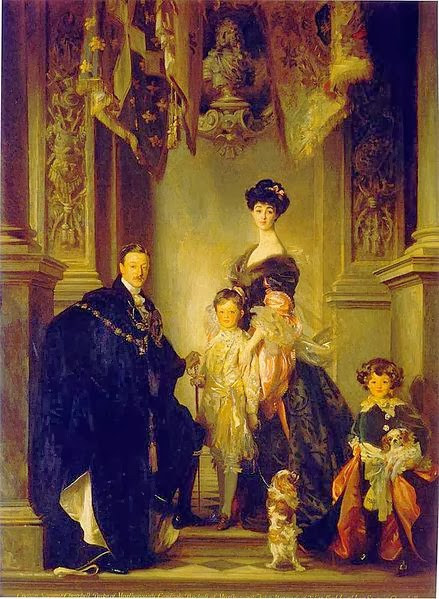
Victoria here, reporting on a recent dinner sponsored by the Royal Oak Foundation and the Woman’s Athletic Club of Chicago.  As part of the US-wide lecture series made possible by the Drue Heinz Trust, Mr. Aslet told us many stories about the wealthy characters who “rescued” so many British houses, even some castles.  There were many familiar names among the Americans, such as Consuelo Vanderbilt (1877-1964), perhaps the most famous of the heiresses who gained a title (Duchess of Marlborough) while her father’s fortune helped to renovate a great estate (Blenheim Palace).

9th Duke of Marlborough, the Duchess and their two sons
by John Singer Sargent, Blenheim

I was surprised — both at the talk and reading the book — at the number of men who also restored, revived, or outright built stately houses.  For example, Andrew Carnegie (1835-1919) was born in Scotland and came to the U.S. as a young teen.  He made the equivalent of billions in steel, oil, and railroads.  He rebuilt the 12th century ruins of the Castle in the Highlands, while contributing much of his fortune to libraries, universities, and other philanthropies in both the U.S. and Scotland.

Skibo Castle, Sunderland, Scotland, now a private club

Exuberant Catalogue of Dreams is a compendium of amazing stories and pictures, many from Country Life magazine. I love everything about English country houses and stately homes, so I relished every word.  It begins with a quote from P. G. Wodehouse: “Damme, they all seem millionaires in America,” from the Earl of Emsworth in Something Fresh, 1915.

Jacket Front: William Waldorf Astor and
Nancy Astor at Cliveden (Getty Images)
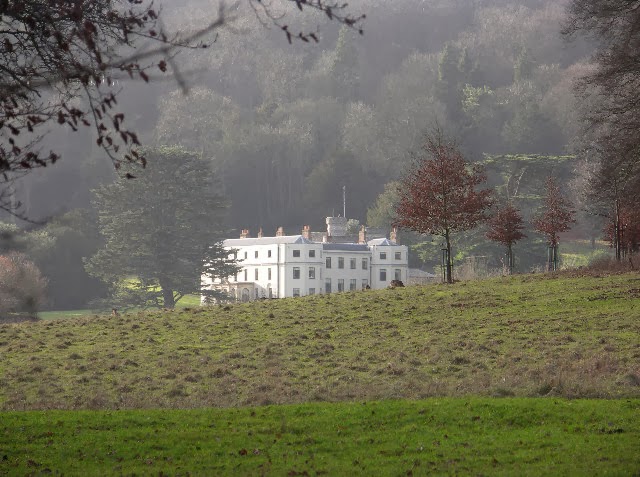
The individuals covered start with San Franciscan Miss Flora Sharon (1858-1924) who married Sir Thomas George Fermor-Hesketh  (in 1880) and took over Easton Neston on Northamptonshire. It ends with Sir Paul Getty  (1932-2003) at Wormsley Park in Buckinghamshire, now the home of his son and family, a famous cricket grounds, and a summer opera venue. 

Wormsley Park

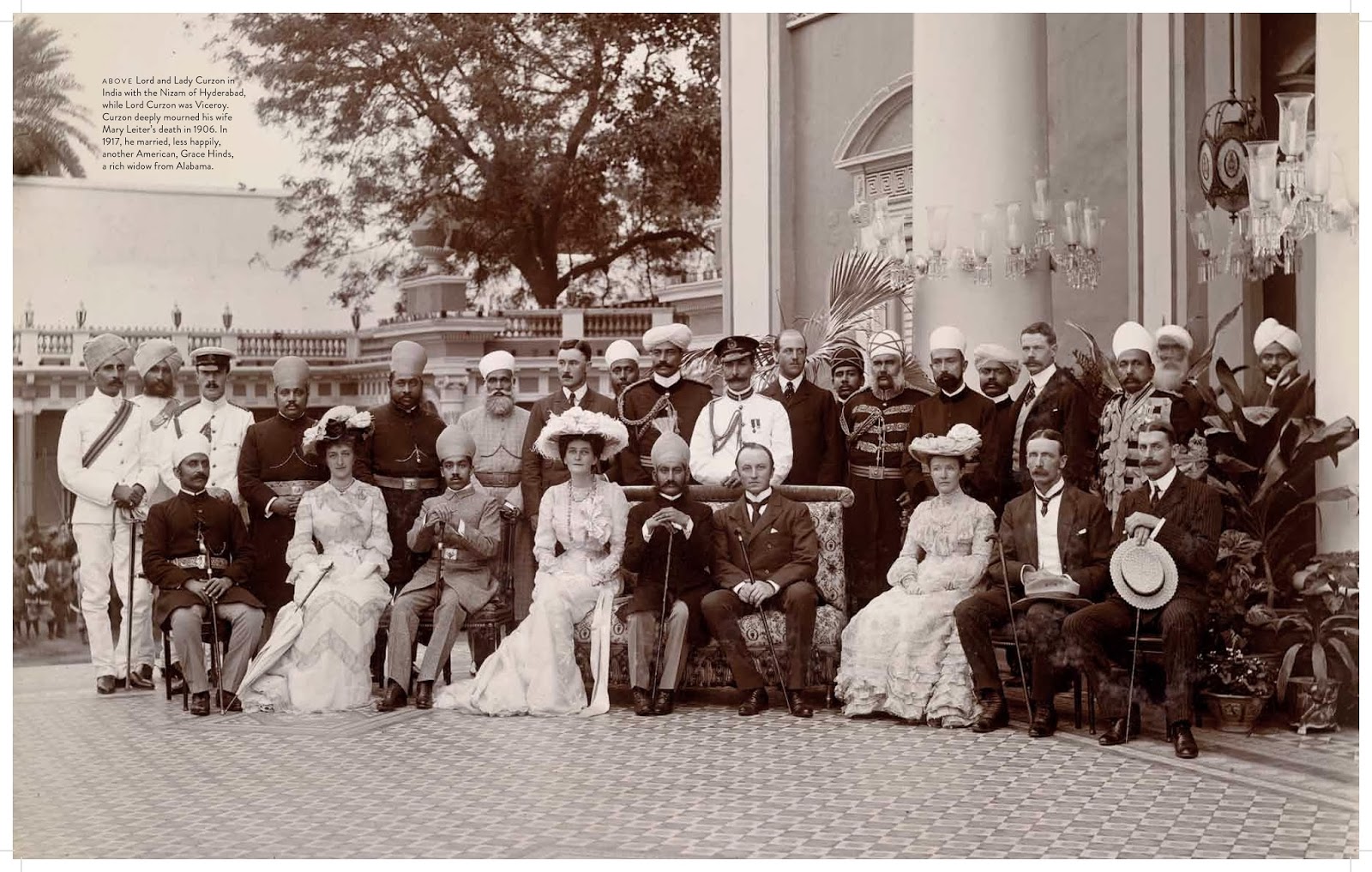
A number of the individuals covered have Chicago connections.  A member of Chicago’s Woman’s Athletic Club pointed out to Mr. Aslet that Mrs. Gordon Selfridge was once a member of the very club in which we all sat.  Selfridge (1858-1947), gaining renewed fame from the Television Series Mr. Selfridge, was associated with the famous Chicago firm Marshall Field and Company before he moved to London and founded the department store that bears his name.  A co-founder of Field’s was Levi Leiter (1834-1904), whose daughter Mary Victoria Leiter (1870-1906) married Lord Curzon, and became Vicereine of India and chatelaine of Kedleston in Derbyshire. .

Lord and Lady Curzon in India

This is just a tiny fraction of the engrossing stories you will find in Clive Aslet’s An Exuberant Catalogue of Dreams. I hope you still have time to put this on your list for Santa!!


Have Yourself a Luxurious London Christmas

In case you’re feeling the need for a little luxury this holiday season, we’ve rounded up some gift ideas that might come in handy whether you’re on the giving or receiving end of things.

This year, Harrods, that venerable institution dedicated to conspicuous consumption, has chosen
the classic British steam train as the theme for their holiday windows.


Of course, what Harrods is famous for are it’s hampers and this Christmas, Harrods offers it’s Decadence Hamper at a mere twenty thousand pounds.


Filled with everything one might need for an over the top culinary Christmas, the Decadence Hamper includes such staples as goose foie gras flavoured with truffle, Beluga caviar, table top decorations, a variety of cheese, mince pies, meats, jams, puddings, a Christmas cake and enough high end wines and liquors to make Mr. Carson envious. The hamper also includes Christmas crackers, but we doubt they can compare to those offered this year by Tiffany and Co.


The Tiffany and Co. Christmas Cracker, £180,000,  is available at the Bond Street Store and includes eleven pieces of Tiffany jewelry: a circlet diamond necklace in platinum, a pink tourmaline ring, Cobblestone earrings in platinum with diamonds, a yellow diamond ring, 8.75 carat aquamarine ring in platinum and a Marquise diamond cluster bracelet.


Should you prefer your jewels to come complete with historic provenance, you may want to turn to one of London’s venerable auction houses. Here’s a little something we found from the Sotheby’s Fine Jewelry auction that took place on December 13th in London –


Diamond tiara, circa 1900 – The centre designed as two wreaths, each swing-set to the centre with circular-cut and pear-shaped diamonds, between two modified rectangular panels of open work floral and foliate design, set with circular-cut and rose diamonds, inner circumference approximately 290mm, central motif detachable and can be worn as a brooch or pendant, the panels can be worn as brooches. Sold for 18,750 GBP                 
Should selecting gifts for everyone on your list become overwhelming, head to Selfridge’s, where this year they are offering shoppers their very own Elfridge.

The festively attired elves have been sprinkled about the Oxford Street store to guide shoppers through departments, find the perfect gifts, gift wrap and carry packages and hail taxis.

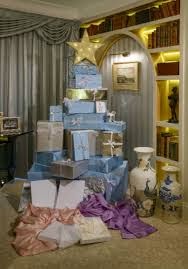
Of course, you’ll need to put all of those pretty packages under a tree and for inspiration on that score we direct you to The Goring Hotel and it’s 2013 Luxury Christmas Tree Collection.  This year, the trees have been created by iconic British brands including The Real Flower Company, Olivia Von Halle and Honeyjam. You can read more and see all of the trees here.

Once your shopping has been completed, reward yourself by booking in for Claridge’s Timeless Christmas offer that includes:

  • A two night stay in Claridge’s
  • Welcome bottle of champagne and festive treats in room on arrival
  • Overnight stocking delivery filled with edible delights for the younger guests
  • English breakfast on Christmas Day
  • Horse-drawn carriage ride through Mayfair on Christmas morning with refreshments
  • 5-course Christmas Day lunch in Claridge’s Ballroom
  • Boxing Day breakfast
                            
From £860 per room per night (including all taxes).


Visiting The Household Cavalry Museum

Opened in 2007 by Her Majesty, Queen Elizabeth II, the Household Cavalry Museum is located in Horse Guards, with an entrance off the Parade. Victoria here, looking forward to another look at the HCM when the Wellington Tour visits on Saturday, September 6, 2014.  Kristine and I hope you can join us…and refer you HERE for the complete details on the itinerary, costs and the fine print. 

 
Horse Guards, Whitehall
 
 
The history of the Household Cavalry goes back at least 300 years.  Though we are most aware of these soldiers in their colorful traditional uniforms as mounted sentinels at Horse Guards, as they change the guard at Buckingham Palace, and as escorts of the Queen on grand official occasions, the members alternate between active service on armoured vehicles in the “regular army” and ceremonial duties.

A closer view; the Parade is through the central arch
  
The Museum provides the history of the Horse Guards Building, designed by William Kent and completed by John Vardy in 1755, after Kent’s death.  The Duke of Wellington, as commander in chief of the British Army in the 19thCentury kept his office in Horse Guards until he retired shortly before his death in 1852.
 
 
Currently, two regiments make up the Household Cavalry, the Life Guards and the Blues and Royals.  Originating after the 1660 Restoration of Charles II to the throne, they provided personal Security for the monarch. Throughout the 17th and 18thcenturies, the cavalry fought in many wars, in Holland, in Germany, in Portugal and Spain. At the Battle of Waterloo, the regiments served bravely, capturing a French Eagle, a prized standard with far-reaching symbolic importance. It was the bloodiest battle of their history.

Museum Entrance, opening onto the Parade
 
What everyone was looking at on July 11, 2013, on the Parade


The museum also chronicles the service of the Household Cavalry regiments in the Crimean and Boer Wars, among other engagements.  In WWI, WWII, and in numerous later conflicts, the regiments performed their duties in armoured cars, in tanks, and in helicopters.
 
 
In the Museum
 
 
Ceremonial Uniforms

The horses get their due!!
 
The museum covers the choice and training of the horses, a matter of great interest
to many of us who love the sleek mounts, groomed to perfection and amazingly well behaved.  Each year, the horses are named with the same initial, thus preserving the year of their arrival in the Cavalry.  As an example, from the museum guidebook, “… Invader, Imogene and India arrived in 2008 and Jubilee Jenna and Jupiter in 2009.”  After an average of six months training, the four- or five-year old “recruits” serve for another 14 to 16 years, before withdrawal to a  private stable or a retirement home.
 
The Saga of Waterloo, June 18, 1815
 

The cavalry commander at the Battle of Waterloo was Henry Paget, Earl of Uxbridge and later, 1st Marquess of Anglesey. As the battle wound down, Paget sat on his horse beside the Duke of Wellington when a cannon shot shattered his leg.  Supposedly he said, “By God, sir, I’ve lost my leg.”  Wellington reportedly replied coolly, “By God, sir, so you have.”  After the amputation, Paget urged many improvements in the making of prosthetics for walking and riding.  He served the government and the army for another 37 years before finally passing away in 1854.  One of Paget’s artificial limbs is on display in the Museum.

For a few weeks each summer, the Household Cavalry conducts a retreat for the members and the horses at the Norfolk seashore – which is the reason that in my photographs taken in July 2013, their substitutes, members of the King’s Troop Royal Horse Artillery take over, wearing their black ceremonial uniforms based on those of the Hussars at the Battle of Waterloo almost 200 years ago. 


The Duke of Wellington’s office as Commander-in-Chief of the British Army was above the center arch leading from Horse Guards’ Whitehall façade to the parade ground.  The display photographed above depicts the final departure of the Duke from his position shortly before he died in 1852.  He was 83 years of age and had served his nation for 65 years.


The website for the Household Cavalry Museum is here.
 
Join us on The Wellington Tour!