RELIVING THE DREAM: TRAVELS WITH VICTORIA

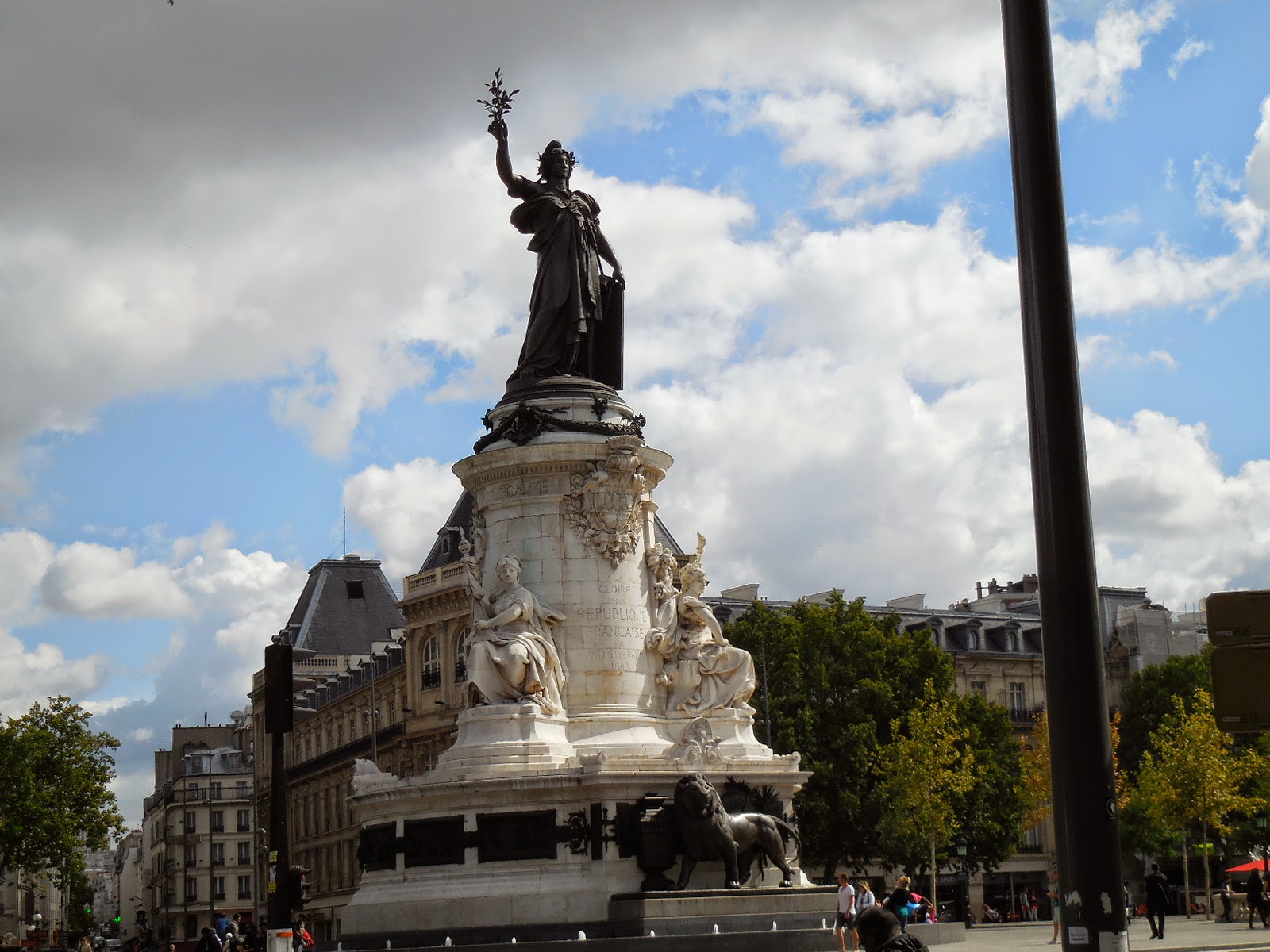
Place de la République, Paris
 
My travels this summer were indeed the dream of a lifetime, over a month spent in France and England.  And with two of my favorite people in the world, France with my husband Ed — and England with blog partner Kristine. No one could ask for more, unless that both of them were along for the whole time.
 
As I write this, I am still rather jet-lagged, days and nights mixed up. Kristine reports she had a relapse of her cold and is bed-bound for a while.  Of course, one might never mention the condition of our feet — or leg muscles, backs, and overflowing brains, so I won’t.
 
 
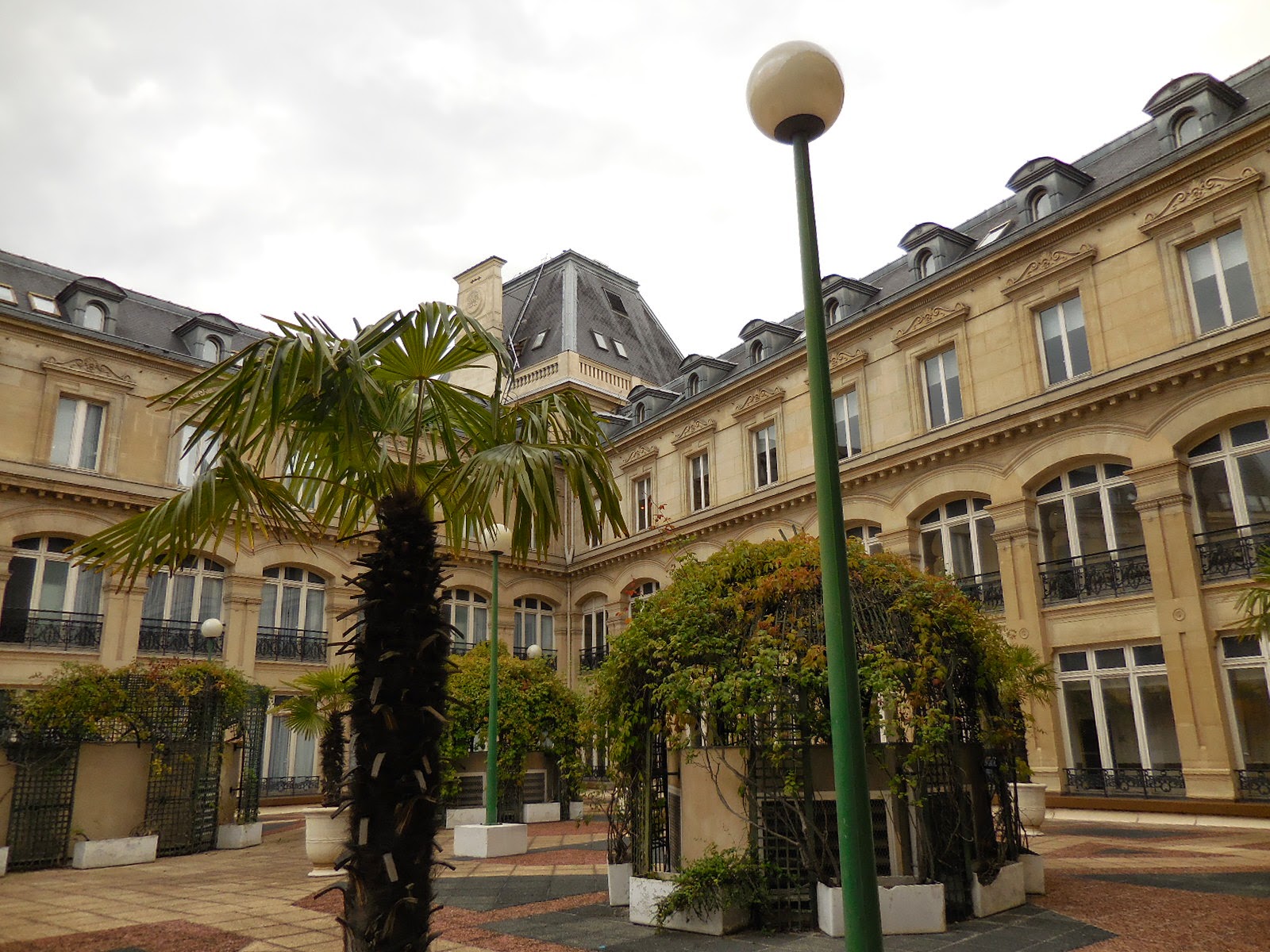
Courtyard of Crown Plaza République
 
So while I try to re-enter the real world after this fabulous interlude of travel (sore feet notwithstanding), I will share a few pictures and thoughts from France.  Kristine and I intend to do quite a few posts on our Duke of Wellington Tour and our many other adventures in England, but for the moment, please join me near Paris.
 
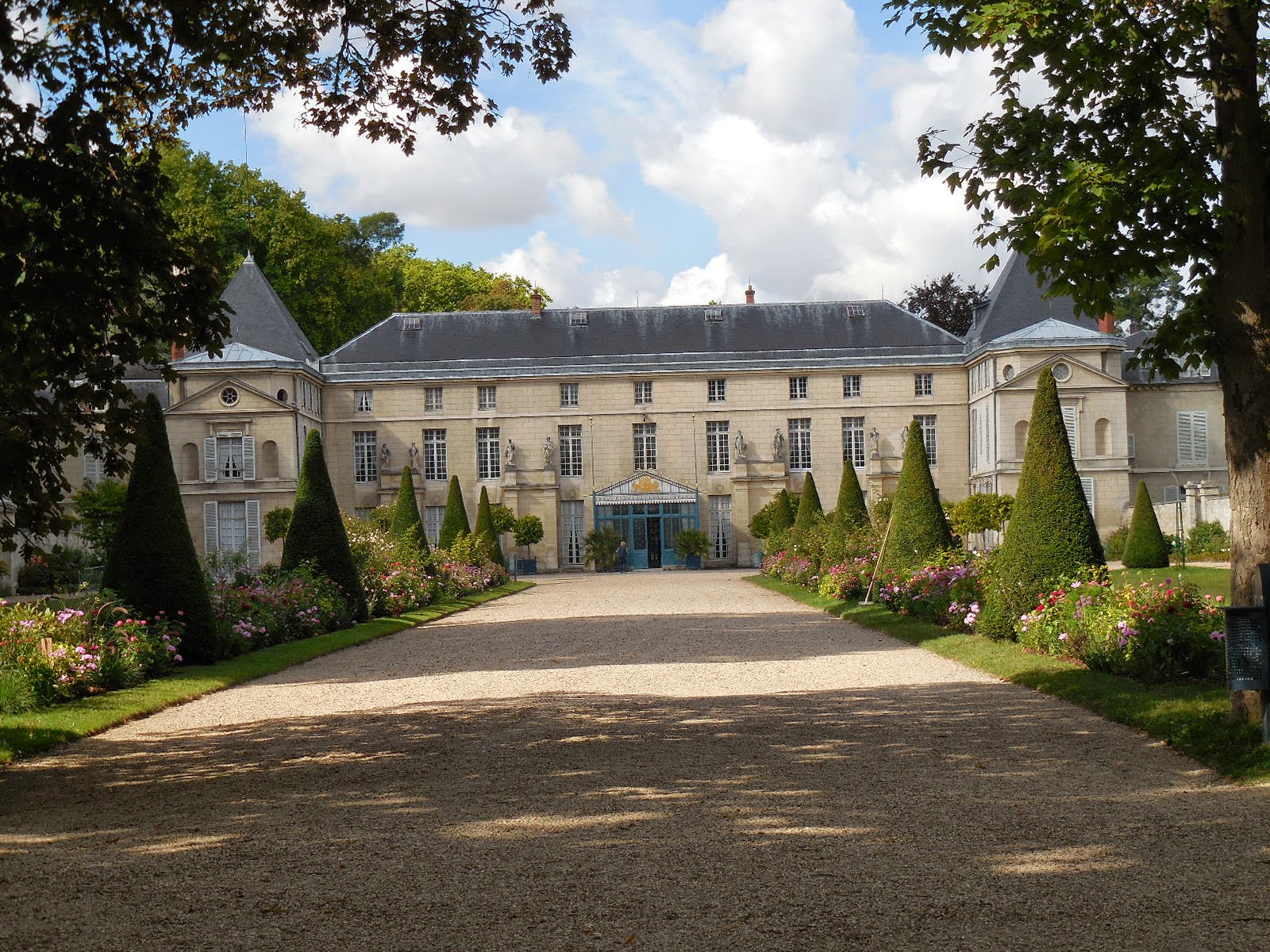
Malmaison
 
Ed and I had several visits in mind to some of the lesser known museums and sites.  Paris in August is full of visitors, so we wanted to see what we could find just off the beaten track.  One of my personal goals was to visit the home of Josephine, who married then divorced Napoleon so that he could wed a younger woman and sire an heir.  Malmaison was her escape form the rigors of the Court, where she could relax and fill her garden with the roses for which she is so famous.
 
Malmaison
 
The house is lovely, and truly worth a visit.  The gardens overflow with flowers, though I suspect Josephine would have kept them a bit better.  It is said that after her death, and just before he was sent away to St. Helena in 1815, Napoleon returned to Malmaison to mourn his lost love, not to mention his empire.
 
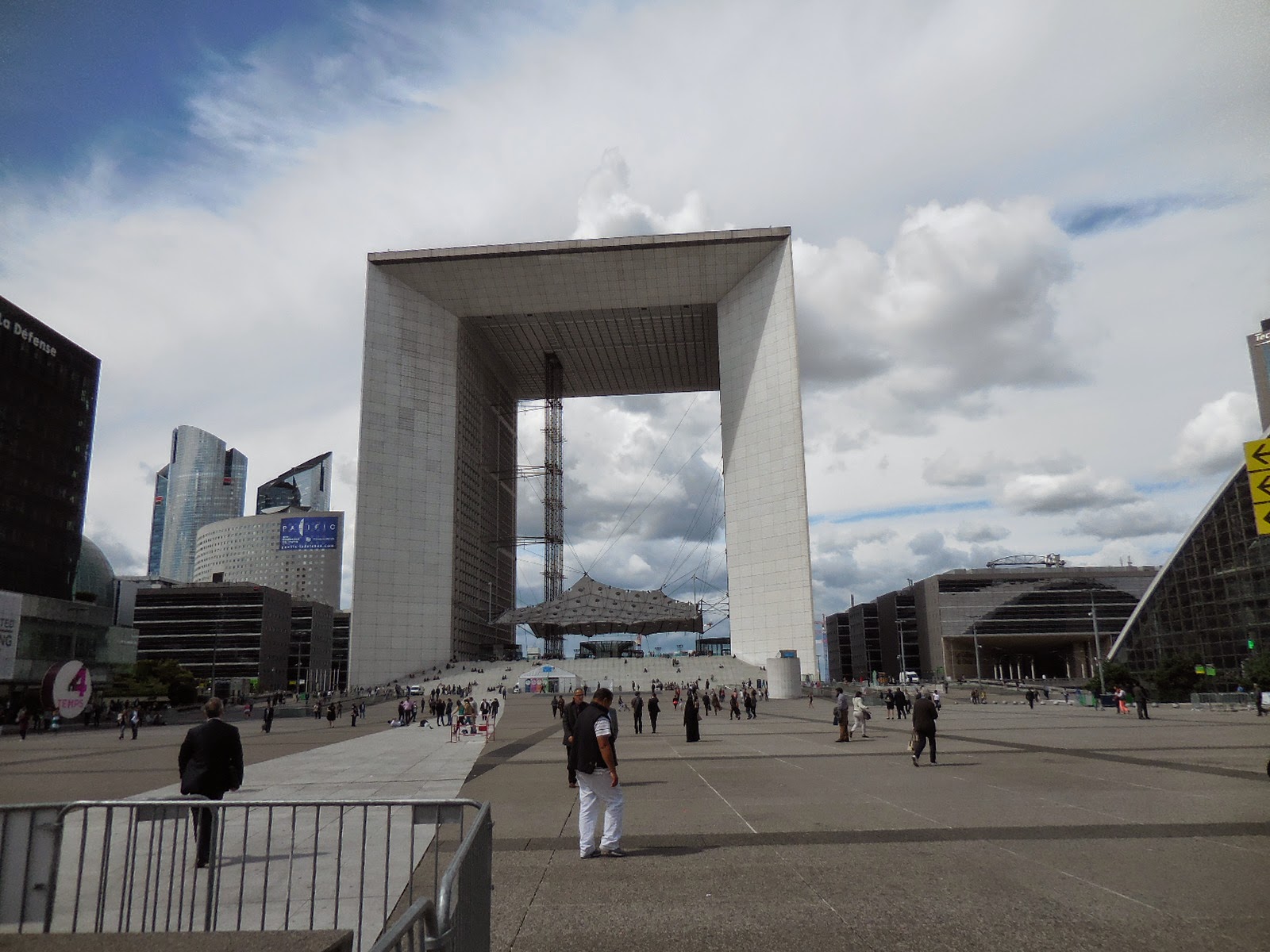
La Defénse
 

On the way back from suburban Malmaison, we stopped to take a look at La Defénse, la Grand Arche, which is the western-most point of the axis of the Champs Élysées through the Arc de Triomphe.  Guidebooks report that the Arche is so large that the entire Notre Dame Cathedral could fit inside it.  It is certainly impressive, set in an esplanade among a huge number of sleek modern hi-rise buildings, but to me, it doesn’t say anything except concrete.  It has none of the beauty of the rest of Paris.

Église du Dôme, Hôtel des Invalides
 
On our stroll to the Musée Rodin, we passed nearby Invalides, where Napoleon is buried.  We decided to let him rest in peace, rather than whisper to his tomb about the victory of the Duke of Wellington almost 200 years ago at Waterloo.
 
The Thinker, Musée Rodin
 
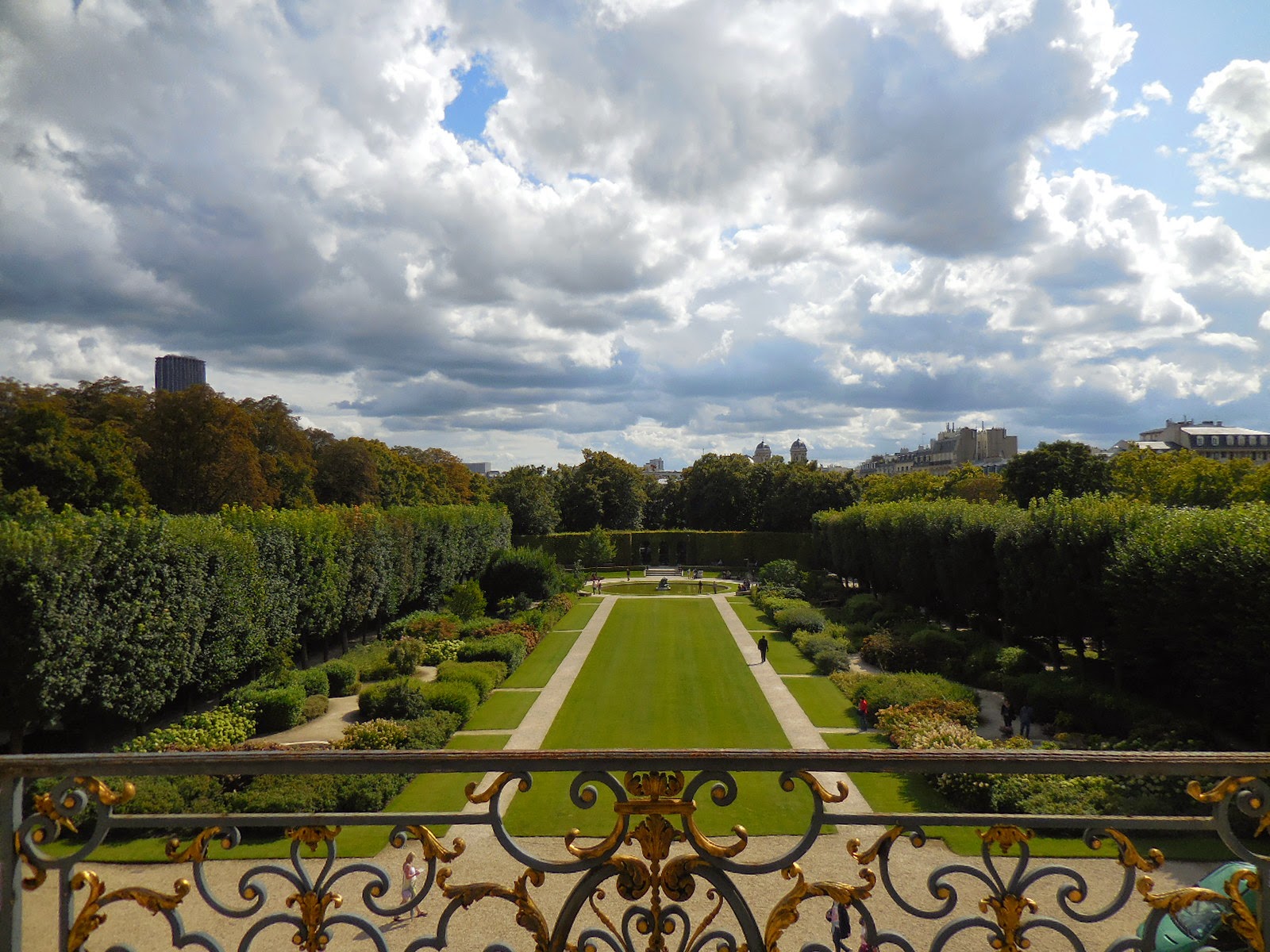
The Musée Rodin in the Hôtel Biron is lovely, and as the weather cooperated, we spend a great deal of time in the beautiful garden where a convenient café beckoned.
 
the Garden from above


As you can see, we had sunny weather with clouds from time to time, warm temperatures — and so it was to be for our entire stay in France as well as almost to the first day of autumn in England.

I will continue meandering through Paris and Normandy intermixed with our posts on England, so stay tuned for more.  Adieu.

LONDON – A DIFFERENT PERSPECTIVE

As a city, London survives in the 21st century by taking advantage of it’s three rivers – the River Thames, the river of ground traffic and the constant flow of traffic in the skies. This video (46 mins) takes you behind the scenes of modern day London to see how it’s all kept ticking over.

How does Heathrow airport manage half a million flights a year – using only two runways? Heathrow’s split second landing and take off precision is explained in this video.

Traffic on London’s streets is controlled by CCTV, the eye in the sky. Main arteries and ring roads all pour into what remain essentially 18th and 19th century roads. How is it all managed and how is congestion averted? Tolls, sensors and other cutting edge technology help to keep London traffic jam free. Oh, and should you be thinking of pulling off any crimes using London streets, think again, mate.

On the River Thames, navigation is only one aspect of keeping traffic moving – life saving, obstacle removal and port control and surveillance all combine to form a river system that would make the East India Company proud.

THE WELLINGTON CONNECTION: FLYING HORSES

Letter from the Duke of Wellington to Lady Salisbury –

Walmer, September 18, 1850

     . . . . . Thank you for your letter of the 17th . .  . Gale’s case is a terrible one! Carrying a horse in a balloon is the most senseless of acts! A wooden horse of the same weight, or the same weight of common ballast, would answer in every real purpose of experiment!

From The Times, September 16, 1850: Lieutenant Gale went up from Vincennes on May 11, carrying a horse in his balloon. He reached earth safely, and released the poor beast, who, though benumbed, was not injured and after a while cropped the grass. Unluckily, Gale could not speak French, and was reduced to signs to make the peasants, who crowded around, understand that they must hold the tethering ropes. His gesticulations merely alarmed them, and when, after opening the valves, he drew a big knife to cut the cords, they let go, and the balloon, with Gale clinging to the ropes, soared up anew. His body, half-eaten by dogs, was finally discovered in a field and he was buried at Bordeaux.

END OF THE BRITISH BATTLE FOR MARYLAND, 1814

Victoria here. Our last post on the War of 1812 had the British withdrawing from the area after burning Washington City and capturing the town of Alexandria, VA, without firing a shot. Under the leadership of Naval Vice Admiral Alexander Cochrane and Army General Robert Ross, the British forces prepared to take the city of Baltimore, Maryland, a more formidable prize than the half-built capital had been.

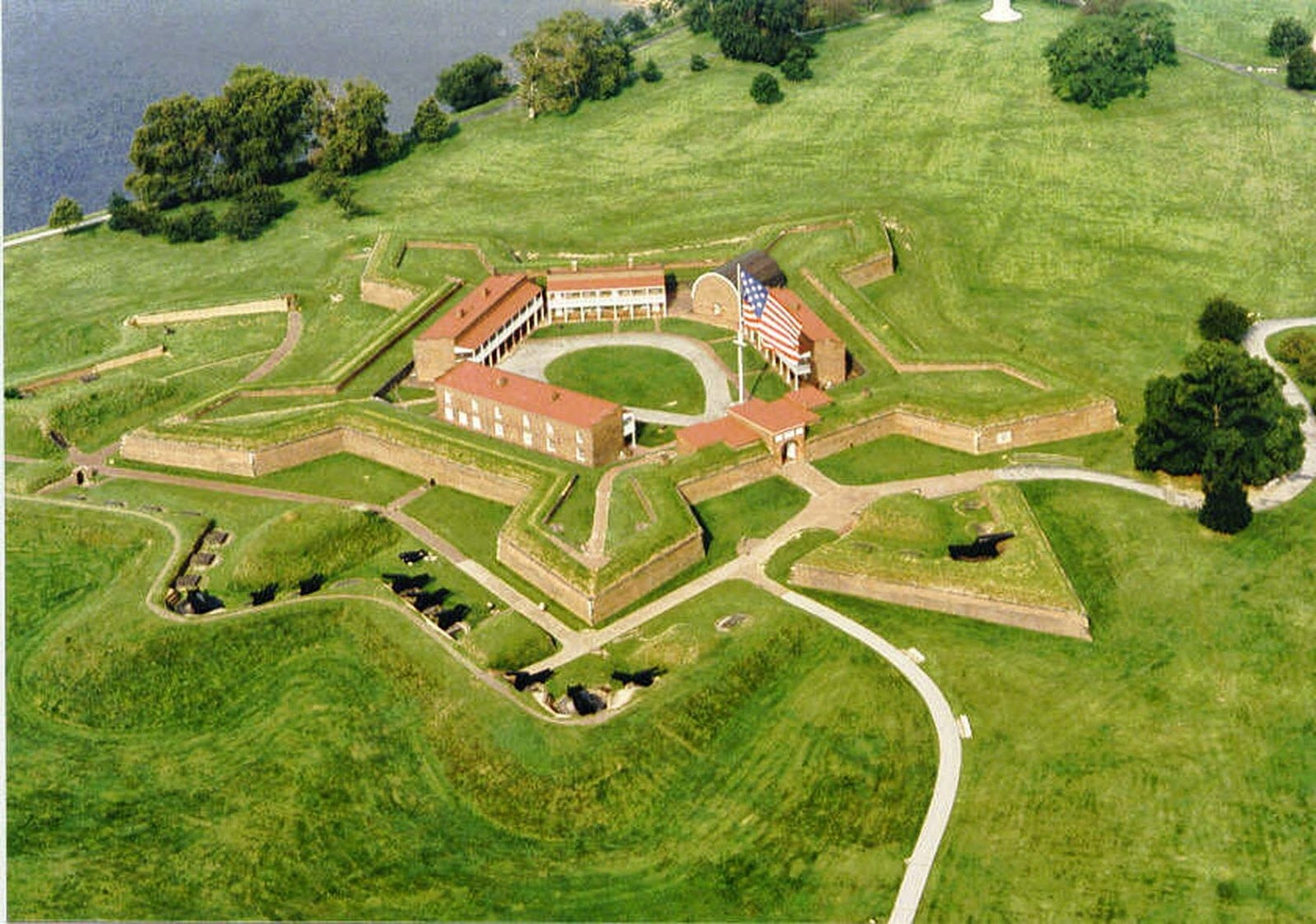
Fort McHenry, Baltimore, MD

In the ultimate settlement of the War of 1812, neither side achieved its aims. However, the independence of Canada from the U.S. was assured. The War of 1812 was almost forgotten (except by Canadians)  until this bicentennial, with one important exception.  The words to the United States National Anthem, The Star-Spangled Banner, were written as the battle raged. I wonder how many U.S. citizens know it was NOT written about the Revolutionary War.

The historic flag that flew over Ft. McHenry,
I visited Ft. McHenry in  February 2014, all fixed up for the bicentennial of its finest hour.  The website is here.
Jerry, Pat and Ed at Ft. McHenry
It was a sunny cool day, perfectly appropriate for a visit.  The Visitor Center has a short film telling the story of the 1814 battle and some excellent displays of relics of the battle.
Model of the topsail schooner Chasseur
The Chasseur captured or sank 18 British ships and was known as “The Pride of Baltimore.”
Pair of flintlock pistols
The pistols were made in London about 1800 and engraved with the motto “Steady.”
Grapeshot
Made in Baltimore, about 1813; shot from a cannon, the 12-inch iron balls would scatter over a wide area and devastate a ship’s rigging or seamen at close range.
The Bombardment of Ft. McHenry by British warships

On September 13, 1814,  British warships began the bombardment of Fort McHenry at 6 a.m. The British could not pass Fort McHenry because many  had been sunk in the channel to prevent the enemy passage, as well as the attackers needing to sail close to the American cannons at the Fort. Eventually, after 25 hours of rather inaccurate shooting from both sides, the British ran low on ammunition and withdrew. The British ships received mostly minor damages, one person injured; the fort had four killed, 24 wounded, and damage to several of the buildings.

Walking up to the fort from the Visitor Center
The cannons aimed at the harbor
 Up close and pers
onal

The day before the naval bombardment, General Robert Ross, who had led the attacks on and burning of Washington, led a group of British soldiers to what became the Battle of North Point. He was severely wounded by American sharpshooters and died as he was being returned to the fleet. After his body was placed in a barrel of  Jamaican rum, it was taken to Halifax, Nova Scotia, where he is buried.

Fort McHenry

Buildings within the fort have been restored and are well maintained; displays in many of them tell the story of Fort McHenry during the War of 1812 and the Civil War.

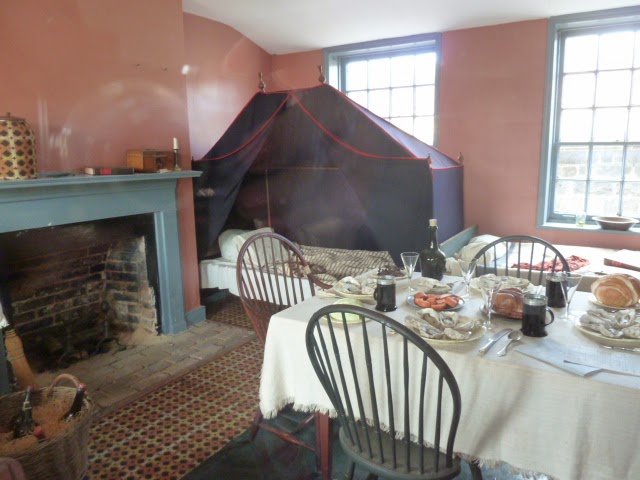
Officer’s Quarters
Costumed Guides Explain life in the fort in 1814
Getting back to the U.S. National Anthem, the lawyer and poet Francis Scott Key watched the British attack on Ft. McHenry from aboard HMS Tonnant where he had  been sent to negotiate the exchange of prisoners between the British and American forces. He watched the battle from the decks, and in the morning, saw the stars and stripes flag still flying over the fort.  He reported to the prisoners below deck that the battle had been won by the Americans.
Statue of Francis Scott Key at Ft. McHenry
As Key returned to Baltimore, he wrote the poem “Defence of Fort M’Henry,” and planned to set it to the tune of a popular song by British composer John Stafford Smith, “To Anacreon in Heaven.” The poem was published on September 20, 1814, in The Patriot.
Francis Scott Key, ca. 1816
by Joseph Wood, artist (177801832)
Walters Art Museum, Baltimore, MD
We know the song today as “The Star Spangled Banner,” to which we wish a Happy 200th birthday.  The legislation naming it the official national anthem was adopted by Congress in 1931 and signed by President Herbert Hoover.

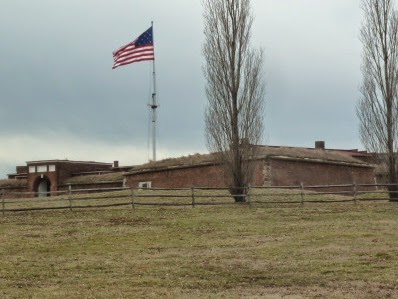
The U.S. Flag of 1814 flies over Fort McHenry.

Oh say, can you see by the dawn’s early light,
What so proudly we hailed at the twilight’s last gleaming,
Whose broad stripes and bright stars through the perilous fight,
O’er the ramparts we watched, were so gallantly streaming?
And the rockets’ red glare, the bombs bursting in air,
Gave proof through the night that our flag was still there;
Oh say does that star-spangled banner yet wave,
O’er the land of the free and the home of the brave?

There are several additional verses, not often sung.

.