LOOSE IN LONDON: VICTORIA STANDS ALONE

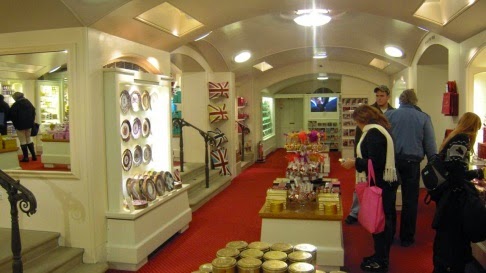
Queen’s Gallery Gift Shop

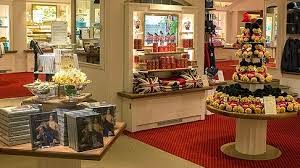
So there I stood in the gift shop of the Queen’s Gallery  Browsing. More browsing…downstairs to the facilities. Back up for more browsing…Ran into the Palace-uniformed woman who guided us around Clarence House on Sunday and we chat for a while. I go outside and sit in the shade. Then I sit in the sun. Go back inside…I know I am slow going through the exhibition and that I read every word of every text panel and label…so certainly I cannot be ahead of Kristine, Diane, and Marilyn by this much time. Where could they be?

Queen’s Gallery Entrance

Could I be paranoid enough to think they ditched me? That they went on to the Palace and are now enjoying a tete a tete with the Queen while I am just standing around? How long do I wait? I have my phone but Kristine doesn’t have a phone that works in England….I wait some more.

Eventually, after what seemed like hours, I walked to the entrance of the Palace itself, the tourist entrance, that is. No friends awaited me. I turned in my ticket and went inside to sit in the tent…but the guards suggested I move along. That I was waiting for friends seemed not to matter. I must have looked suspicious because the guards definitely stood nearby and glared at me.

Where were Marilyn, Diane, and Kristine? I started visualizing the three of them walking through the gilded halls and giggling mean-girl fashion, thinking of me waiting outside, never to see the Palace.

How dare they? Eventually, under prodding by the guards and because I didn’t want to sit around concocting scenarios in which I’d become the odd person out for the next two weeks and would have to tag along behind everyone else, I decided to forget about the situation and enjoy my trek through the Palace. Alone. Aren’t we all trapped by the trials and tribulations of our junior high school experiences?

Fortunately, I am easily diverted and soon, if momentarily, forgot about being the ditched kid.

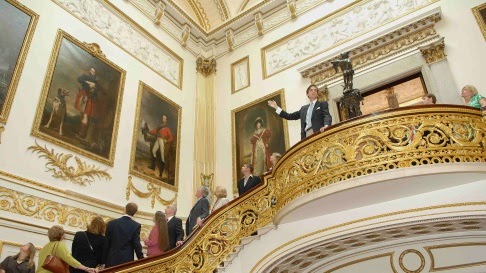
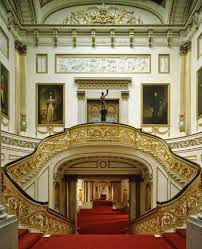
Up the Grand Staircase

For a virtual tour of the Grand staircase, click here.

The Grand Staircase
In the manner of tourists everywhere, the crowd, while not immense, moved at varying rates of speed
some lingering to inspect various items or question the numerous uniformed guides, most of whom had ready answers for all the inquiries. The State Rooms are sumptuous, as you can tell from these pictures. They were decorated by Architect John Nash and George IV, who saw them as stage settings for the impressiveness of the King, the magnificence of the British monarchy.  

The Green Drawing Room, Anteroom to The Throne Room
The Throne Room
The Throne Rom is the home of thrones used in many coronation ceremonies over the years, set about the room.  Guides stated that the only time Queen Elizabeth II sat on her throne was for her 1952 Coronation.  The room is used for various ceremonial purposes, but I guess nobody sits down!
For a virtual tour of the Throne Room, click here.
The Blue Drawing Room
It is an ironic amusement to me that the decor was so heavily influenced by the French styles of the 18th century, the time of Louis XIV, XV, and XVI. Despite the fact that Britain and France were almost continually at war in this period, the British aristocracy and particularly the Prince of Wales, aka the Prince Regent and eventually George IV, adored French art, architecture, and workmanship. It set the standard for the world.
For a virtual tour of the Blue Drawing Room, click here.
The White Drawing Room
The White Drawing Room is particularly elegant, with the lovely 1908 portrait of Queen Alexandra as the focal point. 
Queen Alexandra (1844-1925), 1908, by Francois Flemeng (1856-1923)
According to the description in the Royal collection website, “This strikingly sophisticated and composed portrait of Queen Alexandra was painted by the French artist François Flameng in 1908. It is perhaps one the highlights of early 20th century royal portraiture. The Queen sits upon a stone step, she gazes directly at the viewer; dressed in a white silk dress, diaphanous gauze suggested about her arms and shoulders. She is wearing the riband and star of the Order of the Garter, a diamond choker, long string of pearls and small crown. A wooded landscape and suggestion of a building or castle in the background.”
For a virtual tour of the White Drawing Room, click here.
The Music Room, overlooking the gardens
The Music Room is graced by large windows alternating with columns of scagliola made to resemble lapis lazuli. To read about a recent restoration of the columns by the firm of Hayles and Howe, click here.
One of two chandeliers in the Music Room
Attributed to Perry and Co., 72 New Bond Street. and originally made c. 1815, the two chandeliers were probably created for Carlton House, and later altered and rehung in Buckingham Palace. They are said to resemble the the chandelier in the Piccadilly Drawing Room at Apsley House, London. We shall see!

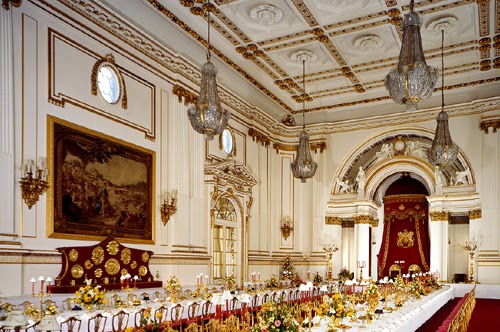
The Ballroom, arranged for a formal dinner
Most of the State Rooms were originally decorated by Nash and George IV, but later changes were made by Queen Victoria, such as the building of this large ballroom in 1856. When I was there in September, 2014, it was arranged as the main exhibition area for the Royal Childhood exhibition which we will cover in a later post.

In the Picture Gallery
As I strolled through the picture gallery I felt my cell phone vibrating.  There were signs around warning visitors not to use mobile phones,  However, I sneaked a peek — the call was coming from Diane! I didn’t even know she had a phone with her. I did not dare to answer. She followed up with a text, “Where are you?” At this point, I consulted one of the guards — was there any place I could stand and do a text silently? “Absolutely not.” was the answer. Was there a restroom?  “No.” Could I leave the palace and go back to the beginning again?  “No.” 
So what could I do?  I continued on, feeling like I had stepped into deep do-do. If they hadn’t already ditched me, they would soon!!!  However, I thought, I had to enjoy every moment of my imprisonment in Buckingham Palace. We could straighten things out later. So on I went, past old masters and treasures beyond belief.
Here are a few of my favorites. 
Cabinet (comode a vantux)
Actually there are many of these beautiful cabinets and bureaus of varying styles and shapes that share the decoration of shiny fruits — called Pietra Dura, a decorative art defined by Wikipedia as “the inlay technique of using cut and fitted, highly polished colored stones to create images.”
This cabinet was created in 1778-88 by Martin Carlin, a Parisian cabinet maker, It is made of oak and ebony veneer with panels of pietra dura fruit.
Panels of Pietra Dura Fruit
< br />

It was probably made for Marie-Josephine Laguerre, and purchased in Paris for George IV in 1828.

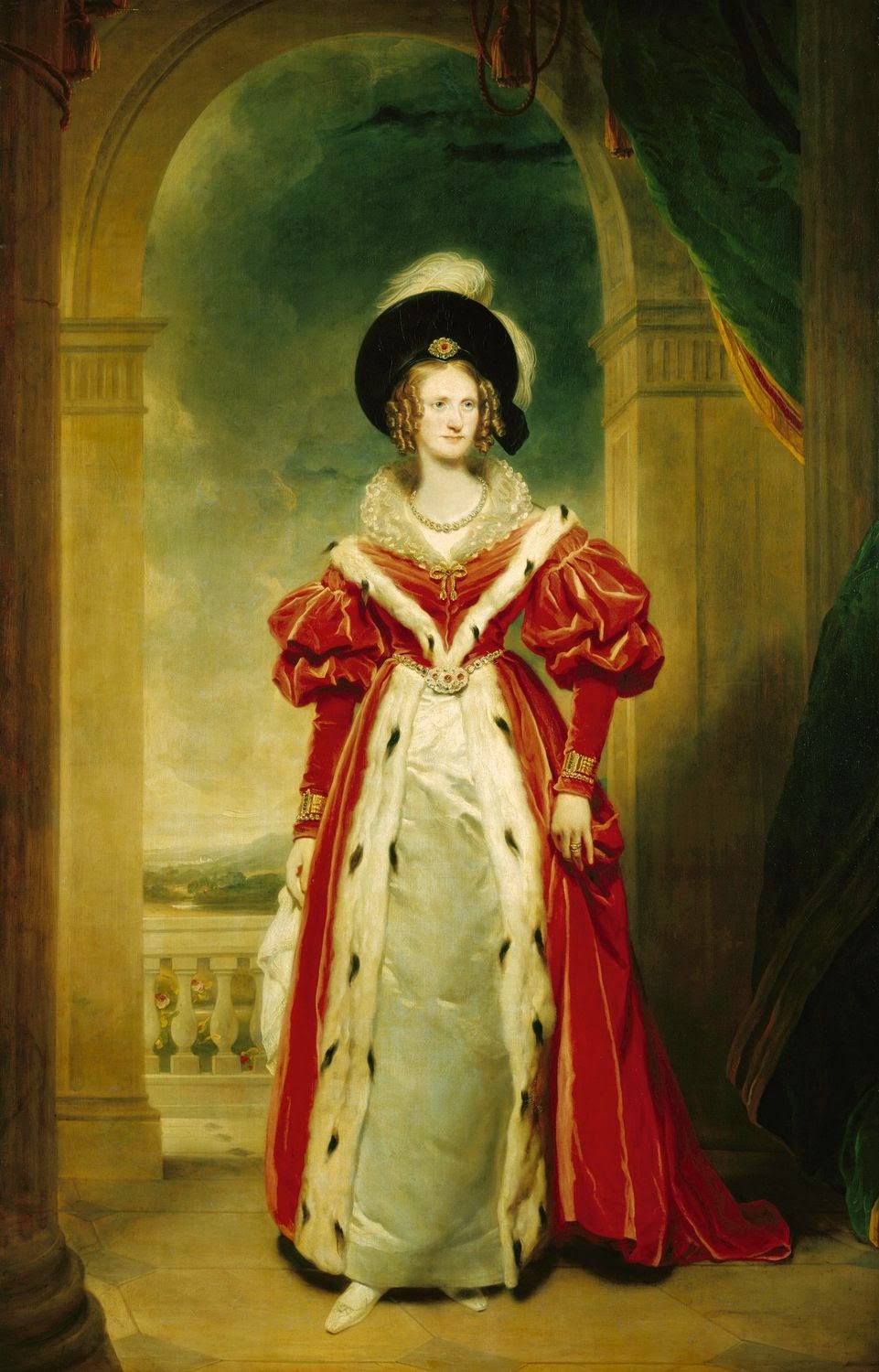
This portrait of Queen Adelaide (1792-1849) hangs in the Grand Staircase.
Artist Sir Martin Archer Shee painted the wife of King William IV in 1836. William IV reigned for only  seven years after the death of his brother, George IV, in 1830. When Victoria took the throne after her uncle’s death, she had a warm relationship with the dowager queen, one not looked upon with favor by Victoria’s mother, the Duchess of Kent, who wanted to be the most important, perhaps only, influence on her daughter. Sir Martin (1769-1850) was a president of the Royal Academy of the Arts. Although Queen Adelaide never lived in Buckingham Palace, the painting hangs in the Grand Staircase (see 4th picture from the top in this post).

The Music Lesson, or A Lady at the Virginals with a Gentleman, c. 1662-65, by Johannes Vermeer
Only thirty-some paintings by Vermeer (1632-1675) exist in the world today. His brilliant use of light and exquisite detail are celebrated in those lucky collections that have them. I am particularly fond of his work, so charished for its rarity.  My friend and former president of the Jane Austen Society of North America, Marsha Huff, has presented her talk on Jane Austen (1775-1817) and Vermeer at several regional meetings I have had the privilege of attending. These two artists, for whom so few works exist, shared brilliant insight and careful details which bring readers and viewers an intimate experience rarely achieved by others. One brief account of Ms. Huf’f”s presentation is here.
Mars and Venus by Antonio Canova, c. 1817-22
How very different is this sculpture of a god and goddess by the Italian sculptor Canova.  Watch for another portrayal by him when we visit Apsley House. This one was commissioned by George IV for his London residence Carlton House, where it stood in the Gothic Conservator, briefly, from 1824 until it was moved to Buckingham Palace before Carlton House was demolished in 1825.
Mrs. Jordan and son, 1834, by Sir Francis Chantrey
Another of my favorite sculptures is this wonderful portrayal of Actress Dora Jordan, nee Bland (1761-1816).  Mrs. Jordan was the long-time mistress of William IV when he was the Duke of Clarence, third son of George III,  Dora and Sailor Billy, as the King was often called, lived at Bushy House outside London and had ten children. She was a popular performer, though how she had time I do not understand. The Duke ended the relationship with her in 1811 or so and continued to raise their sons, and later their daughters. Despite a generous allowance if she did not return to the stage, she was forced by debts incurred by a relative to resume her career and thus lost her royal stipends. She died in poverty in France. In 1831, after becoming King, William IV commissioned Sir Francis Chantrey (1781-1841) to create this statue. His eldest son, created Earl of Munster, inherited it. In 1975, his descendant Lord Munster, presented it to Queen Elizabeth II.  It is a lovely tribute to motherly love — and a reminder of the complicated set of relationships in the history of the Royal Family.
The Bow Room;
 Above pictures from the Royal Collection Trust © Her Majesty Queen Elizabeth II 2014

At last I arrived at the final room, leading out onto the rear terraces of the Palace. I hurried outside and grabbed by cell phone to call Diane.  No answer.  Aha! I figured she and her companions, Marilyn and Kristine, were probably in the Palace by now and therefore couldn’t take out a cell phone, or they’d risk being sent to the Tower. So I texted:  “Waiting for you in the cafe tent.”
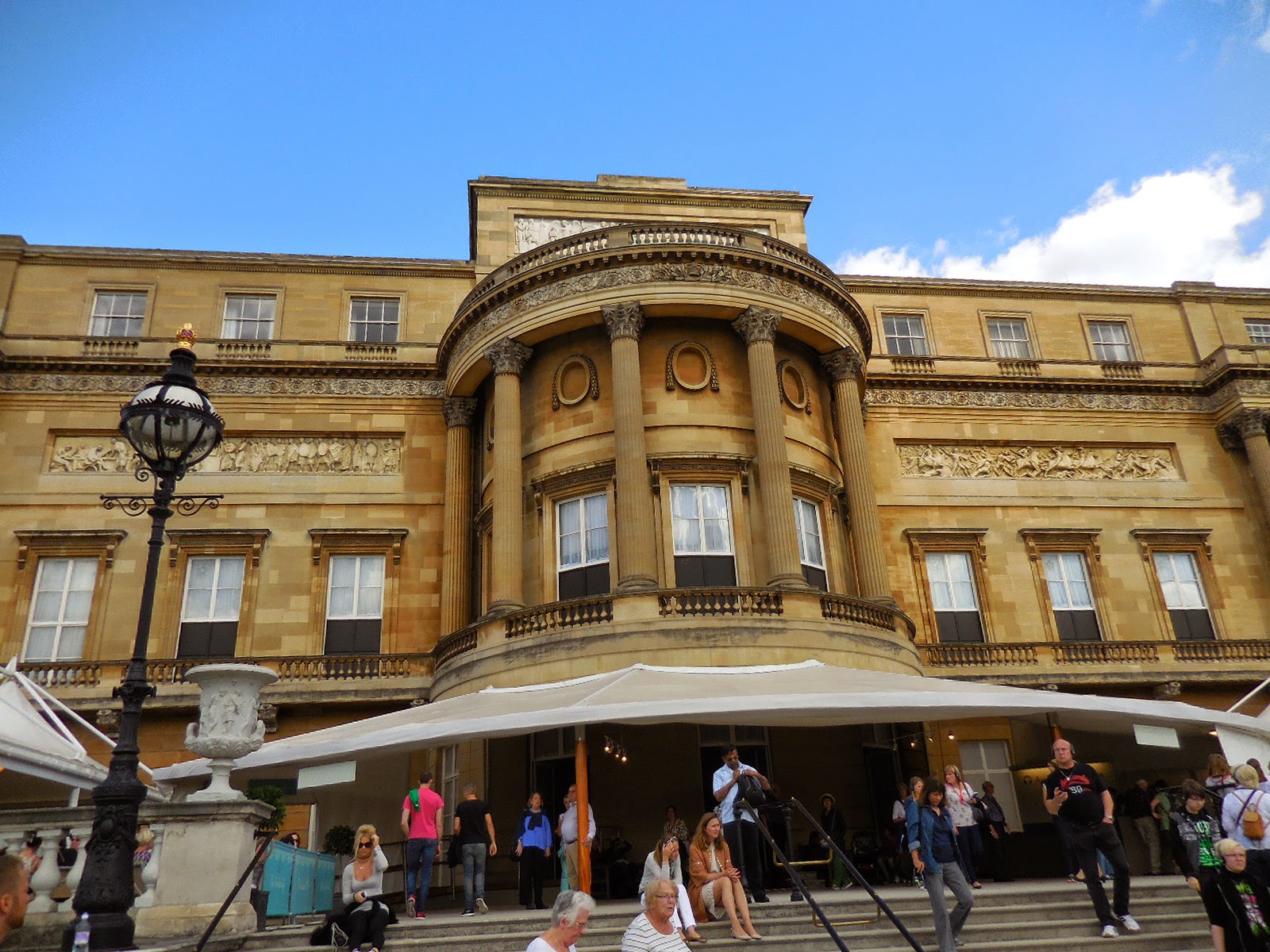
Visitors emerging from the Palace, my photos from here on
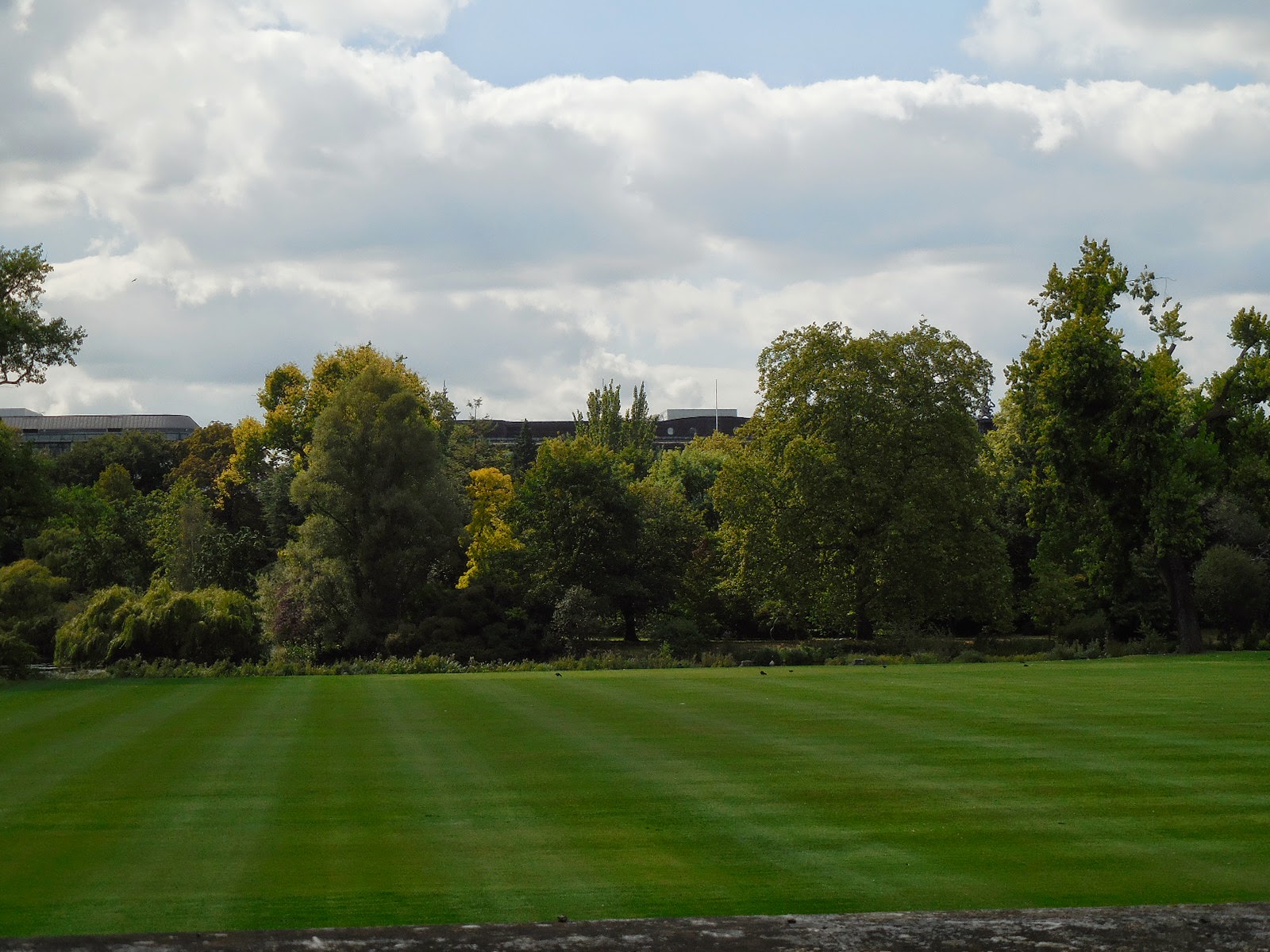
The Queen’s Backyard, aka Garden Lawn
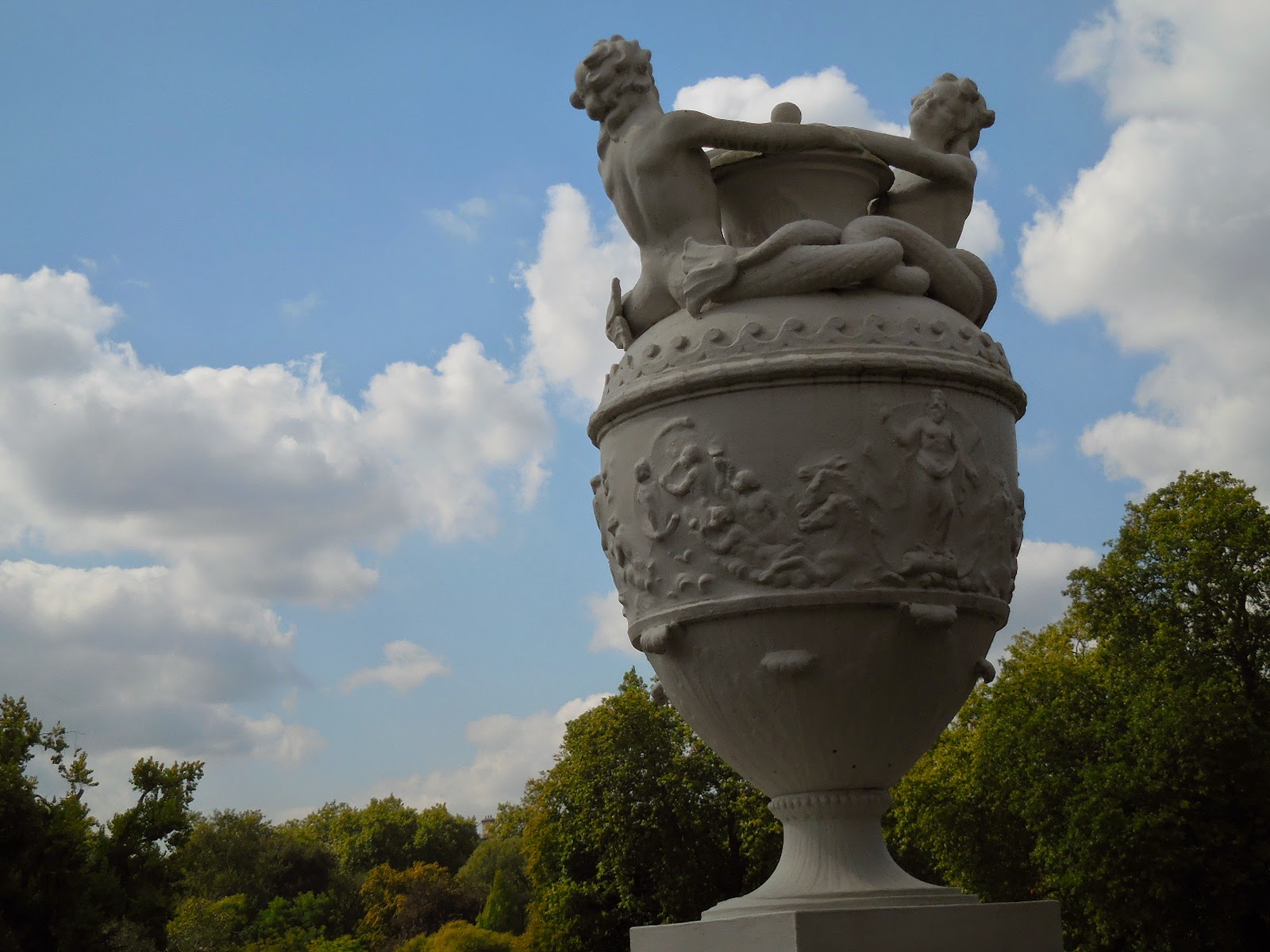
Decorative Urn
More visitors emerging…
I figured I was considerably ahead of the others, so I bought myself a piece of cake and a cup of the Queen’s tea, and sat down with a table full of amiable visitors taking refreshment after our long tour. Several were from Australia, one from Germany, another pair from Canada and, wonder of wonders, I was the only American. We had a fine chat about the palace, the royals and the beautiful garden.  As you could imagine, the cake and tea were top notch.
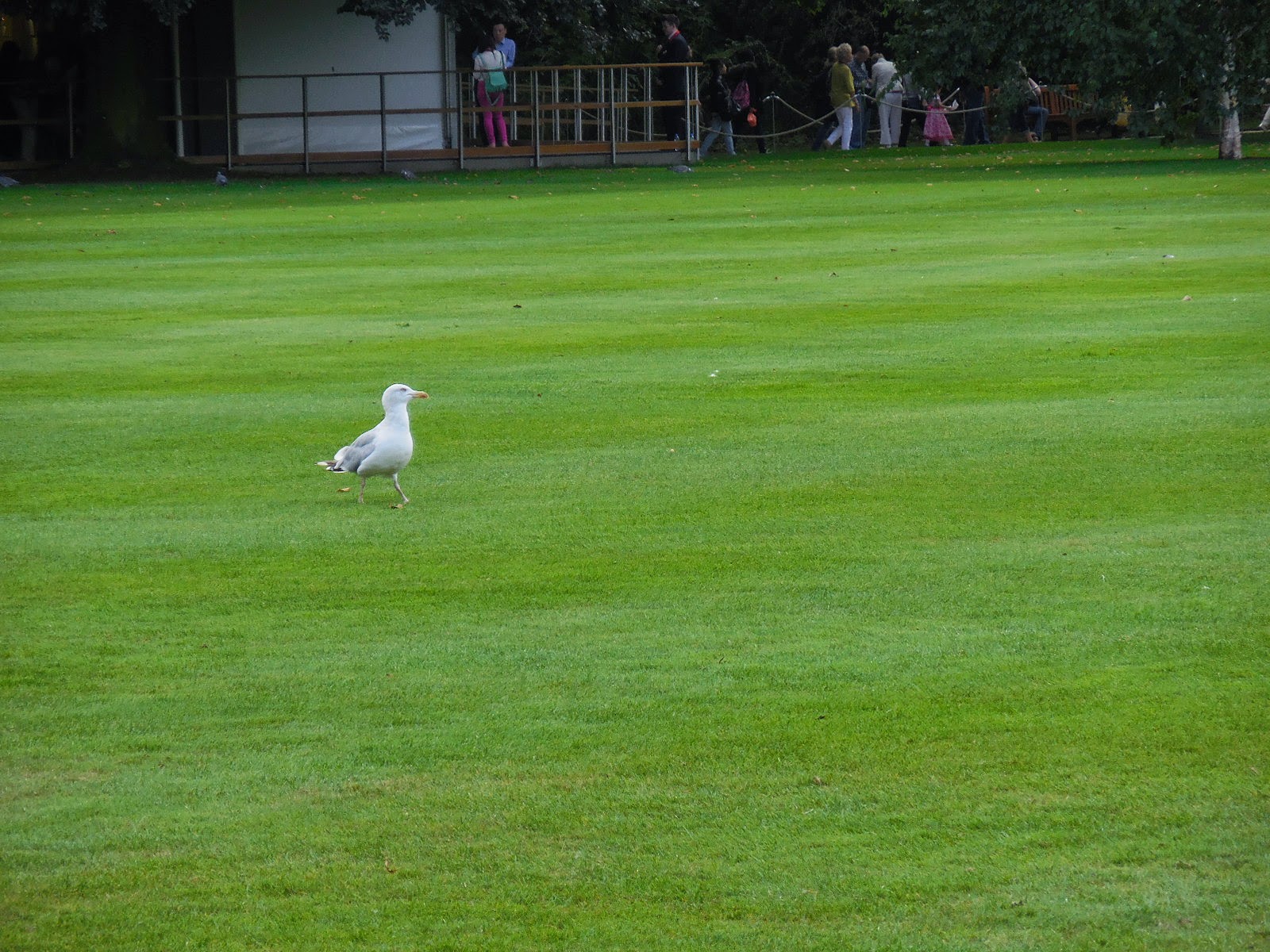
A pigeon made herself at home
Eventually, I saw Marilyn waving at me across the crowded tables, and I rejoined her — and Kristine and Diane. “Where WERE you?” we asked each other.  The only answer is that we had been unwilling and unconscious players in a British stage farce, the kind they do so brilliantly.  
I enter, stage left. Walk around looking for my friends, I exit stage right. At that exact moment, they enter stage left, look around and soon disappear through the door at the back of the stage.  I re-enter stage right and wander around, While behind a post, they enter from the door at the back of the stage, cross over and exit stage right.  I reappear and exit stage left.  Repeat for an hour or so, moving faster at every recap. The timing must have been perfection. We were all there in the Queen’s Gallery, their gift shop, their facilities, the sitting wall outside. Back and forth we wandered looking for each other and never caught a glimpse. We couldn’t repeat the farce if we tried!
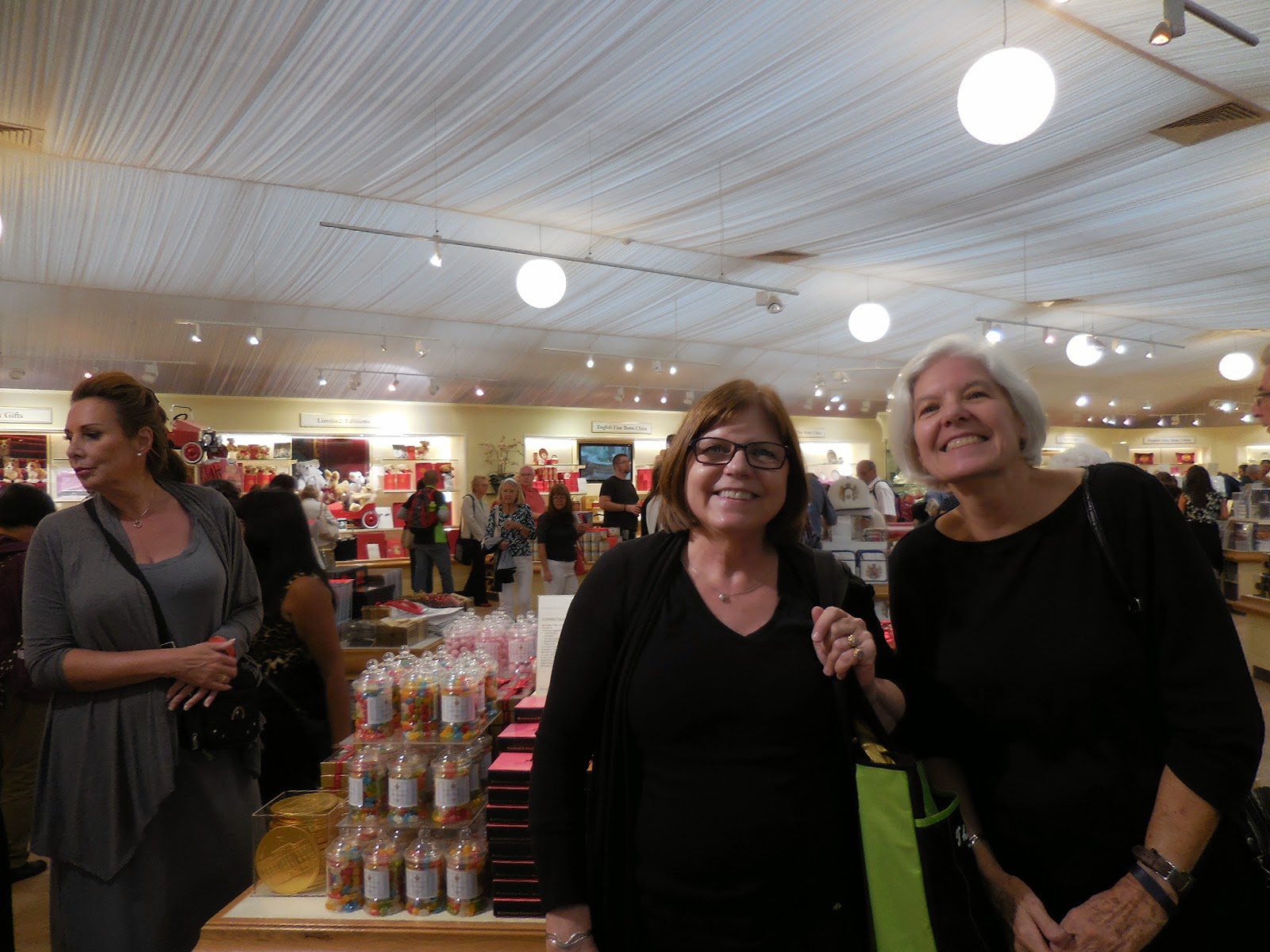
In the gift shop at the tent behind Buckingham Palace; Note Kristine’s look of pain.
Remember her feet???
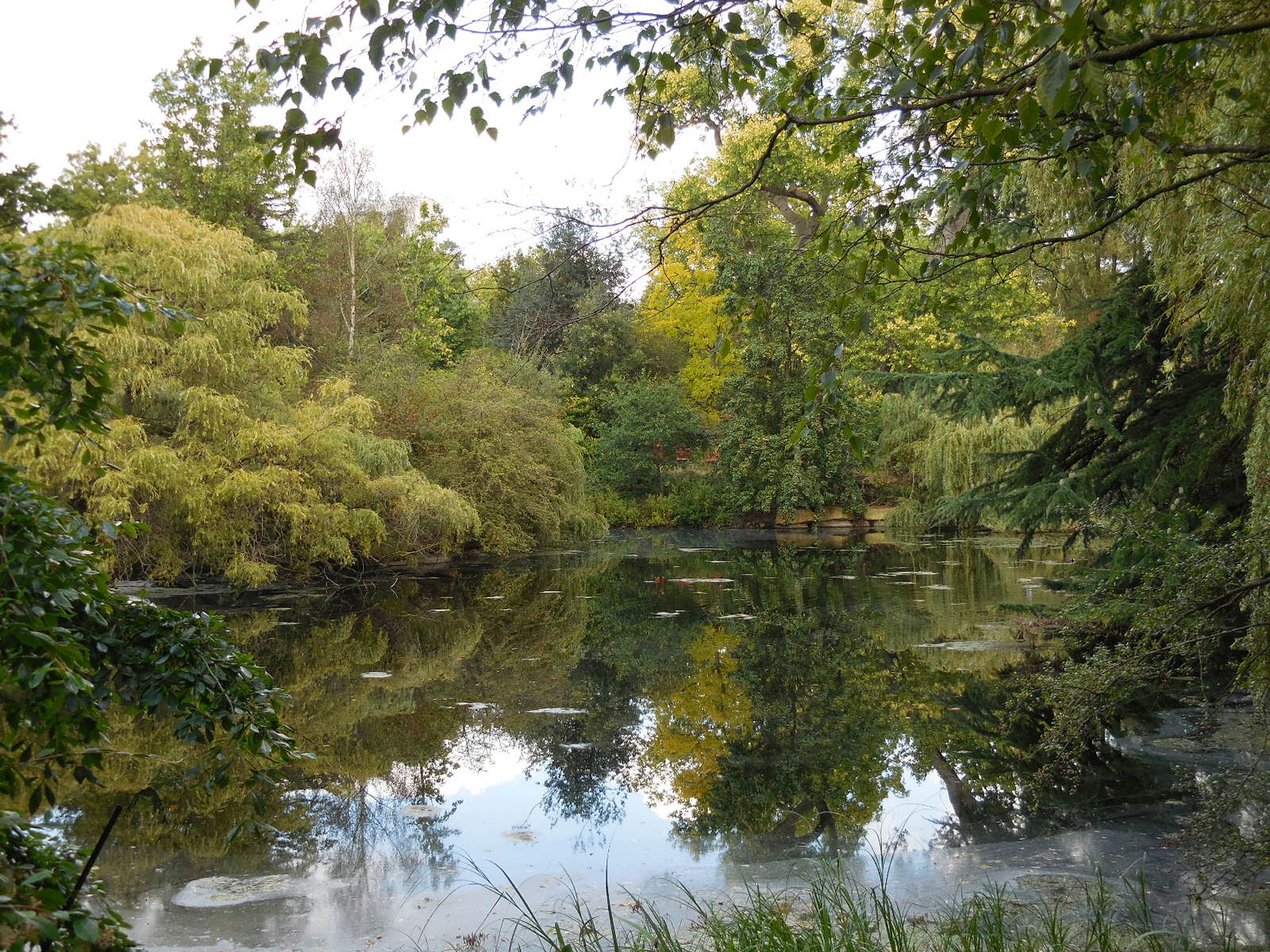
The Buckingham Palace Garden; Wilderness and Lake
Although we weren’t allowed to visit the flower gardens, we had a nice view of the lake and the wilderness as we exited through a gate at the rear of the garden.
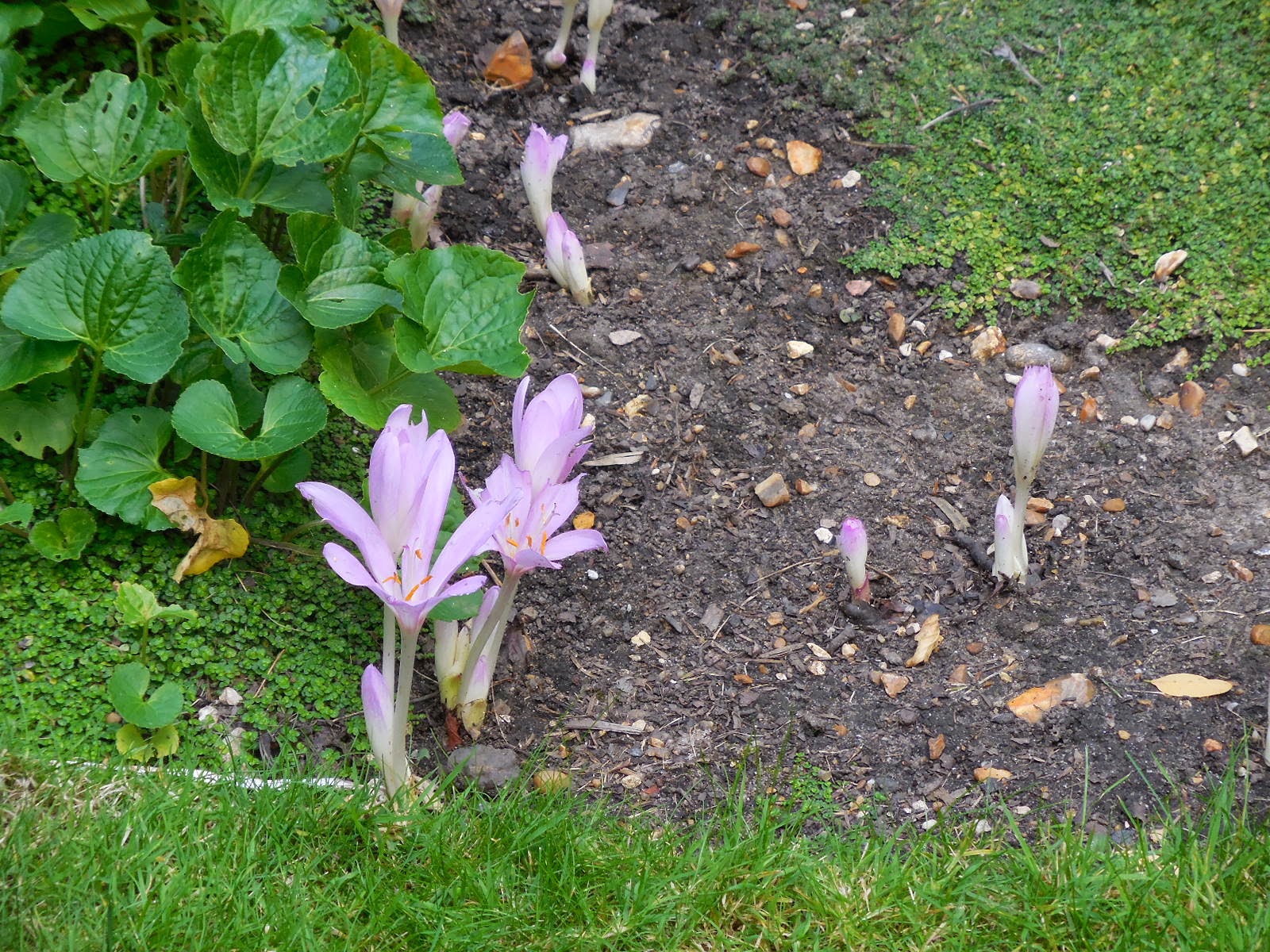
Some autumn blooming crocus along the path
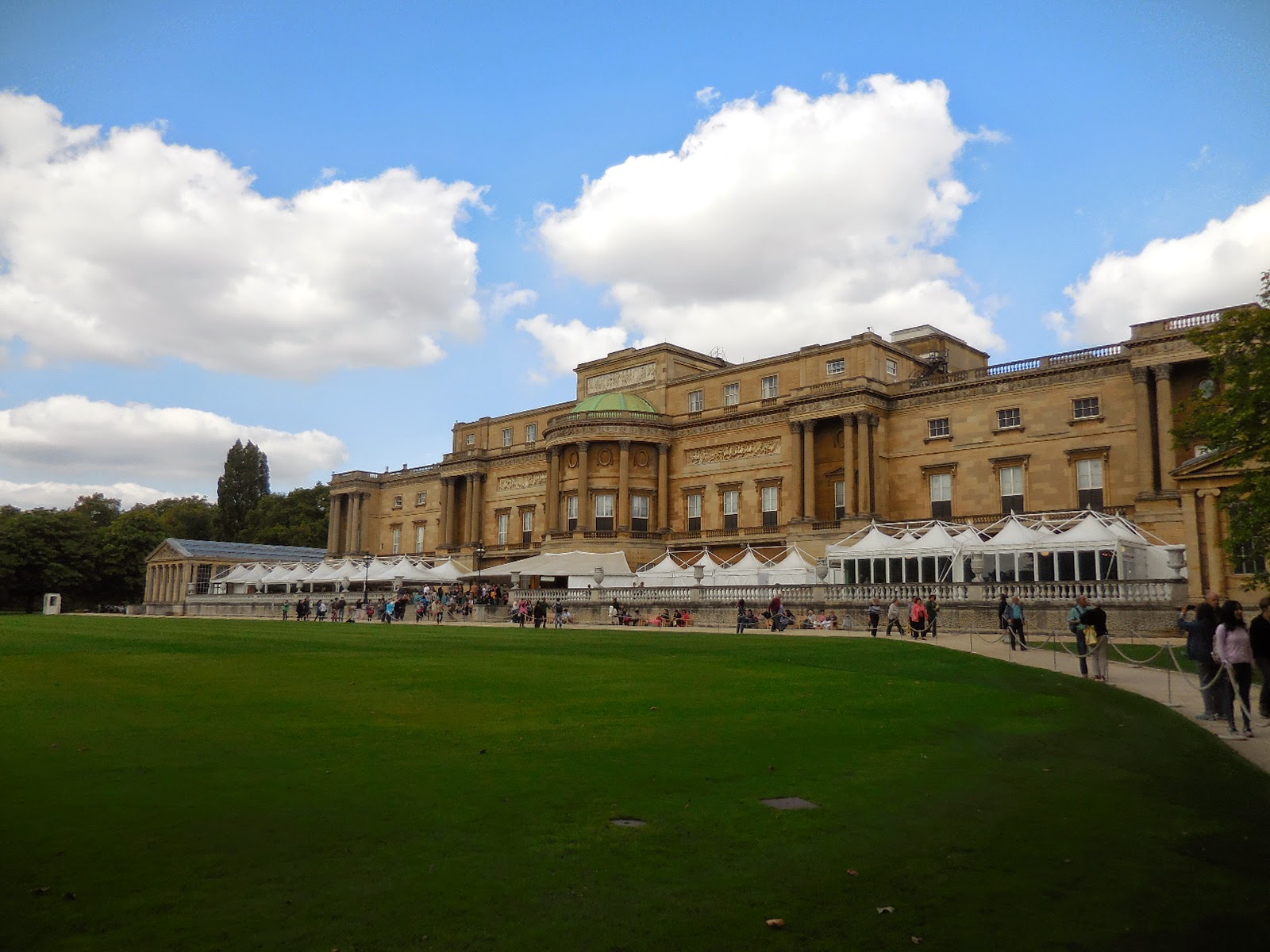
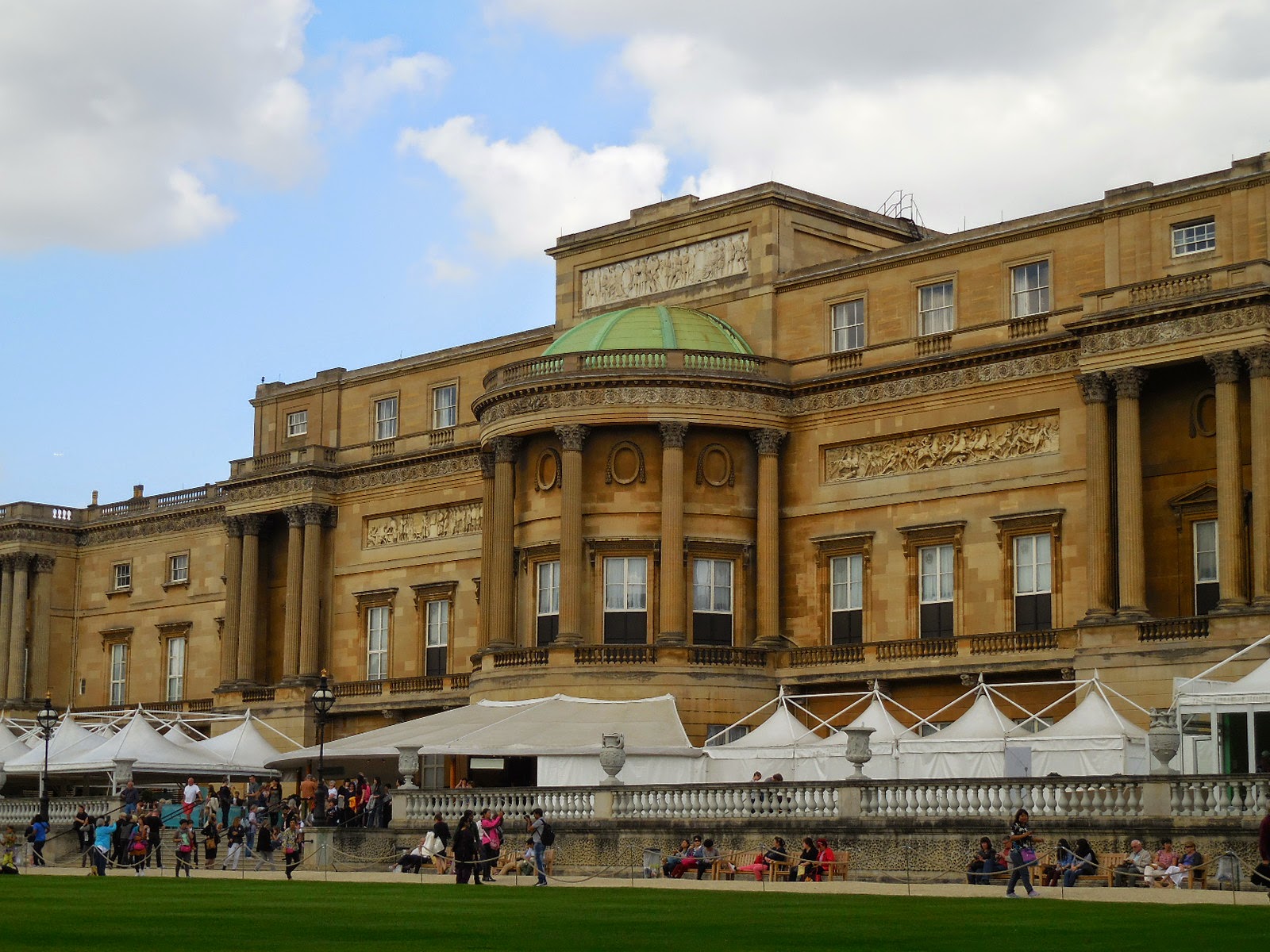
Looking back at the Garden Facade of the Palace
As many have noted, this Nash-designed facade of the Palace, so rarely seen by the public, is the most beautiful, with its graceful bow and classical symmetry. 
Farewell to the Palace
Luckily, we could all laugh off our trials and tribulations since we now knew how to contact one another by 21st C technology.  I felt reassured I hadn’t been ditched. And we all had enjoyed our trek through the royal rooms, with the possible exception of Kristine, whose feet were still suffering.  But she carried on in the best stiff-upper-lip mode!
Next: The History of Buckingham Palace

VIDEO WEDNESDAY: ALAN RICKMAN

A LITTLE CHAOS
A romantic drama following Sabine (Academy Award winner Kate Winslet), a strong-willed and talented landscape designer, who is chosen to build one of the main gardens at King Louis XIV’s new palace at Versailles. In her new position of power, she challenges gender and class barriers while also becoming professionally and romantically entangled with the court’s renowned landscape artist André Le Notre (Matthias Schoenaerts)
Click here to watch an interview with star and director of A Little Chaos Alan Rickman
and
A PROMISE
Germany 1912, a freshly graduated engineer with modest origins, Friedrich Zeitz, becomes the right hand of ageing tycoon Karl Hoffmeister. When Hoffmeister’s degrading health condition starts to confine him permanently to his house, Friedrich has to visit him at home to get briefed. Thus Friedrich makes the acquaintance of Hoffmeister’s younger wife Charlotte, a beautiful and reserved woman in her early 30s. He immediately becomes enamored with her and struggles with his growing unrequited feelings for her, not realizing they are reciprocated. Just as they disclose their mutual attraction towards one another, Friedrich has to leave the country to represent Hoffmeister overseas. The outbreak of World War I keeps him away from Germany for a long time. Only after the end of the war and many years of separation are Friedrich and Charlotte able to reunite.
and finally . . . . . . 

Watch an Alan Rickman-off with Benedict Cumberbatch 

and Jimmy Fallon – click here

MR. TURNER

Victoria, reporting that for months we’ve heard praises for the film Mr. Turner…but frankly, I wondered if I’d ever get the chance to see it. The film appeared in some American theatres in mid-December for a brief time and then disappeared.  I guess I wasn’t paying attention then, and I despaired of getting  second chance.

Poster for the film Mr. Turner
But, wonder of wonders, it reappeared at local cinemas;  Kristine and I made a date to see the film on a sunny Sunday afternoon in Ft Myers FL.
To watch the official trailer, click here.
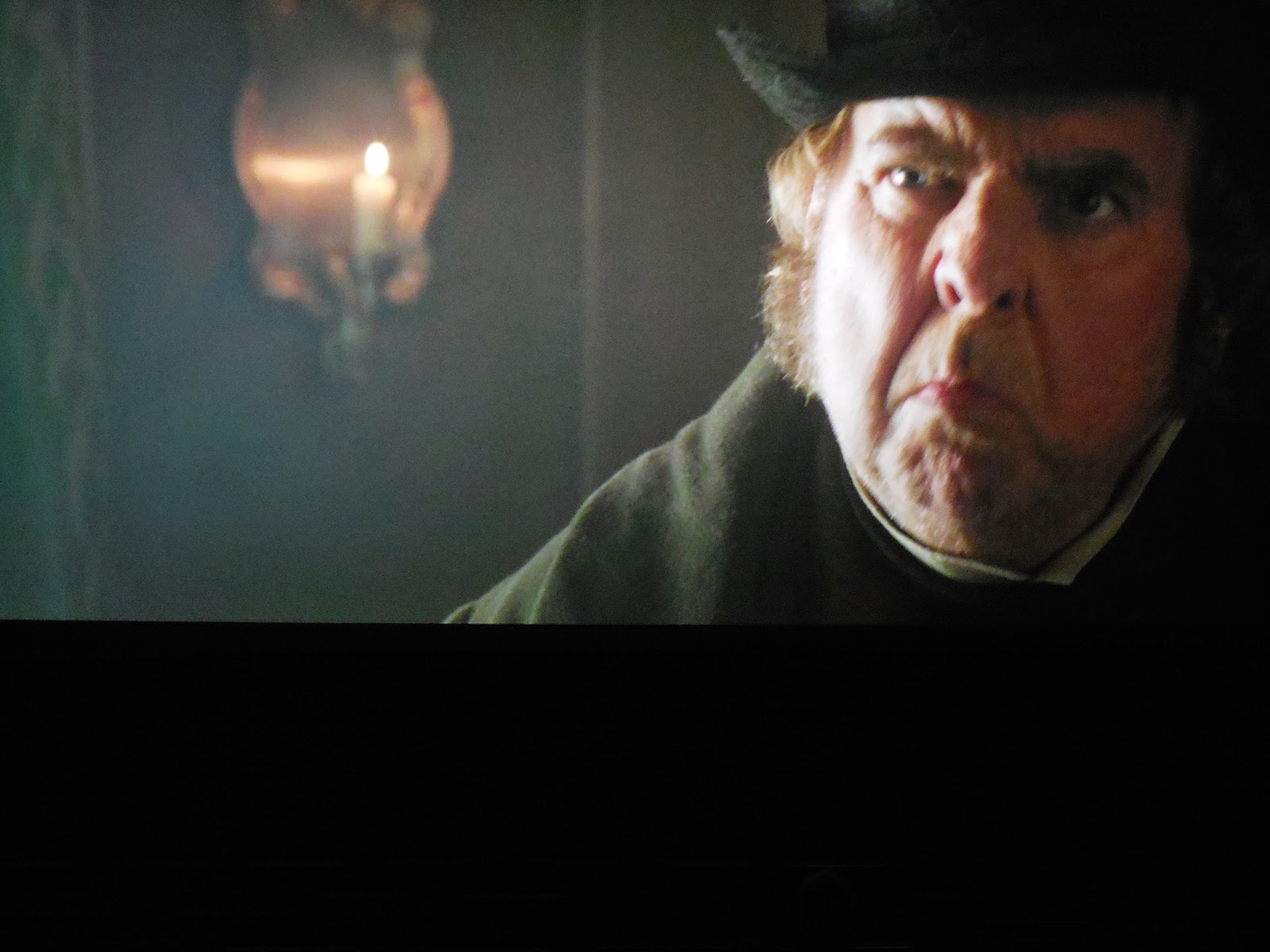
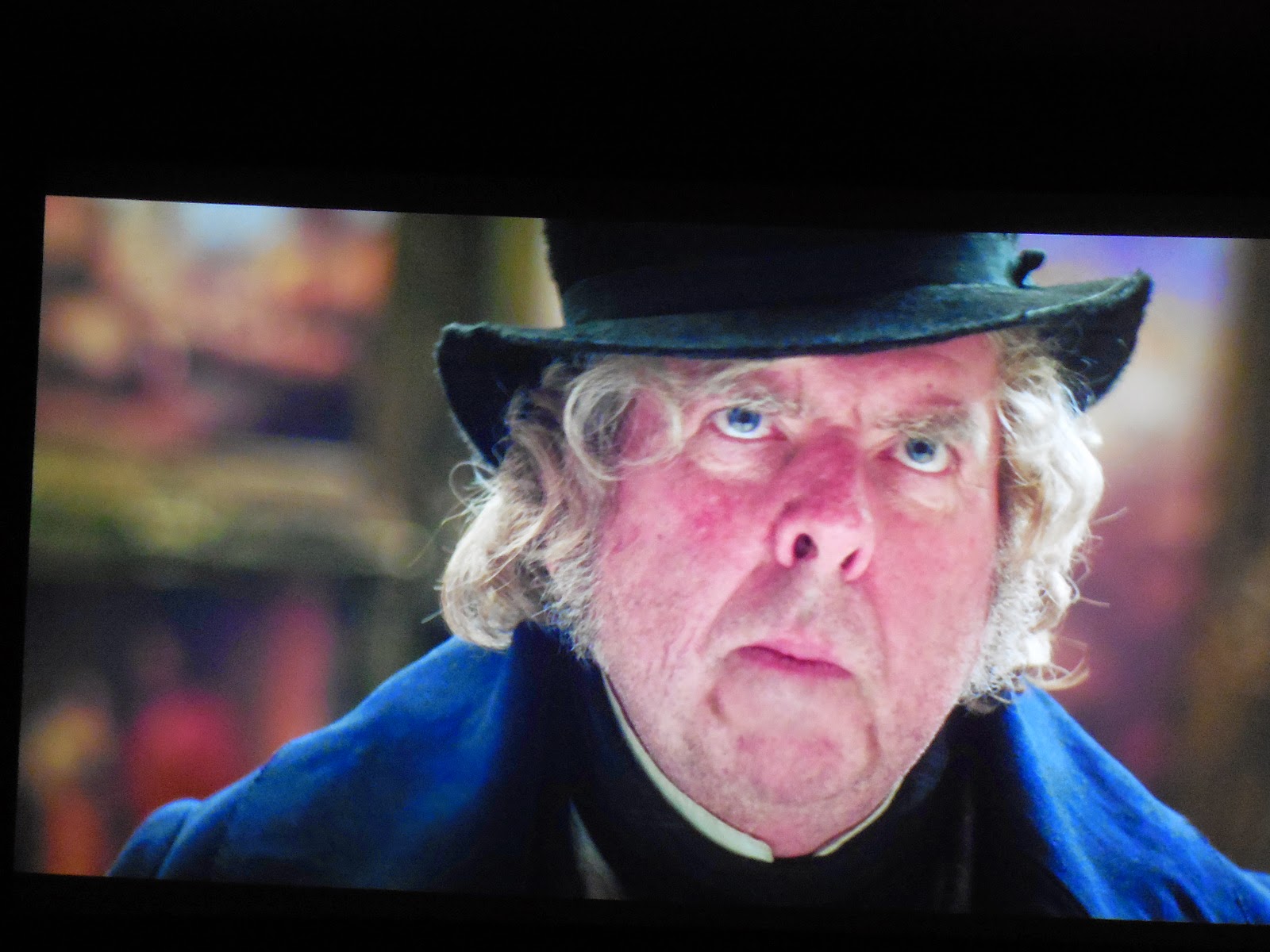
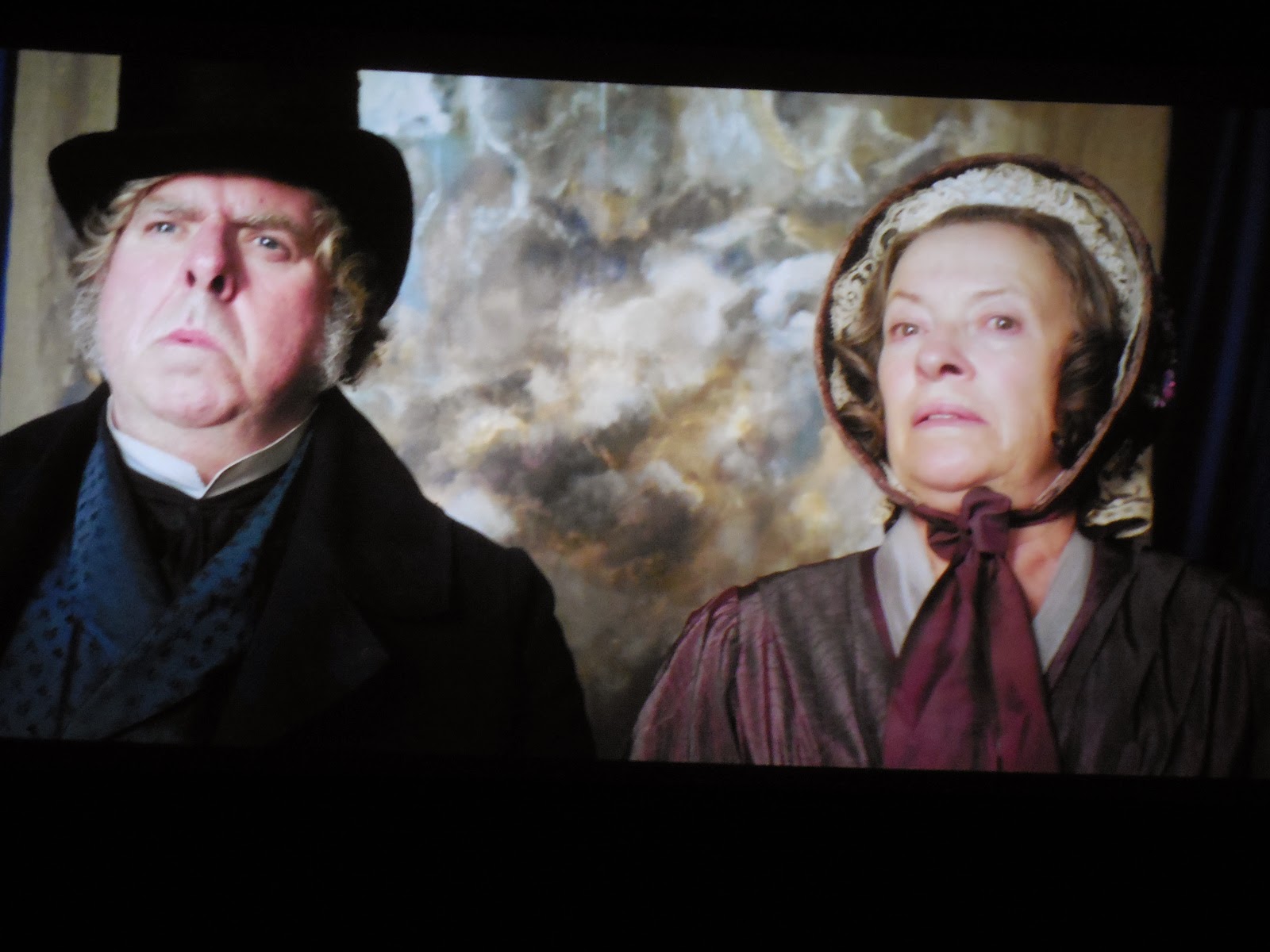
Timothy Spall is brilliant in the title role; he has already won many Best Actor Awards, including at the Cannes Film Festival, and he deserves even more.

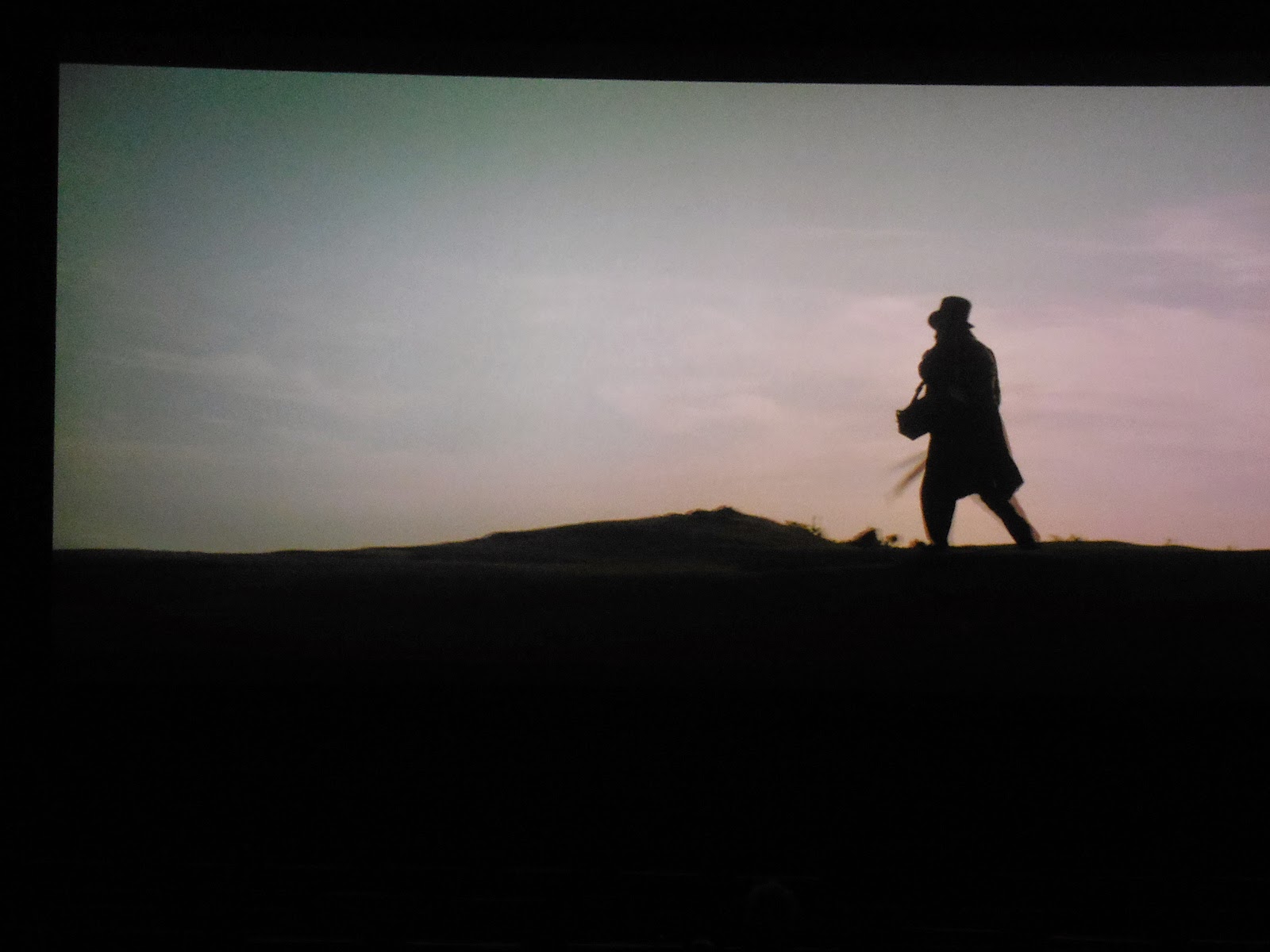
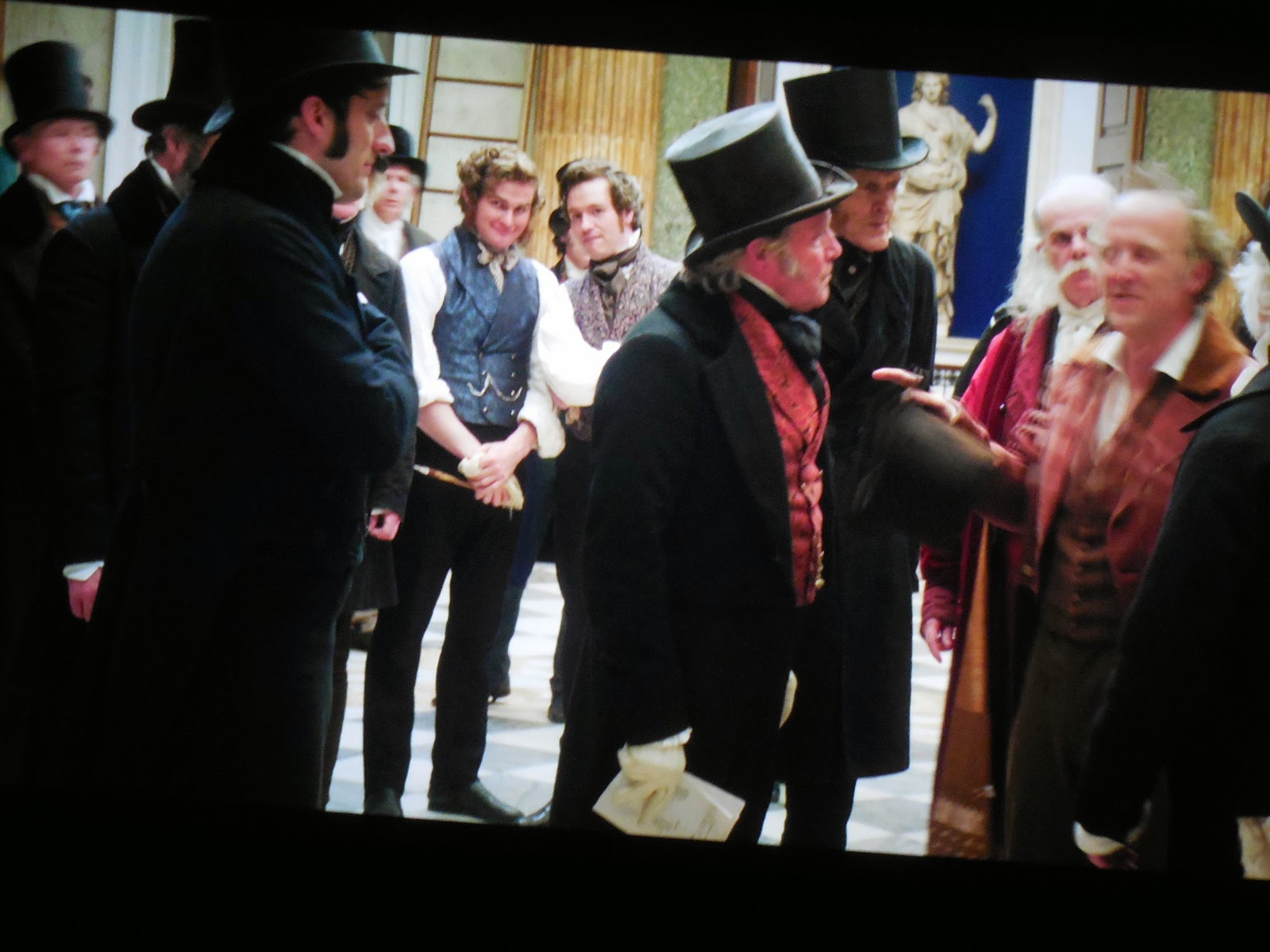
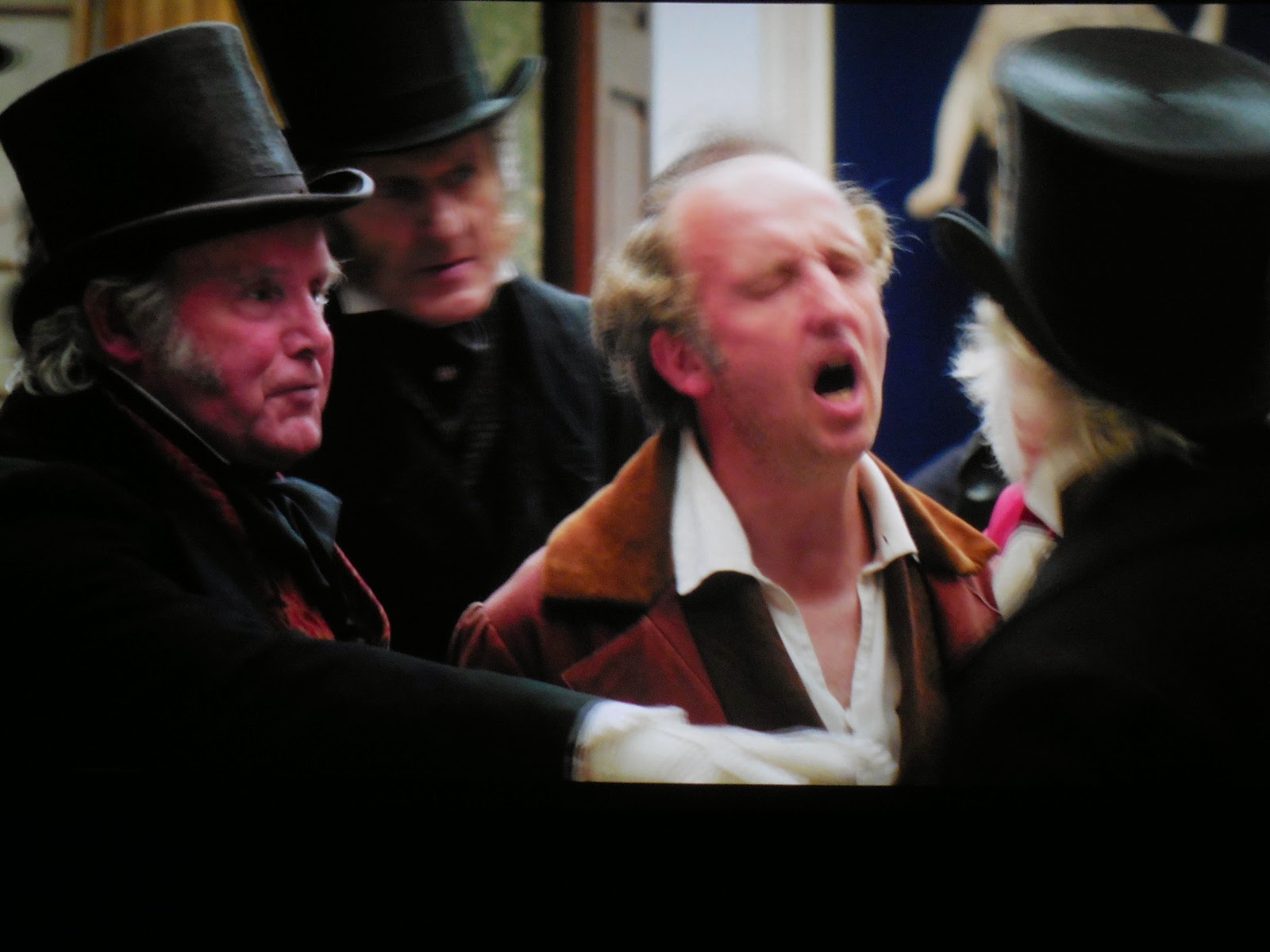
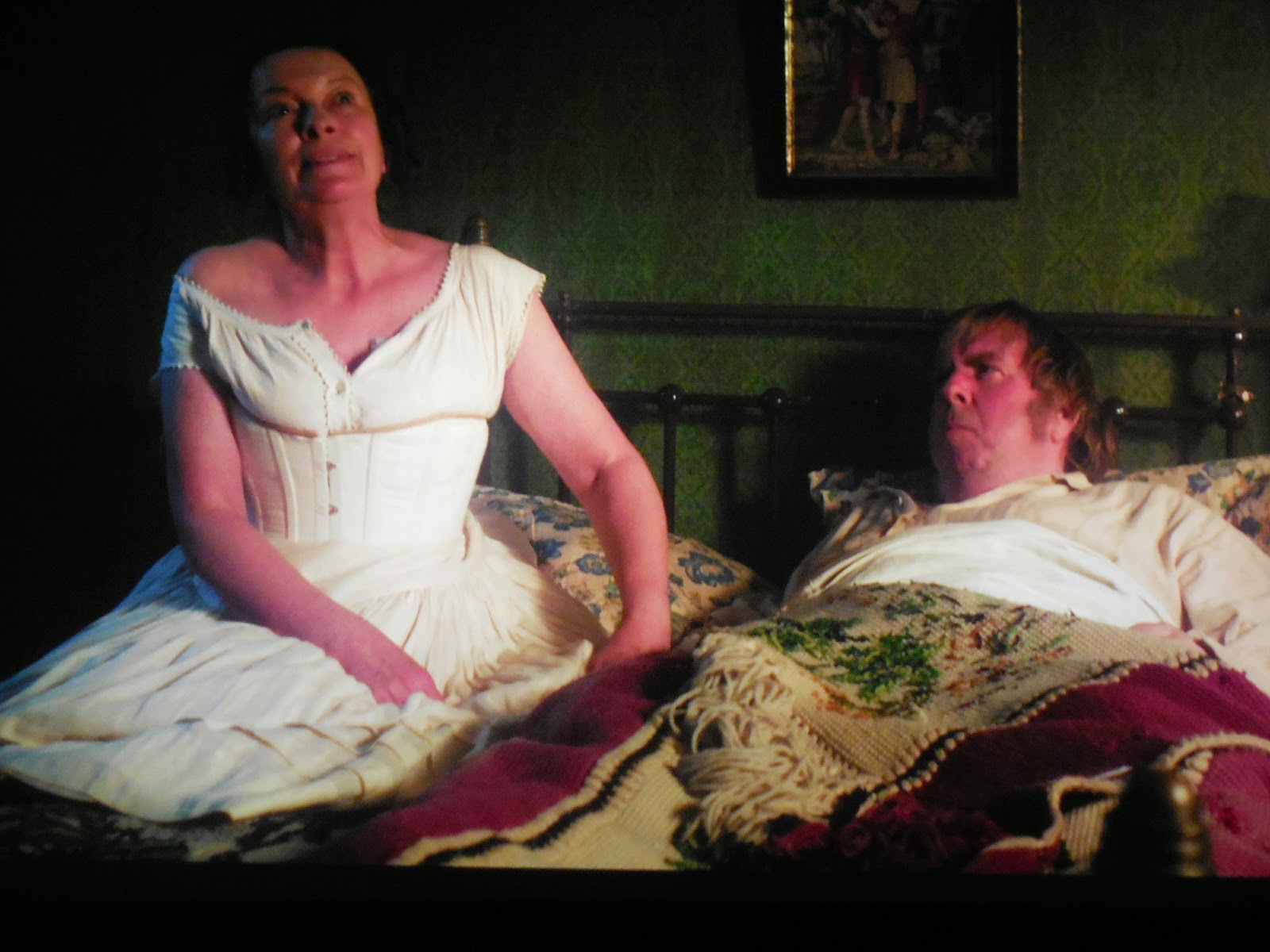
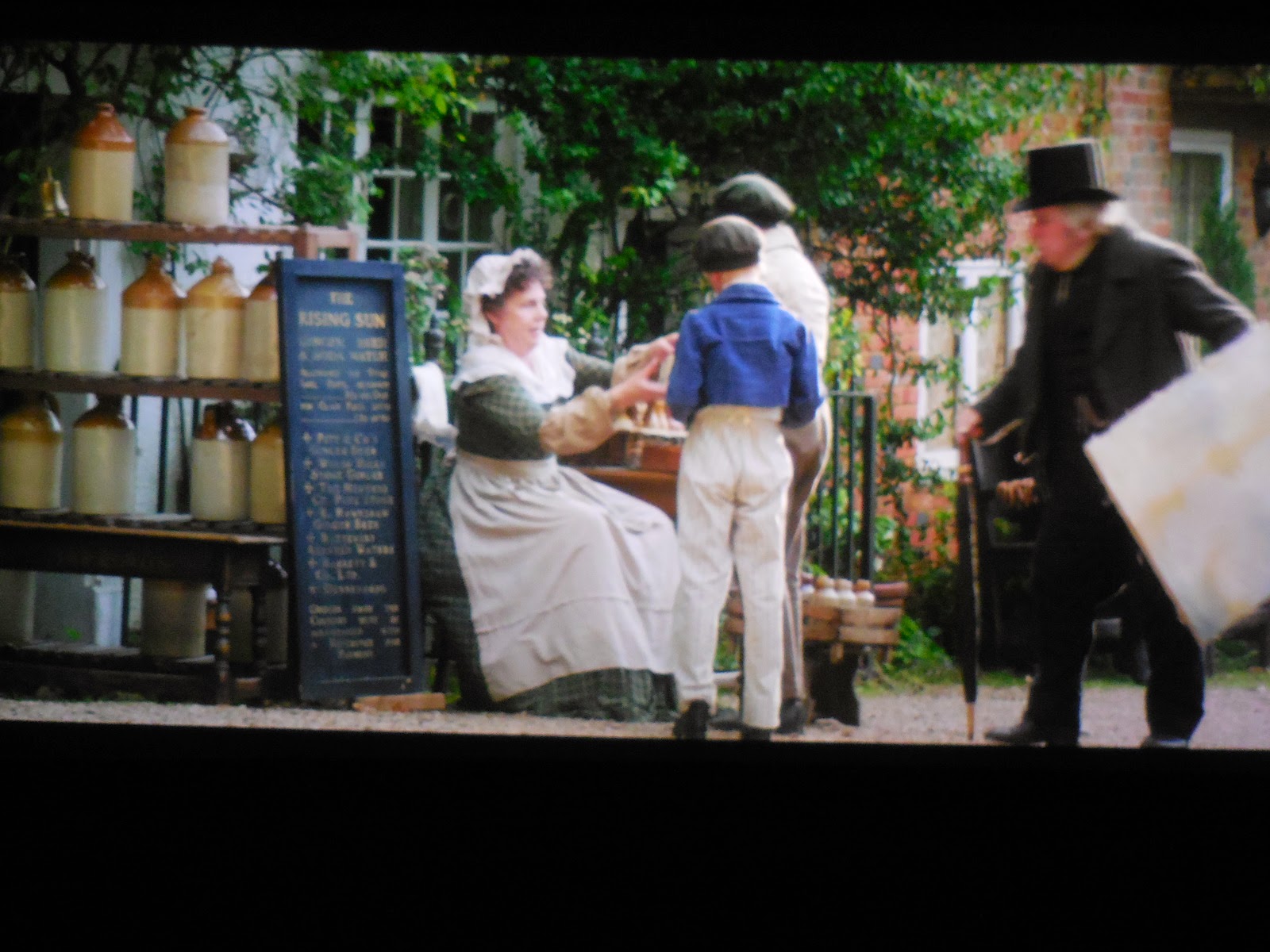
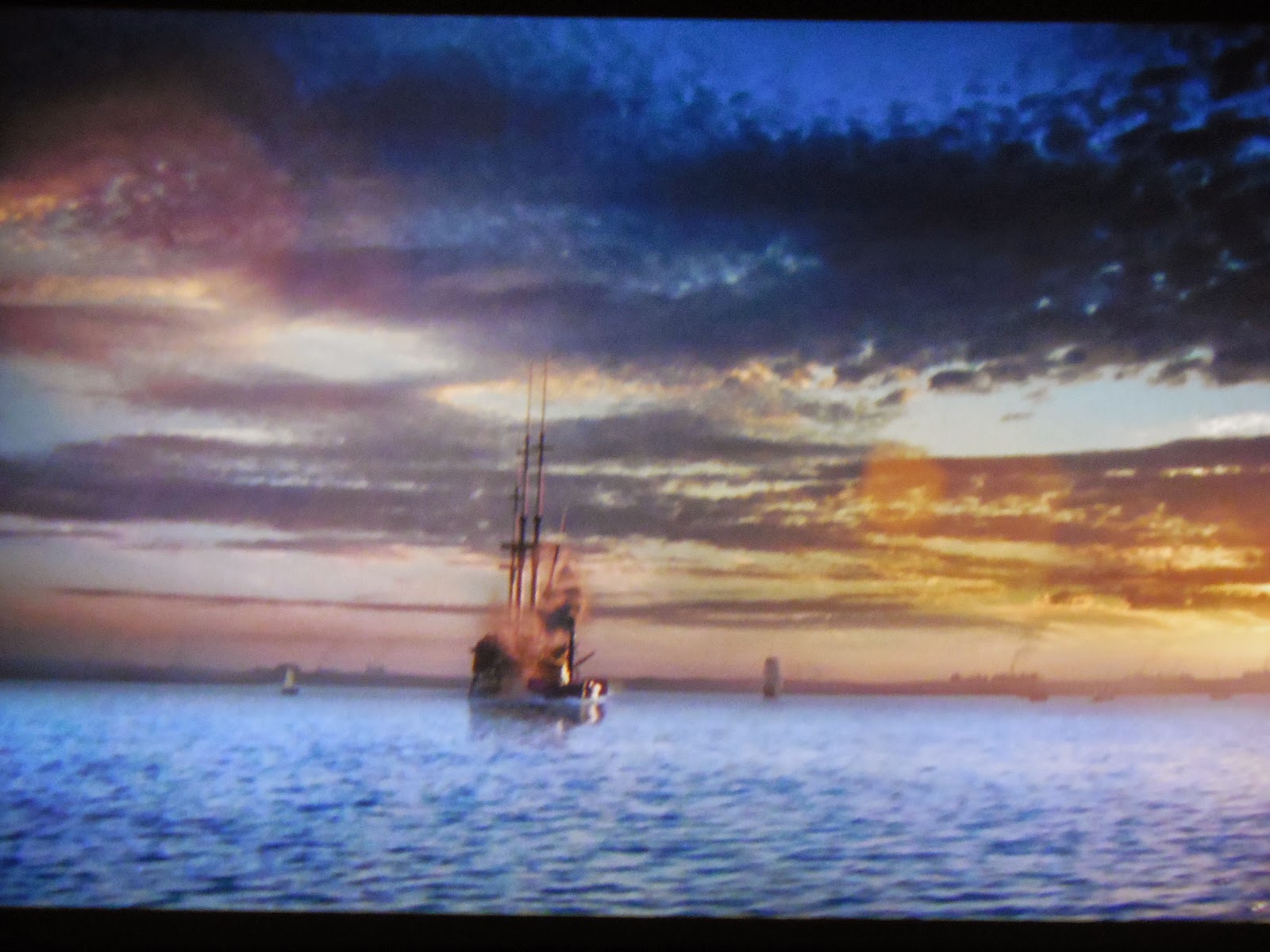
Though the quality of this snapshot hardly does it justice, the cinematography was incredible.
Director Mike Leigh apparently was passed over for nominations for BAFTAs and Oscars, 
though he too has won several awards and deserves more.  But Mr. Turner is 
not your average blockbuster popular film, aimed at massive audiences, though I hope it gets widespread distribution anyway.
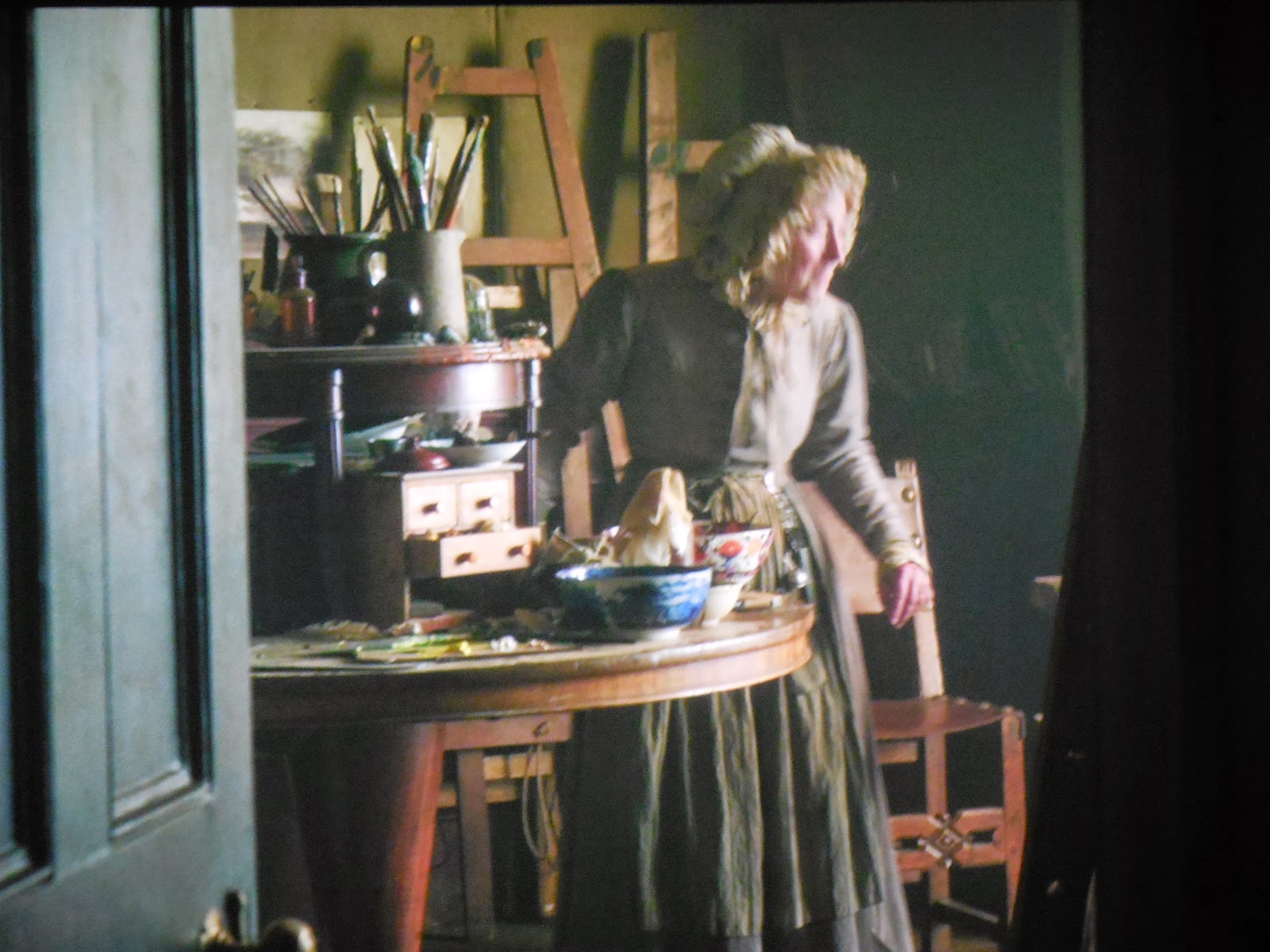
The film follows  Joseph Mallord William Turner ((1775 – 1851) in later life, when he had already earned a distinguished reputation, particularly for his landscapes and nautical scenes. He is a curmudgeonly character, abrupt and eccentric, unkind to the mother of his children, to those daughters (which he apparently did not acknowledge as his), and was abusive to his housemaid, Nevertheless he was a magnificent artist, and it is great film.
Petworth House, West Sussex
Turner visited almost annually at Petworth House, home of the 3rd Earl of Egremont.  He painted both inside the house and on the grounds.Some scenes of the movies are set at Petworth and you can read about the filming there by clicking here.

Filming at Petworth NT

Petworth is now operated by the National Trust. A magnificent collection of paintings is on view there, as well as the fascinating interiors, even the kitchens, and the grounds too. For more information, click here.  The NT has mounted a special exhibition related to the film, on display until March 11, 2015, at Petworth.
Scenes set at the Royal Academy annual exhibitions were especially interesting, with their portrayals of so many of our favorite artists, including John Constable and Benjamin Haydon, below, played by Martin Savage. Relationships among the artists were often prickly and one can hardly be surprised that the competitive spirit reigned.

More comfortable was the growth of Turner’s relationship with Mrs. Booth, a widow from Margate, Kent, where he want to paint the sea.  Mrs. Booth is sympathetically portrayed by actress Marion Bailey. He bought her a house in Chelsea where they lived together for many years.

Dorothy Atkinson as Hannah Danby, Turner’s housemaid
Atkinson gives an amazing performance as Hannah, who grows ever more pitiable as she endures his moods, his mistreatment, her own growing strangeness and affliction. I was surprised when looking at the cast listing to find that Hannah Danby was the niece of  Sarah Danby, the woman who claimed to have had two daughters with Turner, though they were never married.

Another performance, hardly more than a cameo, interested me because I’ve seen Sylvestra Le Touzel in several films and on the London stage.

Sylvestra Le Touzel as John Ruskin’s mother
Le Touzel as Fanny Price in the 1983 BBC production of Mansfield Park

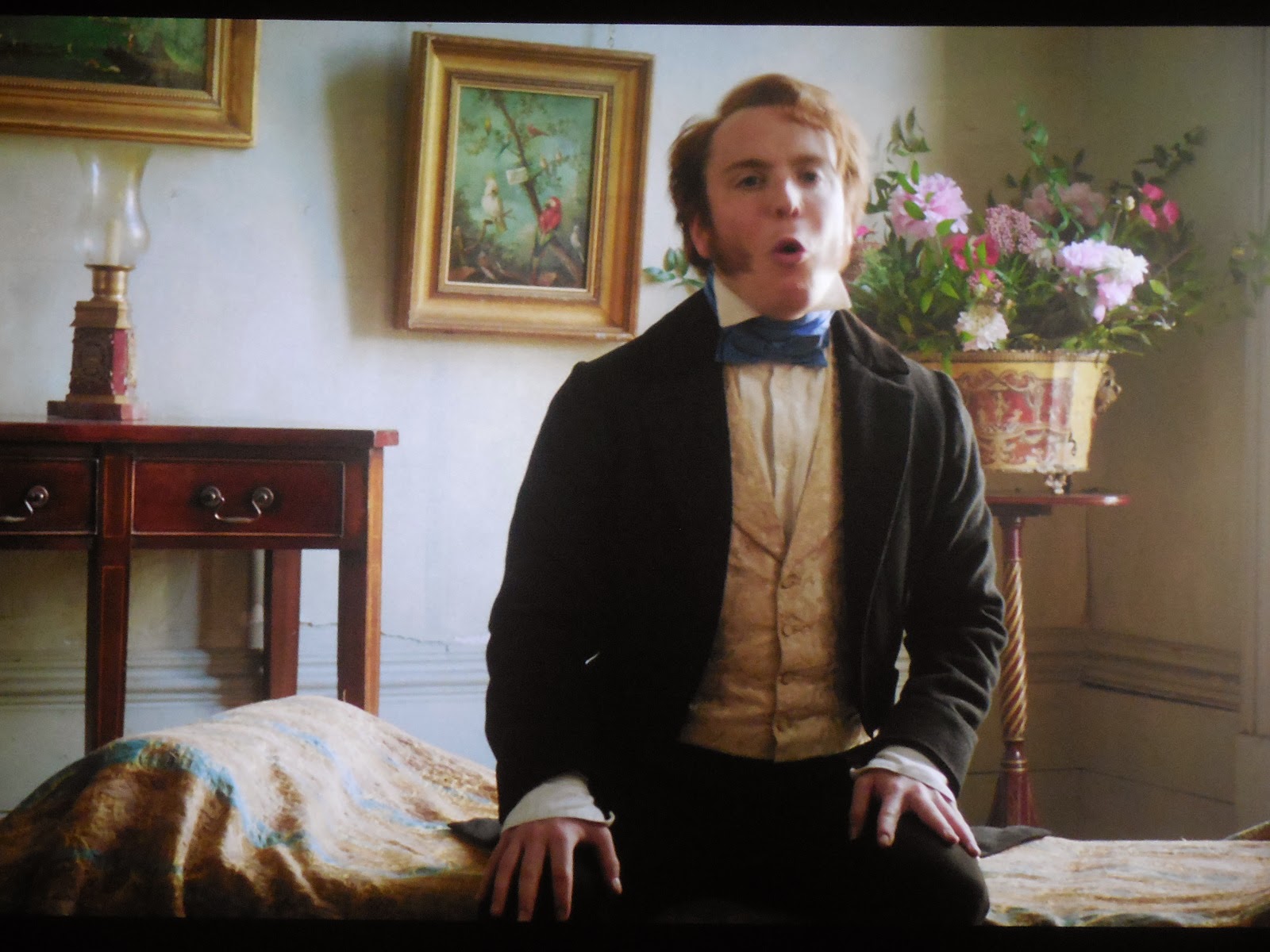
Mentioning Ruskin brings up two aspects of the film that I didn’t like. John Ruskin (1819-1900) was a great authority on Victorian Art, a painter himself, and, I believe a worthy critic who admired Turner’s work. But in this film version he is about as obnoxious a dandy as possible.  Too see a critique from The Guardian on the subject, click here.

Joshua McGuire as John Ruskin
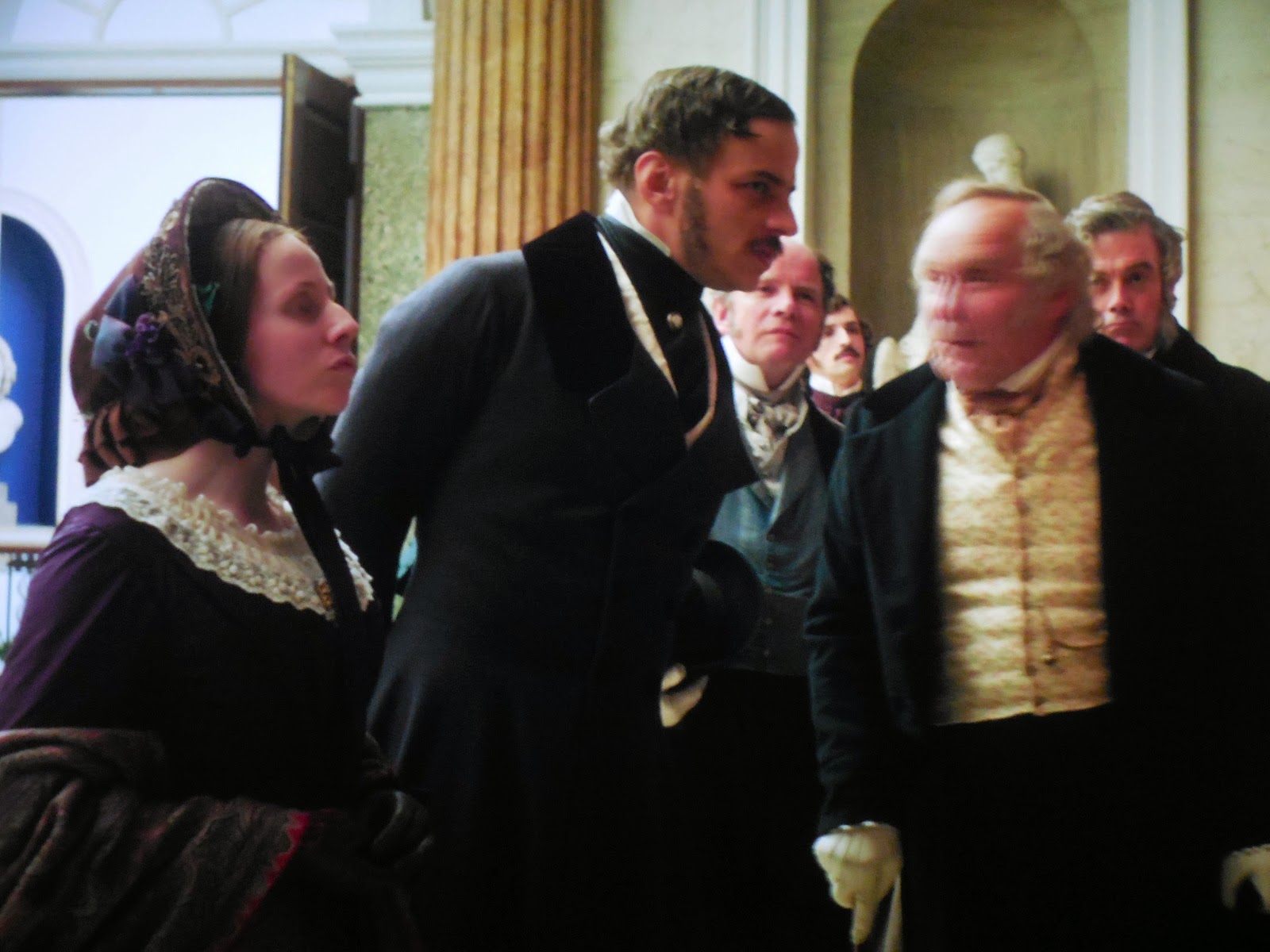
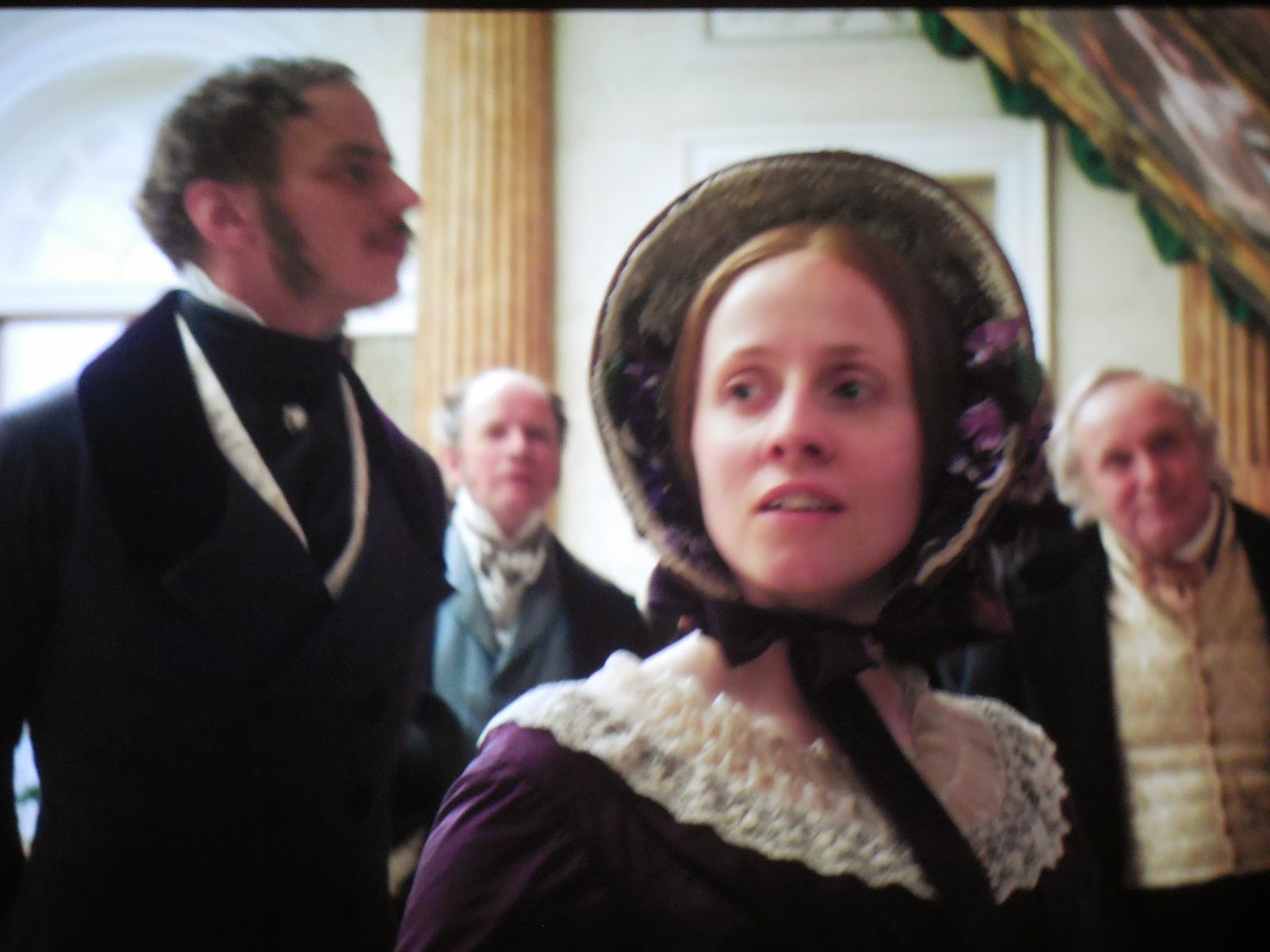
The second thing I disliked was the cliched representation of Queen Victoria and Prince Albert as disliking Turner’s work and denigrating it as the product of failing eyesight. I know they liked the work of Landseer, Leighton, and Winterhalter, but I wonder if the opinions expressed in the film are quite right.  Of course, as  a Victoria myself, I always give her the benefit of the doubt — she was certainly the object of many unflattering statements by those who should have known better!!

 Above and below, Sinead Matthews as Queen Victoria and Tom Wlaschiha as Prince Albert

Among the many prominent artists portrayed, but rarely specifically identified, in addition to those mentioned, are Sir William Beechey, Sir John Soane, Sir Charles Eastlake, and Henry William Pickersgill.  Another was the scientist and mathematician Mary Somerville, one of the first two women members in the Royal Astronomical Society (along with Caroline Herschel). Somerville College was named for her, one of the first women’s colleges at Oxford University.  Next time I see the film, probably on DVD, I will endeavor to identify more of these characters.
As you can tell from the pictures, the costumes and settings are exceedingly good.  Obviously they were well researched. For one a bit familiar with changes in fashion from the 1820’s to the 1850’s, I think I can verify their accuracy. 

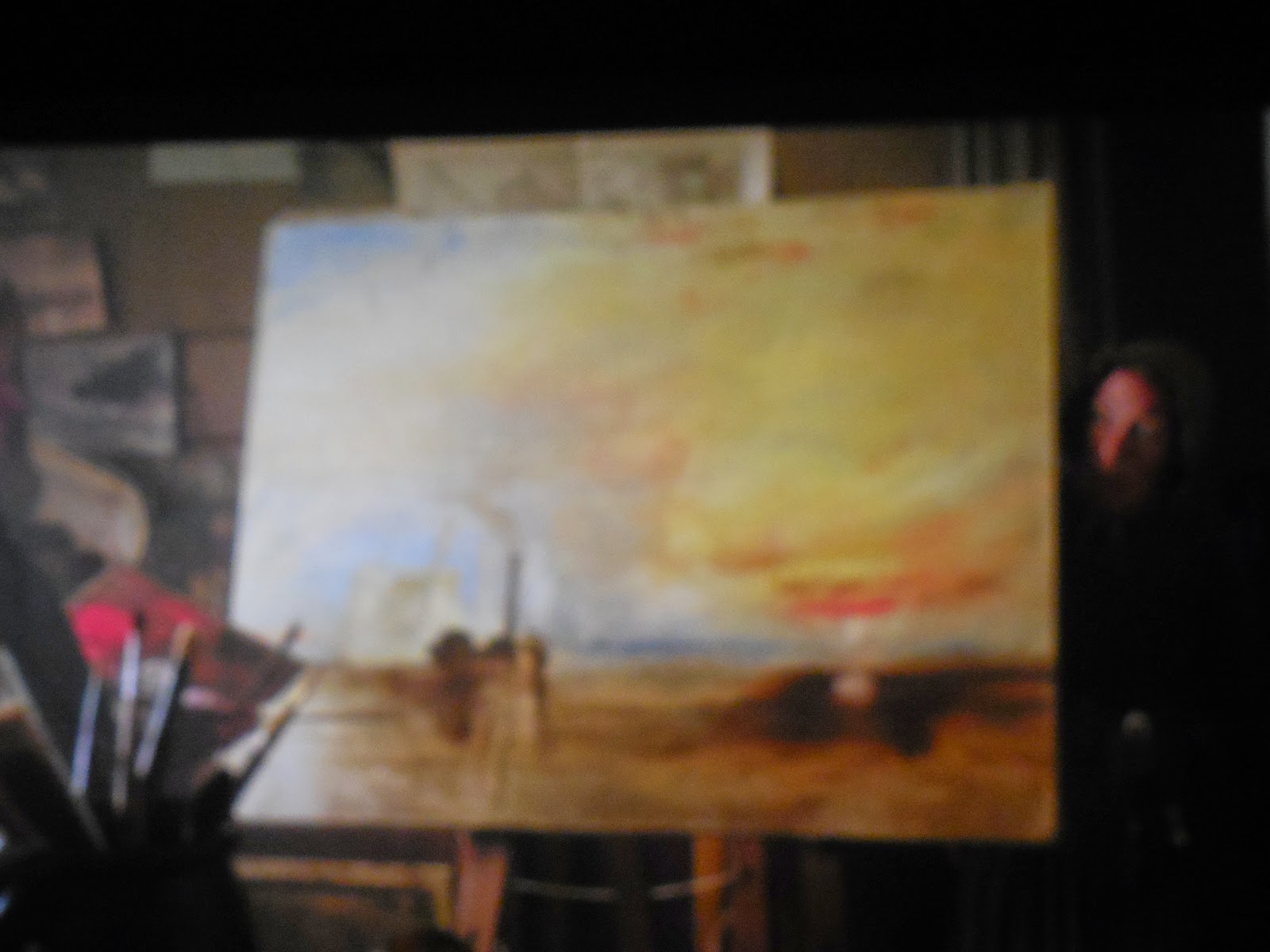
In 2005, the BBC conducted a poll to identify Great Britain’s favorite work of art. The winner was The Fighting Temeraire, by Turner. This film shows Turner encountering the old ship, once the pride of His Majesty’s Navy, being towed away to be broken up.    

Turner completed the painting in 1838 and exhibited it at the annual Royal Academy Exhibition in 1839.

The work in progress in the film
Image of the painting from the website of the National Gallery where it hangs permanently.

A brighter version of the painting, from the Turner website.

Personally, I love The Fighting Temeraire, and many other Turners. I have spent quite a bit of time at the Tate Britain in the Clore Gallery where most of his paintings are displayed, and I find them all delicious, whether line-for-line almost photographic in detail or atmospheric and abstract. I think my all time favorite, however, is one I remember from a childhood poetry book. Tintern Abbey.

Watercolour of Tintern Abbey, Turner, 1794

Another of my favorites, because it is so dramatic and does not glorify the battlefield is Waterloo, which hangs in the Tate Britain.  The Tate holds more than 500 oil paintings, 2,000 watercolours, and 30,000 works on paper from the Turner Bequest.  Funds were also left by Turner, who had achieved financial success earlier than most artists, to assist elderly artists.  The Turner Prize was established to honor contemporary artists as well.

The Field at Waterloo, exhibited 1818.Tate Britain

Light and Colour (Goerthe’s Theory) – the Morning after the Deluge – Moses Writing the Book of Genesis, exhibited 1843

In 2014, the Tate Britain mounted an exhibition Late Turner: Painting Set Free: works  after 1835 the year he turned 60.

From the exhibition description: “During his final period Turner continues to widen his exposure in the marketplace. From pictures of the whaling industry ni the 1840’s to ‘sample studies’ and finished watercolours such as The Blue Rigi Sunrise 1842 (Tate), he constantly sought to demonstrate his appeal to new admirers, led by John Ruskin, who famously described Turner as ‘the greatest of the age.'”

The exhibition closed in London last month. It opens at the J. Paul Getty Museum, Los Angeles, on February 24 and continues until May 24, 2015. It will be shown at the deYoung Museum, San Francisco, June 20-September 20, 2015.

Following our wonderful hours in the theatre, Kristine and I simply had to have some refreshments over which to deconstruct the the film. A perfect day, at least as perfect as one could be on this side of the pond.

LOOSE IN LONDON: WE LOSE VICTORIA

In our last Loose in London post, Victoria set the scene by describing all we had seen at the Queen’s Gallery, one of my favourite places. I love the exhibits they put on – the topics are always of personal interest, the items well chosen and the Gallery space itself of a size that still manages to seem intimate.

Back in 2010, Victoria and I had attended the Art In Love exhibit, which was comprised of all manner of artwork, jewels and other fabulous items that Queen Victoria and Prince Albert had exchanged as gifts between themselves on various occasions over the years. You can read the post about that visit here. 

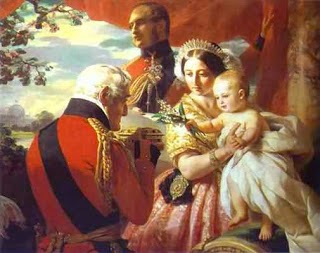
One of my favourite pictures from that exhibit was Winterhalter’s painting, above, showing the Duke of Wellington presenting a gift to his namesake, Victoria’s son, Prince Arthur, on the boy’s first birthday.

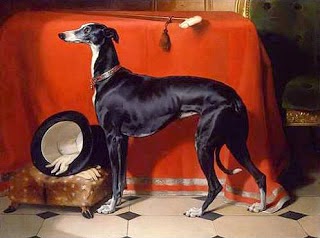
However, my favourite picture – either from that exhibit or from all time – was Landseer’s painting of Prince Albert’s greyhound, Eos. Queen Victoria had to smuggle Albert’s cane, top hat and gloves out of the Castle and over to Landseer to use in the painting without Albert discovering why until the painting was ready for gifting. This picture does not do justice to the stunning craftsmanship of the painting, which is almost photographic. I sat on a bench in front of it for nearly an hour. Then I marveled at the fact that Victoria and I were being given the opportunity to see so many favourite, and so many iconic, paintings in the same room.

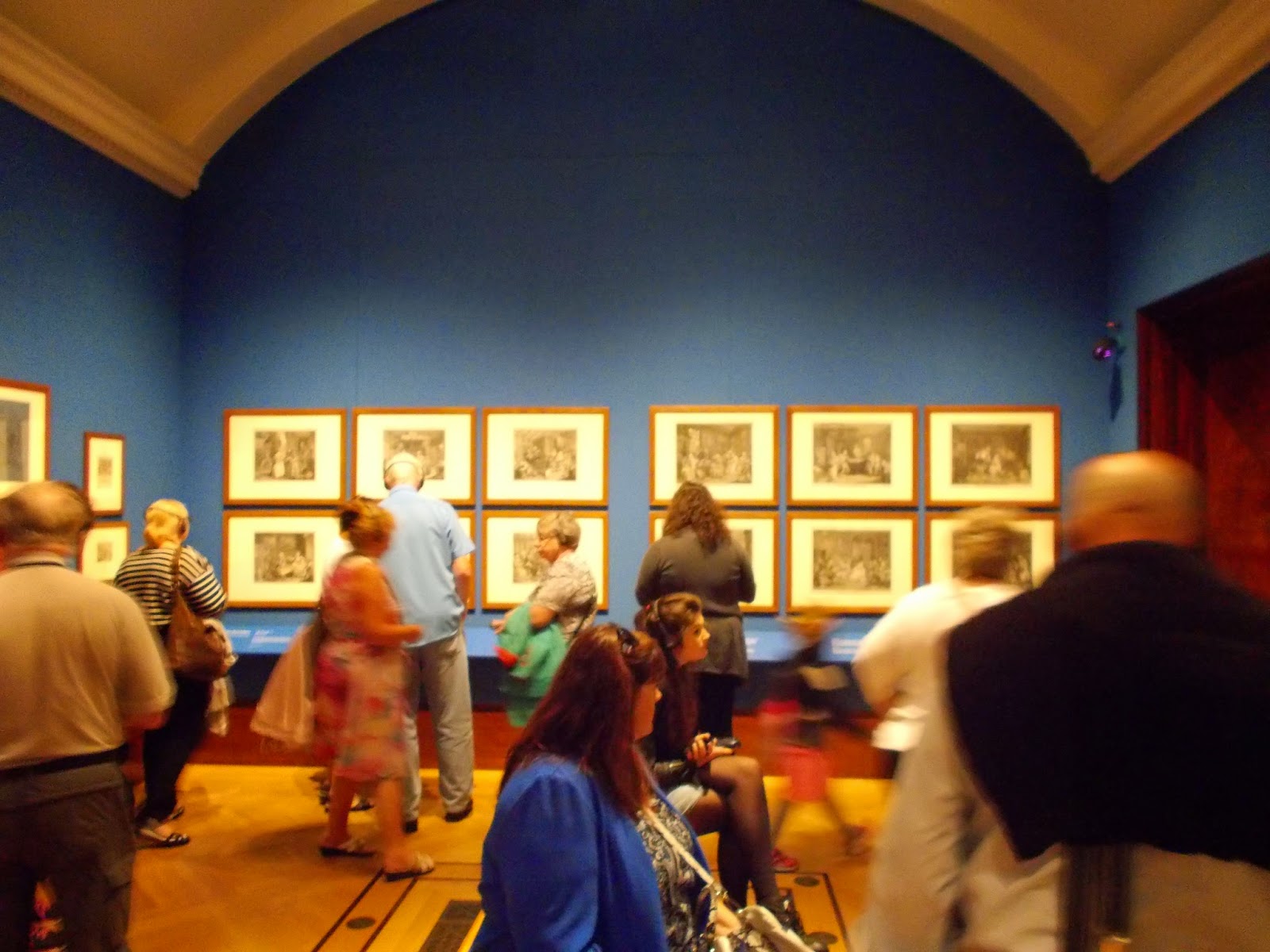
The First Georgian’s exhibits we saw in September was not exactly up my alley, being, strictly speaking, before my chosen time period. Realizing that that train of thought sounded closed minded and, admittedly, faintly ridiculous if one aspires to be at all fair, I made my upstairs to the Galleries and was gobsmacked to see the complete, original series of Hogarth’s The Harlot’s Progress on display. Maybe this show wouldn’t be a miss after all.

As so often happens during trips to galleries or museums, Marilyn, Diane, Victoria and I soon all went our separate ways in order to focus our attention on those things that interested us individually. After a goodly amount of time, Diane, Marilyn and myself found ourselves together once more.

“Where’s Victoria?” Marilyn asked.

“No idea,” I answered, “but come to think on it, I haven’t seen her for quite a while.”

“We haven’t, either,” said Diane. “We’ll go and look for her.”

“No,” said I, putting a restraining hand on Diane’s arm. “Let’s make a plan  first, so that we don’t lose anyone else.” I thought for a moment, channeling Wellington and hoping some of his strategic savvy would rub off on me. “Okay, here’s the deal. I’ll wait right here (we were in the largest gallery, with most rooms opening off of it). You go that way, and Diane, you go that way. What time is it?”

“10:50,” Marilyn said, checking her watch.

“Right,” I said, “both of you will be back here by 11 o’clock. I won’t move.”

So off they went. And back they came with a few minutes to spare.

“No Victoria.” Marilyn said, looking at me expectantly.

“Where on earth can she be?” Diane murmured.

“We have to be just missing her. Like something out of a Marx Brothers movie,” I said. “Tell you what, let’s go out to that half wall right outside the Gallery and wait for her there.”

So off we went, down the stairs, when Diane had a brilliant idea, “Maybe she’s in the giftshop?”

The three of us made a thorough search of the giftshop. We checked every nook and every cranny in every section of the shop. It’s a wonder we didn’t get hauled in for casing the joint. No Victoria. So off we went, out the door and over to the half wall that fronts Buckingham Palace Road. It’s hard to believe, but I haven’t a single photo of the wall. Can’t even find one on Google. Hard to believe because Victoria and I are well acquainted with the wall. We’ve sat on the wall many times. We’ve used the wall as a meeting place on numerous occasions. And you may remember that this was the exact same wall upon which Victoria had left her camera just a few days ago. I felt certain that Victoria, once realizing that we’d been separated, would make a bee line for this wall as a point of re-connection.

So, there the three of us sat.

“I can’t imagine where she can be,” mused Diane.

“How could we lose her? The Gallery isn’t that big,” Marilyn added.

“This does not bode well,” I said.

“Oh, it’s not that bad. She’ll turn up,” Diane said.

“I meant that it doesn’t bode well for the Duke of Wellington tour. It hasn’t even begun yet and I’ve lost someone. And not just someone, but Victoria, my co-guide. If I can’t keep track of a tour guide, how am I supposed to keep track of seventeen tour goers?”

We sat pondering the answer to this question for some time. Some long time.

“I’m going back inside the Gallery to see if she’s there,” I told them. “Don’t move from this spot!”

Once back inside, I cased the giftshop. Again. Then I went up to the information desk and explained my dilemma to the kind lady behind the desk, giving her Victoria’s name and telling her where we’d be waiting, just in case Victoria thought to ask at the desk. Then, I asked one of the guides if she’d go back upstairs into the Gallery and look for Victoria, which she did, using my description of Victoria to scout any lost women she may find. She came back to say that she hadn’t found anyone who looked lost or bewildered, nor anyone matching Victoria’s description, nor by discreetly having called Victoria’s name in various rooms.  She even checked the bathrooms. No Victoria.

So I want back outside and told the girls that I was going to walk down to the Palace entrance to see if somehow Victoria had left the Gallery before us and was waiting for us there. I went. I looked. No Victoria. I went back to the wall and sat down beside Marilyn and Diane.

“Where can she be?” I asked no one in particular.

“She wouldn’t just leave us there,” Marilyn said. “I mean, the plan was for the four of us to go on to the Palace together. Why would she leave without us?”

“She’s not any place that makes sense. She can’t still be inside. She wasn’t here at the wall and we haven’t crossed paths in quite some time. Weird. It’s like someone came down and abducted her.”

“Yeah, but instead of aliens, it was Prinny who whisked her away to Regency England in another dimension,” Diane said. “Maybe she’s eating ices at Gunter’s as we speak.”

“She’d better not be,” I replied. “I wish we could fast forward to when we find her so that I’d have the explanation. The suspense is killing me cause I can’t for life of me think where she could be. We haven’t seen hide nor hair of her.” I stood up, “I know it makes no sense, but I’m going to walk up to the Royal Mews gift shop and see if she’s there. Unlikely, but we’ll then be able to rule that out. Don’t move!”

So, off I trod, up Buckingham Palace road to the Mews giftshop. No Vicky. On my way back, I stopped into the gallery again. “I know this sounds dramatic,” I said to the lady behind the information desk, “but you haven’t anyone fall ill, have you?”
“You still haven’t found your friend?” she asked.
“No, and just to cover all the bases, I wondered if something had happened to her.”
“No, sorry, we haven’t had anyone fall sick, or injure themselves or anything else. Certainly nothing that required emergency services, either. Sorry.”
Dejected, I walked back to the wall. “How long have we been sitting here?”
“Almost an hour,” Marilyn said. 
“And no sign of her,” I said. “I’m going to go out on a limb here and say that the chances of her walking by now are slim to none.”
“Well, we might as well go on to the Palace for the tour, as planned,” suggested Diane. “If worse comes to worse, we’ll find her later at our hotel.”
So off we trudged. Each of us still musing on where in the world, or in London at any rate, Victoria could be. Honest to God, if she had gone to Gunter’s without me, I’d throttle her. 
Note from Victoria: I was looking for them, and beginning to suspect I’d been ditched..a la junior high school, the mean girls had conspired to leave me behind!
More Loose In London Coming Soon!
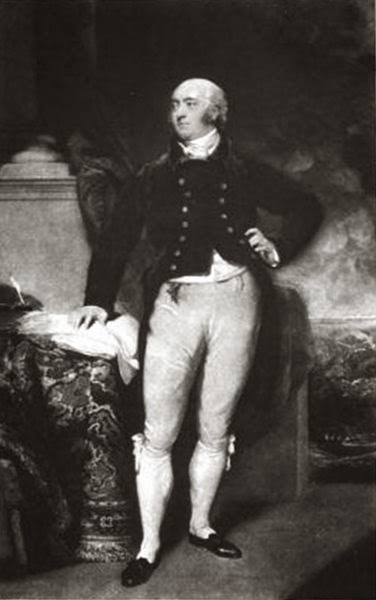
MR. COKE OF NORFOLK

Coke of Norfolk
From Mrs. Arbuthnot’s Journal – February 25, 1822
      I have been very much astonished, in common with the whole town, at the marriage of my old friend Mr Coke of Norfolk, who at the age of 69, has taken Lady Ann Keppel, a girl of 19. It is said she first wished to marry his nephew and heir, William Coke, and, failing with him, turned her attention upon the old man. It is very disgusting, I think, in both lady and gentleman; the latter, however, called on me yesterday and seemed rather proud and to think he was going to do a very clever thing. I wish he may find it answer, but I doubt it much. 
You can read more about the Cokes in Victoria’s past posts about her visit to their home, Holkham House – Part One can be found here and Part Two here.