LOOSE IN LONDON: ROYAL CHILDHOOD EXHIBITION

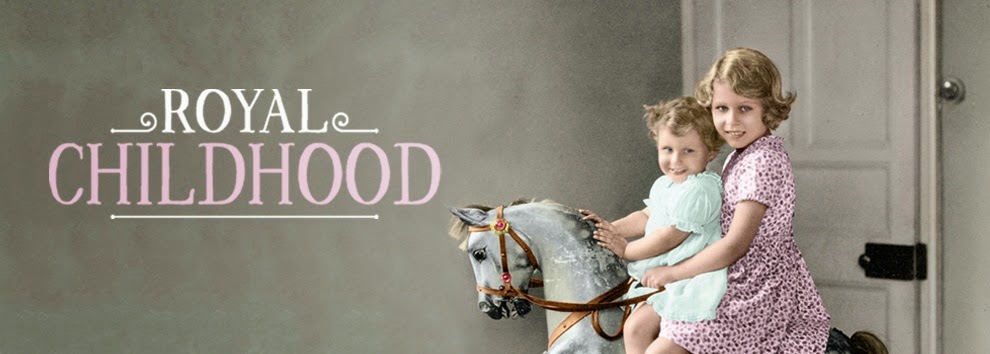
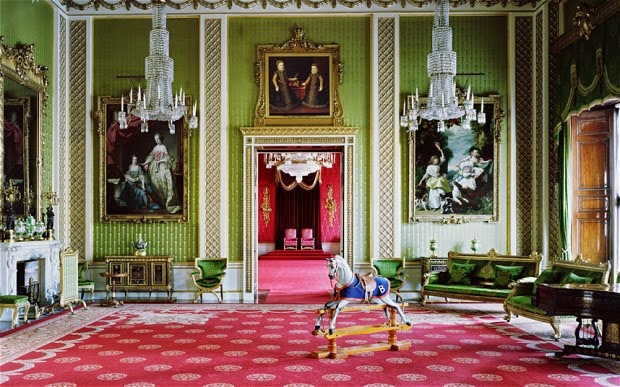
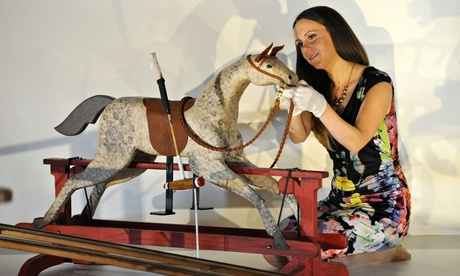
Victoria here. If I hadn’t already known  that Buckingham Palace was exhibiting a collection about Royal Childhood, I would have been rather shocked to see a Rocking Horse in the Green Drawing Room leading into the Throne Room.

But there it was, just as it looked when Princesses Elizabeth and Margaret Rose sat upon it decades ago.

In fact, all through the palace were a few toys and dolls upon the sofas and tables in the stately  gilded rooms, and looking not at all out of place for a house that is often home to several generations of children. The Exhibition closed in September 2014, but you can read more about it here.

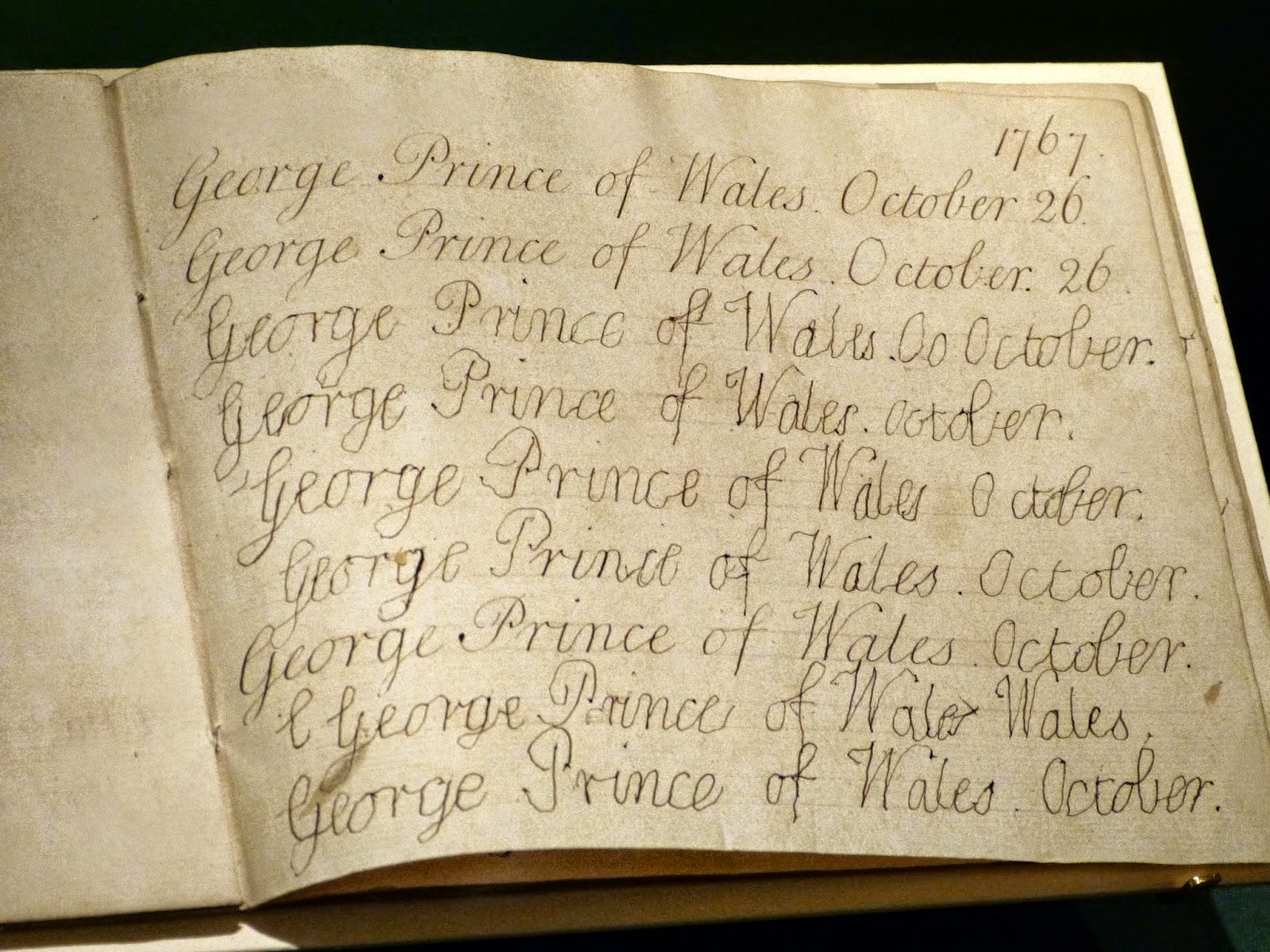
One of the oldest displays, a handwriting practice book of George IV, 1767
The Buckingham Palace Ballroom fitted out as an exhibition hall
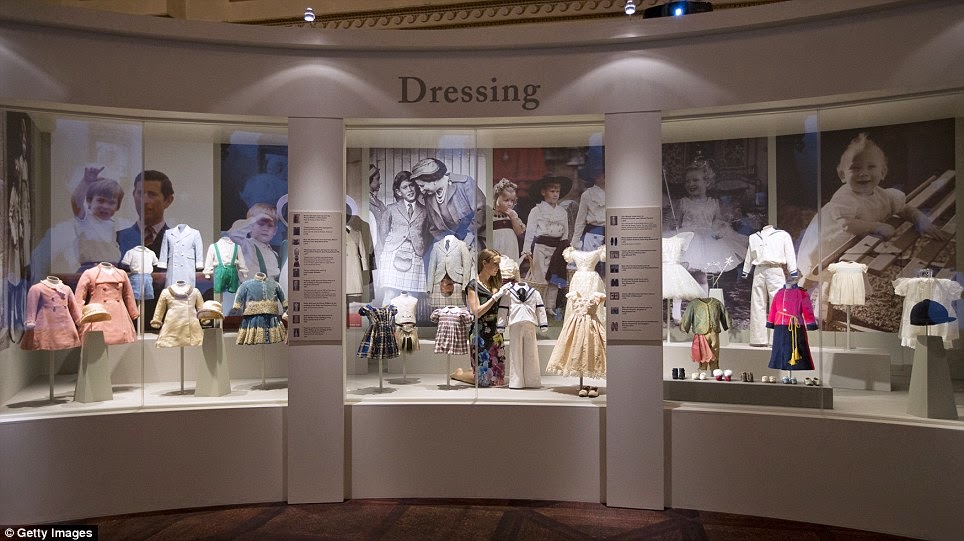
In addition to dolls and toys in various rooms of the Palace, a large exhibition was mounted in the Ballroom with many display cases for clothing, toys, and memorabilia.
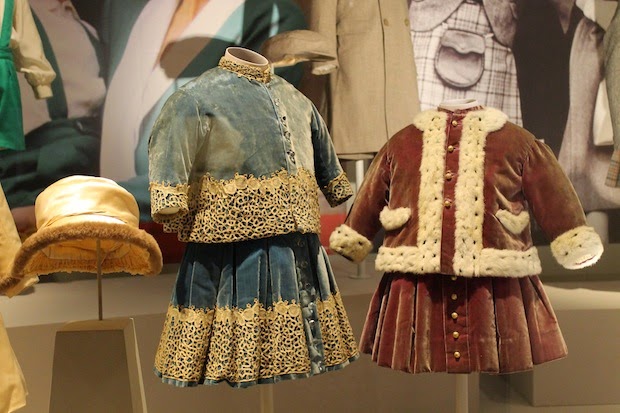
Childhood clothing over centuries

Worn by George V in 1868
Visitors enjoying the exhibition
Cradle of Princess Alice, 1843
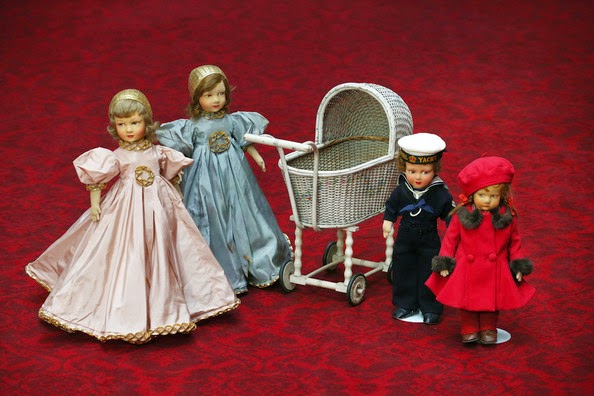
Queen Elizabeth II’s Dolls
Enhancing the objects were many photos and films of the Royal children,In an exhibition review in the Telegraph, July 28, 2014, Richard Dorment wrote, “It goes without saying that, from a material point of view, royal children have everything any child could want and more. But none of that means anything without a family life based on parental love and the affection of siblings. What knits the show together and gives everything we’ve seen the context it needs to bring it to life is the selection of deeply private home movies on view in the ball room. Particularly touching are the grainy films showing the touching relationship between the Queen and her sister Princess Margaret, seen practicing dance steps or playing with their corgis under the amused and clearly doting gaze of their parents.”
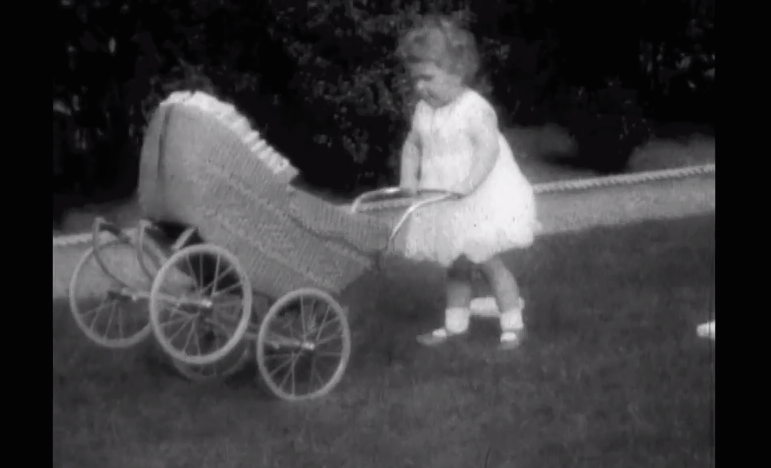
Princess Elizabeth and her Doll-Buggy
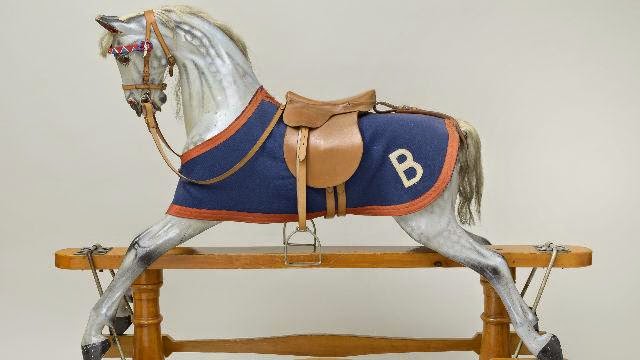
Royal Collection Curator Anna Reynolds with a rocking horse 
sent by President and Mrs. Obama to Prince William of Cambridge
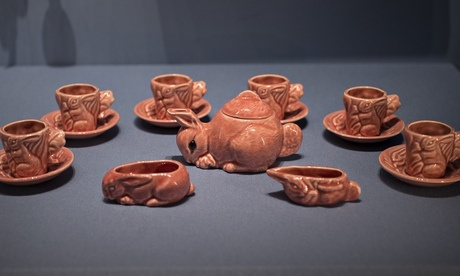
A Tea Set played with by Princess Elizabeth in the 1930’s
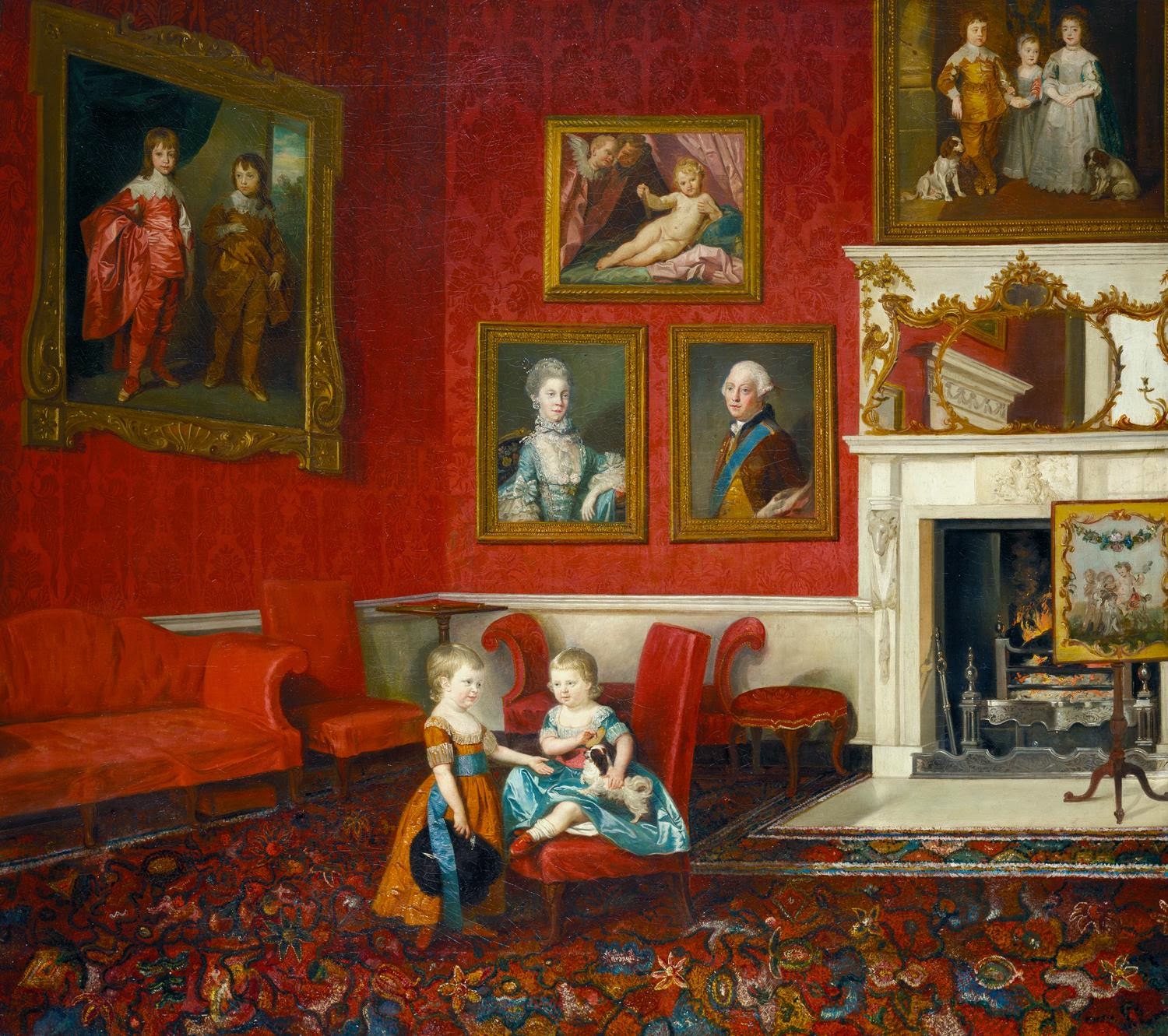
George, Prince of wales, and Frederick, later Duke of York, at Buckingham House, 1765
by Johan Zoffany(1733-1810)
To end our account of the Royal Childhood Exhibition, we go back to the beginning. to show this portrait of the earliest days of Buckingham House as a royal home. The first two offspring of George III and Queen Charlotte were not yet “breeched” in this painting. George would have been almost three and Frederick almost two years of age. 

VIDEO WEDNESDAY: LIFE BELOW STAIRS

“The Real Downton Abbey” 

Servants: The True Story Of Life Below Stairs

A century ago, 1.5 million British people worked as servants – astonishingly, more than worked in factories or farms. But while servants are often portrayed as characters in period dramas, the real stories of Britain’s servants have largely been forgotten. Presented by social historian Dr Pamela Cox – herself the great-granddaughter of servants – this three-part series uncovers the reality of servants’ lives from the Victorian era through to the Second World War.

Click here to watch Part One


LOOSE IN LONDON: THE HISTORY OF BUCKINGHAM PALACE

Great Britain has no shortage of castles and palaces.  London alone has plenty, think Hampton Court, Kensington, St James’s, Lambeth — and that’s not to mention those now demolished.

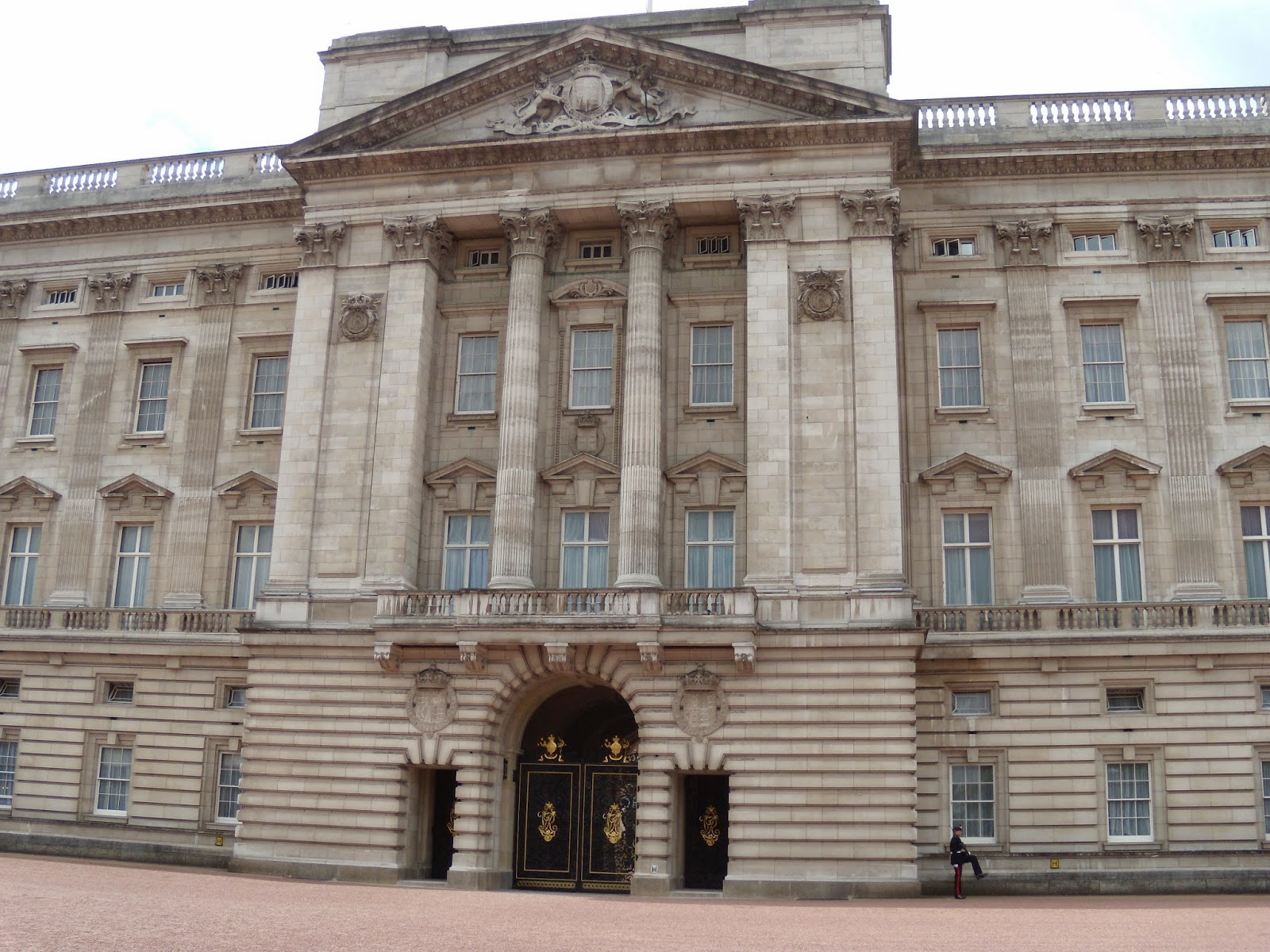
Buckingham Palace, Sunday, August 31. 2014
But there is one above all that we associated with the present-day Royal Family, and it might be a surprise to find that it has been the home of the monarch less than 200 years, beginning with Queen Victoria.
Buckingham House, built for the Duke of Buckingham in 1701-03
The site of the present-day Palace and Garden belonged to various nobles and religious orders until the time of Henry VII, who took it the Manor of Ebury for himself from Westminster Abbey in 1536. James I created a mulberry garden on the site to feed what he hoped would become a silkworm industry in London. Several houses were built on the site and changed hands frequently.  Designed by William Winde, the above mansion, which is still the core of the central part of the palace, was completed in 1703 for the Duke of Buckingham.
The Queen’s House
In 1761, the new young King George III purchased and remodeled the building as a  home for his new Queen, Charlotte of Mecklenburg-Strelitz (1744-1818). who bore most of their fifteen children in the house.  During this period, the house was faced in red brick and had the appearance of  Georgian country mansion — which it was.

The Royal Family officially lived at St James’s Palace, not far away.  The Prince Regent, upon reaching his majority in 1783, was given Carlton House as his residence. The Prince began s series of remodeling projects that lasted until he became George IV in 1820, when he decided Carlton House was not sufficiently large and grand enough for a British Monarch. 

Carlton House demolished, 1825

He and Architect John Nash, who also worked on his Brighton Pavilion, embarked on a series of structural and decorative embellishments to the Queen’s House, renaming it Buckingham Palace. They added several wings into the forecourt and eventually constructed a triumphal arch to make a ceremonial entrance into the palace.
The Palace c. 1837
When Carlton House was demolished, many of the furnishings and interior decor fittings were moved into the “new” palace.  George IV did not live to see completion of his masterpiece and after his death, poor John Nash was criticized for the chronic overspending and overly grand plans George pressed him to create. The new King in 1830 was George’s brother William IV, not known for his interest in the arts, who lived at Clarence House. (See our visit to Clarence House here)  Since the interiors at Buckingham Palace were neither finished nor to his (lack of) taste, King William and Queen Adelaide remained at Clarence House until his death in 1837.
.  
Buckingham Palace, 1837
After the Houses of Parliament burned in 1834, King William IV suggested that Parliament might take over the unfinished Buckingham Palace and adapt it for the seats of the Houses of Commons and Lords. But this offer was rejected, and building continued, accelerating after Victoria became Queen in 1837.
Many of the rooms might have been splendid, but the palace was cold, ill-lit, smoky and uncomfortable. More repairs and alterations were planned, and continued after her marriage to Prince Albert of Saxe-Coburg-Gotha. who personally led some of the improvements.
In the mid-1840’s, the wings were expanded and plans for a new section, which we know as the familiar front of the Palace, necessitated the relocation of the triumphal Arch.
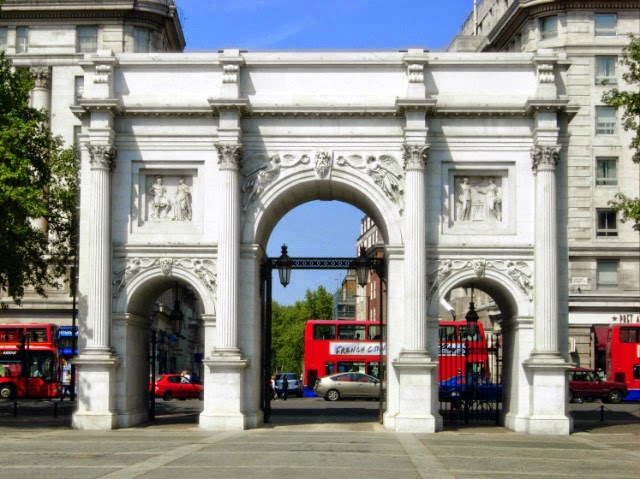
Marble Arch
The Marble Arch was moved into the northeast corner of Hyde Park, but that site today is in the middle of a traffic circle. In order to facilitate the ever-growing volume of cars lorries and buses, the crucial intersection of Park Land, Edgware Road, and Oxford Street was widened by taking park land and isolating the Arch. At least it was cleaned up.  It stands there today, a sort of monument to a by-gone era.  The location of Tyburn Tree, a public execution site from 1388 to 1793, is nearby.
According to the Monarchy’s website,  “A serious problem for the newly married couple was the absence of any nurseries and too few bedrooms for visitors. The only solution was to move the Marble Arch – it now stands at the north-east corner of Hyde Park – and build a fourth wing, thereby creating a quadrangle. (Edward) Blore, the architect in charge, created the East Front and, thanks largely to his builder, Thomas Cubitt, the costs were reduced from £150,000 to £106,000. The cost of the new wing was largely covered by the sale of George IV’s Royal Pavilion at Brighton. Blore added an attic floor to the main block of the Palace and decorated it externally with marble friezes originally intended for Nash’s Marble Arch. The work was completed in 1847.”

The Palace East Wing as it appeared in 1910
Victoria and Albert also had a grand ballroom built to accommodate various official events and balls. It opened in 1856, at that time, the largest room in London.
The Opening Ball in the new Ballroom, 1856
The Ballroom set up for a large dinner party
Victoria Memorial, 2014
Shortly after her death, Queen Victoria’s eldest son successor, Edward VII, called for a memorial to the Queen and Empress.  Sir Thomas Brock created the sculpture and the base was designed by Sir Aston Webb. The project was not completed until 1924

Because pollution had discolored and pitted the stone of the East Wing, its face was replaced in 1913 by a facade of white Portland Stone.  Sir Aston Webb was in charge, and the work was finished in the summer of 1914, just before the outbreak of World War I.

The present Portland Stone facade of the East Front, 2010
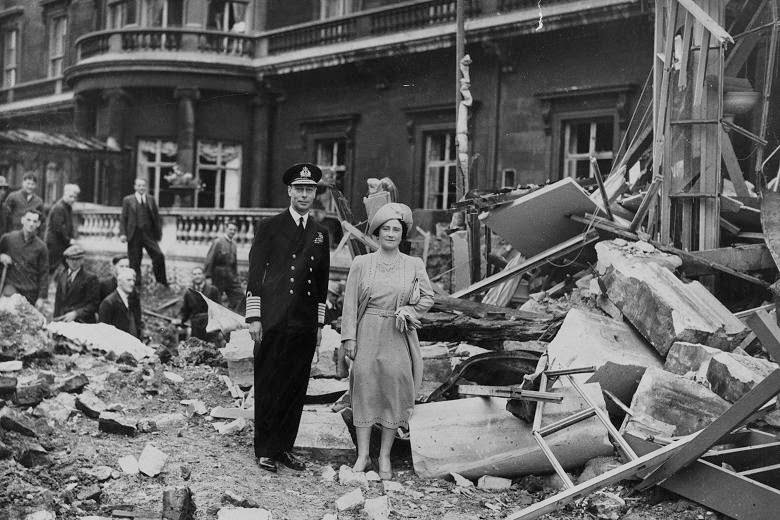
During World War II, German bombs hit the Palace seven times.  Queen Elizabeth and King George VI remained in residence. The Queen said, “I’m glad we have been bombed. Now I can look the East End in the face”.  She could certainly sympathize with the oft-bombed residents of East London.

King George VI and Queen Elizabeth in the Palace after an air attack
The Balcony on the East Front is the national and international focal point for the celebration of great events.
Celebrating the end of World War II in 1945
After the 1953 Coronation of Queen Elizabeth II
After the wedding of Prince William and Kate Middleton
An Aerial View< /div>

As it stands today, Buckingham Palace has 775 rooms, used for state occasions, personal and guest apartments, nearly 100 offices, and 78 bathrooms. It is a working palace and often hosts state dinners. Below, the March, 2015, visit of the President and First Lady of Mexico, with the Queen and Prince Philip.

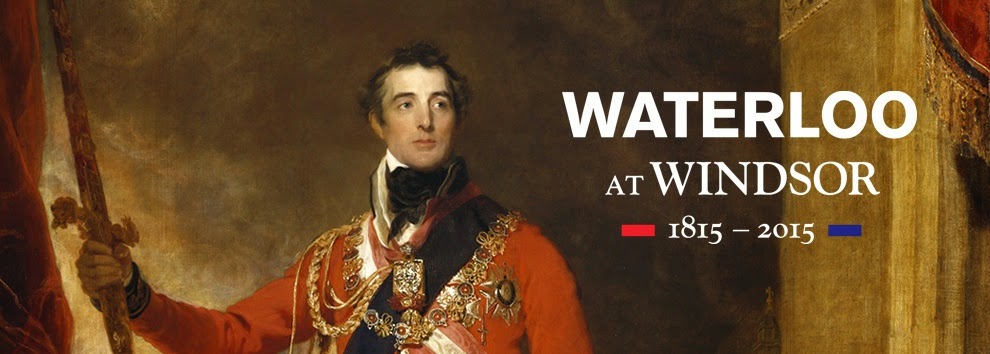
WATERLOO WEDNESDAY: WATERLOO AT WINDSOR

By Guest Blogger Nicola Cornick

There can be few places more appropriate than Windsor Castle to hold an exhibition to commemorate the 200thanniversary of the Battle of Waterloo. Originally founded by William the Conqueror at the end of the 11th century, Windsor has been home to 39 monarchs and is the oldest royal residence in the British Isles. At various points in its history it has undergone major remodelling and one of these took place in the late 18th and early 19th century with the creation of a new grand staircase and state apartments. During the Peninsular Wars when there was a threat to the country from republican France, Windsor was recognised as a symbolic bastion of the British nation and the monarchy.
It was George IV who created the Waterloo Chamber in celebration of the allied victory of 1815, and the room was completed by his successor William IV. It is a vast pace filled with Sir Thomas Lawrence’s imposing portraits of those who were instrumental in the victory, including the Duke of Wellington. A portrait of George himself is placed at the centre of the room and thus as the focal point of the victory.


The “Waterloo at Windsor” exhibition is running throughout this year and I was lucky enough to go and see it a couple of weeks ago. It’s a fascinating mixture of prints, drawings and archive material from the Royal Collection, which explore the battle and its aftermath. The introduction to the exhibition is via the Drawings Gallery where there is a display of maps of the battlefield and paintings that were in some cases produced in the immediate aftermath of the battle, showing tourists already visiting the site.  I also loved the collection of Rowlandson cartoons depicting Napoleon as a Corsican bloodhound and it was interesting to see some French propaganda cartoons and pictures, showing him from a very different perspective, that of the peacemaker of Europe. I also learned some fascinating facts; that amongst the memorials planned after the battle was one for a pyramid as high as St Paul’s Cathedral, which would have cost a million pounds in the currency of the day. Like many of the proposed memorials it was never built.


Elsewhere in the staterooms are a whole host of artefacts with connections to the battle. By far my favourite was Napoleon’s burnous, a red felt hooded cloak lined with yellow silk brocade and decorated with silver braid (above). This had been found amongst Napoleon’s baggage train on the field at Waterloo and was presented to the Prince Regent by General Blucher.  Also taken from Napoleon’s belongings was a leather travelling desk, decorated with gold bees and the monogram “N.” It contained two inkpots, a sandbox, a candlestick and bell. Napoleon certainly didn’t travel light!
It was the little details of the exhibition that I enjoyed the most: The drawing of the Waterloo Elm, which had been Wellington’s command post during the battle, and the story that it was subsequently stripped of its leaves and branches by souvenir hunters and turned into a chair! The gorgeous silver gilt tea service and toast racks that Napoleon gave to his adopted daughter Stephanie on her marriage… Each item had a different story to tell and a different light to shed not only the Battle of Waterloo itself but also on the enigmatic Emperor who continued to be a figure of fascination even in exile.
Throughout 2015, Waterloo at Windsor: 1815–2015 will combine a themed trail through the State Apartments with a display of prints, drawings and archival material that explores the battle and its aftermath.

The trail will highlight objects seized on the battlefield by the victors, including silver, furniture, weapons and the beautiful red cloak belonging to Napoleon, presented to George IV by Wellington’s ally, Field-Marshal Gebhardt von Blücher.


You can visit guest blogger and USA Today Best Selling Author Nicola Cornick’s website here. 

TRAVELS WITH VICTORIA: BRITISH NOTABLES AT THE RINGLING MUSEUM OF ART IN FLORIDA

COMING HERE; REYNOLDS, GAINSBOROUGH, LAWRENCE, RAEBURN, BURNE-JONES…BUT FIRST…

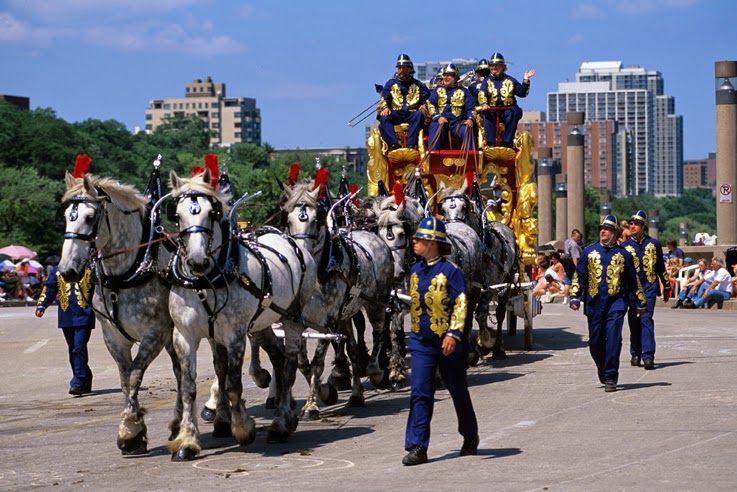
Herewith a disclaimer! For many years, I went to the Circus Parade in Milwaukee.  It was fantastic, with the many antique circus wagons from the Circus World Museum in Barbaboo, WI, pulled by teams of draft horses from all over the US. So I have to admit that both my visits to the Ringling  Complex in Sarasota, FL, were disappointing when it came to the circus memorabilia. Much better to visit the Baraboo site if you are looking for old time circus material related to the Ringling Bros. Barnum and Bailey shows. However, Baraboo doesn’t have the fantastic Ringling mansion or the wonderful Art Museum…for those, go to Sarasota.

Great Circus Parade, Milwaukee, 2009
The Golden Age of Chivalry wagon at Baraboo

But the circus is not the subject of this post, other than the fact that the Ringling Brothers were from   Baraboo, and John and Mable Ringling made their fortune from the circus, then built their mansion in Sarasota and gave their art collection to the people and the State of Florida.

In the fashion of numerous American millionaires in the early 20th century, Ringling spent time in Europe and acquired a massive collection of art, antiquities, furniture, and decorative art.

Ca’ d’Zan, Sarasota, FL
Of course, I couldn’t get far enough away or up in the air to take a photo like this, so this is from the website. To see more click here. Ca’ d’Zan means House of John, but on the architect’s plans, it was known as residence of Mrs John Ringling.
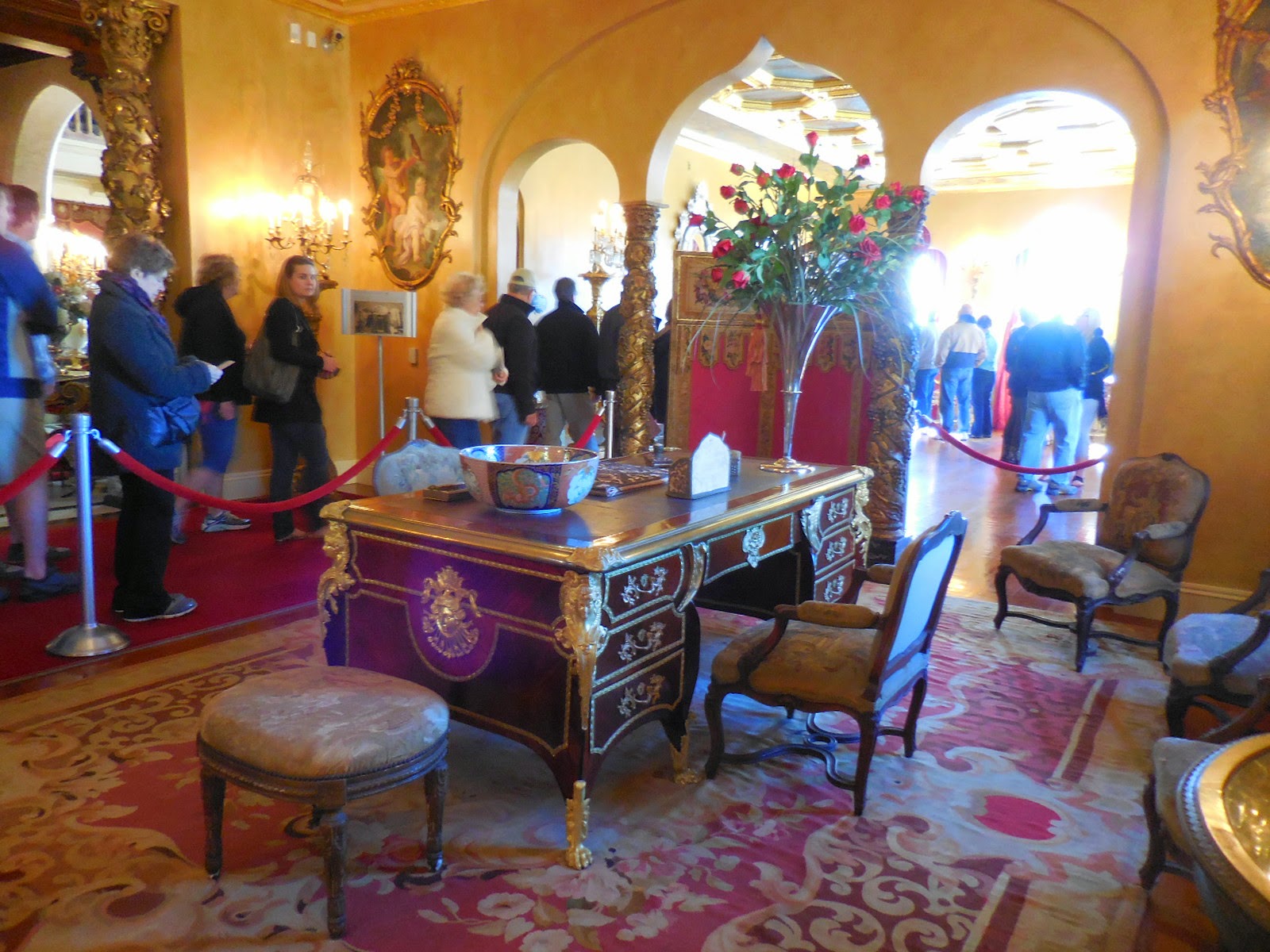
Visitors file through the house almost every day.
Taking the inspiration from their many visits to Venice, the Ringlings hired architect Dwight James Baum to design the house — with Mable’s eager participation. After two years of construction, it was completed in 1926. Sadly, Mable was able to enjoy it for only three years before she died at age 54.
Style: Venetian Gothic !
John lived until 1936, having remarried and suffered from the effects of the Great Depression. His fortune had declined to almost nothing, but he insisted on leaving the house, grounds and Art Museum to the people and State of Florida. For many decades the property was neglected until it was used for the decrepit home of Miss Havisham in 1996 Hollywood version of Dickens’ Great Expectations.  The State of Florida and Florida State University have restored the house and grounds and renovated the Art Museum in the last couple of decades and it is in pristine shape today.. 
Now to the Art Museum Collection — just like the Grand Tours that 18th Century young men took, so 19th and early 20th century American millionaires, craving cultural education and acquisition of treasures to prove their erudition, enjoyed touring continental cities, castles, and museums. In addition to hiring European circus performers for the Ringling Brothers Circus in the U.S., John and Mable Ringling bought and shipped many artworks; he was particularly attuned to baroque Italian art, according to guides at the museum.  But he also bought many wonderful works in Great Britain.
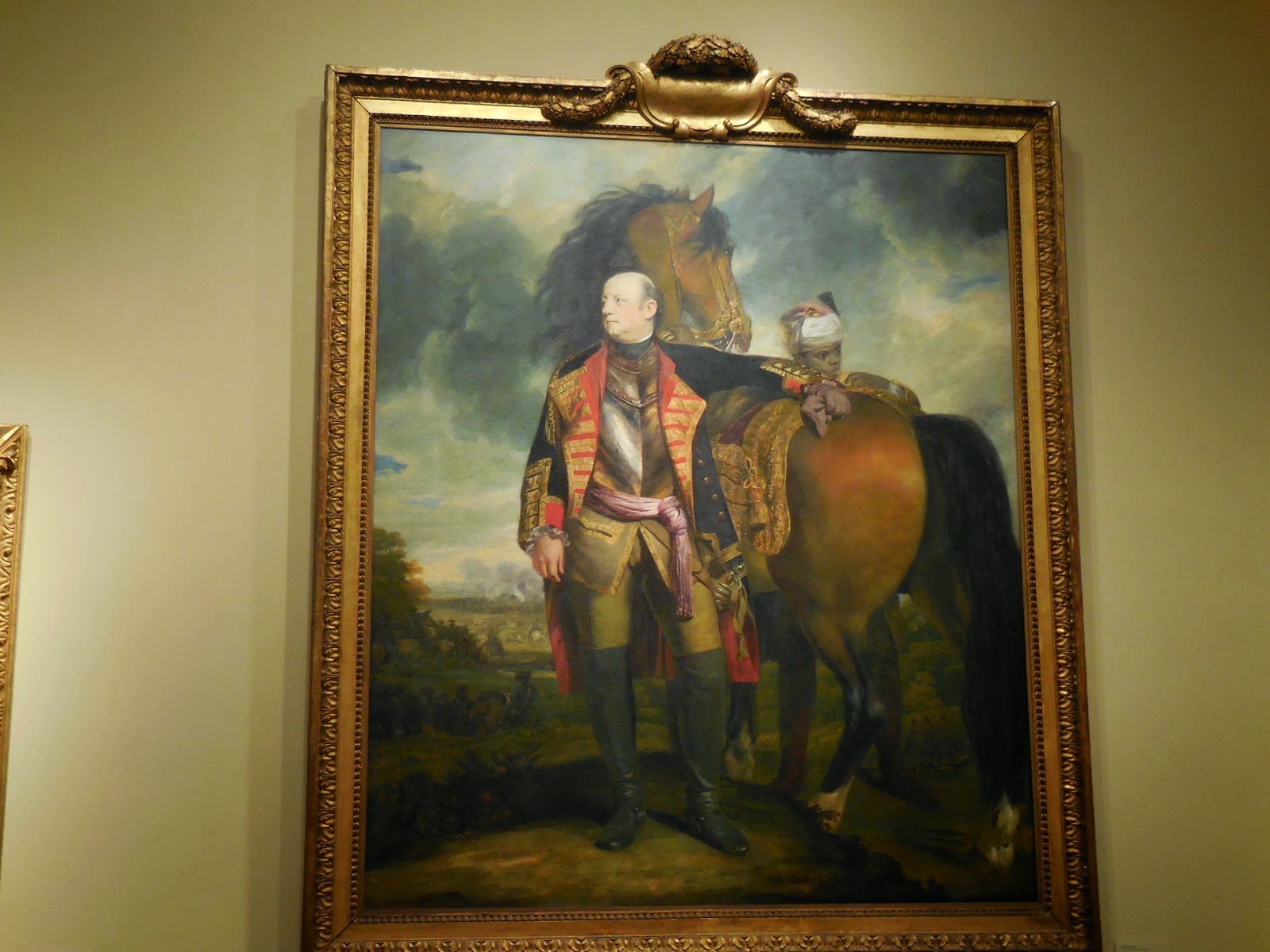
Marquis of Granby, 1766, by Sir Joshua Reynolds
I think my absolute favorite here is a portrait of John Manners (1721-1770) the Marquis of Granby,1766, by Sir Joshua Reynolds (1723-1792). It was loaned to the Tate Britain for their Joshua Reynolds: Creation of Celebrity exhibition in 2005 (click here)– and it may look rather familiar as portions of it are often seen on pub signs. Apparently many pubs, even today, are named after the famous general, who did not live long enough to succeed his father as Duke of Rutland. The Marquess was popular with his men and is said to have set up many of them in pubs of their own which they named after their benefactor.
Lt. General Philip Honywood by Thomas Gainsborough, 1765 
Reynolds’ competitor, Thomas Gainsborough, (1727-1788), is represented by this  fine military portrait with a beautiful landscape background.  Honywood was a colleague of the Marquis of Granby in battle. One can see t
he evidence of Gainsborough’s admiration of the equestrian portraits by Van Dyke in this work.

Agrippina and her Children Mourning over the Ashes of Germanicus, 1773
by Benjamin West 
American-born Benjamin West (1738-1820) moved to London in and never returned.  He was the second president of the Royal Academy of Art, succeeding Sir Joshua Reynolds, He was an excellent painter of historical, mythological, and religious canvases, large in scope and accomplishment,
Mr. Hope Vere of Blackwood, by Henry Raeburn, c. 1805
Raeburn (1756-1823) was perhaps Scotland’s greatest artist of his period. A miniaturist and self-taught portraitist, he married well and was able to travel to Italy and hone his talents. When he returned to Scotland, he painted many of Edinburgh’s notables, including author Sir Walter Scott

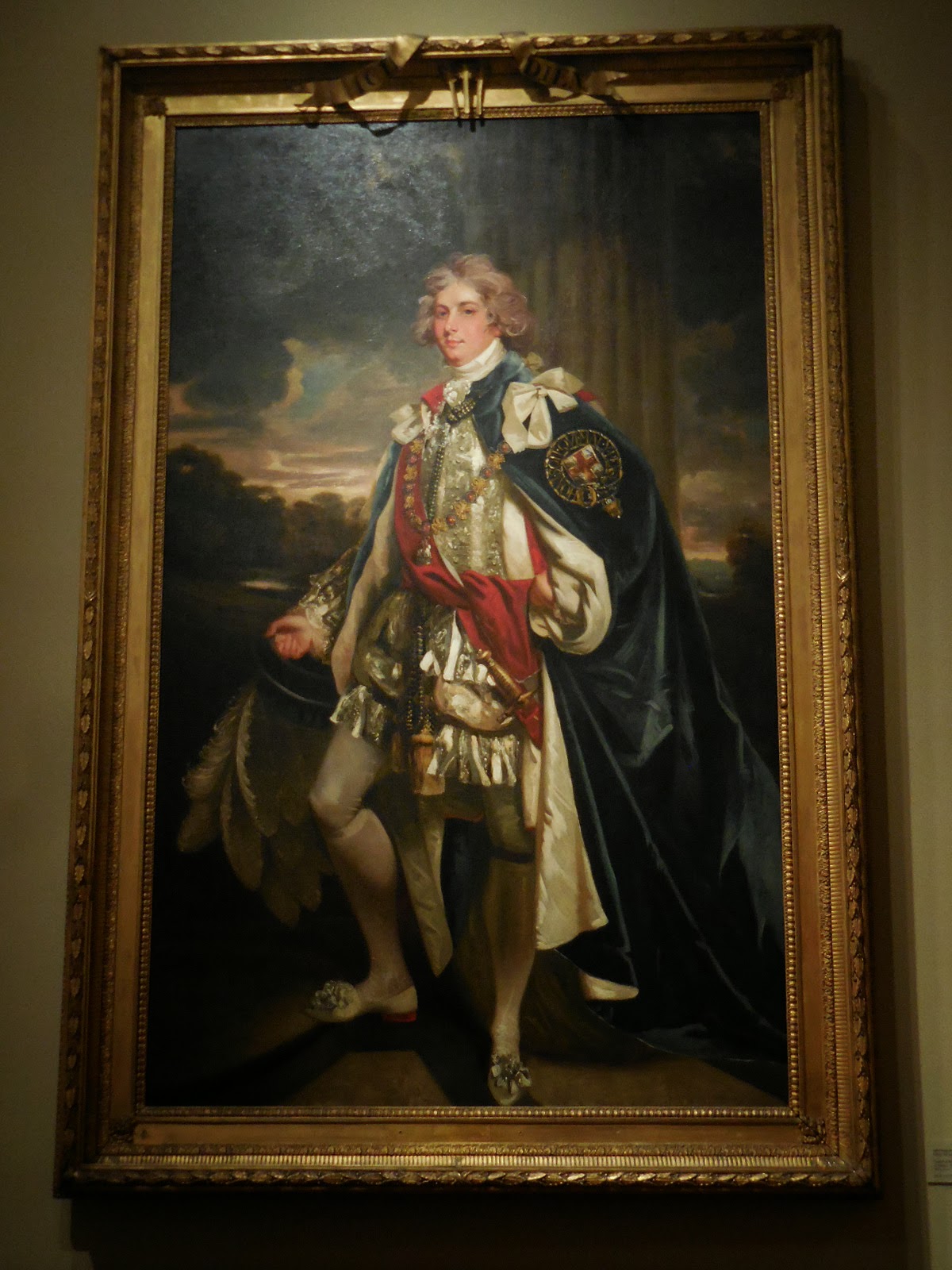
George IV when Prince of Wales, attributed to John Hoppner, c. 1792-1807
Hoppner (1758-1810) was one of the successors to Reynolds and Gainsborough for royal and aristocratic portraiture.  He was born to a family from Bavaria that served the British court. Young Hoppner trained at the Royal Academy. The Prince’s attire is portrayed colorfully in the grand tradition.
The Sisters, c. 1810, by George Watson 
This charming double portrait was once attributed to Henry Raeburn, but later identified as the work of George Watson (1778-1837), another Edinburgh painter of great accomplishment. Portrayed are Georgina and Elizabeth Reay of Killingworth Hall, Northumberland.
Mrs. George Frederick Stratton, 1811, by Thomas Lawrence
Lawrence inherited the position of primary portraitist from Reynolds and Gainsborough in the Regency period in England. He was particularly influenced by Van Dyke, and it is said he never painted a non-beautiful woman.
The Sirens, 1870 unfinished, by Edward Burne-Jones
Burne-Jones (1833-1898) was one of the leading members of the pre-Raphaelite movement. This unfinished painting depicts a scene from Homer’s The Odyssey, with the sailors’ ship approaching the deadly Sirens.
Roman Courtship, c. 1900, by Sir William Ernest Reynolds-Stephens
Reynolds-Stephens (1862-1943) was American born but trained and spent most of his working life in Europe. This picture shows the mythological figure of Morta holding the threads of life over the couple while Cupid drapes flowers over the woman, seeming to indicate her life will be short. The style was influenced by the pre-Raphaelites.
Courtyard of the Ringling Museum of Art. Sarasota, FL
This is just a sample of the treasures in the museum, from antiquities to 20th C. masters and contemporary works as well.  Plan a visit!