The Thorburn painting of The Duke surrounded by his grand-children in the library at Stratfield Saye. The boy in blue became the 4th Duke.
I believe that one of the reasons the Duke of Wellington remains eternally fascinating is because he was quite a complex human being who, like each of us, had many sides. One of the most endearing of these was his love of children, which is puzzling considering the stilted and often painful relationship he had with his own two sons. Wellington enjoyed the company of children from the time he was a young adult, playing with the Duke of Richmond’s children in Ireland and racing the Duke through the park whilst each of them rode a child piggyback. There are many other instances of the Duke’s playful side, including the following:
The Life of Wellington by Sir Herbert Maxwell
14th June, 1815.
“The Duke of Wellington seems to unite those two extremes of character which Shakespeare gives to Henry V.—the hero and the trifler. You may conceive him at one moment commanding the allied armies in Spain or presiding at the conference at Vienna, and at another time sprawling on his back or on all fours upon the carpet playing with the children.
A Sketch of the Life of Georgiana, Lady de Ros By Blanche Arthur Georgina Swinton
“The Duke of Wellington seems to unite those two extremes of character which Shakespeare gives to Henry V.—the hero and the trifler. You may conceive him at one moment commanding the allied armies in Spain or presiding at the conference at Vienna, and at another time sprawling on his back or on all fours upon the carpet playing with the children.
A Sketch of the Life of Georgiana, Lady de Ros By Blanche Arthur Georgina Swinton
The Duke’s kindness to children is well-known; when he invited his friends to visit him, their children were always included; and on one occasion, passing through the room where some of his juvenile guests were at tea (I rather think the present Premier was one!), he was very angry at finding they had no jam, and instantly gave orders it was never to be omitted! When my little girl of five years old—his god-daughter—worked him a pincushion, he apologised for his delay in writing to thank her! When we assembled for dinner, we usually found the Duke, who had dressed early, engaged in a regular game of romps with the children, who came down on purpose for what they called the Battle of Waterloo, which commenced by one of them throwing a cushion at the newspaper the Duke was reading.
The Duke’s kindness to children is well-known; when he invited his friends to visit him, their children were always included; and on one occasion, passing through the room where some of his juvenile guests were at tea (I rather think the present Premier was one!), he was very angry at finding they had no jam, and instantly gave orders it was never to be omitted! When my little girl of five years old—his god-daughter—worked him a pincushion, he apologised for his delay in writing to thank her! When we assembled for dinner, we usually found the Duke, who had dressed early, engaged in a regular game of romps with the children, who came down on purpose for what they called the Battle of Waterloo, which commenced by one of them throwing a cushion at the newspaper the Duke was reading.
Wellington the Beau by Patrick Delaforce
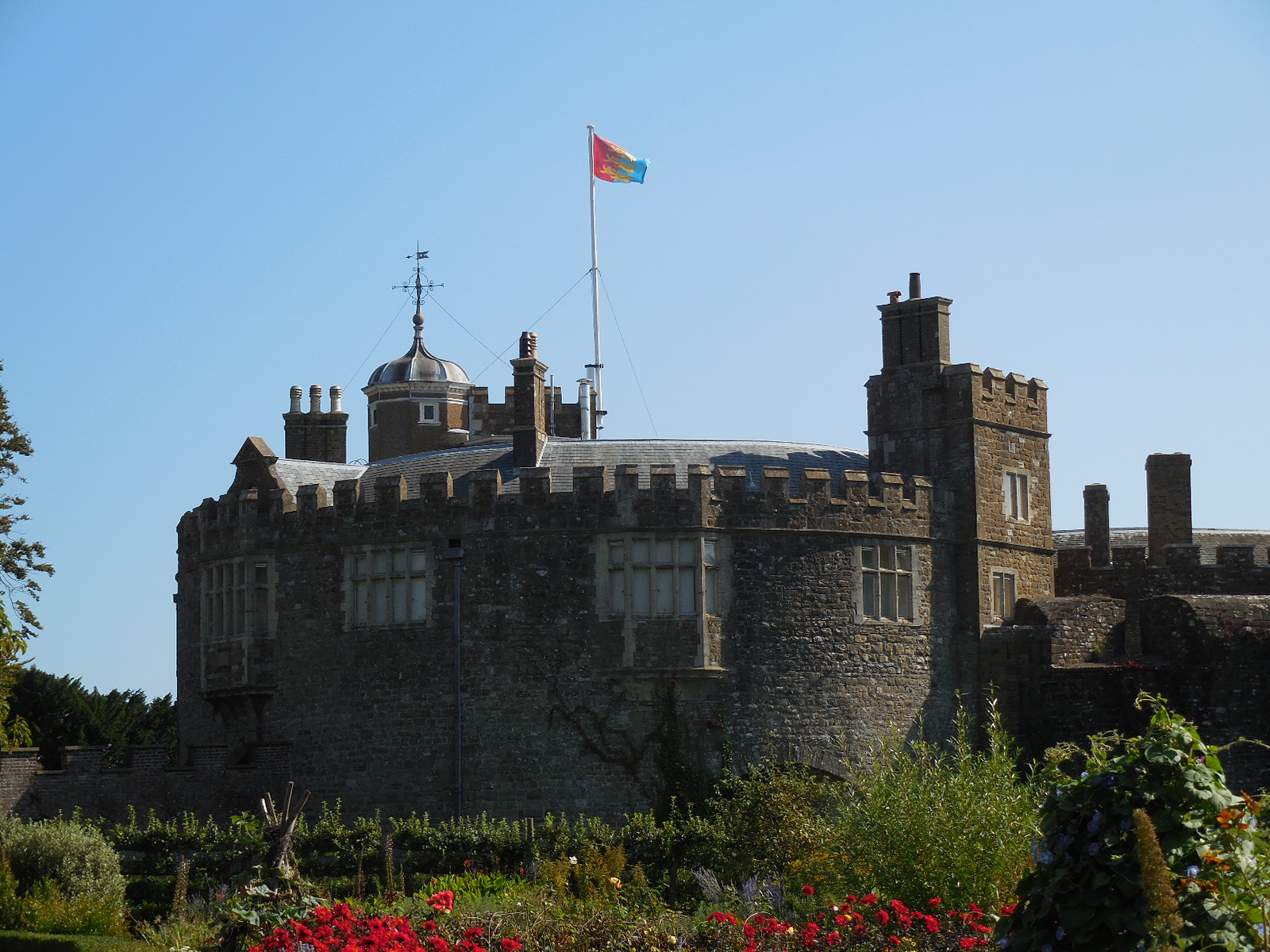
Of Mary, the second Lady Salisbury. Not only were her first three children named after the Duke – Sackville Arthur born in 1848, Mary Arthur in 1850 and Arthur born in 1851; but she convalesced after each confinement at Walmer Castle. Every summer she and her offspring spent happy weeks there and the old Duke regarded them as his own grandchildren. . . . . He designed medals for them made up of shillings and ribbons, and allowed `Your Babes’ to romp where they wished. He devised a baby jumper machine for them to be suspended safely from the ceiling. The conqueror of Europe was such a genial lover of very small children.
Notes of Conversations with the Duke of Wellington, 1831-1851 by Earl Philip Henry Stanhope Stanhope
The Duke has now staying with him (at Walmer Castle) two little children of Lord and Lady Robert Grosvenor, who are gone abroad, and his conduct to these chicks displays a kindheartedness and warmth of feeling such as their own parents could not surpass, but such as the Duke displays to all. Lady Mahon was told by Lady Mary Grimston who was staying in the house, that the children having expressed their desire to receive letters by the post, the Duke every morning writes a little letter to each of them, containing good advice for the day, which is regularly delivered to them when the post comes in.
Of Mary, the second Lady Salisbury. Not only were her first three children named after the Duke – Sackville Arthur born in 1848, Mary Arthur in 1850 and Arthur born in 1851; but she convalesced after each confinement at Walmer Castle. Every summer she and her offspring spent happy weeks there and the old Duke regarded them as his own grandchildren. . . . . He designed medals for them made up of shillings and ribbons, and allowed `Your Babes’ to romp where they wished. He devised a baby jumper machine for them to be suspended safely from the ceiling. The conqueror of Europe was such a genial lover of very small children.
Notes of Conversations with the Duke of Wellington, 1831-1851 by Earl Philip Henry Stanhope Stanhope
The Duke has now staying with him (at Walmer Castle) two little children of Lord and Lady Robert Grosvenor, who are gone abroad, and his conduct to these chicks displays a kindheartedness and warmth of feeling such as their own parents could not surpass, but such as the Duke displays to all. Lady Mahon was told by Lady Mary Grimston who was staying in the house, that the children having expressed their desire to receive letters by the post, the Duke every morning writes a little letter to each of them, containing good advice for the day, which is regularly delivered to them when the post comes in.
While he had a playful side, Wellington also had a sense of responsibility where the welfare of children was concerned. He and the Duchess of Wellington took in and cared for the children of family and friends whenever the need arose, including the two sons of his brother, Henry, who was unprepared to care for them when his wife left him for the Marquess of Angelsey. At Walmer, Wellington took it upon himself to visit the children of his neighbor, Mrs. Jenkins, whilst that lady was away. The two mites suffered a bout of measles and Wellington sent his own doctor to see them every day and every day wrote to Mrs. Jenkins to keep her up to date on their recovery. Below you will find further examples of Wellington’s quiet benevolence, although I’m certain there are many more that will never come to light.
Wellingtoniana: Anecdotes, Maxims, and Characteristics, of the Duke of Wellington, Volume 4 edited by John Timb
During the late war in the Punjab, Captain Field, of her Majesty’s 9th regiment of foot, was killed in action at Ferozepore. His widow sailed down the Ganges with her three children (two daughters and a son) for Caleutta, on her way to England. The daughters both died of cholera at Caleutta. Mrs. Field, with her only remaining child, then embarked for her native country; but she herself died on the passage, and was committed to the deep off St. Helena, consigning her orphan son to his grandfather, Captain Farrant, whose death occurred before the ship’s arrival. Captain Farrant’s widow (stepmother to Mrs. Field) took charge of the poor child; and her sister, Miss White, addressed the Duke of Wellington, as Commander-in-Chief, in the little orphan’s behalf. The following was the highly characteristic reply of the illustrious Duke :—
“London, Jume 23, 1846.
“F. M. the Duke of Wellington, presents his compliments to Miss White. He has received her note. The Duke, in his capacity of Commander-in-Chief of the army, has not the power or authority to order or authorise the expenditure of one shilling of public money on any account or upon any service whatever. The Secretary at War is the officer entrusted exclusively with the administrations of the laws and regulations for the grant ofpensions to the widows and allowances to the orphans of the officers of the army. The Commanderin-Chief has no control over that officer or his duties, and it is inconsistent with his duty to interfere in them. Miss White or Mrs. Farrant must apply to the Secretary at War.”
But though a high sense of duty prevented him from interfering, as Commander-in-Chief, in the child’s behalf, the touching tale failed not to move his benevolent sympathies: for, after considering how best he could befriend the case, he directed a communication to be made officially through Lord Fitzroy Somerset, that his Grace ‘had procured for him a presentation to Christ’s Hospital. The little fellow, W. Field, is now there, in No. 7, enjoying the judicious exercise of his illustrious patron’s benevolence; and, the boy’s bent being for the army, it is hoped that a commission may hereafter be obtained for him on leaving that excellent institution.
The Life of Wellington by Sir Herbert Maxwell
The following anecdote, told by Stocqueler, is well authenticated, and illustrates at once the Duke’s great love of children, and his thoughtfulness for their welfare. The son of Kendall, the Duke’s valet, was at school near Strathfieldsaye, and was spending a day with his father at Apsley House. The Duke’s bell rang; Kendall, answering it, was followed by the lad into the study.
“Whose boy is that?” asked the Duke quickly.
“Mine, your Grace,” replied Kendall, “and I humbly ask your Grace’s pardon for his coming into the room, not knowing your Grace was here.”
“Oh! that is nothing,” quoth the Duke; “but I didn’t know you had a son, Kendall. Send him in and leave him with me.”
So the boy—greatly trembling—was sent in to the Duke, who asked him if he knew to whom he was speaking. “Yes, sir—your Grace, I mean.”
“Oh, my little fellow,” answered the Duke, “it will be easier for you to call me ‘sir.’ You call your schoolmaster ‘sir,’ don’t ye? Call me ‘sir’ too, if you choose. Now I wonder if you can play draughts.” “Yes, sir.”
“Come on then; we’ll have a game, and I’ll give you two men.”
“Come on then; we’ll have a game, and I’ll give you two men.”
Down they sat; the boy said afterwards that he really thought he was going to win the second game, but his doughty antagonist laid a trap for him, and chuckled mightily when he fell into
it.
it.
The games over, the Duke asked the boy a lot of questions in geography, and then said—
“Well, you shall dine with me to-day; but I shall not dine yet: would you like to see my pictures?” and he trotted him round the great gallery. Then the Duke took him among the statues—” important fellows ” he said they were—but the boy said he preferred the pictures.
“I thought so,” observed the Duke; “but tell me—which of these is most like your schoolmaster?”
Young Kendall picked out a bust without moustaches, which happened to be a likeness of the Duke himself.
“Oh! well,” laughed the Duke, “that is a very good man of his sort. Come now, we’ll go to dinner. I have ordered it early, as I suppose you dine early at school.”
“At one o’clock, sir,” said the lad.
“A very good hour,” said the Duke. “I used to dine at one when I was at school.”
They sat down tete-a-tete, the anxious father being told that the bell would ring when he was required. Having said grace, the Duke told the boy that he would give him a little of every dish, as he knew boys liked to taste all they saw. Dinner over, the lad was dismissed with the injunction—
“Be a good boy; do your duty; now you may go to your father.”
About four years later the Duke was detained on the South Eastern railway for two hours, when travelling to attend a meeting of the Privy Council. He was exceedingly indignant, and communicated his complaint to Mr. Macgregor, chairman of the company. Nothing more is known of the incident, except this, that immediately afterwards young Kendall was appointed to a clerkship in Mr. Macgregor’s bank at Liverpool, after which he was transferred to the Ordnance Department in Ireland. The presumption is fair that the Duke supplemented his income during the early years of his clerkship, which is always insisted upon in a bank, and which must have been far beyond the means of his father to do.