POST-TOUR WINDSOR: QUEEN VICTORIA'S LOO

While we were in Windsor after the tour Kristine, of course, came down with the usual malady she suffers through on each of her trips over. Thank goodness it waited to arrive until after the Tour was finished. While she lay dying in bed at the hotel,  I trotted off to see a few Windsor sights I had missed on previous visits. Nothing like a good friend in need, I thought.  But to tell the truth she was in no mood to be either entertained or conversed with. The best thing I could do was let her sleep!!

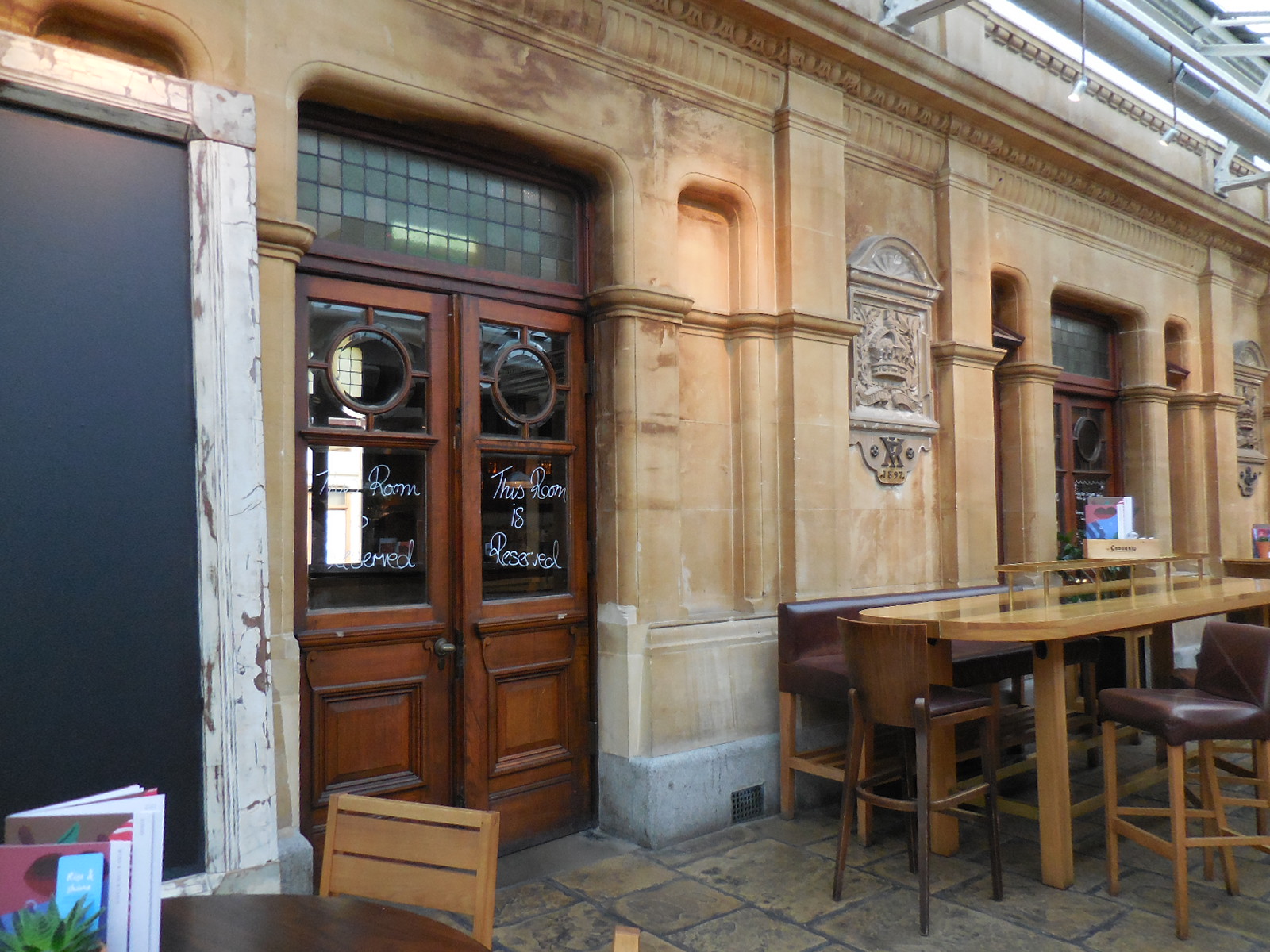
One place I was eager to see was the special area in the Windsor and Eton Railroad Station that had been reserved for the use of Queen Victoria and her attendants back in the day.

I had long heard it was in the station, but where?  That station has been turned into shopping mall — which we had visited to enthuse over the Jo Malone shop — a favorite of both of us for special luxurious and fragrant cosmetics,  Never saw the Queen’s loo.  But when I enquired at the station, I was pointed in the direction of All Bar One restaurant at the far end.

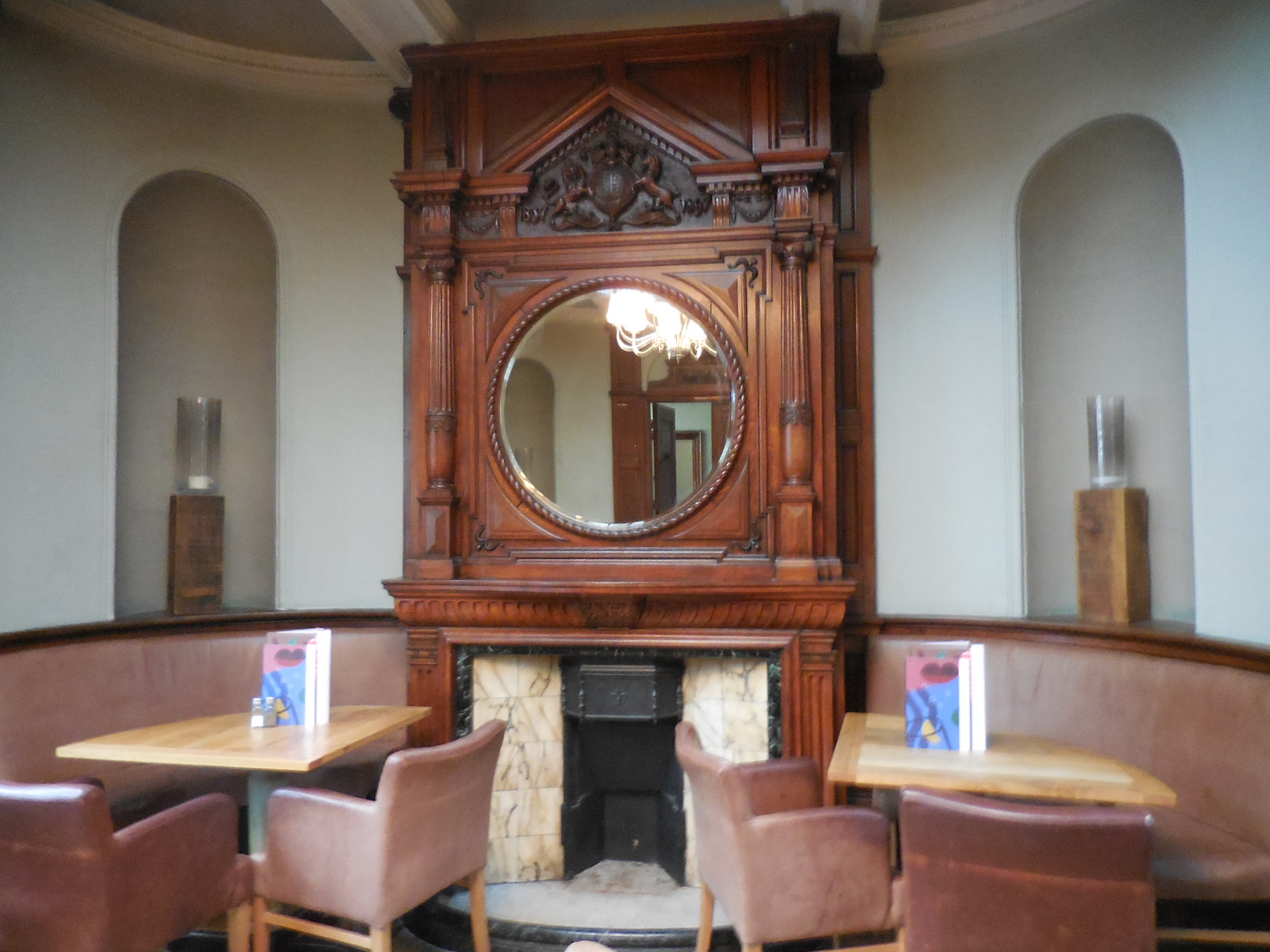
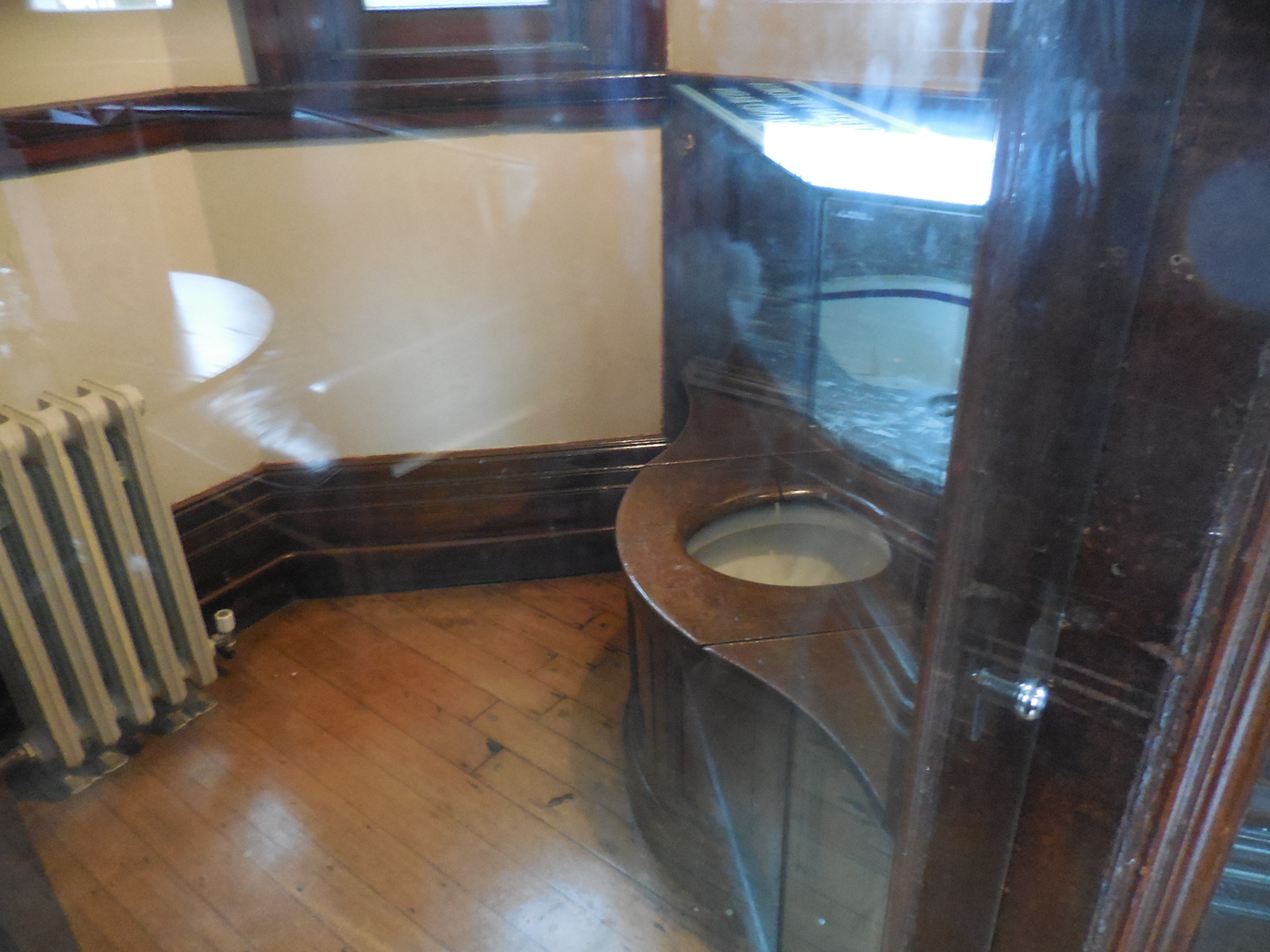
And indeed,  it was entirely open to the public, if you knew it was there.  The writing on the door says ‘This room is reserved’ — but the proprietors are perfectly willing to allow one inside.

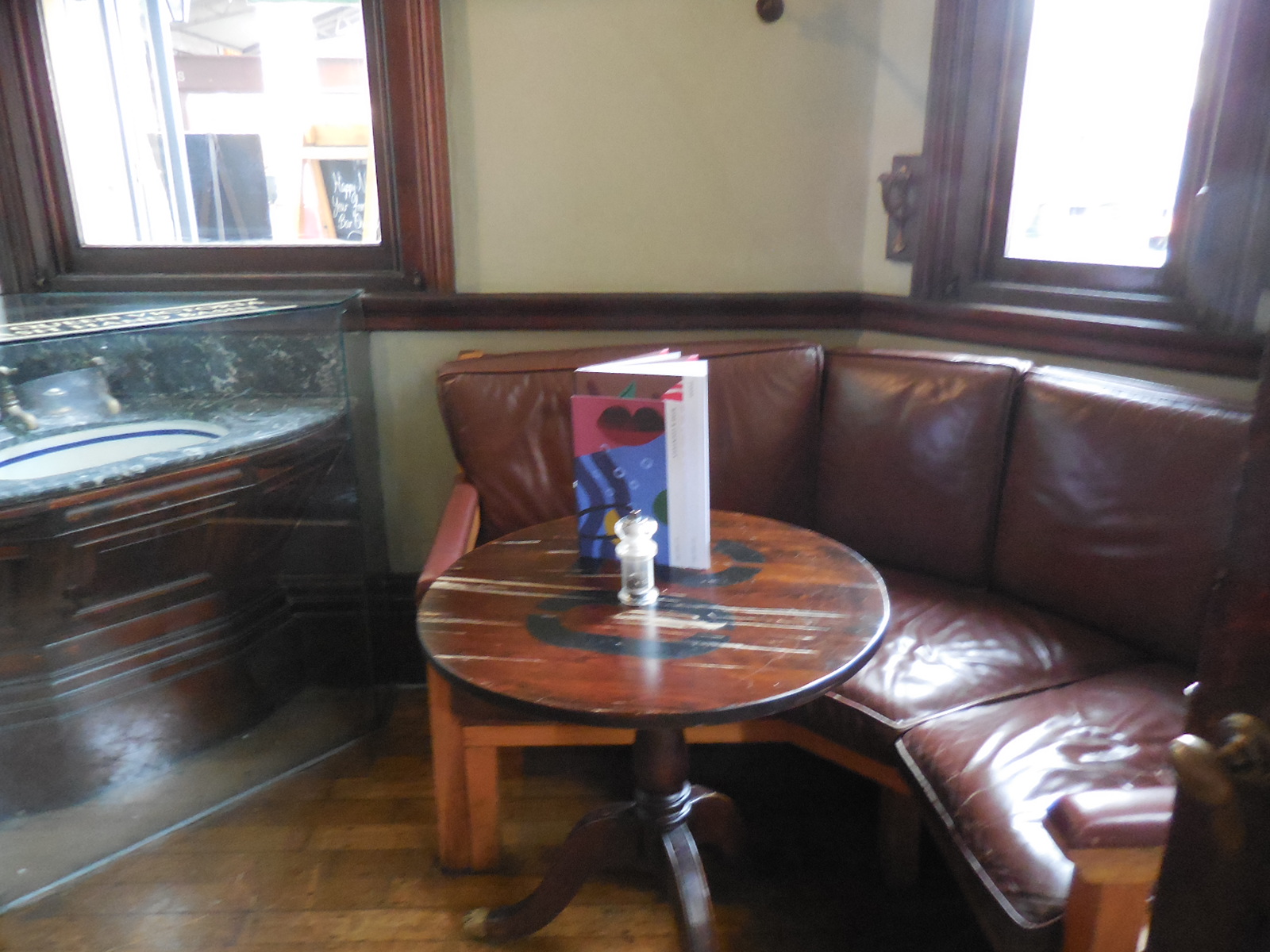
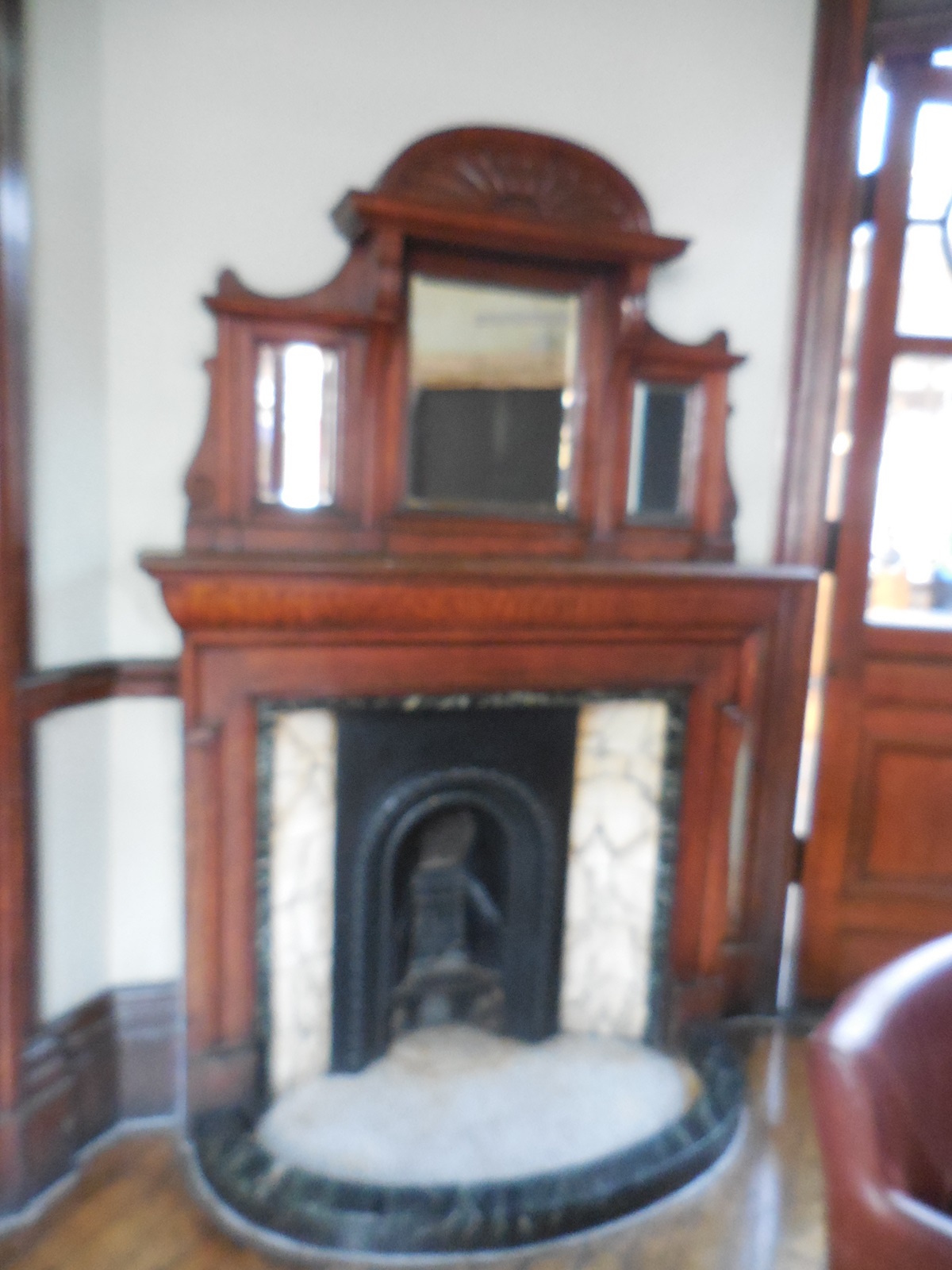
It was fitted out as a special private dining room — not the actual loo of course, but the associated small waiting rooms used by the Royal party.

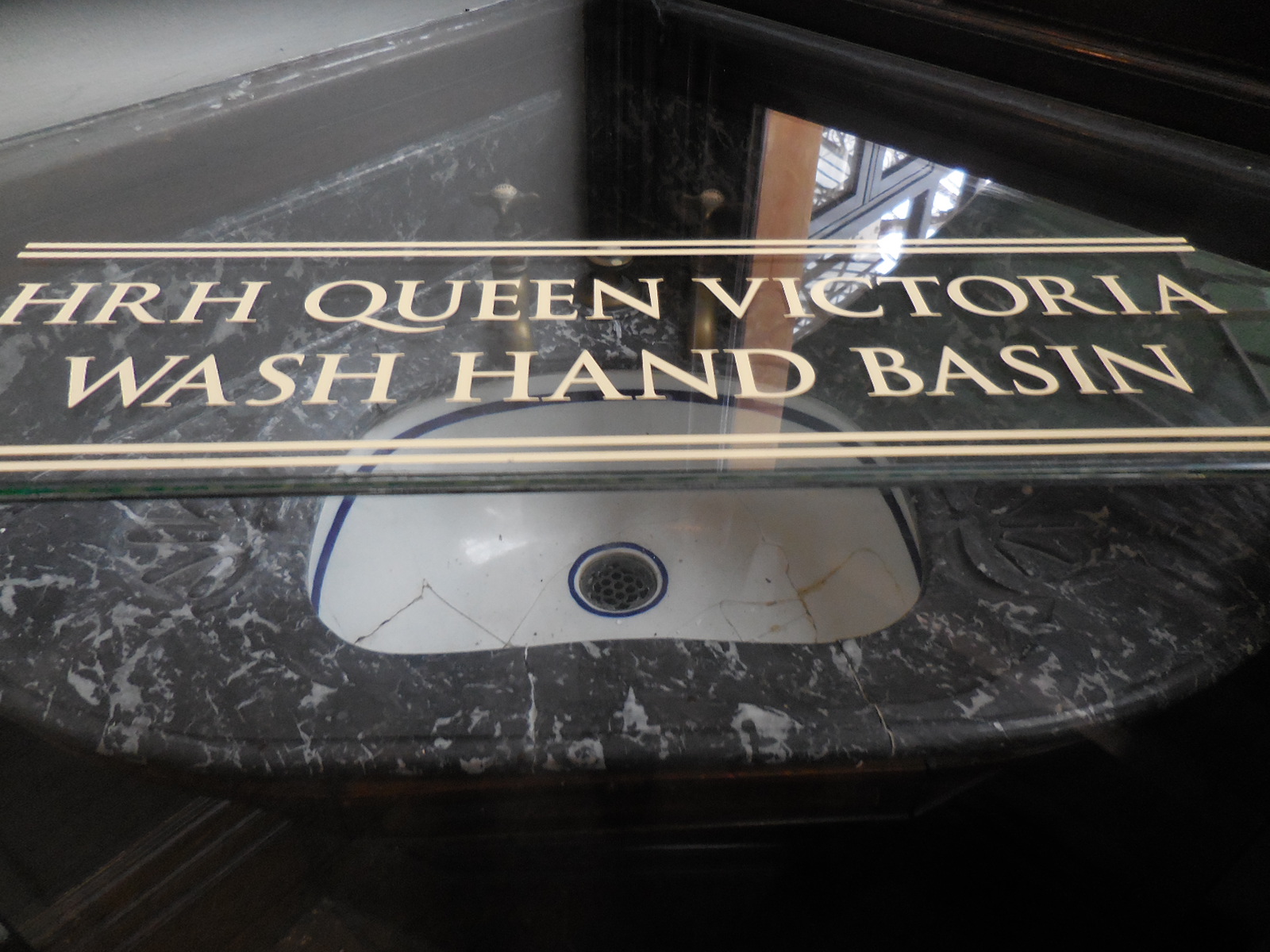
The basin and loo were actually glassed off, either to protect them or to continue the exclusivity…if Queen Elizabeth II happened by, would they allow her to use the facility???

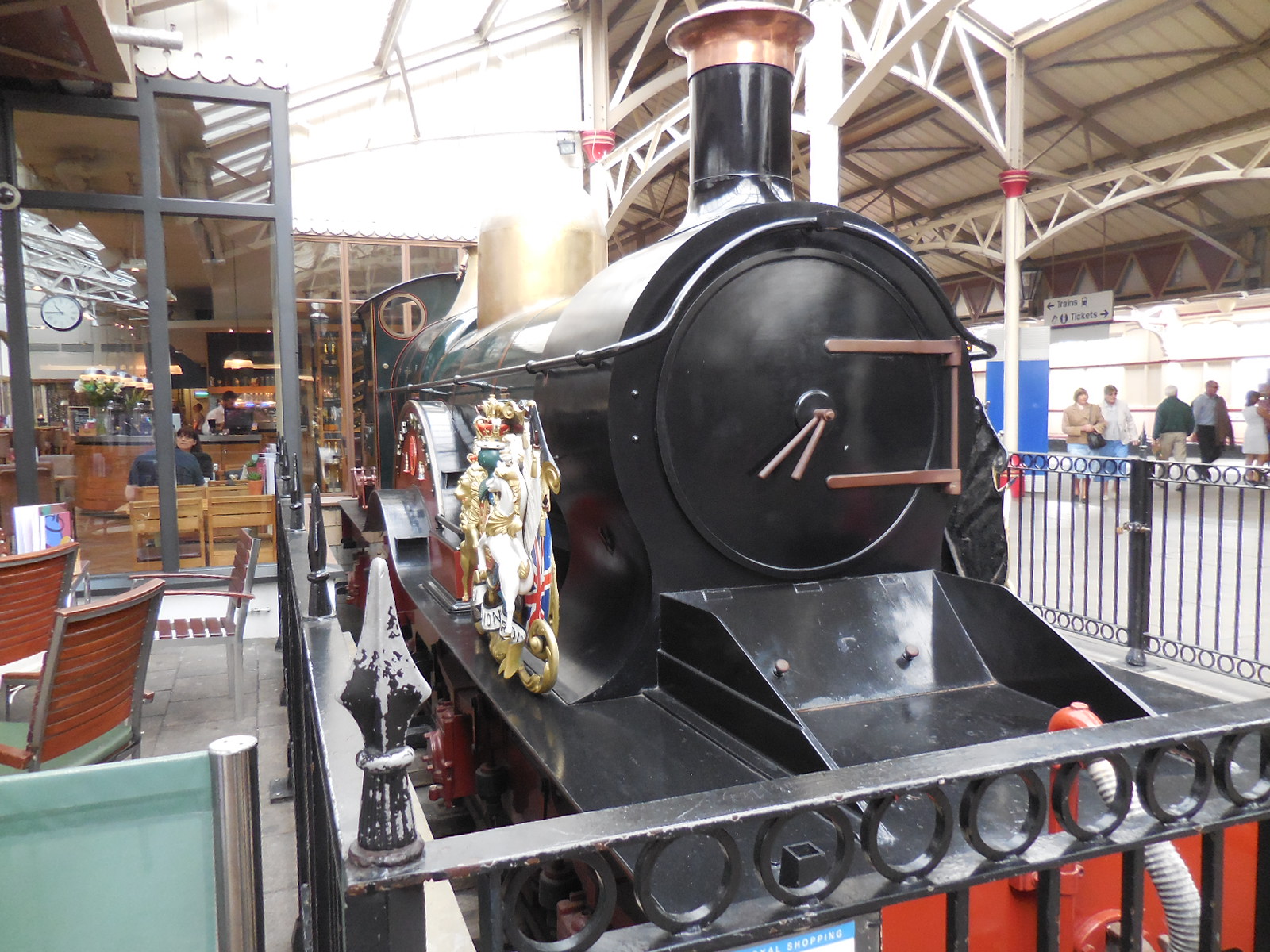
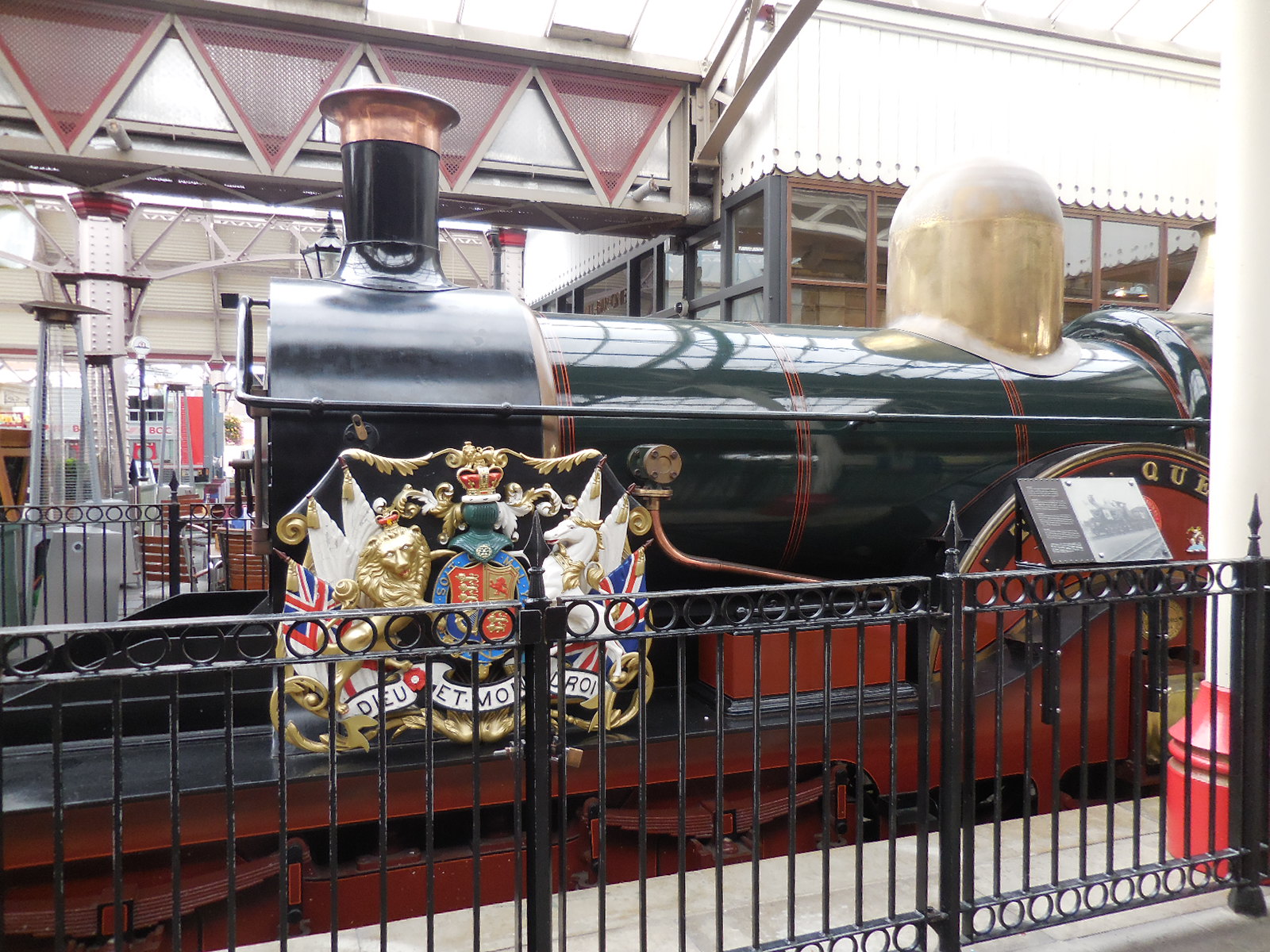
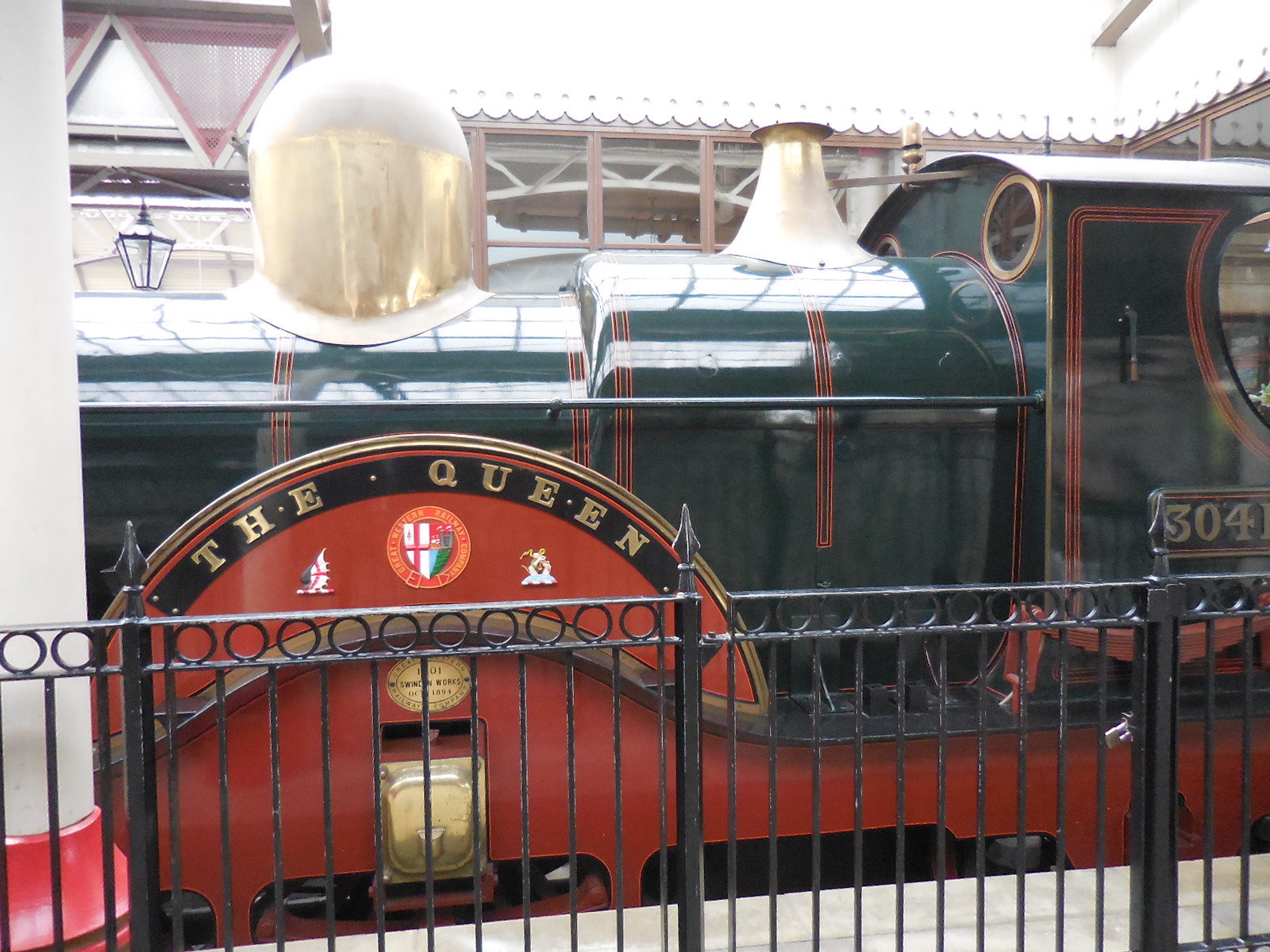
Just outside All Bar One, was a  non-working locomotive.

It seems that the locomotive is about all that is left from displays formerly set up on the station by Madame Tussaud’s wax museum, no longer in operation in Windsor.

The text panel reads:  The locomotive is a full scale replica of the GWR Achilles class 4-2-2 locomotive No. 3041. It was built in 1804 and originally named “Emlyn” after Lord Emlyn, Chairman of the Great Western Railway Company. Repainted in 1897, in GWR livery, the great locomotive, 57 feet long was renamed “The Queen” especially to pull the six new carriages of the Royal Train. No examples of these locomotives survive today and “The Queen” (later renamed “James Mason”) was withdrawn from service  in 1912.

Next time you are in Windsor, check it out!  Not as stunning as the Castle, but an amusing sidelight on the Queen who was the first Royal to use the railroads for her travel.

THOUGHTS ON WELLINGTON BY GUEST BLOGGER DIANE PERKINS

What a delight to be a guest blogger at Number One London, one of my favorite blogs.

This piece was first written for Risky Regencies on June 28, 2009, but I could have written it after Kristine and Vicky’s Duke of Wellington Tour. It’s worth a revisit, though, (slightly edited) because, well, it’s about the Duke of Wellington!
As a certified Wellington Groupie (Kristine Hughes is the founding member) and in continuing honor of the Waterloo Anniversary, I thought I would simply share some of my Wellington-related photos and thoughts. Kristine is the real expert and I didn’t check any facts, so I might not be 100% accurate in all I say.
When I first fell in raptures about Wellington (or dear Artie, as Kristine and I call him), it was at Stratfield Saye, Wellington’s country house. Of all the houses we saw on that 2003 trip to England, Stratfield Saye seemed the most like it was a home. It was a home. The present duke’s son and his family live there, but you could feel the first Duke there in every room. In an outer building there house was the funeral carriage that carried the Duke’s body through London. A recording played of all his honors, as had been read out during his funeral. I realized that this had been a truly great man.

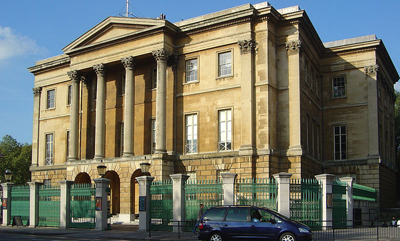
On that trip we also got to go up to the top of the Wellington Arch in London, and of course we toured Apsley House, also known as Number One London. Apsley House felt more like a museum than a house and well it should. It was filled with wonderful art and artifacts.
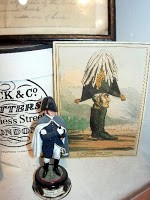
Also in London we visited Lock and Co, a Hatters shop that has been in Mayfair since 1676. On display there are Wellington’s and Nelson’s hats, instantly recognizable.
I don’t claim to be an expert on Wellington. I’ve just read one biography (and can’t remember which one it was), but I think of him as a man with great integrity, courage and honor. As a boy he didn’t show much promise, but his mother sent him to a military academy in Europe (near Waterloo, I think) and he found his strength. As a military man he understood how to use his resources, he was clever, and he was brave. He rode the battlefield during Waterloo, was everywhere he could be and ignored the danger to himself. He cared about his men. One of my favorite Wellington quotes is: “Nothing except a battle lost can be half so melancholy as a battle won.”
He was not a good husband, although he felt honor-bound to marry his wife, because she thought they were betrothed and had waited for him while he served in India. He had many dalliances throughout their marriage and one has to wonder how his wife felt as this man grew in greatness and increasingly left her behind. His sons could not match his success. Who could? I like this quote from his son after the Duke’s death, “Imagine what it will be when the Duke of Wellington is announced, and only I walk in the room.”
The Duke was a man who was very sure of himself and his opinions. I suspect he had a big ego, but he also had a sense of humor. In the display at Lock and Co. was a little caricature of Wellington, making fun of the term Wellington boot for the style of boot he favored. At Stratfield Saye there was a room papered with hundreds of caricatures of the Duke, which I thought was akin to a writer papering a bathroom with rejection letters. The boot one was was there, too.
What is your opinion of the Duke of Wellington? Pro and Con. Any favorite quotes or vignettes of his life?
Diane Gaston is the award-winning author of Regency-set historical romances. Her next book, Bound By One Scandalous Night, Book 2 in the Scandalous Summerfields series, will be released March 22, 2016, from Harlequin Historical.

POST WELLINGTON TOUR – THE WINDSOR GREYS

Both Victoria and I were looking forward to seeing to seeing the Windsor Greys when we were there last. The term Windsor Grey is given to grey horses used by the Royalty of the United Kingdom to draw carriages and coaches in various ceremonial processions and, since 1986, when The Queen is Trooping the Colour. They are stabled in the Royal Mews. Some have also represented the crown in various carriage combined driving competitions, at times driven by Prince Phillip, the Duke of Edinburgh.

Two Windsor Grey horses, Claudia and Storm, at the Royal Mews in London are available for observation daily. Storm was featured in a statue with another of the type, David. Back in 2012, we ran a post on the drive to raise money to fund the Windsor Greys Jubilee Appeal which was the committe charged with delivering a statue of the horses in time for the Queen’s Diamond Jubilee. Really, these horses couldn’t be a more fitting symbol to honour Her Majesty, who has such an affinity for horses, and because of their link to Royal traditions.

Thankfully, and not surprisingly, the money was raised and sculptor Robert Rattray executed the statue in bronze, which took over a year to complete, and was on hand when Her Majesty unveiled the life sized piece in March of 2014.

The statue stands in the middle of the Kings Road/Osborne Road roundabout, ready to greet visitors. 

As stated above, you can see the Greys at the Royal Mews in London. Below is a display showing how the Greys look when pulling the Royal carriages.

Above and below, Stevenson, one of the horses who are regularly used on the Royal carriages in his stall at the Royal Mews. Victoria snapped these photos while we were there for the Duke of Wellington Tour. 

2011 Trooping the Colour


The Royal wedding.