Reports on the Duke of Wellington Tour will continue next Friday, October 23, 2015, with our visit to Reading Abbey with Regency Author Beth Elliott.
Tomorrow, we will post a report from the JASNA AGM, recently concluded at Louisville, Kentucky.

Reports on the Duke of Wellington Tour will continue next Friday, October 23, 2015, with our visit to Reading Abbey with Regency Author Beth Elliott.
Tomorrow, we will post a report from the JASNA AGM, recently concluded at Louisville, Kentucky.
LOUISVILLE KY JASNA AGM: SPECIAL INTEREST PRESENTATIONS
A SURGEON AT SEA: ALBERT ROBERTS OF HMS ACASTA
Alan Roberts has researched and presented many programs around the U.S. portraying an early 19th century British physician aboard the HMS Acasta, a frigate which served in the Atlantic for many years. He is part of the re-enactor’s group,the HMS Acasta, with a website here.
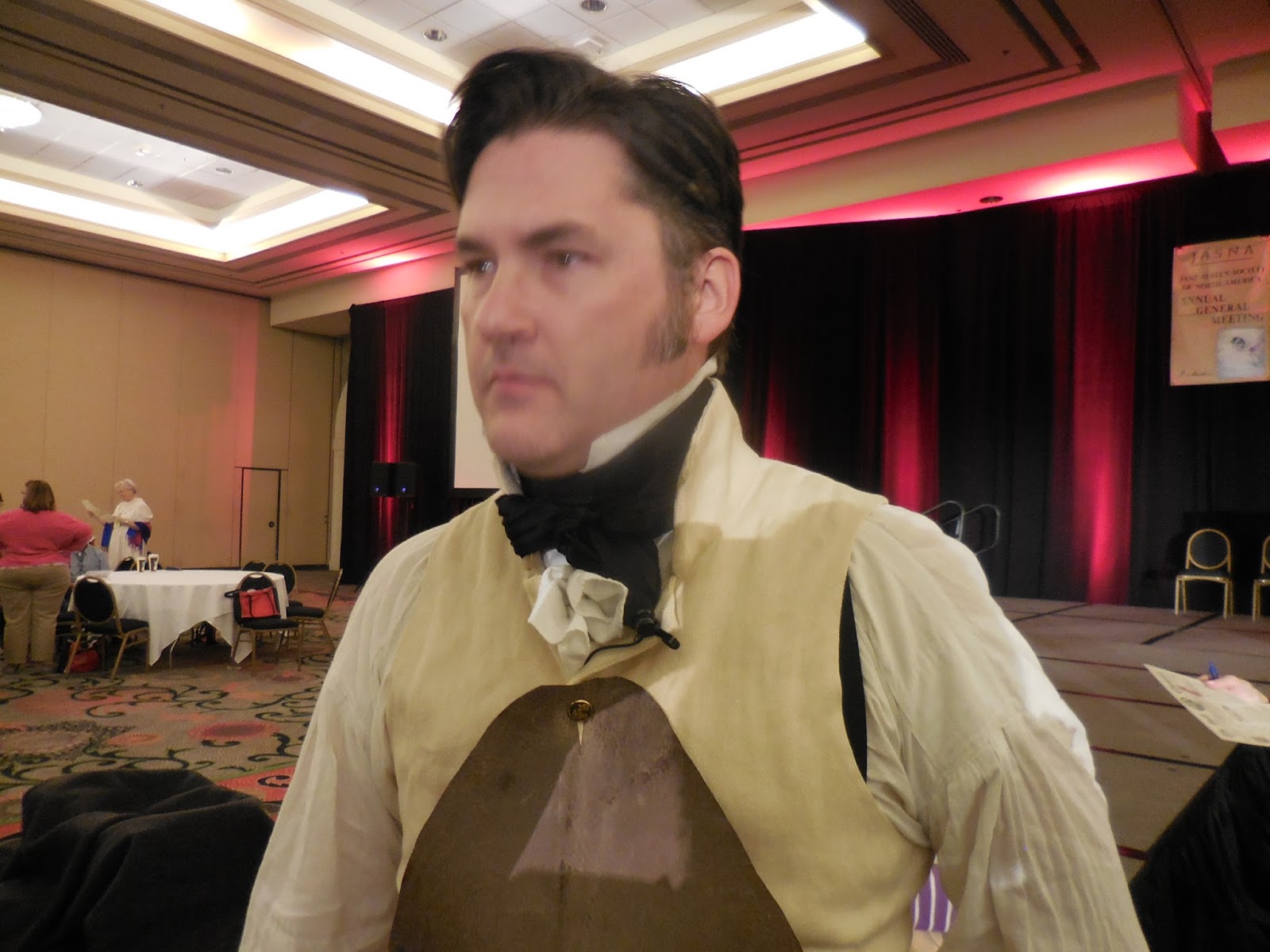
Wearing his “blood” stained leather apron, he described the duties of a doctor aboard a British naval vessel of the early 19th century. The Acasta was a real ship, pictured here in action in the Battle of Santo Domingo, the ship on the far right.


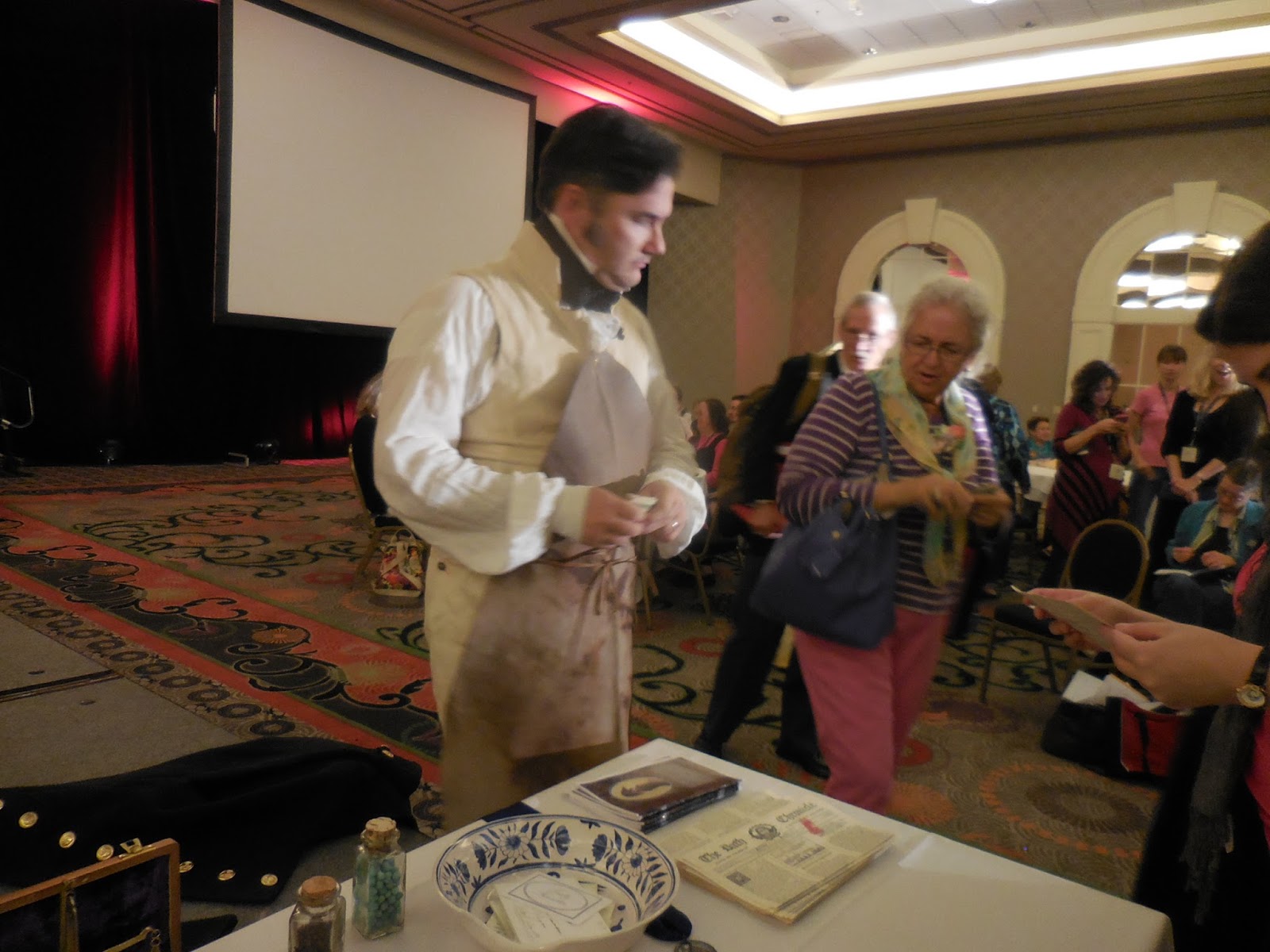
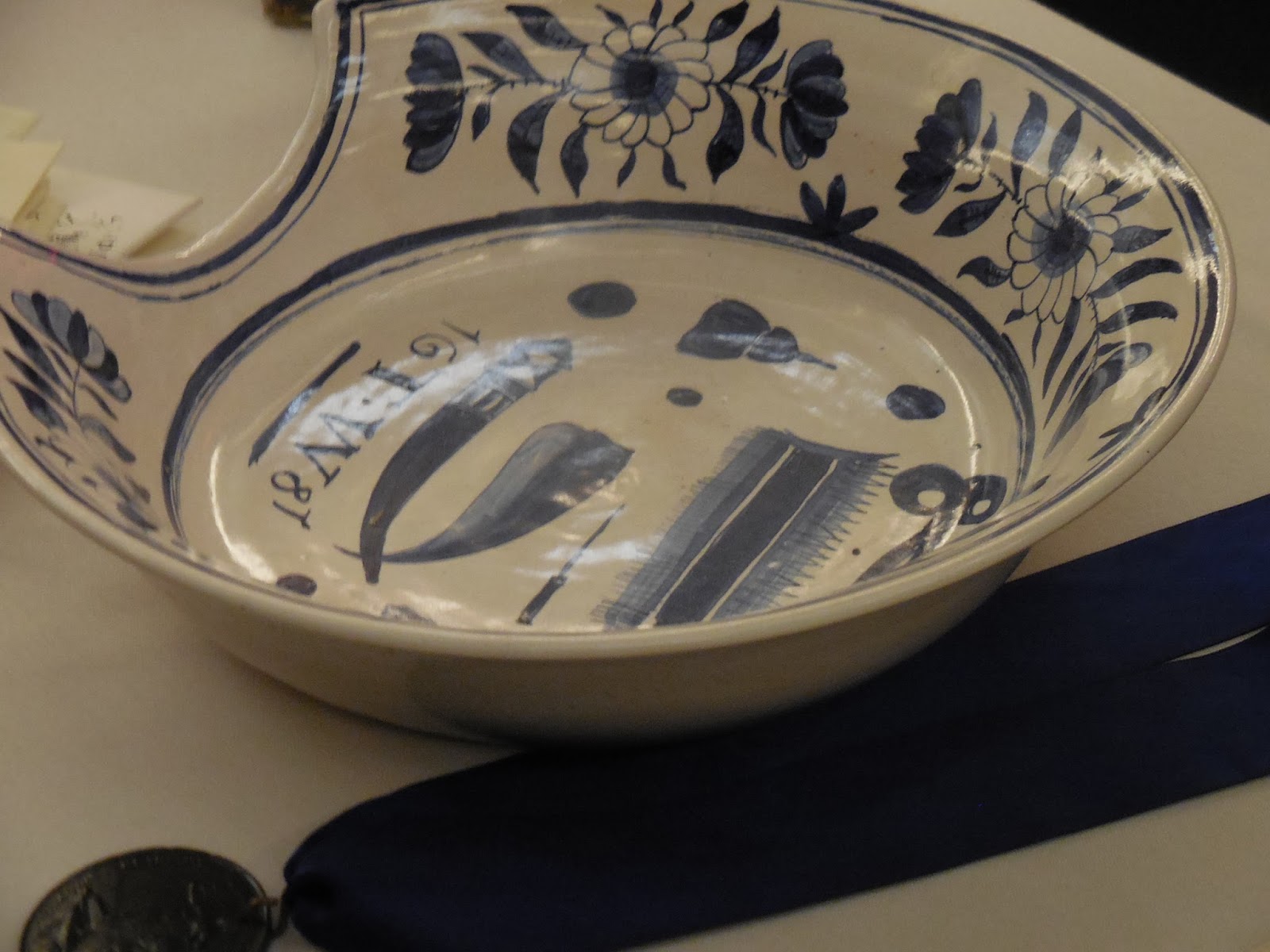
Lined up like this, the doctor’s instruments look pretty gruesome.

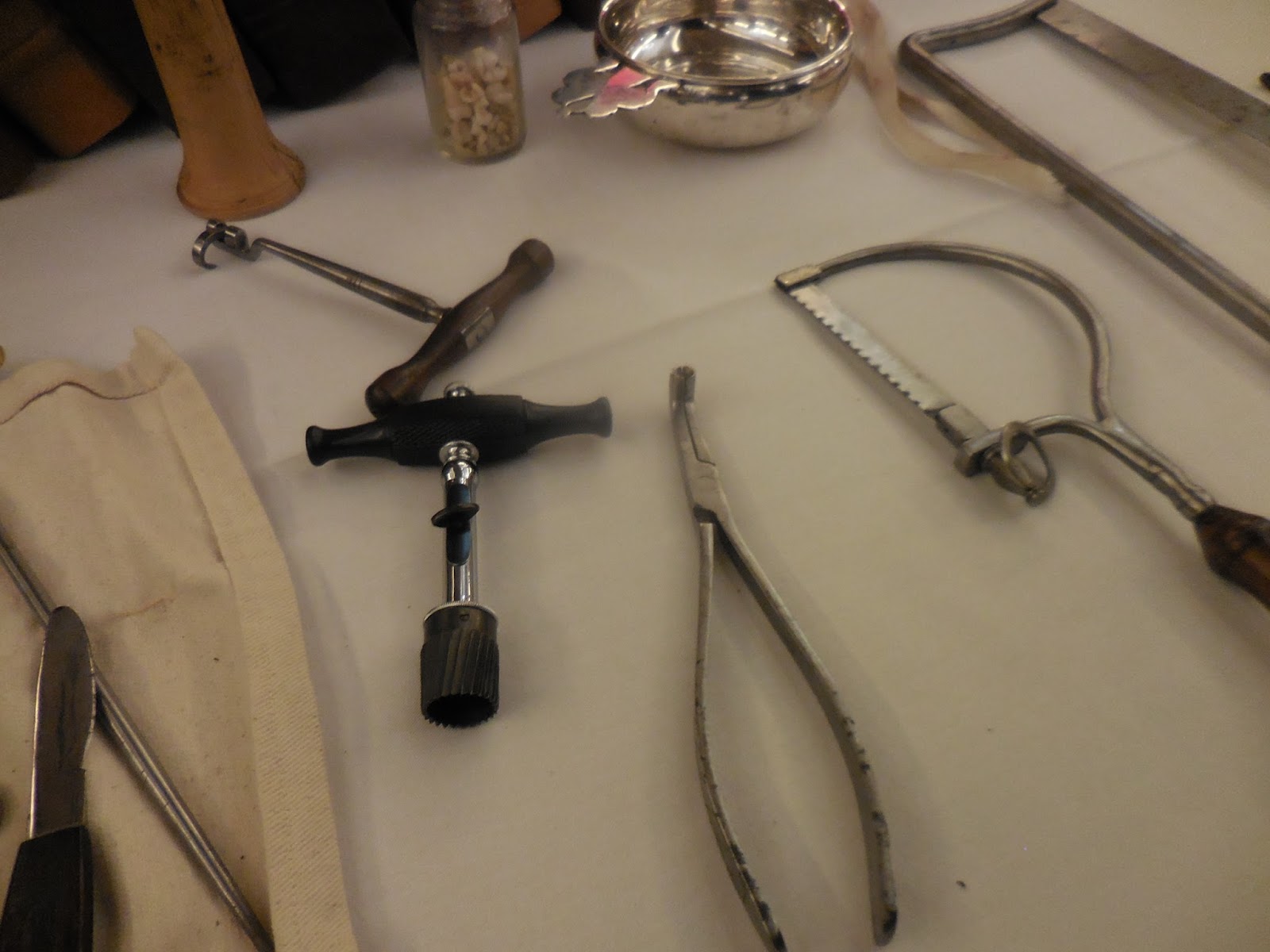
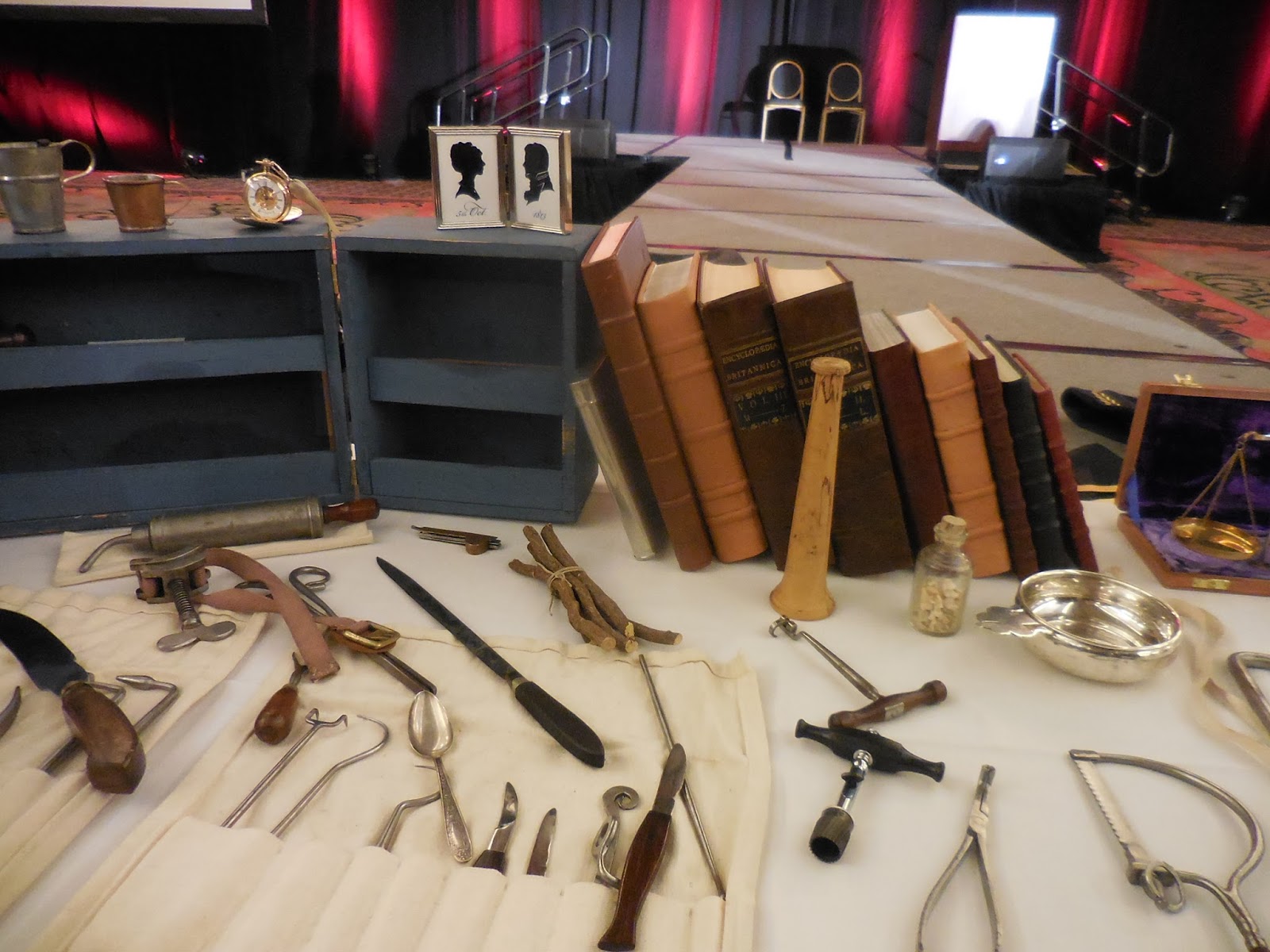

If you ever have an opportunity to see him at work, don’t miss it!! Various appearances are listed on the website.
At the Oak Park (Illinois) Public Library on a perfect autumn day, many members of the Greater Chicago Region chapter of the Jane Austen Society of North America met to hear a presentation by Nancy Melvin entitled “From Agrimony to Yarrow: A Jane Austen Herbal.”

Nancy enchanted us with her warm personality and shared snippets of fragrant herbs and flowers. She guided us on an imaginary walk with Jane Austen over the countryside of Hampshire and through the seasons. During the winter, Nancy said, little seems to disturb the ground and plants as they rest. But deep underground the roots are growing and storing up nutrients to burst forth when their time arrives.

In the spring, the buds open and new shoots emerge, from the earliest to the later delights of flowers like snowdrops to full fledged rose bushes.
All summer long we enjoy the bounty of the garden from asparagus and early peas to apples and squash. Autumn brings us harvest time, and orange pumpkins grace the fields. These were the seasons that ruled the life cycles for centuries and which Jane Austen knew and loved.

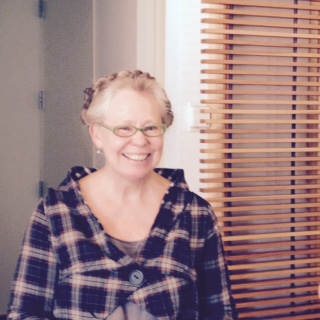
A lifelong lover of gardens, Nancy is a teacher, knitter, and artist. She is part of a venture, now more than two years old, known as Union Made, Chicago, a store carrying handmade textiles and body-comforting products made by local craftswomen and artists.
The website for Union Handmade is here.
Union Handmade’s blog can be found here.

Nancy also talked about using herbs and flowers in tisanes, teas, and vinegars — all to fill our days with warmth and tease our tasebuds.


Kristine here, remembering the day that I finally got the opportunity to visit Stratield Saye during the Duke of Wellington Tour. I had visited many of the other sites associated with the Duke of Wellington, most of them numerous times, but I’d never been to Stratfield Saye, as it had always been closed during my trips across the Pond. Now, I’d finally gain entry and with a wonderful group of Wellington enthusiasts, no less. I thought about all I’d read about Stratfield Saye, the house that a grateful Britain had purchased for Wellington in recognition of his victory at Waterloo. And of all the people who had passed through it’s doors – Kitty, Duchess of Wellington, Princess Lieven, the Arbuthnots, Lady Shelley, Angela Burdett-Coutts, and many others. But the one thing I was really looking forward to seeing at Stratfield Saye was the grave of Copenhagen, the horse the Duke had ridden throughout the Battle of Waterloo. As most contemporary accounts will attest, Copenhagen was not the prettiest of equine examples, with a head that some judged too small for his body. As the Duke of Wellington himself remarked, ‘There may have been many faster horses, no doubt many handsomer, but for bottom and endurance I never saw his fellow.’
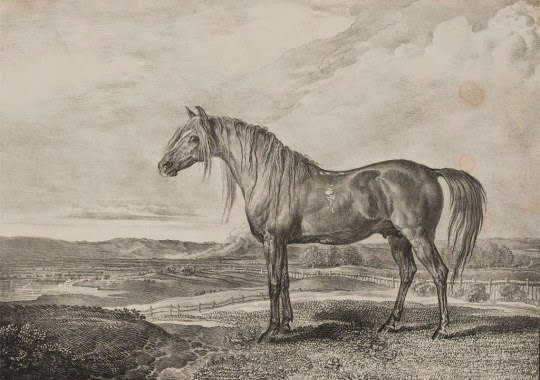 |
| Lithograph, by and after James Ward RA |
The reason the word “redux” appears in the title of this post is that we’ve written about Copenhagen before on this blog. Here’s the link to the first Wonderful, Wonderful Copenhagen post. Copenhagen, that cantankerous, feisty and sometimes ornery horse, had managed to endear himself to a whole host of people, including the Duke himself, the Duchess, who often hand fed the horse treats, and many of the ladies noted above, some of whom actually got the opportunity to ride him and all of whom counted jewelery made from or containing Copenhagen’s hair among their most treasured possessions. To Wellington enthusiasts, Copenhagen was and remains legendary. You’ll find the Wikipedia entry for Copenhagen here.
.jpg) |
| Copenhagen as painted in his retirement by Samuel Spode. |
On the morning of our visit to Strratfield Saye, our tour group waited patiently for me aboard our coach as I bought a bouquet roses at a nearby Tesco’s. It was my goal to leave the floral tribute at Copenhagen’s grave during our visit.

And then we were off on the short drive to Stratfield Saye


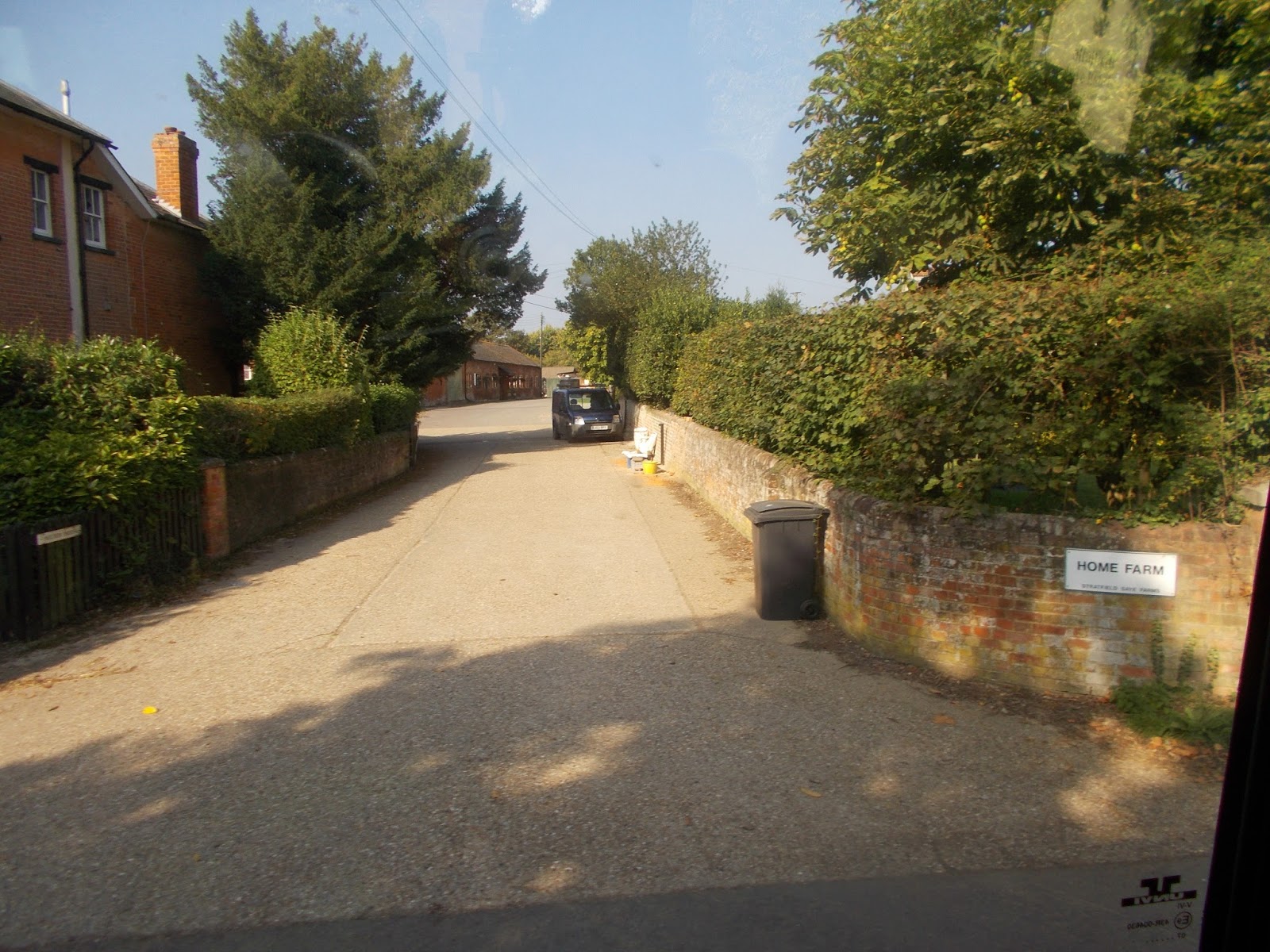
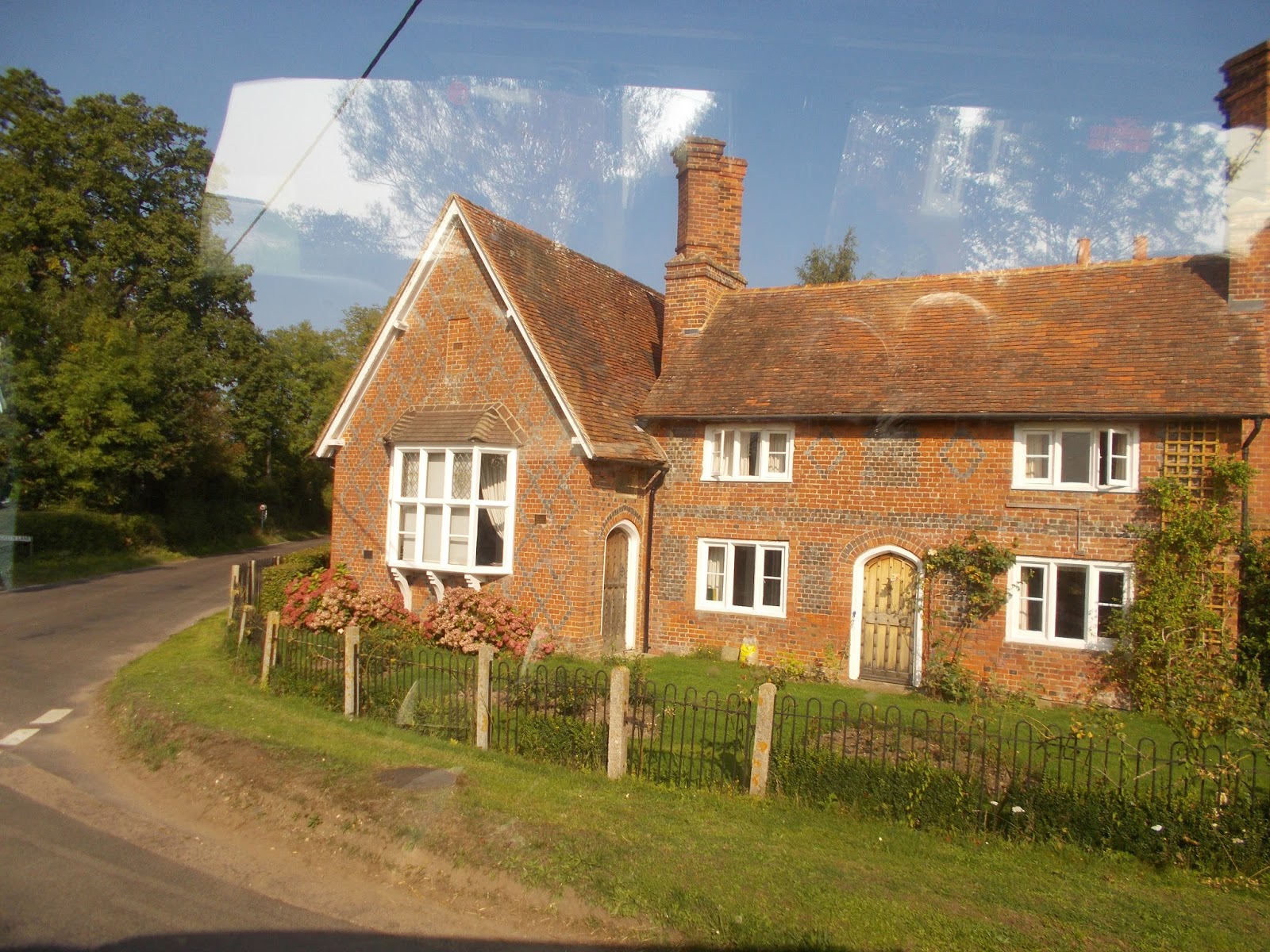
And at long last, I was at the gates to the Estate.


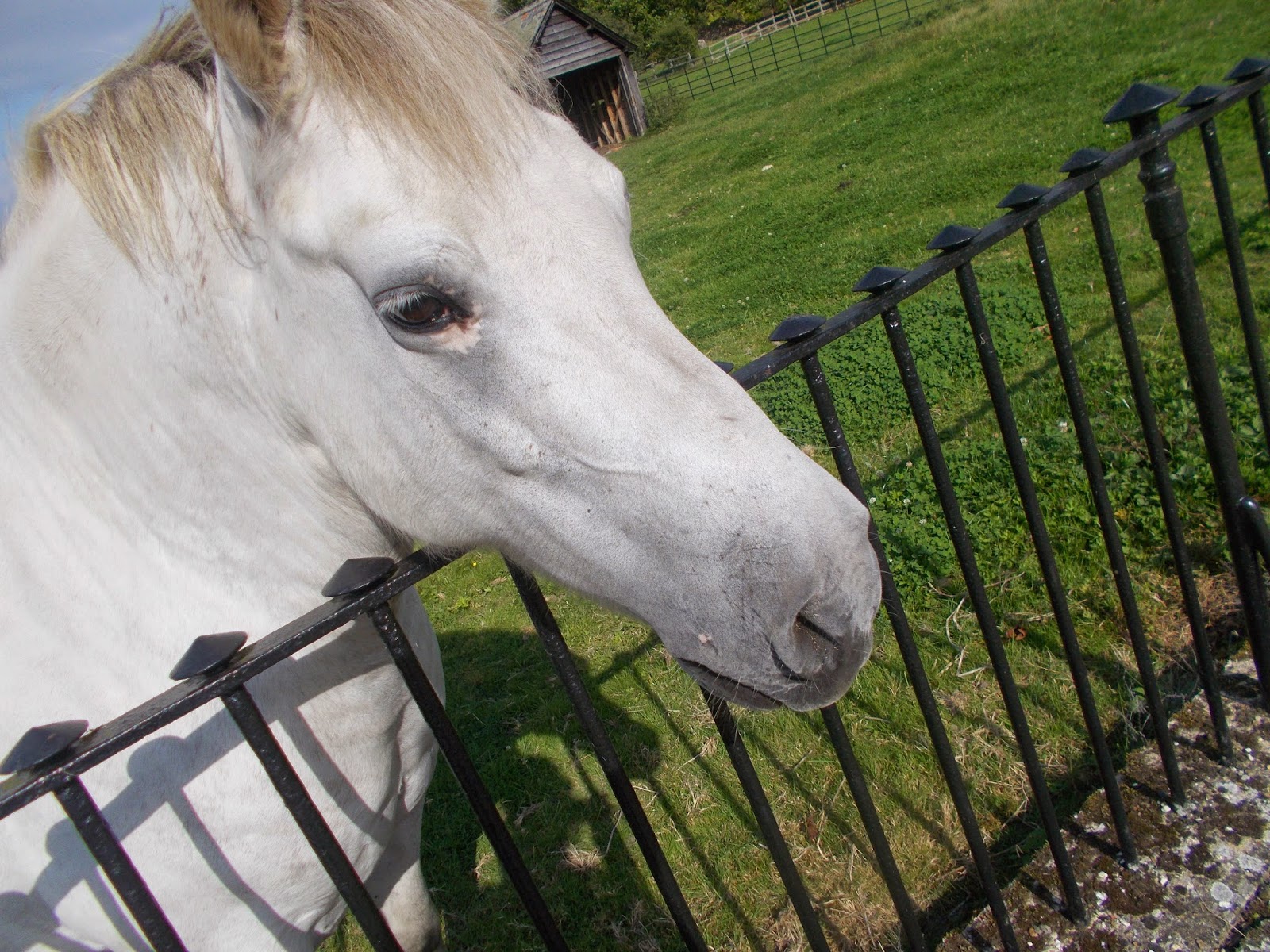
A short walk brought us to the front of the house, where we caught site of another horse.
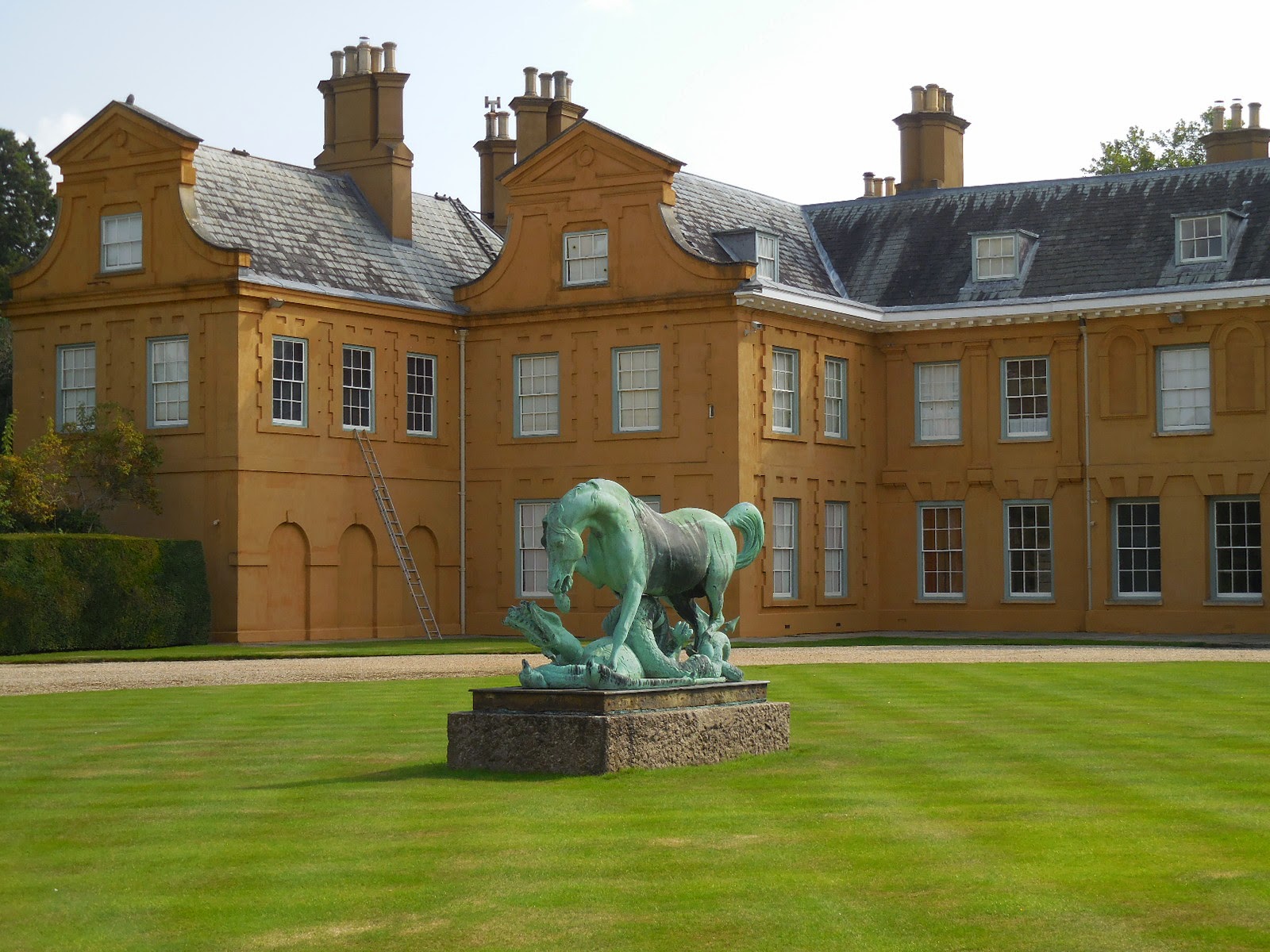
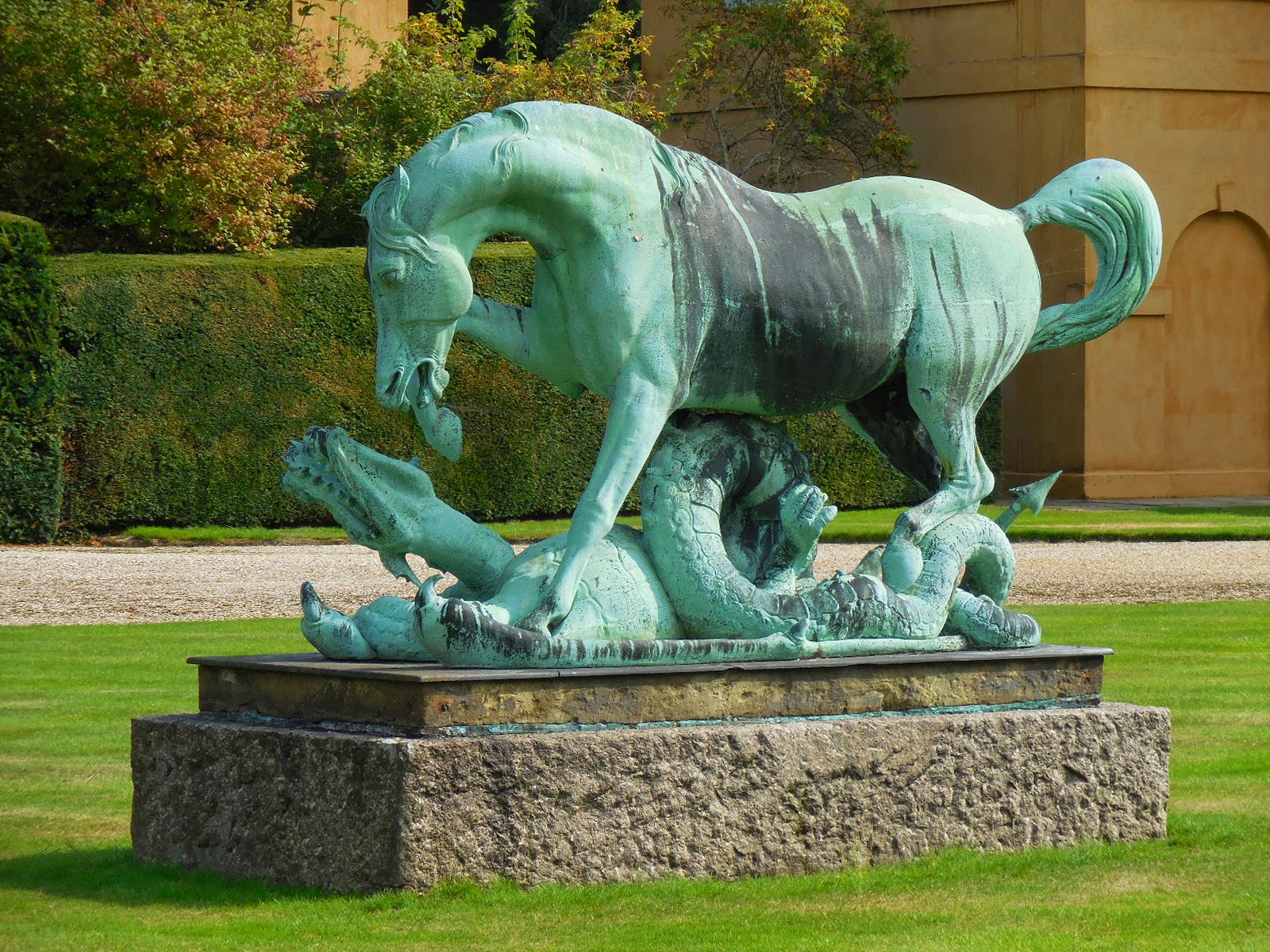
Our group was divided into two, with guide Jenny Savage leading one group through the house, whilst guides Richard and Mary showed round the second group. What can I say? It was all fabulous, especially the first Duke’s office, with the first Duke’s desk still in use and the secret staircase leading to his rooms above pointed out to us by Jenny.
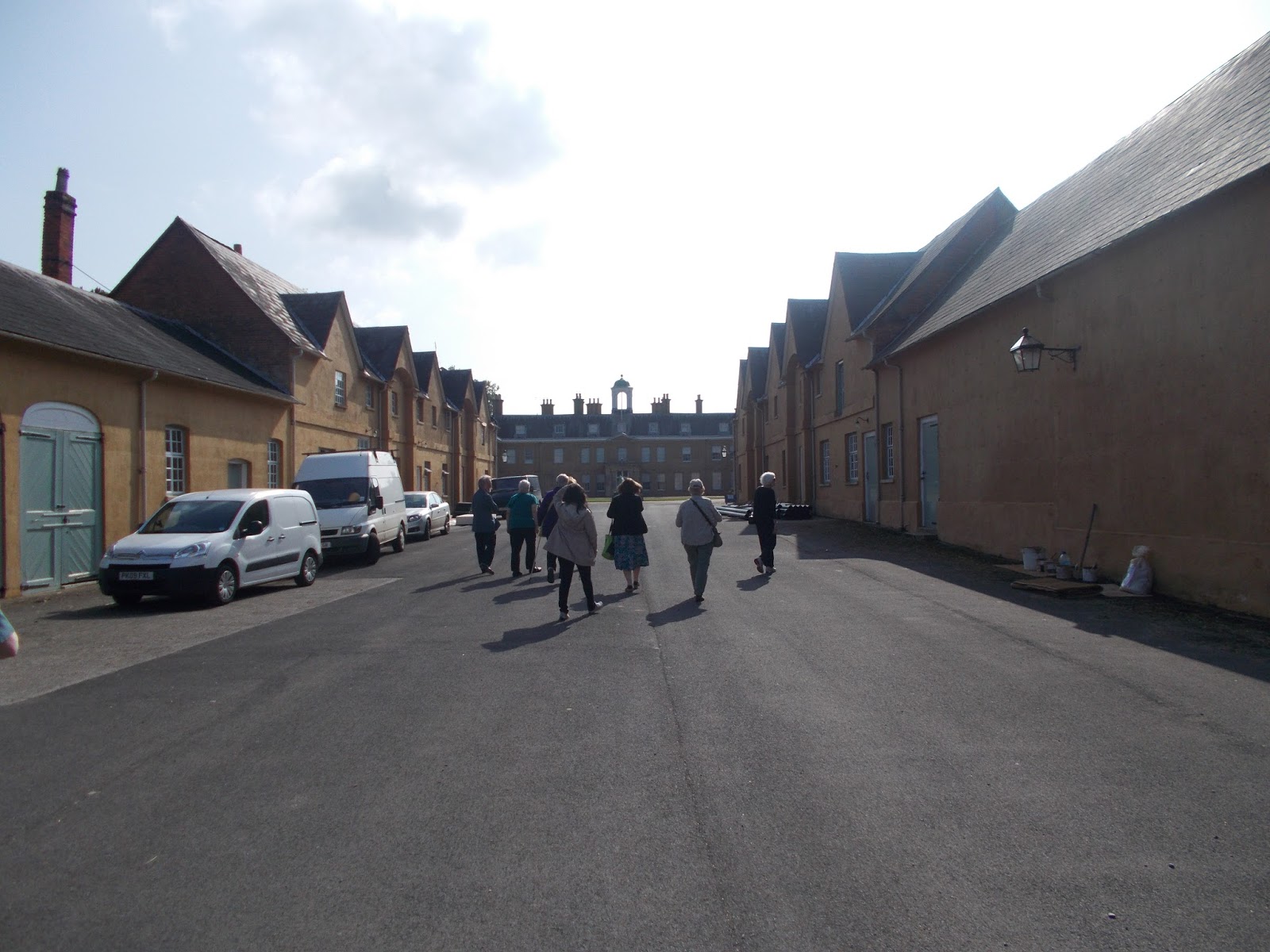
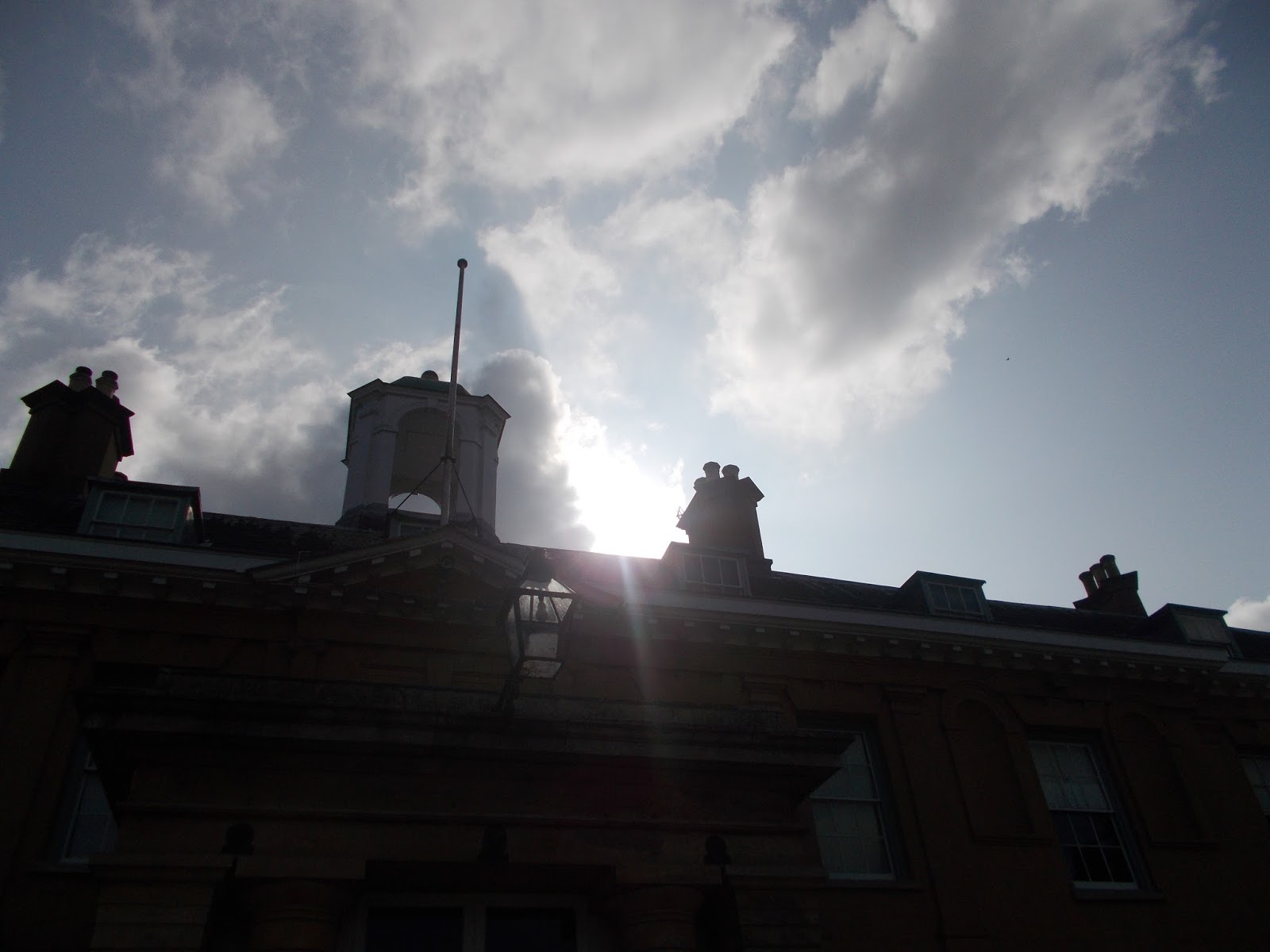

Afterwards, we were free to walk the Estate grounds and I was determined to find Copenhagen’s grave, where I meant to leave the flowers I’d been carrying round with me all day.

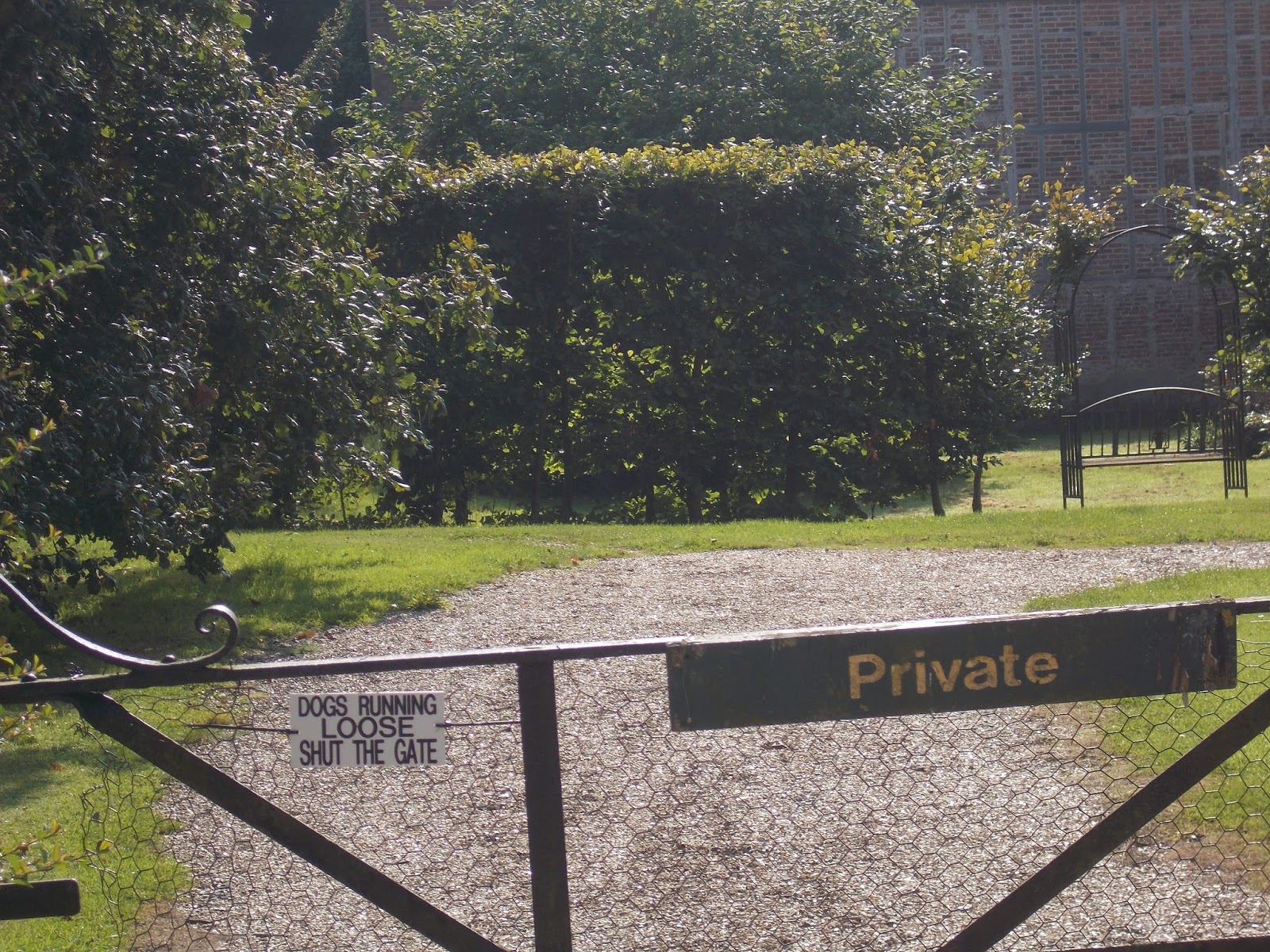
We travelled down many of the paths on the grounds, looking all the while for the route that would lead us to Copenhagen’s final resting place.


Because I knew that Victoria had been to Stratfield Saye and to Copenhagen’s grave before, I asked her where she thought the monument was. Taking me to the path she believed led to the site, we walked back and forth several times, never seeing a clue as to where the grave could be.

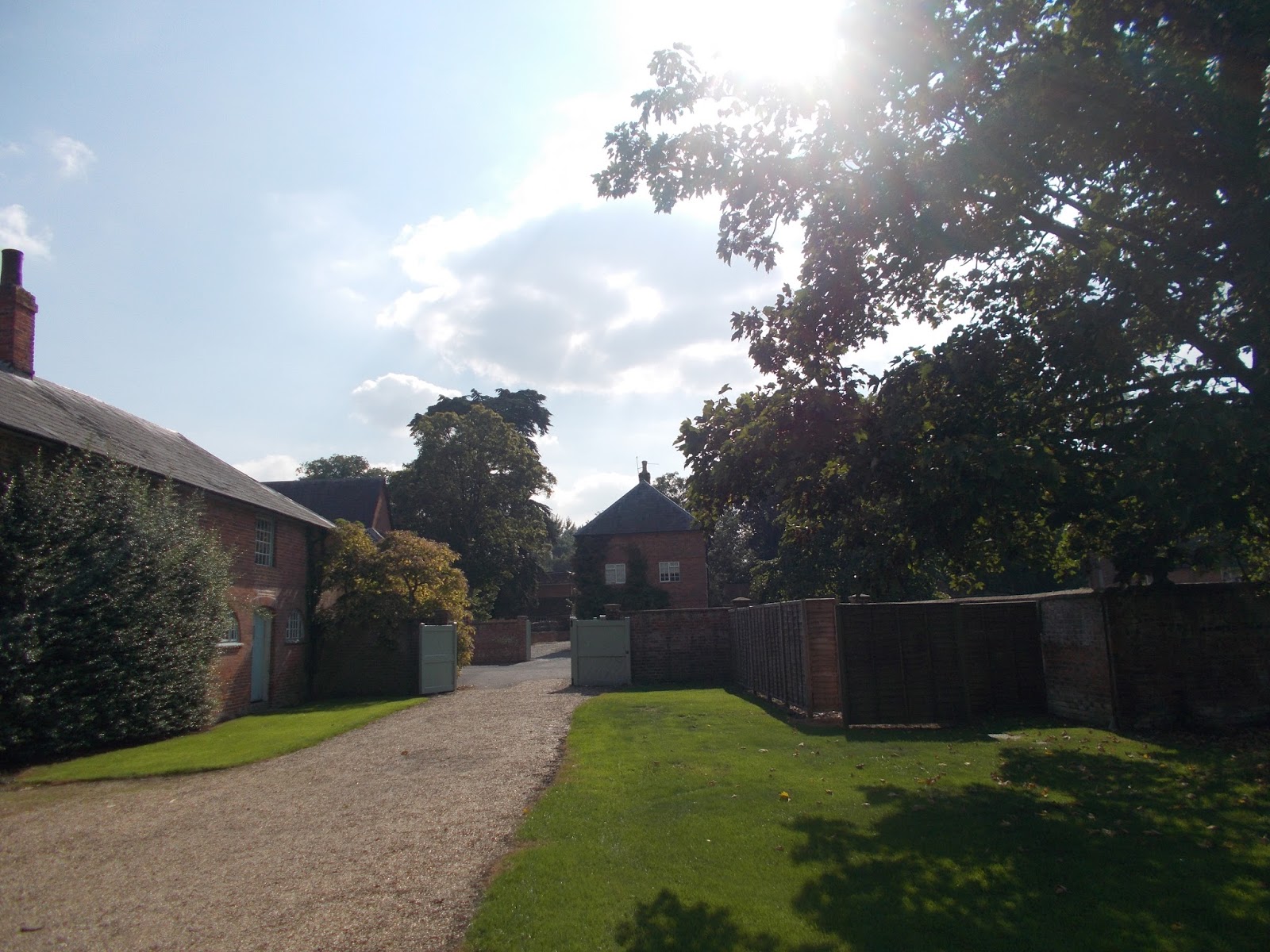
Victoria swore that she remembered the site being just here . . . but when we got there, nothing. Finally, we ran into our guide Jenny again and asked her to show us where the grave stood.
“I thought it was just off the road the last time I visited,” Vicky said.
“Oh, we’ve redone the site in the past few years. Too much foot traffic and there was the danger to the tree beside the grave. It’s quite old and suffering from disease and, unfortunately, we’ve had to take steps to protect it and the grave.”
“Is that the Turkey oak that Mrs. Apostles planted?” I asked. Jenny stopped and looked at me, “Why, yes. Yes, it is.”
Mrs. Apostles was Wellington’s housekeeper. She planted the oak at the gravesite seven years after Copenhagen’s death. For a moment, Jenny and I locked eyes and a frisson of kinship passed between us. It was uncanny.

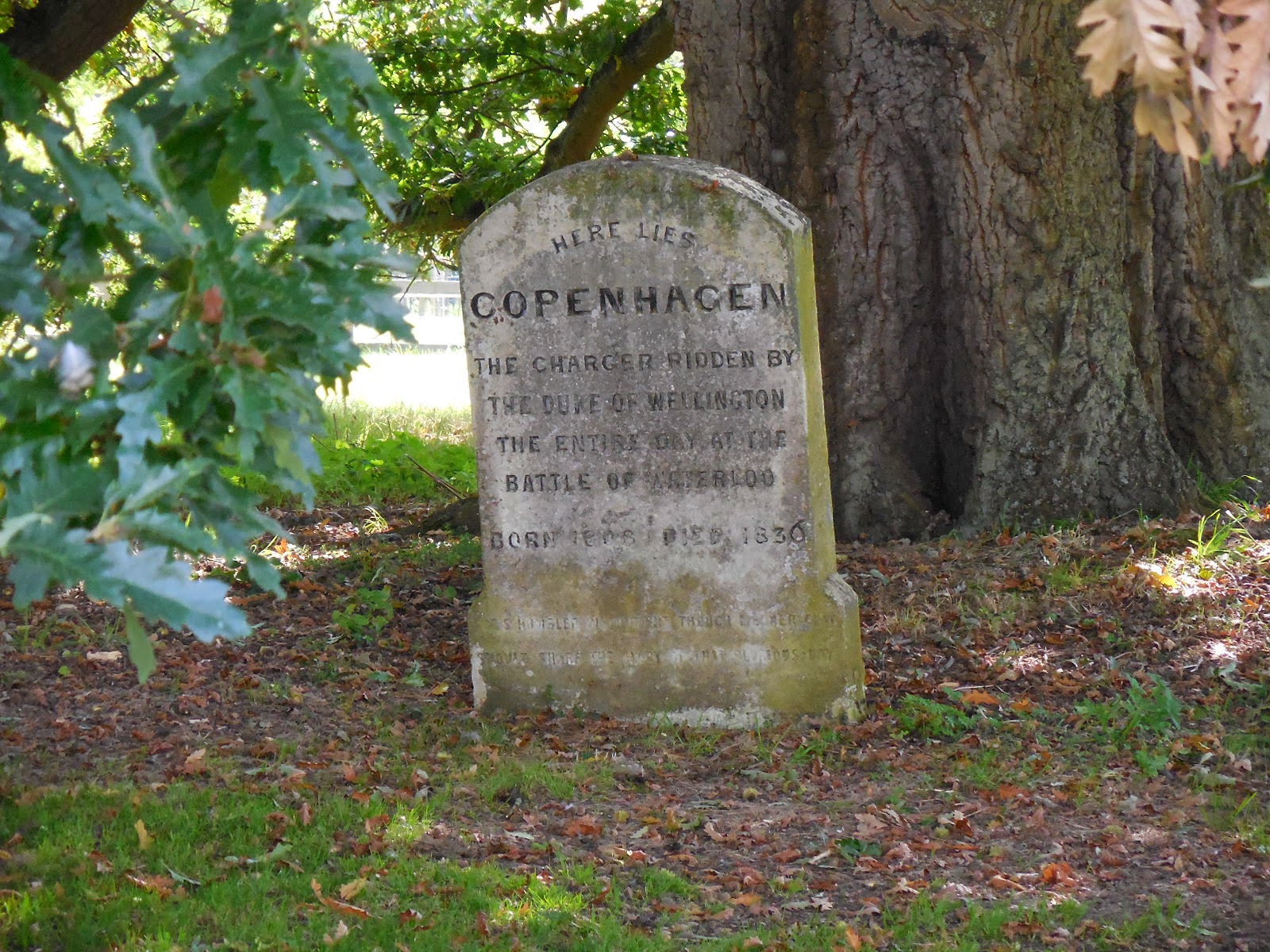
Jenny led Victoria and I into what can only be described as a secret garden. “There it is!” Victoria exclaimed. I followed where she pointed and saw the headstone, Mrs. Apostles’s oak tree . . . and the fence that surrounded both.
“Can’t we get to the grave?” I asked, disappointment no doubt evident in my voice.
“No,” Jenny said. “It’s closed to the public now.”
I took the Tesco’s bag from my arm. “I’ve carried these all day,” I said, bringing forth the bouquet of roses. “I so wanted to leave them here.”
“Have you been carrying them all this time?” Jenny asked, incredulous.
“Yes.”
“For Copenhagen?”
“Yes,” I replied with a catch in my voice. Again, Jenny and I shared a look, a silent communication.
“Here, give them to me,” Jenny said, taking the bouquet from my hand. “I feel the same way about Copenhagen. I’m so happy that you’ve taken the time to honour him. Will you allow me to place them at his grave for you?”
With a silent nod, I let the bouquet go and Victoria and I watched as Jenny walked towards the gate, went through it and then stood by Copenhagen’s headstone.
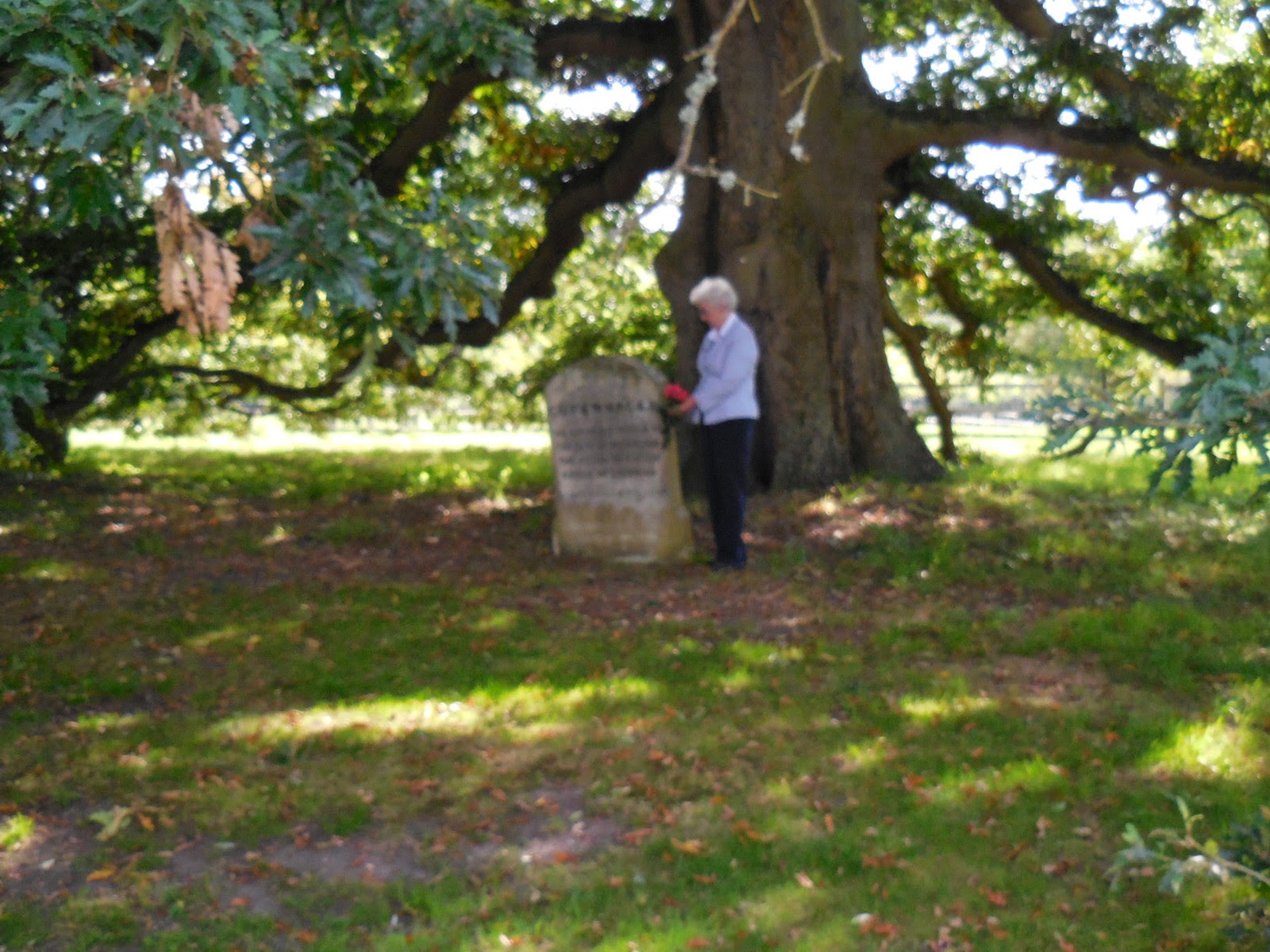
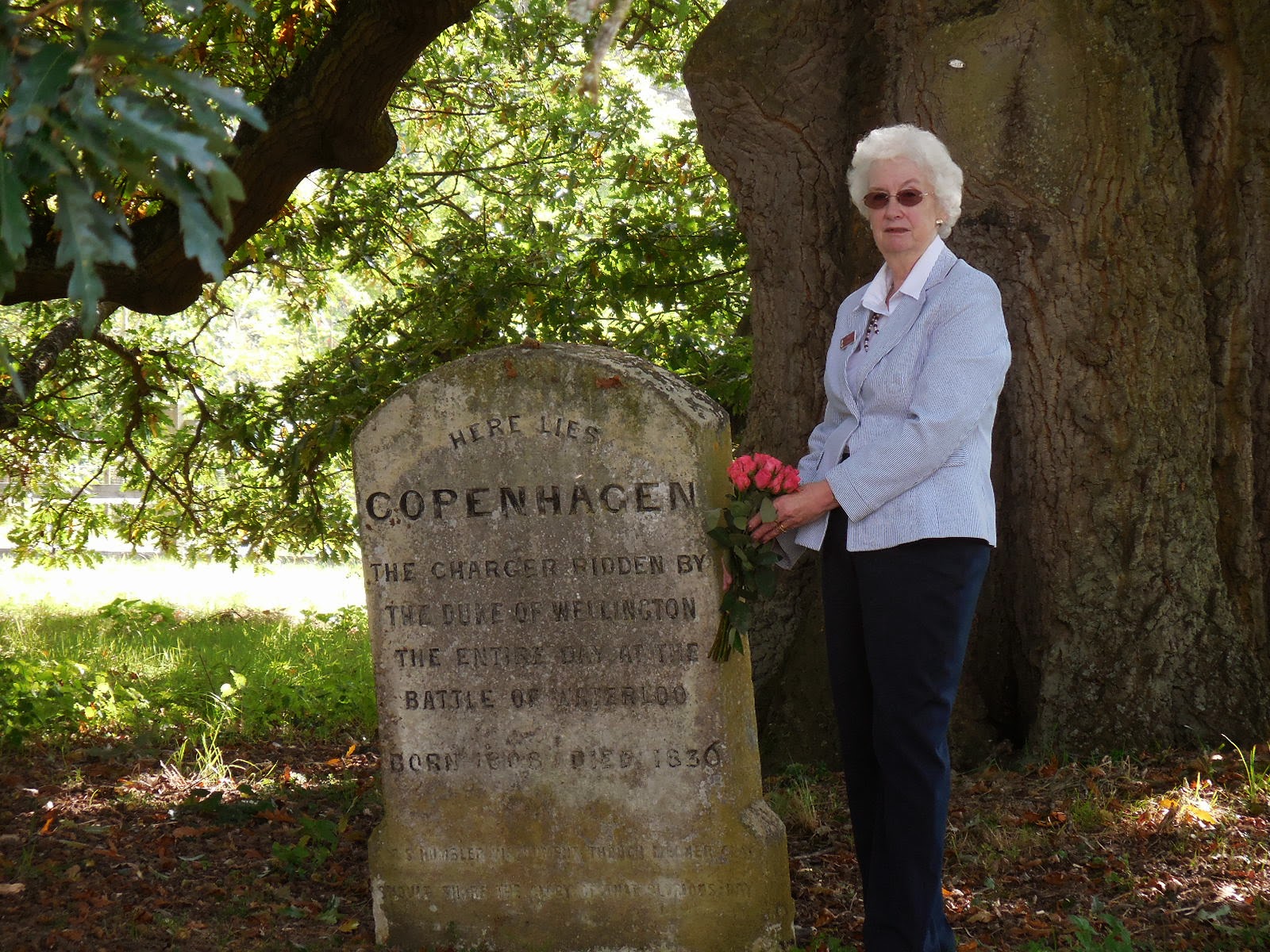
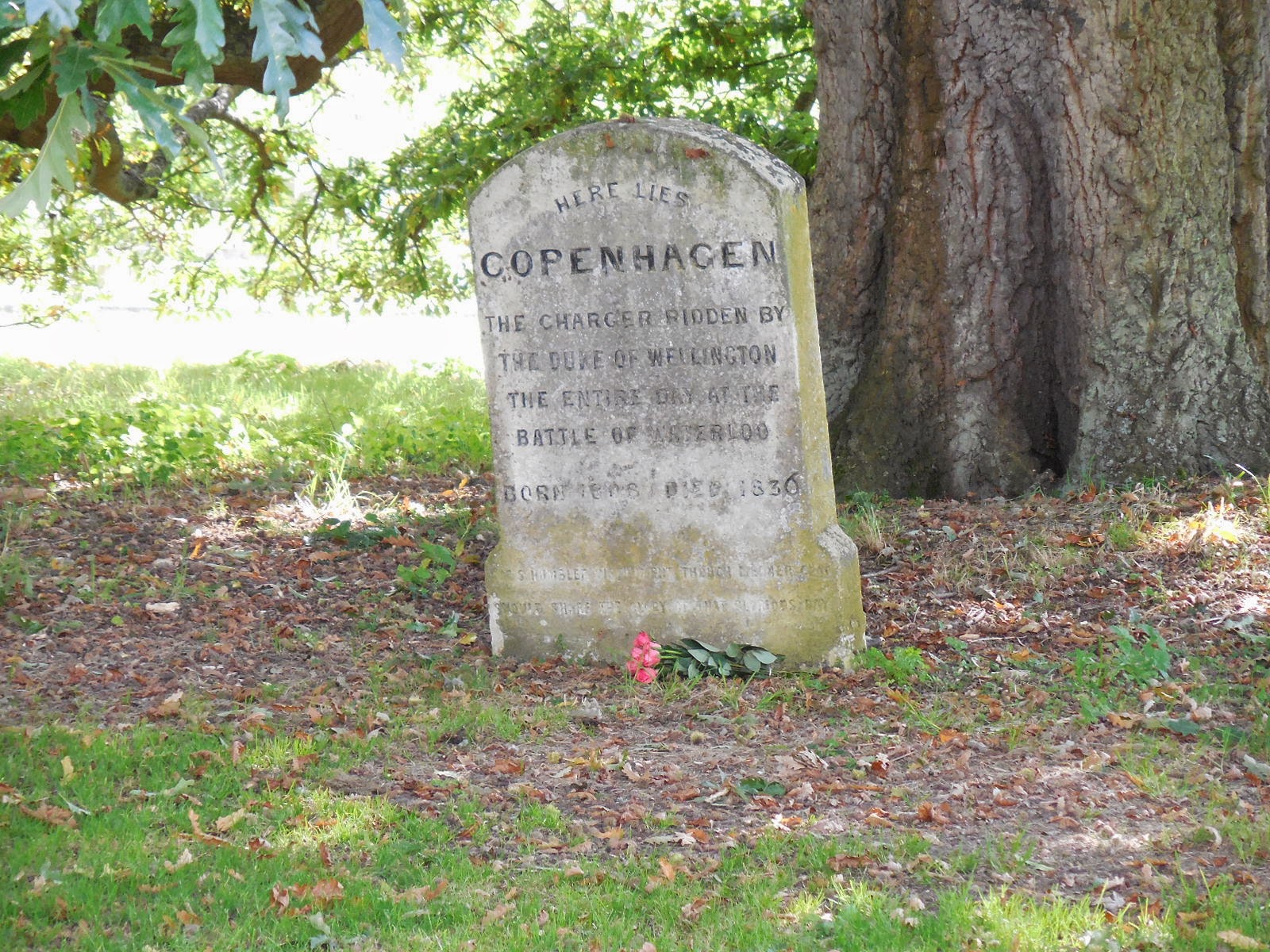

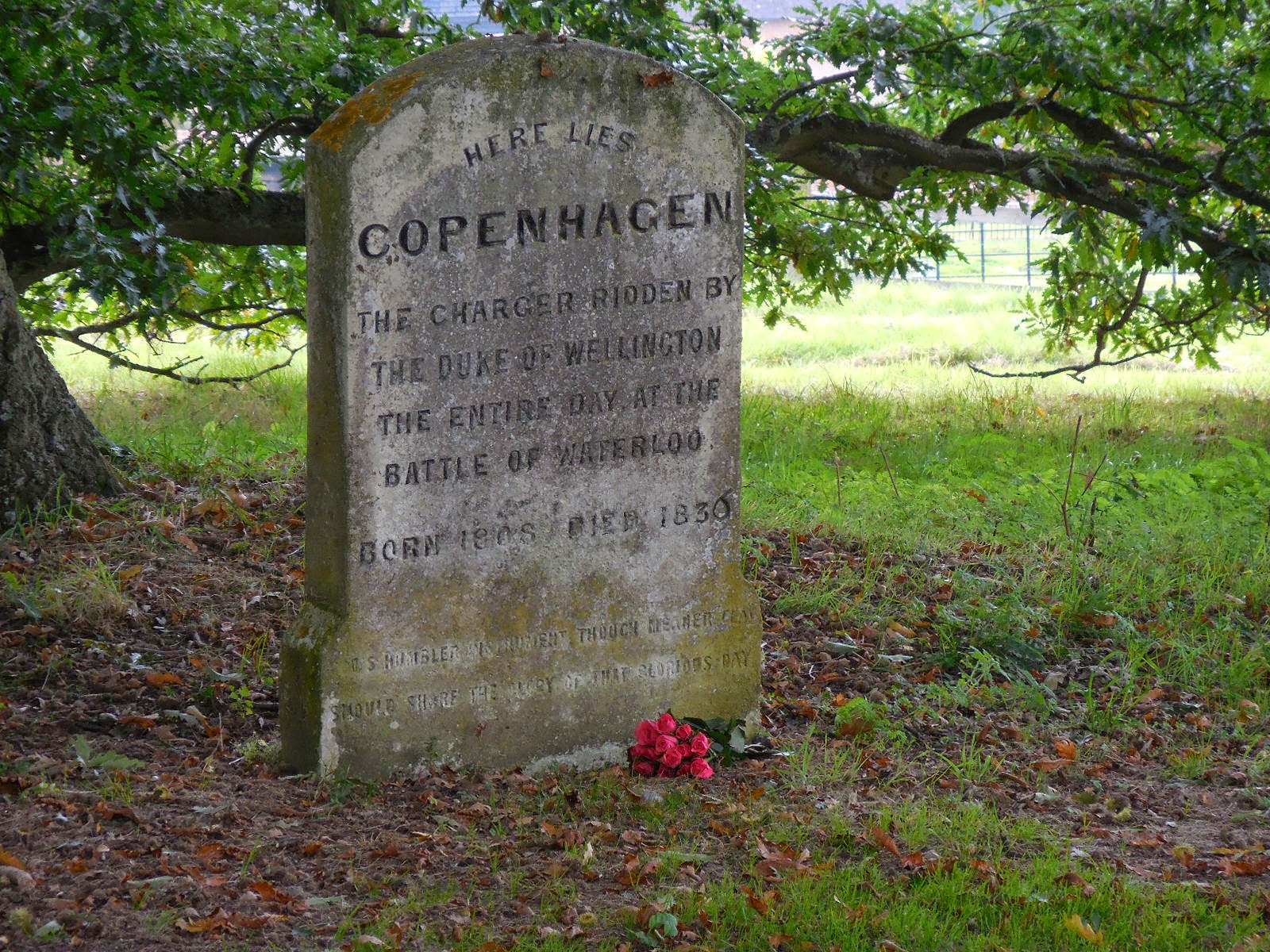
.JPG)
This portion of our visit to Stratfield Saye will live on in my momory forever. Truly, a bucket list item checked off my list. I keep a photo of our flowers placed by the grave in my bedroom, to remind me that life is sweet and sometimes filled with moments that can only be described as magical.
Thank you, Jenny.
The Royal Academy of Arts in London presents an exhibition of the restored cartoon for Daniel Maclise’s painting of “The Meeting of Wellington and Blucher” until January 3, 2016. The cartoon, a work on paper intended to be the pattern for a fresco in the House of Lords Gallery in Westminster Palace, was created by Maclise in 1858-59.

After being in storage for many years, the cartoon was recently restored and to commemorate the 200th anniversary of the Battle of Waterloo, it is exhibited in the RA, Burlington House, Piccadilly. The completed work can be seen in the House of Lords Gallery, though it was changed from the original intention of creating a fresco to a glass painting. More about that below.
For all the details of the conservation and the exhibition, click here.
For more details from the Daily Telegraph, click here.
The Guardian’s take is here.


