THE BRIGHTON PAVILION – CAREME'S KITCHEN

The Royal Pavilion at Brighton is a fanciful building reflecting the enigmatic character of the man for whom it was created, George, Prince of Wales, the Prince Regent from 1811-1820 and King George IV from 1820 to his death in 1830.  Prinny, as he was often known, considered himself “The First Gentleman of Europe,” and a connoisseur of all things tasteful and refined.  And that was the paradox: He did indeed have good taste but he carried things to the extremes of excess.
James Gillray: A Voluptuary under the Horrors of Digestion, 1792
The British Museum

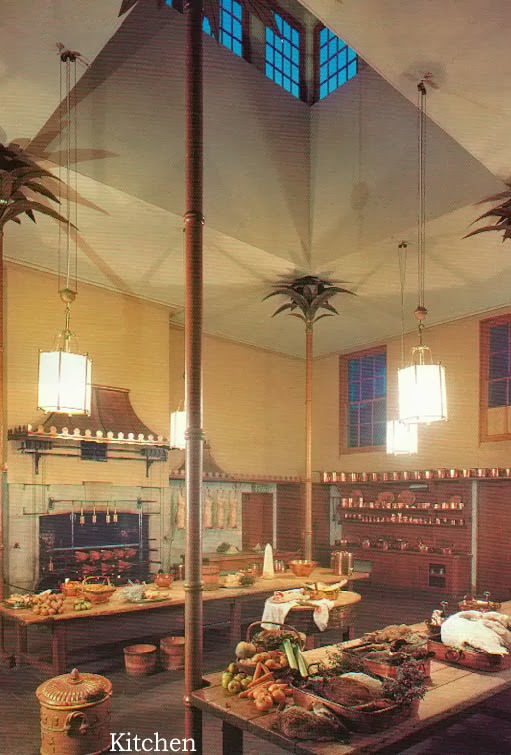
The Great Kitchen at the Pavilion was built especially for the Prince’s chefs who kept him and his minions well fed and produced brilliant banquets for his royal guests. 

(©Royal Pavilion and Museums, Brighton and Hove)
The Prince Regent was obsessed with all things French: architecture, décor, furniture, china, fashion, and “above all” French food.  Once Great Britain had driven out Napoleon, the Prince Regent had to have a French Chef to prepare his meals and banquets in London at Carlton House and at his Brighton home, the Royal Pavilion. He sent his household Clerk Controller to Paris to find a chef.  Even  the Prince was surprised when the celebrated Antonin Carême agreed to come, probably for the offer of a very high salary. Carême had prepared elaborate meals for the notables of Napoleonic France, particularly the diplomat Talleyrand and the Emperor himself – Carême was the first “celebrity chef.”

Cooking for Kings: The Life of Antonin Carême, the First Celebrity Chef
by Ian Kelly, a biography with recipes, 2003

Distinguished British writer and actor Ian Kelly is the author of Carême’s biography.  You can read more about Ian and his books here.  A chapter is devoted to Carême’s brief but notable career in England.  He arrived in July 1816, having left his wife and child in Paris. Carême certainly impressed the Prince’s guests with his dishes, particularly with his elaborate, even ostentatious, confections, up to four feet tall.

Before Carême arrived, the Prince was already grossly overweight.  Supposedly the Prince said that the temptations of his new chef’s cooking would be the death of him.  Carême replied, “Your highness, my concern is to tempt your appetite; yours is to curb it.”  Touché!

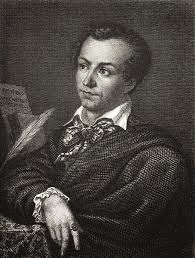
Marie-Antoine Carême (1784-1833)

Kelly had access to the records in the Royal Archive which include bills and notes from Careme’s time. When he arrived from France, Carême altered the usual method of disposing of the extra food  not eaten at the royal table. Previously, the staff could sell leftovers, plus such things as candles, and share the  profits.  Carême kept for himself the right to dispose of items from the kitchens. Thus he was quite unpopular with the staff.  Kelly tells some wonderful stories about the conflicts.  In late 1817, Carême returned to France.

(©Royal Pavilion and Museums, Brighton and Hove)

The kitchen as it appears today is only a part of the many rooms that were once used as bakeries, for supplies, preparation, sculleries, and so forth.  Kelly found records showing in 1817, in one month, the kitchens took supply of 428 bunches of radishes, 153 Savoy Cabbages, 7 dozen Cos lettuces, and spent over  £250 on 1,854 pounds of beef and similar amounts of mutton and veal.

For a 360-degree view of the kitchen, click here.


The Great Kitchen was built as part of the remodeling of the Marine Pavilion by architect John Nash.  Intended to be a model of innovation, the kitchen had running water, steam heating and special ventilation through the high windows. The oriental theme used in varied versions throughout the palace is also found in the kitchen. Tall pillars supporting the ceiling are adorned with copper palm fronds.

Nash water-colour of the Great Kitchen, 1828


The kitchen has been extensively renovated and visitors can see an impressive collection of  of Regency-era and early Victorian kitchen equipment.  Some of the copper pots on display once belonged to Apsley House, the London residence of the Duke of Wellington.

In his excellent book, Ian Kelly reproduces the menu of 18 January, 1817, for a dinner for Grand Duke Nicholas of Russia:  eight soups, eight releves de Poisson, fifteen Assiettes Volantes, eight grosses pieces, forty entrees, eight pieces montees, eight roasts and thirty-two entremets.” Kelly writes, “the banquet was to be seen and experienced as part of the theater of international relations — Napoleon’s chef creating a gastronomic spectacle for the conquering British monarch and his Russian allies.”  Excess indeed. 
Kelly’s conclusion is that Carême’s “…genius was to deploy methods that brought out the natural flavors of food to create a gourmand’s paradise while at the same time producing a feast which would, visually live up to the most opulent settings.”  He would have been the superstar of the cable Food Channels!

More information on the Royal Kitchen can be found here.  
Both Brighton and the Royal Pavilion are included on the itineraries for Number One London’s 2017 Regency Tour and Queen Victoria Tour. Details at links. 

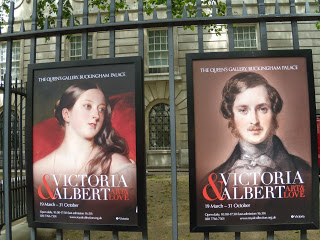
ONCE AGAIN WEDNESDAY: VICTORIA & ALBERT – ART & LOVE

Today’s Once Again Wednesday post was originally published in July, 2010 and features my visit with Victoria to see the Victoria & Albert Art & Love Exhibit at the Queen’s Gallery in London. To this day, it remains the single best exhibition I’ve ever attended. So many truly iconic pieces of art in one room, never mind one exhibition. Do click through and read our original post.

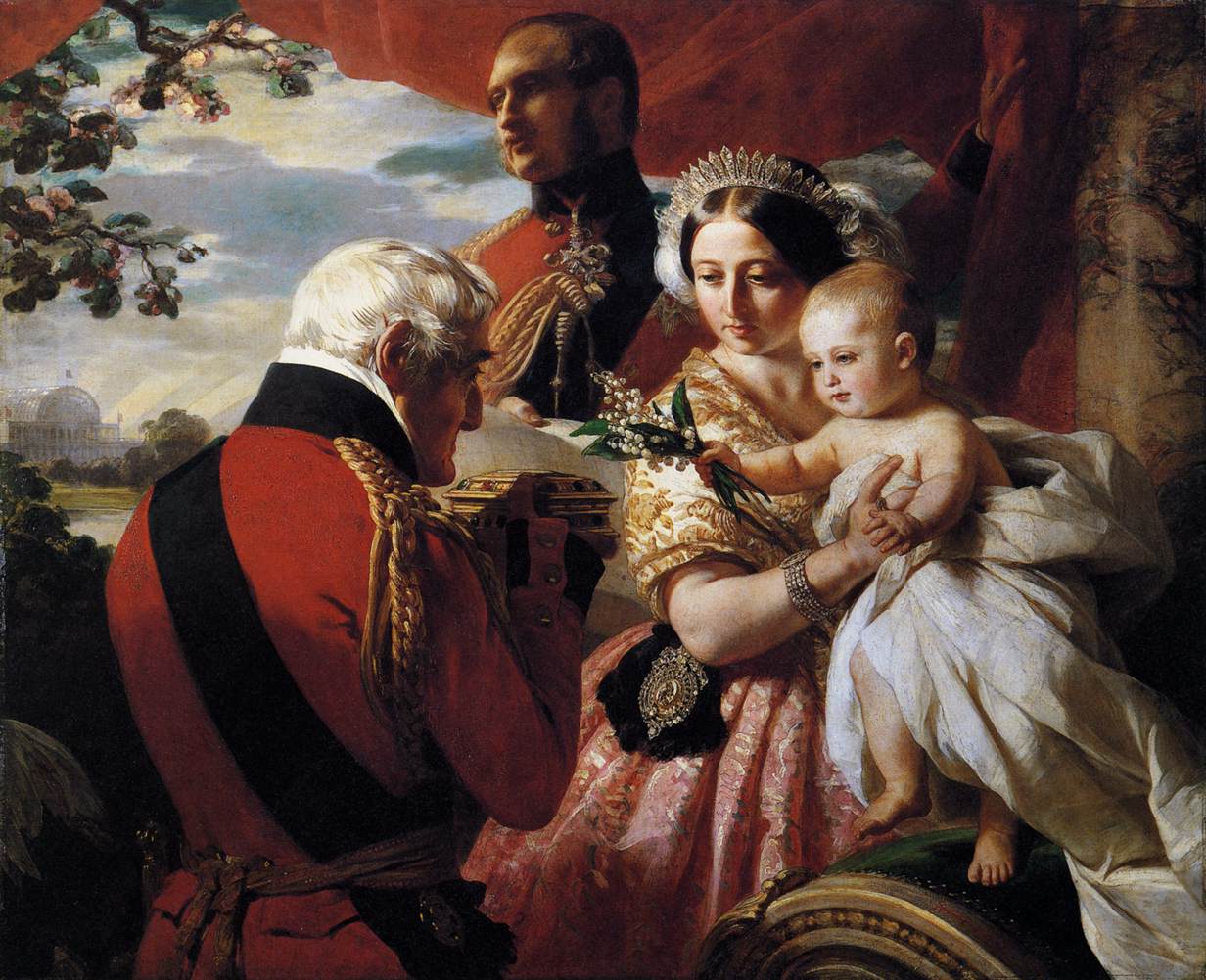
Next, follow this link to view the 19 page catalogue from the Exhibition which focused on Queen Victoria’s personal jewelry. Lot’s of historical details and little known facts, including mention of the Duke of Wellington.

THE CHATSWORTH SHEEP

Is there anything more English than sheep? I don’t think so. Diane Perkins doesn’t think so. I know that because between the two of us, she and I must have taken at least 400 photos of sheep during our two weeks in England this past May. Forget Big Ben, the Union Jack or red telephone boxes – sheep are the quintessential symbol of England.

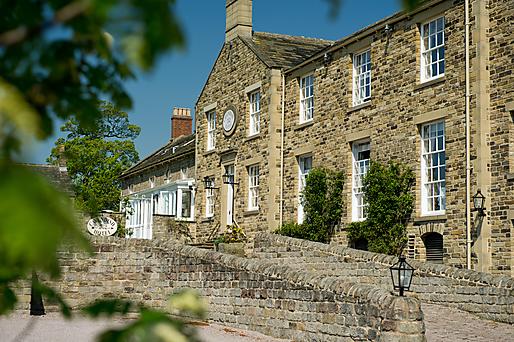
And Diane and I were lucky enough to be in England during the lambing season. We stayed at The Cavendish Hotel (above) on the Chatsworth Estate in Baslow, Derbyshire, where, it transpired happily, the window in our room looked out over the fields – fields that were chock full of sheep. 

The sheep baaahhhed, or bleated, constantly. They bleated morning, noon and night. We woke up to the sound of sheep and we fell asleep to the sound of sheep. Diane and I soon realized that our lives had not previously been complete, having lacked the sound sheep.

At first glance, you may think that the photos above and below are the same, but look again. See how the sheep at the bottom of the second photo are closer together? Which begged a second photo? Not to mention a fifth? You begin to see how it’s possible for one to take hundreds of photos of sheep. 
After a few days at Chatsworth, I became convinced that sheep were the secret to a happy life. I am seriously consdering renting one of the Chatsworth cottages for lambing season next year. They even have days when you can sign up to be driven into the fields in the hopes of witnessing a birth. Heaven!
The Russian Cottage at Chatsworth

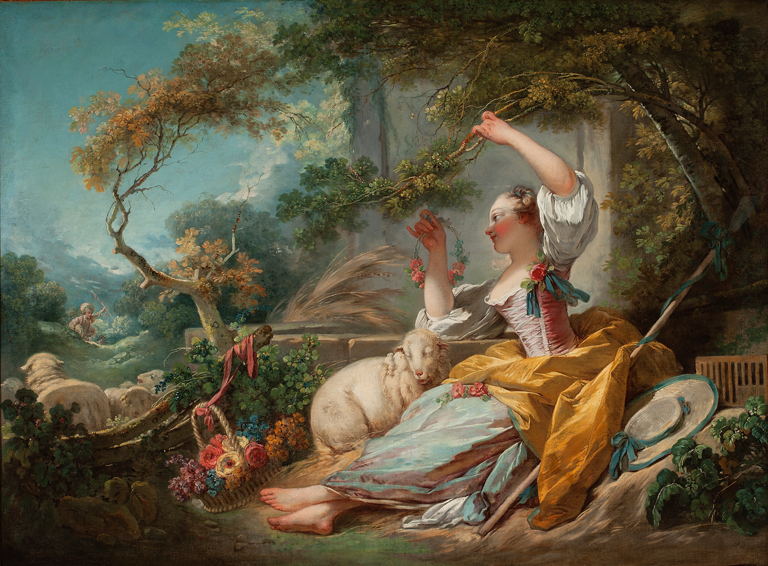
Jean-Honoré Fragonard – The Shepherdess/Milwaukee Art Museum
I begin to understand why Marie Antoinette found the idea of playing at being a shepherdess so alluring. You will find below just a few of the many sheep photos I took at Chatsworth. 
< br />
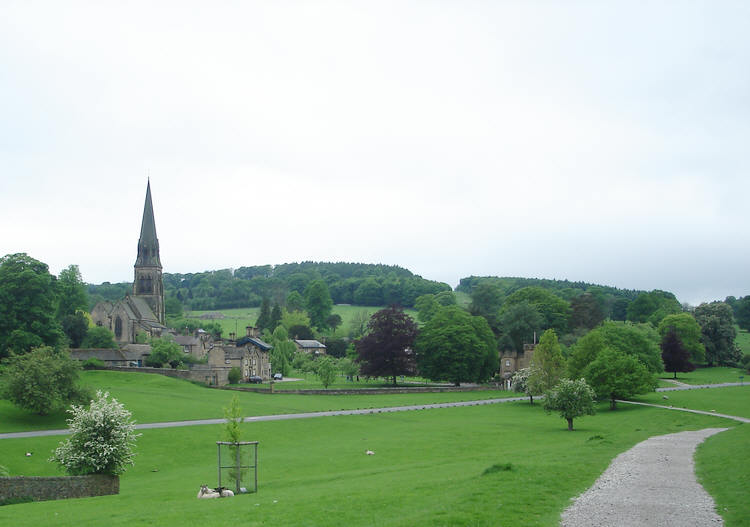
Snap, snap, snap, step, step . . . . . . snap, step, step . . . . . Diane and I walked the paths and snapped photos, each lost in our worlds, for quite some time. We were walking our way over the crest, towards Edensor, the village that the 6th Duke of Devonshire, the Bachelor Duke, had dismantled and reconstructed to his design circa 1840. Up till this point, all of the sheep we’d seen had been a fair distance from the path we were walking on. If they appear any closer, it’s because I used the zoom. 

However, as soon as we crested the slight incline, I came face to face with the sheep below. 
It was right there. A foot off the walking path. And it was big. And, in a weird way, intimidating. I stopped short and it wasn’t long before Diane, still snapping pictures, bumped into my back. She looked up and saw what I saw, the sheep pictured above and below. Big, shaggy and completely owning it’s space. 

“Don’t make eye contact!” Diane warned. 

“What?!”

“Don’t make eye contact,” Diane repeated. 

“It’s a sheep.”

“It’s a big sheep. With babies. And don’t tell me you’re not scared of it.”

“Well, I was scared of it, but on second thought, what can it do to us? I mean, it doesn’t even have horns.”

“No but it’s got hooves and teeth and it weighs almost as much as we do. And it’s got babies to protect. I don’t know what it could do to us, and I don’t want to find out. Don’t make eye contact!”
Reasoning that I had another week and a half in England still ahead of me, I decided not to take chances with my life. I looked away and we hot footed it down the lane and across the road to Edensor. 
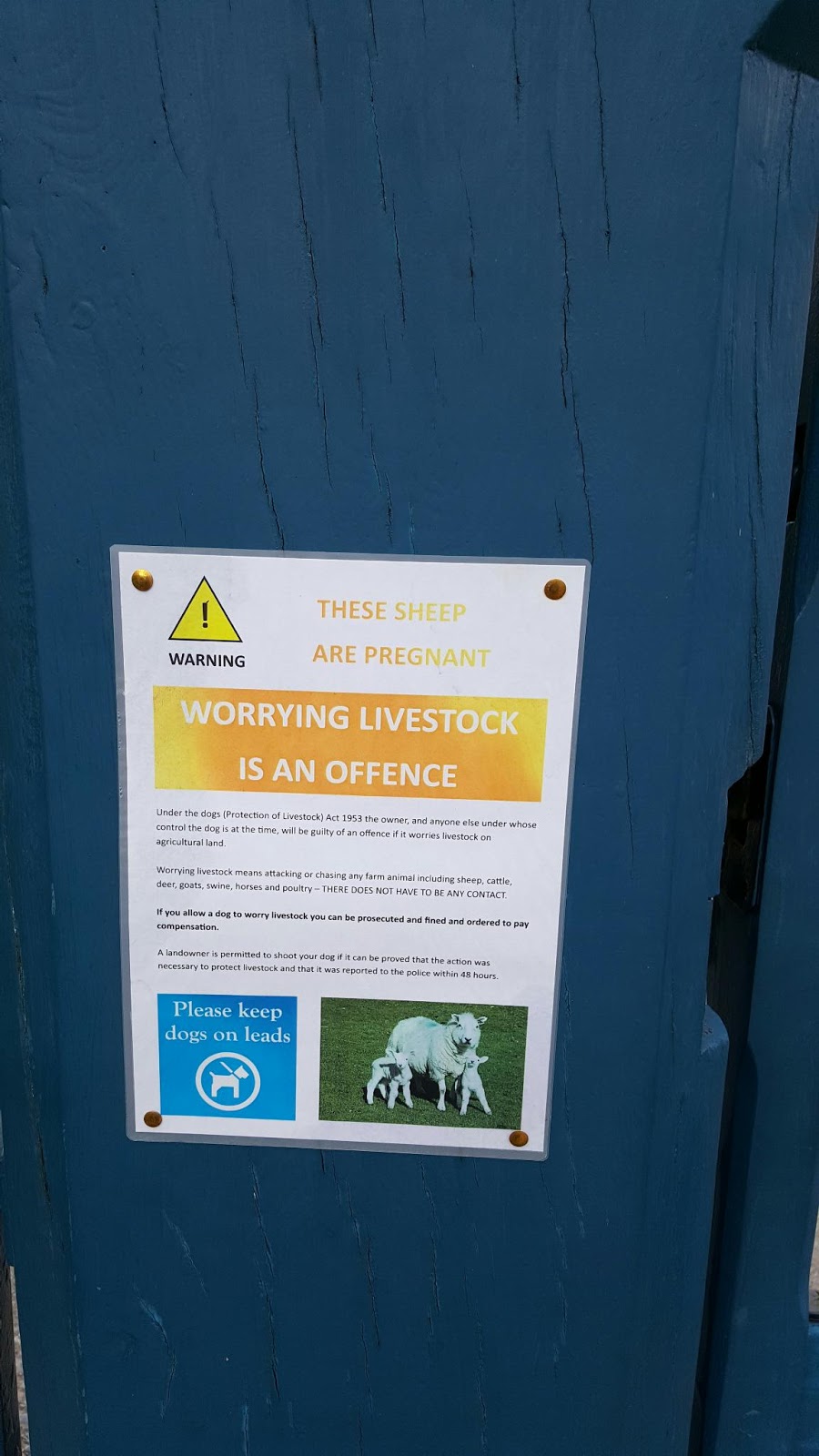
Where we found the sign below on the village gate. 
“Do you think we worried them?” Diane asked.
“More the other way round, no?” I responded. We turned away and attempted to find our objectives – the graves of Kick Kennedy and Deborah, the recently departed Duchess of Devonshire. 
As we approached the graveyard by the church, we spotted a wondrous sight – newly shorn sheep set to graze within the graveyard fence, thus keeping the cemetery all neat and tidy.
These sheep largely ignored us and kept their heads bent to the task at hand. Or hoof. When they did look our way, it was with curiosity and/or a sort of benign benevelance. Our faith in sheep was soon restored!
That night, we once again listened to the soothing sound of the sheep in the fields below our window. You’ve no idea how hard it is to fall asleep whilst counting sheep when one is actively avoiding making eye contact with them.  

You can see the Chatsworth sheep live and in person when we visit the House, gardens and Edensor during Number One London’s 2017 Country House Tour – full details can be found here

ONCE AGAIN WEDNESDAY: TRAVELS WITH VICTORIA: VISITING JOSEPHINE BONAPARTE'S MALMAISON

Originally published October 3, 2014

I recently had a free day in Paris and talked my husband Ed into accompanying me to visit the Chateau de Malmaison in the town of Rueil-Malmaison, about seven miles outside the city.
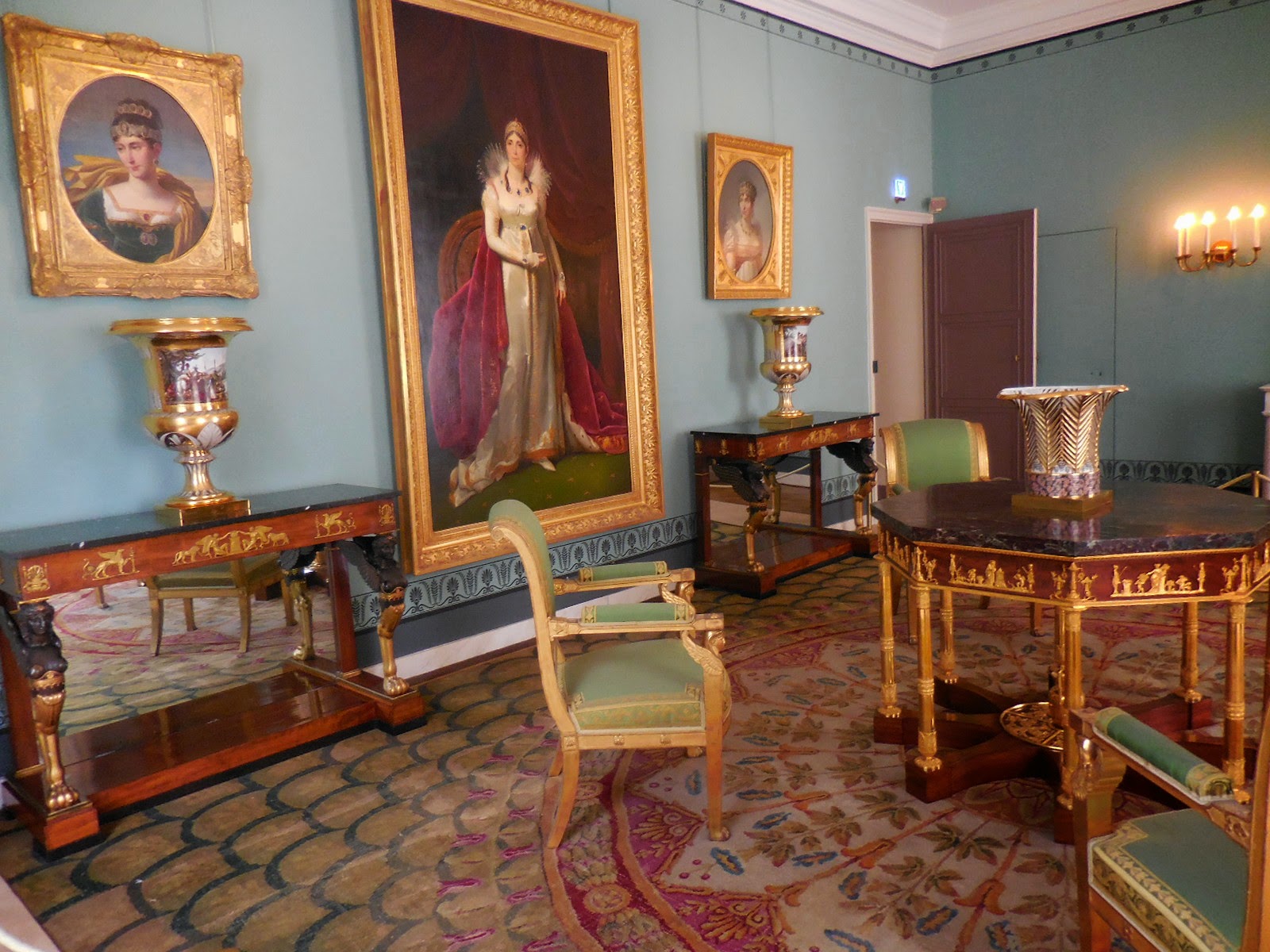
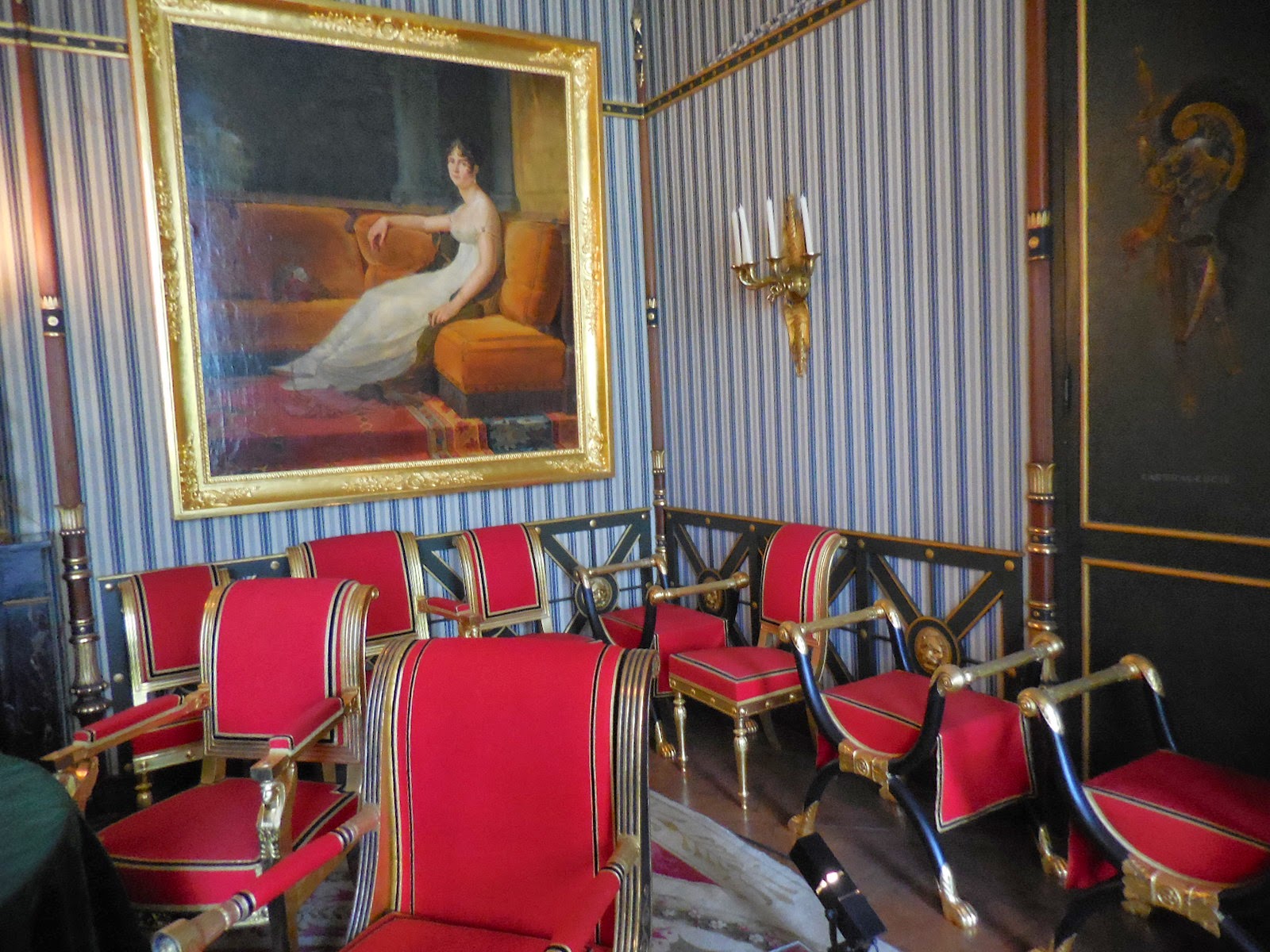
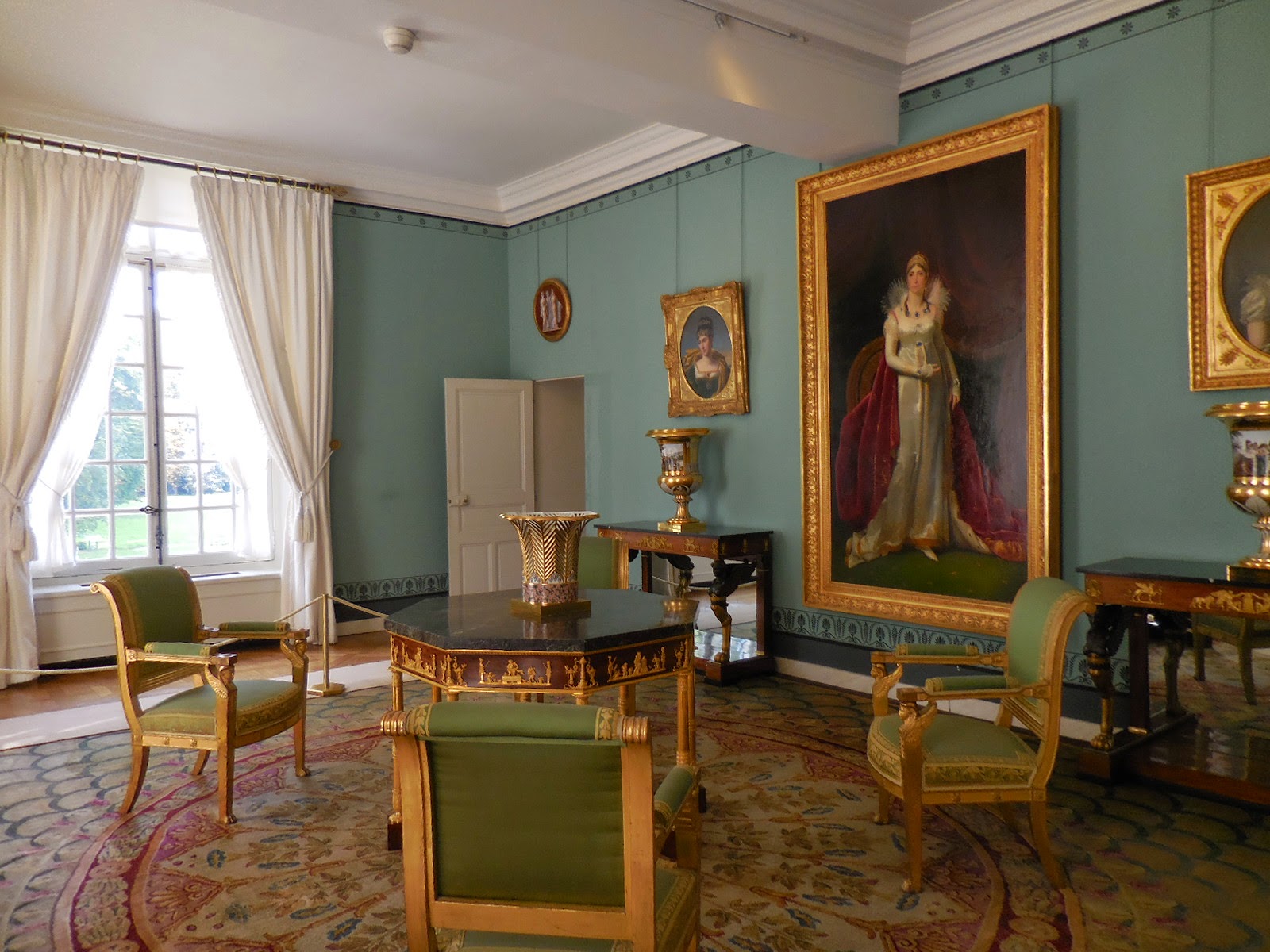
Josephine’s portraits in the Emperor’s Apartment

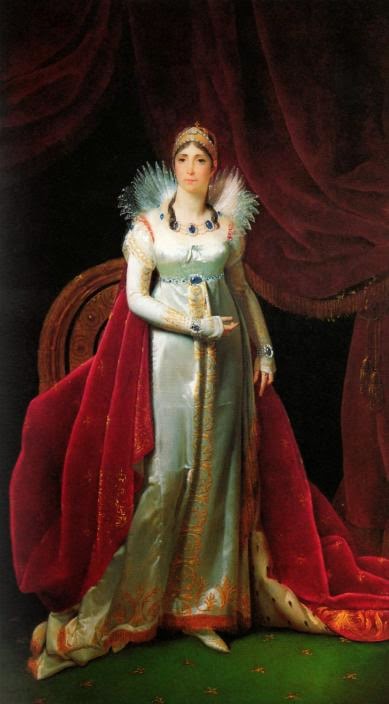
Josephine in 1806, by Henri-Francois Riesener
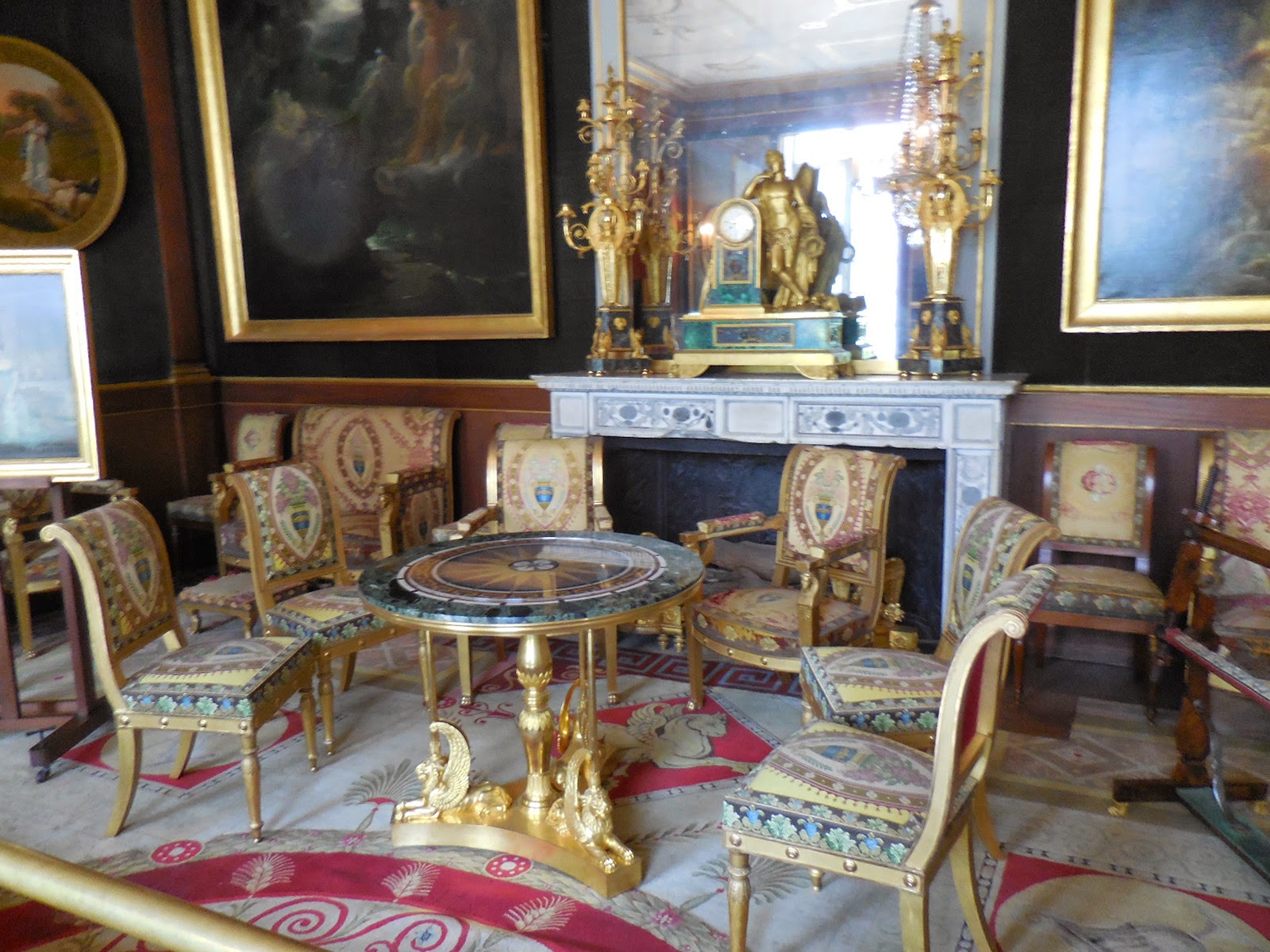
Josephine purchased the chateau (built in the 17thCentury) in 1799 and used it as her retreat from the rigors of life as the eventual Empress of France in the Tuileries Palace. In this charming country house, she could cultivate her roses and enjoy peaceful solitude or host intimate soirees and picnics with chosen guests.

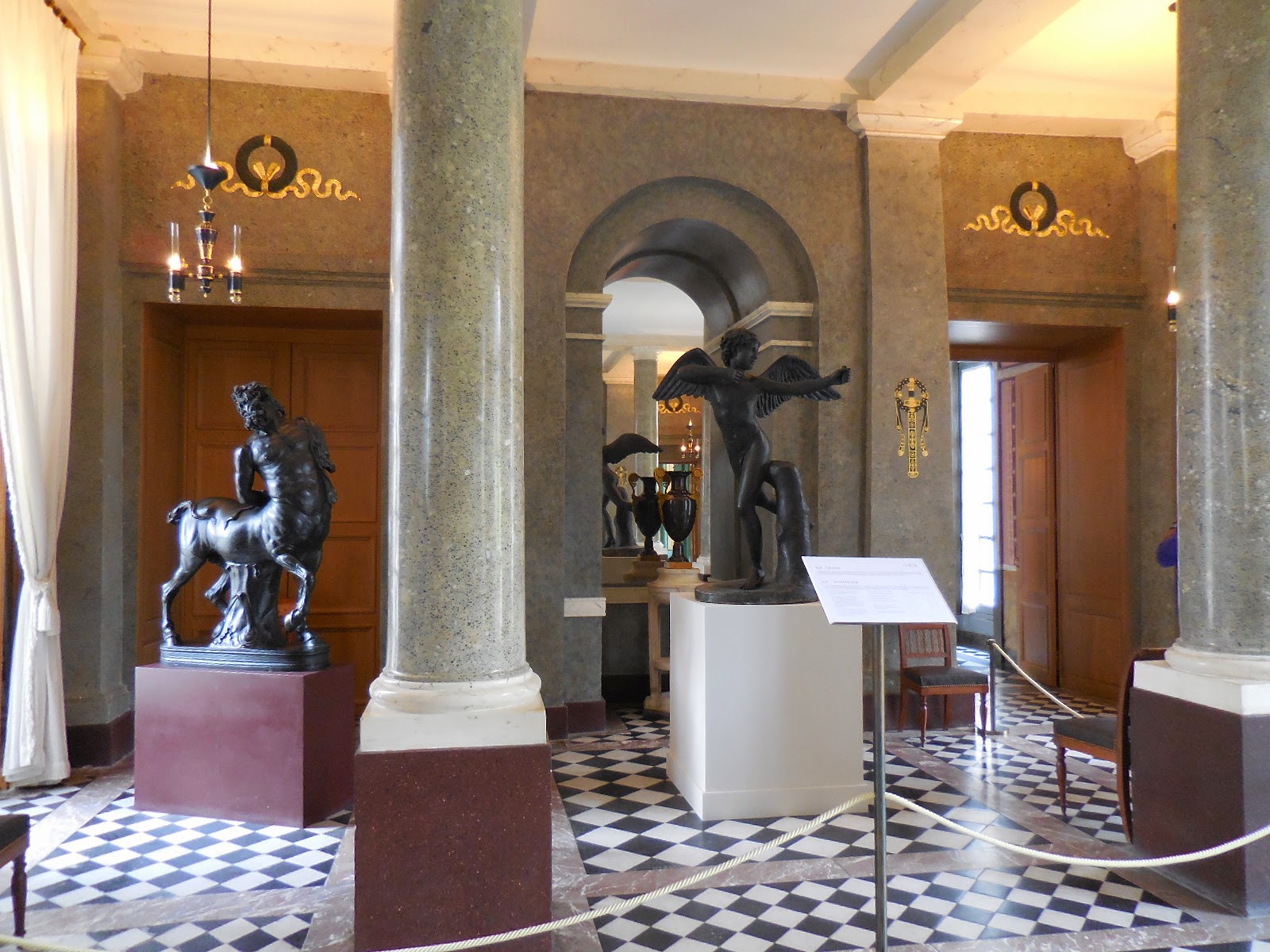
The Entrance Hall

Josephine was born on the Caribbean island of Martinique, June 23, 1763, named Marie-Joseph-Rose de Tascher de la Pagerie.  She grew up among the sugar plantation society on the island   At age seventeen, she went to Paris for an arranged marriage to Count Alexandre de Beauharnais. With him she had two children, a son, Eugene de Beauharnais  (1781-1824) and a daughter, Hortense (1783-1837).  Imprisoned during the Revolution, the Count was guillotined in 1794, but Josephine was released.

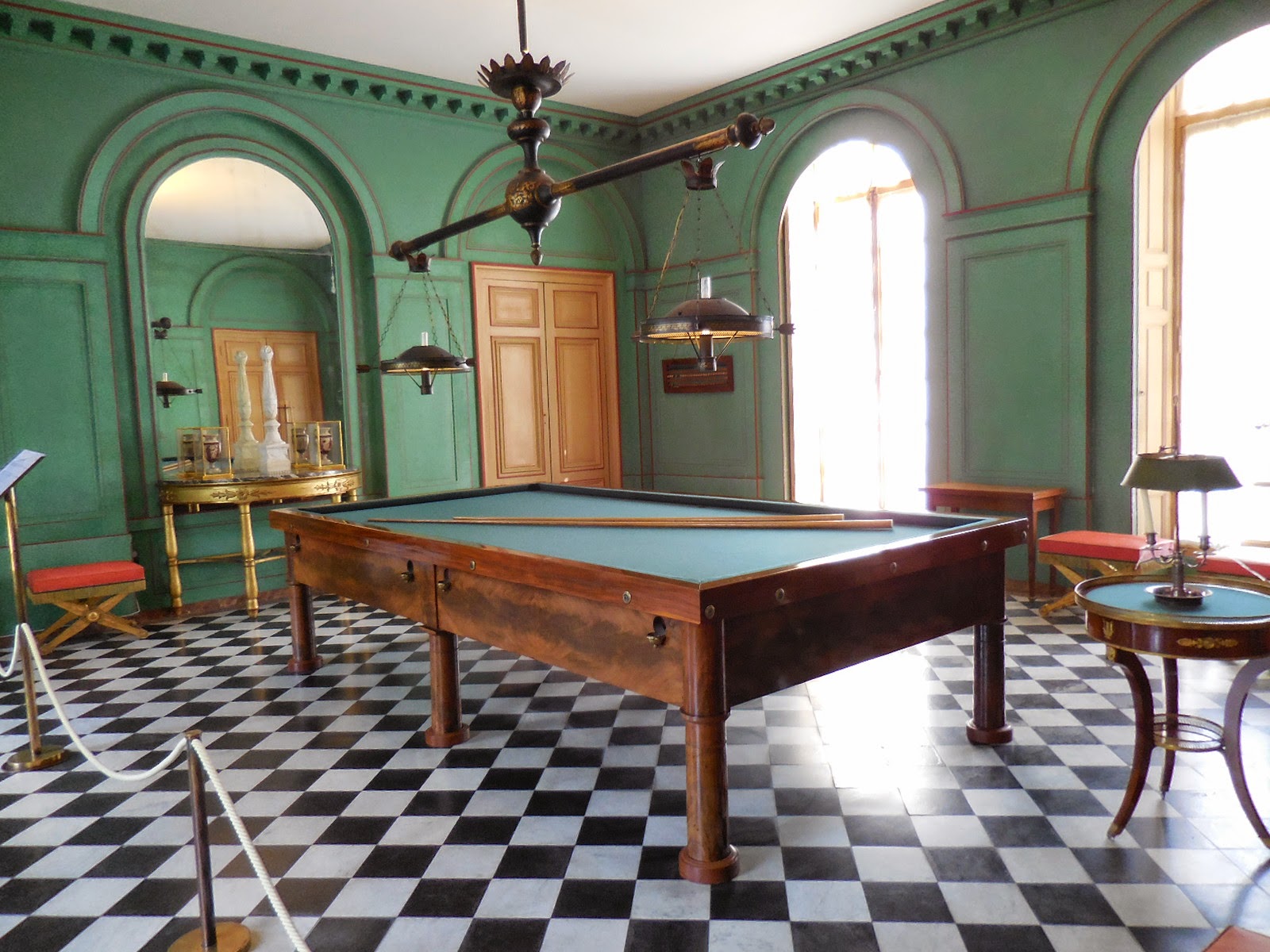
The Billiard Room

When she met the young officer Napoleon Bonaparte (1769-1821), he fell madly in love with her. Until he renamed her Josephine, she was known as Rose. They married in 1796. In December 1804, in the Cathedral of Notre Dame, Paris, Napoleon crowned himself Emperor and Josephine Empress of France, in the presence of the Court and the Pope.

Le Salon Doré


Unable to bear any more children, Josephine reluctantly agreed to separation and divorce.  In December 1809, she moved permanently to Malmaison.  

  
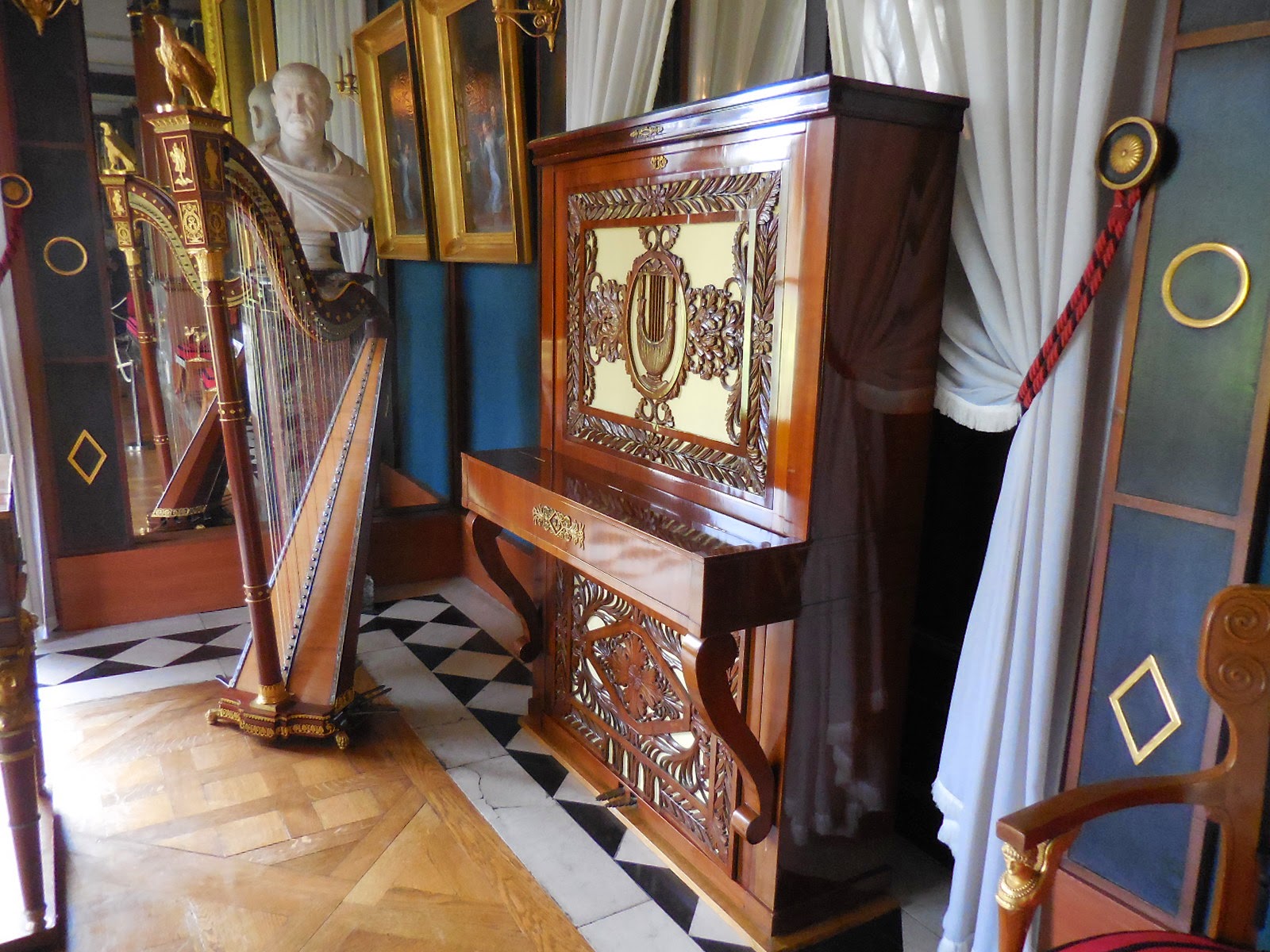
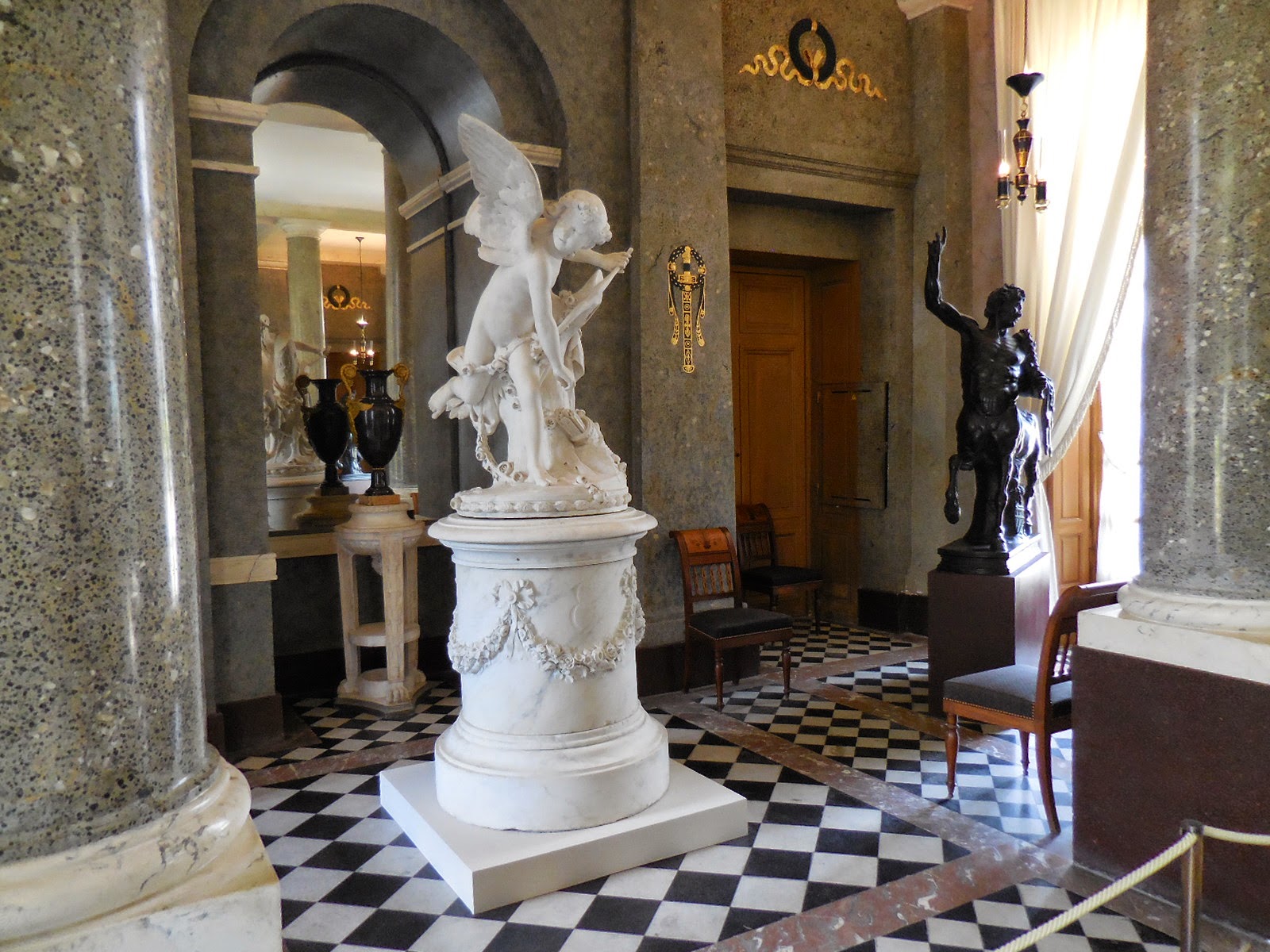
The Music Room

Josephine’s Harp and Pianoforte
Napoleon married Marie Louise, daughter of Austrian Emperor Francis I, and a year later, in 1811, his only legitimate child was born. He was named Napoleon, designated the King of Rome. [This unfortunate young man, so greatly anticipated, died in his early 20’s.]

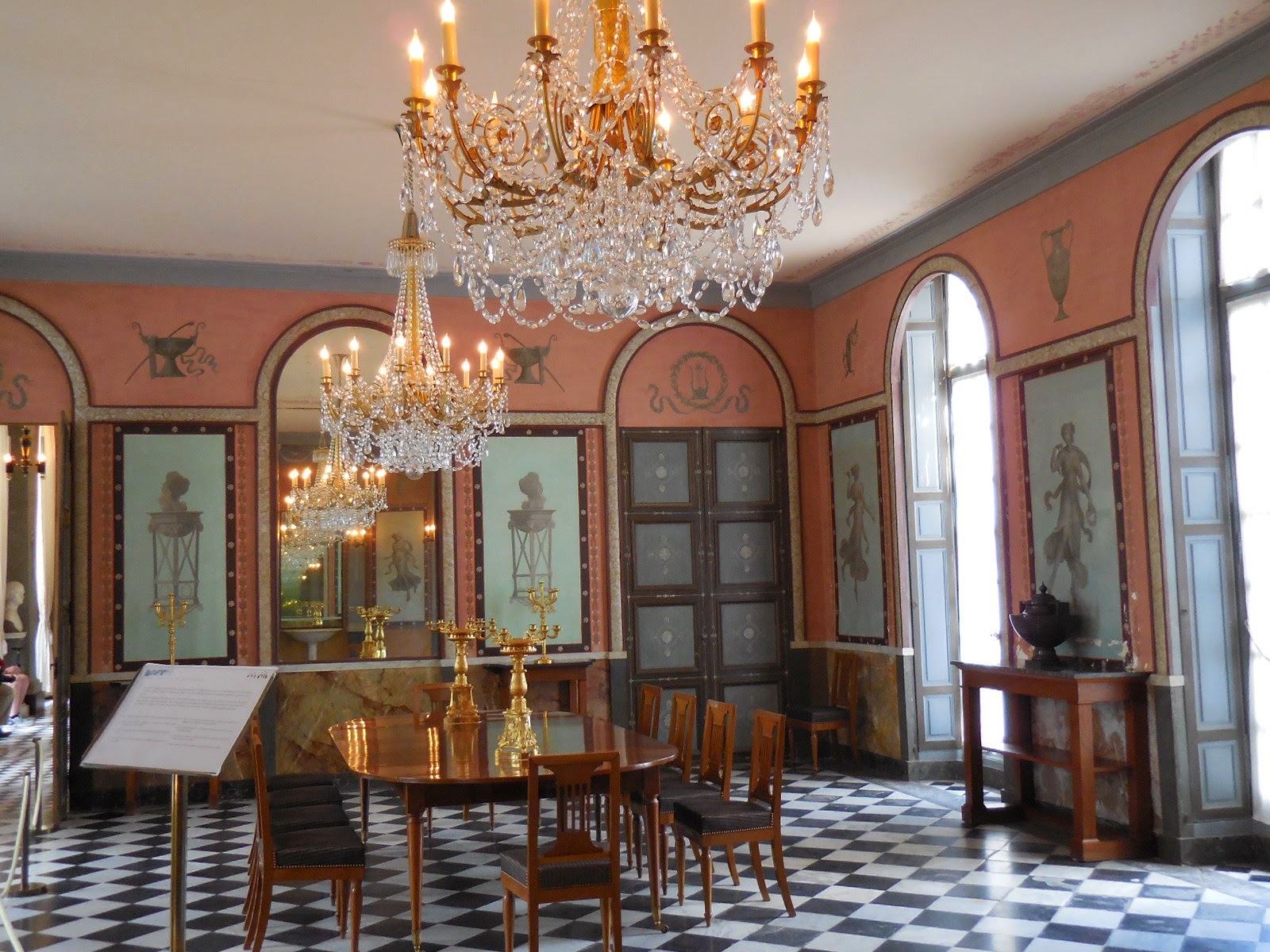
Dining Room

In April, 1814, Napoleon abdicated, turning Paris over to the Allied Powers of Europe and Britain, and going into exile on Elba. In May of 1814, Josephine died at Malmaison, of pneumonia, which developed from a cold she caught while walking in her garden with the Russian Tsar Alexander, one of the victorious allies in the first defeat of Napoleon.

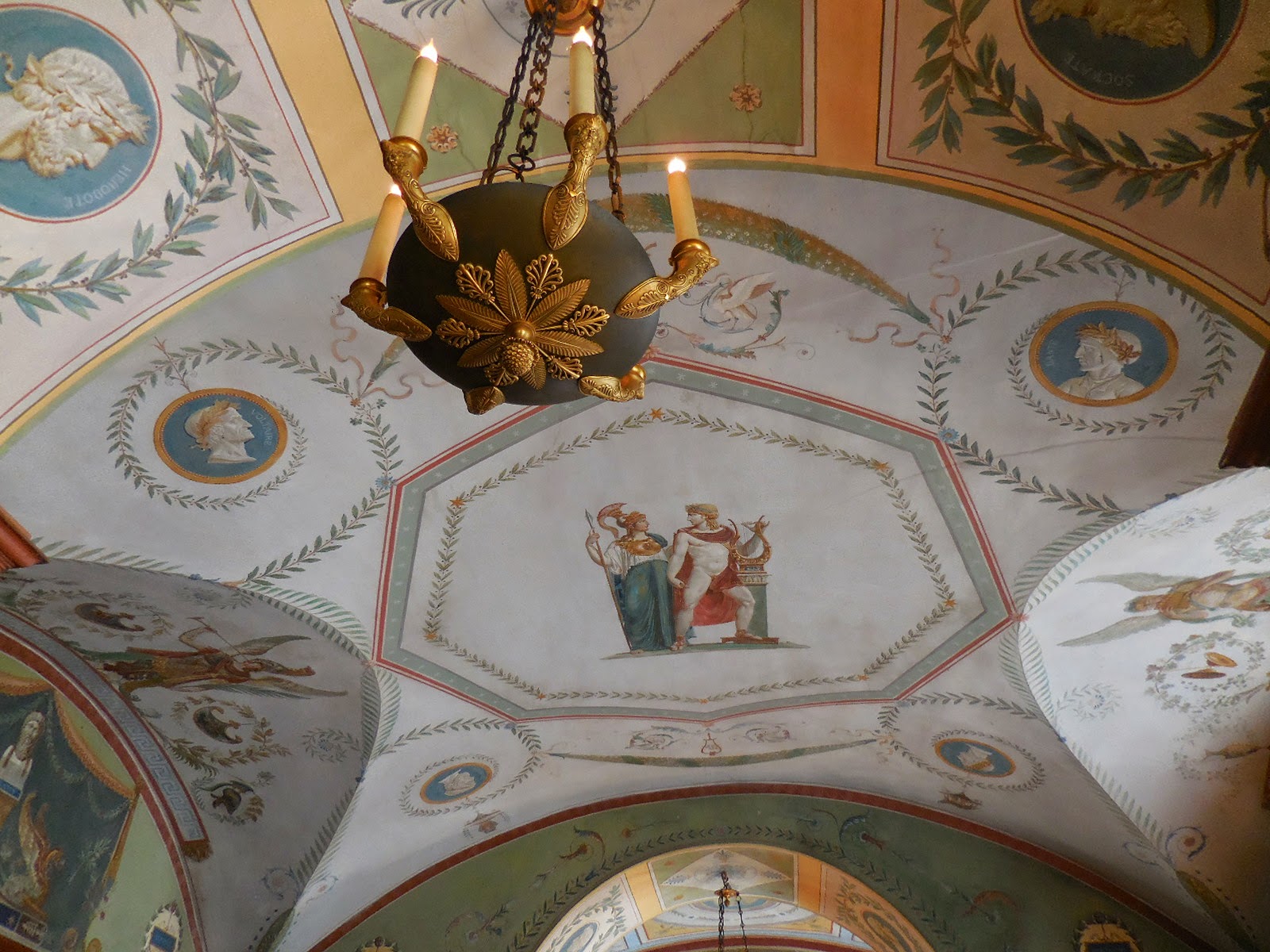
La Salle du Conseil (Council Room)
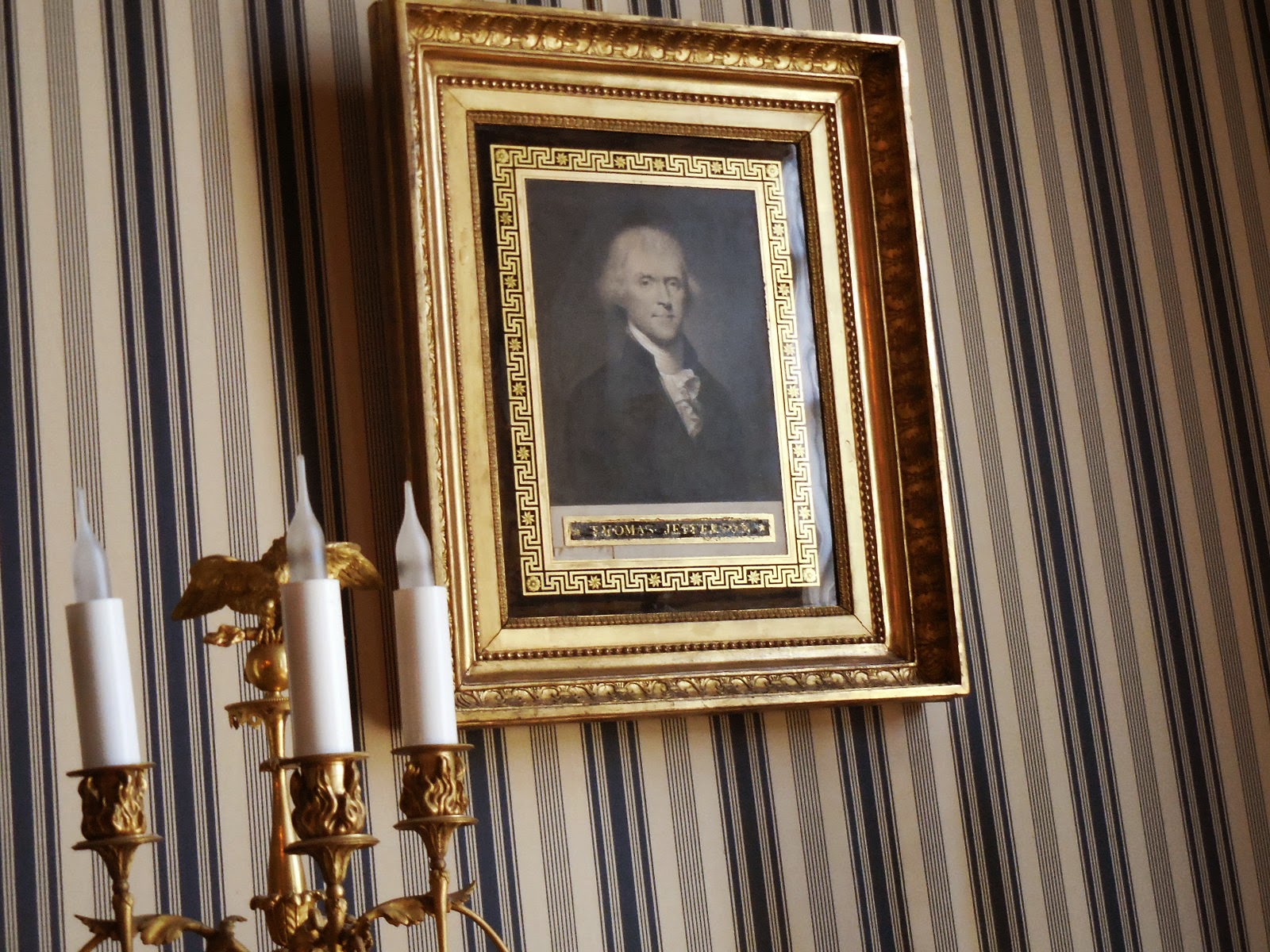
Portrait of Thomas Jefferson, in the Council Room
Napoleon, though not always faithful to Josephine, remained attached to her for the rest of his life, even through his divorce and re-marriage. After her death and before his final exile to St. Helena, Napoleon returned to Malmaison for a farewell visit. 

La Bibliothéque (The Library)


By her first husband, Josephine was the grandmother of Napoleon III, son of her daughter.  She is also an ancestress of numerous European Royals.

So far, all my pictures were taken in rooms on the ground floor of the house, all with doors opening into the gardens. Upstairs were the private chambers of Napoleon and Josephine each with their own apartments, i.e. suites of rooms.

two angles on Le Salon de l’Empereur

La chamber à coucher de l’Empereur

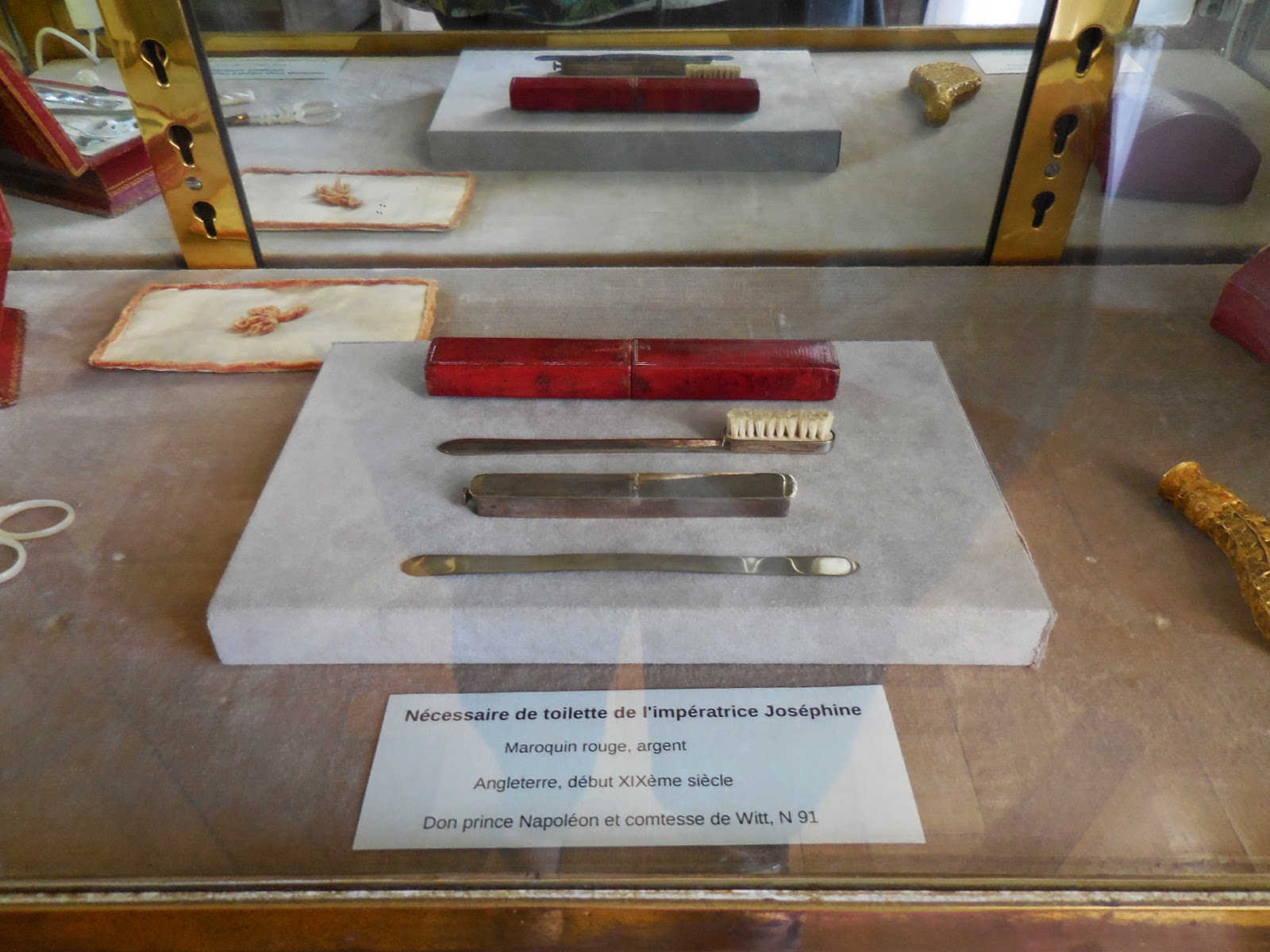
Napoleon’s shaving stand

The two personal apartments are divided by rooms containing treasures the couple accumulated.

Ceremonial Swords
A version of David’s Napoleon Crossing the Great Saint-Bernard Pass

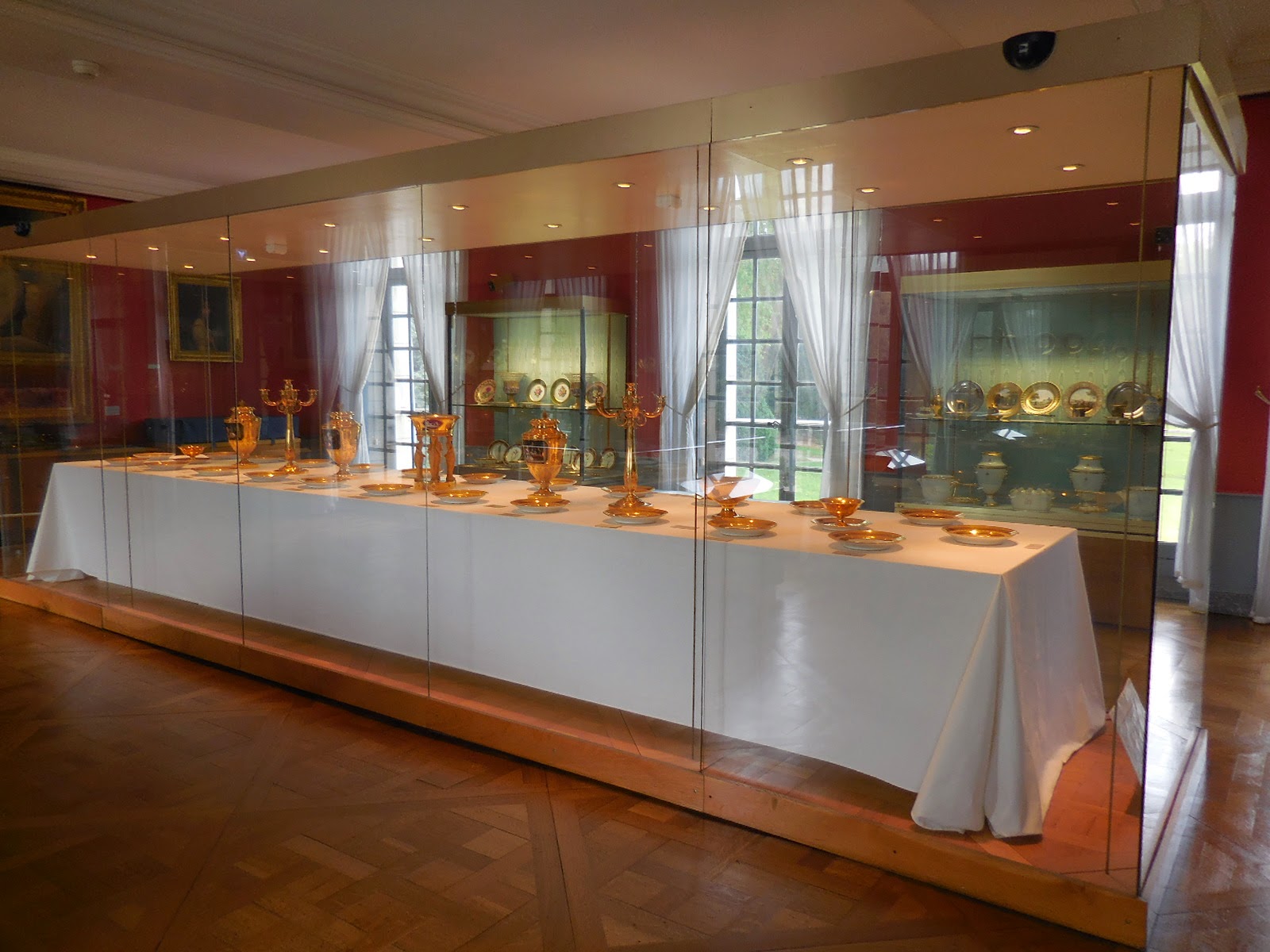
Josephine’s gold table service
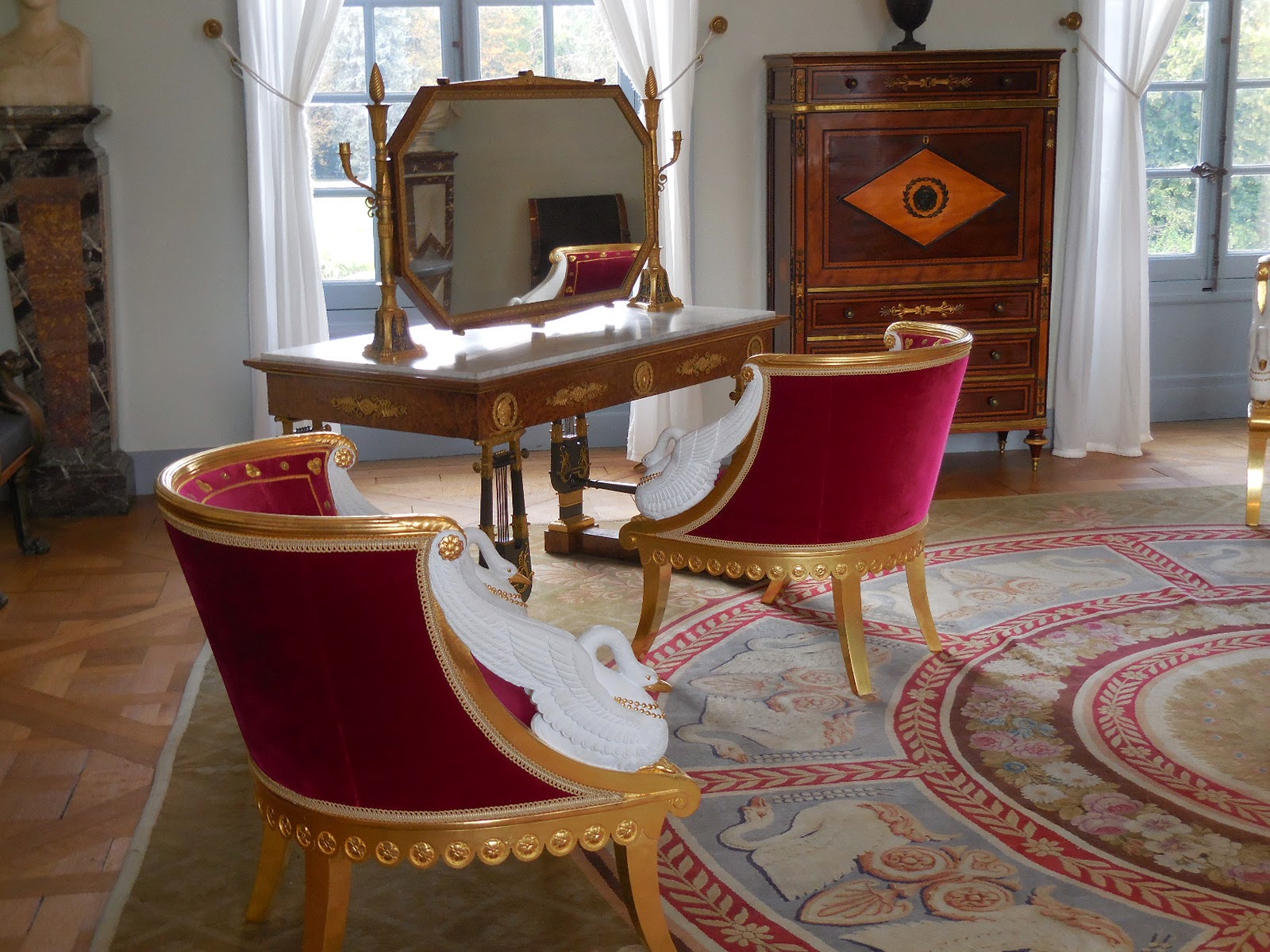
The suite of rooms belonging to Josephine begins with a sitting room filled with red velvet  and gilt chairs with white swan armrests, unique in my experience, Not even the Prince Regent had these! I can only assume that he never heard of them.
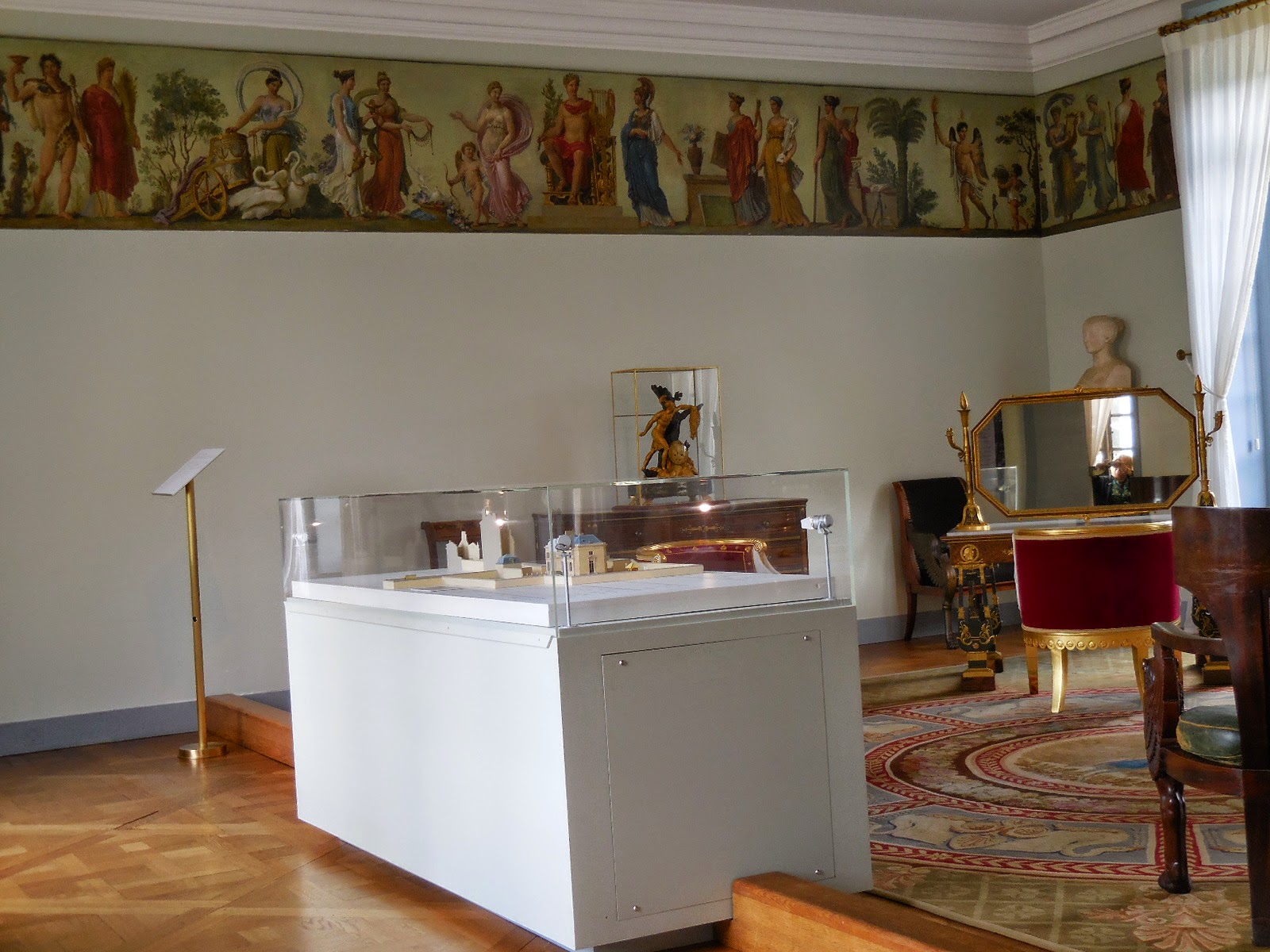
Three Views of the Frieze Room, named for the Greco-Roman  frieze, also featuring swans 
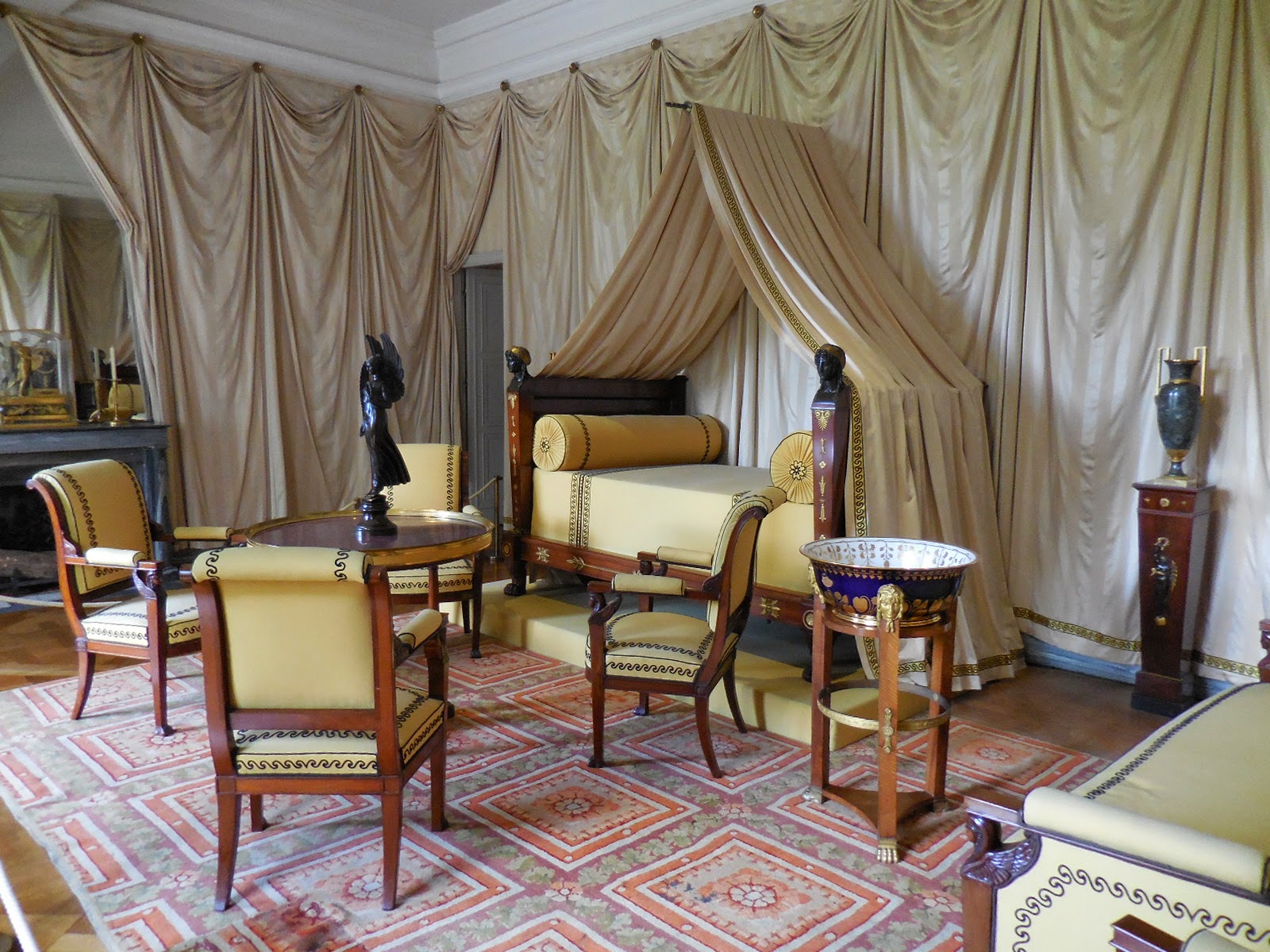
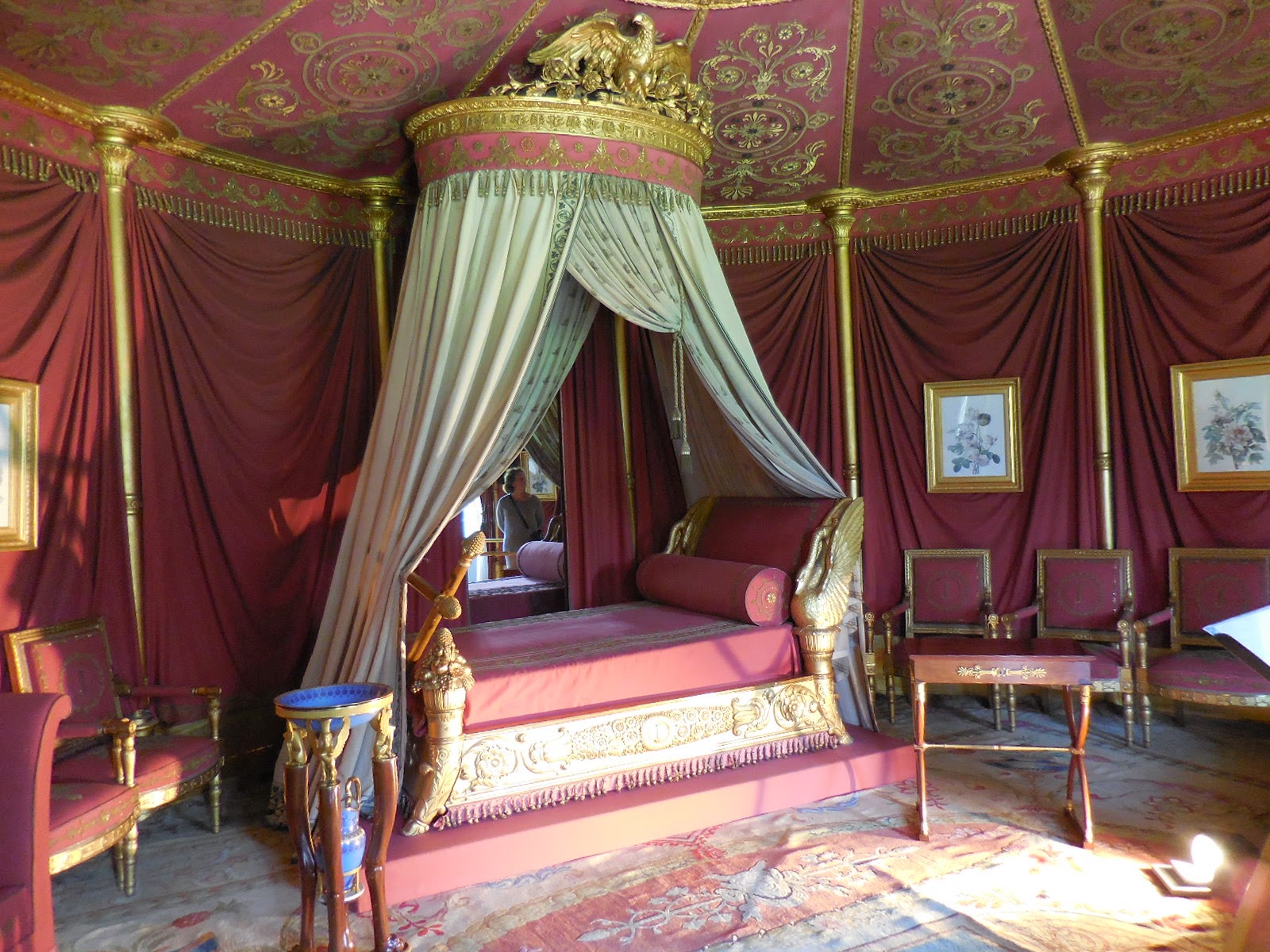
La chambre à coucher de l’Impératrice
Note the Swan theme continues.
Washstand of Mahogany and Sèvres porcelain
Next to the tented bedroom is another bedroom, known as La chamber ordinaire de l’Impératrice and Le Cabinet a toilette.        

After Josephine’s death, son Eugene lived at Malmaison; later it was sold several times before being presented as a gift to the nation of France by Daniel Iffla (known as Osiris), art enthusiast and philanthropist, whose collections can be seen in a small museum on the chateau’s grounds.

More soon on Malmaison’s gardens.
If you want to visit, allow about 90 minutes each way on the Metro (to La Defense) and by bus. Malmaison is currently closed on Tuesdays.

A TOUR GUIDE IN ENGLAND: DAY 6 PART THREE – WHAT WE SAW IN THE CHATSWORTH GARDENS

The Gardens at Chatsworth House are extensive, to say the least. There are 105 acres of gardens and they are full of surprises, with waterworks, sculptures, the maze and a wide variety of plants on show. The gardens have been evolving for the past 450 years, with the Bachelor Duke and Joseph Paxton perhaps having had the largest, surely the costliest, influence on the grounds. In 1811 the 6th Duke (known as the Bachelor Duke) inherited a neglected and fifteen years passed before Joseph Paxton was appointed as head gardener. Paxton proved to be the most innovative garden designer of his era, and remains the greatest single influence on Chatsworth’s garden. 

In addition to the 300 year old Cascade, the Gardens include the gravity-fed Emperor Fountain, above. In 1844, it became known that Czar Nicholas, Emperor of Russia might visit Chatsworth. The Duke thought to welcome the Czar with an even higher fountain than the one at Peterhof (the Czar’s palace in N.E. Russia), and so an existing fountain was renovated. Unfortunately, the Czar never visited Chatsworth, but the new fountain was still named after him. 

Above and below are photos of Blanche’s Vase, on the Long Walk, named for Blanche Georgiana Cavendish, nee Howard, granddaughter of Georgiana, Duchess of Devonshire. Blanche married William Cavendish, 2nd Earl of Burlington, but tragically died at the age of 28 in 1840. Her uncle, the Duke of Devonshire, was left heartbroken by the death of his favorite niece and wrote the following: “There are many things at Chatsworth that I should not have allowed myself to do had I not reposed in the thoughts of being succeeded by a person so indulgent, so much attached to me as Blanche.” (The Garden at Chatsworth‘ by Deborah, Duchess of Devonshire).

The latest restoration project at the Gardens has been conducted on the Trout Stream. You’ll find a short video on the project here.

We’ll be spending an entire day exploring the Chatsworth gardens during Number One London’s 2017 Country House Tour. Our estate guide will share the hidden stories and history of the gardens, including the famed glasshouses built by Joseph Paxton, and a picnic lunch will be served in the gardens. You’ll find complete tour details here