ON THE SHELF: REVIEW OF EMMA HAMILTON: SEDUCTION & CELEBRITY

By Guest Blogger Jo Manning

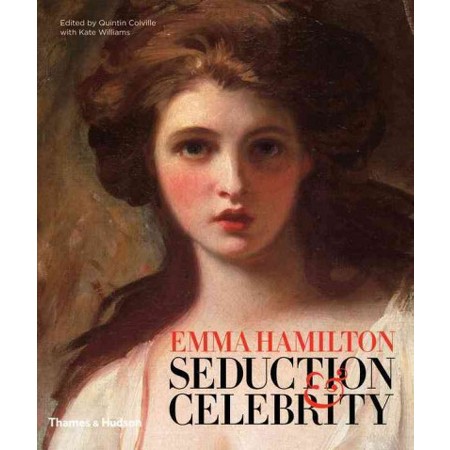
This sumptuous accompaniment – replete with gorgeous full-color and some black and white images — to the exhibition currently showing at The National Maritime Museum in Greenwich (until April 17th) comprises essays by Quintin Colville; Vic Gatrell; Christine Riding; Jason M. Kelly; Gillian Russell; Margarette Lincoln; Hannah Greig; and Kate Williams on different aspects of the controversial Emma Hamilton’s life, legend, and times.

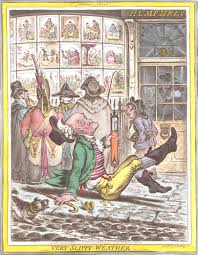
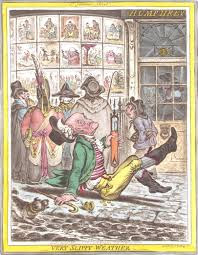
I’ve been to two previous art shows that featured Emma Hamilton and other Georgian celebrities:  Joshua Reynolds And The Creation of Celebrity (at the Tate Britain in 2005), and the George Romney exhibit at the National Portrait Gallery in 2002. Both were exemplary, dedicated to these superb portraitists and their famous subjects. These sitters became instant celebrities owing to the prints of the portraits becoming widely disseminated. (These prints generated a bit of nice income for the painters, as well.) The caricaturist Gillray illustrated the popularity of these prints in his well-known “Very Slippy Weather,”showing Londoners entranced by the latest prints for sale at stationers’ shops.
Emma Hamilton (born 1765-died 1815) was also variously known as Amy/Amey/Emy/Emily Lyon and Emma Hart until she married Sir William Hamilton, British envoy (ambassador) to the Court of Naples, thus becoming Lady Hamilton. She was one of the most controversial – and, yes, notorious — women of her time. Much has been written about her but there remains a good deal of speculation, as well. (Among the best-written biographies and novels of her, in my opinion, are these:  Williams, Kate, England’s Mistress: The Infamous Life of Emma Hamilton, 2006; Fraser, FloraBeloved Emma: The Life of Emma, Lady Hamilton, 2004; and Susan Sontag, The Volcano Lover: A Romance, 1992.)

For starters, she was an unqualified beauty: a perfect oval of a face; thick, wavy, cascading auburn tresses; big-eyed; a rosebud mouth; and a complexion described by one besotted writer as a “velvet skin of lilies and roses”.  Surprisingly tall, with good, square shoulders and a substantial bosom, she defied the “pocket Venus” model prized by prevailing18th century aesthetic standards. A killer combination, this, that pouting baby face and a curvy, womanly figure. Who would not want to paint her? More to the point, who would not want to be her lover?
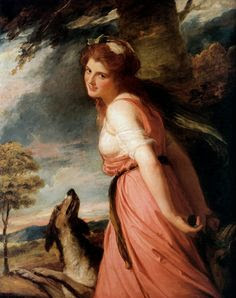
Emma Hart as a Bacchante, circa 1785
Biographies and other writings on Emma find more ample material in the second and last third of her life than in the first. Yes, she grew up poor; yes, she worked in menial positions as a young teen; yes, she moved to London at one point; yes, men began to notice her. What is uncertain is when and how she became a sex worker. Did her mother actually pimp her out at the age of fourteen? Did she work the streets or was she in a brothel? At any rate, we are on more solid ground when she is taken up by Sir Harry Fetherstonhaugh (this name is pronounced “Fanshawe”), a wealthy, dissolute rake who nonetheless has her take up the ladylike sport of horse-riding (“To hounds!”) and teaches her more genteel manners.  (She was said to have a vulgar speaking voice and bad diction; her spelling, from letters that remain, show her bad spelling, but many people then were bad spellers.)
He dumps her, however, when she becomes pregnant. She is about sixteen when she is sent away – and the record is not clear whether or not this child was Fetherstonhaugh’s or Greville’s or another man in their set, Jack Payne — and gives birth to a girl, said to be named Emma Carew. (She was also known as Emma Hartley; after years as a teacher/governess she died alone in Florence and is buried in the English Cemetery. It appears she’d had a sad life.)
After giving birth, she left the child to be raised by a relative in the country and took up with this man in Fetherstonhaugh’s set, Charles Greville, who refused to have another to do with the baby and further set about further “improving” Emma in manners, diction, et cetera. Greville,
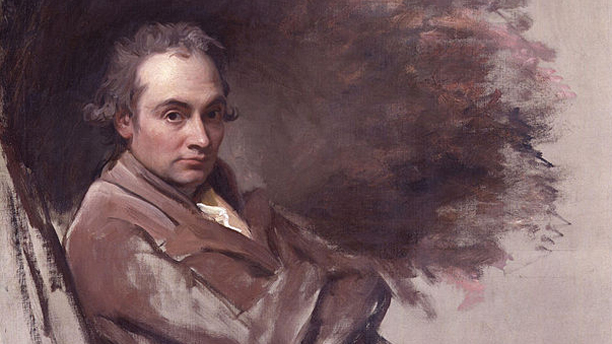
who was the nephew of the very wealthy Lord Hamilton, but not well-off himself, was a bit of a control freak, from all I have read about him and which these essays confirm. It was Greville who introduced her to the portrait painter George Romney….and thereby hangs quite a tale.  And here is Romney looking his moodiest, in an unfinished self-portrait (circa 1781/2):
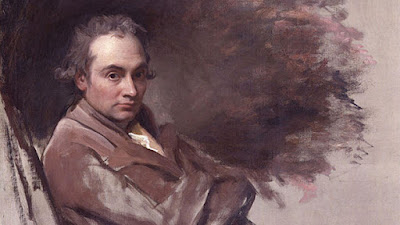
I myself have researched and written about Romney’s obsession with Emma, whom he painted at least sixty times and sketched many more times. At his death, notebooks were found filled with drawings – many unfinished — of his muse Emma Hart – as she was then known. Romney was a strange old cuss. Extremely talented – he became one of the most renowned portraitists in England – but he was prone to serious bouts of depression (it apparently ran in his family). He was a very moody man. Emma Hart enriched his life, and when she was gone from it, he went even more downhill mentally. 
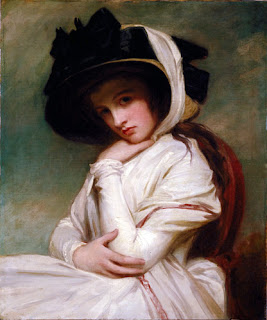
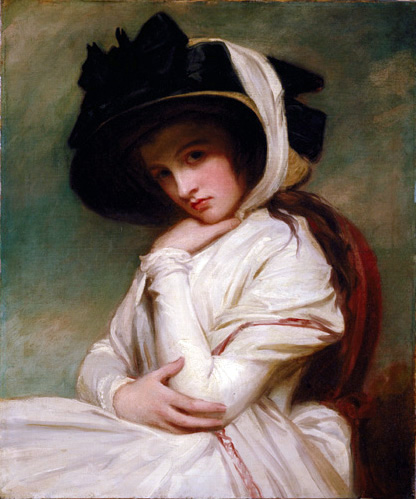
Emma Hart In A Straw Hat
The only quibble I have with the uniformly excellent essays making up this book is in the Christine Riding piece. Emma Hart sat for George Romney some nine years. Nowhere in all the background reading and research I did for my guest blog for Number One London did I find any evidence that there was anyone else in that studio save Romney and Emma. I never saw mention of a “chaperone” nor of any friends/acquaintances of Greville or Emma dropping in. And this is telling, because sittings for artists were social occasions; observers sat and gossiped and were served tea, etc. This was the norm. One sitting could take up to an hour; these sittings were longer. Again, never, ever, did I find any of this normal way of conducting sittings followed by Romney with Emma. Greville, to my knowledge, simply would not allow this.
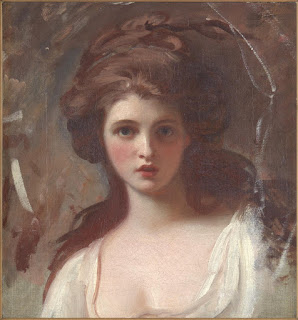
Emma Hart as Circe, painted by George Romney c1782… Exquisite!
Charles Greville was an extremely jealous and controlling man, possessive to a rather sickening degree, in my opinion. Emma Hart was his possession; he did not want to share her with anyone, even in the benign setting of sitting for a portrait. All I read led me to believe that those two, artist and subject, were alone…together. For NINE years! And I wondered, did they become lovers? It’s tantalizing to imagine this, but there is no solid proof. What seems to be evident, however, is that Emma opened up to Romney as she was posing and entertained him by singing and dancing and having fun. (I reckon she did not have much fun in her relationship with Greville, given his rigid personality.)
And, although over the years people have made fun of Emma and her “Attitudes” – i.e., the dramatic poses she struck to entertain guests – there needs to be, I think, an objective re-examination of her talents, both with these poses and with her singing. (She did hang out with theatre people when she was younger and may even have appeared onstage.) Apparently she wasn’t as untalented as so many reported over the years. I found that re-appraisal fascinating…and it confirmed to me that so much of what was written at the time and subsequently thereafter – much of it simply repeating the same anecdotes — was not to be trusted. (I found this to be true when I was writing the biography of Grace Dalrymple Elliott, My Lady Scandalous. There is a lot of misinformation/misinterpretation out there and one has to be cautious.)
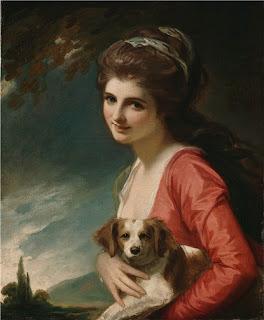
Perhaps my favorite portrait of Emma Hart by George Romney
When Emma Hart was given to Lord Hamilton by his nephew (yes, she was a gift, as she was, after all, his possession), she was eagerly received. Greville was reportedly tired of her and, assiduously searching for a wealthy woman to marry, Emma was in his way. By sending her to Naples on a ruse (oh, yeah, go on ahead, I’ll be joining you directly!), he accomplished his purpose. The much older, lonely man, besotted by her beauty, took her in and eventually proposed marriage to her. (She was 21 when Greville rid himself of her; Hamilton was about 56. They married when Hamilton was 61 years old; his first wife, an heiress, had died before Emma appeared on the scene and he’d been alone for some years.)
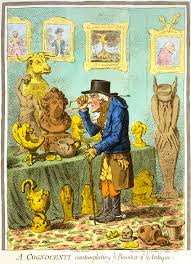
Gillray caricature making fun of Lord Hamilton’s interest in Classical antiquities and volcanoes (he was a renowned amateur volcanologist), with images of Emma and Lord Nelson in the upper left corner, indicating he’d been made a cuckold
Most of you may know the rest of this celebrated story. Emma – now Lady Hamilton and ensconced in luxury far beyond her imagination whe
n she was walking the London streets and/or working in a brothel – met Lord Nelson, the famed British admiral and hero of Trafalgar, and Lord Hamilton – bless his heart – was toast.
The details can be found in the essays, but a last word about Emma’s child(ren) with Nelson is perhaps appropriate here. She had Horatia, who lived to a ripe old age, the wife of a minister and the mother of a slew of children, whose maternity Emma never acknowledged publicly, and possibly one or two other children, one of whom was said to have died very young or at birth.  One or two sources I read in my research implied that there were twin girls, one of whom was sent to an orphanage, the other having died or disappeared. Sadly, it did not appear that Emma was much of a mother (though some sources said she was close to Emma Carew, her first daughter), but there is not much to go on to substantiate what happened to these later, mysterious twins…if they indeed ever existed at all, poor lost babes.
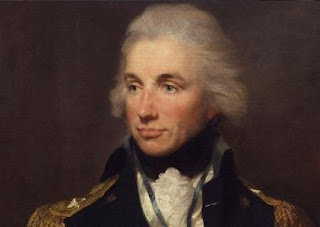
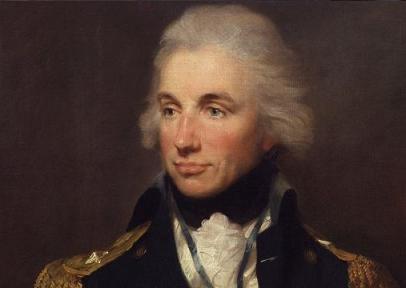
Lord Nelson, Hero of the Battle of the Nile and of Trafalgar
This is quite a wonderful compilation with superb illustrations, fast reading, and an excellent introduction to the life and loves of a singular woman. Enjoy the reading and perhaps shed a tear or two for Emma Hamilton’s last tawdry years. So many women like her wound up in France, dying there, forgotten. (My biography subject died there, as did the actress mistress of King William IV, Dorothy Jordan, along with other discarded women.) Nelson wanted Emma taken care of by the country he’d served so well; well, she wasn’t.
And, if you can, visit the exhibit at the National Maritime Museum in Greenwich, London before it closes. As you can tell from the few sample images here, it is a feast for the eyes.
Quinton Colville’s introductory essay, “Re-imagining Emma Hamilton,” gives an excellent overview of the mythology and reality surrounding this woman; he is the Curator of Naval History at the National Maritime Museum in London. There are six full and informative articles in this companion to the exhibition at the National Maritime Museum, starting with historian Vic Gattrell, who teaches at Gonville & Caius College, Cambridge; his essay is “Sexual Exploitation And The Lure Of London,” a subject on which he has written extensively. Christine Riding holds the position of Head of Arts and Curator of the Queen’s House at the National Maritime Museum; she was previously at the Tate Britain, where she curated 18th and 19thcentury British art; her essay is “Romney’s Muse: A Creative Partnership In Portraiture”.
Jason M. Kelly takes us to the middle part of Emma Hamilton’s career, to Naples, where, as the wife of the British ambassador, she moves in very different circles and we take a look at “A Classical Education: Naples And The Heart of European Culture.” Kelly is an associate professor at Indiana University-Purdue and directs the Arts and Humanities Institute there. Gillian Russell penned “International Celebrity: An Artist On Her Own Terms”; Russell writes on fashionable women and on theatre in Georgian London.
Rounding out these essays are Margarette Lincoln (“Emma And Nelson: Icon And Mistress Of The Nation’s Hero” and Hannah Grieg on Emma’s last sad years with “Decline And Fall: Social Insecurity And Financial Ruin.” ) Lincoln is a specialist in English naval history and served as Deputy Director of the National Maritime Museum for several years; she is now a visiting professor at the University of London. Grieg is an academic who is now at the University of York, lecturing on 18thcentury British social, cultural, and political history; much of her research centers on the lives of the elite class in that society.
A special treat at the end of this fascinating book is biographer Kate Williams’ take on “Emma Hamilton In Fiction And Film.” Williams is a professor of history at the University of Reading and author of England’s Mistress.
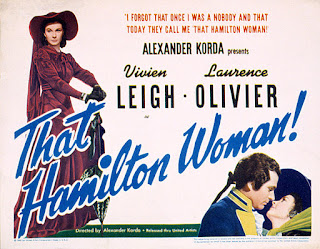
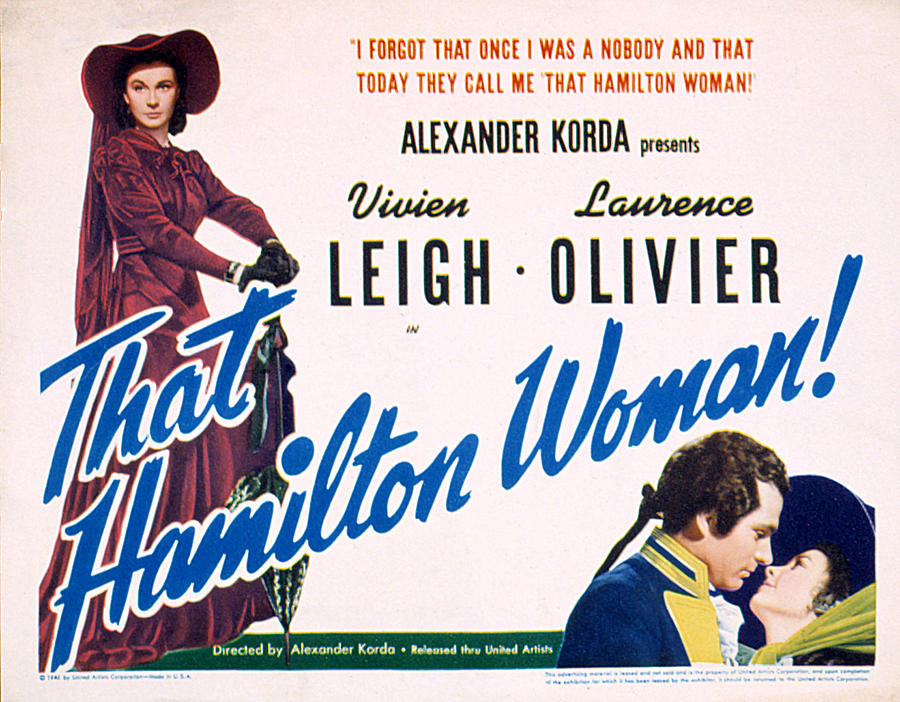
Poster for Vivien Leigh/Laurence Oliver biopic That Hamilton Woman!

EMMA HAMILTON:  SEDUCTION & CELEBRITY, edited by Quintin Colville with Kate Williams, Thames & Hudson/Royal Museums Greenwich, 2016, 280 pages

The Story of "Mad Jack" Mytton

A true Regency eccentric, John ‘Mad Jack’ Mytton was born at Halston in 1796. He inherited a fortune worth about £500,000 a year by today’s standards, but died in 1828 at the King’s Bench debtors’ prison in Southwark at the age of just thirty-seven. Alas, we are getting ahead of ourselves . . . .
Young Squire Mytton, expelled from both Westminster and Harrow, arrived for studies at Cambridge University with “2,000 bottles of port to sustain him during his studies.” You will not be surrpised to learn that he failed to graduate. Mytton went on to drink six bottles of port a day, although he was known to drink eau de cologne when brandy was not readily available. Mytton enjoyed country pursuits such as racing, driving and hunting, but he was also civic minded – he ‘invested’ £10,000 to become MP for Shrewsbury by paying ten pounds each for votes, but once elected he spent less that half an hour in the House of Commons.
Madcap pranks made Mytton a legend in his own lifetime and it was said that as a whole, Mytton’s life amounted to a “series of suicide attempts.” A drunken friend was put to bed with two bulldogs and a bear. Mytton went duck shooting by moonlight on Halston’s frozen lake, dressed in only his nightshirt. Disguised as a highwayman, complete with his blazing pistols, he ambushed departing guests on the Oswestry road. In 1826, after winning a bet, he rode his horse into the Bedford Hotel in Leamington Spa, up the grand staircase and onto the balcony, from which he jumped, still seated on his horse, over the diners in the restaurant below, and out through the window onto the Parade. During a visit to France, Mytton set fire to his night shirt in an effort to cure himself of the hiccups. The drastic step did end the hiccups, but left Mytton with serious burns to his upper body.

Mytton once rode a bear into his drawing room in full hunting costume
One biographer notes that Mytton once rode a bear into his drawing room in full hunting costume. “The bear carried him very quietly for a time; but on being pricked by the spur he bit his rider through the calf of his leg.” Mytton owned thousands of dogs and cats during his lifetime, some of which he had dressed in costumes. Perhaps his favorite pet was a horse named Baronet, who had full run of the Hall and who often lay down and napped before the fire.
                                       Halston Hall, Shropshire – More info on their website
‘Mad Jack’ lost his money, but not his friends. Three thousand people attended his funeral. He is buried in the Chapel at Halston, but his ghost is said to appear annually on Mytton’s birthday, September 30th, at theMytton & Mermaid Hotel at Atcham. His funeral procession stopped at the Mytton, then a coaching inn, on the way to Halston Chapel. Mad Jack also lives on today in Mad Jack Mytton Way, a seventy mile route through some of rural England’s most unspoilt and beautiful countryside. The route starts near Highley and ends at the bridge over the River Terne in Llanfair Waterdine on the Welsh border and is regularly used by riders, cyclists and walkers.
Next time,  more Mytton anecdotes from Famous Racing Men by Willmott-Dixon Thormanby (1882)

It Isn't Hoarding if It's Books ! And Music !! The Role of Georgian and Regency Women in the Preservation of England's Musical Heritage


Henry Purcell (10 September, 1659 – 21 November, 1695) is considered England’s greatest composer of the Baroque Era. Named one of the first British composers of significance, he was often called “Orpheus Britannicus”and his contribution to the musical heritage of his native land is immeasurable.

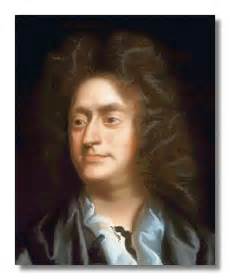
Henry Purcell
Imagine then, the excitement stirred in the musical world in 1964, when Nigel Fortune, Purcell scholar, announced the discovery of a previously unknown ode by Purcell in a four-volume manuscript collection of the composer’s works at Tatton Park in Cheshire. ‘The Noise of Foreign Wars’ is preserved as a fragment in a bound collection first copied by Philip Hayes (1738-1797) Professor of Music at Oxford. After Hayes’s death, the collection was owned by Samuel Arnold (1740-1802) composer and conductor of the Academy of Ancient Music. In May of 1803, the collection was purchased by Mark Masterman Sykes of Sledmere in Yorkshire.

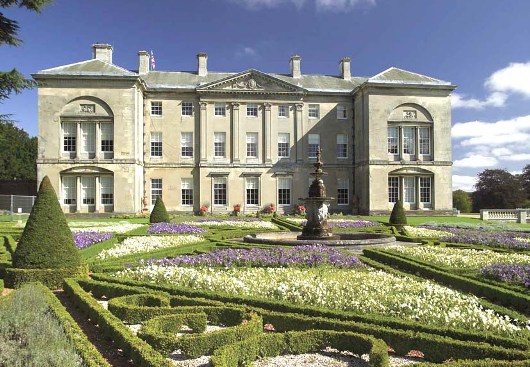
Sledmere House – Yorkshire
How did it end up in the music room at Tatton Park? How did all of these men – a music professor, a composer and conductor, and a wealthy landowner in Yorkshire manage to save such a treasure so that Nigel Fortune might unearth it three hundred years after it was written? They didn’t. Well, they didn’t do it by themselves. It took….
A woman.
In the late seventeenth century, gentlemen of means began to collect books and art to display in their homes as a mark of their wealth and status. After all, no young man returned from his Grand Tour without some sort of souvenirs. (Preferably the sort for which one did not need to visit one’s physician.) Long galleries in which to display paintings and works of art and libraries became essential parts of the Society town-house and the country “ancestral pile”. Some homes were even designed or redesigned to feature these architectural aspects prominently.
In 1809, the biographer Thomas Frognall Dibdin called the obsessive collection of books by the nobility ‘bibliomania’. In 1812, an exclusive bibliophile society, the Roxburghe Club, was formed. One of its founding members? Mark Masterman Sykes. He was best known for his collection of books and engravings. By the end of 1810, his library at Sledmere was considered one of the finest in England.
And in 1807, Mark Masterman Sykes gifted his four-volume collection of Purcell’s music to his newly married sister, Elizabeth Sykes Egerton, of Tatton Park.  (You thought I was never going to get there, didn’t you?)

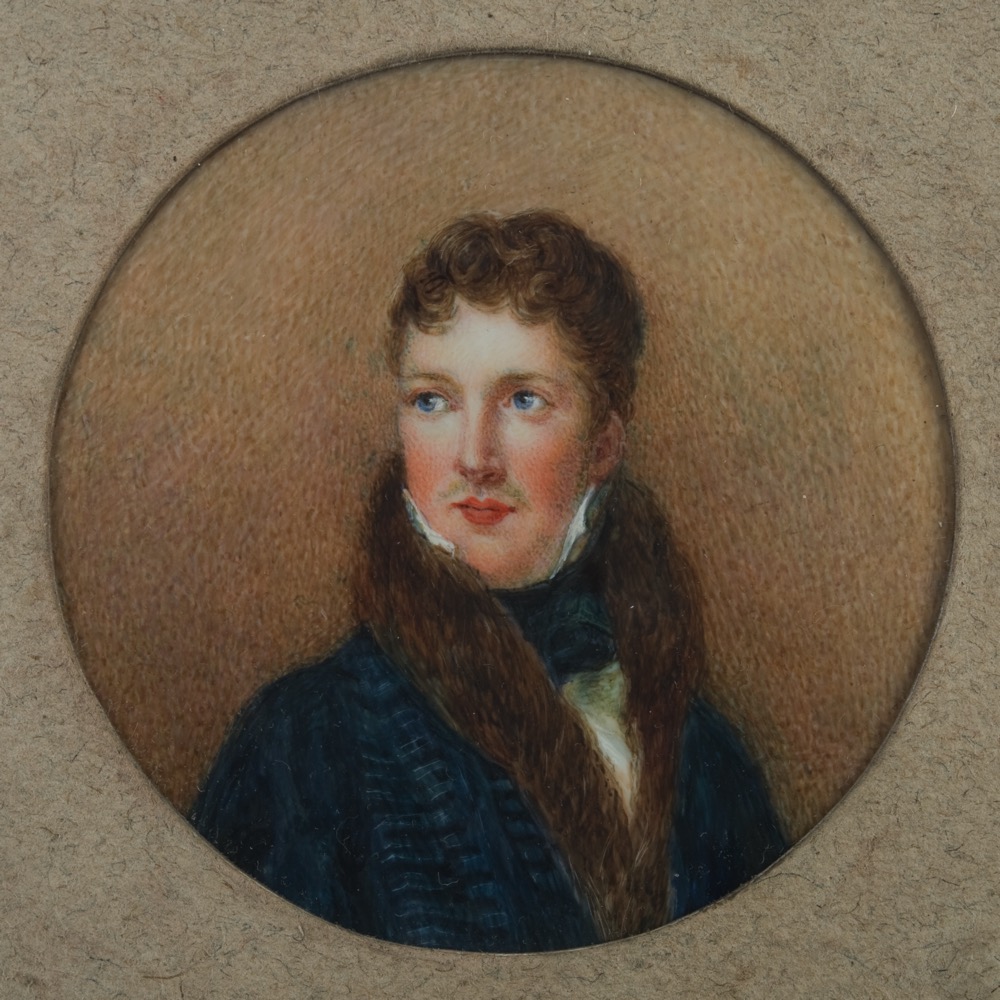
Elizabeth Sykes, (Mrs Wilbraham Egerton), c. 1795
portrait miniature by Abraham Daniel of Bath
Elizabeth Sykes was an accomplished musician at an early age. As a young girl, her music collection was like that of any musically inclined lady. Collections of the sort made by the accumulation of pieces with social occasions and entertainment in mind. Not to be taken seriously, or so the majority of Society (men) believed.
Her first music books are dated 1790 and are inscribed with her name – Miss Sykes. They consist of pre-ruled oblong copybooks into which she copied music from her piano lessons, folk songs, and catches. One book actually has two handwritings in it – one starts at one end of the book and the other starts at the other end. This was a common practice in copying music, especially when one wanted to divide the types of compositions – say sonatas at one end and hymns at the other. In some instances, a composition might be started, messed up and started over in a better fashion to the finish.
Her copybooks from 1799 and 1801 were larger pre-ruled music books from the London music publisher Robert Birchall. The covers were a bit more elegant with pages for her to inscribe her name and the details of the music in each one. There were vocal ornaments and notations in these in multiple hands. Even entire pieces appear to be copied by others. This can be attributed to the common practice of passing around these books to friends, the same way young ladies today might pass around CD’s or I-pods.
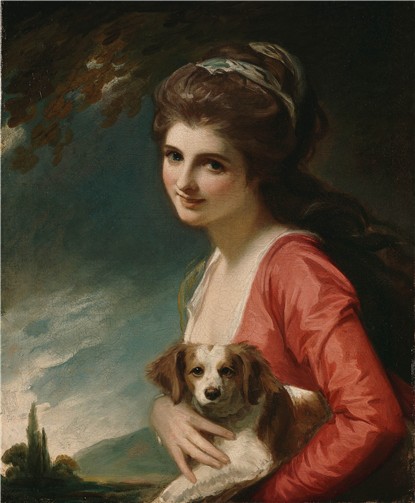
Elizabeth Sykes also purchased a great deal of printed sheet music. Fortunately for us, she signed all of her music as it was purchased. Therefore, it is easy to differentiate between the music she bought whilst unmarried, and those pieces she purchased after she married her cousin, Wilbraham Egerton, in 1806 and moved her collection to Tatton Park. (I know. She married her cousin, but he did play the cello.)

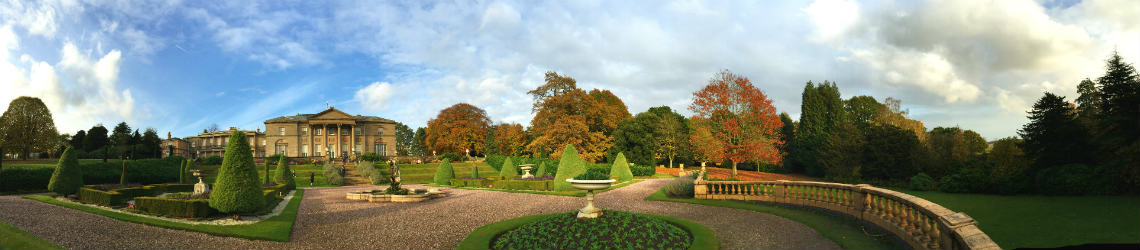
Tatton Park – Cheshire
The collection of printed sheet music, because it was the realm of women, did not signify as collecting the way the accumulation of books and art did. However, these collections often contain copies of popular songs printed the night after their first performance at Vauxhall or at one of London’s theatres, never to be seen again. It is thought researchers have only begun to scratch the surface of many of these collections.
Elizabeth had a great deal of her music bound in indexed volumes. Her diligence and attention to her collection produced folio compilations as handsome as the albums of engravings and illustrated books on antiquities to be found in any bibliophile’s library. Her valuation of her music resulted in it being shelved and cared for the same way her husband’s and brother’s collections of books were. 

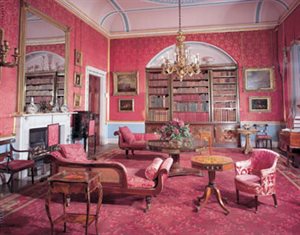
Music room at Tatton Park
As a result, in addition to the Purcell volumes gifted to Elizabeth by her brother, the music at Tatton Park includes rare numbers of Benjamin Goodison’s projected complete edition of Purcell begun in 1789. Nearly an entire shelf contains Samuel Arnold’s collection of Handel’s complete works. It is the first complete edition of any composer, pre-dating the Mozart Gesamtausgabe.

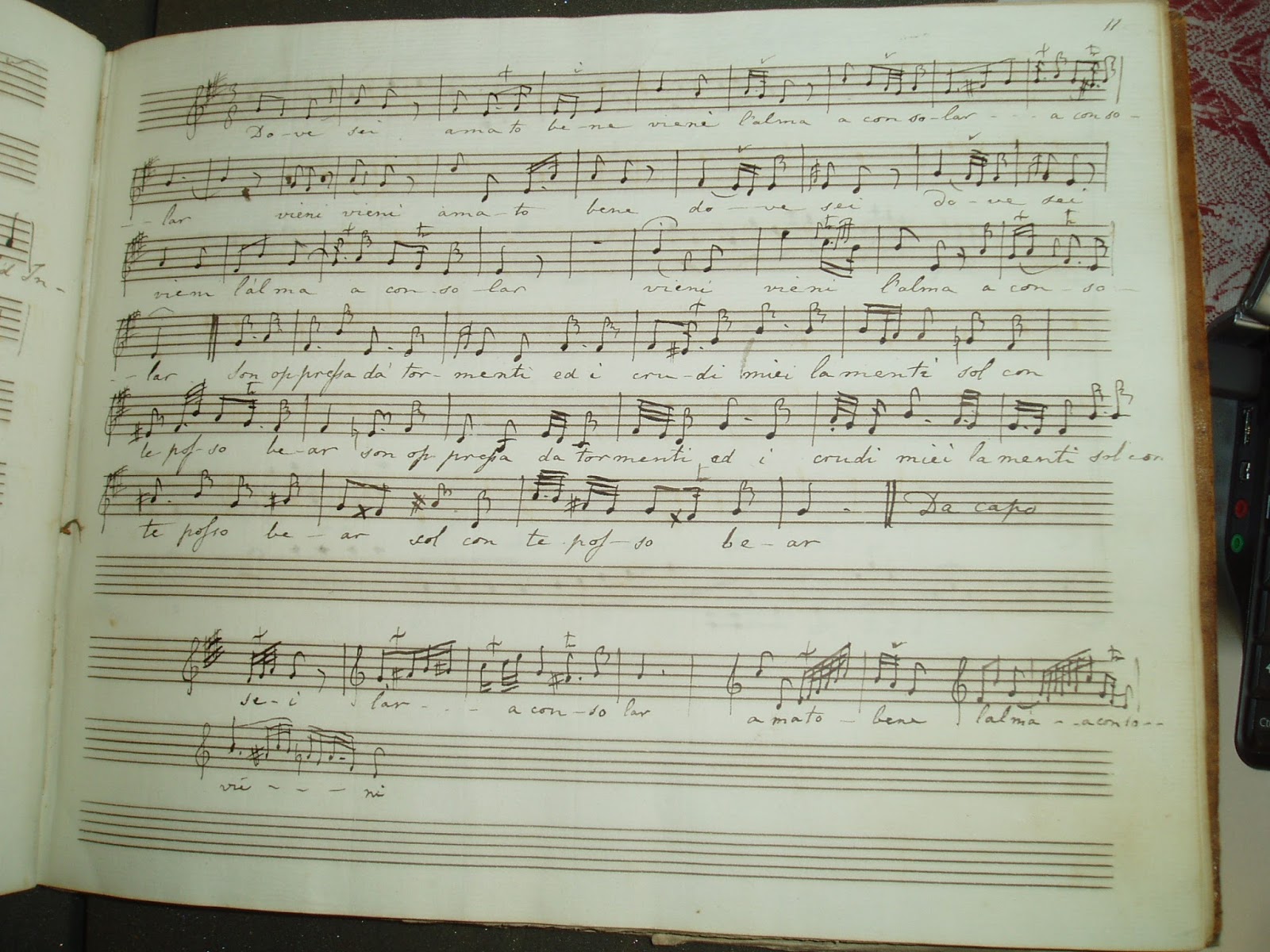
Dove sei by G.F. Handel (from the Samuel Arnold collection at Tatton Park)
I have gone into great detail about the collection of music at Tatton Park and the incalculable debt we owe Elizabeth Sykes Egerton. Like those researchers who have renewed the world’s interest in these collections, I have only scratched the surface of this fascinating topic. There are impressive collections of music accumulated and preserved by Georgian and Regency women all over England.  Lydia Hoare Acland’s collection at Killerton House in Devon. Mary Egerton Sykes music books at Sledmere in Yorkshire. Over two thousand items in Miss Cornewall’s collection at Mocca’s Court in Herefordshire. 
The list goes on and musicologists are prowling the libraries and collections of stately homes all over England in search of the next great musical treasure. All tucked safely away by those accomplished young ladies, bluestocking women, and musical dragons who loved their music enough to preserve it for all of us.
I’ll be posting more on this subject in my next post. Not only more about the role women played in preserving England’s musical heritage, but also how their love of music changed the architectural design of many houses built during the late Georgian and Regency eras to accommodate that love.  

AUTHOR LOUISA CORNELL JOINS OUR FAMILY


Victoria and I are thrilled to announce that our dear friend Louisa Cornell has joined the Number One London editorial team. We couldn’t be happier! Many of you will already know Louisa who, in addition to her editorial work and her own writing projects, is also President Elect of the Beau Monde Chapter of Romance Writer’s of America.

Louisa has been a friend of this blog since it’s beginnings six years ago and has been a friend to Victoria and myself for a considerably longer period of time (decades!). 


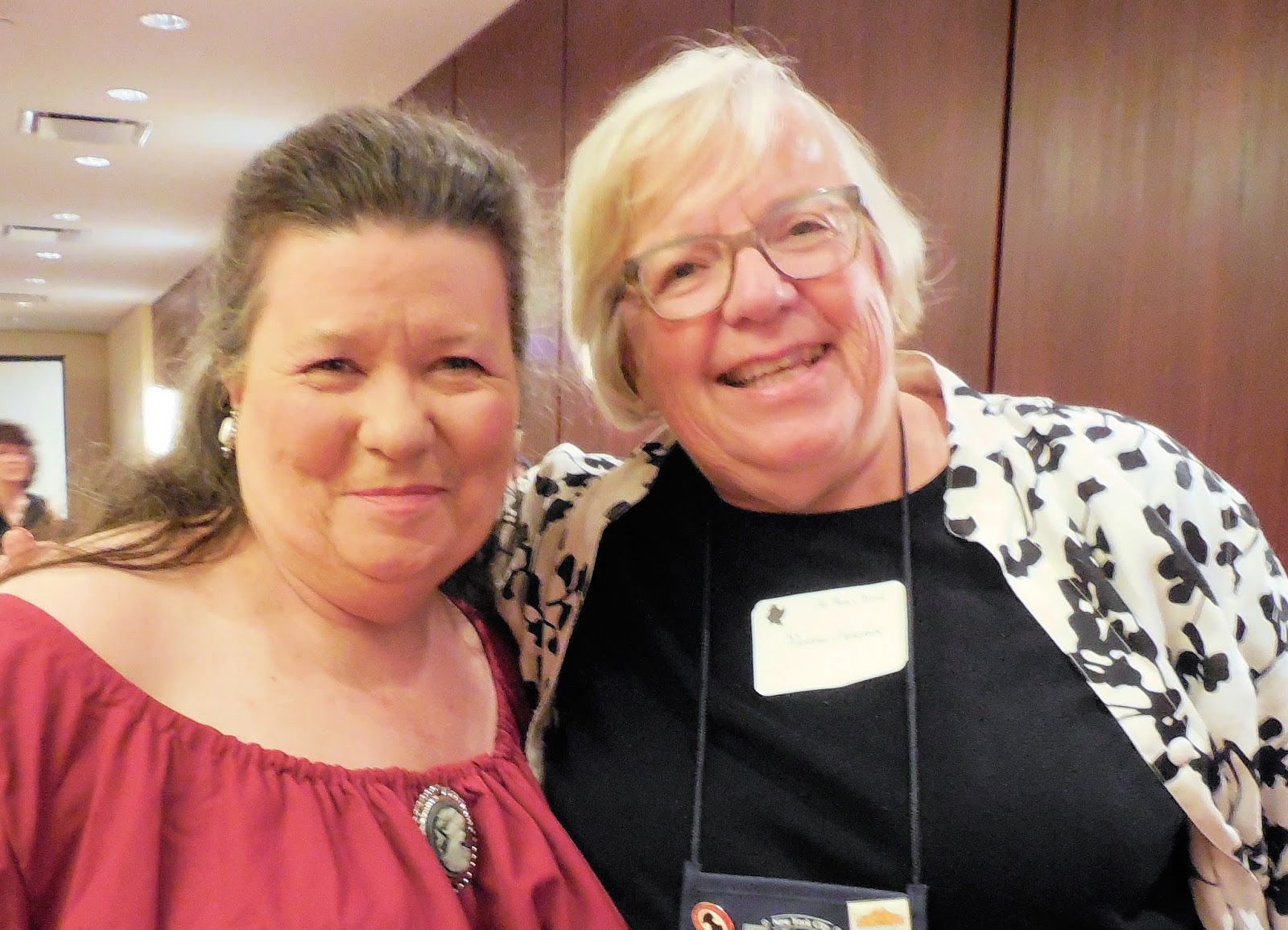
Louisa, on the left, with Victoria at one of the many writing conferences they’ve attended through the years.

As a champion of romantic fiction and all things British, Louisa will be bringing her unique talents and her passion for researching the history of Great Britain to Number One London soon and you can look forward to reading her enlightening posts, reviews of fiction and non-fiction books and to many surprises yet to be announced.


Welcome Louisa!


And a note from Louisa –

I cannot begin to tell you what a thrill and honor it is to join the Number One London team! I think I’ve spent so much time loitering about here the last six years, Victoria and Kristine have decided to put me to work. And I could not be happier! This blog has been and continues to be a delightful respite from the everyday world, a lovely neverending vicarious vacation to the UK, and a source of entertainment and enlightenment for all who love 18th and 19th century England and the romances set in those eras. I look forward to contributing in my own small way to the myriad charms enjoyed by the most discerning, supportive, and loyal denizens on the web – Our Visitors!

Thank you so very much, Kristine and Victoria!
And thank you to Number One London’s Fabulous Followers!


And while we’re at it, Victoria, Kristine and Louisa would like to thank all of our guest bloggers who have contributed to the blog in the past. Our most prolific (and much loved) pal, author Jo Manning has been providing guest posts to Number One London since the beginning, with many of her posts featuring 18th and 19th century artists and their sitters. Look for more book reviews and posts from Jo coming soon. Over the past year, we’ve welcomed guest posts from the following authors: Abigail Dane, Marilyn Clay, Louise Allen, Diane Gaston (Perkins), Beth Elliot, Cheryl Bolen, Amanda McCabe, Tracy Grant, Kerryn Reid and Michelle Styles. If you’ve uncovered an historic tidbit you’d like to post about, or a favourite his
toric person, place or thing, please do get in touch. We’d love to add you to our roster of guest bloggers. 

GLIMPSES OF KING WILLIAM IV AND QUEEN ADELAIDE – PART THREE

Boston House, Brentford

Our series on the lives of King William IV and Queen Adelaide continues with excerpts from a book entitled, Letters the Late Miss Clitherow of Boston House, Middlesex, With A Brief Account of Boston House and the Clitherow Family, edited by Rev. G. Cecil White. As the Reverend himself states in his preface: “The following pages are mainly compiled from certain letters by Miss Mary Clitherow, which have come into the editor’s possession. They afford glimpses of the Court at that time, with reference not so much to public functions as to their Majesties’ more private relations with persons honoured with their friendship.”
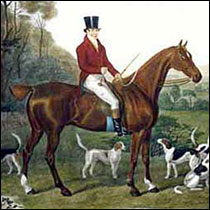
Our next glimpse of their Majesties is not from, but at Boston House. This unsought honour was rather deprecated, though thoroughly appreciated by their hosts, who, in spite of their intimacy with the King and Queen, never made any pretension to be more than simple gentlefolk. Colonel Clitherow was the first commoner whom William IV so honoured, probably the only one, and instances of other monarchs doing the like must be few and far between. In this case, doubtless, both their Majesties regarded it as an act of simple friendship, and not in any way as one of condescension.

'BOSTON HOUSE, 'July 10, 1834.

'On June 28, 1834, their Majesties honoured old Boston House with their company to dinner. They came by Gunnersby and through our farm at our suggestion; it is so much more gentlemanly an approach than through Old Brentford.

'The people were collected in numbers and Dr. Morris's school, and they gave them a good cheer. We then let the boys through the garden into the orchard by the flower-garden, where my brother had given leave for the neighbours to be, and it seemed as if two hundred were collected.

'We had our haymakers the opposite side of the garden, and kept the people, hay-carts, etc., for effect, and it was cheerful and pretty. The weather was perfect, and the old place never looked better.

'They arrived at seven, and we sat down to dinner at half-past. During that half hour the Queen walked about the garden, even down to the bottom of the wood. The haymakers cheered her, and had a pail of beer, and when she came round to the house, instead of turning in she most good-humouredly walked on to the flower-garden, and stood five minutes chatting to the party, which gave the natives time to get her dress by heart. It was very simple--all white, little bonnet and feathers.

'The King had a slight touch of hay asthma, the Princess Augusta a slight cold, and therefore they declined going out, which separated the party, and was a great disappointment to the people. We had police about to keep order, the bells rang merrily, and all went well. We received them in our new-furnished library.

'When dinner was announced the King took Jane, my brother the Queen, and they sat on opposite sides, the Duchess of Northumberland[*] the other side of the King, Lord Prudhoe[**] the other side of the Queen, General Clitherow and General Sir Edward Kerrison top and bottom, and the rest as they chose--Princess Augusta, Lord and Lady Howe, Lady Brownlow,[***] Lady Clinton,[****] Lady Isabella Wemyss, Colonel Wemyss, Miss Clitherow, Miss Wynyard, Mrs. Bullock, and Mr. Holmes. That makes nineteen. The Duke of Cumberland[*****] was to have been the twentieth, but Mr. Holmes brought a very polite apology just as we were going in to dinner. The House of Lords detained him.


Princess Augusta Sophia, sister of King William IV

'As to the dinner, it was so perfect that it was impossible to know a single thing on the table, and that, you know, must be termed a proper dinner for such a party. My brother gave a carte blanche to Sir Edward Kerrison's Englishman cook, and, to give him his due, he gave us as elegant a dinner as ever I saw. Our waiting was particularly well done--so quiet, no in and out of the room. Everything was brought to the door, and there were sideboards all round the room, with everything laid out to prevent clatter of knives, forks, and plates. Etiquette allows the lady's own footman in livery, and we had ten out of livery, the King and Queen's pages, seven gentlemen borrowed of our friends, and our own butler. They all continued waiting till the ladies left the room.

'We were well lit, wax on the table and lamps on the sideboards, and many a face I saw taking a peep in at the windows. The room was cool, for the Queen asked to have the top sashes down.

'The King was not in his usual spirits. He said had it been the day before he must have sent his excuses. The Queen was all animation, and the rest of the party most chatty and agreeable. The King bowed to the Queen when the ladies were to move.

'Our evening was short, as they went at half-past ten. The Princess played on the piano, and my brother and Mrs. Bullock sang one of Ariole's duets at the Queen's request. When they went the sweep was full of people to see them go, and their Majesties were cheered out of the grounds.
King William IV

'We had with us our little nephew Salkeld,[*] whom my brother puts to Dr. Morris's school. H e came in to dessert, a day the child can never forget. The King asked him many questions, which he answered distinctly, with a profound bow, and then backed away. He looked so pretty, for the awe of Royalty brought all the colour to his cheeks. I felt rather proud of him, he did it so gracefully. The Queen told him she hoped he would make as good a man as his excellent uncle. After dinner the Princess Augusta called him to her in the drawing-room, saying, "I like that little fellow's countenance; he is quite a Clitherow." She talked to him of cricket, football, and hockey, telling him when she was a little girl she played at all these games with her brother, and played cricket particularly well.

'That we are proud of this day we cordially own, for my brother is the first commoner their Majesties have so honoured; but we feel we ought not to have done it. When Jane, with her honesty, told the Queen we were not in a situation to receive such an honour, her answer was: "Mrs. Clitherow, you are making me speeches. If it is wrong I take the blame, but I was determined to dine once again at Boston House with you.'

'The absurd conjecture of people at the expence of the day to my brother induces me to tell you what it actually was, as we should be ashamed at the sum guessed at. I have made the closest calculation I possibly can, which includes fees to borrowed servants, ringers, police, carriage of things from and to London, and I have got to L44. Never was less wine drank at a dinner, and that I cannot estimate, but L6, I think, must cover that. We had two men cooks, for he brought his friend, and we got all they asked for. Really, I think we were let off very well at L50.

[*] Wife of Hugh, third Duke, and daughter of the first Earl Powis. She was governess to H.R.H. the Princess Victoria, our late gracious Queen.

[**] Algernon Percy, second surviving son of the second Duke of Northumberland, F.R.S., and Captain R.N.; born 1792. Created Baron Prudhoe 1816. On the death of his brother he succeeded to the dukedom, which, on his death in 1865, passed to his cousin, the second Earl of Beverley.

[***] Emma Sophia, daughter of the second Earl of Mount Edgecumbe; born 1791, married, 1828, the first Earl Brownlow. She was Lady of the Bedchamber to Queen Adelaide.

[****] Widow of the seventeenth Baron Clinton, Lady of the Bedchamber to Queen Adelaide. In 1835 she married Sir Horace Beauchamp Seymour, K.C.H.

[*****] He became King of Hanover on the death of William IV.

[*] He became a hero in the Indian Mutiny, losing his life in volunteering to blow up the Cashmere Gate at Delhi in 1857.


Queen Adelaide

AFTER a short illness, William IV. died at Windsor Castle on June 20, 1837. On July 17 Miss Clitherow wrote as follows:

'Thank you very much for writing to me. I always enjoy your letters, and delight to hear from you. I feel I did not deserve it, so much time has elapsed since I wrote to you. But I dislike writing when the spirits are below par, and how could they be otherwise with the afflicting event which has befallen the country? Great were our apprehensions for the dear Queen when she was so ill and could attend none of the State entertainments, but the King's death never entered our ideas. On June 3 my brother went by command to Windsor. He sat with
the King while he ate his early dinner. He was cheerful and chatty, and had only sent for him for the pleasure of seeing and conversing freely with him, which he did for above an hour, and the last thing his Majesty said was, "Thank you for coming; it always does me good to see you, and very soon you and Mrs. Clitherow must come to Windsor for a few days and your sister.' How little he thought his days were numbered, and that he should never see him more! He then appeared so little ill my brother returned home quite in spirits, and on the
twentieth he was dead--only seventeen days.

'Since the Queen Dowager got to Bushey Lady Gore has written to us. The description of her resigned pious mind is beautiful, and Lady Gore[*] assures us she really hopes her health has not materially suffered from all she has gone through, particularly the last sad ceremony.

'My brother was deputed to present the address of condolence from the magistrates to the Dowager Queen. He dreaded it, but he wrote to Lord Howe to know how and when, and was answered--Queen Adelaide receives no addresses; but those she received on the throne from the City, etc., those she must receive. We are delighted at this, as it was too much to impose upon her. Addresses are pouring in from all quarters, and Lord Howe is to receive them.'

[*] Wife of General Hon. Sir Charles Gore, G.C.B., K.H., third son of the second Earl of Arran, a Waterloo officer.

As Queen Adelaide received no visitors, except such as she could not refuse, in her widowhood, the King's death closed her intimate intercourse with the Clitherows. It seems, however, just to the memory of both the King and Queen to insert the following testimony to her tender affection for her husband, and her delicacy of feeling respecting his previous relations with Mrs. Jordan.


Dorothea Jordan by Hopper


BOSTON HOUSE, September 23, 1837. 'I dare say you look to me for some true account of our dear Queen Adelaide. We have not seen her, but have been much gratified by her recollection of us. She sent a most kind message by Mr. Wood, with the little book he wrote at her command of William IV.'s last days--a copy to my brother and one to me. 'Very lately we began to doubt whether we ought not to go to Bushey as we used to visit her Majesty at Windsor, and Mrs. Clitherow wrote to consult Lady Denbigh. She acted most kindly to us, for she waited an opportunity of showing the note to the Queen. Her Majesty's answer was, it would be a 'real comfort to her to see Mrs. Clitherow, but it would open the door to so many; she could not without giving great offence. Lady Denbigh added Her Majesty had received no one yet, except those whom she was obliged to admit. 'Mrs. Clitherow dined in company with Miss Hudson, one of the Dowager's Maids of Honour, whom we know very well. She gave a delightful account of the dear Queen, her mind so peaceful, always occupied, much interested with her sister and her children, constantly doing charitable acts, and for ever talking of the King, and hoping she had thoroughly done her duty. Miss Hudson was in waiting for five weeks, and the first three she was very uneasy about Her Majesty's health, and thought her sadly altered; but the last two her cough had almost entirely ceased, and she had slept remarkably well. 'You have no doubt seen the book I allude to, for 'tis now to be had for sixpence. Could anything be so extraordinary as the conduct of the Bishop of Worcester? Her Majesty sent him a copy, and he sent it to the editor of a newspaper. When the Queen read it in a public paper she was very indignant, and the gentleman who was told by her to discover who "the high dignitary in the Church" was, told us Carr, Bishop of Worcester. The man who has been quite the Court Bishop should have known better. 'One act of the Queen Dowager I must tell you: the Queen (Victoria) sent a message by Colonel Wood and Sir Henry Wheatley requesting she would take anything she chose from the Castle; she selected two--a favourite cup of the King's, in which she had given him everything during his last illness, and the picture from his own room of all his family. It was a singular picture, all the Fitz-Clarences grouped, and in the room Mrs. Jordan hanging a picture on the wall, the King's bust on a pedestal, and all strikingly like. I think it shows a delicacy of feeling to her King which was beautiful. It was a picture better out of sight for his memory. Now, this you may believe, for Colonel Wood told us. He transacted the business, and Queen Adelaide has the picture. 'Believe me, 'Yours very truly, Mary Clitherow.' Neither Queen Adelaide nor the three friends long survived the kindly monarch they loved so well. Colonel Clitherow died in 1841; his sister, who became totally blind, early in 1847; and his true and honest wife, the last of the Boston House trio, died in March of the same year.