Is It Haunted? Of Course It Is – It’s England!

Generally, in England Halloween is not the celebrated holiday it is here in the United States. Of course, as happens all too frequently, it has crept Across the Pond and become more Americanized, but until recently there was simply no need to celebrate things that go bump in the night on one night of the year. Why? Because frankly when it comes to things that go bump in the night, Halloween is rather redundant in the UK. The entire island is a celebration of all things ghostly, ghoulish, and people who simply refuse to go into the light. One can hardly throw a rock without passing through the ghost of a Grey Lady, a White Lady, a Howling Banshee, or a Spectral Monk. However, even with all of this paranormal mayhem, there are certain rules which pertain to whom or what is more likely to be creeping about Mother England long after they might have gone on to the great tea room or pub in the sky.

Thus, we give you…

TEN RULES FOR HAUNTING IN THE UNITED KINGDOM

1. If one is any of Henry VIII’s six wives and one has been born in, died in, grew up in, lived in, slept in, visited, been executed in or near, or even driven or ridden by a building one must haunt said building. Choice of dress color is optional—grey or white is preferred.

Haunted Gallery – Hampton Court Palace. Katherine Howard is said to have escaped her guards and run down this gallery to catch Henry VIII in the chapel and beg for his mercy. Her ghost is said to repeat this last path over and over again.


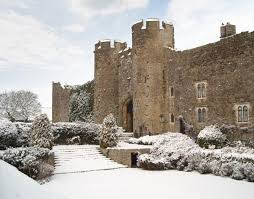
Amberley Castle. A servant girl named Emily was supposedly impregnated by a bishop and tossed aside. She, therefore, tossed herself off one of the towers to her death. She is sometimes seen roaming the halls. More often seen repeating her leap from the tower.

2. If one is a servant in a particular house and one dies of either lingering disease or preferably some sort of gruesome death over unrequited love, being unjustly accused of theft, or the master (or his son) has got you in a delicate condition one must haunt said house—hanging oneself over and over again is good. Throwing oneself off a tower only to disappear is better. If it is accompanied by a great deal of weeping and moaning it is better still.


3. If one is a highwayman or other notorious outlaw and one has died at the hands of either the hangman or the militia in a desperate chase and shootout one is condemned to haunt either the place of execution or, even better, one is condemned to ride up and down the stretch of road one frequented or upon which one finally met one’s end. One’s horse is apparently condemned as well. Shouting “Stand and Deliver!” is optional.

Dartford Heath – Said to be haunted by Dick Turpin and other highwaymen who can be heard riding through the mist of an evening.


4. If one met one’s end in a pub or tavern, especially in some sort of tavern brawl or affair of honor, one must stop by said pub periodically. Not for a pint, but to scare the bejeesus out of the current patrons. If one is a tavern maid who was murdered in said establishment, committed suicide in said establishment, got lost on the way home from said establishment, or went walking out with the wrong patron from said establishment then one is condemned to hang around and give the place character as well. One is not allowed to drink whilst haunting, which seems a bit unfair, but those are the rules.

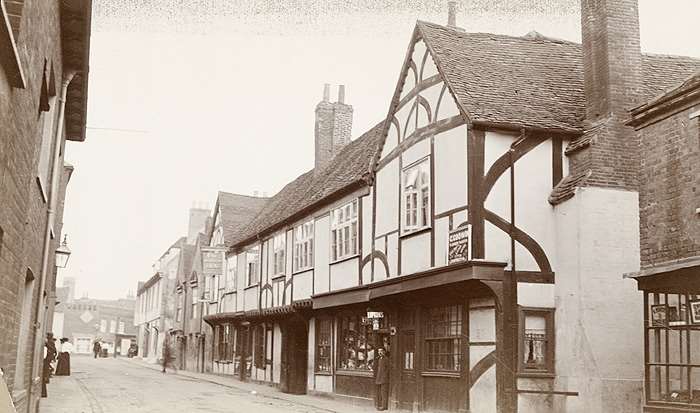
The Ostrich in Colnbrook Photograph taken 1905 © Crown Copyright.EH ref: OP14241
Over 900 years as a coaching inn and pub. Some 60 or more murders are attributed to a 17th century innkeeper and his wife. Is there any way The Ostrich isn’t haunted?


5. If one fought (and died, of course) on any of the numerous battlefields in the UK there is always the chance one might be condemned to haunt said battlefield. Loss of limb, or especially loss of one’s head is a certain bet one will be required to hang around said battlefield for eternity looking for one’s missing parts. Sending one’s horse to gallop about unseen in the mist is a possible out. Rattling one’s saber, firing cannons, and shouting “Charge!” are a safe bet.

The Battlefield at Culloden is said to be haunted by soldiers who died in battle there in 1746. It is said one can hear the sounds of pipes and drums and shouted battle cries at sunset.

6. If one was a monk or nun and died in the area of a monastery or abbey, the more gruesome one’s death the more likely one must haunt said monastery or abbey. Murdered by a king or at a king’s behest is guaranteed employment as a ghost for eternity. Especially if one’s death was particularly bloody and took place in said monastery or abbey. However, it is possible, if one was a monk or nun one is simply choosing to haunt said monastery or abbey. Apparently, monks and nuns have a great deal of trouble moving on.

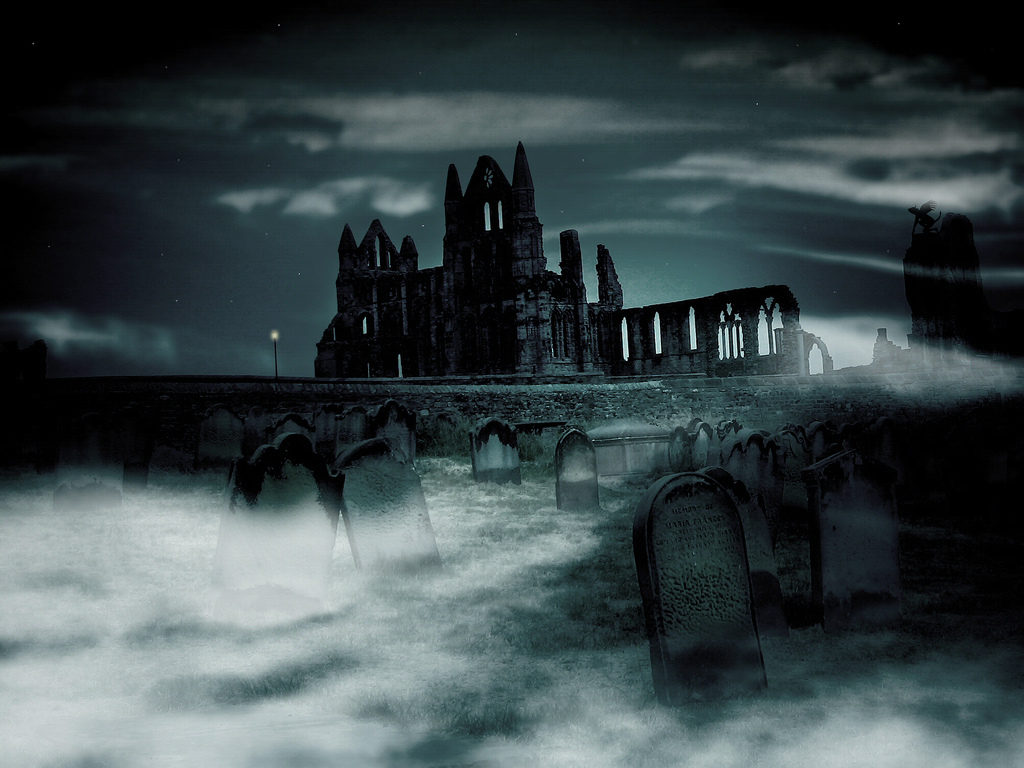
Whitby Abbey – site of a spectral monk and inspiration for one of the locations in Bram Stoker’s Dracula.

7. If one is the lady of the house, especially a castle or a stately home—the older the better, and one meets an unfortunate end, one might be required to haunt said castle or house. Murdered by a wicked husband, becoming ill after suffering a jilting or loss in love, being stood up at the altar and falling into a fatal decline, committing suicide by leaping from the tower, parapet or a particularly high window—any and all of these will do. Grey or white are the dress colors preferred, although red will do in a pinch. Oh, and if one had a dog of which one was particularly fond, said dog might be condemned to walk the parapets with one. On rare occasion said ghost dog might be heard howling in despair on the anniversary of his mistress’s death.

Samlesbury Hall – Haunted by the White Lady, Dorothy Southworth, whose Catholic family killed her Protestant lover the night they were to meet and elope. She is said to haunt the hall in search of her lover.

8. Moors in England are required, I do believe it is by law, to have at least one creature (known origins optional) to haunt said moor and frighten anyone unfortunate enough to venture out onto said moor, especially in the evening or at night. A moor might be haunted by a hound of unusual size and ferocity, a pack of hunting dogs lost by a careless master, a fiery horse (rider optional) lost in the bogs of the moor, Celtish or Roman warriors trapped in the bogs over the centuries, a howling creature of unknown origins or anyone ever lost or body-dumped on the moors by a savvy, but cold-hearted killer.

Dartmoor – The Moor – Home to Baskerville Hounds, witches burned or hanged or drowned and even a few Roman soldiers who never made it home.


9. Should one be a member of the royal family on one’s death, one is very nearly required to haunt various royal residences. This is especially true if one has suffered a horrible death or one has suffered the loss by terrible or premature death of one’s child or spouse. Should one be a royal murdered by yet another royal for reasons of royal coup or simply a family feud got out of hand, one is far more likely to be compelled to haunt. Crowns, and sometimes even heads, are optional. Oh, and if one is numbered amongst those bad kings or queens, one is simply doomed to haunt, just saying. Apparently dead royals are nearly as bad as monks and nuns about moving on.

Tower of London – White Chapel – The bodies of the Two Princes murdered by their Uncle Richard to obtain the crown were reportedly found here. The Princes are said to haunt the Tower, especially the chapel.

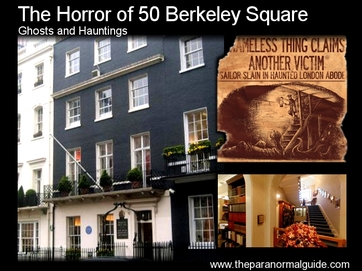
10. Dying at Number 50 Berkeley Square apparently guarantees one a spot on the haunting roster. Whether one’s death was horrible, frightening, or merely sad one has no choice but to linger around for eternity and wait one’s turn to disturb the peace of the house. There are so many spirits at this address there must be a ghostly social secretary to keep everyone in order. However, one is guaranteed a deal of privacy as hauntings are only allowed on the fourth floor and, apparently, the police, in typical British fashion have posted a sign in the house forbidding anyone to climb to the fourth floor.

“You say the rooms are haunted? Well, don’t go into those rooms!”

Number 50 is considered the most haunted house in London, but according to those who work at antiquarian booksellers Maggs Bros. Ltd., housed at this address for many years, nothing untoward has ever happened. Then again, they never venture onto the fourth floor. Ever. Would you?

Check out theparanormalguide.com for more information and great research on No. 50 Berkeley Square and other haunted places in Britain.

There you have it, a few rules for haunting in the UK. Even with the rules, those of us who love England might not find it too terrible a task to spend eternity there. Some of us would spend our years left with the living haunting England, if funds and time would allow!

HOW TO CREATE AUTHENTICITY IN REGENCY HISTORICAL ROMANCE? RESEARCH, RESEARCH, RESEARCH! – PART TWO

The Lives and Deaths of London’s Climbing Boys

Louisa Cornell

Andrea and I decided early on in writing our third series together that we wanted to bring the world of London’s darker side to life for our readers. To do so we had to delve into the very real and horrifying world of London’s East End where poverty, violence, and despair were the bread and butter of the residents of Seven Dials, St. Giles, and White Chapel – the most notorious of the slum areas known as The Rookeries.

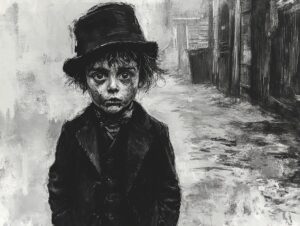
The heroes of Bow Street’s Most Wanted – The Four Horsemen are hard men, made so by their cruel and desperate childhoods. As a result they tend to have neither sympathy nor soft spots for no one save perhaps children, children whose circumstances were as desperate as their own had once been. Some of the most used, abused, and desperate of children in this era were those who were apprenticed, sold, or sometimes kidnapped into the service of London’s chimney sweeps.

From the late 16th to the 19th century, chimney cleaning was a vital yet hazardous occupation in Britain. With the increased use of coal as a primary fuel source and the evolution of chimney design to include narrower, more intricate flues, adult sweeps were unable to access certain parts of the chimney for cleaning. Children, some as young as four, were employed to navigate the narrow, winding flues of chimneys, scraping away soot and creosote to prevent fires and maintain airflow.

Small boys, sometimes orphans or boys essentially sold by impoverished families, were employed as climbing boys to clean these inaccessible areas. If they were lucky they were apprenticed to master sweeps who were paid by the parish to teach them the trade. These apprentices tended to be treated better than the orphans or other boys. Climbing girls were also employed, although they were less common.

Very often those that had been sold by their parents had even signed papers securing the master sweeps status as their legal guardians, meaning these young children were tied to their master and their profession until adulthood with no route to escape, except death.

From “The Chimney Sweeper” by William Blake, from his work “Songs of Innocence and of Experience”, 1795

In addition to the dangers of cruel and uncaring masters, the job had a number of inherent risks that came with it. Climbing boys faced numerous perils, including getting stuck in narrow flues, suffocating on soot, suffering burns from hot or even burning chimneys, and falling. Some would have to buff it or climb naked to fit into the tight spaces. Exposure to soot and the physically demanding nature of the job led to a range of health issues, including respiratory problems, eye inflammation, skin sores, deformities, and stunted growth, not to mention burns.

A particularly deadly consequence was chimney sweeps’ carcinoma, or “soot wart,” an aggressive form of scrotal cancer caused by irritation from the carcinogenic substances in coal soot. This was the first occupational cancer ever to be identified, according to The Institute of Cancer Research.

There were variations between buildings, but a standard flue would narrow to around 9 by 9 inches. With such a small amount of movement afforded in such a small space, many of the climbing boys would have to inch their way up using only knees and elbows to force themselves forward.

Many of the chimneys would still be very hot from a fire and some might still be on fire. The skin of the boys would be left stripped and raw from the friction whilst a less dexterous child could possibly have found themselves completely stuck.

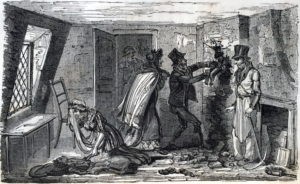
The position of a child jammed in a chimney would have often resulted in their knees being locked under their chins with no room to unlock themselves from this contorted position. Some would find themselves stranded for hours whilst the lucky ones could be helped out with a rope. Those less fortunate would simply suffocate and die in the chimney forcing others to remove the bricks in order to dislodge the body. The verdict given by the coroner after the loss of a young life in this fashion was accidental death.

The death of two climbing boys in the flue of a chimney. Frontispiece to ‘England’s Climbing Boys’ by DR. George Phillips.

Several acts of Parliament were passed to regulate the trade and restrict child labor in chimney sweeping, starting with the Chimney Sweepers Act of 1788.

In 1788, the Chimney Sweepers Act was enacted to regulate the trade by setting a minimum apprenticeship age of eight and limiting the number of apprentices per master. However, due to inadequate enforcement, these regulations had little impact. Further legislative attempts, including acts in 1834 and 1840, also failed to bring significant change.

The practice was finally outlawed in England in 1875 with the passage of the Chimney Sweepers Act, which was a result of sustained efforts by reformers and sparked by the tragic death of 11-year-old George Brewster, the last recorded fatality of a climbing boy. Brewster became trapped while cleaning a flue at the County Pauper Lunatic Asylum in Fulbourn near Cambridge and did not survive the ordeal. His death spurred renewed public outcry, prompting Lord Shaftesbury to champion the cause. This advocacy culminated in the Chimney Sweepers Act of 1875, which mandated the registration of chimney sweeps and effectively prohibited the employment of children in chimney cleaning. This legislation marked a significant advancement in child labor laws in Britain.

In recognition of the sacrifices made by these young workers, a blue plaque was unveiled on 11 February 2025, commemorating George Brewster’s life and his role in ending the use of child chimney sweeps in England. He is the youngest British person honored with an official blue plaque.

EXCERPT FROM: FAM – LORD OF HUNGER

Their horses began to tire after a few miles. Fam guided Bess into a slow trot as they crossed into the far edges of Mayfair. He continued to check on the child whose breaths had grown shallow and less frequent. The smell of coal and the filthy face led him to believe this limp bag of bones and rags had been used as a climbing boy by some soon-to-be-dead chimney sweep. His blood heated at the thought of what he’d do to the fiend who had used this boy and dumped him like an old stray dog.

https://www.amazon.com/dp/B0DWZ2JKX6/

https://www.amazon.com/dp/B0DZV4QBLF/


HOW TO CREATE AUTHENTICITY IN REGENCY HISTORICAL ROMANCE? RESEARCH, RESEARCH, RESEARCH!

The Horrors of Baby Farming in Nineteenth Century England

Louisa Cornell

One question with which I am certain all authors are familiar is “How do you come up with story ideas?” Those of us who write receive this question from both readers and fellow writers. I will confess I never know when or where a story idea is going to leap out at me. Ideas can come from all sorts of places and some of those places are those I stumble across when I least expect it.

However, when one writes historical romance set in a specific era, like the Regency and early Victorian eras, research is certain to yield some fascinating and sometimes horrifying places from which to derive the basis of a story or even an entire series. Such was the case when Andrea K. Stein and I began to consider ideas for our third series together set in our own version of the Regency world.

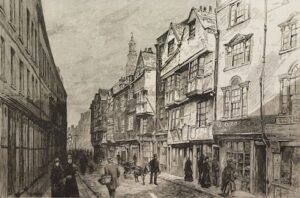
Holywell Street London – Where pornographers plied their trade.

Our first series – Steam, Lies, and Forbidden Desires came from the very real practice of pornographers in the era splitting a novel into four sections and selling each section as a separate novel.


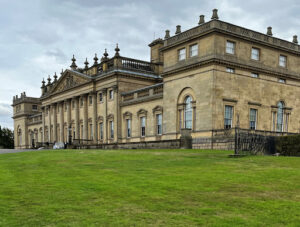
Our second series – Five Pearls for the Earl came from a trip we took with Number One London Tours during which we visited Harewood House and a docent made a casual remark about why an earl’s coronet has five pearls.

Harewood House


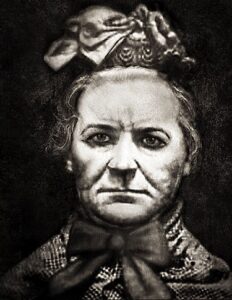
Amelia Dyer

Our current series – Bow Street’s Most Wanted – The Four Horsemen derived its root premise from a book I read in researching a class I taught on mental illness in the nineteenth century. Amelia Dyer Angel Maker: The Woman Who Murdered Babies for Money by Allison Rattle and Allison Vale. A fascinating read, but not for the faint of heart. Andrea and I considered what sort of children might survive such a horrific upbringing and what sort of men might they become. Thus, The Four Horsemen was born.

So what precisely was a baby farm?

In England in the 19th century unwed mothers and their infants were considered an affront to morality. They were spurned and ostracized both by the public and by relief and charitable institutions. For example in 1836 Muller’s Orphan Asylum in Bristol refused illegitimate children; they accepted only lawfully begotten orphans. The thought was that children conceived in sin would inherit their parents’ lack of moral character and would be a bad influence on legitimate children. Some orphanages accepted children no matter the circumstances of their birth. Others did not.

Young women who became pregnant out of wedlock were forced to leave home in disgrace and move somewhere they were not known. They were often scorned and abandoned by family and left with no resources. If they named the father of their child the parish would demand he pay for the support of the child, but those laws were difficult to enforce and little effort was made to do so.

There were few employment opportunities for single women in this era and the moment their pregnancy became noticeable they were dismissed. Once they gave birth their position became even less tenable as they had no one to tend their child whilst they worked. Thus, they resorted to baby farmers.

Baby farmers, the majority of whom were women, placed ads in newspapers that catered to working class women.

The ads look innocent enough. However, you will notice names are often not listed. Nor are actual specific addresses. No references are given nor offered. One ad suggested a fee of 15 shillings a week to keep an infant or a flat fee of 12 pounds to adopt. The weekly fee was not enough to keep a child, especially a sickly child, and for 12 pounds it was expected the mother would neither see her child again nor ask any questions. Infants under two months were the least likely to survive and the cheapest to bury.

Baby farmers were interested in only one thing. How much money could they squeeze out of the mother and/or father and for how long. A child’s life might hang on how long a mother might be strung along to keep paying. A single woman might not have 12 pounds, but she might be able to secure that amount from the father if he thought the child would disappear forever.

The majority of baby farmers solicited as many infants under the age of two months as they could. These children were the ones whose deaths would appear to be more natural. They would adopt many of these infants for the one time set fee and get rid of them at once. Those they kept were kept drugged on laudanum, paregoric, and other poisons. They were often given milk mixed with lime. The costs of burial was avoided by wrapping the infants’ naked bodies in newspapers and dumping them in dung heaps, deserted areas, or in the Thames.


Older children whose mothers did their best to pay the weekly fee and demanded to visit their children died longer, more torturous deaths. They died from slow starvation, being fed the bare minimum to keep them alive and lingering. Mothers worked day and night to support these children only to watch them waste away in the care of these supposed nurturing women.

Until 1872 there were no laws to govern baby farmers.

There were even some women who handed their children over to these baby farmers knowing full well that their child’s fate would be death. Unable to murder their own child they allowed the baby farmer to do so. A Mrs. Winsor was eventually arrested for the murder of a four month old infant whose body was found wrapped in newspaper on the side of the road in Torquay and traced back to her. She ran a lucrative business boarding infants for a few shillings a week or putting them away for a flat fee of 3 to 5 pounds. She was sent to prison for the crime.

A Society for the Prevention of Cruelty to Children was not founded until 1889. The Royal Society for the Prevention of Cruelty to Animals was founded in 1824, 65 years before this.

The premise for our series is the age old author’s question, What if? What if four boys managed to survive the horrors of being raised on a baby farm? What sort of men would they become and what sort of lives would they lead?

Bow Street’s Most Wanted: The Four Horsemen 

We’re expanding our diverse Regency world into the darker side of London’s infamous rookeries and waterfront gangs with four heroes who stretch the boundaries of redeemability. If you want stories of dark deeds done in secret, look no further.

The story of villains is much more entertaining than the story of heroes, because monsters are not born, they are made…The monsters, in their tragedy, show us what could happen to us all, if the world turned its back on us.           Mary Shelley


https://www.amazon.com/dp/B0DWZ2JKX6/


 https://www.amazon.com/dp/B0DZV4QBLF/


A Scots Happy New Year !

Louisa Cornell


As the Christmas celebrations slow down, Scots gear up for Hogmanay, the celebration of New Year’s Eve. A Scots word of uncertain heritage, Hogmanay (pronounced, roughly, HUG-ma-nay) might come from ancient Greek (“holy month”), French (“the new year”), or Gaelic, or Norse, or… Whatever etymological theory you subscribe to, the holiday itself is all Scottish! The age-old traditions associated with Hogmanay have been recorded at least since the 16th century and hold firm to this day.

The earliest modern era accounts record it as a Scottish custom as noted by Chamber’s 1856 Book of Days :

“There was in Scotland a first footing independent of the hot pint. It was a time for some youthful friend of the family to steal to the door, in the hope of meeting there the young maiden of his fancy, and obtaining the privilege of a kiss, as her first-foot. Great was the disappointment on his part, and great the joking among the family, if through accident or plan, some half-withered aunt or ancient grand-dame came to receive him instead of the blooming Jenny.”

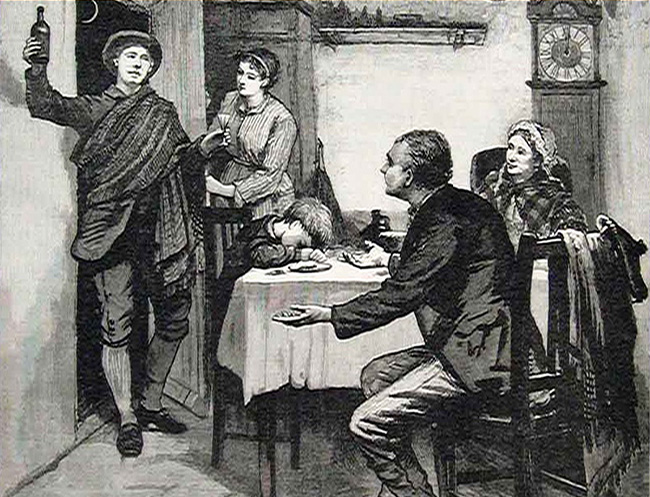
The part of the ritual that is far older than that, which makes it one of the oldest and most intriguing traditions for a New Year’s Eve in Scotland is the tradition of the First Footer. “The First Footer” is a Scottish New Year’s tradition where the first person to cross the threshold after midnight on New Year’s Eve is considered to bring luck for the new year. The ideal “first footer” was and remains a tall, dark-haired man. This preference for dark hair is believed to stem from the days of Viking invasions when a blonde stranger would be seen as a threat. According to tradition, the first footer should never be a woman, why has been lost to the mists of time.

The first footer usually brings gifts like a lump of coal  or some peat (representing warmth), salt (representing health), shortbread (a traditional Scottish biscuit) or black bun (representing flavor,) and a dram of whisky (representing good cheer).

Black bun is a type of rich fruit cake completely covered with pastry. It was originally eaten on Twelfth Night in Scotland but is now more associated with Hogmanay. Here is a recipe should you want to add Black Bun to your New Year’s Eve traditions!

Auntie Lesley’s Black Bun Recipe

Ingredients

Pastry Case

  • 110 grams butter
  • 220 grams plain flour
  • Pinch of salt
  • ½ teaspoon baking powder
  • Cold water
  • 1 egg, beaten

Filling

  • 170g plain flour
  • One level teaspoon ground allspice
  • ½ level teaspoon each of ground ginger, ground cinnamon,30 grams chopped mixed peel
  • ½ level teaspoon baking powder
  • ½ level teaspoon cream of tartare
  • Pinch of salt
  • Soaked fruit mixture: 450 grams seedless raisins, 450 grams currants, 60 grams chopped almonds, one tablespoon brandy – mixed together and left to soak overnight
  • 110 grams soft brown sugar
  • 30 grams chopped mixed peel
  • Generous pinch of black pepper
  • One large egg (beaten)
  • Milk to moisten (approx ¼ pint)

Method

1. Grease a loaf tin. Rub butter into flour, salt and baking powder, mixing in cold water to make a stiff dough.
2. Roll out pastry and cut into five pieces, using bottom, top and sides of the tin as a rough guide.
3. Press the bottom and four side pieces of pastry into the tin, pressing overlaps to seal the pastry shell.
4. Sift flour and spices, baking powder, cream of tartare and salt. Bind together with soaked fruit mixture and sugar, mixed peel, pepper, egg and milk.
5. Pack filling into the pastry-lined tin and add pastry lid, pinching edges and using egg to seal well. Lightly prick surface with a fork and make four holes in the bottom layer of pastry using a skewer. Depress the centre slightly (pastry lid will rise as it cooks).
6. Brush top of pastry case with beaten egg to glaze.
7. Bake in pre-heated oven at 325OF/160OC/Gas Mark 3 for 2½ to 3 hours, until a skewer comes out clean.

As you can see, people in Scotland knew how to celebrate the New Year in grand style as well!

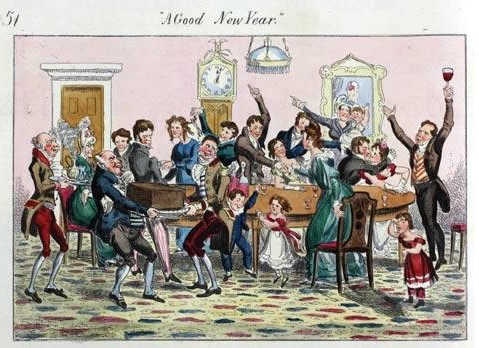
The Glasgow Looking Glass, c 1825, depicted upper-crust Scots rather enthusiastically ringing in the new.

As for today, I will confess I would love to celebrate Hogmanay at least once in Scotland from the First Footer to the Black Bun to the singing of Auld Lang Syne. Until then, Kristine, Victoria, and I wish each and every one of you a very Happy New Year and may all your first footers be dark-haired and bring you much good luck!

AULD LANG SYNE

https://www.youtube.com/watch?v=9lht2mRd2kQ


What Christmas Is In Country Places by Charles Dickens

If we want to see the good old Christmas— the traditional Christmas—of old England, we must look for it in the country. There are lasting reasons why the keeping of Christmas cannot change in the country as it may in towns. The seasons themselves ordain the festival. The close of the year is an interval of leisure in agricultural regions ; the only interval of complete leisure in the year; and all influences and opportunities concur to make it a season of holiday and festivity. If the weather is what it ought to be at that time, the autumn crops are in the ground; and the springing wheat is safely covered up with snow. Everything is done for the soil that can be done at present; and as for the clearing and trimming and repairing, all that can be looked to in the after part of the winter; and the planting is safe if done before Candlemas. The plashing of hedges, and cleaning of ditches, and trimming of lanes, and mending of roads, can be got through between Twelfth Night and the early spring ploughing; and a fortnight may well be given to jollity, and complete change.

Such a holiday requires a good deal of preparation: so Christmas is, in this way also, a more weighty affair in the rural districts than elsewhere. The strong beer must be brewed. The pigs must be killed weeks before; the lard is wanted; the bacon has to be cured; the hams will be in request; and, if brawn is sent to the towns, it must be ready before the children come home for the holidays. Then, there is the fattening of the turkeys and geese to be attended to; a score or two of them to be sent to London, and perhaps half-a-dozen to be enjoyed at home. When the gentleman,or the farmer,or the country shop-keeper, goes to the great town for his happy boys and girls, he has a good deal of shopping to do. Besides carrying a note to the haberdasher, and ordering coffee, tea, dried fruit, and spices, he must remember not to forget the packs of cards that will be wanted for loo and whist. Perhaps he carries a secret order for fiddlestrings from a neighbour who is practising his part in good time.
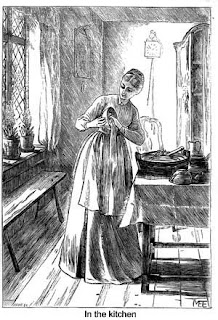
 

There is one order of persons in the country to whom the month of December is anything but a holiday season—the cooks. Don’t tell us of town-cooks in the same breath! It is really overpowering to the mind to think what the country cooks have to attend to. The goose-pie, alone, is an achievement to be complacent about; even the most ordinary goose-pie ; still more, a superior one, with a whole goose in the middle, and another cut up and laid round ; with a fowl or two, and a pheasant or two, and a few larks put into odd corners; and the top, all shiny with white of egg, figured over with leaves of pastry, and tendrils and crinkle-crankles, with a bunch of the more delicate bird feet standing up in the middle. The oven is the cook’s child and slave; the great concern of her life, at this season. She pets it, she humours it, she scolds it, and she works it without rest. Before daylight she is at it—baking her oat bread; that bread which requires such perfect behaviour on the part of the oven! Long lines of oat-cakes hang overhead, to grow crisp before breakfast; and these are to be put away when crisp, to make room for others; for she can hardly make too much. After breakfast, and all day, she is making and baking meat-pies, mince-pies, sausage-rolls, fruit-pies, and cakes of all shapes, sizes, and colours.
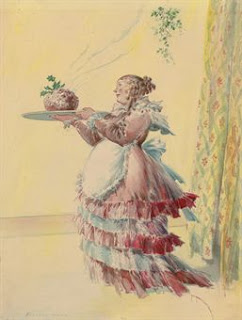
 

And at night, when she can scarcely stand for fatigue, she banks the oven fire, and puts in the great jar of stock for the soups, that the drawing may go on, from all sorts of savoury odds and ends, while everything but the drowsy fire is asleep. She wishes the dear little lasses would not come messing and fussing about, making gingerbread and cheesecakes. She would rather do it herself, than have them in her way. But she has not the heart to tell them so. On the contrary, she gives them ginger, and cuts the citron-peel bountifully for them; hoping, the while, that the weather will be fine enough for them to go into the woods with their brothers for holly and ivy. Meantime, the dairy-woman says, (what she declares every Christmas,) that she never saw such a demand for cream and butter; and that, before Twelfth Night, there will be none. And how, at that season, can she supply eggs by scores, as she is expected to do. The gingerbread baked, the rosiest apples picked out from their straw in the apple-closet, the cats, and dogs, and canary birds, played with and fed, the little lasses run out to see what the boys are about.

The woodmen want something else than green to dress the house with. They are looking for the thickest, and hardest, and knottiest block of wood they can find, that will go into the kitchen chimney. A gnarled stump of elm will serve their purpose best; and they trim it into a size to send home. They fancy that their holiday is to last as long as this log remains; and they are satisfied that it will be uncommonly difficult to burn up this one. This done, one of them proceeds with the boys and girls to the copses where the hollies are thickest; and by carrying his bill-hook, he saves a vast deal of destruction by rending and tearing. The poor little birds, which make the hollies so many aviaries in winter, coming to feed on the berries, and to pop in among the shining leaves for shelter, are sadly scared, and out they flit on all sides, and away to the great oak, where nobody will follow them.
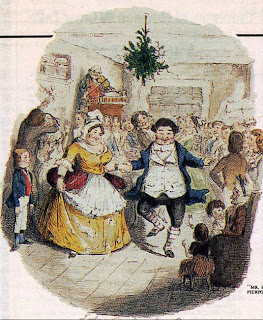
 

For, alas! there is no real mistletoe now. There is to be something so called hung from the middle of the kitchen ceiling, that the lads and lasses may snatch kisses and have their fun; but it will have no white berries, and no Druidical dignity about it. It will be merely a bush of evergreen, called by some a mistletoe, and by others the Bob, which is supposed to be a corruption of ” bough.” When all the party have got their fagots tied up, and strung over their shoulders, and button-holes, hats, and bonnets stuck with sprigs, and gay with berries, it is time they were going home ; for there is a vast deal to be done this Christmas Eve, and the sunshine is already between the hills, in soft yellow gushes, and not on them.

A vast deal there is to be done; and especially if there is any village near. First, there is to dress the house with green; and then to go and help to adorn the church. The Bob must not be hung up till to-morrow: but every door has a branch over it; and the leads of the latticed windows are stuck with sprigs; and every picture-frame, and lookingglass, and c
andlestick is garnished. Any “scraps” (very young children) who are too small to help, pick up scattered holly-leaves, and, being not allowed to go upon the rug, beg somebody to throw them into the fire; whence ensues a series of cracklings, and sputtering blazes, and lighting up of wide-open eyes. In the midst of this—hark ! is not that the church bell? The boys go out to listen, and report that it is so;—the “Christmas deal” (or dole) is about to begin; so, off go all who are able, up to the church.
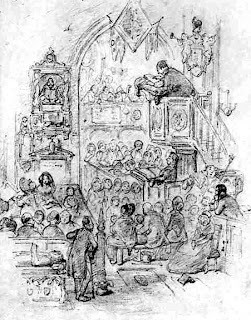
 

It is very cold there, and dim, and dreary, in spite of the candles, and the kindness, and other good things that are collected there. By the time the bell has ceased to clang, there are a few gentlemen there, and a number of widows, and aged men, and orphan children. There are piles of blankets; and bits of paper, which are orders for coals. One gentleman has sent a bag of silver money; and another, two or three sheep, cut up ready for cooking; and another, a great pile of loaves. The boys run and bring down a ladder to dress the pillars; and scuffle in the galleries; and venture into the pulpit, under pretence of dressing the church. When the dole is done and the poor people gone, the doors are closed; and, if the boys remain, they must be quiet; for the organist and the singers are ‘going to rehearse the anthem that is to be sung to-morrow. If the boys are not quiet, they are turned out.

There is plenty of bustle in the village. The magistrates are in the long room of the inn, settling justice business. The inn looks as if it were illuminated. The waiters are seen to glide across the hall; and on the steps are the old constable, and the new rural policeman, and the tax-collector, and the postman. It is so cold that something steaming hot will soon be brought for them to drink; and the poor postman will be taken on his weak side. Christmas is a trying season to him, with his weak head, and his popularity, and his Christmas-boxes, and his constant liability to be reported.
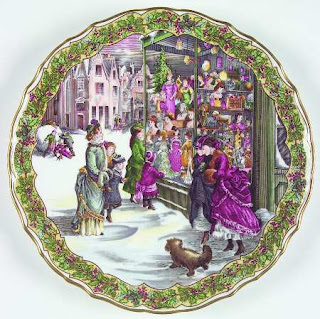
 

Cold as it is, there are women flitting about; going to or from the grocer’s shop, and all bringing away the same things. The grocers give away, this night, to their regular customers, a good mould candle each, and a nutmeg. This is because the women must be up by candle-light to-morrow, to make something that is to be spiced with nutmeg. So a good number of women pass by with a candle and a nutmeg; and some, with a bottle or pitcher, come up the steps, and go to the bar for some rum. But the clock strikes supper-time, and away go the boys home.

Somebody wonders at supper whether the true oval mince-pie is really meant to be in the form of a certain manger; and its contents to signify the gifts, various and rich, brought by the Magi to that manger. And while the little ones are staring at this news, somebody else observes that it was a pretty idea of the old pagans, in our island, of dressing up their houses with evergreens, that there might be a warm retreat for the spirits of the woods in times of frost and bitter winter storms. Some child peeps timidly up at the biggest branch in the room, and fancies what it would be to see some sprite sitting under a leaf, or dancing along a spray. When supper is done, and the youngest are gone to bed, having been told not to be surprised if they should hear the stars singing in the night, the rest of the party turn to the fire, and begin to roast their chestnuts in the shovel, and to heat the elderwine in the old-fashioned saucepan, silvered inside. One absent boy, staring at the fire, starts when his father offers him a chestnut for his thoughts. He hesitates, but his curiosity is vivid, and he braves all the consequences of saying what he is thinking about. He wonders whether he might, just for once, —just for this once—go to the stalls when midnight has struck, and see whether the oxen are kneeling. He has heard, and perhaps read, that the oxen kneeled, on the first Christmas-day, and kept the manger warm with their breath ; and that all oxen still kneel in their stalls when Christmas-day comes in. Father and mother exchange a quick glance of agreement to take this seriously; and they explain that there is now so much uncertainty, since the New Style of reckoning the days of the year was introduced, that the oxen cannot be depended on; and it is not worth while to be out of bed at midnight for the chance. Some say the oxen kneel punctually when Old Christmas comes in; and if so, they will not do it to-night.
 

This is not the quietest night of the year; even if nobody visits the oxen. Soon after all are settled to sleep, sounds arise which thrill through some who are half-awakened by them, and then, remembering something about the stars singing, the children rouse themselves, and lie, with open eyes and ears, feeling that Christmas morning has come. They must soon, one would think, give up the star theory; for the music is only two fiddles, or a fiddle and clarionet; or, possibly, a fiddle and drum, with a voice or two, which can hardly be likened to that of the spheres. The voices sing, ” While shepherds watch’d their flocks by night ;” and then—marvellously enough.—single out this family of all the families on the earth, to bless with the good wishes of the season. They certainly are wishing to master and mistress and all the young ladies and gentlemen, “good morning,” and ” a merry Christmas and a happy New Year.” Before this celestial mystery is solved, and before the distant twang of the fiddle is quite out of hearing, the celestial mystery of sleep enwraps the other, and lays it to rest until the morrow.
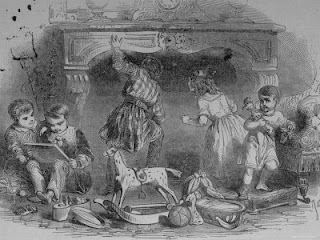
 

The boys—the elder ones—meant to keep awake; first, for the Waits, and afterwards to determine for themselves whether the cock crows all night on Christmas Eve, to keep all hurtful things from walking the earth. When the Waits are gone, they just remember that any night, between this and Old Christmas, will do for the cock, which is said to defy evil spirits in this manner for the whole of that season. Which the boys are very glad to remember; for they are excessively sleepy; so off they go into the land of dreams.

It is now past two; and at three the maids must be up. Christmas morning is the one, of all the year, when, in the North of England especially, families make a point of meeting, and it must be at the breakfast table. In every house, far and near, where there is fuel and flour, and a few pence to buy currants, there are cakes making, which everybody must eat of; cakes of pastry, with currants between the layers. The grocer has given the nutmeg; and those who can afford it, add rum, and other dain
ties. The ladies are up betimes, to set out the best candlesticks, to garnish the table, to make the coffee, and to prepare a welcome for all who claim a seat. The infant in arms must be there, as seven o’clock strikes. Any married brother or sister, living within reach, must be there, with the whole family train. Long before sunrise, there they sit, in the glow of the fire and the glitter of candles, chatting and laughing, and exchanging good wishes.

In due time, the church-bell calls the flock of worshippers from over hill, and down dale, and along commons, and across fields: and presently they are seen coming, all in their best,—the majority probably saying the same thing,—that, somehow, it seems always to be fine on Christmas-day. Then, one may reckon up the exceptions he remembers; and another may tell of different sorts of fine weather that he has known; how, on one occasion, his daughter gathered thirty-four sorts of flowers in their own garden on Christmas-day; and the rose-bushes had not lost their leaves on Twelfth Day; and then the wise will agree how much they prefer a good seasonable frost and sheeted snow like this, to April weather in December.

Service over, the bell silent, and the sexton turning the key in the lock, off run the young men, out of reach of remonstrance, to shoot, until dinner at least,—more probably until the light fails. They shoot almost any thing that comes across them, but especially little birds,— chaffinches, blackbirds, thrushes,—any winged creature distressed by the cold, or betrayed by the smooth and cruel snow. The little children at home are doing better than their elder brothers. They are putting out crums of bread for the robins, and feeling sorry and surprised that robins prefer bread to plumpudding. They would have given the robins some of their own pudding, if they had but liked it.
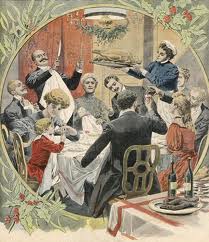
 

In every house, there is dinner to-day,—of one sort or another,—except where the closed shutter shows that the folk are out to dinner. The commonest dinner in the poorer houses —in some parts of the country—is a curious sort of mutton pie. The meat is cut off a loin of mutton, and reduced to mouthfuls, and then strewed over with currants or raisins and spice, and the whole covered in with a stout crust. In some places, the dinner is baked meat and potatoes: in too many cottages, there is nothing better than a morsel of bacon to flavour the bread or potatoes. But it may be safely said that there is more and better dining in England on Christmas-day than on any other day of the year.

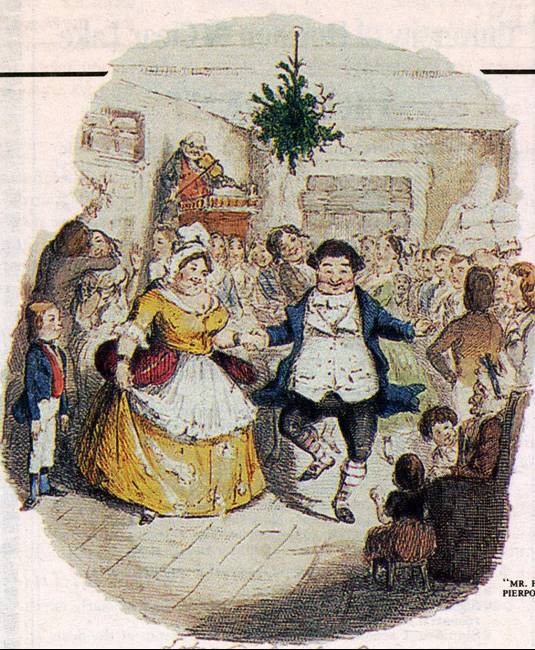
In the houses of gentry and farmers, the dinner and dessert are a long affair, and soon followed by tea, that the sports may begin. Everybody knows what these sports are, in parlour, hall, and kitchen :—singing, dancing, cards, blind-man’s buff, and other such games; forfeits, ghost-story telling, snap-dragon;— these, with a bountiful supper interposed, lasting till midnight. In scattered houses, among the wilds, card-playing goes on briskly. Wherever there are Wesleyans enough to form a congregation, they are collected at a tea-drinking in their chapel; and they spend the evening in singing hymns. Where there are Germans settled, or any leading family which has been in Germany, there is a Christmastree lighted up somewhere. Those Christmastrees are as prolific as the inexhaustible cedars of Lebanon. Wherever one strikes root, a great number is sure to spring up under its shelter.

However spent, the evening comes to an end. The hymns in the chapel, and the carols in the kitchen, and the piano in the parlour are all hushed. The ghosts have glided by into the night. The forfeits are redeemed. The blind-man has recovered his sight, and lost it again in sleep. The dust of the dancers has subsided. The fires are nearly out, and the candles quite so. The reflection that the great day is over, would have been too much for some little hearts, sighing before they slept, but for the thought that to-morrow is Boxing Day; and that Twelfth Night is yet to come.
But, first, will come New Year’s Eve, with its singular inconvenience (in some districts) of nothing whatever being carried out of the house for twenty-four hours, lest, in throwing away anything, you should be throwing away some luck for the next year. Not a potatoparing, nor a drop of soap-suds or cabbagewater, not a cinder, nor a pinch of dust, must be removed till New Year’s morning. In these places, there is one person who must be stirring early—the darkest man in the neighbourhood. It is a serious thing there to have a swarthy complexion and black hair; for the owner cannot refuse to his acquaintance the good luck of his being the first to enter their houses on New Year’s day. If he is poor, or his time is precious, he is regularly paid for his visit. He comes at daybreak, with something in his hand, if it is only an orange or an egg, or a bit of ribbon, or a twopenny picture. He can’t stay a minute,—he has so many to visit; but he leaves peace of mind behind him. His friends begin the year with the advantage of having seen a dark man enter their house the first in the New Year.

Such, in its general features, is Christmas, throughout the rural districts of Old England. Here, the revellers may be living in the midst of pastoral levels, all sheeted with snow; there, in deep lanes, or round a village green, with ploughed slopes rising on either hand: here, on the spurs of mountains, with glittering icicles hanging from the grey precipices above them, and the accustomed waterfall bound in silence by the frost beside their doors; and there again, they may be within hearing of the wintry surge, booming along the rocky shore; but the revelry is of much the same character everywhere. There may be one old superstition in one place, and another in another ; but that which is no superstition is everywhere;—the hospitality, the mirth, the social glow which spreads from heart to heart, which thaws the pride and the purse-strings, and brightens the eyes and affections.


Merry Christmas!