The Naturalists’ Diary, May 1826
From The Time’s Telescope

There is something revivifying in this season of the year—a gaiety and mirthfulness of which all God’s creatures more or less partake. A thousand joyous feelings are associated with the smell of hawthorn, and the sight of the bright green trees, and the sound of the notes of the sweet singing birds; and the daisies and cowslips spangle the surface of the grassy fields, and the playful butterflies wanton in the glittering sunbeams.

Daisies
To wander at will, in the earliest hours of spring (as it is beautifully observed by Mr. Wiffen, in his Preface to the ‘Aonian Hours’) is one of the sweetest and most refined enjoyments. The face of things and the mind’s feelings have then a fresher aspect and a dearer sensation than at any other period of the year.
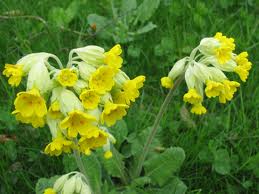
Cowslips
It is only at the first starting of Nature from the repose of winter, that these emotions are forcibly excited; for, after we have been accustomed but for a few weeks to the prospect of buds, and flowers, and the gladness of all things, the mind recedes into its habitual temper and tone of feeling. When these sensations are connected with other associations,–with the spot of our boyhood or our birth, or with the pleasures of maturer life, the charm becomes still stronger and sweeter; and we may truly say, as the Arabian prophet exclaimed of Damascus, “This is almost too delicious!”

Hawthorne
Let our readers, then, particularly our female friends,
Rise betimes, while th’ opal-coloured morn
In golden pomp doth May-day’s door adorn
and hasten to enjoy the exhilarating pleasures of a fine May morning.

Spotted Flycatcher
The latest species of the summer birds of passage arrive about the beginning of May. Among these are the goatsucker, or fern-owl, the spotted fly-catcher, and the sedge bird. In this and the following month, the dotterel is in season. Birds are still occupied in building their nests or laying their eggs. The parental care of birds at this period, in hatching and rearing their young, can never be sufficiently admired.
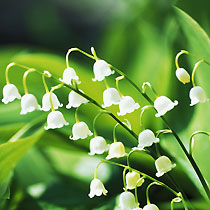
The lily of the valley now opens her snowy bells, and the flowers of the chestnut-tree begin to unfold; the tulip tree has its leaves quite out; and the flowers of the Scotch fir, the beech, the oak, and the honey-suckle, climbing round its neighbours for support, are now in full bloom.

honeysuckle
All the varieties of the strawberry, ‘plant of my native soil,’ open their blossoms, their runners extending on all sides. The mulberry-tree puts forth its leaves.
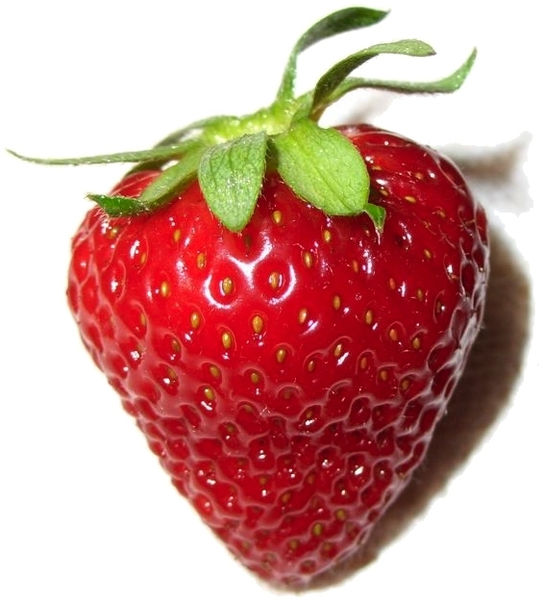
Strawberry
The insect tribe continue to add to their numbers. A few butterflies that have passed the inclement season in the chrysalis state, are seen on the wing early in May. And about the latter end of the month, the Papilio Machaon, or
swallow-tailed butterfly, one of the most superb of the British Insects, makes its appearance. It is very local, but is abundant in the places where it is found, particularly in the fens of Huntingdon and Cambridge. The caterpillar is green, banded with black, and marked by a row of red spots; it feeds on various umbellate plants.
swallow-tailed butterfly, one of the most superb of the British Insects, makes its appearance. It is very local, but is abundant in the places where it is found, particularly in the fens of Huntingdon and Cambridge. The caterpillar is green, banded with black, and marked by a row of red spots; it feeds on various umbellate plants.

Mr. Samouelle, in his directions to the Entomological Collector says, ‘as soon as the white-thorn is in leaf, the hedges should be well beaten;–the season for taking caterpillars now commences, from which most of the Lepidoptera are obtained, and this is by far the best method, as the insects are generally perfect, and the specimens very fine. Great attention should be paid to the larvae, and they should be supplied with fresh food, and moist earth kept at the bottom of their cages.’—Introduction to British Entomology, p. 315.

Field crickets, the chaffer or may-bug, and the forest fly, which so much annoys horses and cattle, are now seen. The female wasp appears at the latter end of the month, and the swarming of bees takes place.—The garden now affords rhubarb, green apricots, and green gooseberries, for making pies and tarts.
In this month, the orchis will be found in moist pastures, distinguished by its broad, black spotted leaves and spike of large purple flowers. The walnut has its flowers in full bloom.
The banks of rills and shaded hedges are ornamented with the pretty tribe of speedwells, particularly the germander speedwell, the field mouse-ear, the dove’s foot crane’s bill, and the read campion, the two first of azure blue, and the two last of rose colour, intermixing their flowers with attractive variety.—The country is now in perfection, every bush a nosegay, all the ground a piece of embroidery. The air, indeed, is enriched with native perfumes, and the whole creation seems to smile; on each tree we hear the voice of melody, and in every grove there is a concert of warbling music.

Cranesbill
The lilac, the barberry, and the maple, are now in flower. At the latter end of the month rye is in ear; the mountain-ash, laburnum, the guilder-rose, clover, columbines, with their singular and fantastic nectarines,–the alder, the wild chervil, the wayfaring tree, or wild guelder-rose, and the elm, have their flowers in full bloom.

Lilac
Many fine plants are in flower, both in artificial climates and the open garden. The American tribes flower in great numbers during this month, as Magnolias, Azaleas, Vacciniums, &c. ‘We saw in the last week of April, in Malcolm and Gray’s Nursery, Kensington, one of the finest Youlan Magnolias in flower we ever beheld. It was a standard of a conical shape, about twenty feet high, and in an open, unsheltered part of the garden. It was covered with tulip shaped blossoms of a pure white, and exceedingly fragrant. Each blossom was as large as that of a Van Thol tulip, and their perfume was sensibly felt for a circumference of many yards. Hundreds of lovers of gardening, if they were aware of the beauty of this plant, would possess a specimen, for a greater ornament no shrubbery could possess.
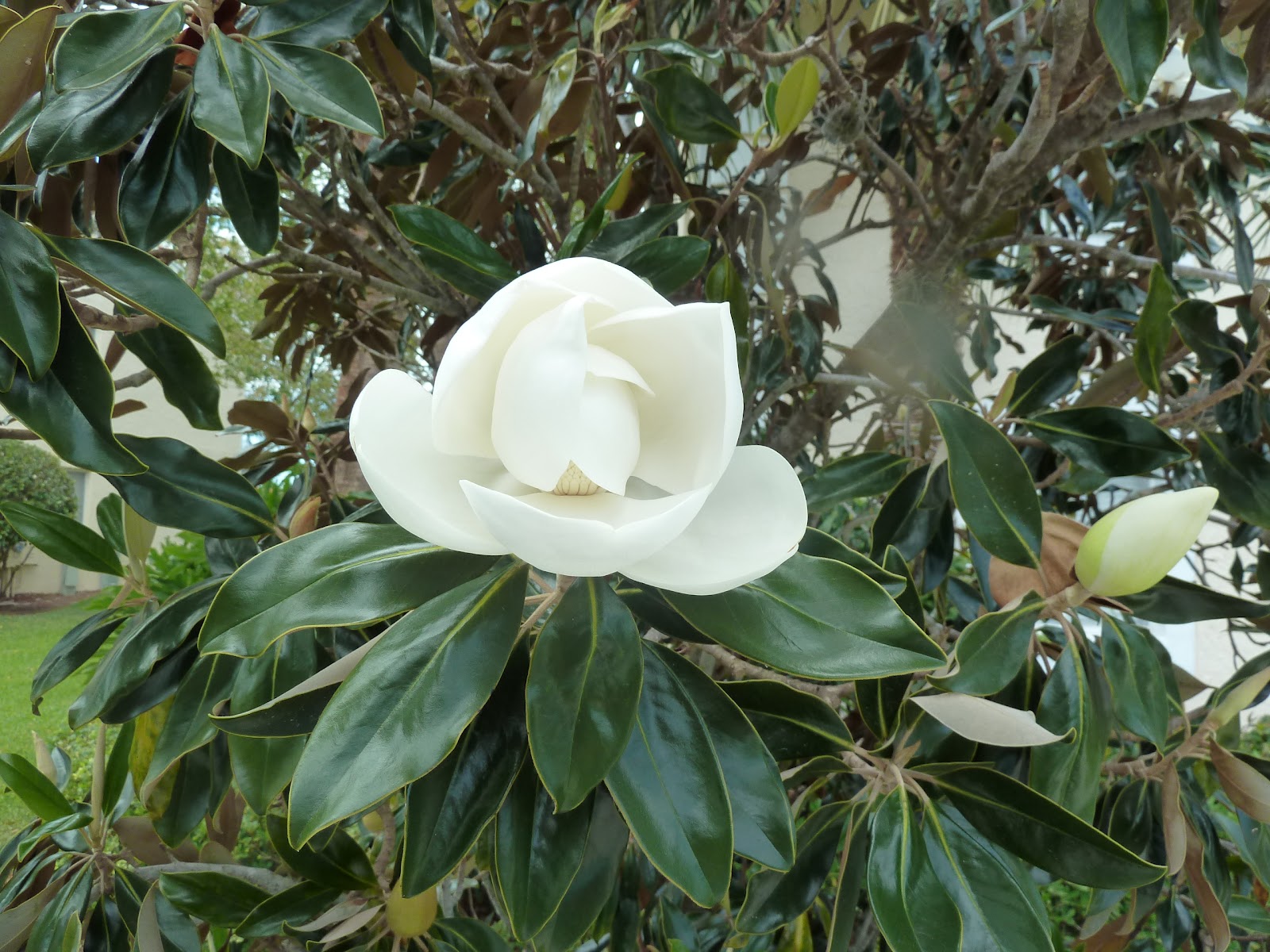
Magnolia
There is not a country gentleman, who, were he to see such a plant, would not have one of them, coute qui coute; but as gentlemen necessarily rely on their gardeners for selecting plants and trees, and as this tree is but of recent introduction, it is unknown to most gardeners in place. Young gardeners recently become masters and now coming out as such, will recommend it; but, still, this shows that scarcely any new plant can become general throughout the country in less than half a century from its first introduction. A gardener takes a place at twenty-five years of age, and remains in it, or in other places, thirty years probably at an average; he then dies, and is succeeded by a young man who, familiar with the best things of the preceding thirty years, introduces them. In this way, the Youlan Magnolia
may be about as common as the Horse-chestnut in 1850 or 1860; Pyrus Japonica, Prunus Japonica and many now rare Azaleas and other early flowering plants, will then abound; and what a glorious sight will our shrubberies present!”—Literary Gazette.
may be about as common as the Horse-chestnut in 1850 or 1860; Pyrus Japonica, Prunus Japonica and many now rare Azaleas and other early flowering plants, will then abound; and what a glorious sight will our shrubberies present!”—Literary Gazette.
About the middle of the month the greenhouse plants are ventured out; the rule is, the foliation of the common ash and the mulberry. This is a critical month for insects, especially the green fly or aphis family, and the caterpillars. Tobacco, lime-water, and handpicking, are the remedies.

David Austin Old Roses
The various species of meadow grass are in flower. The buttercup spreads over the meadows; the coleseed in corn fields, bryony, the arum, or cuckoo-pint, in hedges, the Tartarian honeysuckle, and the Corchorus Japonica, now show their flowers. The ‘rose, with all its sweetest leaves yet folded,’ now tempts the changeful atmosphere of May, but, too oft oppressed with ungentle showers, and overcharged with wet, bows her head to the coming storm; reserving her riper beauties for the more powerful sun of June. Sweet violets still continue to shed their delicious odours.
Towards the end of the month, that magnificent and beautiful tree, the horse-chestnut, displays its honours of fine green leaves, and its handsome ‘spike pyramidal’ of white and red flowers; it is quite the glory of forest trees. The hawthorn (white and pink) is usually in blossom about the middle or end of the month.

Hawthorne
The principal show of tulips takes place in this month. The dazzling and gorgeous appearance of beds of tulips cannot fail to attract the notice of the most indifferent observer; some varieties of this elegant flower are very splendid, and unrivalled for the beauty of their exquisite colours. But they boast only of a showy exterior; they possess no fragrance,–and however gaudy their attire, like a handsome female devoid of mental requirements, they soon cease to call forth our admiration. ‘Surprise and wonder are transitory passions,’ and, tired of beholding mere beauty, we seek for utility in the endless charms of a cultivated mind.
Young hares or leverets, in favourable seasons are now seen feeding near the edges of woods and copses; these may be considered as the first produce of the year, but the mother will commonly bring forth two or more pairs in the season.
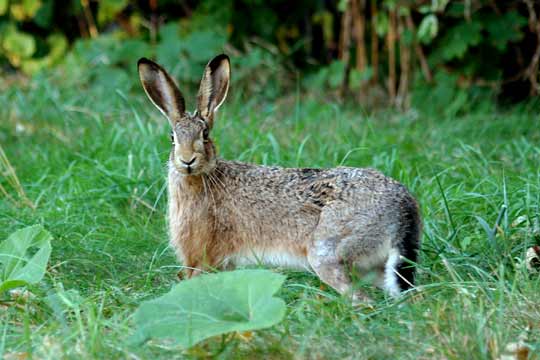
Hare
Towards the end of the month, the Phalaena humuli, called by some the ghost-moth, makes its appearance, and continues visible during the greater part of the month of June. The female glow-worm (Lampyris noctiluca) is now seen on dry banks, about woods, pastures, and hedgeways.
This is now the benting time of pigeons. After the spring-sown corn has vegetated, until the harvest, they are driven to the immature seeds and green panicles of the grasses for subsistence, and are seen in large flocks in pasture fields, where they pick up so bare a living, as to have occasioned an old couplet, often quoted in the country—
The pigeon never knoweth woe
Until a benting it doth go.

Pigeon
May, June, and July constitute the most fashionable portion of a ‘Winter in London’ and during this time there are more dinners, routes, concerts, and public dejeunes a la fourchette, than at any other period of the year. These eagerly sought pleasures, however, will have but little attraction for the contemplative man, and the admirer of the beauties of nature. Dinner parties at eight o’clock, and crowded assemblies which break up at two or three A.M., afford but a bad preparation for a morning ramble, to enjoy the sweet breath of May.















.JPG)