Dr. Syntax — Part Two

The author of The Tour of Dr. Syntax in Search of the Picturesque was William Combe (1741 – 1823) , whose real life is more interesting than most of his fictional subjects.  Combe earned his living for a long time as a writer for various publications in London; many of his works were published anonymously, as was the custom for many periodicals of the time. Some sources term him a “hack,” perhaps meaning he wrote whatever assignments he was given or more probably that his work was of undistinguished literary merit.

William Combe, Esq.

His origins are foggy, but he did attend Eton and was a classmate of such luminaries as Charles James Fox and William Beckford.  He inherited a small fortune which he squandered, and later, he apparently served in several capacities from servant to soldier. He was a law clerk in London, a student of the law and  a bookseller, but nothing kept up with his expenses. He published some satirical works but soon his debts sent him to the King;s Bench Prison where he lived from about 1780 to his death.  He wrote pamphlets, treatises, satires  for Ackermann’s publications, from unsigned pieces to the famous Tours and other works that were popular and brought him some measure of fame. Apparently he remained in his relatively comfortable quarters at the prison and received payment by means of an account from which he could draw small amounts rather than directly as fees, which might have been taken away and applied to his a accumulated debts.  It seems he was satisfied with his prison life — he was free to come and go most of the time.  Strange, but his choice!
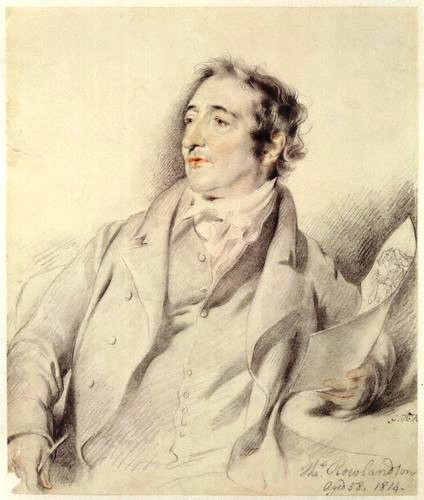
Thomas Rowlandson, sketch by George H. Horton, 1814

Artist Thomas Rowlandson (1756-1827) worked for Rudolph Ackermann for more than a quarter century, illustrating many of his publications and providing many caricatures sold in Ackermann’s shop.  Dr. Syntax brought him great success, building on his considerable reputation.  He provided a drawing or two for each installment of Combe’s poem, and other illustrations for Combe’s subsequent works.  We also know him as an irreverent social and political critic whose drawings were both popular and biting.

Ackermann’s Repository, 101 The Strand, London
Rudolph Ackermann (1764-1834) was a successful publisher of periodicals, books, pamphlets and prints.  Many of the latter, in the days long before color printing, were hand colored by young ladies or children with watercolours.  He published multiple editions of The Tour of Dr. Syntax and its two sequels written by Combe and illustrated by Rowlandson.
The Tour of Dr. Syntax in Search of the Picturesque
excerpts  from CANTO II.

(Dr. Syntax is off to begin his search, riding his mare Grizzle and looking for scenes to sketch…)

…Syntax, with his scheme besotted,
Along the village gently trotted…

Through the deep vale, and up the hill.
By rapid stream or tinkling rill.
Grizzle her thoughtful master bore.
Who, counting future treasure o’er.
And, on his weighty projects bent,
Observ’d not whither Grizzle went. …

But, ah ! too soon the vision passes,
Confounded by a pack of asses !
The donkeys bray’d ; and lo ! the sound
Awak’d him from his thought profound;
And as he star’d, and look’d around,
He said — or else he seem’d to say —
” I find that I have lost my way.
Oh! what a wide expanse I see,
Without a wood, without a tree!

Dr.Syntax losing his way

Thus as he pondered what to do,
A guide-post rose within his view ;
And, when the pleasing shape he spied,
He prick’d his steed, and thither hied ; …

The mangled post thus long had stood,
An uninforming piece of wood;
Like other guides, as some folks say.
Who neither lead, nor tell the way.
The Sun, as hot as he was bright.
Had got to his meridian height;
Twas sultry noon — for not a breath
Of cooling zephyr fann’d the heath;
When Syntax cried — ” ‘Tis all in vain
To find my way across the plain;
So here my fortune I will try.
And wait till some one passes by…


Dr. Syntax Stopped by Highwaymen

But, ah! how false is human joy! When least we think it, ills annoy:
For now, with fierce impetuous rush,
Three ruffians issued from a bush;
One Grizzle stopp’d, and seiz’d the reins.
While they all threat the Doctor’s brains.
Poor Syntax, trembling with affright.
Resists not such superior might.
But yields him to their savage pleasure.
And gives his purse, with all its treasure.
Fearing, howe’er, the Doctor’s view
Might be to follow and pursue
The cunning robbers wisely counted
That he, of course, should be dismounted;
And still that it would safer be
If he were fastened to a tree.
Thus to a tree they quickly bound him;
The cruel cords went round and round him;
And, having of all power bereft him.
They tied him fast — and then they left him.
By the road side, within the wood,
In this sad state poor Syntax stood.

End of Canto II
to be continued
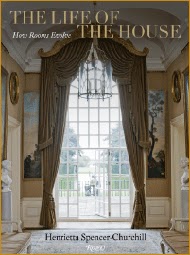
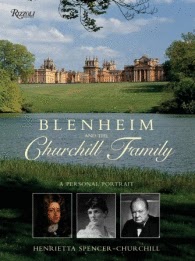
The Life of the House by Lady Henrietta Spencer-Churchill

The Life of the House: How Rooms Evolve  by distinguished designer Lady Henrietta Spencer-Churchill was published in October, 2012, by Rizzoli.  Like her previous volumes, this one is filled with brilliant photographs and engaging copy.

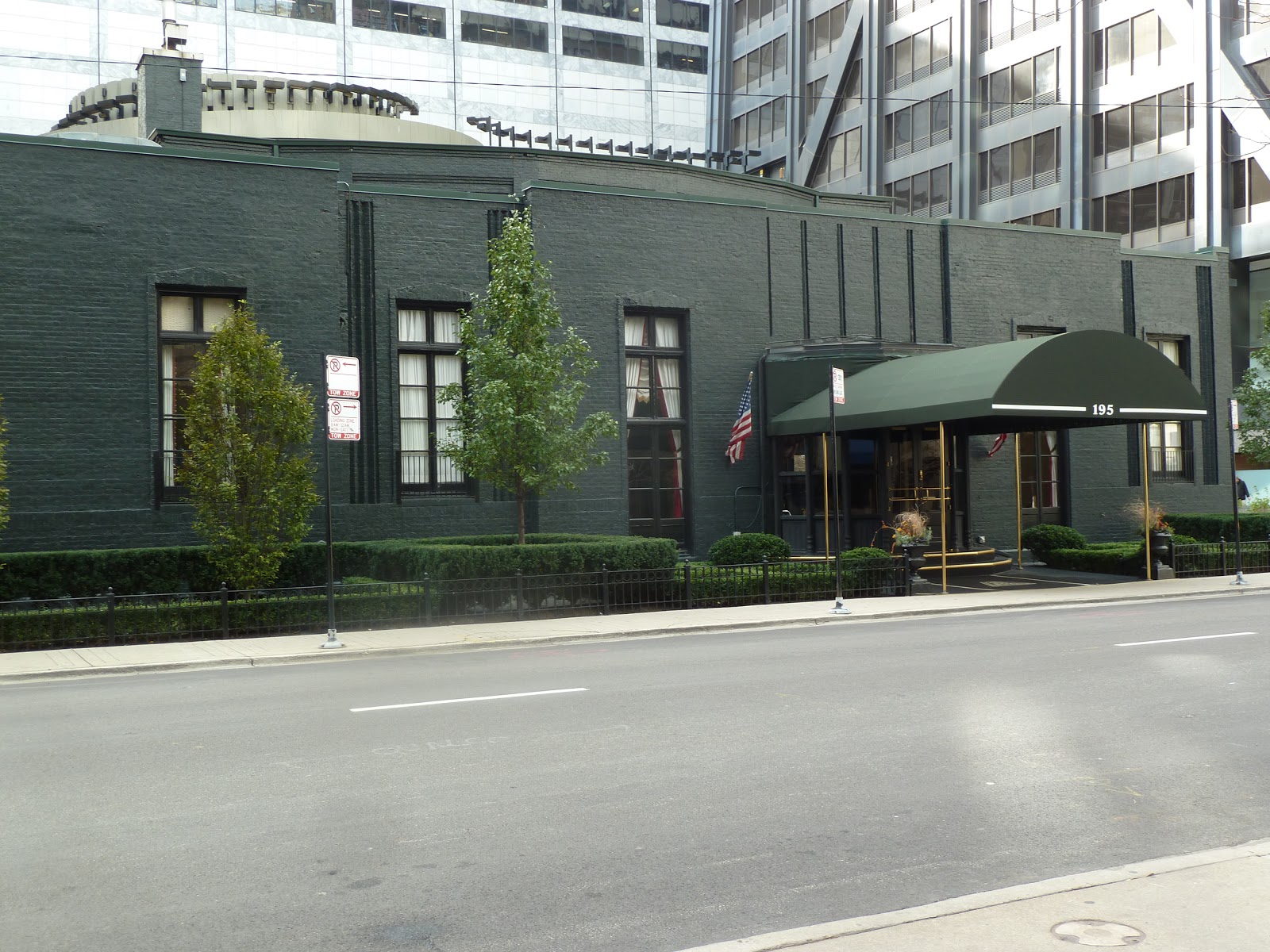
Victoria here. I was fortunate enough to attend a talk by Lady Henrietta in Chicago recently, under the auspices of The Royal Oak Foundation and the Chicago branch of the English-Speaking Union, held at The Casino, a private club renowned for its ambiance and neo-regency decor.

The Casino, with Water Tower Place in the background
 and the Hancock Center at the left

The Royal Oak Foundation supports the National Trust of Britain and presents programs in New York, Chicago, Washington, and other cities, featuring leading experts on history, architecture, landscape and related subjects.  Members also receive free admission to all NT properties, a perk I have often benefited from, as well as sponsoring tours and special events.

Lady Henrietta presented a fascinating account of  how domestic architecture has changed over the years and yet survives, sometimes after considerable changes.  She talked of houses from Melford Hall in Norfolk, built in the 16th century…

…to Homewood, in Surrey, a modernist structure built in 1958.  Both are National Trust properties.

Lady Henrietta also talked about a number of her projects in Britain and in the U.S., and one was of particular interest to me, the story of Easton Neston, a stately home in Northamptonshire. It was built in 1702 by architect Nicholas Hawksmoor. A few years ago, the 3rd Baron Hesketh sold the house to Max Leon, a Russian American fashion executive.  Some of us will remember when the furnishings of this great home were sold by Sotheby’s auction in May, 2005.

Easton Neston, from Architectural Digest

The designer shared some of her projects in renovating the great house, which ranged from the need to re-do plumbing and wiring to integrating Max’s collection of contemporary art into the classic interiors.

Easton Neston, from Architectural Digest

After the talk, I found an interesting article about the renovations, which you can read here. The article, with many pictures, tells about the house and Max’s lavish lifestyle as well.

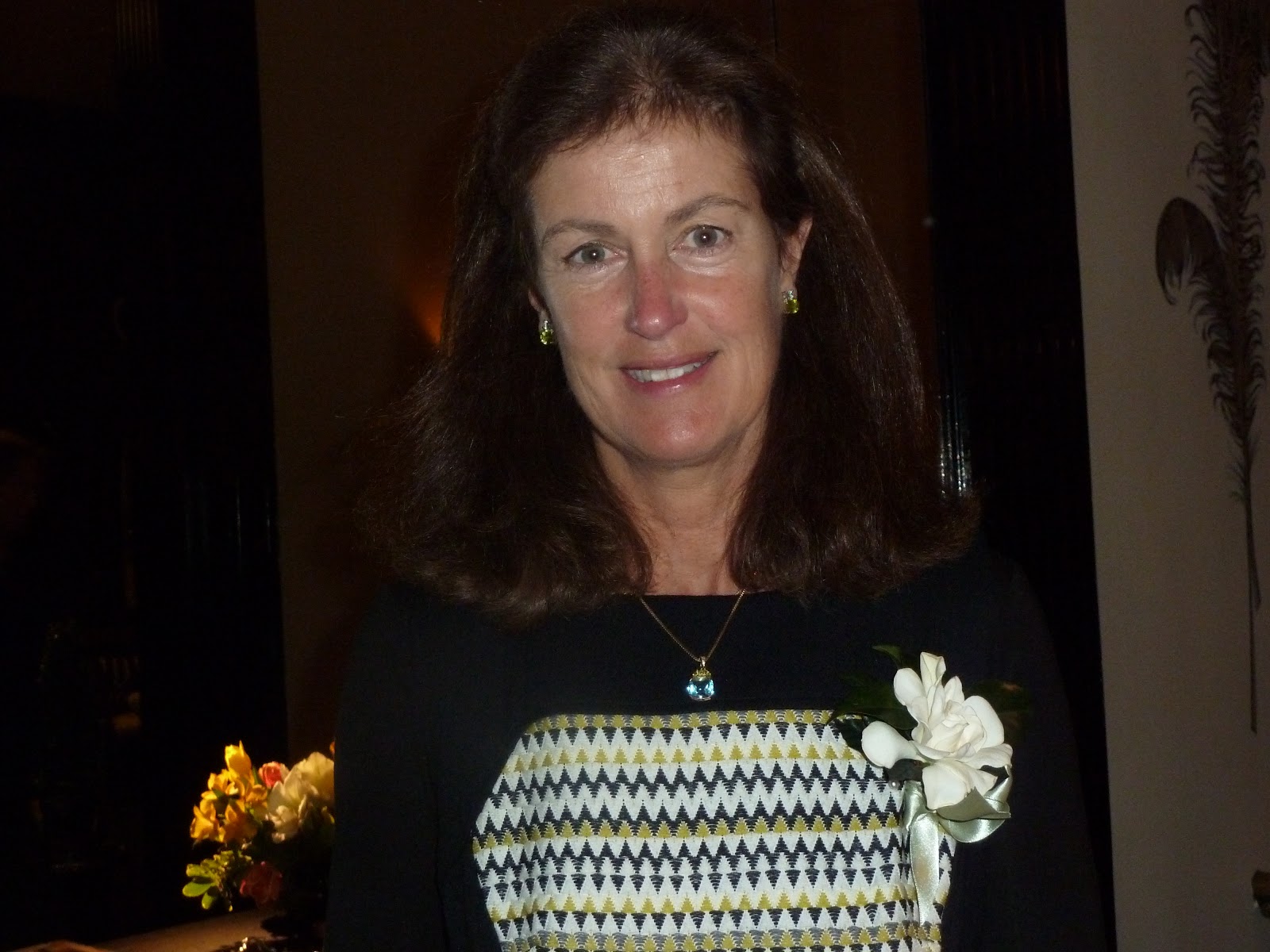
Lady Henrietta Spencer-Churchill

The author/speaker is the eldest daughter of the 11th Duke of Marlborough and spent much of her life at Blenheim Palace; no wonder she is so well known as an interior designer!  You can access her website here.

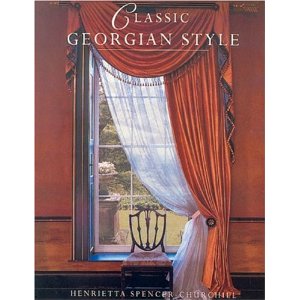
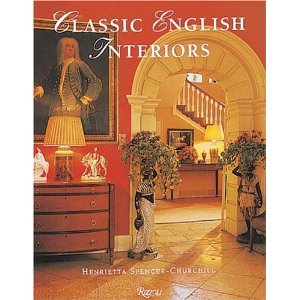
Below are some of Lady Henrietta’s previous books, all quite lovely and worth anyone’s coffee table, even if the surrounding decor its not quite up to her example!

A Couple In England – Half Moon Street

I try to stay in a different part of London each time I visit. So far, I’ve stayed in various hotels in Victoria, Bayswater and Kensington. This time over, I’ve opted to stay in Mayfair, more precisely in Half Moon Street, located between Piccadilly and Curzon Street. According to Christopher Hibbert’s London Encyclopedia, Half Moon Street took its name from a public house which stood on the corner of Piccadilly. The street backs onto Shepherd’s Market and is literally around the corner from the In and Out Club on Piccadilly, shown below.

In The Handbook of London: Past and Present, Volume 1 by Peter Cunningham, we find the following mentions of HALF MOON STREET, Piccadilly –
“Last Friday evening died Mrs. Winter, who many years kept the Half-Moon Ale-house, in Piccadilly, in which it is Said she acquired near 8000L., which she has left to her poorest relations.”— Gazeteer, Sept. 6th, 1758.
” Yesterday, James Boswell, Esq., arrived from Scotland at his lodgings, in Half Moon Street, Piccadilly.”— Public Advertiser, March 11th, 1768.
While lodging in Half Moon Street in 1768, Boswell entertained Dr. Johnson, Dr. Robertson, Baretti, and other literati. In fact, Half Moon Street lays claim to many literary residents. Pope, the actor, lived at No. 5, and his first wife, the celebrated actress (formerly Miss Young), died at the house on the 18th of June, 1803, aged 26. The celebrated physician, Dr. Samuel Merriman, occupied No. 26 from 1813 to 1825; and John Galt, the novelist, was at No. 29 in 1830. William Hazlitt, the essayist, lodged at No. 40 for a short time. He came from Down Street in 1827, and went to Bouverie Street, Fleet Street, in 1829.
In A Wanderer in London, author Edward Verrall Lucas, tells us –
“In Half Moon Street, named, like many other London streets and omnibus destinations, after a public house, lived for a while such very different contemporaries as Hazlitt, Shelley and Madame d’Arblay. I like the picture of Shelley there a hundred years ago: “There was,” says Hogg in his life of his friend, “a little projecting window in Half Moon Street in which Shelley might be seen from the street all day long, book in hand, with lively gestures and bright eyes; so that Mrs. N. said he wanted only a pan of clear water and a fresh turf to look like some young lady’s lark hanging outside for air and song.”
In addition to Shelley, Fanny Burney, Madame D’Arblay, lived for a time in Half Moon Street. In Literary Landmarks of London, Laurence Hutton writes –
“Madame D’Arblay (moved) to the corner of Piccadilly and Half Moon Street, on the east side of the latter thoroughfare; but the house no longer remains. She died in Lower Grosvenor Street, New Bond Street, in 1840. I remember Madame D’Arblay (Fanny Burney) living on the east side of the street, in the last house overlooking Piccadilly. Her sitting-room was the front room over the shop, then a linendraper’s, now a turner’s, shop.”

In Joyce Hemlow’s biography of Fanny Burney (Oxford 1958) we are told that, “In 1828 Alex, dissatisfied with his accommodation in 11 Bolton Street, persuaded his mother to move to 1 Half Moon Street, where he could have a large and well-lighted study. This dwelling was opposite Green Park and still near the squares that Fanny liked for their walks and fresh air. She was still within half an hour’s summons of the `gracious and beloved Princesses’ and easily accessible to members of the family who happened to come on brief visits to London . . . . . . Marianne Francis used to tell of typical evenings in Half Moon Street with Madame d’Arbvlay talking `in her animated, hand clasping, energetic French way, telling her long curious stories till she was quite hoarse, and dr Mama fast asleep but jumping up every now and then in her sweet way, to fall in with the current of the remarks, answering in her sleep.”
Moving forward in time, we come to a whole host of fictional literary characters who have called the Street home – Algernon Moncrieff’s Half Moon Street flat featured in the first act of Oscar Wilde’s The Importance Of Being Earnest, and Sapper’s Bulldog Drummond resided at 60A Half Moon Street. Personally, the most interesting fictional characters who live in the street are Bertie Wooster and his man, Jeeves. For live there still they must. Perhaps, if I’m vigilant whilst in residence there, I will catch a glimpse of Jeeves on his way back home from a shopping expedition at Berry Brothers. At the very least I may spot Gussie Fink-Nottle or Aunt Agatha. With luck, I’ll be invited round for a martini . . . . . . . .
And finally, since most things on Number One London tend to come back around to the Duke of Wellington, I’ll mention that Flemings Hotel in Half Moon Street was founded by Robert Fleming in 1851, a date commemorated by the hotel’s stained glass window depicting the Great Exhibition at Crystal Palace. Before founding the hotel, Fleming was a valet to the 1st Marquis & Marchioness of Angelsey at 1 Old Burlington Street in London. And that finishes up this post pretty neatly, what ho?

A Dance with Jane Austen

Victoria here, admitting to a complete lack of grace on the dance floor.  Though I once loved dancing and took lessons as a kid, I am now nothing but a klutz, so I would rather watch than particpate when the orchestra tunes up — at all the elegant balls I attend.  Not!

However, that does not prevent me from enjoying others dancing — even in the form of this delightful volume, A Dance with Jane Austen: How a Novelist and her Characters went to the Ball by Susannah Fullerton.

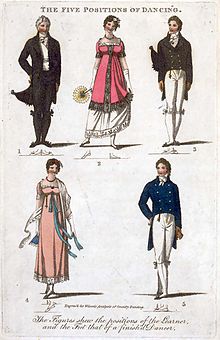
The five positions of Dancing
Analysis of Country Dancing, 1811

A Dance with Jane Austen by Susannah Fullerton was published in October 2012, with a foreword by Deirdre LeFaye, by Frances Lincoln Limited, $24.95.

Two hundred years ago, local assemblies and balls were popular with the gentry, as were folk dances in the countryside. Jane Austen herself loved to dance and in her letters to her sister Cassandra often told about her encounters at various parties. Susannah Fullerton has turned her attention to this happy form of expression – after her previous book, which certainly surveys a darker side of life. Her Crime in Jane Austen is an excellent source for students of JA’s work as well as for the casual reader.


According to Fullerton, “Dances in the Regency era were almost the only opportunity young men and women had to be on their own without a chaperone right next to them, and dancing provided the exciting chance of physical touch.”  Fullerton’s favorite dance scene “is the Crown Inn ball in Emma…when Emma first starts to view Mr. Knightley as an attractive male, rather than as an old friend and family connection…it thrills me every time.”

Emma, BBC, 2009

Fullerton analyzes each dancing scene in Austen’s novels, including her unfinished The Watsons which has an extensive scene set at a dance. In each case, she summarizes the scene and explains its role in the development of relationships among the characters and its role in the plot. Many of the novels have several dancing scenes, from country house parties to county assemblies to large private balls. Dancing offered the young lady a place to exhibit her charm, her fine person and her grace, or it offered an opportunity to be slighted, to be only a wallflower, or to choose the wrong partner, whether it meant having toes crushed or a blot upon one’s reputation by allowing the attentions of a rake.  Jane Austen’s characters have experience of all forms of delight as well as disappointment.

In addition, Fullerton tells us about that most exclusive subscription dance series at Almack’s, the height of social achievement in London. She describes the role of the Bath master of ceremonies, such as Beau Nash and his successor Mr. King. Other sidelights tell us of the music and musicians, ball attire, and typical suppers at a ball.

Quadrille at Almack’s
This volume is full of lovely illustrations and should be a candidate for the bookshelf of every lover of Jane Austen’s lively novels.

Susannah Fullerton

Susannah Fullerton is president of the Jane Austen Society of Australia. In addition to her writing and speaking engagements, she has led literary tours in her home country, in Britain, and in the U.S.


Emily Davison – Accidental Martyr?

A little over a year ago, we posted a blog about Emily Davison, the suffragette who was killed by the King’s horse at the 1913 Derby. There has always been speculation as to whether Davison’s death was a terrible accident or a planned suicide. You can find our original post here. Recently, new evidence about the incident has come to light and there was an article in the Daily Mail which raises new questions and proposes further theories. We thought you might be interested in these developments and so offer a link to the article here. What is perhaps most surprising is that the entire incident was caught on film, which can be viewed at the end of the article.