
Category: Uncategorized
On The Shelf – WWII Housewives Diaries
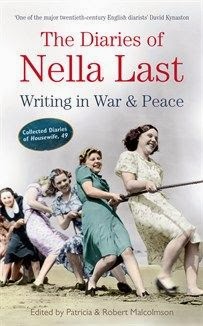
Lately, I’ve been engrossed in the diaries kept by British housewives during Word War II, the most well known of which is probably The Diaries of Nella Last, a Cumbrian housewife with a talent for writing who chronicled her life and times for the social research organisation Mass Observation, which set out to record everyday life in Britain through the cooperation of about five hundred volunteer observers who agreed to keep regular diary entries. Many other Mass Observation diaries, now held in the Mass Observation Archive at the University of Sussex, ended with the conclusion of World War II. Nella, however, kept sending in her diaries to the Mass Observation office in London and continued writing until 1966 (Nella died in 1968). Her diary, consisting of around 12 million words, is one of the longest in the English language.
On the home front, Nella volunteered in a local canteen and charity shop, amongst other war work. She was an amateur doll maker and took pride in her ability to put tasty meals on the table and to keep house and home together through shortages, rationing and the occasional bombing. Through her war work, Nella’s world broadened beyond the boundaries of her house and family – and a husband whose dislike for socializing decidedly cramped Nella’s style. Of course, Nella never dreamed that her diaries would be published, and so she wrote from the heart, often worrying, sometimes griping and always with honesty. The Diaries of Nella Last is a compilation of diary entries from all of Nella’s published diaries. Other books include Nella Last’s Peace, which includes diaries from the post war years, and Nella Last in the 1950’s. Click here to read a review of Nella’s post war diaries.

Nella’s day to day life is both ordinary and compelling. In 2006, ITV made a film based her diaries called Housewife 49. You can watch a clip of that movie here.
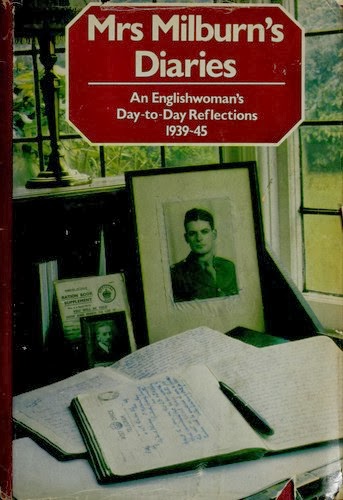
The next diaries I read were Mrs. Milburn’s Diaries: An Englishwoman’s Day-to-Day Reflections 1939-1945. Clara Milburn and her husband, Jack, have one son, Alan, who was captured at Dunkirk in June 1940 and spent most of the war years as a prisoner of war. Thoughts of Alan dominate these pages and Clara is much more meticulous in recording the actions of the British, American and Russian forces. Less homey than Nella Last’s diary entries, Clara Milburn still has the power to involve the reader in her day to day concerns and her entries teeter between war reporting and chatty news:
“Tuesday, 15th July, 1941 – St. Swithin’s Day – and there were several showers! There was also a letter from Alan from Stalag XXA, dated 30th May, when he was very well and said they were probably going to move again: `Actually we have enjoyed our stay here.’ He really is amusing and seems to enjoy whatever comes! I am getting his parcel together as I want it to go as soon as I get definite confirmation that he is at Oflag 1XA.
“It is good to know that an armistice with Syria is signed and sealed, so that fighting has ended, but it cost us 1,500 men. We are now definitely allied to Russia. They are fighting well and giving the Germans hard work for their advance into Russia – not far yet.”
And then
“Tuesday, 17th March, 1942 – A letter from Alan. He sounds well and busy. I went off to Coventry in the car at 10.30 and at two minutes to 11 arrived at the Bishop’s house, parked the car safely and spent an enjoyable day hearing M.U. business. Afterwards called on several people, including Katie Bluemel and her mother, and heard of their burglary. A man called saying there was trouble with the main electricity connection outside and could he just look at their plugs and other electric fires, etc. After he had been upstairs a little while (and Katie went up with him first), he came down, knocked on the sitting-room door, thanked her and went away. Later in the evening two cases of jewelry were found to be missing and, a few days later, two fur coats as well. The latter were probably thrown out of the window into a side lane.”
There are three more war diaries on my “to be read” list, the first being World War II London Blitz Diary -Volume I and II: A Woman’s Revelations Enduring War and Marriage Written by London housewife Ruby Thompson. A description from Amazon:
From the Author
Great Granddaughter of Ruby Alice Thompson Side – I inherited a set of 43 diaries that span from 1909 – 1969. They were given to my grandmother Ruth Ferris Thompson and she passed them down to me. I started re-reading the World War ll journals and found them extremely worthy of note on many levels. I realized how little I knew about the events surrounding World War ll and what the Londoner’s in particular had to endure. These journals are a combination of the historical and the exceptionally personal.
I thought that others may also find them intriguing and started a blog. In doing so I received reactions from people from around the world and this inspired me to publish them in book form for all to enjoy.
About the Author
Ruby Side Thompson, an ordinary woman living during the World War ll London Blitz bombing blasts history out of the realm of dry, dusty names and dates and places the reader in the midst of the terrifying events as they unfold. This is very important documentation and will have tremendous appeal to those who have an avid interest in the effect of the war on ordinary citizens.
In between the lines there is a glimpse of how life must go even in Britain-at-war as she deals with health issues, in-laws, censors, rationing and fashion. An excellent look at one woman’s view of World War II from before the war to England’s darkest hour.
Next on my list is War
and Peace and the Price of Cat-Fish, “A daily diary kept by ‘Uncle Fred’ which follows a family living in south London – full of lots of interesting domestic detail as well as how the war affected everyone.” You can read the diary online here.
and Peace and the Price of Cat-Fish, “A daily diary kept by ‘Uncle Fred’ which follows a family living in south London – full of lots of interesting domestic detail as well as how the war affected everyone.” You can read the diary online here.
Also online are May Hill’s WWII Diaries. From the website: “May Hill’s previously quiet English seaside village became an unwitting target for enemy aircraft, her only son a young volunteer in the RAF, her husband a Coastguard, and close family members early casualties. In rare moments of peace from ‘her own old enemy’ she became devoted to writing.
“Decades later, a fading old school exercise book, found hidden away in a forgotten drawer, began a family project of search and research. When, after several more years, the final cache of ‘missing’ diaries unexpectedly came to light, so did a wonderful surprise collection of May’s original poetry.”
A few years ago, the BBC ran an eight part program called Wartime Farm, in which three modern day scholars recreate what it was like to live and farm in Hampshire during WWII using period methods, equipment, recipes, etc. You can watch the first part on YouTube at the link above.
Do you know of any first hand, home front accounts of Britain during WWI or WWII? If so, please let us know by leaving a comment on this post – thank you!
Do you know of any first hand, home front accounts of Britain during WWI or WWII? If so, please let us know by leaving a comment on this post – thank you!
In Honor of Valentine's Day
Britain, the magazine of the British Tourist Authority, has chosen the top romantic gestures in British history to celebrate Valentine’s Day 2014. We couldn’t have put together a better collection — so here it is: Greatest Romantic Gestures
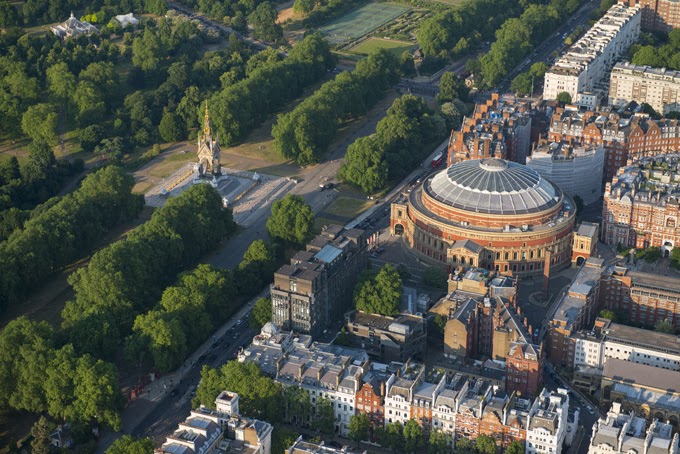
The Albert Memorial and Royal Albert Hall
Kristine and Victoria visited the wonderful exhibition in the Queen’s Gallery in 2010 Victoria and Albert: Art and Love, and we were charmed. You can explore it too, by clicking here.
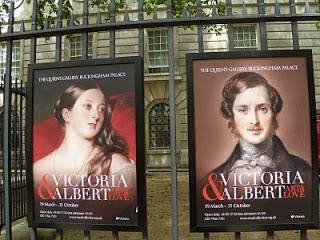
Queen’s Gallery, London, 2010
Read what Kristine and Victoria saw in the exhibition, here.
To all our readers, Happy Valentine’s Day. We love you!
Video Wednesday – Stately Home Renovations

Dumfries House
Prince Charles – the Royal Restoration of Dumfries House – Documentary 46 minutes.
Tim Wonnacott and Rosemary Shrager visit some of the castles, palaces and stately homes frequented by Queen Victoria during her lifetime. They begin with Chatsworth House in Derbyshire. 30 minutes.
I Own Britain’s Best Home – The Yorkshire Castle, a renovated folly. 10 minutes.
Grand Designs – The Dilapidated Georgian House– 55 minutes.
Tour round the interior of abandoned Berkyn Manor. 4 minutes.
Wentworth Woodhouse – the incredible, sinking stately home. 3 minutes.
Restoration Home – Stoke Hall. 49 minutes
And From Elsewhere On The Web . . . . .

We thought we’d pass along some interesting posts we’ve stumbled upon lately – something for everyone. Enjoy!
The Momento Moriatas – Killed By A Coffin, And Other Tales of Kensal Green Cemetery

The British Library Blog – How Research at the British Library led two authors to challenge 18th
century East End stereotypes and to write three books on the subject.

Views of London, No.5. Entrance from Mile End or Whitechaple Turnpike’. Maps.K.Top.22.6.e – S
The Georgian Gentleman – London’s first gas lights
The Guardian – Inside “Billionaires Row”: London’s rotting, derelict mansions worth 350m
Adventures in Historyland – Lady Butler’s Waterloo