REMEMBERING AUTHOR DIANA NORMAN

By Guest Blogger Jo Manning

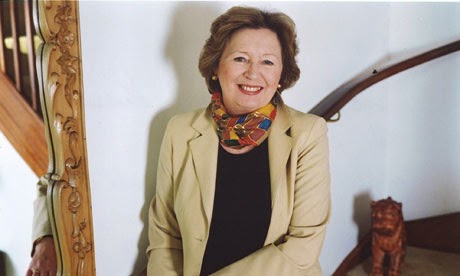
“I stagger towards the last line of a book like a drunk navigating furniture,” said Diana Norman. Photograph: Mary Jane Russell

The historical fiction author Diana Norman was a veritable giant of the genre.  Arguably, the best amongst many. Her history was impeccable, and she never shortchanged those readers, letting them know when she had to make things up for the purpose her plots. Her characters are remarkable, fully-fleshed-out human beings who are sympathetic and memorable, and her stories are romantic and compelling. She wrote books that were extremely difficult to put aside.
Although I first came to know her work upon the publication of her last series of books – Mistress Of The Art Of Death was the first one — those featuring the 12th-century Sicilian pathologist/medical examiner Adelia Aguilar, which the obituary in The Guardian opens with, I must disagree with the reporter’s assertion that Norman “was best known” for these books.  Those of us who love novels set during the English Restoration and Regency periods would beg to differ. (And I have my colleague Margaret Evans Porter to thank for introducing those to me.)
The Vizard Mask, set during the Restoration, when the son of the murdered King Charles I, Charles II, was put on the throne, restoring the Stuart monarchy interrupted by the Cromwell interregnum, is a masterpiece.  And it is a hefty piece of work, indeed; I thought it, however, too short, because the writing was so brilliant. Norman explored Restoration theatre – and the growing role of women on the stage – the harrowing Plague and its deadly consequences – the byzantine world of 17th century politics – and the Puritan/Roman Catholic conflict that was to continue on for many years after the death of Charles II.

Norman enriches her stories by mixing in many historic and literary personages along with her fictional characters. The Shores Of Darkness has a wonderfully funny profile of the always-in-debt/always-in-trouble-with-the-authorities pamphleteer and author Daniel De Foe (a recurring joke being those who are constantly corrected by the self-important Mr Foe to insert the “De” before what others think is his full surname). The Vizard Mask introduced me to an important and complex historical personage and military man, Prince Rupert of the Rhine, nephew of Charles I and brother of the Electress Sophia of Hanover, whom I’d not previously encountered.
Her women are wonderful!  Makepeace, the New England Puritan spinster/tavern owner (yes!) protagonist of A Catch Of Consequence is funny, good-hearted, and feisty. She captures the heart of an English aristocrat in this first book of her trilogy (the “catch” of the title), suffers mightily, wins, loses terribly, and finally triumphs to become a wealthy and fulfilled businesswoman, happy in her achievements and family and not brought down by widowhood and penury. The last of the trilogy is really her daughter’s story (the daughter she had with the handsome “catch”) who winds up in Paris during the Reign of Terror and is caught up in its ugliness and deaths.  That book is called The Sparks Fly Upward; the second of the trilogy – referred to as the Makepeace Hedley series – is Taking Liberties.
I did a good deal of research for the part of my biography of Grace Dalrymple Elliott, My Lady Scandalous, that had to do with the French Revolution and can attest to her good and careful research here. It is truly mesmerizing storytelling – and what intricate plotting! – both combined with meticulous factual information; Norman was a rare mistress of these arts that go into writing splendid historical fiction, much as her 12th-century character Adelia is a “mistress of the art of death”.
In all, she wrote some sixteen historical novels (four of them in the Adelia Aguilar series – and please note that titles were changed for publication in the United States) —  and three works of non-fiction, of which The Stately Ghosts Of England, a very short book published in 1963, is a fun read on her adventures in haunted houses.
Mary Diana Narracott, London-born, was taken to Devon to escape the Blitz. Hard to believe that she left school at the age of fifteen and went on to become such a fabulous writer. (But her father had been a journalist, so she came by her talent naturally!) She started out her career as a journalist, becoming probably the youngest reporter on Fleet Street. She married Barry Norman, a fellow journalist (he always said she was the better writer) – she wrote for the Daily Herald and he for the Daily Sketch — and they had two daughters.  Leaving Fleet Street for motherhood, she managed to squeeze in another career, that of local magistrate, whilst undertaking her newer challenge, the writing of fiction.
Barry Norman wrote a moving, loving tribute to Diana on her death that has been widely reprinted. You can read it here.   Keep a tissue handy during your reading of it.

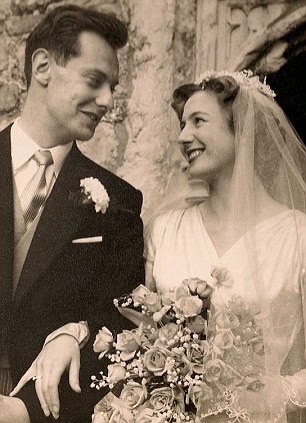
Diana and Barry on their wedding day in 1957
 
Barry Norman wrote: 

          She was beautiful, witty, highly intelligent, quirky, stubborn and always immense     fun to be with. She was a devoted wife, mother and grandmother and she was also — this is not just my opinion — one of the most gifted historical novelists around. I loved her to death and beyond.

She appeared on the New York Times and other bestseller lists and received awards from the Crime Writers’ Association for titles in the last of her series, which were genuinely more historical crime thrillers than her historical novels – though a soupcon of mystery was always a delicious part of those novels as well.

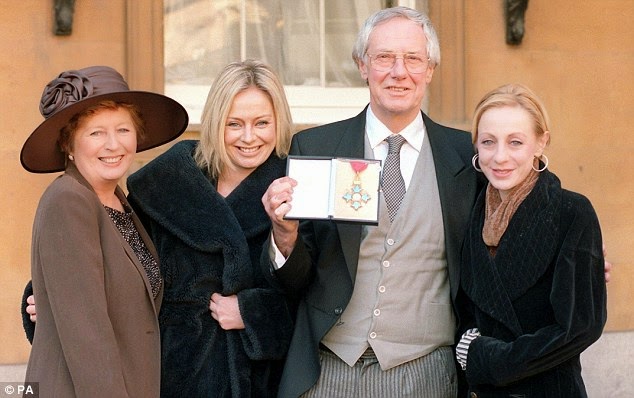
“Proud: Both Barry and Diana achieved acclaim in their chosen field, with Barry earning a CBE. They are pictured with daughters Samantha (left) and Emma (right)”

I love what she says about her writing her crime thrillers here and must end with this quote:
                “The lovely thing about the 12th century is that you don’t have to go too far to find wonderful plots. I always plot first. If you’re writing thrillers which, of all the genres, have to be well-constructed and not streams of consciousness, you’ve got to know where you’re going. I have the last line of the book in my head before I sit down to write and I stagger towards it like a drunk navigating furniture to get to the far side of the room.”
She once cited some of her literary influences:  Tolstoy; Dickens; Austen; Raymond Chandler; and John Le Carre. An eclectic mix…but, all, wonderful writers, as Diana Norman was. Do read her…you run the chance of becoming addicted, but I can hardly imagine a lovelier addiction than the novels of the brilliant Diana Norman.


LOOSE IN LONDON: KRISTINE LEAVES FOR HEATHROW – PART TWO

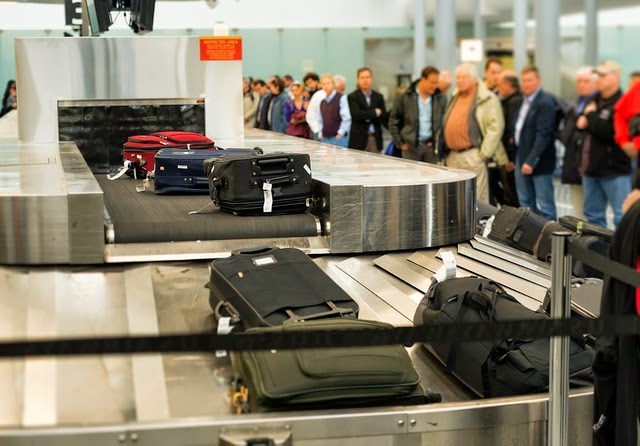
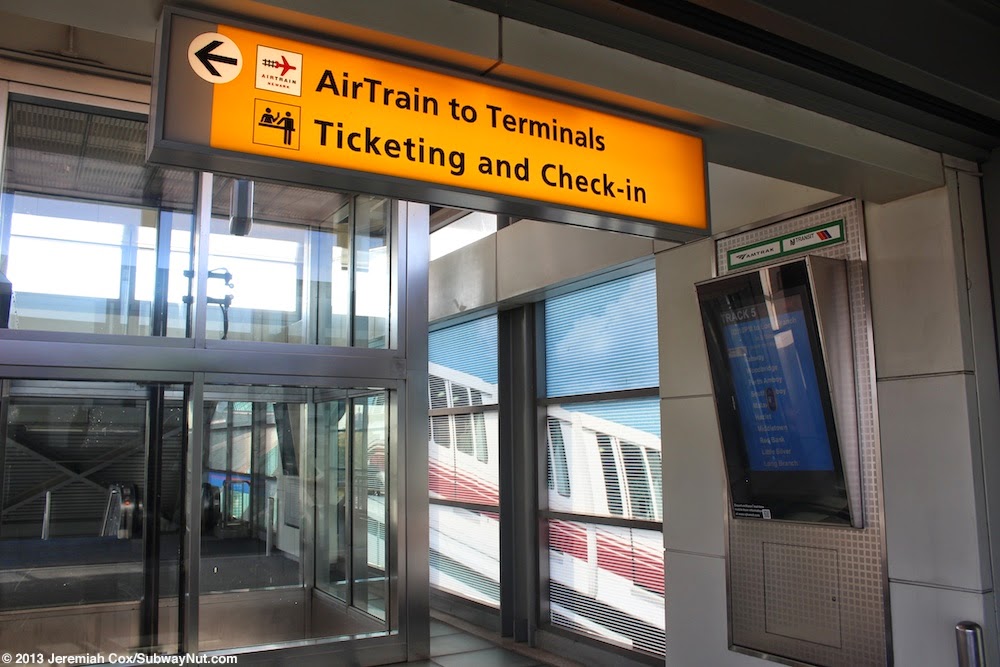
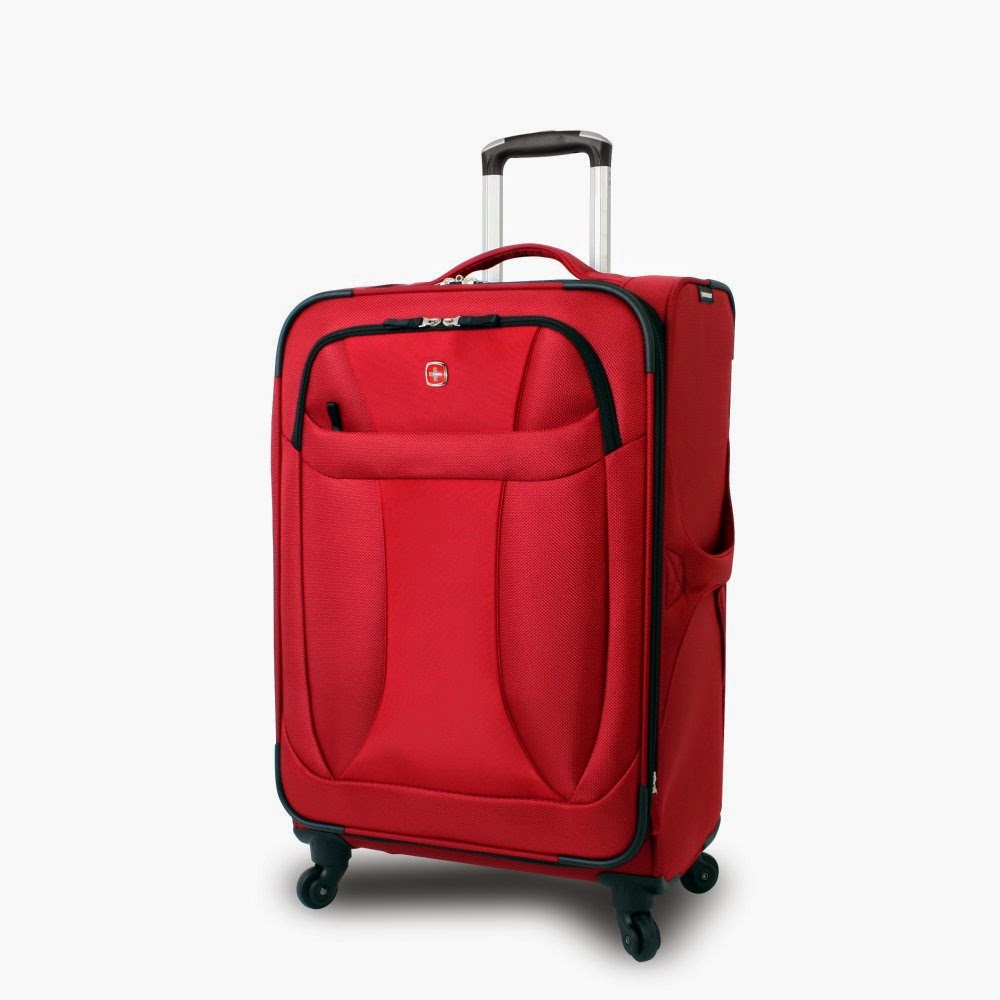
After the uneventful flight from Florida to Newark, I headed downstairs to the baggage carousel to retrieve my big, red suitcase. I pulled it off the conveyor belt, hooked my black carry-on bag over its handles and headed off to find the AirTrain that would get me from Terminal A to Terminal B, where my United flight to London was schedueled to take off in three hours time. 

Of course, the elevator that would take me up to the AirTrain was at the other end of the terminal, so off I trudged, pulling Big Red behind me.

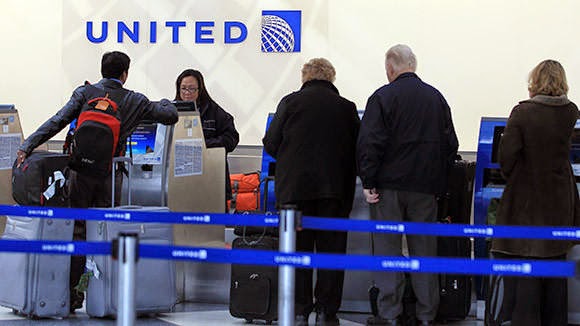
Once in the correct terminal, I again had to walk the length of the place to get to the United desk, where I waited in line for some time. Approaching the desk at last, I was told that this line was for ticketing only. If one already had a ticket, one had to go to the United desk on the floor above. Sigh.

So, I walked back the length of the terminal to the elevator and went up a floor. By now, the sandals I was wearing, i.e. my most comfortable sandals that I’ve been wearing daily for months with no problems at all, were beginning to hurt. “Just a bit longer,” I told myself, “and you’ll be in England for nearly a month. A month. You can do this!” 
As I got nearer to the United desk, I noticed that they now funneled all passengers through to the automatic check-in machines. I waited in the line for some time before I was finally able to put my passport into the machine and print out a luggage tag, which I then had to apply to my luggage. Then, I got in the long line waiting to approach the desk. 
“Do you have your boarding pass?” the United woman asked when I’d finally gotten to the front of the line.
“No. Don’t you give me the boarding pass?”
“No. You have to go that machine over there and print out your luggage tag and boarding pass.”
“I just printed out my luggage tag. And attached it to my suitcase. See?”
She saw. “Well you should have gotten your boarding pass from the machine at the same time. Go back to the machine you just used and see if it’s there.”
“Just a bit longer,” I told myself , “and you’ll be in England for nearly a month. A month. You can do this!” 
So back I trudged to the machine. No boarding pass. The passenger using the machine said, “Oh, I saw a boarding pass and handed it to her,” nodding towards a United agent nearby. 
“Excuse me, but this lady said she handed you my boarding pass. She found it in the machine.”
“Oh, yeah,” said the agent, “but I can’t hold on to them. Company policy is that I destroy all left boarding passes. You’ll have to go through the whole process again and reprint another.”
What fresh Hell was this? Surely this was a joke. I was on a hidden camera show, right? Or maybe this was all just a bad dream. Well, a nightmare. Praying that morning would dawn and I’d soon wake up, I went through the whole rigmarole with the boarding pass machine again and then lugged all my belongings back into the long line of passengers waiting to approach the desk. My feet were really beginning to hurt now, more specifically my two little toes, which were starting to let me know they weren’t happy. I told them to shut up. I wasn’t too happy, either. 
When it was finally my turn, again, the United rep asked me to put my suitcase on the platform and watched as I struggled with it. 
“Can you give me a hand here?” I asked.
“I can’t. It’s against company policy.”
I straightened up and stared at her. “It’s against company policy to help your customers? Is that what you’re saying?”
“It’s a health thing.” 
A health thing. Really? Cause none of this was doing my blood pressure any good. 
The upshot of my finally wrestling Big Red onto the platform was that it was overweight. This again. Sigh. “By seven pounds,” the rep said, suddenly wishing to be of some use. 
Seven pounds? Had they served Big Red an eight course meal while it rode in the baggage compartment?
“You’ll have to go back over there,” the United rep said, pointing back at the machines I had just come away from, For the second time. “You’ll have to take some stuff out of your luggage until it’s at fifty pounds.”
“And exactly how will I be able to tell when it’s fifty pounds?” I asked.
“There’s a scale next to the machine.”
“So let me get this straight – I have to tag my own luggage, print my own boarding pass and weigh my own luggage
. Is there anything that United Airlines is still prepared to do for it’s customers? I mean, I’m not going to be asked to serve drinks on board or to actually fly the plane to London, am I?”
“No, madam, you won’t be asked to fly the plane.”
“How much would it be if I just paid the overweight fee?”
“Two hundred dollars.”
“Two hundred dollars?!”
“I’m sure that if you just take a couple of things out of -“
“Right. Fine. A couple of things. That will then be with me in the cabin rather than with the suitcase in the baggage hold. On the same plane. Same weight. Same plane.”
“It’s company policy.”
“Of course it is. And what’s the company motto, Sempre Aggravate?”
“Just a bit longer,” I told myself, “and you’ll be in England for nearly a month. A month. You can do this!” 
So, I went back to the machine (we were on first name terms by this point), laid Big Red down, unzipped her and began to rifle through her guts. I took out one of the boxes of tour stuff and crammed it into my black hand held, along with the computer, camera, nook, power cords and make up it already contained. I took out the tour notebook with all our vital tour documents and stuffed that into my slouchy hobo purse. I took out several other things I thought would weigh the most and stuffed them in various places until both the purse and the black hand held were filled to bursting. And incredibly heavy. Then I went back and waited in line again. 
I got the same terrifically helpful agent when I got to the desk. I put my incredibly heavy carry on bags down and wrestled Big Red back onto the platform. 
“You’re still a bit overweight,” the nice lady said.
I stared at her. She stared back. Cue Western gunslinger music. 
“Maybe if you just take out something small,” she said helpfully.
“And put it where? You only allow two pieces of carry on baggage and both of my bags are already crammed full of stuff.”
“Just something small.”
I unzipped Big Red and found a sandwich sized baggie that I’d filled with tea bags and removed it. 
“There!” the rep said, looking at the scale. “That’ll do it.”
“Really. Really. An eighth of an ounce made all the difference, did it?”
“You’ll be boarding at gate 2,034. Have a nice flight!”
Part Three Coming Soon!

TRAVELS WITH VICTORIA: VISITING JOSEPHINE'S GARDENS

 
Following up on my post about Malmaison of last week (click here), here is more about Josephine and her gardens.
 
 
The Path to Malmaison, near Paris
 
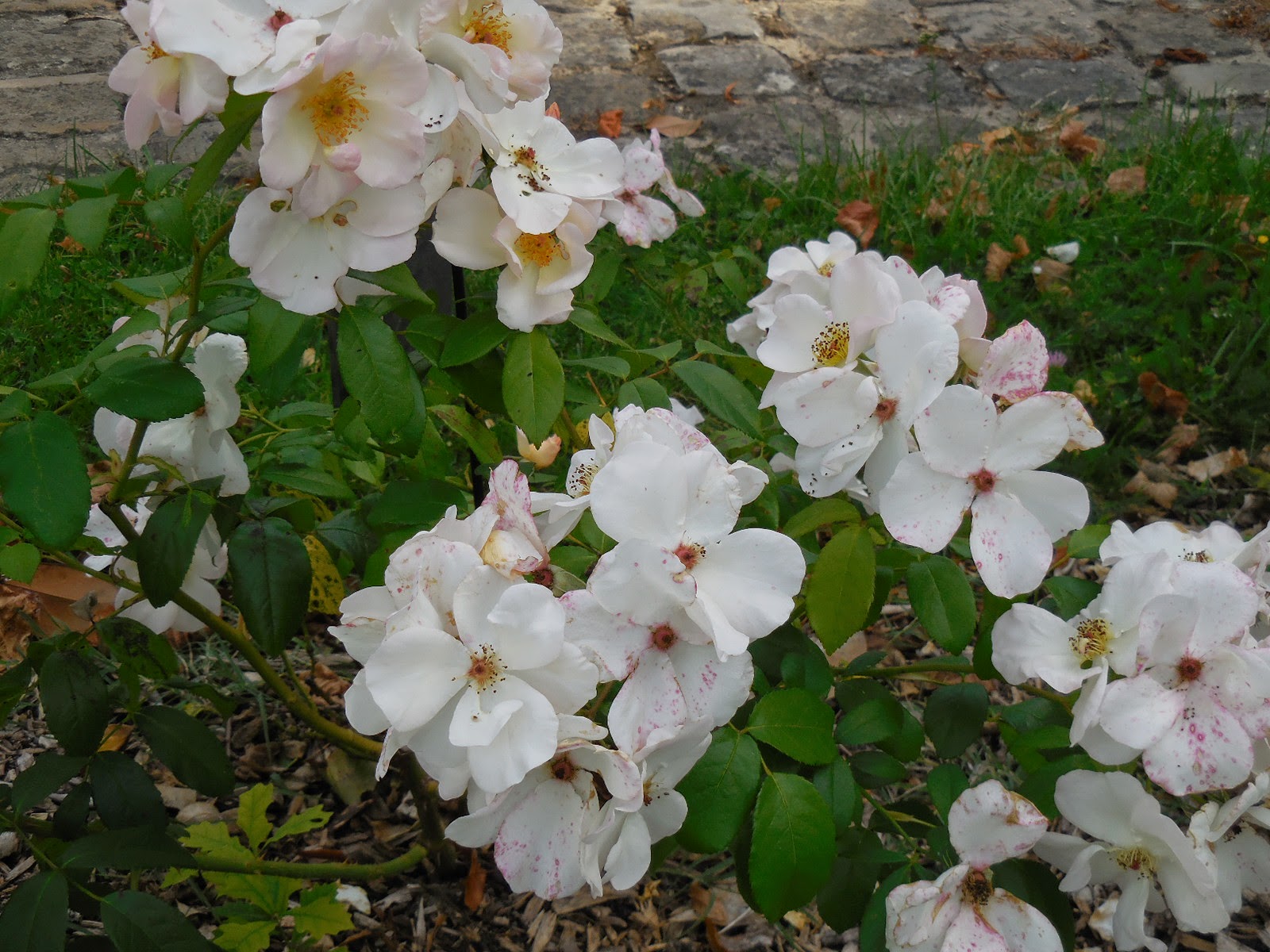
Josephine Bonaparte was famous for her roses, a reputation she carefully cultivated along with her precious blooms. It is widely reported that, even at the height of hostilities, shipments of English roses to the French Empress had special dispensation to pass through both British and French blockades to reach her.


It is also said that Napoleon sometimes had French ships stop and search commercial vessels to find plants for his wife. Although I am certainly not a fan of Napoleon’s military career, and I have only a grudging admiration for his administrative achievements (the Civil Code, metric system, etc.), I am endlessly fascinated by the life of Josephine.
 
Born Marie Josephe Rose Tascher de La Pagerie in 1763 on the Caribbean Island of Martinique, she went to Paris in 1779 at age 16 for an arranged marriage to Viscount Alexandre de Beauharnais.  Though they had two children, Eugene (1781-1824) and Hortense (1783-1837), it was not a happy marriage. During the Reign of Terror, Alexandre was guillotined in 1794 but, though imprisoned, Josephine was released. 


Josephine is reputed to have had an active social and love life in Paris after the Reign of Terror.  Napoleon, several years younger than Josephine, fell in love with her and they married in 1796.  In 1806 her husband crowned her as Empress and himself as Emperor of the French. 

 
Although she was already a mother twice over, Josephine failed to provide an heir for the Emperor. The marriage to Napoleon was annulled and Josephine, reluctantly agreeing to the inevitable, came to live at Malmaison for the rest of her life.  She died in 1814, after a stroll in these gardens with the Tsar of Russia.


Napoleon, though he had been as unfaithful to her as she had been to him, loved her until he died.  After Josephine’s death and after he was defeated the second time and was about to be sent to the remote South Atlantic island of St. Helena, Napoleon returned to Malmaison for a bittersweet parting from his late former wife. It is reported that her name was on his dying lips. 
 
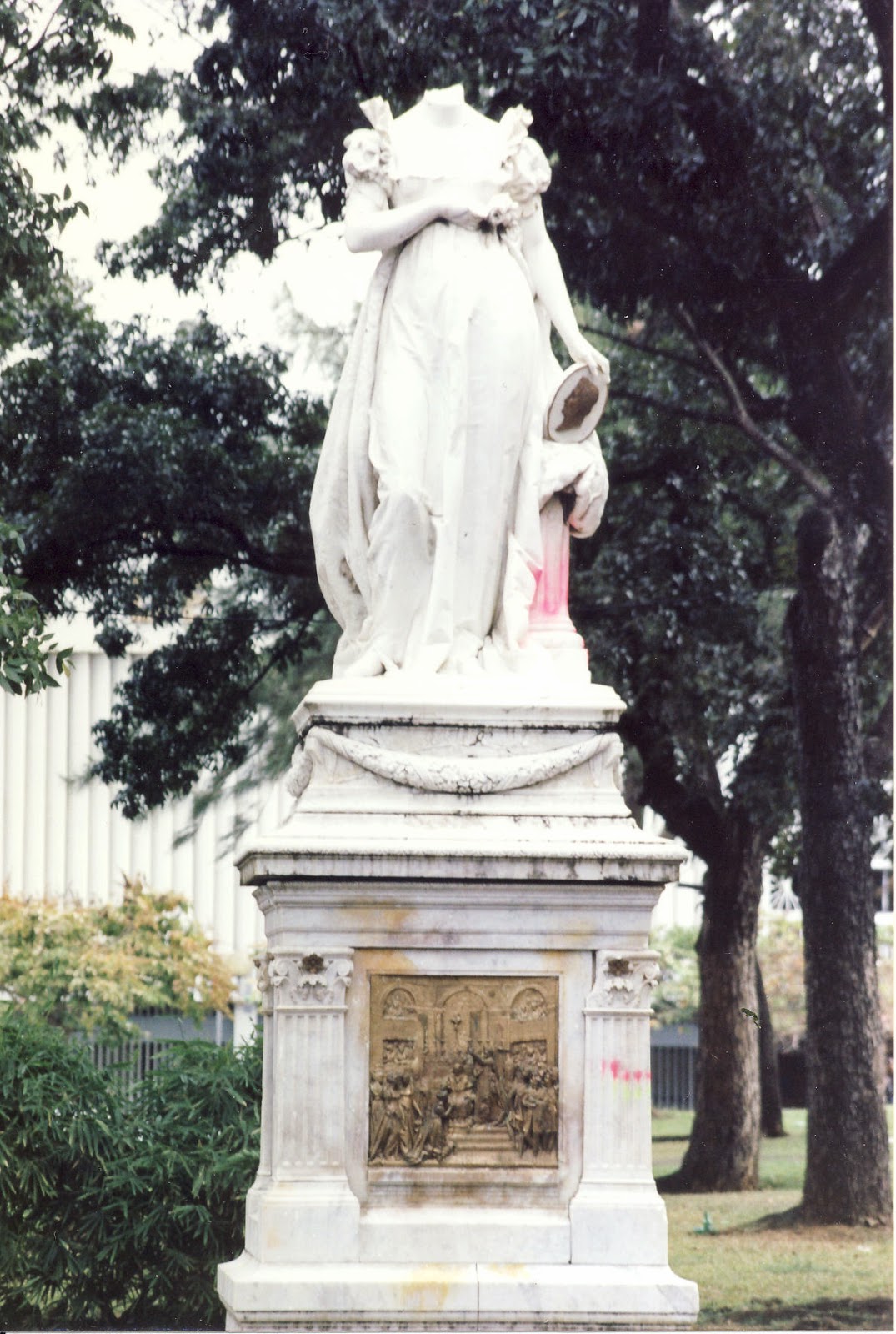
my photo of Josephine statue in Martinique, c.1991
 
In a bizarre footnote to Josephine’s story, her statue in Fort-de-France, capital of her birthplace, Martinique, was beheaded in the early 1990’s. The act apparently was to revenge the reports that she had once encouraged Napoleon to restore slavery to the island after it had been revoked for many years. Red paint was splashed on her severed neck and on her gown.  As far as I know, the statue stands beheaded today.


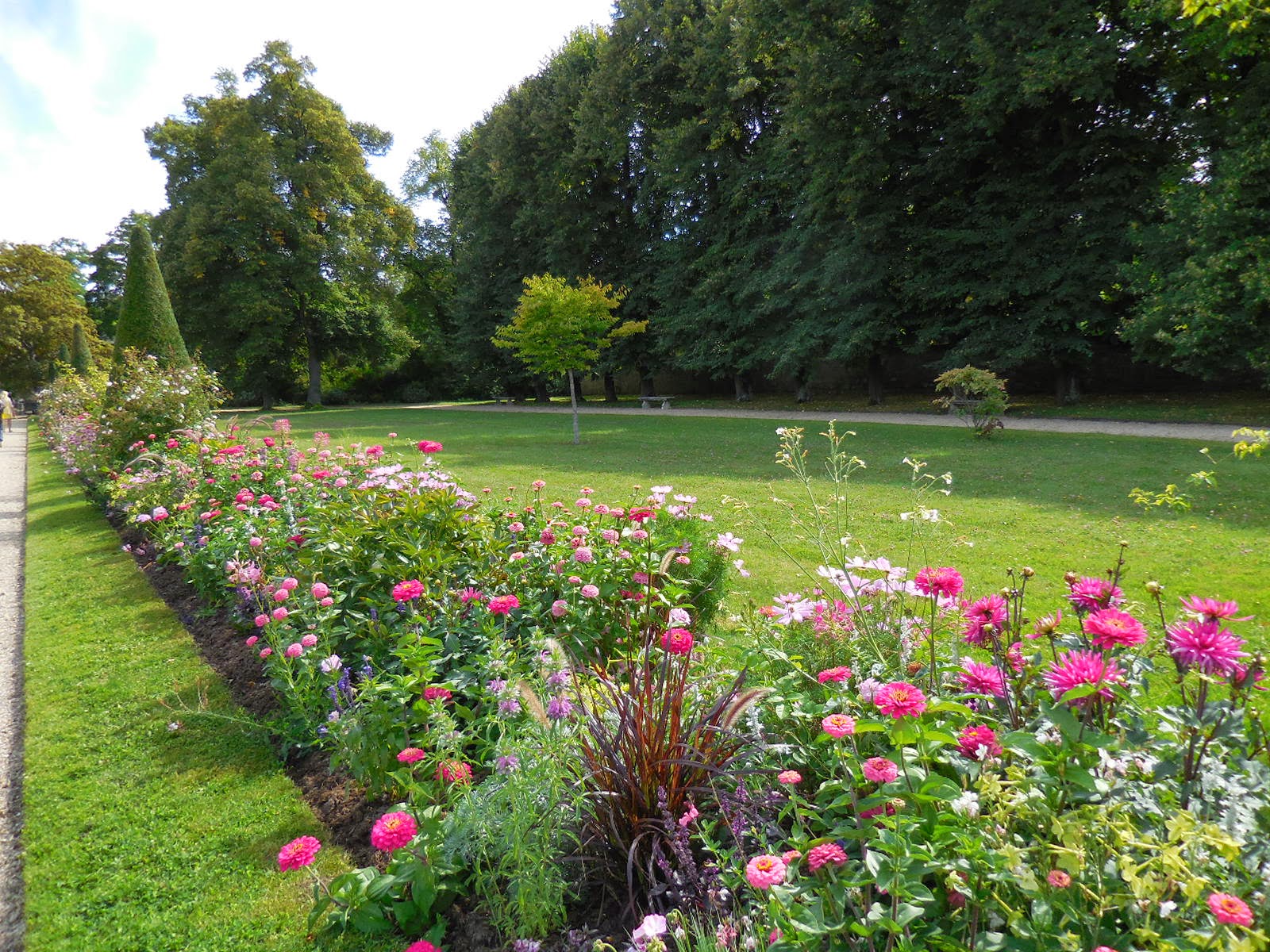
So  we don’t leave Josephine so forlornly, I will add that the Malmaison garden was also full of late-August dahlias. Whether or not she had  these blooms in her time, the gardeners of today have given some of them pride of place, perhaps in case the roses are dwindling by the end of summer.
Adieu, Malmaison


LOOSE IN LONDON: KRISTINE LEAVES FOR HEATHROW

I must confess that I had a bit of struggle preparing for my journey to England. The trouble began, as it often does, with the packing – the London weather was throwing me off. I’d been watching the weather reports and the temperatures were in the 70’s. No rain. Blue skies. I couldn’t believe it. In fact, I refused to believe it. Or, I refused to believe that the fine weather would hold once I’d set  foot on British soil. It’s never been nice weather when I’ve been in England. Ever. There may be a fine day or two, but a veritable heat wave? It couldn’t last.

So I began pulling out clothes for every kind of weather, including boots, scarves, an Eisenhower jacket with a fur collar, a trench coat, a velvet winter coat . . . . and all manner of assorted clothing in between. I felt that, like the Duke of Wellington, I should prepare for every eventuality. Wellington prepared for every battle by taking into account the possible conditions of the field in any event – fine weather, rain, mud, searing sun, thunder storms, etc. Knowing that English weather could very well include all of those conditions in a single day, I  thought I should be prepared, as well. Of course, Wellington also had myriad packing cases and baggage carts at his disposal, along with a full compliment of ADC’s to do his packing for him. I had only myself and a single large, red suitcase.

So in the end I took half of what I’d packed out of the equation, sorted everything into those clear plastic travel bags, rolled them up to get the air out and flatten them and threw in a few pair of shoes, hair curlers, a bottle of rum, a book, various other sundries and the two flat boxes of tour stuff I’d previously packed. I put my computer. camera, power cords, cosmetics and essential paperwork in a hand held carry on and slung a large, slouchy hobo purse over my shoulder and deemed myself ready to head to the airport for the first leg of my trip – the flight from Florida to Newark.

“Are you sure this bag isn’t too heavy?” Hubby asked as he wheeled the red suitcase out to the car. “Maybe we should weigh it.”

“I can’t take any less than that, I’m going to England for a month, after all. I need more than just a change of underwear and a toothbrush.”

“Well, okay, but don’t say I didn’t warn you,” Hubby said, struggling to lift the suitcase and tip it into the trunk of the car.

We drove in silence for a few miles before Hubby said, “I really think we should have weighed your suitcase.”

Sigh. This was beginning to grow tahrsome. “You should have come to England with me,” I said, more to take Hubby’s mind off my luggage than because I actually meant it.

Hubby took his eyes off the road and cut a horrified gaze in my direction. “For a month of Wellington stuff? No thanks! You go with Vicky and have fun. I’ll hold down the fort.”

We were silent for the rest of the trip to the airport, Hubby no doubt thinking about his close escape while I thought about Hubby’s forgetting to water my garden for an entire month whilst he held sway at the fort.

Before long, Hubby was pulling the car in front of the JetBlue departure’s area. I pushed the trunk release button while he popped out and round the back to wrestle with the suitcase.

“You want me to help you in with this? It’s pretty heavy.”

“No. I’ll be just fine,” I said as I wrapped my arms around his neck and leaned in for a kiss. “Please water the garden while I’m gone.”

“For the last time, plants don’t need to be watered every day.”

“The ones in pots do. Please.”

“Okay, okay. Do you have everything you need? Plane tickets? Passport? Money?”

“Yes, I’ve got everything. I’ll miss you,” I said, giving Hubby a last kiss.

“Yeah, me too. Say hi to Artie for me.”

“Will do,” I told him as I raised the handle on the big, red suitcase and started off

“You sure that’s not too heavy?” Hubby called after me.

I waved a final goodbye and entered the terminal, making my way to the JetBlue counter, where I handed over my passport.

The representative tapped a few keys before asking, “Are you checking any luggage today?”

“One piece,” I said, grappling with Big Red in order to place it on the scale.

“It’s over weight,” the rep said.

“By how much?” I asked.

“Four pounds. Can you take something out?”

“And put it where?” I asked. “I mean, if I take stuff out of the suitcase and put it in my carry on instead, I’d still be four pounds over the limit, wouldn’t I? It’s all going on the same flight, whether it’s in the hold or in the cabin, isn’t it? How much extra would I have to pay in order to keep everything where it is?” I slid my JebBlue Amex card across the counter to him.

The rep looked at the card and sighed. “Well, I’m willing to put the bag through as it is, but they might catch the overage in the baggage area.”

I smiled at him. “Thank you.”

“Right,” he said, handing over my boarding pass. “You’ve got priority for the security screening and extra leg room seating. Enjoy your flight.”

“Thanks again,” I told him before heading to my gate.

So much for overweight luggage. All of Hubby’s worry had been for nothing after all. This trip was going to be a lark.

PART TWO COMING SOON!

THE WELLINGTON TOUR: DENISE'S TAKE ON APSLEY HOUSE

Victoria and I are still organizing our thoughts and photos from The Duke of Wellington Tour and will begin posting in earnest about the Tour soon, In the meantime, you can read Denise Costello’s fabulous post about our private tour of Apsley House here in order to find out what she discovered behind these doors. 


entrance doors apsley house