THE WELLINGTON CONNECTION: LORD BRIDGEWATER

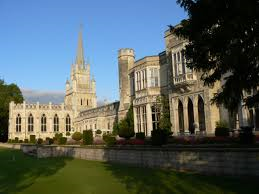
Ashridge Lord Bridgewater

From the Journal of Mrs. Arbuthnot – January 23, 1822:    We went to Ashridge (Lord Bridgewater’s in Hertfordshire) to meet the Duke of York and a large shooting party. The house has been totally built by Lord Bridgewater; it is modern Gothic, which I do not admire, but altogether it is certainly very fine; the rooms are magnificent, very finely proportioned and beautifully finished, the staircase is very fine indeed and highly ornamented. . . . The flower gardens and conservatories are beautiful and the whole establishment worthy of a great nobleman and an excellent good man. Lord Bridgewater employs 500 men all the year round upon his estate and makes it a rule never to refuse work to any who apply for it, and he frequently has 800 men in his pay. The shooting was excellent; Lord Londonderry was generally at the head and one day killed 107 head. The Duke of Wellington killed above 80 one of the days. I played whist in the evening with the Duke of York against the Duke of Wellington, whose luck at cards is quite extraordinary. It seems as if his good genius accompanied him in every, the most trivial concerns of life. Lady Bridgewater, one of the mornings, took Lady Londonderry and me all over the work shops where they were carving wood and stone ornaments for the chapel, which is certainly the chef-d’oeuvre of the house.


VIDEO WEDNESDAY: HISTORY COLD CASE

Aired on BBC Two, History Cold Case is a series that sees the skeletons of everyday people from across the ages analysed in staggering detail, opening new windows on the history of our forebears by literally revealing the person behind the skeleton.

This is a fabulous series, with each episode bringing the daily lives, times and history surrounding each skeleton to life. Wonderful for history lovers and medical enthusiasts. Many thanks to Jo Manning for bringing this to our attention!

 You’ll find the link to the full playlist here.

More about the series:

The fascinating work of world-renowned Professor Sue Black OBE and her team at the Center for Human Anatomy and Identification at the University of Dundee comes under the spotlight as the team works on answering three big questions from the skeleton.
Who were they? Why did they die? What does their life story tell us that we didn’t know before? Using the full arsenal of modern forensic anthropology, remarkable stories emerge from long forgotten bones, along with the faces of people who haven’t been seen for hundreds of years.
Ipswich Man. An apparently African skeleton, unearthed near a medieval English monastery, pushes Professor Sue Black’s forensics team to its limits.
Mummified Child. This time the team heads back into a dark corner of the 19th century, to a time when corpses were turned into trophies and children were sold by the inch.
Stirling Man. Mysterious skeleton discovered by accident in a series of forgotten rooms in Scotland’s Stirling Castle.
Crossbones Girl. A skeleton unearthed in an archaeological dig in the historic borough of Southwark in London sparks a new cold case when it is found to be covered with disfiguring scars.
The Skeletons of Windy Pits. For decades experts have remained baffled by a jumble of human bones discovered in a unique series of caves on the North York Moors, known as the Windypits.
The York 113. In 2008, construction workers just beyond York’s city walls uncovered 113 bodies in a mass grave.
The Bodies in the Well. When the remains of 17 people – men, women and 11 children, one as young as two years old – were discovered in a dry well shaft in Norwich city centre, the local community were keen for answers about who these people were and what happened to them.
The Woman and Three Babies. In the sleepy commuter town of Baldock in Hertfordshire the History Cold Case team is called in to investigate the discovery of a skeleton dating from around 100AD, buried in a bizarre position, along with the remains of three babies.

LOOSE IN LONDON: KRISTINE MUSES ON MUDLARKING

You may recall a prior post about mudlarking on the River Thames that I wrote a few years ago – you’ll find it here. I had been longing to return to the River again and was chuffed when Victoria said she’d like to take a turn at mudlarking while we were in London.

Victoria and I started out as part of a London Walks mudlarking tour on Sunday morning, with at least thirty other people in our group. The group was so big that the guide and her assistant broke us up into two groups, while she went back and forth relating the history of the Thames, it’s bridges and, incidentally, mud larking. This went on for quite some time before Victoriasidled up and asked me if we were ever going to get the opportunity to actually get our hands dirty, so to speak. After all, we were almost an hour into the walk and we were still on the northern side of the river.
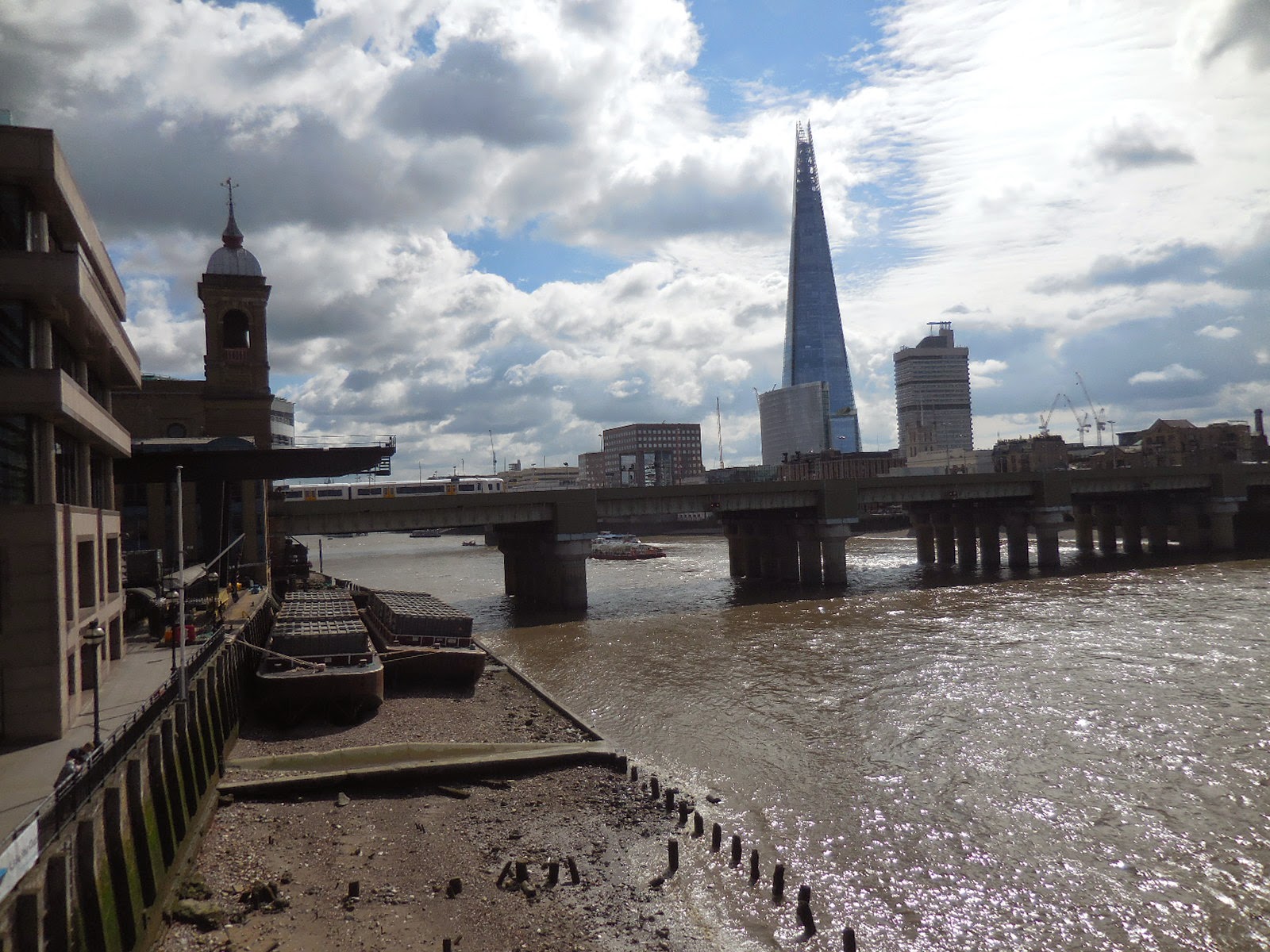
Finally, we got across the Thamesand no sooner had we arrived then we lost the tour group. Both tour groups, in fact. The guide had organized us, in two groups, around a set of steps while she told us about something to do with shipping history. Victoria and I had only briefly wandered away and when we turned back, all thirty-something of them had vanished. Considering the size of the two groups, it was uncanny that we could find no sign of any of them. Poof! and they were gone. This did not bode well for our own turns as tour guides in the not too distant future.

“What are we going to do now?” Victoria asked, a tad worried.
“We go mud larking, as planned.”
“But where?”
“Anywhere. There are several sets of stairs on this side of the Thames that lead down the river. If the gate at the top of the steps is unlocked, all we have to do is climb down to the river bank.” I looked over the railings on the Queen’s Walk to the riverbed below. “Look,” I said, pointing at some near distant mud larkers. “They’ve gotten themselves down there, we can, too.”
“Are we allowed? I mean, can we just go down at any point, or is there a designated mud larking spot?”
“Well, no one’s ever stopped me before. If a Peeler with a truncheon comes along and threatens to haul us in as vagrants, we’ll move on. Come on, we’ll go down to the steps that Brooke and I used last time. I know they’re accessible.”

So we walked down to the spot in question and sure enough, the gates were unlocked. Not only that, but there was some sort of Clean Up the River type event going on, so there were several people picking through the sand already. Vicky and I got out our Ziploc bags and climbed down the stairs.
“You want to pick through the stuff at the top here, near the wall and stairs. Everyone typically heads for the waterline first, and they walk right past some good stuff. Here,” I went on, ”take this stick and use it to push the sand aside.”  Within minutes, Vicky was mud larking like a pro, searching for blue and white pottery shards and anything else of interest. I found myself a large, flat shell and used that to dig with.

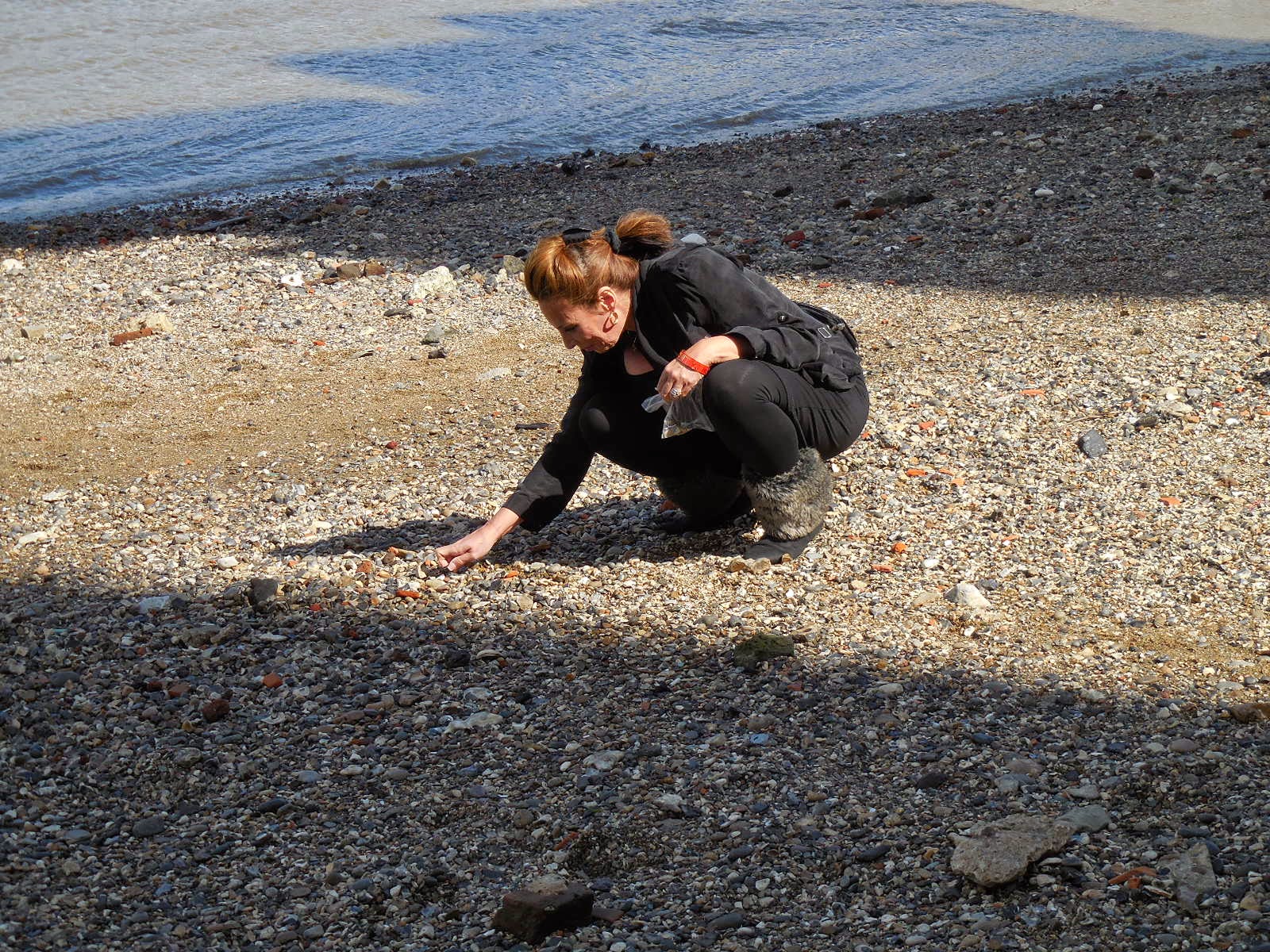
Here’s a photo of me on the River bank, wearing my now famous fur lined boots. Before long, Victoria and I had drifted apart. Her wanderings took her in one direction, mine in another as we both dug through a few decades, if not centuries, of silt and sand.

I love standing on the river bank with the tide out, exposing bits of Londononly a few people get to see.  It’s a way of communing with London, of getting to the heart of the City I love best. It isn’t glamorous, rather it’s real life at its most rough and ready. At one time, it was home to those who were London’s poorest – the mud larks who combed this stretch of river bank in search of anything of any value that they could turn into coin for a meal or a bed for the night. Just think of all of their stories, the tales that could be told by people who sailed the river, worked the river, whose lives were tied in some way or another to the eternal rhythm, the ebb and flow of the mighty Thames. 

I’ll always remember seeing the opening scenes in one of the Robert Downey Jr. Sherlock Holmes films – the London docks of the 19th century. Never had I seen a movie set that looked so exactly as I had always pictured a place in my mind’s eye. I felt that what I was looking at was 19th century London, magically brought to life on the screen. Imagine my dismay when I later found out that the scenes had actually been shot at Stanley Docks in Liverpool. Here’s a trailer from the film – there’s actually very little of the docks in the clip, but it’s a hoot.

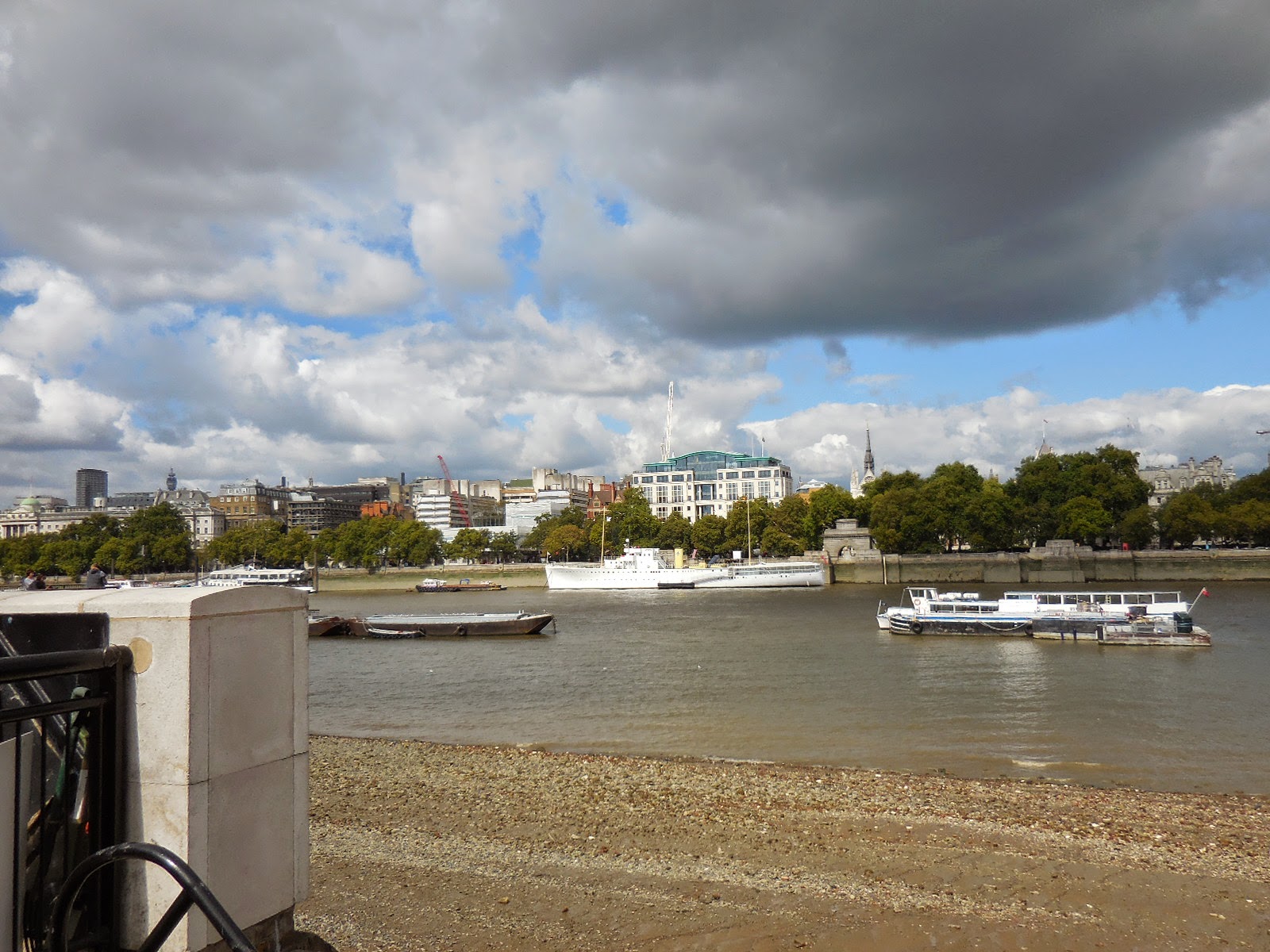
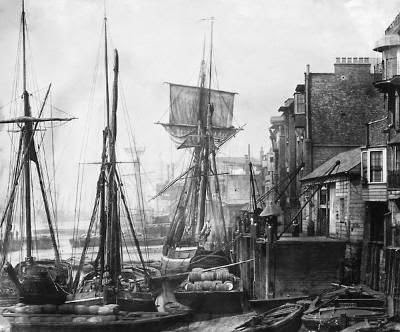
You’ll see from the photos below that it was glorious London day, perfect weather for being outdoors. This is what the riverbank looked like when we were there.
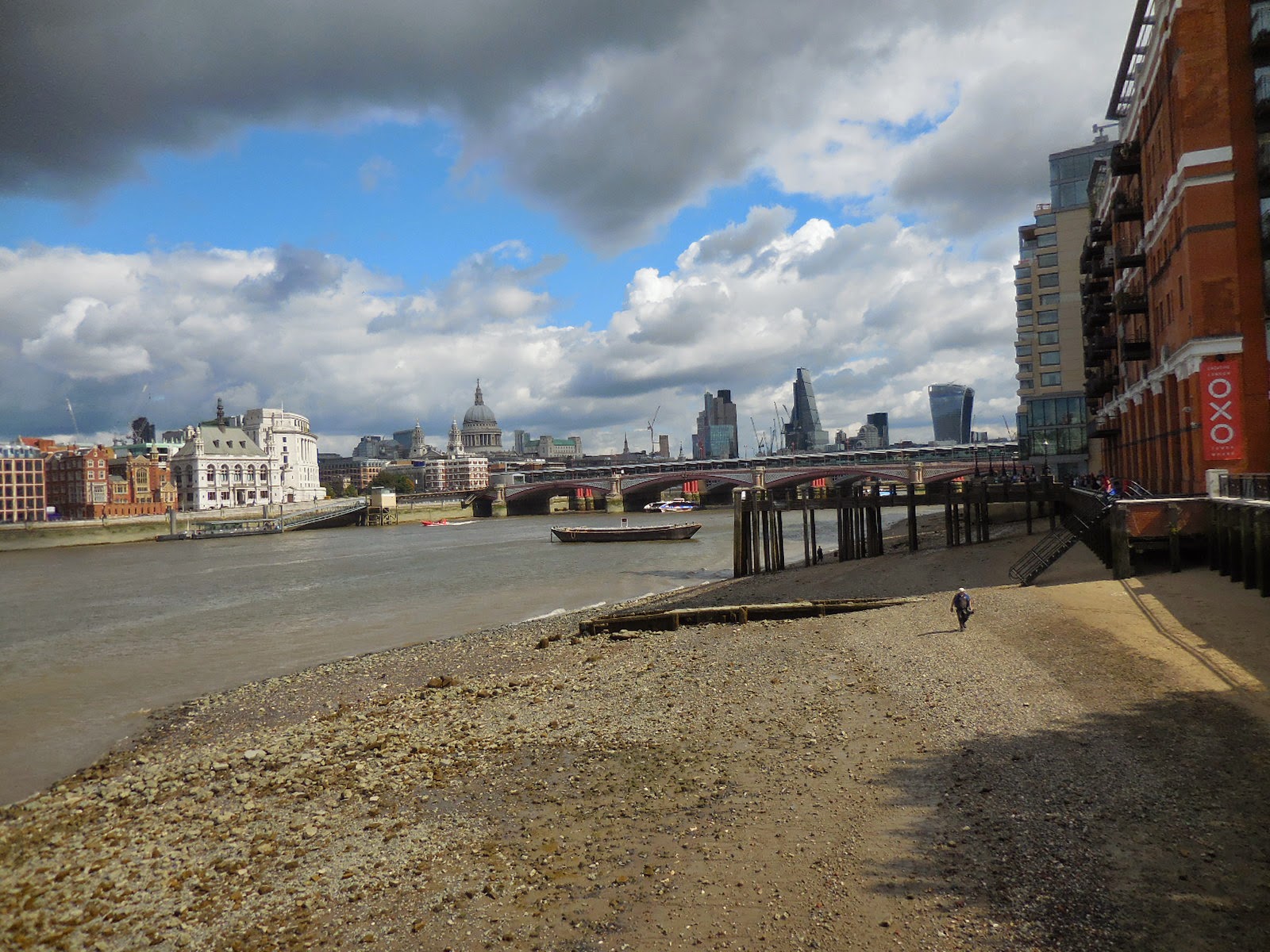
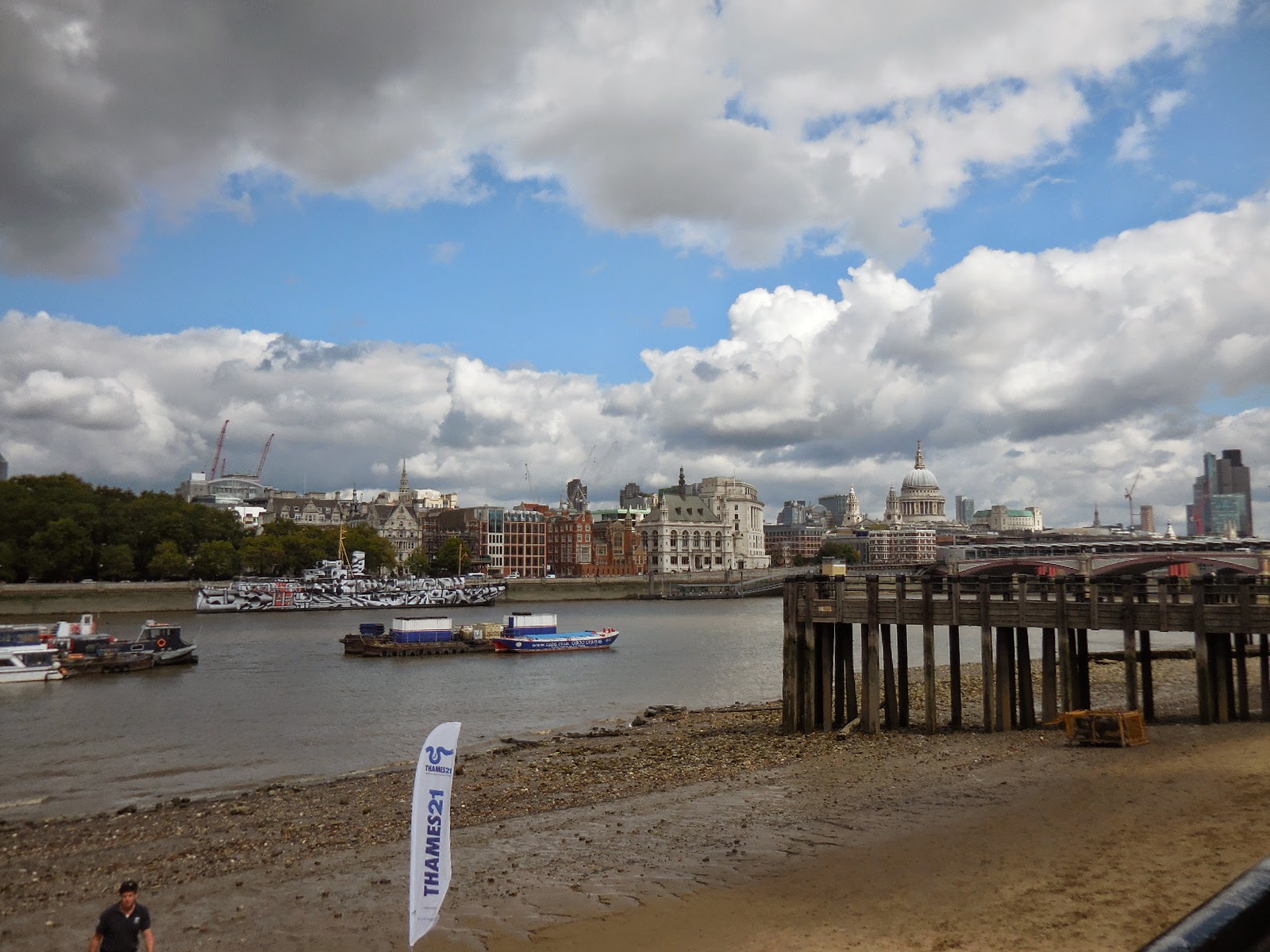
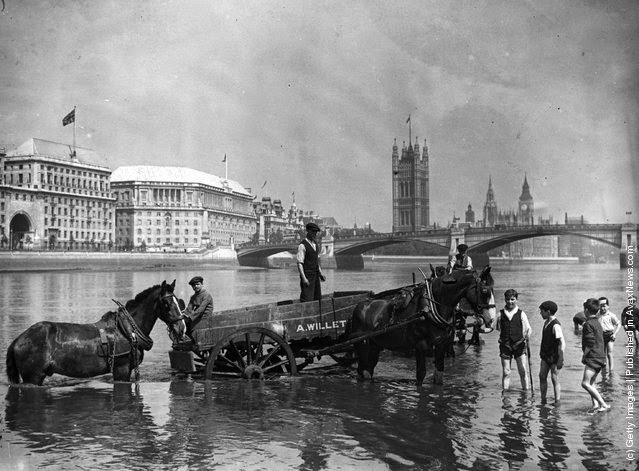
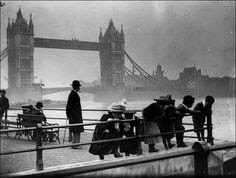
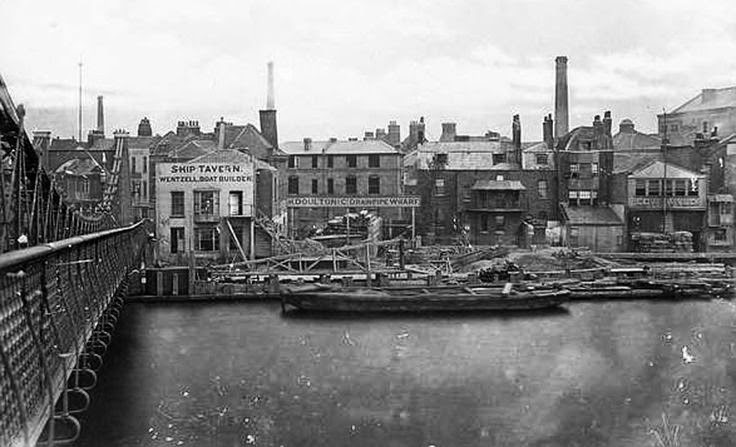
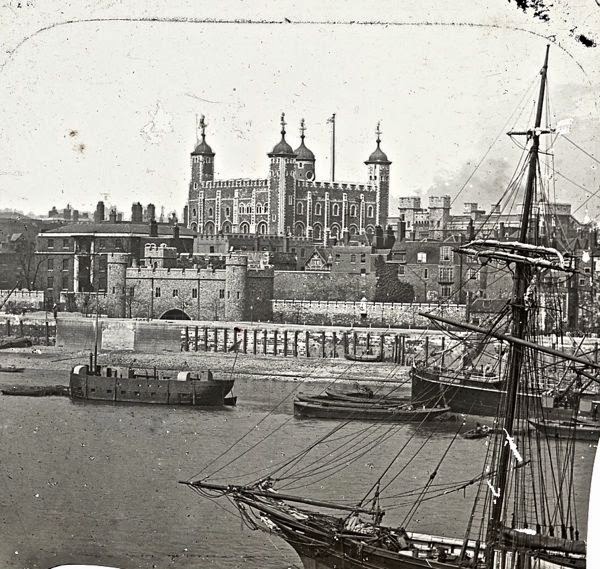
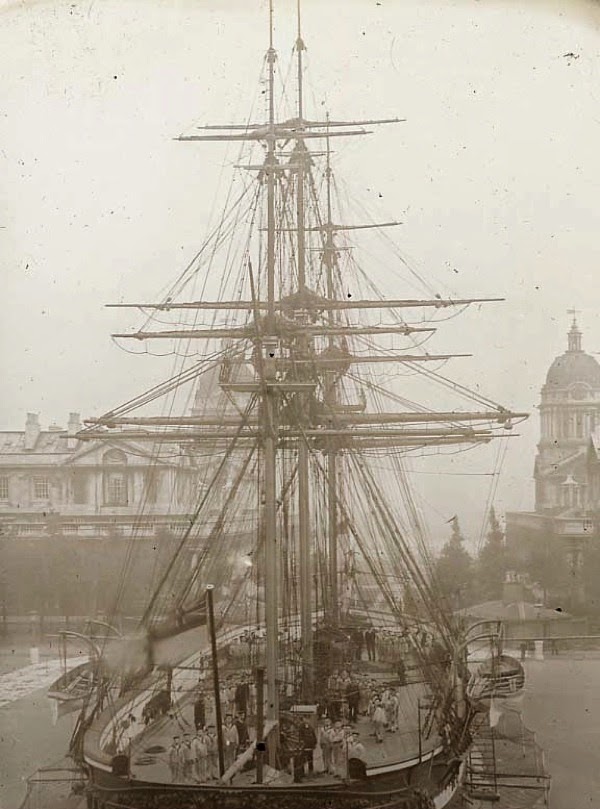
However, this is what I saw in my mind’s eye as I gazed out at the Thames. 

Yes, Victoria, I was picturing a place where everyone was wearing period costume. And sailing in period ships.

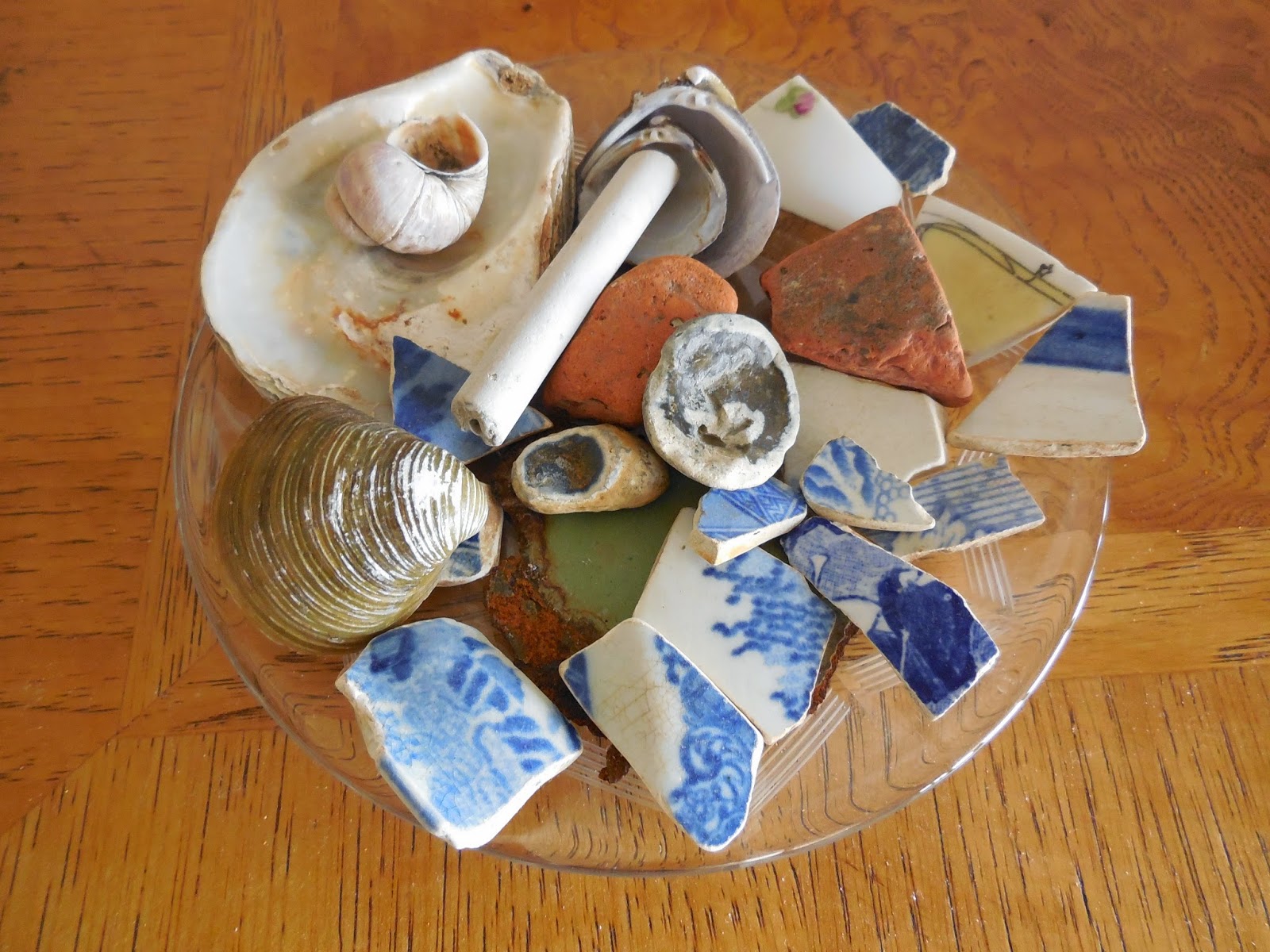
Back in the 21st century, Victoria and I had a fabulous time collecting treasures from the River. Pottery shards, pipe stems and bowls, animal bones, driftwood, bits of metal and, most surprisingly, shells. We spent not a few hours treasure hunting before I looked up to see Victoriafurther ahead, waving an arm at me in a universal gesture that meant “get over here.”

“We’ve got to wrap things up,” she said when I’d reached her. “We need to eat something and then make our way over to Clarence House.” We’d booked a tour of Clarence House for four o’clock that afternoon, another place we’d always wanted to see, but which is rarely open to the public.

Reluctantly, I agreed but stopped by the station the Clean Up the Thames group had set up nearby. In addition to the sand sculptures below, they had set up a table manned by River historians and archaeologists who were available to a provide insight into the items people had found that day.

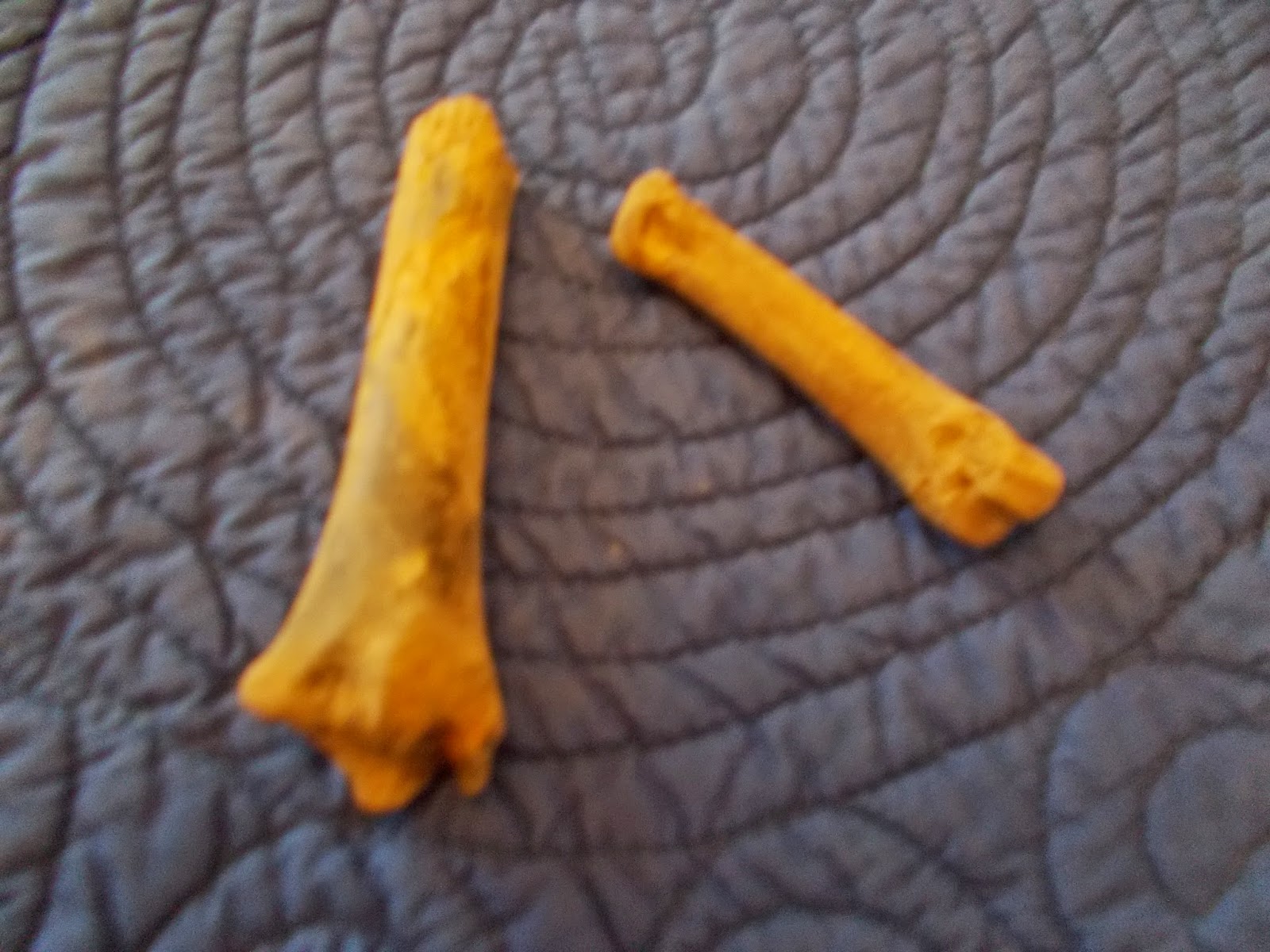
I showed them the bones I had found and their best guess was that they had probably come from a dog. 
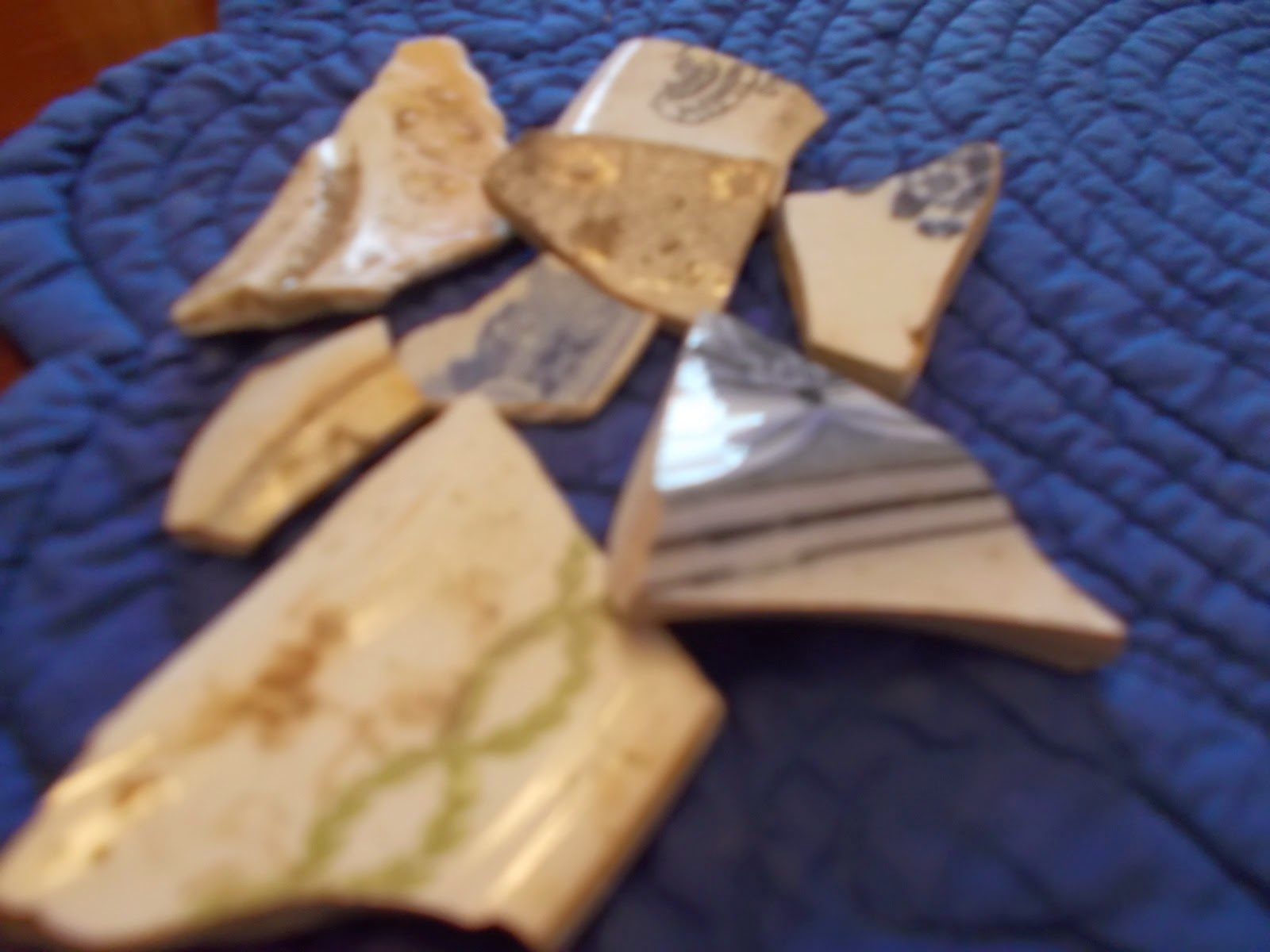
My pottery shards were fairly self explanatory.
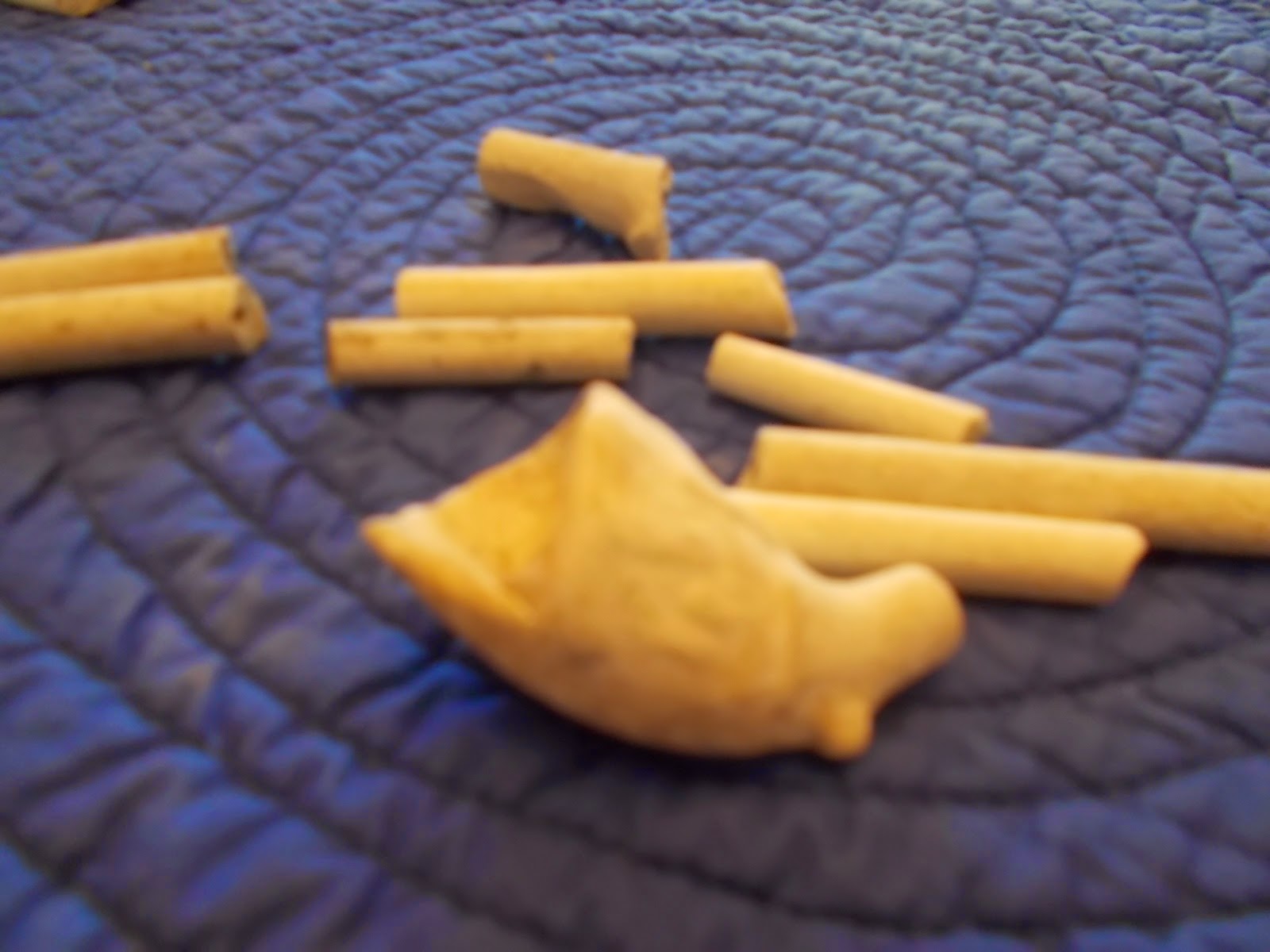
The pipe stems and pipe bowl I’d found were a different story. The archaeologists actually had a book with them containing photos of pipes from all periods and going by the shape and size of my pipe, they were able to tell me that mine was early 18th century. The photo above doesn’t do justice to the pipe bowl, it has a very elaborate design carved into the bowl. The expert was much taken with it and told me that it had to have belonged to someone of means. These pipes were meant to be disposable. One bought one already filled with tobacco, smoked it and chucked it away, many times into the River. They weren’t typically the sort of item one spent time carving designs into. He was quite impressed with my find and I was dead chuffed.
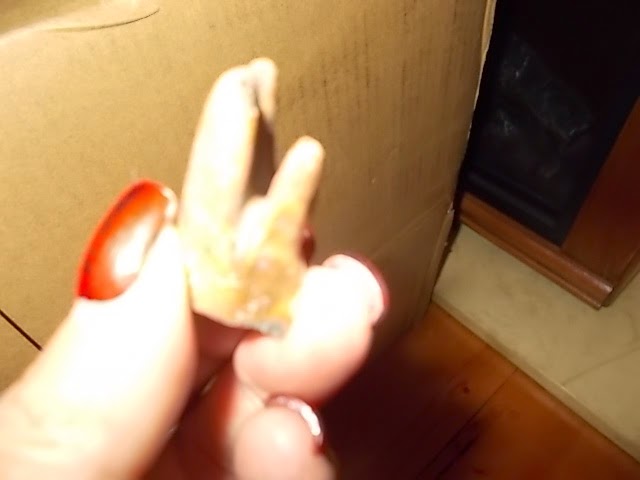
Perhaps my most interesting find was this tooth. I’m holding it upside down so that you can see the three rather large roots. The consensus is that it had probably come from a horse. 
Victoria’s treasures were much prettier and are pictured above: shells, clay pipe stem, blue-and-white shards, tile pieces.
You’ll find the black and white River photos above and many more period photos of all areas of London and London life on my Pinterest board, Old London

More Loose in London Coming Soon!

UPCOMING EVENTS AT THE LEIGHTON HOUSE MUSEUM

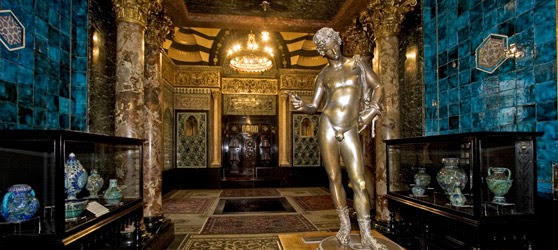
The fabulous Leighton House Museum has so many fabulous special events coming up that we wanted to share them with you so that you can pencil them into your social calendars. If you’ve never been to the Musuem, any one of these events would be the prefect reason for doing so. 


EXHIBITION EVENTS PROGRAMME
LATE NIGHTS AT THE MUSEUM
22 January | 19 February | 26 March 2015
The Museum will remain open until 8.30pm.
Entry by timed ticket only; last entry is at 7.45pm.
CURATOR TOURS
11 February | 5 March 2015
6:30 to 7:30pm; doors open at 6pm
Tickets: £25
Special evening tours of the House and exhibition by Victorian art specialists including a glass of wine. Numbers are limited so early booking is advised.
BALLOON DEBATE: VICTORIAN MASTERS REVISITED
4 March
7pm to 9pm; doors open at 6:30pm
Tickets: £20
Join Alison Smith, (Tate Britain), Stephen Wildman (University of Lancaster), Julian Treuherz (Art Historian) and Christopher Newall, independent scholar and curator, as they discuss the relative merits of the Victorian Masters featured in A Victorian Obsession. An entertaining and enlightening evening chaired by art historian Colin Cruise that will shed light on the collection and its artists; not only as individuals but also as part of a bigger picture. The debate will conclude with questions from the floor and a show of hands – which artist will win the public’s vote? 3
LIFE-DRAWING CLASSES
20 January | 17 February | 17 March 2015
1pm – 4pm
Tickets: £35 per session
SPECIAL OFFER: book three separate classes and save £15
Artists of all levels are invited to Leighton House for a series of afternoons of guided instruction in the craft of drawing from life. Each session will consist of a mixture of short exercises and longer poses, with reference to objects of the permanent collection and work on show. Course led by Lavender Hill. Studios founder and director, Ann Witheridge.
ARTISTS IN RESIDENCE
14 January | 18 February | 11 March 2015
To mark the opening of A Victorian Obsession exhibition and in celebration of Lavender Hill Studios’ 10th anniversary, Leighton House is hosting an Artist-in-Residence programme welcoming two artists over a ten week period each. The chosen artists will spend a day a week, drawing and painting at Leighton’s studio on the first floor, producing work in response to the temporary collection and to the environment.
PRACTICAL WORKSHOP
3 March 2015
10am – 3pm
Tickets: £35
A rare opportunity to learn about the traditional materials used by an artist, from an artist and materials expert, Scott Pohlschmidt.
A VICTORIAN OBSESSION: AN EVENING OF MUSIC
12 February 2015
7:15pm – 10pm
Tickets: £25
Tenor Richard Edgar-Wilson with violinist Kathryn Parry and pianist Juliet Edwards will weave a tapestry of musical delights under the stewardship of compere Sandy Burne
tt that will include an aria from Cavalli’s unpublished opera Eliogabalo and music by Mendelssohn, Elgar, Brahms and Debussy inspired by the same poets and poetry that so affected the Victorian artists. The concert will feature the magical Lark Ascending in Vaughan Williams’ original version for violin and piano.
DESPERATE ROMANTICS: AN AESTHETIC SOIRÉE
25 February 2015
7pm – 8.30pm, doors open at 6:30pm
Tickets: £25 4
Hosted by academic and broadcaster Peggy Reynolds (BBC Radio 3 Adventures in Poetry), in discussion with art historian Jan Marsh, the event will also feature special live performances of some classic poetry from the likes of Dante Gabriel Rossetti, Browning and Swinburne.
THE MUSE – A NEW PLAY by Katherine Tozer
13, 14, 19, 20, 23, 24, 25, 27 and 28 March 2015
7:45pm – 9pm
Tickets: £25
Following the sell-out success of the production Hedda, at Leighton House in April 2014 Palimpsest theatre, film and web company return to present an extended run of a new multi-media play that explores the relationship between Lord Leighton and Dorothy Dene, his model, muse and confidante.

Leighton House Museum

12 Holland Park Road
London W14 8LZ
Monday to Friday: +44 (0) 20 7602 3316

Saturday and Sunday: +44 (0) 20 7471 9160

AND FROM ELSEWHERE AROUND THE WEB . . . . . . . .

Spitalfields Life – A New Home for Old Family Photographs
Risky Regencies – From Ice to Ice Cream
The Chirugeon’s Apprentice – 19th Century Safety Coffins
English Buildings – Savile Row, London
Laurie Benson’s Cozy Drawing Room – Mourning Pictures: An Expression of Grief in Georgian England
Reading the Pastt – A review of The Downstairs Maid by Rosie Clarke
English Historical Fiction Authors – The Importance of Horse Gaits in the Past