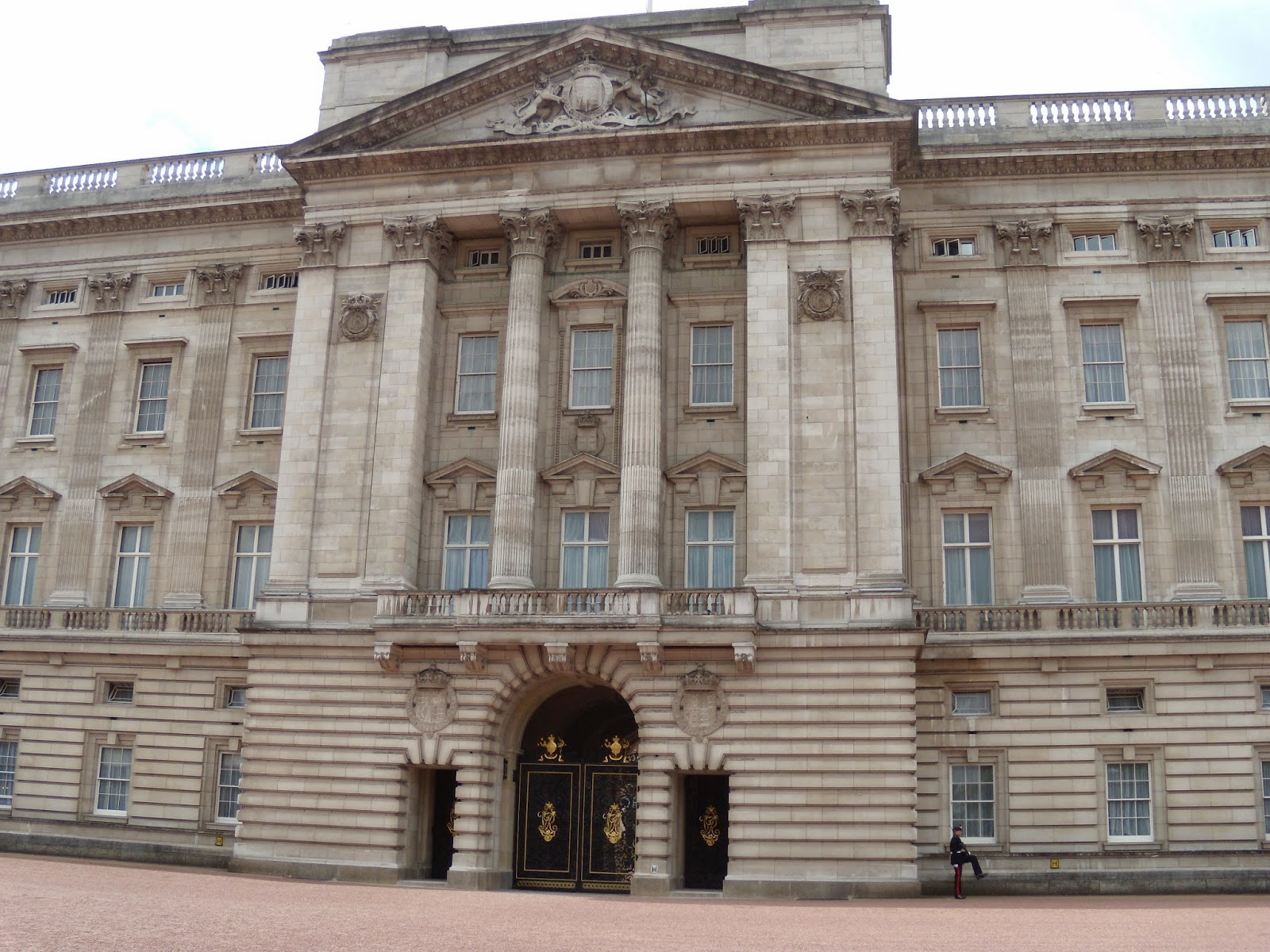
Great Britain has no shortage of castles and palaces. London alone has plenty, think Hampton Court, Kensington, St James’s, Lambeth — and that’s not to mention those now demolished.
Buckingham Palace, Sunday, August 31. 2014
But there is one above all that we associated with the present-day Royal Family, and it might be a surprise to find that it has been the home of the monarch less than 200 years, beginning with Queen Victoria.
Buckingham House, built for the Duke of Buckingham in 1701-03
The site of the present-day Palace and Garden belonged to various nobles and religious orders until the time of Henry VII, who took it the Manor of Ebury for himself from Westminster Abbey in 1536. James I created a mulberry garden on the site to feed what he hoped would become a silkworm industry in London. Several houses were built on the site and changed hands frequently. Designed by William Winde, the above mansion, which is still the core of the central part of the palace, was completed in 1703 for the Duke of Buckingham.
The Queen’s House
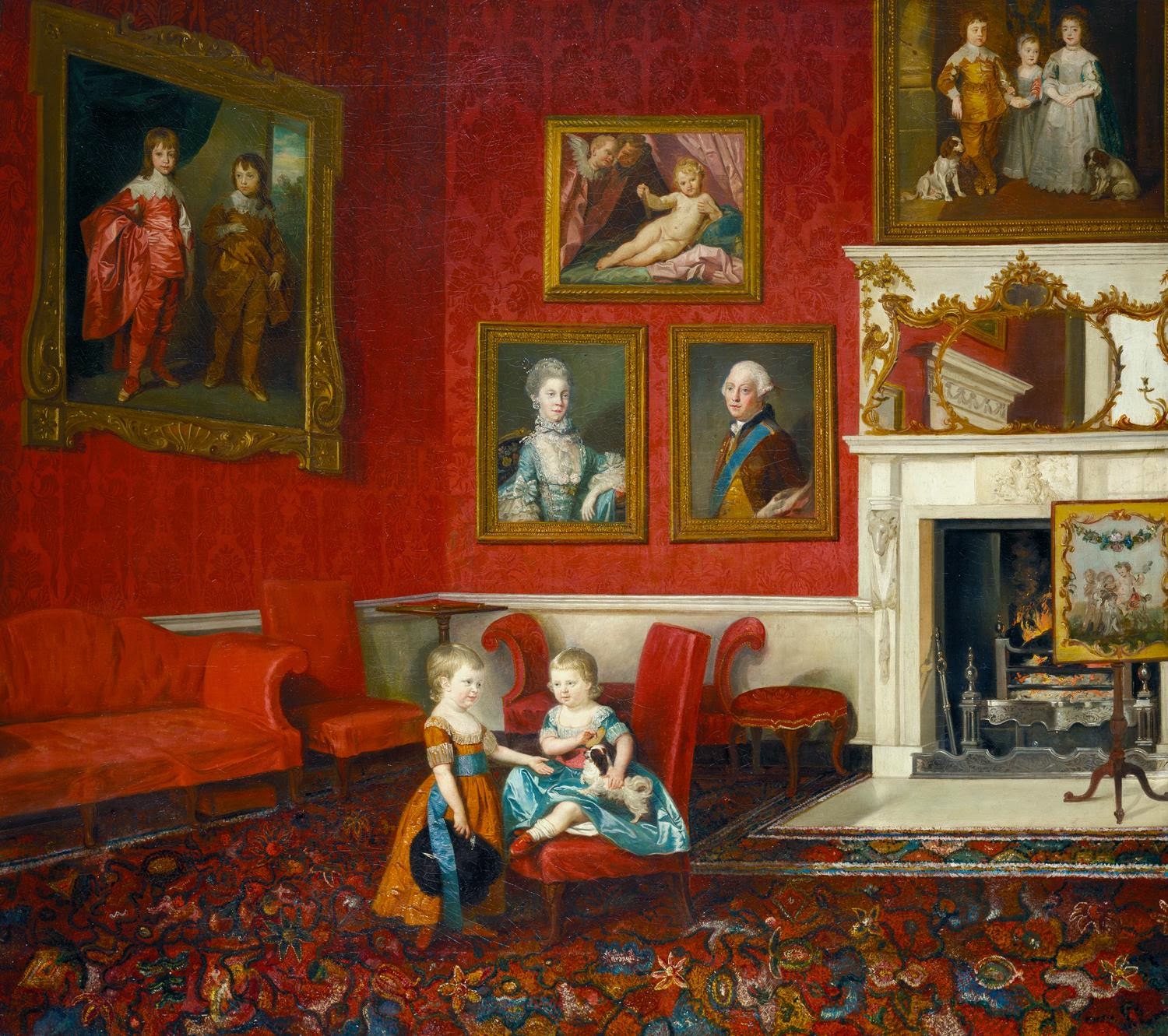
In 1761, the new young King George III purchased and remodeled the building as a home for his new Queen, Charlotte of Mecklenburg-Strelitz (1744-1818). who bore most of their fifteen children in the house. During this period, the house was faced in red brick and had the appearance of Georgian country mansion — which it was.
The Royal Family officially lived at St James’s Palace, not far away. The Prince Regent, upon reaching his majority in 1783, was given Carlton House as his residence. The Prince began s series of remodeling projects that lasted until he became George IV in 1820, when he decided Carlton House was not sufficiently large and grand enough for a British Monarch.
Carlton House demolished, 1825
He and Architect John Nash, who also worked on his Brighton Pavilion, embarked on a series of structural and decorative embellishments to the Queen’s House, renaming it Buckingham Palace. They added several wings into the forecourt and eventually constructed a triumphal arch to make a ceremonial entrance into the palace.
The Palace c. 1837
When Carlton House was demolished, many of the furnishings and interior decor fittings were moved into the “new” palace. George IV did not live to see completion of his masterpiece and after his death, poor John Nash was criticized for the chronic overspending and overly grand plans George pressed him to create. The new King in 1830 was George’s brother William IV, not known for his interest in the arts, who lived at Clarence House. (See our visit to Clarence House
here) Since the interiors at Buckingham Palace were neither finished nor to his (lack of) taste, King William and Queen Adelaide remained at Clarence House until his death in 1837.
.
Buckingham Palace, 1837
After the Houses of Parliament burned in 1834, King William IV suggested that Parliament might take over the unfinished Buckingham Palace and adapt it for the seats of the Houses of Commons and Lords. But this offer was rejected, and building continued, accelerating after Victoria became Queen in 1837.
Many of the rooms might have been splendid, but the palace was cold, ill-lit, smoky and uncomfortable. More repairs and alterations were planned, and continued after her marriage to Prince Albert of Saxe-Coburg-Gotha. who personally led some of the improvements.
In the mid-1840’s, the wings were expanded and plans for a new section, which we know as the familiar front of the Palace, necessitated the relocation of the triumphal Arch.
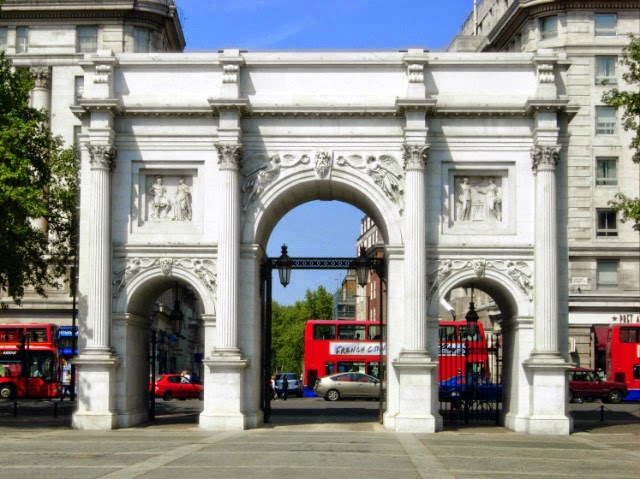
Marble Arch
The Marble Arch was moved into the northeast corner of Hyde Park, but that site today is in the middle of a traffic circle. In order to facilitate the ever-growing volume of cars lorries and buses, the crucial intersection of Park Land, Edgware Road, and Oxford Street was widened by taking park land and isolating the Arch. At least it was cleaned up. It stands there today, a sort of monument to a by-gone era. The location of Tyburn Tree, a public execution site from 1388 to 1793, is nearby.
According to the Monarchy’s website, “A serious problem for the newly married couple was the absence of any nurseries and too few bedrooms for visitors. The only solution was to move the Marble Arch – it now stands at the north-east corner of Hyde Park – and build a fourth wing, thereby creating a quadrangle. (Edward) Blore, the architect in charge, created the East Front and, thanks largely to his builder, Thomas Cubitt, the costs were reduced from £150,000 to £106,000. The cost of the new wing was largely covered by the sale of George IV’s Royal Pavilion at Brighton. Blore added an attic floor to the main block of the Palace and decorated it externally with marble friezes originally intended for Nash’s Marble Arch. The work was completed in 1847.”
The Palace East Wing as it appeared in 1910
Victoria and Albert also had a grand ballroom built to accommodate various official events and balls. It opened in 1856, at that time, the largest room in London.
The Opening Ball in the new Ballroom, 1856
The Ballroom set up for a large dinner party
Victoria Memorial, 2014
Shortly after her death, Queen Victoria’s eldest son successor, Edward VII, called for a memorial to the Queen and Empress. Sir Thomas Brock created the sculpture and the base was designed by Sir Aston Webb. The project was not completed until 1924
Because pollution had discolored and pitted the stone of the East Wing, its face was replaced in 1913 by a facade of white Portland Stone. Sir Aston Webb was in charge, and the work was finished in the summer of 1914, just before the outbreak of World War I.
The present Portland Stone facade of the East Front, 2010
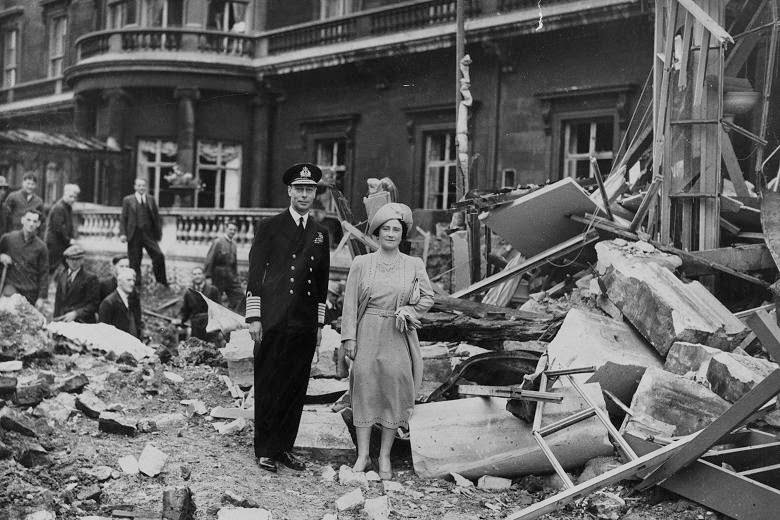
During World War II, German bombs hit the Palace seven times. Queen Elizabeth and King George VI remained in residence. The Queen said, “I’m glad we have been bombed. Now I can look the East End in the face”. She could certainly sympathize with the oft-bombed residents of East London.
King George VI and Queen Elizabeth in the Palace after an air attack
The Balcony on the East Front is the national and international focal point for the celebration of great events.
Celebrating the end of World War II in 1945
After the 1953 Coronation of Queen Elizabeth II
After the wedding of Prince William and Kate Middleton
An Aerial View<
/div>
As it stands today, Buckingham Palace has 775 rooms, used for state occasions, personal and guest apartments, nearly 100 offices, and 78 bathrooms. It is a working palace and often hosts state dinners. Below, the March, 2015, visit of the President and First Lady of Mexico, with the Queen and Prince Philip.







.JPG)




.JPG)