QUEEN ELIZABETH: LONGEST REIGNING BRITISH MONARCH

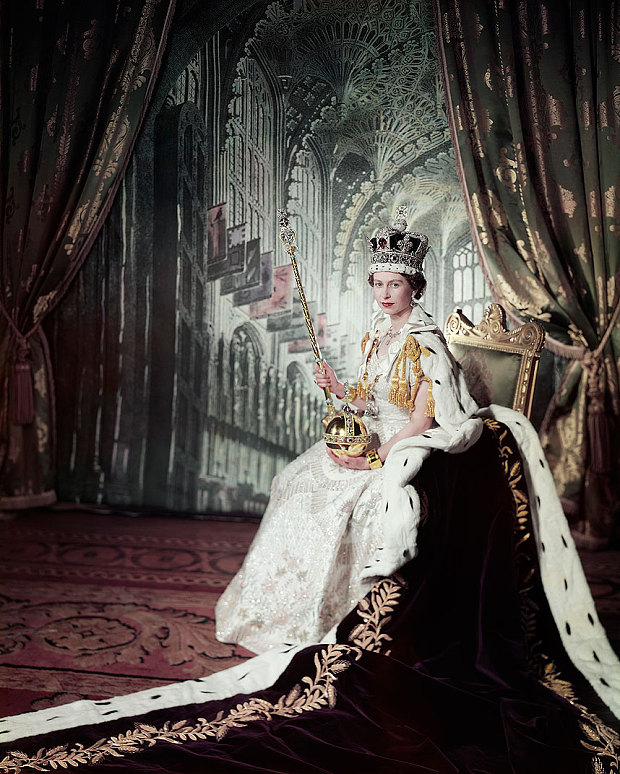
 Coronation Day, 2 June 1953 
 Photo: Cecil Beaton/Royal Collection Trust/PA

This is the day Elizabeth II becomes the longest reigning British monarch, surpassing the previous record of her great-great-grandmother Queen Victoria’s 63 years, 216 days, give or take a few hours. Since the exact hour of King George VI’s death in 1952 is not known, precise timing is inexact.

Victoria’s Coronation Portrait by George Hayter, 1838

Queen Victoria had surpassed her grandfather George III’s record reign of 59 years, 96 days, though in the last nine of those years, he was incapacitated by mental illness, and royal power was in the hands of his son, the Prince Regent, later George IV.

Last week, the Daily Mail carried a story about the low-key nature of the event. Click here.

However, she is expected to temporarily leave Balmoral Castle where she is on holiday with her family to open the Scottish Borders Railway and ride a steam train. Otherwise, she will keep to her usual schedule of daily walks and rides, working on the Red Boxes, and enjoying her grand- and great-grandchildren.

Photo: Royal Collection/PA

The Queen’s milestone is not going unnoticed all over the world.  Take a look at People Magazine’;s coverage here.

The Queen has traveled more than any other monarch, making 265 Overseas Visits.
An interactive map is here.

The Queen and the Duke of Edinburgh leaving for the State Opening of Parliament in London,
 27 May 2015  Photo: Stephen Lock/i-Images/PA


And it is another opportunity to acquire more  souvenirs. Commemorative plates and other china articles are on sale at Royal Collection Trust shops and by mail.  Photo: Royal Collection/PA
Displays of memorable photographic portraits taken during the Queen’s 63-year reign will go on display at Buckingham Palace, Windsor Castle and the Palace of Holyroodhouse today.

Princess Elizabeth of York, age 7, 1933
by Philip de Laszlo
This painting hangs in Clarence House

The Queen at Royal Ascot a few years ago
Another recent photo of Her Majesty

Princes Elizabeth, the Queen Mother, Princess Margaret, 1943

Click here for pictures and commentary on the Queen as a Fashion Icon for sixty-plus years.

Here are a more few of the recent newspaper stories about the event:

Click here for the Queen’s reign in one minute.

Click
here
for a story about the commemorative coin to be issued.

Click here for the secret of the Queen’s success — or one version of it anyway.
Click here for more on the china and the picture exhibition.

And click here for the Independent’s take on the story.

Click here for a story from the Daily Express.

Click here for the Daily Mail.

AND MAY YOU REIGN FOR MANY MORE YEARS, YOUR MAJESTY!

If you want to celebrate the longest reigning monarch, you can buy a tee shirt with this image.  Click here.

WELCOME GUEST BLOGGER, AWARD-WINNING AUTHOR KERRYN REID

Victoria here, delighted to welcome fellow SWFRW member Kerryn Reid for a guest blog. Her debut novel, LEARNING TO WALTZ,has been named Best Regency in the Chatelaine Awards for Romance Fiction, sponsored by Chanticleer Book Reviews, among other honors.  Click here for her website.  


“Julian!” Deborah called, then whipped around and called again. The stitch in her side tore her ribs apart. Her skirts were wet to the thighs, tangling themselves around her knees and ankles. Her old boots, soaked and broken, scooped up dirt and pebbles from the road, making her stagger. Thankfully, her feet were numb – her bare hands too, torn by snags and brambles. Not that it mattered. If she didn’t find Julian, nothing would matter.
A lost child herself, Deborah Moore has learned her lessons well – feel nothing, reveal less, and
trust no one. Now widowed with a child of her own, she leads a lonely, cloistered existence, counting her farthings and thinking she is safe. When five-year-old Julian is lost that bitter December day, she discovers how tenuous that safety is.
Evan Haverfield holds no title, but he’s aristocracy nonetheless. He has not seen a kitchen since he was a child. But his life changes when he finds Julian Moore half-frozen under a hedge and carries him home to his mother. This impecunious young widow cooks her own meals and scrubs her own doorstep – she will hardly be welcomed into his family. Yet this is the woman he wants.
As a modern Western woman, that kind of social stratification seems alien, even detestable. But it was a fact of life during the Regency. In fact, it’s one of the classic tropes of Regency romance. Why would I choose such a time to place my stories, when I enjoy reading historical fiction from many periods?
My mother loved to travel. She was also in love with the British Isles. Don’t ask me why; her heritage was German, as was my father’s. Neither of them spoke any language but English, however, which made English-speaking destinations more comfortable. Dad was a university professor, and with Mom at his back there was no way he’d be spending a sabbatical leave stateside!

Dad and his three girls by the Chapel at Ashby de la Zouch Castle, Leicestershire, 1958-59
I’m the little one!

There was Leicester, when I was three. In Dublin, I was a 12-year-old British-Invasion fanatic. By that time my parents had discovered British antiques and mystery writers. And that, I suspect, was how they found Georgette Heyer.

But they were broadminded enough to read and enjoy Heyer’s romances, too. (In fact, I think my father liked them more than Mom did.) I don’t remember when I read my first Heyer Regency, or which one it was. Suffice it to say, I spent my adolescence with Georgette Heyer. I was intimate (I wish!) with Lord Damerel and Dominic Vidal years before I read Emma in high school English class. I cringe to say, I found it boring. Can you imagine? It took another couple of years before I “got” Austen’s humor and devoured the remainder of her frustratingly brief bibliography. Then did it again, and again.

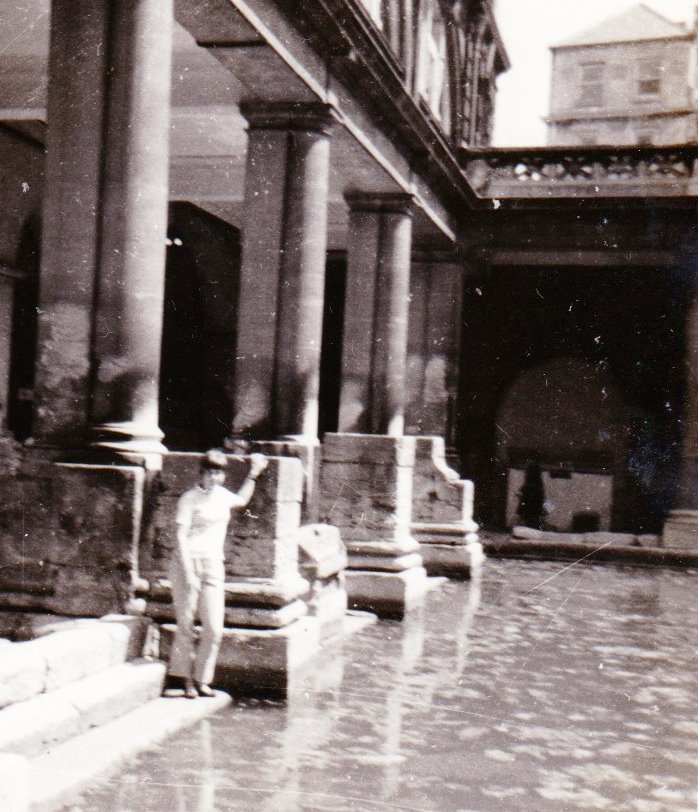
Visiting Bath, that essential Regency setting 1965-66

By the time I’d read a zillion more Regencies by a thousand different authors, I figured I had a good handle on the tropes, the language, the social conventions. Writing one of my own should be easy, right?

Wrong, of course. There were a few unforeseen difficulties.
First of all, I didn’t know how to Write. Oh, I was good at putting words together, mostly into long, pretty, complex sentences. (Not as long, pretty and complex as Austen’s, but still.) Not until I finished the first draft of Learning to Waltz did I join a writing group and begin learning how I should have done it. Show, don’t tell. Start in the middle of crisis. Background is B-O-R-I-N-G. Who knew there were rules? (A year or so ago, I picked up Arabellaafter a long hiatus. I doubt Hey
er would ever find a publisher if she were writing today. POV? All over the map. Dialogue tags? All kinds. Adverbs? Tons. No wonder my manuscript needed so much work, with Georgette as my teacher.)
I also had no idea what my Voice would sound like. Turns out it’s far different from Heyer’s, and I don’t think it’s quite like anyone else’s either. I do drama much better than humor, and surprised myself by writing some darn good dialogue. Who knew?
And then there’s that troubling little business called Research. It’s amazing how much I still don’t know about Regency life. Maybe I just didn’t pay attention to the details as I read all those novels. Did they hang bells by the front door, or use knockers, or just their knuckles? Sure they used candles, but how did they light them? What did they call the flu, or a cold, and how did they treat them? And very important for Learning to Waltz, how did they celebrate Christmas and New Year’s?
Like Austen’s, my stories are small. Intimate. A review from the Historical Novel Society said, “Reid excels at the slow, careful picture of two complex personalities learning each other’s nature.” I’m happiest delving into my characters’ hearts and revealing them to my readers.
In Deborah’s village in Leicestershire, they hold a ball on New Year’s Eve. But Deborah doesn’t come, and Evan escapes the festivities to berate her for denying him the dance he was counting on. Alone in her shadowed parlor, he teaches her to waltz. Yet that waltz is also a metaphor for all the other things Deborah must learn, like trust, and laughter, and how to deal with one very persistent man. And isn’t that what life is about? We are all learning to dance, one set of steps or another. For instance, I’m still learning to write. As I work on my next Regency, I’m still learning the secrets of this new cast of characters and the details of their lives.
I’m also groping my way through social media and the business of promotion. What, for instance, should I do with this fabulous award from Chanticleer Book Reviews? For one thing, I’ll write guest posts for fabulous friends like Victoria!
Finally (for the moment), I’m having a blast with my monthly newsletter, Seasons of the Past. Focusing on seasonal and holiday customs past and present, with a particular interest in the Regency, it offers history, recipes, excerpts, personal photos and more. You can find subscription forms on my website here.

THANK YOU, KERRYN! ENJOY EVERY MOMENT OF YOUR SUCCESS!
DINNER WITH THE DUKE OF WELLINGTON

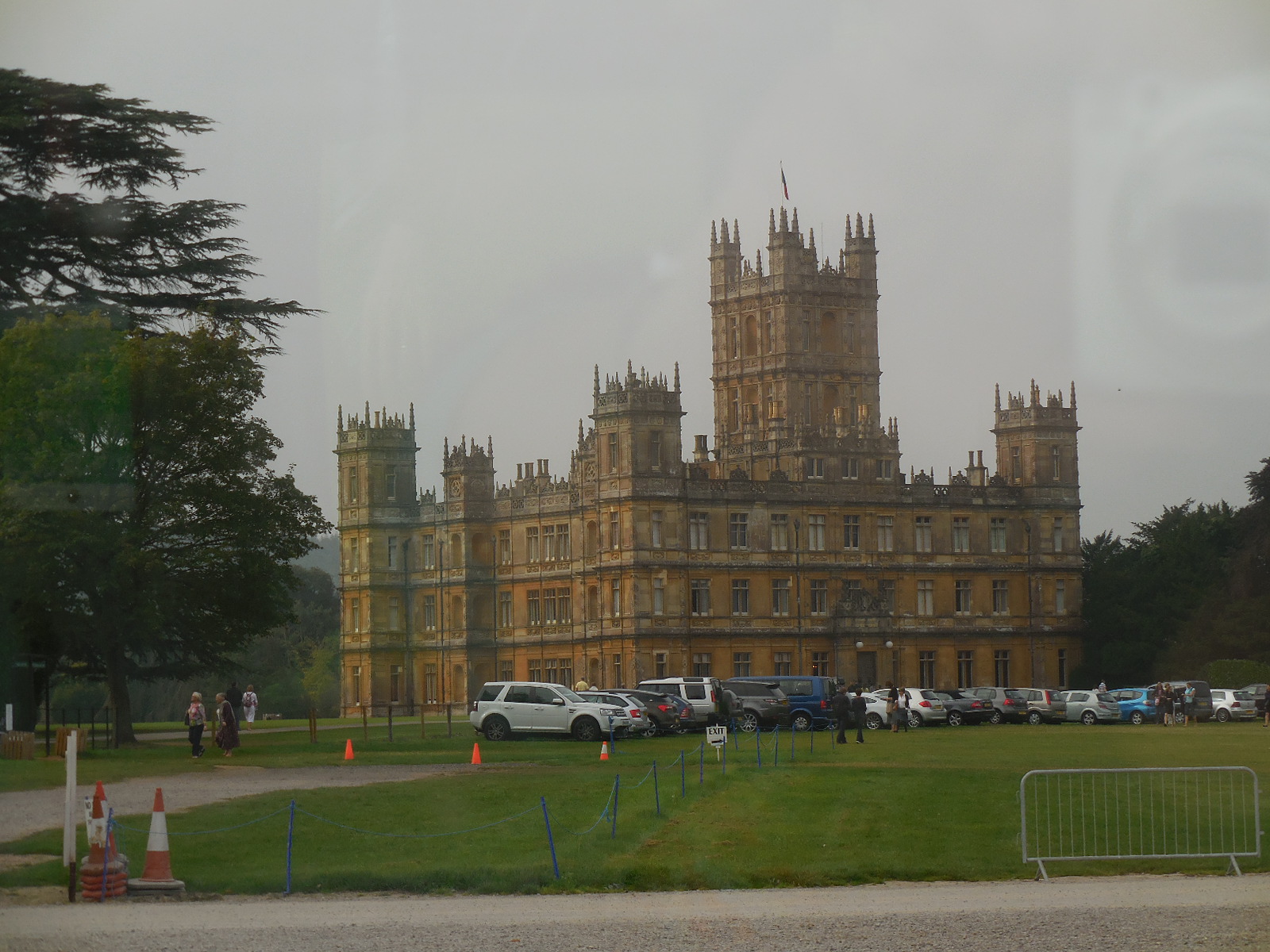
On November 19, 2015, I shall be dining with the Duke of Wellington in Philadelphia. I say this to people – people  I know but who aren’t au fait with British history – and in response, they look at me askance whilst uttering a nervous laugh. “Right,” they say, “the Duke of, er, whatever. Right. Nice. So, er, I’m just going to go and . . . . .” They think I’m nuts. I say the same thing to people who are on point as far as British history is concerned and they say, “Oh, you’re a card! The Duke of Wellington. Right! Har Har!” Followed again, for the most part, by nervous laughter.
As though I would lie about the Duke of Wellington. Me. Lie about the Duke. I ask you!? Okay, so I won’t be dining with that Duke, but rather this Duke – Charles Wellesley, the 9th Duke of Wellington.

And whilst I’ll be dining with the Duke, so will about one hundred others. Honestly, here’s the link to the event, which is actually a lecture by the Duke followed by dinner. Victoria was otherwise engaged, so I roped Hubby into agreeing to travel to Philadelphia and attend the event with me. Now you can cue the nervous laughter. 
Tickets to the event have been secured. Flights booked. Hotel room the same. Done and dusted. Now all that’s left to worry about is the night itself. Many people have dined with many Dukes of Wellington and, as far as I know, all of them have survived. Mrs. Arbuthnot and Lady Shelley dined with the first Duke many times and they came out alright. Queens and Kings have dined with subsequent Dukes of Wellington and emerged unscathed. It’s not the dining, or even the minute long meeting, with the Duke of Wellington that concerns me. Well, okay, Hubby meeting the Duke of Wellington does concern me, but personally I’m in a quandry as to what to wear. What does one wear to meet the Duke of Wellington? Or any Duke, for that matter. The event details say, “Formal Business Attire.” I can understand this as far as men are concerned, but what about women? Surely something more than a severe skirt and jacket is warranted for an evening event with the Duke? 

Granted, this might be a tad too much . . . . . .

But on the other hand, surely this is too little?

Is this more like it? Or am I still off base?

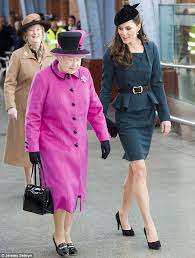
I suppose I could always follow the Royal lead . . . . . but then I’d have to find a hat. Sigh.

What to wear, what to wear? It’s a quandry and it’s distracting. So distracting, in fact, that I’m not even worrying about how in the world I’m going to get Hubby into anything resembling “formal business attire.”

Please do leave a comment as to proper attire. I’d welcome the input. Hints, tips and tricks on how to get Hubby to agree to don a suit and tie when no one he knows has died would be likewise appreciated.

JOHN SINGER SARGENT AT THE METROPOLITAN MUSEUM OF ART

JOHN SINGER SARGENT AT THE METROPOLITAN MUSEUM OF ART

Victoria here reporting on my recent visit to the wonderful exhibition at the Met, which was shown at the National Portrait Gallery in London last winter and spring..

detail of Villa Torloni

From the introduction by the Met:
Throughout his career, the celebrated American painter John Singer Sargent (1856–1925) created portraits of artists, writers, actors, and musicians, many of whom were his close friends. Because these works were rarely commissioned, he was free to create images that were more radical than those he made for paying clients. He often posed these sitters informally—in the act of painting, singing, or performing, for example. Together, the portraits constitute a group of experimental paintings and drawings—some of them highly charged, others sensual, and some of them intimate, witty, or idiosyncratic. The exhibition Sargent: Portraits of Artists and Friends, which opened at The Metropolitan Museum of Art on June 30, brings together about 90 of these distinctive portraits, including numerous loans from private collections. It will also explore in depth the friendships between Sargent and those who posed for him as well as the significance of these relationships to his life and art.

Metropolitan Museum of Art, Fifth Avenue

I never tire of re-visiting the Met, and it is alwlays fun to snap new angles of the building.

On my way to the special exhibition, I encountered several posters, including a weirdly striking image from a photography exhibition.


Sargent was born of American parents in Florence, Italy, in 1856.  He is best known for his portraits, in the grand traditions of Van Dyke, Reynolds, Gainsborough, and Lawrence.  Like their work, his vivid portrayals of the rich and privileged, including their jewels, sumptuously painted fabrics, and noble backgrounds,were perfect for royalty. But these pictures are somewhat different, more experimental, even intimate. The people he painted in these works are his friends and colleagues, fellow members of the intellectual, theatrical, and artistic elite.

Eager viewers around Sargent’s portrait of Carolus-Durand, .
Early in the show is the portrait of Charles-Emile-Auguste Durand (1837-1917). with whom Sargent studied painting, beginning in 1874. According to the text panel, when this portrait of Durand by Sargent was exhibited at the Paris Salon in 1879, some remarked, “the student had surpassed the master.”  
Carolus-Durand, 1879

Sargent painted the Pailleron family soon thereafter. The father was a playwright, the mother from an influential cultural family in France, and the daughter a literary figure much later.

Edouard Pailleron, 1879

Madame Edouard Pailleron, 1879
Edouard and Marie-Louise Pailleron, 1881
This is an unusual double portrait, According to the text panel, “Sargent captures the young girl’s disquieting intensity in an image that departs from the conventional Victorian  representation of children, Her brother, seated at an angle on the far side of the settee, seems a secondary presence.” 
< br />
Vernon Lee, 1881
Using a pen name, Sargent’s friend Violet Paget, was a “noted feminist and pacifist” as well a a woman of letters.publishing on aesthetics and psychology as well as authoring plays and novels.
Madame X   (Madame Pierre Gautreau) 1883-84
Virginie Avegno Gautreau (1859-1915) from Louisiana was well-known in Parisian society for her daring appearance; Sargent emphasized her glamour in this portrait, which was first exhibited with one shoulder strap slipping down.  The Paris Salon of 1884 was scandalized and Sargent re-painted the strap in its ‘proper’ place. A photograph of the original painting is shown with it.
Claude Monet 1887
Sargent and Monet (1840-1926) were friends and worked together sometimes. After Sargent moved to England in 1885, he followed Monet’s example and began to paint outside, often portraying artist friends in a casual setting.
Claude Monet Painting by the Edge of a Wood 1885
Robert Louis Stevenson, 1887
Robert Louis Stevenson ad His Wife, 1885
Stevenson (1850-1894) and Sargent were friends from early Paris days, and Sargent painted him three times.  Of this view, Stevenson wrote it had “that witty touch of Sargent’s, but of course it looks damn queer as a whole.”
Ellen Terry as Lady Macbeth, 1889
Sargent was impressed with famed Shakespearean actress Terry on the London stage in 1888 and convinced her to pose for him. She is pictured placing a crown on her own head after the murder of Duncan, the Scottish king. From the text panel: “This incident does not occur in Shakespeare’s text, nor as it a part of the performance. Sargent, however, sought a dramatic motif to make his portrait convincing, both as the personification of a role,and as a characterization of an individual actor. Terry’s intense and powerful gaze enhances the climactic moment.”
Self-portrait, 1906
Sargent was one of the first Americans to be invited to contribute a self-portrait to the collection of the prestigious Uffizi Gallery in Florence.”His serious gaze befits the work’s distinguished destination.”
Mrs. George Batten Singing, 1897
Henry James, 1913
For his own self-portrait and that of Henry James, Sargent chose as sober straight-forward masterful method.  When portraying Mrs. Batten singing, he is more creative, emphasizing her rapturous style.
Ada Rehan, 1894-95
Another renowned Shakespearean actress, Sargent portrays her in high style. As the text points out, “That Sargent shows her in the grand manner and scale typical of paintings of royalty, points to changing ideas of celebrity in the late nineteenth century.”
The Fountain, Villa Torlonia, Frascati, Italy, 1907
Jane de Glehn (1873-1961) is shown sketching outside Rome watched by her husband, Wilfred.
Further information on the Sargent Exhibition is here

Following my visit to the exhibition, I went upstairs to the roof garden. It was a lovely day and the views were stunning across Central Park’s lush greenery to the distant skyline.