Meet Julian Fellowes

What with all the furor and fun on this site delivered by the broadcast of Downton Abbey, we thought we’d take a closer look at Julian Fellowes, who wrote the screenplay and who is penning the second installment of the series, due at Christmas. As though that wouldn’t keep one busy enough, Fellowe’s is also writing the pilot for a U.S. period piece called The Vanderbilts and another ITV1 drama series, about the sinking of the Titanic.


Born in Egypt, where his father was in the British Embassy, Fellowes grew up in England and attended Cambridge. In a 2005 interview Fellowes said, “When I was a young man, I came from the bottom end of the landed gentry. Now I get the glad hand; in those days I made up the extra — the one who gets invited when someone else can’t make it. At house parties I had the bedroom next to Nanny with the uncomfortable bed. When you’re a minor player, you’re in a better position to see people as they really are than if you’re a grandee.”

After going to drama school, he was a “jobbing actor for ages” and appeared in more than 40 movies and TV shows, including Monarch of the Glen, in which Fellowes played the part of the titled, priviliged and somehow endearing Kilwillie. Other notable acting roles included the part of Claud Seabrook in the acclaimed 1996 BBC drama serial Our Friends in the North. He has twice notably portrayed George IV as the Prince Regent in the 1982 television version of The Scarlet Pimpernel and the 1996 adaptation of Bernard Cornwell’s novel Sharpe’s Regiment. In 1999, Fellowes played the Duke of Richmond in the Masterpiece Theatre production of The Aristocrats, based on the book by Stella Tillyard. He launched a new series on BBC One in 2004, Julian Fellowes Investigates: A Most Mysterious Murder, which he wrote and also introduced on screen.

Feeling in need of a Plan B, Fellowes turned to writing and worked for a while for BBC TV, where he adapted Little Lord Fauntleroy and the Prince and the Pauper for television. Subsequently he wrote a screenplay for Anthony Trollope’s The Eustace Diamonds, which drew the attention of producer Bob Balaban, who was looking for a British society insider to write a screenplay for a murder mystery. “And so Gosford Park was born, and so was the rest of my life,” explained Fellowes, who won the Oscar for Best Writing, Screenplay Written Directly for the Screen in 2002 for that film.

In addition to Gosford Park, Fellowes wrote the screenplay for Mira Nair’s Vanity Fair (Starring Reese Witherspoon) and the book for the London and Broadway productions of Mary Poppins. He also wrote and directed Separate Lies, which he described in 2005 as “a French film in English, about middle-class people being unhappily married, which will doubtless be steamrollered in the Big, Bad World, but I love it and I loved making it, so I have no sad tales to tell.”
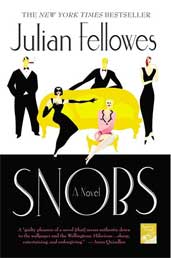
The year 2005 also saw his novel Snobs published, which focused on the social nuances of the upper class and concerned the marriage of an upper-middle class girl to a peer and became a Sunday Times Best Seller. In a 2005 interviews, Fellowes said, “At the risk of vanity, I would say the accuracy of the book was what irritated them most. Like politicians or show-folk, toffs usually shrug off any criticism of themselves in fiction by pointing out the inaccuracies which demonstrate that the author cannot have had a close view. One senior aristocrat was reported as having said, “The problem with Snobs is you can’t fault it.” An old pal telephoned with the greeting, “It’s a wonder to me you have any friends left!” However, all in all, I would say more of them were amused to find their world in print than were offended. For which I am heartily grateful.” 2008 saw the publication of his second novel, Past Imperfect, which also became a Sunday Times Best Seller.

In the 1970s he also wrote romantic novels, using the names Rebecca Greville and Alexander Morant.
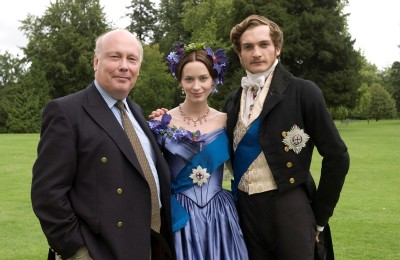
In 2006 and 2007, Fellowes was the host of the BBC TV panel game show “Never Mind the Full Stops.” He wrote the screenplay for The Young Victoria, and has other screenplays to his credit, including Jonathan Strange and Mr. Norrell.

Last year, in response to a question about ways in which to beat the blues, Fellowes told The Telegraph, “If you’re stuck in the city at a time of high stress, the best thing is to pop down to your local cemetery. I wrote quite a few of my early books in Brompton Cemetery, which is full of architectural curiosities. Highgate, of course, is remarkable – its most famous occupant is probably Karl Marx – and no visit to Paris is complete without a tour of Père Lachaise, the resting place of Balzac, Bizet, Proust, Seurat, Wilde and countless other names. Whichever cemetery you choose, there’s always a chance you’ll meet someone famous… or, rather, someone who was. These green spaces are quiet and reflective, and a good reminder that things could be a lot worse.”
Fellowes is married to Emma Kitchener, a great-niece of the first Lord Kitchener and a lady-in-waiting to Princess Michael of Kent.

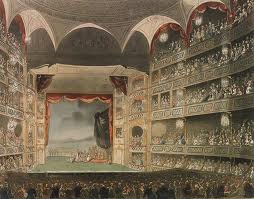
Behind the Scenes Tour – Drury Lane Theatre

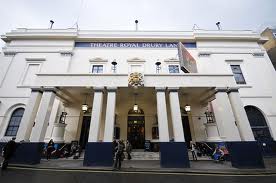
Through the Stage Door is the UK’s first Interactive Theatre Tour at the Theatre Royal Drury Lane. Directed by Andrea Brooks with three professional actors, the history of The Theatre Royal Drury Lane is brought to vivid life as key characters, writers and actors from the theatre’s 300 year old past take you back through time as you look around this famous theatre. Since its construction in 1663 the theatre has triumphed over tragedy, fire, bankruptcy and even murder.

The Theatre Royal in Drury Lane opened in 1663, soon after the Restoration when Charles II returned to the throne. This ended Parliament’s puritanical rule which had seen all theatres in England closed, and the destruction of Shakespeare’s Globe. Now in a new and more fun loving age, Thomas Killigrew formed the Kings Company and built the first Theatre Royal Drury Lane, an important symbol of Britain’s theatrical reinvigoration following the barren years of puritan rule.

Since that first theatre there have been three more theatres built on the site of the original, in 1674, 1794 and 1812. The 1794 theatre was built by dramatist and radical MP Richard Sheridan. This was the biggest of all the Drury Lane theatres. It was in this theatre that an assassination attempt was made against George III . James Hadfield fired two shots at King George who was sitting in the royal box. Both missed their target. The would-be assassin was arrested, and George ordered the performance to continue. The 1794 theatre burned down in February 1809, a disaster which ruined Sheridan. There is a well known and oft told anecdote regarding Sheridan and the night of the fire, the following account is from The Lives of Wits and Humourists by John Timbs:

“On the night of the 24th of February, 1809, while the House of Commons was occupied with Mr. Ponsonby’s motion on the conduct of the War in Spain, and Mr. Sheridan was in attendance, with the intention, no doubt, of speaking, the House was suddenly illuminated by a blaze of light; and the debate being interrupted, it was ascertained that Drurylane Theatre was on fire. A motion was made to adjourn; but Mr. Sheridan said, with much calmness, that “whatever might be the extent of the private calamity, he hoped it would not interfere with the public business of the country.” He then left the House, and proceeding to Drury-lane, witnessed, with a fortitude which strongly interested all who observed him, the entire destruction of his property. . . It is said that as he sat at the Piazza coffee-house, during the fire, taking some refreshment, a friend of his having remarked on the philosophical calmness with which he bore his misfortune, Sheridan answered, `A man may surely be allowed to take a glass of wine by his own fireside.’

“Among his losses on the occasion there was one which, from being associated with feelings of other times, may have affected him, perhaps, more deeply than any that were far more serious. A harpsichord that had belonged to his first wife, and had long survived her sweet voice in silent widowhood, was, with other articles of furniture that had been removed from Somerset House, (Sheridan’s official apartments,) to the theatre, lost in the flames. The cost of building of this vast theatre had exceeded 150,000 pounds; and the entire loss by the fire, including that of the performers, musicians, etc., was estimated at 300.000 pounds.”

Theatre Royal Drury Lane is now owned by Andrew Lloyd Webber’s Really Useful Company, and is used to stage musical theatre.

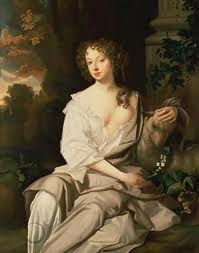
Nell Gwynne

The tour lasts approximately one hour, during which participants will meet characters such as the playwright Richard Sheridan, the great clown Grimaldi, the celebrated actress/mistress Nell Gwynne and many others who played an important role in the theatre’s history.

Tour Times: 10.15am and 11.45am – Wednesday and Saturday

2.15pm and 4.15pm – Monday, Tuesday, Thursday, Friday

You can buy tickets online here.

Dinner with the Queen


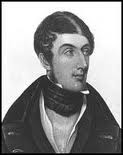
Charles Greville

 From the Greville Memoirs

March 11th. (1838) — I dined yesterday at the Palace, much to my surprise, for I had no expectation of an invitation. There was a very numerous party:—the Hanoverian Minister Baron Miinchhausen, Lord and Lady Grey, the Chancellor, the Roseberys, Ossulston, Mahon, etc. We assembled in the round room next the gallery, and just before the dinner was ready the Queen entered with the Duchess of Kent, preceded by the Chamberlain, and followed by her six ladies. She shook hands with the women, and made a sweeping bow to the men, and directly went in to dinner, conducted by Miinchhausen, who sat next to her, and Lord Conyngham on the other side. The dinner was like any other great dinner. After the eating was over, the Queen’s health was given by Cavendish, who sat at one end of the table, and everybody got up to drink it: a vile, vulgar custom, and, however proper it may be to drink her health elsewhere, it is bad taste to have it given by her own officer at her own table, which, in fact, is the only private table it is ever drunk at. However, this has been customary in the two last reigns. George III never dined but with his family, never had guests, or a dinner party.


Queen Victoria’s mother, the Duchess of Kent

 “The Queen sat for some time at table, talking away very merrily to her neighbours, and the men remained about a quarter of an hour after the ladies. When we went into the drawing-room, and huddled about the door in the sort of half-shy, half-awkward way people do, the Queen advanced to meet us, and spoke to everybody in succession, and if every body’s ‘palaver ‘ was as deeply interesting as mine, it would have been worth while to have had Gurney to take it down in short-hand. The words of kings and queens are precious, but it would be hardly fair to record a Royal after-dinner colloquy. . . . After a few insignificant questions and answers, —gracious smile and inclination of head on part of Queen, profound bow on mine, she turned again to Lord Grey. Directly after I was (to my satisfaction) deposited at the whist table to make up the Duchess of Kent’s party, and all the rest of the company were arranged about a large round table (the Queen on the sofa by it), where they passed about an hour and a half in what was probably the smallest possible talk, interrupted and enlivened, however, by some songs which Lord Ossulston sang. We had plenty of instrumental music during and after dinner. To form an opinion or the slightest notion of her real character and capacity from such a formal affair as this, is manifestly impossible. Nobody expects from her any clever, amusing, or interesting talk, above all no stranger can expect it. She is very civil to everybody, and there is more of frankness, cordiality, and good-humour in her manner than of dignity. She looks and speaks cheerfully: there was nothing to criticise, nothing particularly to admire. The whole thing seemed to be dull, perhaps unavoidably so, but still so dull that it is a marvel how anybody can like such a life. This was an unusually large party, and therefore more than usually dull and formal; but it is much the same sort of thing every day.”

Staying With Friends – Part Two

Continuing in our quest for Stately Homes at which to stay, we bring you some of the more impressive –


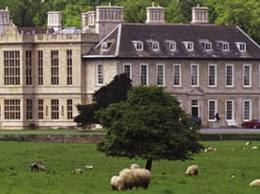
Stapleford Park


Surrounded by the magnificent 500 acres of Capability Brown landscaped grounds Stapleford Park is the perfect country sporting estate and sits in the heart of Leicestershire, near Melton Mowbray, minutes from Rutland Water. The Hall was the seat of the Sherard family, later the Earls of Harborough and from 1894, of Baron Gretton. Today, guests sleep in rooms decorated by Wedgwood, Turnbull and Asser and Crabtree and Evelyn.


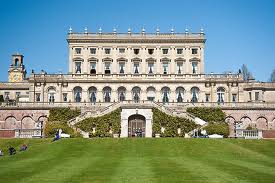
Cliveden House

Located on the River Thames just outside London in Berkshire, Cliveden House is one of those stately homes where one wishes the walls could talk. According to their website: The first house was built in 1666 by the 2nd Duke of Buckingham. A notorious rake, schemer and wit, he created Cliveden as a hunting lodge where he could entertain his friends and mistress. Since then it has twice been destroyed by fire, only to emerge, phoenix-like, more stunning than before. The house has played host to virtually every British Monarch since George I and has been home to three Dukes, an Earl and Frederick Prince of Wales.

Queen Victoria, a frequent guest, was not amused in 1893 when the house was bought by William Waldorf Astor, America’s richest citizen. When he gave it to his son and daughter-in-law in 1906 Cliveden became the hub of a hectic social whirl where guests included everyone from Charlie Chaplin to Winston Churchill, and President Roosevelt to George Bernard Shaw.


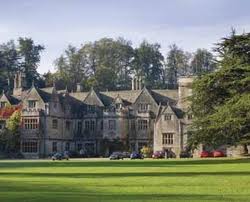
Bibury Court

 Bibury Court Hotel is set in a stunning Jacobean Mansion built in 1633. It dates from the late 16th Century, and was then extended in 1633 by Sir Thomas Sackville, the illegitimate son of the 1st Earl of Dorset who was ‘Knight and gentleman-usher in dailie waiting on the King’ (James I). Charles II is reputed to have visited the Court when he attended Bibury Races, as did the Prince Regent during the reign of George III.

The house remained in the Sackville family for several generations and through the female line passed to the Cresswells. It was them who, owing to a disputed will and years of litigation, sold the house in the last century to Lord Sherbourne. Charles Dickens is said to have written ‘Bleak House’ with this court case in mind. The interior was remodelled for Estcourt Cresswell in 1759. Later it fell into disrepair in the 1920s being refurbished for the Clark family in 1922 in whose ownership it remained until 1968 when it was sold after the death of Lady Clark, and turned into a hotel.  It is situated in the beautiful Cotswolds area which is sprinkled with historic market towns, charming villages and centuries old country manors.

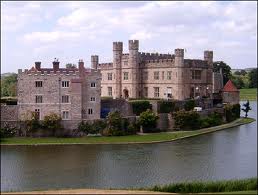
Leeds Castle

Well, really, what can one say about Leeds Castle? All you really need to know is that they have 14 bedrooms and three cottages on the estate that you can book by contacting them in advance. History? You want the history of the Castle? Click here.

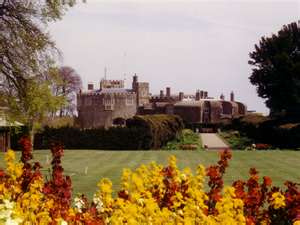
Of course, we personally think the pentultimate place to stay at is Walmer Castle, once home to the Duke of Wellington as Walmer Castle was the official residence of the Lord Warden of the Cinque Ports – a title previously held by both the Duke of Wellington (23 years) and the Queen Mother. The Duke used Walmer often and preferred it to any other home, inviting a stellar line-up of guests to stay for extended periods. The Duke’s great good friend, the widowed Charles Arbuthnot, lived with Wellington at Walmer and they regularly walked the grounds together, often strolling the battlements of the Castle. Wellington’s housekeeper at Walmer fondly called the elderly pair, “our two dear old gentlemen.” Arbuthnot died in 1850 at Apsley House, the Duke of Wellington died in 1852 at Walmer Castle. Today, guests can stay in either the Greenhouse Apartment overlooking the kitchen garden which has supplied the castle for more than 300 years or the Garden Cottage with a master bedroom overlooking the Castle. For a look at all properties available to rent from English Heritage, click here.

Staying With Friends

Alas, there are very few ways in which we British History afficianados can truly recreate and experience what life was like in centuries past. However, it is possible to get the flavor of what it must have been like to travel down to the country and stay with friends at their Stately Pile for a few days. We’ve found a few magnificent estates that are now hotels. True, they have modern day conveniences and you most likely won’t be greeted at the door by the family butler or offered a candelabra to light your way to your room, but it’s the closest we can come to experiencing true country house hospitality.

Oatlands Park Hotel

Located 18 miles outside of London in Surrey, Oatlands has a royal pedigree and strong Regency connections – Brummell and Alvanley were both frequent guests of the owners, the Duke and Duchess of York, who leased the property from the Crown in 1790. In 1794 the mansion was burnt down and was then rebuilt in the Gothic style of the period. After the death of the Duchess of York in 1820, the whole property was sold. It was bought by Edward Hughes (Golden) Ball Hughes in 1824 (although it was not until after the Duke’s death in 1827 that the sale was finally concluded) and again remodelled in 1830. Hughes had actually tried to dispose of the estate by public auction in 1829 but this part did not sell. He let the Mansion and the adjoining parkland to Lord Francis Egerton for a seven-year period in 1832 and renewed for a similar period in 1839. The arrival of the London and South Western Railway in 1838 made the area ripe for ‘a daily commute to town’ and in 1846 the estate was broken up into lots for building development and sold at three public auctions in May, August and September of that year. Following a period of private ownership by James Watts Peppercorne, the house became a hotel in 1856 known as the South Western (later Oatlands Park) Hotel. The present day Oatlands Park Hotel occupies the site where the Oatlands Mansion (Oatlands House) once stood and no doubt so long as you’re paying for your room, management will allow you to bring your Fat Friend along.


Armathwaite Hall

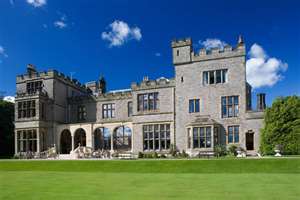
Located in the Lake District, Armathwaite Hall stands on the previous site of the Manor of Bassenthwaite, given to the illegitimate brother of Allan, the Second Lord of Allerdale and Gospatrick took on the name de Bassenthwaite. Another family, the Highmore family, who owned the Hall 1540 to 1748, offered hospitality to the infamous Bonnie Prince Charlie and the Duke of Cumberland during the 1745 uprising at their other residence in Carlisle. In 1748 James Spedding, Squire to Lord Egremont of Cockermouth Castle acquired the Hall and it stayed in his family for three generations until it was sold to Sir Frederick Fletcher-Vane in 1796. This family extended the Hall in 1817 by building a courtyard, a chapel and partially extending the building towards the lake. Four generations of the Fletcher-Vane family resided here until 1850 when it was sold to Mr. Boustead. Hotel guests can book in for a spot of clay shooting or archery.

Thornbury Castle

When Henry VIII came to the throne, the Duke of Buckingham, owner of Thornbury Castle in Gloucestershire, stood in high favour with his Royal Master. He was the most affluent and most honoured nobleman in the country – Constable of England. He was the King’s Lieutenant and commanded in his absence. He was with his Sovereign in 1513 at the Battle of the Spurs in Picardy, and in 1520 whilst on his way to France to take part in the campaign of the Field of the Cloth of Gold, he visited Tonbridge where he had a large estate and had cause to dismiss a steward called Kynvett. To avenge himself the steward passed on to Cardinal Wolsey certain indiscreet words uttered by the Duke. It is not known for certain whether Buckingham had serious thought regarding the throne, but he was the great grandson of Edward III’s youngest son, Thomas of Woodstock, and if Mary Tudor’s succession at that time was denied he thought he stood heir to the throne. Henry VIII certainly seems to have thought there was some danger because on the Duke’s return from France he was arrested and taken to London, where he was found guilty of high treason and executed on Tower Hill.

Henry VIII appropriated the castle and for 33 years it remained a royal demesne, and in 1533 he and Anne Boleyn spent 10 days here. Mary Tudor also spent some years here as a princess, and upon her death in 1554 she returned the Castle to the descendants of the late Duke. For the next two centuries the castle was unoccupied and fell into ruin. In the 1850s the Castle became once more a family residence, being home to the Howards, then the Clifford family, Kenneth Bell MBE, The Baron and Baroness of Portlethen, and now forms part of the von Essen private collection of country house hotels.

Ickworth House

Ickworth House, now the Ickworth Hotel , is simply steeped in scandal. This from Wikipedia: Ickworth House is a country house outside Bury St. Edmunds, Suffolk, England. It is a neoclassical structure topped by a giant rotunda in a park laid out by Capability Brown. Ickworth had been in the ownership of the Hervey family from the 15th century. The house, park, and a large endowment were given to the National Trust in 1956 in lieu of death duties. As part of the handover agreement, a 99-year lease on the 60-room East Wing was given to the Marquess of Bristol. The Letter of Wishes of the 4th Marquess of Bristol stated that accommodation should always be available for the head of the Hervey family (the Marques of Bristol) at Ickworth. However, in 1998 the 7th Marquess of Bristol, partly for financial reasons, and partly in response to an eviction suit stemming from his behaviour on the property, sold the remaining lease on the East Wing to the National Trust. The Trust subsequently refused to re-sell the leasehold to the 8th Marquess of Bristol on his succeeding to the title in 1999. There is now a 27-bedroom hotel in the East Wing.

Part Two Coming Soon!