National Trust Holiday Lets

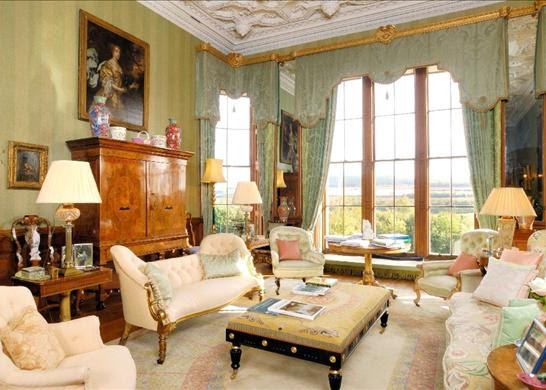
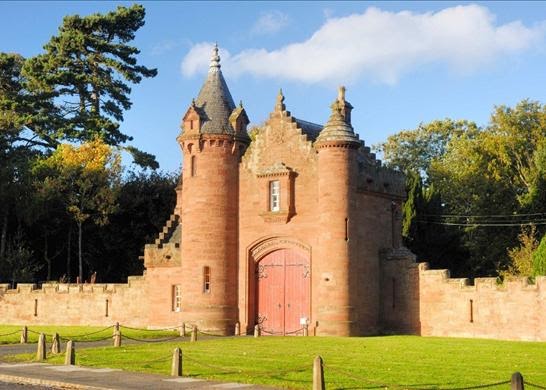
If one can’t be home for Christmas, the next best place is an historic property let through the National Trust. At the National Trust Holiday Cottages website, you’ll find a unique collection of over 370 properties in outstanding locations in England, Wales and Northern Ireland, available for short breaks, weekends away and holiday lets. Here are just a few:

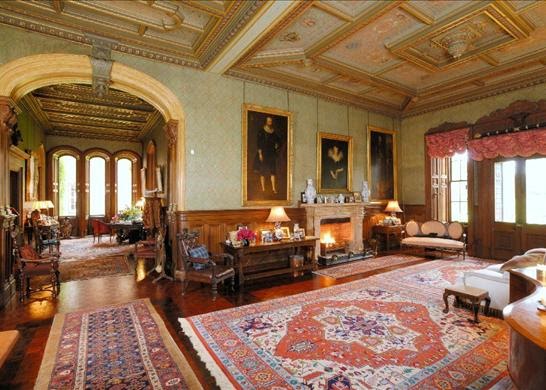
On the sandy coast between Barmouth and Harlech in Wales, Egryn is a stunning Grade II listed medieval hall house dating from 1510, with 17th century alterations and a mid 19th-century front which looks across farmland to Cardigan Bay. At the heart of the house is the medieval hall with exposed, partially-aisled roof structure and a grand 17th-century fireplace. It has been faithfully restored by the National Trust using traditional building techniques: admire the skill and beauty of this work, providing a rare opportunity to stay in a Welsh hall house of this calibre. It is furnished in keeping with each period of its development. Commissioned by the National Trust, a replica of the original Egryn table dating from the early 1700’s has been made from local wind blown oak and the Trust’s Ganllywd Estate, and now has pride of place in the grand medieval dining room. Egryn is a working farm, through which there is a public footpath which leads past a profusion of Scheduled Ancient Monuments and stretches from the seashore to the uplands of the Rhinogydd Range. It has a wealth of archaeological and historic interest. There is a large private garden with nature trees, shrubbery and patio area. With its grand medieval hall sitting and dining rooms, Victorian parlour, skilled craftsmanship, beautiful furnishings and large private garden, Egryn is the perfect choice for that special occasion, family holidays and get togethers.

An exceptionally pretty cottage lying in the idyllic surroundings of the walled garden on the Florence Court estate, just eight miles from the town of Enniskillen. Rose Cottage is furnished to a high standard with views over the peaceful garden.

Godolphin House – Cornwall -This hugely atmospheric house sits in beautiful gardens and in great walking country. It is also only a short drive to lovely sandy beaches on both the north and south Cornish coasts, so makes a fabulous base for a great seaside holiday with a wonderful house to retreat to, away from the hustle and bustle of the resorts on busy days. The main entrance is via an imposing pillared portico running along the front of the house. There is a rear private garden area specifically for holiday cottage guests, but the main gardens are also available for use when not open to the public.

Housesteads – Northumberland – This Victorian farmhouse, built in the 19th century, was home to the Thompson’s who farmed the area and also played a role as custodians of the Wall. The sitting room in the cottage was used by John Clayton when he was working on the excavation of Housesteads Fort. Clayton was the Town Clerk in Newcastle and was involved in the development of the city in the 1800’s. He is renowned for his interest in preserving Hadrian’s Wall and is credited with being the first person in the world to use his own wealth to buy sites of archaelogical interest. He bought land along the wall to stop the quarrying and removal of stones being taken to be used elsewhere. John Clayton was involved in excavations through out most of his life and was said to be still excavating up to the age of 94. The cottage is located just 100yrds from the ruins of Housesteads Fort and has outstanding views towards the North Pennines and Hadrian’s Wall.

Ho, ho, ho, indeed.
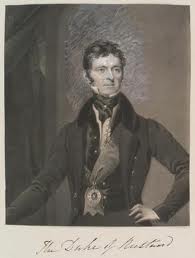
A Letter From the Duke of Rutland

John Henry Manners, 5th Duke of Rutland

From the Duke of Rutland to Lady Shelley

Belvoir Castle, November 26, 1825.

My Dear Lady Shelley,

“So, at length you have deigned to notice me, and to remember that you had such a friend in existence! I know not how many months it is since I wrote my last letter to you; and I was trying to recollect whether it contained aught which could have affronted you, when your letter arrived to dispel all sombre suppositions from my mind, and to revivify me again with the cheering ray of your kind friendship, on which, believe me, I place a value of high (I may say highest) degree. At one time I thought you was treating me as you did at Burlington House, completely as a faute de mieux fellow; and that you was engaged in a more agreeable correspondence, perhaps with the very Duke who, on the occasion alluded to, drove me to the wall. Several times have I nearly been writing to you; but I have restrained myself, from the practice which I have of writing to you, Mrs. Fox, and a few other such highflown dames of fashion, only when I have received a letter from you. 1 do this from the idea that, till you write, you do not wish to hear from me. . . . You will hear from Shelley of all that passed during October. We were very merry at Cheveley. But to myself it was a most disastrous month, as far as gambling was concerned. I lost nothing terrifick on the turf; but the whist table really persecuted me! I shall be like Shelley, and give it up; at least all future high play. I mean to reduce my stake one-half, and my resolution is so fixed that I feel confident that it will not give way. … It is a sin that you should have Mazeppa (a horse) in your possession, and not bring him here to show his perfections to an admiring field! But Mazeppa goes out to a disadvantage under you, since he gets robbed of a considerable part of the admiration he would, under other circumstances (Jest a dire, under another person’s pressure) attract. It is a case in which ‘the horse and is rider’ must share by tallies, in admiration and applause. I have an admirable set of horses if I had nerves and head to ride them. Yet I entertain no doubt that Mazeppa would show a brilliant gem among them. Charles Thornton was asking after him last night. He has a monstrous opinion of him.

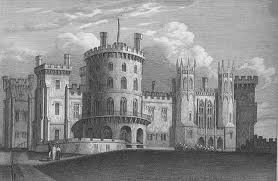
Belvoir Castle

“We are living entirely alone here; the Duchess has not been very well lately, and she wishes an interval of quiet, in order to recruit before the bustling time, a large society of Christmas, summon her to a re-exertion of strength. There is almost as much labour in directing the household concerns of a large party in a country house, as in guiding a hunter across a stony country in a mist. We have not yet allowed my two brothers (who are at Melton) to come to us. On December (?) I go to Beaudesert for a couple of days woodcock shooting, and when there I shall probably press forward for two nights to Willey. So you heard of the Anklet! We all agreed it was a beautiful, as well as a novel custom, and credit was given to the Columbus of it. It will very likely be the fashion next year in London, but there must be a curtailment of the flounces and furbelows, or it will be like the flower which springs to blush unseen. . . .

“You have my best wishes for your success in the important object relative to the diversion of the turnpike road. I can easily understand how great an improvement it will make to the comfort, the privacy, and the actual appearance of Maresfield. Nothing will give me greater pleasure than to visit you there; but I do not look so much to the pleasure of seeing the place, as of seeing its owner, and I beg that the success of your turnpike road diversion may not be the sine qua non of our visit to Maresfield! I trust that I shall also be able to congratulate you on the realisation of your golden dreams respecting the union of the Medway and the Ouse, and the consequent improvement in value of your property. Besides being an important object to you it would be a most important one to the country, for the causes which you ave detailed. Our lake here is just completed, and the water turned into it for a perpetuity a fortnight ago. It has all the effect which we wished, and expected, and does the Duchess’s conception and planning the highest credit. We are busily engaged in fitting up the large drawing-room, which I really think will be the handsomest room in the kingdom, as well as unique in its design. Twenty gilders are at this instant busily occupied at Knipton Lodge in preparing the parquets from Madame de Maintenon’s apartment in the Trianon, which are to form the fittings of the room, and they are superb. Our object was to have the room completed by New Year’s Day; but it is impossible.
Ever truly and affectionately yours,
Rutland

On The Shelf – High Rising

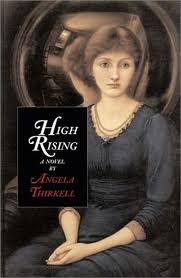
I’ve just re-read Angela Thirkell’s High Rising and realized that I’d made a huge mistake – I read it without having any more of the Barsetshire novels on hand to read next. I then spent a good hour online, ordering six more titles in the series. Honestly, these novels, and the characters therein, are pure joy. Another thing I only recently realized – penned in the 1930’s, these stories are now eighty years old, but they still read as funny and the characters are just as amusing as any 21st century counterparts. Like E.F. Benson and P.G. Wodehouse, Thirkell takes us back to an England where conversation is witty and entertaining, where plots are relatively simple (yet infinitely engaging) and where villians, if there are any, are really rather harmless, except to themselves. Everyone gets their comeuppance, everything comes right in the end and we, the readers, are thoroughly entertained throughout.

Oft compared to our own Jane Austen, Ms. Thirkell is a genius at setting place, crafting a plot and at writing sometimes over-the-top yet wholly believable dialogue. After reading any of the Barsetshire novels, who wouldn’t want to spend a few weeks in the English countryside?

From the Powell’s Books website: “In High Rising, Mrs. Morland, a widowed author, must attend to the deeper problems of country life while her son Tony drives everyone to distraction with his amazing combination of toy trains. Here Mrs. Thirkell demonstrates the characteristic style for which she is known and for which readers love her. This is fiction replete with gentle irony, grave absurdity, and urbane understatement. This novel introduces one of Angela Thirkell’s most beloved characters–Laura Morland, a novel-writing widow and mother of four who strongly resembles Thirkell herself. In High Rising, Laura receives a marriage proposal from her publisher, who really loves Sibyl, the daughter of Laura’s neighbor; Dr. Ford has feelings for Laura’s secretary, Anne; and attractive but neurotic Una is determined to marry her employer. And in Tony, Laura’s youngest son, Thirkell has created one of the most exasperating small boys in fiction. This is the first of the Barsetshire novels.”

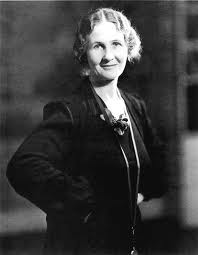
 If you haven’t yet read Thirkell (above), do. If you have, read them again. Oh, Barsetshire is sheer bliss. You can learn more about Angela Thirkell at the Thirkell Society’s website here.

Grosvenor Prints

Once again, Grosvenor Prints, London, has some eclectic and interesting new stock. Grosvenor Prints, in Seven Dials, is one stop I always make when in London. When there last, Vicky and I spent a few enjoyable hours pouring over their stock – she looking at fashion prints, whilst I combed through their Wellington files. Samples of their latest acquisitions for sale can be seen below. Click here to see all of their new listings.

Sketch of Bonaparte. As laid out on his Austerlitz Camp Bed, taken by Capt.n Marryatt R.N., 14 hours after his Decease, at the request of Sir Hudson Lowe, Governor of St Helena & with the permission of Count Montholon & General Bertrand. C. Hullmandel’s Lithography. London Published by S. & J. Fuller, 34 Rathbone Place, July 16 1821. Lithograph, fine, sheet Printed area 265 x 300mm, 10½ x 11¾”. Full uncut sheet bearing the embossed stamp for “S & J Fuller”.  Napoleon died, reportedly of stomach cancer, on 5 May 1821 after six years in exile on St Helena. His body was buried first in the grounds of Longwood, his St Helena residence, before being brought back to France in 1840 to be ceremoniously reburied in Les Invalides. Marryat was a naval officer, and later the author of ‘Peter Simple, Mr Midshipman Easy’, and other popular seafaring novels, and later children’s books. At the time of Napoleon’s death he commanded the sloop ‘Beaver’, guardship at St Helena. When the ex-emperor died he carried the dispatches announcing the death back to England. The fact that Marryat visited and sketched Napoleon so soon after his death illustrates the continued fascination and emotion Napoleon evoked back in Britain, even after six years in remote exile away from the public glare. See NMM: PAF3523. {f: 21864] £280.00                                                             

To the Viscountess Canning This Portrait of The Right Honble. George Canning, M.P.             Painted by Sir Thomas Lawrence, P.R.A. Principal Painter in Ordinary to His Majesty, Engraved by Charles Turner, A.R.A. Mezzotinto Engraver in Ordinary to His Majesty, Pall Mall East, London, Published April 9, 1829, by Messrs. Colnaghi Son & Co, Printsellers to the King. Mezzotint, final state, image 580 x 355mm. 22¾ x 14″. Some mould spots and foxing. Tatty and chipped margins.
Fine full-length portrait of statesman George Canning (1770 – 1827), Foreign Secretary, Prime Minister for 119 days, the shortest term ever. After Sir Thomas Lawrence (1769 – 1830).
Whitman 95, v of v.  [Ref: 21797] £280.00    

A Cockatoo – Henry Rayner [signed in plate and in pencil to margin.] [n.d., c.1940.] Drypoint etching printed in colours, 170 x 125mm. 6¾ x 5″. A fine impression. A cockatoo is any of the 20 bird species belonging to the family Cacatuidae. Along with the Psittacidae family (the true parrots), they make up the order Psittaciformes. Cockatoos have a much more restricted range than the true parrots, occurring naturally only in Australia and nearby islands. Eleven of the 21 species exist in the wild only in Australia, while seven species occur in Indonesia, New Guinea, and other south Pacific islands. Henry Hewitt Redstone Rayner (1902 – 1957). Australian-born, he worked in the Antipodes before studying at the Royal Academy. He was a friend of Sickert. [Ref: 22521] £75.00
Viscountess Duncannon. Painted by Sir J. Reynolds P.R.A. Engraved by J. Grozer. Wm. Austin excudit. Published as the Act directs March 31st 1786 by Wm Austin Drawing Master, Engraver & Print Merchant No.195 Piccadily near St Jamess Church London. Mezzotint, final state with altered publication line, 390 x 275mm. 15¼ x 7″. A fine impression with full margins. Portrait of Henrietta Frances (‘Harriet’) Ponsonby (née Spencer), Countess of Bessborough (1761 – 1821), an amateur etcher; standing in a landscape, looking to the right, with flowers attached to the front of her shawl. After Sir Joshua Reynolds (1723 – 1792). Hamilton p.96, III of III. CS: 8, iii/iii. [Ref: 22388] £280.00                                 
Mary Isabella, Duchess of Rutland. Painted by Sir Joshua Reynolds, & Engraved by the late J.K.Sherwin, Historical Engraver to his Majesty, & his royal highness the Prince of Wales, finish’d since his decease. London Published June 4th. 1791 by Robt. Wilkinson No. 58 Cornhill.

Engraving, very fine published state, 510 x 380mm. 20 x 15″ Mary Isabella Manners (née Somerset), Duchess of Rutland (1756 – 1831), politician and society hostess; seate
d to right with her head in profile, resting on her left hand, a book in her right; seascape through window behind. After Sir Joshua Reynolds (1723 – 1792).
Hamilton p.129. NPG D39956. [Ref: 21779] £320.00   


A View of the Grand Fête on Parker’s Piece, Cambridge, To celebrate the Coronation of Her Most Gracious Majesty Queen Victoria, June 28th 1838. Number of Persons seated to Dinner 15,000, supposed number of Spectators 17,000, _ Total number present 32,000. [& Admission ticket] A Dinner Given to 12000 Persons on Parker’s Piece, Cambridge, June 28, 1838. In Commemoration of the Coronation of Her Most Gracious Majesty Victoria Queen. Drawn on the Spot & Lith.d by G Scharf. Metcalfe & Palmer, Lithog. Cambridge. [&] Rog. sculp.t. Cambridge. [n.d., c.1838.] Coloured lithograph. Printed area 185 x 270mm, 7¼ x 10½”. & engraved admission ticket on card very scarce, 115 x 150mm, 4½ x 6″. Binding folds, one split, tears in edges.

A formal dinner on Parker’s Piece, a 25-acre common near the centre of Cambridge, England, named after a college cook, Edward Parker, who obtained the rights to farm on it. [Ref: 22318] £160.00


For Sale: Ayton Castle

Castle, houses, lodges, cottages and fishing in the Scottish Borders

Yes, yes, I’ve been at it again – property browsing on a grand scale. But you must admit, the sale of Ayton Castle is the perfect opportunity for anyone with dreams of playing Monarch of the Glen to own their very own family pile.

Ayton Castle comes complete with aself-contained flat and grounds extending to 159 acres, 4 houses/cottages, 2 lodges, stable yard with 2 flats and various outbuildings. Fishing on The Eye Water, private garden and extensive policies with good grazing.

As property agents Knight Frank tell us, Ayton Castle has 7 main reception rooms, 17 bedrooms, 9 bathrooms, kitchen/breakfast room, billiards room, extensive domestic offices and a self-contained house keeper’s flat. There are 2 lodges and 4 estate houses/cottages. There is a traditional stone-built stable yard with 2 flats.

Ayton Castle is widely regarded as one of Scotland’s finest baronial style buildings and was designed by James Gillespie Graham, Scotland’s leading Gothic revival architect of the early 19th century. The Castle is a magnificent example of a Scots baronial house, primarily over two storeys, with a five storey ‘Great Tower.’

There is an array of secondary accommodation at the lower ground floor and basement/courtyard levels including the former servants hall and various store rooms and adjacent accommodation arranged around the service courtyard. Approximately half the policies are grazing and half are woodland, all of which are in hand.

As the Berwickshire News reported on Sunday: “The Liddell-Grainger family has continued to own the castle throughout the 20th century, but with the death of David Liddell-Grainger in 2007, the estate and the family seem to have encountered turbulent times, resulting in the castle being put on the property market.

“The private life of David Liddell-Grainger has been colourful and an affair with Christine de la Rue, wife of Sir Eric de la Rue, resulted in him divorcing his wife in 1981 and Christine moving into the castle along with her elderly husband who by this time required nursing care. David Liddell Grainger and Christine de la Rue had two children together, one of whom died of cancer as a child.


“They married in 1996 and when he died 11 years later it is believed that David Liddell-Grainger left his 6000 acre estate to his son by Christine de la Rue rather than his eldest son by his first marriage.

“Last month a Private Rented Housing Panel issued an enforcement notice which ordered Henry Liddell-Grainger and Lady Christine de la Rue to carry out immediate repairs on two cottages on Ayton Castle estate. Tenants had complained of leaking roofs, damp and a two page catalogue of essential repairs that were needed to bring the properties up to a habitable standard.”

Tenant issues aside, Ayton Castle would make the perfect backdrop for a life of baronial splendour. Never mind the massive heating bills – that’s what fireplaces are for.

You can watch a video of the stunning Castle grounds here.

Offers Over £2,200,000 – Knight Frank