A Pinterest Post: The Steiff Titantic Bear

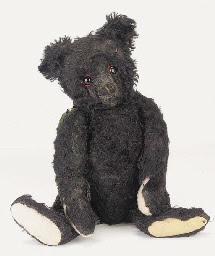
Once again I’m reporting on the story behind a photo I’ve found on Pinterest, this time the subject is a Steiff Titanic Bear. On April 14th 1912 the passenger liner Titanic was sailing towards New York on her maiden transatlantic voyage when she struck an iceberg off the Grand Banks of Newfoundland, Canada, and sank with the loss of 1,513 lives. The whole of England was plunged into mourning and Steiff responded by producing black mohair bears to mourn the disaster. Within weeks they were displayed in shop windows throughout London and sold out very quickly. The bears’ eyes were backed with red felt so that they looked as though they’d been crying. Only 1,214 black mourning bears of this type were made.

The bear above sold in 2001 at Christie’s, London, for £12,925, the description read as follows: A rare Steiff black teddy bear with pronounced clipped muzzle, large black boot button eyes with red felt backing, black stitched nose, mouth and claws, swivel head, jointed elongated limbs with cream felt pads and hump –16in. (40.5cm.) high, circa 1912

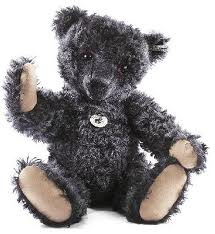
On the 100th anniversary of the Titanic tragedy last year, Steiff produced three commemorative bears to mark the event.


Othello Teddy Bear Titanic Replica wears a slightly curly black mohair coat with red discs behind his eyes.  This Steiff replica is an exact copy of an original “Mourning Bear” from 1912.  Only 494 of these bears were produced in 1912, and therefore, they are greatly prized today.  Othello Teddy Bear Titanic Replica was produced as a Steiff Limited Edition of 1912 pieces.


Polar the Titanic Bear is made of snow white alpaca and wears a whimsical sailor suit.  The original bear was almost lost at sea during his owner’s rescue from the Titanic, but was rescued by a sailor and returned to the little boy who owned him.  Polar the Titanic Bear was a Steiff Limited Edition of 1500 pieces. Further background on this particular bear was found on the Bearly A Memory website:  Daisy Spedden and her husband Frederick were a wealthy couple with a passion for travel. In early 1912, the Spedden family sailed from New York to Algiers and then on to the French Riviera. Returning through Paris, the family boarded the train for Cherbourg; there they took a small boat out to the huge Titanic. On the night of the disaster, Polar, a beloved Steiff bear purchased at FAO Schwarz, was tucked under his master’s arm as the Speddens were lowered down the side of the Titanic into a lifeboat. After the sinking, the survivors were swung up the side of the rescue ship. But Polar found himself forgotten in the empty lifeboat… until a sailor rescued him and returned him to his joyous master, Douglas. Steiff brings this true story to life with “Polar, The Titanic Bear”, a magnificent interpretation of the original bear. Polar is made of snow white genuine mohair and wears a detailed sailor suit. He’s every bit as charming as the original, which survived the tragedy 100 years ago, based on the popular book.
 
The story is continued on a website called Enchanted Titanic:There was also a young boy travelling with his family on the Titanic. His name was Douglas Spedden. He had been given a Steiff Polar Bear a year earlier and had carried it with him throughout his travels with his parents. When the Titanic went down, he and his family went into lifeboat #3 and were picked up by the Carpathia and were returned to New York where they lived. In 1913, his mother wrote a book about the bears travels and adventures. It was called “My Story” and was told through the eyes of his beloved Polar Bear. On August 6th, 1915, Douglas Spedden was struck and killed by a car at his summer home in Maine. This was one of the first recorded car fatalities in the state. The book was put away in a trunk and was not discovered until 1982. In November of 1994, the book entitled Polar, the Titanic Be
ar
was published and released.

 
Centenary Titanic Ted is a replica of the original “Mourning Bear” reintroduced exclusively for both the US and UK markets by Steiff.  This incredible teddy bear has red discs behind his show button eyes (just like the original)  to represent tear-stained eyes.  This Titanic Commemorative bear is from a limited edition of 1912 pieces.

A Couple In England – Day 9

Next day, we met Hester in the car park. When I introduced her to Hubby, all she said was, “Oh dear.”

I opened the rear door of Hester’s car and Hubby dropped onto the back seat. We pulled out of the car park and were soon on our way to Oatlands Park, home of Frederica, Duchess of York, or Freddy, as she’s affectionately known by my circle of friends.
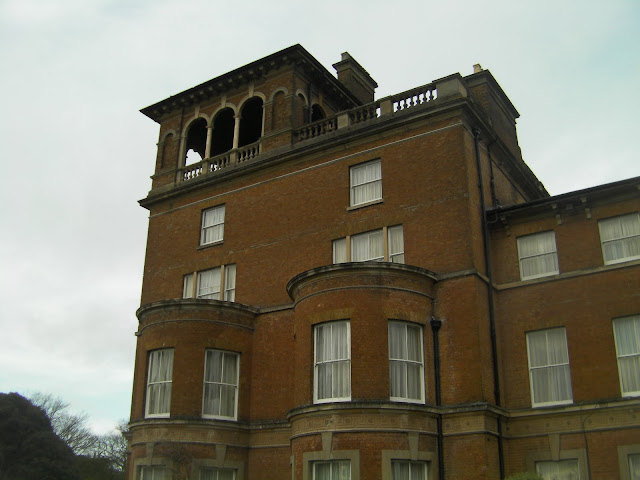
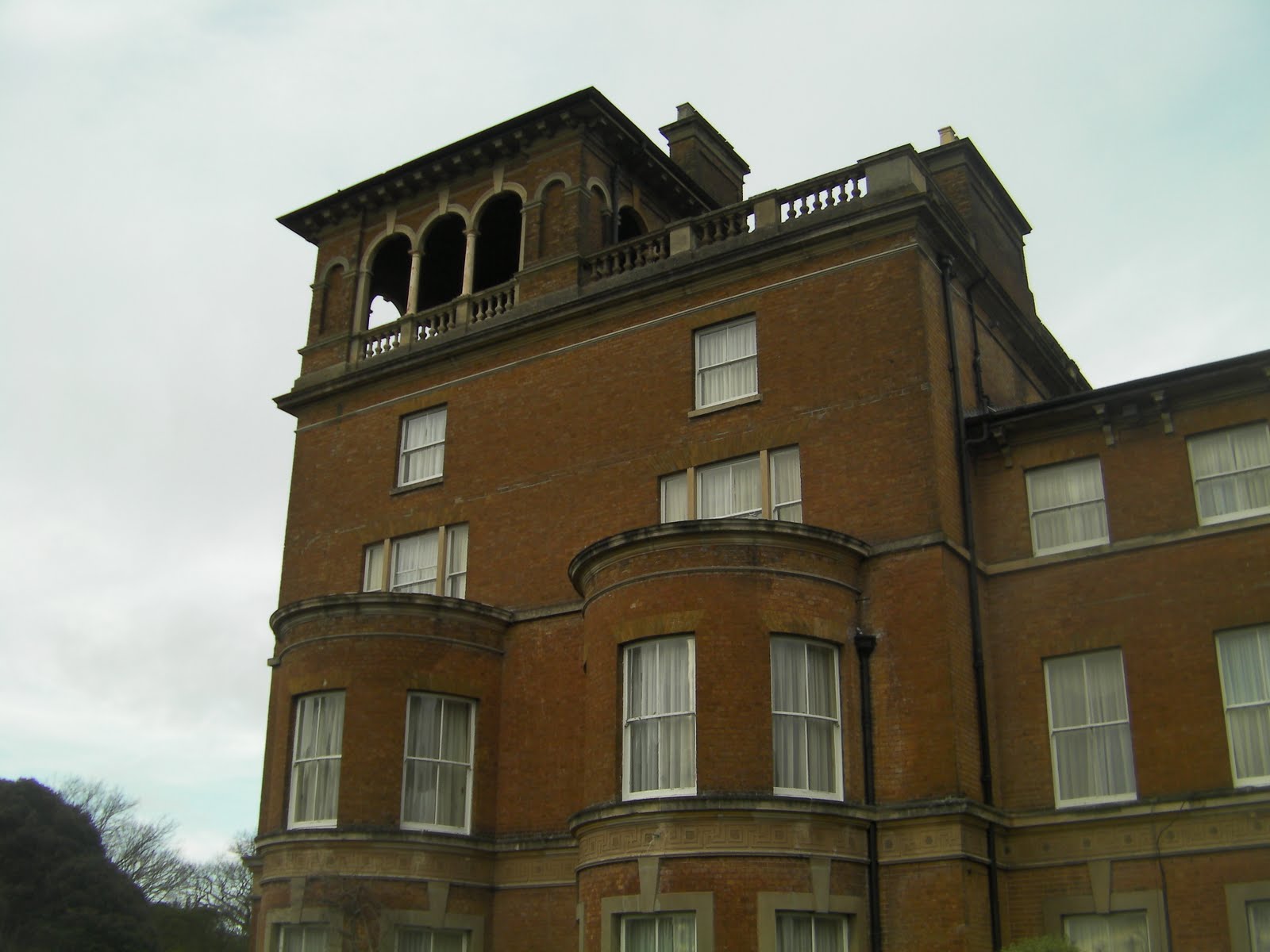
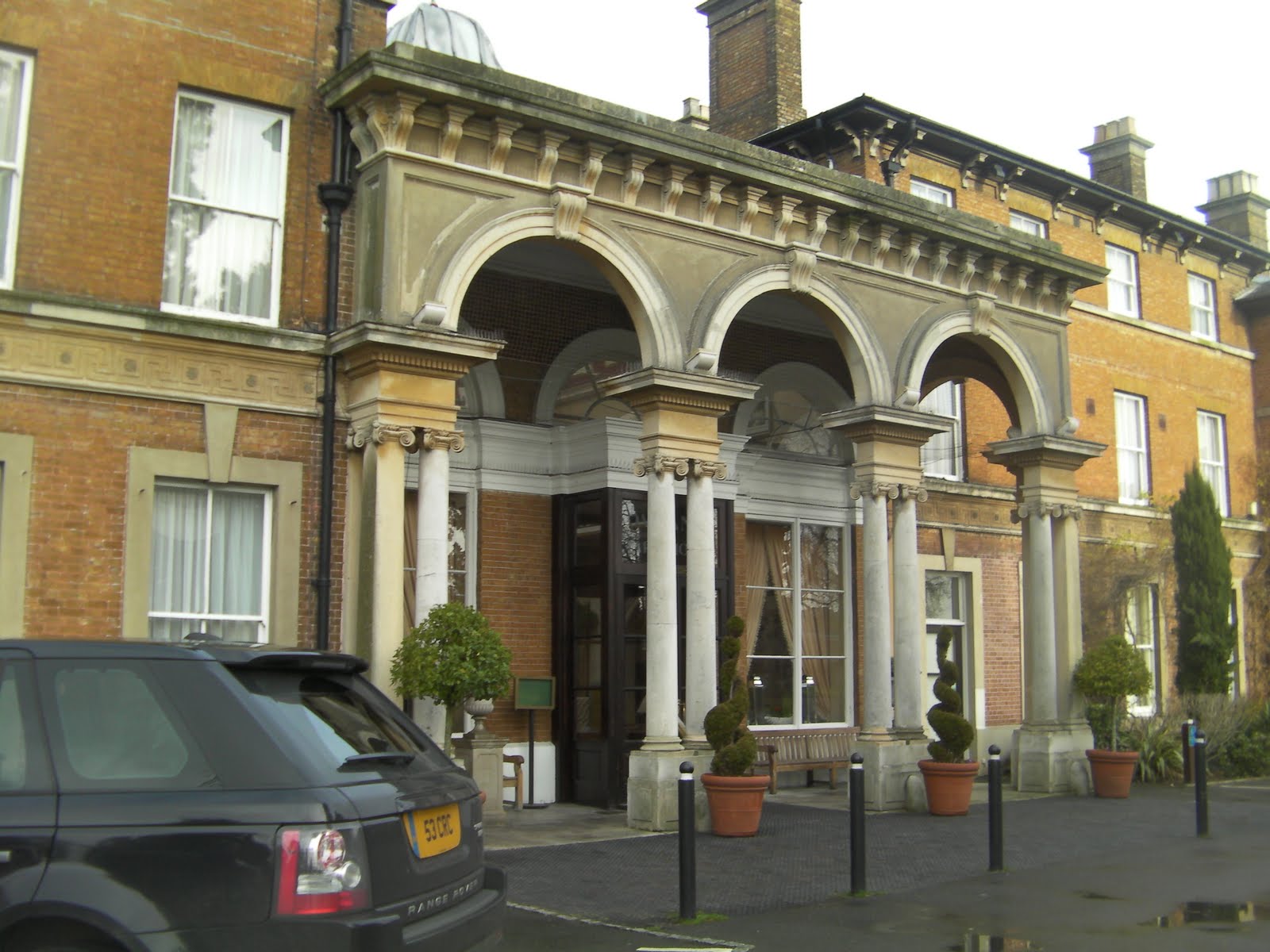
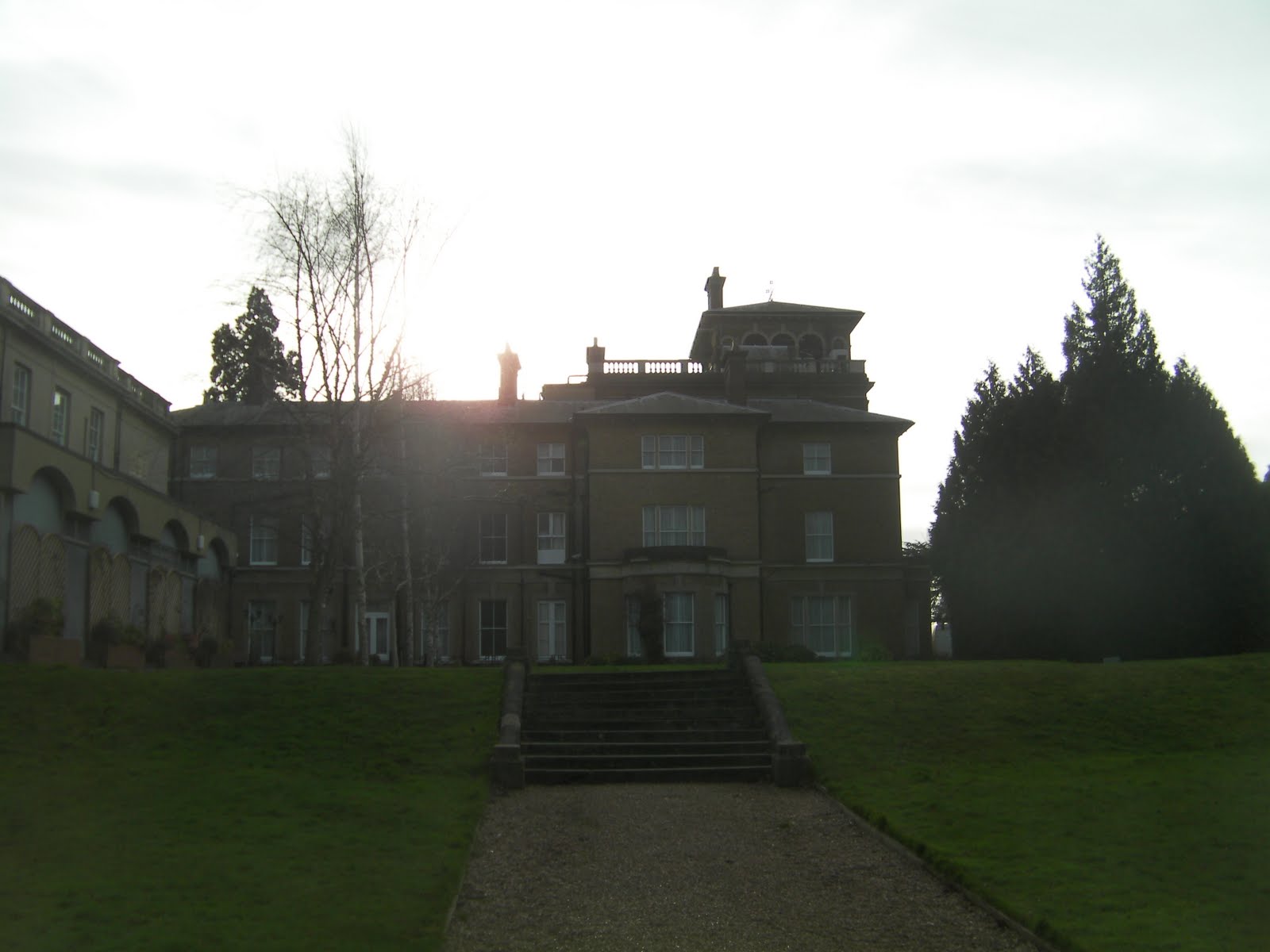
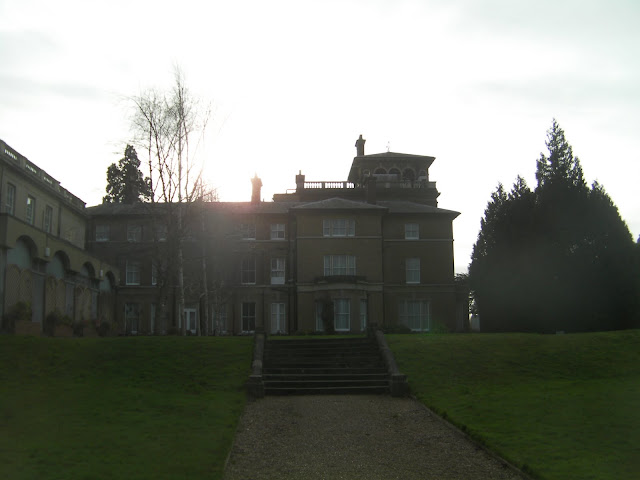
I’ve been wanting to see Oatlands Park, Freddy’s home, for ages and so I was thrilled when Hester agreed to accompany there. Today, Oatlands is a hotel that stands on the footprint of a large mansion which burned down in the late 1700s, but had dated back to the 15th Century. A Parliamentary Survey of the period mentions a house which sat in the grounds of a great royal palace, on the Oatlands Estate. Henry VIII erected the palace for his new Queen, Anne of Cleves. Although a worthy rival to his other riverside house at Hampton Court, the imposing red brick building with its gateways, octagonal towers and open courts, Oatlands was only visited occasionally by the King. And the intended resident, Anne, probably never lived there during the short time she was his wife, but it is thought Henry secretly married his next Queen, Anne’s young Lady-in-Waiting, Catherine Howard, in the Palace chapel.
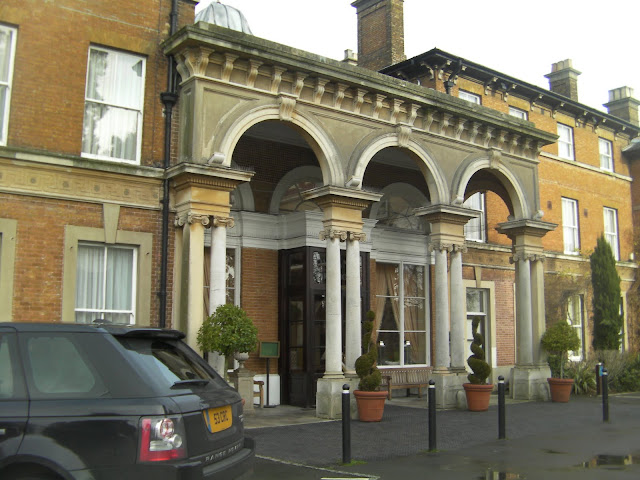
Over the next 150 years, the house and grounds were remodelled by a string of wealthy tenants. You can still see the coat of arms of one, the Duke of Newcastle, on the main gates at the entrance to the Hotel.

Upon entering the building, we found ourselves in a bright and airy lounge and settled ourselves upon the sofas, where we ordered coffees.

“Well, Kristine, you’re finally at Oatlands,” said Hester.

“And soon we’ll be at the famous cemetery,” I said.

“There’s a cemetery here?” asked Hubby.

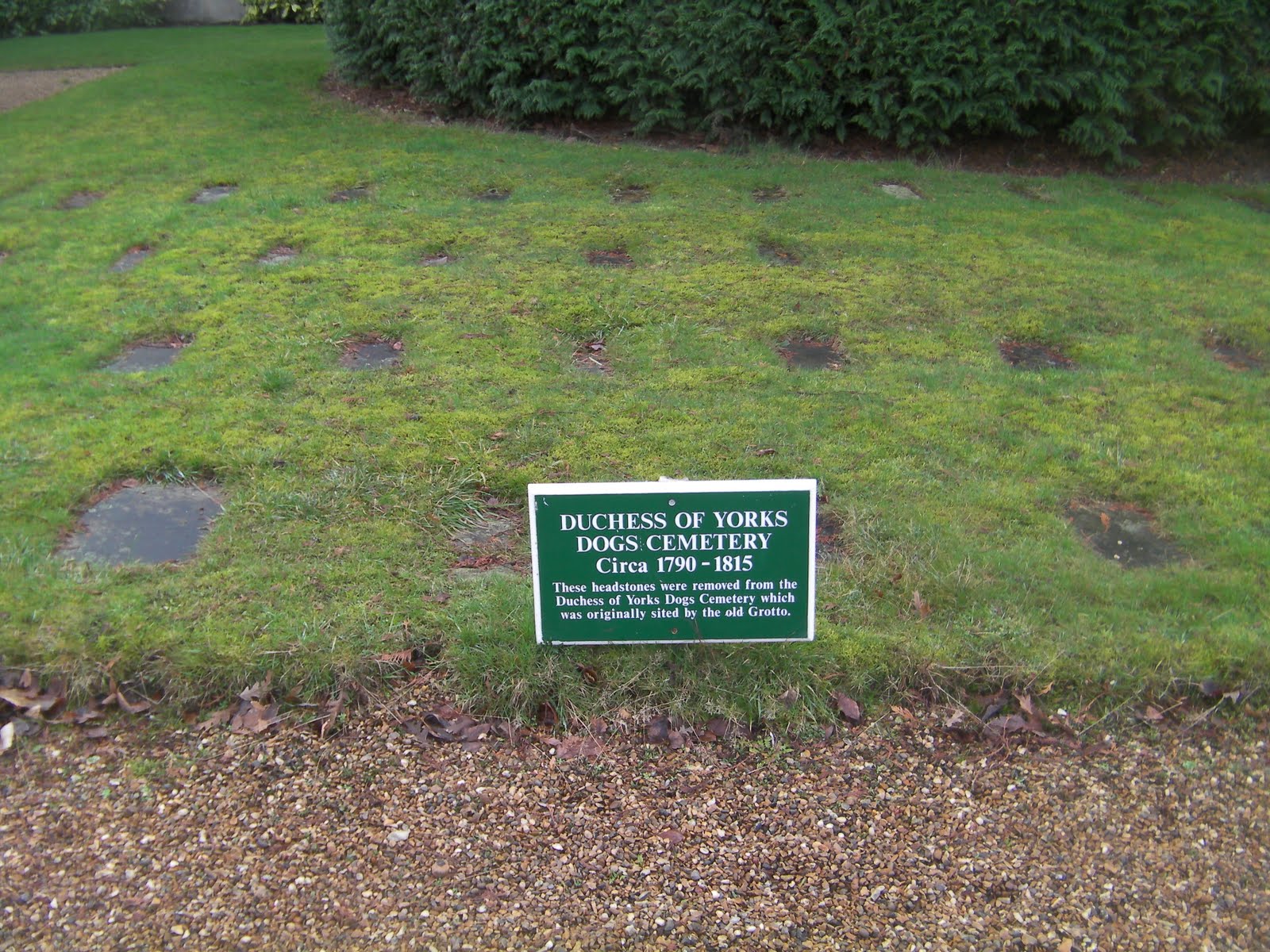
“A pet cemetery. Freddy loved pets of every description and created a cemetery where she buried them all. She was eccentric, but popular with the Regency set.”

“Didn’t Princess Charlotte honeymoon here,” asked Hester.

“Yes, and Prince Leopold stayed here after Charlotte’s death. And of course Brummell was a frequent visitor.”

“Ah, Brummell and the decoupage screen that was never finished,” sighed Hester.

“So sad,” I agreed.

“The what screen?” asked Hubby.

“Decoupage,” Hester and I replied in unison. Hubby declined to pursue the matter further.

The diarist Charles Greville has left us a picture of his visits to Oatlands in his Memoirs. Here is an extract:

“The week end parties were often large, and one of the principal amusements of the guests was to sit up playing whist till four o’clock in the morning. On Sundays,” he continues, ” we amused ourselves with eating fruit in the garden, and shooting at a mark with pistols, and playing with the monkeys. I bathed in the cold bath in the grotto, which is as clear as crystal and as cold as ice. Oatlands is the worst managed establishment in England: there are a great many servants, and nobody waits on you; a vast number of horses, and none to ride or drive.”

“The Duchess seldom goes to bed, or, if she does, only for an hour or two; she sleeps dressed upon a couch, sometimes in one room, sometimes in another. She frequently walks out very late at nights, or rather early in the morning, and she always sleeps with open windows. She dresses and breakfasts at three o’clock, afterwards walks out with all her dogs, and seldom appears before dinner-time. At night, when she cannot sleep, she has women to read to her. The Duchess of York is clever and well informed; she likes society, and dislikes all form and ceremony; but in the midst of the most familiar intercourse she always preserves a certain dignity of manner. Those who are in the habit of going to Oatlands are perfectly at their ease with her, and talk with as much freedom as they would to any other woman, but always with great respect. Her mind is not perhaps the most delicate; she shows no dislike to coarseness of sentiment or language, and I have often seen her very much amused with jokes, stories, and allusions which would shock a very nice person. But her own conversation is never polluted with anything the least indelicate or unbecoming. She is very sensible to little attentions, and is annoyed if anybody appears to keep aloof from her or to shun conversing with her. Her dogs are her greatest interest and amusement, and she has at least forty of various kinds. She is delighted when anybody gives her a dog, or a monkey, or a parrot, of all of which she has vast numbers; it is impossible to offend or annoy her more than by ill using any of her dogs, and if she were to see anybody beat or kick any one of them she would never forgive it.”

The room in which the three of us sat sipping our coffee would be unrecognizable to Freddy. After the house burnt down in 1794, it was rebuilt in the Gothic style by her husband, the Duke of York, who went on to acquire the Estate Freehold. Freddy died in 1820 and when the Duke died in 1827, the property was sold to a young Regency dandy and gambler called Edward Hughes Ball Hughes, who was popularly known as ‘The Golden Ball.’ He spent his honeymoon at Oatlands, before pulling down large parts of the existing building and making many alterations to what was left.

“Ready to find the cemetery?” Hester asked.

“Yes. I can’t wait to read the little head stones. Freddy had their names put on the stones and dates and often noted what sort of animal they were.”

Originally, the cemetery was located near the old Grotto, where Greville bathed and where George IV held a dinner in celebration of Wellington’s victory at Waterloo. The stones were moved closer to the house at some point and so were relatively easy to find as they are located right beside a gravel path.

I was a bit taken aback at first glance, as I had thought that the grave markers would look more like traditional head stones. Hester and I drew closer until we were standing over the stones.

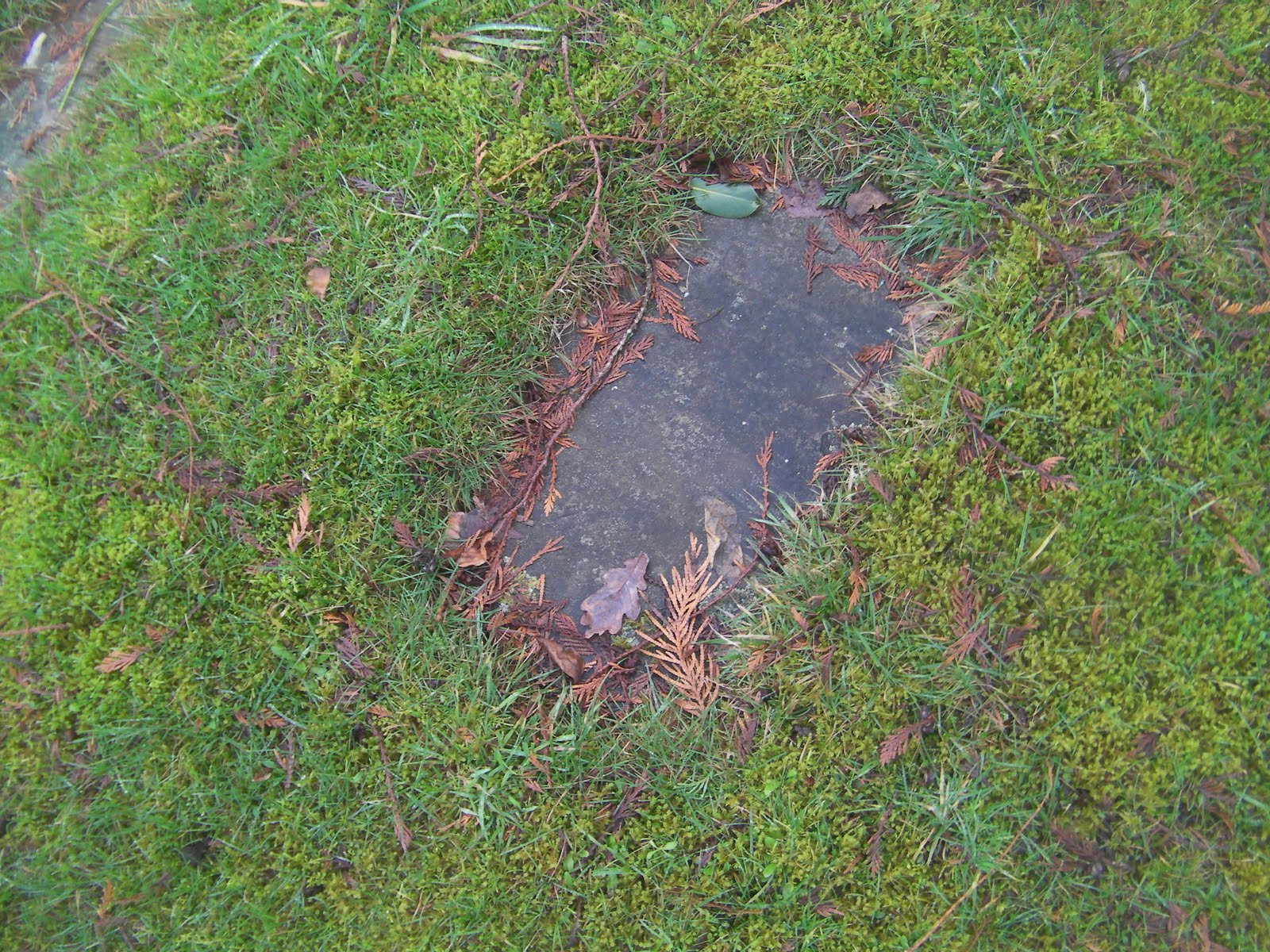
“Oh dear,” Hester said. Age and weather had worked ill upon the stones, which were now all completely smooth – whatever had once been written upon them had been forever erased.

“I wanted to read them,” I lamented.

“I know. Me, too,” said Hester, whose face showed sympath
y for my disappointment. “But look, we can still walk where Freddy and Brummell walked. That’s something, what?”

I smiled at her. “It’s something, indeed,” I said. “And  something wonderful at that.”

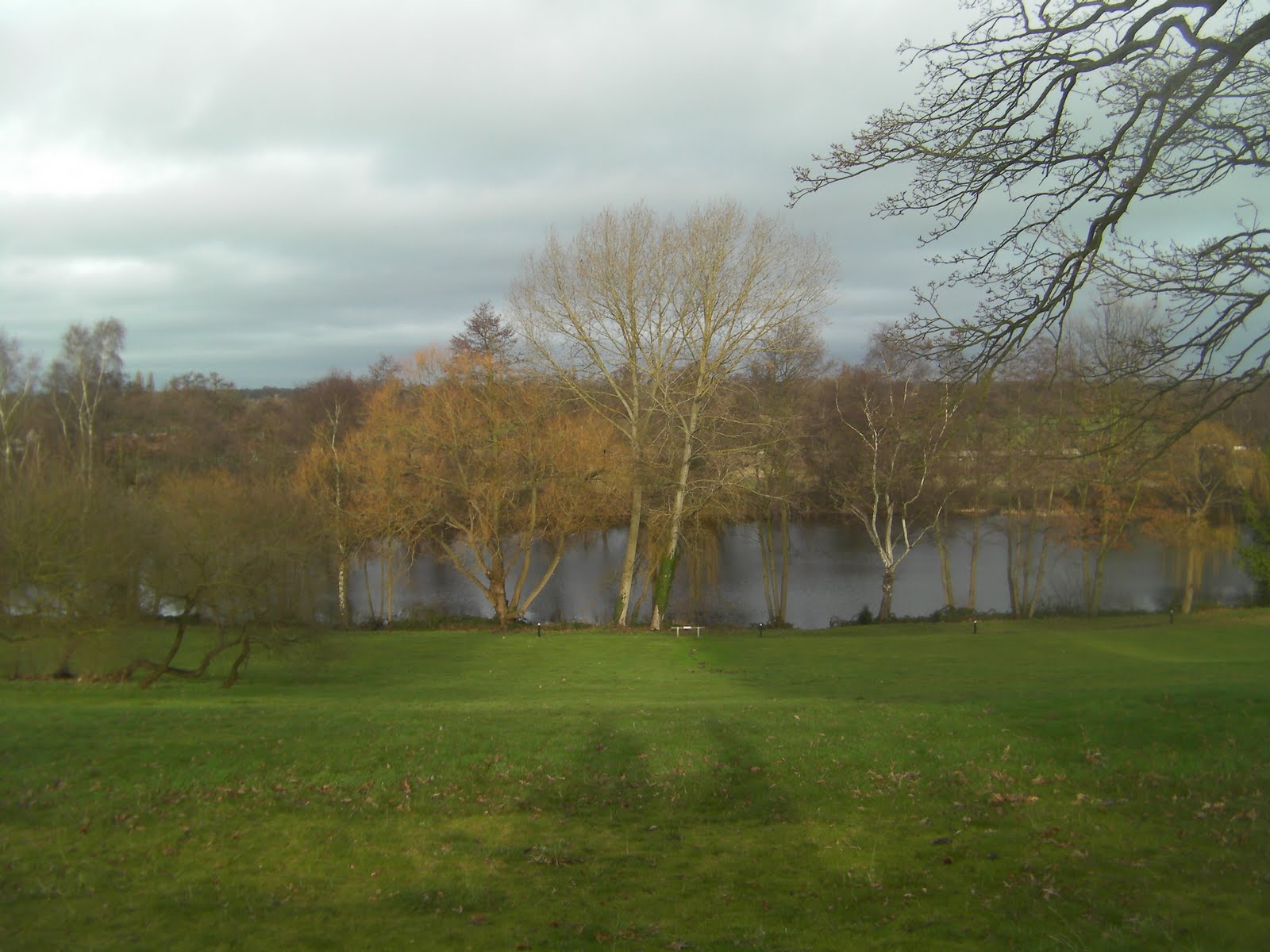
So off the three of us strolled, down the gravel paths and over to the ornamental lake.

Surprise! Finally, a picture of me and Hubby!

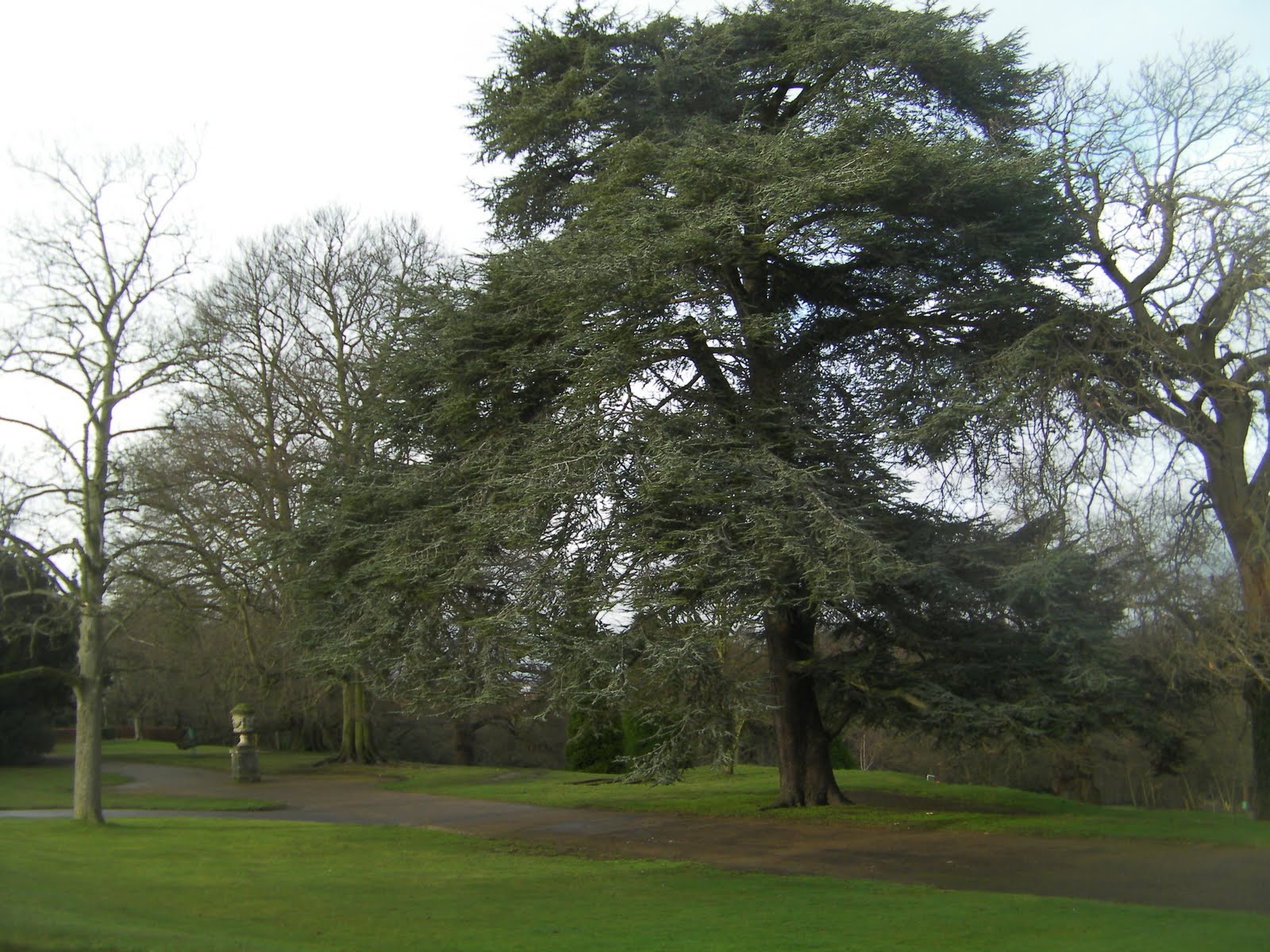
On our way back to the Hotel, Hester pointed out the cedar trees on the property. “Edward Lear used these trees as models for his painting The Cedars of Lebanon.”

In her biography of Lear called The Life of a Wanderer, Vivien Noakes wrote “He needed some cedar trees that were within easy reach of London, and he found them at the Oatlands Park Hotel at Walton-on-Thames. Whilst he was working on his nine foot long picture of the ‘Cedars of the Lebanon’, he penned letters to his friends including Emily Tennyson, Sir George Grove and Chichester Fortescue, to whom he wrote in 1860 saying “The Hotel then is a large and sumptuously commodious place… I have a large light bedroom and wanting for naught.”

Edward Lear’s The Cedars of Lebanon

Taking a long, last look at Oatlands, we made for the car park and set off on the second part of today’s journey – Hampton Court Palace.

Part Two Coming Soon!
The Wellington Connection – Chad & Jeremy

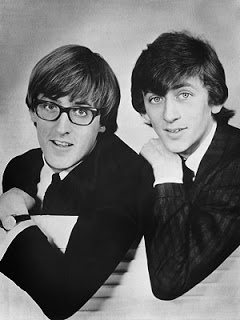
You may recall that when Hubby and I were in London recently we did the Hop On, Hop Off bus tour, during which I learned that Jeremy Clyde, one half of the musical duo Chad and Jeremy, was related to the Duke of Wellington. This was news to me, so of course I had to do further research on the subject. It turns out that Jeremy’s mother is Lady Elizabeth Clyde (b. 1918), the daughter of Gerald Wellesley, 7th Duke of Wellington, and Dorothy Violet Ashton, and is thus a great-great-granddaughter of Arthur Wellesley, 1st Duke of Wellington. Jeremy Clyde, born Michael Thomas Jeremy Clyde, is an actor as well as a musician and made his first public appearance as a pageboy to his grandfather, the Duke of Wellington, at the coronation of Queen Elizabeth II of the United Kingdom in 1953.

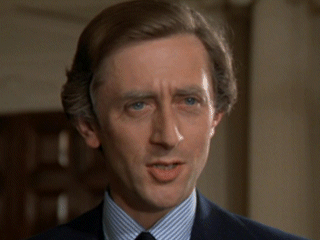
During the 1960s, he was one half of the folk duo Chad and Jeremy, who had little success in the UK but were an object of interest to American audiences. He has enjoyed a long television acting career, and continues to appear regularly on the tube, usually playing upper-middle class or aristocratic characters. Most recently, Jeremy appeared in Season 2, Episode 1 of Downton Abbey playing, coincidentally, a military general. Another coincidence, or not, is the uncanny resemblance Jeremy has to his ancestor, the first Duke of Wellington.

To learn more about Chad and Jeremy, the backstory of their partnership and what they’re doing now, you can visit their website here.

A Couple In England – Day 8 – Part 3

When I got back to our room at the Castle Hotel, I was shocked to find that Hubby had unpacked our bags and had actually hung some of our clothes in the closet.

“Feeling better?” I asked. Hubby pointed to a low table that sat between two chairs by the window. On it were our trusty bottle of rum, a bottle of Coke and an ice bucket. I made myself a drink and took a long, lovely pull.

“Yummay.”

“How’s Hester?”

“Good. She couldn’t believe how bad I looked. I can’t wait till she gets a load of you.”

“At least I don’t feel like I’m going die. I don’t feel great, but I really think I might live.”

We sipped our drinks in silence for a while and then I brought up the subject of food.

“Are you hungry?”

“Yeah, we haven’t eaten anything all day. Come to think of it, neither of us has eaten much of anything for a long time. I don’t want anything fancy shmancy, Hon. I’m not up for that.”

“Fancy shmancy? You’re joking, right? I was thinking more like going straight across the road to the pub.”

“There’s a pub across the street?” Hubby looked out the window.

“Two. You can’t see them because they’re directly behind the Guildhall.”

So we finished our drinks, bundled up and headed out.

I pointed to the Guildhall as we passed. “That’s where Chuck and Camilla were married.”

There? Why didn’t they get married at the Castle around the corner? Boy, that must have been a dark day for you, Hon. Did you cry?”

“I contained myself. But it really should have been me who married Chuck.”

“No kidding. Think of the jewels you’re missing out on.”

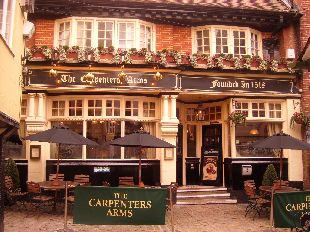
Jewels? I could care less about the jewels. What I want is the key to the Royal Archives. And to every other archive in the land that’s usually off limits. One of the first things I’d have done would’ve been to call Stratfield Saye and say `It’s me. Chuck’s wife. Let me in and lead me to the personal papers.’ Here we go, the Carpenter’s Arms.”

Because it was relatively early, we had the whole place to ourselves. I ordered the bangers and mash and I can’t for the life of me remember what Hubby had – and neither can he. Suffice it to say that we ordered another round of drinks and then settled down to wait for the food.

“We’re meeting Hester in the car park at the hotel tomorrow morning and she’s going to drive us to Oatlands. All you have to do is get into the car. No trains or cabs or anything else resembling work.”

“What’s Oatlands?”

“It was Freddy’s house.”

Freddy? Who’s Freddy? Is he related to the Duke of Wellington? Is that the guy with the fake leg?”

“Freddy was a woman. Frederica, Duchess of York.”

“Who?”

“Remember the Duke of York’s column in London?”

“The guy with the mistress?”

“Yes. Freddy was his wife.”

“So?”

Sigh. “She was a Prussian princess and was rather eccentric and homely, but she was incredibly kind. Some of the greatest people of the age adored Freddy. When Tom Sheridan’s wife was gravely ill, Freddy invited her to Oatland’s to rest and recuperate. And then there was Prince Leopold.”

“Who?”

Leopold. Princess Charlotte’s widower. He went to pieces when Charlotte died and Freddy was very patient with him and had him at Oatlands with her in order take his mind off things.” Our food arrived and we began to eat.

“And of course there was Beau Brummell.”

“Did you know there was a singing group called the Beau Brummells?”

I stared at Hubby. “Yes.”

Laugh, laugh. That was the name of their hit. You know it? Laugh, laugh, la la la la. Da da de da laugh, laugh . . . Remember?”

“Can’t say that I do.” It was obvious that there was no use my going on about the life and times of Freddy, but I felt honour bound to mention that after we’d seen Oatlands we’d be going on the Hampton Court.

“And then after Oatlands we’re going to Hampton Court.”

“What’s that?”

I smiled. “Oh, trust me. You’re going to love it.”

“I bet.”

Day Nine Coming Soon!
A Pinterest Post: The Libby Hall Dog Photo Collection


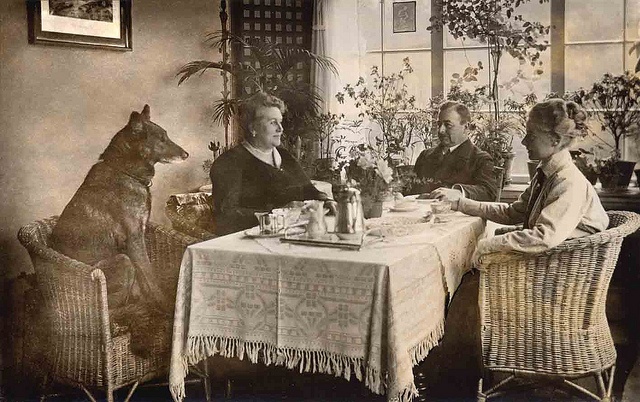
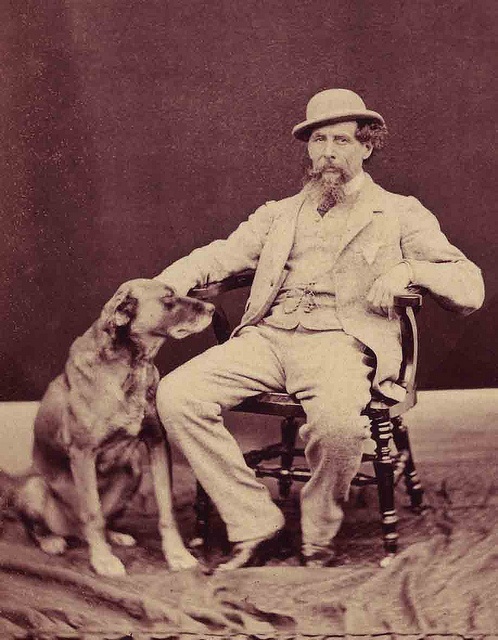
If you’ve been on my Pinterest page then you know I’m a sucker for a good dog photo. Vintage dog photos are even better. Needless to say, vintage English dog photos are the cats’ meow. Like the creative snap above and the one below of Charles Dickens and his dog.


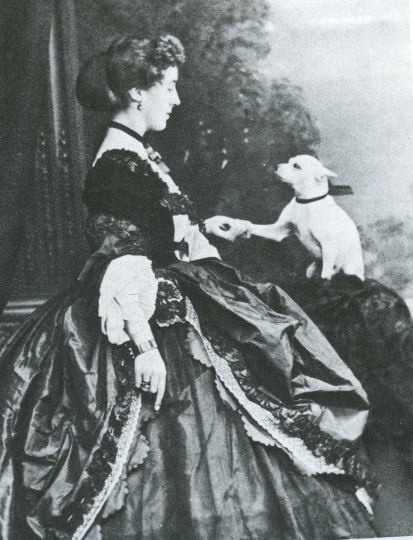
Or this one of Lady Diana Beauclerk, circa 1866


or this one of actress Ellen Terry and friend. Whether the dogs are with well known people, on their own, or with their otherwise unknown but beloved owners, the vintage dog photos are compelling.


After a while, it began to dawn on me that many of the dog photos I was repining were noted as being from `the Libby Hall dog photo collection.’ The collection, I learned upon further research, is now held by the Bishopsgate Institute and Ms. Hall has published four books based upon some of these fabulous photographs she has collected over the years.


As there’s no point in re-inventing the wheel, I’m now going to turn you over to that most excellent blog, Spitalfields Life, where you can find the in-depth story and interview they did with Ms. Hall last year. I hope you will be as intrigued by Libby Hall and the funny/heartwarming/stirring and always evocative photos of England and it’s dogs that she’s saved from the dustbin (God bless her) and collected for us to cherish.