AND FROM ELSEWHERE ON THE WEB . . . . .

Here’s another round-up of interesting posts we’ve found from elsewhere on the web – enjoy!

Author Susanna Ives – 1819 Play Bills from the Theatre Royal
Ian Visits – The secret tube ticket that only works at one stop.
Shannon Selin – Imagining the Bounds of History – Napoleon’s Mother, Letizia Bonaparte
The Telegraph – Lollipop lady’s garden shed named national treasure
London Small Historic Houses – Bricks: The Building Blocks of London
Historical Hussies – Regency Pistols and Duels
The Week – The Fascinating Linguistic Legacy of the Crimean War

The Duke of Wellington Tour – Video Highlights – Part Four – St. James's Street

ST. JAMES’S STREET, LONDON

Kristine and Victoria have a very special day planned for Sunday, September 7th – a walking tour of the St. James’s area of London. Below you’ll find highlights of just a few of the places we’ll be visiting as we take a meandering walk, during which you’ll hear tales about gentlemen’s clubs and famed personalities who frequented the area. Hear tales of bawdy houses, royal chapels, and courtesans. Explore hidden alleys and tucked away streets. Discover their connections to duels, downfalls, and dandies before we quench our thirst at some of London’s most historic and atmospheric pubs. The day also includes time to stop for snacks, lunch, and a bit of shopping.

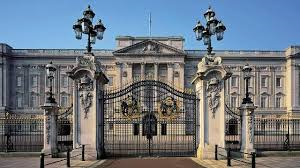
We’ll leave our hotel, the Grosvenor, at Victoria Station and walk up to Buckingham Palace 


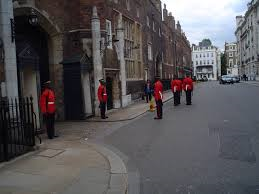
From there, we’ll take a peek into St. James’s and Green Park before turning down The Mall to pass Clarence House and take a short cut up to St. James’s Palace and St. James’s Street. Click here to watch a video of a stroll down the Street .

St. James's Palace London


Arriving at St. James’s Street, we’ll steep ourselves in Georgian and Regency history as we stroll past the shopfronts of such venerable institutions as Lock’s Hatters and Berry Brothers and Rudd. We’ll pass the iconic and fabled gentlemen’s clubs – Brooks’s Club, Boodles and, of course, White’s, where we’ll stroll by the famous bow window, where Brummell held court.


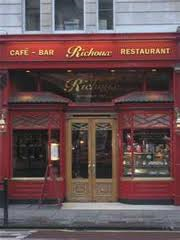
At the top of the Street, we’ll arrive at Piccadilly, where we’ll have plenty of time to see the Royal Academy (formerly Burlington House) and explore Hatchard’s Bookstore (above) and Fortnum and Mason. We’ll stop for tea at Richoux Tea Rooms, a favourite haunt of Victoria and Kristine’s.

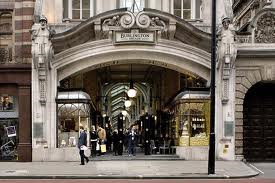
Regency Burlington Arcade

Afterwards, we’ll cross the street in order to see the Burlington Arcade, the longest covered shopping street in the world. The Burlington Arcade (above) was built from designs by Ware for Lord George Cavendish in 1815, and is ‘famous,’ as Leigh Hunt tells us, ‘for small shops and tall beadles.’ What’s a beadle, you ask? Click here to find out. For more on Piccadilly and it’s environs, see my prior post here. More soon!

JOIN US IN SEPTEMBER!

For complete itinerary and details of The Duke of Wellington Tour, click here. 

The Duke of Wellington Tour – Video Highlights – Part Three

THE GRENADIER PUB, LONDON

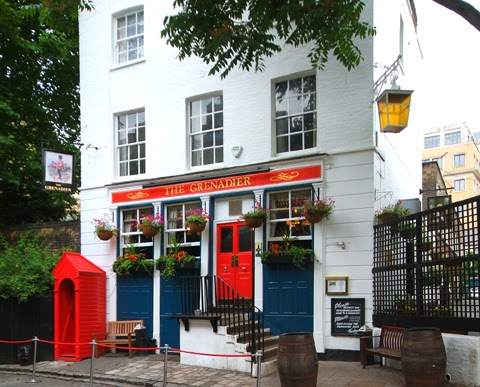
After our visit to Horse Guards, we’ll be rounding out the day with a private dinner at The Grenadier Pub, one of London’s historic pubs. This is another stop I try to make whenever I’m in London and I’ve been there with, among others, Victoria, my daughter, Brooke, with authors Diane Gaston,  Sue Ellen Welfonder, and Carrie Bebris and even by myself.

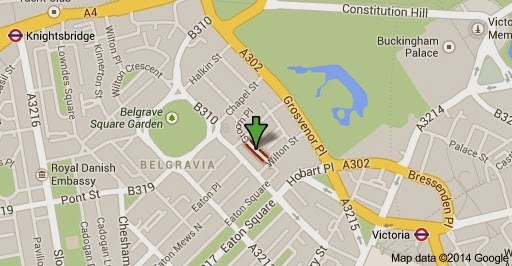
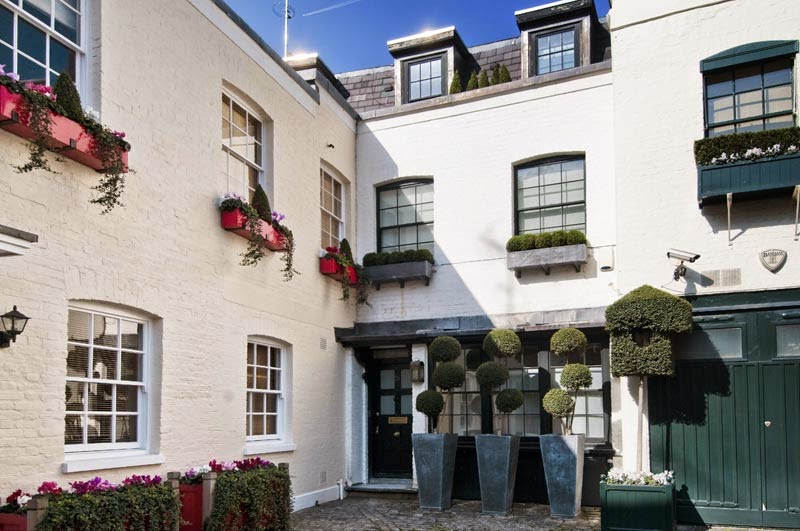
The Grenadier is a tad hard to find first time out, tucked away as it is behind Wilton Crescent on Wilton Row, or Wilton Mews, in Belgravia. You can see how it’s situated on the street at right in the photo of the Row below.
Here’s the Row on a map of London. 
It’s within walking distance of Apsley House and legend has it that the Pub was used as a mess by soldiers in the Duke of Wellington’s regiment, although a pub in some form has stood on the spot since 1720. 
Supposedly, there’s a blocked up entrance to a tunnel in the basement of the Pub that connects it to Apsley House. Keeping in mind that Wellington rarely fraternized with his soldiers – apart from his ADC’s and a very few fellow officers – and that Wellington regularly traveled round London  on horseback, in full view of all and sundry and wasn’t the least concerned about hiding his movements – I put the story of the tunnel on the side of legend, rather than fact. 
The Grenadier’s military connection is not in doubt. Until 1834, Old Barrack Yard, the remnants of which run along the side of the Grenadier Pub, once formed the access road to Knightsbridge Foot Barracks, located on the site now occupied by St. Paul’s Church, Wilton Place. When the Guards moved to their current home at Wellington Barracks in Birdcage Walk, the land was donated by the owner, the Duke of Westminster, to the Diocese of London. 
Today, the Grenadier is awash in historic military decor and Napoleonic atmosphere, with much of the memorabilia focused upon Guards history.

In addition, the Wellington connection is reinforced at the Grenadier through portraits of the Duke, like the one below over the fireplace, as well as the story that the mounting block outside the side entrance of the Pub (below, left) was placed there for Wellington’s use. Which begs the question – did he use the block in order to mount his horse before riding it down the basement stairs and then home through the tunnel? 
Bringing the history of the Grenadier closer to the present, legend also has it that The Grenadier was a regular haunt for Burt Bacharach in the 60’s and that he wrote the score for What’s New Pussycat when he stayed across the road in 10 Wilton Row. Madonna and Prince William are reputed to frequent the Pub, which is said to serve the best “secret recipe” Bloody Mary’s in London.  
You’ll agree that The Grenadier was a “must do” for the Duke of Wellington Tour and Victoria and I look forward to the private dinner our tour group is slated to enjoy here. Not to mention the cocktails . . . . . 
. . . . . . . And the ghost. The Grenadier is commonly known as one of the most haunted places in London, so I could hardly keep it a secret. The Pub is sup
posedly haunted by the ghost of a soldier who was beaten to death for cheating at cards in the Pub. If you’re interested in learning more about the haunted history of the Pub, here’s a video about it from the television series Great British Ghosts, which also happens to have some great footage of the interior of the Pub, its decor and atmosphere. Not mention the cellars.
Personally, I’ve never seen a ghost inside the Grenadier. Rather, I saw them (yes, plural) around the corner in Old Barrack Yard, above. You can read all about my ghostly encounter in a prior post here. 
Oh, one more thing . . . . . . . I should mention that ghost sightings are most frequent in the month of September.
COMPLETE ITINERARY AND DETAILS FOR 
THE DUKE OF WELLINGTON TOUR IN SEPTEMBER 2014 
CAN BE FOUND HERE
 

Why not join us??

The Duke of Wellington Tour – Video Highlights – Part Two

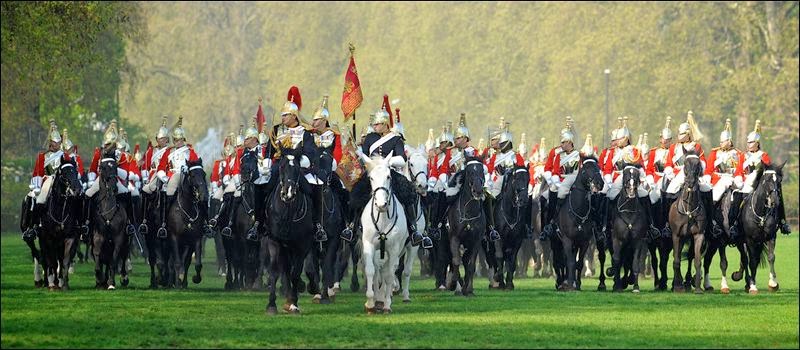
Part Two of our video tour of the sites we’ll be visiting during The Duke of Wellington Tour in September continues with more on our London stops. We hope you will sign up and come along to share our adventures. After leaving the Tower of London, its on to the Horse Guards and the Household Cavalry Museum.

From the Household Cavalry website:

Perhaps Horse Guards most illustrious tenant, the great Duke of Wellington, the Victor of Waterloo, had two stints at Horse Guards as Commander in Chief, a year from 1827-28 and the last ten years of his life from 1842. His office, formerly the Court Martial Room, is now the office of the Major-General Commanding the Household Division and General Officer Commanding London District. A print shows Wellington receiving visitors at the very same desk which is still in use today, and the decor of the room unchanged. The Duke also had quarters at Horse Guards and what is now an office was once his bedroom with the bed situated under the arch. He had an ensuite closet and a private stairway to the stables below, now blocked off, its entrance used as a cupboard. 

We’ve blogged about the Duke of Wellington’s connections to Horse Guards previously and you will find one of those posts by clicking here. You can read about Victoria’s previous visit to the Museum here, and one of Kristine’s visit to the site here.

You can take a peek inside the Museum here and you can read more about the history of the Household Cavalry here.

For a look at day in the life of a soldier in the Household Cavalry and the training and preparation involved, click here. And here’s the link to a stirring video of the Household Cavalry’s musical ride at Earls Court in 2012.

Click here to read the story of Sefton, one of the Cavalry’s most famous horses who survived an IRA bombing. And on the flip side, you can click here to see video of  the naughty Fenton, who led Guards on a merry chase down Whitehall during the wedding of William and Kate. Watch with the sound on so that you can hear a Guard repeatedly calling Fenton – to no avail. All came right in the end, however – Fenton was finally cornered at the Wellington Arch.

You’ll find the complete itinerary and further details for 

Help – I'm Addicted to Coronation Street!

CLASSIC CORRIE

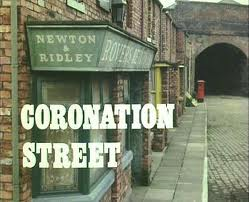
I was trolling around YouTube a couple of weeks ago whilst looking for material for a Video Wednesday post and somehow came upon a vintage episode of Coronation Street – known as “Corrie” to it’s fans – from January 3, 1977. Having never actually watched the show, I made the mistake of clicking the link.  I watched the espisode and, Reader, I was hooked. Line and sinkered, too. I discovered that YouTube user Auntie Corrie has uploaded years of vintage Coronation Street, which you can find on her playlists. I’ve been watching episodes daily, which Victoria seems to think is hysterical, mainly because I’m watching episodes of a soap opera that are forty-odd years old.

Coronation Street debuted live on December 9, 1960 and is set in the fictional town of Weatherfield, located just outside of Manchester. What makes Coronation Street so special are it’s characters, who lead ordinary, every day lives, have human flaws and are, by turns, endearing, frustrating, snarky, like-able, utterly loathsome, timid, brash, sneaky, golden hearted and always fascinating to watch.

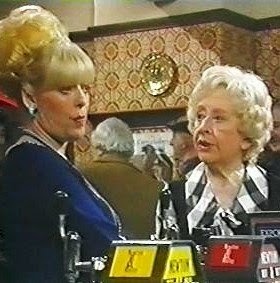
Perhaps the most important character on Coronation Street is the pub called The Rovers Return, usually referred to as The Rovers, which is the hub and heart of the Street.

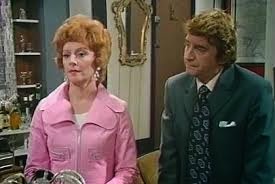
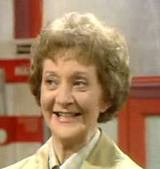
The Rovers was owned by Annie Walker, below right, and staffed by everyone’s favorite barmaid and bottle blonde, Bet Lynch, at left.

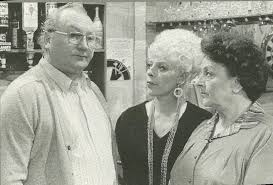
The bar staff were rounded out by Betty and Fred, pictured below.

You’ll find a complete list of the Rover’s landlords and staff from 1960 till today here.

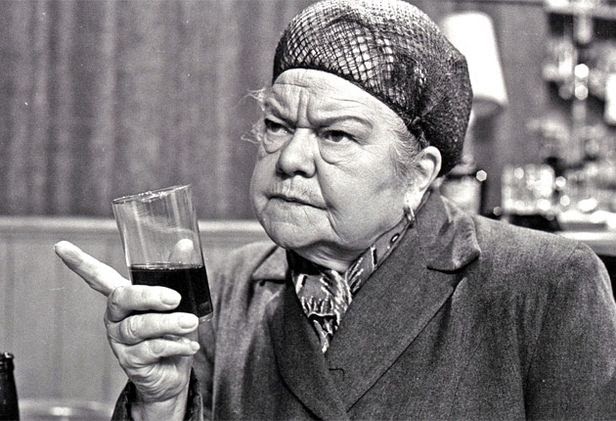
Other residents of the Street included Ena Sharples, who was the caretaker of the community center along with Albert Tatlock, and who spent much of her time criticising the activities of her neighbors. Mrs. Sharples was in the very first episode and spent the next twenty years as a regular cast member, making her final appearance in 1980. Actress Violet Carson received an OBE for her work in 1965.

Then there are Rita (a former exotic dancer) and Len Fairclough, who own a corner store called The Kabin.

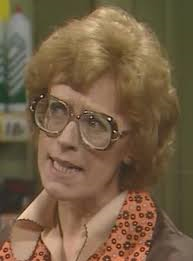
Actress Barbara Knox is still playing Rita to this day. Rita was helped in the shop by the hapless, scatterbrained and unlucky in love Mavis Riley.

Also in the Street is the Corner Shop, owned by Renee Roberts

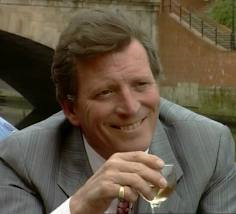
But the biggest employer in the Street has to be Mike Baldwin, factory and shop owner and local lothario

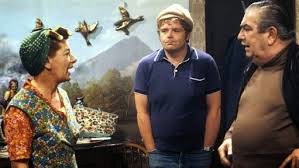
Comic relief is provided by Hilda and Stan, the always battling Ogdens. Stanley is a window washer, while Hilda cleans both at Mike’s factory and The Rovers.

In the background in the photo above can be seen Hilda’s “muriel,” of which she’s very proud. Geoffrey Hughes (Onslow in Keeping Up Appearances) played Stan’s mate and petty criminal Eddie Yeats. You can watch a compilation of Hilda and Stan clips here.

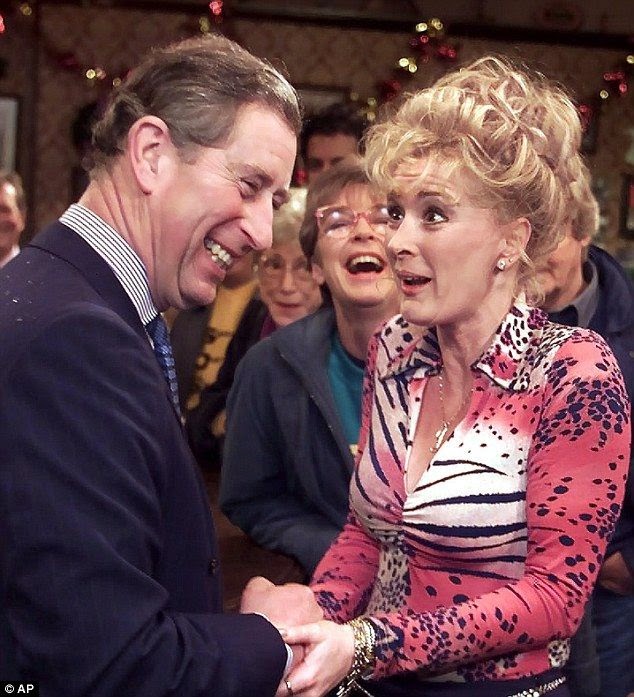
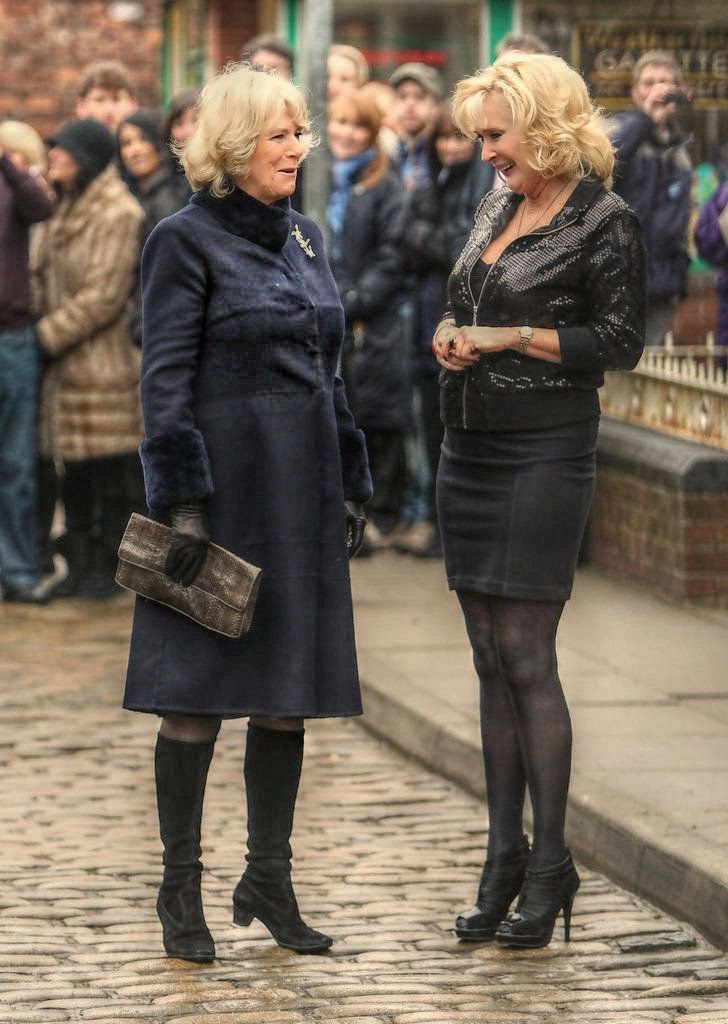
Of course, these are but a handful of the Street’s residents you’ll come to know and love if you should choose (dare?) to tune in. You might become a fan, as well. You’d be in good company – Benedict Cumberbatch is a huge fan of the show and discusses Corrie in this video clip made for the celebration of the show’s 50th Birthday. Even the Royals are apparently hooked on the Street. Here are some snaps taken when they visited the set.

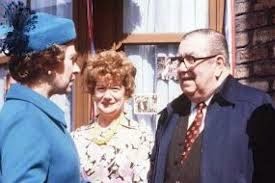
Queen Elizabeth opened the new set in the 1982

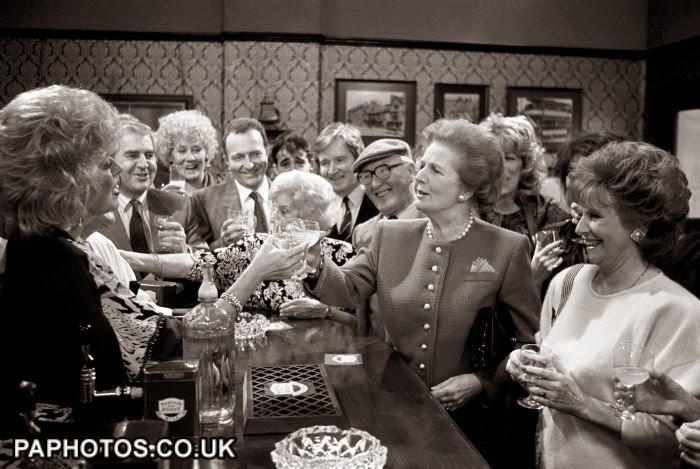
Even Mrs. Thatcher stopped by The Rovers – and raised a glass with the cast

You can watch a montage of 50 years of Coronation Street here.

Click here to see an introduction to the new Corrie set, with a retrospective of the Street from the 1960’s through to today. And here’s an hour long special called Coronation Street: A Moving Story on how the residents of the Street felt about moving to the new studios and an in-depth, behind the scenes look at the building of the new set, as well as a retrospective of the past fifty years.

I’m off to watch another episode of classic Corrie – I’m up to March, 1980. Only thirty-four years to go!