BYOC – THAT'S "BRING YOUR OWN CHRISTMAS"

BYOC – that’s “Bring Your Own Christmas” with Grub Club and Airbnb this 25th December

Home alone for Christmas? On 25th December, Grub Club and Airbnb are joining forces to

host the “Bring Your Own Christmas” lunch in aid of Crisis – the national charity for homeless

people.  Welcoming 40 guests in a stunning central London location, BYOC will be perfect for

those looking for an alternative way to spend Christmas Day.

Airbnb – the world’s largest community driven hospitality company- has scoured the city to

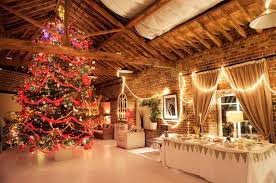
find the magnificent venue, which forms part of an old converted chocolate factory. Forty

guests will gather in this lofty space, with guests encouraged to bring their version of a festive

dish for four people and a bottle of the good stuff.

One of the only London events held on Christmas Day itself, the BYOC lunch will appeal to

those recently moved to a new city, stuck home alone, or simply looking for something

different to do.

Olivia Sibony, co-founder of Grub Club says: “BYOC exemplifies what Grub Club is all about

– bringing people together to share great experiences over food. And what better time to do

that than on Christmas Day? Rather than sitting at home, stuck in a festive rut, BYOC is a

chance to break the boring Christmas traditions for a feast to remember. We are excited to be

teaming up with Airbnb, who have really changed the face of travel by bringing a community

spirit back to its heart.”

Holly Clarke, acting Country Manager Airbnb UK, “We want to achieve an environment

where, whoever you are and wherever you are in the world, you feel at home. Being away

from your friends and family shouldn’t mean that you miss out on a great Christmas…

Working with Grub Club has created an excellent opportunity to create a home-from-home

experience that really brings London’s global community together. Besides, what more can

you want from Christmas Day than a belt-bursting feast, forty new friends and feel-good

festive fun?!”


To top it off Kabbee are providing the cabs as there is no public transport on the day…. And all of the money made from the ticketing goes to homeless charity Crisis


Bookings for the event can be made via www.grubclub.com.

The lunch will be held on 25th December from 12.30pm – 3.30pm

Food – BYOB, bring a dish to feed four

Cost – £5, with all proceeds donated to Crisis

For press enquiries, please contact Lauryn Cooke at Bacchus on lauryn@bacchus-

pr.com or 020 8968 0202

About Grub Club: 


Launched in 2013, Grub Club is dedicated to bringing unique dining experiences to life

through pop-ups and supper clubs, often in interesting and obscure spaces. Hosted by a

range of chefs – from talented amateurs, to Le Cordon Bleu trained and Michelin starred –

Grub Club also acts as a platform for new and aspiring restaurateurs looking to bring their

ideas to market, and facilitates introductions between chefs and venues keen to host an

event. Grub Club recently ran a successful crowd-funding campaign, raising over quarter of a

million pounds to put towards development and growth.


About Airbnb

Founded in August of 2008 and based in San Francisco, California, Airbnb is a trusted

community marketplace for people to list, discover, and book unique accommodations around

the world – online or from a mobile phone. Whether an apartment for a night, a castle for a

week, or a villa for a month, Airbnb connects people to unique travel experiences, at any price

point, in more than 35,000 cities and 190 countries. And with world-class customer service

and a growing community of users, Airbnb is the easiest way for people to monetize their

extra space and showcase it to an audience of millions. In Europe, Airbnb has offices in

Barcelona, Berlin, Copenhagen, Dublin, London, Milan, Moscow and Paris.

DO YOU KNOW ABOUT . . . . THE CORNISH RIVIERA EXPRESS?

Whenever I think of train travel, I think of the Orient Express, or those night sleeper cars often seen in old black and white movies. The elegance of it all! The gently rocking guest rooms, the sofas that are converted into beds at night by white gloved attendants, cocktails in the lounge while listening to Gershwin tunes played on the baby grand by a tuxedo clad pianist and the elegant dining room, its tables laid with china, cut glass and gleaming silverware. All things of the past.

Until I found out about the Cornish Riviera Express, which travels from London to Cornwall, leaving Paddington Station almost daily at 10:30 p.m. The train arrives next morning with stops in Plymouth, Truro and Penzance. There’s a wonderful site called The Man in Seat 61, from which I’ve swiped the photos below. Also on the site are all the details you’ll need to plan a trip onboard of your own.

 As the photos above illustrate, the Cornish Riviera Express is much less luxurious than the Orient Express, but the fact that one can still experience a night journey on a train is remarkable. I must fit this in to a future itinerary. The price is certainly right –

From £49 to £169 depending on single or double berth


You’ll find the official Great Western site here with more information and photos.

You can watch a short video of the train as it steams it’s way through Dawlish, hugging the magnificent shoreline here.

And you can learn more about the background history of the train from this posting on Wikipedia:

The Cornish Riviera Express is a British express passenger train that has run between London and Penzance in Cornwallsince 1904. Introduced by the Great Western Railway, the name Cornish Riviera Express has been applied to the late morning express train from London Paddington station to Penzance station continuously through nationalisation under British Rail and privatisation under First Great Western, only ceasing briefly during the two World Wars. The name is also applied to the late morning express train running in the opposite direction from Penzance to London. Through performance and publicity the Cornish Riviera Express has become one of the most famous named trains in the United Kingdom and is particularly renowned for the publicity employed by the GWR in the 1930s which elevated it to iconic status.
Through trains from Paddington to Penzance began running on 1 March 1867 and included fast services such as the 10:15 a.m. Cornishman and 11:45 a.m. Flying Dutchman, but these still took nine hours or more for the journey.
A new express service with limited stops was promoted by the Great Western Railway, commencing on 1 July 1904. It left London at 10:10 a.m. and was timed to reach Penzance at 5:10 p.m. It conveyed six carriages to Penzance, including a dining car, and one more carriage for Falmouth that was detached at Truro then added to a branch train to complete its journey. Other stops were made at Plymouth North Road (Devon), Gwinear Road (for the Helston branch), and St Erth (for the St Ives branch). The return train from Penzance started at 10:00 a.m. and called additionally at Devonport.
A public competition was announced in the August 1904 edition of the Railway Magazine to choose the name, the prize being three guineas (£3.15) . Among the 1,286 entries were two suggestions, The Cornish Riviera Limited and The Riviera Express, which were combined as The Cornish Riviera Express, although railwaymen tended to call it The Limited.
For the first two years, the new train ran only during the summer, but from the third year became a year-round feature of the timetable. With the opening of a 20¼ mile shorter route along the Langport and Castle Cary Railway in 1906, it was possible to start the train twenty minutes later from Paddington and still arrive in Penzance at the same time. New 68 foot (21  m) Concertina carriages were scheduled for the train at the same time. Additional slip coaches were added to be dropped from the train on the move at various stations to serve holiday destinations such as WeymouthMineheadIlfracombe, and Newquay, and the train began to run non-stop to Newton Abbot where a pilot engine was added for the climb over the Dainton and Rattery banks, the southern outliers of Dartmoor. By the middle of World War I the train had grown to 14 coaches, even running in two portions on summer Saturdays, but the train was suspended in January 1917 as a wartime economy measure.
Running of The Limited resumed in summer 1919 although a 60 mph blanket speed limit was still in force, and it wasn’t until autumn 1921 that pre-war timings were reinstated. In 1923 new steel-panelled coaches and, more importantly the introduction of the Castle Class locomotives, billed as the “most powerful locomotive in Britain”. This allowed the train to travel
to Plymouth without the need to stop to attach a pilot locomotive, use of slip coaches keeping the load below the 310 ton limit for the Castle Class. However the pre-eminence of the Castle class did not last long as the Southern Railway Lord Nelson class of 1926 topped them for tractive effort, and so the King class was developed, particularly with the heavy West-country holiday trains in mind. Their introduction from 1927 allowed arrival in Plymouth to reach the 4 hour mark, although the increased weight of these locos prevented their use in Cornwall. The King class were also permitted an increased maximum load of 360 tons between Newton Abbot and Plymouth; above this a stop was required to attach a pilot locomotive.
1935 saw new coaches in the shape of the 9 feet 7 inch (2.9 m) wide Centenary carriages , but there were few other significant changes until World War II. At the outbreak of war all trains to the West country were to travel via Bristol, and departure of the Cornish Riviera Limited was moved to 14:35, although this change only lasted until October when the departure time returned to 10:30 with Exeter as the first stop. By summer 1941 it seemed that everyone was taking their (brief) summer holidays in the West Country, and the Cornish Riviera Limited ran in five sections, to Penzance, Penzance, Paignton, Kingswear and Newton Abbot respectively. Ironically the Limited ran throughout the war, but was cancelled in the winter of 1946/47 due to a coal shortage, not being restored until the following summer although pre-war schedules were not regained until autumn 1955 by which time the railways had been nationalised and the 1955 Modernisation Plan had been published.
The service was dieselised in the late 1950s. D1000 Western diesel-hydraulics introduced in 1964 could keep the four-hour schedule to Plymouth even with a 500 ton train and an additional stop at Taunton. Further cuts in time saw Plymouth being scheduled in 3 hours 35 minutes before the Westerns were withdrawn in 1977 to be replaced by Class 50Diesel-electrics hauling Mk2d/e/f air-conditioned coaches. These were, in turn, replaced in autumn 1981 by HSTs.
After rail privatisation, the service is now operated by First Great Western, still using HSTs which are now undergoing refurbishment to see them past their quarter-century and within touching distance of the 31 years for which the King class were synonymous with the Cornish Riviera Limited.

VIDEO WEDNESDAY: THE RESTORATION OF STOKE HALL

One of the UK shows I like to watch on YouTube is Restoration Home, in which homeowners restore historic houses whilst historians uncover the story of both the houses and the families who lived in them. 

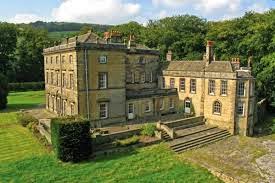
In this episode, the house under renovation is Stoke Hall, a thirty room Georgian mansion located eight miles from Chatsworth House in Derbyshire. The Grade II listed building is leaking and is being threatened by dry rot, but it’s surviving architectural details and historical importance prompt new owners Steve and Natalie Drury to set about restoring the house to it’s 18th century glory. 

In this episode, architect Kieran Long explains Stoke Hall’s construction and decorative details, whilst Dr. Kate Williams uncovers the story of some of those who lived at Stoke Hall – Robert Arkwright, whose grandfather made millions from his inventions during the Industrial Revolution, was living at Stoke Hall when he scandalized his family by eloping with actress Frances Kemble. His elder brother Richard was hot the heels of the couple, but arrived too late to stop the marriage. Luckily for us, Frances, the new lady of Stoke Hall, kept a scrapbook, in which she’s saved pressed flowers from the 6th Duke of Devonshire.  And, it seems that the Duke invited the Arkwright’s to be guests at Chatsworth when Princess Victoria, aged 13, visited in 1832. That night, Mrs. Arkwright sang for the Duke’s guests – and so did Victoria.


More history on those who have owned Stoke Hall can be found in the blurb from Wikipedia below. 

You can watch the restoration of Stoke Hall here (1 hour)

A follow up episode, Stoke Hall: One Year On
can be found here

Stoke Hall is a Grade II* listed Georgian Palladian mansion near the village of Grindleford, Derbyshire, England. Listed in the Domesday Bookthe first known occupant of Stoke was Gerbert de Stoke, in 1204. Stoke was held by the Greys of Codnor and sold in the 1460s to the Barlows of Barlow Hall.In the 17th-century it was owned by William Cavendish, 1st Duke of Newcastle. Early in the next century, it passed to the Rev John Simpson, who commissioned the current building following his acquisition of the estate upon his marriage to the granddaughter of Admiral Benbow. The house was designed by James Paine and built c. 1757 by William Booth. Both men also worked at nearby Chatsworth HouseIt was later described by Nicholas Pevsner as ‘quite stately’.
In about 1850 Simpson’s descendant Henry Bridgeman, 5th Earl of Bradford sold the estate to the Hunter family of Greystones, who lived there until at least the late 1930s.The Hall was later occupied by the industrialist Emile Viner, until 1950/1, and was then purchased by Hedley and Ida Abson, becoming a family home. After Hedley and Ida died, the Hall was sold in 1972, and subsequently used as a hotel and restaurant. It was sold at auction to Richard Jowitt in 1982. After an incomplete 25-year restoration, Jowitt died, and the house was offered for sale in 2008, with a guide price of £2.75 million, but
not sold until 2009 for £2.5 million 
to a local couple, Steve and Natalie Drury, who have spent a further £1.5 million completing the restoration. Their restoration was shown by the BBC in 2011 and 2012.