Jane Austen: Sense and Sensibility

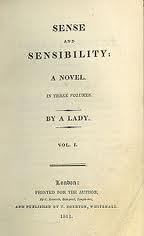
Jane Austen (1775-1817) wrote to her sister Cassandra on Thursday, April 25, 1811, from Sloane Street, London, where she was staying with her brother Henry and his wife Eliza, the former Comtesse de Feuillide. Jane was in London to correct proof pages for the publication of her first novel, Sense and Sensibility. Cassandra was at their brother Edward’s estate at Godmersham, Kent.

Jane writes to her sister Cassandra of an assortment of subjects. Then she writes:
      “No, indeed, I am never to busy to think of S. and S. I can no more forget it than a mother can forget her sucking child; and I am much obliged to you for your inquiries. I have had two sheets to correct, but the last only brings us to Willoughby’s first appearance.  Mrs. K. regrets in the most flattering manner that she must wait till May, but I have scarcely a hope of its being out in June. Henry does not neglect it; he has hurried the printer, and says he will see him again to-day. It will not stand still during his absence, it will be sent to Eliza.
 “The Incomes remain as they were, but I will get them altered if I can. I am very much gratified by Mrs. K’s interest in it; and whatever may be the event of it as to my credit with her, sincerely wish her curiosity could be satisfied sooner than is now probable. I think she will like my Elinor, but cannot build on anything else…”

The Mrs. K. referred to in Austen’s letter was Mrs. Catherine Knight, nee. Knatchbull. She and her husband Thomas “adopted” Jane’s brother Edward and treated him as their own son, sending him on a grand tour of Europe and leaving him their property. Indeed a few years after her husband died in 1794, Mrs. Knight passed on the two estates of Godmersham in Kent and Chawton in Hampshire to Edward.  Godmersham is today in private hands, but the Chawton property now is the home of the Chawton House Library and the Jane Austen House Museum, both well worth visiting on your next jaunt to Hampshire.  The picture to the left is a portrait of Catherine Knatchbull Knight  about the time of her marriage in 1779.
For a closer look at the relationship of Jane Austen and Mrs. Knight, take a look at AustenBlog’s comments.

Jane’s suspicion that the novel would not be available even in June was prescient.


Sense and Sensibility was finally published 30 October, 1811.

In the Garden With Kristine

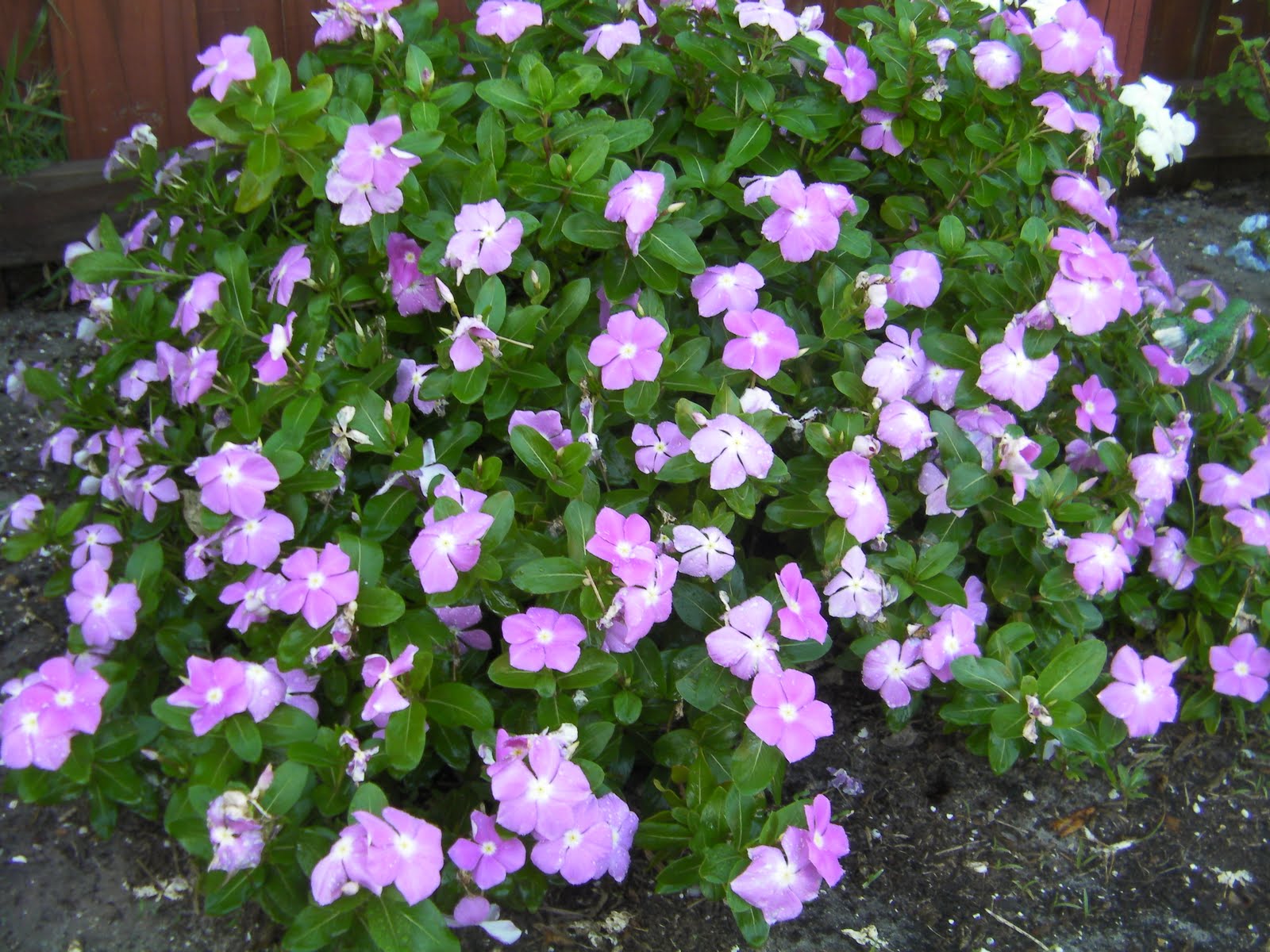
Yesterday, I had just come in from a few sweaty hours out in the garden to find a new post on Margaret Evans Porter’s blog, Periodic Pearls, showing her latest snowfall photos – just after she’d done some spring planting. Here in Southwest Florida (otherwise known as “the Sauna”) it’s already reaching 90 during the day. My garden is glorious and blooming and I thought I’d share some of my own snaps with you. I do not do this to boast, but rather to showcase the garden before everything that blooms and flowers withers away in the Zone 10 heat. Honestly, it’s enough to make Lawrence of Arabia faint.

Yes, that’s English lavender, doing quite well . . . . so far. Mexican petunia’s grow against the fence. All of the rocks you see were unearthed by moi whilst planting. There’s no real soil here, just lots of sandy dirt and many, many rocks. Sigh.

The Impatiens began as potted plants and now propagate themselves willy-nilly throughout my garden, back and front. I am not complaining.

Succulents, needless to say, do well in our climate
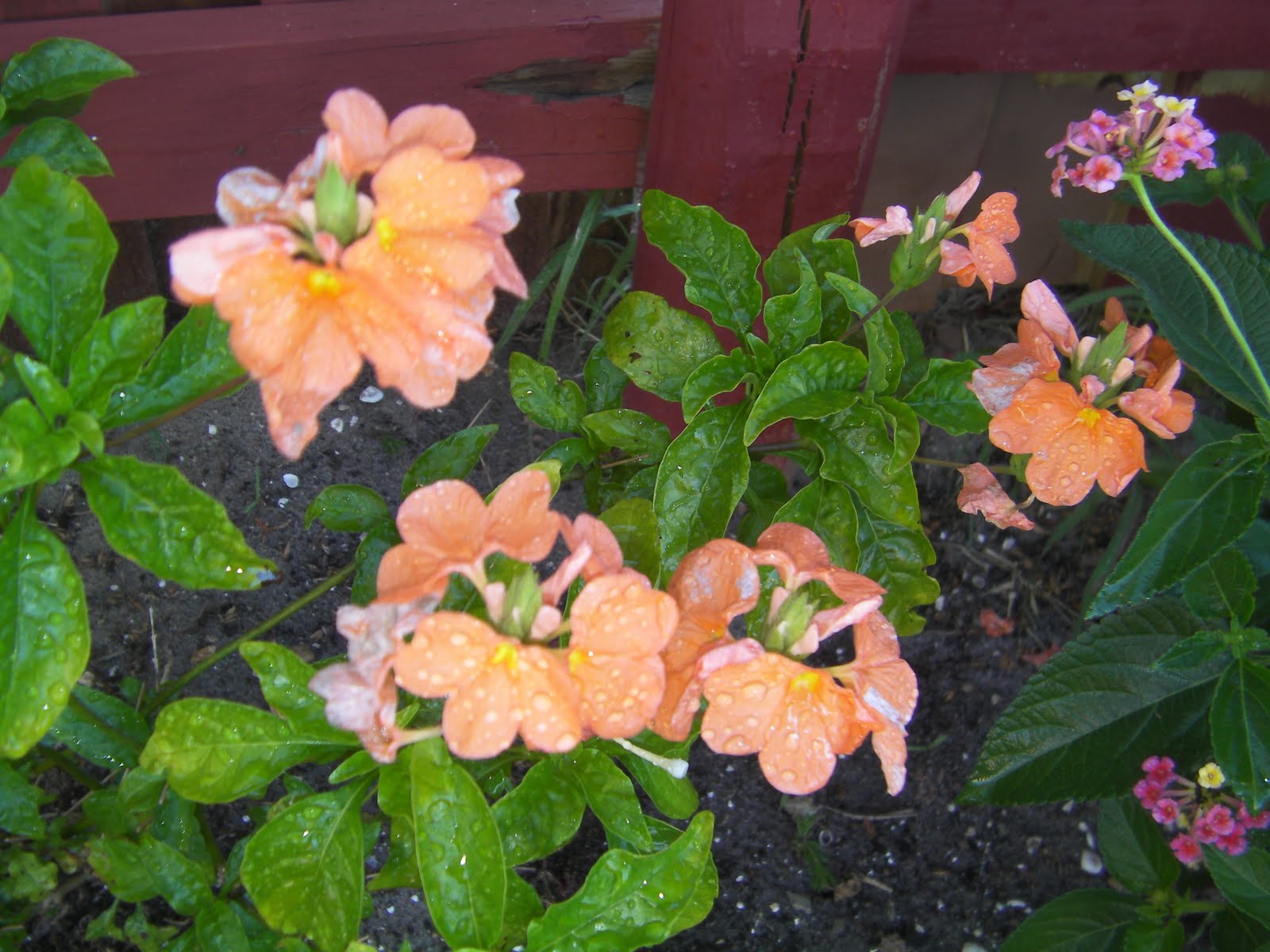
When I first began the garden, I’d bring home pots of lovely plants that would have suited an English garden, only to have them burned to a crisp. This year, I’ve admitted defeat and have given over the garden to tropical flowers.
These Daisy’s began as weeds. I finally stopped fighting them
 and now the bees have a new home.
Pentas + sun + poor soil = success
The Plumbago is in bloom
Even the roses are doing well
These are old English Heirloom Roses that I received through the post three years ago. Until this year, it looked like a rather sickly, snakey single shoot. Now, however, it’s gone crazy and is climbing the fence, blooming and throwing out many thick shoots at its base. I can’t tell you the exact name of the rose, as I threw the tag out in disgust last year. Patience is not one of my virtues.

A kind friend gave me two Frangipani’s two years ago. He cut branches from his trees and told me to just stick them in the ground and they’d grow. One is yellow, the other pink. The pink, above, has never flowered, but it’s gotten taller and has leaves. For a long time, both looked like nothing more than naked stalks stuck in the ground. My husband and son called them my “phallic symbols.” However, she who laughs last laughs best – the yellow Frangipani has not only gotten taller, it’s flowering.

Their fragrance is delicious – ripe nectarines.

Happy Easter!

A Jane Digby Post by Guest Blogger Mary S. Lovell


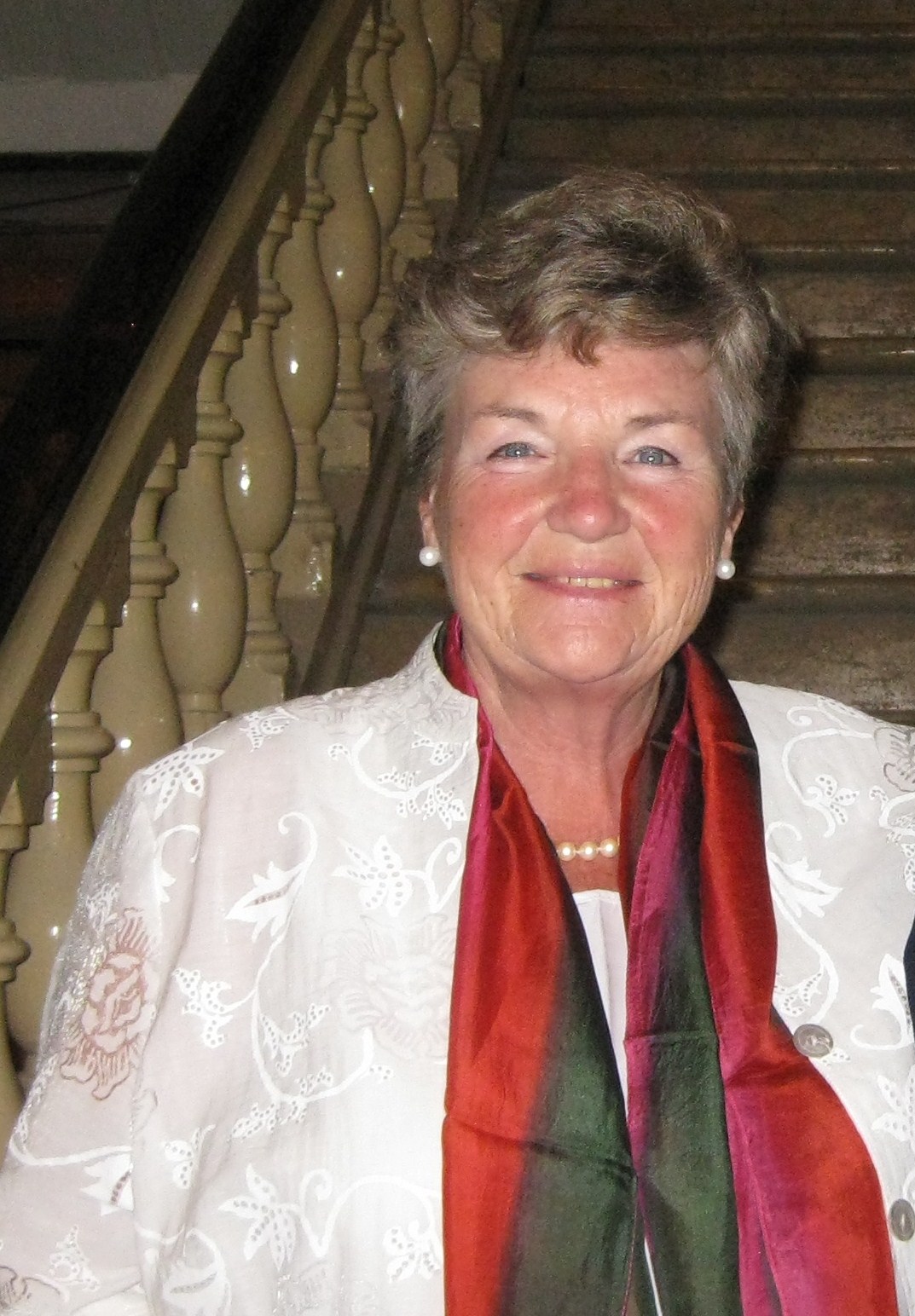
Author Mary S. Lovell


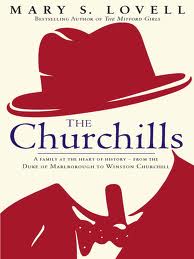
Recently, Victoria did a post on Jane Digby, the 19th century English adventuress, about which author Mary S. Lovell, Jane’s biographer, sent us an email. We were delighted that Mary had found us via this blog. Mary is the author of many notable biographies: Bess of Hardwick, Beryl Markham, the Mitford Sisters, and Amelia Earhart. Her latest book, The Churchills: A Family at the Heart of History, will be released this month in the UK and in May in the US. You can read an in-depth review of the book that appeared in The Guardian here.


You can visit Mary’s website here for news and information about all of her biographies. We were thrilled when Mary agreed to do a guest post for us on her own travels to Syria and along Jane’s own path.
 

Mary writes:

I was fascinated to see your website marking Jane Digby’s birthday last week, in which you also refer to the current situation in Syria.

When I began researching my biography of Jane in 1992 I went to Syria to track down her grave, and her house in Damascus (which I had been told had been demolished). The same source insisted that her diaries had been burned, but when some diligent research had turned those up intact, I decided I wanted to see the site of the demolished house for myself. It wasn’t easy in those days to visit Syria; it was a closed country and tourism was unknown, so I had to describe myself as an amateur archaeologist to obtain a visa. I not only found the grave, but – with the help of my fantastic young guide and interpreter, Hussein Hinnawi – located what survived of Jane’s house as well. It was then divided into flats the main part lived in by an old man whose parents bought it from Jane’s stepson in the ‘30s.


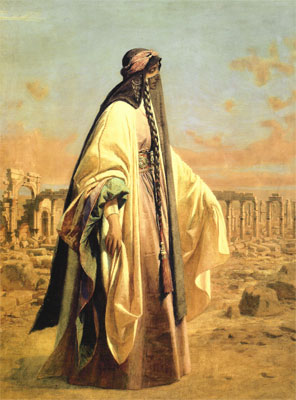
Lady Jane Digby El Mezrab
By Carl Haag 1862
copyright Tareq Rajab Museum

That first visit, soon after the Russians pulled out, was enough to make me fall in love with Syria and its friendly, courteous and hospitable people, its amazing historical sites, and – during my annual visits there ever since – I have seen it grow and change out of all recognition. It is the only country in the Middle East, now, that has any remaining traces of the fabulous Arabian Nights.

Until last year 2010, I led small groups to Syria every spring in Jane’s adventurous footsteps, and often we had small adventures of our own. I have now given up leading groups, on the basis that it is as much as I can do to look after myself, but I still make a point of maintaining Jane’s grave. The launch of my new book (The Churchills) in April 2011 means I shall have to travel to Syria later this year, in October in fact, which means I shall be spending my 70th birthday there, in an old palace converted into a lovely hotel, a short walk from the biblical ‘Street called Straight’, and from Jane’s old home.

Jane’s grave (see picture above), which is visited by large numbers of UK tourists now, is in the tiny Protestant Cemetery on the Airport Road. It is kept locked so if you go there you will have to find the Supervisor’s house and give him a tip (baksheesh) of a few dollars to open the gate for you.

You might like to know that several friends of mine are visiting Syria at present and all report no signs of unrest despite what is on TV news. There is clearly a problem there, but if you are sensible and stick to the main areas of interest to visitors I see no reason why you should not still travel there. It would not prevent me.

Although I have written a number of books since my Digby biography, Jane Digby remains my favourite subject for sheer daring and romanticism.

With best wishes from Mary S Lovell

The Art Needlepoint Company Offers Cruise on the Queen Mary 2

The Art Needlepoint Company was founded on the simple idea that art, like good design, should be available to everyone. Their canvasses represent a large variety of artists from nearly all centuries and genres. With a myriad of thread and stitch choices, stitchers can unleash their creativity to make each canvas their own.

Now, stitchers can come together on the Company’s first cruise aboard the Queen Mary 2 sailing from NYC on July 27th 2011 on a six day crossing – a time for unwinding and relaxation and when the weather is most often ideal to travel across the pond. Lorna Bateman, one of England’s better known embroidery and needlepoint instructors will be onboard and there will be technique instruction every day with chances beyond class time to stitch together and learn from one another. A variety of topics will be covered. The cruise vacation will culminate at the Royal School of Needlework in London and for those who wish to stay on for an extra few days, there is a planned a tour of the tapestries at the Victoria and Albert Museum.

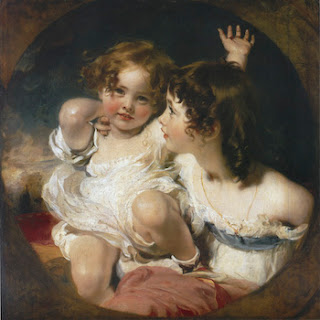
The Calmady Children by Sir Thomas Lawrence

During the cruise, stitchers will learn how to stitch a face, enliven an abstract image with a variety of stitches or give dimension to a landscape by shading with thread. We’ll teach them how to select a masterpiece canvas to match their skill level or learn how and why to select fiber best suited for particular canvases. The Art Needlepoint Company’s cruises and retreats have an educational component to them; both an art history education or cultural review of a particular destination (cruise) as well as an educational component of needlepoint focused on stitches and ways to interpret paintings with threads.

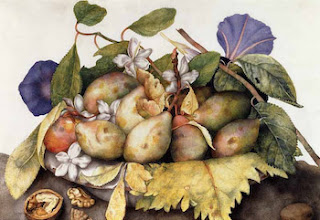
Plums, Walnuts and Jasmine

The QM2 is a trip of a lifetime. The Queen Mary has many beautiful attributes as well as a wide variety of activities available on board for people to do in addition to needlepoint. The ship sets the tone for the experience. It is a gorgeous vessel and we hope that everyone who joins us completes or near to completes a gorgeous canvas! If any one would like more details on what canvases are offered or course syllabus they are welcome to phone or email us. A second cruise is planned for December on The Ruby Princess which travels the Eastern Caribbean – Princess’ private island, St. Martin, St. Thomas, Grand Turk.

In the works for 2011 are several one-two or three day retreats for those who want to share that needlepoint community experience but prefer a shorter, land-based adventure. As Doreen Finkle explains, “To replicate the cruise experience on land, all of our retreats will be based at spas and luxury hotels around the country. For both the cruises and retreats, particpants are welcome to bring a canvas from home. However, we will have a special selection of canvases, keyed to either the cruise or retreat theme, which participants can view and select at the Art Needlepoint site.

Collies

“This year we are planning a retreat in Raleigh NC . This will be a retreat in the fall. We will have one day at the Raleigh Museum of Art with a specially developed tour of the American painters collection and modern paintings with another day of classes. The canvases we would like people to bring with them to class will be either a portrait (American painter) a landscape (American painter) or a modern canvas. We will discuss how to stitch faces and skin so that they are realistic, as well as other technique points. There will always be a one on one opportunity to ask for specific assistance on whatever the individual requests.

“We also have a retreat planned for the late summer in Boston. We will gather together at the Colonnade Hotel, which is in walking distance to the MFA, Boston where we will have a private specially developed tour of their magnificent newly built Art of the Americas wing. Our class format will follow the day after the tour and will focus on portraits and landscapes. We will talk about techniques for creating light and dark with different threads, as well as rendering realistic faces and skin. There will always be a one on one opportunity to ask for specific assistance on whatever the individual requests.”

For further cruise details, contact Doreen at the Art Needlepoint Company, or by telephone (978) 226-8271.

Followers of Number One London will receive a 10% discount on any canvases or kits purchased.
Use code “London” when placing your order!

Julian Fellowes Writes Titanic Screenplay for ITV

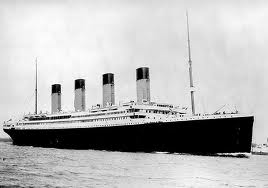
According to The Daily Telegraph, Julian Fellowes has been tapped to write a screenplay about the Titanic disaster to be aired by ITV to mark the centenary of the ship’s sinking. Fellowes, who also penned Downton Abbey, Gosford Park and The Young Victoria, explained that he wants to approach the subject in a different way from James Cameron’s 1997 movie.
He also suggested that he wants to portray the British people on board the ship in a more sympathetic light.
“Far be it for me to buck a Hollywood tradition, but I think that those generalisations [about British people] are not as interesting as real life,” Fellowes said. “Obviously, the special effects of the Cameron version can’t be rivalled on television, but what we can offer, and what we are hoping to offer, is a much more human version of the story.”
He added: “Ours is more a tale of the people on board told from the perspective of the different classes and the crew. We are using real characters and fictional characters, but we develop the real as much as the fictional.”

Perhaps Fellowes’s remarks were prompted by David Warner, who played the villainous manservant in the 1997 Titanic film, who complained that English actors were typecast as the baddies. “There wasn’t a single good character in Titanic who was English, and this is typical,” said the actor.
“Americans who have travelled and who have English friends know we are not necessarily all baddies, but I think that seeing us being so incessantly nasty on screen has a drip, drip, drip effect on the rest of them.”
He added that, with one or two exceptions, heroic English figures were almost always played by non-English actors. “Even Hornblower was played by Gregory Peck. Daniel Craig is a rare English Bond – normally one can expect an Irishman, a Scotsman or even an Australian.”

Warner’s comments echoed those of Dame Helen Mirren. She felt the need to tell an audience in Los Angeles in April: “We’re not the snooty, stuck-up, malevolent, malignant creatures as we’re so often portrayed.”
Dame Helen insisted: “We’re actually kind of cool and hip.”

The latest Titanic adaptation will feature actors Linus Roache and Geraldine Somerville heading a cast that also includes Celia Imrie, Toby Jones and Perdita Weeks. It begins filming in Hungary later this month, made by Bafta-winning producer Nigel Stafford Clark, whose successes have included Bleak House and Warriors.