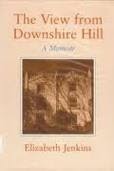
The View from Downshire Hill

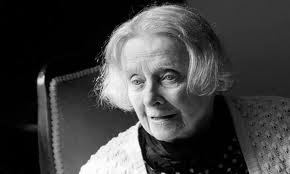
Through the courtesy of Hester Davenport and Jo Manning, I have read the little book of memoirs published by the late Elizabeth Jenkins (1905-2010), The View from Downshire Hill, a collection of reminiscences and vignettes of some fascinating personalities.  Miss Jenkins published many novels, biographies, wrote for the BBC, and was one of the founders of the Jane Austen Society. As a matter of fact, she was the last of the original group who first organized to save the cottage in Chawton, Hampshire, where Jane Austen lived from 1809 to just before her death in 1817. It was saved, and the society has grown and flourished, a model for many more Austen societies in North America, Australia and elsewhere.
Elizabeth Jenkins was born on October 31, 1905, Hitchin, Hertfordshire, and died ast the age of 104 last September. She studied at Newham College, Cambridge, beginning in 1924. Through the head of her college, Pernel Strachey (Lytton Strachey’s sister), Jenkins met Virginia Woolf. After Cambridge, Jenkins settled in Bloomsbury, London, and worked on her first novel. She was invited to visit Mrs. Woolf and her huband, Leonard, a visit repeated many times. 


 Jenkins found Virginia as fascinating as we imagine she must have been.  To quote the Telegraph’s obituary, published 6 September, 2010, Jenkins “found the famous writer ‘very beautiful’ and the ‘ineffably distinguished’ company ‘enough to take one’s breath away’. But after a few months she found herself frozen out of conversation, or addressed in ‘contemptuous and mocking’ tones. Scorned, she did not seek to meet Woolf again, even after the Bloomsbury figurehead subsequently inquired after her and described Virginia Water (1928) as ‘a sweet white grape of a book’.
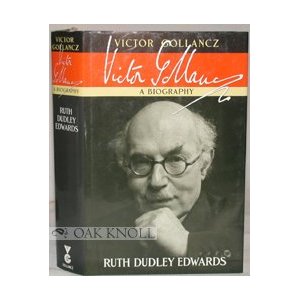
 

Jenkins’ first novel was published by the first publisher she contacted, the famous Victor Gollancz who himself was a leading literary figure in the London of pre- and post World War II.  Of course this is the kind of situation, the lack of any rejection, that stirs some of us to great envy.  But even with considerable literary success, Elizabeth Jenkins had many boring and unfulfilling jobs in dull offices. Nevertheless she never stopped writing. And publishing.  Gollancz (1893-1967) also published Ford Madox Ford and George Orwell, among others. He was knighted in 1965.
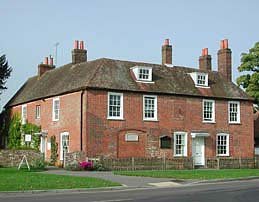
In addition to novels, Jenkins wrote many biographies, the first being of Lady Caroline Lamb, a wild young woman whose shocking behavior with Lord Byron and whose society connections in regency England made her a perfect subject for a life story.  Jenkins followed this work with a still-admired biography of Jane Austen in 1938. Two years later, she was a co-founder of the Jane Austen Society, as mentioned above. Today, the rescued cottage is known as Jane Austen’s House Museum and has an excellent website.
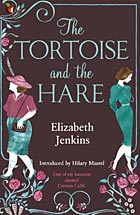
Probably the most admired novel by Jenkins is The Tortoise and the Hare. The Telegraph wrote, “…tales of human intrigue were to recur throughout Elizabeth Jenkins’s fiction, notably in her best-known novel, The Tortoise and the Hare (1954), about the gradual collapse of an apparently perfect marriage. The title refers to the two women competing for the affections of a wealthy barrister, Evelyn. His beautiful wife, Imogen, seems to have little to fear from a stout, capable neighbour, Blanche. But as her own insecurities overwhelm her, Imogen can only watch as Blanche’s dull charms win the day. Like her other works, The Tortoise and the Hare relied on Elizabeth Jenkins’s subtle portrayal of complex human relationships. By the end of the book, the author makes it clear that though Imogen is suffering, she has collaborated fully in own her pain. “

Another great author and friend of Jenkins was Elizabeth Bowen, whose novels and short stories are admired. I have to admit I have not read many of them, but I have alsways wanted to add them to my TBR pile, along with Elizabeth Jenkins’ novels and nonfiction.

Though I am eager to read more of Elizabeth Jenkins’ life, we are fortunate indeed to have this fine book, The View from Downshire House, random recollections which really whet our appetites. In fact, I can quote Jane Austen’s Emma:  “It was a delightful visit – perfect, in being much too short.”

Elizabeth Jenkins 1905-2010

I feel sure that Elizabeth Jenkins would have liked the headline on her New York Times obituary: “Woman of Letters.”
Fun with Sense and Sensibility

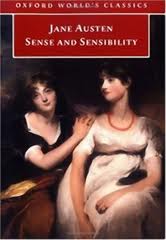
Victoria here.  At a meeting of our Jane Austen Book Group, re-reading Sense and Sensibility, we tried a new technique.  Since all of us had read the book many times, MANY times, we decided to forego a general discussion and have each member share her favorite passage. Austen lovers probably won’t be surprised that several of us chose similar passages.

The excerpt that at least five or six chose appears in volume I, chapter 2.  Fanny Dashwood talks her husband, John Dashwood, out of fulfilling his deathbed promise to his father to take care of his step-mother and three half-sisters (Elinor, Marianne and Margaret). 

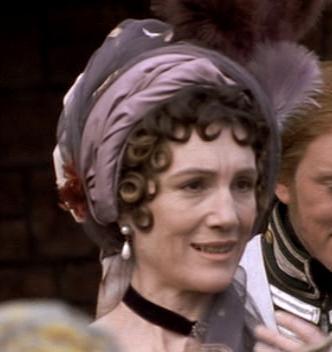
At first John Daswood decides to give them three thousand pounds, but Fanny is able to shave this down to an occasional gift of game from the Norland estate. This scene was beautifully scripted by Emma Thompson and acted by Harriet Walter and James Fleet in the 1995 film version of the novel. But we concentrated on the written word. 

At one point, John D. considers giving his mother an annuity, an annual payment. Here is the specific sentence that captivates lovers of Austen’s dry wit. Fanny points out, “People always live forever when there is an annuity to be paid them.”

Though she, her husband and her son are turning the Dashwood ladies out of their comfortable estate of Norland and allowing them to move to a smaller cottage several counties away, Fanny resents their retention of some of the china and silver.  And, to justify her parsimonious view, she says, “Their housekeeping will be (cost) nothing at all  — they will have no carriage, no horses, hardly any servants and will keep no company. Only conceive how comfortable they will be!”

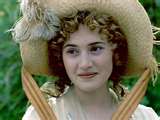
KateWinslet as Marianne

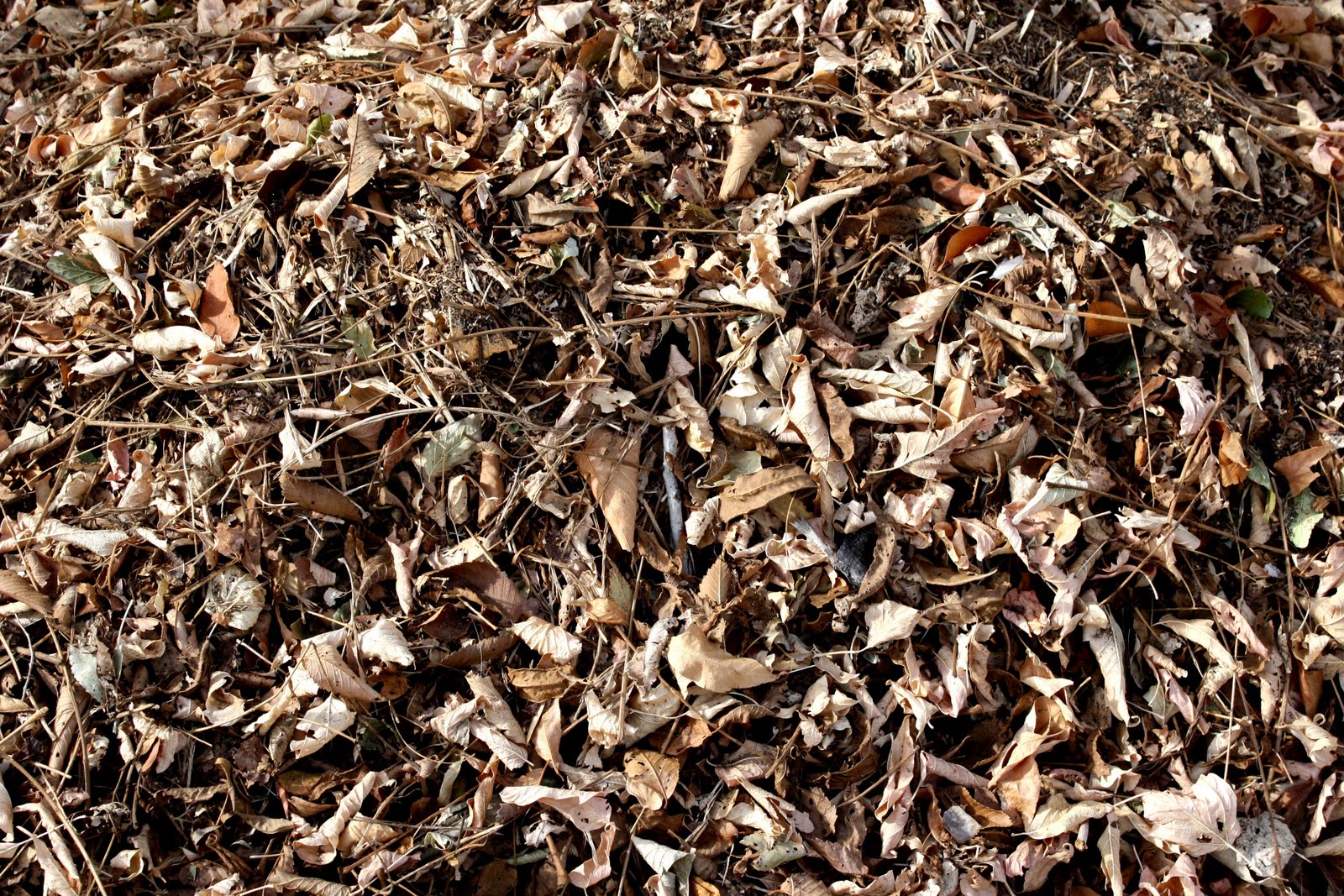
When Marianne is saying goodby to her home, the Norland estate (I, 6), she emotes upon the house — and the trees.  “Dear, dear Norland…perhaps I may view you no more! And you, ye well-known trees!…No, you will continue the same: unconscious of the pleasure or the regret you occasion and insensible of any change in those who walk under your shade! But who will remain to enjoy you?” typically, Marianne is overly emotional. Several chapters later (I,16), Marianne notices the autumn leaves and recalls Norland with fondness.

“Dear, dear Norland,” said Elinor, “probably looks much as it always does at this time of year. The woods and walks thickly covered with dead leaves.”
“Oh,” cried Marianne, “with what transporting sensations have I formerly seen them fall!…Now there is no one to regard them. They are seen only as a nuisance, swept hastily off, and driven as much as possible from the sight.”

“It is not everyone,” said Elinor, “who has your passion for dead leaves.”

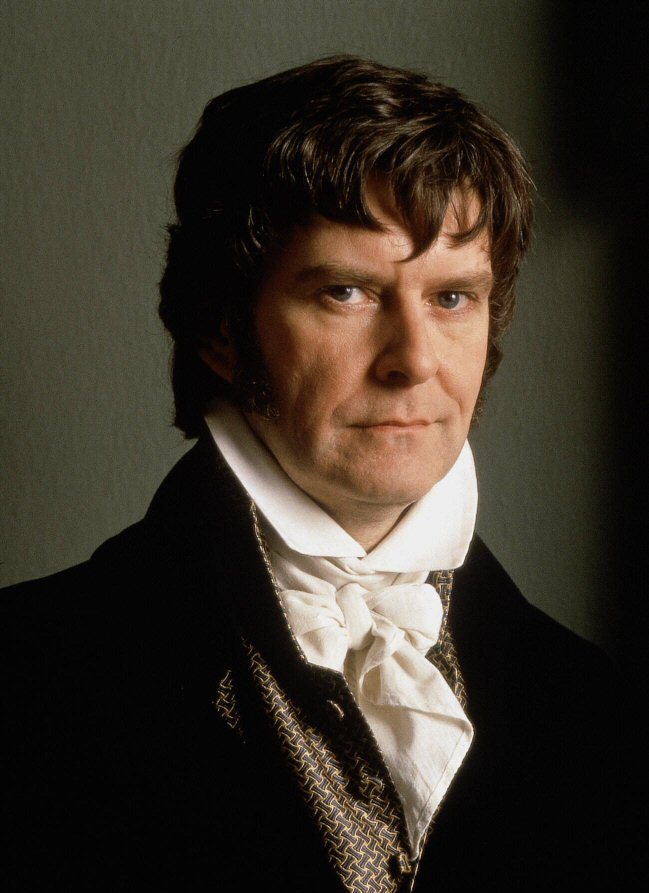
Hugh Laurie as Mr Palmer

My personal favorite passage is another that involves some of Austen’s wonderful minor characters who give such richness to her novels.  Mr. and Mrs. Palmer, the sister and brother in law of Lady Middleton — and daughter and son in law of Mrs Jennings — provide many moments of delightful comic relief.  In I, 20, Elinor, observing Mr Palmer’s usual ill-humor, thinks: “His temper might perhaps be a little soured by finding, like many others of his sex, that through some unaccountable bias in favour of beauty, he was the husband of a very silly woman; but she knew that this kind of blunder was too common for any sensible man to be lastingly hurt by it.”

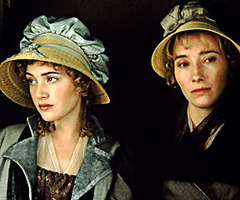
Winslet (l) and Emma Thompson as Elinor

Another favorite scene is the discovery (III,1 aka 37) by the emotional Marianne that Elinor had been keeping secret  the fact of Edward Ferrars’ engagement to Lucy Steele.  Marianne berates herself for her self-indulgent outbursts…and then wonders how Elinor could have been so calm instead of giving in to her sorrow.  Several passages are cited to show Marianne’s regrets and Elinor’s disappointment, and underline the contrasts in their two personalities.

All of us at our Jane Austen Book Group agreed that Sense and Sensibility deserves its two hundred years of admiration.  Jane, we decided, would be pleased.

The JASNA AGM on the 200th anniversary of the publication of Jane Austen’s first novel will be held in Ft. Worth, Texas, October 14-16, 2011, at the Renaissance Worthing
ton Hotel.
Hope to see you there!!

The Wellington Connection – Pubs

Today we’re taking a look at some of the many, many, many pubs named after the Hero of Waterloo.

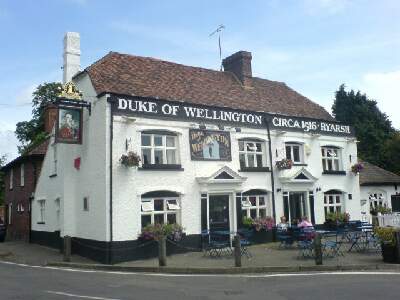
As far as I can make out, the Duke of Wellington was not widely known as a drinking man, so the large number of pubs named in his honour is amazing – almost as many as those named for the Duke of York who, I believe, was a drinking man. And the Marquess of Angelsey, who may not have been a lush, but was certainly a wife stealer – but that’s another story. When in London, I heard tell of a man who has taken up the mission of visiting as many of the Duke of Wellington pubs across England as he can. He’s going to be very old, and very drunk, by the time he’s done. One of the prettiest Duke of Wellingtons I’ve seen is this one, though I’ve not personally visited it. Yet.

They’re in Surrey – check out the website here.

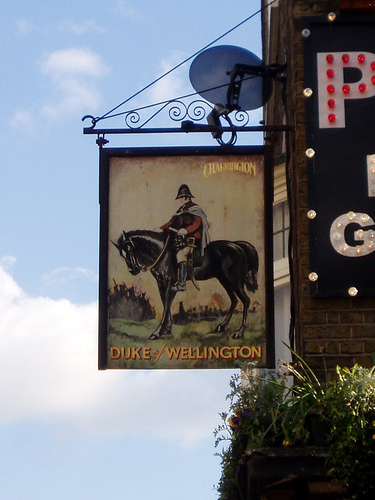
Whilst I haven’t made it my mission, I must admit that I’ve fallen upon, and entered, a few Wellington pubs myself, such as the one in Portobello Road that features this sign

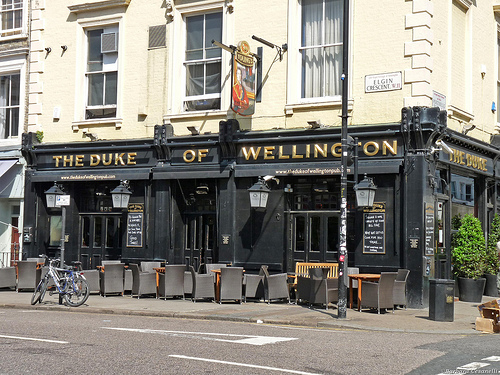
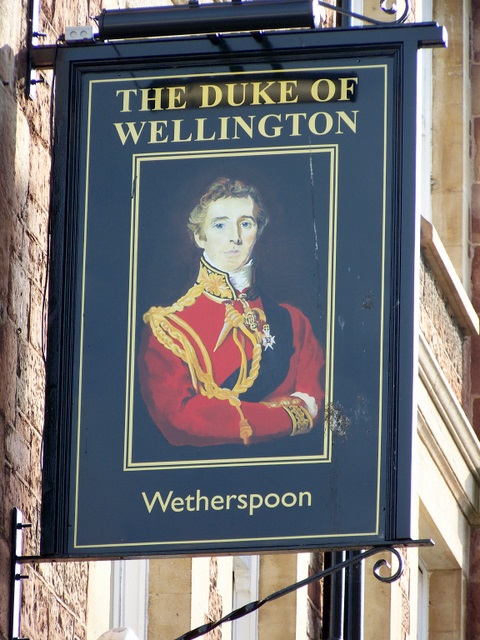
And Brooke and I visited the Wellington at Waterloo south of the River in June, which you can read about in at prior post. If you’ve been following this blog, you’ll know that I fell upon yet another Wellington pub when in London recently, at the corner of Wellington Street and the Strand. Here’s a bit from that post to refresh your memory –

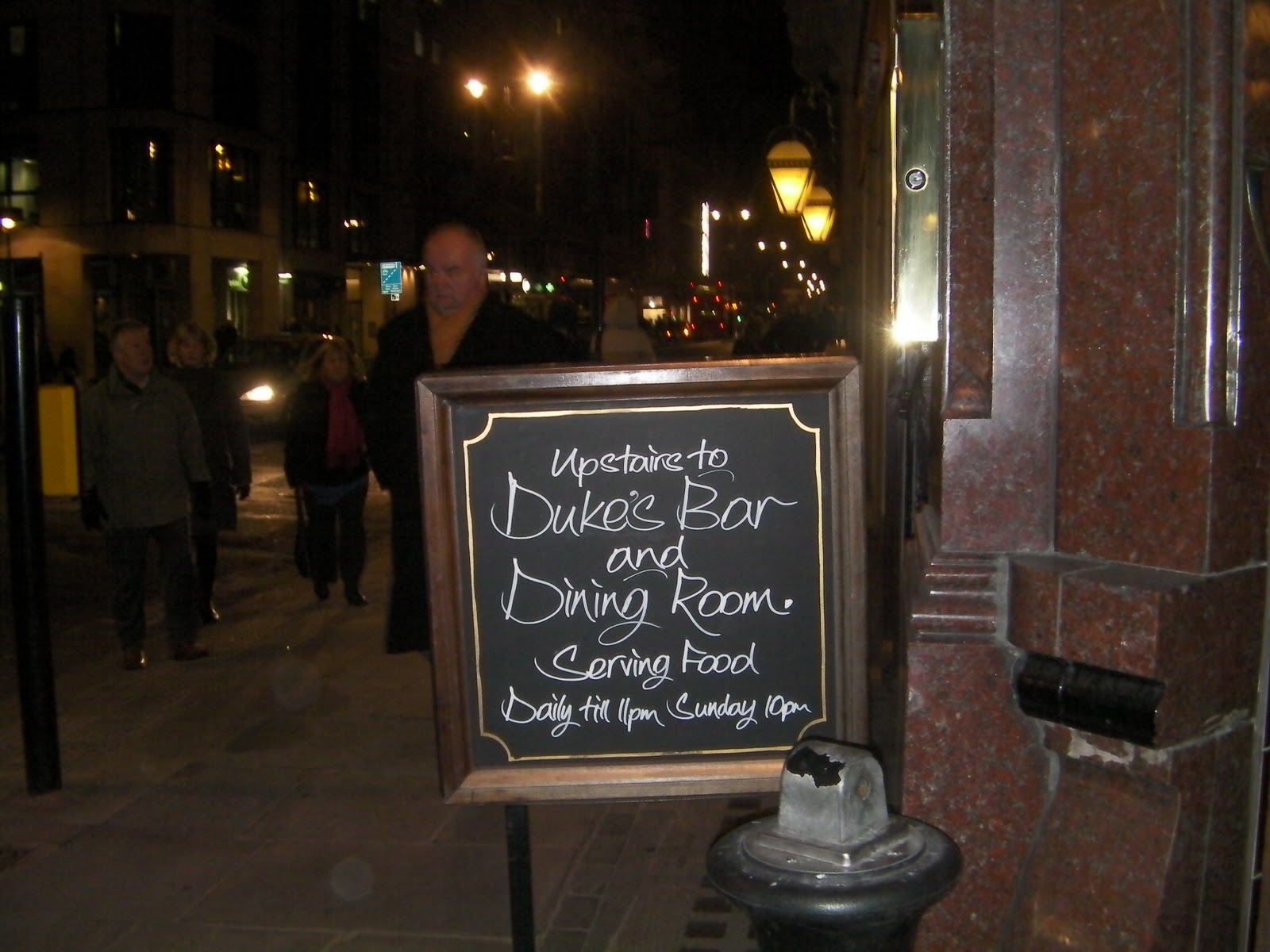
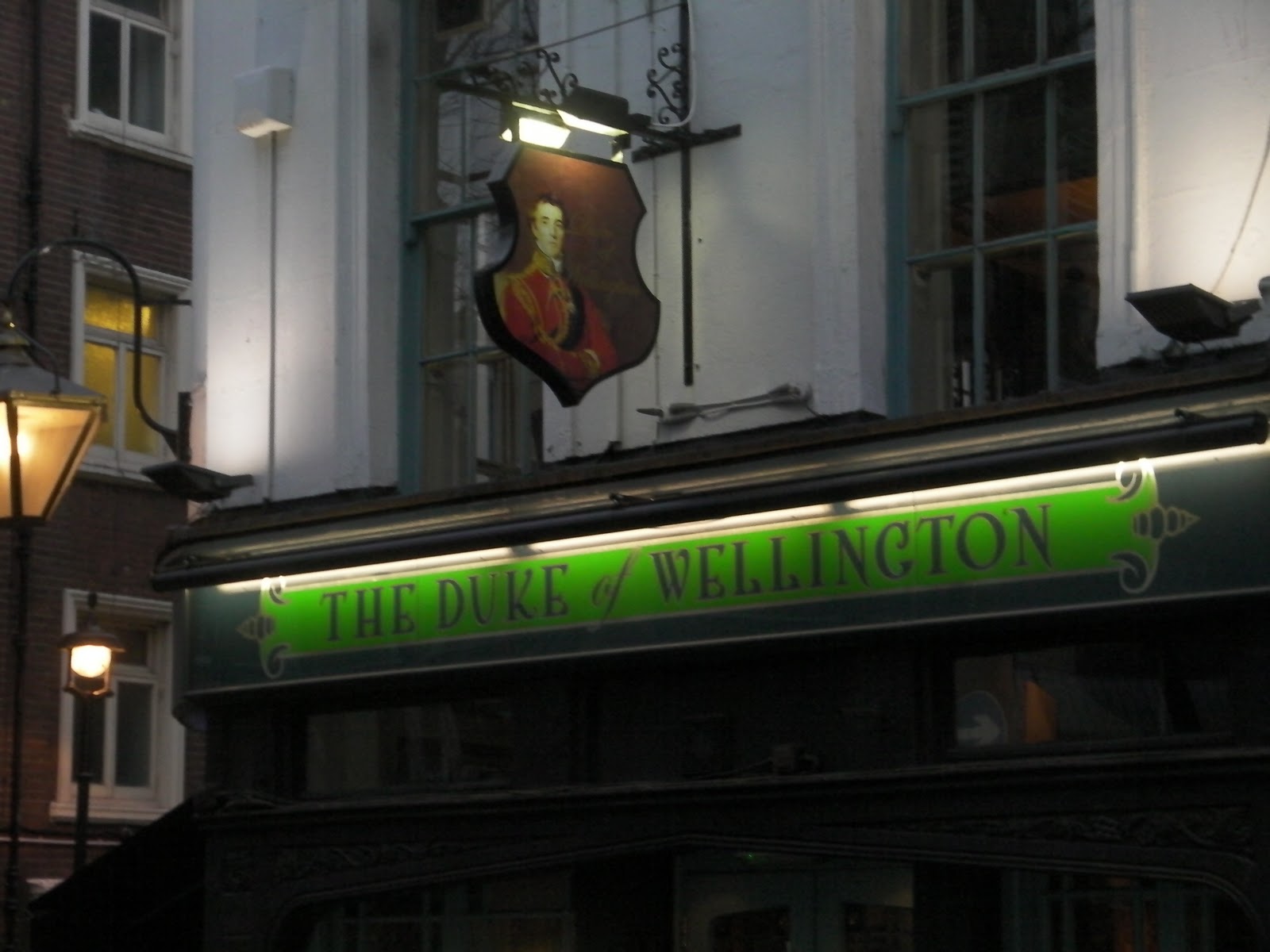
“took a boat cruise on the River Thames then went to Ye Olde Cheshire Cheese in Fleet Street for dinner. It was closed until the 29th – and the cab had left. Fleet Street after business hours is desolate, to say the least. What to do? Well, I thought, I’ll just carry on as if I know what the Hell I’m doing. “This way,” I told Greg as I walked purposefully towards the Strand. Please God, I prayed, let there be somewhere’s nice to eat. We passed The George pub – very old, very atmospheric, very closed. Xmas and the Bank Holiday are playing havoc with opening times. Right then, I told myself, keep marching. We fell upon Somerset House and went inside to watch the ice skaters. Then we walked another three blocks up the Strand when, off on the far right corner I saw something promising – lights were on, people were inside and it looked like a pub. It was a pub . . . The Duke of Wellington in Wellington Street. NO, I’m not kidding . . . saved by the Duke. Again. We had a pint in the bar and then went upstairs to the dining room, where we had a fantastic meal (lamb shank pie for me, steak for Greg) and warmed ourselves by the gas fire. The Duke of Wellington – I ask you, what were the odds!?”

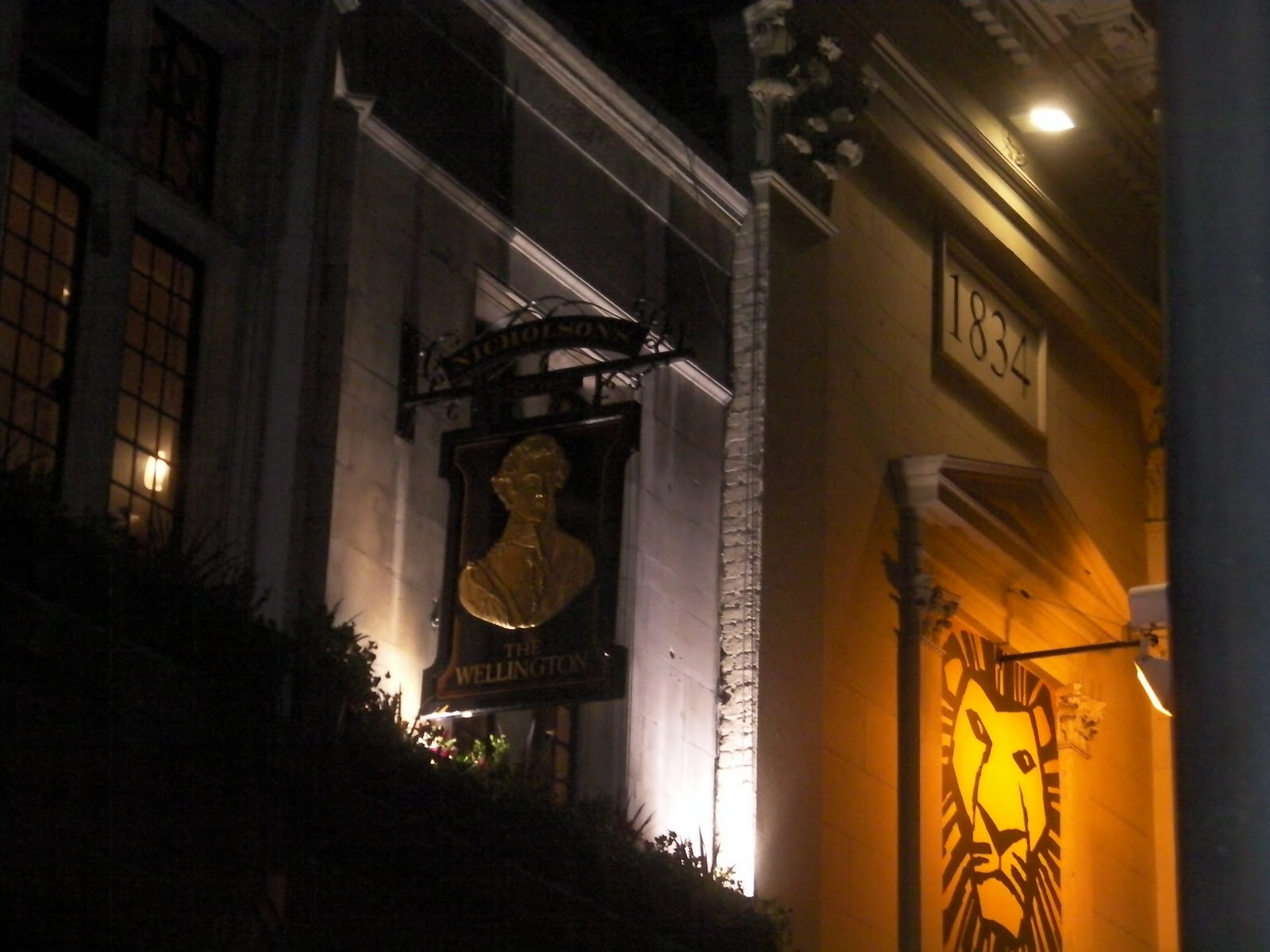
Here are my personal photos of the pub, which don’t measure up to those above, but you’ll excuse me under the circumstances.

That’s the logo for The Lion King just behind the Duke – the pub is next to the theatre where it’s playing.

You can read a review of the pub here. To prove the point that one can, and often does, literally fall upon pubs named for the Duke of Wellington,  I tripped over yet another whilst Greg and I were on a Rock and Roll walking tour.

As we had to keep up with the tour guide, I didn’t have the opportunity to peek inside.

Which may be just as well, as I’ve come to learn that it’s known for being a gay bar. The Duke of Wellington . . . . . I ask you . . . . couldn’t they have changed the name to something a bit more appropriate?

On Dits from Ramsgate


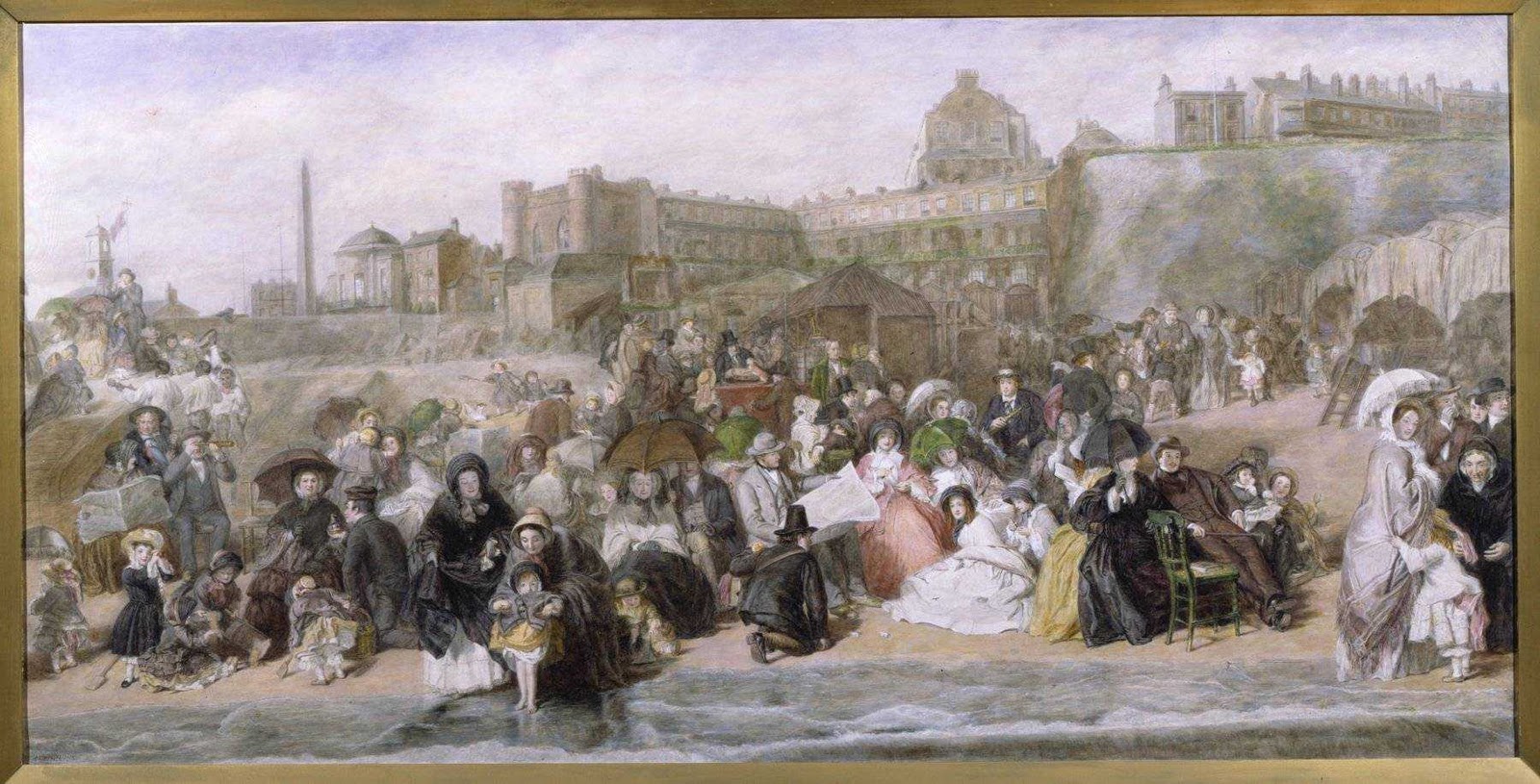
Ramsgate Sands by Frith 1864


From The Letter Bag Lady Elizabeth Stanhope
Whilst on a visit to Ramsgate, Mrs Stanhope and her party were contenting themselves with whatever gaieties the place afforded, and on May 31st, 1807, Marianne Stanhope sent her brother an interesting account of the conditions prevailing there at that date.

Nelson’s Crescent.

Just now I think you would be very miserable here, for the wind is very high and whistles at every corner, the sea is rough and everything looks blowing. The night before last was dreadfully tempestuous, and all yesterday morning was very stormy, but it cleared out, happily for us, in the evening, so that we were able to take a turn on the pier.

That famous pier! The only thing worth seeing, I think, either in or out of Ramsgate, for you must know I have now seen almost all the lions:—that miserable forlorn Mansion, East Cliff, ci-devant Lord Keith’s; the elegant little cake house of Mr Warne, who is going to Russia; the soi-disant cottage of Mr Yarrow, in the romantic vicinity of Pegwell Bay, celebrated, I am told for its fisheries; and last, though certainly not least, the splendid and deserted King’s Gate. The building is very classic and elegant, but surely Tully’s Villa must be a very different thing in the sweet Campagna of Italy, than placed on such a barren cliff. Poor fellow! Could he look out of the Elysian fields (for there, I suppose, we must place him) I think he would not admire the change of situation!

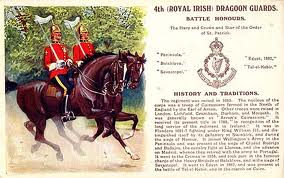
There is a regiment of Irish Dragoons here. The Colonel has just left them to take possession of a large fortune, and another officer has gone to Ireland to give a vote. Both the Irish and Germans have very good bands which often play before our windows etc. this is the only gaiety there is.

I am sure all the pleasure of this place must depend upon the company; when you have society that you like, what spot will not appear pleasant?

We are not too well off in that respect as you will think when I have described our acquaintance.

Our greatest intimate is Lady Jane Pery (1), Lord Limerick’s daughter, who has had so many complaints she is unable to move from her chair, though full of life and spirits. Lady Conyngham (2) is the great lady of the place, a nice, civil old woman. We were at a party at her house where we met all the natives. Her daughter, Miss Burton, is 6 ft. 4 in. in height and ugly in proportion, but very agreeable. To-morrow we are going to a party there where we are to meet everybody, for you must know that even in this small society there is an improper set. Lady Dunmore (3) and her daughters, Lady Virginia Murray, and the married one, Lady Susan Drew (4), sisters to the Duchess of Sussex (5) and Lord and Lady Edward Bentinck (6); their two daughters are visited by very few proper people, but both these houses are the rendez-vous of the officers. Lady Sarah Drew had a ball the other night.

At Lady Conyngham’s, we are to meet all these.

Miss Bentinck (7) is a great beauty; there has been a long affair between her and Hay Drummond, which is at last broke off by the lady. She had been sent to the Duke of Rutland’s to be out of his way. Drummond contrived to introduce himself to the servants as her maid’s beau, by which means he slept in the house and was able to walk with her before breakfast and late at night. At last her brother, who was shooting one morning early, and knew Drummond by sight well, found them out and gave the alarm. The Duke sent Miss Bentinck home directly, and they were to be married in September, but lo! she has changed her mind.

1 Cecil-Jane, sixth daughter of the 2nd Baron Glentworth, who was created Viscount and Earl of Limerick in 1803. She married, in 1828, Count John Leopold Ferdinand Casimir de la Feld, a Count of the Holy Roman Empire.

2 Francis Pierrepont-Burton, 2nd Baron Conyngham, who, on inheriting the titles and estates of his uncle, assumed the surname and arms of Conyngham, married, in 1750, the eldest daughter of the Right Hon. Nathaniel Clements, and sister of Robert, Earl of Leitrim. She died in 1814.

3 Lady Charlotte Stewart, daughter of Alexander, 6th Earl of Galloway, married, in 1759, John, 4th Earl of Dunmore.

4 Susan, third daughter of the 4th Earl of Dunmore, married, first, in 1788, Joseph Tharpe, Esq. of Chippenham, Cambridge; secondly, John Drew, Esq.; and thirdly, in 1809, the Rev. A. E. Douglas.

5 Augusta, second daughter of 4th Earl of Dunmore, married, at Rome, the 4th of April 1793, Prince Augustus Frederick, Duke of Sussex, and was re-married to H.R.H. the following December at St George’s Church, Hanover Square.

6 Edward Charles, second son of William, 2nd Duke of Portland, and Lady Margaret Cavendish Harley, only daughter and heir of Edward, 2nd Earl of Oxford. Lord Edward Bentinck married Elizabeth, eldest daughter of Richard Cumberland, Esq., and had one son and three daughters. He died in 1819.

7 The three Miss Bentincks were: Harriet, married, 1809, Sir William Mordaunt Sturt Milner, Bart.; Elizabeth, married, 1812, Captain Henry Wyndham; and Charlotte married Major Robert Garrett.

Victoria in England 2011

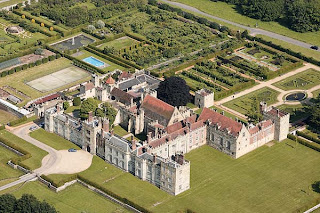
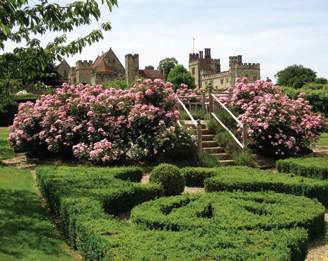
Penshurst Place, Kent

Yes, both Kristine and I confess we are unrepentant when it comes to spending our time and money on trips across the pond to England.  Many of you do the same.  We work hard to book ourselves into a variety of cities and London neighborhoods,  lots of museums and other historic attractions, gardens for wandering, evenings in the theatre or concert hall, and wonderful meals… and, believe it or not, time in libraries and archives.  My upcoming two weeks in England will be no different … castles, stately homes, gardens, museums, several different hotels…and archives at the University of Southampton and Hatfield House.
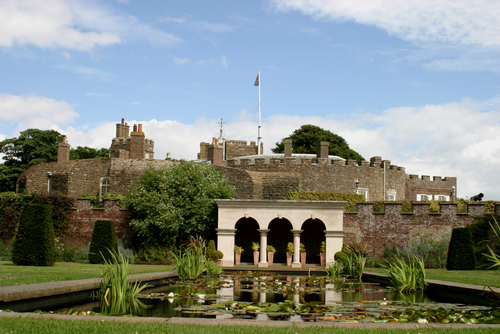
Upon our arrival in Dover, I hope we can visit Walmer Castle. We “did” Dover Castle a few years ago, and this time, I want to see the Duke of Wellington’s home when he was in residence as the Warden of the Cinque Ports, less than ten miles north along the Channel coast.

We have a stop planned at Penshurst Place, in which many centuries of British History are enveloped…as well as a great slice of architectural history. And stunning gardens, which I hope will be in full bloom in early June.

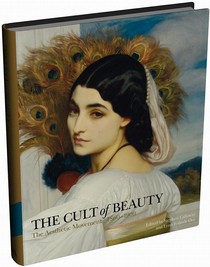
While we are in London, we want to re-visit the Victoria and Albert Museum, this year to see the Cult of Beauty exhibition, which comes highly recommended by Jo Manning and many others.
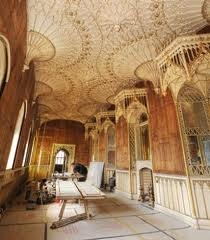
Last year, at the V and A, I enjoyed the Horace Walpole and Strawberry Hill exhibition, in which many of his treasures were reassembled and shown while the house itself was undergoing a thorough renovation.  This year, I intend to see the finished house, just a short train ride from London in Twickenham.

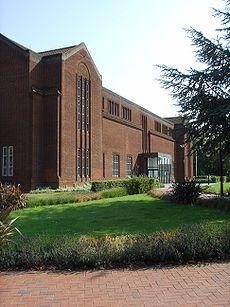
Next I head to Southampton to visit the Archives in Hartley Library at the University of Southampton.

And while I am in town, I will make time to see the sights, though I understand that the house in which Jane Austen once resided is long gone.  Parts of the city walls, however, still stand, and the famous port should be interesting to see. 

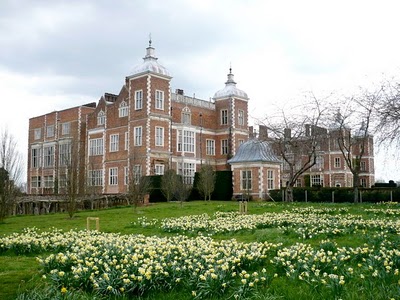
After a short stay in London again, I will go to Hatfield House in Hertfordshire, to study diaries in their Archive. Hatfield has an amazing history and renowned gardens. I wrote about a previous visit to Hatfield on this blog, August 13 2010.

My final stop will be in Windsor, where I will visit the brand new Museum of Windsor and, if the stars are in perfect alignment, visit with our friend Hester Davenport, author of biographies of Mary Robinson and Fanny Burney, and an expert on Windsor history, among other achievements.

Then it will be time to fly home. And start planning the next trip (anticipation is more than half the fun). I will report more fully after I return, and perhaps, along the way.