A Letter Concerning the Origin of Sir Walter Scott's "Bride of Lammermoor"

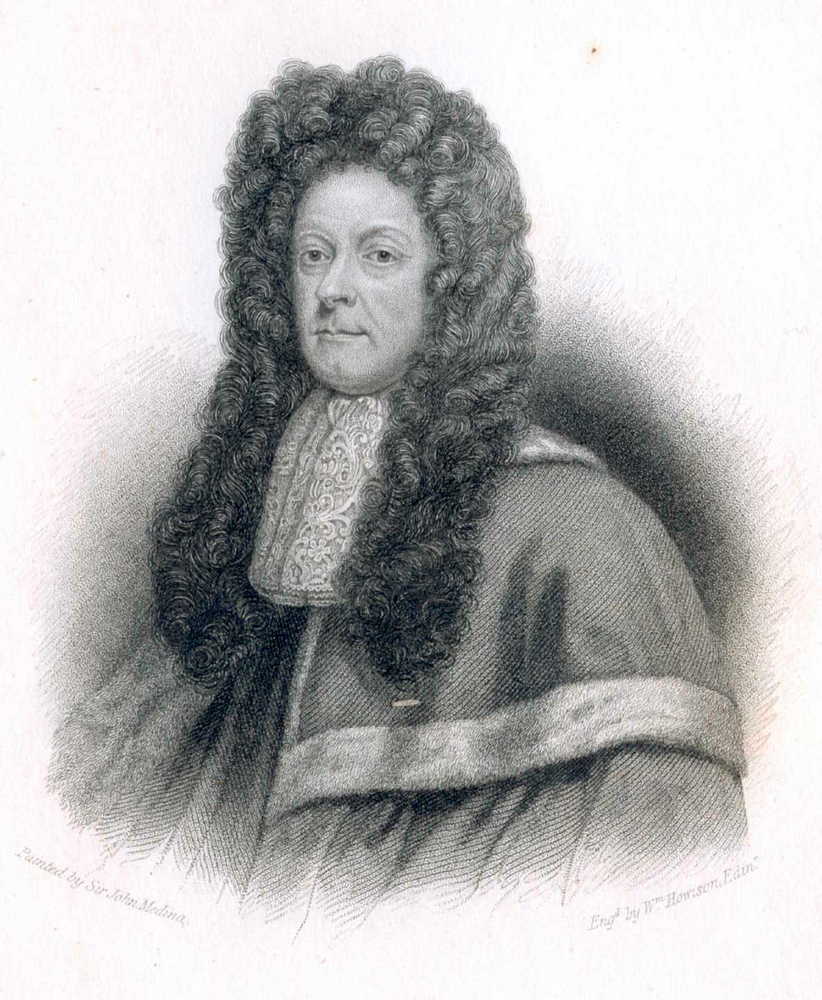
Viscount Stair

From Sir James Stuart Dalrymple Elphinstone to Sir John Shelley 

September 5, 1823.

My Dear Sir John,

“… The bride of Baldoon (for such has always been her designation in our family) was the Hon. Janet Dalrymple, eldest daughter of our greatgreat-grandfather James, Viscount Stair, who was Lord President of the Court of Session in the reign of William and Mary. Janet Dalrymple was sister to the first Earl of Stair, and to our great-grandfather, the Lord President Sir Hugh Dalrymple of North Berwick. She was therefore our great-grand-aunt.

“Janet Dalrymple was deeply attached to Lord Rutherford, to whom she had plighted her troth unknown to her parents. Under the auspices of her mother, a less amiable but far richer suitor appeared in the person of David Dunbar, eldest son of Sir David Dunbar of Baldoon. It was in vain that the young lady not only showed her aversion to his addresses, but also told David Dunbar of her attachment to another, and of the solemn engagement she had made. The new suitor was warmly supported by Janet’s mother, and would take no refusal. In these circumstances the poor girl was forced into a marriage which she cordially detested.

“The result of this cruel and unnatural sacrifice was nearly, if not exactly, as related by Sir Walter Scott. On the marriage night, soon after the young couple had been left alone, violent and continuous screams were heard proceeding from the bridal chamber. The door was found to be locked, and, upon being forced open, the bridegroom was found lying on the floor, stabbed and weltering in his blood. In the corner of the large fireplace sat the bride in a state of uncontrollable phrensy. This condition of mind continued, without intermission, until the hour of her death. She did not long survive, and with the exception of the few words, ‘Ye hae taen up your bonnie bridegroom,’ mentioned by Sir Walter Scott, she never spoke again.
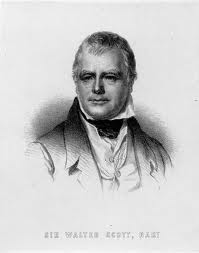
Sir Walter Scott

“The natural conclusion drawn from these tragic events—a conclusion which seems to have been assumed by Sir Walter—was that the unhappy and distracted victim, seeing no other means of escape from a fate which she held in abhorrence, had in a fit of desperation inflicted the fatal wound upon her selfish and unfeeling husband. But in justice to the memory of our unhappy relative we may be permitted to regret that Sir Walter Scott had not been informed of a tradition long current in that part of the country where this tragic event took place. From the circumstance that the window of the bridal chamber had been found wide open it is conjectured that her lover, Lord Rutherford, had during the bustle and confusion incidental to the preparation of the marriage feast— perhaps with the connivance of some servant—contrived to conceal himself in the bridal chamber. That he had fought with and severely wounded his rival, and had escaped through the window which overlooked the garden.

“This is the more probable owing to the fact that young Baldoon—to the last moment of his life— absolutely refused to make any statement whatever. It is more than probable that he was actuated by a desire to conceal the particulars of a rencontre the cause and consequence of which he might well consider as discreditable to himself.

“Lord Rutherford is said to have disappeared immediately after the event took place in a mysterious manner; but that part of the story has escaped my recollection.

“While on this subject I cannot help offering some observations relative to the principal characters introduced in ‘The Bride of Lammermoor.’ They are all more or less interesting to us both.

“The portrait of Sir William Ashton cannot be regarded as a fair representation of our eminent ancestor, Lord Stair, to whom he bears little resemblance. Sir Walter would seem wishful to avoid any comparison between them when he says that, on acquiring the ancient seat of the Lords of Ravenswood, Sir William had removed certain old family portraits and replaced them by those of King William and Queen Mary, and of Sir Thomas Hope and Lord Stair. . . . Having in the character of Lucy Ashton so closely delineated that of the daughter, the author should, in fairness, have been at more pains to prevent the description of the Lord Keeper from being regarded as an equally fair representation of the father. This is an omission of which the descendants of Lord Stair have, I think, some reason to complain.

“In Lady Ashton the portrait of our ancestress seems to be more faithfully drawn, or at least less misrepresented. She was an ambitious and designing woman, of a masculine character and understanding. It was her fixed determination that her daughter should make that fatal marriage.

“The description of young Ravenswood bears a marked resemblance to that of Lord Rutherford, who was an amiable and high-spirited young man, nobly born, but destitute of fortune. He was certainly well cut out for a hero of romance.

“As to young Baldoon, of whom very little is known, beyond what I have already stated, he seems to have cut a better figure than he deserved in the person of’ Bucklaw.’ . . .

“So far as Sir Walter Scott’s information went— beyond changing the scene of action from the west coast to the east—he seems to have kept to facts as closely as was consistent with a work of fiction. But, if a record of a distressing family incident was to be handed down to posterity in a manner so affecting, and by so renowned an author, it would have been well if the author of’ The Bride of Lammermoor’ had been made acquainted with a tradition which puts quite a different complexion on the affair.

“I am of opinion that with judicious management the interest of the story would have been increased, and would certainly have left a less painful impression regarding our unhappy and unfortunate relative, the Bride of Baldoon.

“With best regards from all here to you and Lady Shelley, I remain, my dear Sir John,
Ever most truly yours,
James Dalrymple Elphinstone
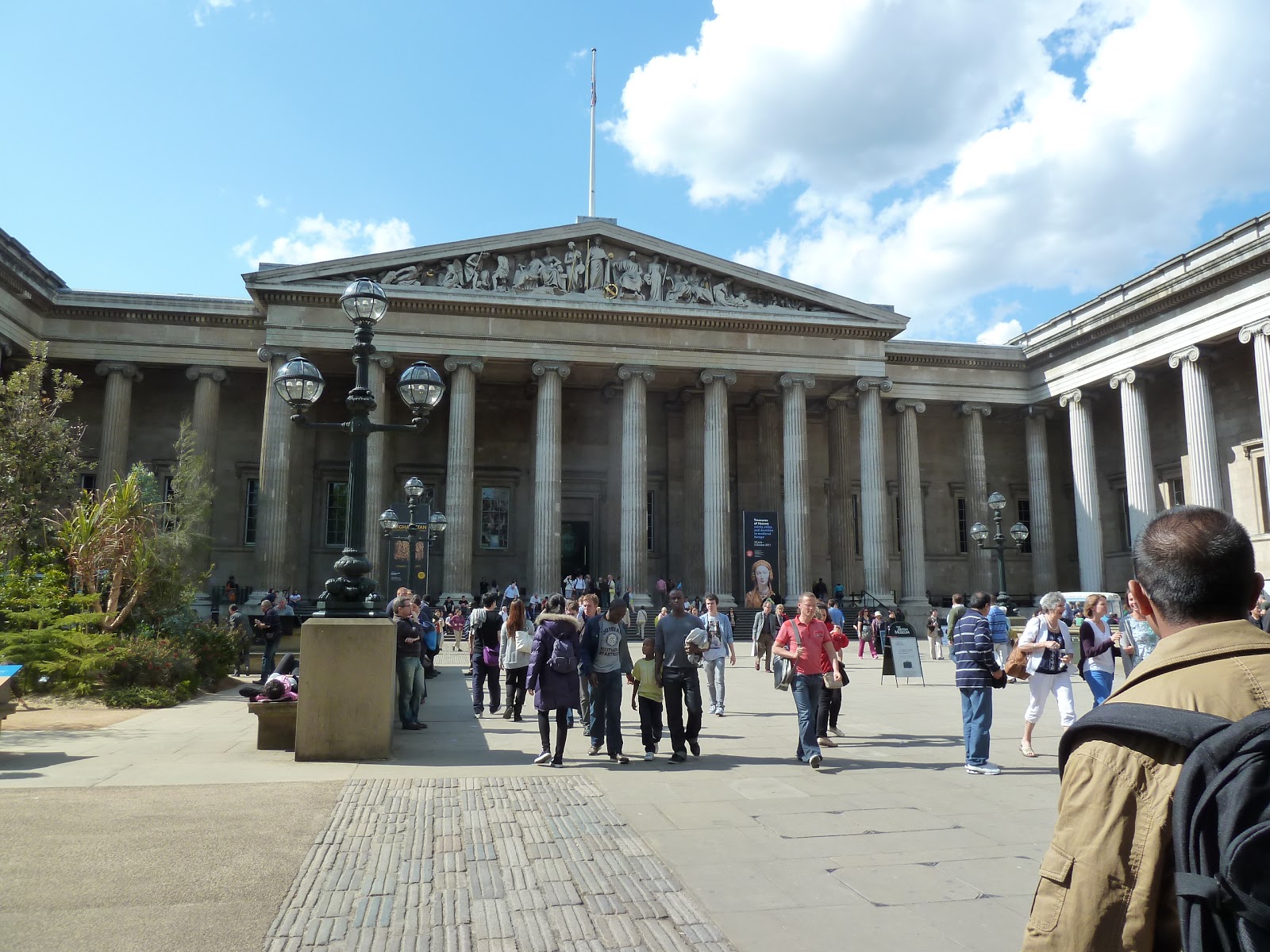
Travels with Victoria: The British Museum, Part One

Saturday 4 June 2011

According the September 2011 British Heritage magazine, the British Museum is the leader of all London attractions, with more than 5,840,000 visitors in 2010. And it is free. Yes, they ask for a contribution and special exhibitions carry an admission fee.  But I suspect that many people enjoy hours and hours of browsing without paying a penny. Like most frequent London visitors, I have been many times, but I love to go back because there is always more to see.  And I always leave a contribution.

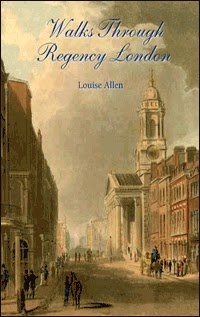
On this particular visit, I was interested in seeing some of the Regency-era acquisitions on display.  I have a copy of Louise Allen’s Walks Through Regency London guide book. She points out that many of treasures from the late 18th and early 19th centuries can be seen in a few rooms on the upper level. For more information on Louise, her novels and her guidebook, click here. While I had seen — many times — the most famous of the British Museum early treasures such as the Rosetta Stone and Elgin Marbles, I realized I really hadn’t spent much time looking over the less obvious items.

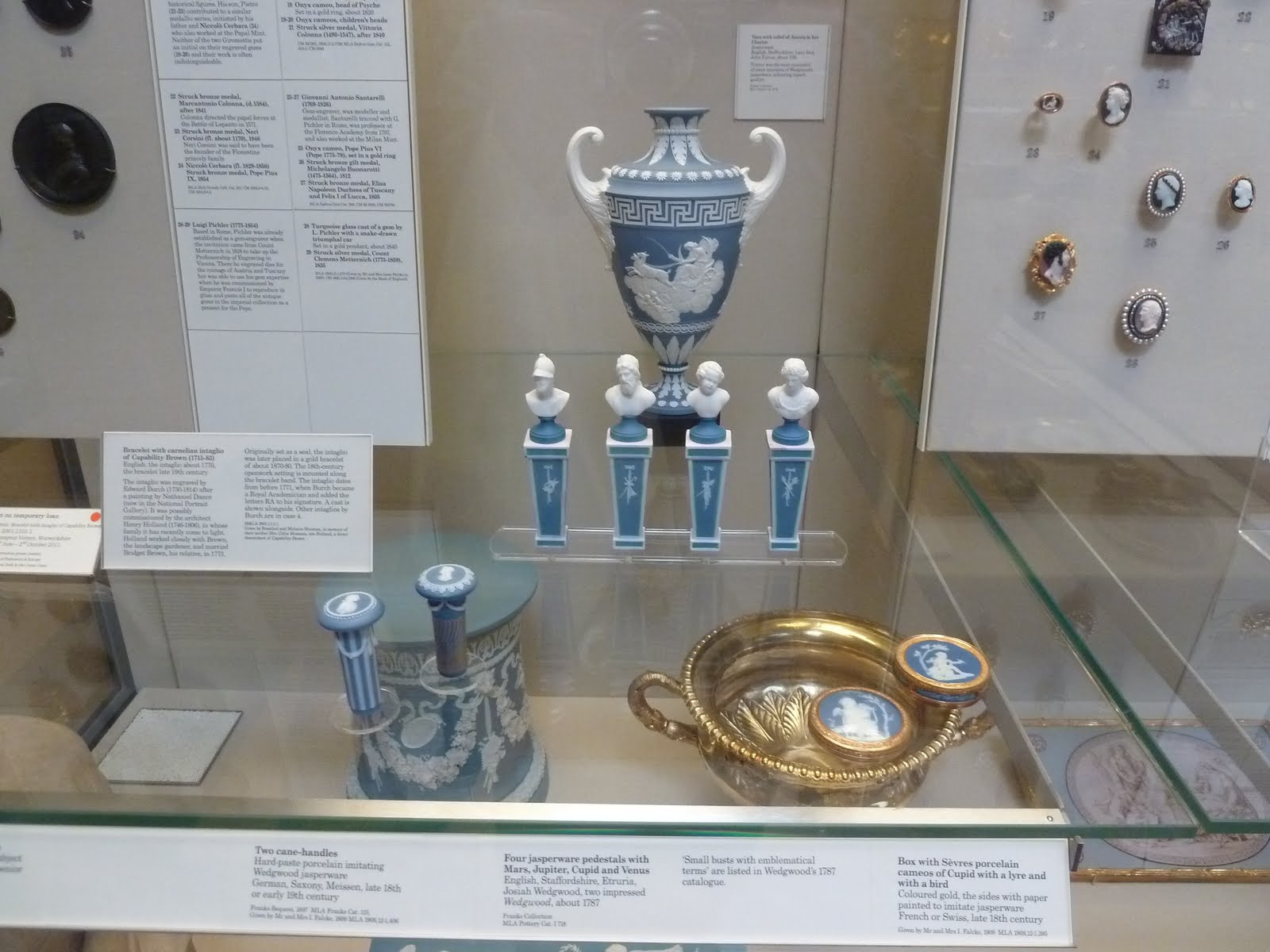
The display cases on the upper level were well worth close examination. Information comes from the museum’s labels. Above, four pedestals in Jasperware by Josiah Wedgwood, 1787, showing Mars, Jupiter, Cupid and Venus. Behind them, a vase with a relief of Aurora in her Chariot in Jasperware by John Turner, about 1790; Turner was the most successful of many imitators of Wedgwood’s jasperware.

Coadestone bust of John Flaxman, RA (1755-1826), English, London, late 18th century; in 1769, Eleanor Coade (1752-1821) ran a factory making a durable stoneware for outdoor use.
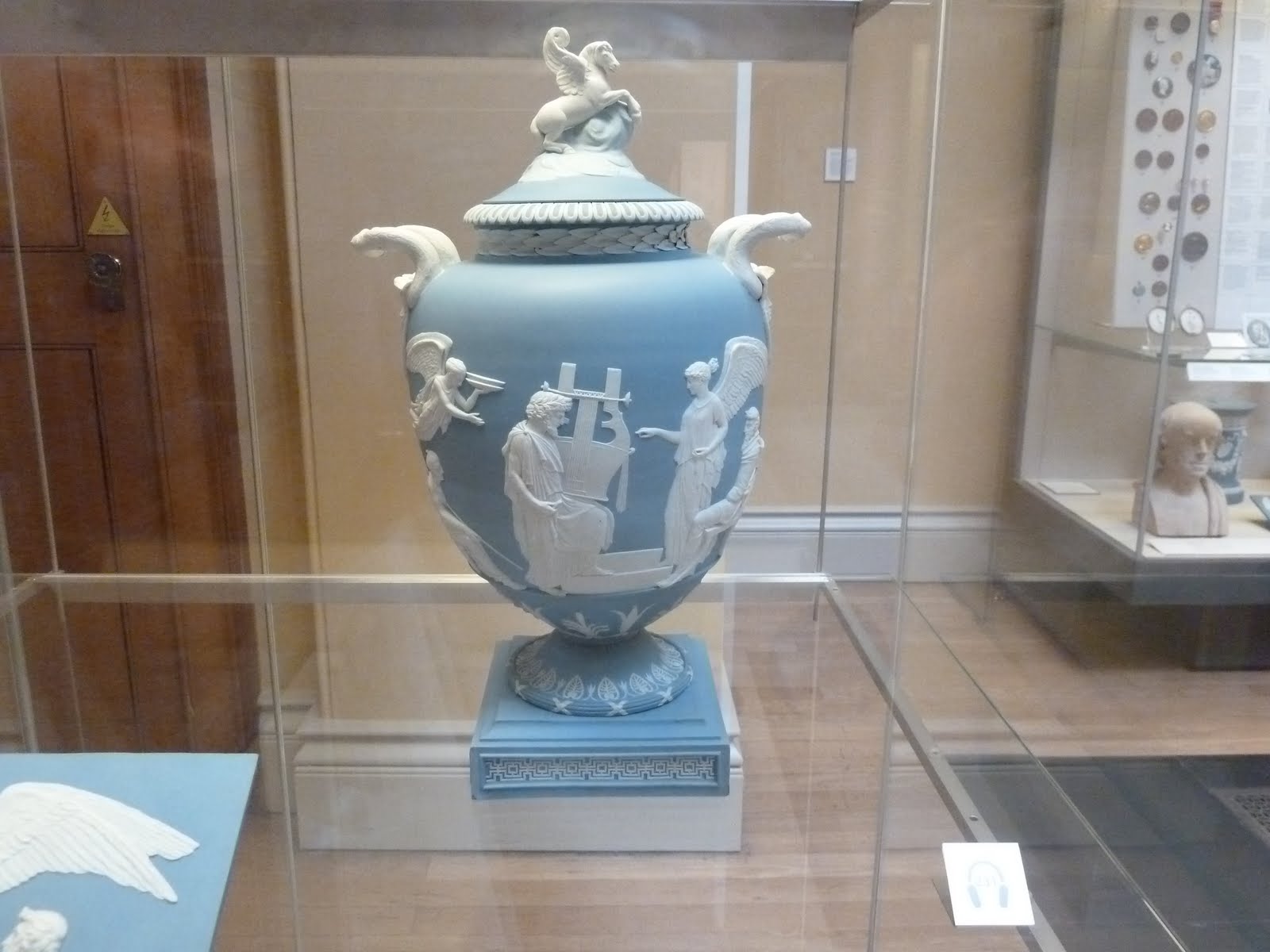
The Pegasus Vase, Jasperware, thrown, with applied reliefs, England, Staffordshire. Josiah Wedgwood, 1786;  The main scene designed in 1778 by John Flaxman (above) is the Apotheosis of Homer, copied from a Greek vase bought by the museum in 1763 from the Hamilton Collection.

Sir William Hamilton in Jasperware with gild wood frame; England, Staffordshire, Wedgwood, 1779; Hamilton is shown in the guise of a Roman.

An aside: Sir William Hamilton  (1730-1803) was a British diplomat who served as British Ambassador to the Kingdom of Naples between 1764 and 1800; he was a scientific observer of Vesuvius, and a collector of antiquities, many of which he shipped home to England and sold to the British Museum in 1772.

Sir William Hamilton by Reynolds, 1776-77, National Portrait Gallery

In 1791, at age 60, Hamilton married Emma Hart, age 26. She accompanied him back to Naples where she met and began a famous liaison with Admiral Horatio Nelson.

Emma, Lady Hamilton by George Romney, c. 1785, National Portrait Gallery

Copy of the Portland Vase; Jasperware, thrown, applied reliefs; England, Staffordshire, Wedgwood, c.1791; between 1786-95, Josiah Wedgwood painstakingly reproduced in black Jasperware the roman glass vase brought to England by Sir William Hamilton and lent to the potter by its owner, the Duke of Portland.

The Portland Vase, made of cameo glass, probably in

Rome 15 BC to 25 AD.

The Portland Vase is one of the finest surviving pieces of Roman glass; it is named for the Duke of Portland who owned it 1785-1945. Cameo glass is made in two layers; the outer (usually white) layer is carved away from the underlying dark layer to create decorative scenes and patterns.
The vase was deliberately smashed in 1845; it was carefully restored by museum conservator John Doubleday; subsequently it has been re-assembled to insure its stability by using new adhesives.  It is considered one of the museum’s great treasures.

Jasperware Wine Cooler, England, Staffordshire, Etruria c. 1783, Wedgwood; applied relief designed by Lady Diana Beauclerk (1724-1808).

In a second British Museum post, we will look at a few of the recent developments in the museum itself, as well as a quick visit to the Elgin Marbles.

Travels with Victoria: Celebrating the Regency in the Queen's Gallery

Last year, when Kristine and Victoria OD’ed on the Queen’s Gallery in Buckingham Palace, we enjoyed the exhibition of Victoria and Albert: Art and Love.  This spring the kind of love celebrated was the Prince Regent’s fondness for art and acquisition. Certainly the two go hand in hand, but the future George IV carried his love for magnificent surroundings to an extreme.  His extravagance made him unpopular with politicians and the people, but left us a lasting legacy in the Royal Collection and royal residences. For the RC website, click here.
The exhibition devoted to the Regency was suitably opulent.  In the center above is the Prince of Wales, portrayed in 1791 by artist John Russell (1745-1806). On each side are two of his siblings in portraits by Sir William Beechey (1754-1839) of the Duke of Cumberland and Princess Augusta. These two were exhibited at the Royal Academy in 1802 and by 1805 were hung in Kew Palace.
Here is one of a pair of candelabra by goldsmith Paul Storr (1771-1844); the child is Princess Sophia at age 8 by John Hoppner (1758-1810), exhibited at the RA in 1785; A Rough Dog was painted by royal favorite animal painter, George Stubbs (1724-1806).

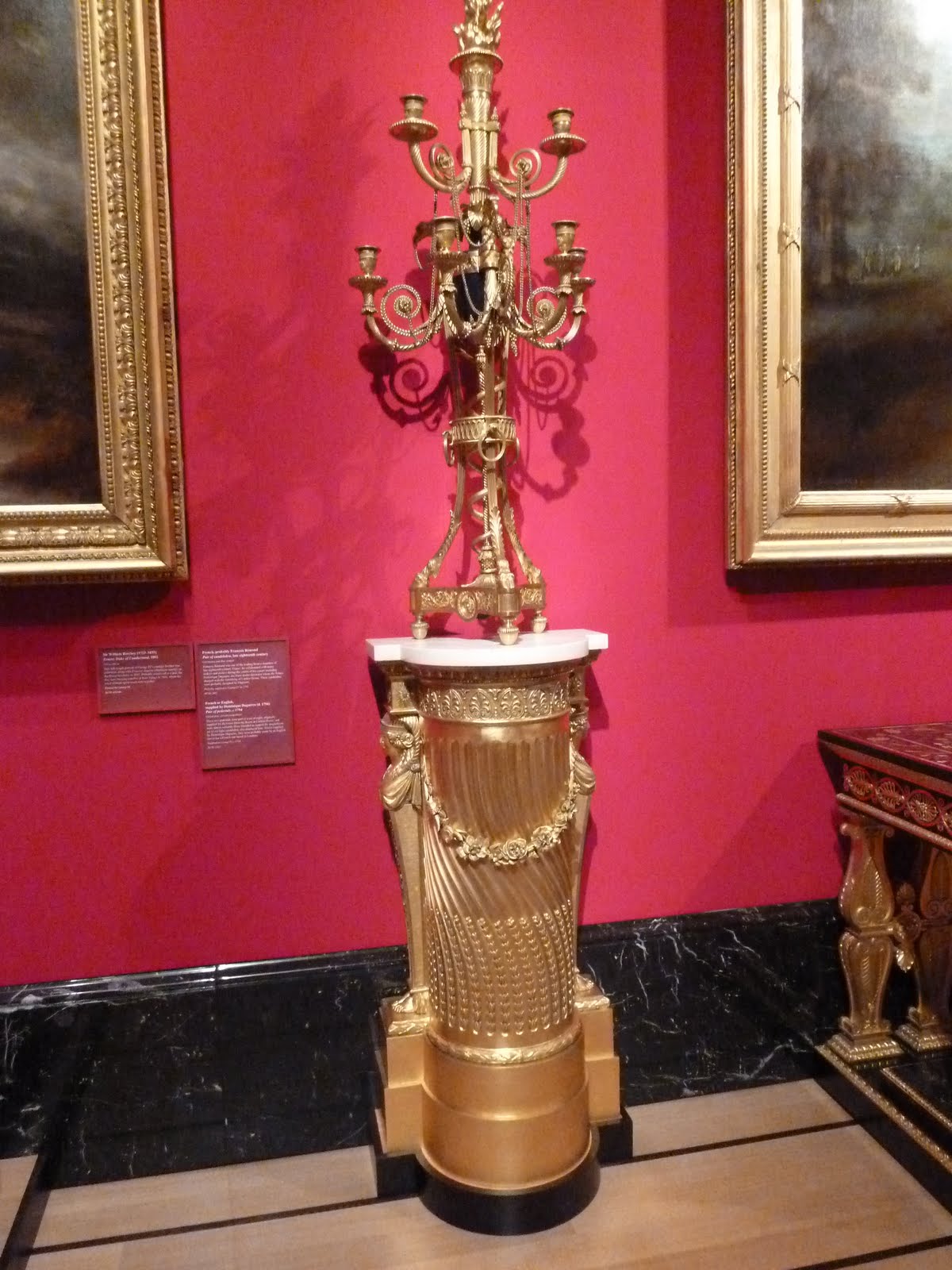
The candelabrum of gilt bronze and blue enamel and the pedestal of gilded pine were parts of a set of eight supplied to the Prince about 1794 for the Great Drawing Room of Carlton House. The dealer was Dominique Daguerre, who provided many items made in both England and France.

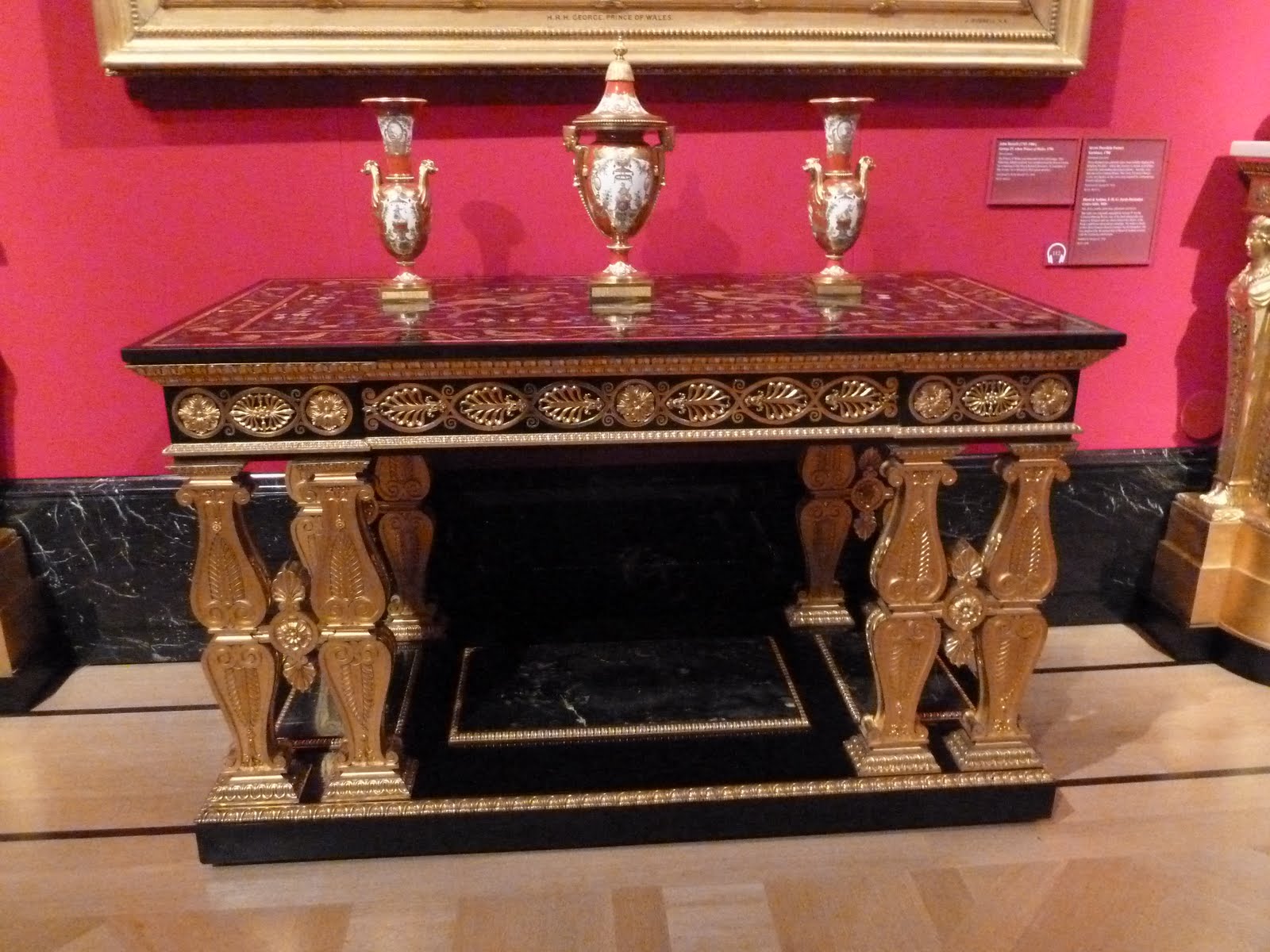
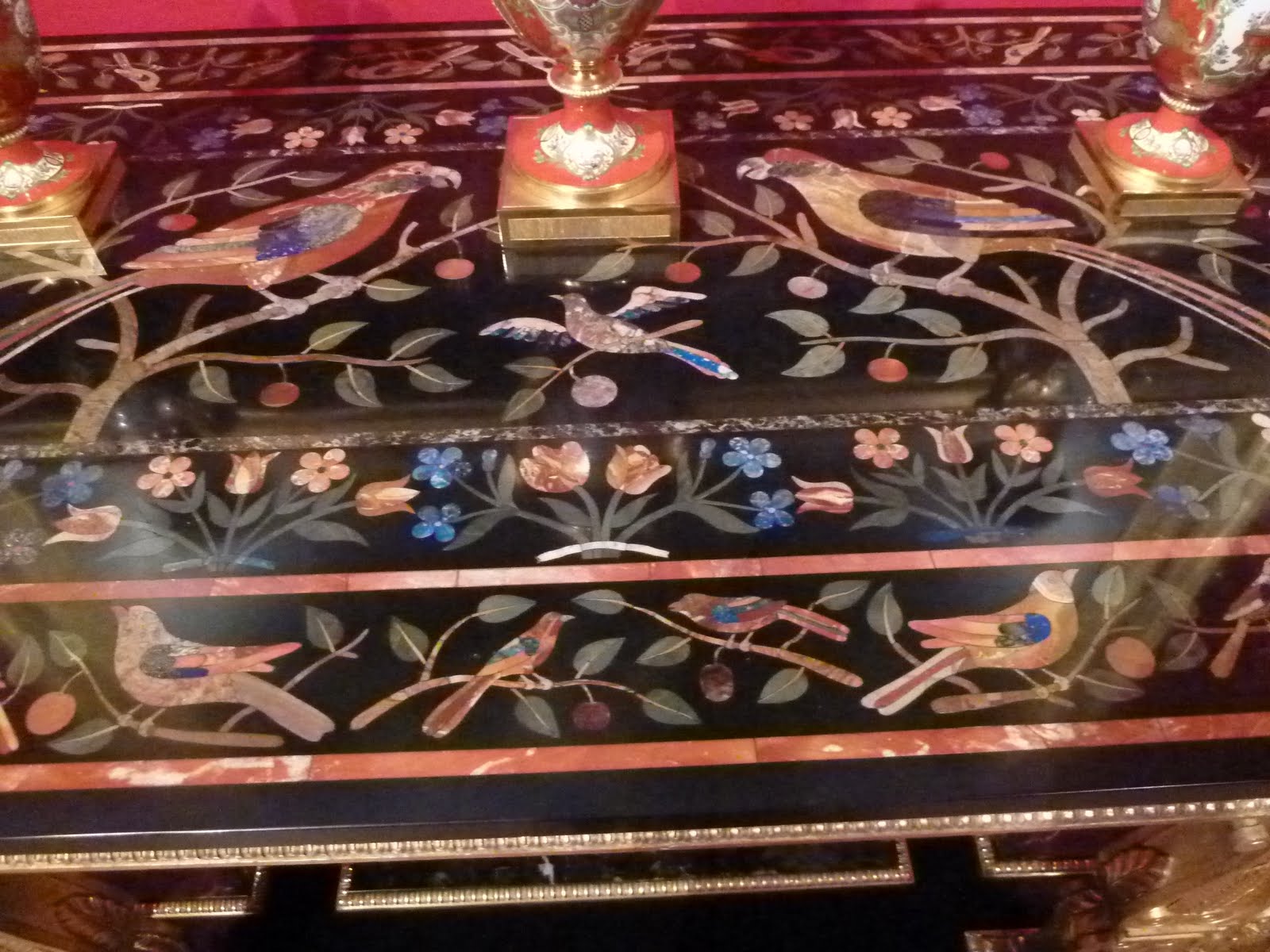
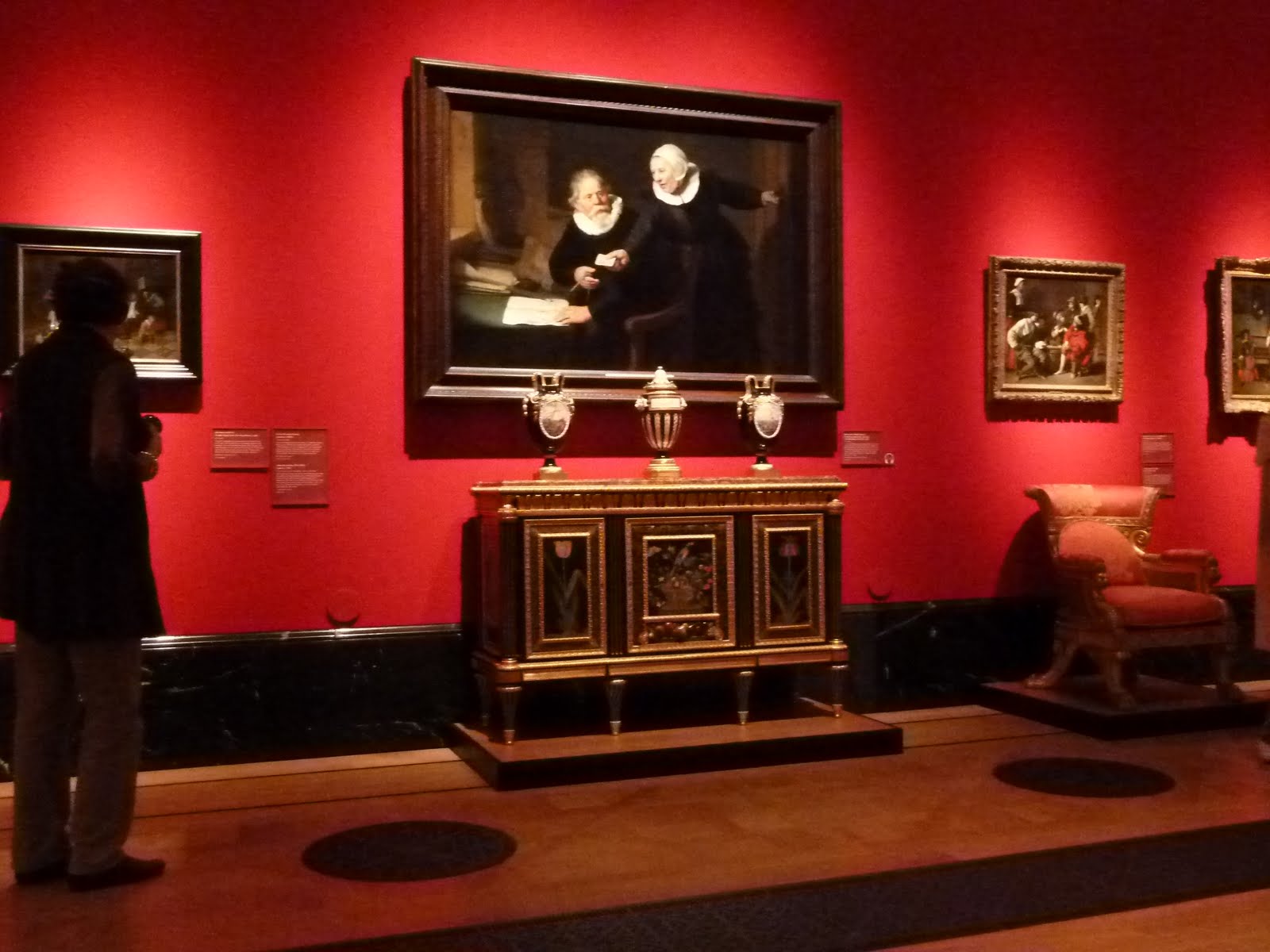
The magnificent table above was chosen in 1826 for the Crimson Drawing Room in Windsor Castle, one of the last of George IV’s elaborate redecoration schemes, which previously included Carlton House, the Brighton Pavilion, and Buckingham House. The Sevres hard-paste porcelain vases were originally in the Brighton Pavilion and later moved to Carlton House.  The Prince had an extensive collection of Sevres.

The top of the table is inlaid stones and marbles, a colorful and complicated inset design.

According the label, this pedestal clock was purchased by Francois Benois, the Regent’s pastry chef, on one of his trips to France to acquire art for the Prince.  Of particular interest was the emblem of Louis XIV, the mask of Apollo; the Regent was an admirer or the French Sun King.

The painting above is Rembrandt van Rijn’s The Ship Builder and his Wife (Jan Rycksen and his wife Griet Jans), painted in 1633; at a price of 5,000 guineas, it was the most expensive painting the Prince Regent purchased.

One of a pair of Chinese bottle vases and stands, c. 1814, of porcelain with gilt bronze mounts by Benjamin Vulliamy and stands of marble and ebonized wood; These celadon porcelain vases stood in the Blue Velvet Room at Carlton House; Vulliamy was a clock-maker to George III but was increasingly employed at Carlton House to enhance porcelain objects with decorative gilt bronze mounts.

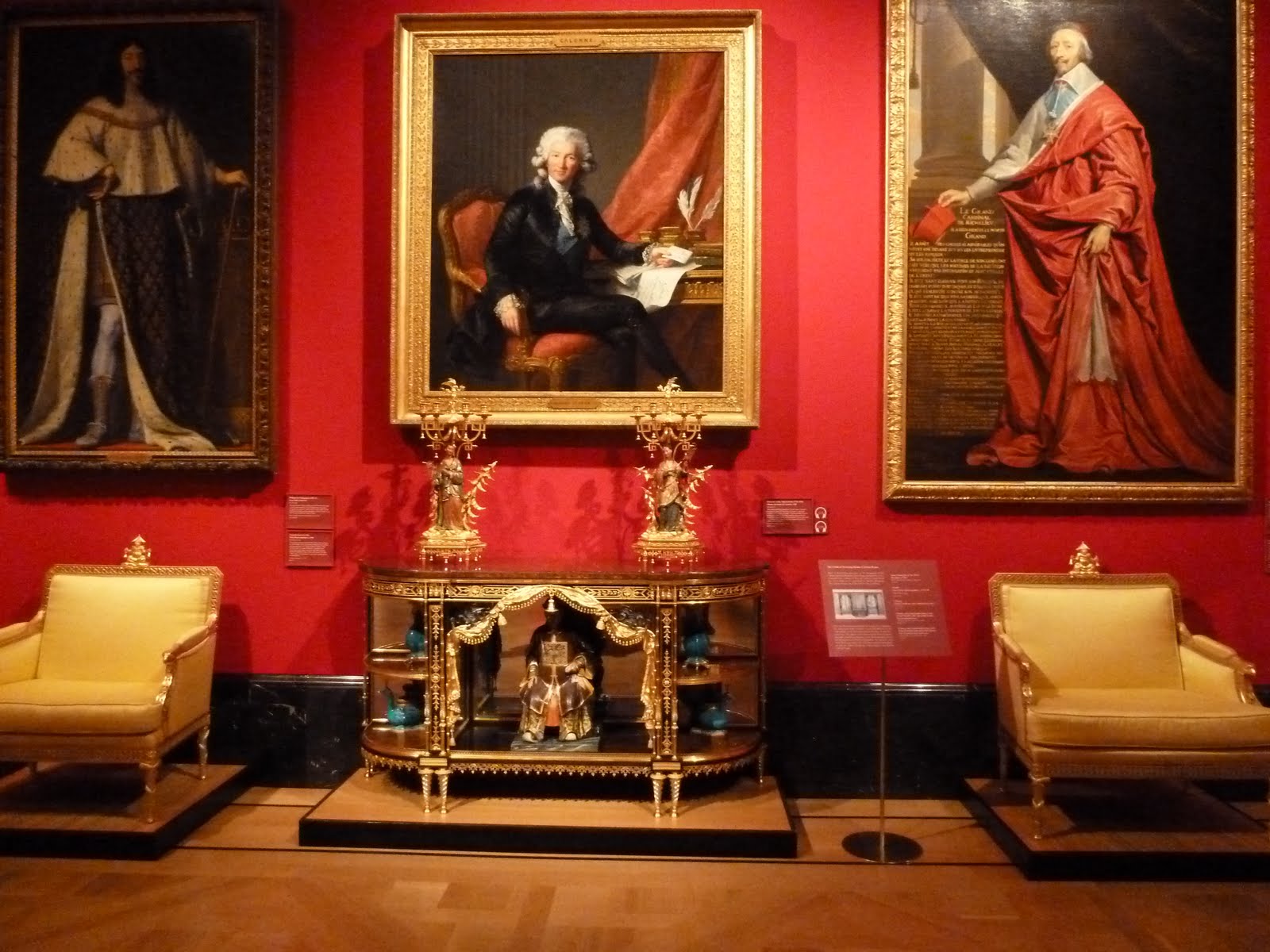
The center portrait in this grouping is Charles-Alexandre de Calonne, 1784, by Elisabeth-Louis Vigee-Lebrun (1755-1842); Calonne was French finance minister to Louis XVI; his reform suggestions to the king (a copy is held in his hand) might have prevented the French Revolution, but instead he was dismissed and fled to England in 1787; the canvas was purchased by the Prince before 1806.

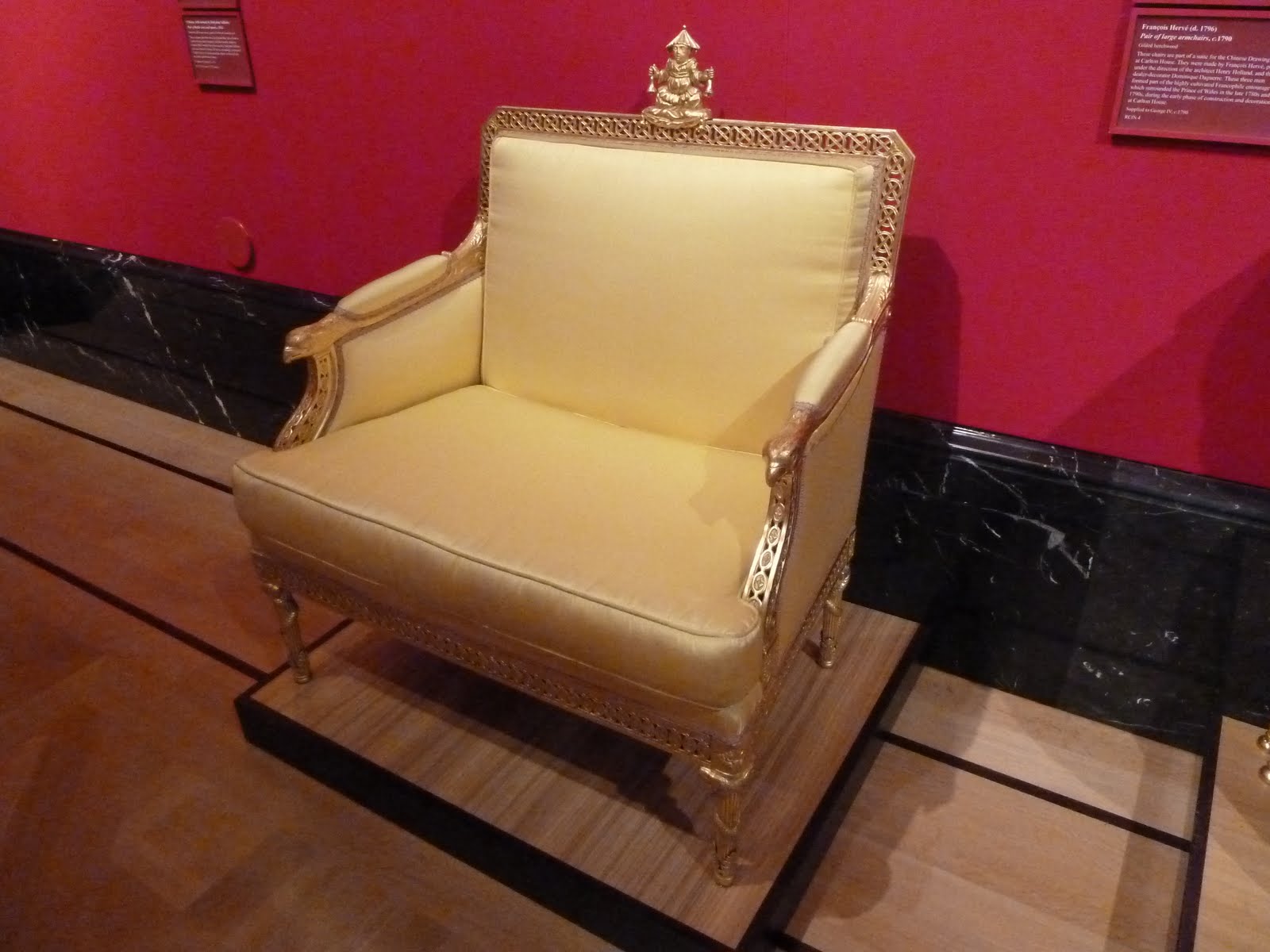
One of a set of large armchairs, c. 1790. by Francois Herve, made for the Chinese Drawing Room at Carlton House, “perhaps made under the direction of Henry Holland and dealer-decorator Dominique Daguerre. The three men formed part of the highly cultivated Francophile entourage which surrounded the Prince of Wales in the later 1780′ and 1790’s during the early phase of construction and decoration at Carlton House.”  (from the label)

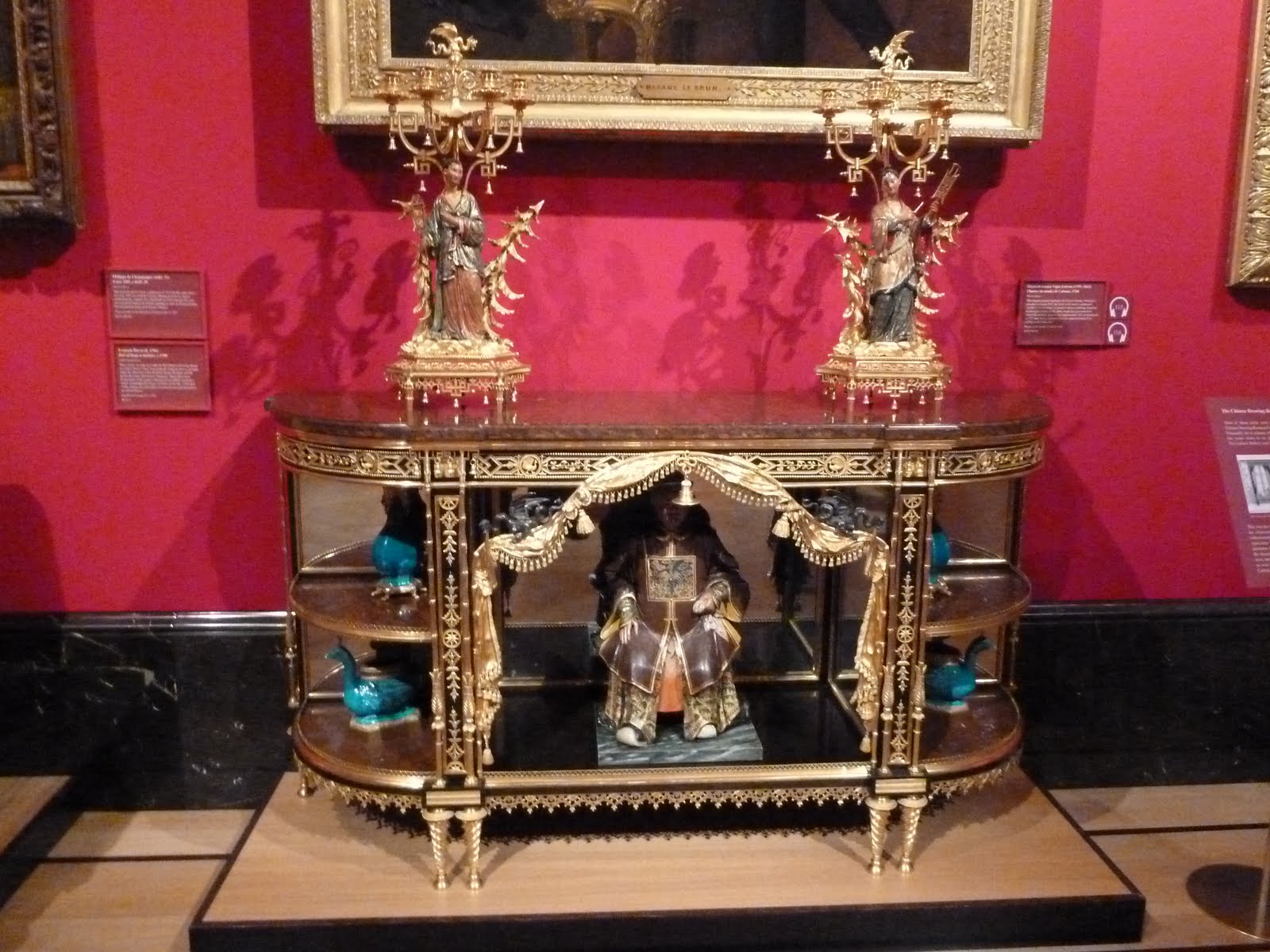
The pier table, above, with the candelabra, vases and Chinese Mandarin on the low shelf, were acquired for the Chinese Drawing Room at Carlton House in 1792, the first of a number of Chinese-style rooms created for the Prince of Wales at his various homes, culminating 25 years later with the chinoserie at the Brighton Pavilion.

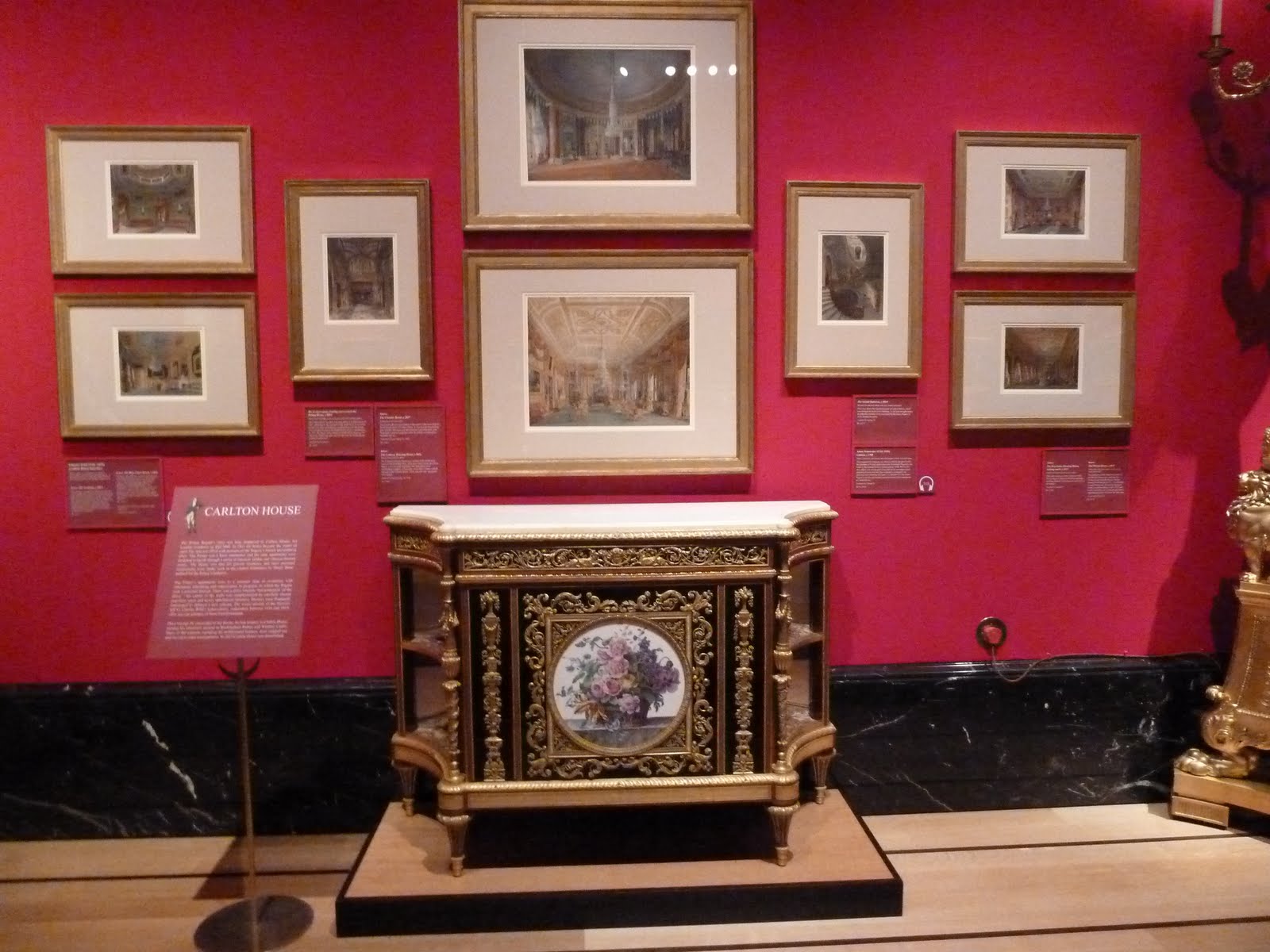
Since Carlton House was pulled down in 1826, the only pictures of its interior are paintings done in the house, particularly this collection of eight watercolours by Charles Wild (1781-1835).  Fortunately, as we have seen in this exhibition, the furniture and decorative objects were moved to other remodeling and construction projects of George IV; his essential and extravagant tastes for exotic and sumptuous theatricality continued into his residences in Brighton, London and Windsor. 

This commode is made of ebony, tulipwood, gilt bronze, marble, mirrored glass and a porcelain  plaque. It was probably designed under the guidance of French dealer-decorator Daguerre and made by the leading Parisian cabinet maker Adam Weisweiler (1744-1820)  in 1785.

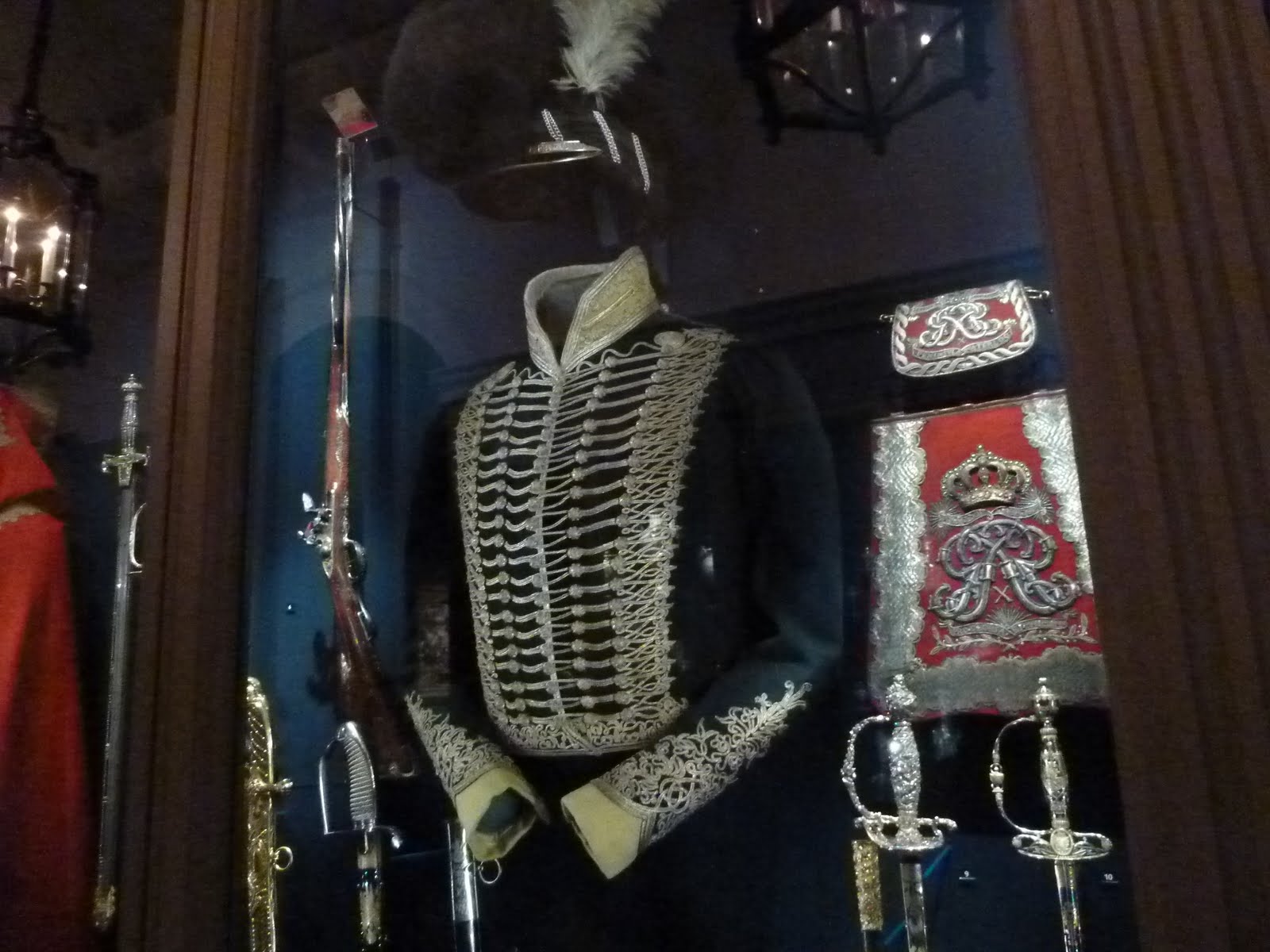
In addition to paintings, furniture and decorative objects, the exhibition includes military items, a particular interest  of the Prince of Wales. As heir to the throne, he was not allowed to participate directly in the armed forces, but he often designed uniforms, such as the elaborately frogged jacket above. And he collected guns, swords and other paraphernalia as well.

This pair of double barreled flintlock pistols was made by Nicolas-Noel Boutet and presented to the Prince Regent by Louis XVIII of France in 1814 after the first abdication of Napoleon.

 Elsewhere in the Queen’s Gallery were exhibitions from the Royal Collection focusing on Mythology and Dutch Painting. Many of the objects shown were purchased by the Prince of Wales /George IV. The clock above was made by Pierre-Philippe Thomire about 1805 of gilt bronze, marble and blue enamel. From the label: “Apollo was believed by the Romans to be god of the sun. Each day was marked by his emergence from the sea and his journey across the sky in his golden quadriga — a chariot drawn by four horses abreast — a cycle illustrated vividly by the clock.”

Also in the Mythology exhibition was this painting of Pan and Syrinx, c. 1620-25, after Sir Peter Paul Rubens, showing a story from Ovid’s Metamorphoses about Pan’s pursuit of a wood nymph who was transformed into tall reeds as he caught her — reeds Pan used to make  musical instrument — his pan pipes. The Prince Regent bought this painting in 1812.
In the Dutch Paintings exhibition, this painting by Aelbert Cuyp (1620-1691) “Cows in  Pasture beside a River, before Ruins, possibly of the Abbey of Rijnsburg,” c. 1645, was acquired by the Prince Regent in 1814. From the label: “Cuyp often employed an unnaturally low viewpoint which forces every form to be silhouetted against the sky, creating a detached effect. In this imaginative view, cows dominate the foreground, with shadowy ruins in the far distance.”
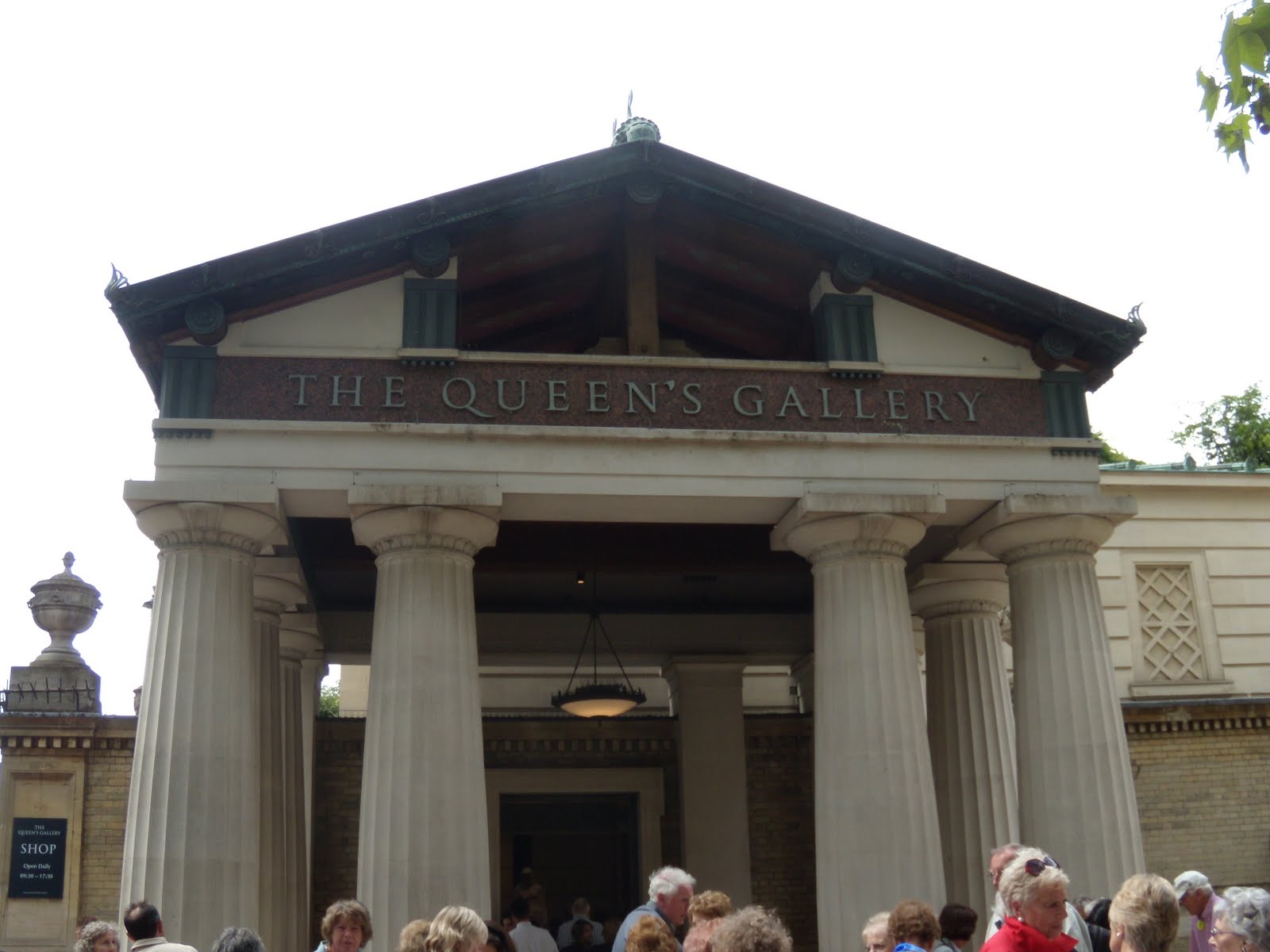
The Queen’s Gallery in June, 2010
The Queen’s Gallery is open year around with shows drawn from the Royal Collection. during the months when the Queen and royal family are at Balmoral, the State Rooms of the Palace are open, as they are on a few other occasions during the year. See Kristine’s post on her visit to the palace 1/9/11.  But you can go to the Quee
n’s Gallery any time you are in London;  I cannot recommend their exhibitions enough. I have attended many times over the years, and I have never been disappointed. However there is DANGER!!  The shop is too tempting to be believed.  Click here for a taste of what awaits you if you venture inside. Of course, it’s all available on line, but being there is even more toxic to the bank account. Nevertheless, it is wonderful!
Next on Travels with Victoria: the British Museum

The Wellington Connection – Education

From the Duke of Wellington to Lady Shelley

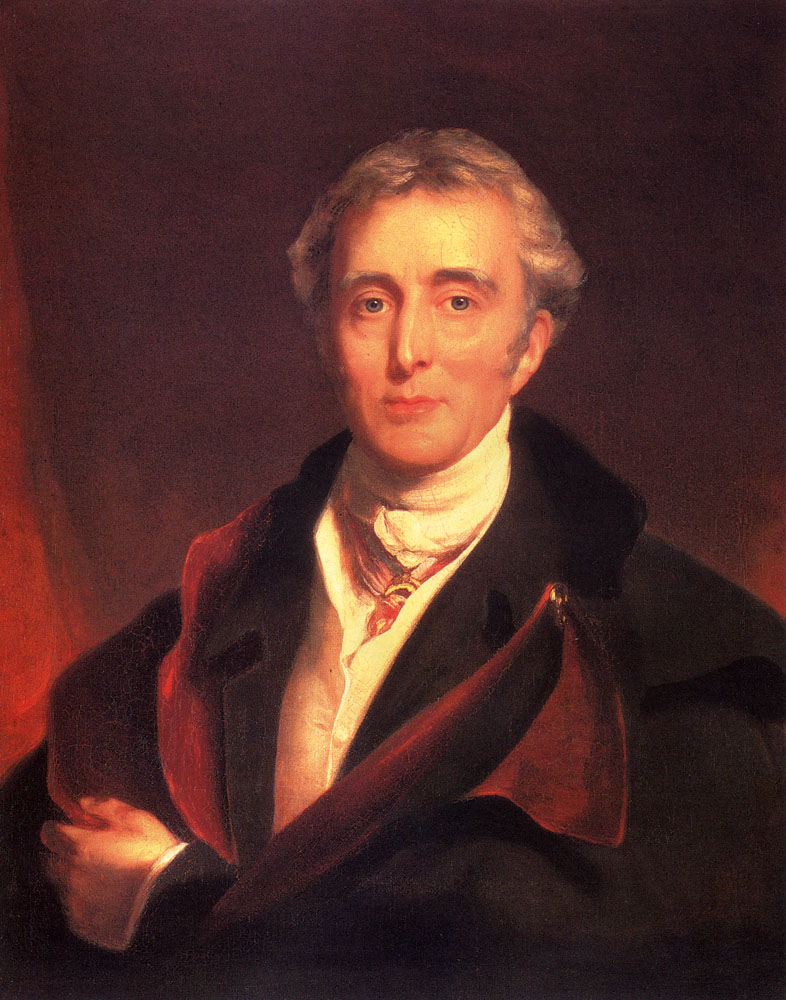
Duke of Wellington by Sir Thomas Lawrence, 1818

London, August 30, 1825.

“My Dear Lady Shelley,

. . . . . . As for John (1) you must impress upon his mind, first, that he is coming into the world at an age at which he who knows nothing will be nothing. If he does not chuse to study, therefore, he must make up his mind to be a hewer of wood and drawer of water to those who do. Secondly, he must understand that there is nothing learnt but by study and application. I study and apply, more, probably, than any man in England.

Thirdly, if he means to rise in the military profession—I don’t mean as high as I am, as that is very rare—he must be master of languages, of the mathematics, of military tactics of course, and of all the duties of an officer in all situations.

He will not be able to converse or write like a gentleman—much less to perform with credit to himself the duties on which he will be employed—unless he understands the classics; and by neglecting them, moreover, he will lose much gratification which the perusal of them will always afford him; and a great deal indeed of professional information and instruction.

He must be master of history and geography, and the laws of his country and of nations; these must be familiar to his mind if he means to perform the higher duties of his profession.

Impress all this upon his mind; and moreover tell him that there is nothing like never having an idle moment. If he has only one quarter of an hour to employ, it is better to employ it in some fixed pursuit of improvement of his mind, than to pass it in idleness or listlessness.

Ever, my dearest lady,
Yours most affectionately,
Wellington.

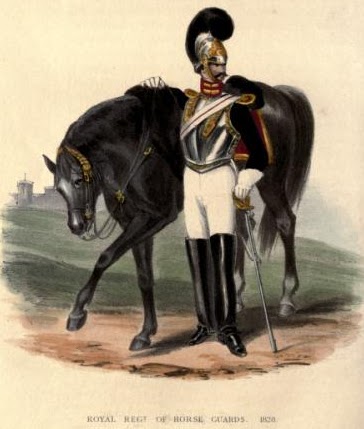
1 John Shelley, Lady Shelley’s eldest son, who subsequently joined the Royal Horseguards (Blue).

Royal Horse Guards, 1826

Woodford, September 18, 1825.

My Dear Lady Shelley,

. . . . In respect to my letter upon education, I don’t recollect what I wrote; and I cannot consent to have a copy taken, without first seeing it. You had better send it to me, therefore. Besides, the Tyrant (Mrs. Arbuthnot) says she has no notion of my writing a letter deserving of being copied without her seeing it; and she wishes to ascertain whether I have myself learnt all that I recommend to others to learn. There is no use in disputing about anything, so that you had better send the letter at once.

I will go to Maresfield as soon as I shall have it in my power, after hearing how the Parliament stands.

Believe me, my dearest lady,
Ever yours most affectionately,
Wellington

Postscript written by Mrs. Arbuthnot – “I have no notion of his finishing a letter in such a style; I will never allow that again.”

The Young Queen Victoria

Queen Victoria by Alfred Edward Chalon, 1838,
 National Galleries of Scotland

From the Greville Memoirs:

August 30th. (1837) —All that I hear of the young Queen leads to the conclusion that she will some day play a conspicuous part, and that she has a great deal of character. It is clear enough that she had long been silently preparing herself, and had been prepared by those about her (and very properly) for the situation to which she was destined. The impressions she has made continue to be favourable, and particularly upon Melbourne, who has a thousand times greater opportunities of knowing what her disposition and her capacity are than any other person, and who is not a man to be easily captivated or dazzled by any superficial accomplishments or mere graces of manner, or even by personal favour. Melbourne thinks highly of her sense, discretion, and good feeling; but what seem to distinguish her above everything are caution and prudence, the former to a degree which is almost unnatural in one so young, and unpleasing, because it suppresses the youthful impulses which are so graceful and attractive.

Victoria Regina, June 20, 1837, by Henry Tanworth Wells,  Royal Collection

On the morning of the King’s death, the Archbishop of Canterbury and Lord Conyngham arrived at Kensington at five o’clock, and immediately desired to see ‘the Queen.’ They were ushered into an apartment, and in a few minutes the door opened and she came in wrapped in a dressinggown and with slippers on her naked feet. Conyngham in a few words told her their errand, and as soon as he uttered the words ‘Your Majesty,’ she instantly put out her hand to him, intimating that he was to kiss hands before he proceeded. He dropped on one knee, kissed her hand, and then went on to tell her of the late King’s death. She presented her hand to the Archbishop, who likewise kissed it, and when he had done so, addressed to her a sort of pastoral charge, which she received graciously and then retired. She lost no time in giving notice to Conroy of her intentions with regard to him; she saw him, and desired him to name the reward he expected for his services to her parents. He asked for the Red Eiband, an Irish peerage, and a pension of 3,000l. a year. She replied that the two first rested with her Ministers, and she could not engage for them, but that the pension he should have. It is not easy to ascertain the exact cause of her antipathy to him, but it has probably grown with her growth, and results from divers causes. The person in the world she loves best is the Baroness Lehzen, and Lehzen and Conroy were enemies. There was formerly a Baroness Spaeth at Kensington, lady-in-waiting to the Duchess, and Lehzen and Spaeth were intimate friends. Conroy quarrelled with the latter and got her dismissed, and this Lehzen never forgave. She may have instilled into the Princess a dislike and bad opinion of Conroy, and the evidence of these sentiments, which probably escaped neither the Duchess nor him, may have influenced their conduct towards her, for strange as it is, there is good reason to believe that she thinks she has been ill-used by both of them for some years past.1 Her manner to the Duchess is, however, irreproachable, and they appear to be on cordial and affectionate terms. Madame de Lehzen is the only person who is constantly with her. When any of the Ministers come to see her, the Baroness retires at one door as they enter at the other, and the audience over she returns to the Queen. It has been remarked that when applications are made to Her Majesty, she seldom or never gives an immediate answer, but says she will consider of it, and it is supposed that she does this because she consults Melbourne about everything, and waits to have her answer suggested by him. He says, however, that such is her habit even with him, and that when he talks to her upon any subject upon which an opinion is expected from her, she tells him she will think it over, and let him know her sentiments the next day.

Duchess of Kent and Strathearn, 1786-1861 by Sir George Hayter, 1835
Royal Collection

The day she went down to visit the Queen Dowager at Windsor, to Melbourne’s great surprise she said to him that as the flag on the Round Tower was half-mast high, and they might perhaps think it necessary to elevate it upon her arrival, it would be better to send orders beforehand not to do so. He had never thought of the flag, or knew anything about it, but it showed her knowledge of forms and her attention to trifles. Her manner to the Queen was extremely kind and affectionate, and thej were both greatly affected at meeting. The Queen Dowager said to her that the only favour she had to ask of her was to provide for the retirement, with their pensions, of the personal attendants of the late King, Whiting and Bachelor, who had likewise been the attendants of George IV.; to which she replied that it should be attended to, but she could not give any promise on the subject.

William Lamb, Lord Melbourne (1779-1848), by Sir Edwin Landseer 1838
National Portrait Gallery
She is upon terms of the greatest cordiality with Lord Melbourne, and very naturally. Everything is new and delightful to her. She is surrounded with the most exciting and interesting enjoyments; her occupations, her pleasures, her business, her Court, all present an unceasing round of gratifications. With all her prudence and discretion she has great animal spirits, and enters into the magnificent novelties of her position with the zest and curiosity of a child.