THE DUKE OF WELLINGTON TOUR – VIDEO HIGHLIGHTS – PART 9

HIGHCLERE CASTLE


Highclere Castle Victorian

One of the stops along the route of The Duke of Wellington Tour that we’re looking forward to visiting is Highclere Castle, home of the Earls of Carnarvon. In addition to the fabulous interiors, we’ll also be viewing the Egyptian collection, comprised of artifacts from King Tut’s tomb, the discovery of which was funded by the 5th Earl of Carnarvon. I’m particularly interested in walking the grounds and seeing the park, designed by Capability Brown. Here are a few video highlights of what we’ll be seeing at Highclere –
The 8th Countess of Carnarvon discusses The Real Downton Abbey and offers a tour of the Castle here.
Follow the Countess through more rooms in the Castle here.
Footage of the exteriors, grounds and secret garden here.
If you were invited to spend the weekend at Downton Abbey’s Highclere Castle a hundred years ago,
would you know what to wear, how to act, which fork to use? Michael Bertolini, Curator and President of the Warwick (NY) Historical Society gives an informative Talk on Downton Abbey-style living.  (1 hour)
For absolutely stunning scenery of the countryside surrounding Highclere Castle, you can watch this five minute video – The Wayfarers Walking Vacations “Downton Abbey” walk .
Victoria will be writing next weeks “Video Highlights” post, in which she’ll bring you clips of the flip side of Highclere Castle – Downton Abbey. Until then, here’s a very funny bit of silliness put together for Red Nose Day 2011 called “Uptown Downstairs Abbey.


COMPLETE DETAILS OF 

THE DUKE OF WELLINGTON TOUR

CAN BE FOUND HERE.

LONDON'S RICHEST TUBE LINES

Piccadilly and Northern Line Commuters 

 The Wealthiest in London

• Piccadilly Line commuters earn more than £56k on average
• Commuters on Hammersmith & City Line are least well-off
• Commuters on Deep Level lines earn 20 per cent more

Commuters on the Piccadilly and Northern Line are the richest in London, according to the London offices of Randstad the specialist recruiter.

A survey of 1,000 working Londoners who spend the majority of their commute on the Tube found the average salary of someone commuting on the Piccadilly Line is £56,250. The Northern Line trails close behind at £47,250.

Mark Bull, CEO of Randstad said: “With Bank a key stop on the Northern Line, you might think this would be the wealthiest tube line. While twenty years ago the Square Mile was home to pretty much every financial institution in London, the wealth has now spread east to Canary Wharf and west to the West End. The Piccadilly line, though, runs right through Green Park and Piccadilly Circus – which has become prime private equity territory over the last thirty years. As the gentlemen’s clubs of St James have moved out, the venture capitalists have moved in.

“Perhaps it’s fitting that Piccadilly line is home to the capital’s richest commuters now. During the war, the British Museum stored some of its most treasured antiquities – including the Elgin Marbles – into a disused spur of the Piccadilly line . The capital’s wealth is clearly very at home there.”

“It’s not all bad on the Northern Line though. Bank might have been voted the “Most Disliked” tube station in London – and Kennington might be haunted – but in terms of hard cash, the Northern Line is anything but The Misery Line”

Despite connecting Moorgate and Liverpool Street with the rest of London, the average salary of commuters on the Hammersmith & City Line is just £35,250.

The Hammersmith & City line is not the only sub-surface line that moves less wealthy commuters.  Commuters on the District, Circle, Metropolitan and Hammersmith & City lines are paid, on average, 20 per cent less than those on the deep-level lines.

Mark Bull said, “Sub-surface commuters may luxuriate in spacious air-conditioned coaches, but when it comes to comparing pay-packets between the deep level lines and their subsurface equivalents, it’s a case of mind the gap.  While the deep level lines are known for their punishing journeys, overcrowding, and cramped conditions, the extra cash commuters are pocketing should help ease the pain.”
While very few of London’s tube commuters spend the majority of their commute on the Waterloo & City line, those that do are technically speaking the wealthiest of all – average salaries on the Waterloo & City line are £81,250.
Career Choices Reflected in Tube Lines Most Travelled
The Northern line is the most used line by a variety of professions, from Customer Services and Leisure and Hospitality workers to corporate commuters in IT and Professional Services, some professions are more prevalent on certain tube lines than others.

Mark Bull said: “Tube commuters are notorious for trying to create the illusion of their own private space, despite packed cars and it’s rare passengers glance up from their smart phones, iPods or newspapers with very few words spoken on a typical journey – if at all.  On certain lines, if tube travellers did strike up a conversation they might just find that they have more in common with the person standing next to them than they might think.  In fact, in many cases they could be heading to the same employer – which in some cases may explain the radio silence!”

AT THE CORCORAN – PART THREE: Salon Doré

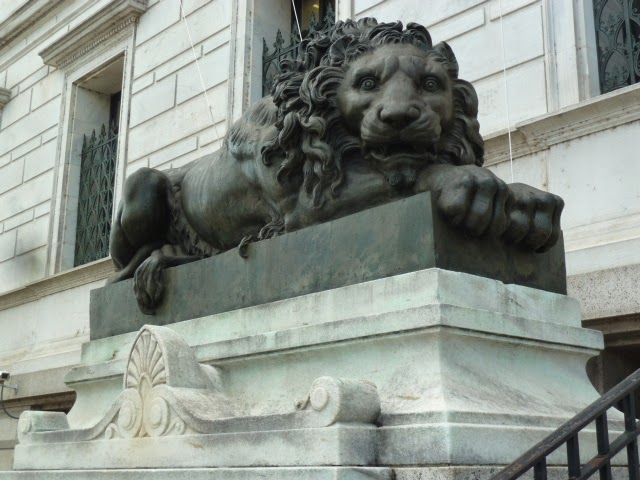
Victoria here.  The Corcoran lions guard the doors of the gallery, in Washington, D. C., behind which are many treasures, including the Salon Doré, or Gilded Room, an excellent example of French 18th century décor.

I visited with author Diane Gaston, a long-time friend and fellow traveler to England and elsewhere in search of Georgian/Regency-era delights.  Diane was as gob-smacked by the beauty of the Salon Doré as I was and we both snapped picture after picture.  She was much faster at blogging about  our visit than I was.  Click here for her post.

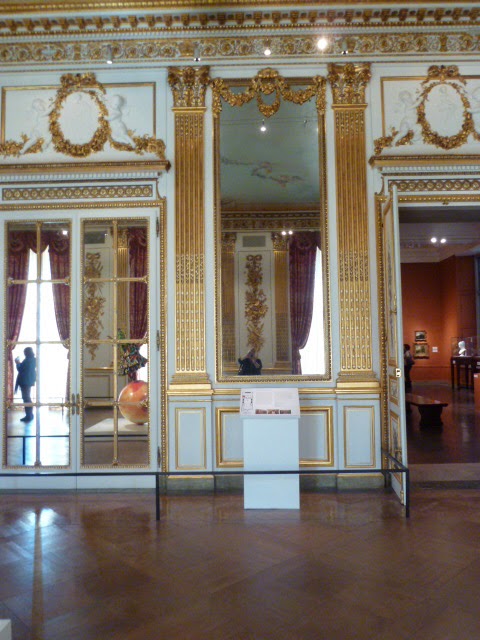
Salon Doré at the Corcoran Gallery of Art
This installation is the third for the sumptuous ceilings and paneling.  The room was created in 1770 as a wedding gift to his bride by Pierre Gaspard Marie Grimod d’Orsay (1748-1809). The artist was Jean-François-Thérèse Chalgrin (1734-1811).  Some early descriptions of the room say it was fashioned for the wedding ceremony itself.
 
In the early 20th century, D’Orsay’s mansion, the building now known as Hôtel de Clarmont (68 rue de Varenne, Faubourg Saint-Germain, Paris), was stripped of the Chalgrin work and it was acquired by American mining millionaire and industrialist (aka robber baron) and Montana Senator William A. Clark (1839-1925).  Clark installed the room in his Fifth Avenue, NYC, mansion about 1904.  He was a benefactor of the Corcoran in its early years, and the fittings of the Salon Doré  were moved to the gallery in 1926.
Count d’Orsay and his wife, the former Marie-Louise-Albertine-Amélie, Princess de Croÿ-Molenbais, had one son who in turn fathered Alfred Guillaume Gabriel, Count d’Orsay (1801-1852) , a famous dandy who was well known in England in the 19th century, friend of the famous and infamous, such as Lord Byron, Benjamin Disraeli, and Edward Bulwer-Lytton. Read about the Duke of Welllington and Count Dorsay  here.
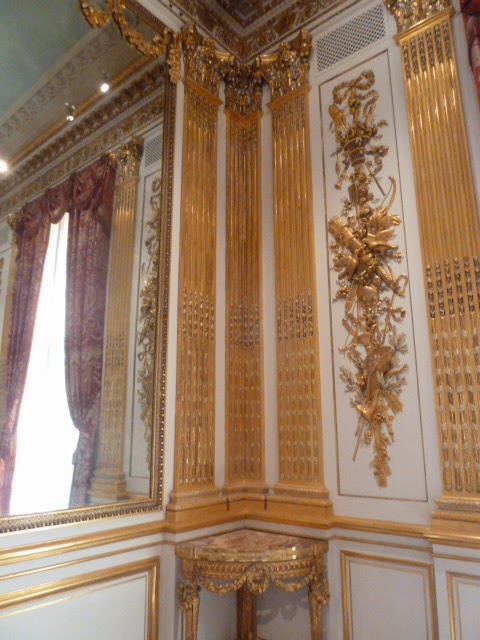
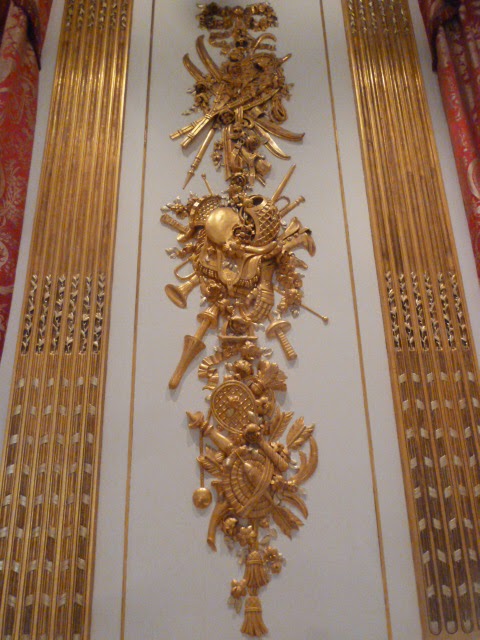
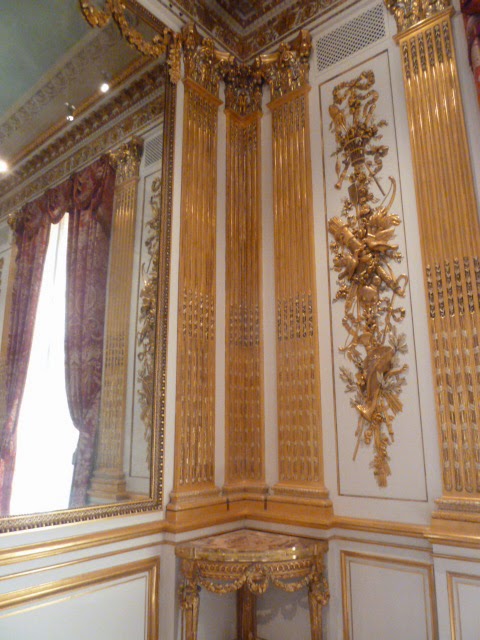
Decorative Panels

The Corcoran’s Salon Doré is one of the finest examples of French Rococo style from the reign of Louis Quinze (XV).  Another such gilded salon from Paris can be found in San Francisco’s Legion of Honor Museum. Read more about it here.


Detail of paneling: Corcoran’s Salon Doré


Gilded corner tables (encoignures) by Jean-François-Thérèse Chalgrin
(French, 1734-1811)
The four corner tables, along with most of the other furniture from the original room, were confiscated and dispersed during the French Revolution.  Though the other pieces are still lost the Corcoran acquired the four corner tables just a few years ago, in 2008, and placed them in their original positions in the Salon Doré.

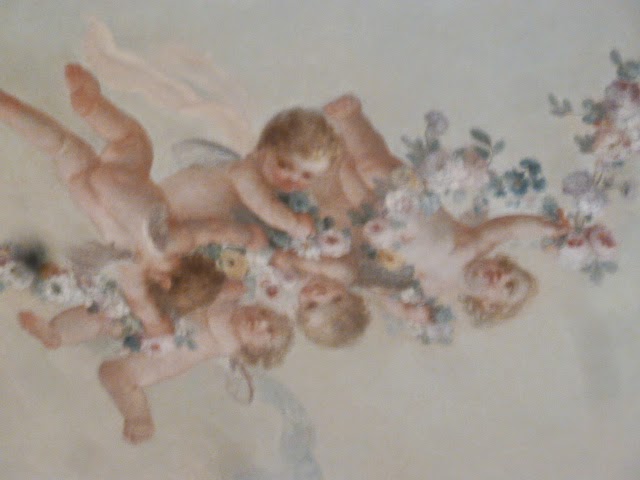
Ceiling Details are not the originals but were created for the museum installation

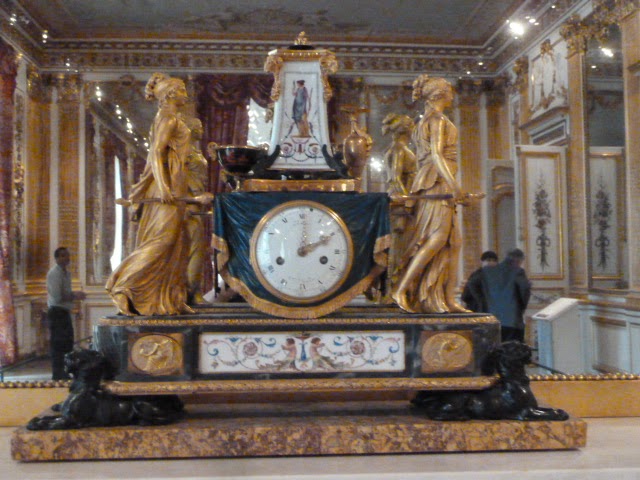
Clock of the Vestals
The Case was made by Pierre-Philippe Thomire (French 1751-1843) bout 1789. The clock was created by Robert Robin, (French 1742-99), signed on the dial Robin/Hger Du Roi (clockmaker to the King).  The media are gilded, patinated, and  painted bronze, Sevrès porcelain, enamel on copper, and marble.        
             

From the Corcoran’s website: The Clock of the Vestals marked the passing of the hours in Queen Marie-Antoinette’s boudoir, or private sitting room, in the Tuileries Palace in Paris, adjacent to the Palais du Louvre. The  royal family was forced to move there in October 1789 after a mob of Parisians attacked the palace at Versailles, the official residence of the king for over 100 years.  In the Tuileries the  king and queen held court in gilded splendor but were state prisoners nonetheless.   Their last unhappy days together were passed in this palace before they were permanently separated in the mean quarters where they awaited their executions in 1793…The scene on the clock may depict the moment when the vestals, warned of the approach of the Gauls (c. 389), took the sacred fire and vessels from the temple and fled from Rome to Caere, a nearby city…At least sixteen versions of the Clock of the Vestals are known, each having some variation in materials and secondary elements.  The clock in the Musée des Arts Décoratifs in Paris, dated 1788, is closest in appearance to the Corcoran clock.”

Paneled Doors of the Salon Doré


From the Corcoran Gallery’s website: “The Salon Doré as we know it today is the product of these two great patrons of the arts, the French Count d’Orsay and the Francophile Senator Clark. Even though one was an 18th-century Frenchman born to wealthand privilege and the other was a 19th-century self-made American industrialist, they are linked across the ages as passionate collectors of the antique and the Old World who at the same time used art and architecture to foster their social ambitions.”


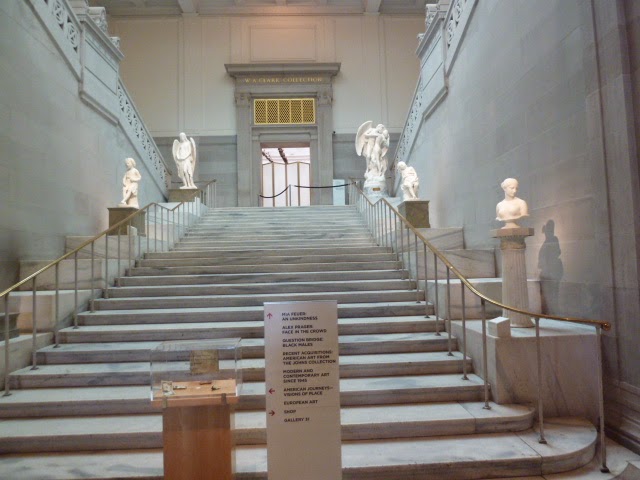
The Corcoran’s Staircase

Other Salon Dorés can be found in palaces, mansions, and museums. Another I have enjoyed visiting was recently re-furbished at the Palace of the Legion of Honor, part of San Francisco’s Fine Arts Museums.  Learn about it here.


Salon Doré. from the Hôtel de La Trémoille, Paris
Fine Arts Museums of San Francisco


THE DUKE OF WELLINGTON TOUR — VIDEO HIGHLIGHTS – PART 8

 Stratfield Saye

To understand why the Duke of Wellington’s country house is the relatively modest Stratfield Saye, it is necessary to travel back to the victory of the Duke of Marlborough at the Battle of Blenheim in August 1704 over the forces of French King Louis XIV (and others)..  England’s Queen Anne and her ministers were so delighted with the Duke’s victory that they decided to build him a great palace, a rival to their defeated enemy’s Palace of Versailles.

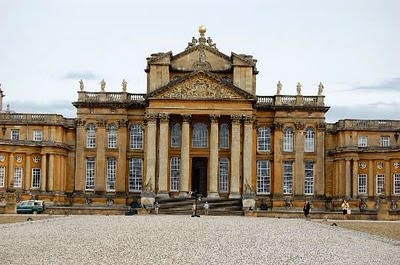
Blenheim Palace
Blenheim Palace, Oxfordshire
If you visit Blenheim, you will see what the first Duke of Wellington learned from the magnificent but very costly house.  For two centuries, the Marlborough family had struggled to complete and maintain the enormous palace. So when offered a great Waterloo Palace as a gift from the nation after his victory over Napoleon, Wellington proceeded cautiously. The Iron Duke knew what a burden Blenheim had been to its owners.

Stratfield Saye

Always the clever strategist, the first Duke of Wellington chose a house he and his descendants could afford, perhaps sacrificing magnificence for comfort.  
 This pleasant 90-second video shows several views of the house.
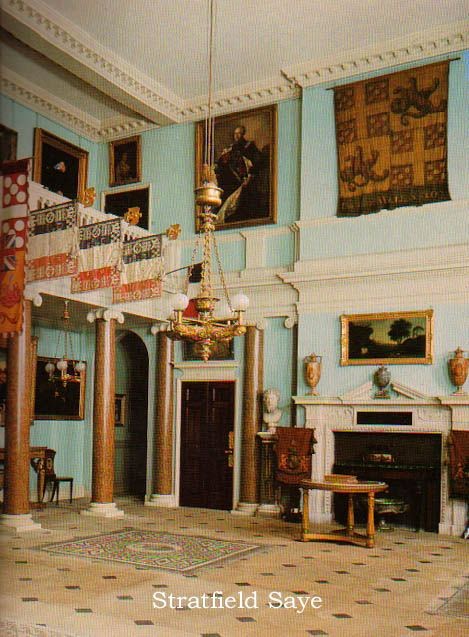
The Hall, showing captured battle flags
The present ducal family lives at Stratfield Saye and  access to the house is very limited.  We could find no videos of the interior, so to see the rooms in which the Dukes and Duchesses lived, you will have to sign up and come along on The Duke of Wellington Tour.
For more exterior views plus the Duke’s Funeral Car, on display in the stables, here is another video.  Sadly, the cameraman kept moving — so don’t get seasick while you watch it!
Did you know that the cavalry charge scene from the Spielberg film War Horse was filmed at Stratfield Saye? Actor Tom Hiddleston explains how the Duke’s estate came to substitute for a French Battlefield in this video.
You can watch the cavalry charge film sequence here. How ironic that a scene of British military defeat should be filmed on the grounds of the home of Britain’s greatest military hero.

COMPLETE DETAILS AND ITINERARY FOR

THE DUKE OF WELLINGTON TOUR CAN BE FOUND HERE

A PINTEREST POST

Swans Bishop's Palace Wells

Here’s another great photo I found on Pinterest recently of the swans at the Bishop’s Palace in Wells, who ring a bell when they want to be fed. The things one learns on Pinterest!

From the Bishop’s Palace website, where you’ll also see a live streaming “Swan Cam”:

The Bishop’s Palace is world famous for its swans who ring a bell alongside the gatehouse when they want food. The swans are trained to pull on a rope which sounds the bell ringing and sends the Palace Caretakers, Paul and Carol Arblaster running to fetch some bread and open the window to feed them. Perhaps you will be lucky enough to see them do this when you visit!

Swans at the Palace were first taught to ring a bell for food by the daughter of Bishop Hervey in the 1870s and the tradition continues to this day. Bread is tied in clumps to the rope attracting the swans to nibble at it and pull it off, when they do this the bell rings. Gradually less and less bread is tied onto the rope as they begin to understand that by pulling the rope and hearing the bell means food will soon follow.

Rest assured, the swans and ducks all get a lot of attention from tourists and staff around The Bishop’s Palace should Paul and Carol be away from the bell so they don’t go hungry, they also feed off the moat silt bed and surrounding environment.

You can watch a YouTube video of the swans ringing the bell here.