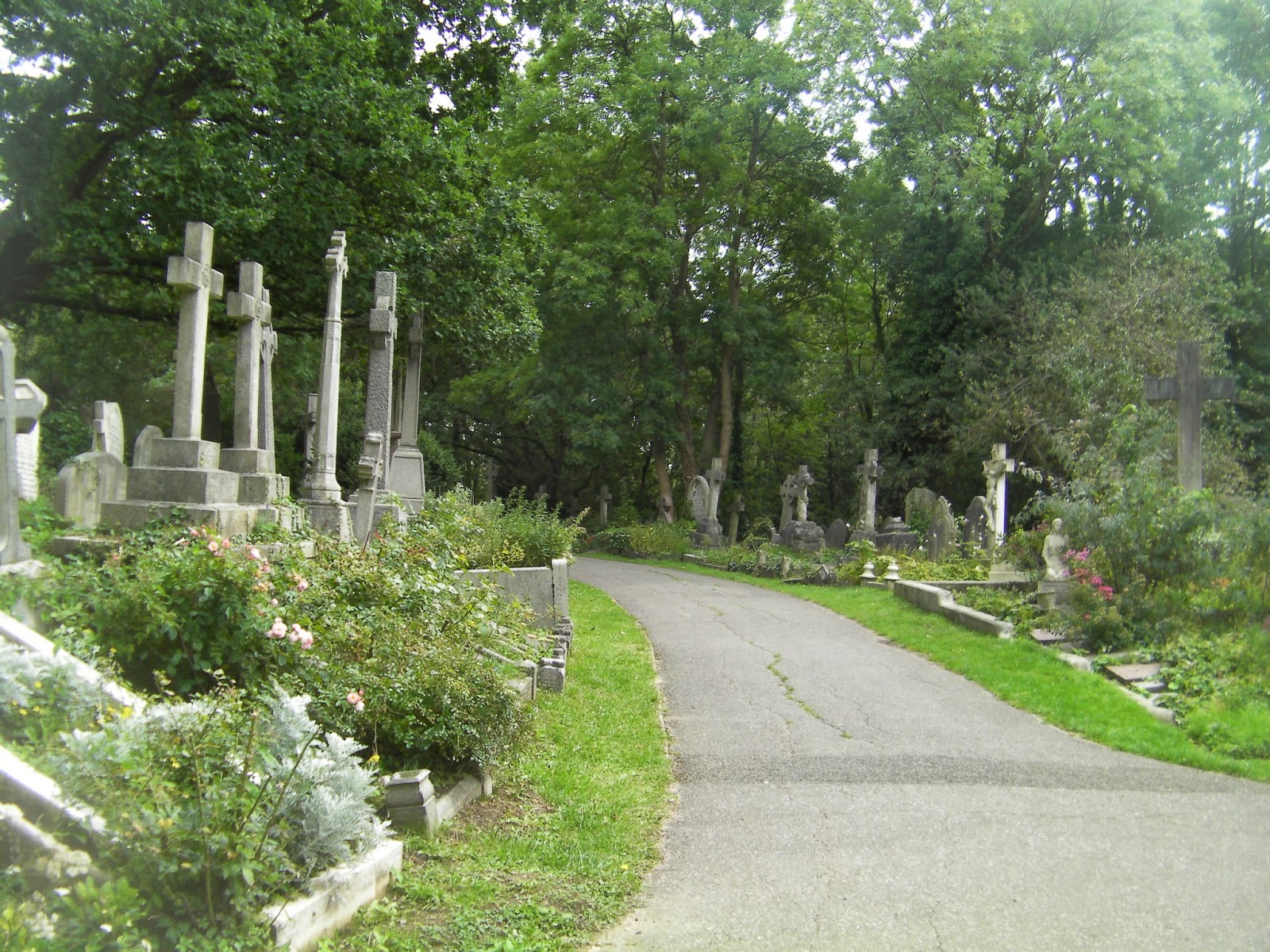
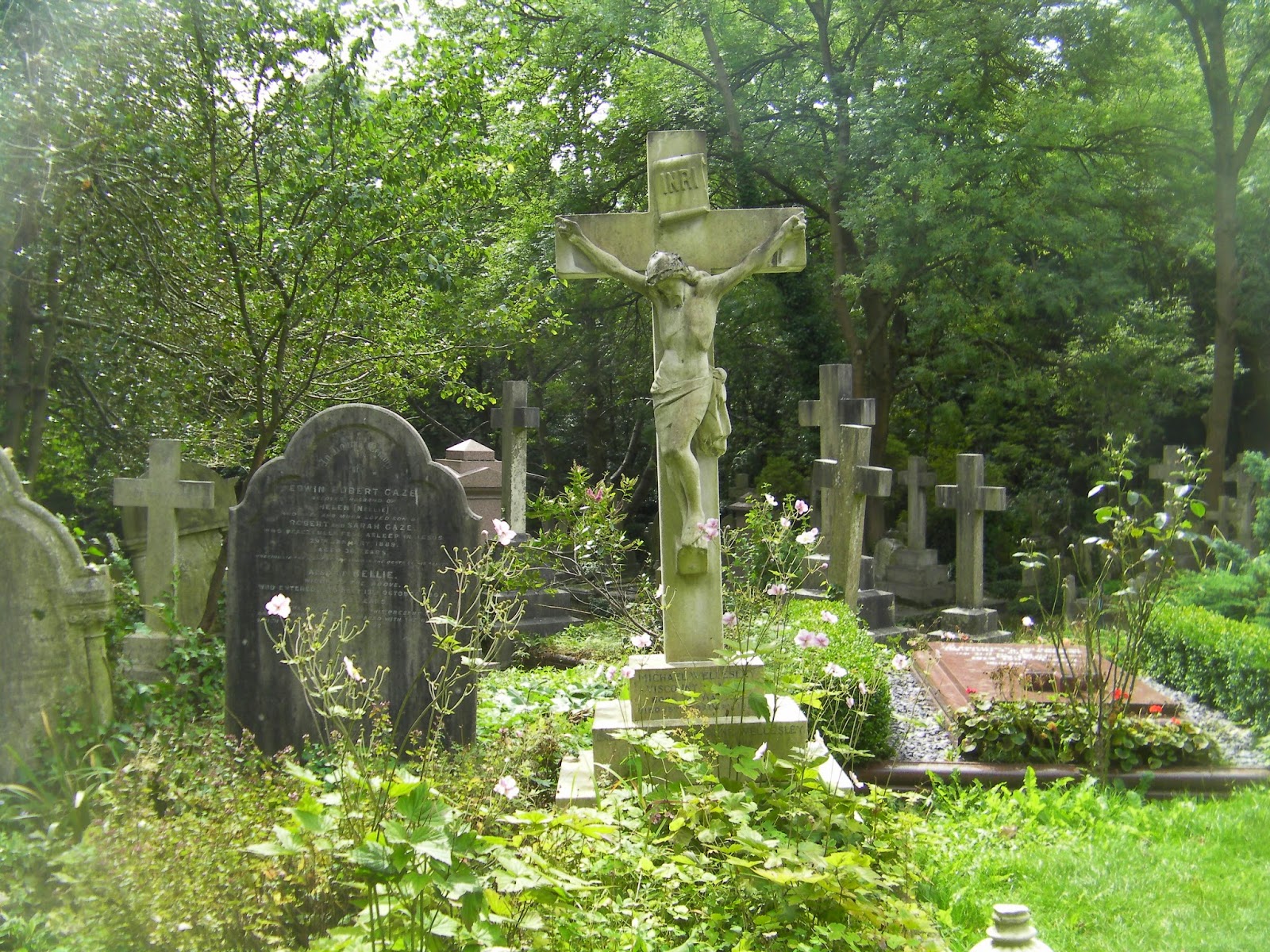
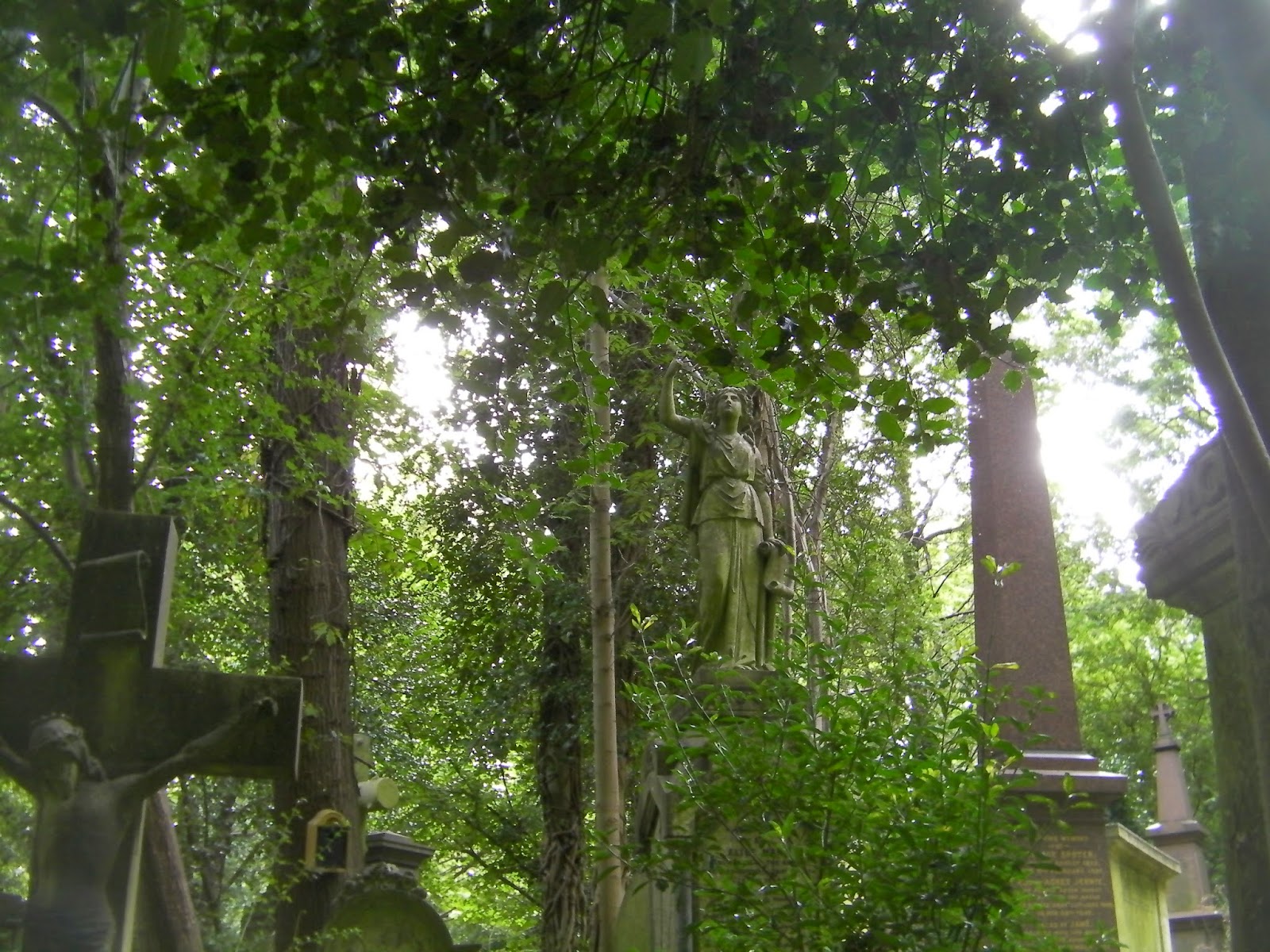
Victoria and I had finally arrived at Highgate Cemetery. It was a glorious afternoon – warm, sun shiny and the Cemetery was practically deserted. We were able to stroll the lanes and explore the East Cemetery all on our lonesomes. Save for the occasional birdsong, the air was still, quiet and the graves themselves were quite beautiful.
Victoria and I strolled in companionable silence, she a bit ahead of me as I threaded my way past crosses and angels, stopping to read some of the gravestones. At one time, all of these people were the light of someone’s life – a cherished spouse, a beloved child, a much missed grandparent, a favourite sibling or one’s closest friend. They were mourned, tears were shed over their loss and their graves were no doubt tended faithfully. Now, one hundred years on at least, they were nothing but forgotten bones in a cemetery, albeit resting beneath impressive monuments. It is said that no one is truly gone as long as there is someone, one person, who continues to remember them. I doubted there were many resting here who still had someone to remember them in 2014.
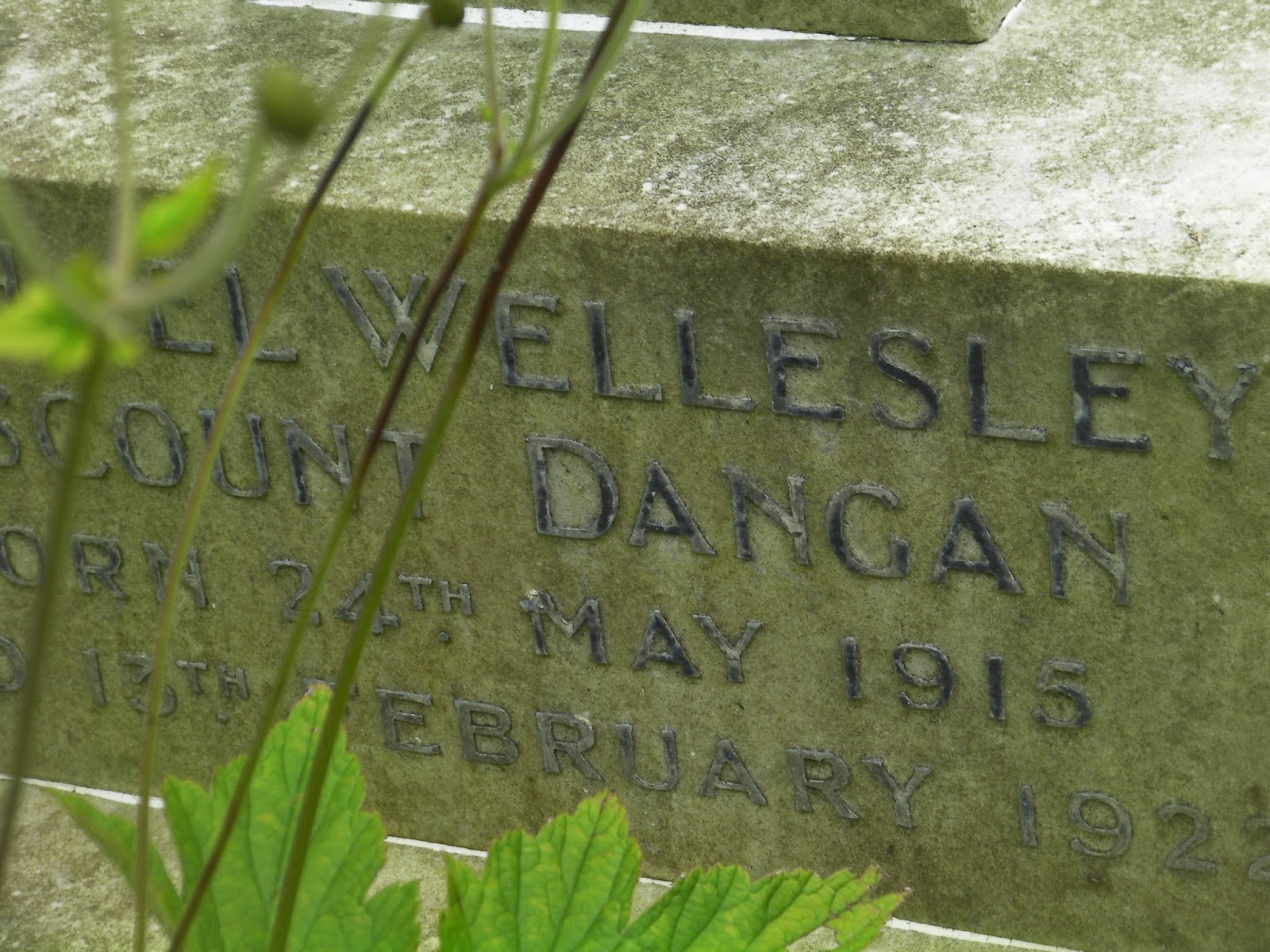
Meandering down the path, I was brought up short by one of the next graves I encountered.
“Vicky!”
“Hmmm?”
“Look what I found.”
“What is it?” she asked, coming to stand at my side. She read the gravestone and then looked at me. “Trust you to find a connection to Artie at Highgate. Who’s Michael?”
“Who’s Viscount Dangan?” I asked in return.
“Is it a family title?”
“Earl Cowley, Marquess of Douro, Lord Mornington . . . . . Viscount Wellesley I know. Dangan I do not.”
“Maybe it’s not even our Wellesleys.”
“Has to be. How many other Wellesley families can there be? And how many who produced a viscount?” I looked at the stone again. “He was only six when he died.”
Further research once I got home revealed that Michael would have been the Duke’s grand nephew, a descendant of his brother Henry and one of Henry’s children whom the Duke and Kitty helped to raise. He died of leukemia. ***
Eventually, Victoria and I made our way to the West Cemetery in order to join the 3 p.m. tour group. Once we were gathered, our tour guide gave us a brief history of the Cemetery, which opened in 1839. As we gathered in the large inner courtyard, our guide painted a vivid picture of the Cemetery as a thriving business concern – the courtyard would have been filled with hearses, carriages and male mourners as upwards of forty funerals a day were carried out on a typical day. Services had to be timed to the minute, as well as the arrival and departure of the attendant retinues, in order for everything to have run smoothly. You can read the Wikipedia entry on the Cemetery here.
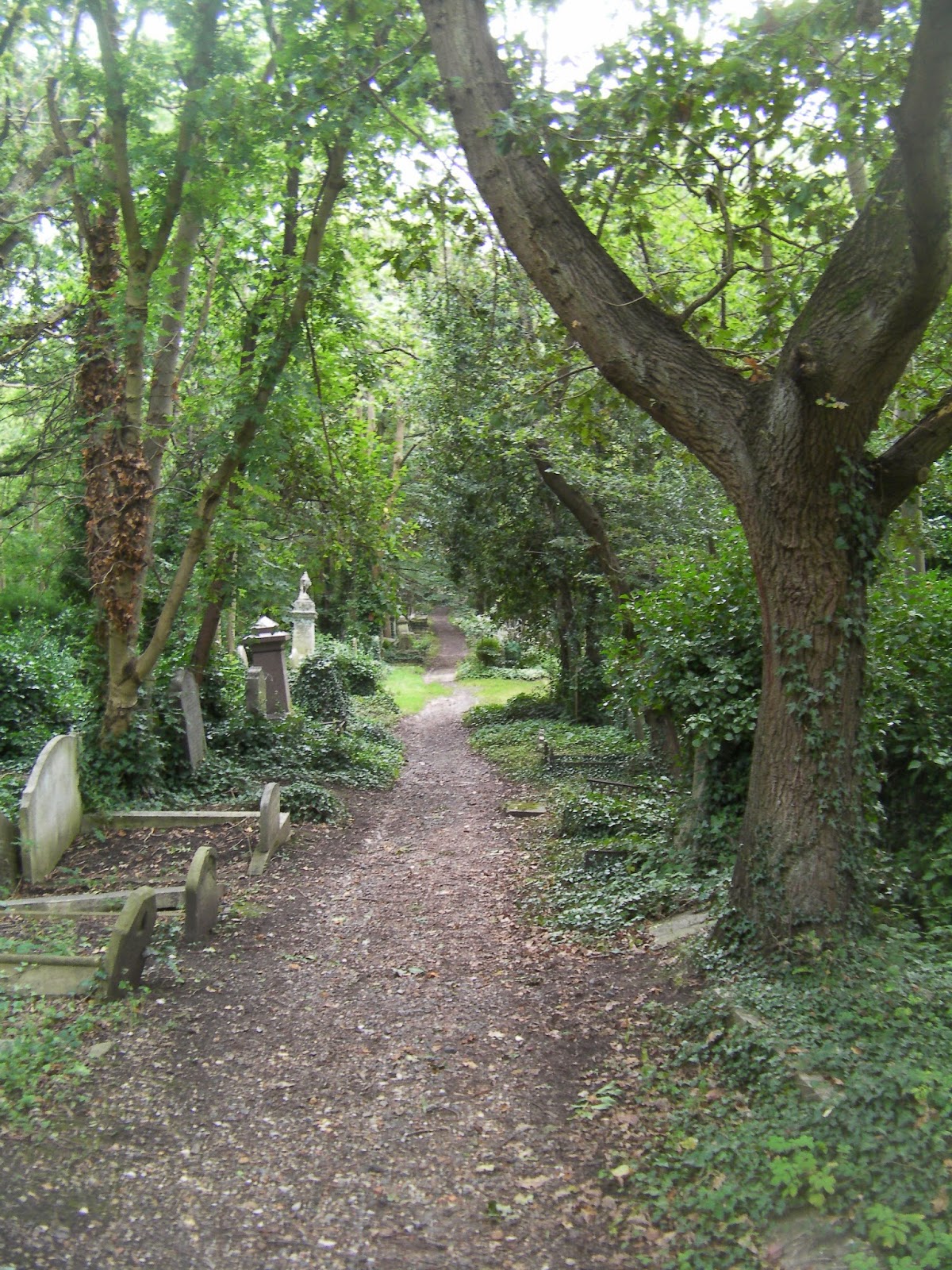
The West Cemetery had a different feel to it from the East side – wilder, more imperfect, more tumble down, more macabre in a Hammer Studios way. In fact, it occurred to me that most of the cemeteries depicted on film had perhaps been modeled after the East Cemetery. Nothing could have been more perfect. Sunlight filtered through the branches overhead and our tour group followed the leader through the stillness as we took in the surrounding graves and monuments, the silence broken only by his commentary on what we were seeing and the history of funeral architecture.
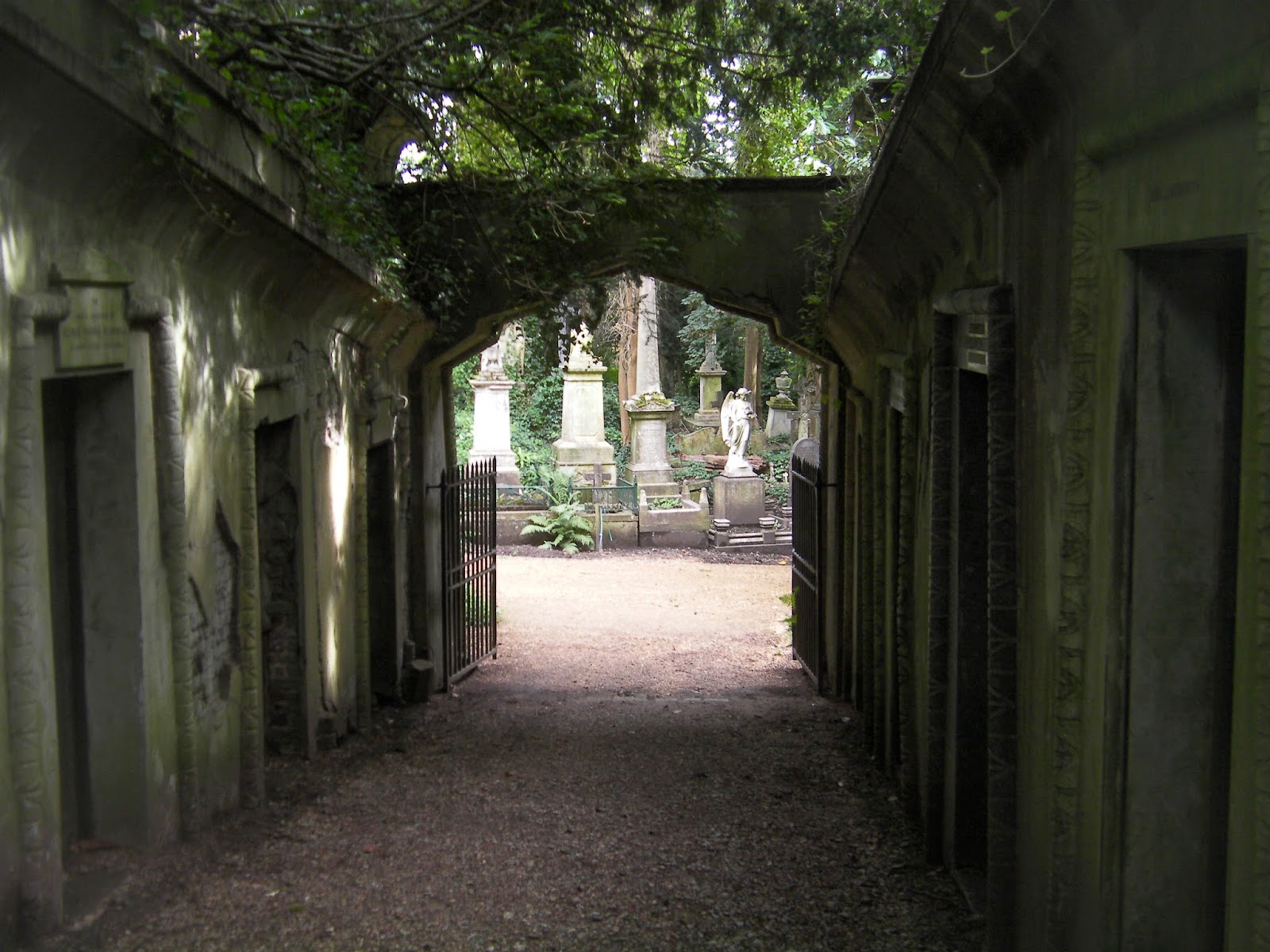
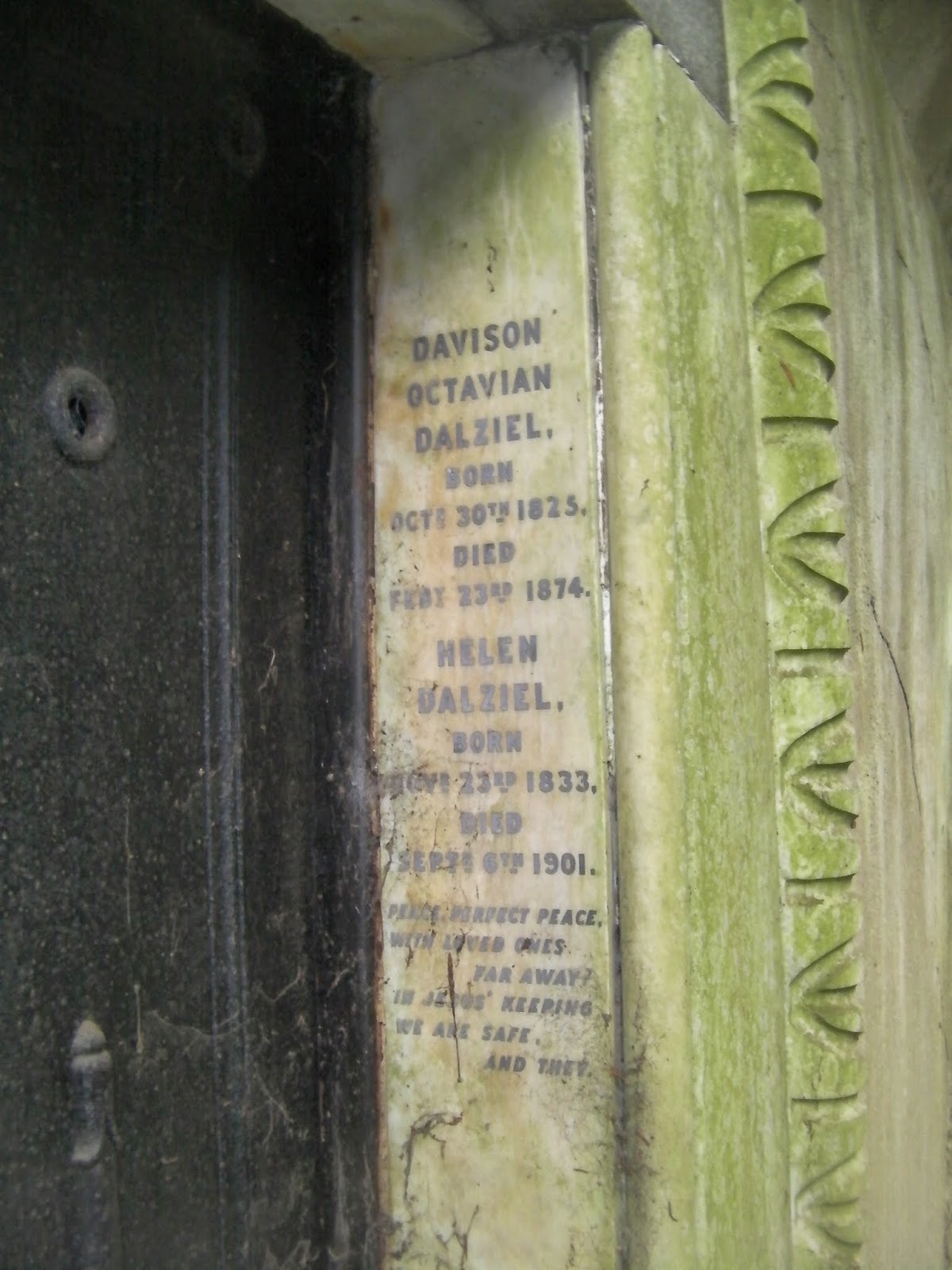
Here, in the exclusive Egyptian Avenue, crypts were sold for the highest prices. Mourners coming to pay their respects often brought picnic lunches and erected tables within the crypts of their loved ones. Today, the plaques bearing the names of the departed are moss covered and the doors locked behind cobwebs that have been spun over the decades.
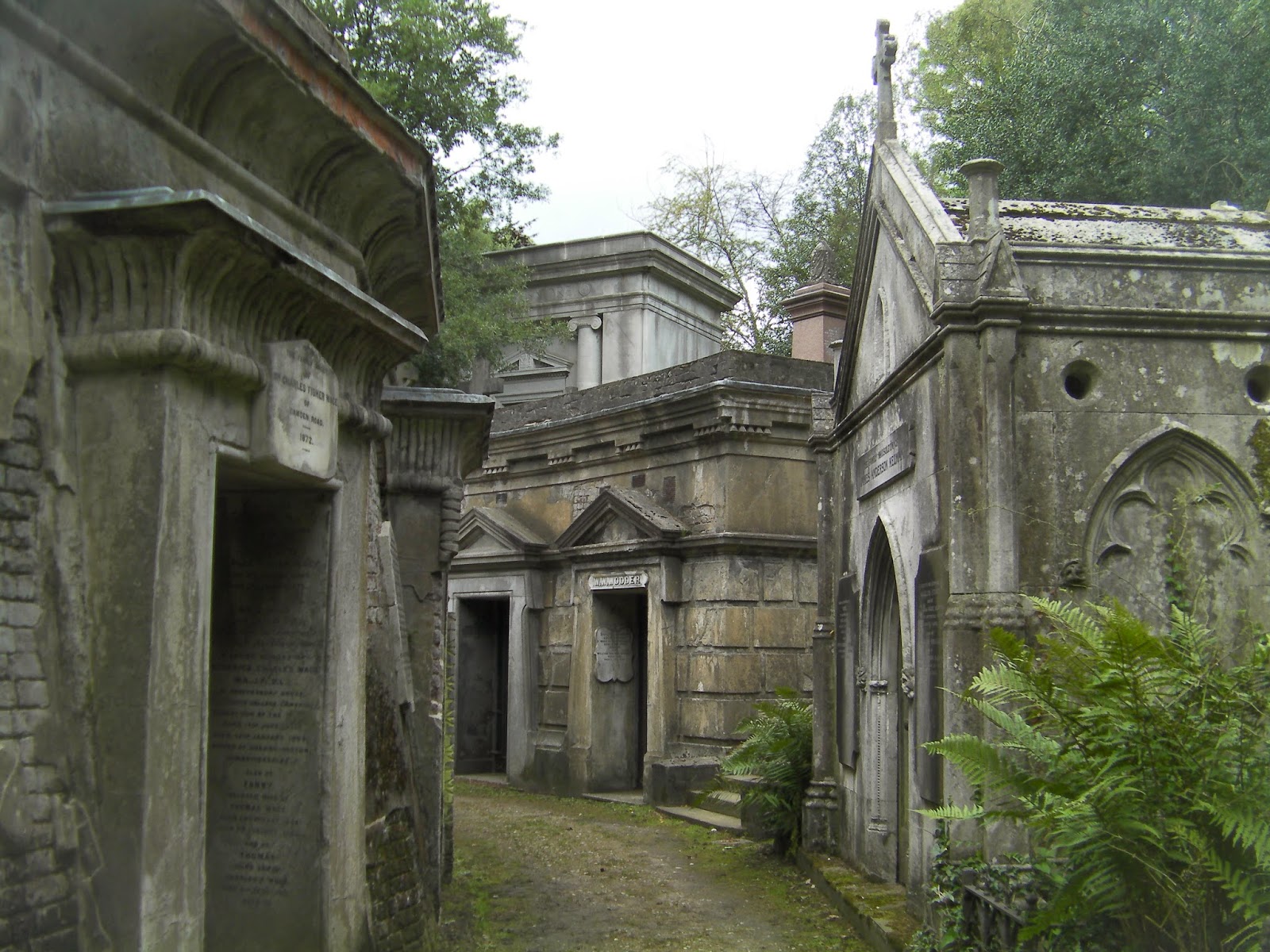
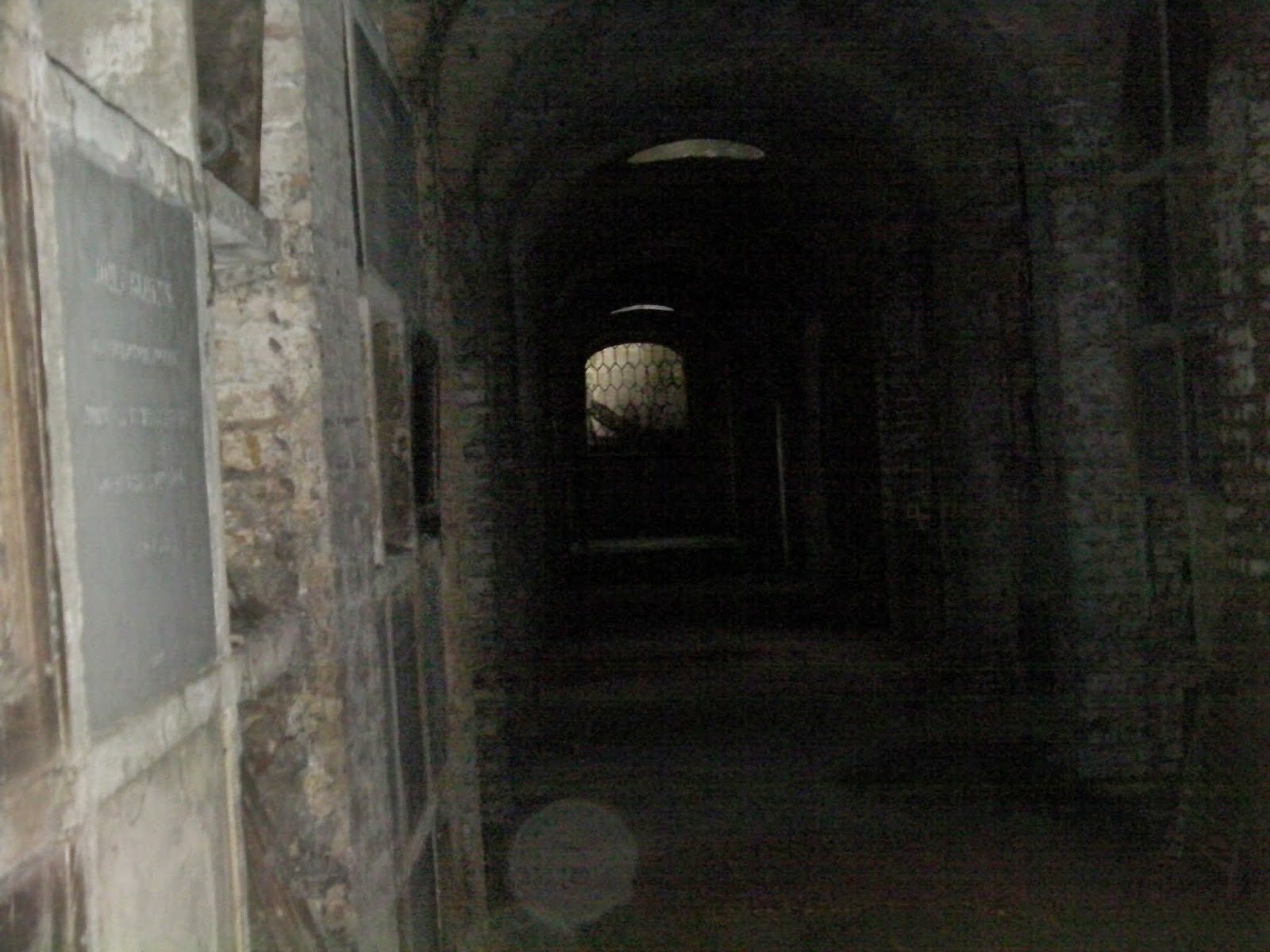
The Circle of Lebanon, above, is another of the exclusive section of crypts at the Cemetery. It was here that our guide took a detour and led us into an underground burial chamber. Once inside, there was almost no daylight, thus most of the photos I took did not come out well. Here’s one of mine below.
And here’s one taken in better light that I swiped off the internet so that you’d have a better idea of the space we were in. As I said, we were nearly in the pitch dark, surrounded on all sides by sealed crypts. As you can see in the photo below, there are sky lights in the ceiling, but by 2014 the vegetation had grown over them, dimming the space further. It was so dark that I had to step in close to peer at the stones that were marking the individual graves.
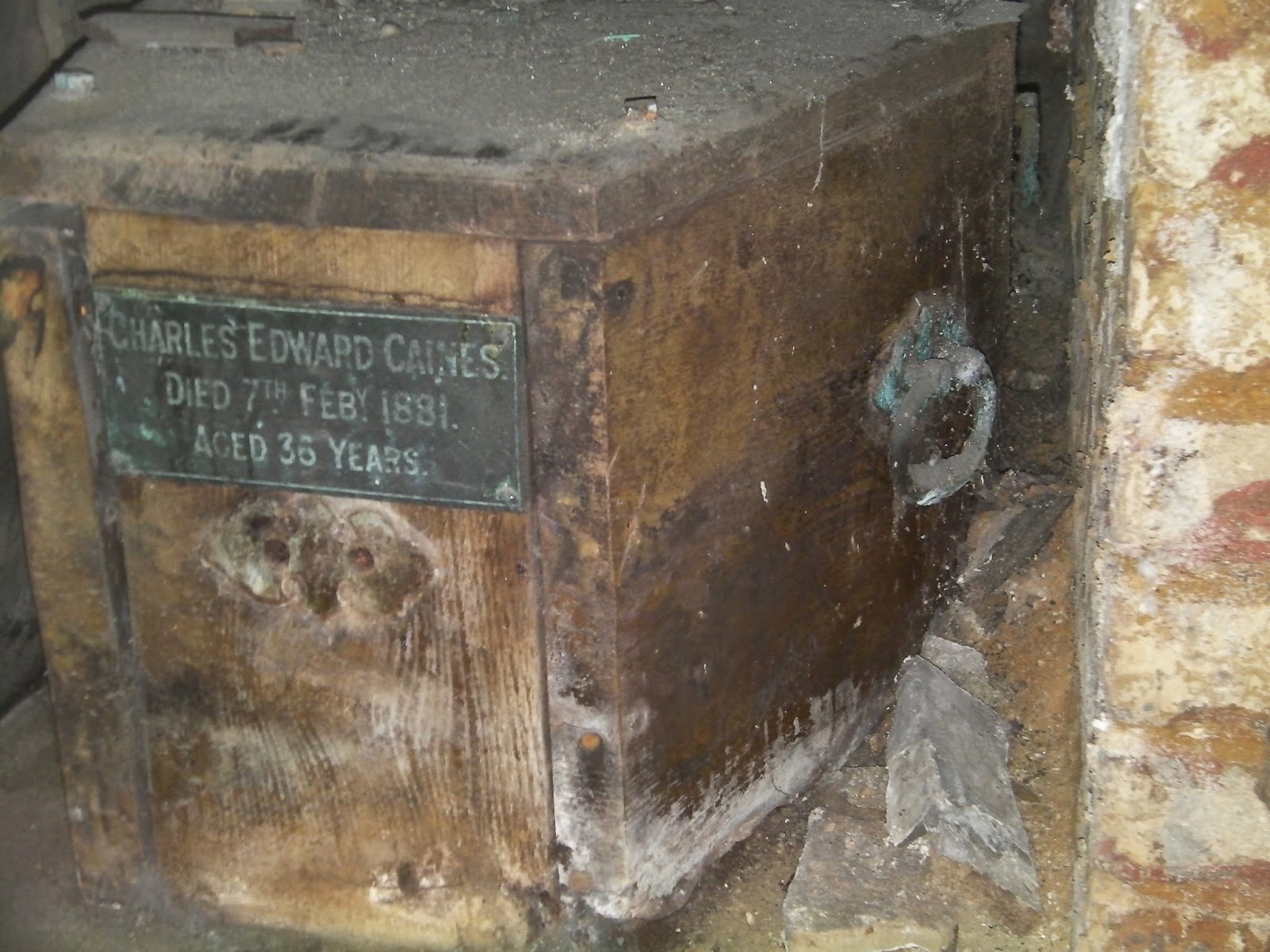
So you can imagine my surprise, nay shock, when I leaned down to read the lower stones only to be met by this sight.
Thank God the lid was still intact.
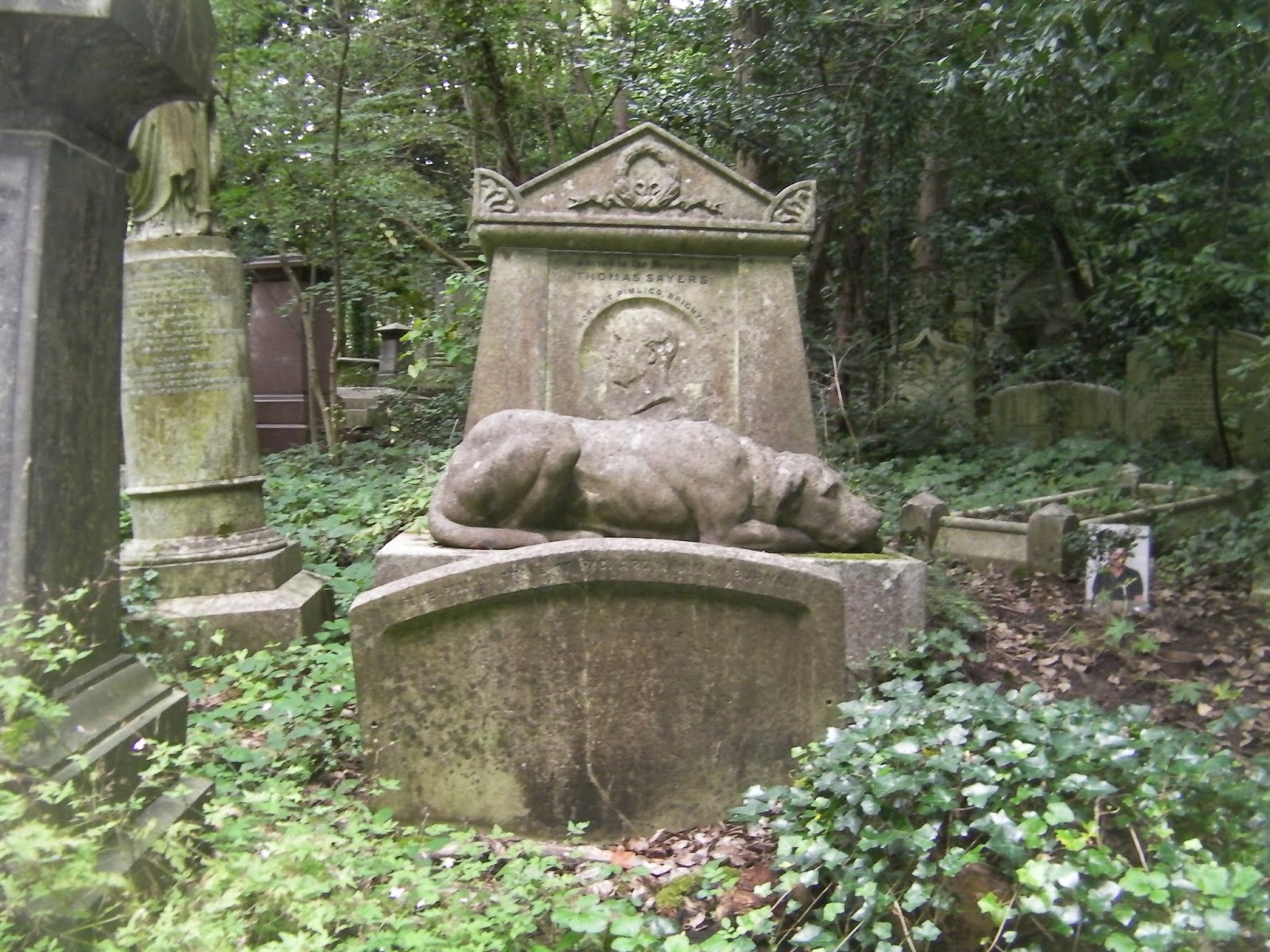
Perhaps one of my favourite graves is that of Tom Sayers, above. The grave stone, with the image of his faithful dog, a Mastiff named Lion, draped over his coffin as chief mourner is reminiscent of another of my favourite works of art, “The Old Shepherd’s Chief Mourner,” by Edwin Landseer.
Our group stood around the grave appreciating the poignancy of it all until our guide asked if any of us knew who Tom Sayer was. No one spoke up and for a time I considered whether or not I should answer. It seemed that either Victoria or I had been the only ones to know the answer to several of our guides previous questions. Victoria had been the only one among us to know who the lesbian author Radclyffe Hall was, which delighted our guide. I was loathe to have the Americans once again provide the answer to his question. However, when it became apparent that no one else in the group was going to volunteer, I said, “A boxer. The best bare knuckle fighter in Victorian England.”
The guide’s eyes widened, “Yes! And it’s not too far a stretch that an American should know the answer to that question, is it?”
“Not if you know the story,” I answered. And so he began to relate the story of Sayers’s career to our group. You can read all about it here.
Sayers died in 1865 and huge crowds, made up of many of London’s rabble rousers and fight enthusiasts, followed his funeral cortege to Highgate Cemetery on the day of his burial. As the Morning Post of 16 Nov. 1865 put it: The scene was “…an exhibition for which irredeemable blackguardism, brutal levity and barbaric ferocity, we are sure the like never disgraced the hallowed precincts of that most hallowed of spots – an English graveyard.”
On our way towards the exit near the end of our tour, Victoria called me over to see something she’d found in the underbrush.
A single, perfect wild strawberry to remind us that life goes on.
______________________________________________________
You’ll find the Highgate Cemetery website here, which is full of information of interest, including lists of other notable graves and the history of the Cemetery. Do also check out the site of The Friends of Highgate Cemetery – these are the people who volunteer their time as guides and who are at the forefront of restoration and upkeep for the Cemetery.
*** From Wikipedia: Earl Cowley is a title in the Peerage of the United Kingdom. It was created in 1857 for the diplomat Henry Wellesley, 2nd Baron Cowley. He was Ambassador to France from 1852 to 1867. He was made Viscount Dangan, of Dangan in the County of Meath, at the same time as he was given the earldom. This title is also in the Peerage of the United Kingdom. Lord Cowley was the eldest son of Henry Wellesley, 1st Baron Cowley, who like his son served as Ambassador to France. In 1828 he was created Baron Cowley, of Wellesley in the County of Somerset, in the Peerage of the United Kingdom. A member of the prominent Wellesley family, Cowley was the fifth and youngest son of Garret Wellesley, 1st Earl of Mornington, and the younger brother of Arthur Wellesley, 1st Duke of Wellington, and Richard Wellesley, 1st Marquess Wellesley.